ZAGGLE
Equity Metrics
November 18, 2026
Zaggle Prepaid Ocean Services Limited
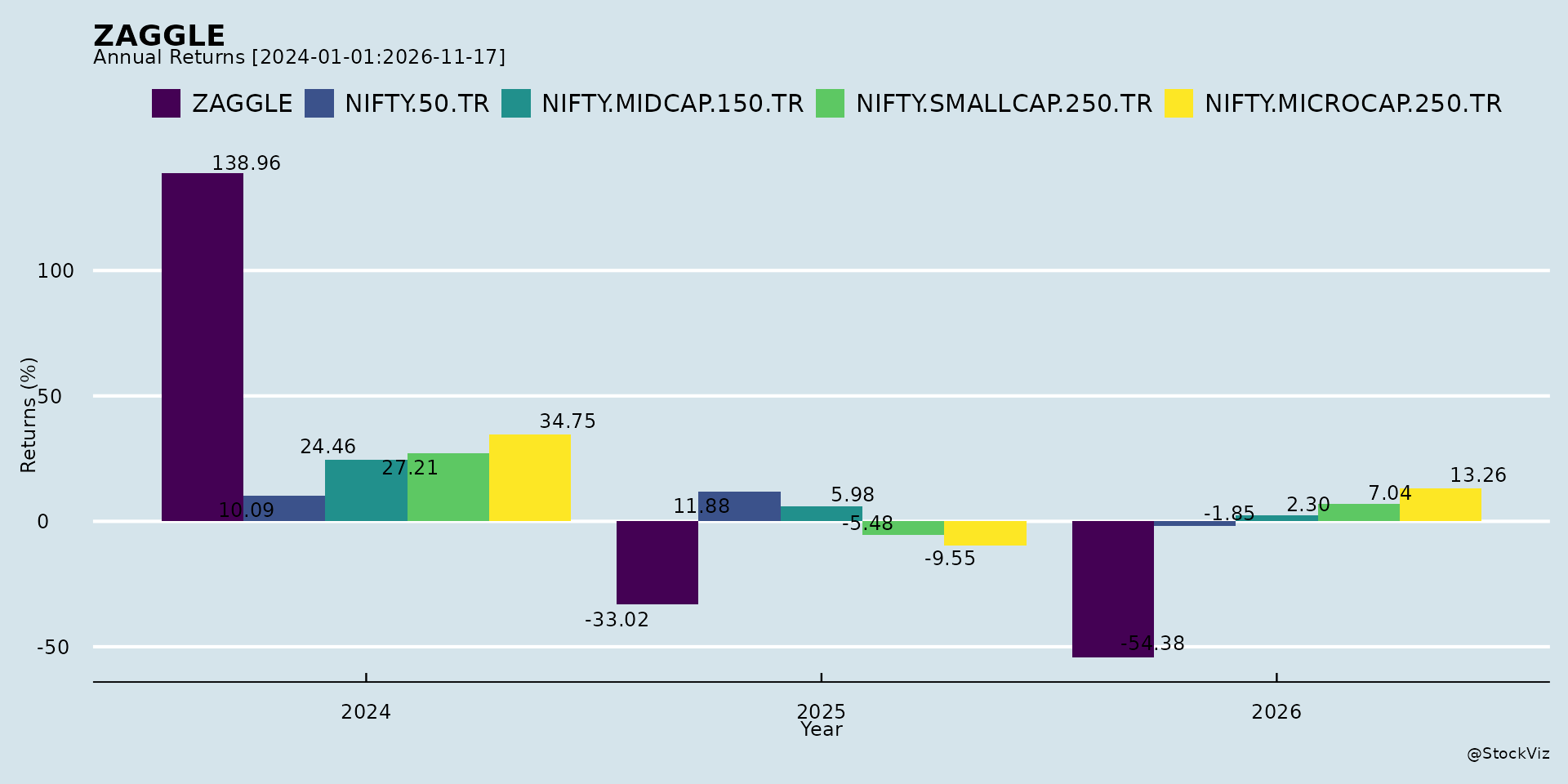
Annual Returns
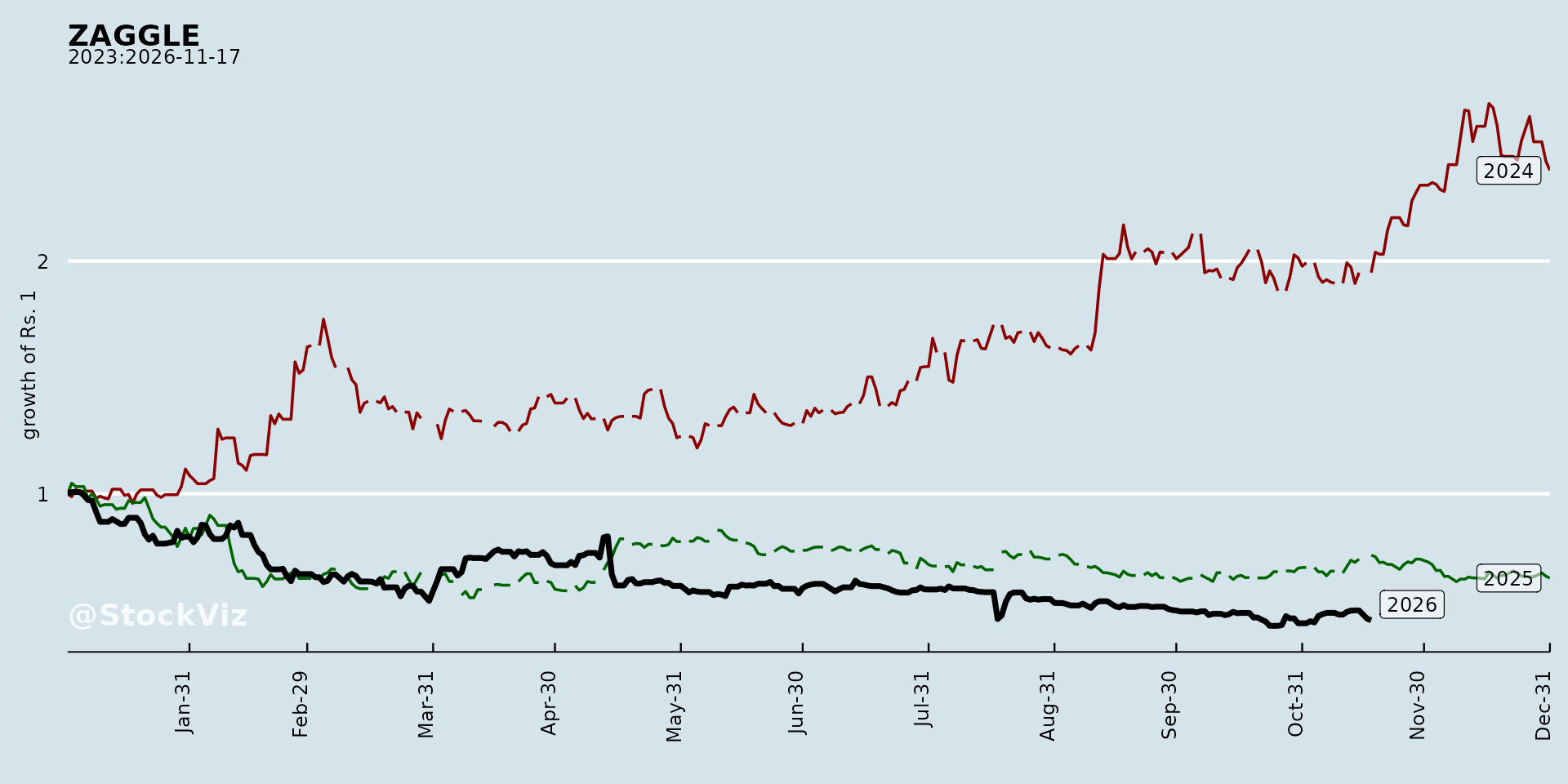
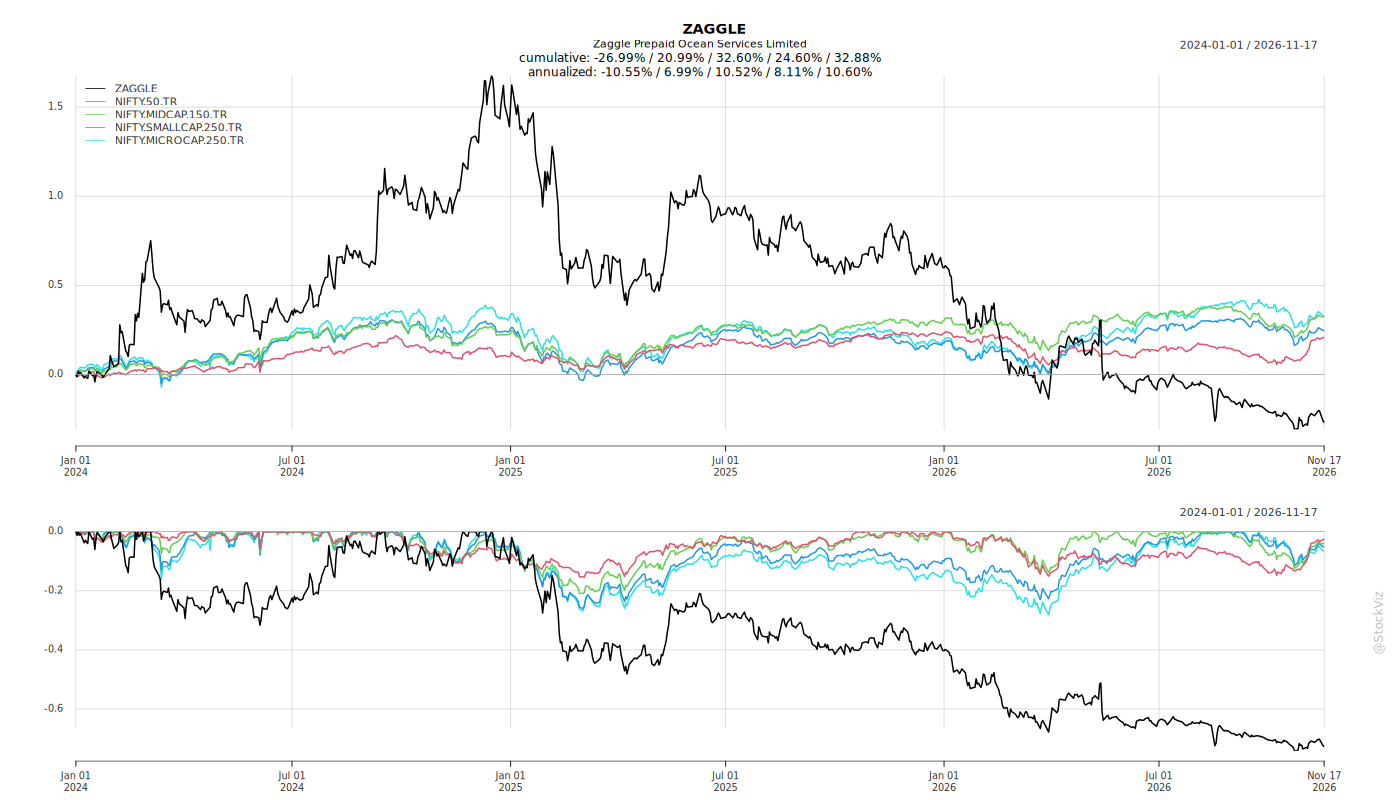
Cumulative Returns and Drawdowns
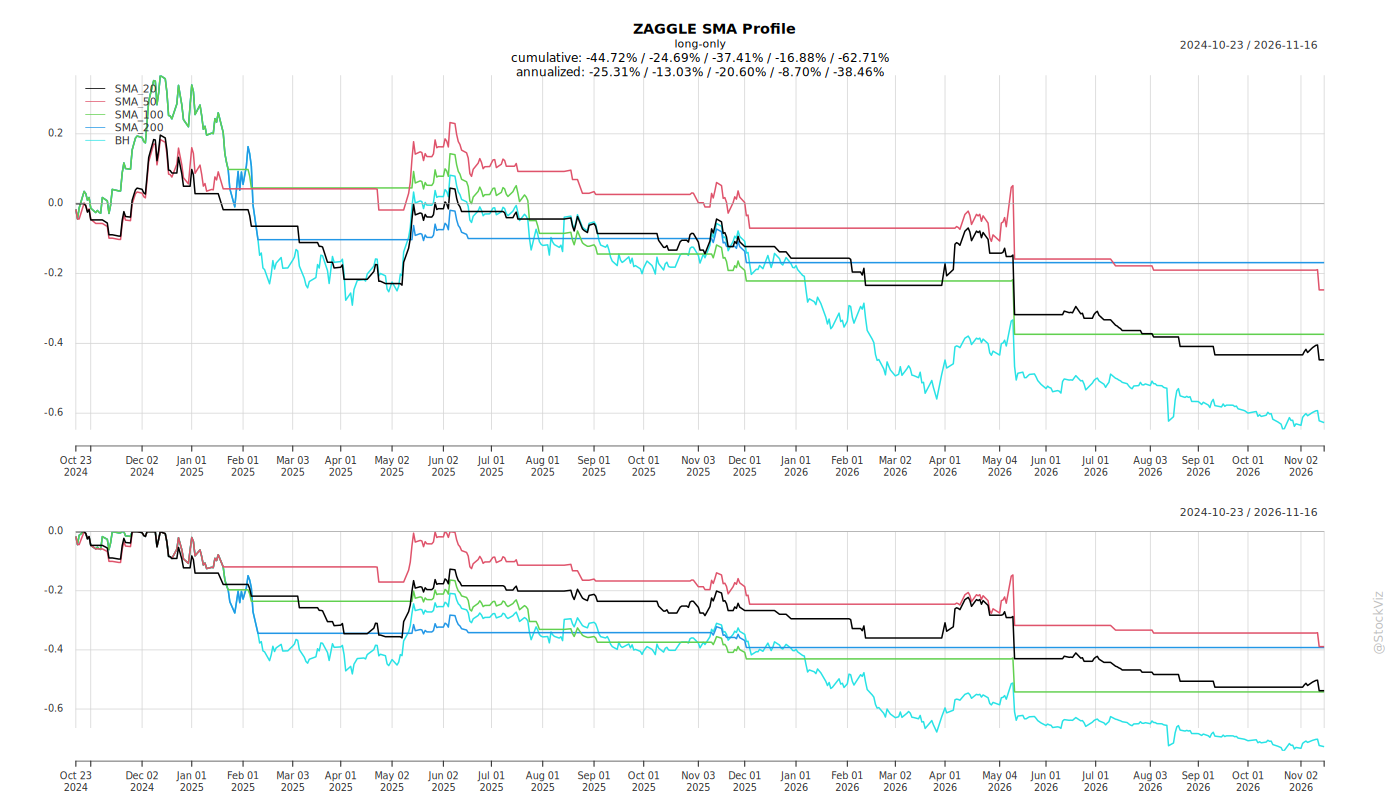
Fundamentals
Ownership
Margined
AI Summary
asof: 2026-09-18
Zaggle Q1 FY27: Headwinds, Tailwinds, Risks and Guidance Versus Performance
1. Headwinds and Challenges
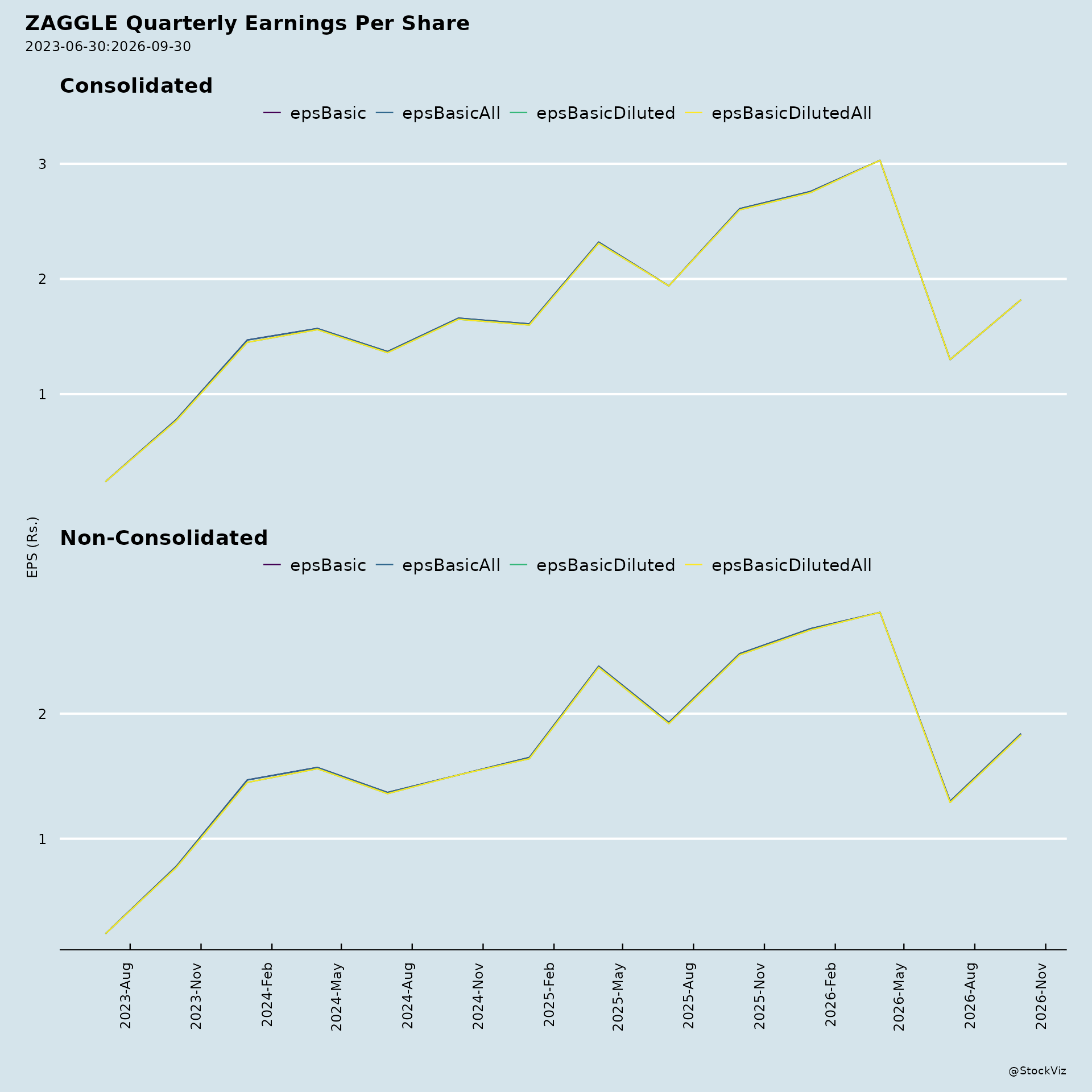
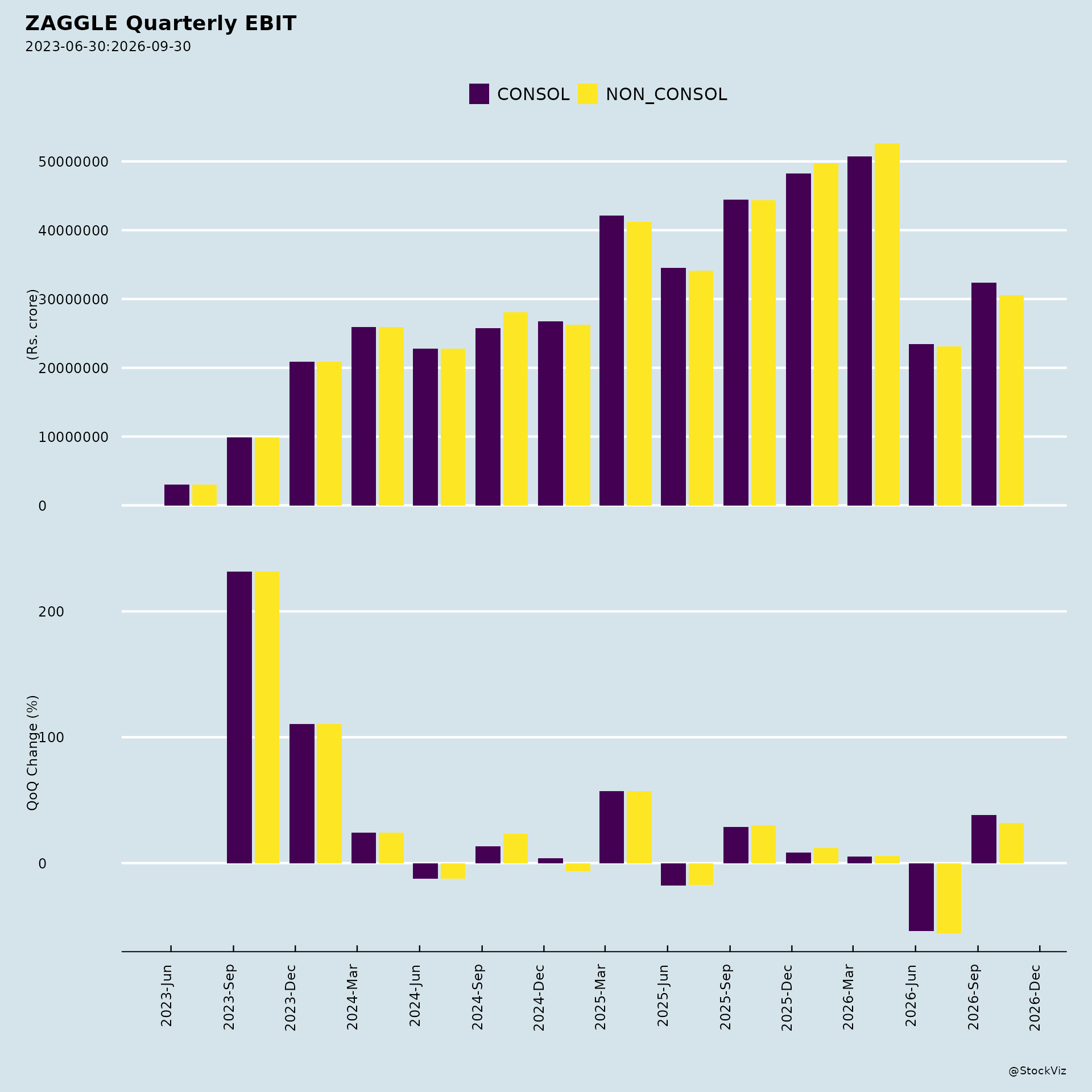
Margin compression from acquisitions and accounting changes. Adjusted EBITDA margin fell to 8.2% in Q1 FY27 from 10.1% in Q1 FY26, even as adjusted EBITDA grew only 4.0% year-on-year to ₹347.4 million against 27.5% revenue growth. Management attributed the decline to five elements: DICE acquisition expenses (transaction costs, one-time vendor payments, relocation of 100+ professionals); DICE contract revenue not being captured in Q1 FY27; a moderated push of previously capitalised expenses into the P&L; annual employee increments; and added employee and other costs from the Zagg.Money acquisition. Roughly ₹3 crore of DICE cost was absorbed in the last two months of the quarter with no offsetting revenue, since contractually revenue was to begin only from July 1.
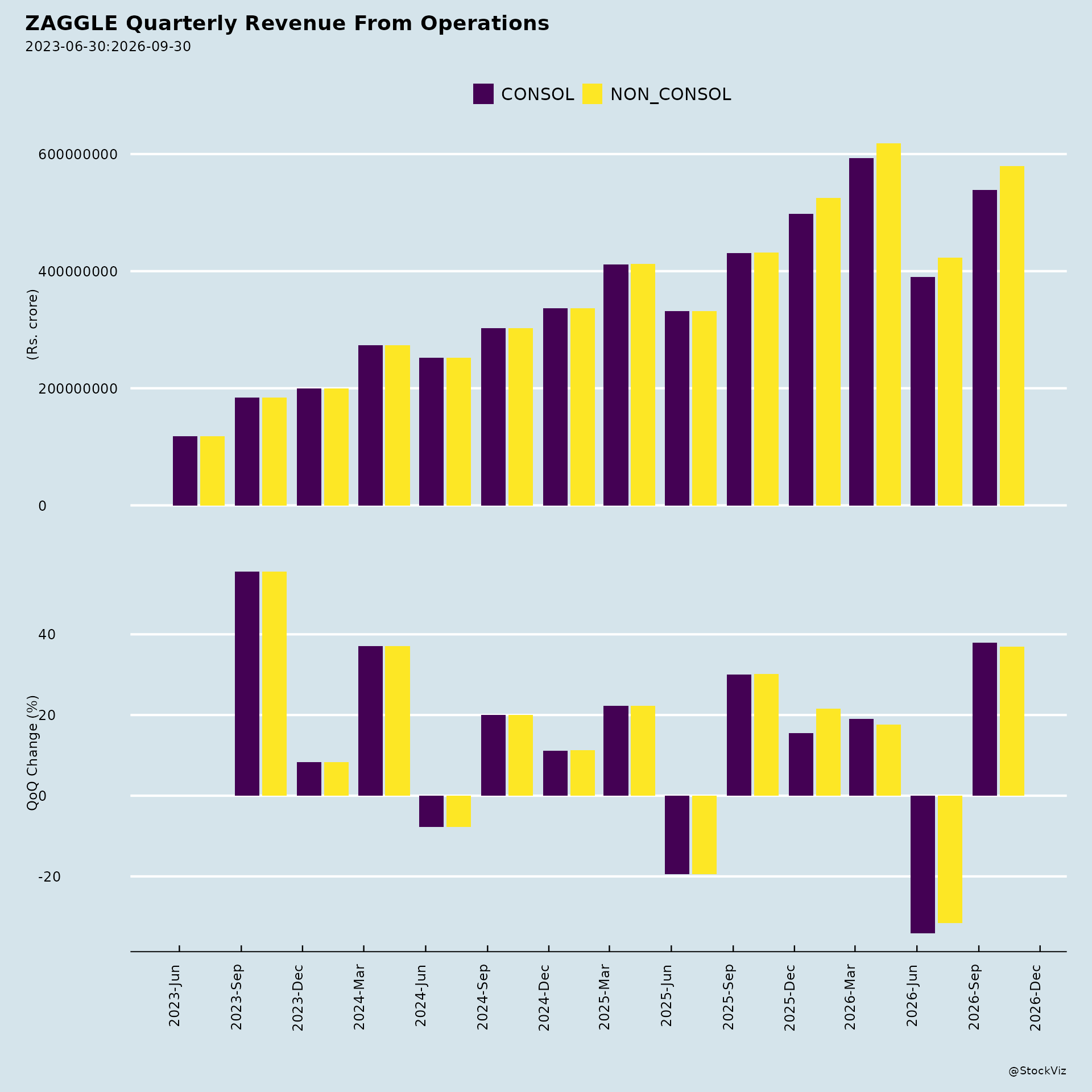
Revenue growth deceleration. Consolidated revenue grew 28% year-on-year to ₹423 crore, a slowdown from the 40–50% pace of prior quarters. Standalone revenue grew 18% to approximately ₹390 crore. Program fee growth was approximately 10%, described by an analyst as the lowest in three years. Management characterised this as partly by design, tied to a conscious decision to move customers with longer working capital cycles to different banks, which requires a re-carding process and takes time.
Cash flow discipline as a work-in-progress. Management repeatedly flagged that cash flow optimisation is a primary focus and that correcting from negative to positive cash flow would take approximately 16–18 months. On the question of when both good growth and good cash flows would arrive together, management said it is something they are striving for and that every quarter, month and day is focused on it, without committing to a timeline.
Capitalisation policy transition. The company is reviewing and updating its capitalisation policies in consultation with advisers and auditors. In Q1 FY27 it took immediate proactive measures to moderate new capitalisation levels, including fully expensing roughly ₹6 crore of product development cost on one product. Management noted there is no selective capitalisation, but that moving to expensing all costs will take a significant period.
Volatile EBITDA margin trajectory. An analyst noted six quarters of volatile EBITDA margin and asked when stability would return. Management responded that margins had been in the 9–10% range for the last eight quarters, that the 14–15% guidance is a 5–7 year target, and that current measures are intended to move the trajectory toward that level.
Zagg.Money losses. Management referenced approximately ₹2.5 crore lost on Zagg.Money, as previously guided.
Geopolitical impact on travel spend. Management cited geopolitical tailwinds (as described on the call) affecting travel, which had an impact on spend overall.
2. Tailwinds and Growth Prospects
DICE acquisition and AI capability. The DICE deal transitioned from a share purchase to an asset purchase, securing the complete spend management product suite, IP, and enterprise and partnership contract portfolio for approximately ₹68 crore excluding GST — a ₹55 crore optimisation from the initial ₹123 crore valuation. Around 100 AI professionals were relocated from Pune to Hyderabad between May and June. Contract novation of 85-plus clients is underway and expected to complete by end of Q2 FY27. Marquee names novated or onboarded include Hindalco, Bajel, Trident Group, IDFC First Bank, Lenskart, XpressBees, Nephroplus, Manipal Hospitals, DARCL, Dezerv and Navi. DICE did approximately ₹12 crore revenue last year; management expects ₹15–16 crore this year with 90%+ gross margins, and a stronger next year with full-year impact and payment rails integrated into DICE software. Technical integration is largely complete, with the last bit expected by August 31 or at most September 10; payments-related revenue from DICE is expected from Q3.
Zagg.Money (formerly Rio.Money) traction. Annualised run rate for new card acquisitions rose approximately 2.3x to around 84,000 cards, from 36,000 cards in an 8-week window reported last quarter. A first-of-its-kind Twin co-brand card was launched with Punjab National Bank across Visa and RuPay on biodegradable plastic, and the company went live with AU Small Finance Bank on both networks.
86400 (formerly Mobileware) performance. Revenue grew from approximately ₹17 crore in Q1 FY26 to ₹22 crore in Q1 FY27, up 29% year-on-year. EBITDA grew from approximately ₹2.8 crore to approximately ₹8.8 crore, a 214% year-on-year increase (corrected on the call from a misstated 400%). The business is seeing 2–3% month-on-month volume growth, signed its first major international partner in LankaPay, signed Union Bank of India for its Bharat Bill payment stack, and signed Maharashtra State Cooperative Bank for UPI transactions. It processed over 2 crore transactions.
GreenEdge performance. Revenue grew approximately 160% from ₹17 crore to approximately ₹44 crore in Q1 FY27. EBITDA grew 66% from ₹2.6 crore to approximately ₹4.3 crore. Growth is driven by the NPCI RuPay benefit program, with deeper technical integrations.
TaxSpanner. Revenue was ₹80 lakh in Q1 FY27, up 65% over Q1 FY26, keeping it on target to break even this financial year. B2B growth of around 120% is expected. The business is being rebranded to Z.tax, with new Board members appointed and integrations underway with external partners including large payroll companies.
Save business tax tailwinds. New income tax regulations added wallets for the new tax regime and increased amounts for meal, gift and other wallets. This drove growth in new contracts and an increase in per-user wallet for existing and new corporate customers. Around 73% of newly onboarded users came from existing corporates through upselling new wallets and adding users. Marquee names include Radisson Hotels, SCA, Avighna India, Slice Small Finance Bank, Bikaji Foods, Bureau Veritas and Nuvama Wealth.
Zoyer uptake. A large retail chain signed a few quarters back has onboarded about 2,000 stores with an impending rollout of the balance 17,000-odd stores. New signings include Diesel Fashion, Mokobara Lifestyle, AppsForBharat and CBM Retail.
Propel enterprise traction. A deployment for a large entity managing 5,000-plus channel partners automated incentive delivery, provided real-time analytics, and transitioned from single-brand vouchers to multi-brand vouchers and a multi-brand digital point system, releasing gross working capital for the customer. New signings include Saint Gobain, Supreme Pipes and Phoenix India. Propel margins on a consolidated basis reached 7.1%, attributed heavily to GreenEdge’s higher margins; standalone Propel margin was around 5%, a significant improvement from Q4 FY26.
Fleet business and HPCL agreement. Total transactions rose 43% year-on-year and transaction value rose 5.8%, reaching an annualised spend rate of ₹100 crore. Zaggle signed its first contract with one of the three oil marketing companies — a 5-year agreement with HPCL as aggregator for the flagship Driver Track Plus program, facilitating purchase of petroleum products and enabling discounts and benefits to Zaggle’s corporate and retail base, with incentive for driving spends toward HPCL providing bottom-line benefit. Commercial consideration is proportional to users onboarded and fuel spends, so contract value cannot be ascertained at this stage.
Cross-sell momentum. Examples include APAC Financial Services (Save and Zoyer cross-sold at the initial stage), Campus Activewear (existing Zoyer customer, added Save for employee tax benefits), and Quest Corp (existing Save customer, added Zoyer and TaxSpanner). Other cross-sell wins include Purple Panda Fashion, V-Bazaar, Impresario Entertainment and Quest Corp.
International expansion. Zaggle is opening a subsidiary in ADGM, Abu Dhabi Global Markets International Financial Center and Free Economic Zone within Q2 FY27, entering the UAE with Save, Zoyer and Propel. Through DICE, key client relationships were inherited that validate product-market fit. Management also cited positioning to tap global markets like UAE and the U.S.
Unobanc / moneyHOP investment. A strategic investment of approximately ₹8 crore in Unobanc Private Limited (brand moneyHOP), which holds an RBI Authorised Dealer Category II licence enabling digital cross-border payments, remittances, forex services and forex cards. Under new guidelines, AD Category-II entities can process cross-border trade-related transactions up to ₹25 lakh per transaction. The investment aligns with Save and Zoyer to enable forex cards, cross-border payments and remittances for corporate and retail customers.
Policy tailwind on MDR. Proposed amendments in the taxation and other laws Amendment Bill 2026 regarding a limited MDR on high-value merchant transactions. Since the policy focuses on large enterprise transactions, management stated sustained investments in the UPI ecosystem position Zaggle to capture enhanced transaction monetisation.
AI as a growth and efficiency driver. Internal AI development enabled optimisation of around 12.5% of the expense cost base through FY26 and reduced new feature launch timelines by up to 50%. Externally, AI allows Zaggle to address more complex problems for significantly larger corporates. Project Shiva (Zaggle Brain) is to be showcased and filed on the exchange in coming months, with a patent planned. Management stated every contract is seeing some monetisation on the basis of AI, with payback expected to accelerate.
Scale metrics. Around 4 million users actively use Zaggle-powered cards and platforms; more than 4,000 customers are served; more than 50 million prepaid cards have been issued in partnership with 19 banking partners; and 4.03 million users were served as of June 30, 2026.
3. Key Risks
Acquisition integration and timing risk. DICE contract novation is not yet complete, with revenue recognition dependent on novation timelines. Management expects full pickup from Q3 when all contracts are novated. DICE costs are already in the P&L while revenue has not yet begun.
Cash flow and working capital risk. Management acknowledged that actions to improve cash flows have their own gestation period and that there is no immediate lever to press. The transition from negative to positive cash flow is framed as a 16–18 month process.
Margin trajectory risk. The 14–15% adjusted EBITDA margin target is a 5–7 year aspiration. Current margin is 8.2%, and management declined to provide specific EBITDA margin guidance for the year, saying it will guide in coming quarters as DICE revenue kicks in.
Revenue guidance risk. Management maintained its 40% consolidated revenue growth guidance for FY27 despite Q1 growth of 28%, and maintained standalone growth guidance of around 25% despite Q1 standalone growth of 18%. An analyst questioned whether the guidance still holds given the drop from 40–50% historical growth.
Capitalisation policy and auditor alignment risk. Management noted that decisions on capitalisation require conjunction with auditors and that convincing auditors on which expenses go to P&L versus capitalisation is part of the process.
Competitive and regulatory risks cited in the annual report material: intense competition from fintechs, ERP vendors and global SaaS providers; regulatory changes in digital payments and financial services; cybersecurity and data-privacy risks; partner-ecosystem disruption; pricing pressure; acquisition-integration risk; reliance on a concentrated set of banking and network partners for card issuance and interchange economics; rising delinquencies in unsecured retail lending; and tightening credit standards across the broader banking system.
Mix-driven cashback increase. Cashback as a percentage of program fees was 66.3% in Q1 FY27, marginally up from 65.7% in Q1 FY26, primarily due to a mix of higher corporate credit cards versus prepaid cards, since credit cards carry a higher cashback share because the cost of funds is included. This was a significant drop from Q4 FY26’s approximately 69%.
Dependence on partner banks. The decision to move customers with longer working capital cycles to different banks involves a re-carding process that takes time and affects program fee growth in the interim.
4. Management Guidance Versus Observed Business Performance
Revenue growth. Management guided 40% consolidated growth for FY27 and around 25% standalone growth. Observed Q1 FY27 performance was 28% consolidated growth (₹423 crore) and 18% standalone growth (approximately ₹390 crore). Management maintained both guidance figures, stating “we are not moving away from that guidance as yet” and that growth should improve in coming quarters, with Q1 historically being a soft quarter representing about 18% of the full year.
EBITDA margin. Management’s medium-to-long-term guidance is a sustainable 14–15% adjusted EBITDA margin over 5–7 years. Observed Q1 FY27 adjusted EBITDA margin was 8.2%, versus 10.1% in Q1 FY26. Management stated it would guide on EBITDA margin in coming quarters as DICE revenue kicks in, and indicated that when DICE revenue starts, margin should improve, with 8.2% framed as potentially the lowest point. Management also noted margins had been in the 9–10% range for the last eight quarters.
DICE revenue. Management stated DICE revenue would begin from Q2 FY27 (contractually July 1), with full pickup from Q3 when all contracts are novated. DICE did approximately ₹12 crore revenue last year; management expects ₹15–16 crore this year with 90%+ gross margins. Observed Q1 FY27 had DICE costs of approximately ₹3 crore with no DICE revenue.
Cash flow improvement. Management stated the attempt is to improve cash flows and that some improvement across metrics is hoped for, but that actions have gestation periods and there is no immediate handle. No specific timeline was committed beyond the 16–18 month framing for correcting negative to positive cash flow.
Program fee growth. Management stated the 10% growth was by design and that significant improvement should be seen in coming quarters. An analyst asked whether H2 should show meaningful improvement in cash flows and incentive costs given the optimisation focus; management responded that the attempt is there but gestation periods apply.
TaxSpanner. Management guided that TaxSpanner is well on target to break even this financial year. Observed Q1 FY27 revenue was ₹80 lakh, up 65% year-on-year, with expected B2B growth of around 120%.
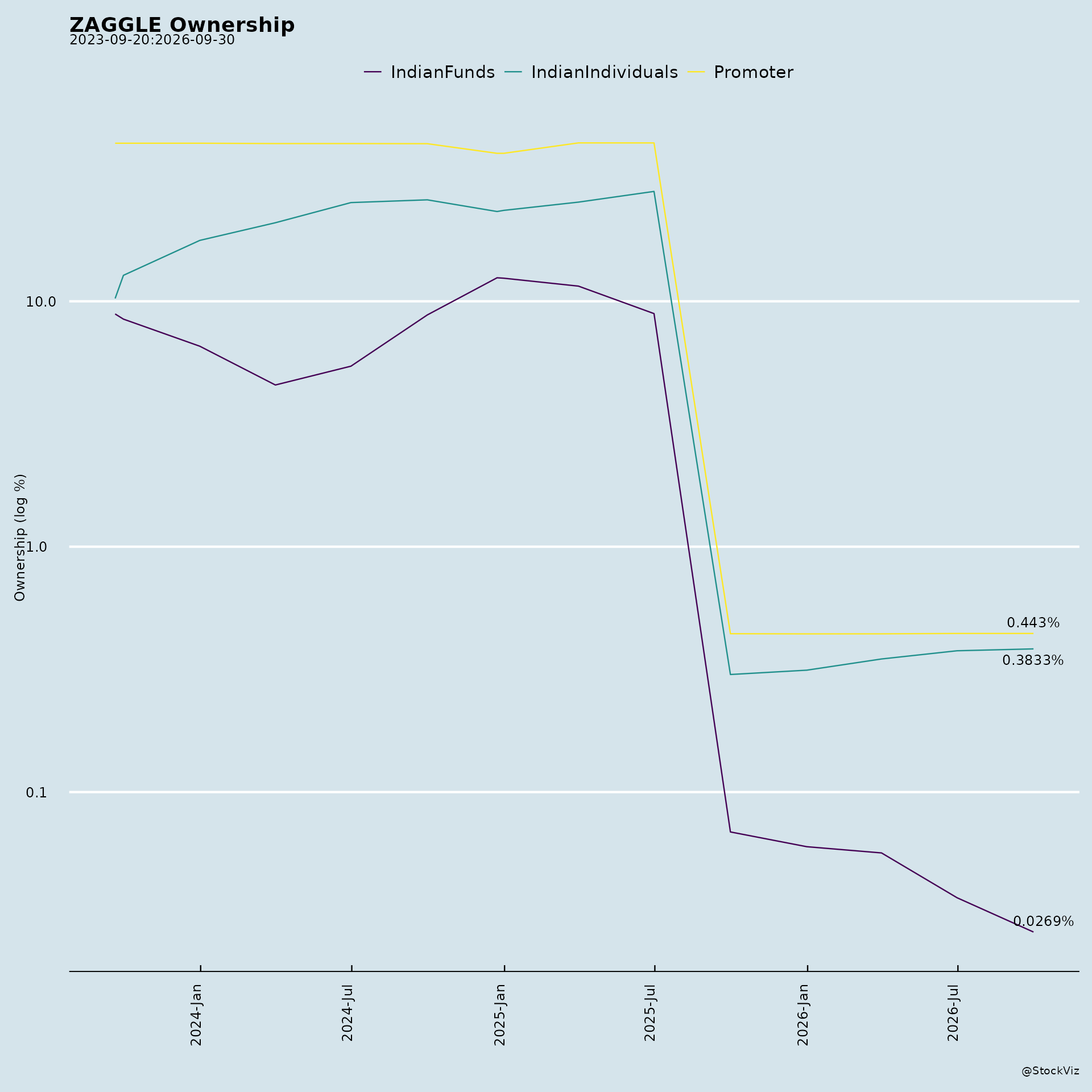
Promoter share purchases. In response to a question about open-market share purchases, management stated that as liquidity becomes available they will keep buying stock, that they have not sold a single share and have only been buying, including a prior ₹5 crore purchase.
International expansion. Management stated the ADGM subsidiary is in process of being opened within Q2 FY27. The annual report material references preparing for US market entry towards the end of FY 2026-27.
FY 2025-26 baseline. For FY 2025-26, Zaggle delivered consolidated revenue of ₹1,908 crore (growing 46% year-on-year) and adjusted EBITDA of ₹192 crore (a 51% expansion), serving over 3,900 corporate customers and 3.9 million active users, with a customer churn rate below 1.5%.
Broker Timeline
1 broker calls · 2024-06-06 to 2024-06-06
CNBC-TV18: ratings, targets and commentary
No recorded CNBC-TV18 statements for this ticker.
Management comments
No recorded management comments with an explicit designation and affiliation for this ticker.
Copyright © 2023 SAS Data Analytics Pvt. Ltd. All rights reserved.