YESBANK
Equity Metrics
September 24, 2026
Yes Bank Limited
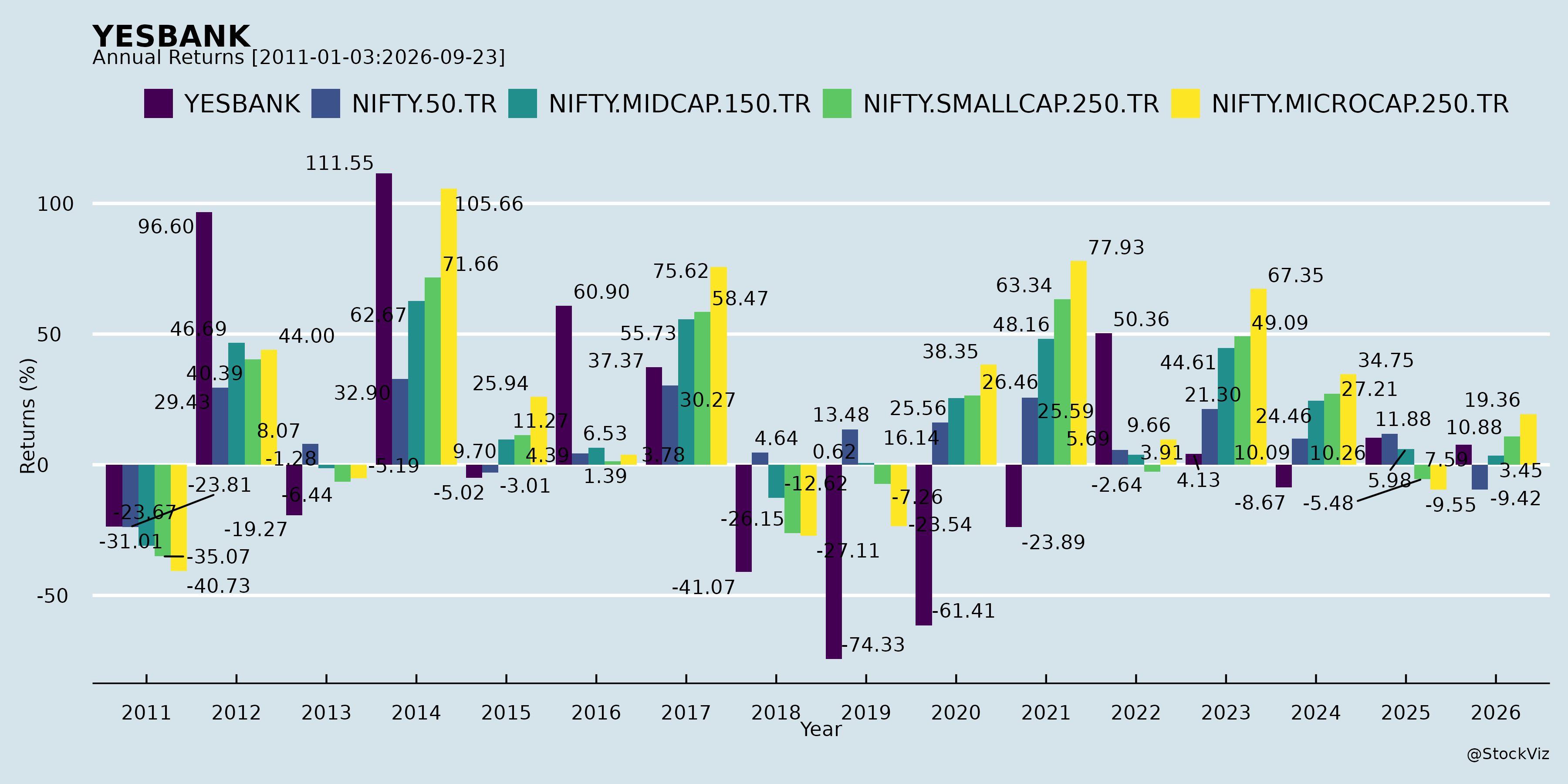
Annual Returns
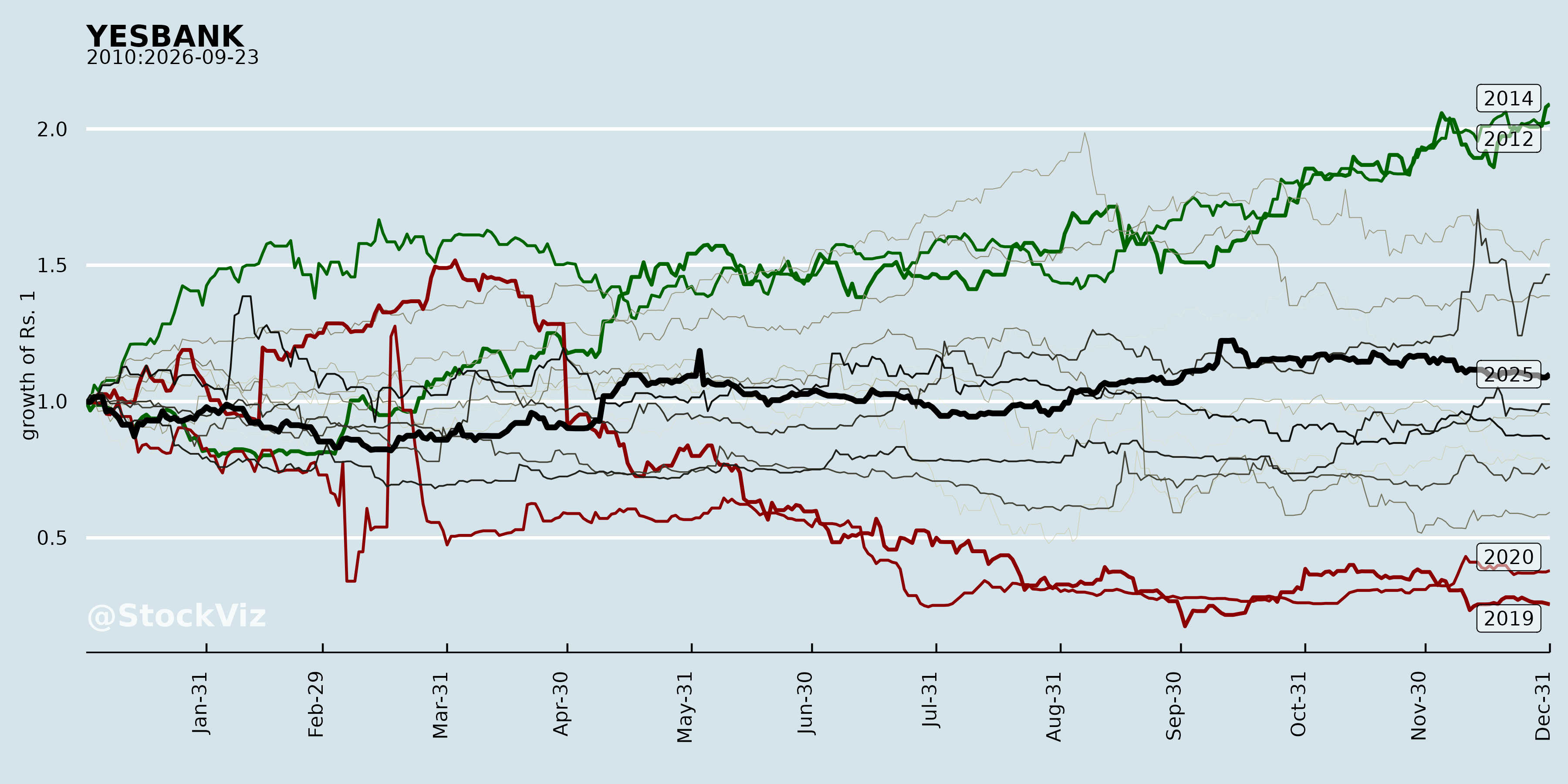
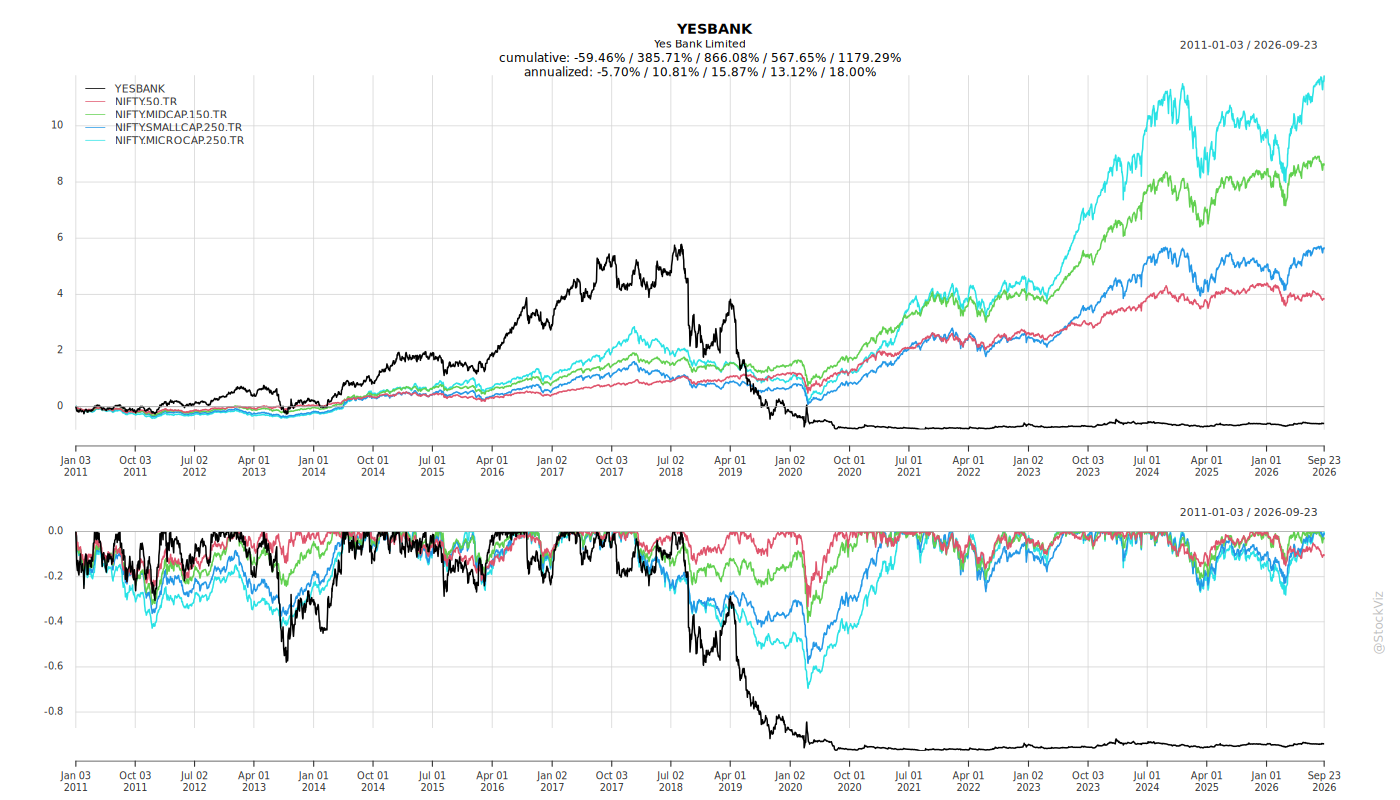
Cumulative Returns and Drawdowns
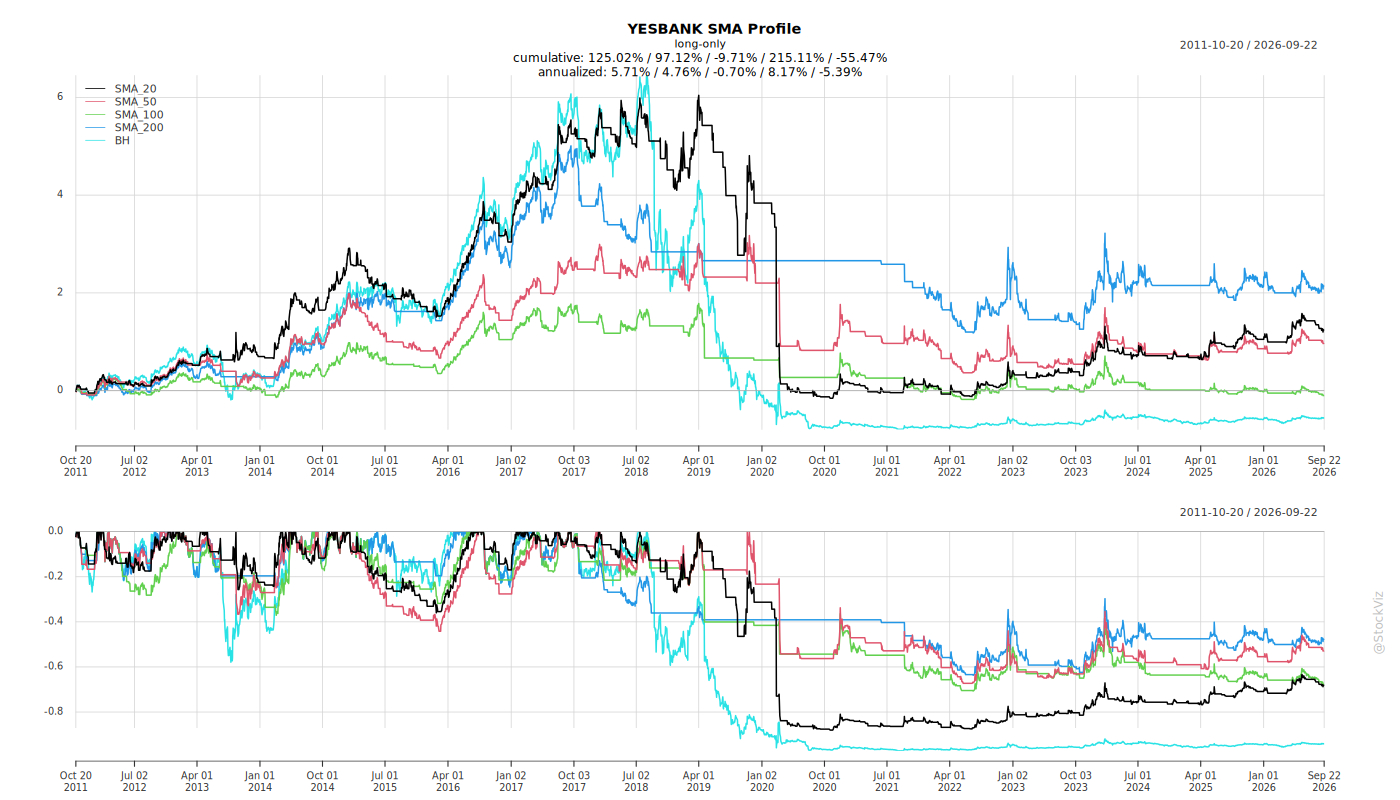
Fundamentals
Ownership
Margined
AI Summary
asof: 2026-09-16
YES BANK: Recent Corporate Announcements — Analysis
1. Headwinds and Challenges
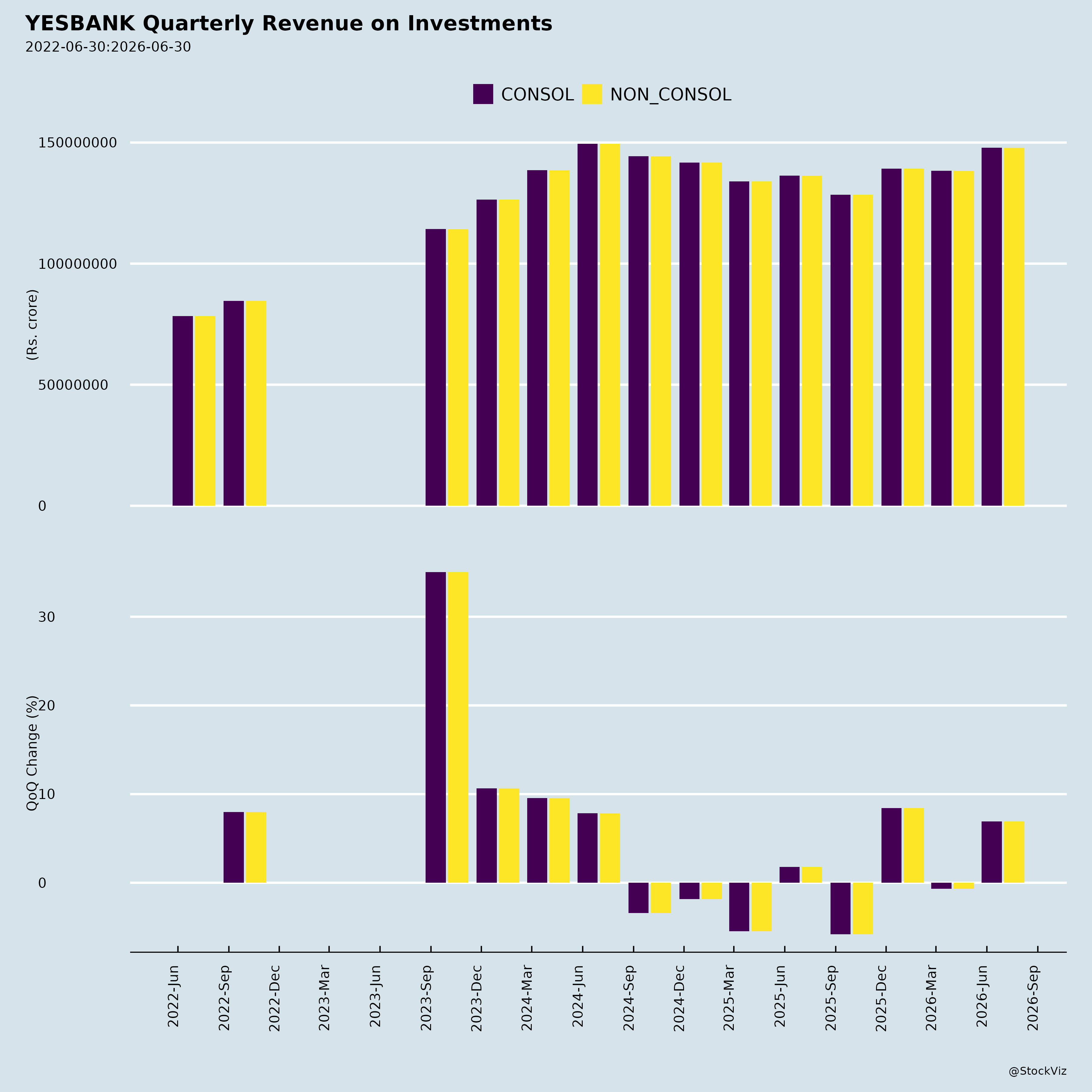
Decline in treasury and non-core income. In Q1FY27, gains from Security Receipts and treasury fell sharply. P&L gain from Security Receipts was INR 86 crore versus INR 338 crore in Q1FY26 and INR 446 crore in Q4FY26. Treasury gains/interest on tax refunds were INR 292 crore in Q1FY27 against INR 484 crore in Q1FY26. The MD & CEO described this as evidence that the underlying franchise is strengthening even as these gains fell.
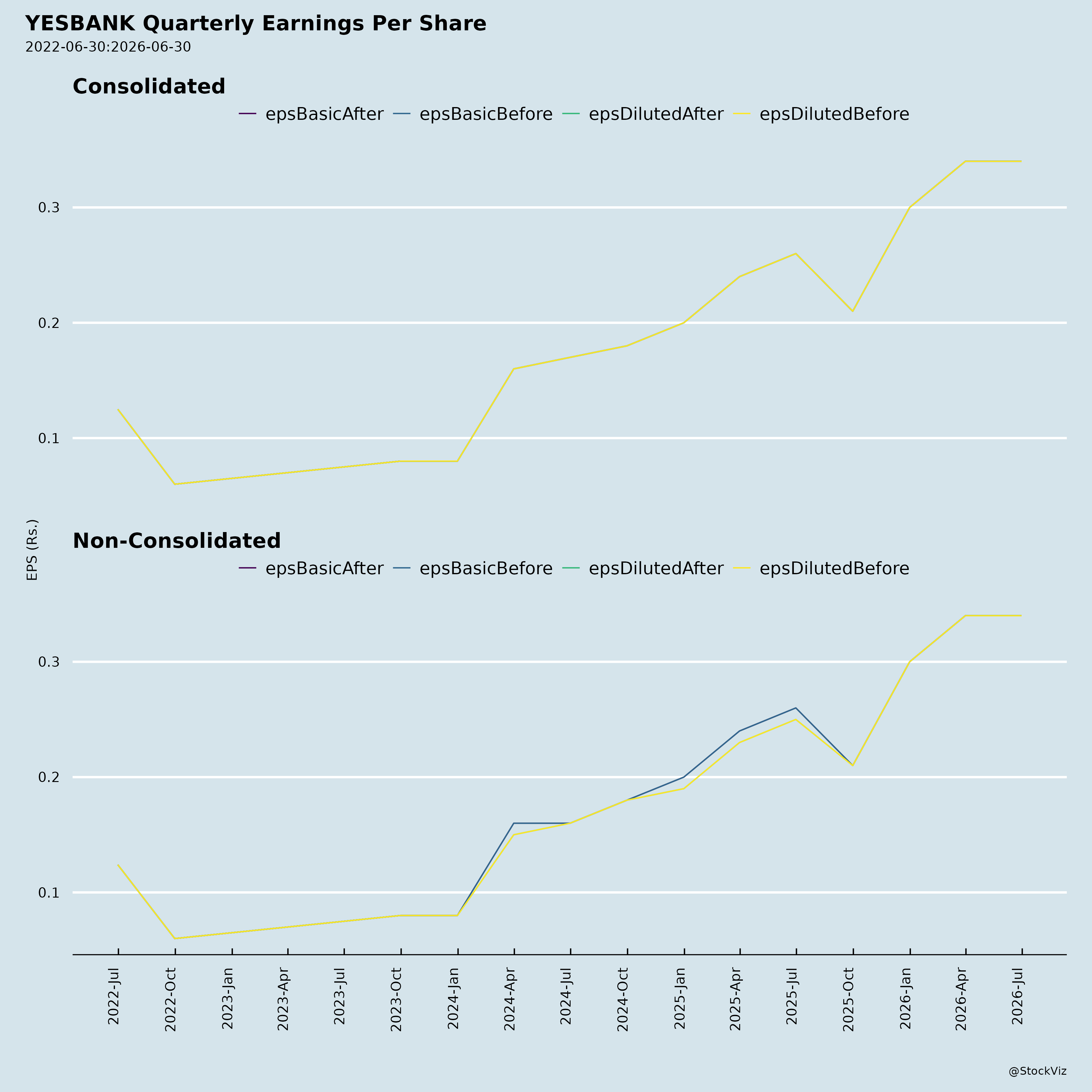
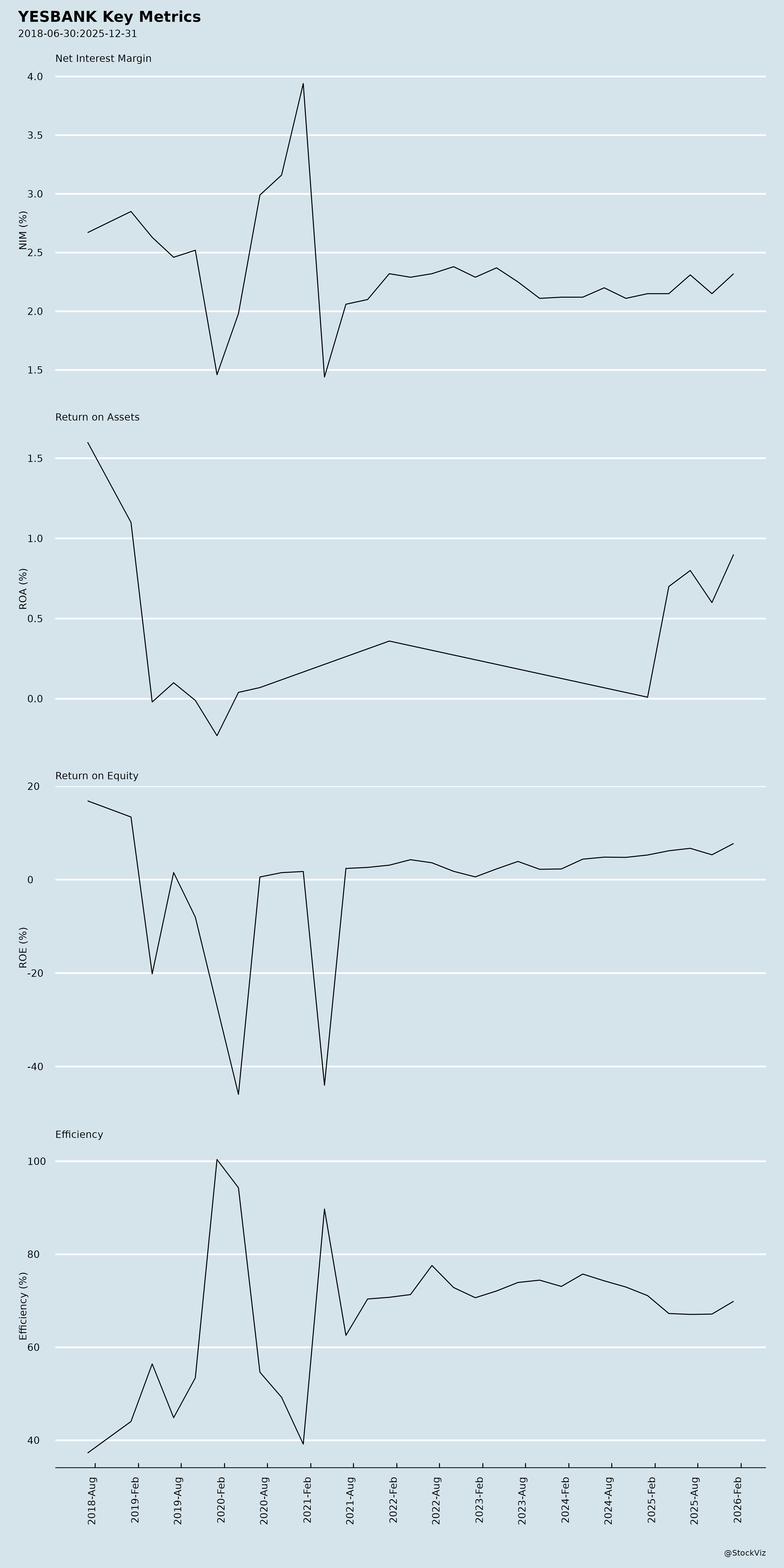
Sequential moderation in some metrics. Net profit was broadly flat quarter-on-quarter (INR 1,071 crore in Q1FY27 versus INR 1,068 crore in Q4FY26, up 0.2%). Return on Assets eased to 0.9% from 1.0% in Q4FY26, and Return on Equity eased to 8.3% from 8.4%. Deposits declined 1.1% Q-o-Q and total assets declined 1.5% Q-o-Q. The CASA ratio fell to 32.7% from 35.1% in Q4FY26. Provisions rose 110.3% Q-o-Q to INR 394 crore, with provision for non-performing advances at INR 507 crore versus INR 85 crore in Q4FY26.
Retail asset growth lagging overall book. Retail Banking advances grew 6.9% Y-o-Y, well below the overall advances growth of 18.3% Y-o-Y, and the retail mix declined to 45% from 49% in Q1FY26. Certain product lines contracted Y-o-Y, including Auto Loans (-23.0%), Used Car Loans (-19.3%) and Commercial Vehicle Loans (-6.0%).
Legacy stress in Inclusive & Social Banking. The overall microfinance book carries 11.8% NPA, described as legacy stress accumulated during an industry-wide credit cycle, though the CGFMU-covered book (now 85% of the portfolio) has 1.7% NPA.
External environment. The Chairman noted the global environment remained challenging, with ongoing conflict in West Asia, geopolitical fragmentation and trade policy uncertainties; the IMF projects global growth moderating to 3.1% in 2026.
Pending AT-1 litigation. Writ petitions, civil suits and complaints challenging the 2020 write-down of AT-1 Bonds remain pending. The Bombay High Court set aside the write-down decision and stock exchange intimation; SLPs filed by the Bank, RBI and the Central Government concluded final arguments before the Supreme Court on May 20, 2026, and the matter is reserved for judgement. Financial impact, if any, will be accounted for in future reporting periods upon the final verdict.
2. Tailwinds and Growth Prospects
Profitability and core earnings. FY2025-26 net profit was INR 3,476 crore, the highest since reconstruction, up 44.5% over FY2024-25. Q1FY27 net profit grew 33.7% Y-o-Y to INR 1,071 crore. Operating profit rose 25.5% Y-o-Y to INR 1,704 crore. NIM expanded to 2.7% (up 20 bps Y-o-Y), aided by lower cost of deposits (down 50 bps Y-o-Y to 5.4%) and reduction in PSL shortfall deposit balances. Core fee growth was 18.7% Y-o-Y.
Balance sheet growth. Advances grew 18.3% Y-o-Y and 4.3% Q-o-Q to INR 285,118 crore, with Corporate & Institutional Banking up 41.4% Y-o-Y and Commercial Banking up 16.9% Y-o-Y. Deposits grew 14.3% Y-o-Y to INR 315,373 crore. Retail disbursements grew 27.5% Y-o-Y. Total deposits crossed INR 3 lakh crore in FY2025-26 and CASA crossed INR 1 lakh crore.
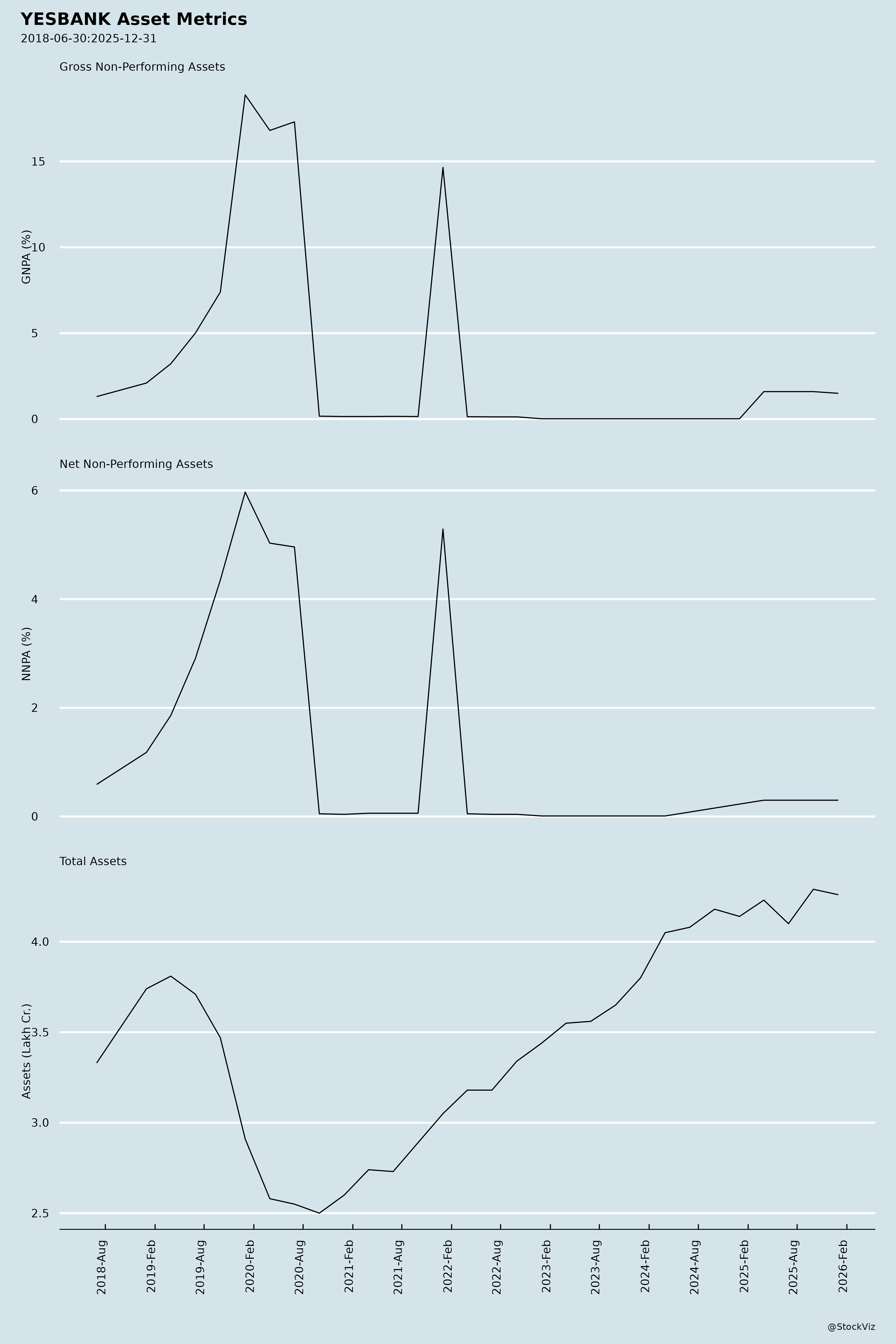
Asset quality improvement. GNPA improved to 1.3% (from 1.6% in Q1FY26) and NNPA to 0.2% (from 0.3%). Gross slippages fell 33.9% Y-o-Y to INR 964 crore. Retail slippages were at their lowest in 10 quarters at INR 843 crore. The 31-90 days overdue book declined to INR 2,445 crore from INR 3,362 crore in Q1FY26.
Capital and funding position. CET-I stood at 14.0% and CRAR at 15.1%. PSL shortfall deposits fell 25.4% Y-o-Y to INR 27,449 crore (5.9% of total assets), with a stated expectation of reducing to below 5% by end-FY27. Average LCR was 138.2%.
Credit rating upgrades. Moody’s upgraded to Ba1 (Stable) from Ba2; S&P assigned an inaugural BB+ (Stable) international rating; CareEdge upgraded to CARE AA+ (Stable) from AA-; ICRA upgraded Infrastructure & Basel III Tier II Bonds to AA (Stable) from AA-.
SMBC partnership. Sumitomo Mitsui Banking Corporation became the largest shareholder with a 24.9% stake, with two nominee directors inducted. The Chairman cited strategic value in corporate banking capabilities, governance practices, risk frameworks and cross-border business access. State Bank of India continues as a significant shareholder with a 10.8% stake.
Fund-raising approvals. Shareholders approved raising of funds via issuance of eligible equity securities and via borrowings/issuance of eligible debt securities, both as Special Resolutions.
ESG positioning. The Bank was included in the FTSE4Good Index Series for the fourth consecutive year, was the only Indian bank in the S&P Global Sustainability Yearbook 2026, and won the ‘Most Sustainable Bank’ award at Business Today’s India’s Most Sustainable Companies 2026.
3. Key Risks
- Litigation risk: The AT-1 Bonds matter is reserved for judgement before the Supreme Court; financial impact, if any, will be accounted for in future periods.
- Provisioning volatility: Non-tax provisions rose sharply Q-o-Q (110.3%) in Q1FY27, with provision for non-performing advances at INR 507 crore versus INR 85 crore in Q4FY26.
- Dependence on non-core income: Treasury and Security Receipts gains fell sharply Y-o-Y, and the Bank noted Q1FY27 profitability was achieved despite significantly lower P&L gains from the SR portfolio and lower treasury income.
- Deposit mix and cost dynamics: CASA ratio declined Q-o-Q to 32.7% from 35.1%, and the Bank noted sharp rate actions during FY26 and Q1FY27 affecting savings account balances.
- Segment concentration in growth: Corporate & Institutional Banking grew 41.4% Y-o-Y, while retail advances grew 6.9% Y-o-Y, with the retail mix declining.
- Legacy stress in specific portfolios: The Inclusive & Social Banking book carries 11.8% NPA overall, though the CGFMU-covered portion has 1.7% NPA.
- External environment: Geopolitical fragmentation, conflict in West Asia and trade policy uncertainties were cited as weighing on global growth.
4. Management Guidance Versus Observed Business Performance
PSL shortfall reduction. Management stated a comprehensive strategy is under execution to substantially reduce RIDF balances over a two-year timeframe, with NIL shortfalls in sub-categories targeted by year end, and mandated deposits in lieu of PSL shortfalls expected to reduce to below 5% of assets by end-FY27. Observed: PSL shortfall deposits fell 25.4% Y-o-Y and 1.7% Q-o-Q to INR 27,449 crore, at 5.9% of total assets as of June 30, 2026, with NIL shortfalls maintained in overall and sub-categories.
Retail asset traction. Management referred to retail advances growth improving “in line with the guidance over past few quarters.” Observed: Retail Banking advances grew 6.9% Y-o-Y and 0.9% Q-o-Q, with retail disbursements up 27.5% Y-o-Y; the retail mix declined to 45% from 49% in Q1FY26.
Profitability trajectory. The Chairman stated the Bank is “better positioned than at any point in its recent history,” with priorities to deepen customer relationships, maintain disciplined risk management, invest in talent and technology, and deliver consistent risk-adjusted returns. Observed: Q1FY27 net profit grew 33.7% Y-o-Y but was flat Q-o-Q (0.2%); RoA eased to 0.9% from 1.0% in Q4FY26; RoE eased to 8.3% from 8.4%.
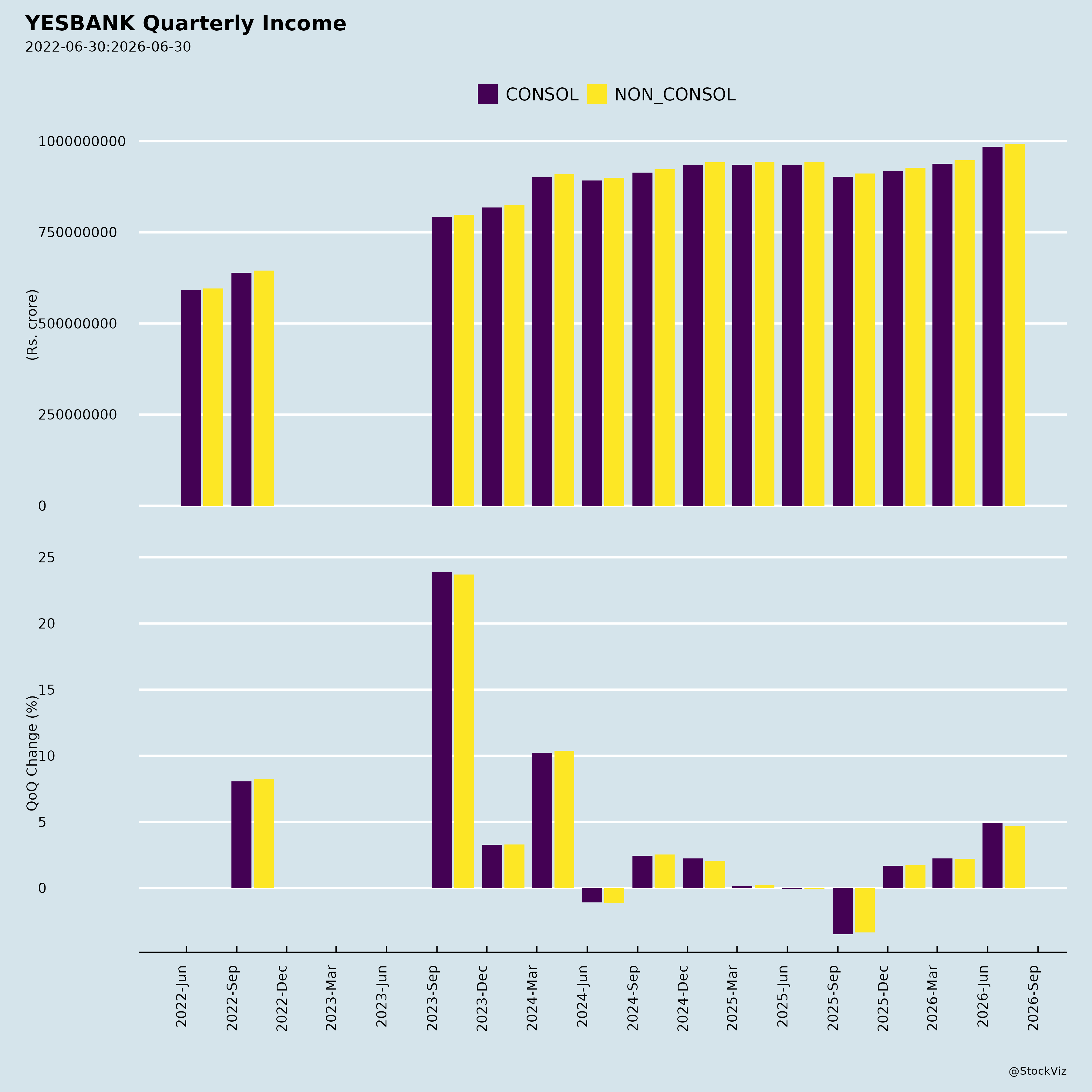
Cost efficiency. Observed: Cost-to-income ratio improved to 62.8% in Q1FY27 from 67.1% in Q1FY26 and 63.0% in Q4FY26, with operating expenses growing 4.1% Y-o-Y against total income growth of 11.2% Y-o-Y.
Asset quality. Observed: GNPA at 1.3% and NNPA at 0.2%, with the MD & CEO stating asset quality strengthened as slippages eased; retail slippages were at their lowest in 10 quarters.
Leadership transition. The Chairman noted the Bank enters its next chapter under Mr. Vinay M. Tonse, with continuity of strategy combined with fresh perspectives. Observed: Mr. Tonse is Managing Director & CEO and signed the Q1FY27 results; Mr. Prashant Kumar’s six-year leadership was acknowledged as having rebuilt governance, balance sheet health and stakeholder trust.
Broker Narrative
The broker started with a Sell focused on weak Q1FY24 profitability, NIM pressure, corporate-book deleveraging, high opex, and AT-1 litigation uncertainty, while treating healthy retail loan/fee growth as the main support. By the final Hold report, overall profitability and asset quality had improved, but the narrative shifted to sluggish retail loan growth, contracting core fees, deposit fragility, and the still-unresolved AT-1 overhang, with corporate loans now the growth engine. Persistent themes were AT-1 risk and CASA/deposit fragility; changed themes were the corporate book (drag to driver) and NIM/opex pressure (stressed to stable/contained).
Fears that came true
- The early CASA/deposit weakness materialized: total deposits declined 1.1% QoQ and CA balances fell 14.6% QoQ by the final report, a deterioration consistent with the final report’s -2.0% actual return.
- The early concern about intense retail competition and a longer retail gestation period was borne out: retail loan growth slowed to 7% YoY/1% QoQ, retail mix fell to 45%, and core fee income contracted sharply.
- The AT-1 bond litigation uncertainty flagged at the outset never resolved; it remains an explicit downside risk in the final report, so the
Broker Timeline
9 broker calls · 2023-07-24 to 2026-07-20
Copyright © 2023 SAS Data Analytics Pvt. Ltd. All rights reserved.