YATHARTH
Equity Metrics
September 24, 2026
Yatharth Hospital & Trauma Care Services Limited
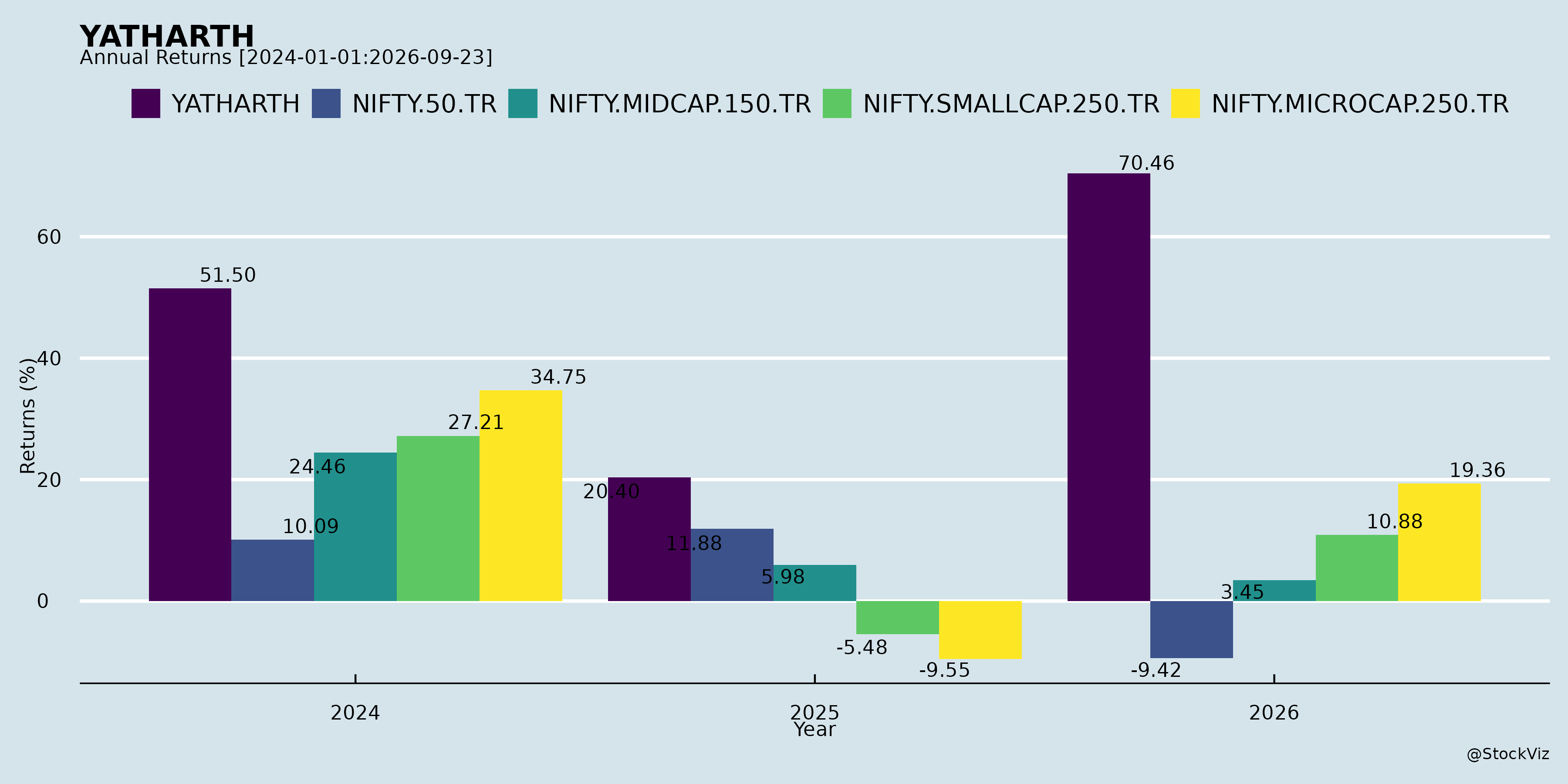
Annual Returns

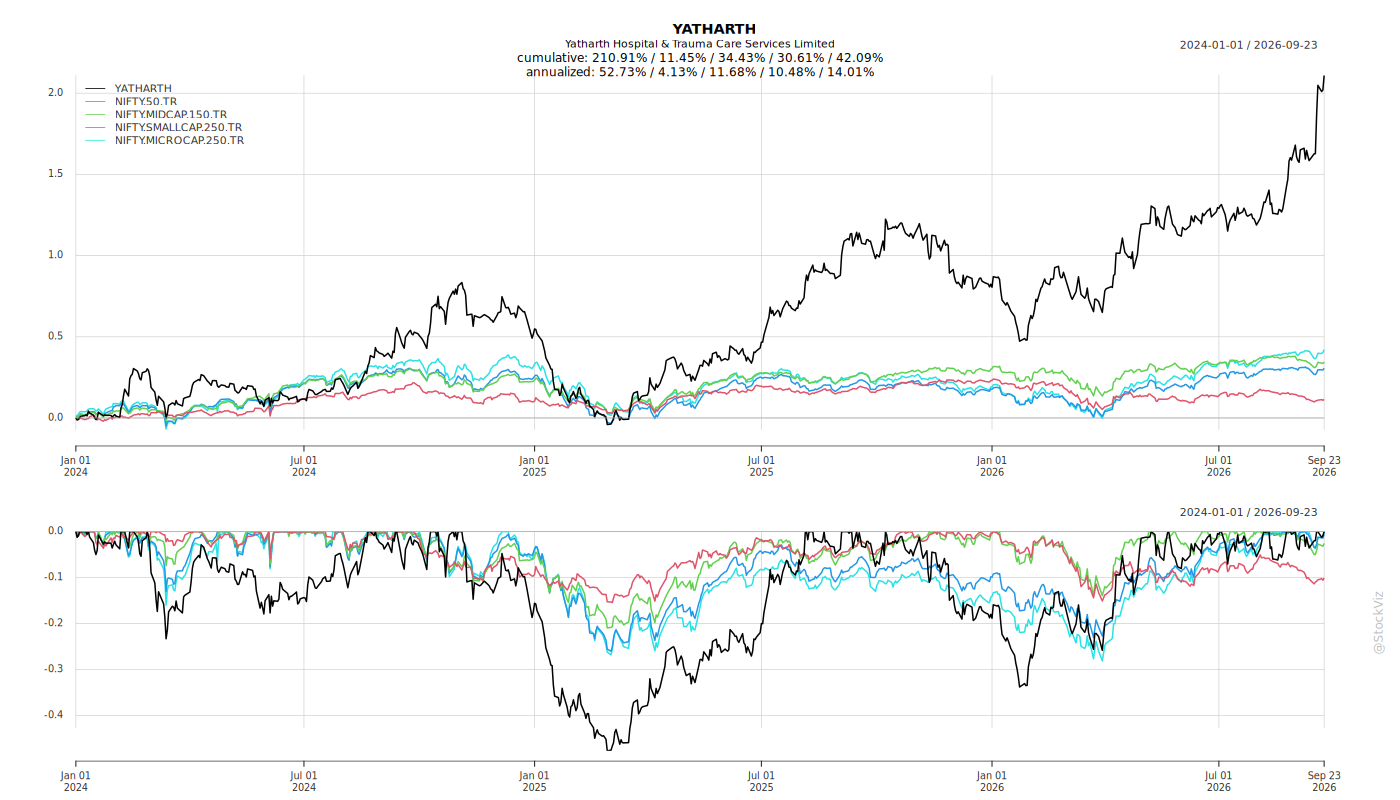
Cumulative Returns and Drawdowns
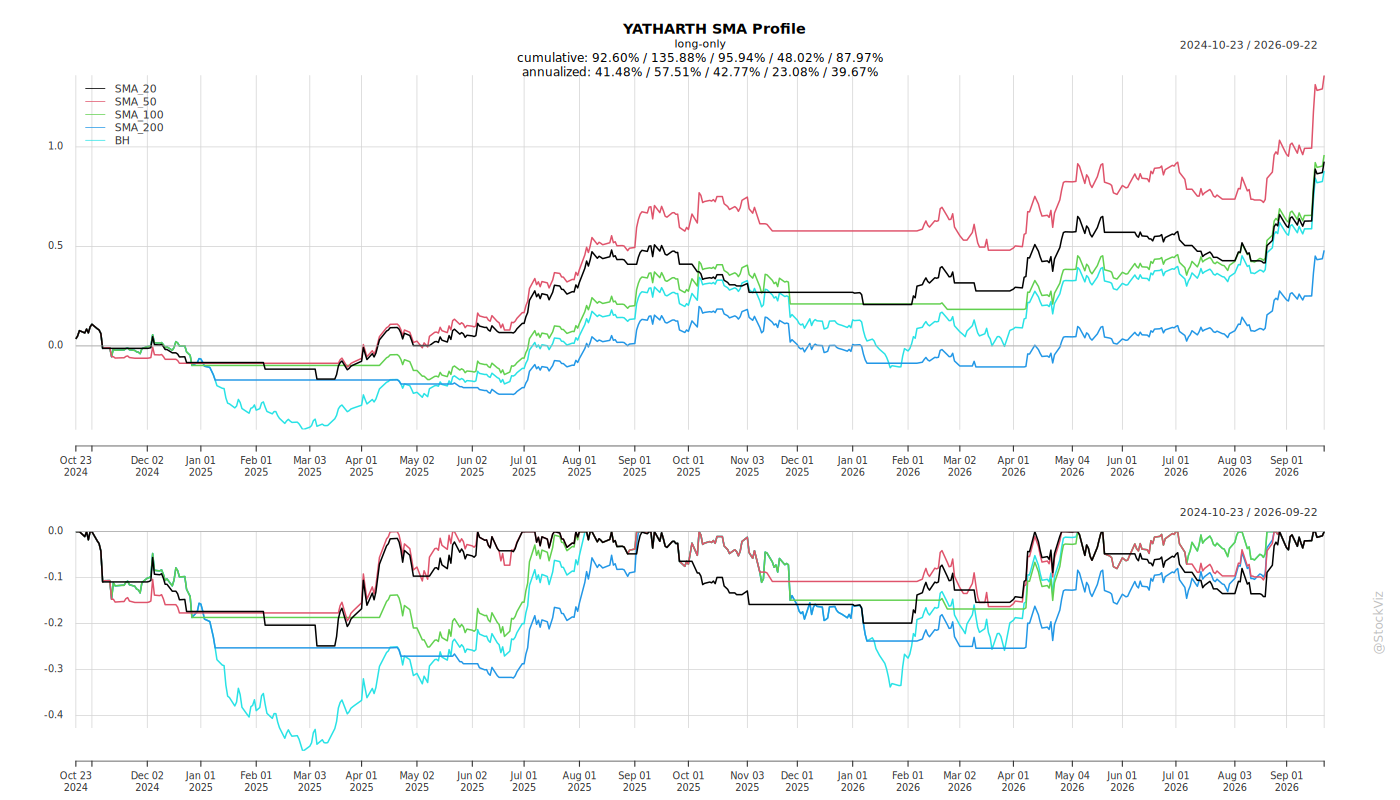
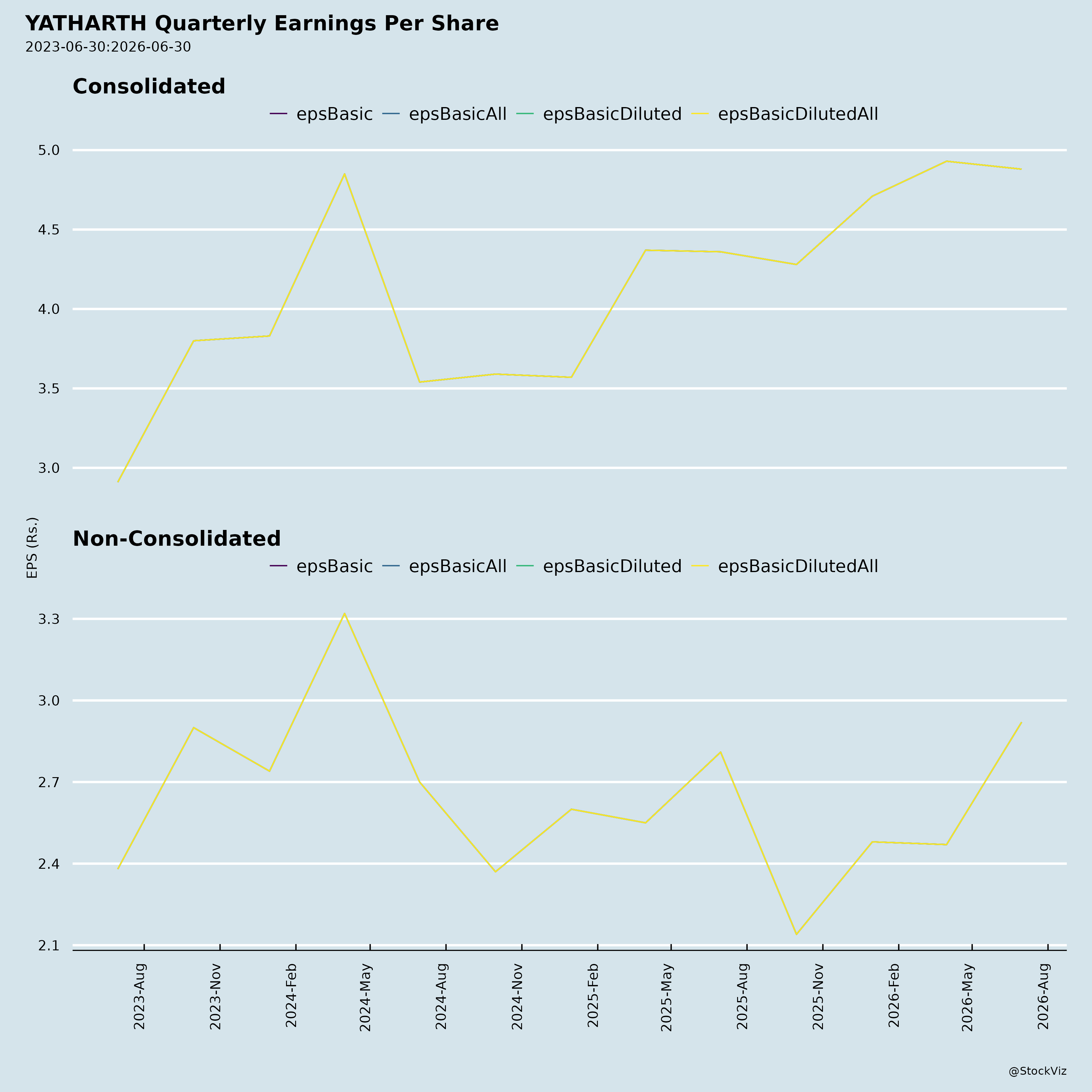
Fundamentals
Ownership
Margined
AI Summary
asof: 2026-09-17
Yatharth Hospitals — Q1 FY27: Headwinds, Tailwinds, Risks and Guidance vs Performance
1. Headwinds and Challenges
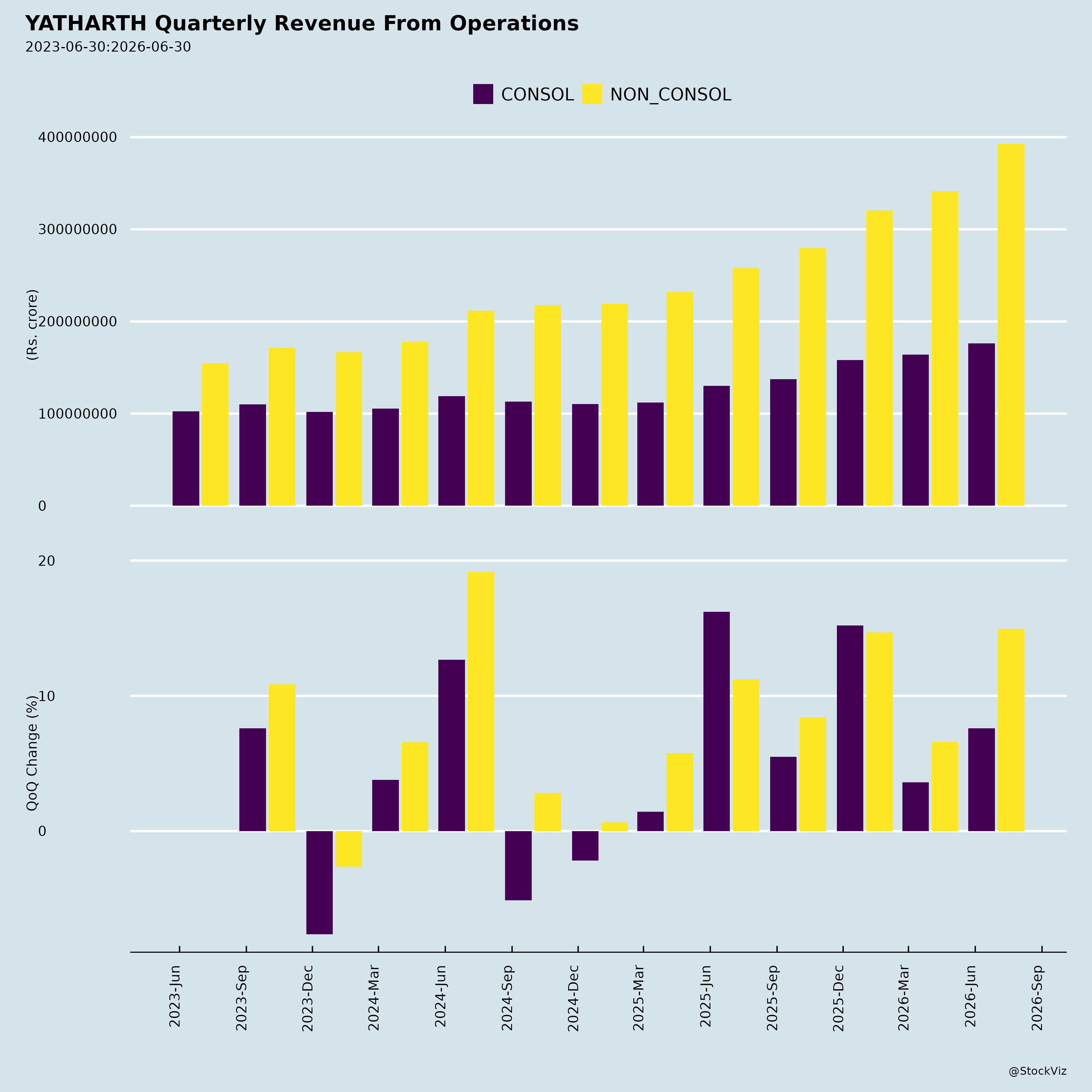
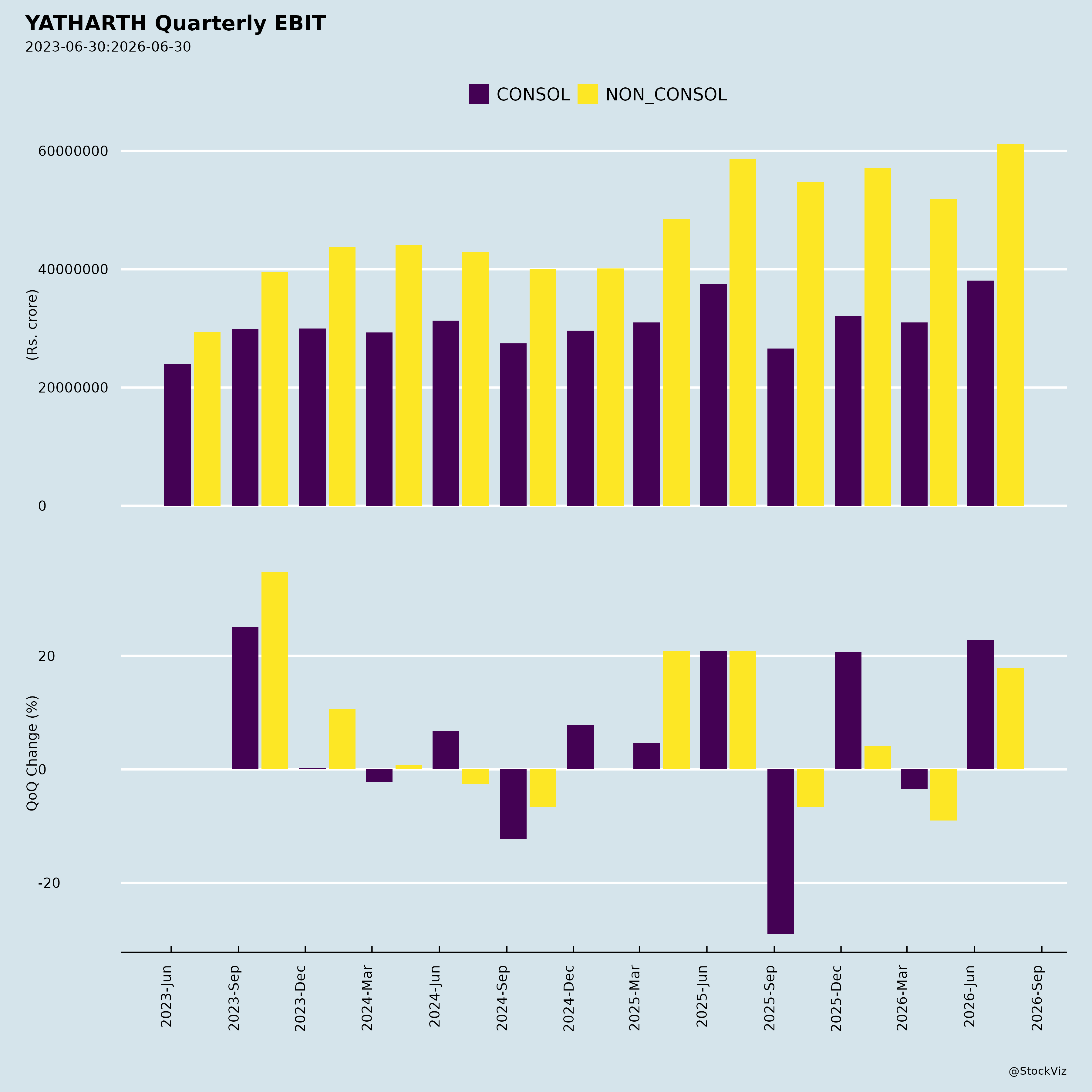
Ramp-up drag from newer hospitals. The consolidated EBITDA margin for Q1 FY27 stood at 23.3%, down 209 bps year-on-year from 25.4%, and marginally lower than Q4 FY26’s 23.4%. Management attributed this to losses at the two newest facilities — Model Town (New Delhi) and Faridabad Sector-20. Excluding these two, the adjusted EBITDA margin was 28.1%. Management noted that Faridabad Sector-20 is at only around 4–5% EBITDA margin despite breaking even, and that Model Town is expected to break even only between Q3 and Q4 of FY27.
PAT margin compression from capex-related costs. PAT margin fell to 11.6% in Q1 FY27 from 16.2% in Q1 FY26 and 13.1% in Q4 FY26. Depreciation and amortisation rose 89.3% year-on-year to Rs 282 million, and financial cost rose to Rs 66 million from Rs 2 million a year earlier. Management linked this to significant capacity addition over the past 12 months, the Gurugram acquisition, oncology machine orders for Faridabad and Model Town, and higher bank debt (from about Rs 210 crore in March to about Rs 300 crore). Management indicated depreciation should run at roughly Rs 20–30 crore per quarter (about Rs 29 crore projected per quarter) and interest cost should stay around Q1’s Rs 6.6 crore level, with no fresh loans planned.
Occupancy optics at newer hospitals. Reported occupancy at Model Town (29%) and Faridabad Sector-20 (49%) appeared low, but management explained this reflects an expanded census-bed base — census beds at Model Town rose from 100 to 150 and at Faridabad Sector-20 from 100 to 200, adding 160 new census beds in the quarter. Management maintained that IPD volumes and revenue are rising quarter-on-quarter and that Model Town is on track against its 15–17 month breakeven guidance.
Payer-mix optics. Government payer mix was reported at close to 40% for the group, up from about 36% previously, which management attributed to a 1–2% CGHS price revision rather than higher volumes; government volumes are described as declining quarter-on-quarter. New hospitals remain above 90% cash and private insurance.
Regulatory overhang. A recommendation to limit hospital room charges to 3-star hotel rates was discussed. Management declined to comment substantively, noting it is a proposal and that similar past proposals (stent, implant and medicine caps) did not materially harm the sector, and that CGHS rates were recently revised upward.
Tax demands. The company and certain subsidiaries received final assessment orders resulting in aggregate tax demands of Rs 29.66 crore plus interest of Rs 11.42 crore for the company (AY 2014-15 to AY 2024-25), Rs 8.50 crore plus interest of Rs 2.48 crore for AKS (AY 2022-23 to AY 2024-25), and Rs 5.64 crore plus interest of Rs 2.04 crore for Ramraja (AY 2023-24). No provision has been made in the financial statements for these demands.
Sector-level constraints. Rising disease burden, healthcare workforce shortages, and high capital investment requirements for hospital expansion, medical technology and advanced infrastructure were identified as industry headwinds.
Rising capex per bed. Capex per bed has risen from about Rs 30.7 lakh to about Rs 61.4 lakh over three years, with management guiding Rs 75–80 lakh per bed for the remaining ~1,800 beds, and Gurugram costing close to Rs 1 crore per bed, driven by higher land prices, equipment intensity and hospital scale.
2. Tailwinds and Growth Prospects
Record quarterly performance. Q1 FY27 revenue was the highest ever at Rs 3,927 million, up 51% year-on-year and 15% quarter-on-quarter. EBITDA was a record Rs 917 million, up 39% year-on-year and 15% quarter-on-quarter. PAT was a record Rs 454 million. Cash profit (PAT plus depreciation) rose 32% year-on-year.
Acquisition playbook delivering. Faridabad Sector-20 achieved EBITDA breakeven in a record nine months, ahead of the 12–14 month expectation, with monthly revenue of Rs 12–13 crore, ARPOB near Rs 40,000 (potential Rs 45,000–50,000), and over 90% cash/TPA mix. Model Town reached ARPOB near Rs 50,000 with monthly revenue of about Rs 8 crore and over 90% cash/TPA mix. Agra achieved over 20% EBITDA in its first full quarter of integration, with monthly revenue of Rs 9–10 crore and ARPOB around Rs 30,000. New hospitals contributed 27% of group revenue versus 22% in Q4 FY26 and 9% in Q1 FY26.
Mature hospitals compounding. Existing Noida and Jhansi-Orchha hospitals contributed Rs 2,862 million, growing 22% year-on-year, with group occupancy at about 68% and Noida and Jhansi-Orchha above 90%. Group ARPOB reached an all-time high of Rs 34,758, up 7% year-on-year. Noida Extension and New Delhi crossed Rs 50,000 ARPOB for the first time.
Capacity pipeline. Announced capacity is about 3,250 beds, with total capacity to exceed 3,200 beds including Gurugram (250 beds, expected live Q1 FY28, ARPOB potential Rs 50,000+) and brownfield additions of about 450 beds across Greater Noida and Noida Extension (partly live in 15 months, remainder in 18–19 months). The stated target is 5,000 beds, which management now expects to reach in about two and a half years, earlier than the earlier three-year guidance.
Speciality and payer mix upgrade. Oncology already contributes close to 10% of group revenue with one LINAC at Noida Extension; additional LINACs are planned at Faridabad Sector-20 and New Delhi. Robotic surgery (8 robots, 1,200+ robotic surgeries), transplants (260+), and JCI accreditation at Noida Extension support higher ARPOB. International outreach expanded with an information centre in Uzbekistan, partnerships across Cameroon, Kenya and Sudan, OPD camps across Asia, Africa and the Middle East, and an exclusive hospital partnership with Noida International Airport.
Shareholder returns and talent alignment. The Board approved a maiden interim dividend of 5% of face value (Rs 0.50 per share, totalling Rs 4,81,77,178.50, record date August 14, 2026), the first ESOP grant under ESOP Scheme 2024, and a new ESOP Scheme 2026 covering 2,50,000 shares. Doctor attrition was cited at about 7% overall and under 3–4% for senior doctors.
Sector tailwinds. Expansion of high-end specialties, healthcare infrastructure growth, digital and advanced diagnostics adoption, and strong private equity, M&A and investment activity were identified as opportunities.
Tax demand relief prospect. The company is filing appeals before the CIT (Appeals) and is confident of obtaining substantial relief and a significant reduction in the demands based on internal assessment and external tax consultant advice.
3. Key Risks
- Continued EBITDA drag from Model Town until its expected Q3–Q4 FY27 breakeven, and from Gurugram once it goes live in Q1 FY28, with management indicating the drag will shift to new facilities as they are added.
- Depreciation and interest costs remaining elevated, with management guiding depreciation of about Rs 29 crore per quarter and interest cost around Q1’s Rs 6.6 crore level for the next three quarters.
- Execution risk on the ~1,800-bed pipeline, including monsoon-related construction delays at Greater Noida and pending final drawings at Noida Extension.
- Rising capex per bed (Rs 75–80 lakh guided, ~Rs 1 crore at Gurugram) and reliance on internal accruals plus debt, with management comfortable up to about 2x trailing twelve-month EBITDA.
- Regulatory risk from proposals to cap room charges, though management views this as a proposal with precedent of government support for private hospitals.
- Outstanding tax demands of Rs 29.66 crore plus Rs 11.42 crore interest (company), Rs 8.50 crore plus Rs 2.48 crore interest (AKS), and Rs 5.64 crore plus Rs 2.04 crore interest (Ramraja), with no provision made and relief dependent on appellate outcomes.
- Sector-level constraints: workforce shortages, high capital intensity, and competitive intensity in NCR, particularly around Model Town where 2–3 large facilities operate within a 10 km radius.
- Payer-mix sensitivity: government mix at ~40% group level, though volumes are declining and new hospitals are kept below 10% government business.
4. Management Guidance vs Observed Performance
| Guidance | Observed in Q1 FY27 |
|---|---|
| FY27 revenue growth to surpass FY26’s 37% | Q1 FY27 revenue grew 51% year-on-year; management stated FY27 will “easily surpass” last year’s growth |
| FY27 EBITDA margin upwards of 24% | Consolidated EBITDA margin was 23.3%; adjusted margin excluding Model Town and Faridabad Sector-20 was 28.1% |
| ARPOB growth of 9–10% | Group ARPOB rose 7% year-on-year to Rs 34,758; management reiterated 8–10% annual ARPOB growth and 9–10% as the right estimate |
| Faridabad Sector-20 breakeven in 12–14 months | Achieved EBITDA breakeven in 9 months |
| Model Town breakeven in 15–17 months | On track; breakeven expected Q3–Q4 FY27 |
| Agra 20%+ EBITDA in first full quarter | Achieved over 20% EBITDA |
| New hospitals to reach 15–20% EBITDA within 15–18 months post-breakeven; upwards of 25–27% within two years | Not yet observable; Agra already near 20–23% |
| 5,000 beds in three years | Management now expects to reach it in about two and a half years, with 3,200+ beds already announced |
| Gurugram live by Q1 FY28 | Under construction; on track per management |
| No fresh loans; depreciation ~Rs 29 crore/quarter; interest ~Rs 6.6 crore/quarter | Q1 FY27 depreciation Rs 282 million, financial cost Rs 66 million; management guided similar run-rate for next three quarters |
| One new hospital addition per year | Management stated FY27 should see one new asset addition; talks ongoing for premium assets in capital cities of nearby states |
| Consolidated EBITDA margin of 28% | Management explicitly stated it is not targeting 28% at consolidated level anytime soon, citing continued new hospital additions |
Broker Narrative
The narrative remained consistently bullish (Buy) on YATHARTH’s Delhi-NCR expansion, new hospital ramp-up, and ARPOB growth, but the emphasis shifted from a ‘temporary’ Q2FY26 margin hiccup to a more persistent cost and margin challenge. The first report framed new hospital launches as a short-term profitability drag and expected CGHS/GST tailwinds to help margins; the last report acknowledged continued EBITDA margin contraction, surging employee/operating expenses, higher depreciation/interest costs, and newer hospitals still weighing on margins. Growth optimism persisted, but the margin recovery thesis weakened, with the bull case pivoting to revenue beats, record ARPOB, and premium/brownfield expansion.
Fears that came true
- EBITDA margin contraction flagged in Q2FY26 persisted—last report still showed EBITDA margin down 167 bps YoY to 23.3%, below the 23.7% estimate.
- New hospital launch/ramp-up costs did not fade quickly; last report said newer hospitals and ramp-up costs continue to weigh on margins, even though improving.
- Expansion-related cost pressures materialized—employee/operating expenses rose 129.5% YoY and depreciation/interest surged, crushing PAT margin to 12.0% and coinciding with actual returns far below the Buy call (last predicted +22.4% actual -1.3%).
Optimism that failed
- The guided 8–10% annual ARPOB growth did not materialize—ARPOB rose only 7.3% YoY to INR 34,758.
- Expected EBITDA margin tailwinds from CGHS rate revision and GST changes failed to deliver visible margin improvement, as EBITDA margin stayed below estimates and contracted YoY.
- The initial assumption that new hospital profitability impact would be temporary proved too optimistic; margin pressure from newer hospitals continued through the last report.
Copyright © 2023 SAS Data Analytics Pvt. Ltd. All rights reserved.