V2RETAIL
Equity Metrics
November 18, 2026
V2 Retail Limited
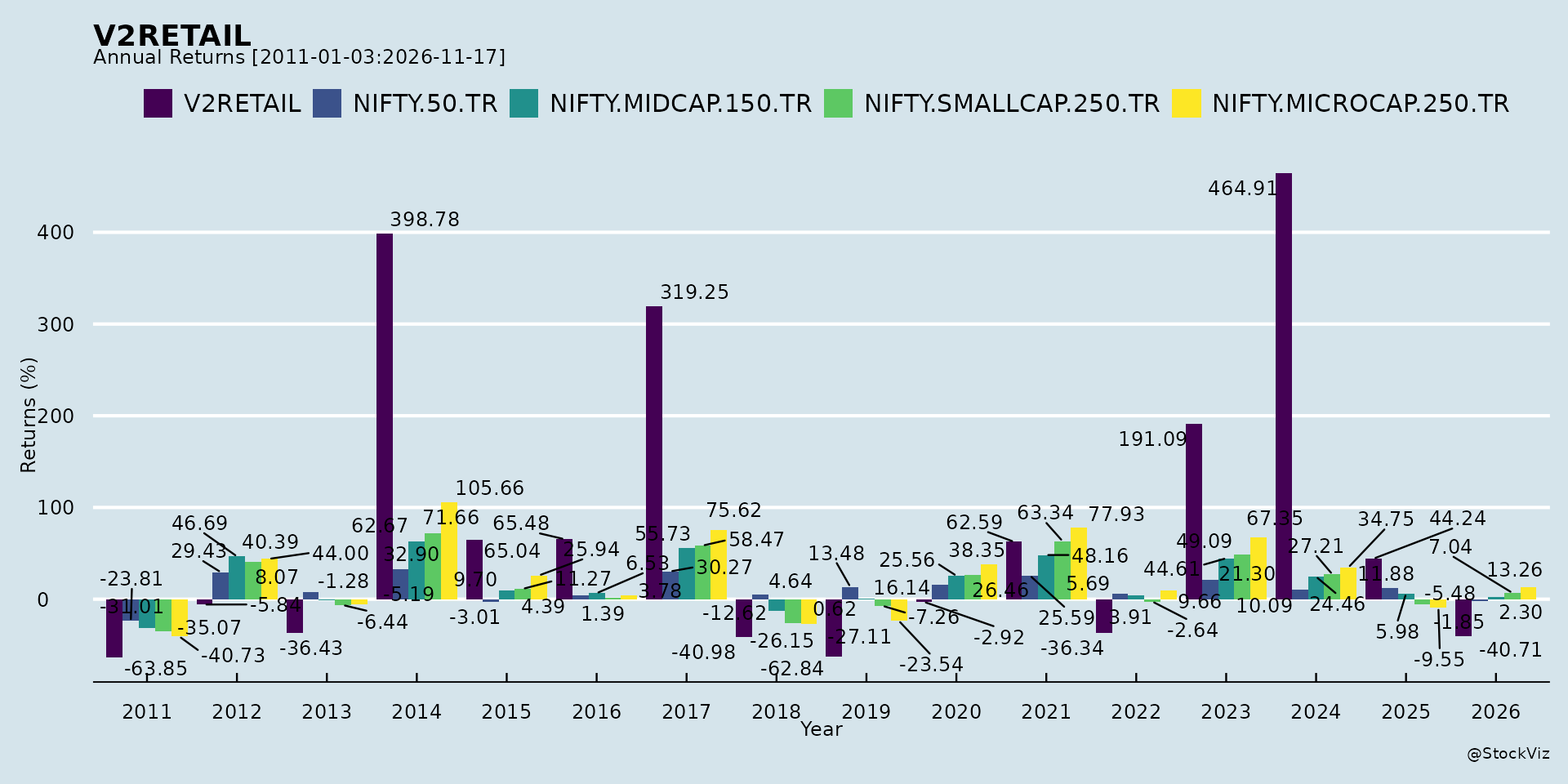
Annual Returns
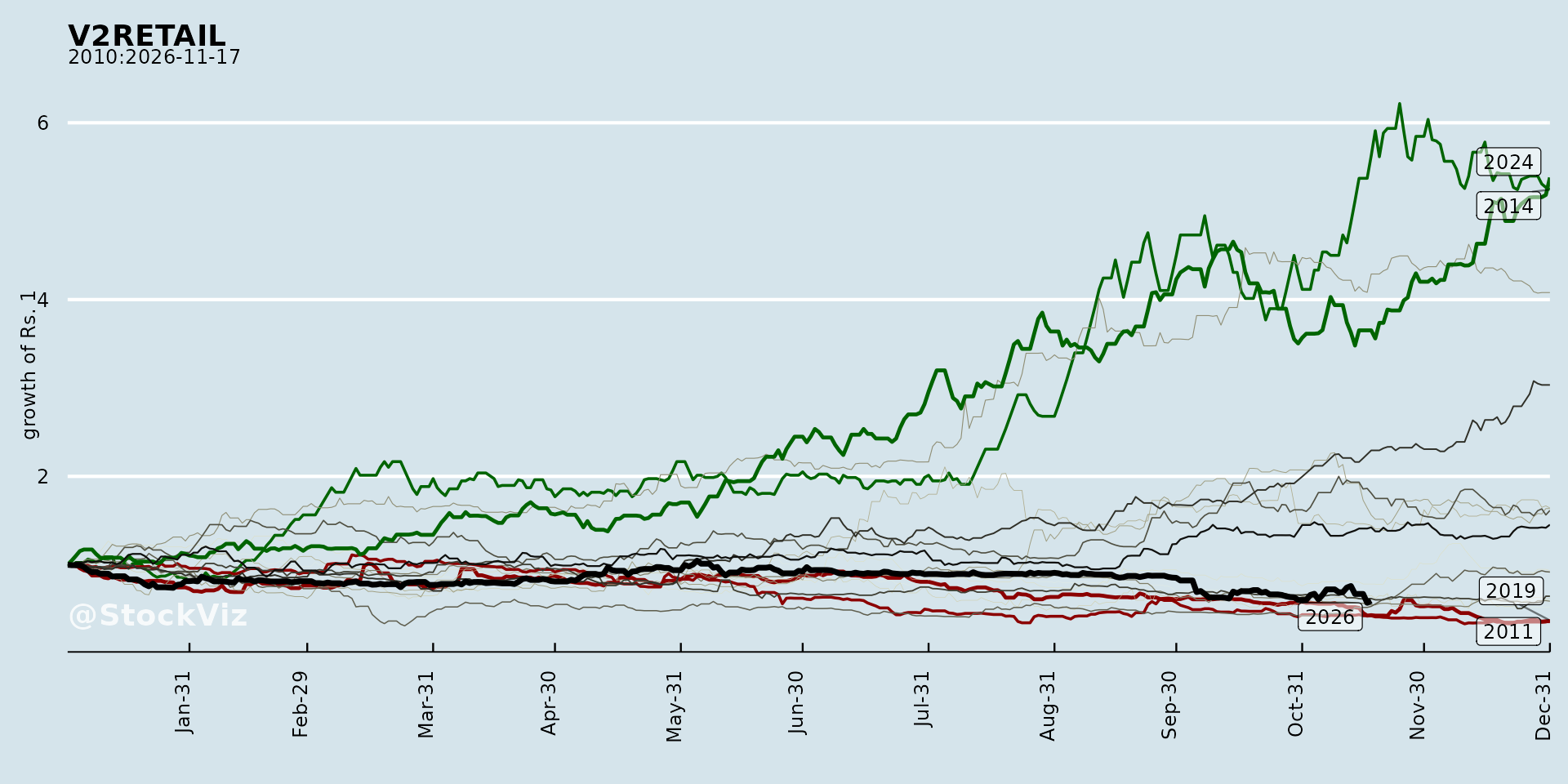
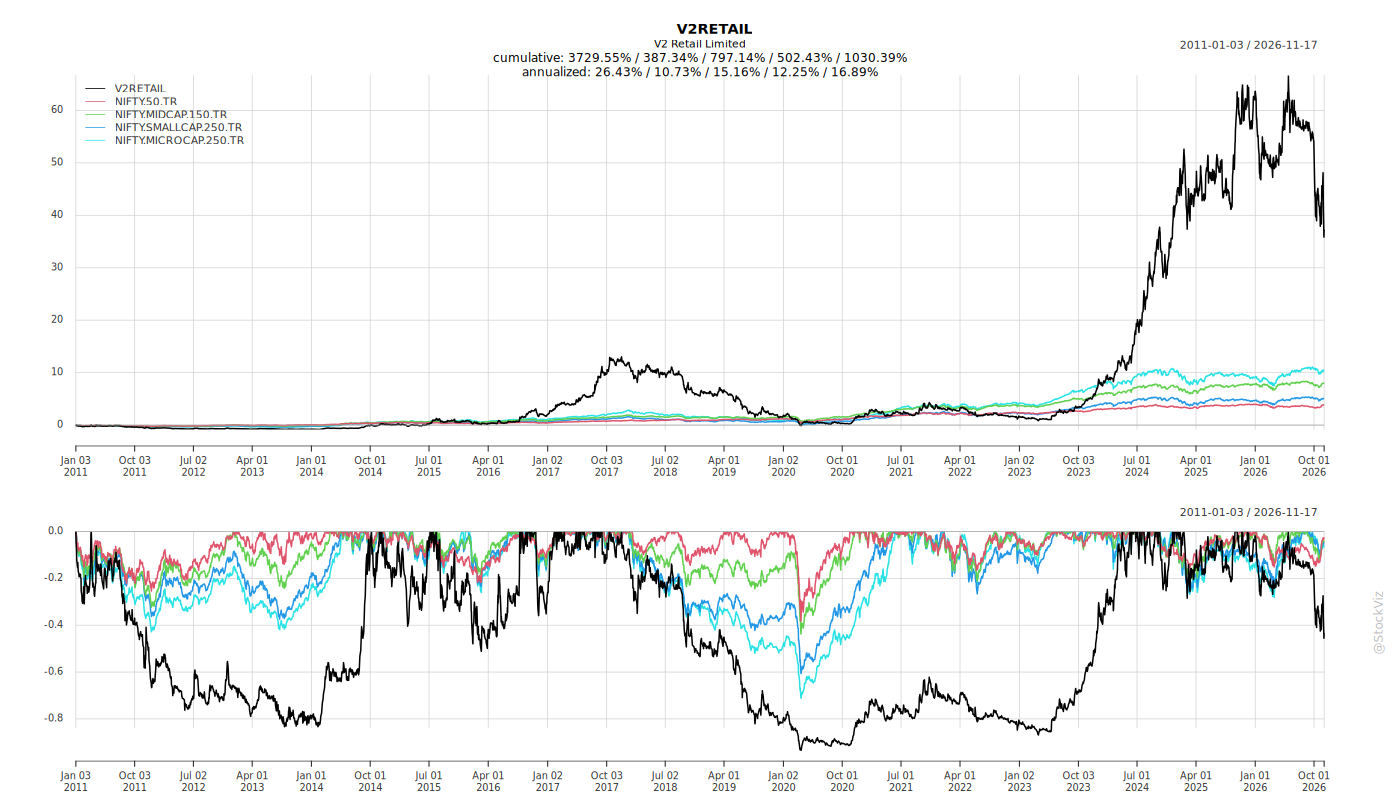
Cumulative Returns and Drawdowns
Fundamentals
Ownership
Margined
AI Summary
asof: 2026-09-17
V2 Retail — Q1 FY27 Announcements: Headwinds, Tailwinds, Risks and Guidance vs Performance
1. Headwinds and Challenges
Input cost inflation and price pass-through. Management stated that raw material prices have risen and that the impact will begin to show from the third quarter, since most orders through the end of the second quarter were already placed and the yarn and fabric pipeline was in place. The expected increase is about 4% to 5% in overall garment cost, which the company intends to pass on to consumers. Management noted that historically such increases may impact volumes slightly but are offset by higher average selling prices, with limited impact on value growth.
Gross margin contraction. Gross margin for Q1 FY27 stood at 28.6% compared with 29.5% in Q1 FY26 (28.6% versus 29.4% on a pre-Ind AS basis). Management attributed this to a 30-day Adhik Maas period in the quarter, which reduced full-price sales from 92% to 90%, and to a slowdown in the market and fewer wedding dates, which it said particularly affects Tier 2 and Tier 3 towns.
Seasonal distortion and demand visibility. Management said the bulk of sales occurs during the two-month festive season, and that with festivals shifting from Q2 to Q3, Q2 and Q3 need to be assessed cumulatively. It declined to draw conclusions on demand from July and August alone.
Higher capex per store. Store capex has risen from about INR1.1 crores to INR1.2–1.22 crores, a roughly 10% increase, attributed to rising prices. Management confirmed it is not slowing its store-opening plan because of this.
Elevated inventory from safety stocking. Due to geopolitical tension, the company increased safety stock in the warehouse for seamless stock availability, resulting in higher inventory levels. Management said it will reduce this safety stock once the situation normalizes, targeting inventory of around 100 days (with a stated target range of 90–100 days) and creditors at around 45–50 days.
New store productivity gap. New stores’ sales per square feet are about 34% lower than mature stores. Mature stores (more than two years old) are performing at almost INR1,070–1,100 per square feet, while the new store cohort is operating at more than INR730–740 per square feet. Management said 10–12 stores are performing below INR600 per square feet, but considered it too early to conclude on those stores.
Customer experience gaps. An analyst cited research across roughly 100 V2 stores in 11–12 states showing an average Google rating of about 3.6 versus over 4.1–4.2 for organized value retail peers, with about 85% of negative reviews relating to rude staff behaviour or long billing queues due to understaffing. Management said it does not focus on Google reviews and instead uses internal NPS links sent after billing (piloted with about 40% of customers), with store team incentives linked to NPS scores, and has deployed AI on CCTV cameras to flag queues beyond a benchmark line, notifying area and regional managers.
Competitive intensity. Management acknowledged competition as a risk in any business, noting that about 80% of its stores already have at least three to four other value fashion retailers operating in the same space, and that its growth has come despite competition.
Macro and other risks cited in the source material. Risks and uncertainties cited include fluctuations in earnings, ability to manage growth, domestic and international competition, economic growth in India and abroad, ability to attract and retain highly skilled professionals, time and cost overruns on contracts, management of international operations, government policies, regulations, and interest and fiscal costs prevailing in the economy.
2. Tailwinds and Growth Prospects
Structural opportunity in value fashion. Management described India’s retail landscape as undergoing structural transformation: consumption expanding beyond metros, organized retail gaining market share, and consumers in smaller cities becoming more connected, aware and willing to spend on better quality products. It stated India’s value fashion market still has significant headroom for organized retail penetration.
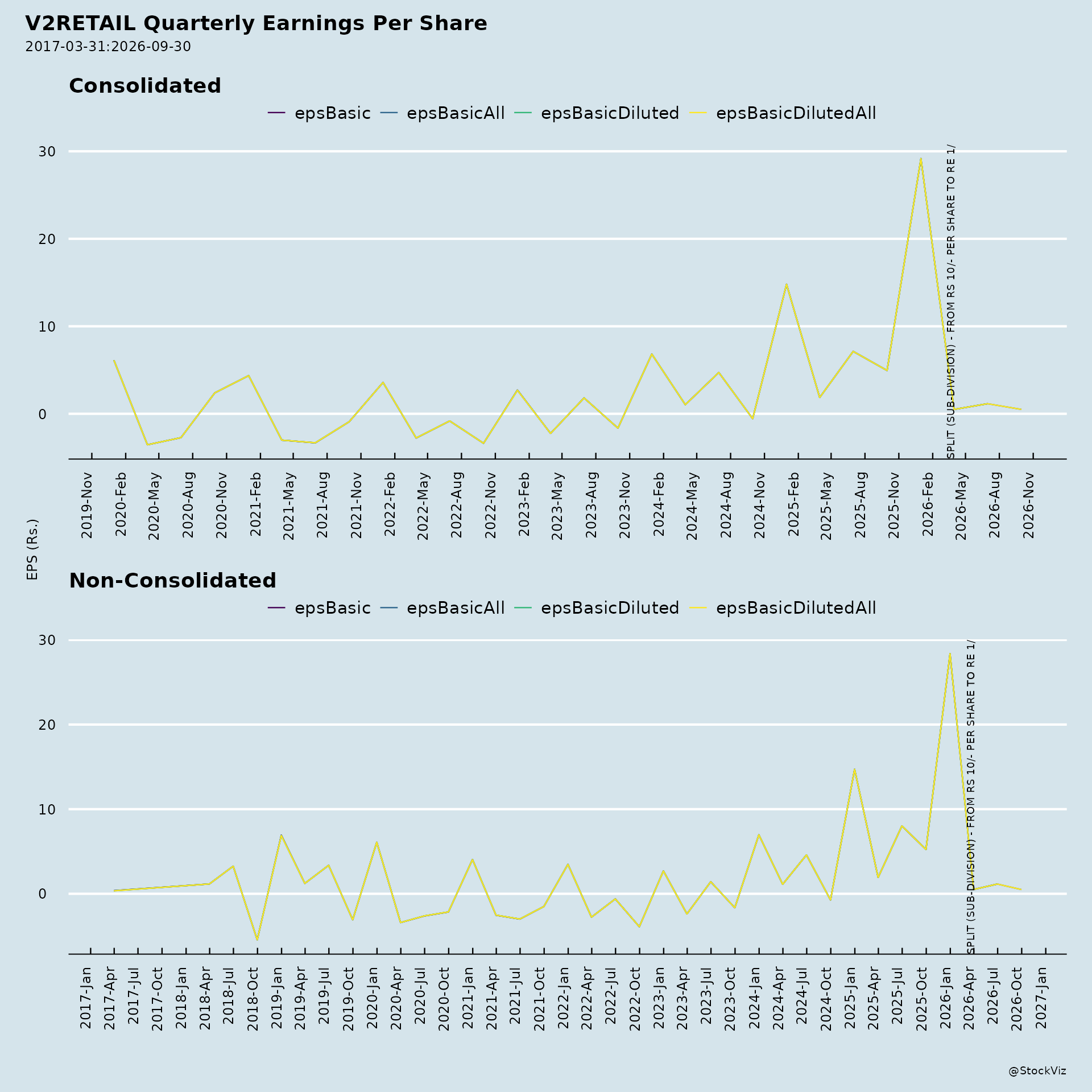
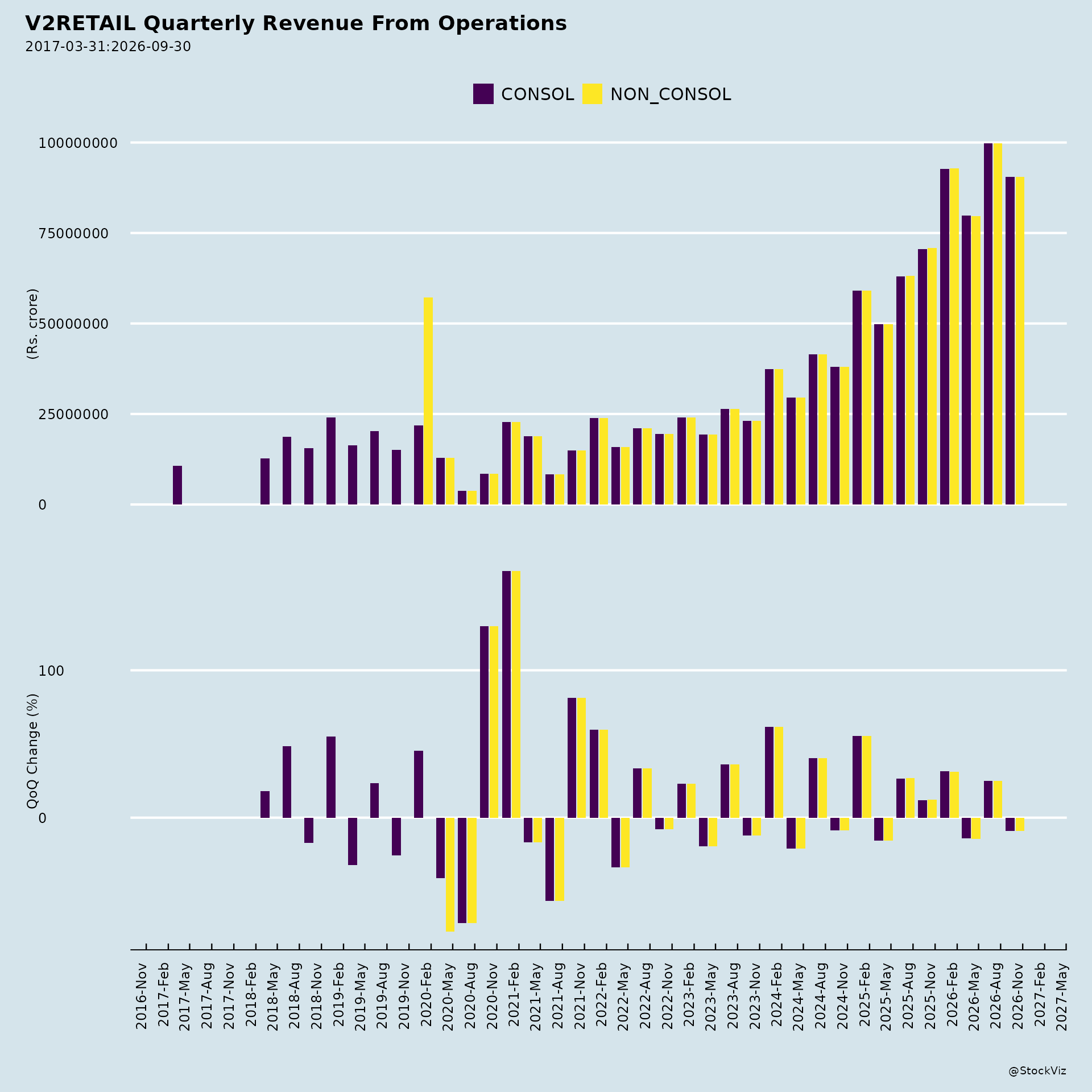
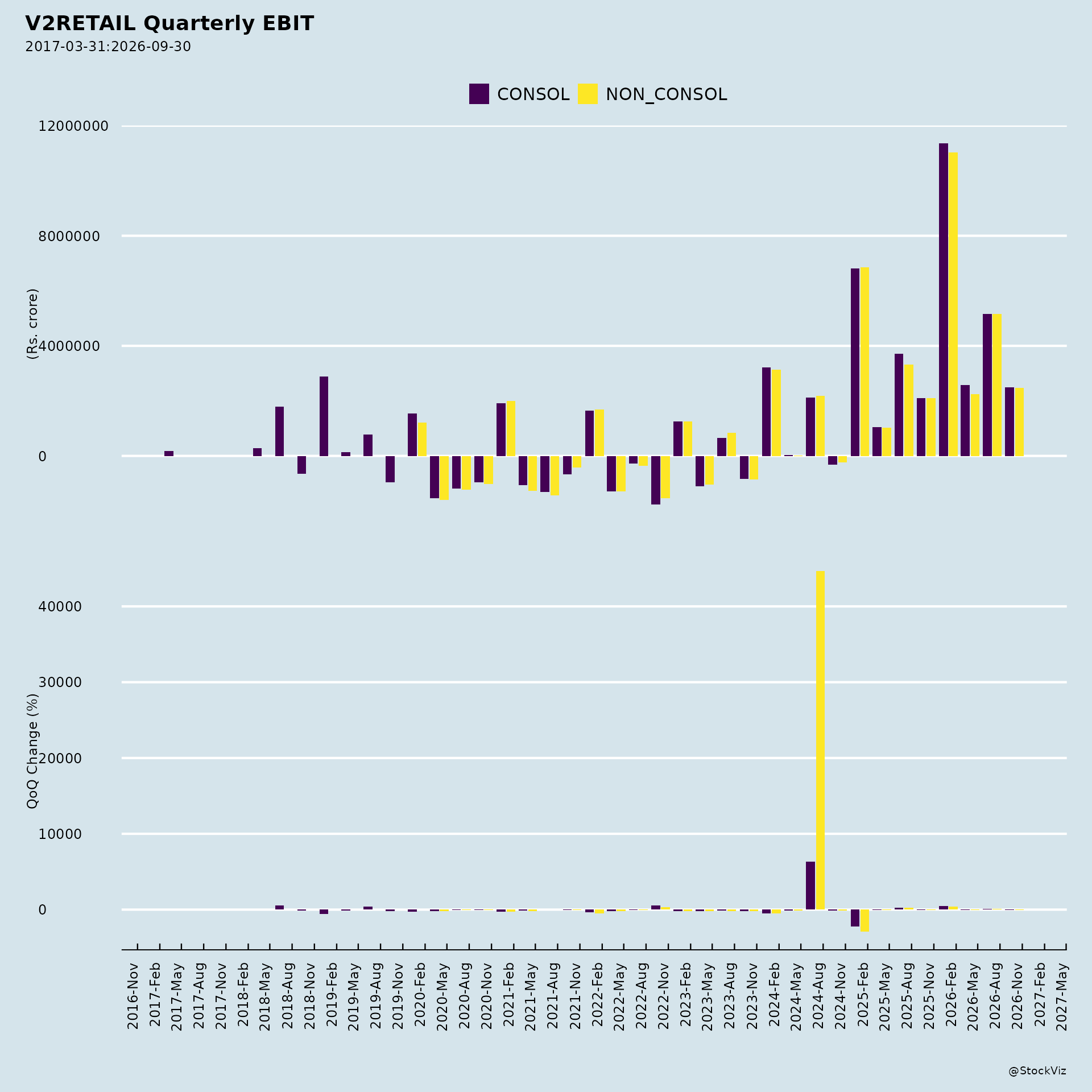
Strong Q1 FY27 performance. Consolidated revenue grew 58% year-on-year to INR997 crores. Gross margin was 28.6%. EBITDA stood at INR139.5 crores versus INR87.2 crores, a 60% year-on-year growth, with EBITDA margin improving to 14.0% from 13.8%. Profit after tax was INR41.9 crores versus INR24.7 crores, a 70% year-on-year growth. On a pre-Ind AS basis, revenue was INR997 crores (+58%), gross margin 28.6% versus 29.4%, EBITDA INR79 crores (+51%) at approximately 8% margin, and PAT INR50 crores (+64%).
Volume and full-price sales. Volume growth was 56% during the quarter. Full-price sales contributed approximately 90% of sales in Q1 FY27.
Store network expansion. The company added 56 stores on a net basis in Q1 (57 opened, 1 closed), taking the count to 381 stores as of June 30, 2026, covering approximately 40.7 lakh square feet. It subsequently crossed the milestone of 400 stores nationwide. The company operates across 25 states and 1 Union Territory. Management said it is on track to open 170 to 200 stores this year and has signed an MOU for the next 100 stores, spread across existing geographies, finalizing about 15 to 20 stores per month based on data on returns, SPSF and customer traction.
Same-store sales growth. SSSG for Q1 FY27 was approximately 7.5%, against a stated guidance range of 8% to 10%. Newer stores’ SSSG was about 2.3% higher than older stores in Q1. Management said the per square feet sales base for the old cohort has risen from about INR650 to almost INR1,070.
Repeat customer improvement. Management said customers returning within the first year rose from 40% to almost 55% over the last three years, which it linked to SSSG and consistent sales growth, and said this can rise further.
Product and sourcing initiatives. The company has begun consolidating fabric purchases, tying up with mills, nominating fabrics and giving tech specs to vendors, which management said is showing promise in quality standardization and economies of scale. It is also using AI workflows and moved its complete data lake onto an AI-enabled platform, with plans to automate many workflows over the next year.
Leadership additions. The Board approved the appointment of Mr. Manu Agarwal as President Buying & Merchandising and Mr. Dinesh Malpani as President Operations, both with effect from August 13, 2026, and both designated Senior Management Personnel. Mr. Manu Agarwal has approximately 25 years of experience in buying and merchandising, sourcing, merchandise planning, product development, vendor management, inventory management and retail strategy, and was previously associated with Aarkey Retail Private Limited. Mr. Dinesh Malpani has approximately 30 years of retail experience, including CEO of Jubilant Retail and Sabka Bazaar, Retail Head at Hiranandani Retail, and Executive Vice President at Mahindra Retail, V2 Retail and UrDoorStep.com.
Faster replenishment and store efficiency. Management said faster replenishment allows stores to receive 2–3 days of sales cover instead of 10–12 days, reducing inventory risk, and that store warehouse area has been converted into retail area, improving efficiency even though total inventory has not come down.
Financing capacity for expansion. Management said internal accruals will be sufficient for expansion, that it is using cash to prepay vendors, and that normalizing creditor days would release almost INR150 crores to INR200 crores of capital plus EBITDA generated this year. It added that it is in talks with banks to increase limits, with the debt-to-equity ratio still low.
Store economics. New stores break even and are profitable from the first month, with a payback period of about 2.5 to 3 years. Leases average 9 to 11 years with escalation of 12% to 15% every three years; most stores are stand-alone buildings of at least 10,000 to 12,000 square feet rather than mall locations.
Tier 1 presence. Management clarified it has always been present in Tier 1, with almost 11 stores in Delhi NCR, and will continue to be present in all Tier 1 cities, with specific locations depending on where target customers are.
3. Key Risks
- Input cost and pricing risk: Rising raw material prices requiring 4% to 5% MRP increases from Q3, with the possibility of some volume impact.
- Demand concentration in festive season: Bulk of sales occurs in the two-month festive period, making full-year outcomes dependent on October–November performance; festival shifts between Q2 and Q3 complicate interim assessment.
- Gross margin variability: Management said gross margin depends on full-price sales and seasonal sell-through, which can only be predicted to a certain degree.
- New store productivity and maturity risk: New stores operate at about 65%–70% of old stores, and 10–12 stores are below INR600 per square feet; operating leverage and EBITDA margin expansion are described as difficult while new area grows above 50%.
- Competition: About 80% of stores already face three to four other value fashion retailers in the same space; management framed culture and execution as the differentiator rather than any secret process or USP.
- Customer experience and staffing: Negative reviews centred on staff behaviour and billing queues; management has linked NPS to store incentives and deployed AI-based queue monitoring.
- Inventory and working capital: Elevated safety stock due to geopolitical tension; targets of 90–100 days inventory and 45–50 days creditors.
- Capex inflation: Store capex up about 10% to INR1.2–1.22 crores.
- General risks cited: Fluctuations in earnings, ability to manage growth, domestic and international competition, economic growth in India and abroad, ability to attract and retain highly skilled professionals, time and cost overruns on contracts, management of international operations, government policies, regulations, and interest and fiscal costs prevailing in the economy.
4. Management Guidance Versus Observed Business Performance
Revenue growth. Management stated revenue guidance remains at least 50%. Observed: Q1 FY27 revenue grew 58% year-on-year to INR997 crores.
Gross margin. Management guided for 28% to 30%, and separately said gross margin should be between 29% to 30%, dependent on sell-throughs and season performance, and that it should be able to maintain gross margins from last year. Observed: Q1 FY27 gross margin was 28.6%, versus 29.5% in Q1 FY26, with the decline attributed to Adhik Maas reducing full-price sales to 90% from 92%.
EBITDA margin. Management said it will try to maintain EBITDA margins even after opening substantial new area. Observed: Q1 FY27 EBITDA margin improved to 14.0% from 13.8% year-on-year, with EBITDA up 60%.
SSSG. Management’s guidance has been 8% to 10%, and it reiterated targeting 8% to 10% SSSG for the full year. Observed: Q1 FY27 SSSG was approximately 7.5%, which management attributed to Adhik Maas and fewer wedding dates. It said July and August trends are in line with expectations but declined to give exact figures.
Store openings. Management said it is on track to open 170 to 200 stores this year. Observed: 57 stores opened and 1 closed in Q1, taking the count to 381 as of June 30, 2026, with the 400-store milestone subsequently crossed.
Inventory and creditor days. Management said it is looking to maintain inventory at around 100 days (and 90–100 days) and creditors at around 45 to 50 days, with the working capital cycle returning to a stable 50 to 55 days. Observed: inventory levels are currently higher due to increased safety stock from geopolitical tension, and the cycle appears inflated because of vendor prepayments; management said it will reduce safety stock once the situation normalizes.
Capital requirements. Management said internal accruals will be enough and no QIP is needed, citing potential release of INR150 crores to INR200 crores from normalizing creditor days plus EBITDA, and headroom in debt-to-equity with bank limit discussions underway.
RK Retail acquisition. Management said the acquisition happened around the end of June, so its impact will be seen more from Q2.
Depreciation. On a sequential dip in depreciation from about INR67 crores to INR64 crores despite adding 58 stores, management referred to lease Ind AS calculations and said to look at pre-Ind AS numbers, which it focuses on.
AGM outcomes. At the 25th AGM held July 31, 2026, shareholders approved all items set out in the Notice dated May 28, 2026 with requisite majority, including adoption of audited standalone and consolidated financial statements for FY ended March 31, 2026, the re-appointment of Mr. Ram Chandra Agarwal as a Director retiring by rotation, and his re-appointment as Chairman & Managing Director for a further five years with effect from November 22, 2026.
Broker Timeline
1 broker calls · 2026-09-01 to 2026-09-01
CNBC-TV18: ratings, targets and commentary
No recorded CNBC-TV18 statements for this ticker.
Management comments
No recorded management comments with an explicit designation and affiliation for this ticker.
Copyright © 2023 SAS Data Analytics Pvt. Ltd. All rights reserved.