THOMASCOOK
Equity Metrics
November 18, 2026
Thomas Cook (India) Limited
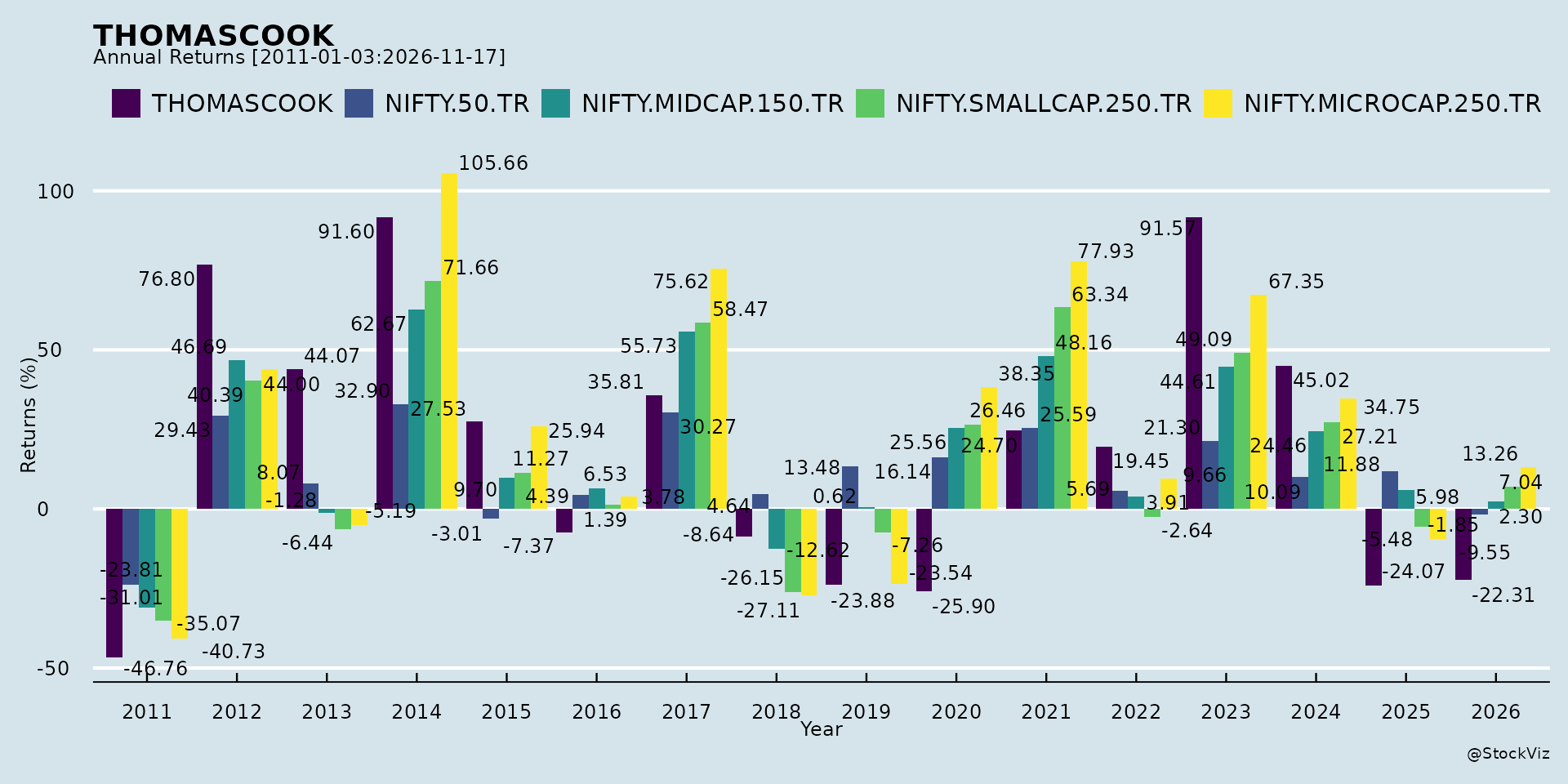
Annual Returns
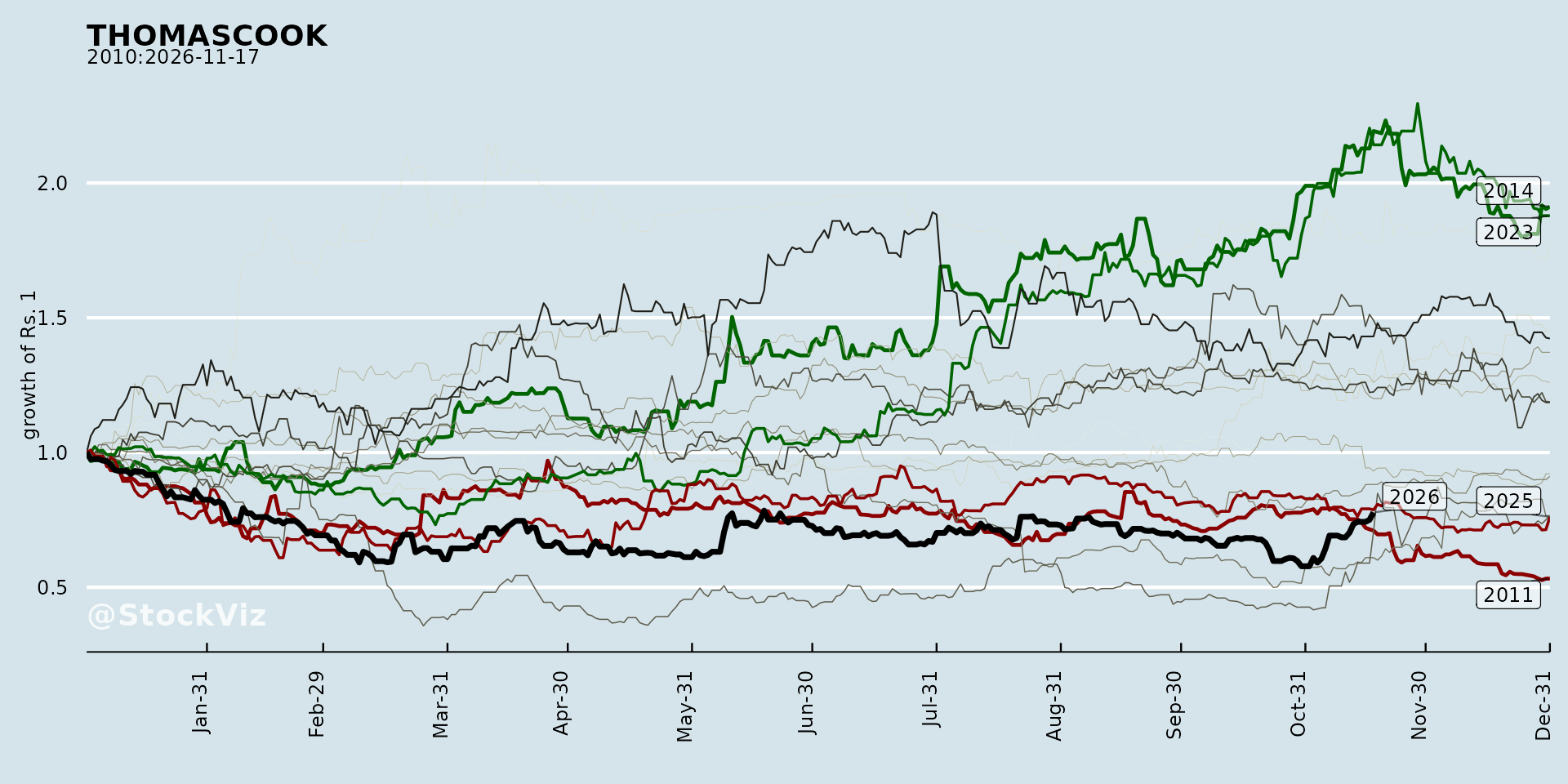
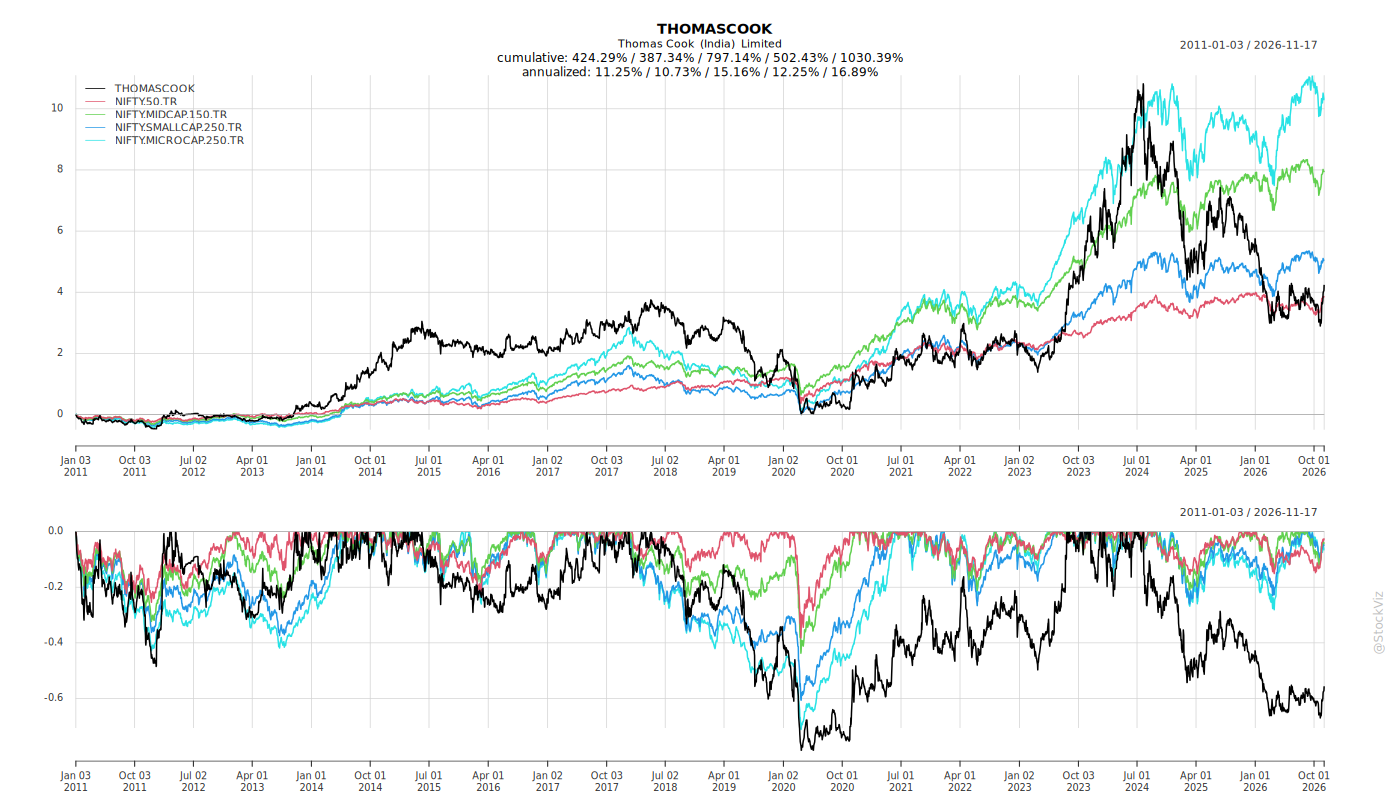
Cumulative Returns and Drawdowns
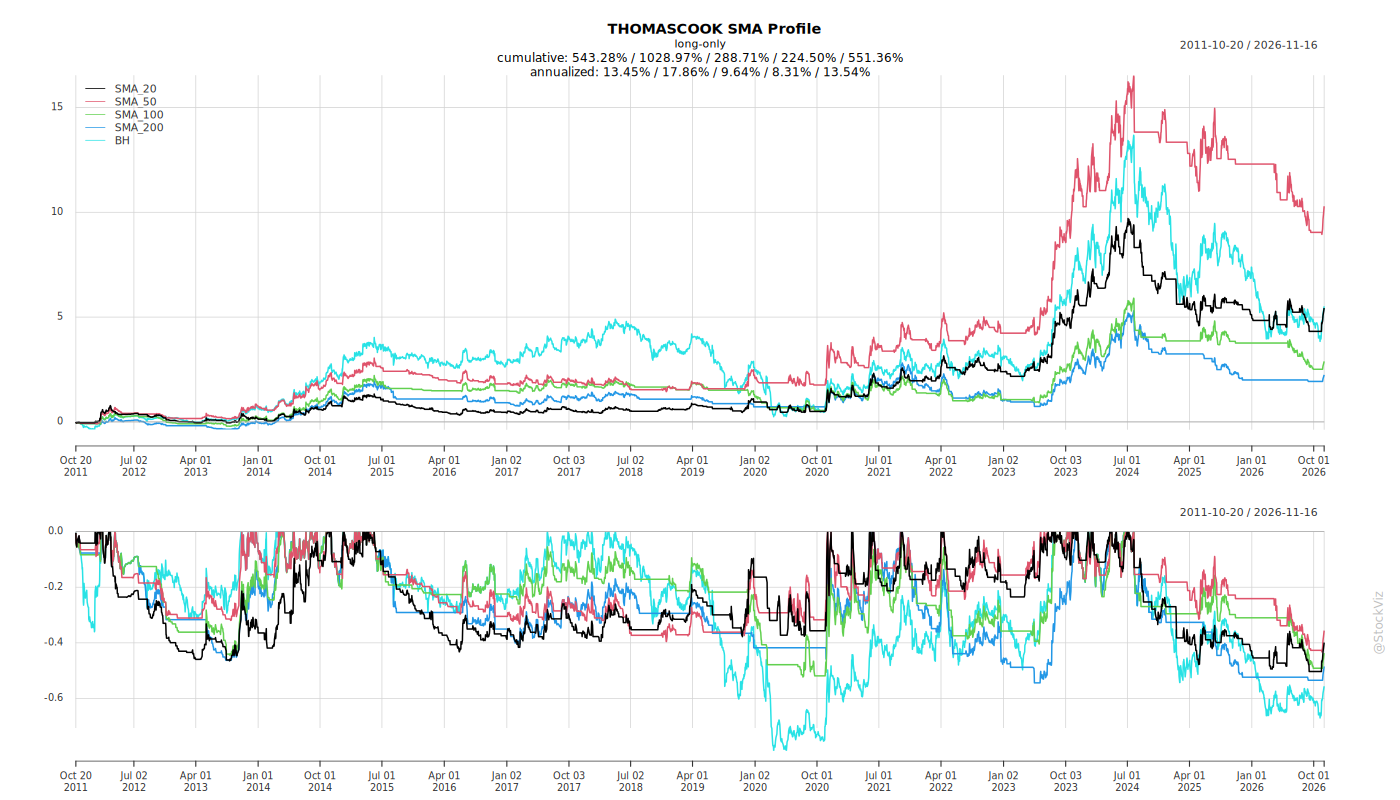
Fundamentals
Ownership
Margined
AI Summary
asof: 2026-09-17
Thomas Cook (India) Limited — Recent Developments
1. Headwinds and Challenges
Geopolitical disruption in West Asia. The conflict in West Asia was the dominant headwind in Q1 FY27, with impact concentrated in businesses having direct exposure to the region — primarily Desert Adventures (the Middle East destination management business), DEI, and parts of the long-haul outbound travel portfolio. Management noted that while business volumes were immediately impacted, the associated cost base could not be adjusted at the same pace, making the profitability impact more pronounced.
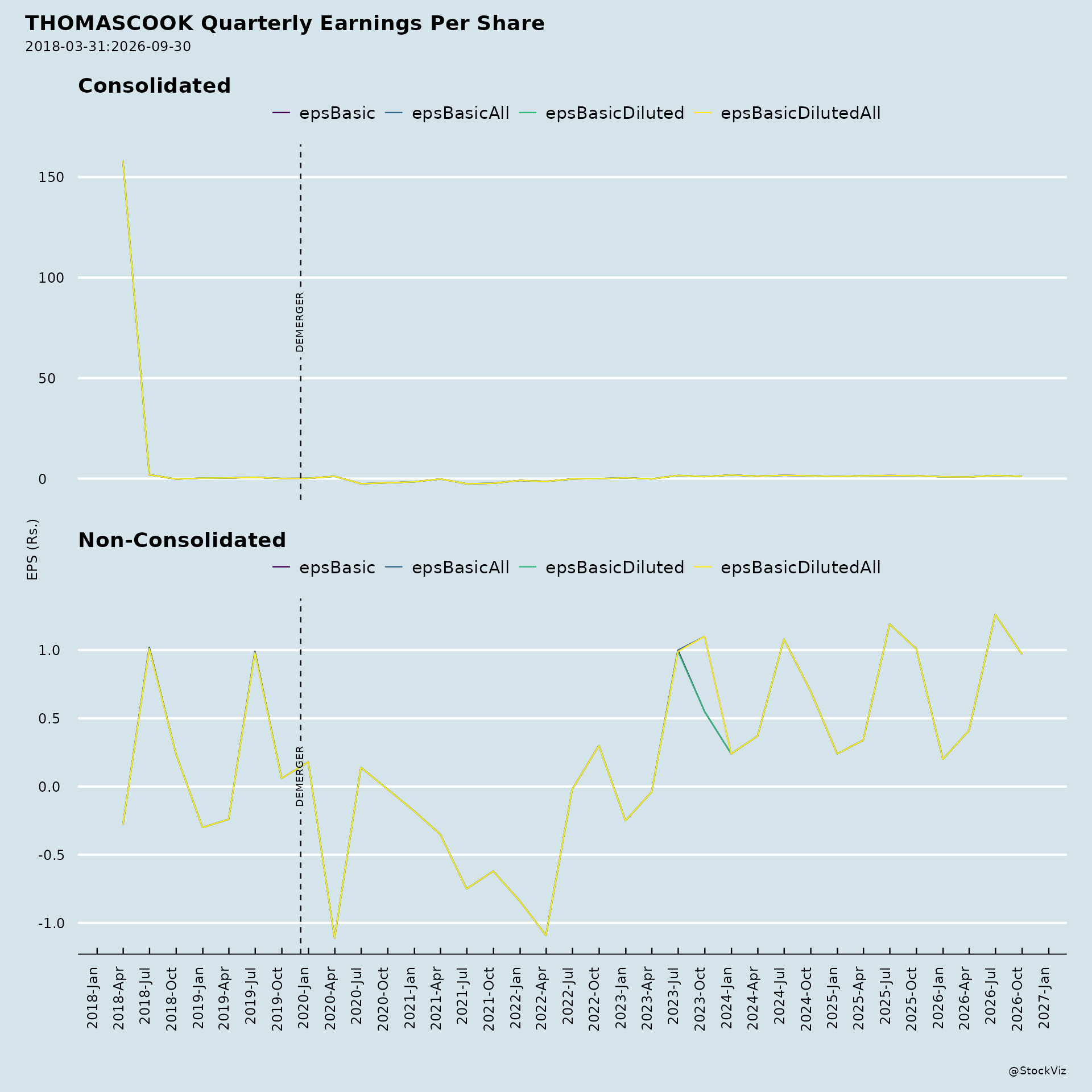
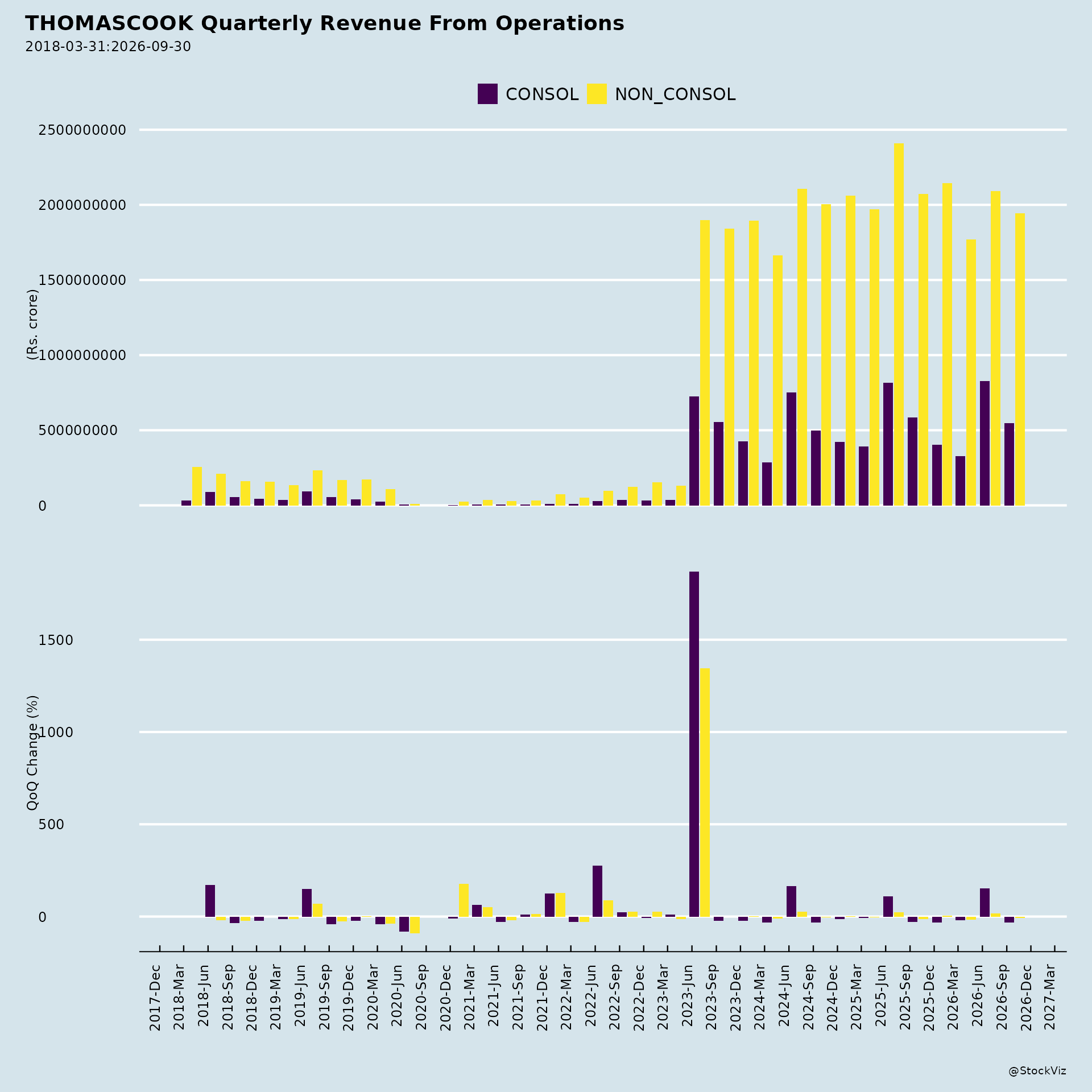
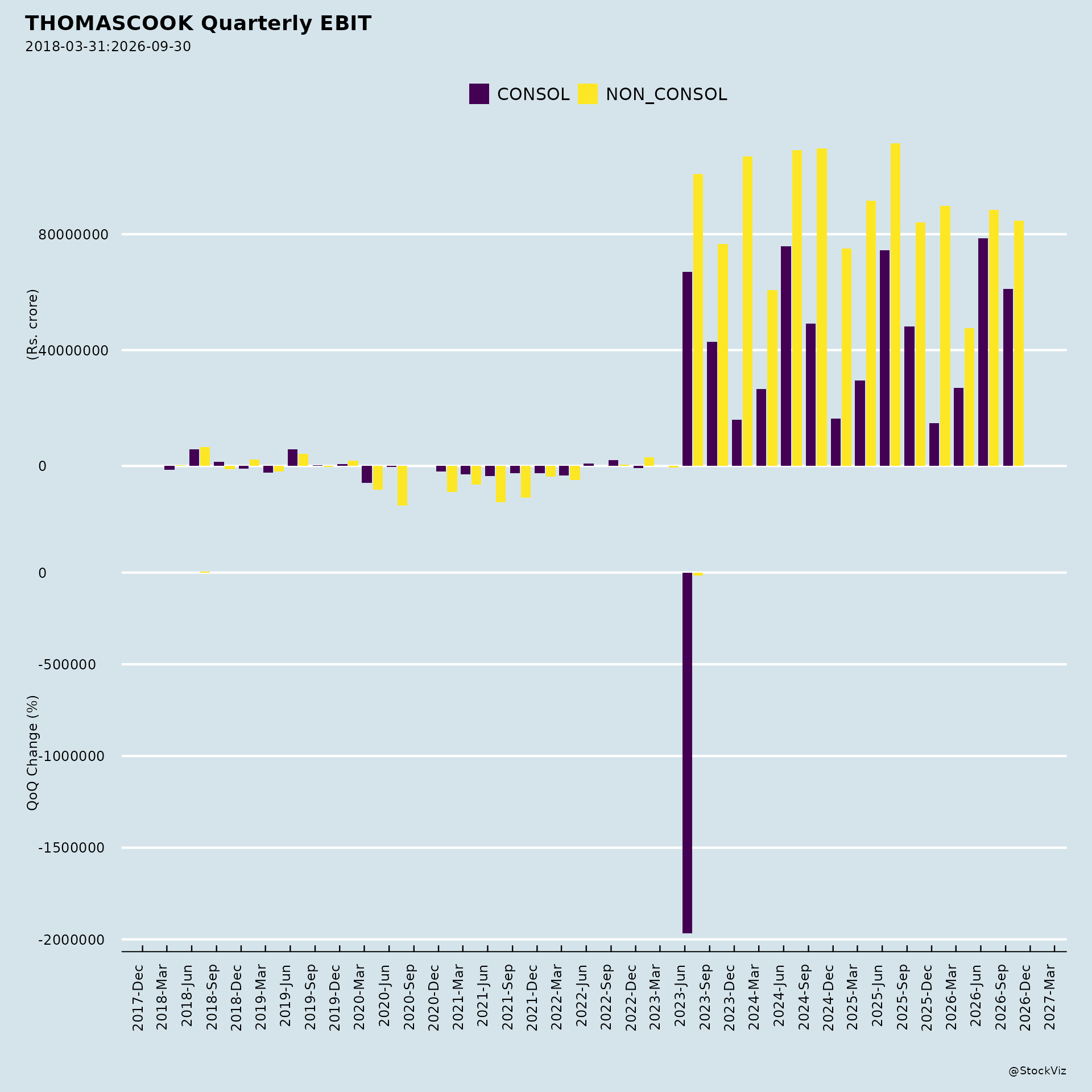
Consolidated performance decline. Consolidated total income for Q1 FY27 stood at INR 21,530 million, a decline of 12% year-on-year. Profit before tax stood at INR 885 million, down 21% year-on-year, primarily due to underperformance of Desert Adventures and DEI.
Travel segment weakness. The travel business reported revenue of INR 17,106 million, a decline of 14% year-on-year. Long-haul demand remained subdued, with sales declining 28% year-on-year. The B2B side of travel (63% of reported travel numbers) declined 13% to INR 11,192 million. The DMS portfolio declined 31% to INR 5,422 million, with international DMS revenues down 33%. Desert Adventures revenue declined 89%, and Allied TPro’s topline declined 40% amid softer inbound U.S. tourism trends. Total Travel segment EBIT declined 50% year-on-year to INR 405 million.
DEI underperformance. DEI posted Q1 FY27 revenue of INR 1,307 million versus INR 2,097 million in Q1 FY26, swinging from positive EBIT of INR 106 million to negative EBIT of INR 152 million. This was attributed to DEI’s 50% dependence on the Middle East, compounded by decisions to close non-profitable sites in China (Universal) and end-of-contract terms in Bahamas. Management noted that in the April–June period, recovery in the Middle East market was sub-20%, improving to roughly 30–35% in July.
Industry-level forex softness. RBI LRS data for April–May 2026 showed education declining 27%, travel-related forex declining 8%, and remittances declining 14%. Thomas Cook’s travel segment for the same period largely aligned with the industry trend (a decline of about 8%), though its education portfolio grew 17%.
Cost and operating pressures at Sterling. Sterling flagged rising operating costs, challenging supply chains due to global events, and potential climate-related disruptions as headwinds.
Regulatory/tax matter. An order dated December 8, 2025 from the Senior Joint Commissioner, Behala, West Bengal confirmed a GST demand of INR 10,56,896, along with interest of INR 7,79,120 and a penalty of INR 1,00,000 under Sections 50 and 73 of the CGST Act, 2017, on account of short payment of GST. The Company’s appeal before the First Appellate Authority was dismissed and the order upheld; the order was received on July 27, 2026. The Company is taking steps to appeal before the GST Appellate Tribunal and states there is no material financial or operational impact.
2. Tailwinds and Growth Prospects
Resilience of India businesses. Excluding the GCC-based subsidiaries (DEI and Desert Adventures), the consolidated results of the group registered 8% growth at an EBIT level for the quarter. India businesses led by foreign exchange, MICE, and corporate travel continued to deliver healthy momentum.
Foreign exchange performance. The forex segment grew revenue 6% and EBIT 8%, with EBIT margins at 45.3%. The overall retail portfolio delivered 8% year-on-year turnover growth, outperforming the underlying market. The education portfolio grew turnover 36% year-on-year, supported by distribution investments and NBFC partnerships, plus traction from the Study Buddy Card program launched with Visa. The corporate business portfolio recorded 9% turnover growth.
Digital traction. Digital penetration improved to 23.5% from 20.4% last year. Transactions increased 38%; TCPay app bookings increased threefold; WhatsApp channel grew over 80%. Cards sold via Blinkit increased 34%, with presence in 12 cities. Digital penetration in travel reached 21% in Q1 FY27.
Product innovation and network expansion. The One Currency Card was launched with zero markup and zero cross-currency conversion charges; the borderless Forex card portfolio expanded to 28 currencies with 16 new global currencies and a 10% value-back proposition. New forex counters were operationalized at Delhi Airport Terminal 1 and Terminal 2. Separately, new forex counters were opened at the Alluri Sitarama Raju International Airport in Bhogapuram, expected to handle over 28 lakh passengers annually, strengthening the airport forex network in Visakhapatnam and Andhra Pradesh.
Tier 2 and Tier 3 opportunity. According to Thomas Cook India’s India Forex Report 2026, Tier 2 cities account for 41% of overall forex demand and Tier 3 cities a further 12% — together 53%. Management views the next phase of growth as increasingly coming from Emerging India.
Travel segment momentum. Domestic segment saw a 29% increase during the quarter. Short-haul business grew 6%; excluding the Middle East, short-haul growth was 21%. Japan, Korea, and China combined increased 38% year-on-year; Vietnam and Cambodia delivered more than two-fold growth. MICE recorded 14% year-on-year growth with turnover of INR 5,420 million, managing over 110 groups of 50 to 2,400 delegates. Corporate travel revenue rose 7% to INR 350 million, with gross turnover crossing INR 7 billion (up 15%); 7 new accounts were added; air transaction volume grew 14%, international air volumes nearly 17%, and hotel volumes 33%.
Sterling Holidays record quarter. Sterling reported its best quarter ever and 26 consecutive profitable quarters. Revenue from operations reached INR 1.7 billion, up 21% year-on-year; EBITDA rose 21% to over INR 620 million at a 37% margin; PBT grew 30% year-on-year with PBT margins at 28% (up 200 basis points); operating free cash flow rose 30%. Sterling remains debt-free with cash reserves exceeding INR 3.7 billion. Occupancy improved 700 basis points to 77%; average room rates rose 10% to an all-time high of INR 7,809; total RevPAR increased 20%; room revenues rose 29% and F&B grew over 15%. Sterling operates over 78 resorts, hotels, and retreats with nearly 3,800 rooms across over 65 destinations, with a development pipeline of over 35 properties representing more than 2,000 additional rooms.
DMS pockets of growth. Asian Trails delivered stable performance supported by growth in China and improving contributions from Cambodia, Malaysia, and Singapore. Private Safaris in Southern Africa and East Africa grew revenue 17% and 4%, respectively.
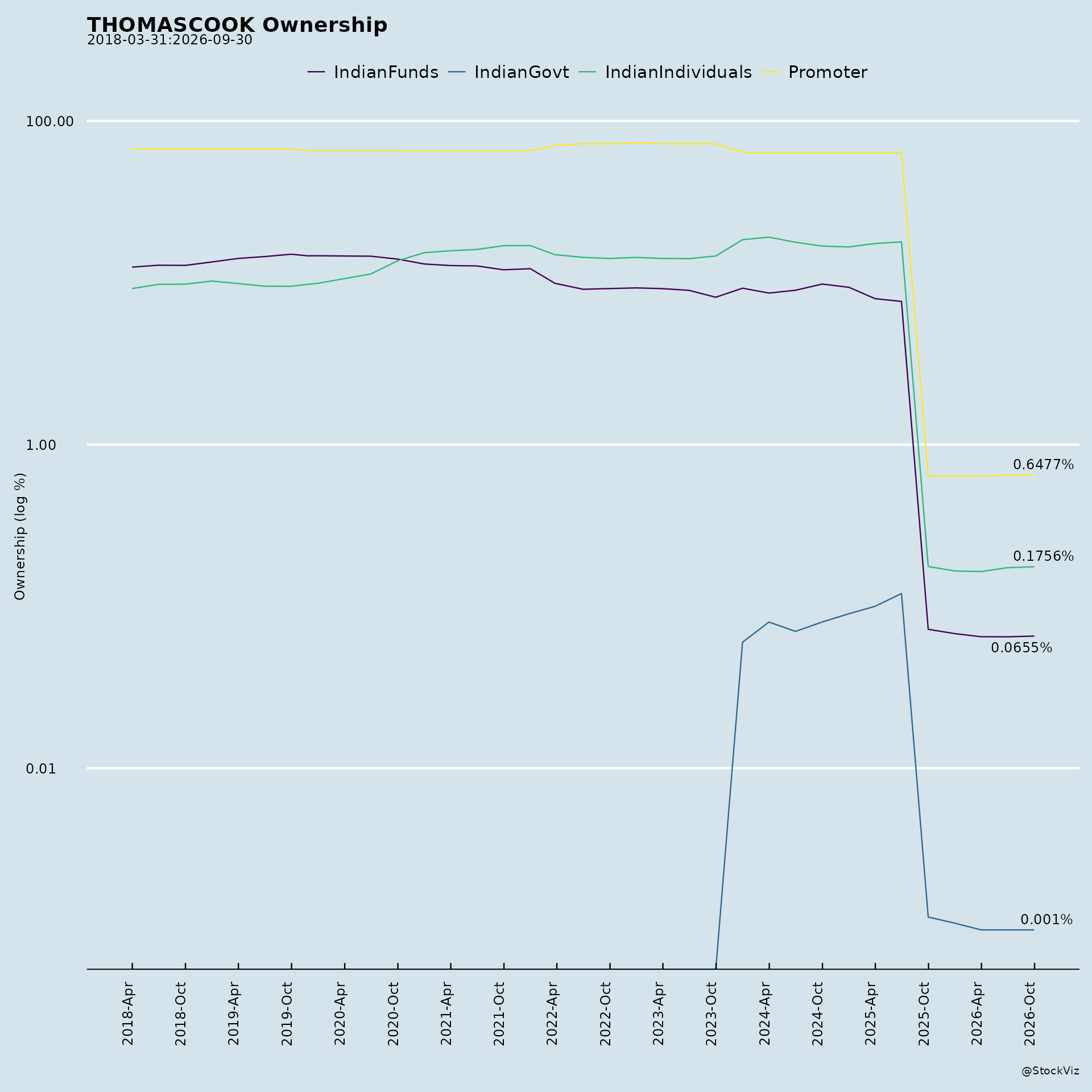
Credit standing and ownership. Fairbridge Capital (Mauritius) Limited holds a 64.77% shareholding of TCIL’s paid-up capital as promoter. CRISIL reaffirmed TCIL’s rating as ‘CRISIL AA/Stable’ for long-term and ‘CRISIL A1+’ for short-term bank facilities and debt.
Shareholder returns. At the 49th AGM held September 10, 2026, members approved the adoption of standalone and consolidated financial statements and declared a dividend of Rs. 0.5 per equity share.
3. Key Risks
- Continued geopolitical uncertainty in West Asia, with management noting new statements emerging regularly that determine traffic and aircraft flows, and that the impact of the war is not fully absorbed.
- Concentration risk at DEI, where 50% of overall global business depends on the Middle East; revenue recovery in that market will largely determine earnings quality in subsequent quarters.
- Inability to adjust the cost base at the same pace as volume declines, as seen at Desert Adventures, amplifying profitability impact.
- Soft inbound tourism trends in the U.S. weighing on Allied TPro.
- Rising operating costs, challenging supply chains due to global events, and potential climate-related disruptions (flagged by Sterling).
- Competitive intensity in forex and travel, including online technology-based disruptors, though management stated it competes on product and innovation rather than commenting on competitors.
- Regulatory/tax exposure, as illustrated by the GST demand and dismissed first appeal, now headed to the GST Appellate Tribunal.
4. Management Guidance Versus Observed Performance
Full-year FY27 earnings growth. On an earlier call, management had guided that double-digit earnings growth in FY27 was achievable under normal conditions. Asked after the Q1 decline whether this remained possible, management said it was difficult to gauge at that point, that it was just one quarter into FY27, and that the endeavour would be to deliver a good outcome for the full year, without providing a full-year forecast given the operating environment.
Travel segment EBIT margin. Management stated it is internally working with an EBIT margin range of about 4% to 5%, and that a stand-alone India outbound business would translate in that range. Observed Q1 FY27 Travel segment EBIT was INR 405 million on revenue of INR 17,106 million, with the decline largely attributable to Desert Adventures. Management also stated the long-term strategy is to keep take rates across B2B and B2C around the 14%–15% range, noting gross margins across the travel portfolio have remained stable and in some outbound segments have grown.
DEI normalized EBIT margin. Management indicated that in a normal year DEI should work in an EBIT margin range of about 6% to 7% on sales, and that the long-term target is a 20% ROE. Observed Q1 FY27 DEI EBIT was negative INR 152 million, against positive INR 106 million in Q1 FY26. Management noted that since acquiring DEI in late 2019, only about two years (’23 and ’24) were normal.
DEI cost optimization timing. Management had previously indicated cost optimization would be implemented with a lag of around 30 to 60 days. On the Q1 FY27 call, management confirmed the lag and stated that a difference would be visible in Q2, with a drastic correction expected on costs, and that benefits from cost measures are expected in Q2 and Q3 of FY27. Management emphasized that revenue recovery — not just cost — will determine earnings quality.
H2 versus H1. Management stated it is reasonable to expect that if situations remain constant, the company should be better in H2 as compared to H1, while declining to give a specific FY27 exit guidance.
Long-haul trend. Management noted that July and some August trends reflect better conversion compared to April–June, with the long-haul deficit trending slightly lower than the previously seen 28%–30% levels, but said it is too early to say whether this translates into a higher outcome versus the comparable prior-year period.
Sterling outlook. Sterling described its objective as compounding its transformation, citing one of the strongest balance sheets in the sector, an expanding national footprint, a visible pipeline, industry-leading customer advocacy, and disciplined capital allocation, with an ambition over the next five years to translate its foundation into superior growth, stronger returns, increasing cash generation, and sustained stakeholder value creation.
Emerging India strategy. Management views the next phase of growth as increasingly coming from Emerging India, driven by Tier 2 and Tier 3 demand, and stated the company will continue to evaluate strategic opportunities to strengthen its presence across India’s evolving travel and forex landscape, supported by prior expansions in Delhi and Bengaluru.
Broker Narrative
The narrative began as a structural travel-growth story: a Buy with +35.8% upside, driven by domestic/outbound travel doubling, corporate/leisure/forex/MICE recovery, and Sterling resorts expansion, while flagging pandemic/geopolitical, Canada-India, competition, acquisition and long-haul risks. By the last report, the growth narrative had shifted to a defensive, cost-focused Buy: the only headwind cited was subdued air-conditioner demand after the early monsoon, and the only tailwind was margins maintained through cost optimization. The persistent theme was a continued Buy stance, but the emphasis moved from travel-demand expansion to near-term margin protection after all actual returns remained negative.
Fears that came true
- The pandemic/geopolitical disruption risk materialized in the negative actual returns seen across the whole history, from -9.0% on the first report to -58.8% by July 2024, causing multiple DISAPPOINTMENT outcomes.
- The flagged Canada-India tensions disrupting FY2024 travel were followed by -16.6% and -40.4% actual returns in the next two reports.
- The concern that US/Europe long-haul travel would stay weak was borne out by persistently negative actual returns through 2025, including -21.8%, -40.4% and -39.9%.
Optimism that failed
- The structural tailwind of domestic/outbound trips doubling by 2030 did not translate into positive stock returns over the covered period; every actual return in the call history was negative.
- The expected strong recovery across corporate travel, leisure, forex, MICE and resorts failed to materialize in the stock, with actual returns dropping as low as -58.8%.
- The Sterling resorts asset-light expansion and occupancy/ARR optimism did not prevent repeated DISAPPOINTMENTs on Buy calls, as actual returns remained deeply negative.
Broker Timeline
11 broker calls · 2024-02-01 to 2025-08-20
CNBC-TV18: ratings, targets and commentary
No recorded CNBC-TV18 statements for this ticker.
Management comments
No recorded management comments with an explicit designation and affiliation for this ticker.
Copyright © 2023 SAS Data Analytics Pvt. Ltd. All rights reserved.