TCIEXP
Equity Metrics
November 18, 2026
TCI Express Limited
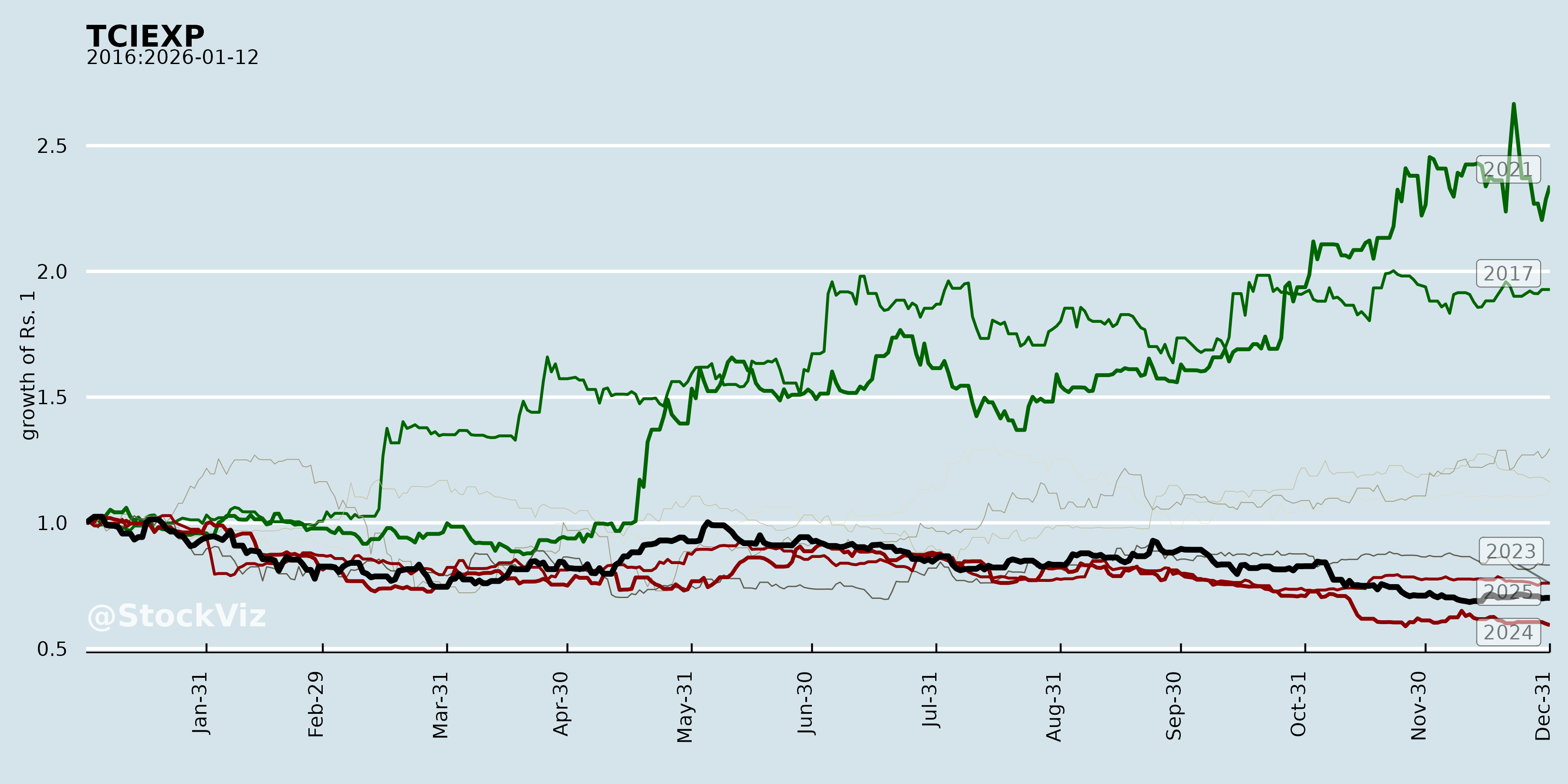
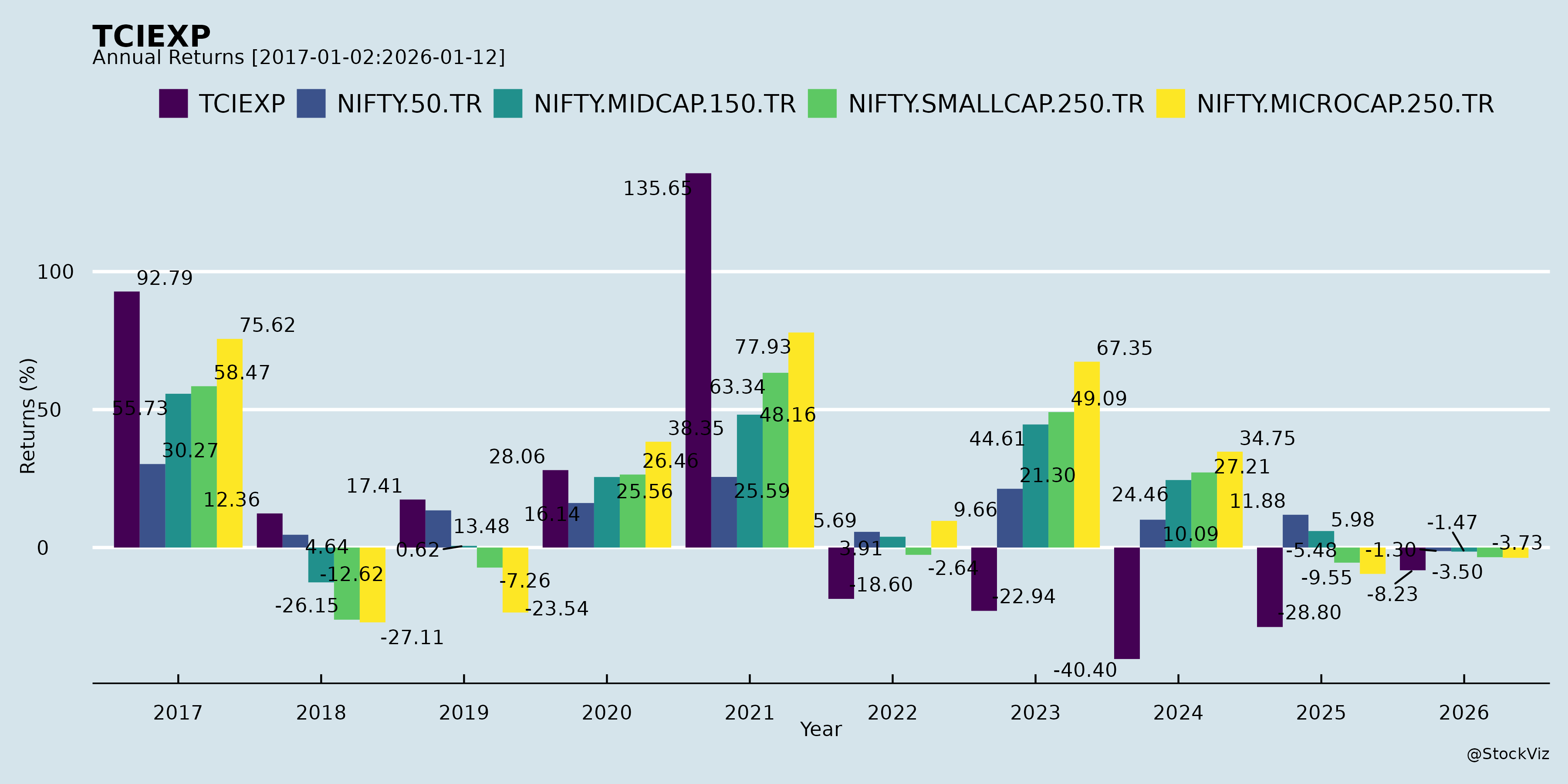
Annual Returns
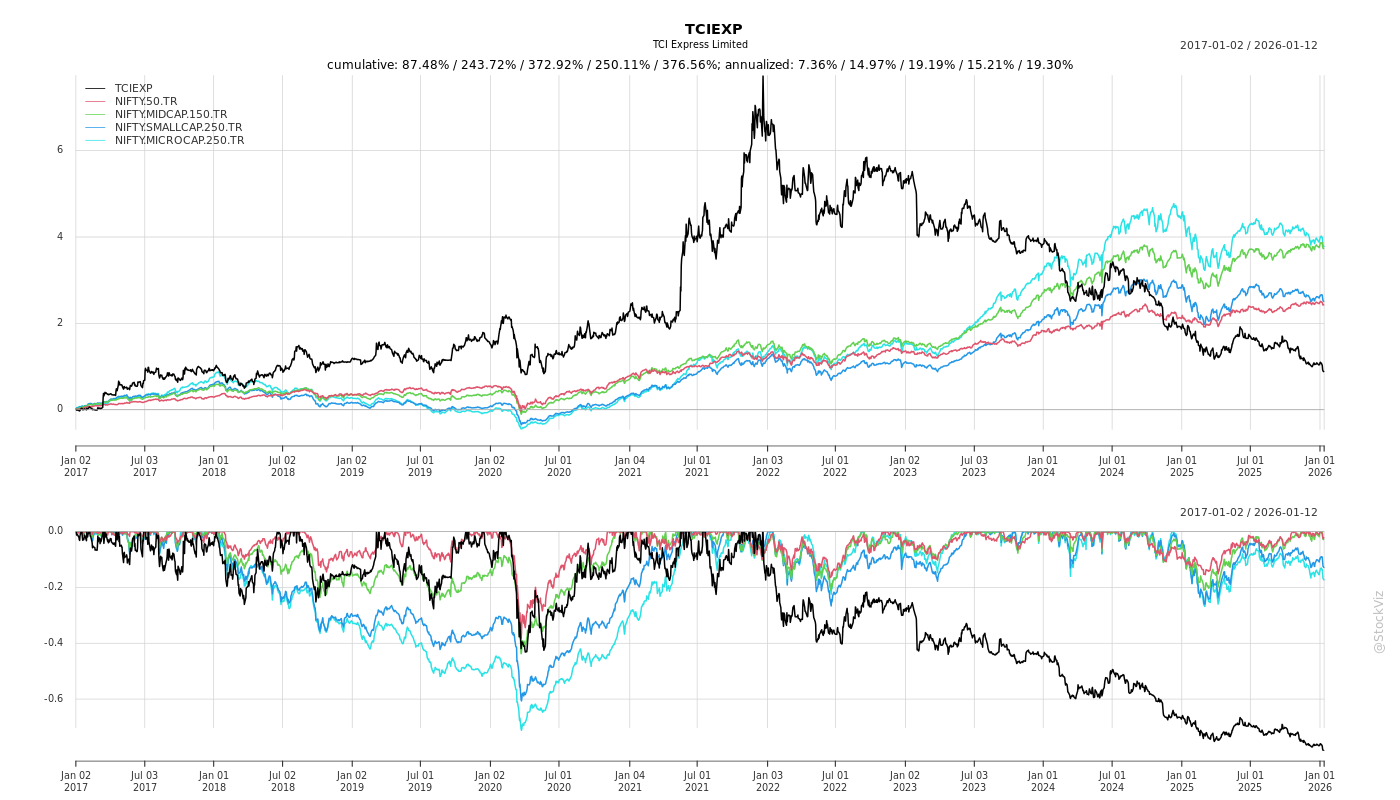
Cumulative Returns and Drawdowns
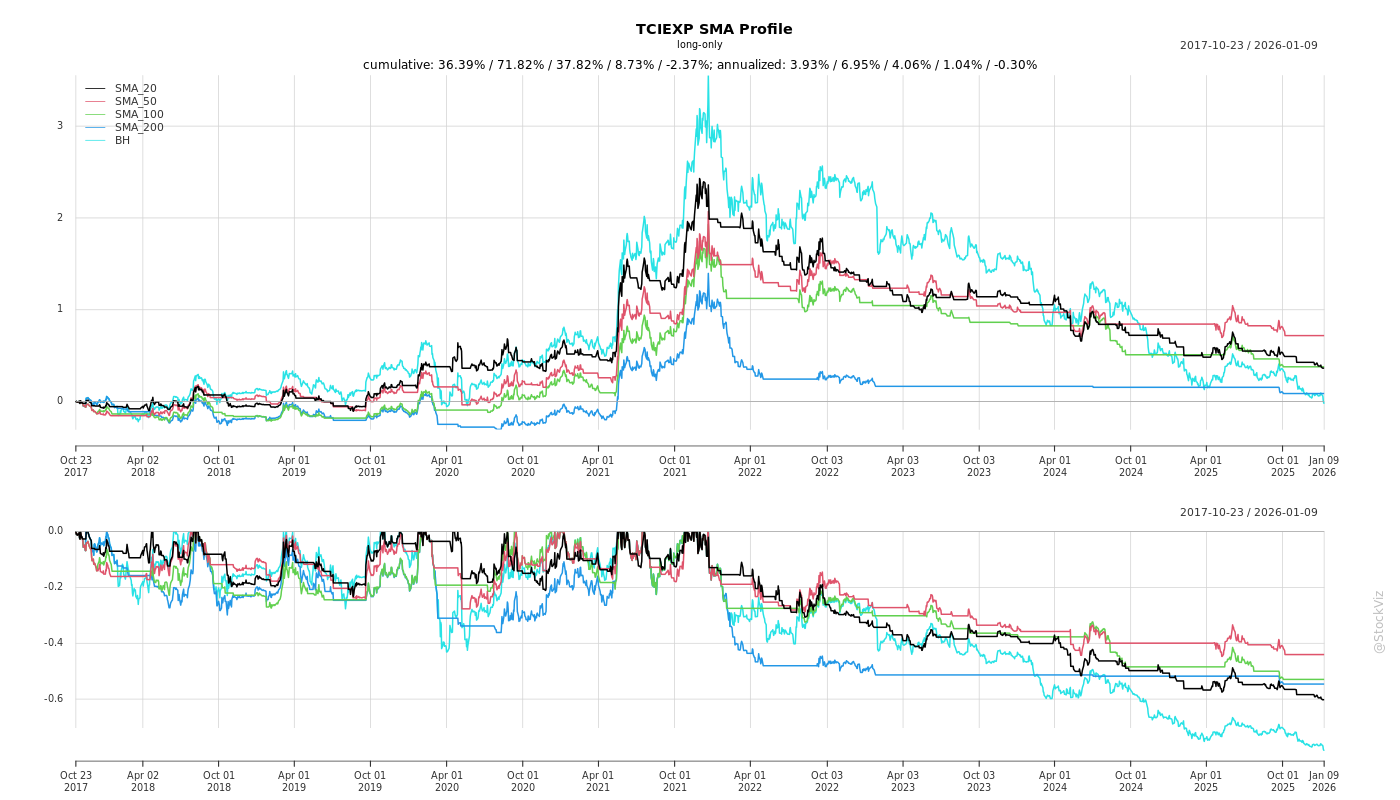
Fundamentals
Ownership
Margined
AI Summary
asof: 2026-09-18
TCI Express (TCIEXP) — Recent Corporate Announcements: Analysis
1. Headwinds and Challenges
Industry-level cost and pricing pressure. Management noted that the industry as a whole saw elevated operating costs and competitive pricing in certain segments during Q1 FY27. The earnings presentation cites geopolitical disruptions (Middle East conflicts) increasing freight costs, rerouting shipments and delaying deliveries; a road-dominated freight mix (66% road) raising logistics costs and fuel consumption; high rail freight costs limiting modal shift; infrastructure and last-mile connectivity bottlenecks; rising ATF and fuel prices; and skilled manpower shortages with rising driver wages.
Fuel price timing. Diesel prices were held back by the government through the election period and ultimately increased in mid-May 2026. Because the company chose to defer price increases rather than approach customers multiple times, the fuel-related price hike flowed through only in June, meaning only one month of the quarter carried the benefit. Management stated it passed on the increase to over 90% of customers in June itself.
Macro margin compression. The presentation cites ICRA expectations that India’s GDP growth moderates to 6.4–6.6% in Q1 FY2027 from 7.8% in Q4 FY2026, with elevated energy and commodity prices, limited availability of certain inputs and geopolitical uncertainty expected to compress margins despite healthy freight volumes.
GST demand order. A demand order and GST tax liability of INR 51.36 Crores plus applicable interest and penalty was raised by the Additional Commissioner of Central Goods and Services Tax, Gurugram Commissionerate for the period July 1, 2017 to March 31, 2022, concerning GST under Reverse Charge on GTA supplies. The appeal before the Commissioner (Appeals) GST was rejected, and the company has filed an appeal before the Goods and Services Tax Appellate Tribunal, Haryana. Management stated it is confident of prevailing and does not anticipate any adverse financial outcome.
E-commerce margin profile. A participant noted that e-commerce is generally a lower-EBITDA-margin business than the 15–16% levels the company historically enjoyed, and that last-mile is operationally taxing. Management responded that it is deliberately targeting smaller customers and avoiding highly competitive, low-profit segments, and cited 16–18% EBITDA margins in the D2C segment it is pursuing.
2. Tailwinds and Growth Prospects
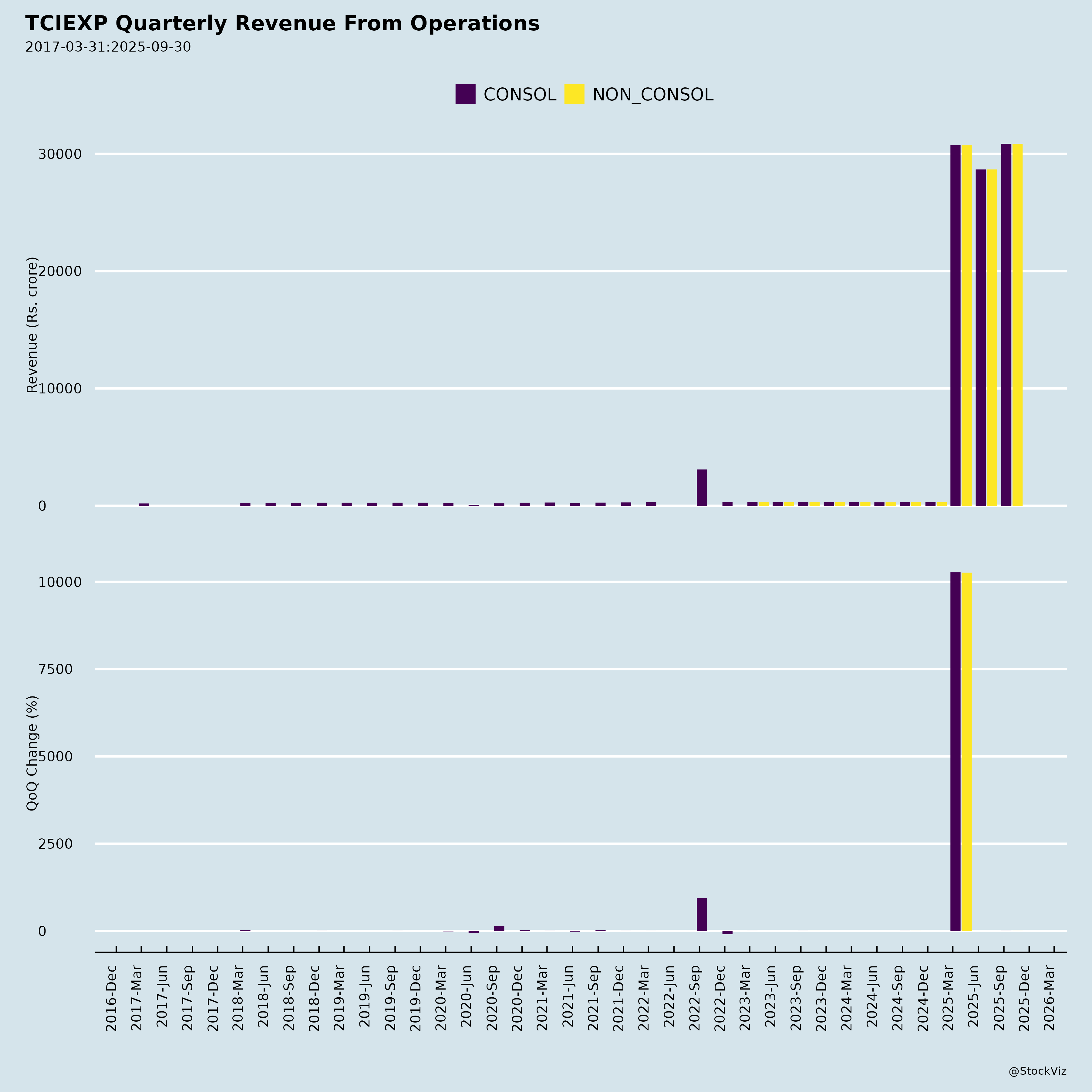
Broad-based Q1 FY27 growth. Total income was INR 315.3 crores, up 8.7% YoY. Surface Express, the largest contributor, grew 8.7% YoY. Domestic Air Express grew 28.8% YoY, International Air Express 27.3% YoY, and E-Commerce Express 63.0% YoY, becoming the fastest-growing vertical. C2C added new clients, wider regional branch coverage and a larger dedicated fleet.
Demand environment. Demand was healthy across manufacturing, particularly pharmaceuticals, engineering, electric vehicles, autos and SME-led shipments. The accelerating shift toward outsourced logistics players was cited as directly benefiting the company. SME mix recovered to 50-50 with B2B in the quarter, versus 48-52 through FY26.
Network and capacity expansion. The branch network crossed 1,000 locations with 35 new branches added in the quarter; Rail Express added 10 new branches and Surface added 10 new branches (per the press release). Capacity utilisation stood at 84%. Two sorting centres are automated (Taj Nagar/Gurugram and Chakan, Pune), with Kolkata and Ahmedabad under construction.
New service initiatives. Plans include 40–50 dedicated air-focused branches across Tier I and Tier II cities, standalone air hubs beginning with the Delhi Air Hub, new Time-Definite and Economy air offerings, an international export consolidation hub (soft-launched), and expanded B2C last-mile capabilities.
Multimodal mix target. Multimodal contribution is currently around 17–18% of revenue, targeted at 19% this year and 22–25% by 2030.
Balance sheet strength. The company remains debt-free with net cash of around INR 118 crores as on June 30, 2026, and credit ratings of A1+ short term (ICRA) and AA- long term (CRISIL).
Sector and policy drivers. The presentation cites PM GatiShakti, Dedicated Freight Corridors, Bharatmala, airport modernisation, the ULIP platform, manufacturing-led growth (PLI), e-commerce penetration, and sustainability-led fleet transition as structural growth drivers.
3. Key Risks
- GST liability risk: the INR 51.36 crore demand plus interest and penalty, currently under appeal before the GST Appellate Tribunal, Haryana, after rejection at the Commissioner (Appeals) level.
- Fuel and input cost volatility: ATF and diesel price movements directly affect transportation costs and margins, with a lag in passing them through to customers.
- Competitive pricing: pricing pressure in certain segments, and the risk that e-commerce/last-mile expansion dilutes the historically higher margin profile.
- Execution risk on expansion: the capex programme (revised to INR 400 crores from an originally planned INR 500 crores for FY23–FY27), ongoing construction at multiple sites, and planned land purchases in Mumbai, Chennai or Bangalore.
- Geopolitical and macro risk: Middle East conflicts raising freight, insurance and transit costs; moderating GDP growth and elevated energy/commodity prices compressing sector margins.
- Manpower risk: skilled manpower shortages and rising driver wages pressuring operating costs.
4. Management Guidance vs. Observed Performance
Guidance for FY27 (from the Q1 FY27 call): - Volume growth of 11–12%, price hikes net of around 3%, implying overall growth of 13–15%. - PAT growth of 20–25% for the full year. - EBITDA margin improvement of at least 100–150 basis points for the year. - Capex of INR 125–140 crores for FY27, with INR 19 crores already spent in Q1; remaining capex of about INR 112 crores expected in FY27. - Multimodal share rising from 17–18% to 19% this year.
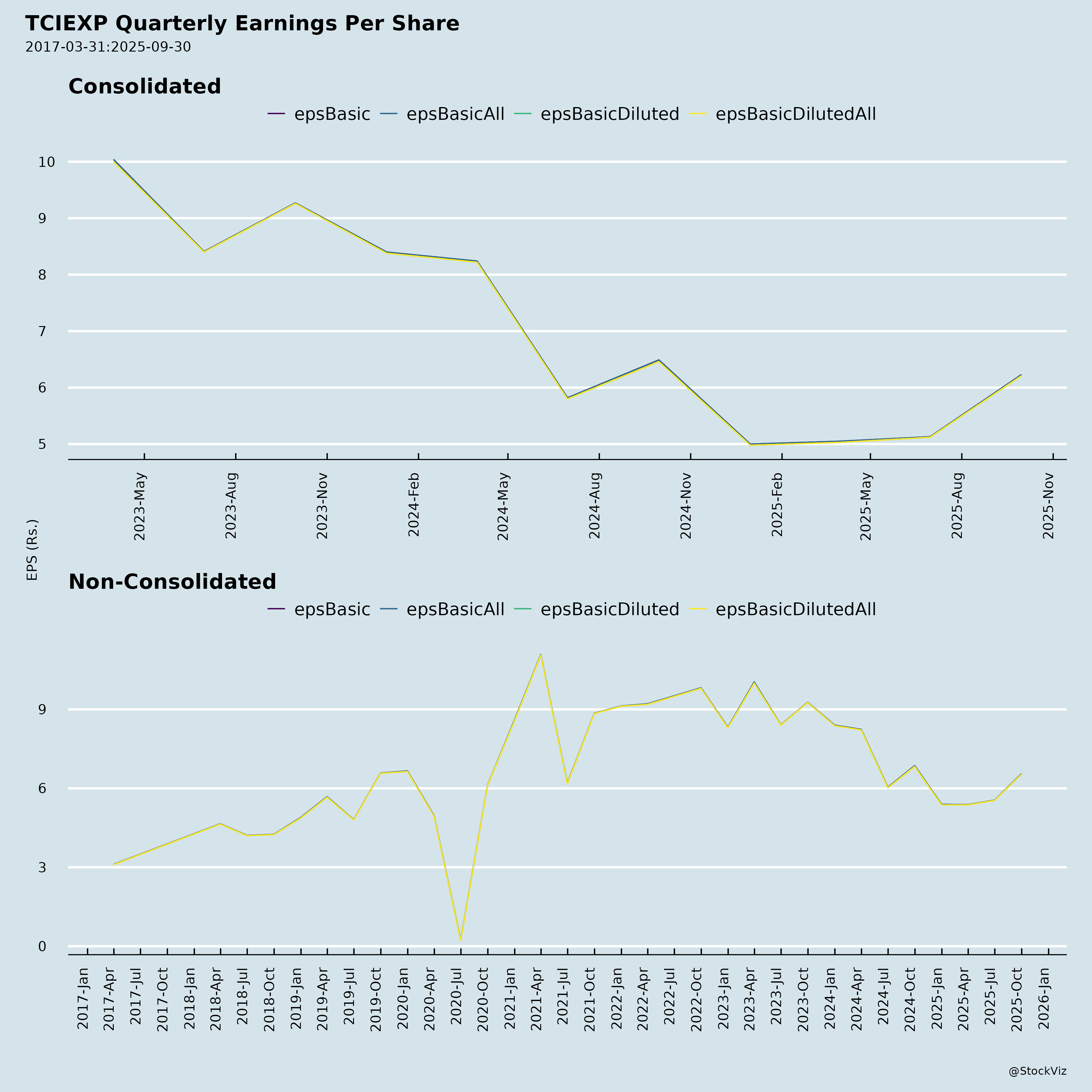
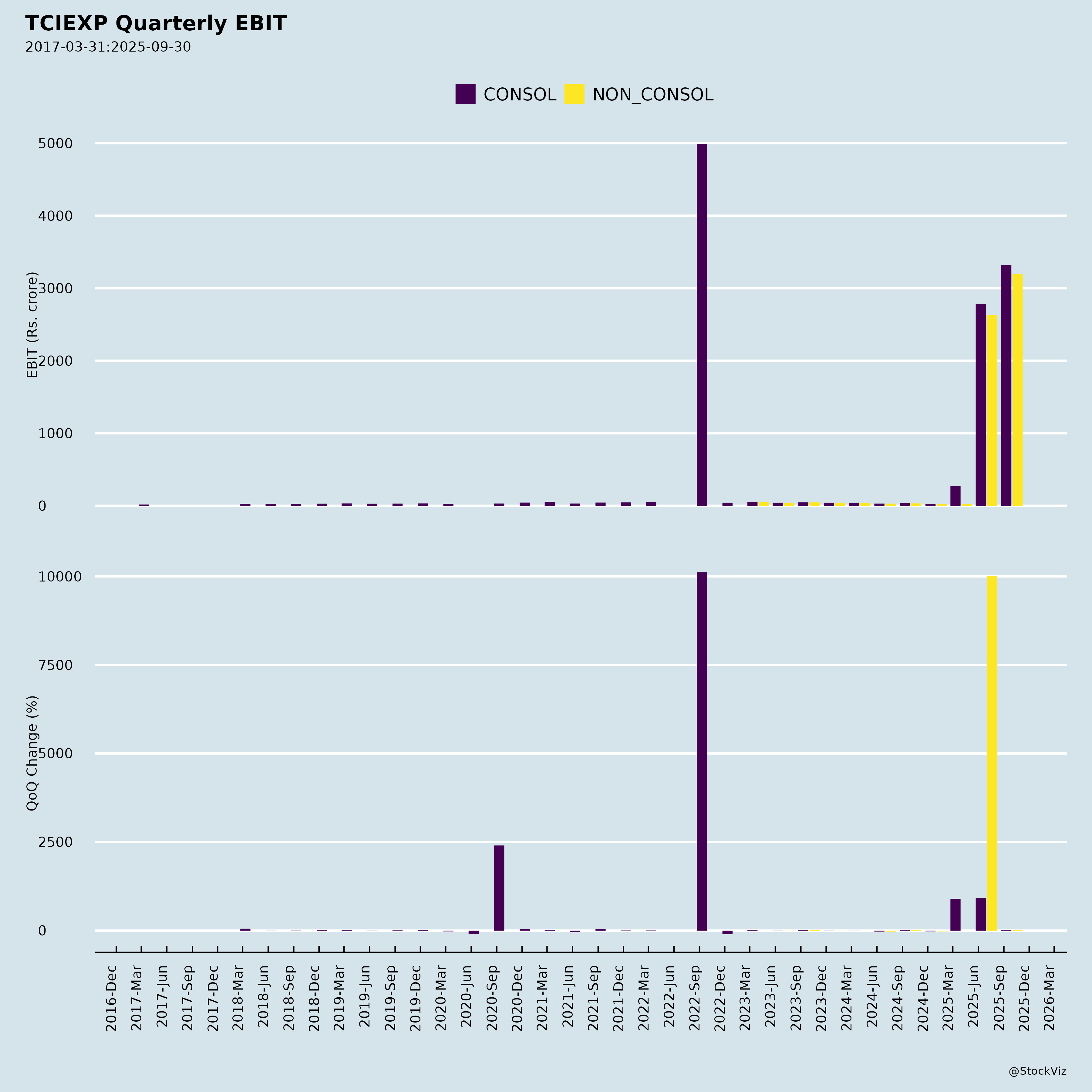
Observed Q1 FY27 performance against that guidance: - Total income growth of 8.7% YoY and volume growth of about 7.5% (2,50,000 metric tonnes) are below the full-year guided ranges, though management attributed the pricing shortfall to the timing of the fuel hike and stated the benefit would be visible from Q2 onward. - EBITDA grew 10.8% to INR 37.0 crores with margin at 11.7%, versus 11.5% in Q1 FY26 — a 20 basis point improvement, short of the 100–150 basis point full-year target, again attributed to the fuel pass-through timing. - PAT grew 6.7% to INR 22.4 crores, below the 20–25% full-year PAT growth guidance. - Capex of INR 19 crores in Q1 is consistent with the stated FY27 capex plan. - Management stated it has a visible pipeline and expects to accelerate growth in coming quarters, with margin improvement expected from Q2 onward.
Other forward-looking statements: Management expressed confidence in prevailing against the GST department’s position and does not anticipate any adverse financial outcome. The company plans to expand its dedicated Air Express network, establish standalone air cargo hubs, and introduce differentiated service offerings in time-sensitive logistics.
Broker Narrative
The broker narrative evolved from TCIEXP-specific operational strengths in June 2023, such as high-margin B2B dominance and automation, to broader sectoral and peer commentary by October 2026 involving Mahindra Logistics and Delhivery. While the core optimism around B2B stickiness persisted, the later report prioritized macro headwinds like wage and fuel inflation over company-level growth drivers. Across all 19 reports, every Buy call resulted in negative actual returns, indicating a persistent disconnect between the bullish narrative and market performance.
Fears that came true
- The June 2023 warning about macroeconomic slowdowns and competitive intensity materialized as actual returns remained deeply negative, reaching as low as -56.5% following mid-2024 Buy calls.
- Early concerns regarding price-sensitive customers and margin pressure were echoed in the 2026 report citing wage and fuel inflation impacting margins, coinciding with continued negative returns on coverage.
- The risk of market share loss from aggressive competition aligned with the history of 13 DISAPPOINTMENT outcomes across 19 reports despite repeated Buy recommendations.
Optimism that failed
- The projected ramp-up of value-added services to 25% of revenue by FY25 did not prevent losses, as the final Buy call in October 2026 predicted +30.4% but delivered -6.7% actual returns.
- Automation and network expansion promises failed to protect shareholders, evidenced by actual returns dropping -42.2% and -59.0% despite flagged operational efficiency tailwinds.
- The touted strong zero-debt balance sheet and healthy RoE did not stop volatility, with multiple Buy calls recording actual returns below -24% despite this fundamental strength.
Broker Timeline
19 broker calls · 2023-06-09 to 2026-10-07
CNBC-TV18: ratings, targets and commentary
No recorded CNBC-TV18 statements for this ticker.
Management comments
No recorded management comments with an explicit designation and affiliation for this ticker.
Copyright © 2023 SAS Data Analytics Pvt. Ltd. All rights reserved.