SOUTHBANK
Equity Metrics
September 24, 2026
The South Indian Bank Limited
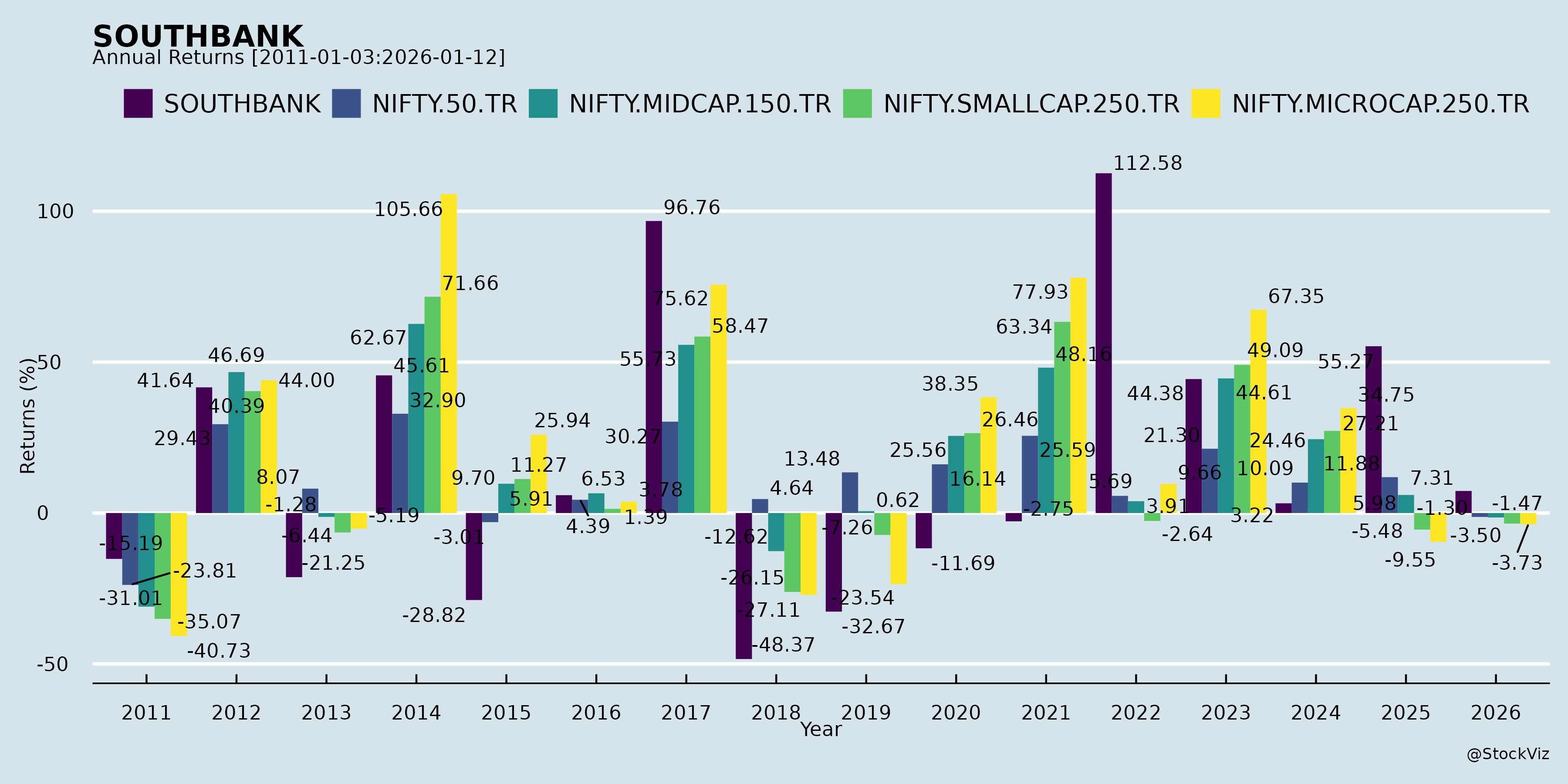
Annual Returns
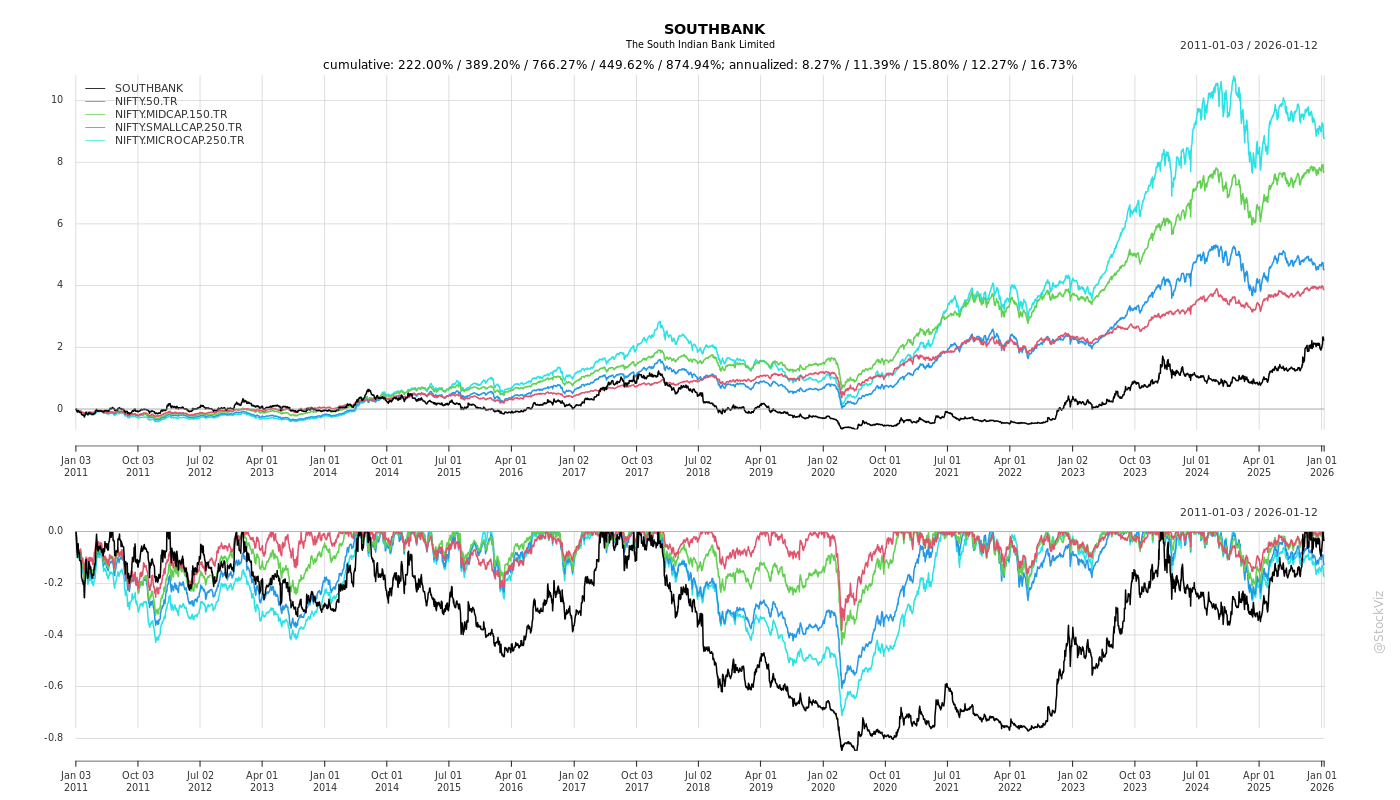
Cumulative Returns and Drawdowns
Fundamentals

Ownership
Margined
AI Summary
asof: 2026-09-17
South Indian Bank — Recent Corporate Developments
1. Headwinds and Challenges
- Non-interest income declined sharply. For Q1 FY2026-27, non-interest income fell 39% year-on-year to ₹379 crore from ₹622 crore, with treasury and forex income down 83% to ₹44 crore from ₹256 crore. Core fee income also declined 5% year-on-year to ₹179 crore.
- Operating profit contracted. Operating profit fell 12% year-on-year to ₹592 crore from ₹672 crore, even as operating expenses rose 4% to ₹812 crore.
- Sequential moderation in profit. Profit after tax declined 7% quarter-on-quarter to ₹378 crore from ₹408 crore in Q4 FY2026, and profit before tax fell 7% quarter-on-quarter to ₹508 crore.
- Provisions rose sequentially. Provisions and contingencies increased 147% quarter-on-quarter to ₹84 crore from ₹34 crore, though they were down 65% year-on-year.
- MSME/SME book contracted. The MSME/SME portfolio declined from ₹9,700 crore in June 2025 to ₹9,177 crore in June 2026, partly reflecting a write-off of ₹554 crore; excluding this, year-on-year growth was 18%.
- Corporate disbursements moderated. Corporate disbursements fell from ₹45,383 crore in Q1 FY2026 to ₹28,612 crore in Q1 FY2027, and total disbursements declined from ₹52,305 crore to ₹36,048 crore over the same period.
- Personal segment stress persists. Personal segment slippages remained elevated at ₹94 crore in Q1 FY2027, and personal segment GNPA rose to ₹400 crore from ₹378 crore in Q4 FY2026.
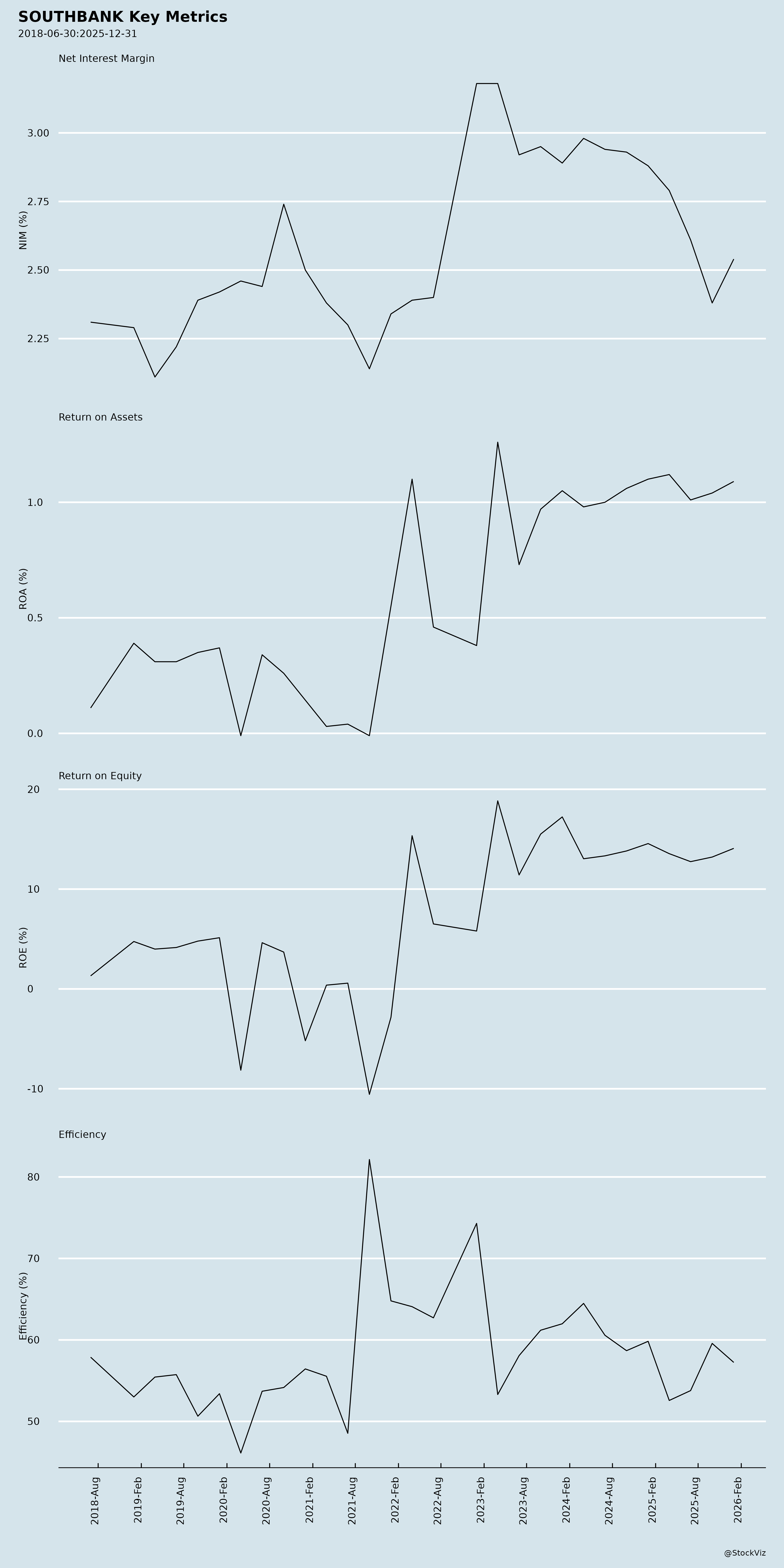
- Return ratios moderated sequentially. Return on assets fell to 1.05% in Q1 FY2027 from 1.17% in Q4 FY2026, and return on equity declined to 12.84% from 14.49%.
- Tier II capital declined. Tier II capital fell from ₹511 crore in March 2026 to ₹407 crore in June 2026.
- Governance transition. The MD & CEO role is transitioning, with Mr. Mahesh Muralidhar Pai appointed as Officer on Special Duty from September 16, 2026 to September 30, 2026, before taking charge as MD & CEO from October 1, 2026 for three years.
2. Tailwinds and Growth Prospects
- Strong advances growth. Gross advances grew 17.01% year-on-year to ₹104,368 crore from ₹89,198 crore, with the balance sheet expanding 13% to ₹144,451 crore.
- Highest ever net interest income. Net interest income rose 23.05% year-on-year to ₹1,025 crore, with net interest margin improving to 3.23% in Q1 FY2027 from 2.95% in Q4 FY2026 and 3.03% in Q1 FY2026.
- Robust deposit franchise. Retail deposits grew 13.66% year-on-year to ₹124,306 crore; NRI deposits grew 12.82% to ₹36,432 crore; CASA grew 14.61% to ₹41,495 crore, with the CASA ratio at 32.98%.
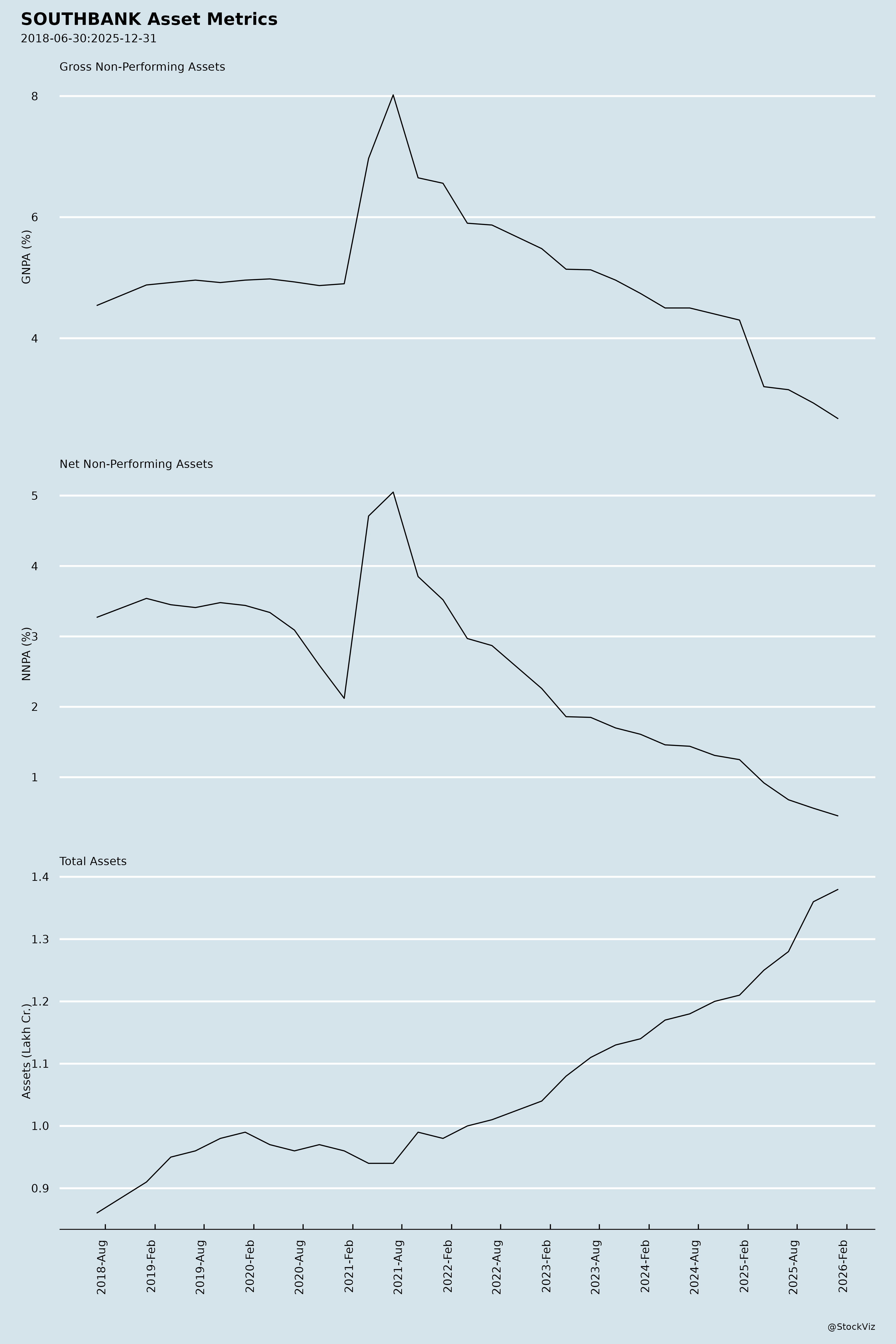
- Sharp improvement in asset quality. Gross NPA fell to 1.38% from 3.15% year-on-year; net NPA dropped to 0.26% from 0.68%. Provision coverage including write-offs rose to 94.51% from 88.82%.
- Slippages at all-time low. Total slippages declined to ₹128 crore in Q1 FY2027 from ₹182 crore in Q1 FY2026, with corporate slippages at zero.
- High-quality corporate book. 98.81% of large corporate segments are rated A and above.
- Gold loan and mortgage momentum. Gold loans grew 42.90% year-on-year to ₹24,930 crore; mortgage loans grew 78.65% to ₹5,856 crore; vehicle loans grew 12.63% to ₹2,497 crore.
- Capital adequacy remains strong. CRAR stood at 19.62%, well above the minimum regulatory requirement of 11.50%, with CET 1 improving consistently to ₹11,146 crore.
- Digital and process transformation. The Bank has automated, eliminated, centralized, or optimized numerous branch processes, launched multiple STP platforms (GST Power, LAP Power, Power Drive, Edu Power, Micro Power, Composite Power, Aawas Power, SME Power, SIB Gold Xpress, Captive Power), and deployed AI capabilities through its in-house Zeni framework.
- Partnership-led distribution. The Bank is expanding non-branch distribution through asset partnerships, co-lending arrangements (including with CapFloat Financial Services for Amazon customers), and fintech partnerships for deposit accounts.
- Fund-raising capacity. Shareholders approved raising funds by issuing Tier-II bonds/debentures/securities on a private placement basis, with the Board authorized to raise up to ₹1,000 crore.
- Dividend declared. A dividend of ₹0.45 per equity share (45%) was approved for FY2025-26.
3. Key Risks
- Concentration and rating risk in corporate lending is mitigated by the dominant share of A & above rated large corporate loans (98.81%).
- Asset quality risk remains, though GNPA, NNPA, SMA 1, and SMA 2 levels have improved, with slippages at all-time lows.
- Interest rate and treasury income volatility is evident from the 83% year-on-year decline in treasury and forex income.
- Execution risk in transformation across the many digital, STP, and partnership initiatives underway.
- Leadership transition risk associated with the MD & CEO change effective October 1, 2026.
- Regulatory and compliance risk inherent to banking, addressed through initiatives such as the regulatory compliance chatbot, AI-assisted cheque verification, and IT change governance.
- Geographic concentration in Kerala (502 of 953 customer touch points), though the Bank is diversifying across South Ex-Kerala and the rest of India.
4. Management Guidance Versus Observed Performance
- Management stated strategy centers on “Profitability through Quality Credit Growth,” sustained profitability, superior asset quality, a resilient loan book, and a robust retail liability portfolio, with organizational restructuring and digital technology leverage.
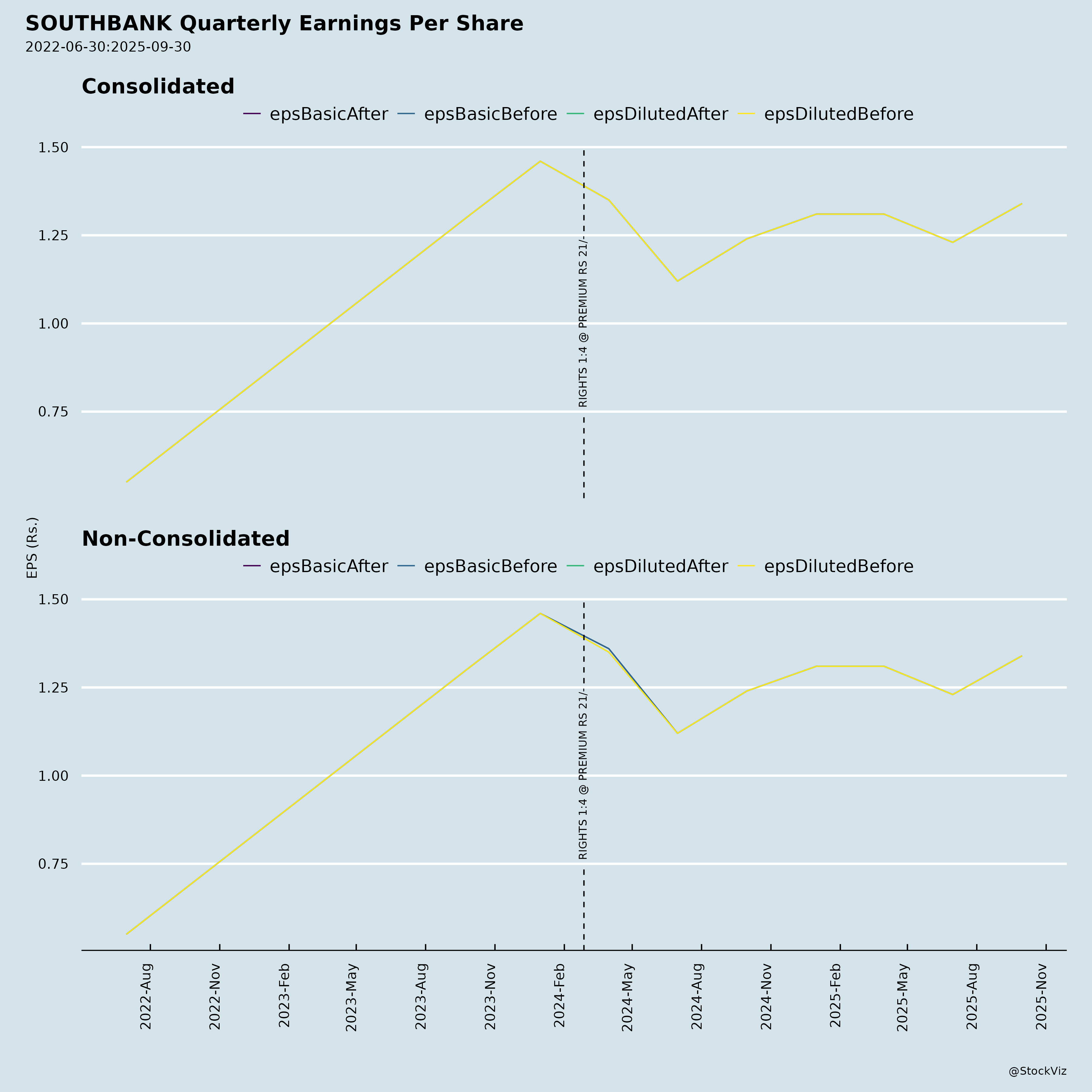
- Observed performance aligns with stated priorities: net profit grew 17.29% year-on-year to ₹377.63 crore; GNPA improved 177 bps to 1.38%; NNPA improved 42 bps to 0.26%; PCR including write-offs improved 569 bps to 94.51%; net interest income reached its highest ever at ₹1,025 crore with 23.05% growth.
- Management cited onboarding of new advances with low-risk profiles to ensure a well-balanced credit portfolio; observed data shows corporate slippages at zero in Q1 FY2027 and 98.81% of large corporate loans rated A and above.
- Forward-looking appointments: Mr. Mahesh Muralidhar Pai will take charge as MD & CEO with effect from October 1, 2026, for three years, following an interim OSD period from September 16, 2026 to September 30, 2026.
- Investor engagement: Representatives will participate in the Anand Rathi Annual Flagship Conference G-200 Summit 2026 Investor Conference on September 22, 2026, with no presentations and no UPSI to be shared.
- Capital raising intent: The Board recommended and shareholders approved raising up to ₹1,000 crore via Tier-II bonds/debentures/securities on a private placement basis, for a period of one year, in one or more tranches.
Broker Narrative
The narrative shifted from a confident Buy in May 2023, built on record FY23 results, NIM expansion, a churned/pristine corporate book, and a valuation cushion, to a Hold in July 2026 after other income collapsed, deposit growth slowed, and management transition risk remained live. Management succession was a persistent theme from the 2023 MD&CEO exit to the 2026 monitorable, while asset-quality language softened from zero slipp
Copyright © 2023 SAS Data Analytics Pvt. Ltd. All rights reserved.