SOLARA
Equity Metrics
September 24, 2026
Solara Active Pharma Sciences Limited
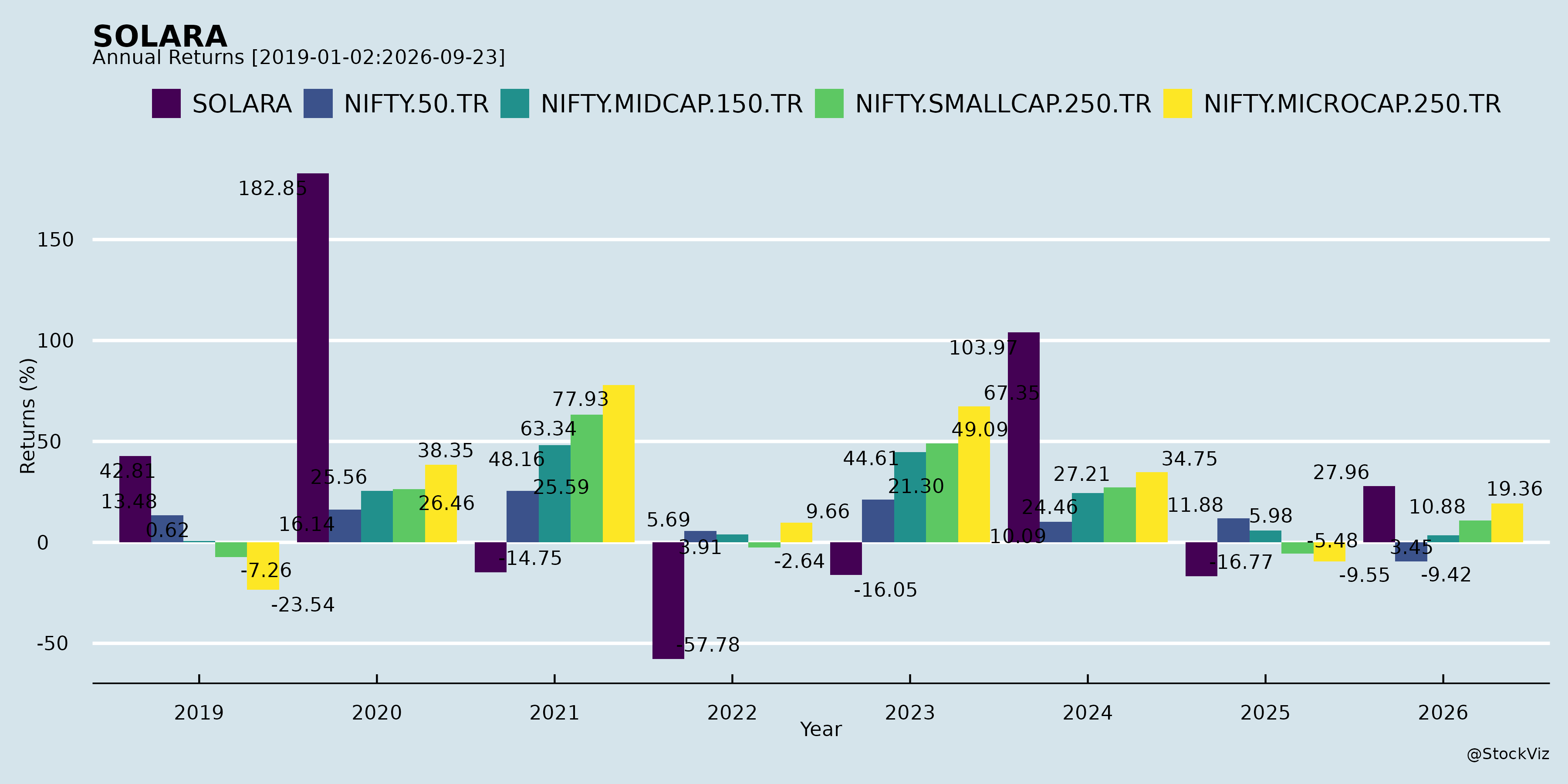
Annual Returns
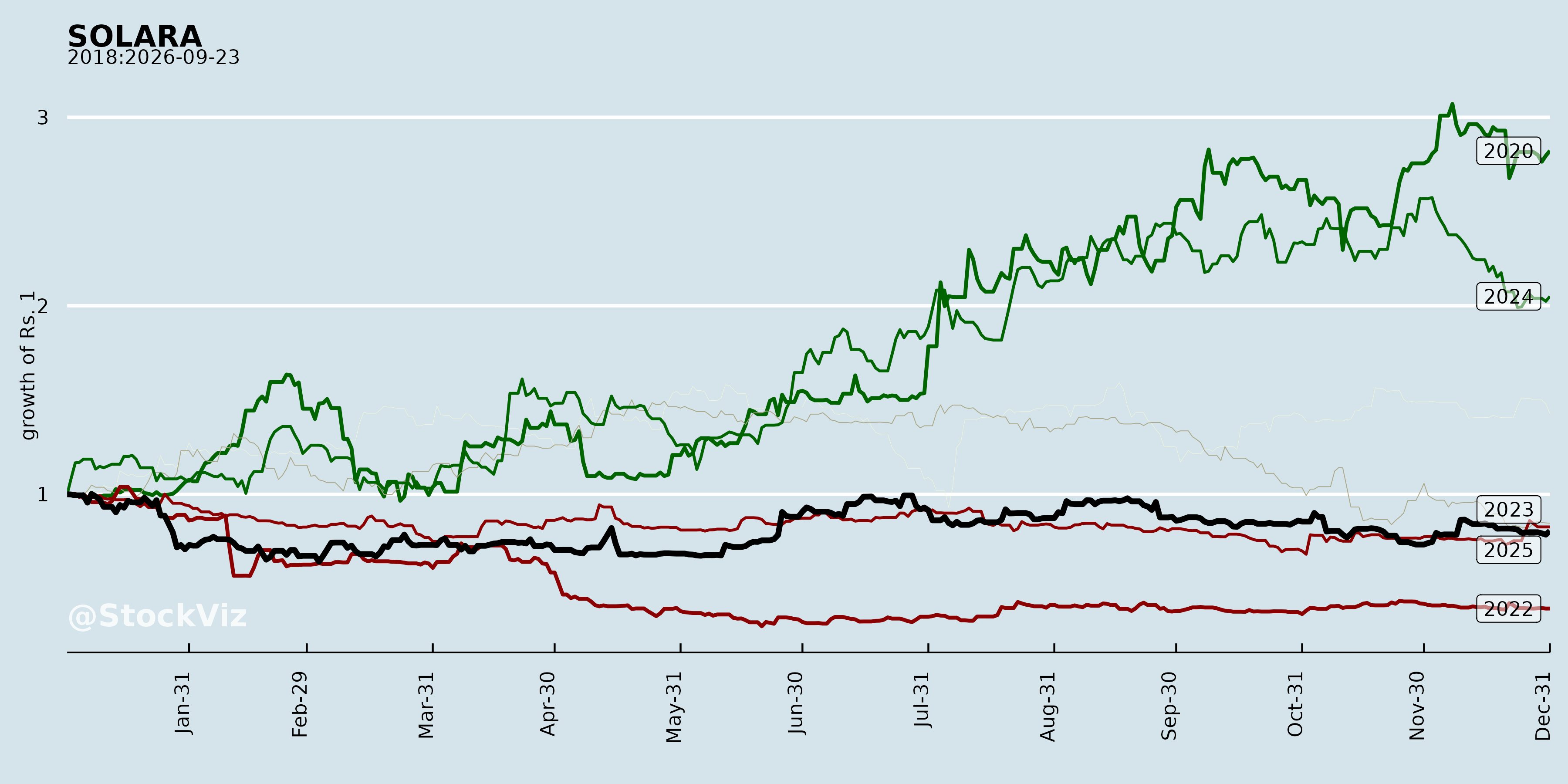
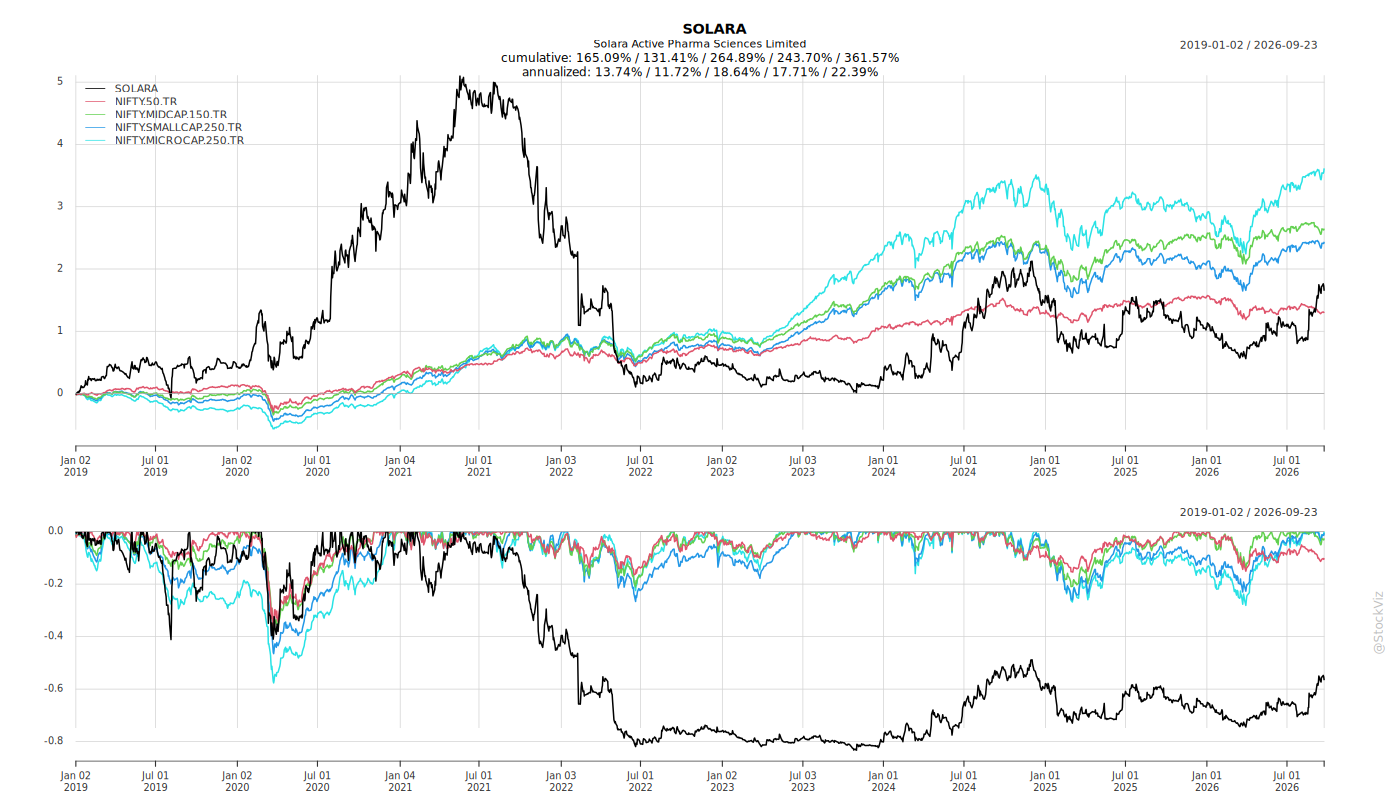
Cumulative Returns and Drawdowns
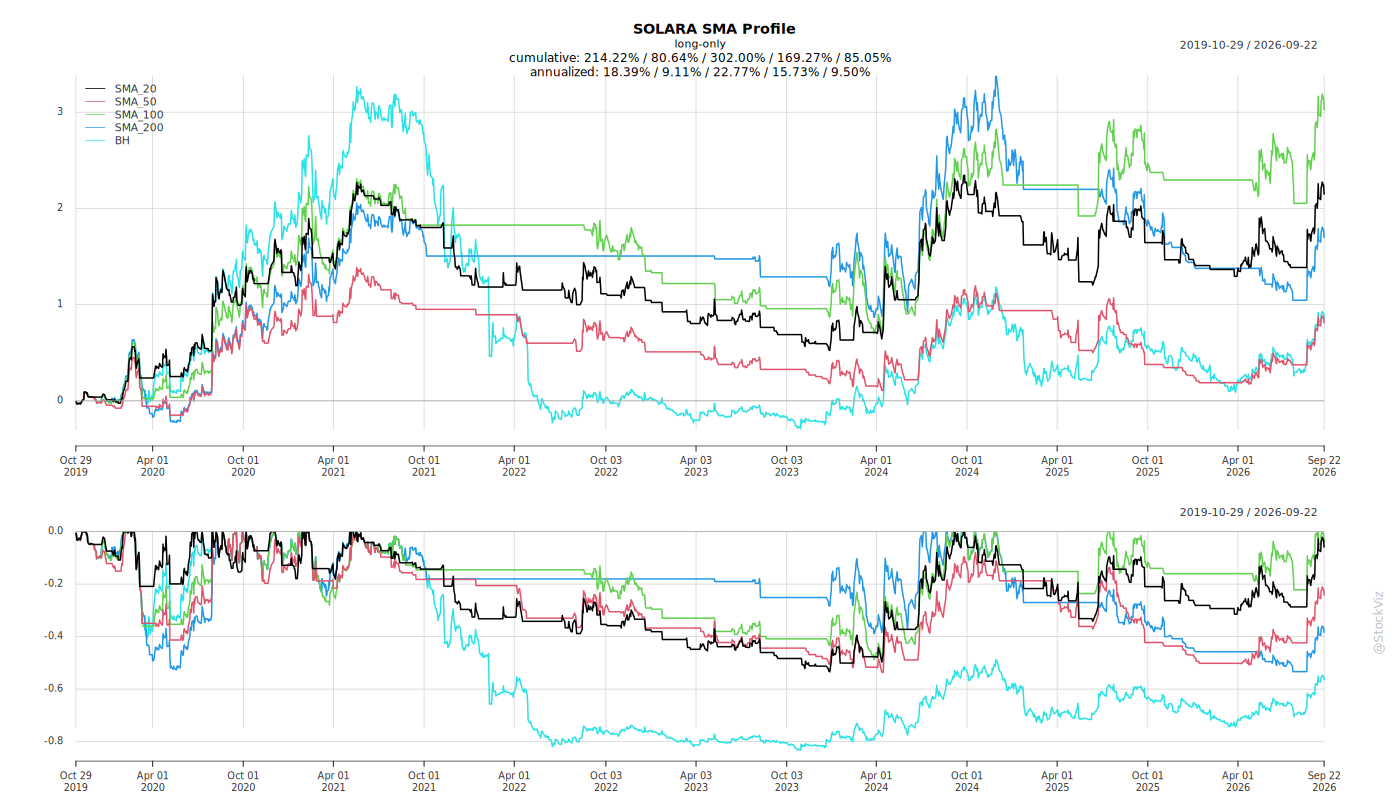
Fundamentals
Ownership
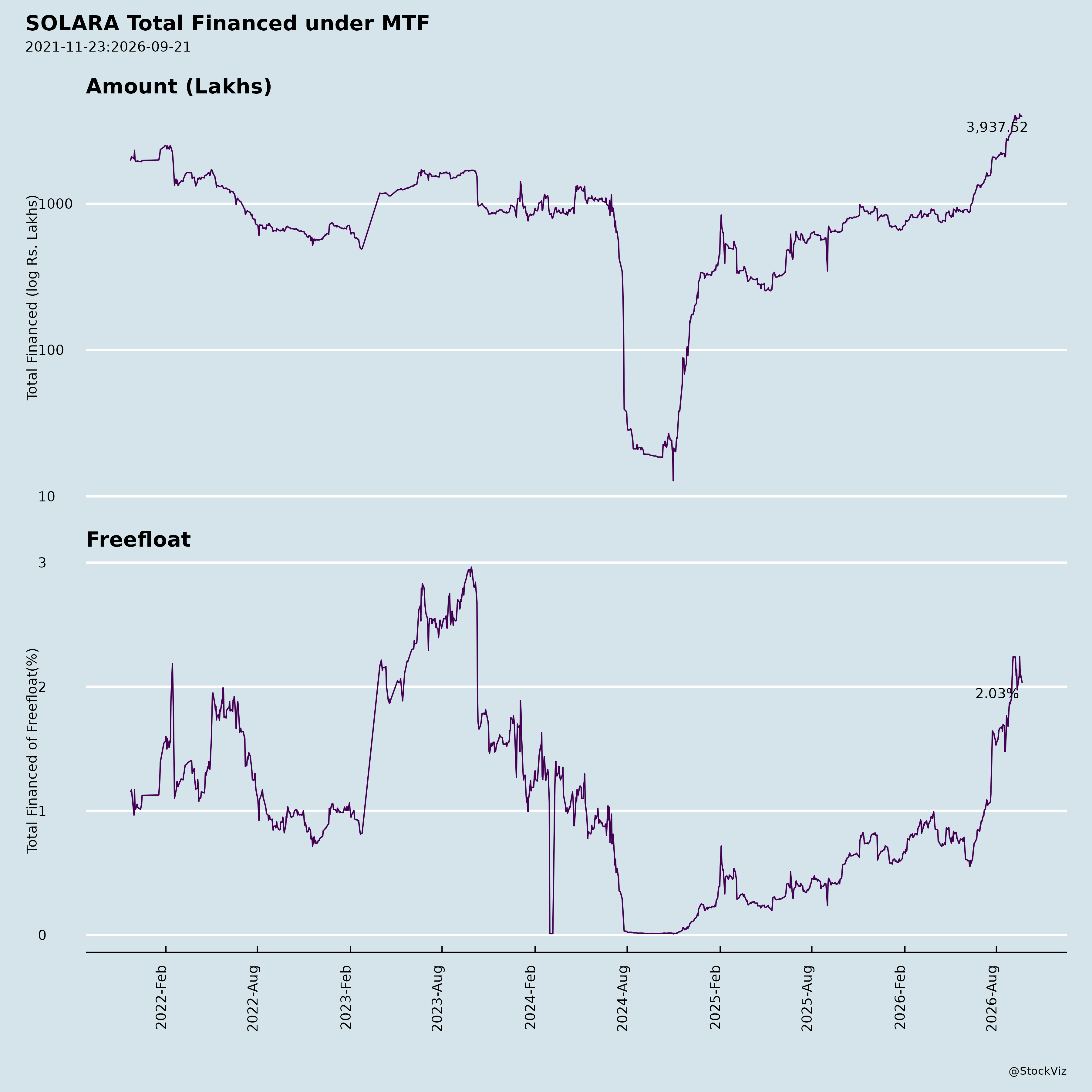
Margined
AI Summary
asof: 2026-09-17
Solara Active Pharma Sciences — Q1 FY27 Summary
1. Headwinds and Challenges
West Asia crisis and input costs. The quarter’s dominant external headwind was the ongoing geopolitical situation in West Asia, which management said triggered higher raw material prices, solvent shortages, and broader supply chain challenges. Because most key starting materials and solvents are petroleum-derived, the crisis affected both raw material availability and pricing. Sandeep Rao noted the company has limited working capital, so “every rupee has to be used judiciously.”
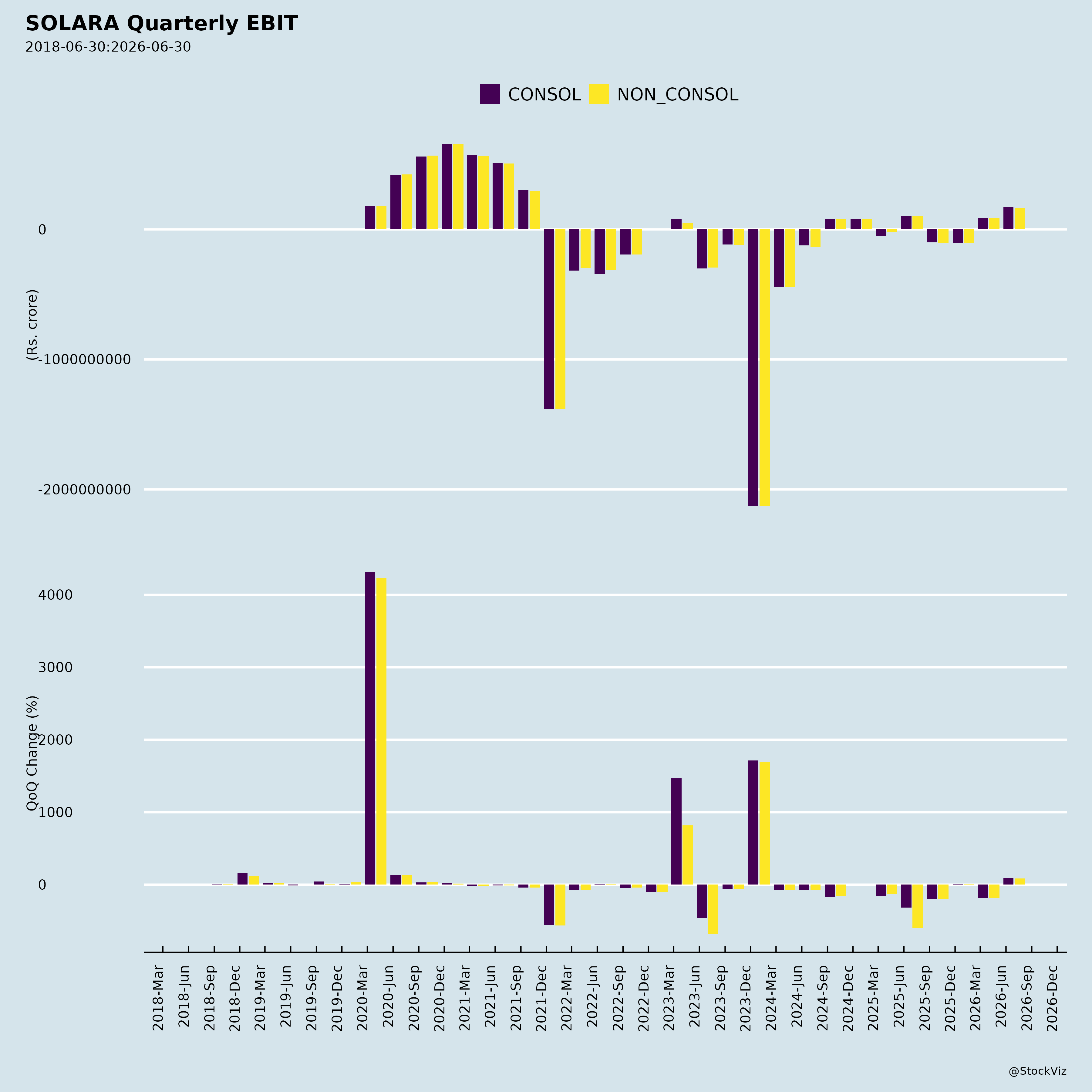
Commodity Ibuprofen drag. The Ibuprofen business continued to face profitability challenges, reporting negative 12% EBITDA margin in Q1 FY27 (EBITDA loss of INR 87 Mn on revenue of INR 765 Mn). Management described it as a persistent drag with low gross margins and negative EBITDA, and noted that as a commodity business its margins “can never compare” to the base business. Roughly INR 700 crores of capital is deployed in this business.
Gross margin volatility and compression. Overall gross margin fell to 47.0% in Q1 FY27 from 52.3% a year earlier (down 530 bps). Base business gross margin was 51.3%, down 675 bps YoY and 235 bps QoQ. CFO Sarat Kumar attributed roughly INR 30 crores of consolidated revenue to cost pass-through; adjusting for this, the consolidated gross margin profile would be close to 53%. For the base business, INR 17–18 crores of increased pass-through was cited.
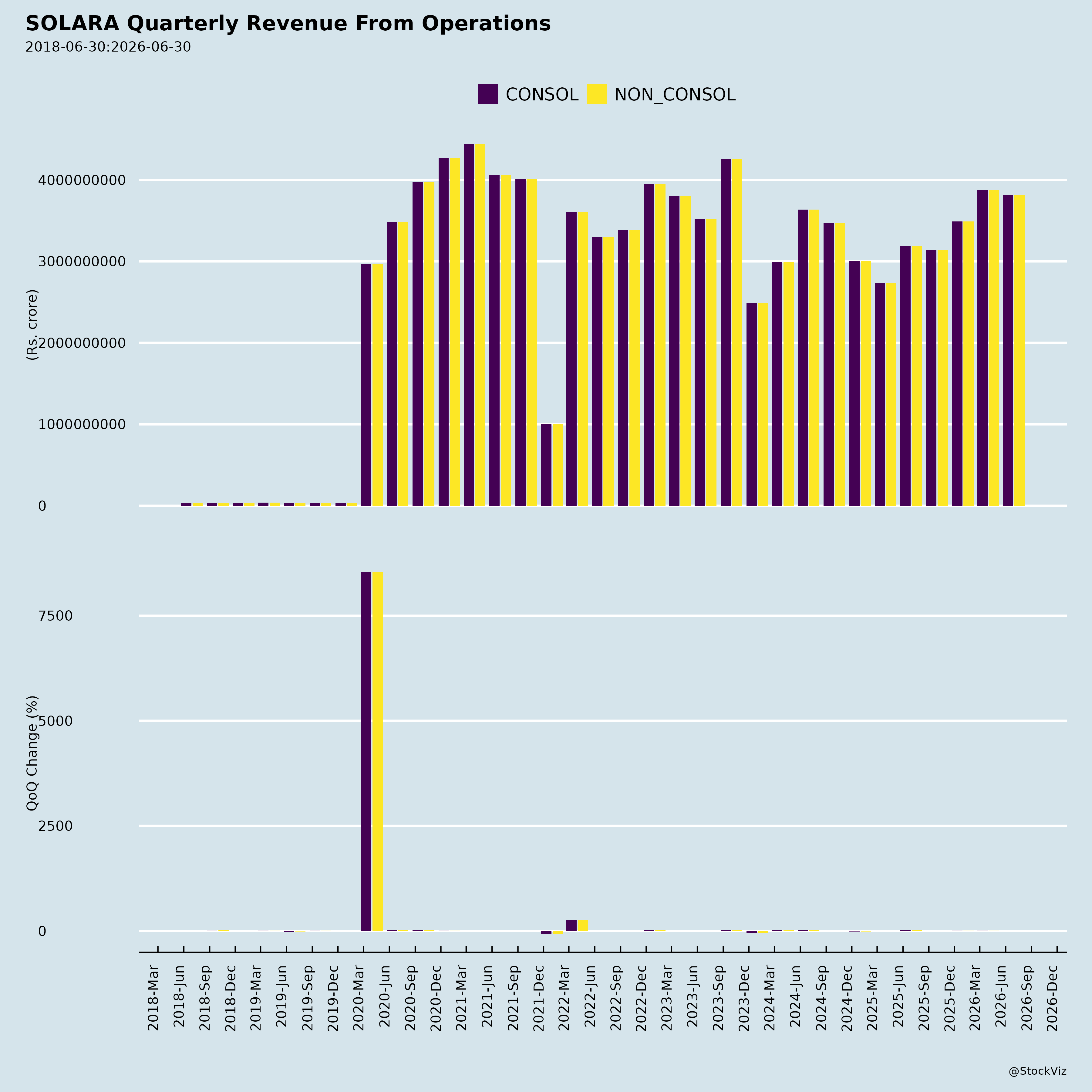
Sequential flatness. Overall revenue declined 2% QoQ (INR 3,843 Mn vs INR 3,919 Mn), and base business revenue was essentially flat QoQ (INR 3,077 Mn vs INR 3,070 Mn). Management acknowledged that adjusting for pass-through, revenue was roughly flat QoQ, while pointing to normal Q1 seasonality in API offtake.
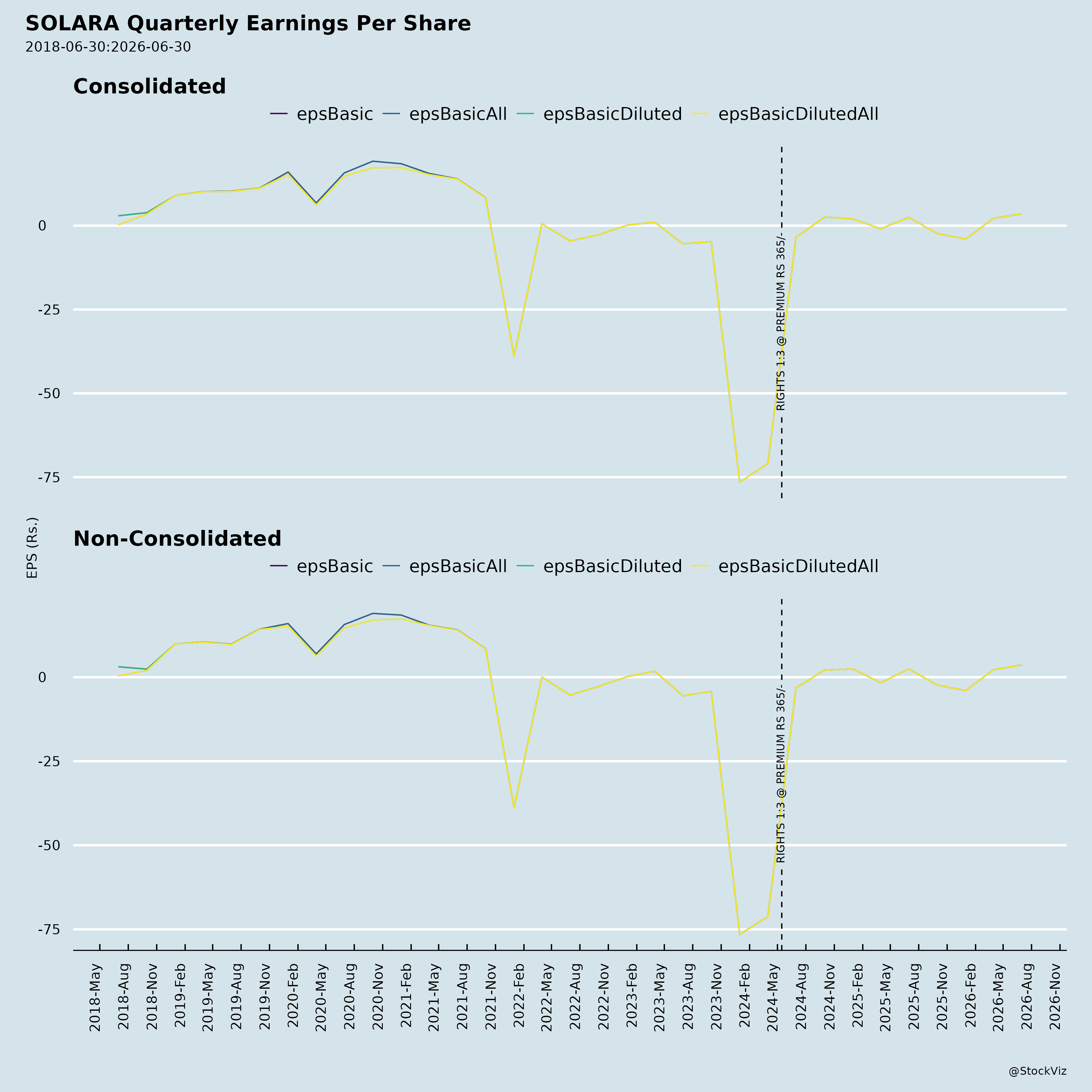
Accumulated losses. As of June 30, 2026, the group had accumulated losses of INR 286.21 crores (standalone: INR 285.73 crores), though the Board approved preparation of results on a going concern basis, citing confidence in renewal of working capital facilities and improved revenue and margins.
Other structural pressures. The annual report material cites global oversupply, persistent pricing pressure, underutilisation, and a subdued margin profile in the commodity Ibuprofen segment, alongside general risks including macroeconomic fluctuations, currency fluctuations, raw material cost volatility, supply chain disruptions, product development/commercialisation delays, and regulatory compliance risks. Environmental, health and safety, hazardous waste, and cybersecurity/data privacy risks are also flagged.
2. Tailwinds and Growth Prospects
Base business momentum. Base business revenue rose 24% YoY to INR 3,077 Mn, with gross margin of INR 1,580 Mn (up 9–10% YoY) and EBITDA of INR 722 Mn (up 8% YoY). Management said the base business has “hit a new plateau,” crossing the INR 300 crores quarterly revenue mark in Q4 FY26 and Q1 FY27 after hovering around INR 240–250 crores in prior quarters.
Regulated markets and product mix. Regulated markets contribute 75%+ of base business revenues, supported by a healthy product mix. The annual report cites growing global demand for complex and high-value APIs, increased outsourcing trends, and government policy support such as the PLI scheme.
Growth drivers. Management attributed base business growth to geographic expansion and new business wins, plus debottlenecking capex that increased volumes of high-margin products. The company actively carries a basket of 50–60 products, manufacturing at least 40 and selling close to 50 in a typical quarter.
Debt reduction. Net debt fell by INR 1,346 Mn during the quarter to INR 4,795 Mn, a ~22% reduction, with INR 1,000 Mn from the final rights issue call received in May 2026 and INR 346 Mn from operational cash flows. Net debt-to-EBITDA stands at ~1.9x on annualized Q1 EBITDA. Management has a line of sight to reduce net debt to ~INR 4,406 Mn by March 2027 (~1.7x), and aspires to be net debt free by FY29.
Capital allocation discipline. Capex is focused on debottlenecking high-margin product lines with expected payback of 2–3 quarters, rather than greenfield expansion. FY27 committed capex is INR 55–60 crores (INR 40 crores debottlenecking, INR 10–15 crores maintenance), with INR 40–50 crores annually expected in FY28 and FY29. Greenfield is “not part of our plan” at this point.
Sustainability initiatives. Renewable energy constituted 81% of the electricity mix in FY2025-26, with an 8.5% reduction in Scope 1 & 2 GHG emissions. Management targets top-quartile EcoVadis performance with a Silver Medal aspiration, 2% annual renewable energy share increase, 90% Scope 1 & 2 GHG reduction by FY2050 (FY24 baseline), 5% annual freshwater reduction, 5% annual reduction in incinerable/landfilled waste, 33% reduction in overseas suppliers, zero product recalls, and 10% annual LTIFR reduction toward a 0.2 target.
3. Key Risks
- Geopolitical/macro risk: The West Asia crisis is cited as the foremost risk that could derail the turnaround, affecting input costs, solvent availability, and logistics.
- Ibuprofen strategic uncertainty: Management is working with appointed bankers to evaluate strategic options, with next steps expected by end of Q2 FY27. Management indicated recovering the entire capital invested is “slightly farfetched,” implying a potential write-down or shaving of capital.
- CRAMS/polymers demerger on hold: The carve-out has been paused until Ibuprofen strategic options are finalized in H1 FY27. Vizag remains mothballed; the retrofit-for-CRAMS plan is on hold.
- US tariff uncertainty: A new tariff announcement has been made, but management noted no formal policy or legal implementing framework exists and product scope (formulations vs. APIs) is unclear.
- Pass-through limits: Management stated “all of it, we will not be able to claw back the price impact,” though most customers have accepted increases given transparency.
- Working capital and going concern context: Accumulated losses and reliance on working capital facility renewals are noted in the financial results.
- Compliance and operational risks: The annual report flags regulatory compliance, hazardous waste disposal, workplace safety, supply chain quality, and cybersecurity/data privacy risks.
4. Management Guidance vs. Observed Performance
Base business EBITDA margin. On the prior call, management guided for 25% EBITDA margin for the base business and exceeded it in Q4 FY26 (25.9%). In Q1 FY27, base business EBITDA margin came in at 23.5%, below both the Q4 FY26 level and the prior-year 26.9%. When asked whether the 25% trajectory would sustain in FY27, the CFO said “25% plus/minus 1% should be the margin profile what we’re looking at.” The Q1 result of 23.5% sits at the lower edge of that range.
Base business growth. Management reiterated a 10% YoY growth outlook for the base business (carried from the Q4 call). Observed Q1 FY27 growth was 24% YoY (18–19% adjusting for pass-through), above the stated 10% guidance. Management said it is “fairly confident” of at least 10% growth and is currently running higher.
Ibuprofen losses. Management guided that Ibuprofen negative EBITDA would range around INR 10–15 crores per quarter on average. Q1 FY27 actual negative EBITDA was INR 87 Mn (INR 8.7 crores), better than the guided range, which management attributed to a tactical Q1 dynamic of reduced supply and relatively higher demand. Management explicitly declined a long-term strategic view on this, calling it “very dynamic.”
Debt reduction. Management guided net debt to ~INR 4,406 Mn by March 2027. Q1 FY27 net debt came in at INR 4,795 Mn, with INR 1,346 Mn repaid during the quarter, consistent with the trajectory toward the March 2027 target.
Ibuprofen/CRAMS strategic resolution. Management had guided a solution by H1 FY27 and reiterated being “on track” to resolve the matter by H1, with next steps expected alongside Q2 FY27 results. No resolution was announced in the Q1 materials.
Net debt free aspiration. Management reiterated an internal aspiration to be net debt free by FY29, while declining to give a formal outlook.
Copyright © 2023 SAS Data Analytics Pvt. Ltd. All rights reserved.