SBIN
Equity Metrics
September 24, 2026
State Bank of India
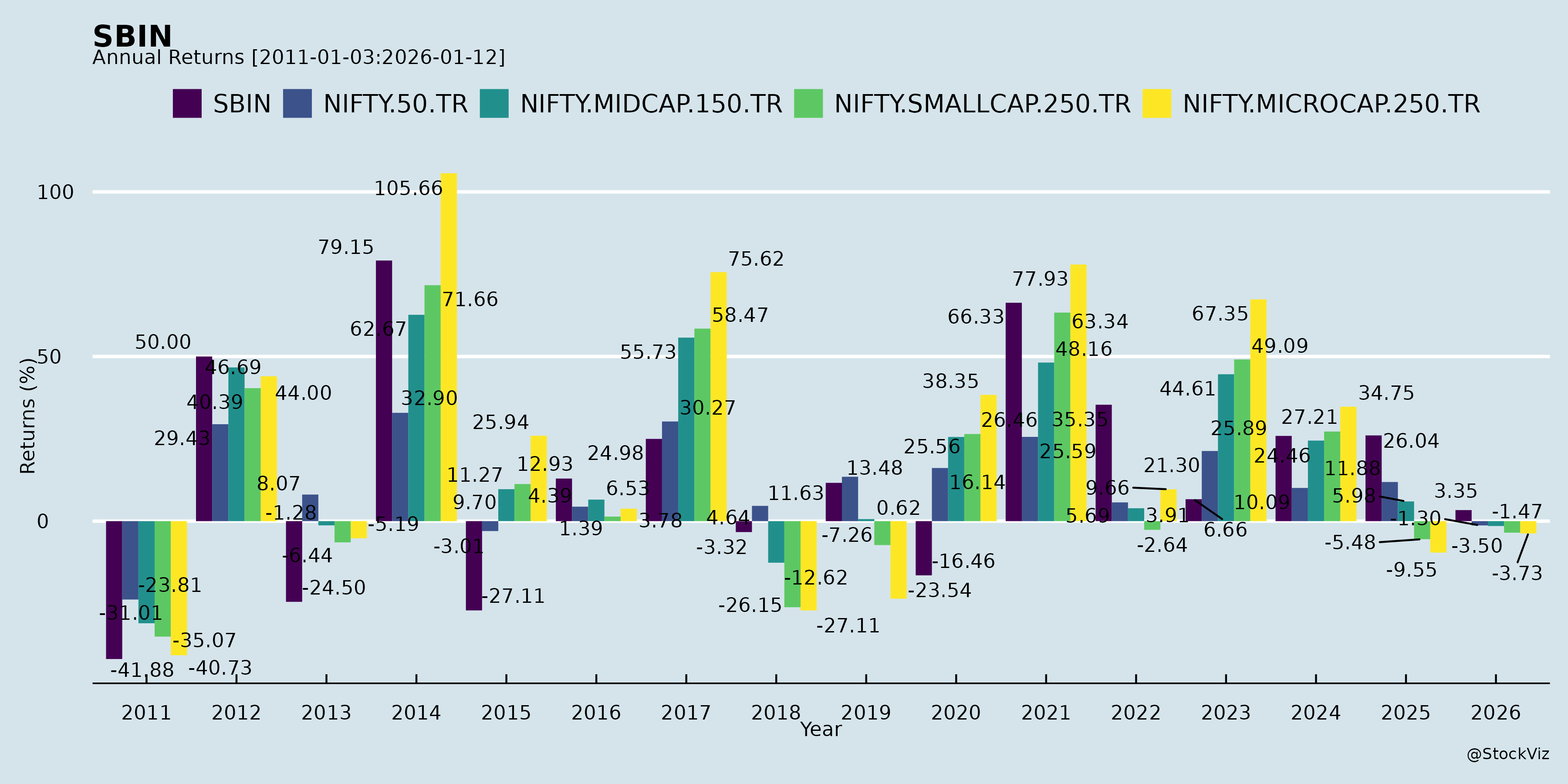
Annual Returns
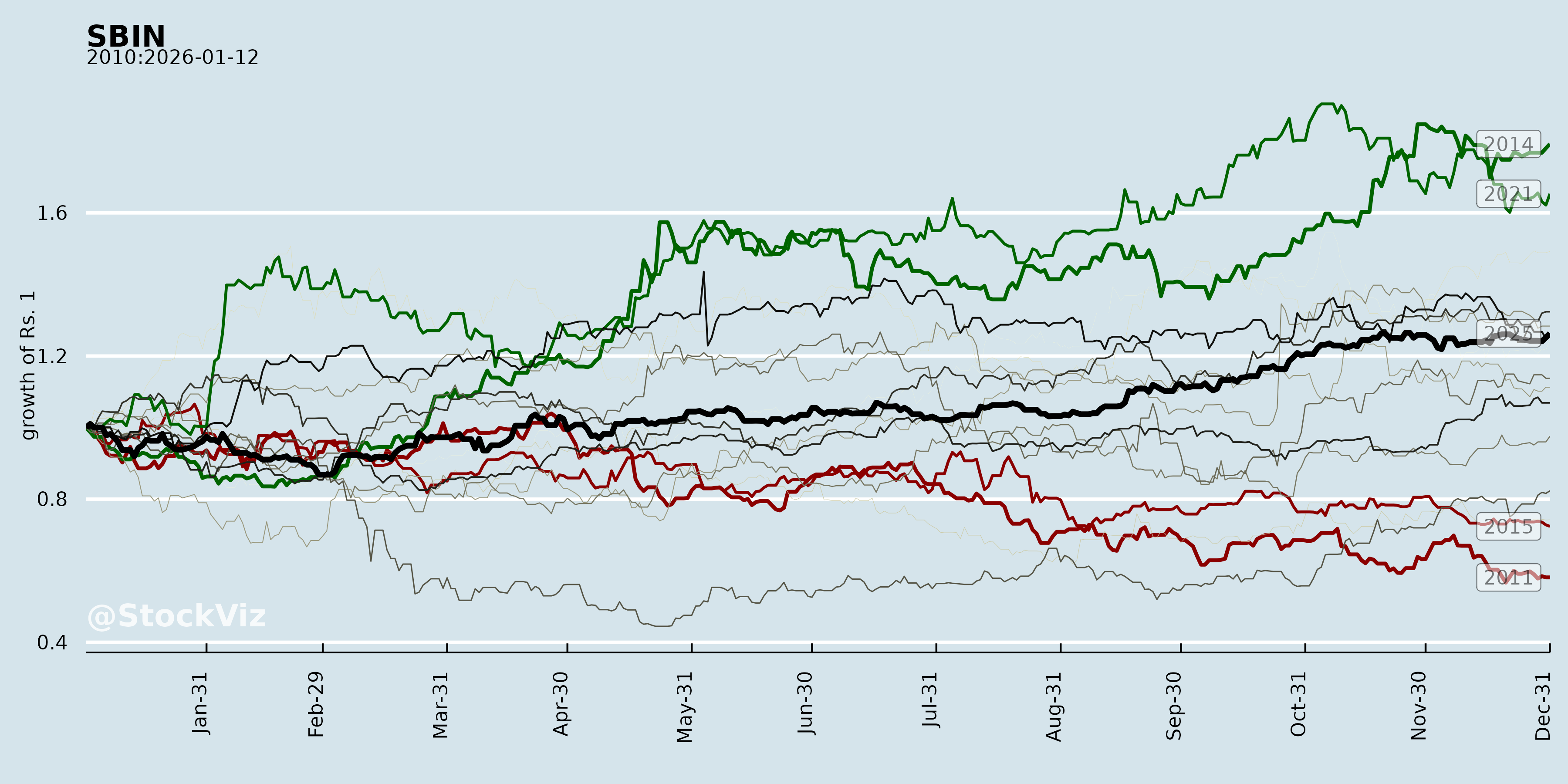
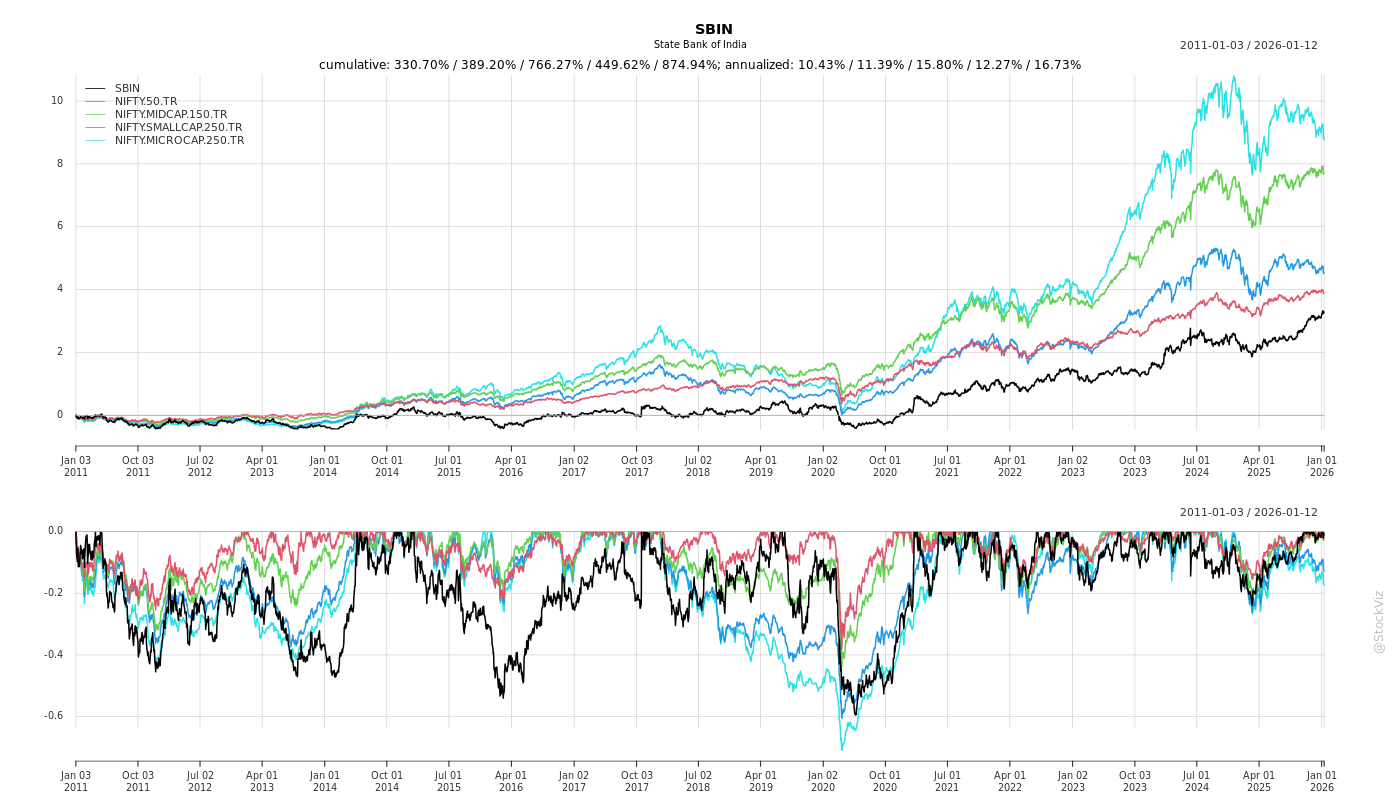
Cumulative Returns and Drawdowns
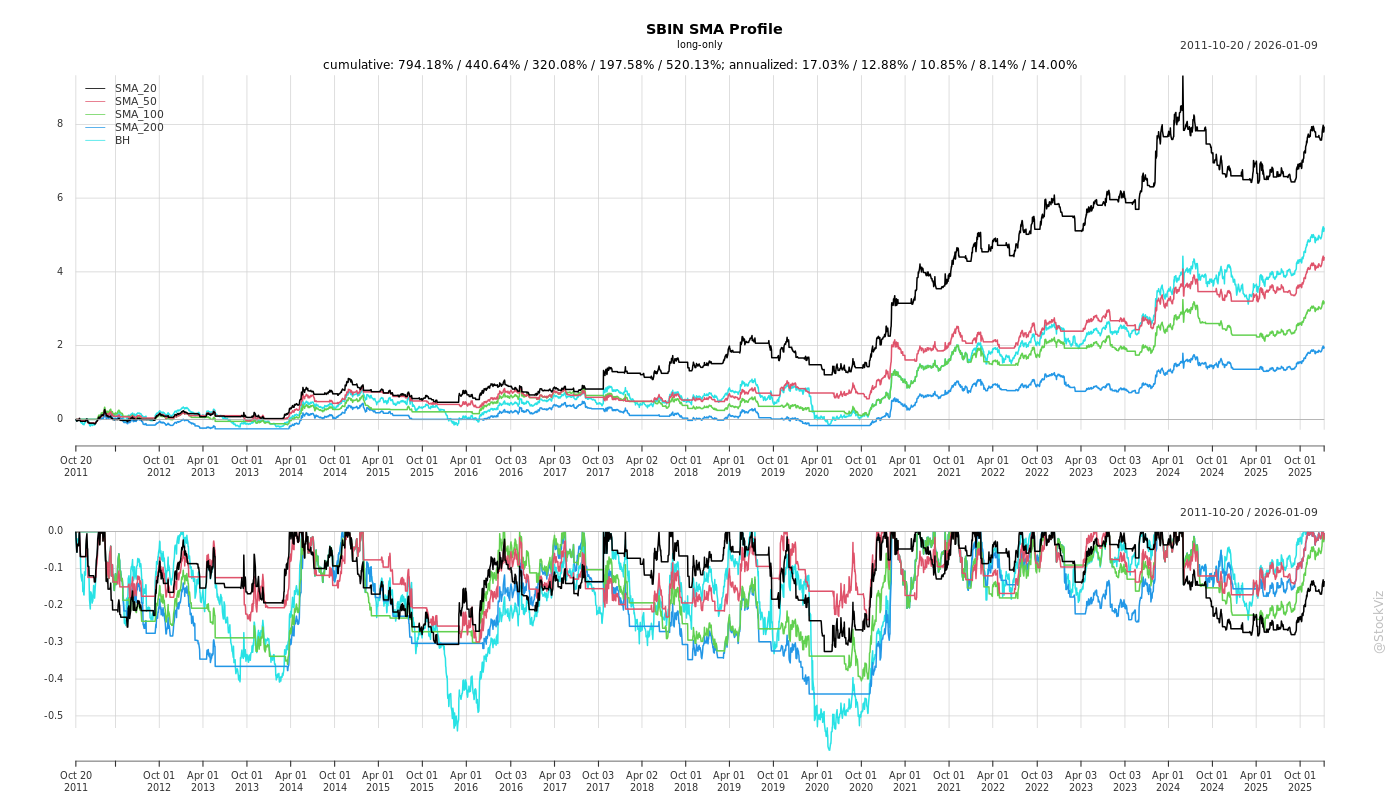
Fundamentals
Ownership
Margined
AI Summary
asof: 2026-09-14
SBI — Recent Corporate Announcements: Summary
1. Headwinds and Challenges
- Strike action: The United Forum of Bank Unions (UFBU), representing seven constituent unions/associations, has served a strike notice proposing strikes on 11 September 2026, 28–30 September 2026, and a continuous strike from 26 October 2026. Management states that while arrangements have been made to keep branches and offices functioning on strike days, work in the Bank is likely to be impacted.
- Forward-looking uncertainty: Management notes that certain statements in its investor presentation are forward-looking, based on current expectations and subject to uncertainty and changes in circumstances, so actual outcomes may vary.
2. Tailwinds and Growth Prospects
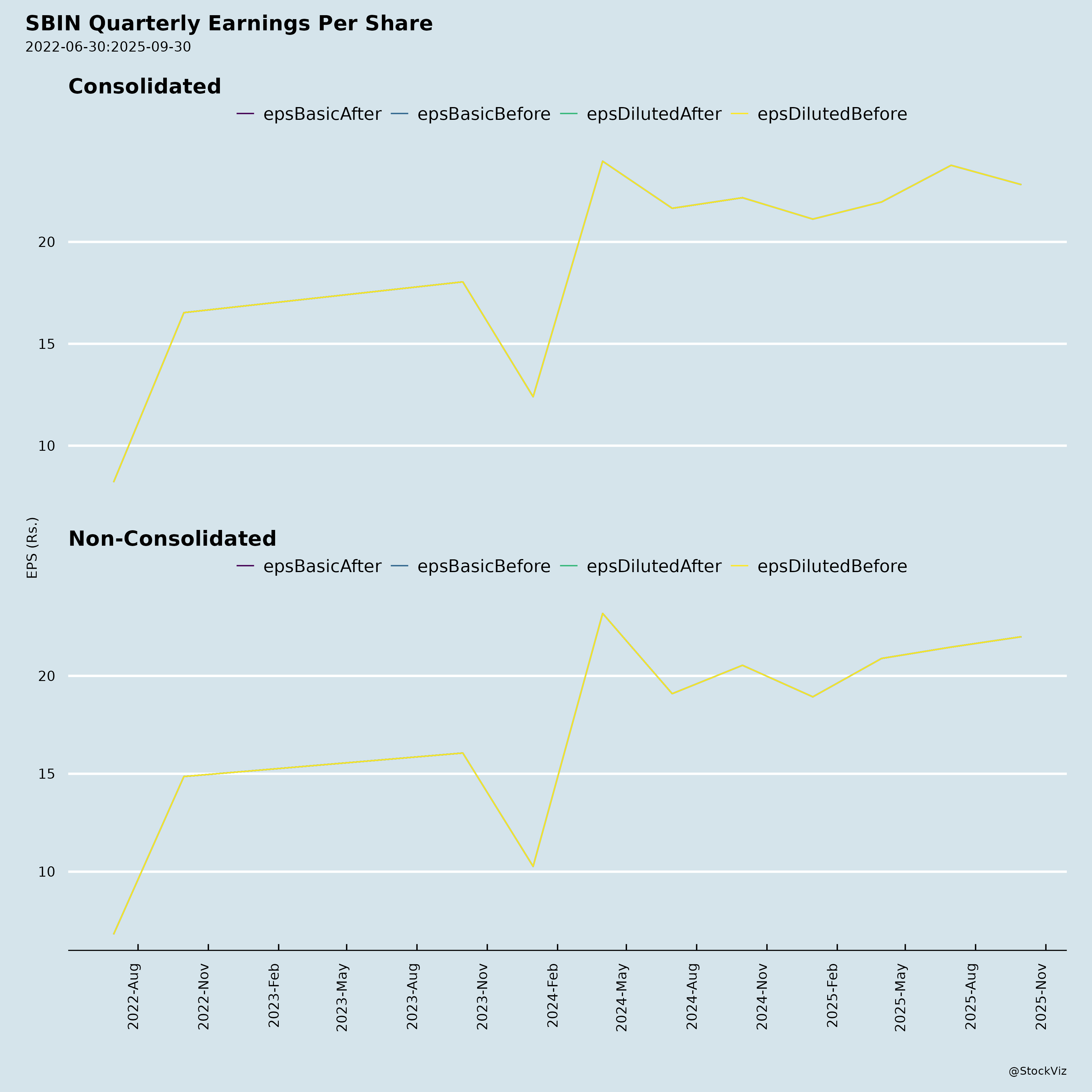
- Q1FY27 business momentum: Gross advances grew 18.63% year-on-year to ₹50 trillion, and deposits grew 9.73% year-on-year to ₹60 trillion. Net profit for the quarter reached ₹21,121 crore, up 10.23% year-on-year, with operating profit of ₹33,529 crore.
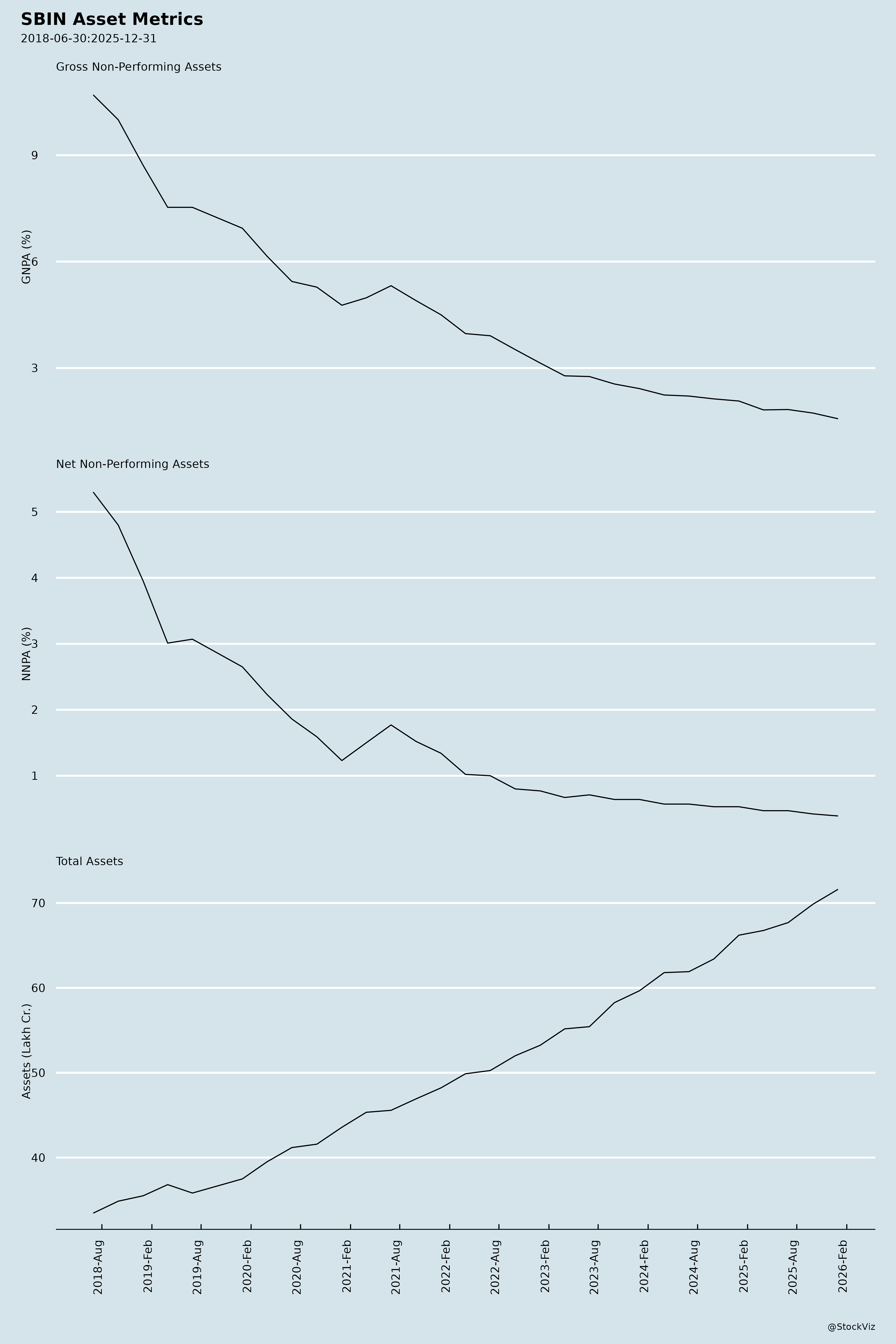
- Asset quality: Gross NPA stood at 1.47% and Net NPA at 0.38%, with a Capital Adequacy Ratio (CRAR) of 15.67%.
- Growth drivers cited: Continued strong digital adoption, loan portfolio diversification, and synergies from subsidiaries such as SBI Life and SBI Card.
- Capital raising: On 29 July 2026, SBI raised ₹4,691 crore through its first Basel III-compliant Additional Tier 1 bond issuance of the financial year, at a 7.75% coupon. The perpetual bonds carry a call option after 5 years and on each anniversary thereafter, and are rated AA+ with stable outlook by CRISIL and CARE. The issue drew bids of more than 2 times the ₹3,000 crore base size, with 89 bids from provident funds, pension funds, mutual funds, banks and other qualified institutional bidders. The Chairman stated that the participation and heterogeneity of bids demonstrated investor trust in the Bank, and the issuance diversified its long-term non-equity regulatory capital.
3. Key Risks
- Operational disruption from strikes: The proposed September and October 2026 strikes may impact normal bank operations despite contingency arrangements.
- Forward-looking statement risk: Actual outcomes may differ from management’s current expectations due to uncertainty and changes in circumstances.
4. Management Guidance vs. Observed Performance
- Capital raising: The AT1 issuance was launched with a base issue size of ₹3,000 crore; based on investor response, the Bank accepted ₹4,691 crore at a 7.75% coupon — an outcome above the base size, reflecting demand of more than 2 times.
- Strike preparedness: Management advised that necessary arrangements have been made to ensure normal functioning of branches and offices on strike days, while acknowledging that work may still be impacted.
- Investor engagement: Representatives of SBI will interact with institutional investors through group meetings on 15 September 2026 at Gurugram, organized by Jefferies in person, with only publicly available information to be shared.
- Financial results review: The Board meeting of 7 August 2026 considered the unaudited standalone and consolidated financial results for the quarter ended 30 June 2026; the Statutory Central Auditors’ Limited Review Report contains an unmodified opinion. The results, the Statement of Deviation or Variations, and the Security Cover Certificate as on 30 June 2026 were submitted under the applicable SEBI (LODR) Regulations.
- AGM outcomes: The 71st Annual General Meeting was held on 18 June 2026 via video conferencing. The resolution to adopt the Balance Sheet and Profit and Loss Account for the year ended 31 March 2026, the Central Board’s report, and the Auditors’ Report was passed with 99.9365% of valid votes in favour and 0.0635% against; no invalid votes were recorded.
Broker Narrative
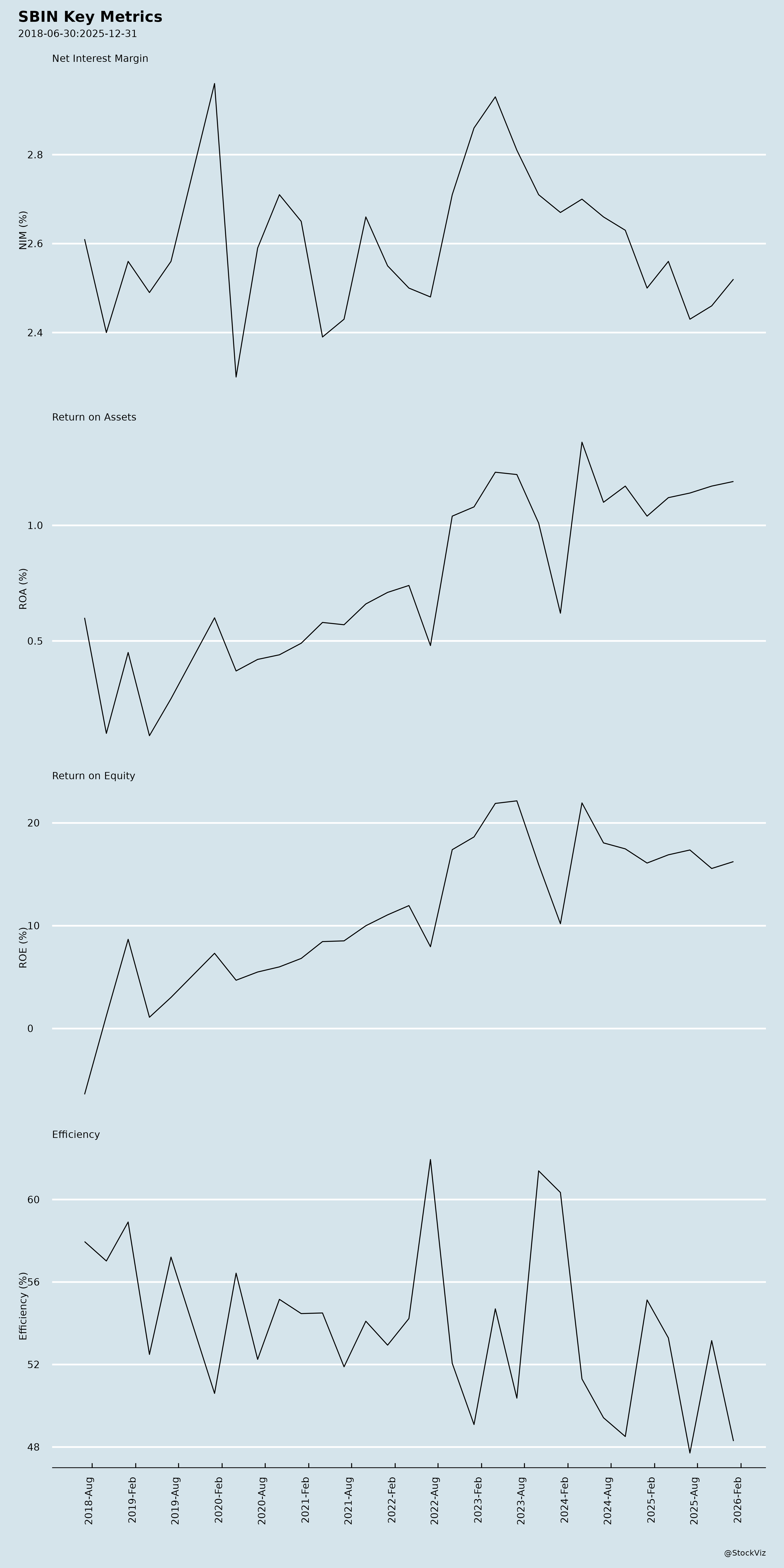
The narrative began with a Buy built on record profitability, robust credit growth, improving asset quality, and capital headroom, while flagging opex/staff provisions, CASA moderation, ECL transition, and forex/fee weakness. By the last report, the broker remained Buy but shifted emphasis to broad-based loan growth, domestic NIM ~3%, fee-income mix, and improved operating efficiency, while acknowledging that ECL/transition credit costs and weak forex had persisted. Earlier expense/CASA concerns were replaced by evidence of cost-to-assets improvement, but provisioning and forex risks remained recurring themes.
Fears that came true
- ECL/provisioning risk flagged early materialized as higher-than-expected transition credit costs and elevated Q1FY27 provisions, coinciding with a -4.4% actual return in the last report window.
- Forex weakness flagged early persisted, with forex income remaining weak at ~₹500 crore due to tighter NOP-related guidelines, a recurring drag on performance.
- PLI/provision burden flagged early resurfaced, as Q1FY27 provisions were elevated due to seasonal agricultural slippages and smoothening of PLI provisioning.
Broker Timeline
118 broker calls · 2023-05-18 to 2026-08-09
Copyright © 2023 SAS Data Analytics Pvt. Ltd. All rights reserved.