RBLBANK
Equity Metrics
September 24, 2026
RBL Bank Limited
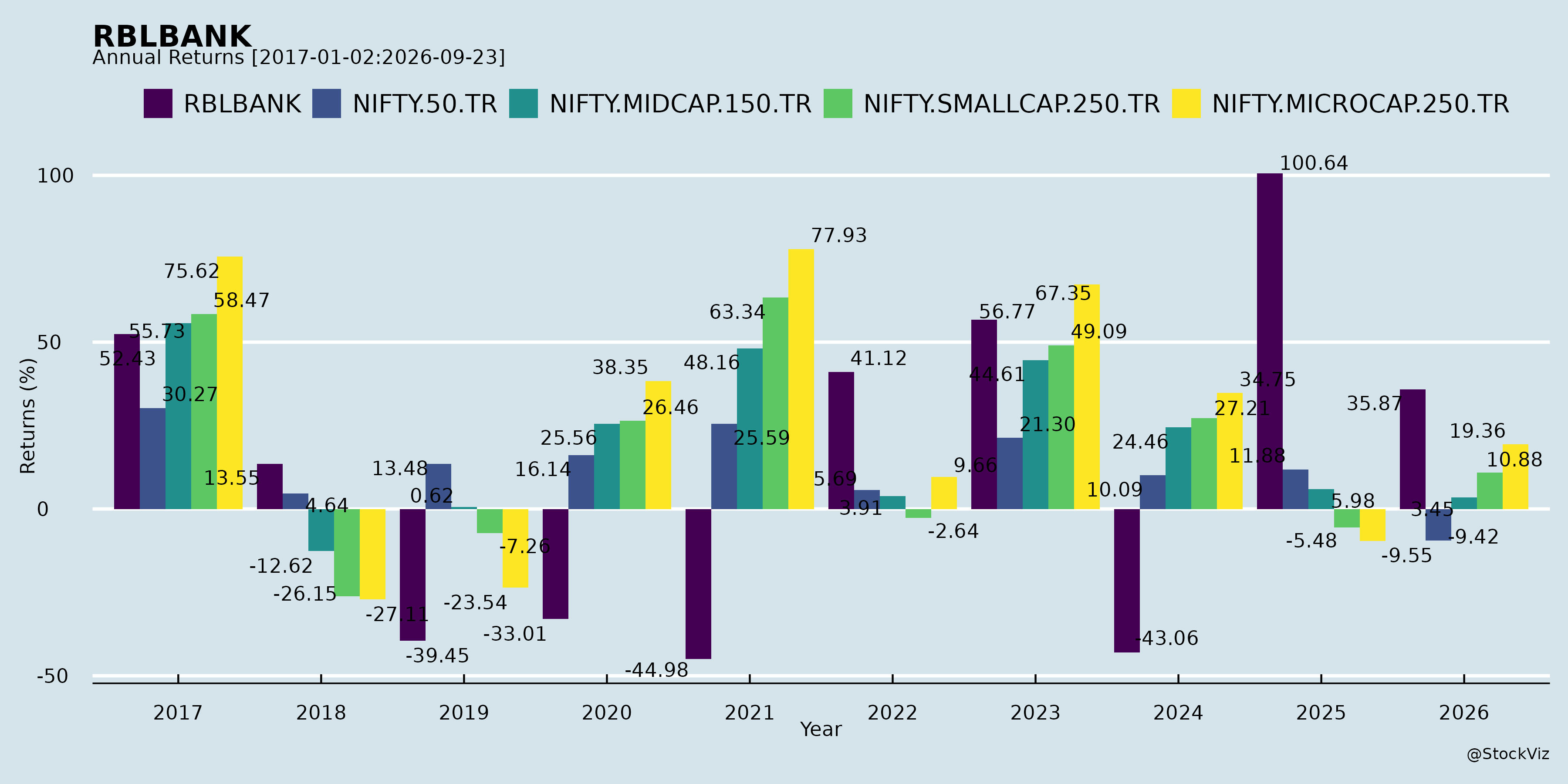
Annual Returns
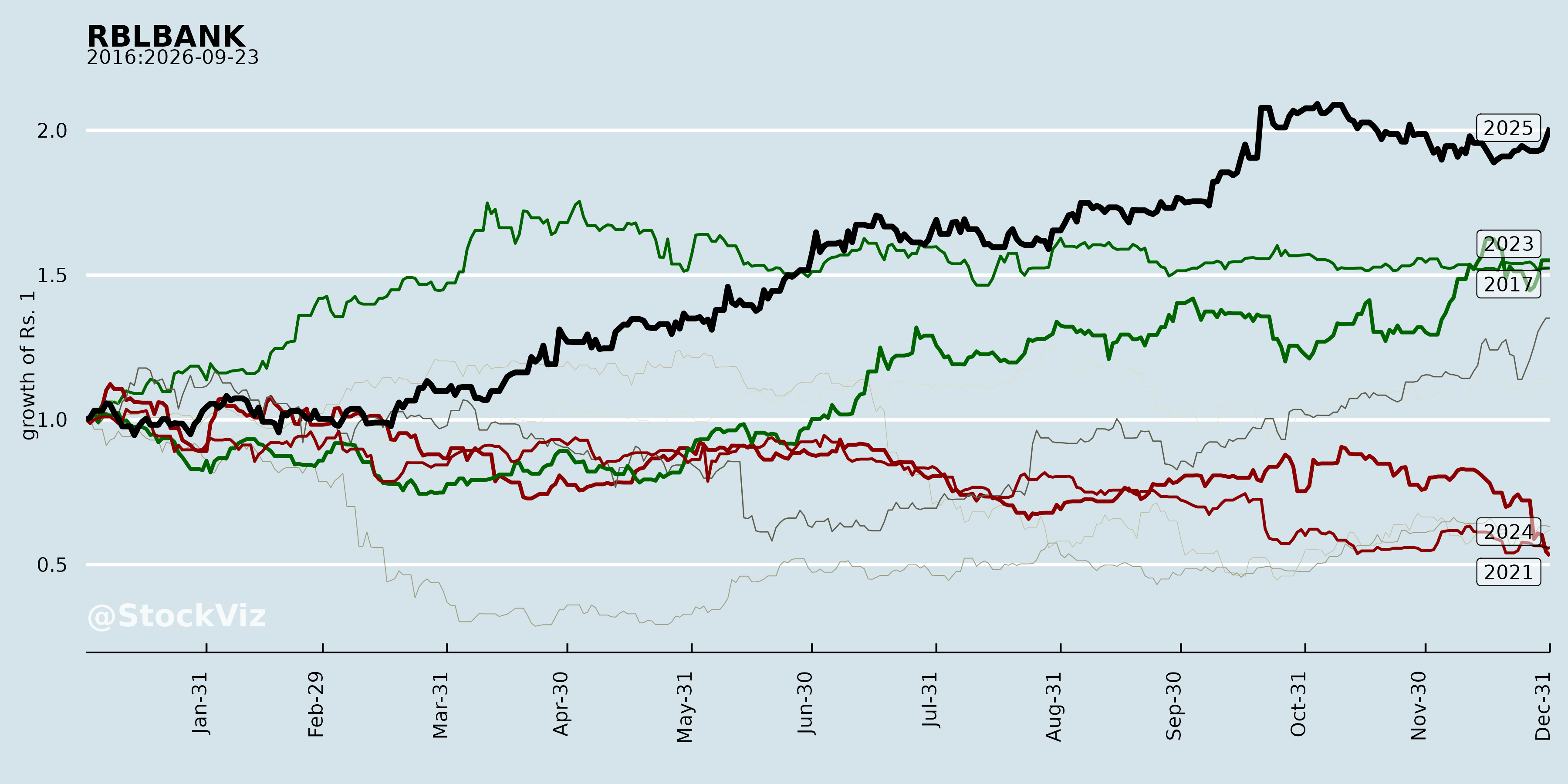
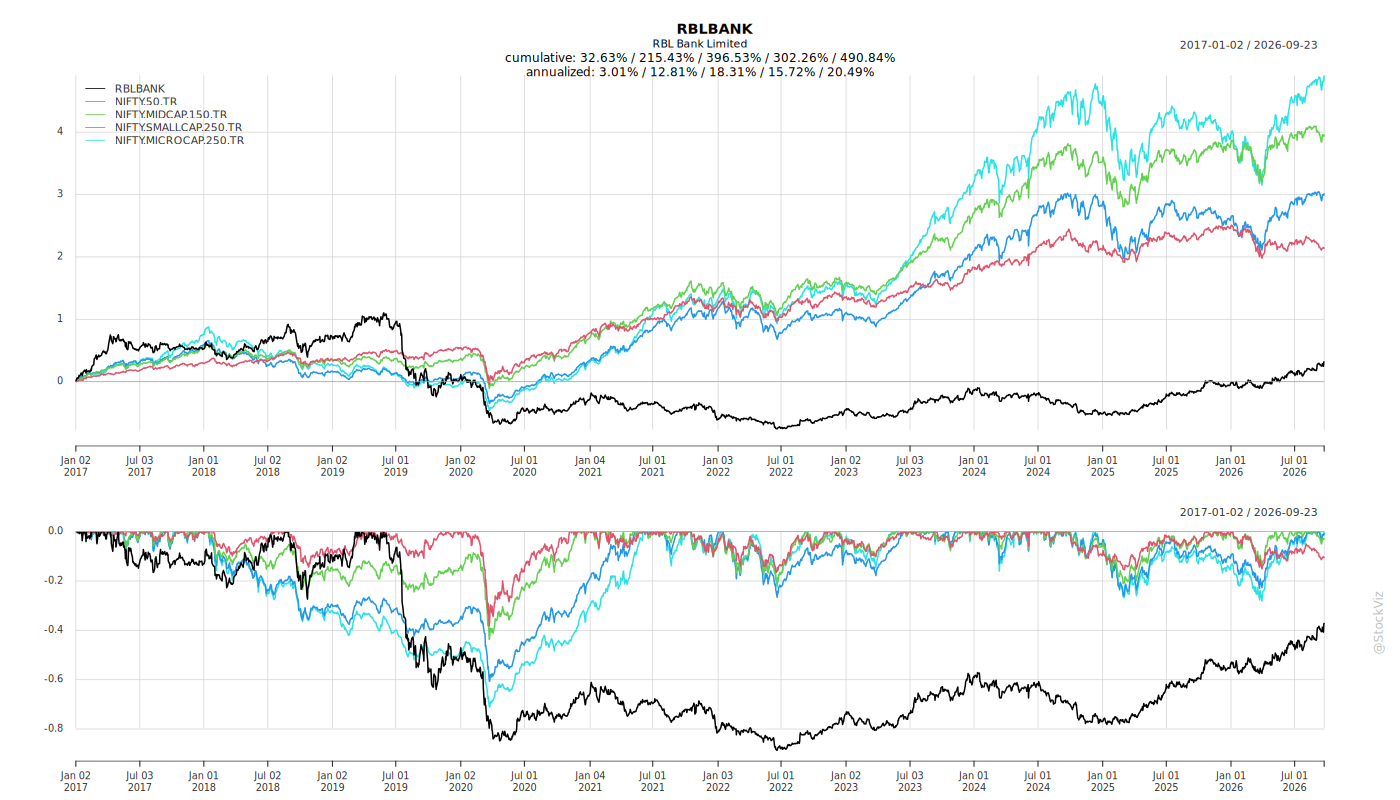
Cumulative Returns and Drawdowns
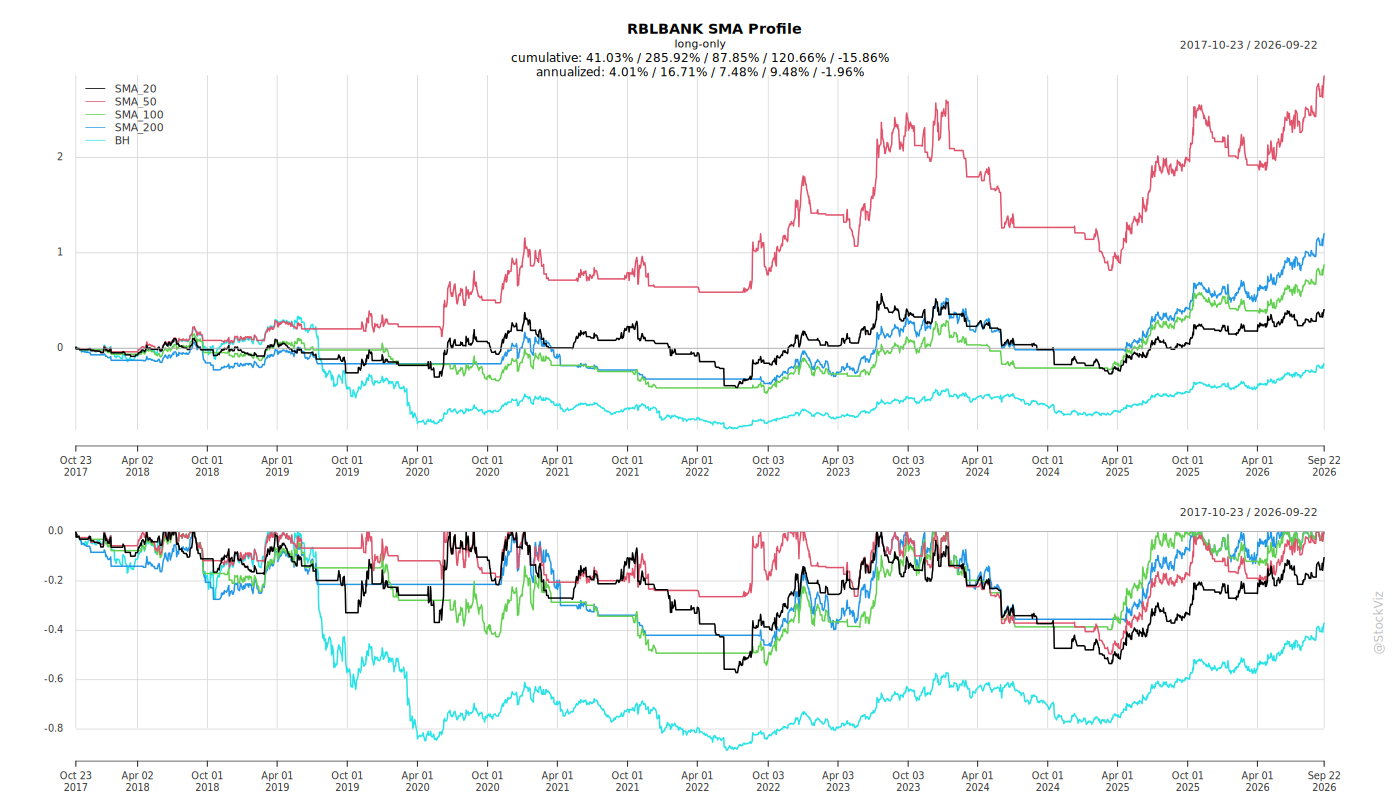
Fundamentals
Ownership
Margined
AI Summary
asof: 2026-09-16
RBL Bank — Recent Corporate Announcements: Summary
1. Headwinds and Challenges
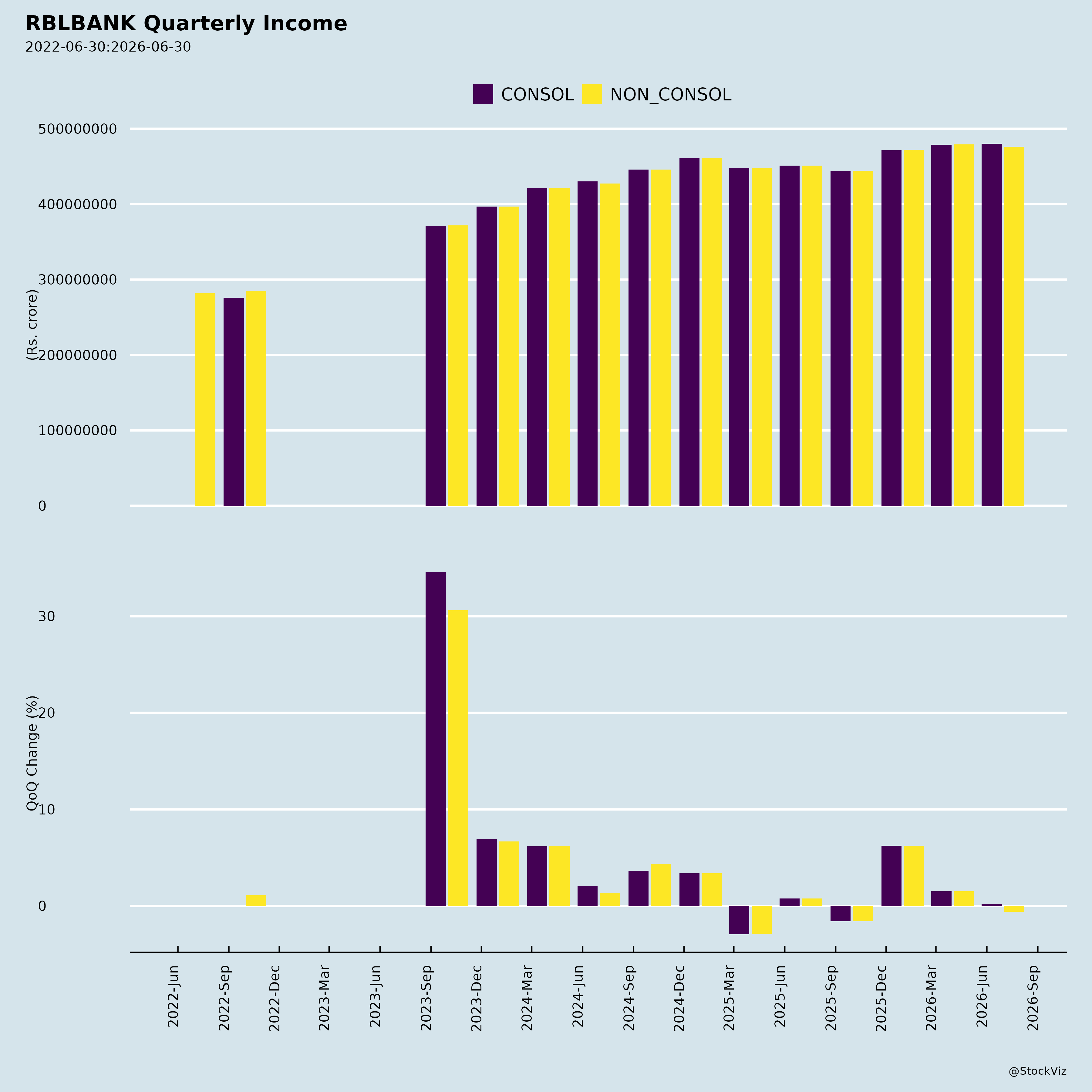
- Other income contraction: Other Income de-grew 10% YoY to ₹959 crore in Q1 FY27, and Net Total Income grew only 2% YoY to ₹2,614 crore despite NII growth of 12% YoY.
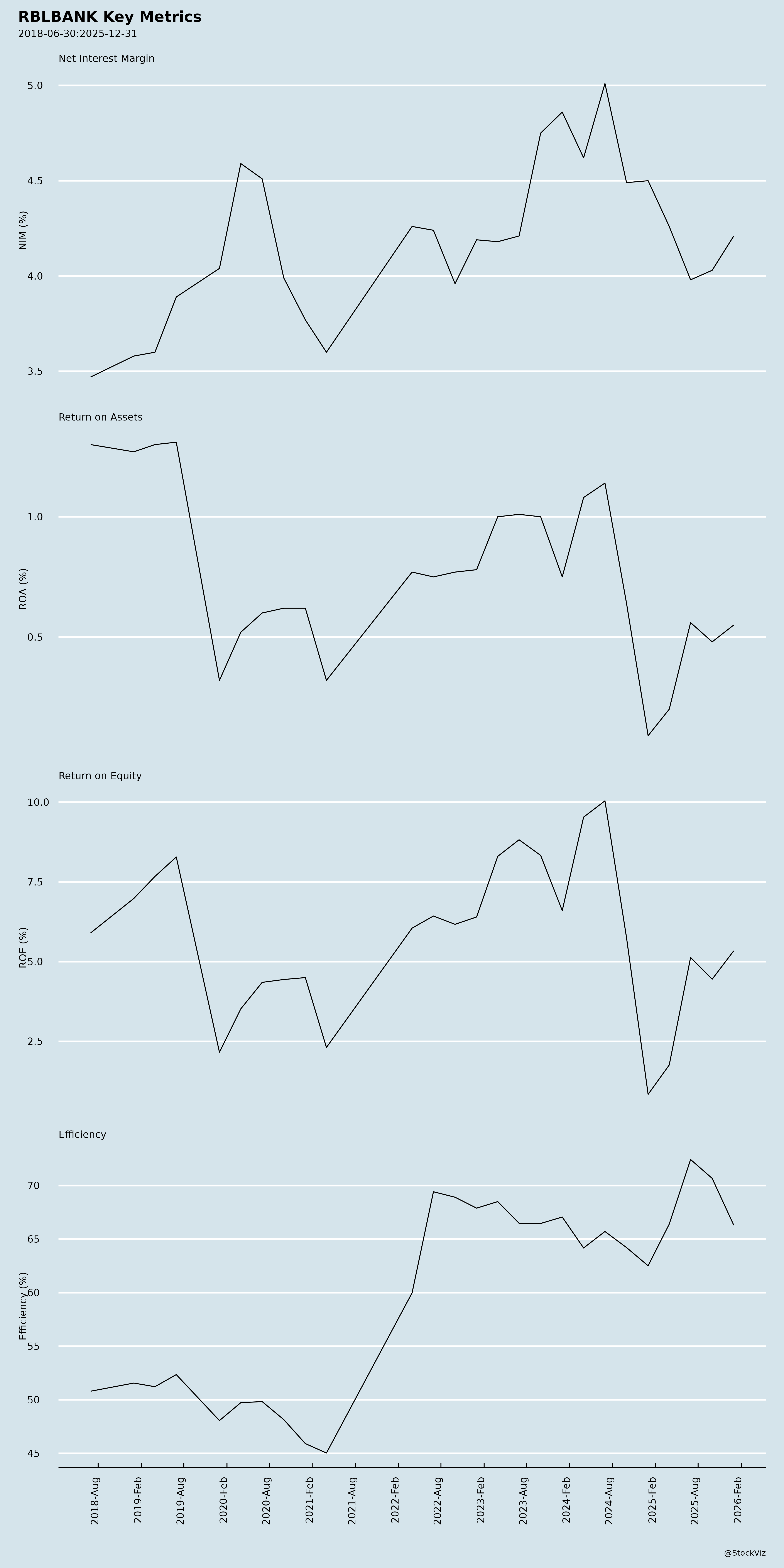
- Margin compression: NIM stood at 4.13% in Q1 FY27, down from 4.50% in Q1 FY26 and 4.41% in Q4 FY26.
- CASA weakness: CASA growth was flat YoY; CASA deposits fell 22% QoQ to ₹36,468 crore, and the average CASA ratio was 25.2% against a period-end CASA ratio of 29.2%.
- Deposit and retail book sequential decline: Total Deposits fell 10% QoQ to ₹124,829 crore; Retail Advances declined 4% QoQ and Secured Retail Advances declined 9% QoQ.
- Elevated provisions: Provisions and contingencies rose 35% YoY to ₹599 crore, with credit cost at 0.54% versus 0.50% in Q1 FY26.
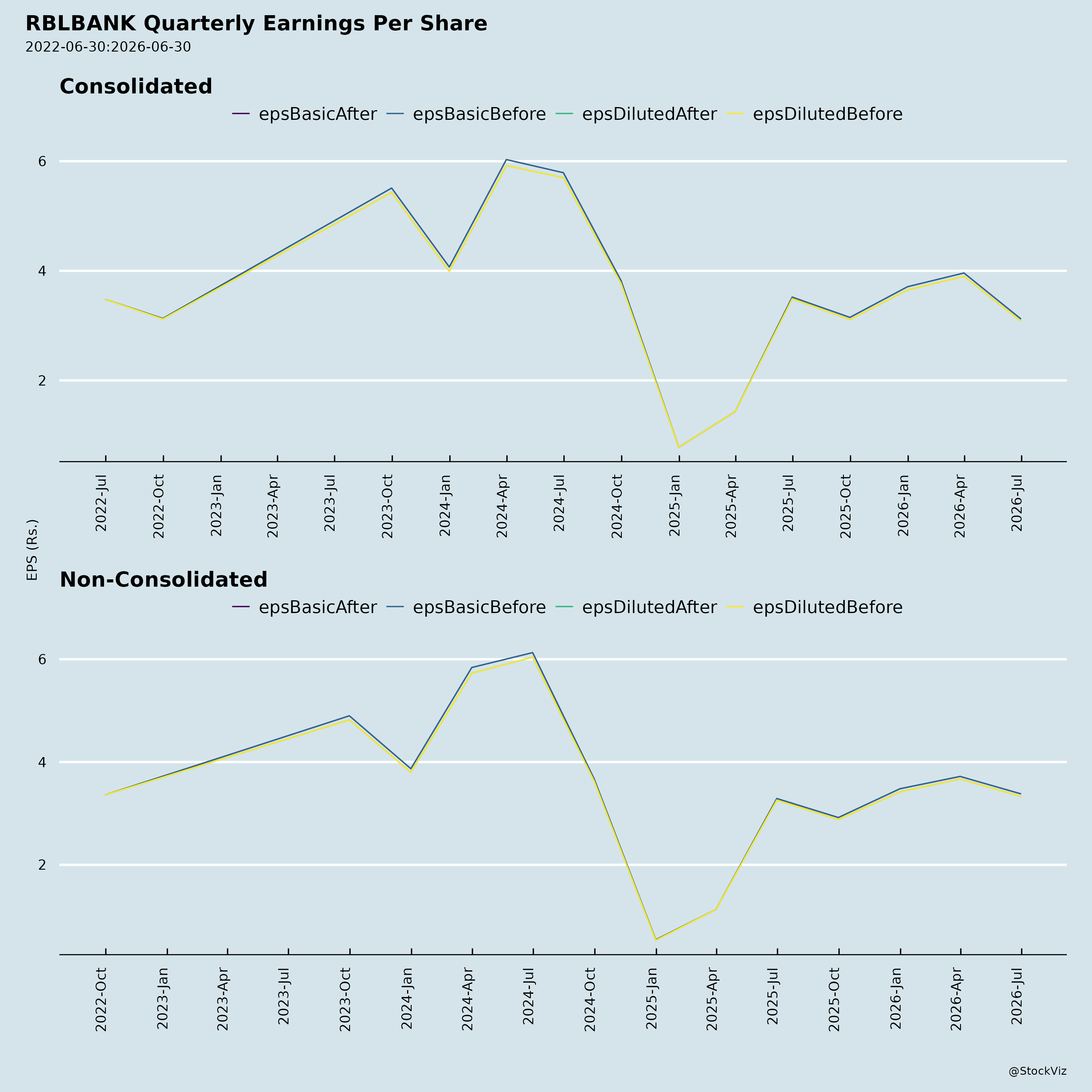
- Return ratios: Return on Equity was 4.01% in Q1 FY27, down from 5.11% in Q1 FY26 and 5.69% in Q4 FY26.
- PCR (excluding technical write-offs) decline: PCR was 72% in Q1 FY27 versus 84.03% in Q1 FY26.
- Risk factors cited in the notes documentation: Known and unknown risks beyond the Issuer’s control, including financial forecasts, profit projections, achievement of profitability, growth, cost and synergy of recent acquisitions, impact of competitive pricing, regulatory approvals and licenses, developments in India’s economic, political and legal environment, volatility in stock markets and share price, financial risk management, and general business and global economic conditions.
2. Tailwinds and Growth Prospects
- Emirates NBD strategic investment: ENBD infused approximately USD 2.75 billion (~₹260 billion) on 18 June 2026 via preferential issue, holding 60% of expanded share capital and classified as promoter; RBL Bank became a subsidiary.
- Capital strength: Total capital adequacy rose to 33.3% and CET1 to 32.2% as of 30 June 2026 (from 14.2% and 12.8% respectively as of 31 March 2026), described as industry-leading capitalization.
- Rating upgrades: Long-term credit ratings upgraded to AAA domestically; expected ratings of Baa2 (stable) by Moody’s and BBB+ (Stable) by CareEdge Global for the proposed notes; ratings positioned above the sovereign.
- Profitability growth: Net Profit grew 27% YoY to ₹254 crore; Operating Profit grew 31% YoY to ₹923 crore.
- Cost efficiency: Operating Expenses de-grew 8% YoY and 5% QoQ to ₹1,691 crore; Cost to Income improved to 64.7% from 72.4% in Q1 FY26.
- Advances growth: Net Advances grew 23% YoY to ₹116,223 crore; Wholesale advances grew 38% YoY to ₹52,027 crore with Commercial Banking up 36% YoY; Secured Retail grew 18% YoY.
- Granular deposits: Deposits under ₹3 crore grew 13% YoY to ₹65,365 crore, at 52.4% of total deposits; CASA + TD < ₹3 crore at 65% of total deposits.
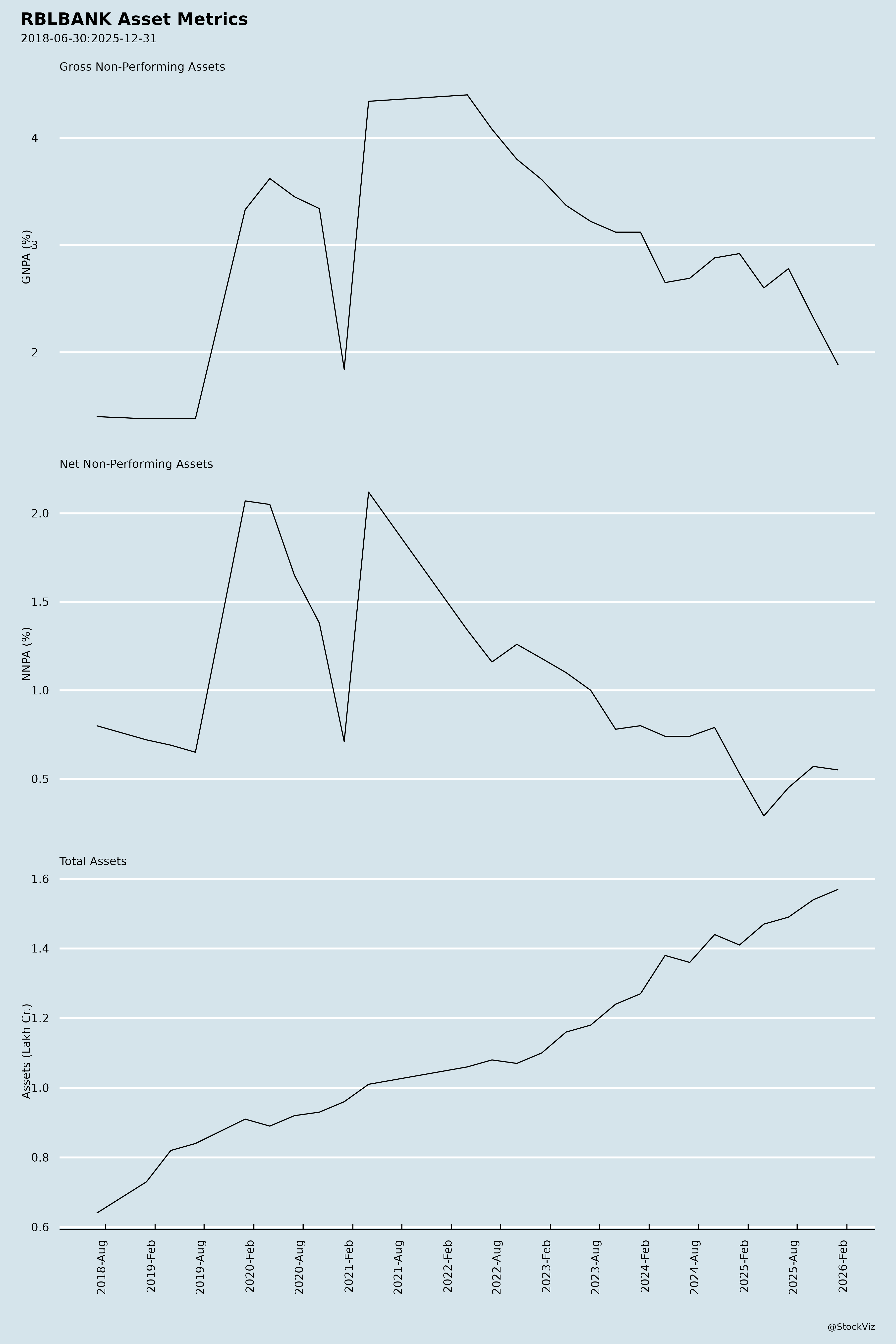
- Asset quality improvement: GNPA down 148 bps YoY to 1.30%; NNPA at 0.37%; PCR including technical write-offs at 94.94%.
- Liquidity: Average LCR for Q1 FY27 was 133%.
- Distribution expansion: 1,967 total touchpoints including 628 branches (25 opened in the quarter) and 1,339 BC branches; serves over 15 million customers across 28 states/UTs.
- GIFT City IBU funding: Net proceeds from the US$350 million notes to fund the GIFT City International Banking Unit and/or general corporate purposes.
- EMTN Programme: Board approved establishing a Euro Medium Term Note Programme enabling issuance of foreign currency securities up to US$1,000,000,000 (not offered to investors in India).
- Growth corridors: Growth opportunities cited from the India-UAE corridor and structural economic growth in India; diversified retail and wholesale franchise; stable funding and liquidity profile.
3. Key Risks
- Risks and uncertainties beyond the Issuer’s control that could cause actual results to differ materially from forward-looking statements, including those relating to financial forecasts, profitability, acquisitions, competitive pricing, regulatory approvals, the Indian economic/political/legal environment, stock market and share price volatility, financial risk management, and global economic conditions.
- The issuer disclaims responsibility or obligation to update or revise forward-looking statements, which are subject to numerous assumptions and risks.
- Asset quality metrics show PCR (excluding technical write-offs) at 72% in Q1 FY27, lower than 84.03% in Q1 FY26.
- Sequential declines in Total Deposits (-10% QoQ), CASA Deposits (-22% QoQ), Retail Advances (-4% QoQ), and Secured Retail Advances (-9% QoQ).
- NIM compression and elevated credit cost relative to the prior-year quarter.
4. Management Guidance Versus Observed Business Performance
- Management commentary (Mr. R Subramaniakumar, MD & CEO): The quarter saw the culmination of the capital raise with Emirates NBD; management expressed excitement about the long-term potential of the relationship and belief that the capital will allow time and opportunity to invest, scale, and build a resilient and relevant Bank. The Bank also saw an upgrade of its long-term credit ratings to AAA.
- Observed performance against stated focus areas:
- Deposits growth predicated on granular retail deposits: Granular deposits grew 13% YoY to ₹65,365 crore (52.4% of total deposits), though Total Deposits grew 11% YoY but declined 10% QoQ, and CASA was flat YoY.
- Advances growth with focus on secured retail assets & commercial banking: Secured Retail grew 18% YoY and Commercial Banking grew 36% YoY, while overall Retail Advances grew 13% YoY and declined 4% QoQ.
- Well capitalized for medium term growth with healthy liquidity: Capital adequacy at 33.3% and CET1 at 32.2%; average LCR at 133%.
- Forward-looking statements in the notes documentation: The document contains forward-looking statements regarding targets, beliefs, expectations, plans, intentions, and projections, with the issuer disclaiming any obligation to update or revise them.
- Notes issuance guidance: The US$350 million 5.791% fixed rate senior unsecured notes due 2031 are expected to be rated Baa2 (stable) by Moody’s and BBB+ (Stable) by CareEdge Global.
Broker Narrative
Initially the broker narrative was a balanced Neutral: funding-cost and margin headwinds were set against healthy retail/SME credit growth, deposit accretion, and controlled credit costs. By the last report the call was Buy, but the same NIM and funding-cost pressures remained and were explicitly quantified; the shift was driven by the Emirates NBD capital infusion, robust loan growth, and management’s expected NIM/credit-cost/RoA recovery, recasting old margin/funding fears as temporary rather than structural.
Fears that came true
- Rising cost of deposits materialized: in Q1FY27 Cost of Funds rose 17bps QoQ after CASA fell 20% QoQ and high-cost wholesale deposits were non-renewed.
- Margin moderation materialized: NIM shrank 28bps QoQ to 3.6%, with NII lagging loan growth, and FY27E/FY28E EPS estimates were cut 9%.
- Bulk/wholesale deposit dependence proved costly: total deposits fell 10% QoQ as high-cost wholesale deposits were allowed to run off, compounding the CoF increase.
- Stagnating loan-yield pressure appeared as NII growth of +12% YoY lagged overall loan growth of +23% YoY.
Optimism that failed
- Controlled slippages and credit costs failed to hold: gross slippages stayed high at INR 9.4bn, led by credit-card slippages of INR 7.4bn, with annualized credit costs around 200bps.
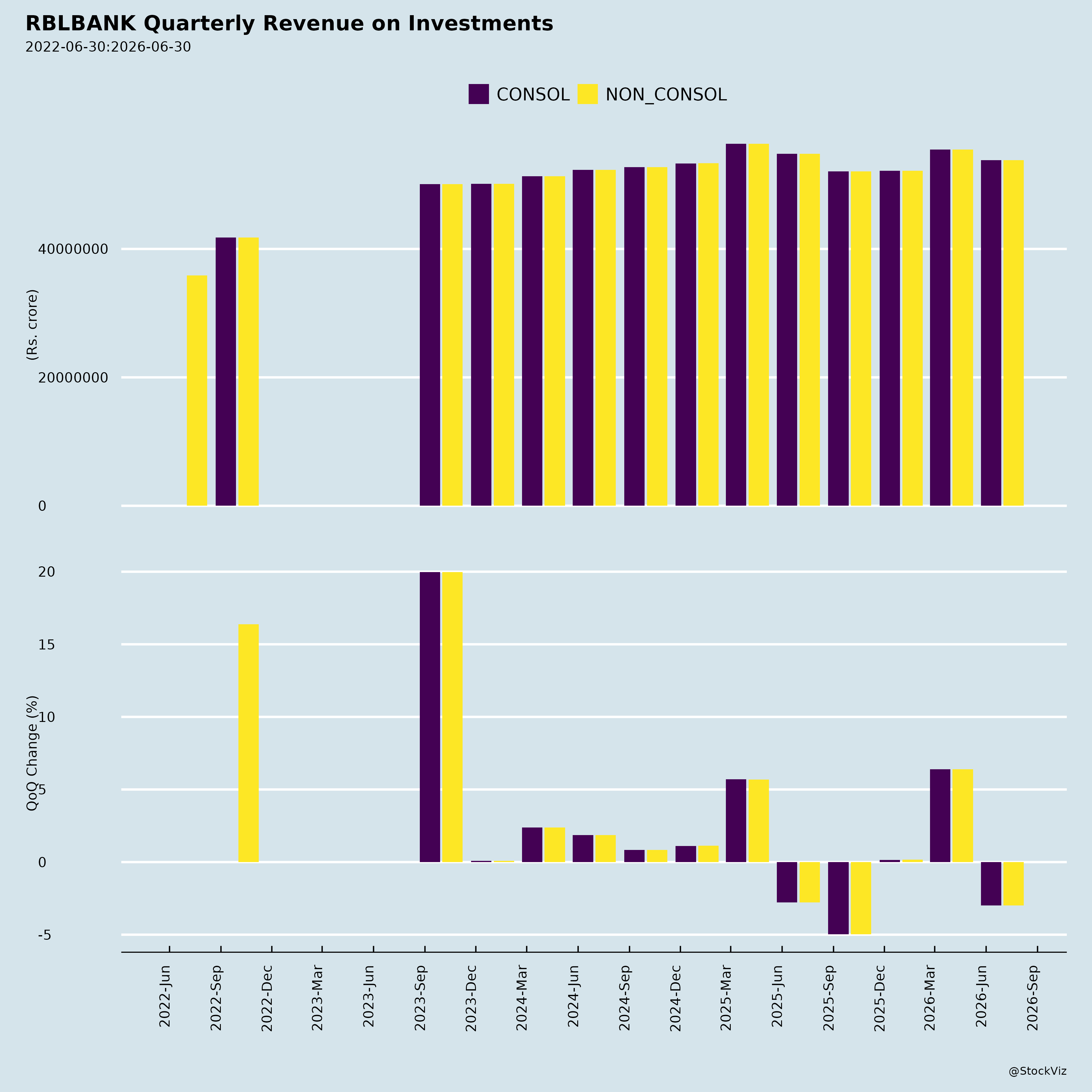
- Healthy treasury/other income did not persist: non-interest income fell 10.3% YoY and 10.2% QoQ to INR 9.6bn.
- The INR2k-note deposit accretion optimism did not produce a durable deposit base: total deposits fell 10% QoQ and CASA fell 20% QoQ in Q1FY27.
Broker Timeline
43 broker calls · 2023-06-01 to 2026-07-19
Copyright © 2023 SAS Data Analytics Pvt. Ltd. All rights reserved.