RAYMOND
Equity Metrics
September 24, 2026
Raymond Limited
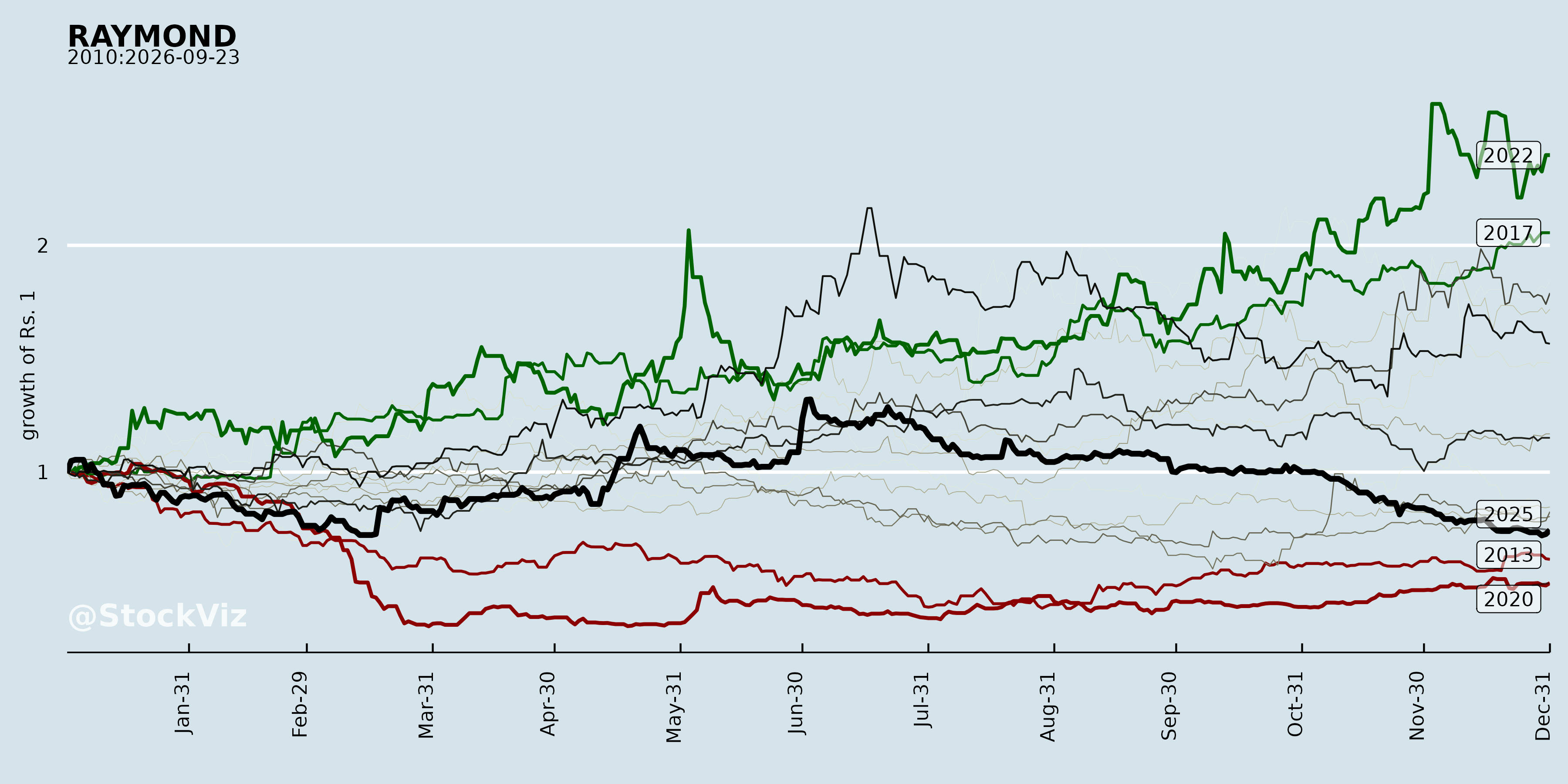
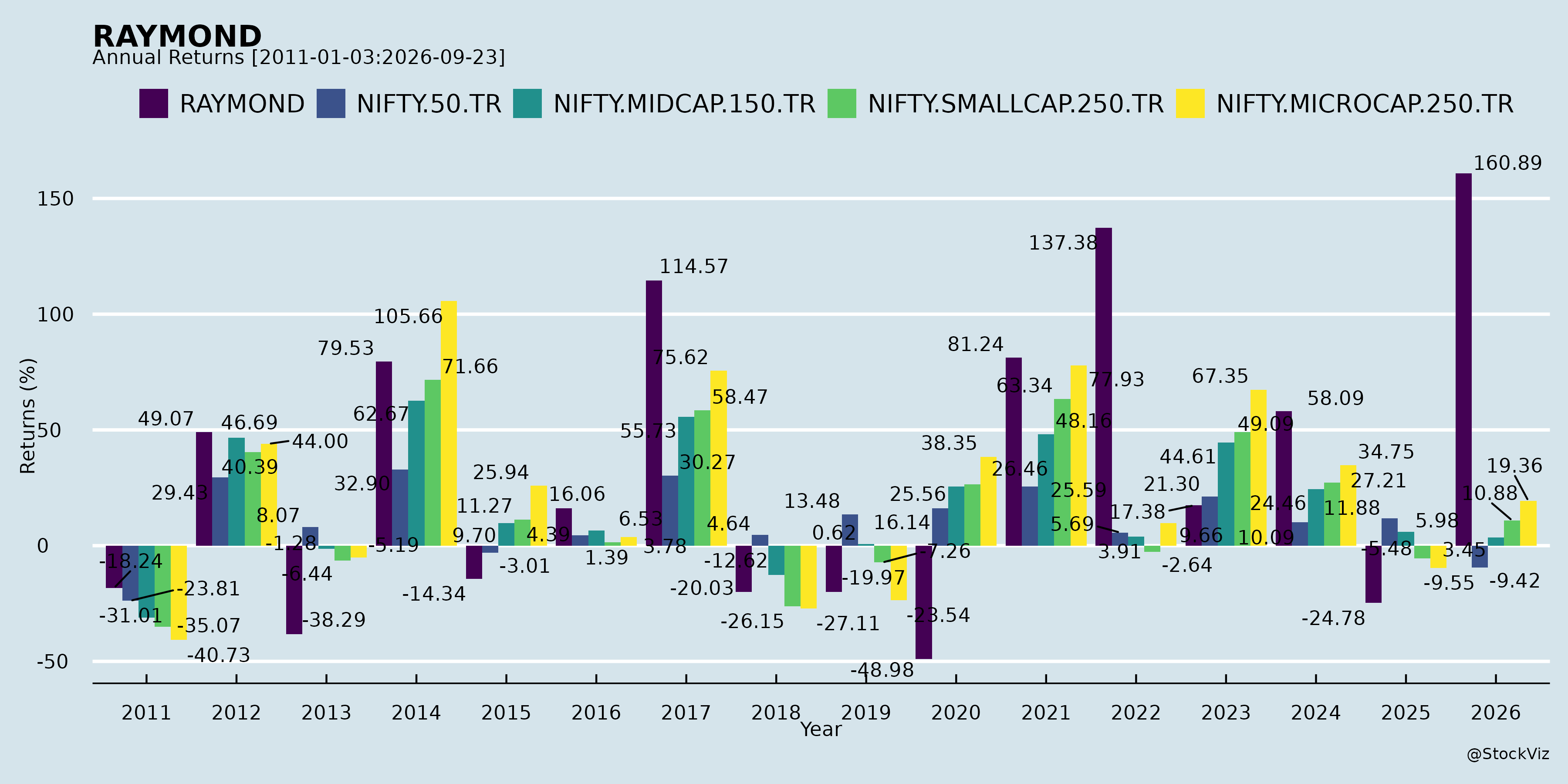
Annual Returns
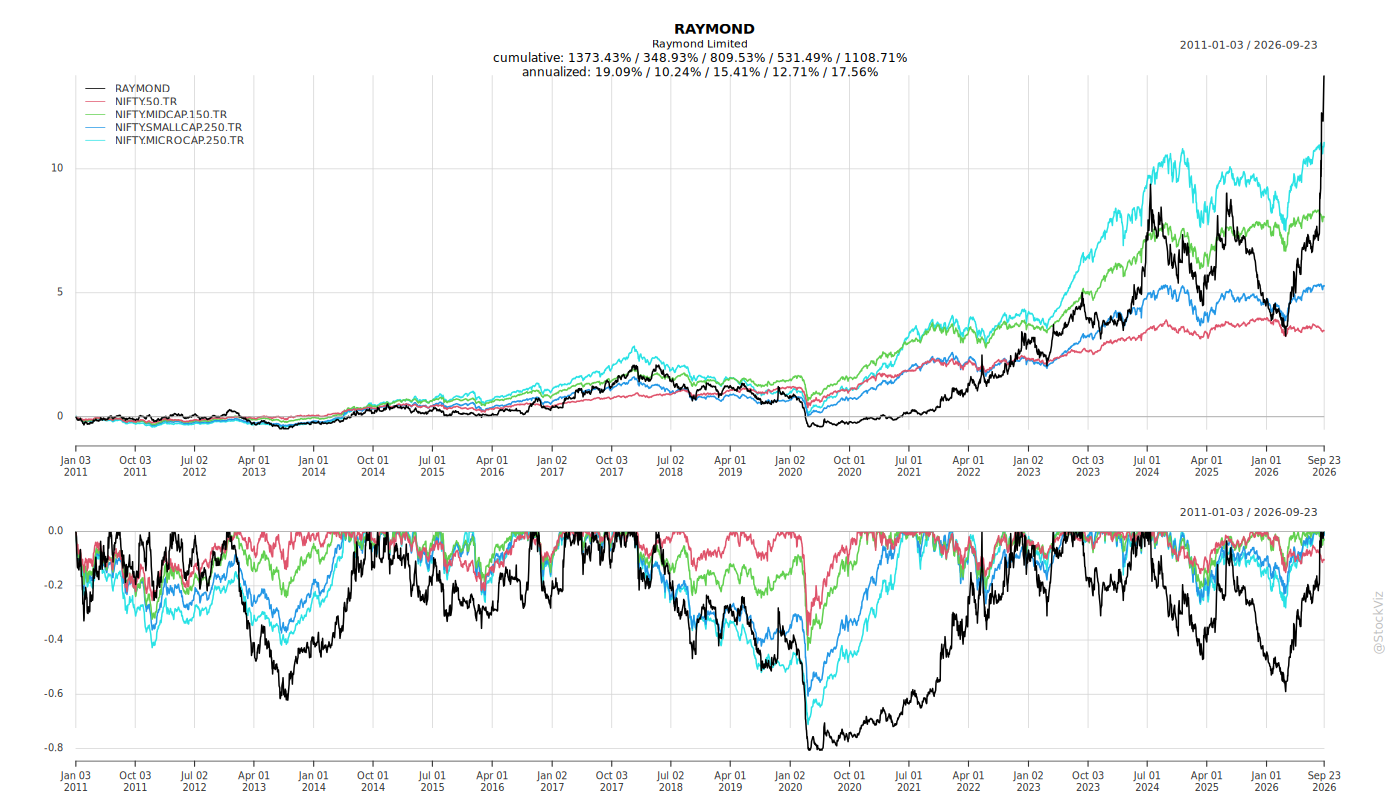
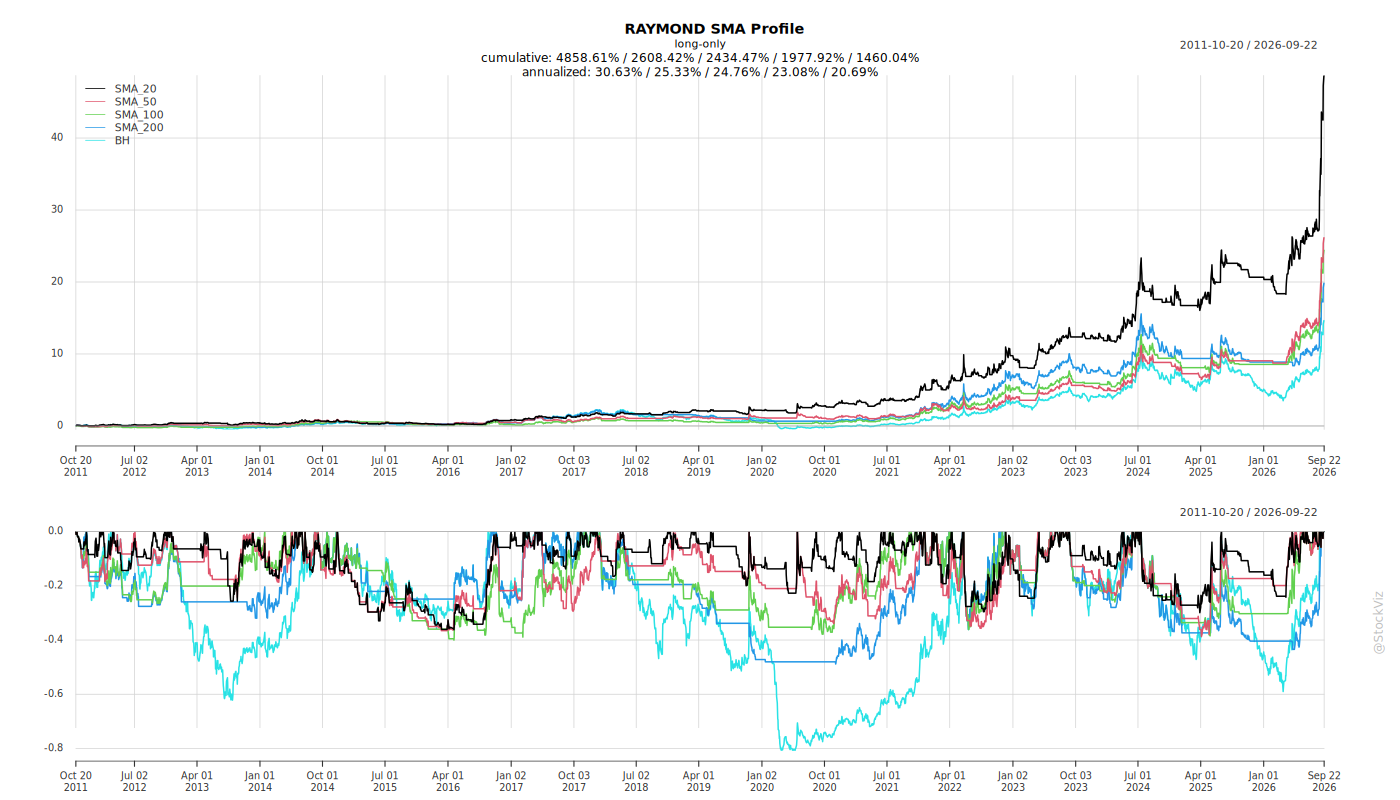
Cumulative Returns and Drawdowns
Fundamentals
Ownership
Margined
AI Summary
asof: 2026-09-17
Headwinds and Challenges
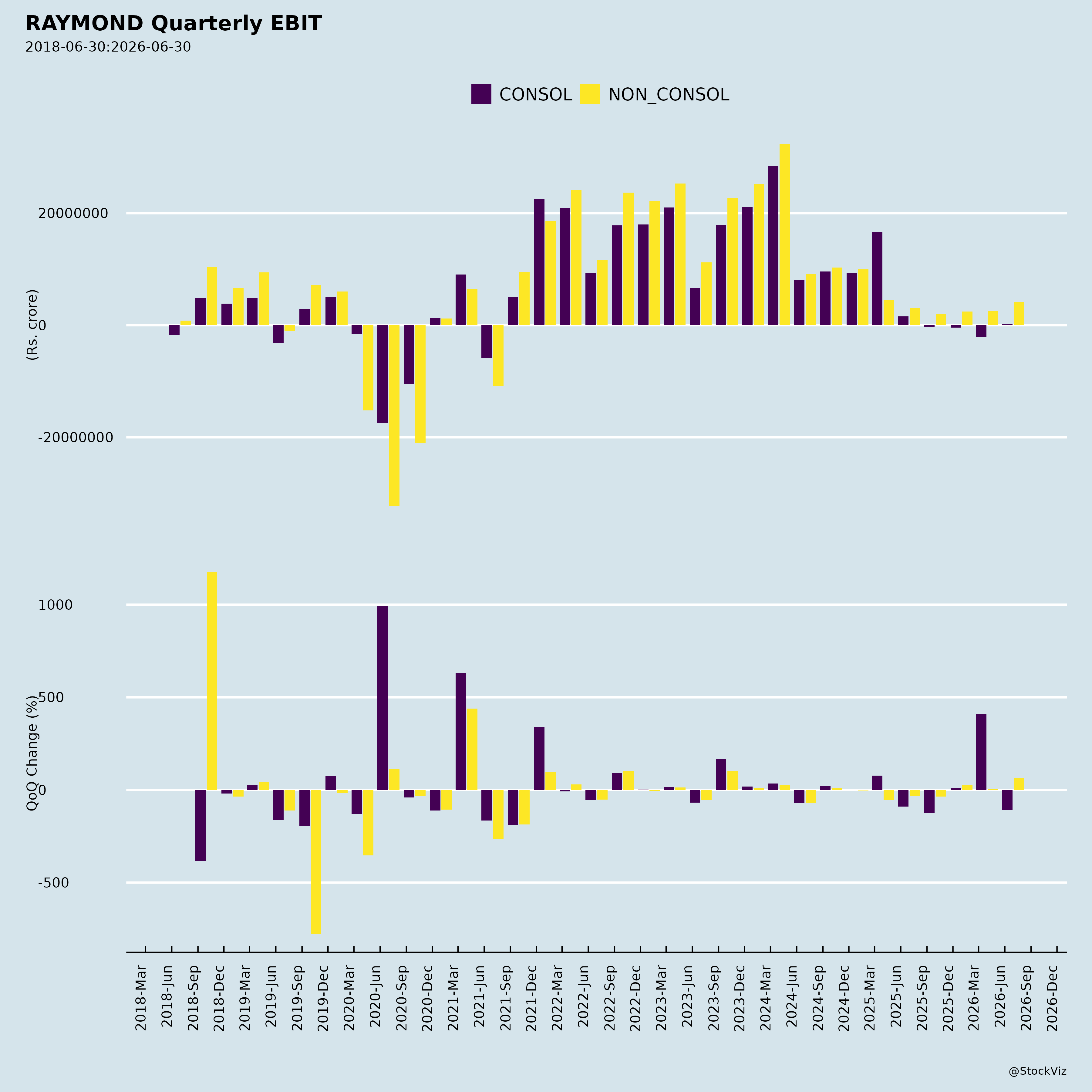
- Temporary EBITDA margin compression is expected due to targeted R&D investments required to capture revenue expansion.
- The company is managing a transition period following a completed corporate restructuring, with its focus now entirely on precision engineering.
Tailwinds and Growth Prospects
- Raymond Limited is pursuing an accelerated, multi-sector growth strategy through subsidiaries including JK Maini Precision Technology Limited and JK Maini Global Aerospace Limited, targeting high-growth sectors such as aerospace and space technologies, automotive and auto-components (including electric vehicles and ADAS), and defense manufacturing.
- The aerospace subsidiary secured significant new business from a leading Indian aerospace and defence major, covering more than 300+ part numbers with annual volumes exceeding 37,000+ components and an annual business potential of approximately ₹33 crore. This strengthens the multi-year aerospace order pipeline and supports building a scaled, high-precision aerospace and defence manufacturing platform in India.
- The company reports a ₹5,960+ crore aerospace order book over a 10-year horizon, growing global OEM demand, expansion in Andhra Pradesh, robust RFQ pipelines, and scaling up in EV, hybrid, and next-gen mobility.
- Raymond Limited is described as a 100% pure-play aerospace, precision technology, and auto components entity with a net cash surplus of ₹68 Cr (FY26), total income of ₹628 Cr for Q1FY27, and 16 state-of-the-art manufacturing facilities.
Key Risks
- The preferential issue proceeds are intended to be utilized within three years from receipt of funds, and the amounts specified for the objects may deviate by plus or minus 10% depending upon future circumstances.
- Warrants issued to Minerva Ventures Fund carry a subscription window of up to 18 months from allotment, introducing execution and timing considerations around the fund raise.
- Production timelines for the new aerospace orders are phased progressively across 2026 and 2027, and commercial production at the Andhra Pradesh facility is targeted for late 2027, leaving room for schedule-related uncertainty.
Management Guidance vs. Observed Business Performance
- Management expects the preferential issue proceeds (up to approximately ₹214.71 crore through 33,28,686 warrants at ₹645 per warrant) to be utilized within three years, with 75% allocated for business acquisitions and 25% for general corporate purposes. Shareholder approval is being sought at an EGM on October 3, 2026.
- Management guides that commercial production at the Andhra Pradesh facility is expected to begin by mid-next year / late 2027, and margins are expected to stabilize as programs reach steady-state. This follows the observed temporary EBITDA margin compression tied to R&D investments.
- Management indicates production for the new aerospace orders will commence progressively across 2026 and 2027. The observed order intake—300+ part numbers, 37,000+ annual components, and approximately ₹33 crore annual business potential—provides tangible evidence of pipeline conversion supporting this guidance.
- Raymond Limited representatives will participate in the Anand Rathi ‘G-200 Summit 2026’ on September 21, 2026, presenting the Investor Presentation on Q1FY27 Results, which provides a forum for further management commentary against the reported Q1FY27 total income of ₹628 Cr.
Broker Narrative
The early narrative was optimistic: a Buy call with double-digit upside driven by branded apparel, garmenting, retail expansion and debt reduction from FMCG sale proceeds. By the last report the call had downgraded to Hold, with attention shifting to demand damage from harsh summers, elections, price cuts and competitive intensity. The persistent theme was consumer-demand fragility and reliance on festive/wedding season rebounds; what changed was a move from inflation/input-cost concerns to competitive/market-share pressures and from balance-sheet strength to near-term demand caution.
Fears that came true
- The initial worry about soft discretionary spending and weak consumer sentiment did materialize: later reports cited harsh summers, elections and prolonged heatwaves hurting Q1 demand, and the July and August 2024 Buy calls resulted in DISAPPOINTMENT outcomes with negative actual returns.
Optimism that failed
- The early optimism that demand had improved from late April/May with the wedding season failed to hold, as subsequent heatwaves and election disruptions weighed on sales and mid-2024 calls produced negative actual returns.
Broker Timeline
14 broker calls · 2023-05-10 to 2024-08-19
Copyright © 2023 SAS Data Analytics Pvt. Ltd. All rights reserved.