PRICOLLTD
Equity Metrics
November 16, 2026
Pricol Limited
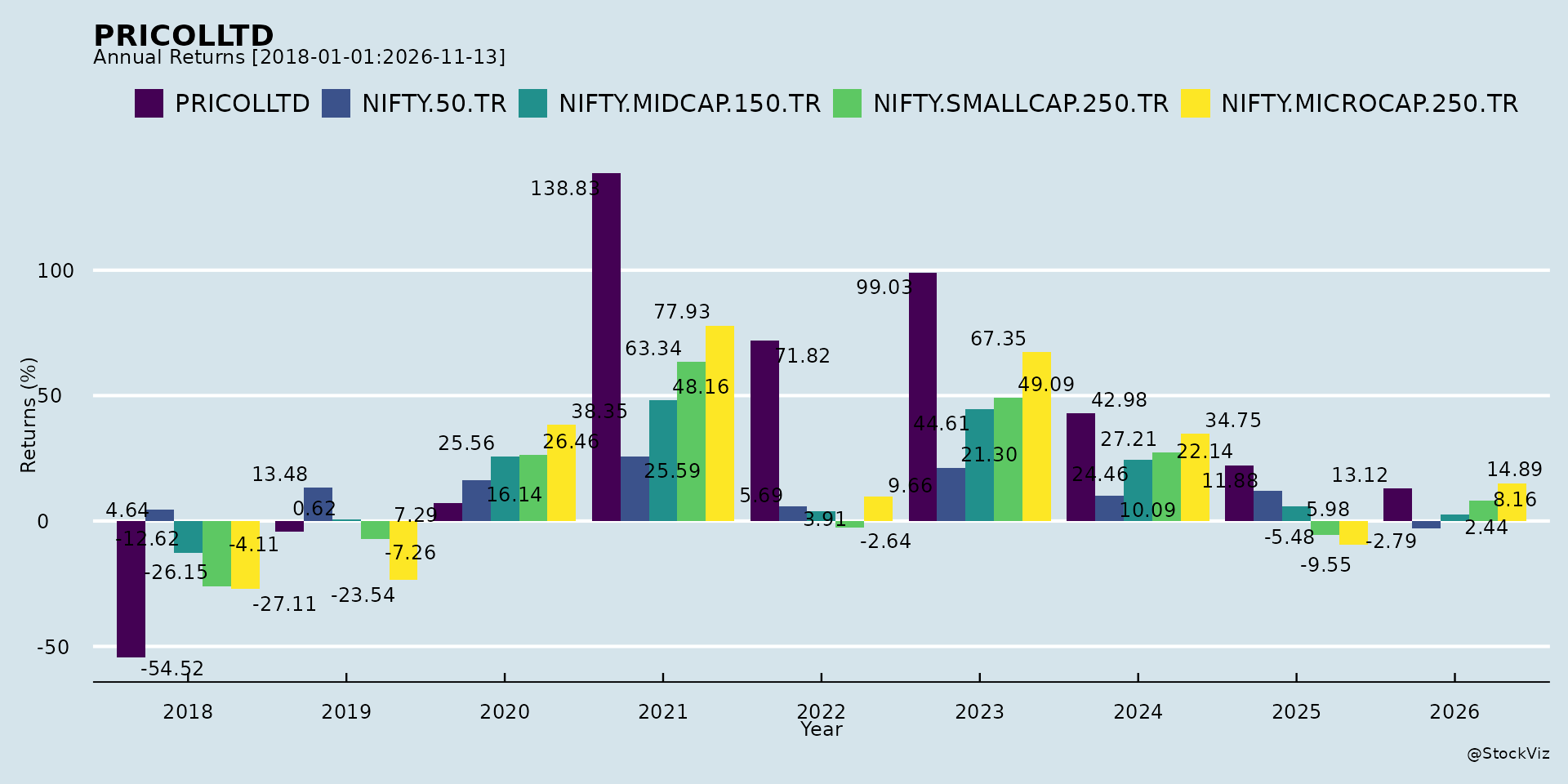
Annual Returns
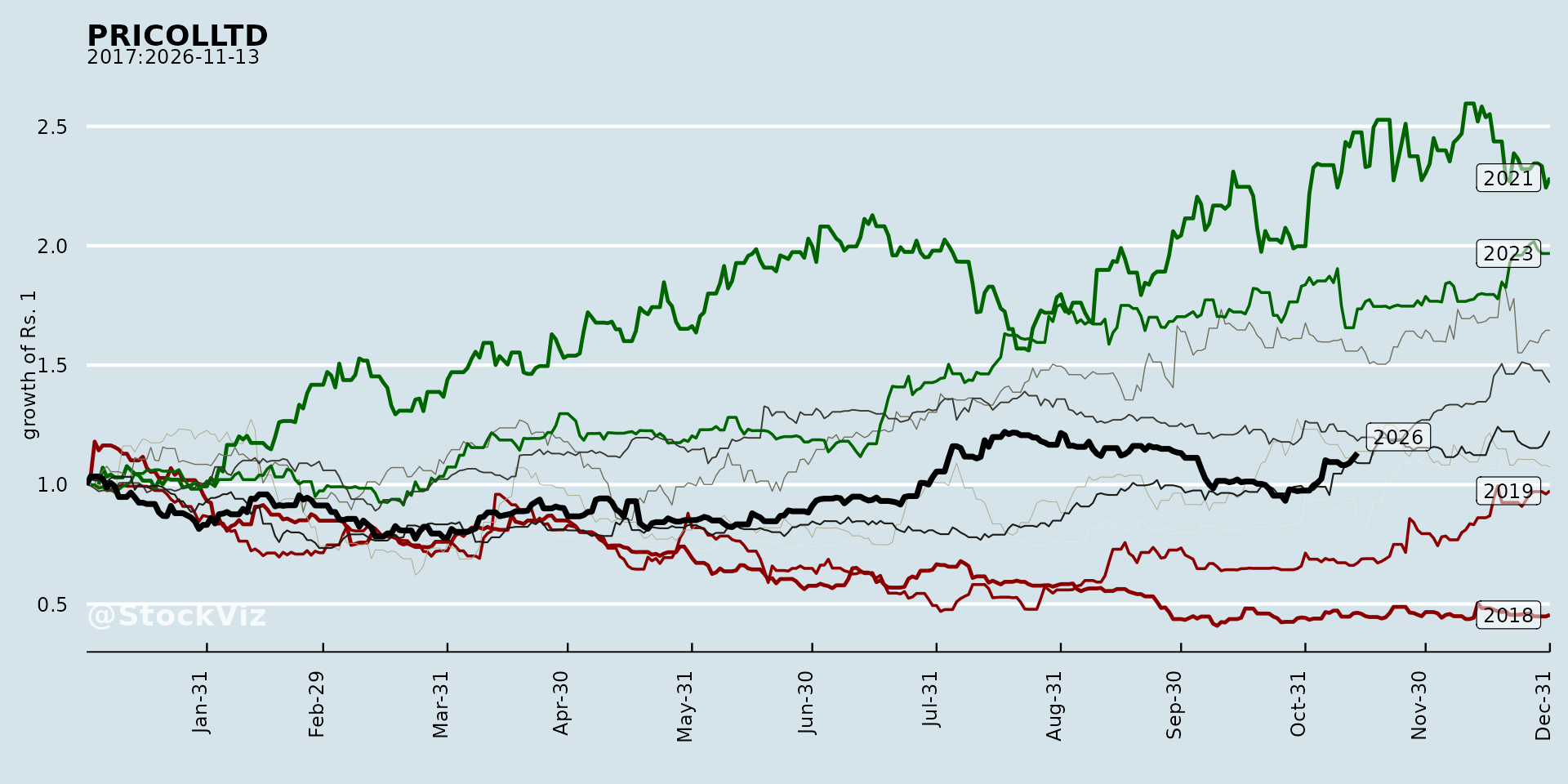
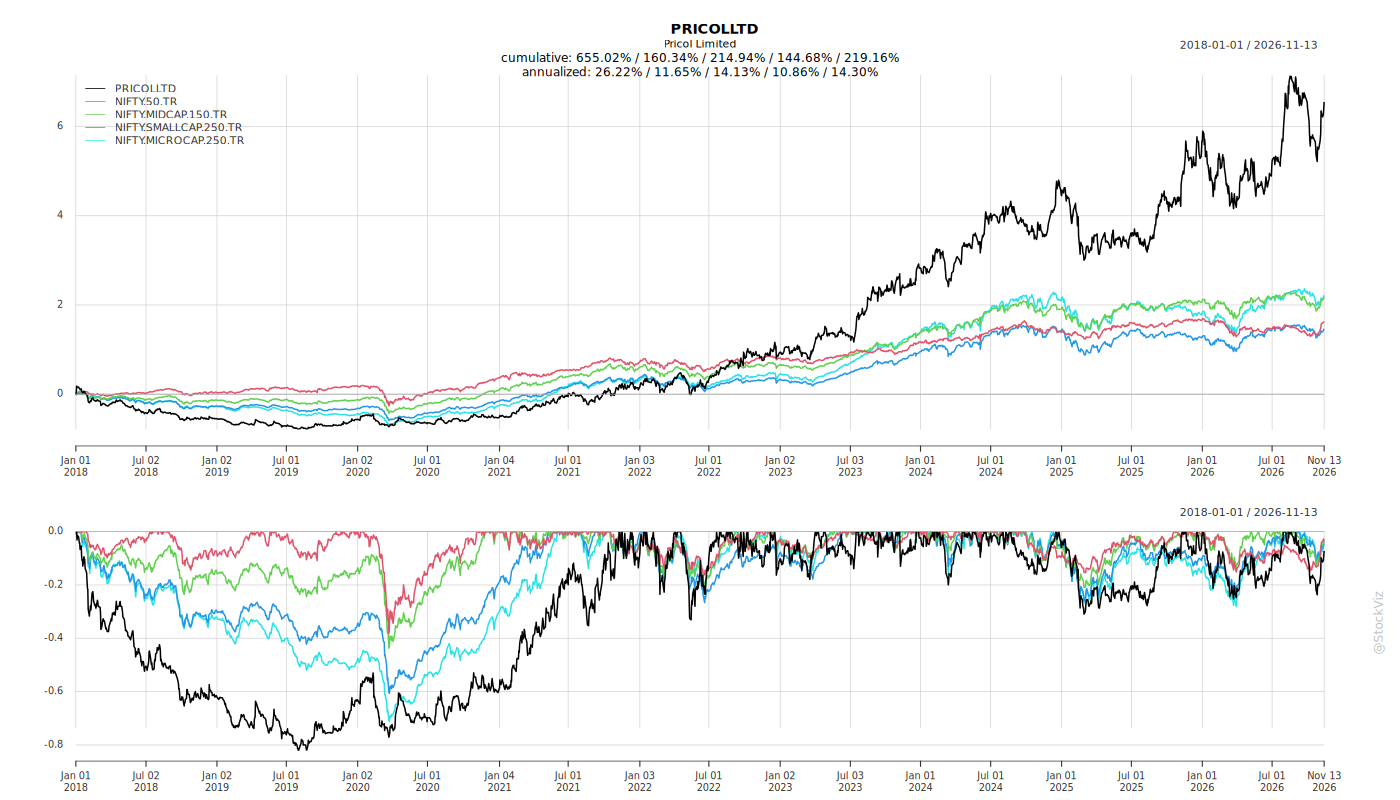
Cumulative Returns and Drawdowns
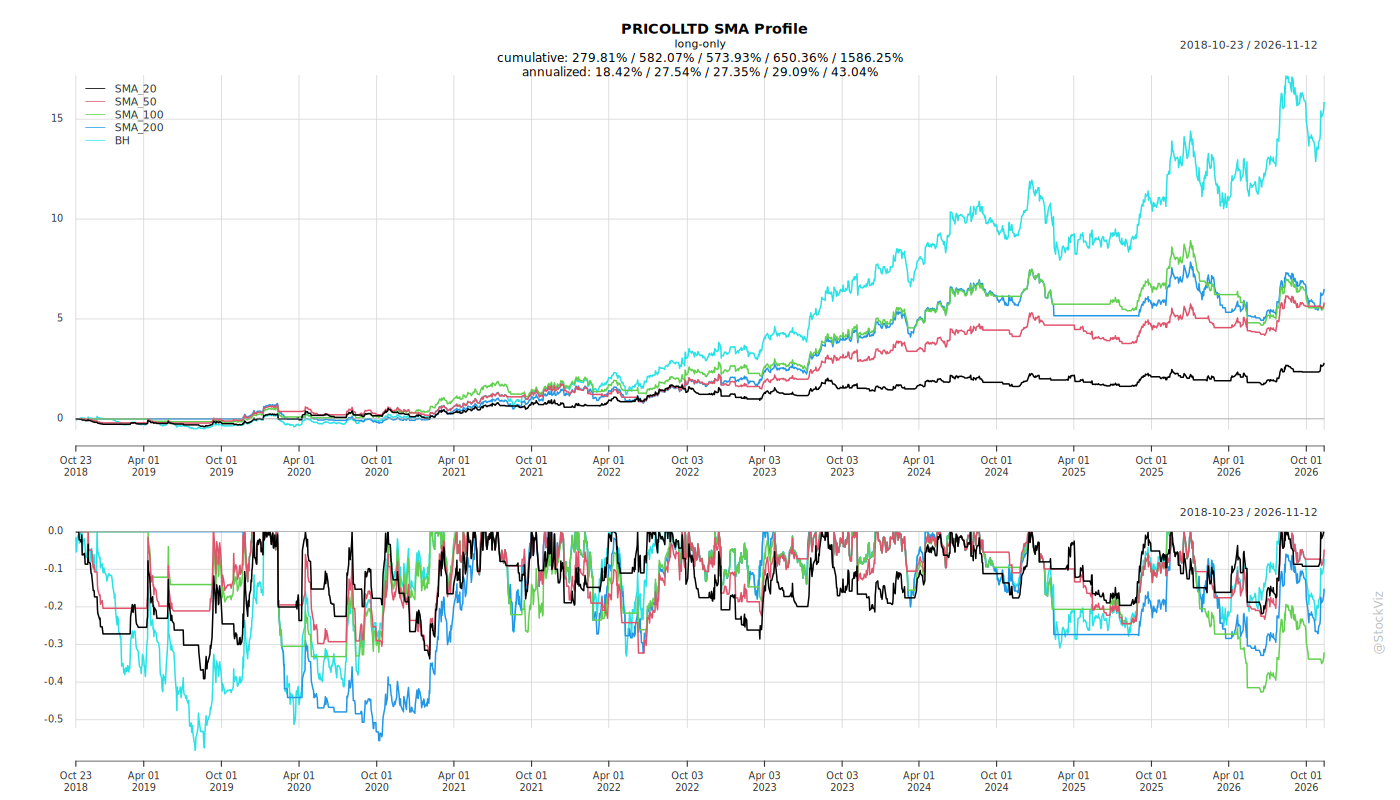
Fundamentals
Ownership
Margined
AI Summary
asof: 2026-09-17
PRICOLLTD — Q1 FY27: Headwinds, Tailwinds, Risks and Guidance vs Performance
1. Headwinds and Challenges
Cost inflation and geopolitical disruption. The quarter ended 30 June 2026 was marked by what management described as multiple headwinds caused by the West Asia crisis. Polymer prices rose sharply, LPG prices increased steeply, freight costs rose with surge and premium pricing, and minimum wages in three states where the company operates increased sharply due to government intervention. The rupee was at an all-time low against the US dollar, affecting a business dependent on significant imports of electronic child parts. Crude oil prices firmed up and were expected to rise further. Shipping providers indicated high freight rates, both inbound and outbound, would persist for at least four quarters. Memory/controlled device prices rose sharply quarter on quarter due to global AI-driven demand.
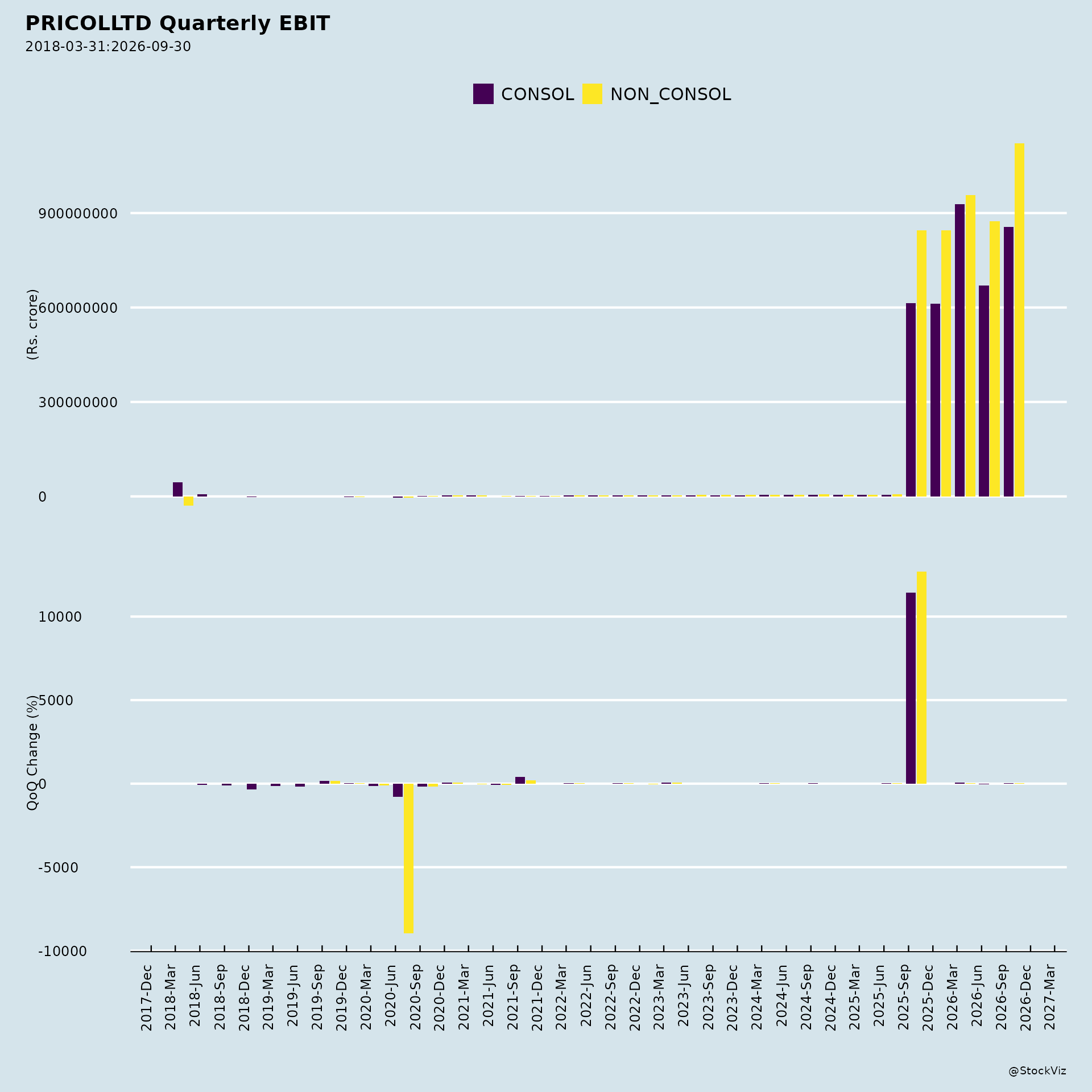
Margin pressure. EBITDA margin for Q1 FY27 was 11.41%. Management stated the company lost about 1.5% of EBITDA margin in the quarter and that it could have delivered another 1.5–2% overall margin, with fixed costs amortised over a larger top-line base. The Polymer business was the worst affected, with Q1 revenue of Rs. 249 crores and EBITDA of 7.8%.
Recovery lag. Management characterised the impact as delayed rather than lost earnings, recoverable through indexation — largely in the corresponding quarters — with automotive indexation typically quarterly or half-yearly. About 75% of revenue was expected to receive some indexation in Q2, with the balance in Q3. The minimum wage increase of approximately Rs. 21 crores per annum was still being negotiated with customers, with absorption split between company and customers yet to be settled.
Capacity constraints. The Polymer business growth was muted due to lack of capacity rather than lack of business. Business won cannot be fully serviced until capacity is created, expected to take 9–12 months to mature. Management noted it put certain Honda plastics business on hold, taking it in phases because capacity was unavailable.
Segment positioning gaps. In passenger vehicles, Pricol has only about 8–9% market share, dependent on Tata Motors. In e-cockpit, management stated multinational competitors such as Nippon Seiki, Continental (now Aumovio), Denso and Visteon produce roughly 40–50x Pricol’s volume, leaving Pricol without cost arbitrage at small volumes. Pricol lacks manufacturing outside India and Indonesia, which matters as customers seek local production in markets such as Mexico and Europe amid tariffs.
Discontinued focus areas. ABS is not a current focus and is only in the future roadmap, so the relaxation of ABS/CBS norms by the Ministry of Road Transport and Highways was not expected to have material impact for two years. BMS is being exited — OEMs have decided to control it, and no further money is being invested; it will not form part of the portfolio.
2. Tailwinds and Growth Prospects
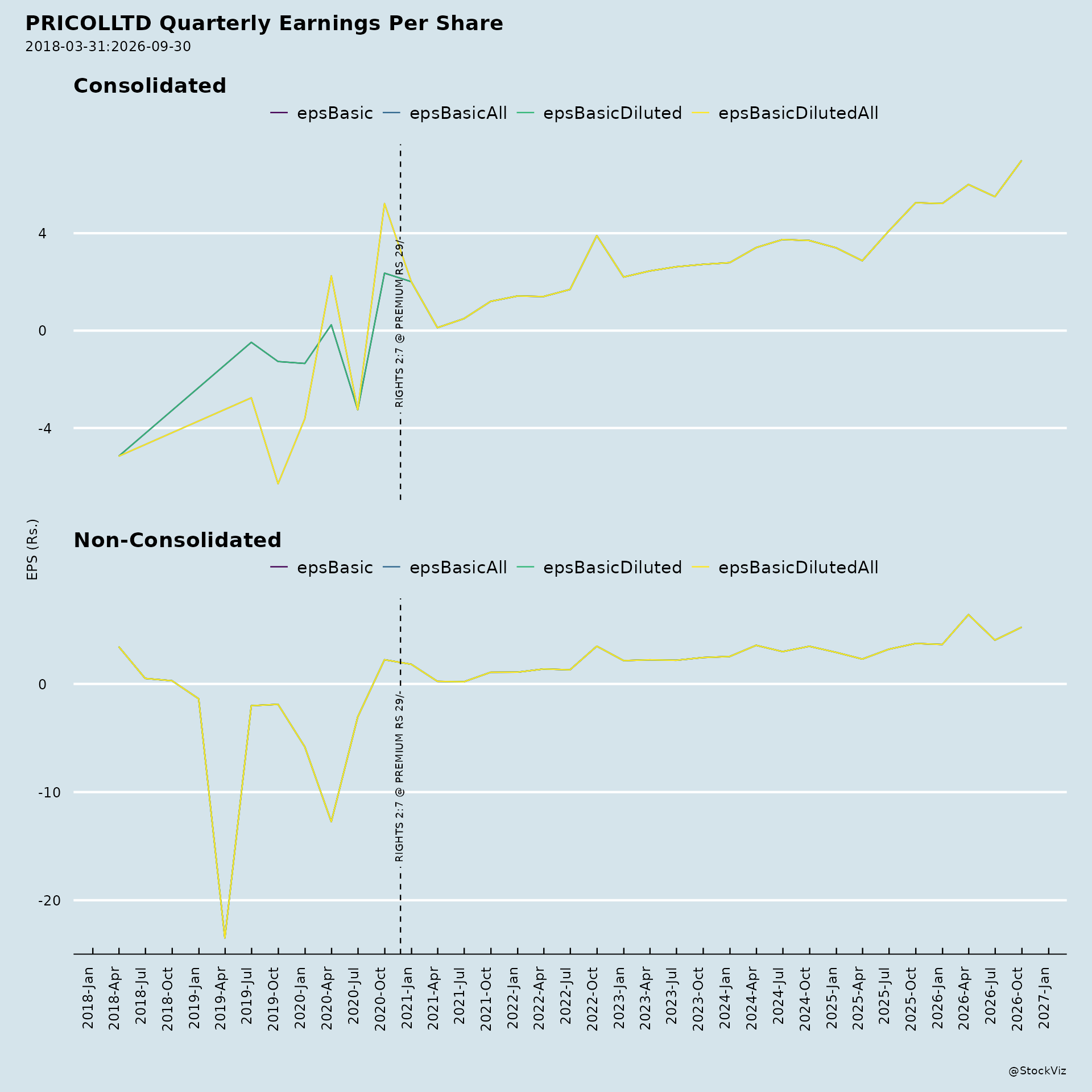
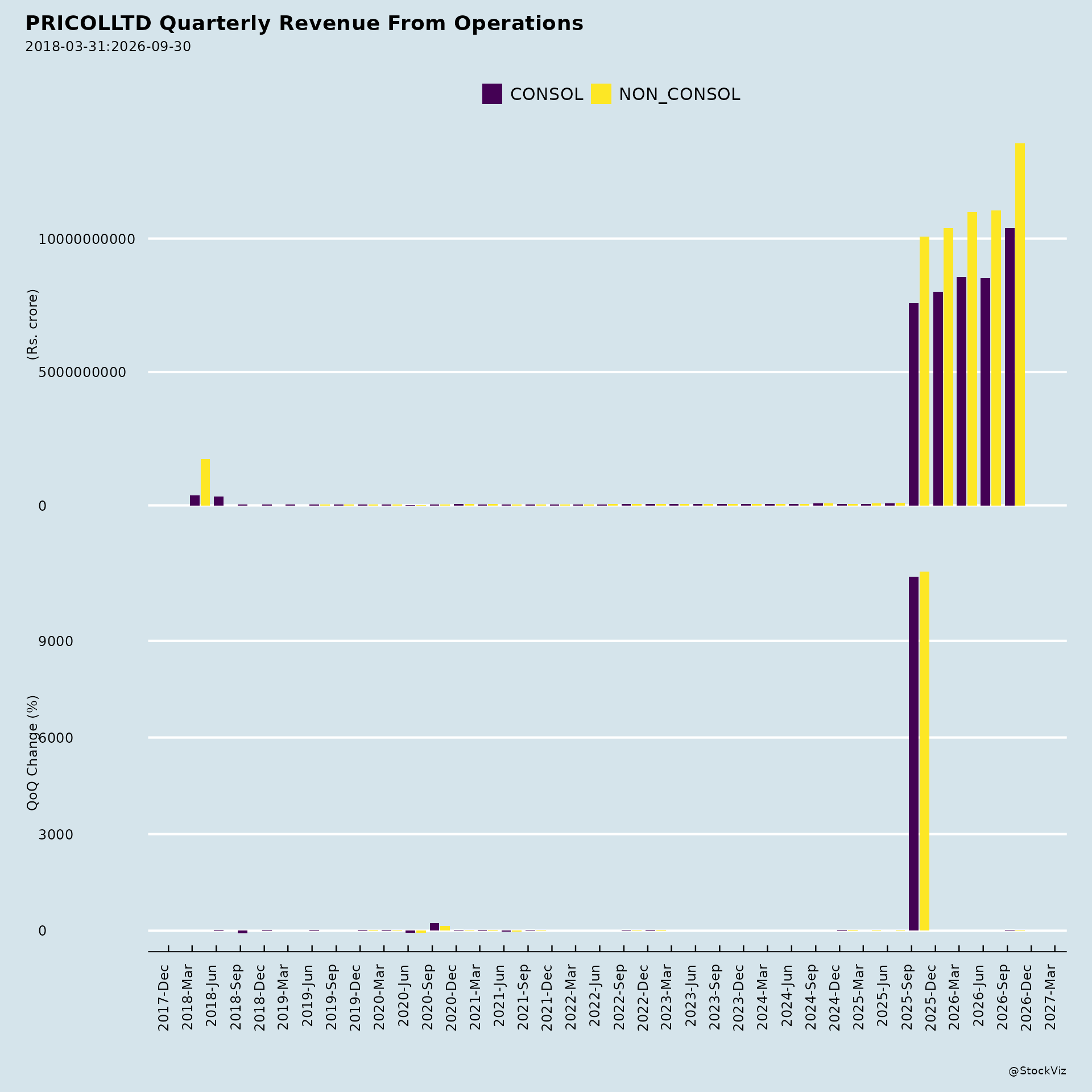
Revenue growth. Q1 FY27 consolidated revenue from operations was Rs. 1,083.58 crores, up 23.46% year on year. EBITDA was Rs. 123.69 crores (up 21.42%), PAT Rs. 67.02 crores (up 34.34%), and basic EPS Rs. 5.50 (up 34.47%). PBT grew 32.23% and PAT 34.34% versus Q1 FY26. Management stated the company grew 26% against weighted average industry growth of 22%, outperforming by about 4% across divisions. Both DICVS and ACFMS grew around 25%. In two-wheelers, the industry grew about 23% in Q1 while Pricol grew 28%, aided by new product introductions.
Demerger of DICVS. The Board on 27 June 2026 approved a Scheme of Arrangement demerging the Driver Information & Connected Vehicle Solutions business into Pricol Autotech Limited, subject to approvals. Management said the decision followed over two years of board and strategic debate, driven by rapid technological change in the human-machine interface, the need for large investment and potential partners, difficulty attracting the right investors for combined businesses with differing investment appetites, and a desire for a judicious debt-equity mix without extensive borrowings. The demerged entity is expected to maintain its growth clip in the driver information system space. Operationally, divisions are to function like demerged entities from October, fully by December, with the legal process expected to take a minimum of four quarters and management hoping for completion in about 12 months.
New products and launches. Q1 FY27 launches included an LCD cluster for Hero MotoCorp XOOM 125, an LCD cluster for Tata Motors Tiago, and a TFT cluster for Force Motors Urbania. The switches business won its first business from Suzuki. Disc brake production commenced for a major Indian OEM. Exports discussions are underway with large customers in Europe and the Americas, with certain committed export volumes already won, expected to yield results in two to three years.
Customer additions. In Polymer, new business was acquired from Ather, River, Simple Energy, Raptee, Honda and Royal Enfield, with Yamaha in final stages. Honda plastics business was described as robust, with Honda identified as a high-value, high-growth customer over three years. In DICVS, engagement with Mahindra has begun. In passenger vehicles, engagement with Mahindra has started. The company received the “Best Localisation Through VA-VE” award from Suzuki Motorcycle India (22 April 2026) and was consecutively awarded Best Supplier by SMIPL for five years in a row, plus the “Winner Award – Champions of ESG FY27” from Ashok Leyland (13 May 2026).
Capacity expansion. A Rs. 700 crore capex cycle is underway across divisions over 18–24 months: about Rs. 400 crores for Polymer, Rs. 150–180 crores for DICVS, and about Rs. 120 crores for ACFMS. Polymer capacity creation is expected to take turnover from a capable Rs. 1,000 crores to about Rs. 2,000 crores. Plants are coming up in Hosur, Mysuru, Aurangabad, Sanand (for Honda) and Bhiwadi/NCR. A Polymer centre of excellence is to be fully operational by May 2027. New Polymer technologies include 2K moulding, self-healing plastics, and fibre-reinforced plastics replacing metals. A tool room is being backward integrated.
TFT penetration. About 7–8% of total two-wheelers produced have TFT clusters, with rapid growth expected to double this percentage over two to three years. Hybrid clusters (part LCD, part TFT) are expected to evolve rapidly for cost optimisation.
Market position. In two-wheeler DIS, Pricol has the largest India share at 30–35% by volume; in CVs, almost two-thirds share; in off-road vehicles, a presence; in passenger vehicles, 8–9%, with 8 out of 10 Tata cars carrying a Pricol cluster.
3. Key Risks
- Continued geopolitical crisis (resumption of war in Iran and neighbouring regions), further rupee weakness — with market indications the rupee could touch three digits against the dollar — and crude oil returning to the 90s could further pressure profitability.
- Freight rates expected to remain high for at least four quarters.
- Raw material prices, including memory-controlled devices, rising sharply quarter on quarter.
- Minimum wage increases of approximately Rs. 21 crores per annum, with customer absorption still unresolved.
- Some degree of cost may remain unrecovered, with continued EBITDA impact until global crises resolve.
- EBITDA expected to remain under pressure for the next couple of quarters.
- Demerger timeline dependent on multiple governmental agencies and steps (SEBI, ROC, NCLT); management cited Vedanta’s demerger taking 18–24 months despite its size as a caution, hoping for 12 months.
- Heavy capex cycle and capacity creation could stress the balance sheet; ROCE in Polymer expected to drop before returning to a steady state of 16–18%.
- Management bandwidth constraints led to a pause on M&A for one year; prior due diligence found asset quality unsatisfactory.
- Competition could undercut if margins are pushed beyond the stated steady-state band.
4. Management Guidance vs Observed Performance
Margin guidance. Management has consistently maintained a steady-state blended EBITDA margin of 12.5–13%, described as the level that maintains share of business without inviting competition undercutting. Observed Q1 FY27 EBITDA margin was 11.41%, with management stating about 1.5% of EBITDA margin was lost in the quarter and that at least another percentage point of EBITDA remains available through price increases and indexation from customers. Management expects improved margins in Q2 and Q3, contingent on the rupee not weakening further and prices not rising further.
Revenue growth guidance. Management stated DICVS will maintain a delta of at least about 5% over market growth; ACFMS is targeted at 10% over market growth; Polymer growth is expected to be muted until capacity matures in 9–12 months, after which it is expected to maintain a healthy 20%+ growth rate. The stated FY30/FY31 revenue aspiration of Rs. 8,000 crores, via primarily organic and some inorganic growth, was reaffirmed despite the one-year M&A pause. The Polymer aspiration of two-and-a-half times FY25 revenue was reaffirmed as on track, with plants coming up on schedule barring a month or two of delay.
Disc brake and switches guidance. Management maintained that disc brake and switches will only take relevance from FY28, a standard maintained for the last four quarters, with real disc brake revenues kicking in from FY28.
Observed versus guided. Q1 FY27 revenue growth of 23.46% and outgrowth of about 4% over the weighted average industry growth of 22% are consistent with the stated intent to outgrow the market. The 11.41% EBITDA margin fell short of the 12.5–13% steady-state guidance, which management attributed to external geopolitical factors and statutory minimum wage increases, with recovery expected in Q2 and Q3. The sequential top line was described as flattish, which management attributed to the normal industry cycle (Q4 high, Q1 drop, Q2 pre-festive rise, Q3 drop), stating no share of business was lost.
Broker Narrative
The broker narrative shifted from early optimism about aggressive growth to ₹4,000 crore by FY26E, strong EV traction, and futuristic products toward a far more cautious stance dominated by cyclical demand sensitivity, supply chain and rare earth risks, input cost volatility, and geopolitical exposure. Cyclicality and 2W segment concentration persisted as recurring concerns across both reports, while new tailwinds emerged around the DICVS demerger, plastics integration, and customer diversification to Japanese OEMs and global Tier-1s. The overall arc reflects a maturing but markedly less bullish outlook, with growth ambitions giving way to risk management and value-unlocking strategies.
Fears that came true
- Cyclical automotive demand sensitivity closely linked to 2W and CV production materialized as a drag, correlating with the DISAPPOINTMENT outcome in the 2026-09-07 report.
- Input cost and working capital volatility from metals, electronics, and energy costs — compounded by lags in OEM price pass-through — pressured margins, contributing to the disappointing actual return of -1.5%.
- Supply chain dependence on imported semiconductors and electronic components exposed the company to disruptions and higher inventory requirements, weighing on performance leading to DISAPPOINTMENT.
- Competitive intensity from global Tier-1 and domestic players created pricing pressure and elevated R&D/capex requirements, aligning with the underperformance versus the +22.2% predicted return.
Optimism that failed
- The aggressive growth ambition to achieve ₹4,000 crore topline by FY26E backed by ₹600 crore capex did not materialize as projected, coinciding with the DISAPPOINTMENT outcome in the final report.
- Strong EV traction with 22 EV players failed to deliver meaningful revenue momentum, as later narratives reframed EV exposure from a growth driver to a risk via rare earth and specialized material dependence.
- The strategic tech partnership narrative (BMS Powersafe, SIBROS telematics) did not sustain as a growth catalyst, replaced in the final report by concerns over financial health and operational pressures rather than the earlier projected ~23.4% revenue CAGR and consistent de-leveraging.
Broker Timeline
4 broker calls · 2023-05-15 to 2026-09-07
CNBC-TV18: ratings, targets and commentary
No recorded CNBC-TV18 statements for this ticker.
Management comments
No recorded management comments with an explicit designation and affiliation for this ticker.
Copyright © 2023 SAS Data Analytics Pvt. Ltd. All rights reserved.