Auto Components & Equipments
Industry Metrics
September 24, 2026
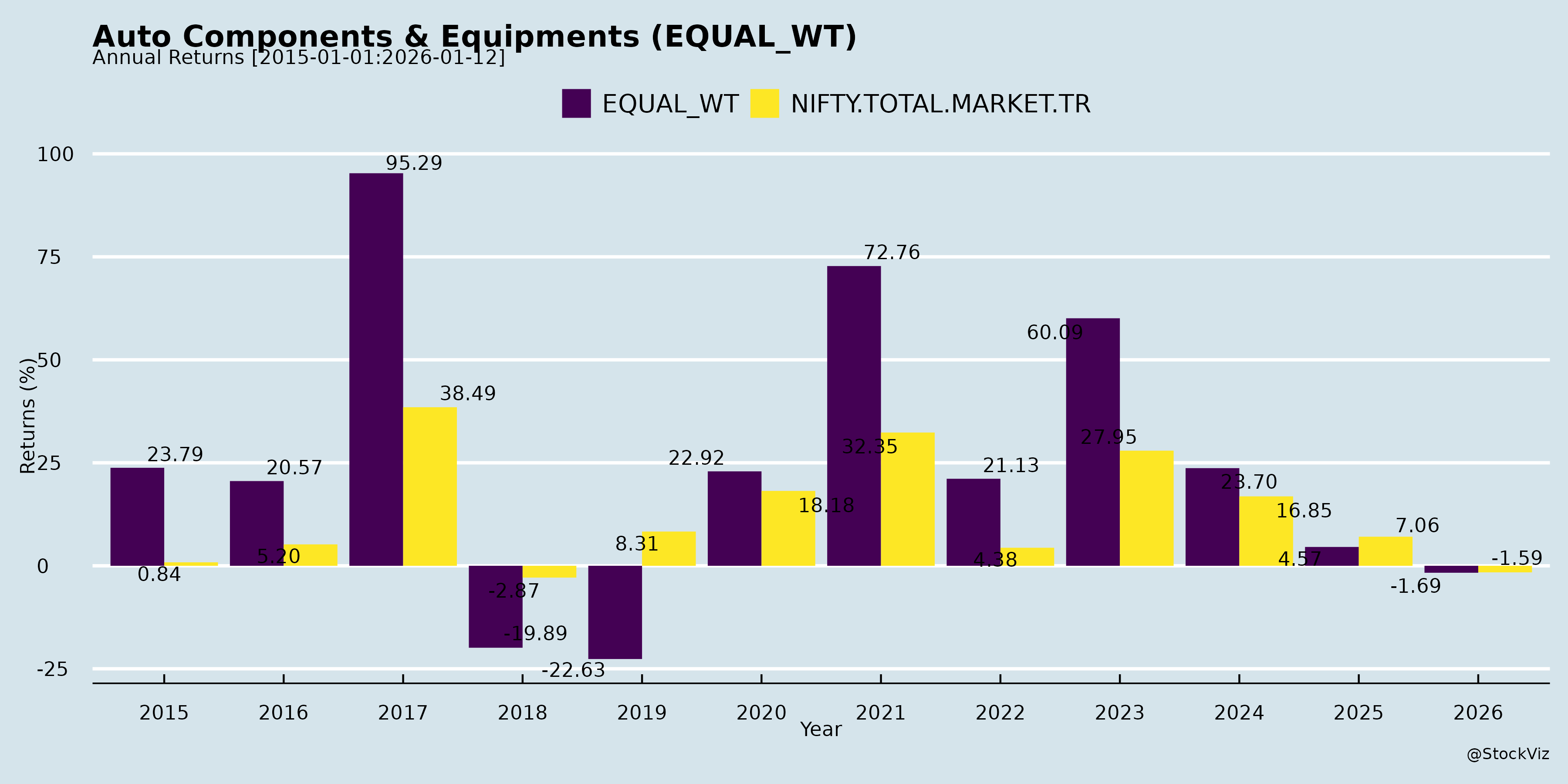
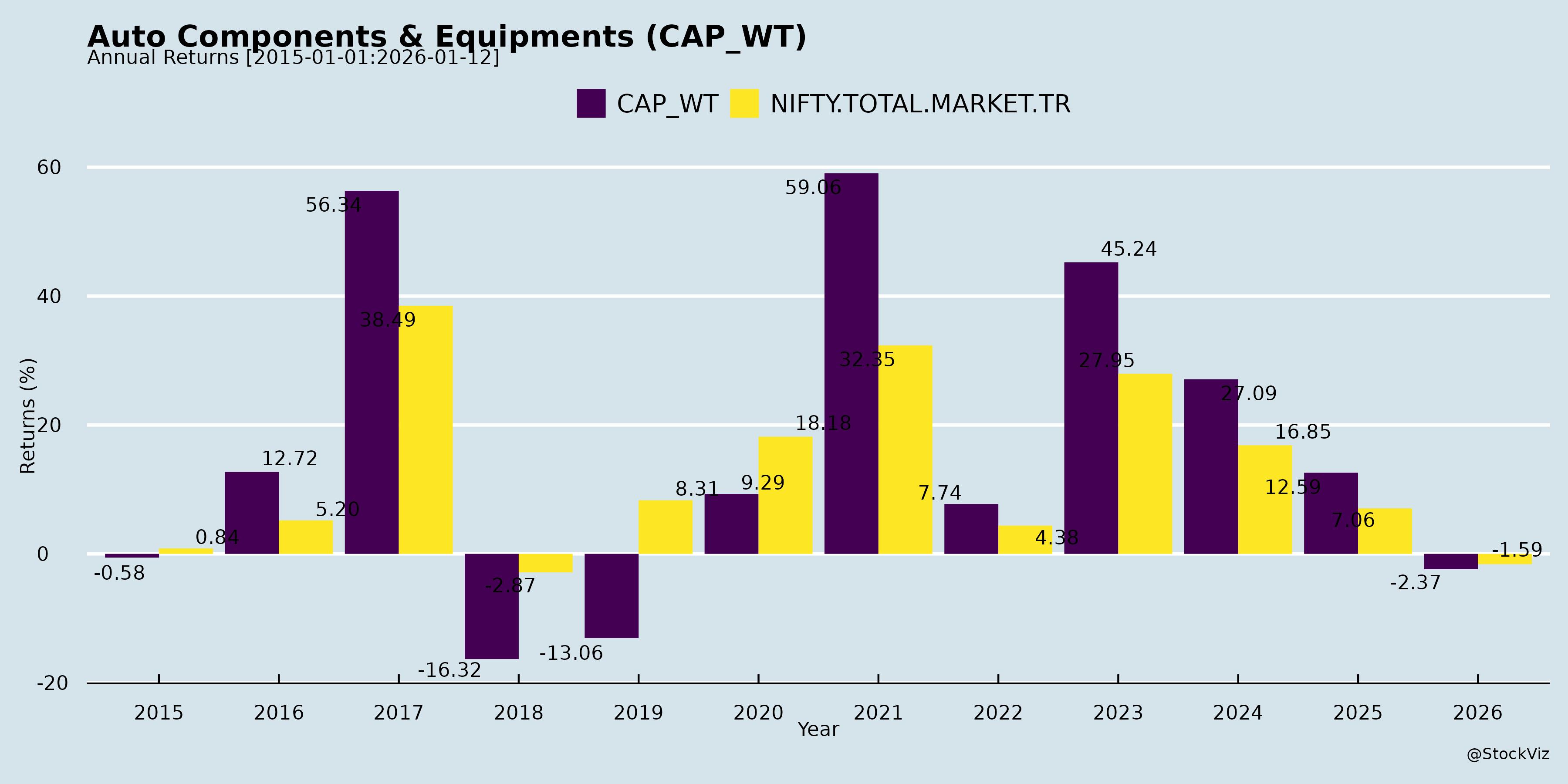
Annual Returns
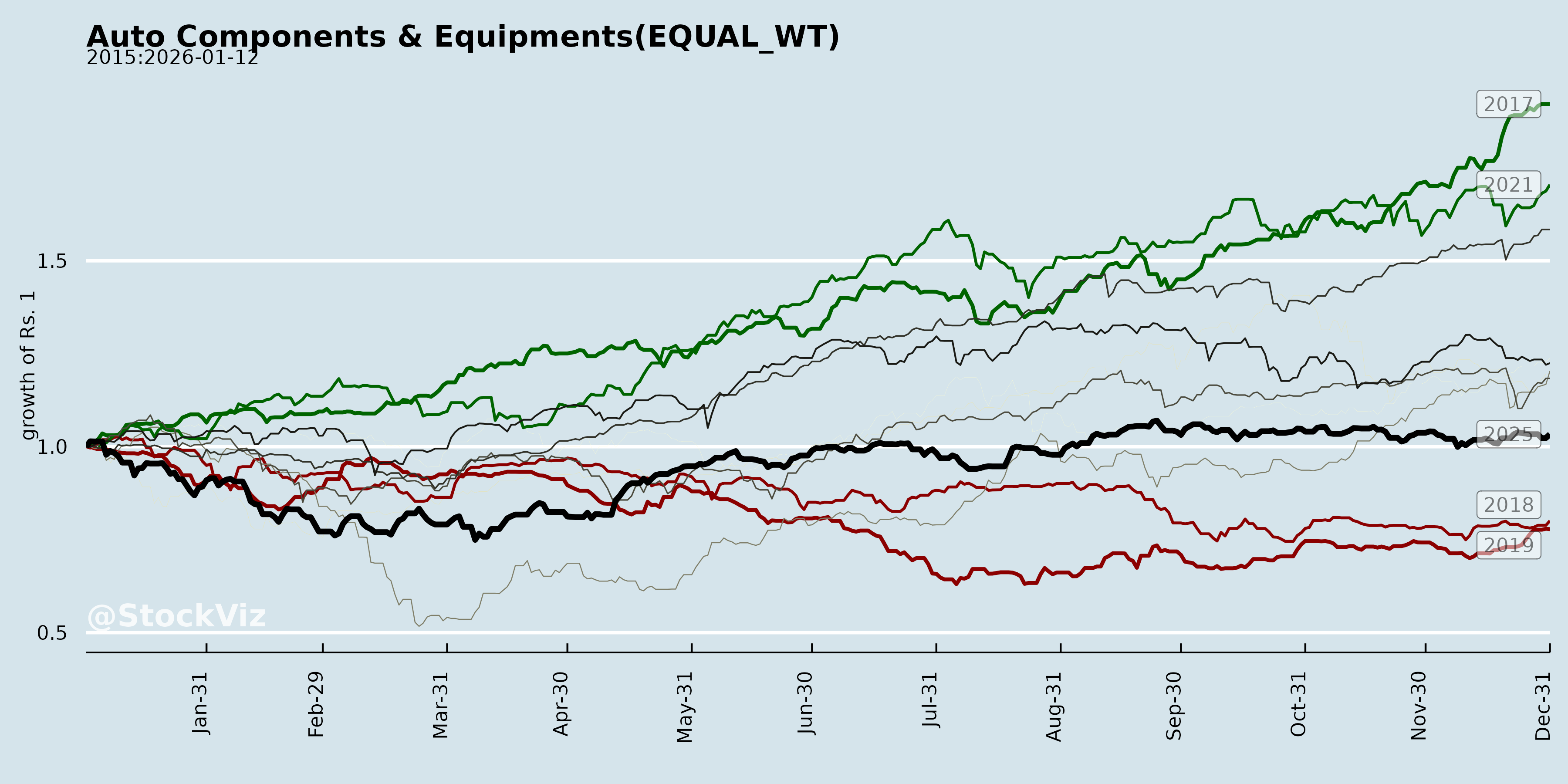
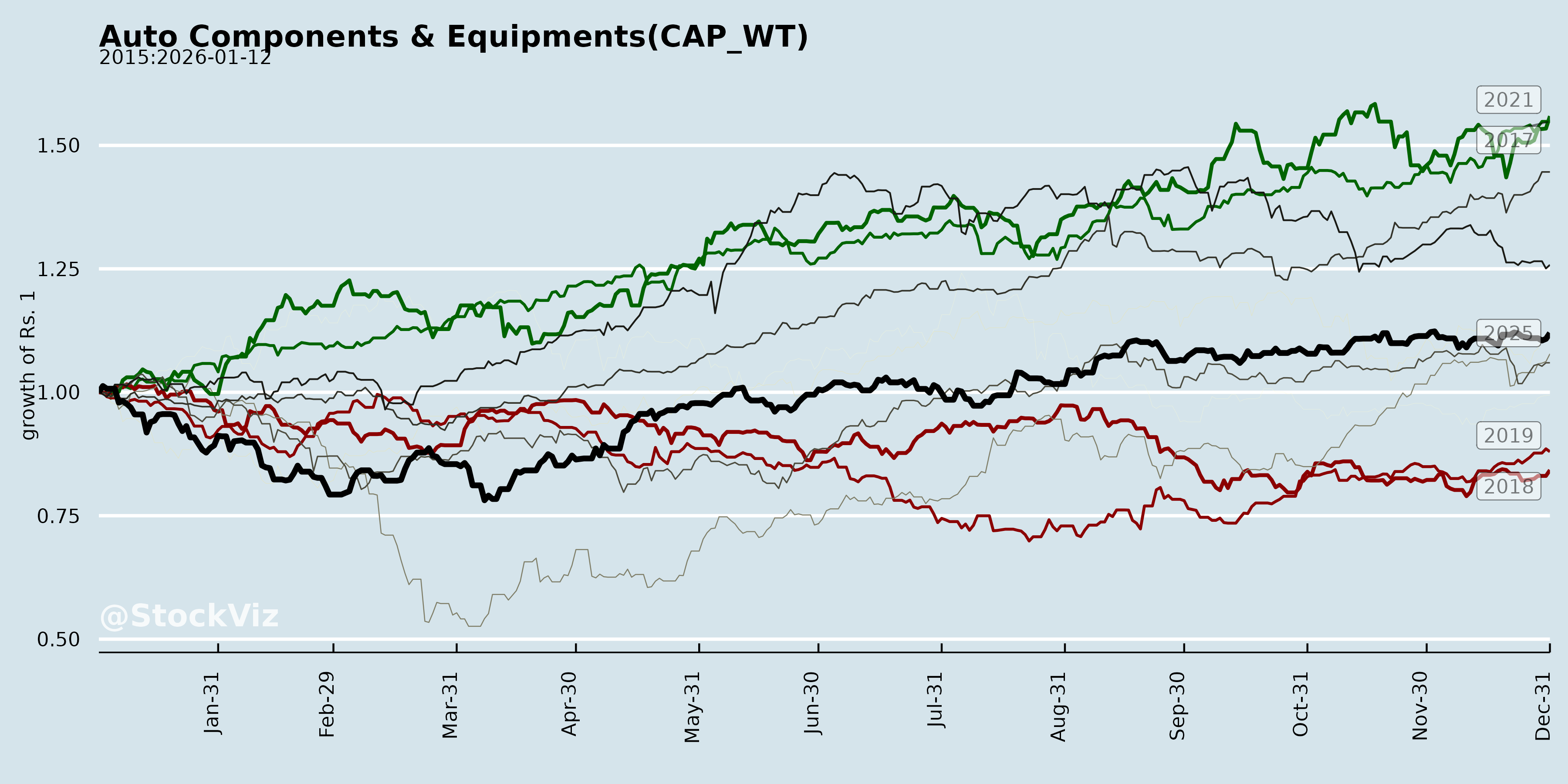
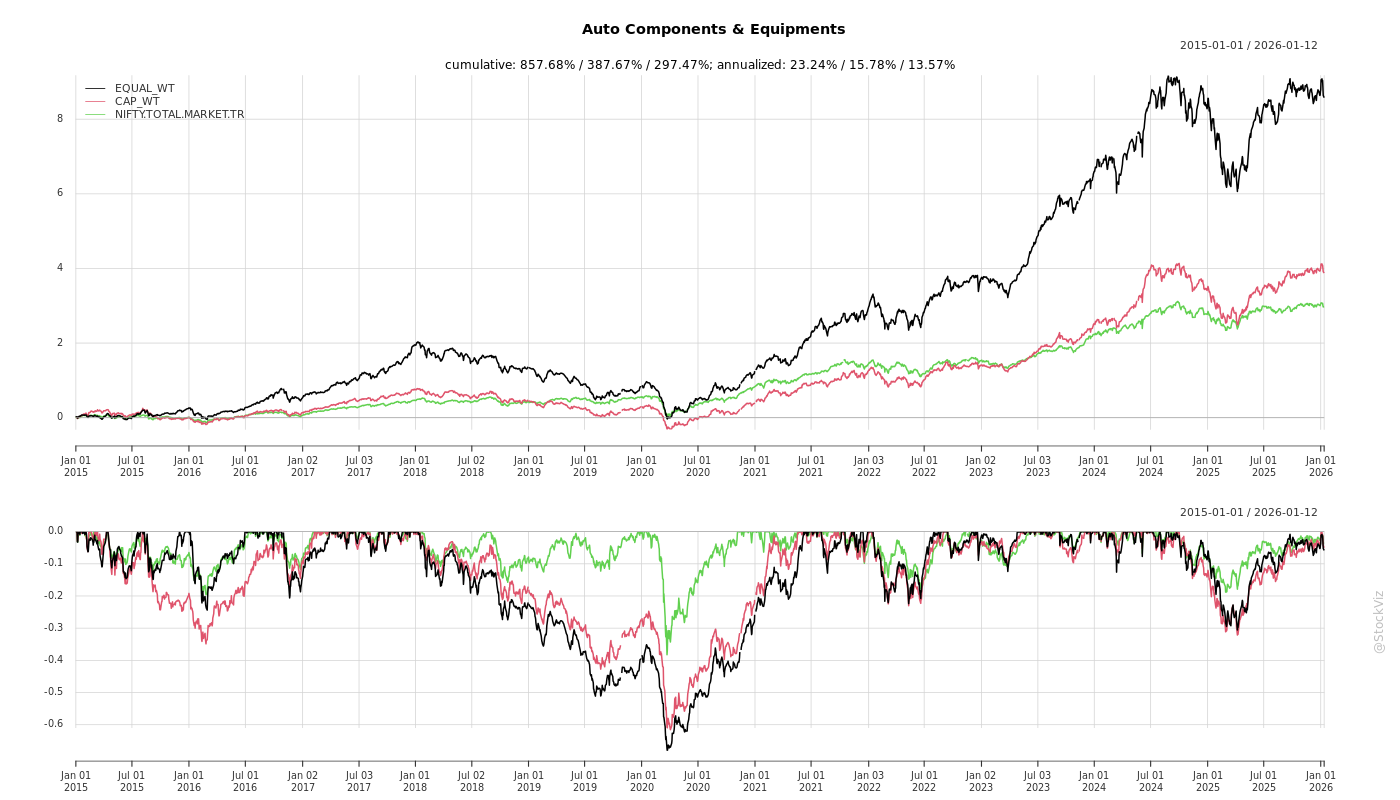
Cumulative Returns and Drawdowns
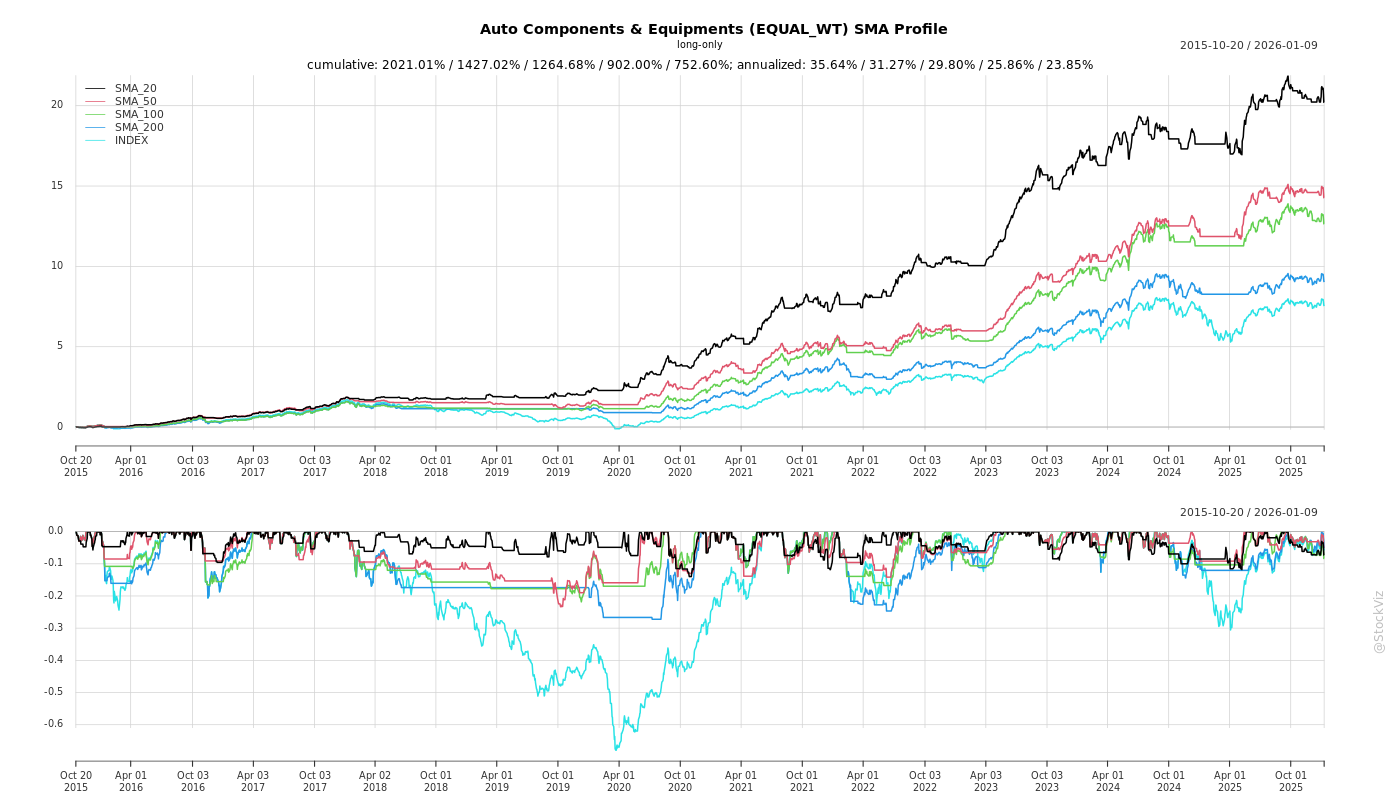
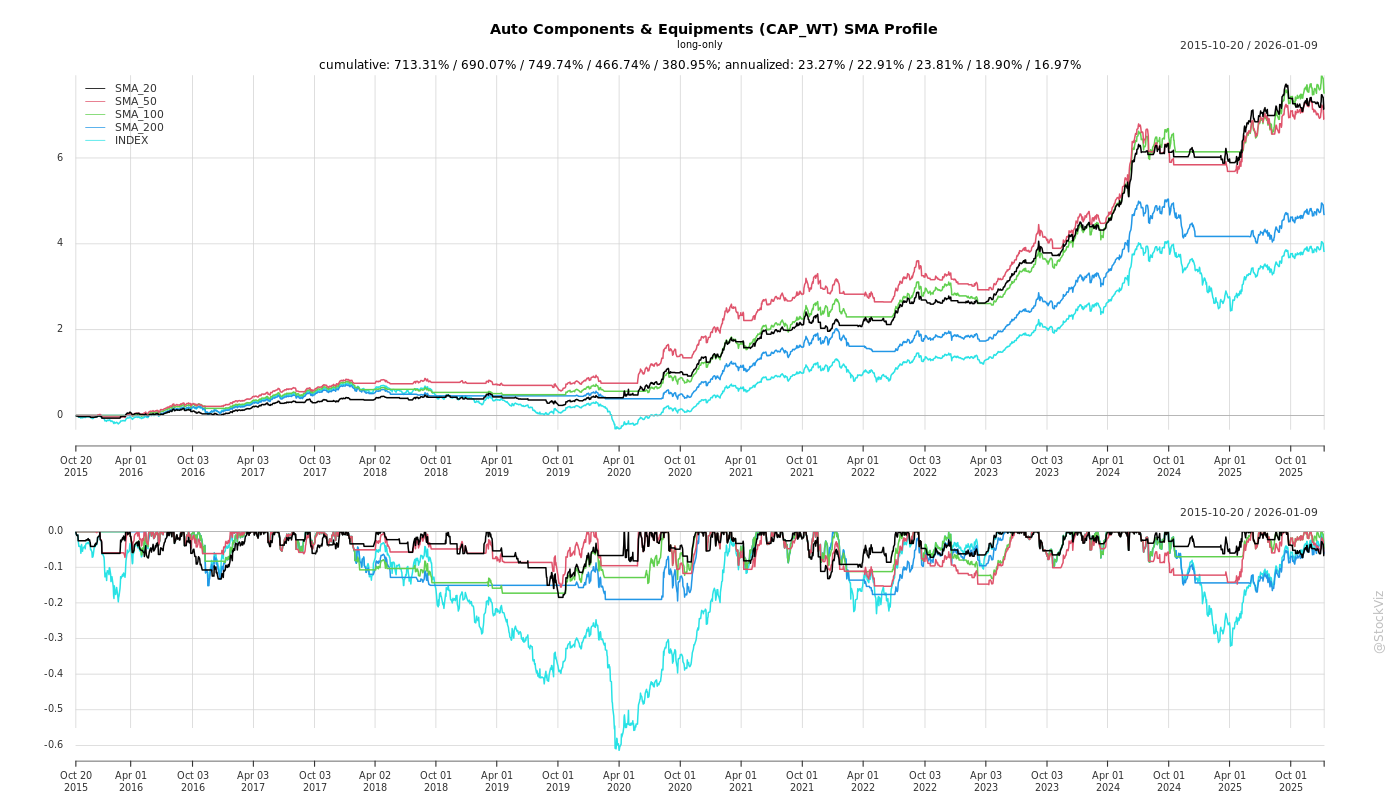
SMA Scenarios
Current Distance from SMA
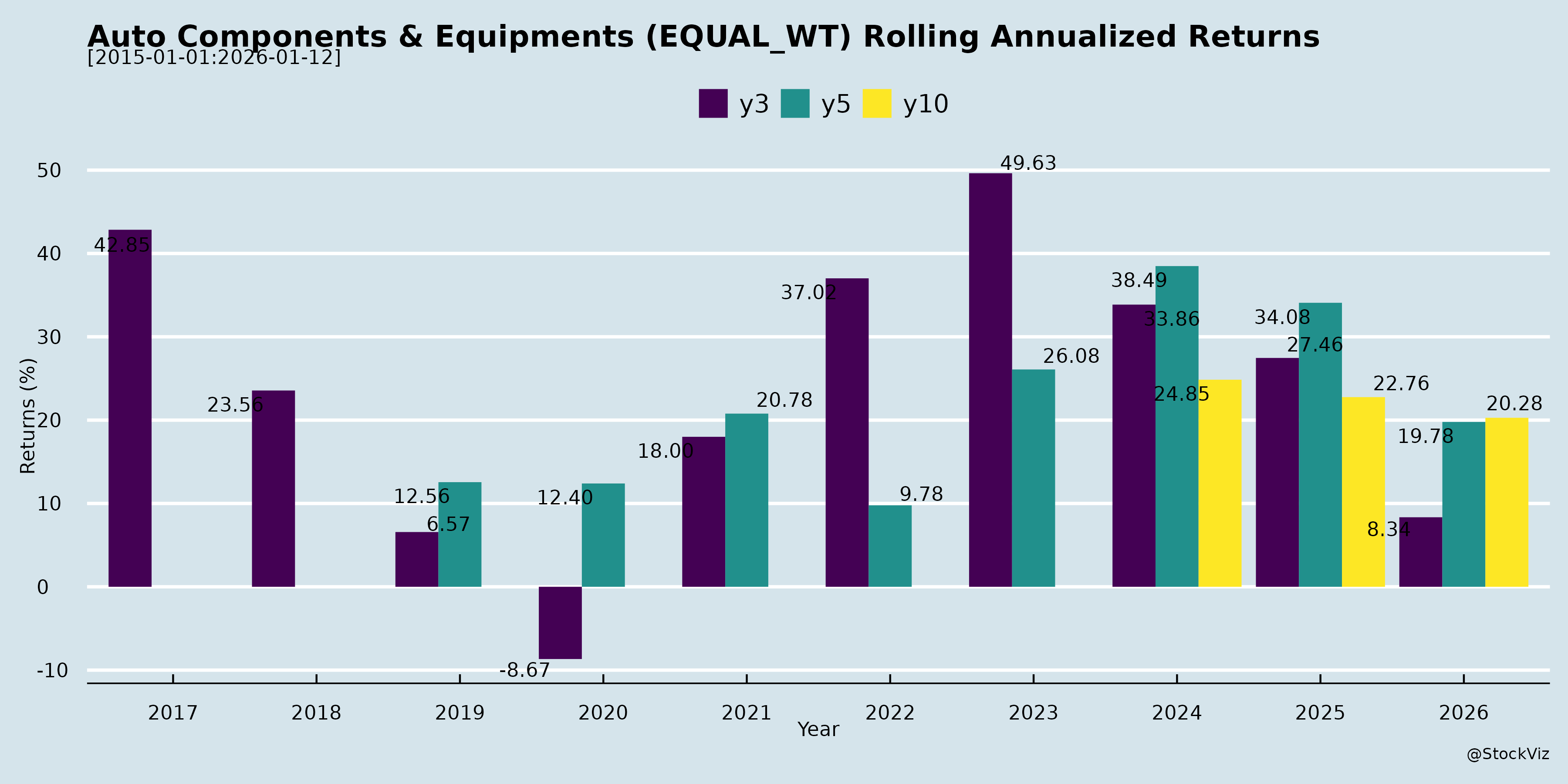
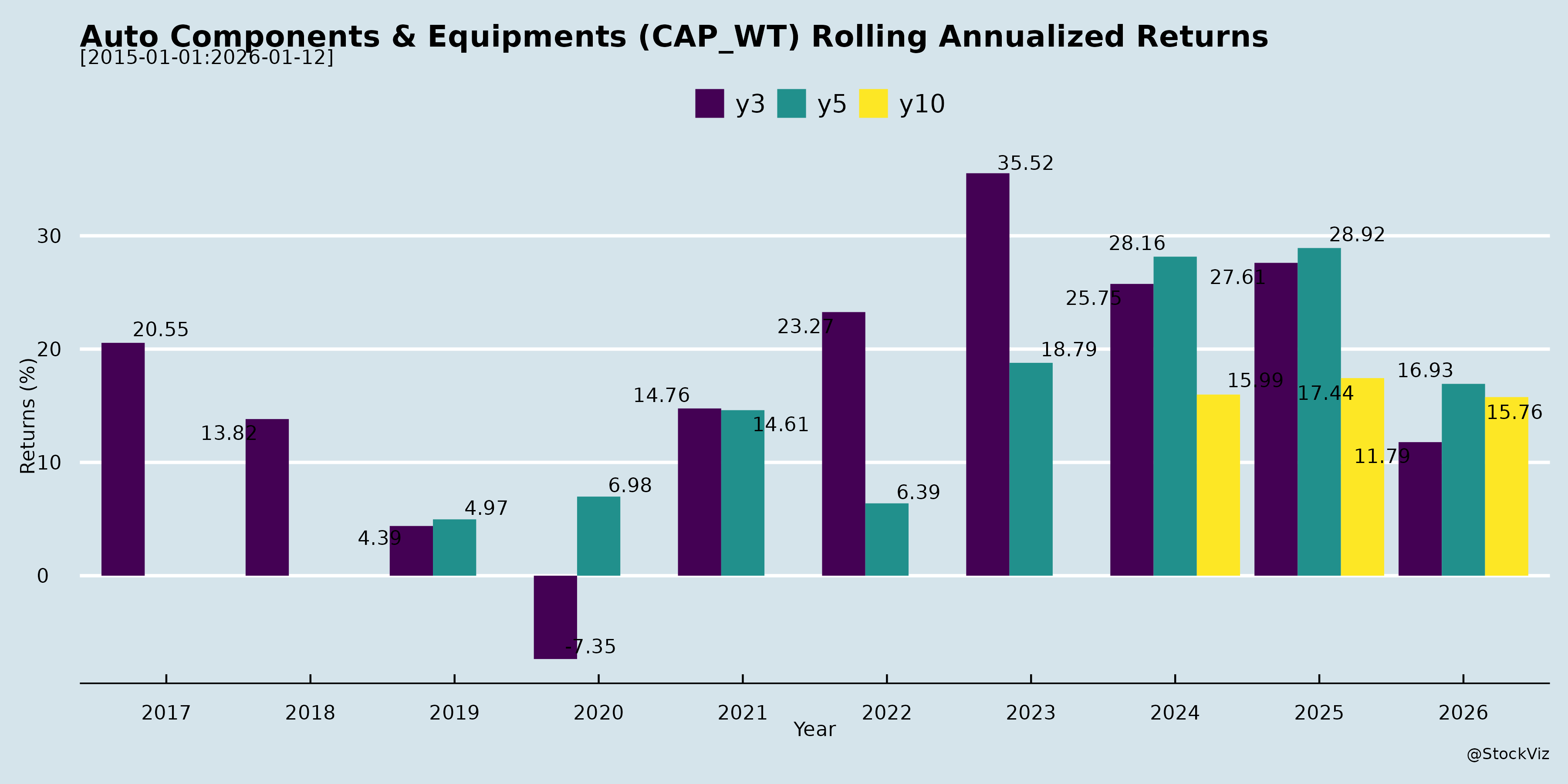
Rolling Returns
Fundamental Ratios
AI Summaries
How have the challenges and oppurtunities evolved over time?
asof: 2026-04-14
The landscape of the automotive and manufacturing industries has evolved significantly over time, transitioning from a period defined by relatively stable, localized production and traditional internal combustion engines to a highly dynamic environment shaped by technological disruption, shifting global trade, and complex macroeconomic factors.
The Evolution of Challenges
1. Supply Chain Volatility and Geopolitical Tensions Historically, supply chains were optimized for cost, but recent years have introduced severe volatility, forcing companies to recalibrate for resilience [1]. Geopolitical tensions have become a major disruptor. Trade frictions, such as the tariffs imposed by the United States, have historically put Indian exporters at a disadvantage compared to nations like China and Vietnam, though evolving trade agreements aim to mitigate this [2, 3]. More recently, conflicts like the USA-Israel-Iran war and blockades in the Strait of Hormuz present acute risks to the global oil economy and the availability of fossil fuels required for manufacturing [4-6]. Furthermore, supply chains continue to be hampered by restricted access to rare earth materials and semiconductor shortages originating from China, which directly impacts production schedules [7, 8]. Companies are also facing modern digital threats, such as cybersecurity incidents disrupting customer production lines for weeks [9].
2. The Slower-than-Anticipated EV Transition and European Stagnation While the shift toward Electric Vehicles (EVs) was initially expected to be rapid, it is occurring at a slower pace than anticipated due to consumer concerns over charging infrastructure, range, and initial costs [10, 11]. This has created immense strategic uncertainty. In Europe, the automotive industry is actively stagnating as it grapples with high transition costs, an energy crisis, high interest rates, and fierce competition from cheaper Chinese EV imports [10, 12-14]. This transition also threatens legacy product lines; for example, the move to EVs renders traditional engine components like forged crankshafts redundant, forcing companies to scramble to offset these losses with EV-agnostic parts [15, 16]. Similarly, technological shifts have caused declines in other traditional sectors, such as telecom shifting from lead-acid to lithium-ion batteries [17].
3. Human Capital and Productivity Pressures Rising manpower costs have become a structural challenge. Manufacturers are finding it increasingly difficult to attract and retain talent, as they must now compete with the less physically demanding services sector for the same labor pool [18, 19]. This has forced a mandatory shift toward heavy investments in process automation and robotics to maintain productivity and offset labor shortages [19, 20].
4. Legacy Constraints Some companies have had to spend the last decade restructuring to overcome historical legacy constraints. For instance, NRB Bearings noted that they spent 8 to 10 years resolving structural limitations before they could transition from conservative maintenance of their core business to an aggressive growth and acquisition strategy [21, 22].
The Evolution of Opportunities
1. The Dual-Speed Mobility Transition in India Unlike Western markets where EVs are replacing Internal Combustion Engine (ICE) vehicles, India’s transition is dual-speed [23]. The ICE market continues to grow robustly due to low per-capita vehicle ownership and strong infrastructure growth, meaning EV adoption provides an additional layer of demand rather than pure substitution [24, 25]. This allows suppliers to capture new business in EV-specific components—such as aluminum housings, composite battery boxes, e-axles, and sensors—while still scaling their traditional ICE portfolios [15, 26, 27].
2. Global Supply Chain Realignment and “China Plus One” The geopolitical friction that acts as a challenge has paradoxically created one of the largest opportunities. Global OEMs in Europe and the US are increasingly seeking to de-risk their supply chains away from China [28, 29]. This “China Plus One” strategy positions India as a highly competitive engineering and manufacturing hub [28, 30]. Additionally, evolving Free Trade Agreements (FTAs) with the US and Europe are expected to bridge pricing gaps, offset European production costs, and drive significant export growth for Indian suppliers [2, 31-33].
3. The Intelligence Revolution and Industry 4.0 The industry is moving from purely mechanical engineering to the integration of mechanics, power electronics, and software [34]. Industry 4.0 technologies—including Artificial Intelligence, Machine Learning, IoT, and digital twins—are revolutionizing smart factories, compressing R&D cycles by 20% to 50%, and enabling mass customization [35, 36]. This AI revolution is also opening up entirely new, high-growth markets for automotive suppliers, allowing them to adapt their gears, sensors, and actuators for use in industrial robotics, automated guided vehicles (AGVs), and humanoid robots [36-38].
4. Lightweighting and Structural Premiumization To meet stringent emission norms (like CAFE) and to maximize battery range in EVs, OEMs are demanding lighter vehicles. This has created massive opportunities in aluminum die-casting and high-tensile steel suspension components [39, 40]. Concurrently, consumer preferences are driving “premiumization” across vehicle segments. This means the technology content per vehicle is increasing rapidly, allowing suppliers to sell higher-margin products like Adaptive Driving Beams (ADB), LED exterior lighting, Advanced Driver Assistance Systems (ADAS), and Electronic Stability Control (ESC) [41-44].
5. Diversification into Non-Automotive and Infrastructure Sectors To smooth out automotive cyclicality, companies are increasingly expanding into adjacent, high-growth industries [45]. Heavy government capital expenditure on infrastructure and freight corridors is heavily boosting the commercial vehicle, tractor, and construction equipment segments [46-48]. Furthermore, advanced manufacturing capabilities are being leveraged to enter highly lucrative sectors such as aerospace, defence, railways, and renewable energy [49, 50]. The boom in e-commerce and digitalization has also created entirely new revenue streams, such as supplying industrial UPS batteries for rapidly expanding data centers and material handling equipment for warehouses [51].
What are the headwinds affecting this industry?
asof: 2026-04-14
Geopolitical and Global Trade Uncertainties The automotive and auto components industry is navigating a highly volatile global security situation, marked by the USA-Israel-Iran conflict and the protracted war in Ukraine [1], [2], [3], [4], [5]. The Red Sea crisis and the blockade of the Hormuz Strait have exacerbated these issues, driving up logistics and freight costs while threatening the supply of critical fossil fuels like gas and furnace oil [6], [7], [8], [9], [10], [11].
Furthermore, shifting global trade policies and protectionism are causing significant disruptions. Tariffs imposed by the United States have historically threatened component exports, and recent changes—such as the removal of a 25% Russian oil penalty paired with ambiguity around a new 18% tariff structure—have left US customers in a “wait and watch” mode, stalling order volumes [12], [13], [14], [15], [16], [17], [18], [19]. In Europe, proposed regulations regarding the Carbon Border Adjustment Mechanism (CBAM), commonly referred to as a carbon tax, pose a direct threat to the competitiveness of exports to the EU [1], [2], [20]. Currency depreciation, specifically of the Indian Rupee, has further compounded these trade challenges on the cost side [21], [22].
Supply Chain Disruptions and Raw Material Costs The industry faces severe supply-side constraints, particularly regarding the availability of semiconductors and rare earth materials, which have been restricted by China, disrupting the production schedules of major OEMs [23], [24], [25], [26], [27], [28]. Additionally, the sector is grappling with soaring commodity prices. Metals such as aluminium, copper, silver, sulphur, antimony, and tin are trading at or near all-time highs, putting immense pressure on gross margins and necessitating constant price negotiations and pass-through agreements with customers [29], [30], [31], [32], [21], [22], [33], [34], [35], [36], [37], [38], [39].
Unique operational disruptions have also materialized, such as a severe cybersecurity incident at a UK-based OEM that halted production for nearly five weeks and forced suppliers to pause shipments [40], [41], [42], [43]. In the domestic aftermarket, the resurgence of counterfeit products and cheap imports from China has further suppressed sales for traditional component makers [44].
Regulatory Changes and Rising Operational Expenses Compliance with new regulations is driving up fixed and variable costs. The implementation of the New Labour Codes has fundamentally changed gratuity rules, leading to immediate, one-off cost increases and structurally higher employee and manpower expenses [45], [46], [47], [48], [49], [50], [51], [52]. Finding and retaining skilled labor on the shop floor is increasingly difficult due to high attrition and stiff competition from the services sector, forcing companies to invest heavily in automation and robotics to replace human labor [53], [54], [55], [56].
In addition to labor costs, rising power tariffs, particularly in states like Maharashtra, have eroded EBITDA margins [45], [46], [57], [58], [59], [60], [61]. The industry must also shoulder heavy R&D and capital expenditure burdens to comply with evolving environmental and safety mandates, such as the transition to TREM5 and WLTP emission norms, CAFE standards, and mandatory Advanced Driver Assistance Systems (ADAS) and Driver Drowsiness and Attention Warning Systems (DDAWS) [62], [63], [64], [65], [66], [67], [68], [69]. Certain product segments are also bogged down by complex Bureau of Indian Standards (BIS) approvals and Quality Control Orders (QCO) [70], [71], [72].
The Electric Vehicle (EV) Transition and Technological Shifts While the shift toward electric mobility is a long-term growth driver, its current execution is posing major headwinds. The transition to EVs is occurring at a slower pace than initially anticipated across global markets, leading to delayed EV projects and extended uncertainty [73], [74], [75], [76], [62], [77], [78]. Meanwhile, Chinese OEMs have emerged as dominant technology leaders in the EV space, flooding European and international markets with cheaper vehicles and creating distinct supply chains that are difficult for legacy suppliers to penetrate [73], [75], [79], [12], [80], [77], [81], [82], [83], [84], [85].
This electrification shift also threatens legacy internal combustion engine (ICE) components; for instance, the dependency on forged crankshafts will become redundant in EVs, requiring massive strategic pivots for forging companies [86], [87], [88], [89]. A similar technological displacement is occurring in the telecom infrastructure sector, where a rapid shift from traditional lead-acid batteries to lithium-ion packs has caused steep revenue declines for legacy battery manufacturers [90], [91], [92], [93].
Demand Softness and OEM Delays Finally, the industry is battling uneven demand patterns. Delays in new model launches by OEMs, combined with lower-than-expected volumes for newly launched vehicles, have resulted in unfavorable product mixes and an inability for component makers to absorb fixed costs [94], [95], [96], [97], [98], [99], [100], [101], [102], [103], [104], [105].
On an international level, key automotive markets are stagnating. The European automotive industry is struggling with rising costs, transition uncertainties, and plant closures [73], [75], [79], [80], [78], [81]. Similarly, the US medium and heavy commercial vehicle (Class 8 truck) market experienced a massive slump throughout recent periods, causing deep revenue cuts for companies heavily exposed to North American truck exports [106], [107], [108], [109], [110], [111], [40], [42].
What are the key things to understand about this industry?
asof: 2026-04-14
Macroeconomic and Regulatory Drivers The Indian automobile and auto components industry is currently experiencing a period of robust growth, supported by a highly favorable macroeconomic environment characterized by low inflation, low repo rates, and a projected GDP growth of 6.4% for FY27 [1-5].
A major catalyst for this domestic demand has been the GST rate rationalization (often referred to as GST 2.0) implemented in September 2025 [6-8]. This simplified slab structure lowered the cost of ownership, improved affordability, and stimulated demand across passenger vehicles, commercial vehicles, and two-wheelers well beyond the festive season [9-12]. Furthermore, the Union Budget has reinforced this outlook by increasing allocations to the Production Linked Incentive (PLI) Auto scheme for FY27 and providing significant outlays for electronic manufacturing programs to enhance domestic capabilities in semiconductors and sensors [1, 2, 13, 14].
Global Trade, Exports, and Supply Chain Realignment India is increasingly integrating into global value chains, aided by shifting geopolitical dynamics and new trade agreements. * Trade Agreements: The US-India trade agreement and ongoing progress on the EU Free Trade Agreement (FTA) are expected to restore competitiveness for Indian exporters by reverting tariffs to 0% and improving market access [1, 6, 15-18]. * China Plus One Strategy: Global OEMs are actively evaluating India as a reliable and cost-competitive manufacturing and export hub to diversify away from China [19, 20]. * Global Headwinds: Despite domestic strength, the global environment remains challenging. The European automotive industry is currently stagnating due to the energy crisis, semiconductor shortages, increased competition from cheaper Chinese EV imports, and uncertainties surrounding EV transition targets [9, 21-25]. Additionally, the industry has faced recent overhangs from US tariff-related issues, though these are expected to normalize moving into FY27 [26-30]. * Localization & De-risking: Due to supply constraints and restrictions on rare earth materials and semiconductors (often sourced from China), manufacturers are accelerating localization efforts. For example, companies are developing rare-earth-magnet-free motor solutions and substituting rare earth magnets with localized injection-molded or ferrite magnets [26, 31-34].
Technological Shifts and Premiumization The industry is undergoing a structural transformation driven by premiumization, where vehicles are becoming smarter, safer, and highly design-led. This is leading to a significant increase in the content and value per vehicle [35-38]. * Lighting and Aesthetics: There is a rapid industry-wide shift from conventional halogen technologies to advanced LED lighting systems, Daytime Running Lights (DRLs), and signature designs, which inherently carry a higher kit value [35-37]. * Lightweighting: To meet stricter Corporate Average Fuel Economy (CAFE) emission norms in internal combustion engine (ICE) vehicles and to improve battery range in EVs, OEMs are heavily prioritizing lightweighting. This is driving a transition toward aluminum components [39]. * Safety and Emissions Regulations: New regulations are enforcing higher safety standards. Advanced Driver Assistance Systems (ADAS) and Driver Drowsiness and Attention Warning Systems (DDAWS) will be mandatory in new vehicle models starting January 2027 [32]. To protect pedestrians, Acoustic Vehicle Alerting Systems (AVAS) will be mandatory for EVs by October 2026/2027 [40]. Furthermore, new emission testing procedures like BS6.3/WLTP (effective April 2027) will force OEMs to recalibrate after-treatment and thermal systems, increasing the emphasis on catalyst efficiency [41-43].
The Electrification Transition (EVs) The global transition to Electric Vehicles is occurring, but at a slower pace than initially anticipated [9, 21, 44, 45]. In India, the shift to EVs is viewed as an additional growth opportunity that will supplement, rather than immediately replace, the ICE market. As a result, ICE, hybrid, and electric vehicles will coexist (multipowertrain architectures) for the foreseeable future [10, 46-48]. Automotive suppliers are adapting by developing powertrain-agnostic products or creating specialized EV components such as e-axles, battery housings, motor controllers, and specialized EV e-compressors [49-53].
Segment-Specific Dynamics * Passenger Vehicles (PV): Growth in the PV segment is highly robust, largely driven by urban demand, premiumization, and a strong consumer shift toward SUVs [54-57]. * Commercial Vehicles (CV) & Off-Highway: The CV sector is experiencing strong momentum, particularly in the heavy-duty and tipper segments. This is fueled by the government’s budgetary emphasis on infrastructure spending, the development of freight and strategic mineral corridors, and a boom in post-monsoon mining activities [58-63]. There is also a distinct trend toward higher engine capacities and the adoption of Automated Manual Transmissions (AMT) in fleets [64, 65]. * Aftermarket: The Indian automotive aftermarket remains structurally attractive and highly resilient across economic cycles. It is supported by an expanding and aging vehicle parc, high vehicle utilization rates, a growing preference for cost-efficient maintenance, and the increasing formalization of distribution channels [66-69].
What are the tailwinds affecting this industry?
asof: 2026-04-14
Macroeconomic and Domestic Policy Tailwinds * Strong Economic Fundamentals: India’s macroeconomic outlook remains highly resilient, with GDP growth projected at 6.4% for FY27, positioning it as the highest among G20 nations [1-4]. This growth is underpinned by solid domestic demand, healthy momentum in industrial and services sectors, and stable inflation dynamics [2, 5, 6]. * GST 2.0 Reforms and Tax Rationalization: The implementation of GST reforms in September 2025 has significantly turbocharged demand across the automotive sector [7-12]. Lowering the GST rate from 28% to 18% for smaller vehicles, and from 50% to 40% for larger ones, has structurally improved vehicle affordability and lowered the total cost of ownership for end consumers [12-17]. * Favorable Monetary and Fiscal Policies: Successive repo rate cuts by the Reserve Bank of India have eased financing costs, supporting demand across all vehicle categories [18-21]. Furthermore, personal income tax relief measures have enhanced household disposable income, driving urban and rural consumption [12, 18, 19, 22, 23]. * Government Incentives (PLI): A higher allocation under the Production Linked Incentive (PLI) Auto scheme for FY27, along with significant outlays for electronics and semiconductor manufacturing, is scaling domestic production and reducing import dependence [24-28].
Geopolitical and Global Trade Tailwinds * India-U.S. Trade Agreement: The proposed trade deal with the United States is a massive structural positive, as it aims to reduce reciprocal tariffs on auto components to 18%, and potentially zero for select categories [29-33]. This removes previous tariff overhangs, restores export competitiveness, and improves long-term sourcing confidence among global OEMs [31-35]. * India-EU Free Trade Agreement (FTA): Progress on the India-EU FTA is bringing stability to trade relations and increasing market access for Indian suppliers. It allows companies to leverage India’s cost advantages to capture a larger share of European automotive supply chains [30, 36-41]. * “China+1” Supply Chain Diversification: Global OEMs in Europe and North America are actively looking to diversify their supply chains away from single-region dependence [37, 38, 42, 43]. India is increasingly being viewed as a highly reliable, cost-competitive manufacturing and export hub, opening up substantial new business prospects for Indian component manufacturers [12, 39, 40, 44-46].
Technological Shifts and Consumer Preferences * Premiumization and Increased Content Per Vehicle: Vehicles are becoming smarter, safer, and more design-led, transforming basic functional parts into high-value technological components [47, 48]. There is a rapid structural shift towards advanced LED lighting, Adaptive Driving Beams, panoramic sunroofs, and sophisticated suspension systems, all of which substantially increase the revenue content per vehicle for suppliers [47-53]. * Electrification (EV) and Hybridization: The rapid transition toward Electric Vehicles (EVs) and hybrid platforms is creating entirely new growth avenues. Opportunities are surging in e-mobility components like e-axles, battery management systems, traction motors, high-voltage inverters, and power electronics [54-59]. Government initiatives like the PM E-DRIVE program and eBus tenders are further accelerating EV adoption [22, 23, 60, 61]. * Strict Safety and Emission Regulations: Regulatory shifts are enforcing the adoption of high-value components. The upcoming mandatory fitment of Advanced Driver Assistance Systems (ADAS) and Driver Drowsiness and Attention Warning Systems (DDAWS) by January 2027 is a major catalyst [62]. Similarly, the transition to tighter emission norms (such as CAFÉ and WLTP) is pushing the demand for highly efficient, value-added emission control and thermal management systems [63-67]. * Light-weighting Initiatives: To meet strict efficiency and carbon footprint targets, OEMs are pivoting toward light-weighting using aluminum and high-tensile steel components (such as control arms, torsion beams, and subframes), heavily benefiting suppliers with advanced metallurgy and forging capabilities [68-71]. * Industry 4.0 and AI Integration: The adoption of automation, artificial intelligence, machine learning, and robotics is fundamentally reshaping manufacturing. These technologies enable predictive maintenance, reduce scrap, shorten development cycles, and enhance overall operational margins [7, 8, 72-76].
Infrastructure, Commercial Fleet, and Aftermarket Drivers * Massive Public Infrastructure Spending: A historic Union Budget outlay of INR 12.2 lakh crores directed at infrastructure, construction, and freight corridors is directly stimulating the demand for heavy-duty trucks, commercial vehicles (CVs), and off-highway equipment [41, 77-82]. * Mining Sector Boom: The resumption of mining operations and the government’s focus on developing strategic mineral and rare earth corridors are triggering a surge in demand for heavy tippers and material handling equipment [83-88]. * Regulatory Load Increases and Scrappage Policies: The government’s decision to increase the load capacity per axle for goods vehicles by 20-25% is boosting the demand for heavy-duty castings and forgings [89]. Furthermore, potential vehicle scrappage policies are expected to artificially create a massive fleet replacement cycle [89-91]. * A Resilient Automotive Aftermarket: India’s aftermarket remains structurally attractive due to a rapidly expanding and aging vehicle parc, high vehicle utilization rates, and a growing preference for OE-grade, cost-efficient repair solutions. The increasing formalization and digital integration of distribution channels are providing an added boost to this segment [92-95].
What is the general outlook of this industry?
asof: 2026-04-14
The general outlook for the Indian automotive and auto components industry is highly positive and robust, characterized by strong domestic demand, favorable government policies, and expanding global export opportunities. CY2025 was widely considered a “landmark year” for the industry, with passenger vehicles, three-wheelers, and commercial vehicles recording all-time high sales, and two-wheelers achieving their second-highest annual sales [1-4].
Here is a detailed breakdown of the key factors driving the industry’s outlook:
Strong Domestic Macroeconomic and Policy Tailwinds The domestic market is currently experiencing significant momentum driven by a combination of macroeconomic stability and supportive government policies: * GST Rationalization and Affordability: The implementation of GST reforms and rate rationalizations in September 2025 has been a major catalyst, significantly reducing the cost of ownership, improving affordability, and turbocharging consumption demand across all vehicle segments well beyond the festive season [4-17]. * Favorable Economic Indicators: The overall macroeconomic scenario is positive, supported by low inflation rates, recent repo rate cuts by the RBI, and strengthened corporate balance sheets, which have collectively increased the purchasing power of end consumers [7, 8, 18-24]. India’s GDP growth is projected to remain strong at around 6.4% to 7.4% for the coming years, outperforming the global average [22-27]. * Supportive Union Budget (Feb 2026): The government’s continued thrust on infrastructure with a massive capital expenditure outlay of INR 12.2 lakh crores is expected to directly stimulate demand for commercial vehicles, tractors, and earth-moving equipment [28-32]. Furthermore, enhanced allocations for the Production Linked Incentive (PLI) Auto scheme, electronic manufacturing programs, and rationalization of customs duties on capital goods are bolstering domestic manufacturing competitiveness [3, 33-40].
Export Expansion and “China Plus One” Strategy While the global automotive market is facing moderate challenges due to geopolitical tensions and slower growth in advanced economies, the outlook for Indian auto component exporters is highly optimistic [41-47]. * Supply Chain Realignment: Global OEMs in the U.S. and Europe are actively diversifying their supply chains to reduce dependence on a single region [48, 49]. The “China Plus One” strategy is directly benefiting Indian manufacturers, who are increasingly being viewed as reliable, high-quality, and cost-competitive engineering hubs [50-57]. * Favorable Free Trade Agreements (FTAs): Progress on the India-US trade agreement and the India-EU Free Trade Agreement is lifting the overhang of tariff uncertainties. These agreements are expected to provide zero-duty access for select auto components, restore competitiveness, and significantly boost export volumes starting in FY27 [4, 38, 41, 42, 51-53, 58-67]. * European Market Dynamics: Although the European auto industry is currently stagnating due to high energy costs, transition uncertainties, and heavy competition from cheaper Chinese EV imports, Indian suppliers see this as an opportunity. European companies are increasingly outsourcing manufacturing to competitive regions like India to protect their own profit margins [9, 10, 43, 68-71].
Segment-Specific Growth Drivers * Passenger Vehicles (PVs): Growth is driven by urban demand, rising mobility needs, and an expanding model portfolio, particularly a shift towards premiumization and SUVs [13]. * Commercial Vehicles (CVs) & Tractors: Strong momentum is backed by government infrastructure spending, the resumption of mining activities post-monsoon, and the development of freight and rare-earth corridors [28-31]. There is also a structural shift towards higher tonnage, multi-axle, and tractor-trailer vehicles globally [72-76]. * Two-Wheelers & Three-Wheelers: Experiencing robust recovery supported by positive agriculture prospects, rising rural incomes, and increased last-mile connectivity requirements [5, 6, 13, 77-80]. * Aftermarket: The Indian automotive aftermarket remains structurally attractive and resilient, supported by an expanding and aging vehicle parc, high vehicle utilization, and the increasing formalization of distribution channels [81-84].
Technological Evolution, Premiumization, and Electrification * Rising Content Per Vehicle: Vehicles are becoming smarter, safer, and more design-led. There is a rapid shift toward advanced systems such as LED lighting, lightweighting suspension components, and Advanced Driver Assistance Systems (ADAS) [58, 59, 85-90]. Upcoming regulations, such as mandatory ADAS and Driver Drowsiness Warning systems by 2027, will further increase technological intensity and value realization for component suppliers [90-92]. * Pragmatic EV Transition: The transition to Electric Vehicles (EVs) is occurring at a slightly slower pace than originally anticipated globally [9, 10, 69, 71, 93]. However, in India, EVs are viewed as an additional growth opportunity that supplements the strong Internal Combustion Engine (ICE) market, rather than immediately replacing it [94, 95]. Electric two-wheelers and three-wheelers are seeing faster adoption, while the passenger vehicle market will see a mix of BEVs, hybrids (HEVs), and ICE vehicles coexisting [96-100]. * Industry 4.0 Integration: Auto component players are heavily investing in automation, artificial intelligence (AI), machine learning, and IoT to enhance manufacturing precision, lower costs, and improve margins, making them highly competitive on the global stage [101-104].
Summary Overall, the industry is entering a multi-year expansion cycle. While players are remaining cautious of global geopolitical volatility and input cost fluctuations, the underlying fundamentals—driven by domestic infrastructure growth, premiumization, favorable trade agreements, and India’s emergence as a preferred global supply hub—point toward sustained, highly profitable growth over the medium to long term [105-112].
Copyright © 2023 SAS Data Analytics Pvt. Ltd. All rights reserved.