POLYMED
Equity Metrics
November 18, 2026
Poly Medicure Limited
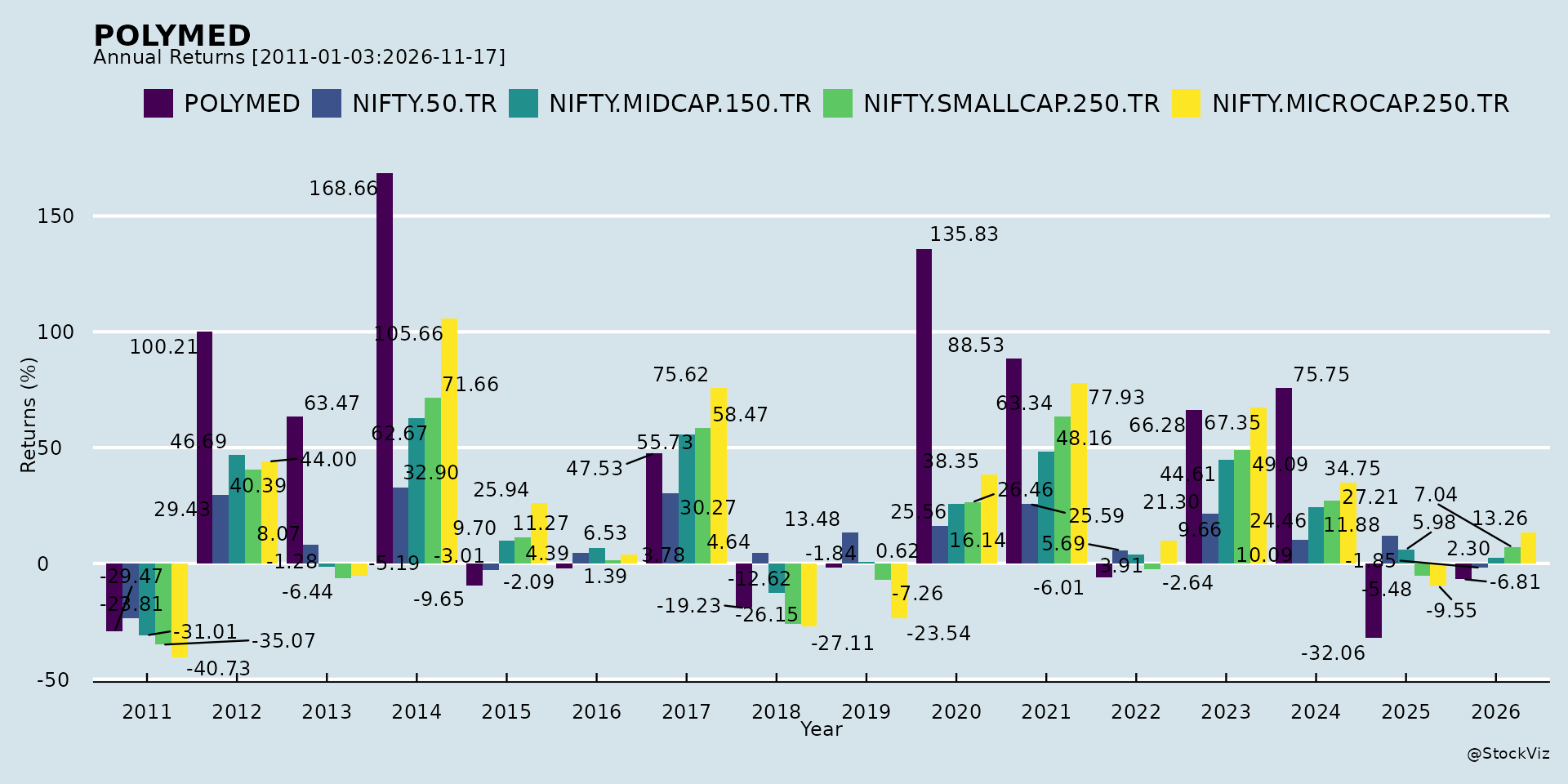
Annual Returns
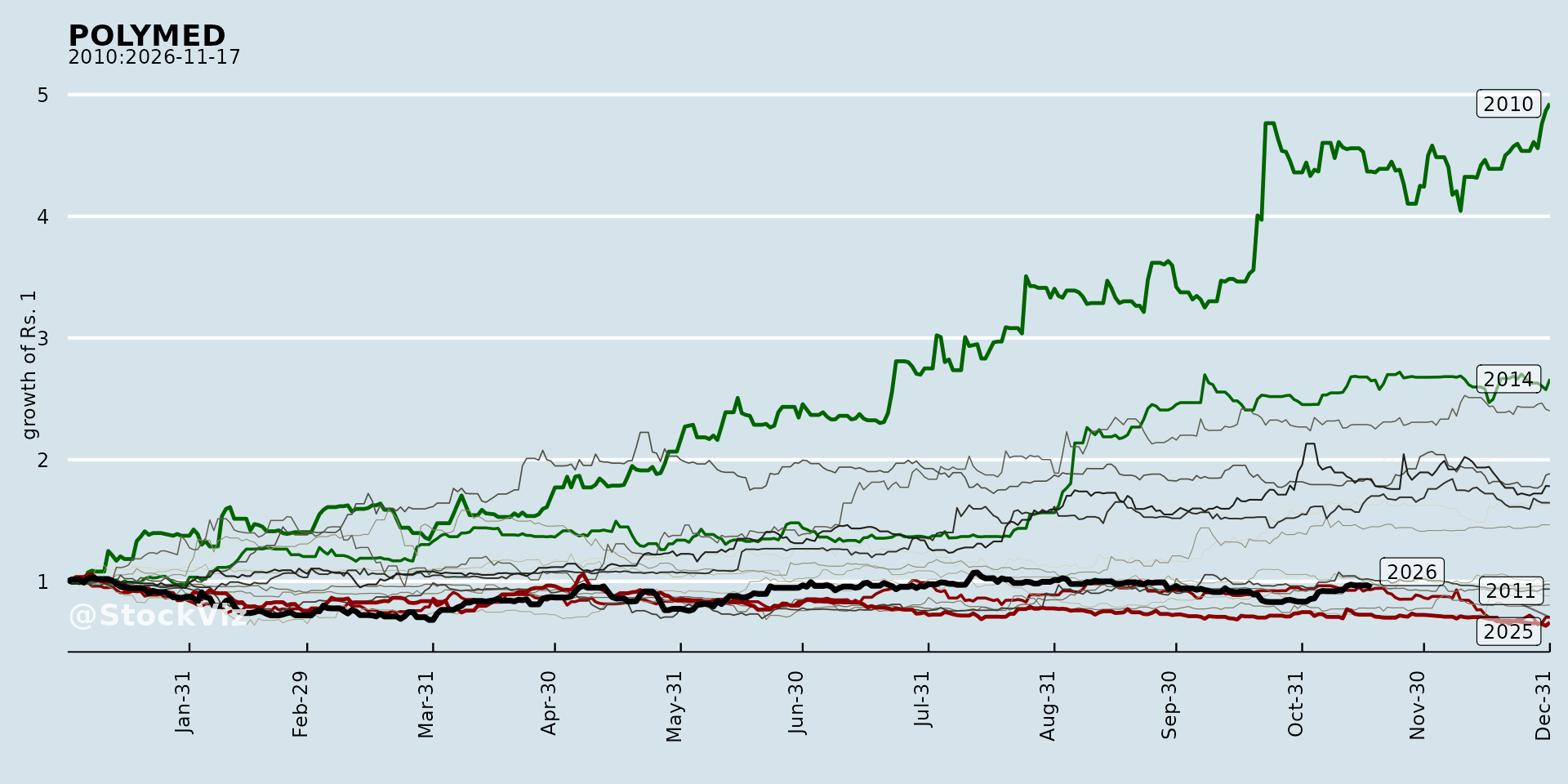
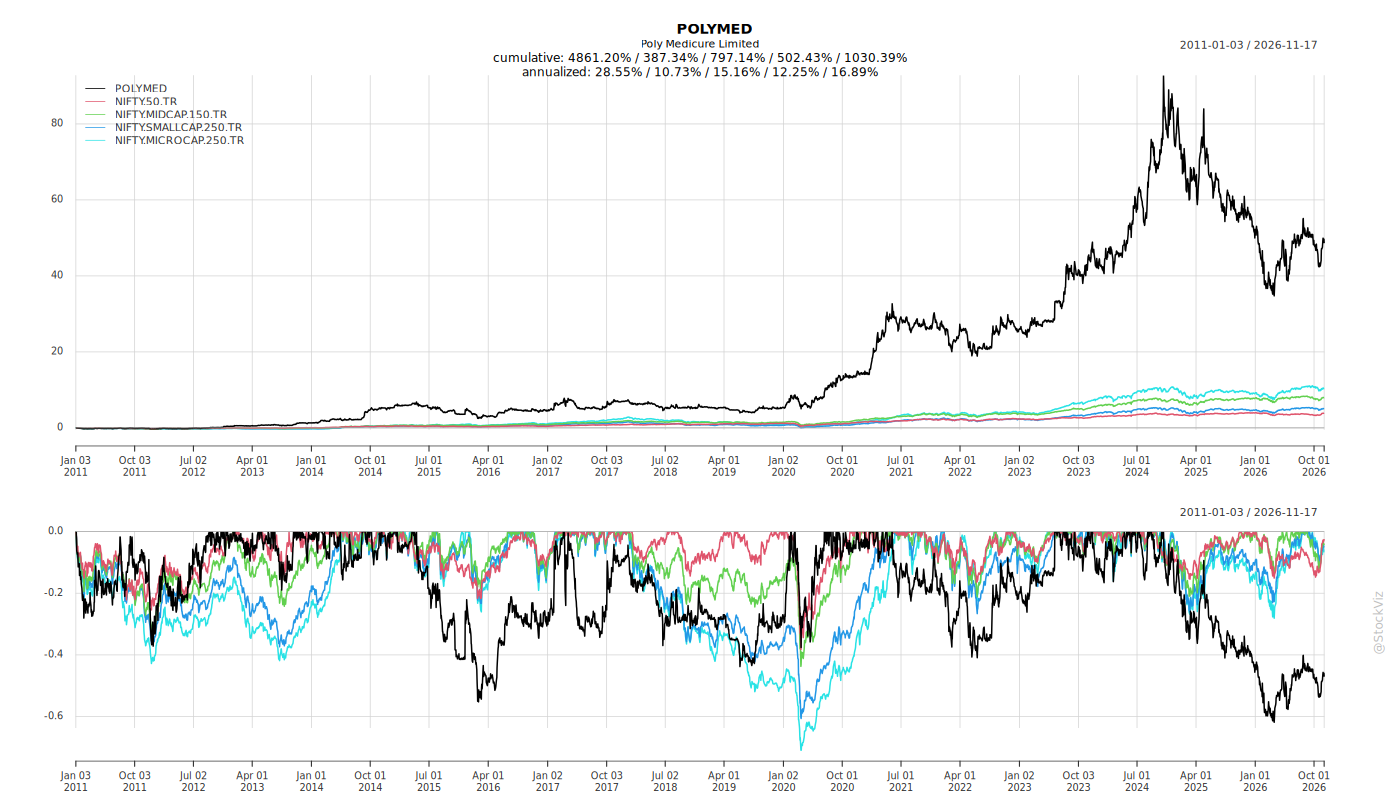
Cumulative Returns and Drawdowns
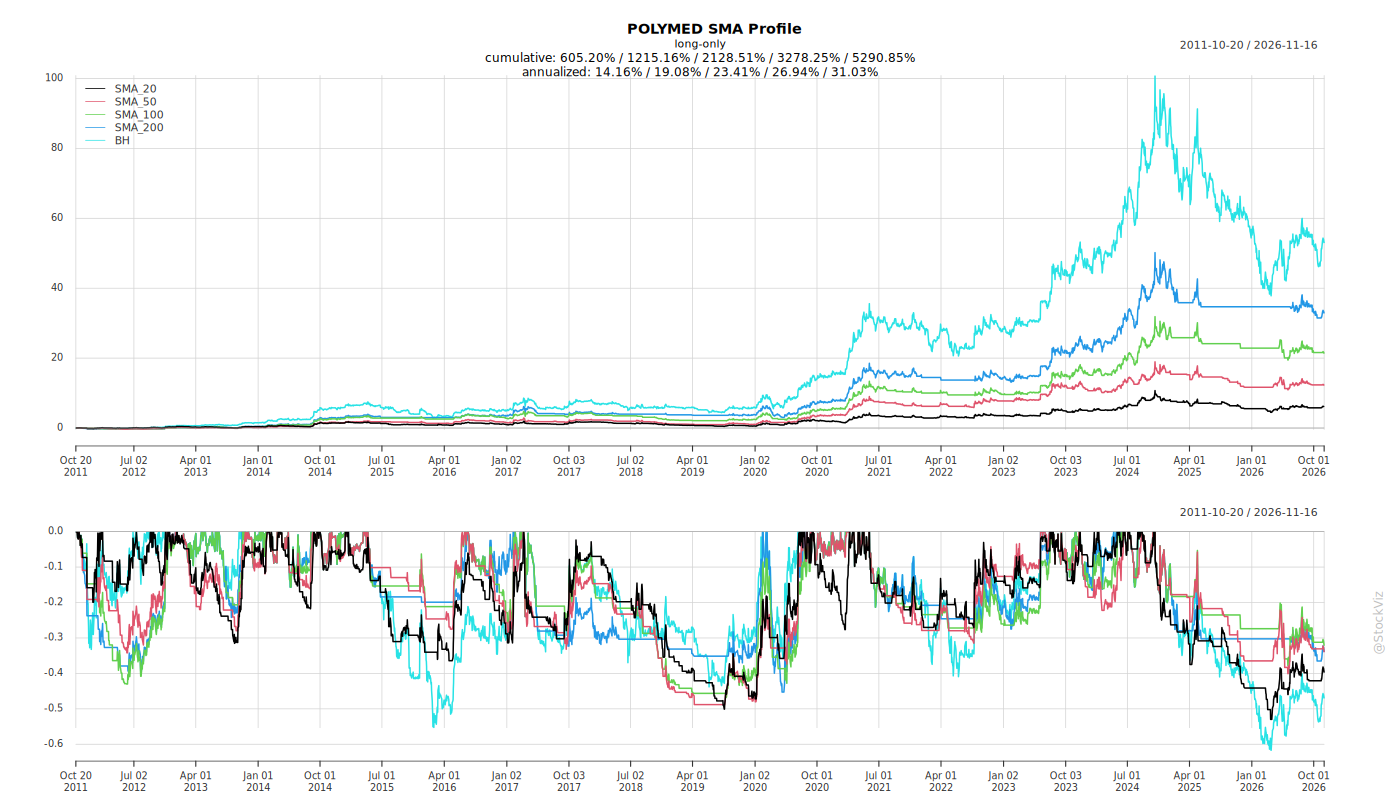
Fundamentals
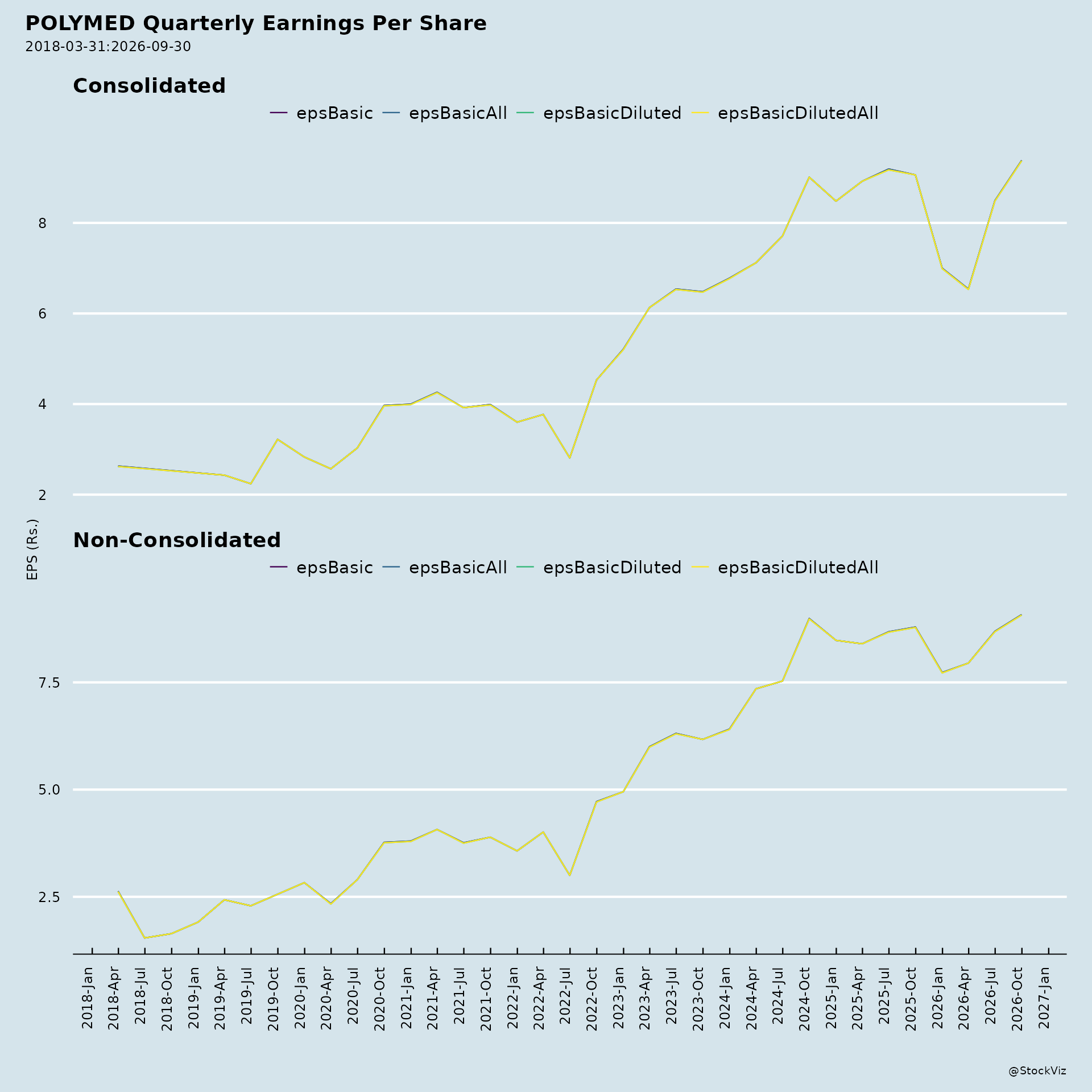
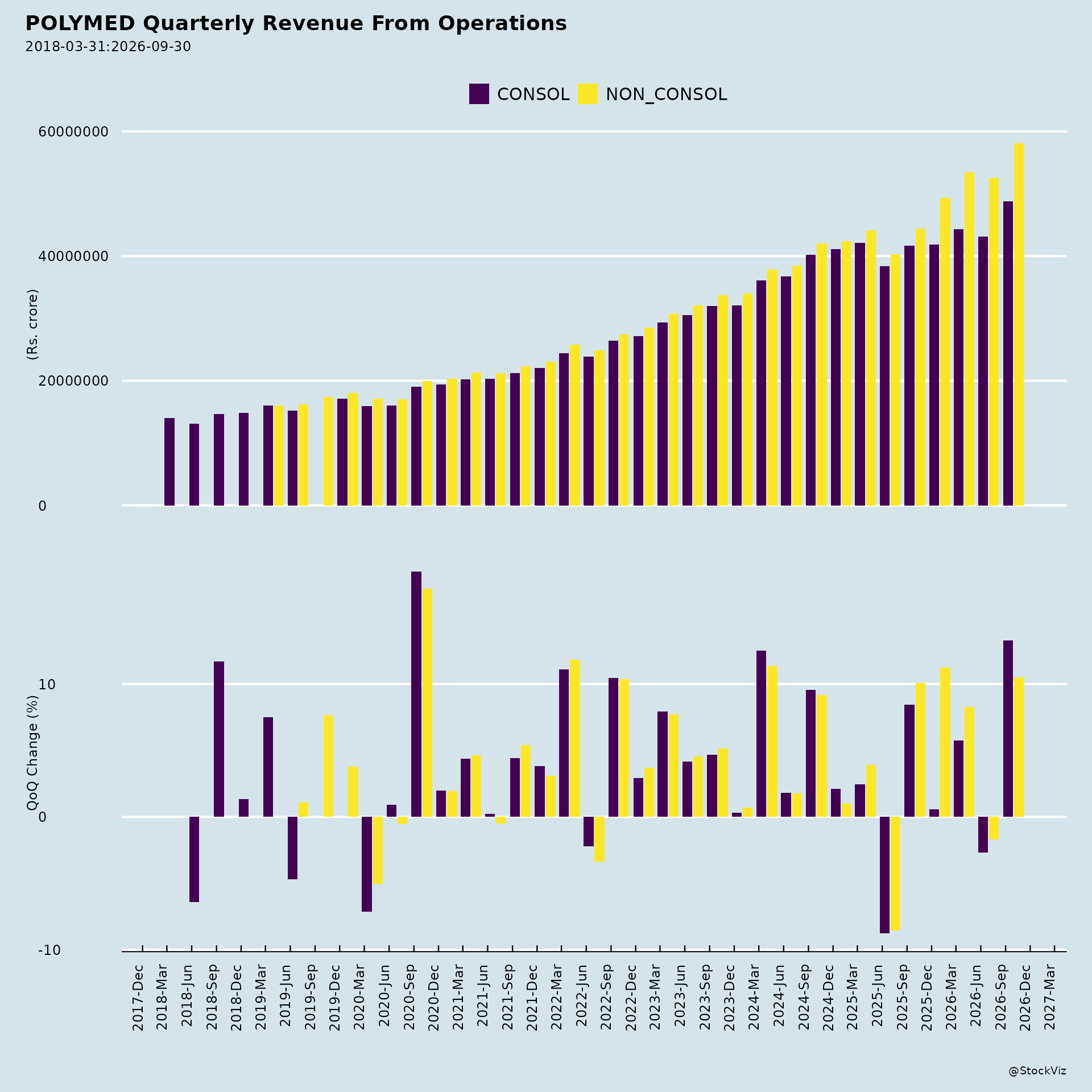
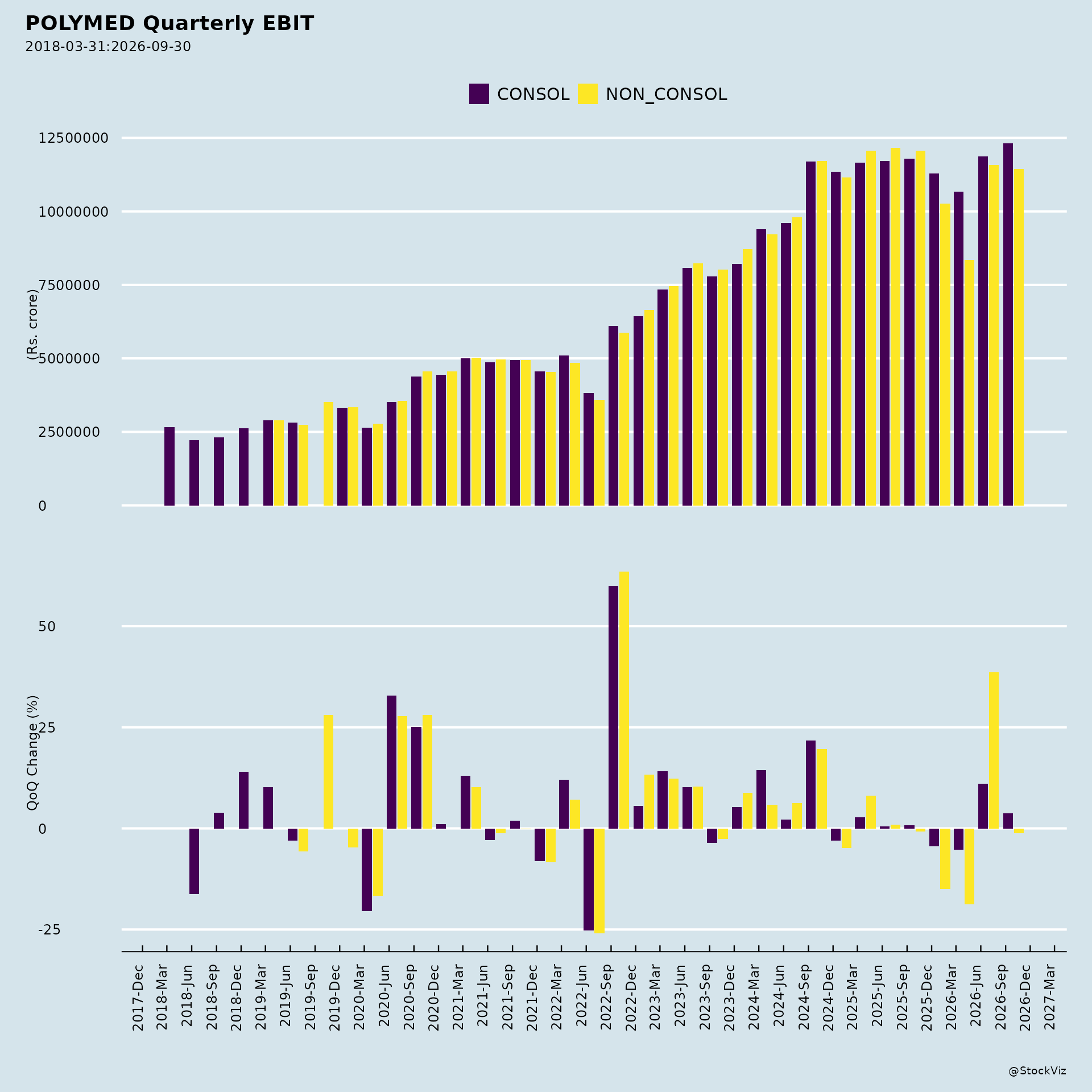
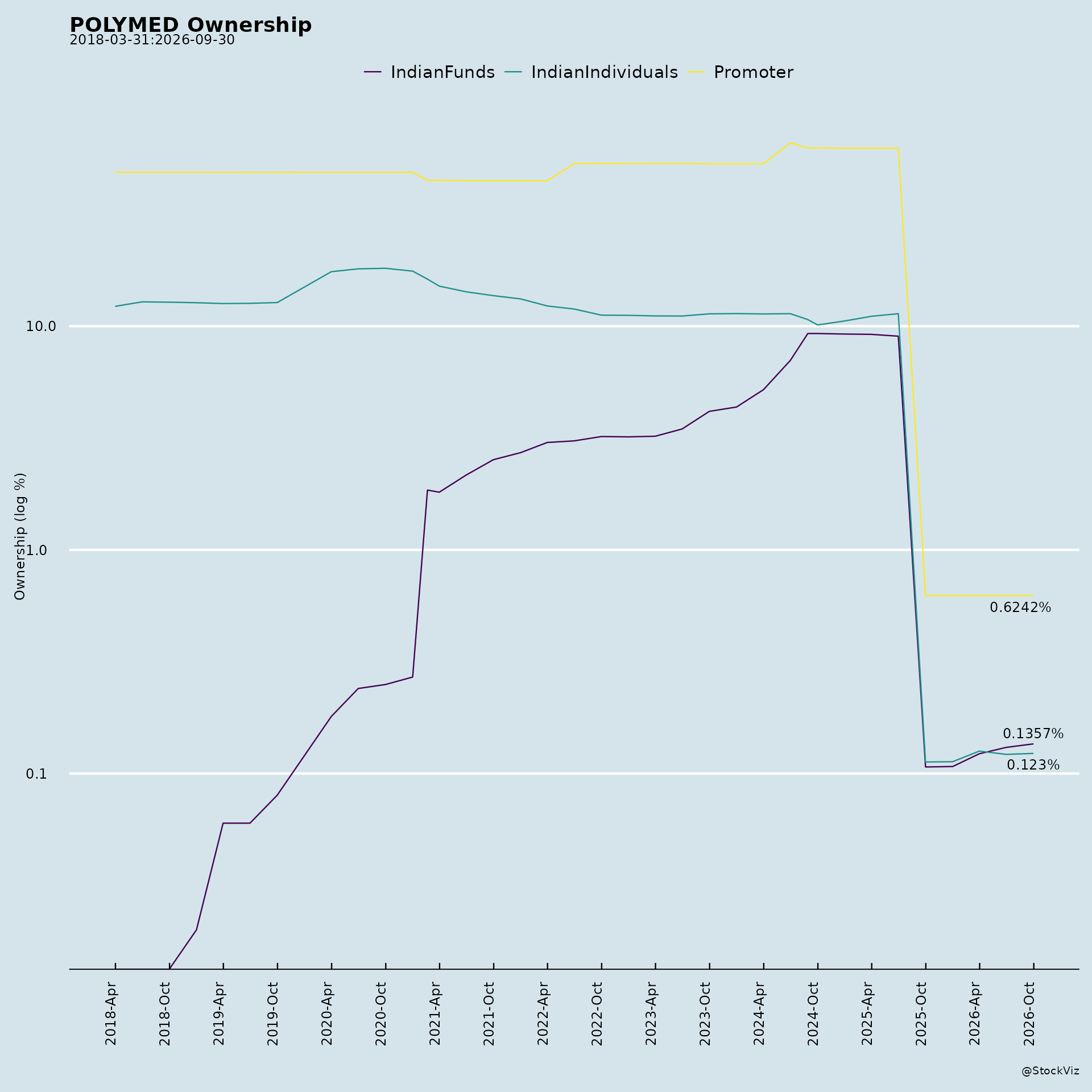
Ownership
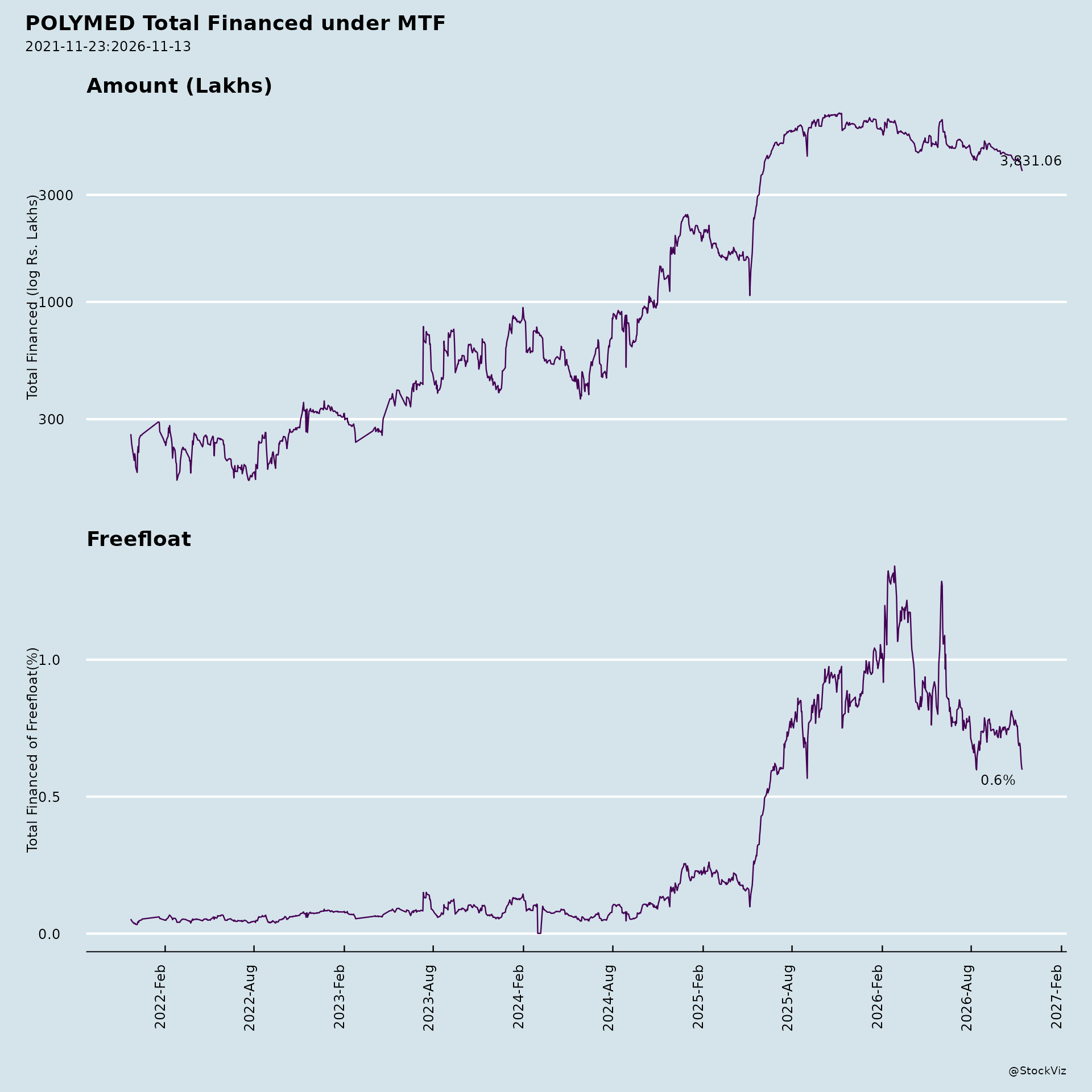
Margined
AI Summary
asof: 2026-09-16
Poly Medicure — Recent Corporate Announcements: Analysis
1. Headwinds and Challenges
Middle East disruption. The ongoing West Asia crisis caused a 32% year-on-year de-growth in Middle East revenue in Q1 FY27. Management stated that customer demand in the region remains intact, but logistics and infrastructure bottlenecks — including difficulty finding containers for Middle East ports — are preventing shipments. Orders are described as lying at ports or in factories, and the shipping schedule remains disrupted. This also affects PendraCare, which has over 20% exposure to the Middle East and is currently not growing.
Renal pricing pressure. The renal segment de-grew 3.8% to INR43.2 crores in Q1 FY27, impacted by continued pricing pressure from Chinese players in India. Management said it consciously chose to raise prices to pass through raw material increases rather than defend volume at any cost. Chinese companies were noted to be importing into India zero-duty using the ASEAN FTA.
Cost inflation. Employee cost rose almost 29%, driven by a 35% increase in minimum wages in Haryana effective 1 April 2026, higher headcount, and FY27 increments. Logistics costs have risen substantially — described as 2–3 times over the last six months — which management flagged as a competitiveness concern for Indian exports.
Geopolitical and tariff uncertainty. Management described the U.S. situation as fluid, with uncertainty over potential tariff changes; current duty is 10%. U.S. exposure is small, with FY27 exports expected at USD 3.5–4 million.
Working capital pressure. Longer transit times due to the geopolitical situation delay cash recovery, since cash flows begin only once products reach customers. Hard currency availability issues in several export markets were also noted.
Margin normalization. Q1 gross margin benefited from price hikes, product mix, and inventory gains; management expects stand-alone gross margin to revert to the historical 68–69% trend in the near term.
2. Tailwinds and Growth Prospects
PolyMed 3.0 / Vision 2030. Management launched a new phase (“Ascent”) targeting a doubling of revenue by FY30, with roughly 80% organic and 20% inorganic contribution, consistent with the current business mix. The stated ambition is to become a global medtech MNC out of India.
Q1 FY27 performance. Consolidated revenue was INR525 crores, up 30.3%, of which INR72.3 crores came from acquisitions; organic revenue was INR453.1 crores, up 12.4%. Stand-alone revenue was INR431 crores, up 12.3%, with domestic up 16.2% and international up 10%. Consolidated gross margin was 73.4%, up 495 bps, aided by the better margin profile of acquired businesses.
Europe recovery. Europe grew 43.8% to INR187.3 crores, including 17.6% organic growth, reflecting new customer additions after Europe was a laggard last year. Management identified Europe and Southeast Asia as key growth markets, with plans to expand direct go-to-market presence beyond Italy into 3–4 geographies.
New therapy verticals. Cardiology grew from INR2.9 crores to INR28.6 crores, led by PendraCare and domestic scale-up; orthopedics contributed INR49.2 crores from Citieffe consolidation. Management plans 25–30 product launches a year and has ~25 new products in the pipeline for CE marking within 3–4 months.
Renal antidumping probe. Based on the company’s application, the government initiated an antidumping investigation into dialyzer imports from China and Malaysia, with a claimed injury margin of 20%. Management hopes for a decision within the year and expects the renal business to end FY27 with 15–18% growth, possibly close to 20%. Abhimanyu Hooda was hired as Head of Renal for India.
Leadership reinforcement. Indranil Mukherjee joined as CEO for India and APAC on 1 June 2026; Renato Rocha joined as CEO for Brazil on 1 August 2026.
Capacity expansion. Two plants are under construction — Faridabad/Palwal (orthopedics, transfusion, and additional infusion capacity), expected online by March 2027, and Noida (cardiology), expected commercial from Q1 FY28. Asset turns are expected to remain in the 1.2–1.4 range.
Government support. The Government of India granted ~INR3.3 crores in aid for clinical studies of newly developed critical devices.
India opportunity. Management views India as the best opportunity, citing PolyMed’s presence in almost every major corporate hospital, deepening relationships, and tailwinds from insurance and Ayushman Bharat penetration shifting hospitals toward quality-oriented, cost-effective domestic devices over expensive imports.
3. Key Risks
- Continued Middle East conflict and shipping disruption delaying revenue recognition despite a strong order book.
- Chinese pricing pressure in renal, with the outcome and timing of the antidumping decision uncertain.
- U.S. tariff uncertainty, with management noting that a change from the current 10% duty could impact business.
- Elevated logistics costs affecting export competitiveness.
- Currency availability constraints in export markets and extended cash conversion cycles.
- Regulatory timelines in medical devices, which management repeatedly cited as a constraint on new product commercialization and cross-selling synergies (CDSCO approvals for bringing acquired products into India expected to become visible only from next financial year).
- Integration and scaling risk in acquired entities, whose people and other costs are higher and which are currently scaling up, keeping consolidated EBITDA margins below stand-alone levels.
4. Management Guidance vs. Observed Performance
Stand-alone revenue: Guidance maintained at INR1,900–2,000 crores for FY27, with domestic growing over 20% and international over 15%. Q1 stand-alone revenue grew 12.3%, with domestic up 16.2% and international up 10%. Management attributed the slower start to price hikes taken at the beginning of the year and expects momentum to improve from Q2, noting Q1 is historically the lowest quarter.
Consolidated revenue: Guidance maintained at INR2,300–2,400 crores, including full-year consolidation of PendraCare and Citieffe. Q1 consolidated revenue was INR525 crores.
Stand-alone EBITDA margin: Guidance of 25–27% for FY27. Q1 actual was 28%, which management said was above the range due to price increases and inventory correction, while indicating the full year should land in the higher range of 25–27%.
Consolidated EBITDA margin: Guidance of 23–25%. Q1 actual was 24.1%, within range.
Gross margin: Management guided stand-alone gross margin back to 68–69% and consolidated to 71–72% for the remaining period, implying some correction from Q1’s reported levels, while noting overall EBITDA may remain similar on higher projected revenue.
Renal: Management expects FY27 growth of 15–18%, potentially close to 20%, despite Q1 de-growth of 3.8%.
Acquired entities: Long-term stand-alone growth ability described as high single-digit, with mid-teens as an aspiration assuming geopolitical normalization; synergy benefits (cross-selling, manufacturing shifts to India) expected to become visible from next financial year.
Capex: INR200–225 crores planned for FY27.
Balance sheet: Cash of ~INR855 crores set aside for strategic initiatives; stand-alone debt limited to ~INR250 crores working capital revolving credit; Citieffe has a EUR 9 million loan with EUR 1.5–2 million annual repayment.
Other announcements: The 31st AGM on 5 September 2026 approved all resolutions, including financial statements, dividend declaration, director appointments/re-appointments, and cost auditor remuneration. A one-on-one meeting with Sumitomo Mitsui DS Asset Management was scheduled for 8 September 2026, with no unpublished price sensitive information to be shared. The board meeting on 7 August 2026 approved Q1 FY27 unaudited results, granted 1,476 stock options, allotted 1,975 equity shares, re-appointed M/s Jai Prakash & Company as Cost Auditors for FY 2026-27, and noted the resignation of Deputy Company Secretary and Compliance Officer Ravi Prakash effective 10 August 2026.
Broker Narrative
The narrative moved from an organic growth story built on European exports, US FDA approvals, capacity expansion, and renal scale-up—while flagging Chinese import competition and export-demand risk—to an inorganic high-value orthopedics story centered on the Citieffe acquisition. The persistent theme was competitive pressure, but it shifted from cheap Chinese imports in dialyzers to the need to differentiate against entrenched global players. The stance remained mostly Hold, and the intermittent Buy calls in 2025 were repeatedly followed by sharp negative returns.
Fears that came true
- The early fear of competition and price pressure from Chinese imports/entrenched global players materialized as a persistent growth challenge, correlating with multiple DISAPPOINTMENT outcomes and negative actual returns (-16.4% to -40.8%) from 2024 onward.
- The export revenue slowdown risk materialized in the sense that the later narrative no longer relied on organic European export growth and instead used the Citieffe acquisition to secure Europe/US market access.
Optimism that failed
- The early optimism on strong export revenue and margin expansion did not sustain, as the final report pivoted to Citieffe’s high-margin orthopedics business and actual returns turned sharply negative after 2024.
- The expected favorable policy catalysts such as the dialyzer import duty hike and ‘One Nation, One Dialysis’ did not appear in the later report, so they apparently failed to materialize as growth drivers.
Broker Timeline
14 broker calls · 2023-05-11 to 2025-09-25
CNBC-TV18: ratings, targets and commentary
No recorded CNBC-TV18 statements for this ticker.
Management comments
No recorded management comments with an explicit designation and affiliation for this ticker.
Copyright © 2023 SAS Data Analytics Pvt. Ltd. All rights reserved.