NEOGEN
Equity Metrics
September 24, 2026
Neogen Chemicals Limited
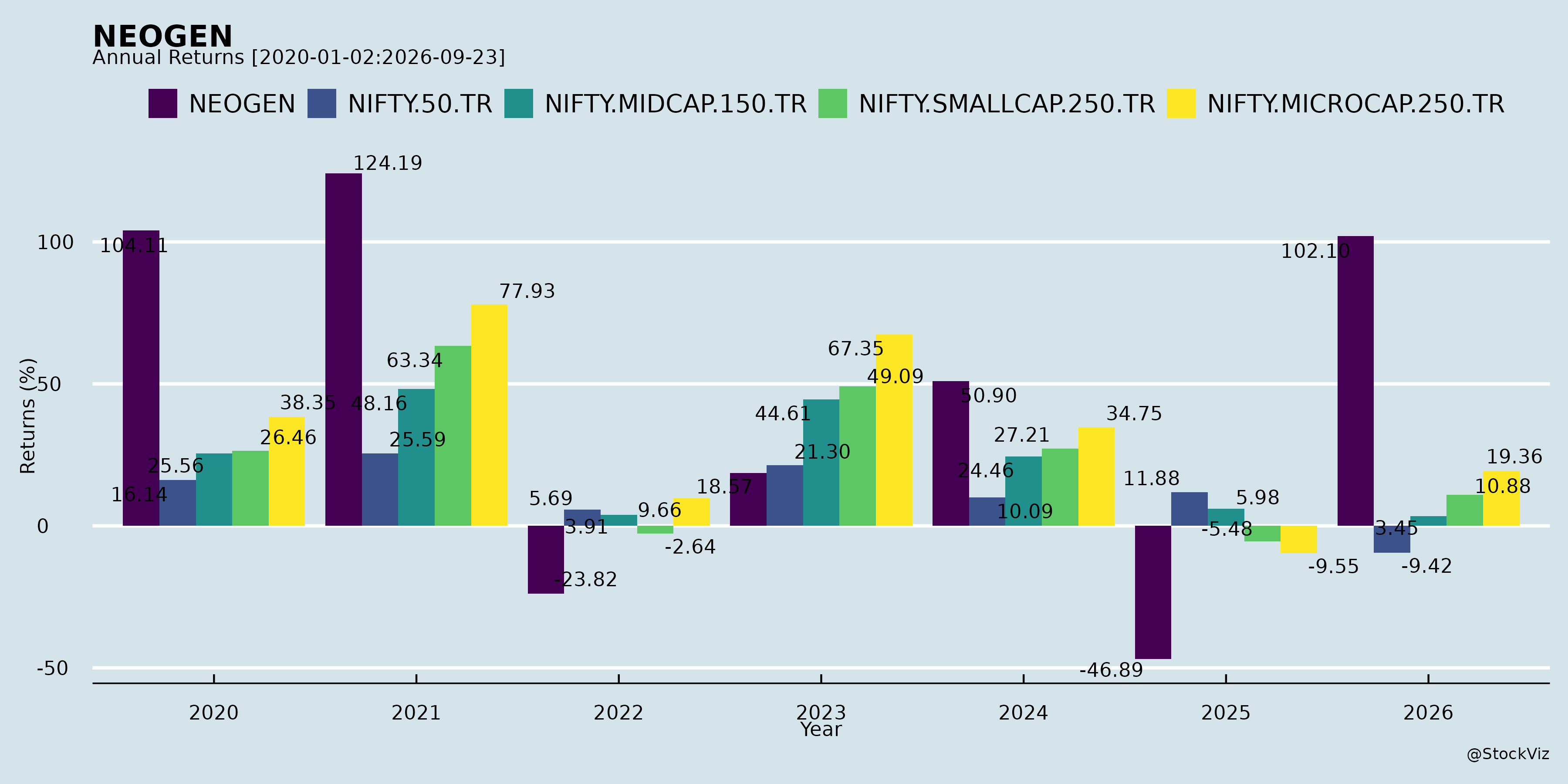
Annual Returns
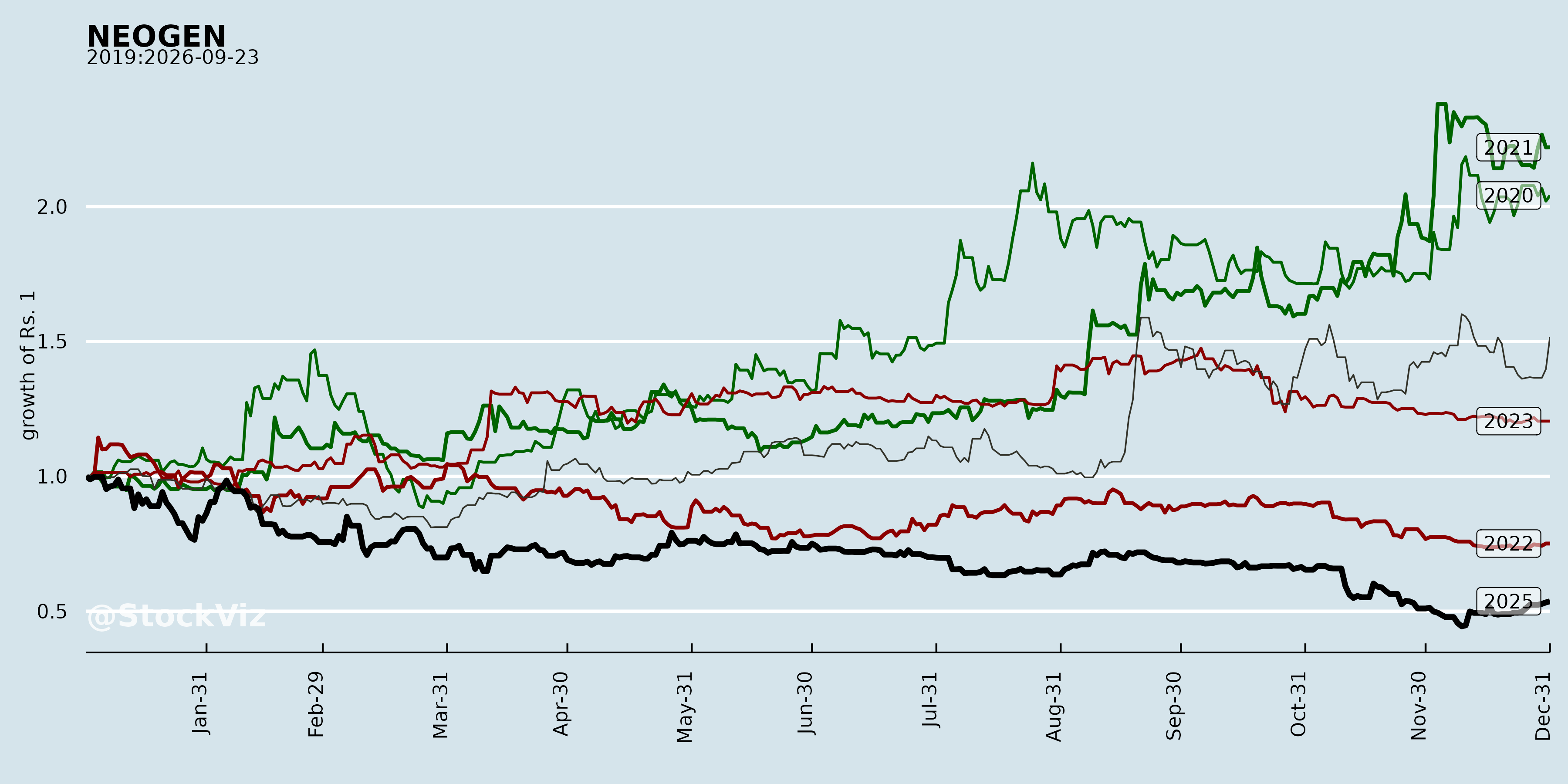
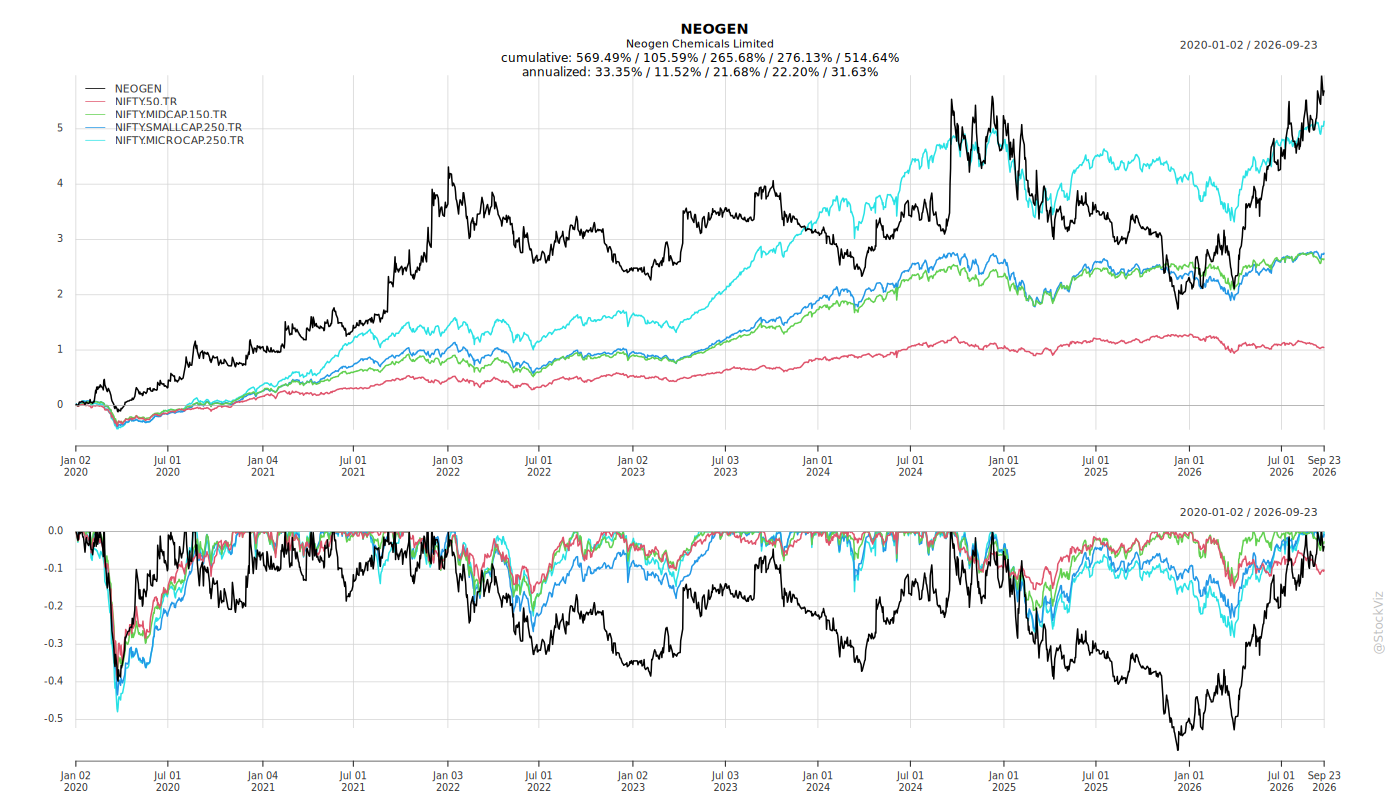
Cumulative Returns and Drawdowns
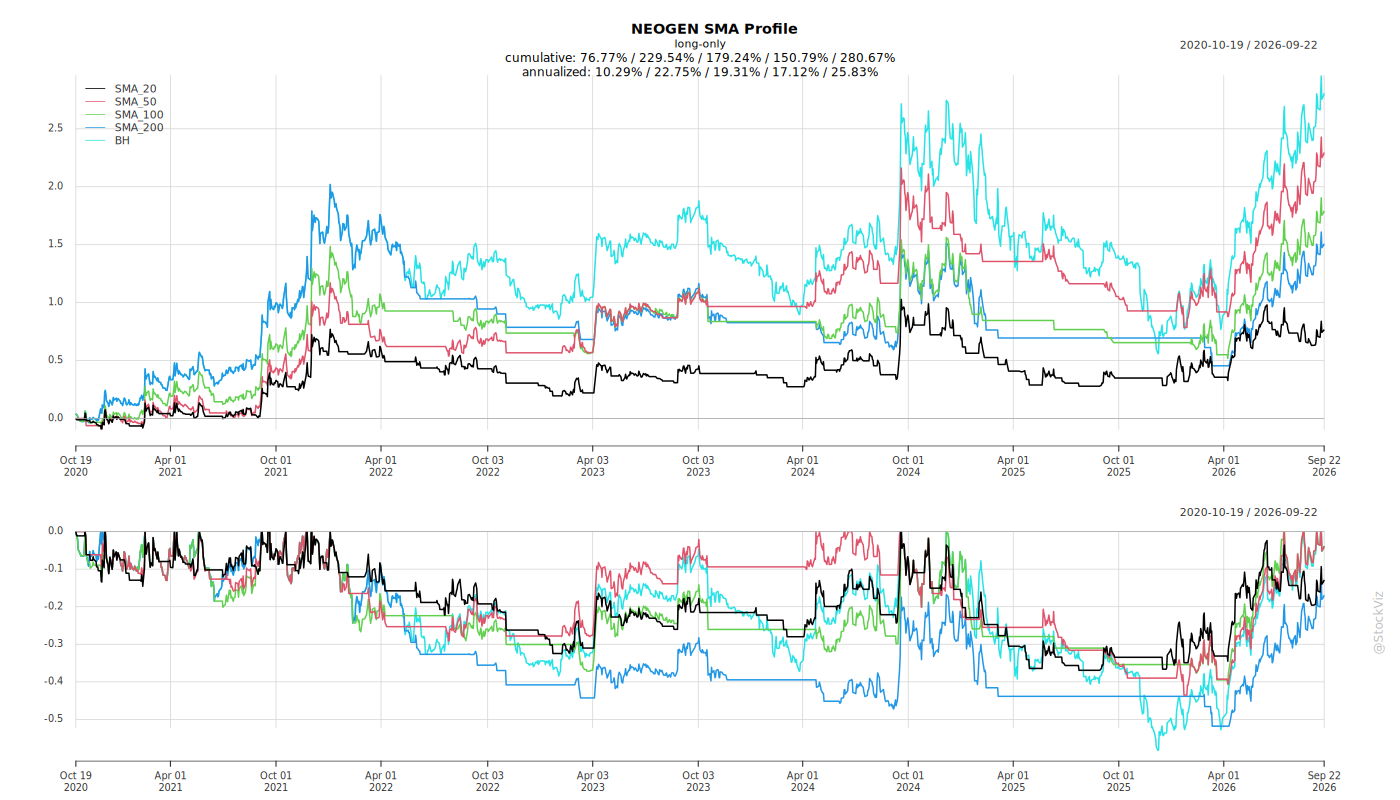
Fundamentals
Ownership
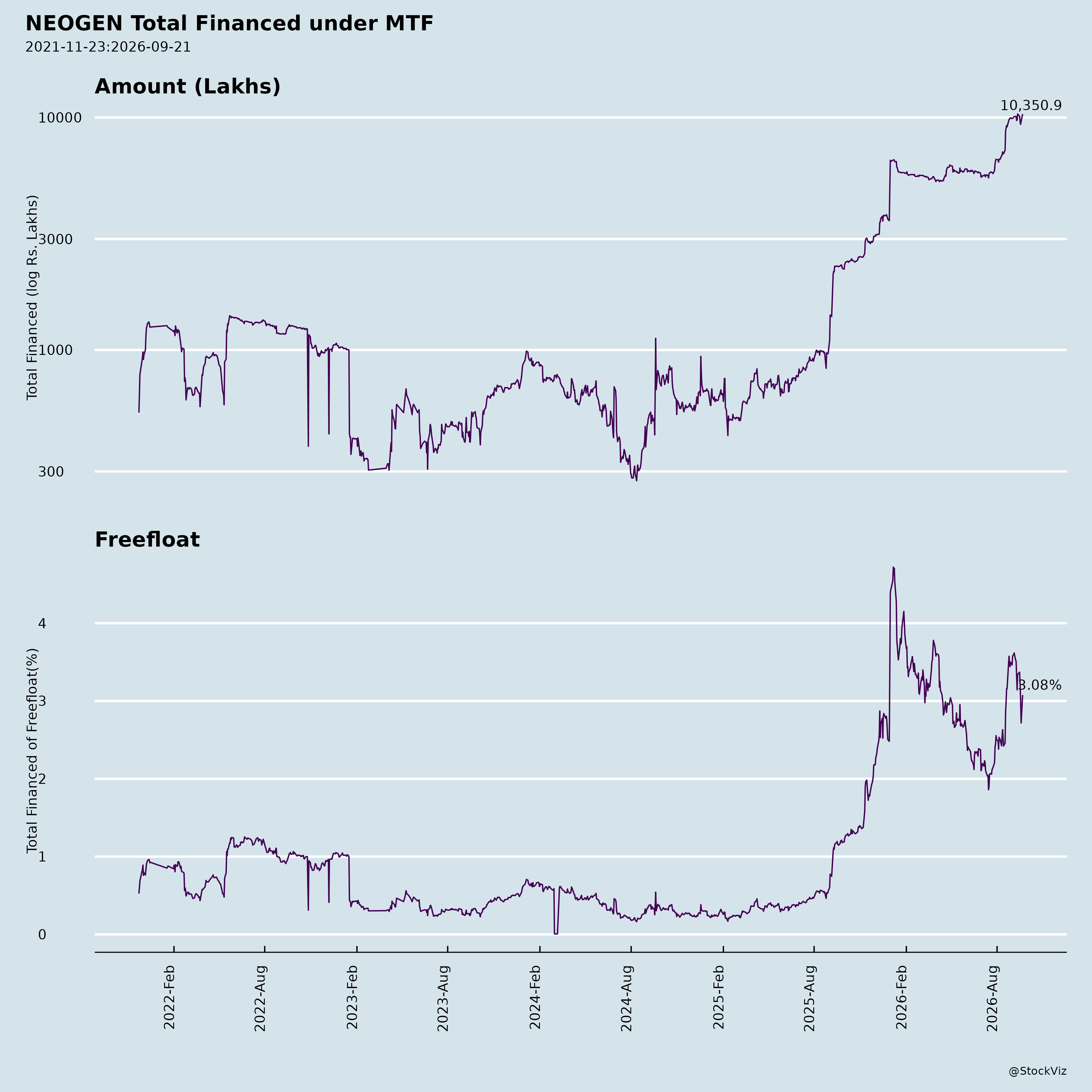
Margined
AI Summary
asof: 2026-09-17
NEOGEN Q1 FY27: Headwinds, Tailwinds, Risks, and Guidance vs. Performance
1. Headwinds and Challenges
Dahej plant rebuild and transition costs. The Dahej plant was shut down following a fire incident in March 2025. Reconstruction is now almost complete, with trial runs underway and commercial production set to begin within Q2 FY27. Until then, the company has relied on interim toll manufacturing and job work arrangements, which carried temporary overheads. The Dahej site was also the flagship capacity for the CSM business; in its absence, no further progress was made on CSM, though customers remain engaged.
Global supply chain and freight pressures. The base business faced ongoing global supply chain volatility, elevated shipping freight costs, and geopolitical freight spikes. Cost pass-through mechanisms were initiated with customers across key raw materials and input costs such as utilities, freight, and packaging to safeguard operating margins.
Higher finance costs. Finance cost rose 64% year-on-year, driven by higher debt drawdown to fund ongoing CAPEX at Neogen Ionics, increased working capital intensity due to supply chain inflation, and temporary holding costs pending insurance claim disbursement. Depreciation was also higher (up 42%) due to smaller CAPEX additions during the year.
Working capital intensity. The base business currently requires around 140–160 days of working capital cycle because of its large product mix. Management noted that historically no single molecule exceeded 10% of revenue as a de-risking strategy, but scaling molecules to INR 100 crore size has not yet materialized because agro slowed down and CSM was hit by the fire. Over the last five years, cumulative EBITDA of INR 582 crore contrasted with negative operating cash flow of INR 93 crore (including the FY25 insurance inflow).
Pricing dynamics in battery salts. Current China spot prices are lower than the long-term formula price. In Q2–Q3, some customers may seek special pricing closer to prevailing market prices before the non-FEOC regime fully kicks in; the difference between formula and spot prices has narrowed significantly compared to 2025 and part of 2024.
Technology and policy uncertainty. Battery technology shifts (e.g., sodium-ion, silicon-carbon anodes) and the timing of the Government’s proposed battery component PLI scheme remain open variables. Management noted the PLI scheme is still under discussion and not finalized, so no comment was made on its contours or quantum.
2. Tailwinds and Growth Prospects
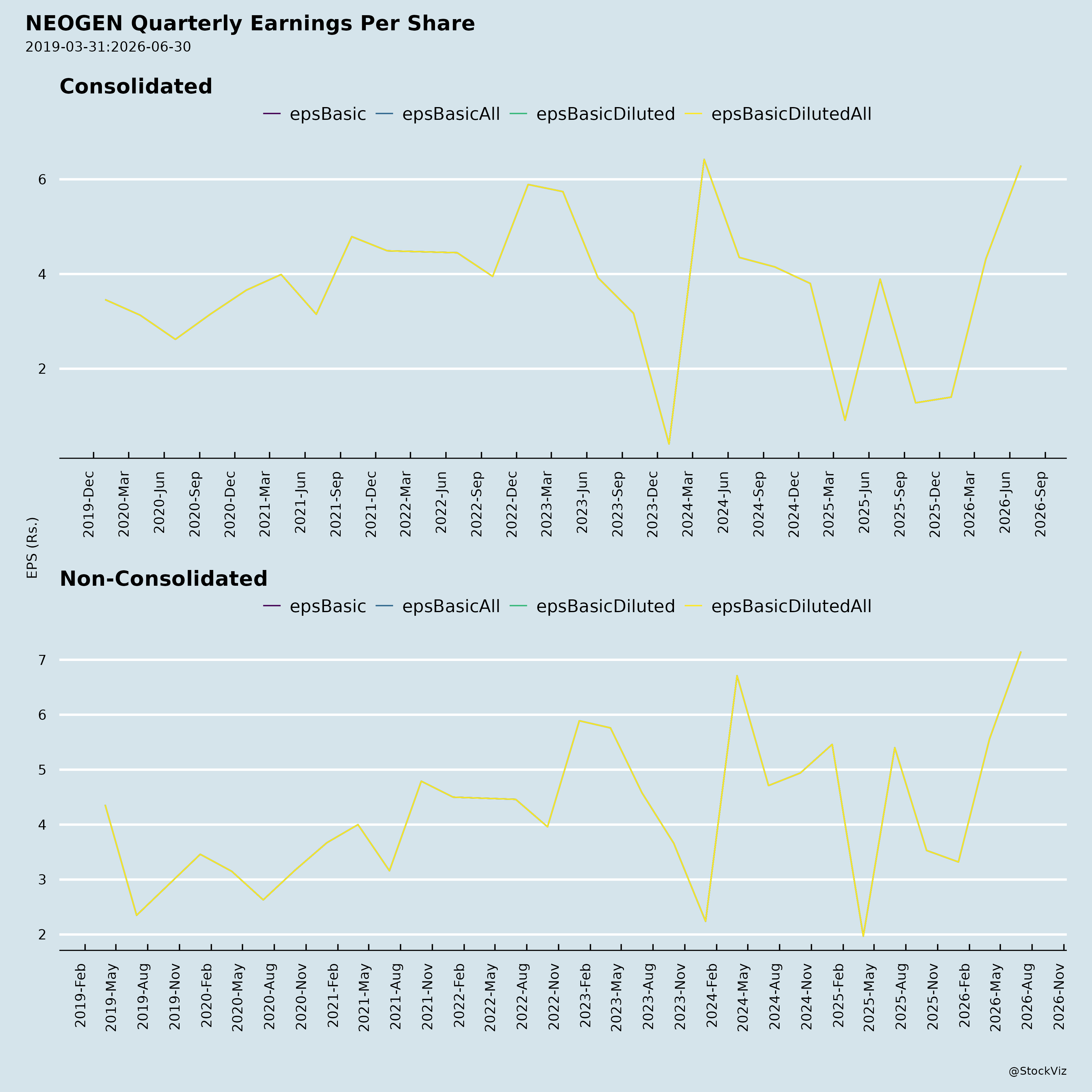
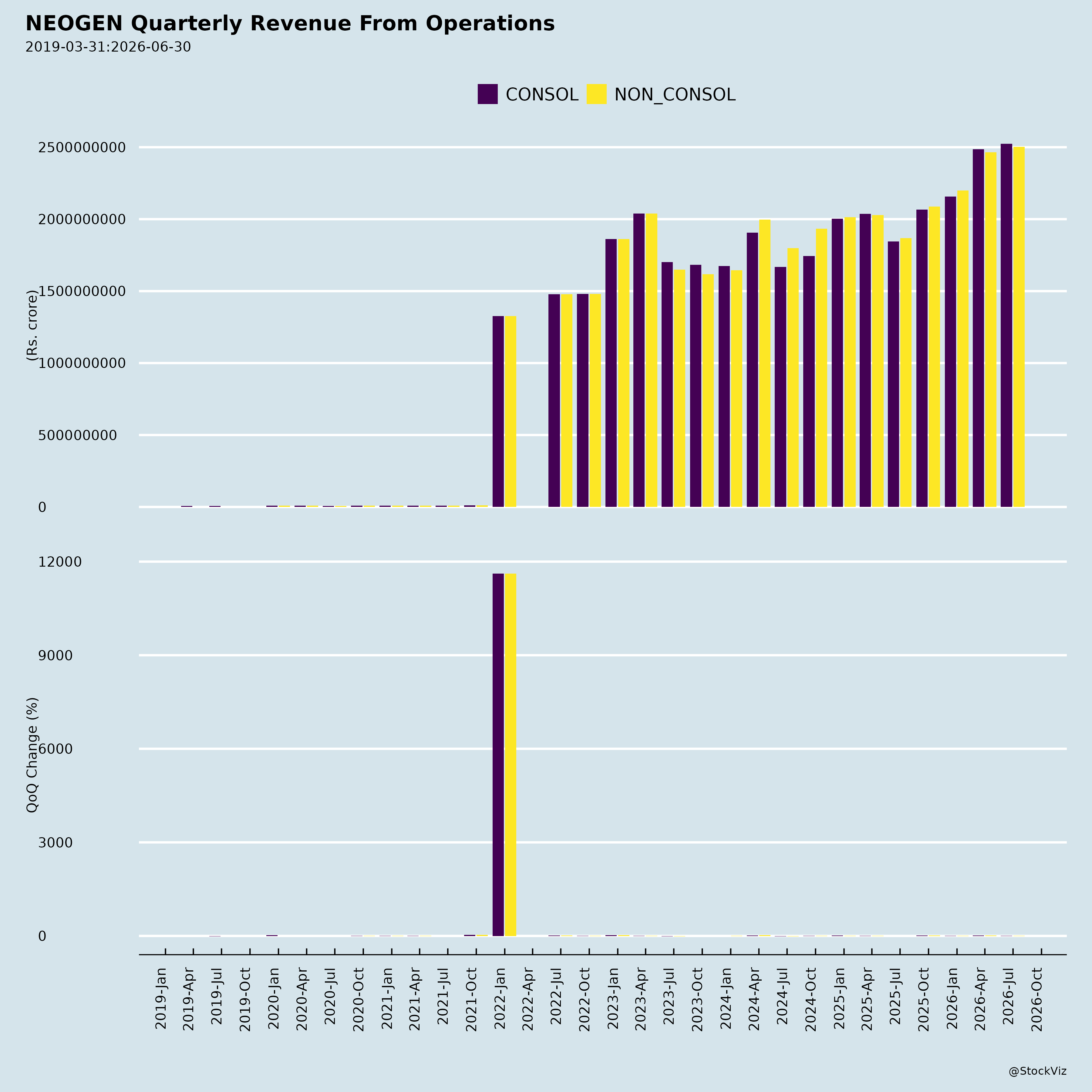
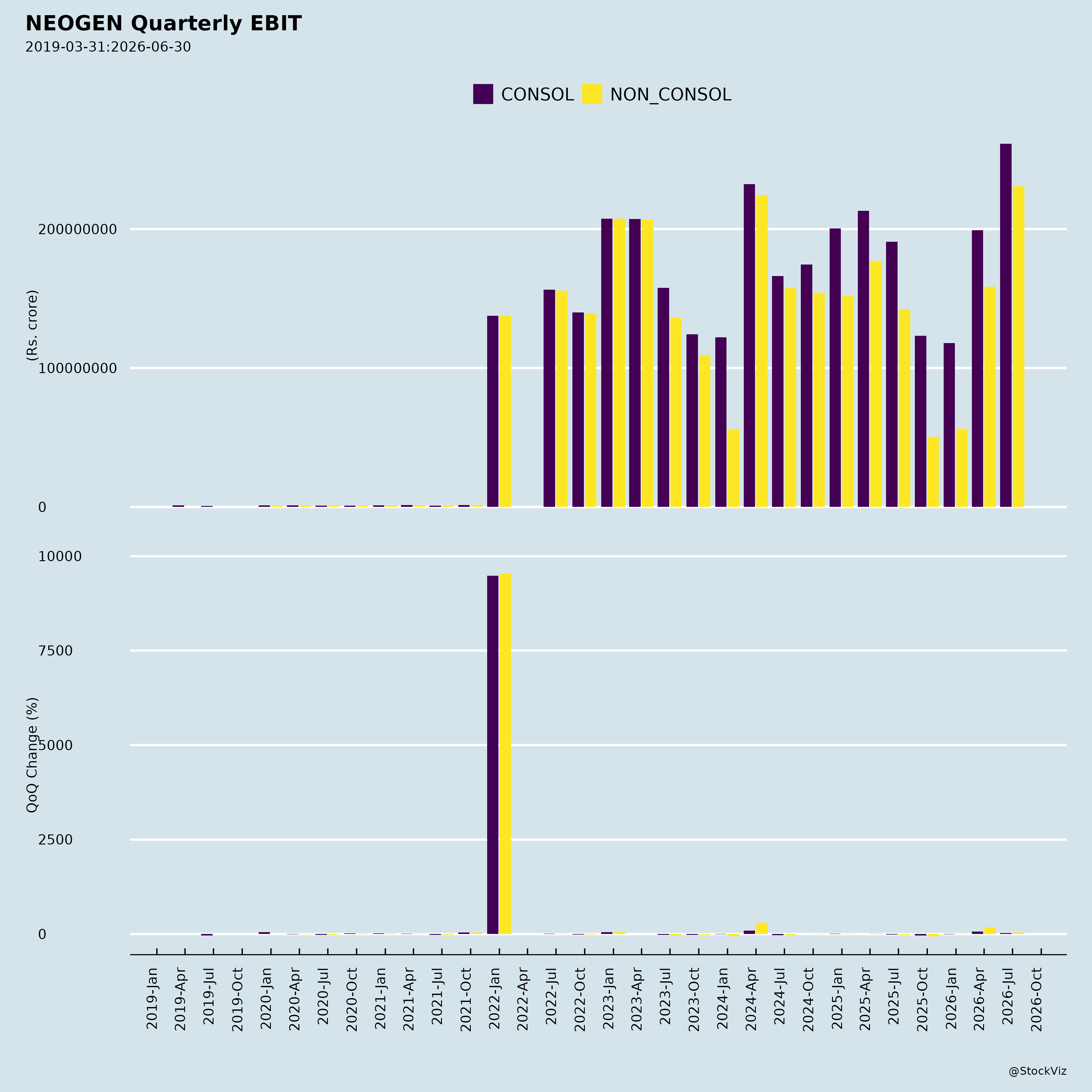
Strong Q1 FY27 performance. Consolidated revenue was INR 250 crore, up 34% year-on-year; EBITDA INR 48 crore, up 53%, with margins expanding 260 basis points to 19.3%; PAT INR 17 crore, up 67%. Growth was volume-led across organo-lithium, inorganic chemicals, and battery chemicals, with the highest-ever quarterly revenue in both organo-lithium and battery chemicals portfolios. Inorganic chemicals revenue surged 158% to INR 57 crore, while organic chemicals grew 18% to INR 194 crore.
Neogen Ionics ramp-up. Neogen Ionics generated INR 19 crore in Q1 FY27 versus INR 5 crore in Q1 FY26, delivering over 50% of the entire previous year’s revenue in one quarter. Electrolyte commissioning is targeted for H1 FY27 and lithium electrolyte salts for H2 FY27. Mechanical assembly for the electrolyte plant is complete, trial runs have begun, and product validation with a leading domestic cell manufacturer is progressing. Provisional approvals have been secured from 4 international customers for lithium electrolyte salts, with final site audits completed for 3 US-based electrolyte manufacturers; commercial supplies begin post final plant trial approvals.
Non-FEOC demand shift. Global cell producers are accelerating their transition to non-FEOC, non-PAP compliant supply chains to meet US tax credit requirements by 2027. Neogen positions itself as a trusted non-FEOC partner with established Japanese technology from partner Morita, whose USD 20 million equity contribution toward the JV remains committed and is expected in Q2 and Q3 of the current year.
Government policy support. The ACC PLI scheme (INR 18,100 crore outlay for 50 GWh), the 10 GWh ACC PLI re-bidding tranche (maximum outlay INR 3,620 crore), and the proposed PLI for battery components are expected to incentivize raw material localization. Domestic battery demand is projected to rise from 33 GWh last year to 92 GWh by 2027 and more than 200 GWh by 2032; 63.4 GWh is under development, with 26.7 GWh scheduled for commissioning in 2026. Neogen is described as currently the only giga-scale example where the local supply chain has been established.
Organo-lithium capacity expansion. Organo-lithium capacity was increased 2.5x to 300 tons per annum and hit full utilization in Q1 FY27. Management plans to propose incremental capacity expansion to the Board, with CAPEX of less than INR 10–15 crore, and is also considering a slight capacity increase by the end of the financial year.
Insurance recovery. Cumulative recoveries stand at INR 164 crore (INR 155 crore in on-account insurance claims, including a recent INR 15 crore tranche in July 2026, and INR 9 crore from salvage realization). Net claim receivable stands at INR 186 crore on a consolidated basis, with engagement ongoing for final settlement, followed by additional recoveries under other policies such as loss on profit.
QIP fundraise. The Board approved raising up to INR 600 crore through a QIP, subject to shareholder and regulatory approvals, intended to deleverage the balance sheet and prepare for growth opportunities in battery materials and organo-lithium. At full INR 600 crore repayment, interest savings are estimated at roughly INR 40–50 crore annually at an 8–8.5% rate.
Adjacent opportunities. Pharma is currently the biggest end-user segment for organo-lithium, with agro ramping up and semiconductor approvals recently obtained. CSM customers remain engaged across pharma, agro, semiconductor, flavors and fragrance, and specialty materials; a dedicated CSM investment could come on board by FY29–FY30.
3. Key Risks
- Execution and ramp-up risk: Battery materials project timelines (electrolyte H1 FY27, salts H2 FY27) and the Dahej replacement plant commercial production depend on trial approvals and customer validations.
- Customer concentration and PLI dependency: A significant portion of battery chemical revenue is expected from ACC PLI players; delays in their production ramp-up could affect electrolyte offtake. Management noted salt revenue is largely from international markets, reducing direct PLI dependence.
- Pricing risk: Interim spot-linked pricing in Q2–Q3 could be lower than formula pricing; lithium price assumptions ($15–25, around $20 per kg lithium carbonate) underpin revenue estimates.
- Technology transition risk: Shifts toward sodium-ion or silicon-carbon anodes could alter electrolyte formulations, though management noted the same plants can be adapted.
- Working capital and cash flow risk: Negative operating cash flow history; management targets improvement only by FY28–FY29, with FY29 cited as a good year for cash flow conversion.
- Leverage risk: Peak debt before the QIP was around INR 1,800 crore net; post-QIP, expected between INR 1,000–1,500 crore. Neogen Morita’s INR 500 crore borrowing approval is a shift of already-planned loans, not additional debt.
- Insurance settlement risk: Net claim receivable of INR 186 crore remains subject to final settlement.
- Policy risk: The battery component PLI scheme is not yet finalized; benefits and sharing mechanisms remain uncertain.
4. Management Guidance vs. Observed Business Performance
Standalone/base business guidance raised. Original FY27 guidance of INR 875–950 crore was revised upward to INR 950–1,050 crore based on Q1 performance, with management stating the base business should cross INR 1,000 crore in the current financial year. For FY28, growth of at least 10–15% is expected, with no specific number given. This upgrade was attributed largely to organo-lithium hitting full utilization (capacity increased 2.5x to 300 tons per annum) and to price increases related to lithium and other raw materials (around INR 15 crore of the growth), with the rest volume-driven.
Battery chemicals guidance maintained. FY27 battery business revenue guidance of approximately INR 300 crore was maintained, split as roughly INR 200 crore from salts and INR 100 crore from electrolytes. Most revenue is expected in H2, with the US customer shift from China to non-China/non-FEOC suppliers from January 2027; shipments from India expected to start November–December 2026. No revenue from Pakhajan was considered in this guidance; Pakhajan is targeted for H2 FY27, with efforts to complete by Q3, and any electrolyte shortfall could be made up by additional salts from Pakhajan in Q4. For FY28, management indicated salt business at 70–80% utilization and electrolyte at 30–50% utilization, with battery revenue crossing INR 1,000 crore, though no exact number was given.
Margin guidance. Base business EBITDA margin guidance for FY27 is 18% plus-minus 1–1.5%, with FY28 at 18–20% (18% plus, hopefully not minus, or 19% plus-minus 1%). For the battery business, management targets 20% ROCE on full utilization levels by FY29. Q1 FY27 consolidated EBITDA margin was 19.3%, above the base business guidance range, partly aided by favorable product mix and some benefit from older inventory.
CAPEX guidance. Total estimated project cost for Neogen Ionics’ Dahej Phase 1 and Pakhajan Phase 2 stands at INR 1,795 crore, with INR 218 crore incurred in Q1 FY27 and cumulative INR 1,298 crore to date. Dahej Phase 1 (INR 428 crore) targets completion by February 2027; Pakhajan Phase 2 (INR 1,367 crore) targets completion by March 2027. The entire INR 1,800 crore is expected to be completed by the end of the current financial year, financed by remaining debt drawdown, Morita’s contribution, and around INR 30–40 crore (or INR 40–50 crore) of equity from Neogen’s side toward the end of the financial year.
Working capital guidance. Management targets a working capital cycle not exceeding 90 days for the battery business, and around 140 days for the base business at full utilization (FY28), improving to 110–120 days as larger molecules scale. FY27 is expected to show some improvement once Dahej streamlines, with significant improvement targeted in FY28. FY29 is cited as a good year for cash flow conversion, though management could not promise consistently positive cash flows given ongoing growth.
Debt guidance. Before the INR 600 crore QIP, peak debt was around INR 1,800 crore net; post-QIP, expected between INR 1,000–1,500 crore (best case–worst case), with insurance proceeds and working capital improvement as additional levers.
Observed performance versus guidance. Q1 FY27 consolidated revenue of INR 250 crore (34% growth) and EBITDA margin of 19.3% (up 260 bps) came in ahead of the base business margin guidance range, supporting the upward revision of standalone guidance. Neogen Ionics Q1 revenue of INR 19 crore (versus INR 5 crore in Q1 FY26) represents over 50% of the prior year’s entire revenue, consistent with the ramp-up trajectory needed to reach the INR 300 crore FY27 battery guidance, though most of that revenue is expected in H2. Organo-lithium hit full utilization in Q1, validating the capacity expansion and supporting the guidance upgrade. Finance costs rose 64%, reflecting the debt-funded CAPEX phase that the QIP is intended to address.
Broker Narrative
The broker narrative evolved from early-stage optimism about Dahej capex, greenfield expansion, and revenue growth commitments toward a more cautious stance acknowledging significant debt burden, operational disruptions at Dahej, and lithium pricing pressures. Persistent themes included lithium market dynamics and capex intensity, while growth optimism shifted from inorganic chemical expansion to US non-FEOC supply chain opportunities and strategic partnerships.
Fears that came true
- Higher lithium prices and inability to pass on costs materialized as Chinese spot prices remained below Neogen’s long-term formula prices, requiring special discounted pricing and contributing to DISAPPOINTMENT outcomes like the -13.9% actual return in Sep 2023 and -27.4% in May 2025.
- The Dahej plant temporary shutdown flagged in the last report realized as operational disruption causing margin drag, correlating with negative actual returns across multiple reports.
- High balance sheet leverage feared in the last report materialized with FY26 total debt of ₹1,330 crore and a 64% YoY rise in finance costs, closely associated with the severe DISAPPOINTMENT of -27.4% actual return in May 2025.
- Ofc and ramp-up delays dependent on domestic gigafactory execution timelines materialized, contributing to inconsistent revenue performance reflected in multiple DISAPPOINTMENT calls.
Optimism that failed
- Revenue and EBITDA growth commitment from the first report failed to consistently materialize as multiple Buy and Accumulate calls resulted in DISAPPOINTMENT outcomes, including -13.9% in Sep 2023 and -27.4% in May 2025.
- Greenfield expansion of electrolyte and specialty lithium salts as a growth driver did not deliver expected financial relief, evidenced by the need for a ₹600 crore QIP to pay down debt rather than generating surplus cash.
- The BuLi chemicals acquisition and license agreement with MUIS for 30,000 MTPA electrolyte materials did not translate into sustained outperformance, as several reports following these announcements still produced negative actual returns.
Broker Timeline
21 broker calls · 2023-05-16 to 2026-07-29
Copyright © 2023 SAS Data Analytics Pvt. Ltd. All rights reserved.