MFSL
Equity Metrics
September 24, 2026
Max Financial Services Limited
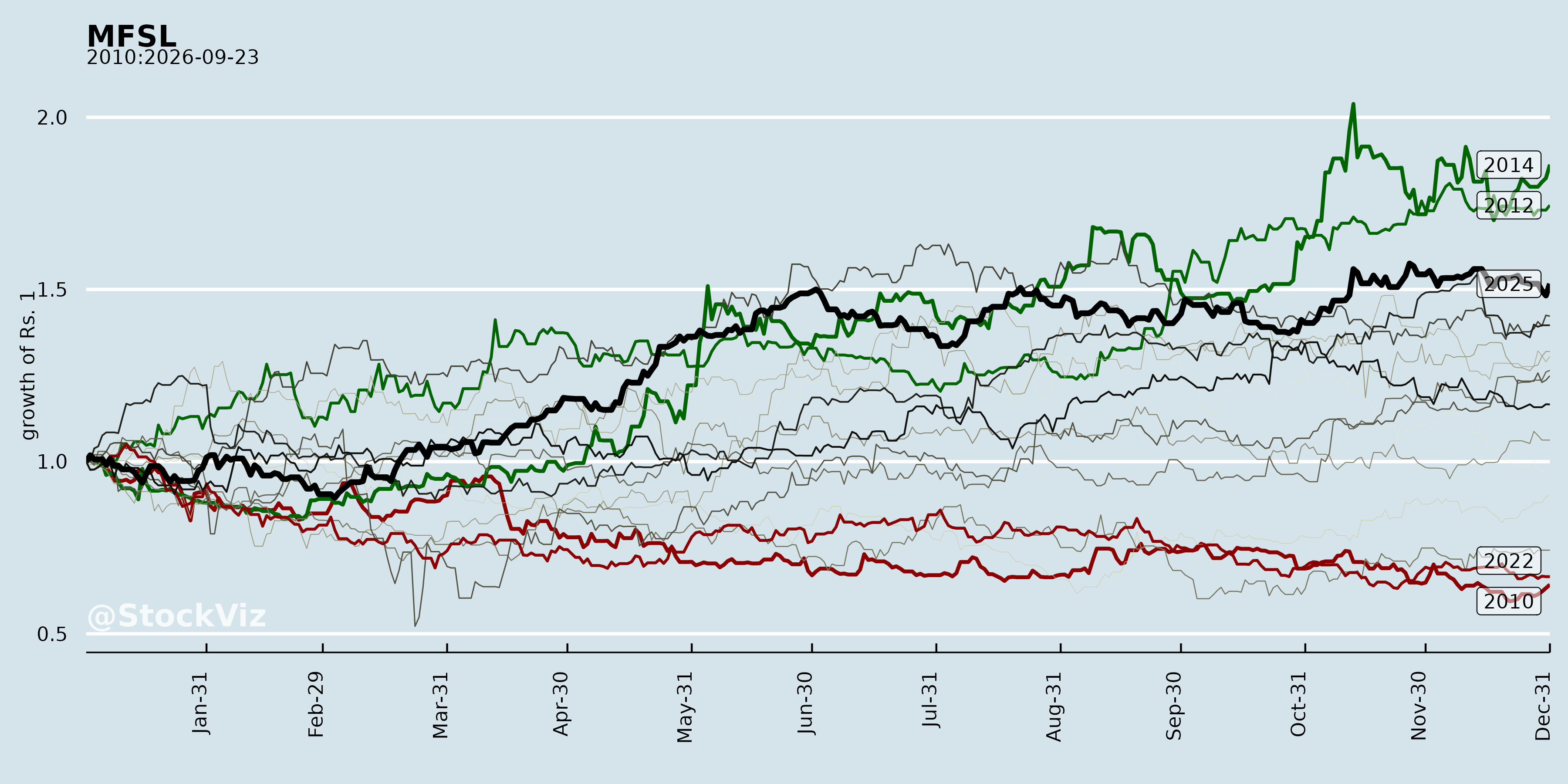
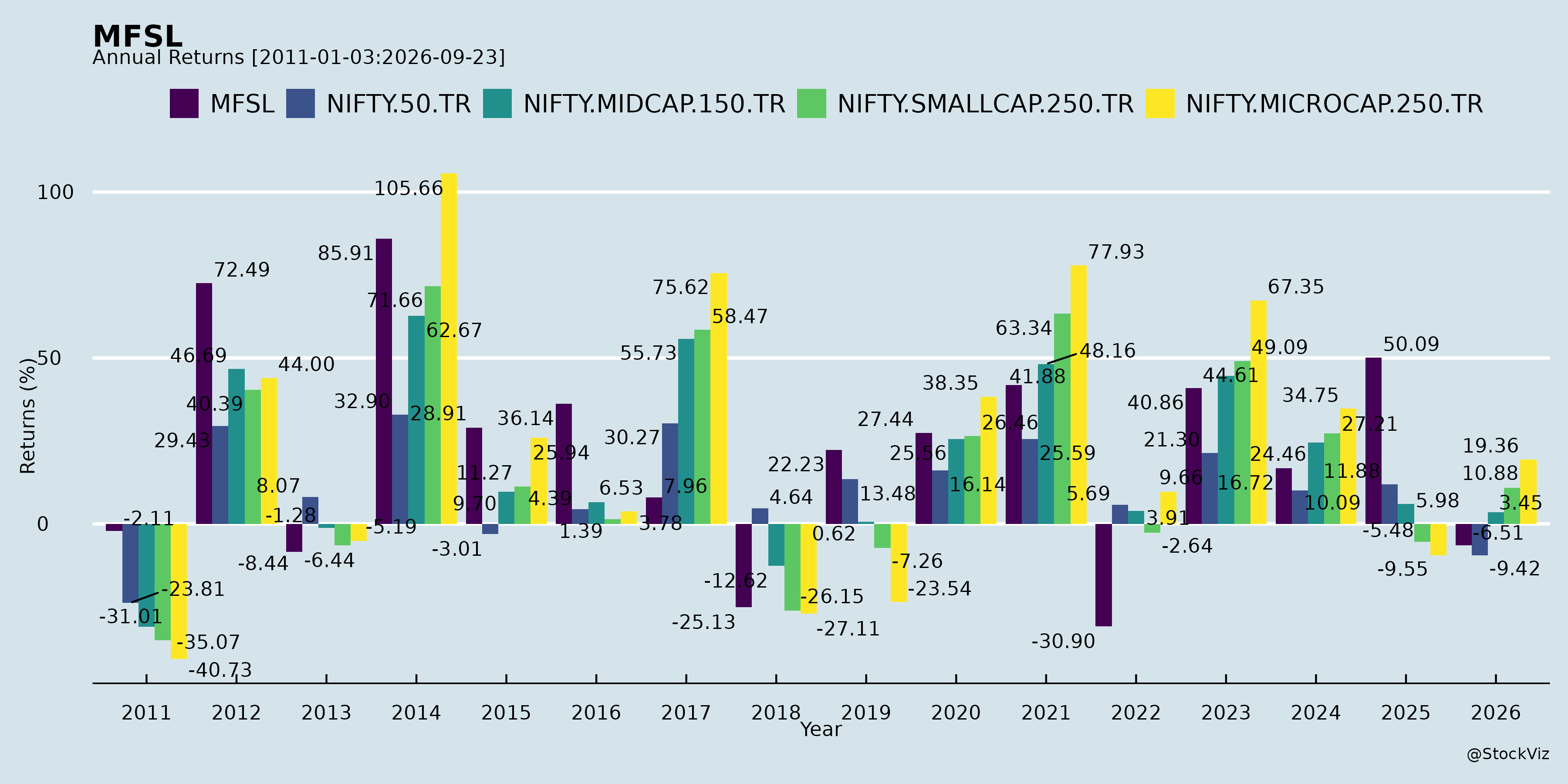
Annual Returns
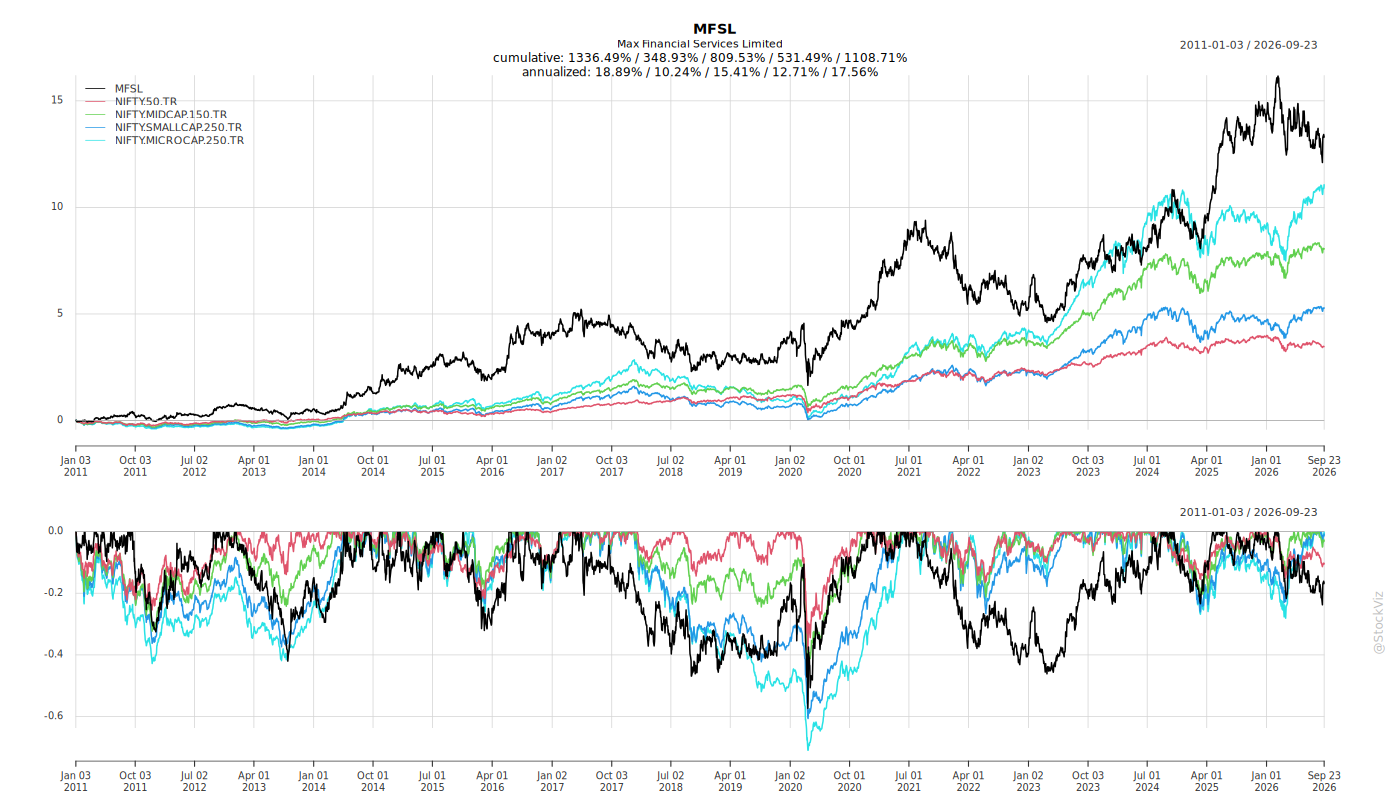
Cumulative Returns and Drawdowns
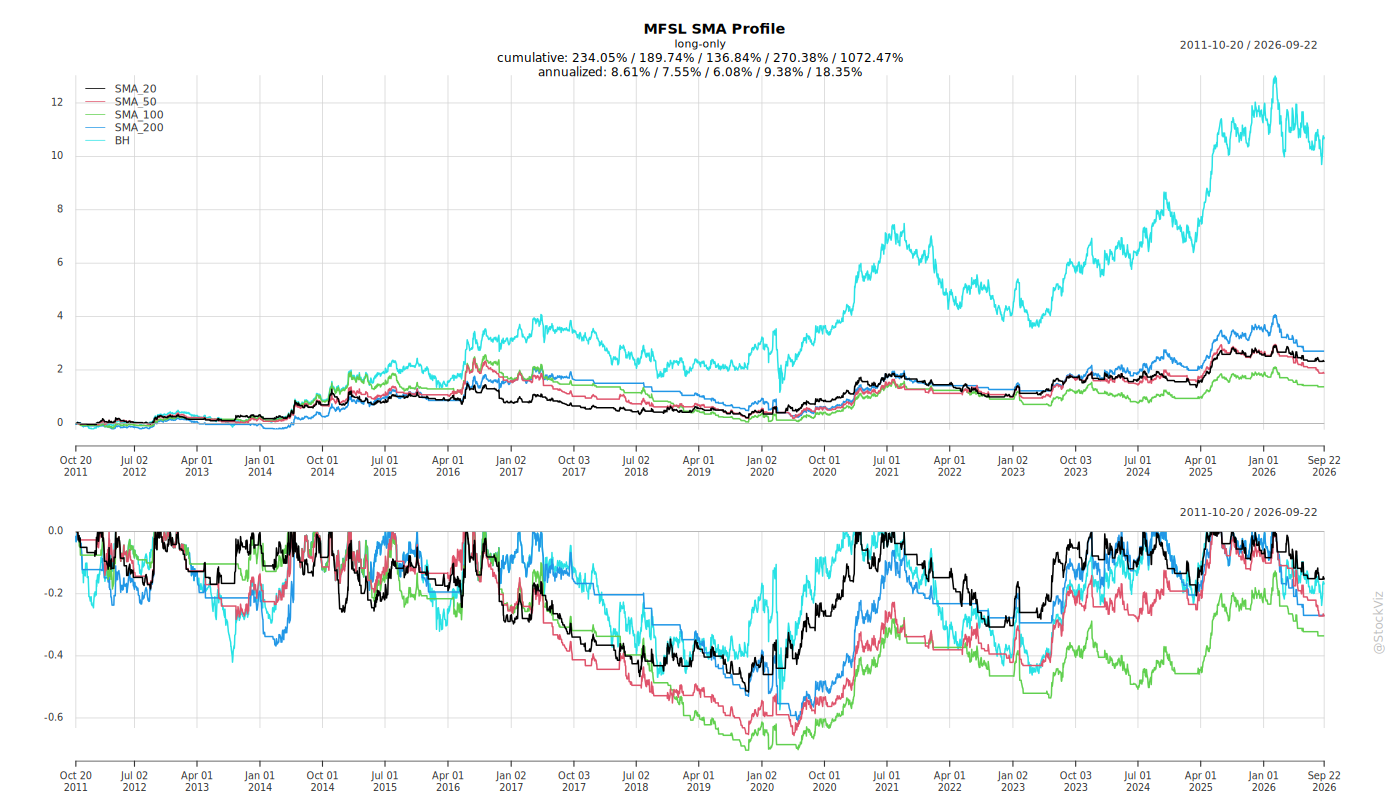
Fundamentals
Ownership
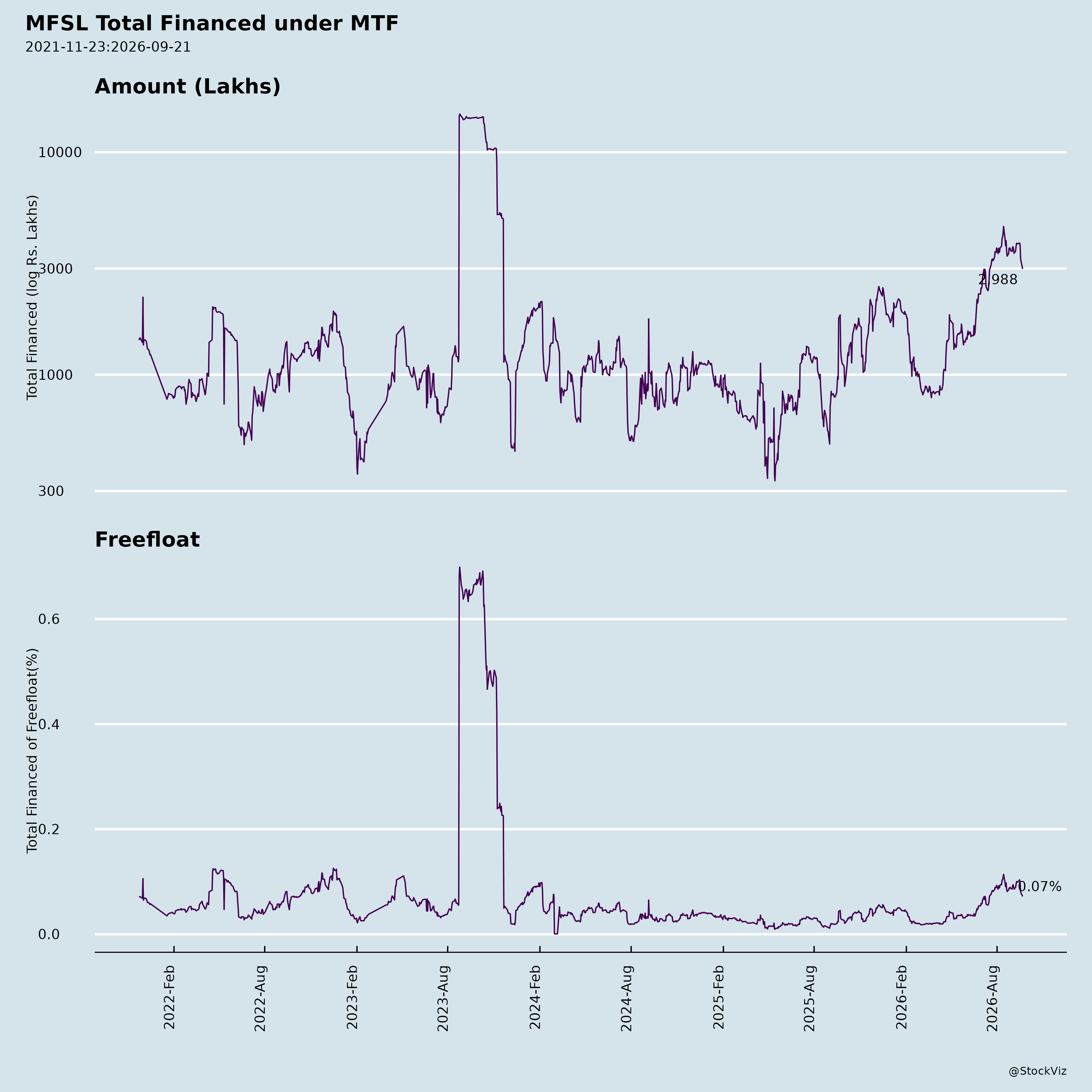
Margined
AI Summary
asof: 2026-09-16
MFSL: Headwinds, Tailwinds, Risks, and Guidance Versus Performance
1. Headwinds and Challenges
Regulatory and legal overhang. A Show Cause Notice from SEBI was received by the Company, certain former and present directors and key managerial personnel, and its subsidiary AMLI, alleging non-compliances with provisions of the SEBI Act, the Securities Contract Regulation Act, the erstwhile Listing Agreement, the Listing Regulations and other applicable SEBI regulations during the financial years ended March 31, 2011 and March 31, 2022, relating to transactions in AMLI shares. The Company responded on April 8, 2025, the SEBI hearing has been completed, and written submissions were filed on September 15, 2025. No further communication has been received. Management, supported by independent legal opinion, believes it has complied with the relevant provisions, and no impact has been given in the financial results pending the outcome. The statutory auditor drew attention to this matter as an Emphasis of Matter in the consolidated review report.
Ind AS transition deferral. IRDAI’s (Actuarial, Finance and Investment Functions of Insurers) (Amendment) Regulations, 2026 mandate Ind AS-based financial statements from April 1, 2026, with an option to seek one-year forbearance with IRDAI approval. AMLI obtained such approval and will continue under the existing regulatory framework, publishing results per IRDAI and SEBI requirements, including Ind AS 104 for consolidation, during the forbearance period.
Product-mix pressure in specific lines. In 3M FY’27, NPAR Savings APE declined 41% (₹498 crore to ₹291 crore) and Group Term Life declined 2% (₹170 crore to ₹166 crore). Solvency moderated 100 bps to 198% (from 199%). Policyholder opex to GWP improved to 16.0% from 17.8%.
Sensitivity of embedded value and VNB to adverse experience. The disclosed sensitivity table shows that a 10% increase in mortality reduces EV by 3.1% and VNB by 7.2%; a 10% increase in expenses reduces EV by 0.9% and VNB by 9.1%; a 10% increase in lapses reduces EV by 0.3% and VNB by 4.5%; and an increase in the corporate tax rate to 25% reduces EV by 10.5% and VNB by 15.5%.
Interest-rate environment. The risk-free yield curve declined across most tenors between March 2026 and June 2026 (for example, 1-year from 5.64% to 5.50%; 10-year from 7.20% to 6.81%; 20-year from 8.16% to 7.60%). Axis Max Life describes interest-rate risk management through cash flow and duration matching, hedging, natural hedges, limits on non-par sales, active bonus management for par business, repricing, stress testing and sensitivity tracking.
Structural complexity around the Axis relationship. The proposed amalgamation of MFSL with AMLI, approved in principle by the MFSL Board on January 28, 2026, remains subject to Axis Entities’ consent, regulatory approvals including IRDAI, and execution of transaction documents. If the amalgamation is not consummated within agreed timelines, Axis Entities may pursue other arrangements, including a share swap, an IPO notice requiring AMLI listing, an exit sale option requiring MFSL to purchase Axis Entities’ AMLI shares at fair market value, or forced sale/third-party sale/forced IPO. These outcomes are subject to regulatory approvals.
Discontinued operations. Max Life Pension Fund Management Limited surrendered its Pension Fund and POP registrations (approved by PFRDA on March 17 and March 21, 2025), discontinued business, and is in voluntary liquidation; the dissolution order is expected in Q2 FY 2026-27.
2. Tailwinds and Growth Prospects
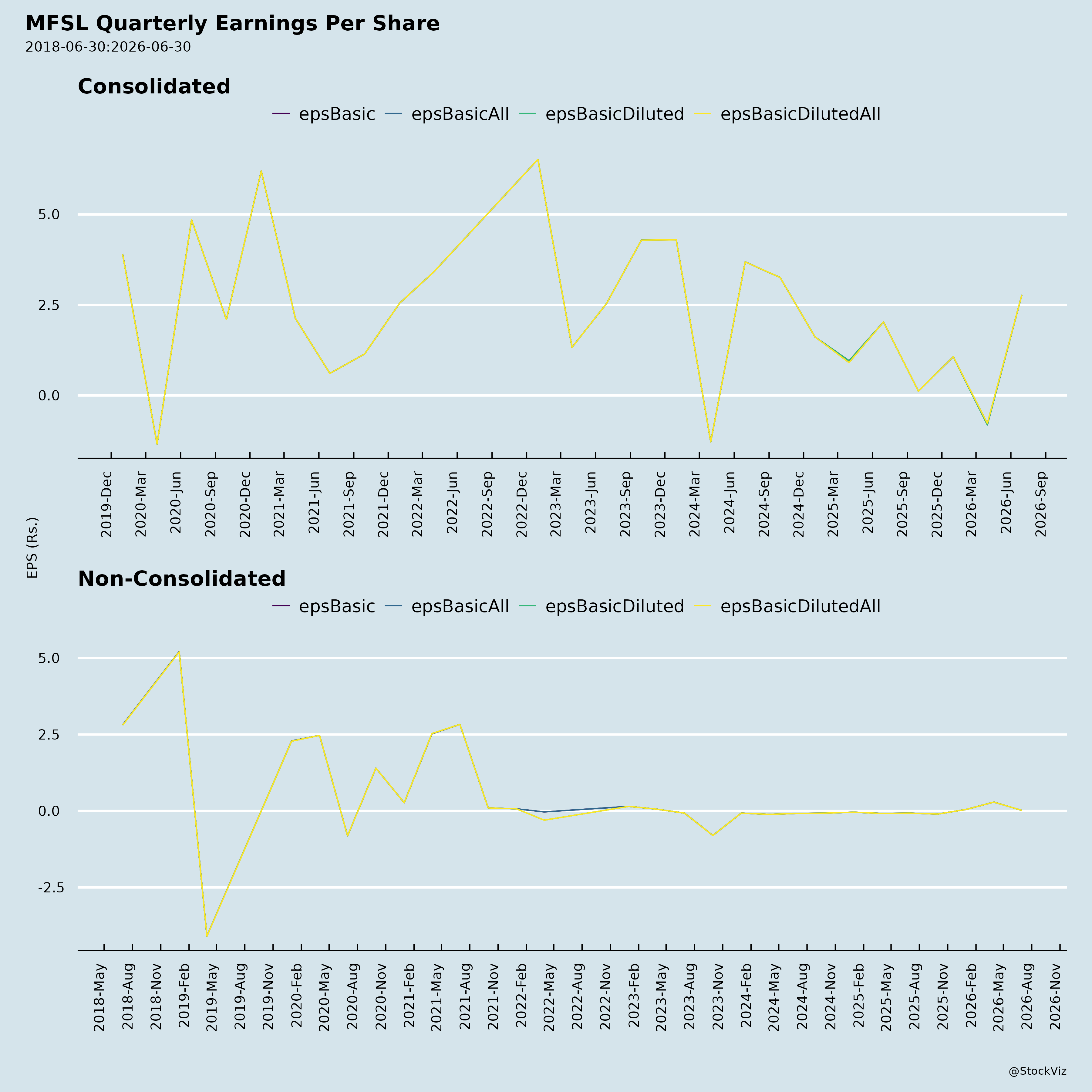
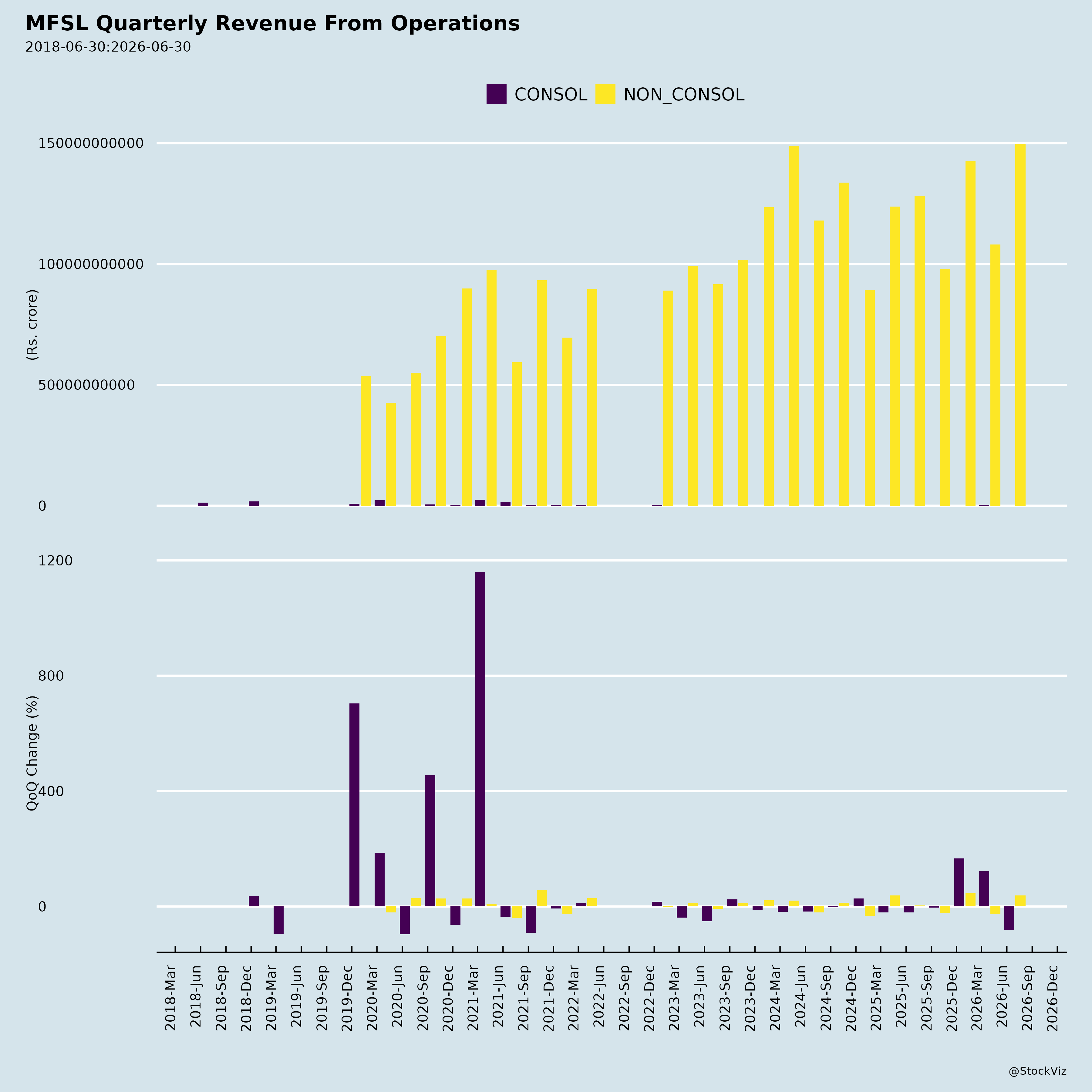
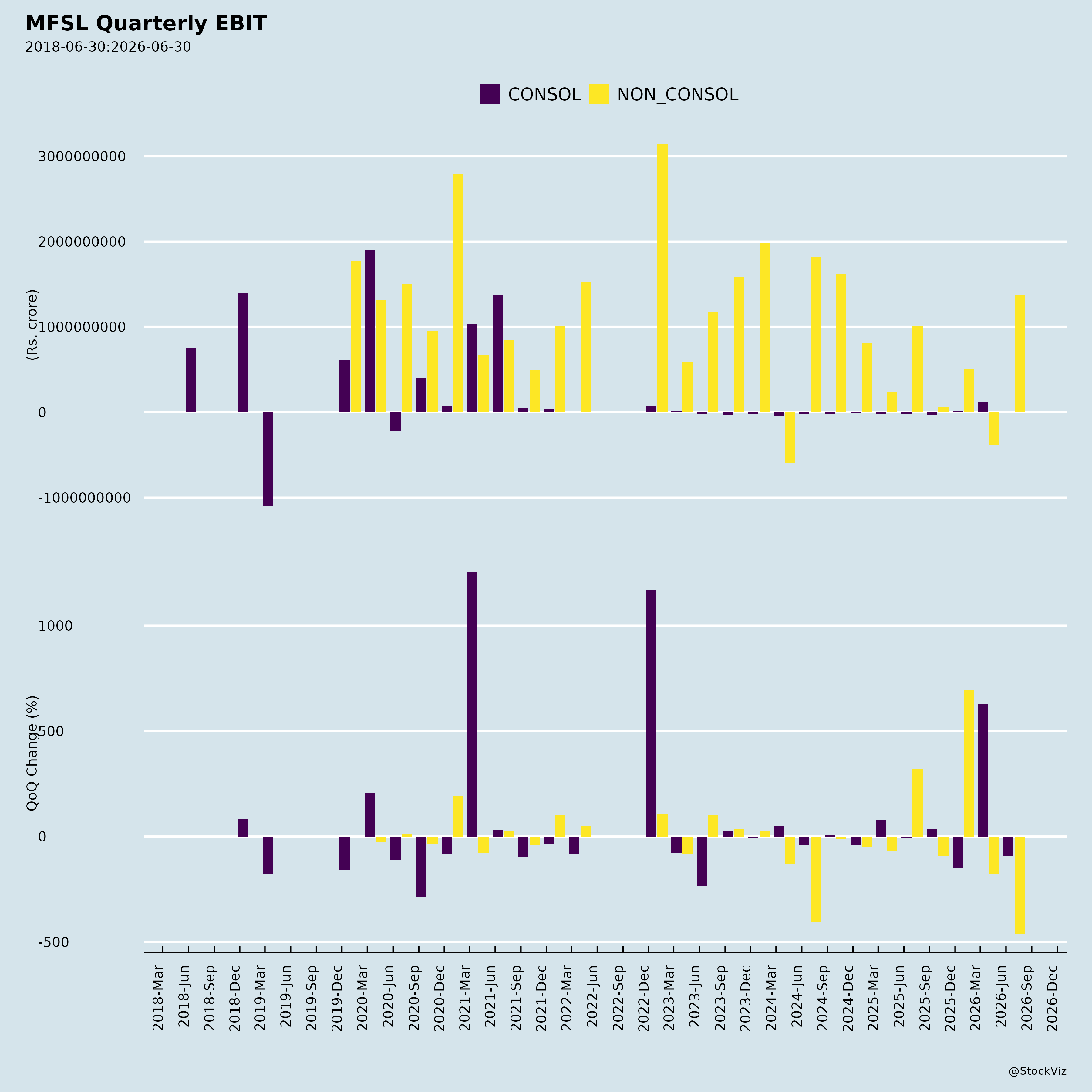
Q1 FY’27 business momentum (quarter ended June 30, 2026). MFSL consolidated revenue excluding investment income was ₹7,289 crore, up 18% YoY. Consolidated revenue including investment income was ₹14,977 crore, and consolidated PAT was ₹118 crore, up 37%. Axis Max Life’s Individual Adjusted First Year Premium was ₹1,810 crore, up 17% YoY, against private industry growth of 15%, lifting private market share 13 bps to 10.1%. Total APE grew 15% to ₹1,922 crore. Gross Written Premium rose 19% to ₹7,607 crore. Renewal premium rose 20% to ₹4,639 crore. New business margin improved 315 bps to 23.2%, and VNB rose 33% to ₹446 crore. Embedded Value rose 15% to ₹30,415 crore, with Operating RoEV of 14.9%. AUM crossed ₹2 lakh crore, up 11%. Individual new business sum assured rose 32%. Policies sold rose 12% to 187 thousand. Profit before tax rose 22% to ₹91 crore. Net worth rose 6% to ₹6,733 crore.
Channel breadth. Proprietary channel APE grew 15%, driven by 27% growth in online and 9% in offline proprietary. Partnership channels grew 16%, with Axis Bank up 14% and other partnerships up 21%. Ten new partners were onboarded in 3M FY’27. Axis Max Life maintained leadership in overall e-commerce.
Segments of choice. Retail Protection and Health APE grew 44% to ₹314 crore, with rider APE up 57% and rider attachment at 39%. Annuity APE grew 116% to ₹246 crore. Group Credit Life grew 57%, with 45% of that business sourced from partners added in the last three years. Protection mix rose to 25% (from 23%), with individual at 15% (from 12%).
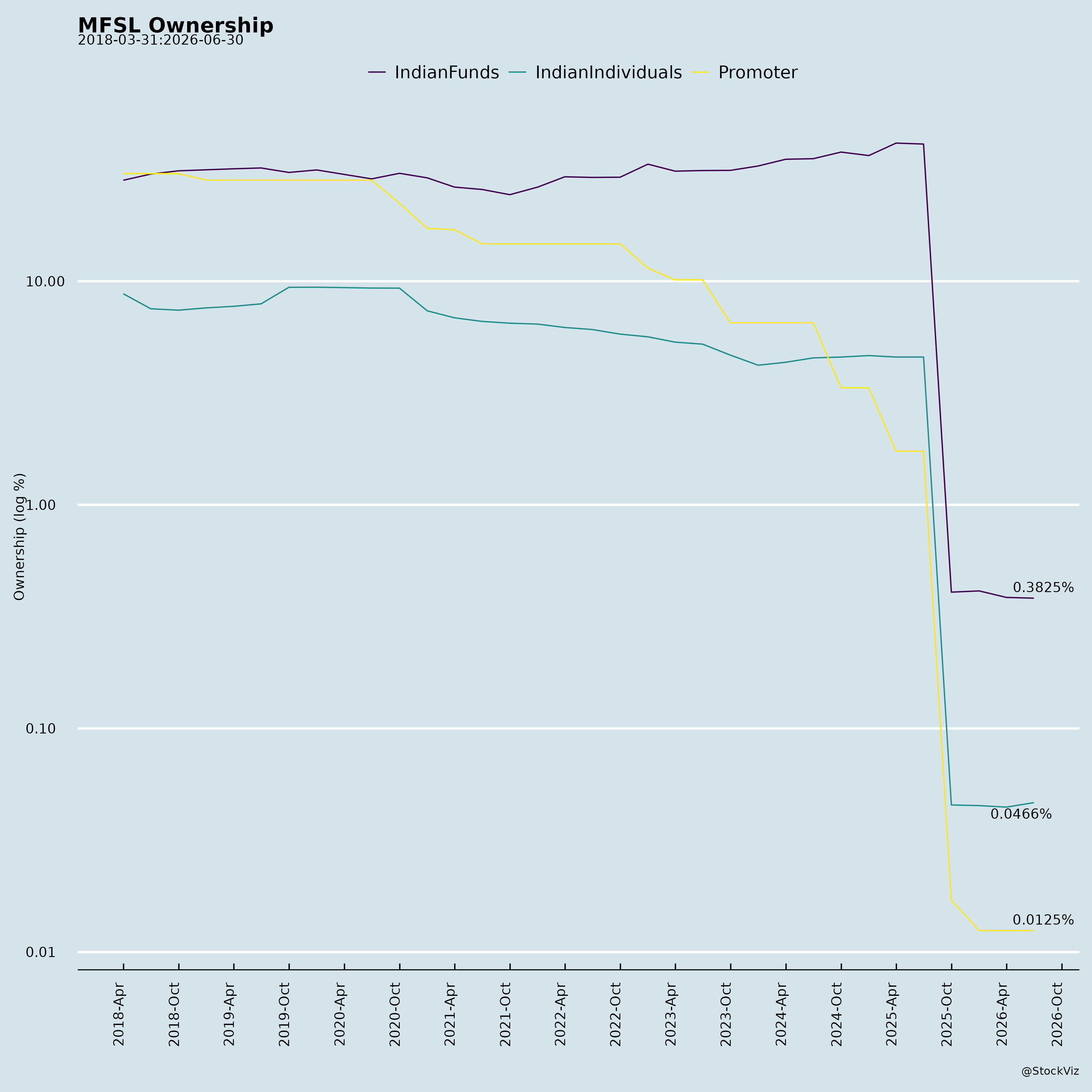
Capital infusion and shareholding. Axis Bank infused ₹381 crore into AMLI, raising its stake by 0.98% to 19.99%; MFSL’s holding stands at 80.01%. AMLI allotted 2,50,56,200 equity shares to Axis Bank on June 1, 2026, following Board approval on April 2, 2026 and shareholder approval via postal ballot on May 10, 2026.
Product innovation. Launches include the USD-denominated Smart Global Investment Fostering Tomorrow (Smart GIFT) ULIP plan and Smart Retirement Income with Sustained Earnings (Smart RISE) variable annuity plan benchmarked to the NIFTY 50.
Customer and people metrics. Rank #1 in Customer Experience among Indian life insurers (up from rank 2 for three years) with NPS of 61 in Hansa Research’s CuES 2026; NPS of 63 YTD June 2026 versus 62 a year earlier; claims paid ratio of 99.8% in FY26; persistency improved 4% at month 37 and 5% at month 61; rank #2 at 13th-month NOP persistency at approximately 83%; rank #28 in Great Place to Work.
Digital and AI outcomes. 30+ AI/ML models in production; customer app with 10 lakh+ installs and 4 lakh monthly active users; seller platform with 36,000 monthly active users and 90% adoption; 94.5% digital penetration as of June 30, 2026 against a 95% FY27 target; 26 learning hours per employee against a 10-hour target; gender diversity at 29.7% against a 31% FY27 target; over ₹5,500 crore in green bonds; net-zero target by 2050.
ESG and governance. Diverse board composition with over 50% independent directors at MFSL and approximately 30% at AMLI; ISO 27001 and ISO 22301 certifications; BitSight security maturity score of 800.
3. Key Risks
- Regulatory/legal: The pending SEBI Show Cause Notice outcome; no impact has been recognized in the results pending resolution.
- Transaction execution: The proposed amalgamation and the alternative future arrangements with Axis Entities depend on shareholder and regulatory approvals, including IRDAI, and on execution of definitive documents.
- Actuarial and experience risks: Mortality, lapse, expense and tax sensitivities materially affect EV and VNB, as quantified in the sensitivity table.
- Interest-rate and investment risks: Asset-liability mismatches, credit and concentration risks, and derivative risks are managed through front, middle and back office frameworks, independent credit review, an early warning framework and provisioning for stressed assets.
- Information security and business continuity: Managed under the Cyber DARE framework based on ISO 27001, with ISO 22301-based continuity planning, annual BCP drills, alternate DR site and regular data backups.
- Operational risks: Managed through preventive, detective and corrective programs, including quantified risk appetite for operational and product set-up errors, vendor due diligence, incident management and revenue assurance.
- Capital structure actions: AMLI raised ₹800 crore via 7.95% subordinated NCDs allotted September 24, 2025, redeemable at 10 years with a call option after 5 years; AMLI exercised the call option to fully redeem ₹49,600 lakh of subordinated debt issued August 2, 2021, redeemed in full on August 2, 2026.
4. Management Guidance Versus Observed Performance
Guidance and forward-looking statements. Management states that Axis Max Life will continue to focus on predictable and sustainable growth, digital product innovation to drive margins, customer centricity across the value chain, and digitization for efficiency and intelligence. Specific stated targets include 95% digital penetration by FY2027, a 31% gender diversity ratio by FY27, 40 learning hours per employee for FY2025, ESG evaluation in equity investment research with 75% of the equity portfolio ESG-compliant at all times and 100% compliance for equity portions of shareholders’ funds, and net-zero by 2050. Management also states it is accelerating digital and tech transformation to become an intelligence-led enterprise, embedding AI, analytics and automation across acquisition, distribution, underwriting and servicing.
Observed performance against these stated directions. Digital penetration stood at 94.5% as of June 30, 2026, against the 95% FY2027 target, up from 94.21% as of March 31, 2026. Gender diversity was 29.7% as of June 30, 2026, against the 31% FY27 target, up from 29.3% as of March 31, 2026. Learning hours reached 26 against a target of 10. Green bond holdings exceeded ₹5,500 crore as of June 30, 2026. Scope 1 and Scope 2 emissions as of March 31, 2026 were 7,478.01 TCo2, a net reduction of 574.63 TCo2 (approximately 7.14%) versus FY25.
Growth guidance context versus results. The 5-year track record cited includes 15% CAGR in individual new business versus 12% for the total life insurance industry, 28% APE CAGR in proprietary channels, 16% VNB CAGR, 16% AUM CAGR, 10% APE CAGR in partnership channels, 20% embedded value CAGR, and 12% market capitalization CAGR. In 3M FY’27, the reported outcomes were 17% Individual Adjusted FYP growth, 15% Total APE growth, 33% VNB growth, 15% embedded value growth, 11% AUM growth, and 16% partnership channel APE growth.
Governance and disclosure events. The 38th AGM was held on August 19, 2026, with all resolutions passed by the requisite majority, including adoption of standalone and consolidated audited financial statements for FY ended March 31, 2026, reappointment of Mr. Analjit Singh as Director, and remuneration approvals for Independent Directors Mr. Jai Arya and Sir Richard Stagg. Senior management will participate in the Jefferies India Forum in Gurgaon on September 18, 2026, with no unpublished price-sensitive information to be discussed.
Broker Narrative
The broker narrative evolved from cautious optimism in 2023 — where strong VNB growth and proprietary channel momentum offset concerns about margin moderation — to a more mixed picture by 2026, where VNB margin expansion and cost improvements became new tailwinds but persistency erosion, yield curve sensitivity, and NPAR declines persisted as recurring headwinds. The proprietary channel theme shifted from celebratory growth reports to acknowledging deliberate policy cancellations, while banca partnership optimism endured but was tempered by product-mix volatility.
Fears that came true
- VNB margin moderation flagged at ~27-28% materialized worse, with margins falling to 23.2% by Q1FY27, correlating with multiple DISAPPOINTMENT outcomes from late 2025 onward.
- Non-PAR mix expected to moderate to ~40% saw NPAR decline 41% YoY in Q1FY27, confirming the medium-term deceleration risk flagged in the first report.
- 13-month persistency dropped to 83% from 86% due to a discontinued product variant, validating persistency risk concerns despite initial claims of stable trends.
- PAR business decline of 30% YoY flagged in 2023 was followed by an NPAR decline of 41% YoY in Q1FY27, confirming sustained contraction in the PAR franchise.
Optimism that failed
- Proprietary channel APE grew 90% YoY in FY23, but offline proprietary growth was later impacted by deliberate policy cancellations, undermining the high-growth narrative.
- Non-PAR savings grew 153% YoY on annuity strength, but NPAR subsequently declined 41% YoY in Q1FY27, showing the surge was unsustainable.
- Management’s expected double-digit growth in FY24 was followed by a sustained period of negative returns and repeated DISAPPOINTMENT outcomes across 2025-2026, indicating the growth trajectory faltered.
- Banca channel recovery with expected double-digit growth failed to fully materialize, as NPAR weakness and product mix volatility limited sustained banca-driven outperformance.
Broker Timeline
41 broker calls · 2023-05-15 to 2026-08-14
Copyright © 2023 SAS Data Analytics Pvt. Ltd. All rights reserved.