MAXESTATES
Equity Metrics
September 24, 2026
Max Estates Limited
Residential Commercial Projects
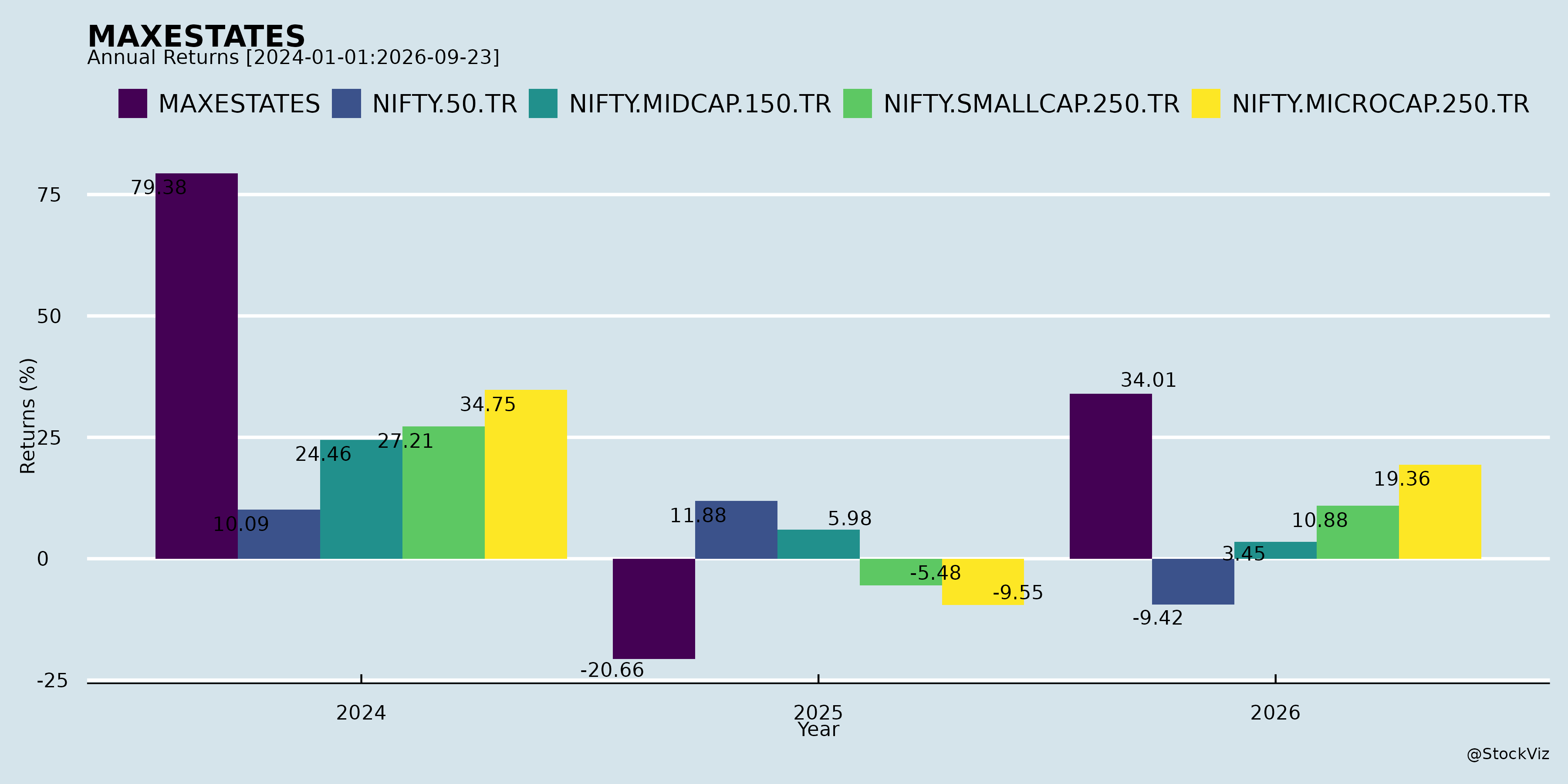
Annual Returns

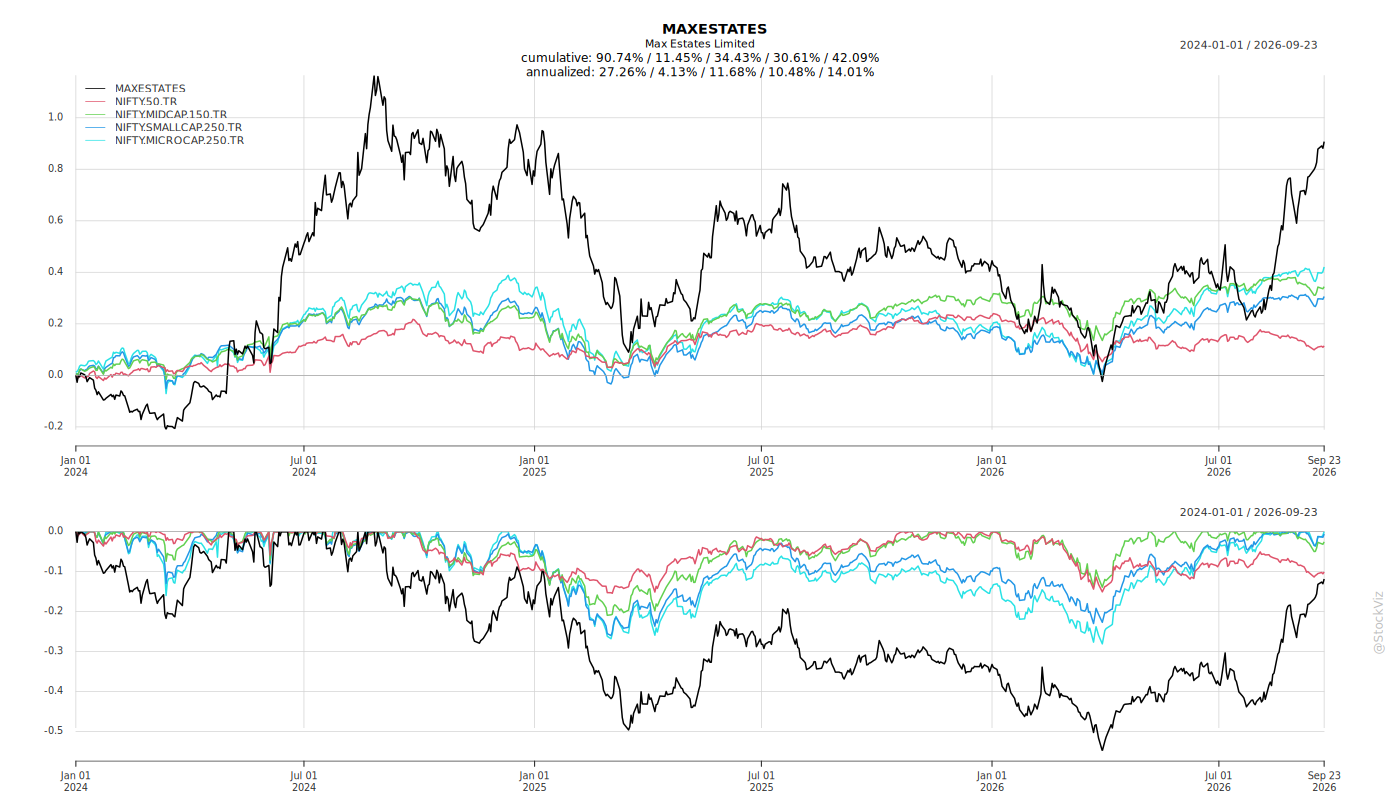
Cumulative Returns and Drawdowns
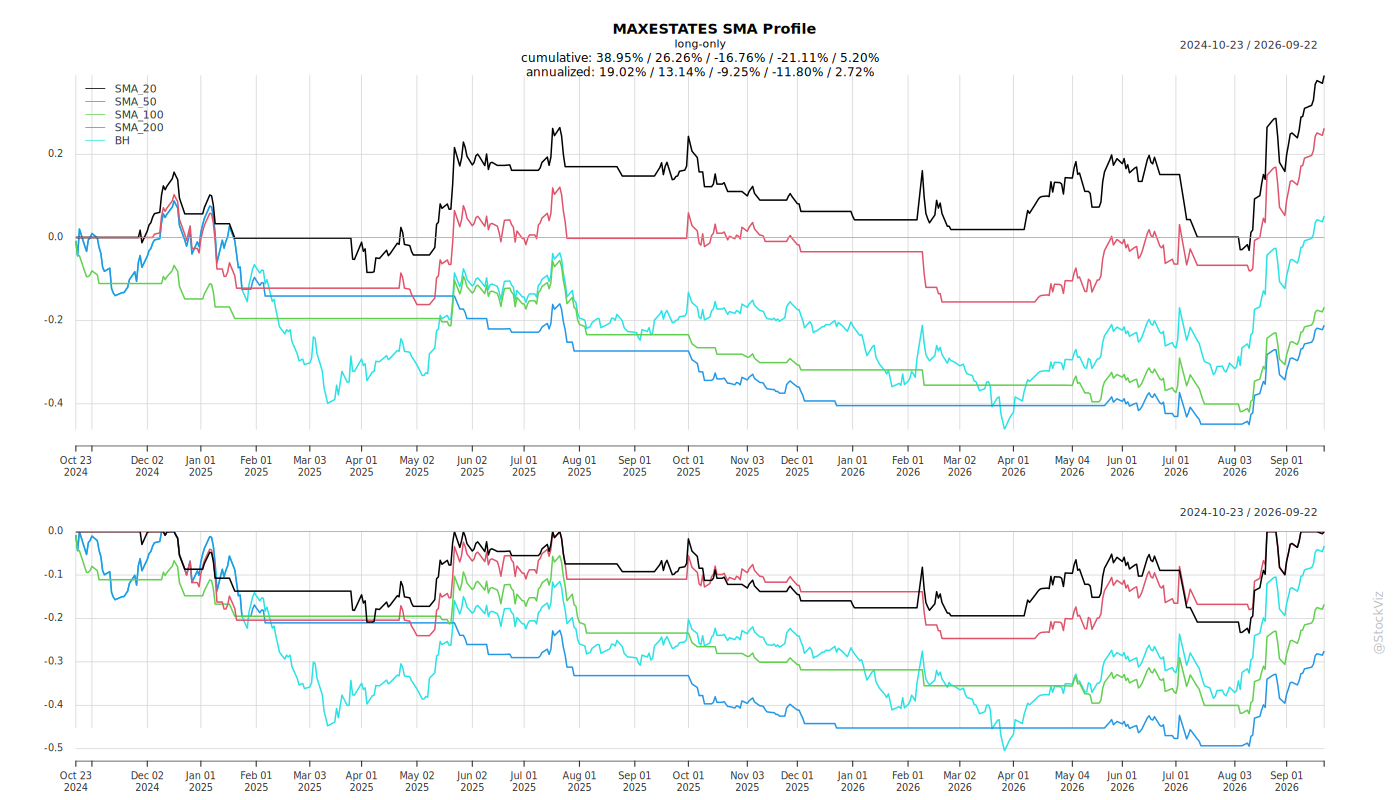
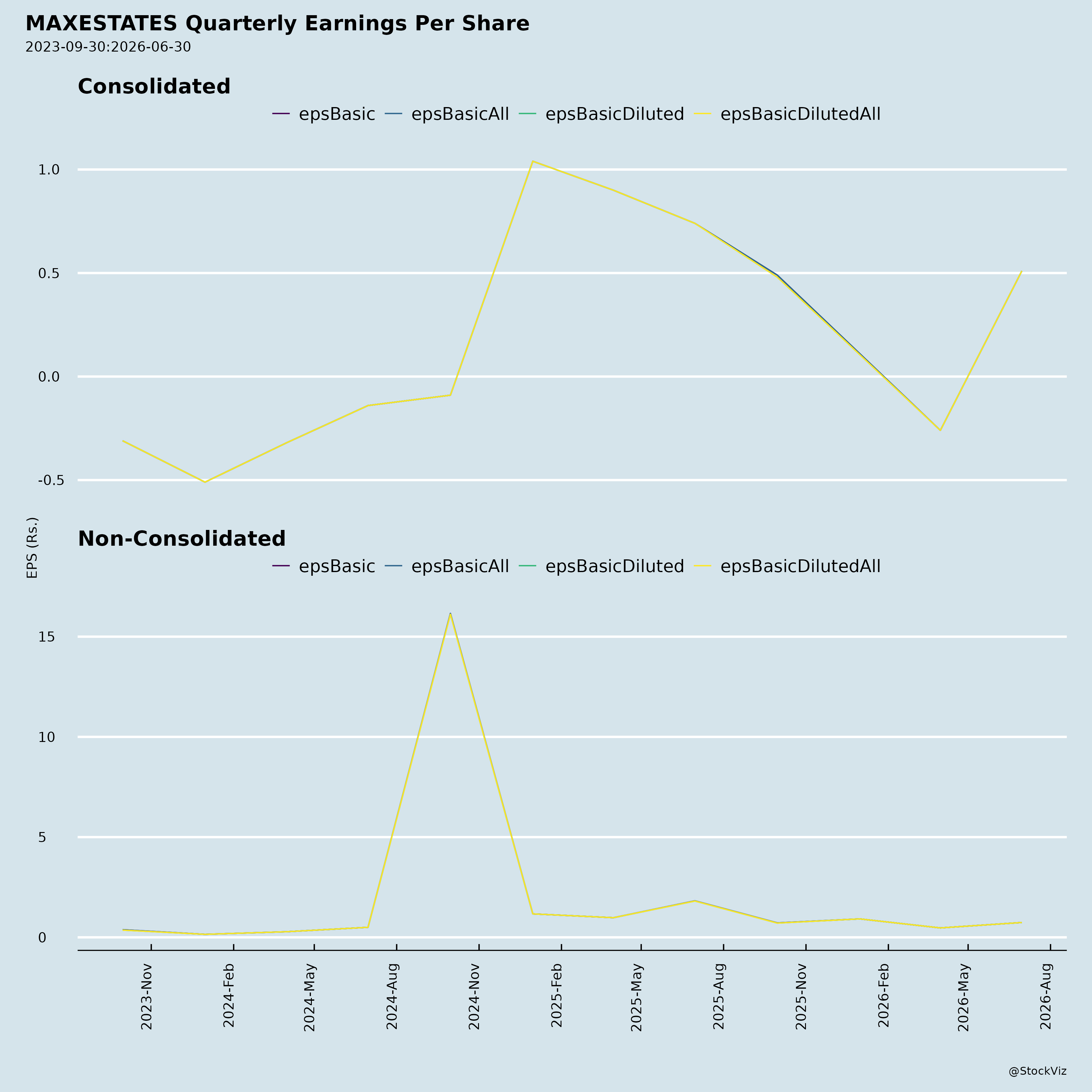
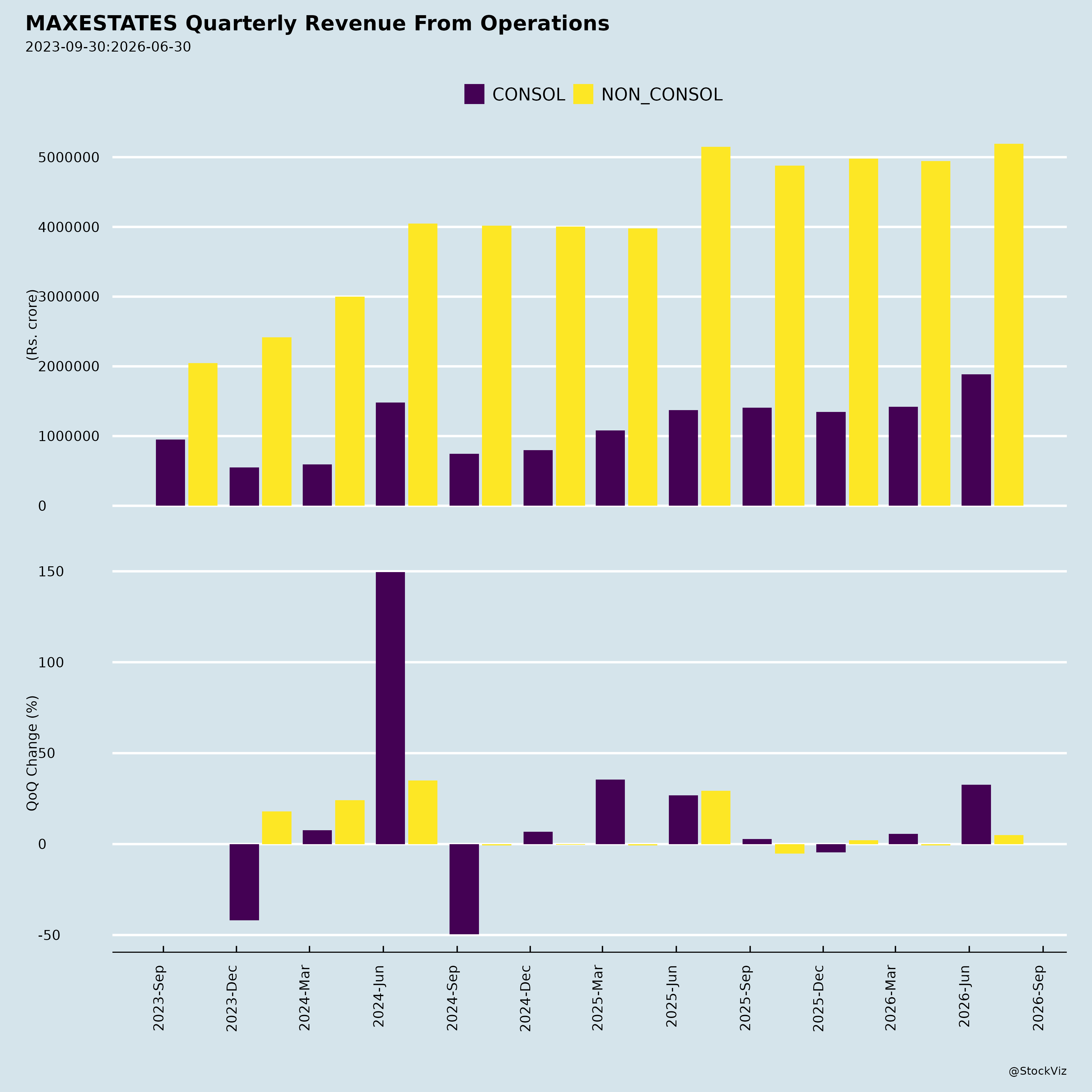
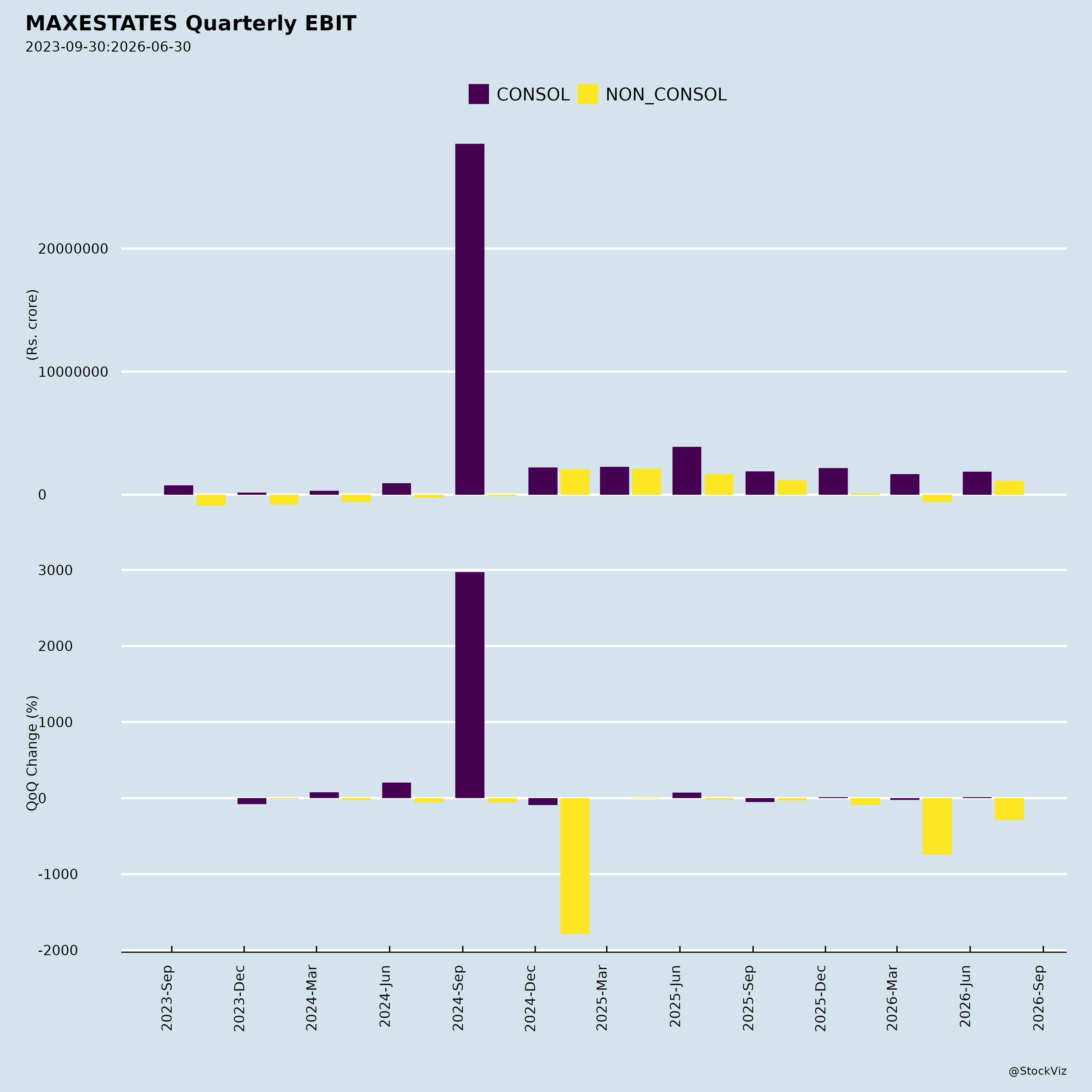
Fundamentals
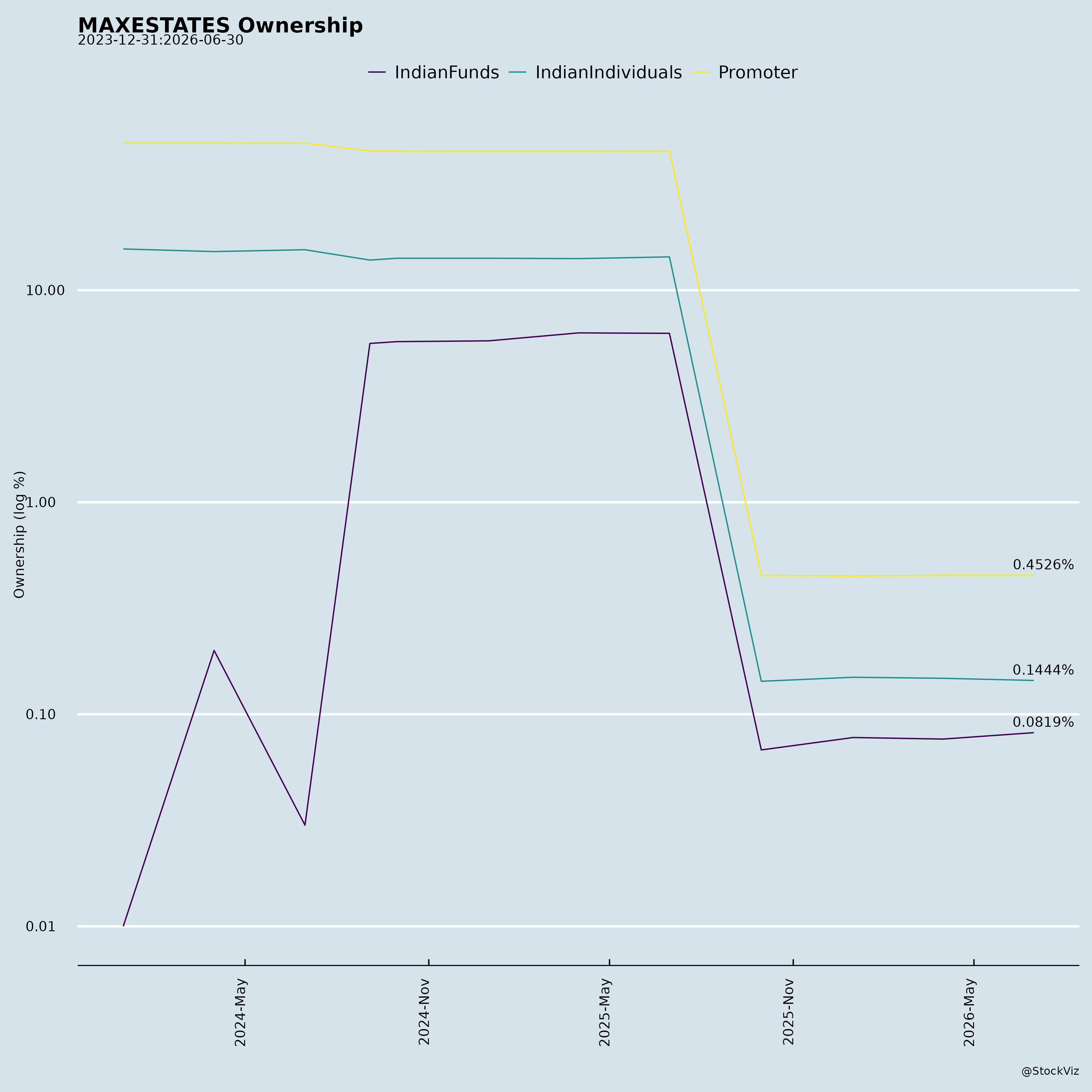
Ownership
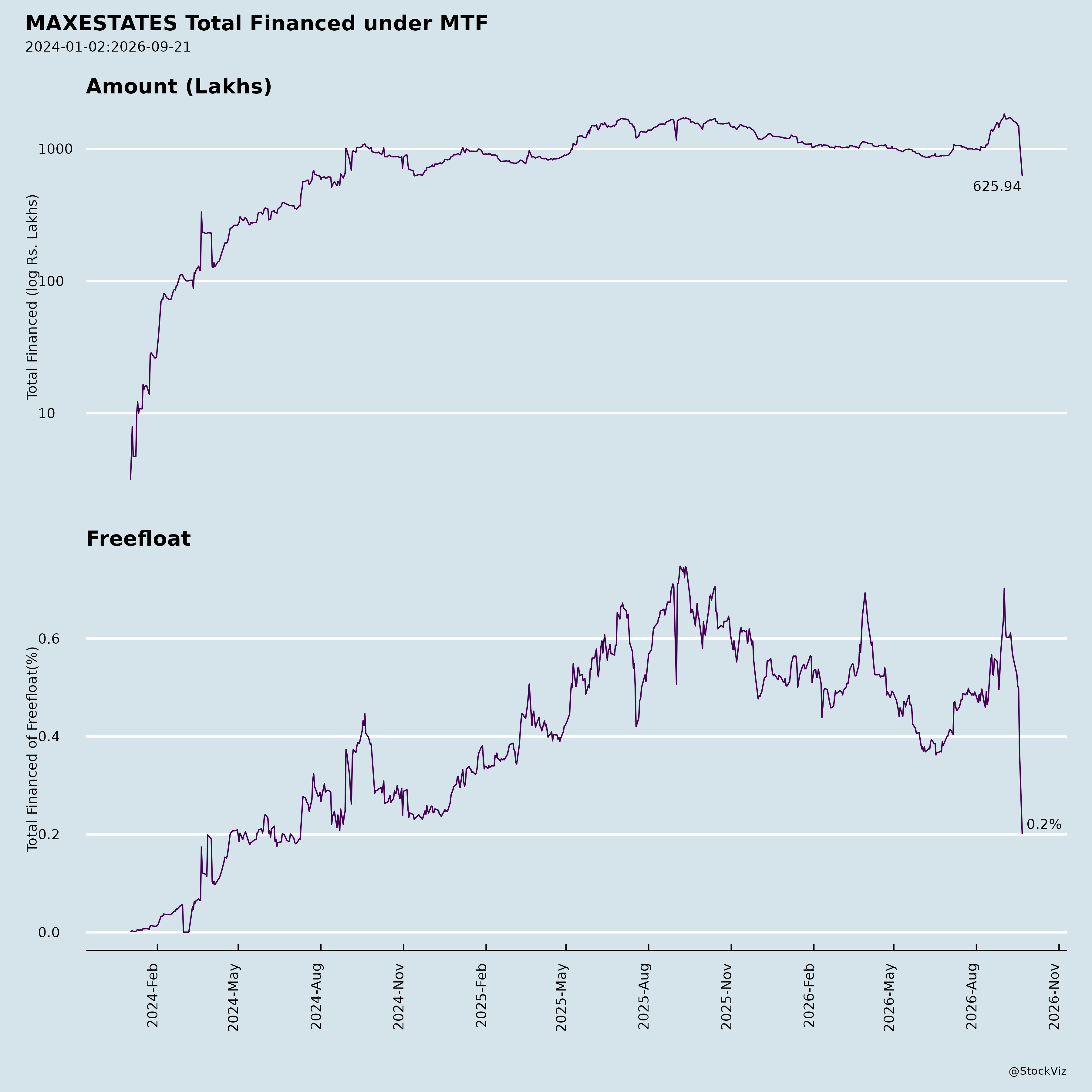
Margined
AI Summary
asof: 2026-09-17
Max Estates: Recent Corporate Developments
1. Headwinds and Challenges
- Moderating residential demand backdrop: Residential sales volumes across the sector moderated through the quarter against global uncertainty, tightening liquidity conditions, and cautious consumer sentiment, even as Delhi NCR launches remained resilient (approximately 8,800 units in Q2 2026; approximately 18,500 units in H1 CY2026).
- Rising competition and landowner expectations: Newer developers are entering the Gurgaon and Delhi NCR premium market. Management acknowledged that increased competition could raise demands from landowners and affect absorption of inventory where many new projects have similar ticket sizes.
- Elevated marketing and employee costs: Advertising and marketing costs were charged to P&L while residential revenue is recognized only on possession under Ind AS 115, making the quarter’s cost base appear elevated relative to a year-ago quarter without launches. Management expects these expenses to track the launch calendar.
- Rising debt and construction spend: Net debt rose to Rs. 234 crores (gross debt Rs. 1,960 crores, including Rs. 934 crores of lease rental discounting borrowings) as construction finance was drawn for Max Square 2, Max District, and Max One, alongside land revenue-share payments to landowners.
- Regulatory and approval dependence for the Delhi platform: Development of the new land platform remains subject to the applicable land pooling and planning framework, sector-level processing, infrastructure development, and statutory or regulatory approvals, each of which may evolve over time. The transaction itself requires shareholder approval, stock exchange in-principle approval, and satisfaction of conditions under the Share Purchase and Share Subscription Agreement.
- Forward-looking statement risk: Statements are subject to numerous risks and uncertainties and are not necessarily predictive of future results; actual results may differ materially.
2. Tailwinds and Growth Prospects
- Strong Q1 FY27 pre-sales: Pre-sales of approximately Rs. 1,100 crores, a 5x year-on-year growth, anchored by the full sellout of Phase-1 of The Terraces at Estate 361, Gurgaon (approximately Rs. 500 crores), with sustenance sales adding approximately Rs. 600 crores.
- Large embedded value: Total revenue potential across the launched residential and mixed-use portfolio is approximately Rs. 17,500 crores, of which approximately Rs. 13,500 crores is sold and contracted (Rs. 3,500 crores collected; Rs. 10,000 crores to be collected as construction progresses). Embedded PBT is estimated at Rs. 4,500–5,500 crores.
- Launch pipeline: Residential launch pipeline of approximately Rs. 16,100 crores, including approximately Rs. 4,000 crores launched and available for sale this year and approximately Rs. 12,000 crores of new launches planned through FY27. Management targets annual addition of 2 million sq ft of residential development.
- New Delhi land platform: Proposed acquisition of approximately 84.70 acres in Sector 3, Najafgarh, Delhi, with estimated development potential of approximately 4–6 million sq ft and estimated GDV of approximately Rs. 10,000–12,000 crores over the next few years, positioning Delhi as a third core NCR growth market alongside Noida and Gurugram. The acquisition is via a non-cash share swap, resulting in zero cash outflow.
- Master Plan for Delhi-2047: Notified on August 20, 2026, it sets out a framework for planned development through land pooling, which management described as a transformative policy for Delhi development and housing.
- Commercial portfolio strength: All three operating assets (Max Towers, Max House, Max Square) at 100% occupancy. Max Towers’ latest lease at Rs. 156 per sq ft per month versus a weighted average rental of Rs. 132, implying over 50% mark-to-market upside. Max Square 2 (1 million sq ft leasable) is expected to receive occupancy certificate by Q2 FY28 and add Rs. 125 crores to annuity, with an LOI for approximately 90,000 sq ft pre-leased at a 25% premium to micro-market rents. Max District (1.6 million sq ft) is expected to receive occupancy across Q3 FY28 and Q3 FY29 and add Rs. 200 crores to annuity, with an LOI for 200,000 sq ft pre-leased at a 35% premium. Peak rental income target of approximately Rs. 700 crores at peak occupancy, with a further target of 1 million sq ft of new business development.
- Credit profile: ICRA assigned a first-time issuer rating of A+ with stable outlook on a consolidated basis, assessing committed receivables of close to Rs. 9,500 crores as of March 2026 and a cash-flow adequacy ratio of about 105%.
- Delhi entry economics: The Delhi acquisition consideration is up to Rs. 4,20,23,14,295, discharged via a preferential issue of up to 70,33,162 equity shares at Rs. 597.50 per share, with a related-party component capped at Rs. 3,79,11,51,242.50.
3. Key Risks
- Execution and approval risk on the Delhi platform: The land pooling and planning framework, sector-level processing, infrastructure development, and statutory or regulatory approvals may evolve over time, and the composite transaction is subject to receipt of requisite approvals and satisfaction of conditions under the transaction documents.
- Macro and demand risk: A volatile microeconomic environment and cautious consumer sentiment could affect sales velocity and pricing, which management cited as a reason for not providing sales guidance.
- Competitive intensity in business development: Increased competition for land and similar ticket-size inventory could pressure land acquisition terms and absorption.
- Cost and margin variability: Marketing and employee costs may remain elevated in launch-heavy quarters, and reported P&L reflects only a fraction of contracted sales until possession.
- Leverage and funding risk: Remaining commercial capex of approximately Rs. 1,500–1,800 crores is tied up, with construction finance intended to convert to lease rental discounting on commissioning; incremental debt of approximately Rs. 1,500 crores is not yet reflected on the balance sheet.
- Related-party arrangements: The Antara relationship involves a development management fee of approximately 9%–9.5% of sales value on applicable portions, with the related-party component of the Delhi transaction capped at Rs. 3,79,11,51,242.50.
- Forward-looking statement risk: Statements are subject to numerous risks and uncertainties and are not necessarily predictive of future results.
4. Management Guidance Versus Observed Performance
- Collections: Management had previously indicated FY27 collections of Rs. 2,500–3,000 crores against Rs. 1,578 crores in the prior year. Following Q1 FY27 collections of approximately Rs. 575 crores, management expressed greater confidence and narrowed the expected range to Rs. 2,500–2,700 crores, with deployment of Rs. 1,500–1,800 crores on projects and Rs. 750–1,000 crores of operating cash flow left for business development.
- Pre-sales guidance: Management discontinued providing pre-sales guidance, citing the volatile microeconomic environment and a focus on quality of sales, despite having provided guidance for the past three years. It instead pointed to approximately Rs. 16,000 crores of inventory available to sell.
- Launch pipeline: Management indicated approximately Rs. 5,000–5,500 crores of new launches in the second half of FY27, plus Rs. 3,000–4,000 crores of already-launched inventory available for sustenance sales. The Sector 59, Golf Course Extension Road launch (1.3 million sq ft, GDV potential over Rs. 3,500 crores) is expected in Q3 FY27. Some pipeline will shift to FY28 based on market conditions.
- Commercial pipeline: Max Square 2 occupancy certificate expected by Q2 FY28; Max District occupancy expected across Q3 FY28 and Q3 FY29. The Rs. 700 crores annuity target relates to already-committed and under-construction projects, with 1 million sq ft of annual additions over and above that.
- Delhi transaction timeline: Management tentatively expects to complete the composite transaction on or before October 9, 2026, subject to receipt of requisite approvals and satisfaction of conditions under the transaction documents. The Extra-Ordinary General Meeting is convened for September 24, 2026.
- Observed versus guided: Q1 FY27 pre-sales of approximately Rs. 1,100 crores and collections of approximately Rs. 575 crores were consistent with the historical collection range of 20%–25% of sales value, supporting the reiterated full-year collection outlook. The ICRA rating and the assessed committed receivables of close to Rs. 9,500 crores and cash-flow adequacy ratio of about 105% provide independent corroboration of the contracted pipeline described by management.
Broker Narrative
The broker narrative changed from an insurance-sector framework (Finance Act/tax regime, surrender/ceding charges, mortality, reinsurance, NPAR mix) to a real-estate execution framework (project delays, pre-sales, Delhi-NCR concentration, commercial annuity income) between the first and last reports. The only persistent elements are broad caution on regulatory/global uncertainty and confidence in long-term structural demand; the specific risk drivers and growth levers were almost entirely replaced.
Broker Timeline
3 broker calls · 2026-02-10 to 2026-08-18
Copyright © 2023 SAS Data Analytics Pvt. Ltd. All rights reserved.