MAHLOG
Equity Metrics
November 16, 2026
Mahindra Logistics Limited
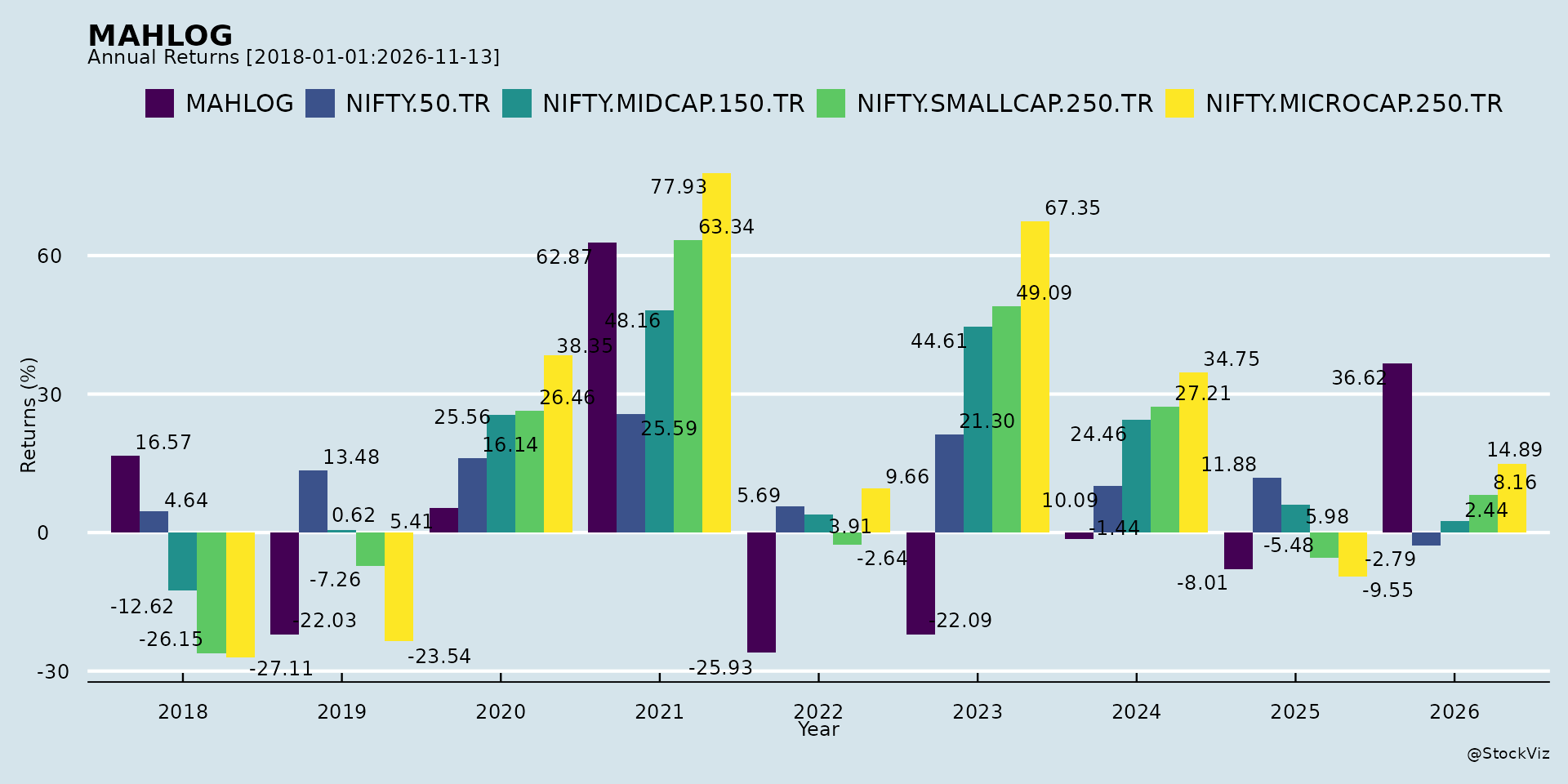
Annual Returns
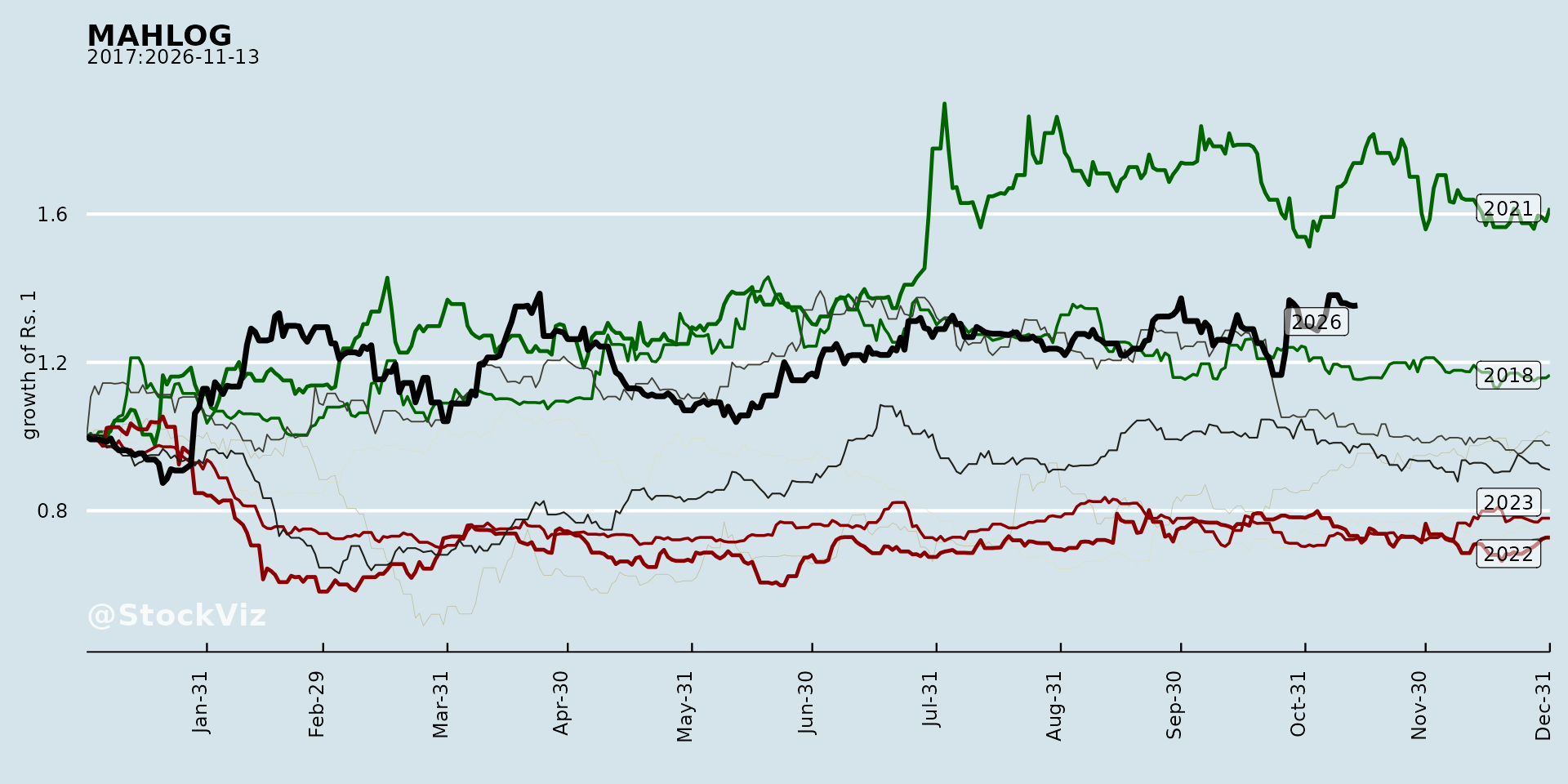
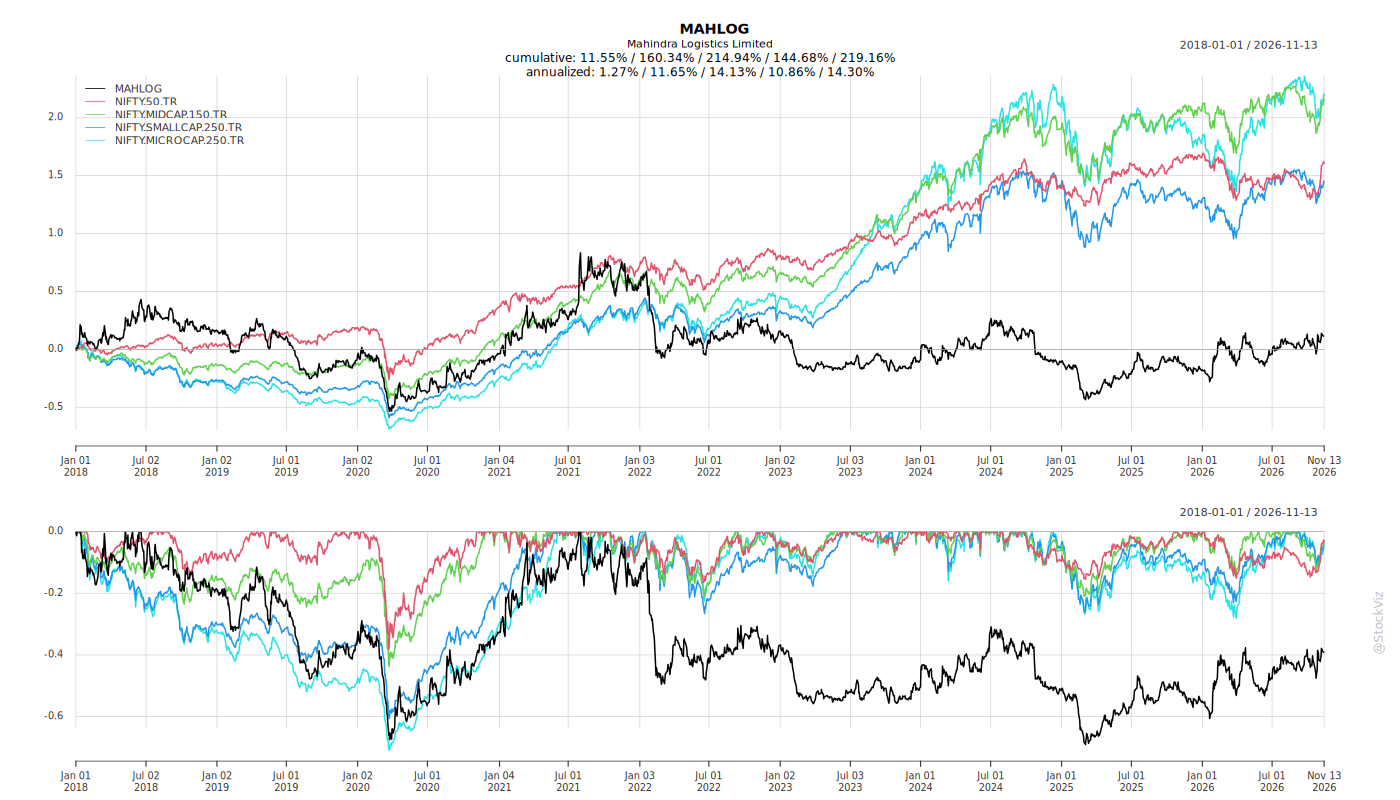
Cumulative Returns and Drawdowns
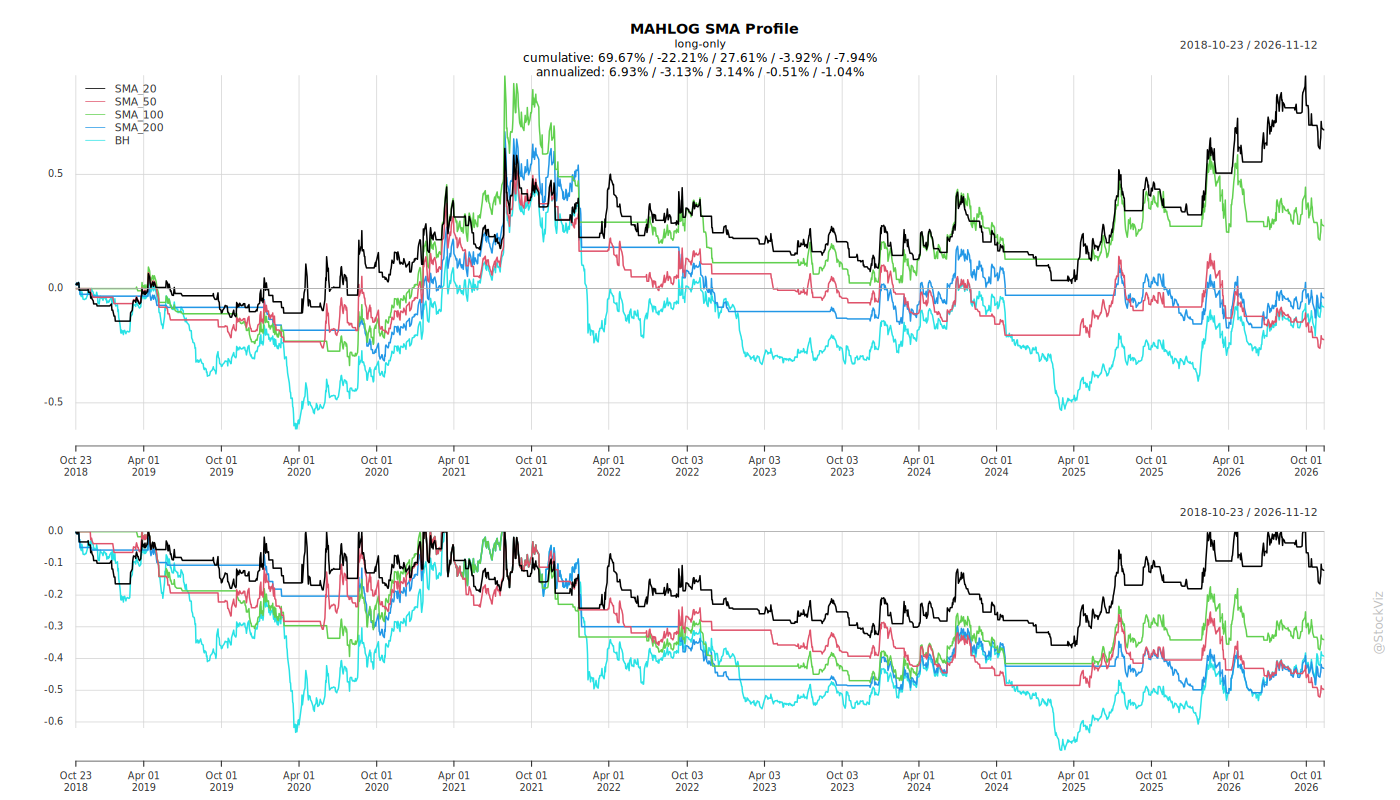
Fundamentals
Ownership
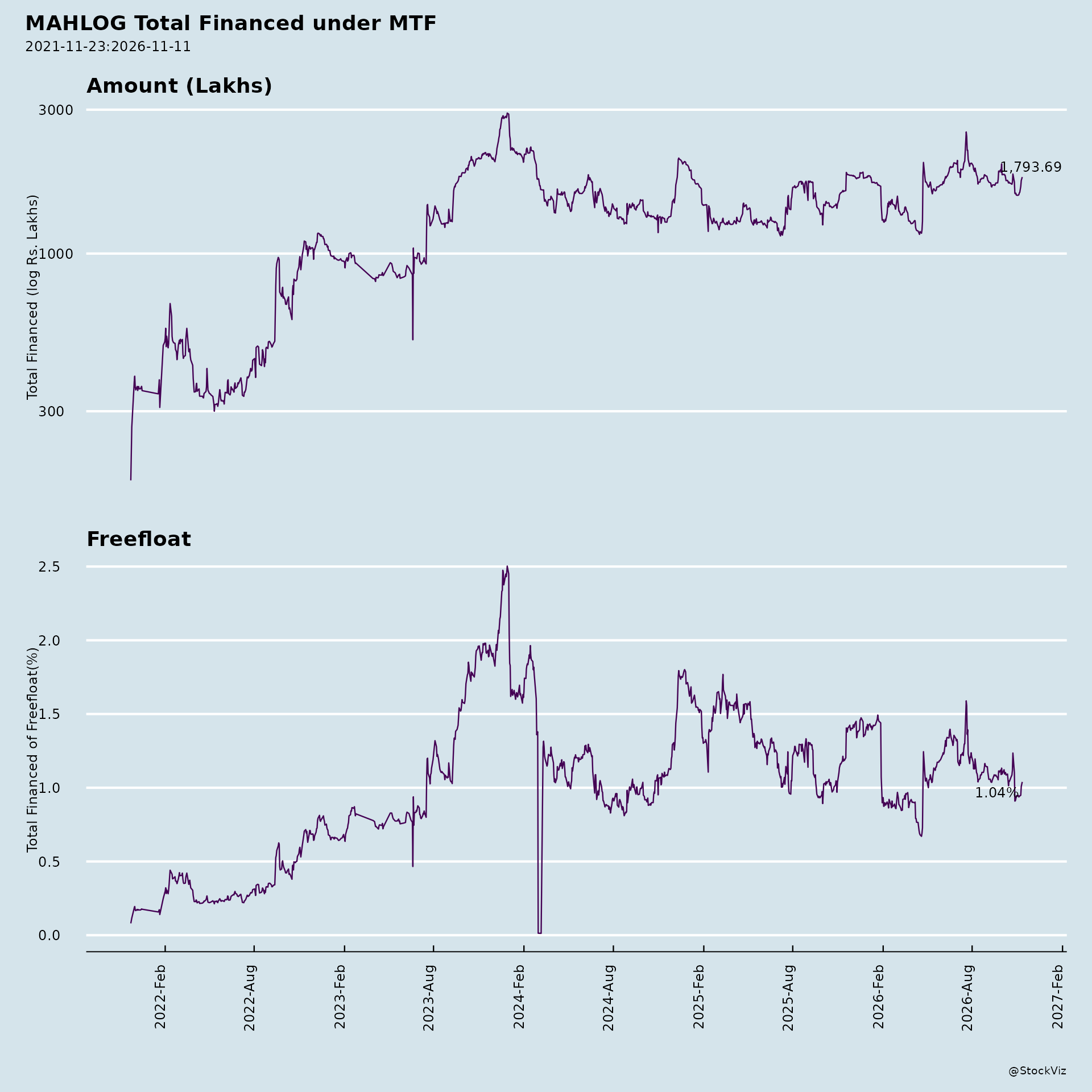
Margined
AI Summary
asof: 2026-09-17
Mahindra Logistics (MAHLOG) — Recent Corporate Announcements
1. Headwinds and Challenges
Last Mile Delivery — deliberate de-growth amid pricing and cost pressure. The Last Mile Delivery business de-grew 16% year-on-year in Q1 FY27. The company attributes this to a “portfolio recalibration,” described as a conscious strategic choice to prioritize profitable customers amid sustained pricing and cost pressures. Revenue fell from ₹85.0 Cr in Q1 FY26 to ₹71.2 Cr in Q1 FY27, and was also down 1.4% sequentially from ₹72.2 Cr in Q4 FY26.
Freight Forwarding — sharp decline. Freight Forwarding revenue fell to ₹45.3 Cr in Q1 FY27, down 38.6% year-on-year from ₹73.8 Cr and down 49.2% sequentially from ₹89.2 Cr in Q4 FY26. Gross margin fell to ₹4.6 Cr from ₹7.0 Cr a year earlier and ₹9.9 Cr in the prior quarter. The company describes the segment’s focus as “rebuilding momentum while maintaining strong customer service and operational discipline.”
Express — still loss-making at EBITDA level. Although Express revenue grew 58% year-on-year to ₹152.4 Cr, the segment reported an EBITDA loss of ₹1.6 Cr in Q1 FY27 (versus a loss of ₹11.8 Cr in Q1 FY26 and ₹2.5 Cr in Q4 FY26). The business remains in turnaround, with interventions listed around backhaul utilization, FM/LM cost reduction, service level enhancements, pricing frameworks, and reducing loss-making customers.
Mobility margin pressure. While Mobility revenue grew 38% year-on-year to ₹111.0 Cr, gross margin was up only 2% year-on-year at ₹8.9 Cr, and segment EBITDA of ₹2.5 Cr was down 21.8% sequentially from ₹3.1 Cr in Q4 FY26.
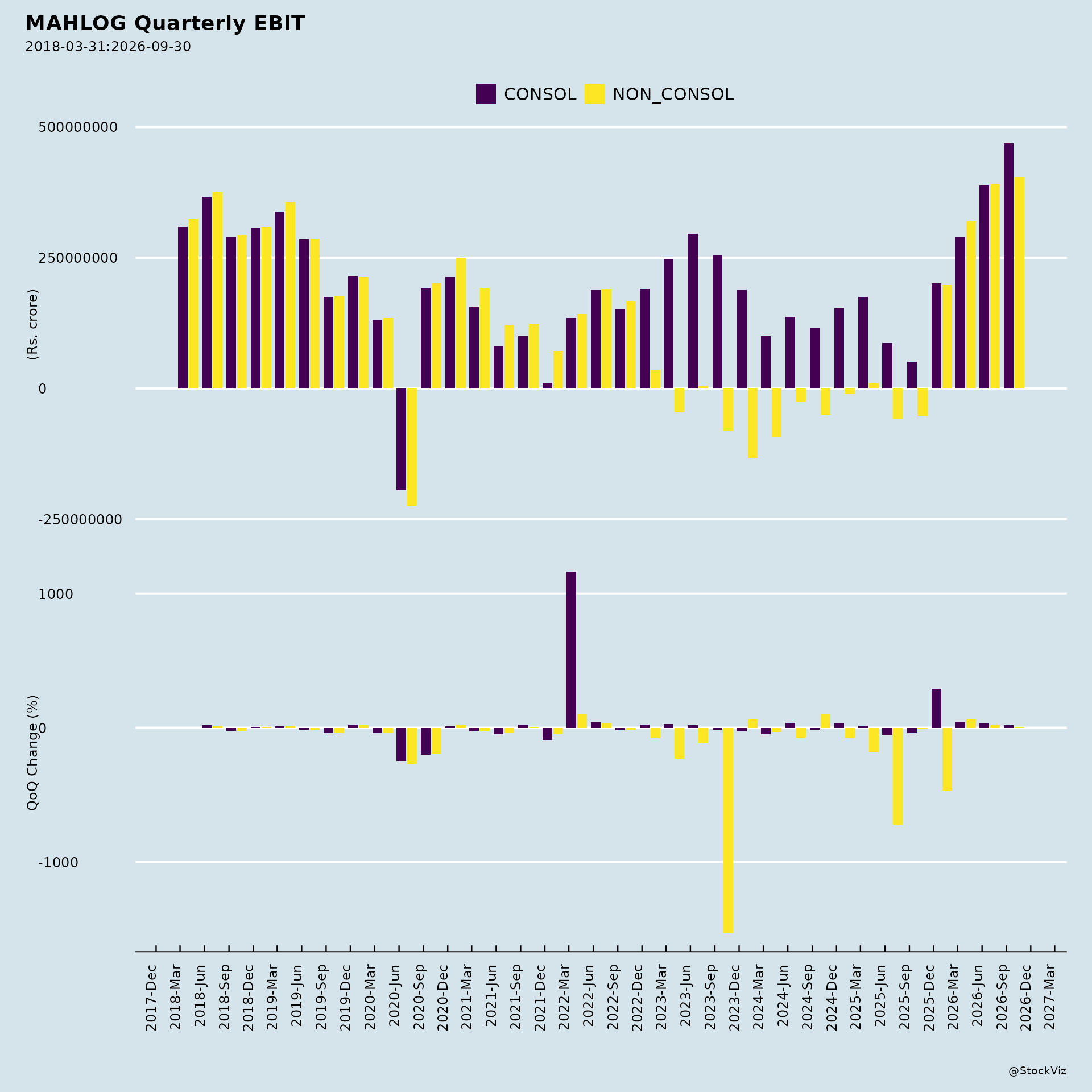
Margin dilution at consolidated level. Consolidated gross margin was 9.7% in Q1 FY27, down from 10.5% in Q4 FY26 (though up from 9.4% in Q1 FY26). Reported EBITDA margin was 5.8%, down from 6.3% sequentially. Adjusted EBITDA (after deducting rent expenses) was 2.8%, down from 3.2% in Q4 FY26.
Rising rent and depreciation costs. Rent expenses rose to ₹58.6 Cr in Q1 FY27 from ₹55.1 Cr in Q4 FY26 and ₹43.9 Cr in Q1 FY26. Depreciation and amortisation rose to ₹72.31 Cr from ₹64.57 Cr a year earlier, with lease depreciation alone at ₹51.9 Cr.
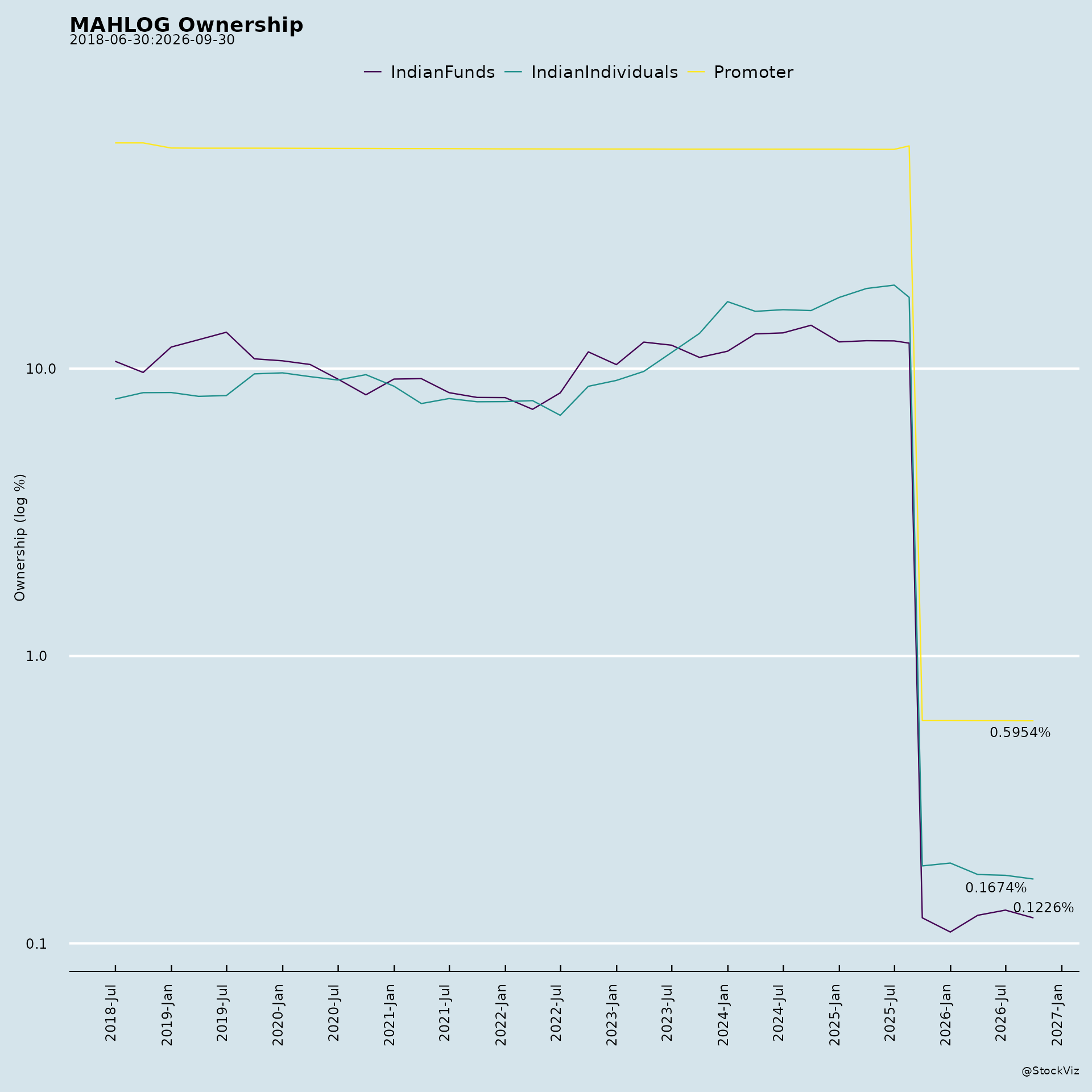
Related party dependence. The AGM approved a resolution for entering into Material Related Party Transactions between the company and Mahindra & Mahindra Limited, its promoter and holding company.
2. Tailwinds and Growth Prospects
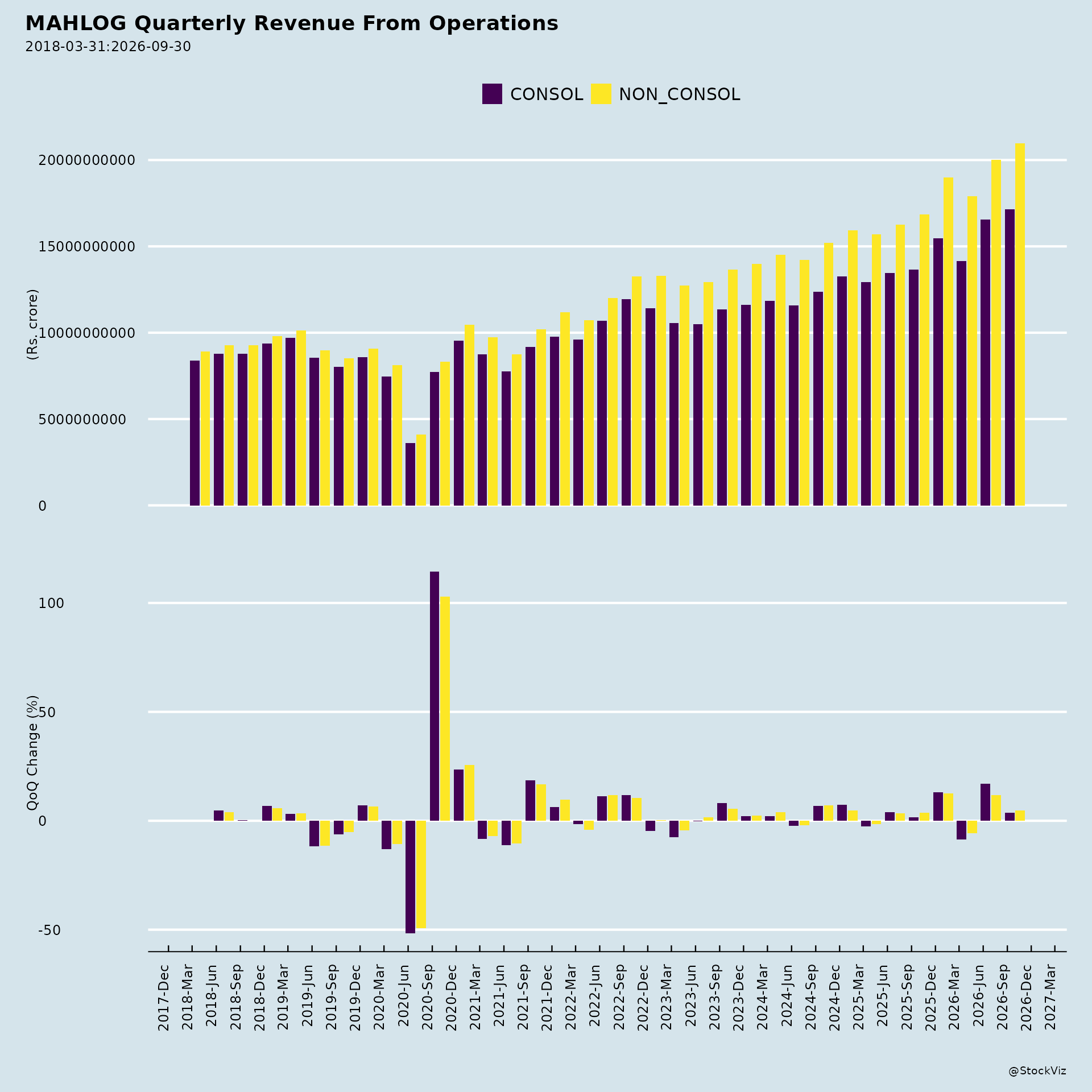
Strong consolidated revenue growth. Q1 FY27 consolidated revenue was ₹2,002.9 Cr, up 23% year-on-year and 12% sequentially. The press release describes this as broad-based growth across 3PL, Express, and Mobility segments.
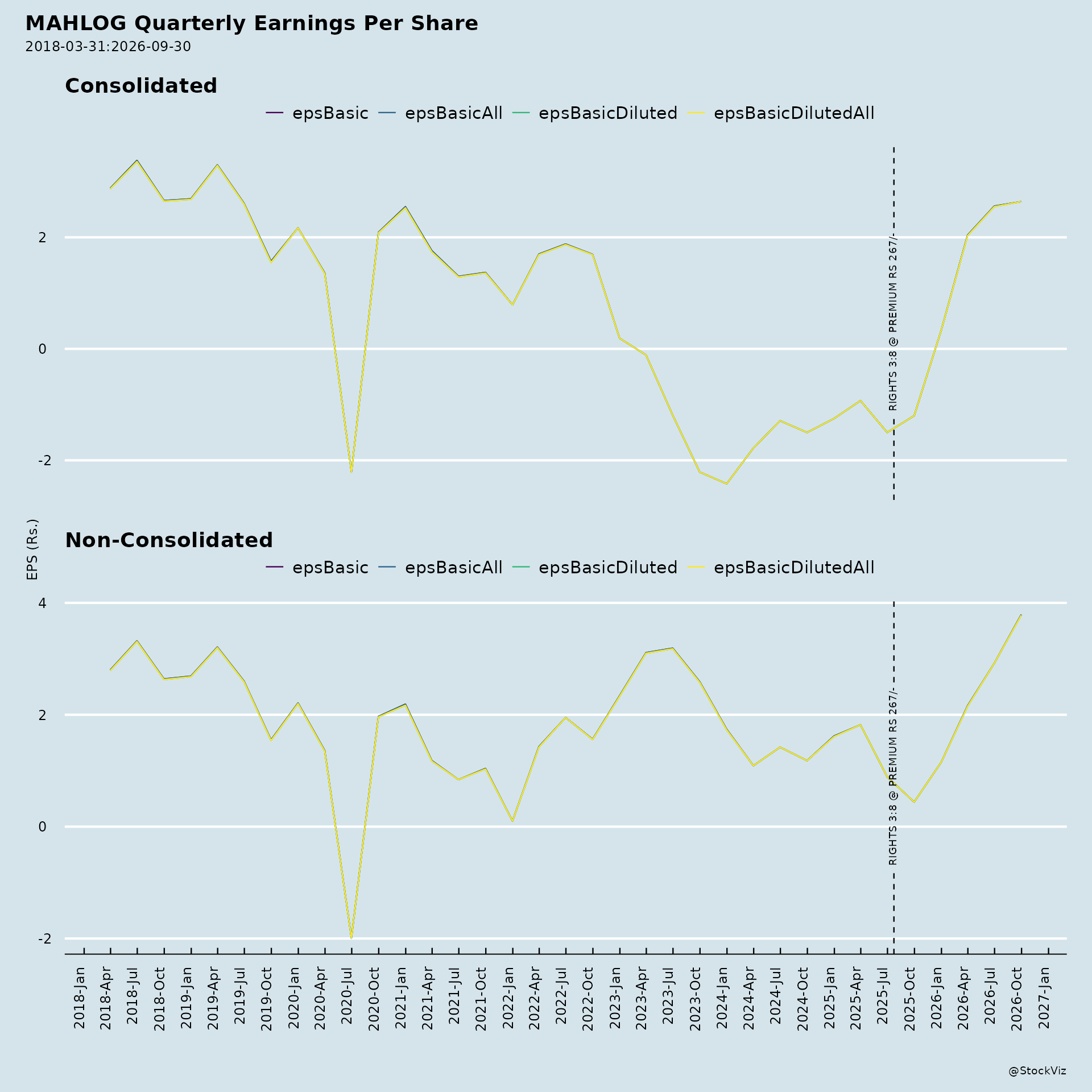
Return to profitability. Reported PAT was ₹25.4 Cr in Q1 FY27, compared with a loss of ₹10.8 Cr in Q1 FY26 and profit of ₹20.2 Cr in Q4 FY26. The press release notes PAT improvement for the fourth consecutive quarter. Diluted EPS was ₹2.55 versus ₹(1.44) in Q1 FY26 and ₹2.03 in Q4 FY26.
Contract Logistics strength. Contract Logistics revenue grew 26% year-on-year to ₹1,623.1 Cr, with EBITDA growth of 31% to ₹111.7 Cr. Gross margin rose 20.5% year-on-year to ₹165.5 Cr. The company cites operating efficiencies, cost discipline, improved customer-level profitability, and operating leverage.
Express turnaround progress. Express gross margin turned positive at ₹9.2 Cr versus negative ₹3.6 Cr in Q1 FY26. The press release states gross margin and EBITDA improvement for the fourth straight quarter, led by a mix of volumes and yield.
Last Mile profitability improvement. Despite revenue de-growth, Last Mile EBITDA improved to ₹2.6 Cr from a loss of ₹0.5 Cr in Q1 FY26, with gross margin up 62% year-on-year at ₹6.3 Cr.
Mobility expansion. Mobility revenue grew 38% year-on-year driven by new B2B customer additions, with the recently launched airport taxi business at Noida airport cited as a B2C opportunity.
E-commerce and quick commerce scale. Management commentary notes the e-commerce and quick commerce business “continues to scale,” with the investment thesis citing revenue of approximately ₹1,000 Cr per annum in the e-comm/Q-comm segment.
Warehouse expansion. Warehouse space under management stood at 21.9 million square feet, an increase of 1.52 million square feet over the prior quarter with new sites added for specific customers.
M&M business growth. The investment thesis cites the M&M business as “profitable & large,” growing at approximately 20% CAGR over the last three years.
Strategic imperatives. Listed focus areas include penetrating deeper into existing segments, entering volumetric and new segments, improving customer satisfaction, improving lane utilizations and coverage, reducing transportation costs, automating workflows, and deploying agentic-AI use cases.
Sustainability positioning. The company reports 1,200+ EVs across 2W, 3W and 4W PCV; ~65 million green km with EVs; 4.4 million sq ft of solar-powered warehouses; 5 IGBC Gold & Platinum certified buildings; 1,73,800+ saplings planted; and a carbon neutral by 2040 goal. It received an Outstanding Achievement Award from CIE Automotive and published a BRSR Integrated Annual Report.
3. Key Risks
Segment concentration. Supply Chain Management accounted for ₹1,891.9 Cr of ₹2,002.9 Cr consolidated revenue in Q1 FY27, with Contract Logistics alone at ₹1,623.1 Cr. Consolidated performance is heavily dependent on this segment.
Turnaround execution risk. The Express business remains EBITDA-negative despite four quarters of improvement, and Freight Forwarding is in a rebuilding phase with sharply lower revenue and margin.
Pricing and cost pressure in Last Mile. The company explicitly cites “sustained pricing and cost pressures” as the reason for portfolio recalibration, indicating an environment where volume growth may not translate into profitability.
Related party transactions. The AGM approved material related party transactions with the holding company, Mahindra & Mahindra Limited.
Forward-looking statement risk. The company’s own safe harbor and disclaimer language notes that statements regarding market opportunity and business prospects are subject to known and unknown risks, uncertainties and assumptions, including the performance of the Indian economy, the logistics industry, competition, ability to implement strategy, growth and expansion levels, technological implementation, and changes in revenue, income or cash flows.
Auditor scope limitation. The statutory auditor did not review the interim financial results of six subsidiaries (total revenues of ₹399.60 Cr for the quarter, total net loss after tax of ₹1.12 Cr) and one joint venture (share of loss after tax of ₹0.05 Cr), relying instead on reports of other auditors.
4. Management Guidance Versus Observed Performance
Management commentary on transformation. Mr. Hemant Sikka, Managing Director and CEO, stated that Q1 FY27 “reflects the continued momentum of our transformation journey evolving into a growth journey,” citing strong revenue growth, a return to healthy profitability, and improved business fundamentals from “disciplined execution, sharper customer-level economics, and a relentless focus on operational excellence.”
Observed performance against that commentary. Consolidated revenue grew 23% year-on-year and PAT turned positive at ₹25.4 Cr, consistent with the described growth and profitability improvement. Contract Logistics grew 26% with EBITDA up 31%, and Express gross margin turned positive — both consistent with the stated drivers.
Express turnaround as stated priority. The investment thesis lists “Express business turnaround a priority — Focus on turning profitable with rapid scale-up.” Observed: Express revenue grew 58% year-on-year, but segment EBITDA remained negative at ₹1.6 Cr in Q1 FY27, though improved from ₹(11.8) Cr in Q1 FY26 and ₹(2.5) Cr in Q4 FY26.
Leadership focus on profitable growth. The investment thesis states “Leadership focus on profitable growth vs. scale-for-scale’s sake.” Observed: Last Mile Delivery revenue de-grew 16% year-on-year while EBITDA improved to ₹2.6 Cr from a loss of ₹0.5 Cr, consistent with prioritizing profitability over volume.
Margin expansion measures. The investment thesis cites “Margin expansion measures under play — Multiple initiatives under progress.” Observed: Consolidated gross margin improved year-on-year (9.4% to 9.7%) but declined sequentially (10.5% to 9.7%); reported EBITDA margin improved year-on-year (4.7% to 5.8%) but declined sequentially (6.3% to 5.8%); adjusted EBITDA margin improved year-on-year (2.0% to 2.8%) but declined sequentially (3.2% to 2.8%).
Vision statement. The company reiterates its vision “To be India’s No. 1 logistics services provider, delivering superior customer experience through technology-led solutions and a passionate team,” and states it remains focused on “profitable growth, intelligent scale, superior customer experience.”
Investor engagement. The company participated in the Elara Capital Conference at Mumbai on Wednesday, 2 September 2026, holding physical meetings with analysts, institutional investors, and funds, briefing attendees on general business overview, industry updates, and published financial results for the quarter ended 30 June 2026. No unpublished price sensitive information was discussed or shared.
ESG rating. NSE Sustainability Ratings & Analytics Ltd assigned Mahindra Logistics Limited an ESG rating of 73 under the category ‘Leader’ based on data for FY 2025-26, though the company did not engage them for the rating.
Governance and board matters. The 19th AGM was held on 20 July 2026, commencing at 3:30 p.m. and concluding at 5:40 p.m. IST, with 64 members present through video conferencing. Resolutions passed included adoption of standalone and consolidated financial statements for FY 2025-26, declaration of final dividend, re-appointment of Dr. Anish Shah as a director liable to retire by rotation, re-appointment of Mr. Ameet Pratapsinh Hariani as an Independent Director for a second term from 1 May 2027 to 30 April 2032, and approval of material related party transactions with Mahindra & Mahindra Limited. The Board also approved the appointment of Mr. Vimal Agarwal as Internal Auditor with effect from 20 July 2026, based on the Audit Committee’s recommendation. Mr. Agarwal is currently the Group Chief Internal Auditor of Mahindra & Mahindra Limited.
Broker Narrative
The broker narrative shifted from a cautious Neutral in July 2023—hit by Rivigo integration losses, freight-forwarding rate cuts, warehouse account attrition and higher finance/tax costs—to a Buy in October 2026 built on contract-logistics momentum, B2B express breakeven and RoCE improvement. Freight forwarding weakness and cost pass-through challenges persisted across both reports, while Rivigo integration, quick-commerce funding and 2W/LCV softness gave way to B2B express profitability and contract-logistics gains in e-commerce, quick commerce, manufacturing and telecom. The strategic emphasis consequently moved from broad EMS and 3PL targets toward higher-margin warehousing mix and contract-logistics wallet share, with RoCE rising from 1.7% to 12.9%.
Fears that came true
- Freight forwarding revenue decline persisted and worsened from a 29% YoY drop to INR 770m in 1QFY24 on lower global rates to a 43.9% YoY decline in the latest period, a macro headwind that coincided with negative actual returns such as -30.2% and -11.6% in the call history.
- Cost and margin pressure endured, with early worries about higher finance costs, tax drag and inflation morphing into subdued contract-logistics gross margins from startup costs and manpower shortages plus an inability to fully pass through labour inflation, contributing to disappointing outcomes in several neutral and reduce calls.
Optimism that failed
- The Enterprise Mobility Services recovery, initially forecast at 39% YoY revenue growth to INR 795m on 17% aviation traffic gains, disappeared from the final narrative and was not cited as a driver despite multiple DISAPPOINTMENT buy/hold calls where actual returns undershot bullish forecasts.
- The strategic 3PL objective of INR 65b revenue by FY26 and an 18% ROE target did not materialize as framed; the latest report only cites RoCE of 12.9% and shifts emphasis to contract-logistics-led growth rather than the original 3PL revenue milestone.
Broker Timeline
30 broker calls · 2023-07-25 to 2026-10-24
CNBC-TV18: ratings, targets and commentary
No recorded CNBC-TV18 statements for this ticker.
Management comments
No recorded management comments with an explicit designation and affiliation for this ticker.
Copyright © 2023 SAS Data Analytics Pvt. Ltd. All rights reserved.