LTF
Equity Metrics
September 24, 2026
L&T Finance Limited
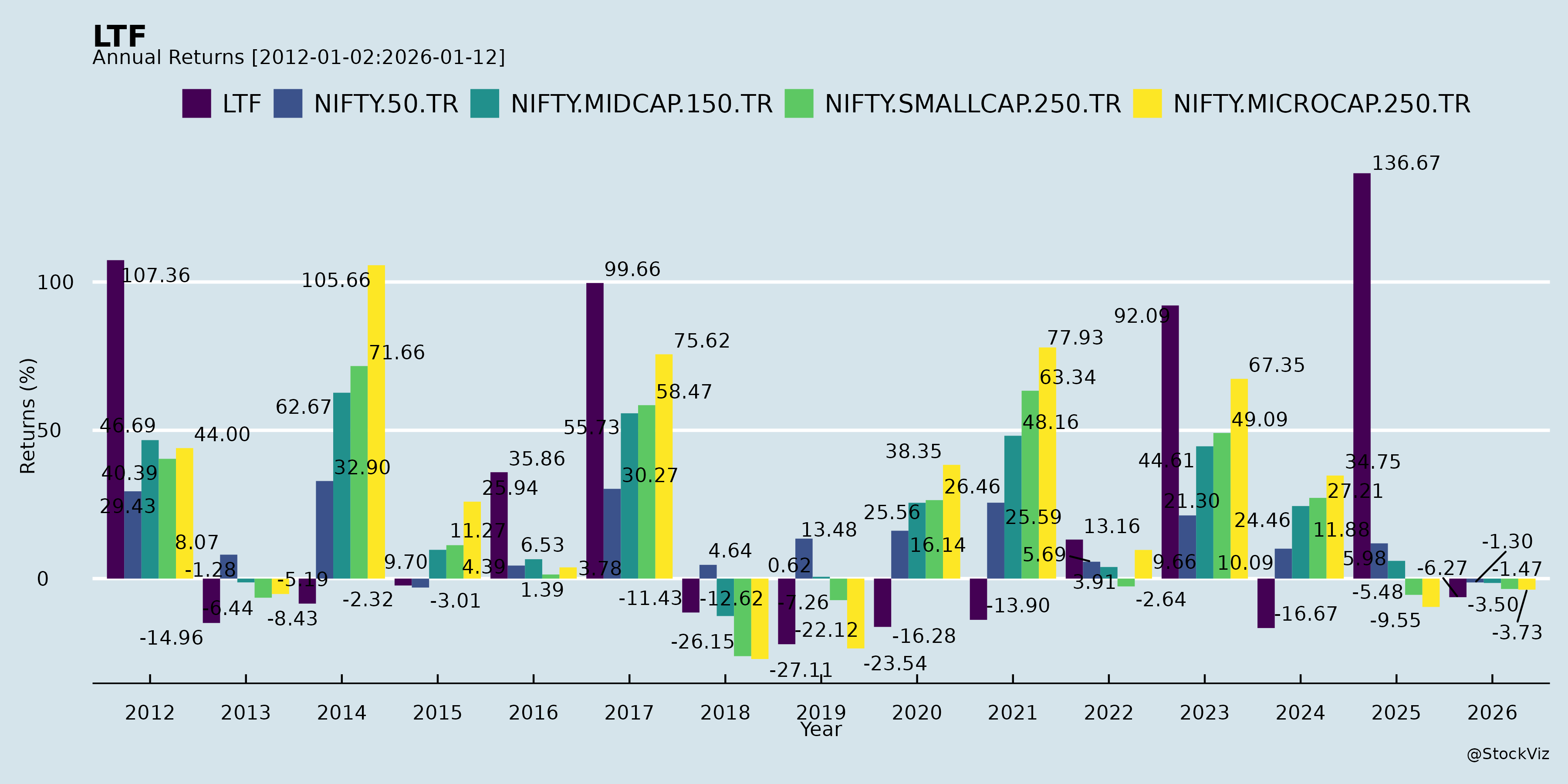
Annual Returns
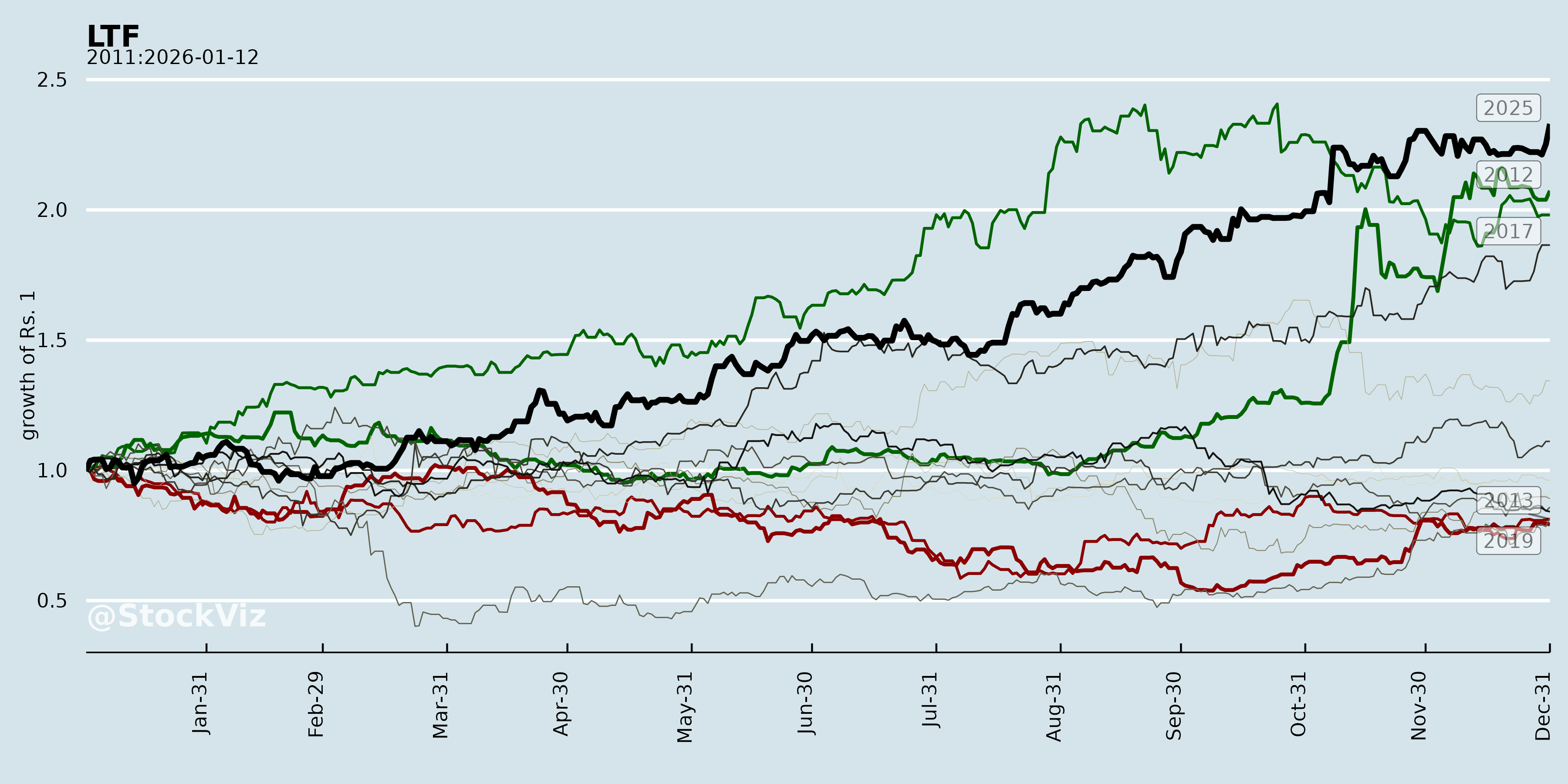
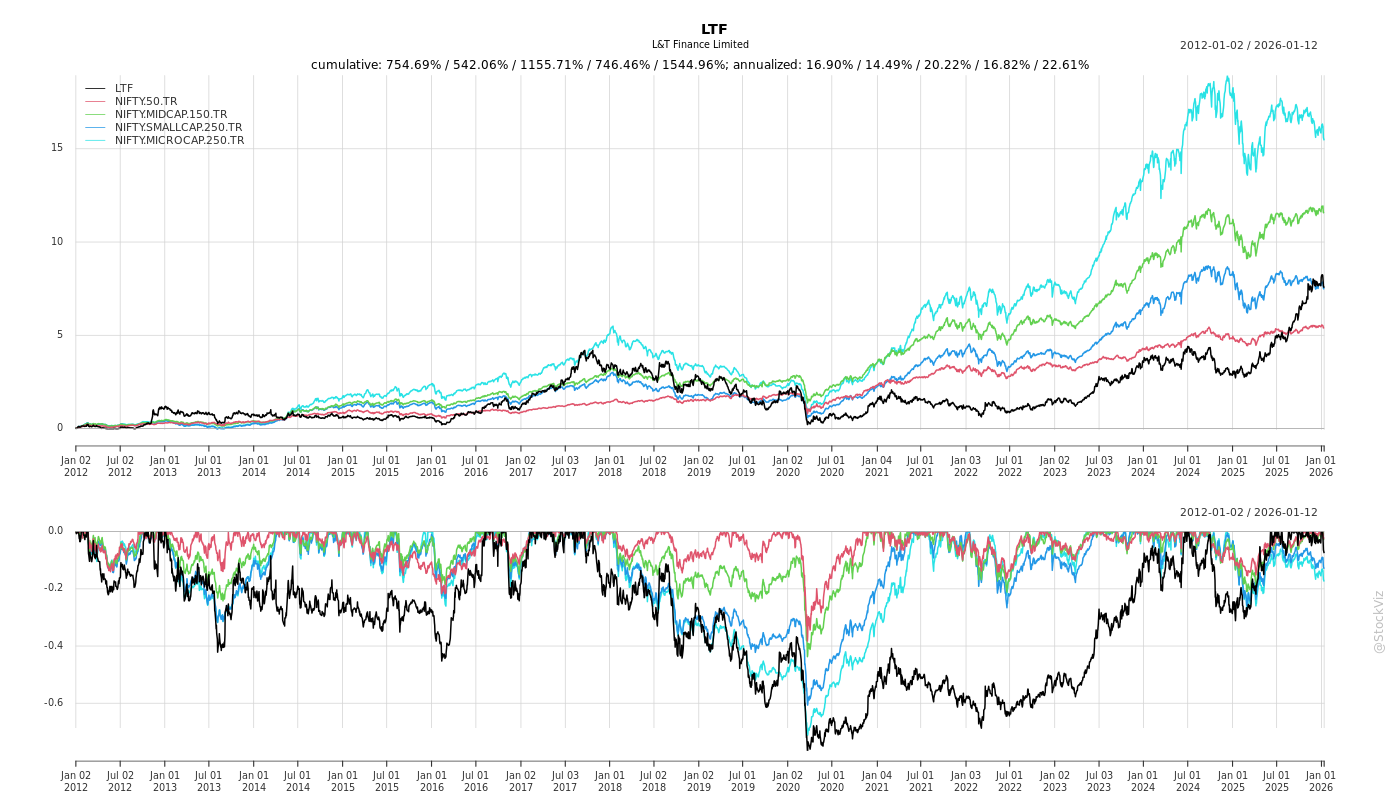
Cumulative Returns and Drawdowns
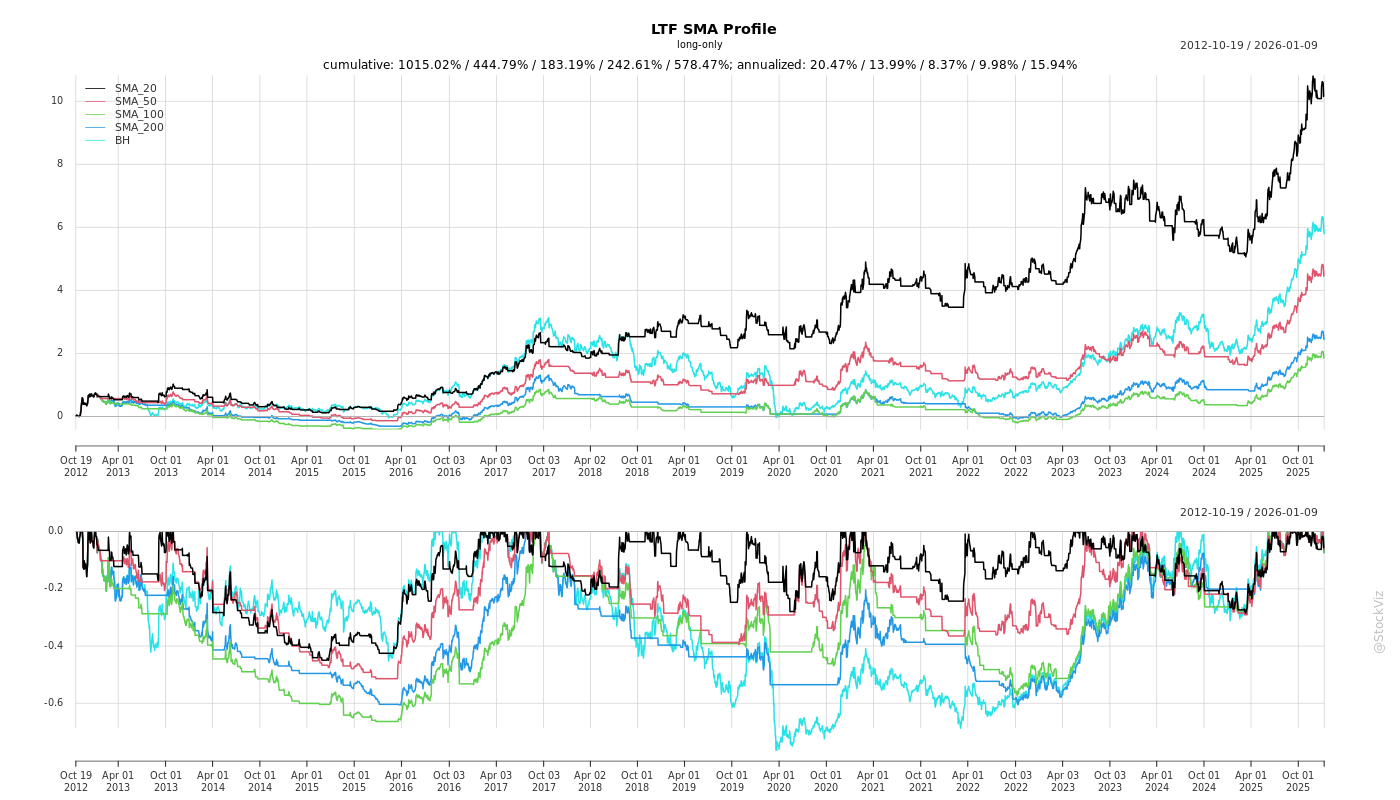
Fundamentals
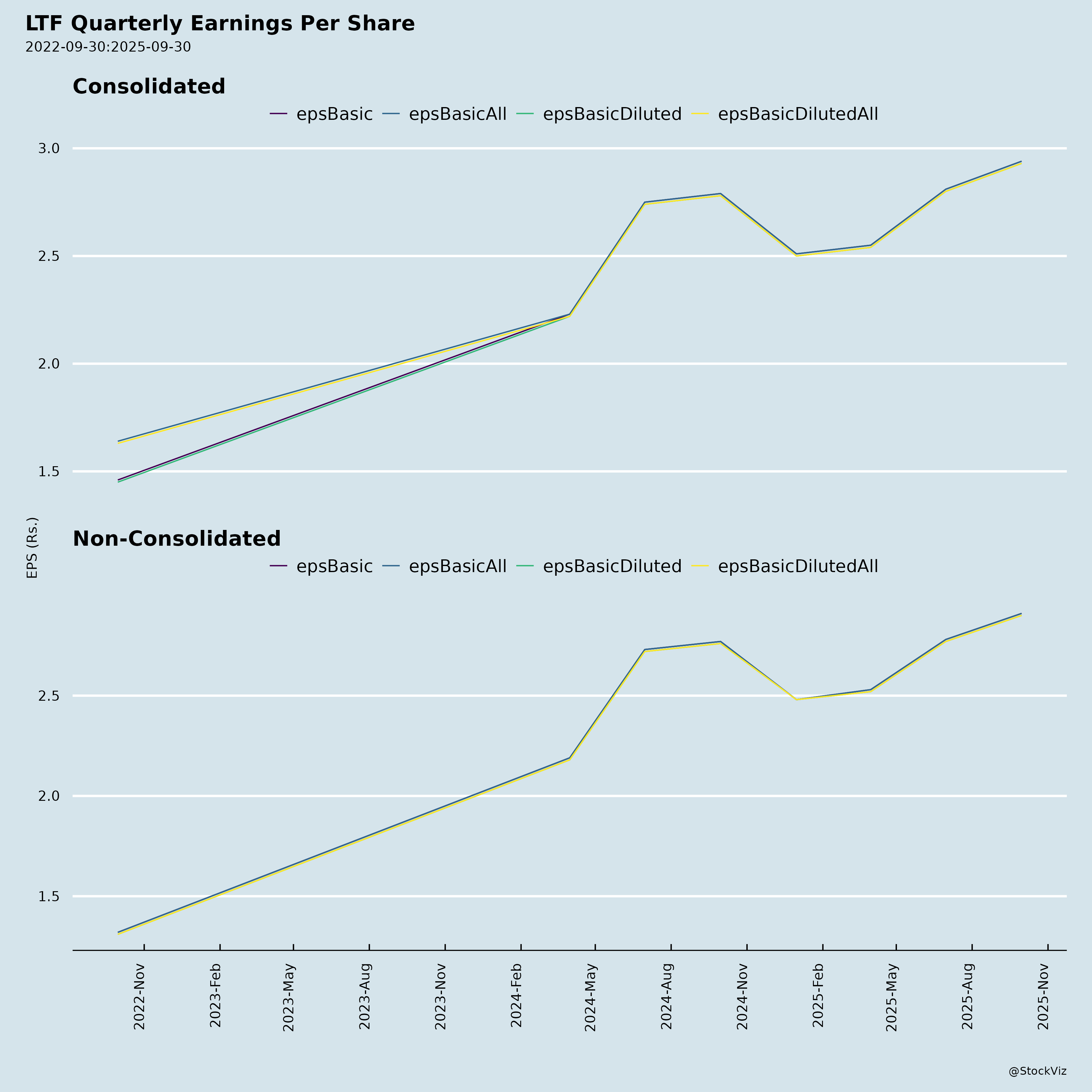
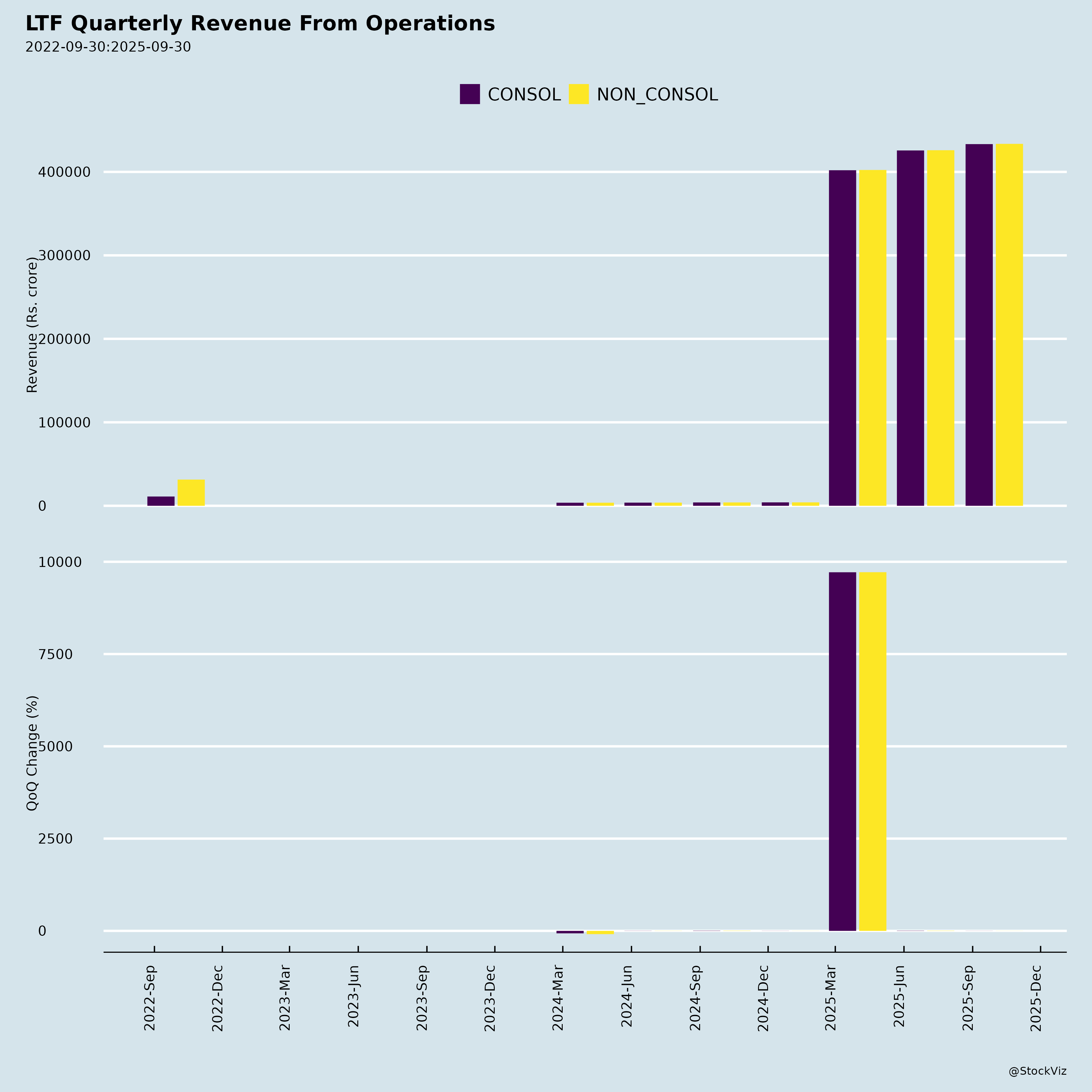
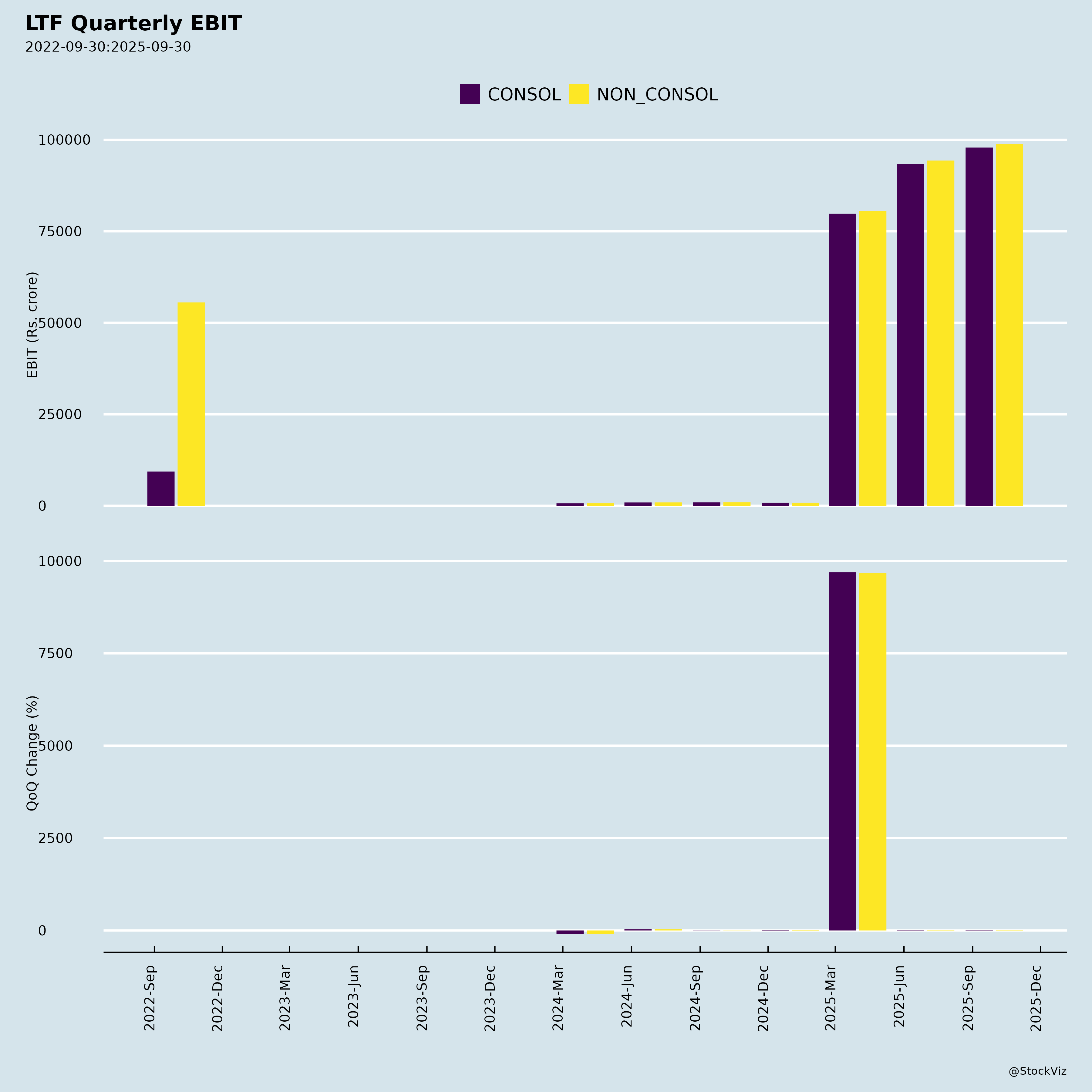
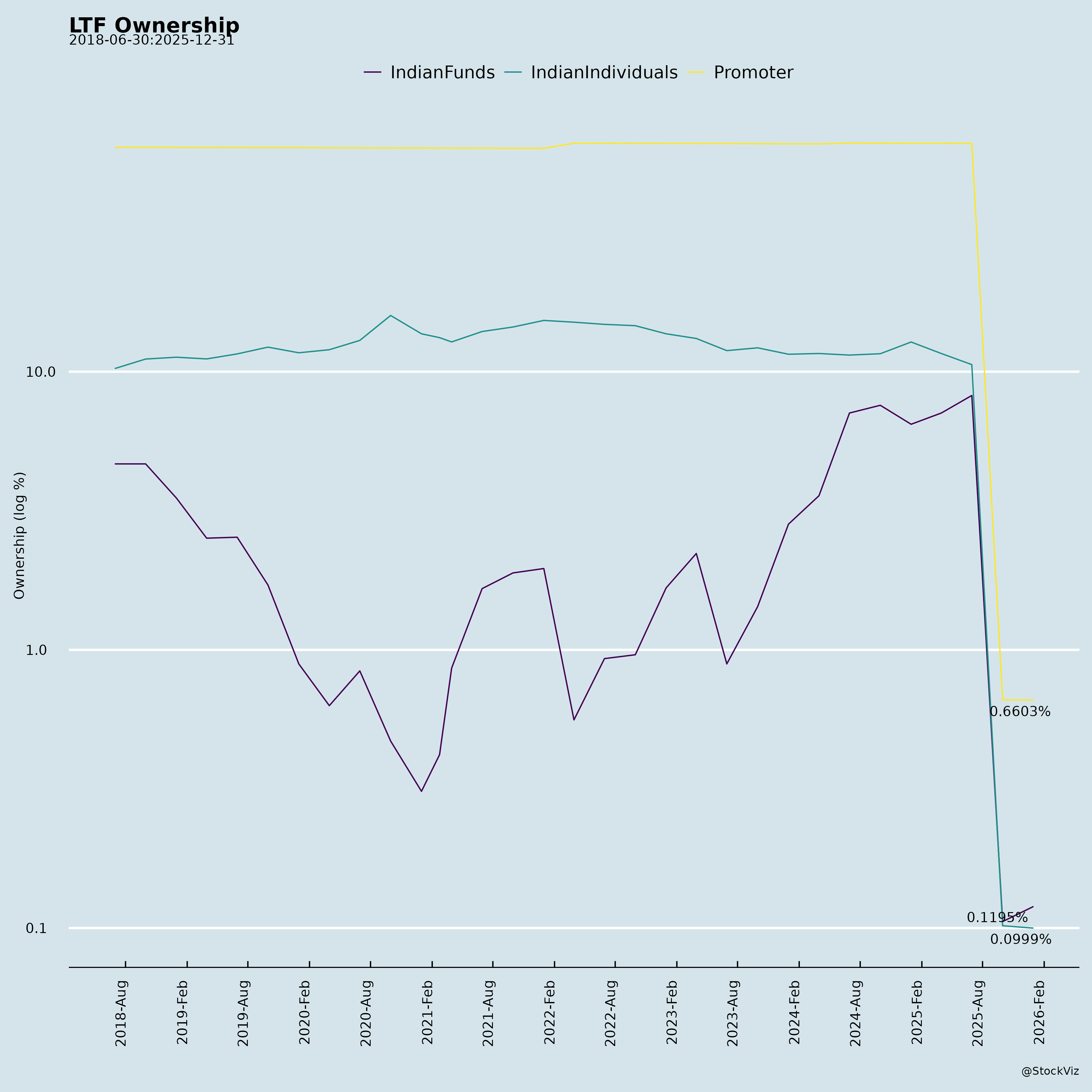
Ownership
Margined
AI Summary
asof: 2026-09-16
Headwinds and Challenges
LTF’s Q1FY27 results were delivered against an external environment described by management as uncertain and challenging. The Managing Director & CEO cited geopolitical uncertainties, inflationary pressures and elevated borrowing costs as the backdrop for the quarter. The company nonetheless anchored its Q1FY27 Weighted Average Cost of Borrowing at 7.20%, down 48 bps from 7.68% in Q1FY26, which it attributes to a diversified liability mix.
The company also operates under regulatory constraints. Its registration as a Corporate Agent (Composite) issued by IRDAI, effective August 31, 2026, remains in force only subject to ongoing compliance with applicable IRDAI Regulations. Its proposed entry into prepaid payment instruments (wallets and cards) is subject to RBI approval. The re-classification of Nabha Power Limited from ‘Promoter Group’ to ‘Public’ category is subject to receipt of necessary approvals from the stock exchanges and other regulatory approvals.
On remuneration, in any financial year where the company has no profits or inadequate profits, salary and allowances (other than variable remuneration) will be paid to Whole-Time Directors as specified and subject to Schedule V of the Act.
Tailwinds and Growth Prospects
Q1FY27 was the first full year opening under the Lakshya 2031 plan, and management reported a strong start: retail book growth of 28% YoY against a target of 20%+ YoY. Consolidated book reached Rs. 1,29,634 Crore, up 27% YoY, and PAT reached Rs. 902 Crore, up 29% YoY. Retail disbursements were Rs. 23,852 Crore, up 36% YoY.
Growth was broad-based across segments: Rural Business Finance book up 22% YoY with disbursements up 24% YoY; Farmer Finance book up 11% YoY; Two-wheeler Finance book up 22% YoY with disbursements up 41% YoY; Personal Loans book up 80% YoY with disbursements up 126% YoY; Housing Loans and LAP book up 20% YoY; SME Finance book up 28% YoY; and Gold Finance book up 182% YoY, with 343 branches as of Q1FY27, a cumulative addition of 213 branches since the June 2025 acquisition.
Management stated that the Rural Business Finance vertical has resumed its growth trajectory, with healthy parameters across new customer acquisition, disbursement growth and collection efficiencies. The company activated 23,467 new villages for Rural Group Loans and MFI in Q1FY27.
Technology is positioned as a differentiator. The PLANET app crossed 2.5 Crore downloads as of June 30, 2026, with over 20 Lakh rural customers, collections of over Rs. 11,500 Crore, over 14 Crore requests serviced, and loans sourced of around Rs. 34,462 Crore. Partner PLANET onboarded over 4,400 dealers and enabled trade advance withdrawals of over Rs. 590 Crore. AI deployments include Project Cyclops (two-wheeler underwriting), Project Helios (SME underwriting, over 40,000 files processed), Project Nostradamus (portfolio management, over 3,000 queries), ShighraM (mortgage legal process automation, over 4,000 files in 11 vernacular languages), and Project Canyon (gold loan origination, with 60% of its codebase AI-generated). A shift to private cloud is projected to be 70% cheaper than hyperscale clouds over a 5-year total cost of ownership.
The company is also entering the digital payments industry through proposed issuance and operation of prepaid payment instruments, subject to RBI approval, and received an IRDAI Certificate of Registration as a Corporate Agent (Composite) effective August 31, 2026.
Key Risks
Forward-looking statements involve risks and uncertainties, and actual results may differ due to factors and assumptions including future changes or developments in the company’s business, competitive environment, information technology, and political, economic, legal, regulatory, environmental, and social conditions in India.
Asset quality remains a monitored area, though the trajectory improved: GS3 fell to 2.86% in Q1FY27 from 3.31% in Q1FY26, and NS3 fell to 0.90% from 0.99%. Credit cost reduced to 2.54% in Q1FY27 from 3.43% (before macro prudential provisions) in Q1FY26, and from 2.64% in Q4FY26 sequentially.
Governance and leadership changes occurred during the period: Mr. Prashant Kumar was appointed as an Additional (Independent) Director for a five-year term from July 10, 2026 to July 9, 2031, subject to member approval. Mr. Sachinn Joshi and Mr. Raju Dodti were appointed as Whole-Time Directors for terms of 2 and 3 years respectively. The Memorandum of Association was amended to add a business clause for prepaid payment instruments.
Management Guidance Versus Observed Performance
Management’s Lakshya 2031 goals are: book growth of 20%+, credit cost below 2%, ROA of 3.0%–3.2%, and ROE of 16%–18%.
Observed Q1FY27 performance against these goals: - Book growth: retail book grew 28% YoY, above the 20%+ target; consolidated book grew 27% YoY. - Credit cost: 2.54%, above the sub-2% goal, though down 89 bps YoY and 10 bps QoQ. - ROA: 2.48%, below the 3.0%–3.2% goal, though up 11 bps YoY from 2.37%. - ROE: 12.71%, below the 16%–18% goal, though up from 10.86% (after macro prudential provisions) in Q1FY26.
Management also guided that annual fixed pay for Whole-Time Directors shall be subject to an annual increment of up to 10% as decided by the Nomination and Remuneration Committee, and that postal ballot voting results will be declared on or before October 7, 2026. The company scheduled a site visit with investors on September 9, 2026, and the UBS Conference on September 10 and 11, 2026, in Mumbai, noting that no unpublished price sensitive information will be shared.
Broker Narrative
The narrative evolved from early themes of wholesale downsizing risk, unsecured slippage fears, and elevated CI ratio toward a sharper focus on margin pressure, macro-driven disbursement curtailment, and credit cost moderation. Persistent themes included retailisation strategy, parentage strength, and asset quality buffers, while the tone shifted from growth optimism to managing near-term headwinds. Later reports increasingly highlighted technology/AI initiatives and explicit RoA/RoE targets as key forward catalysts.
Fears that came true
- Margin pressure from higher funding costs and a competitive liability environment materialized, weighing on NIM and correlating with negative actual returns in the latest report.
- Macro/geopolitical uncertainty materialized as management deliberately forwent ₹1,000–1,200 crore of potential disbursements, contributing to growth moderation and disappointing outcomes.
- Slower moderation in credit costs materialized, impacting RoA expansion and correlating with flat-to-negative returns in recent periods.
- Slippage risks in unsecured retail segments likely contributed to DISAPPOINTMENT outcomes when Emkay Global issued Reduce calls during periods of underperformance.
Optimism that failed
- The projected NIM rise to ~8–9% did not fully sustain as later reports flagged margin pressure from higher funding costs and surplus liquidity weighing on NIM.
- The expectation of sustained RoA expansion toward 2.7–2.8% was delayed, as credit costs moderated slower than anticipated and CI ratio pressures persisted longer than initially expected.
Broker Timeline
25 broker calls · 2023-07-26 to 2026-07-13
Copyright © 2023 SAS Data Analytics Pvt. Ltd. All rights reserved.