LORDSCHLO
Equity Metrics
November 18, 2026
Lords Chloro Alkali Limited
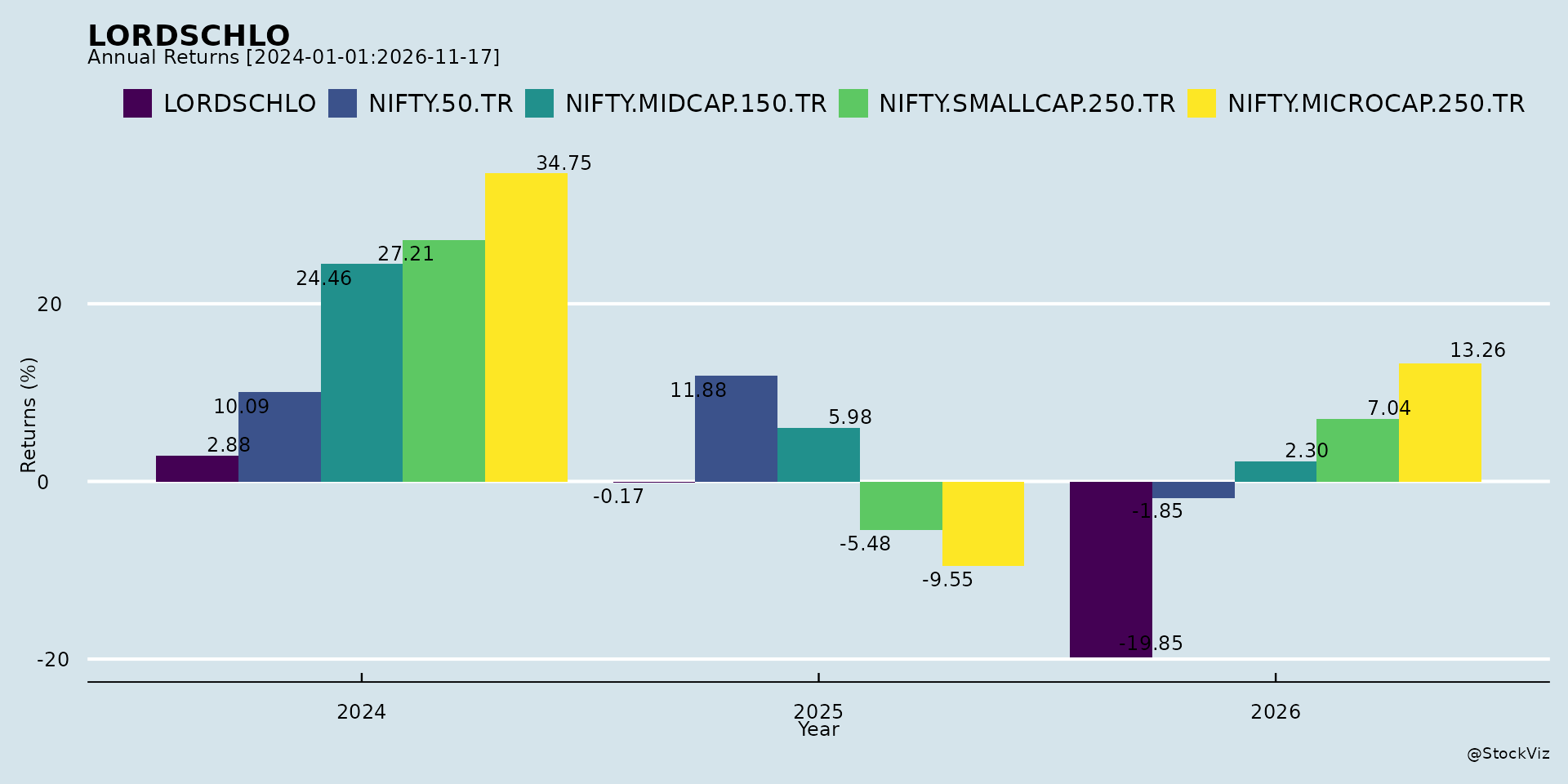
Annual Returns
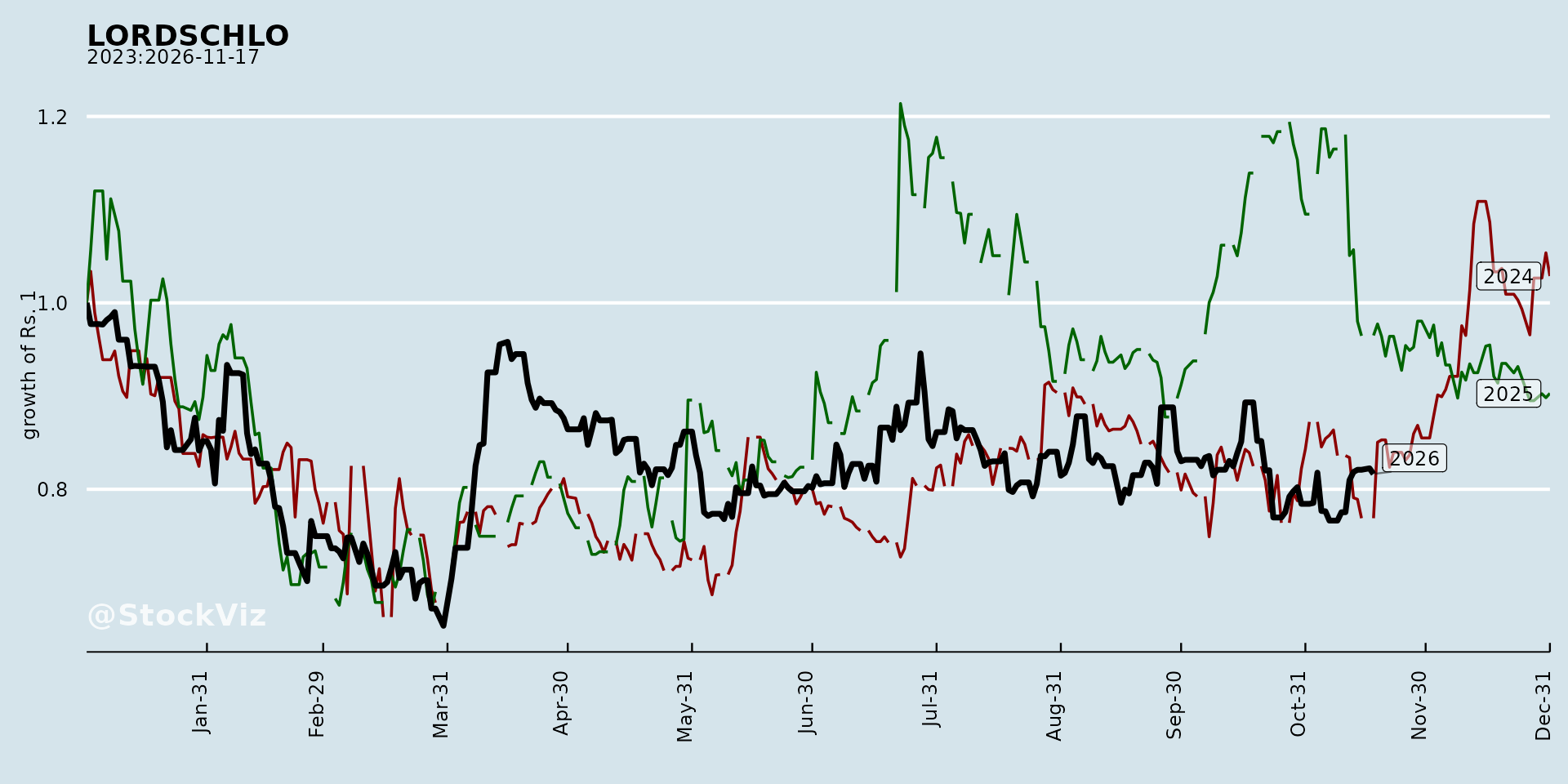
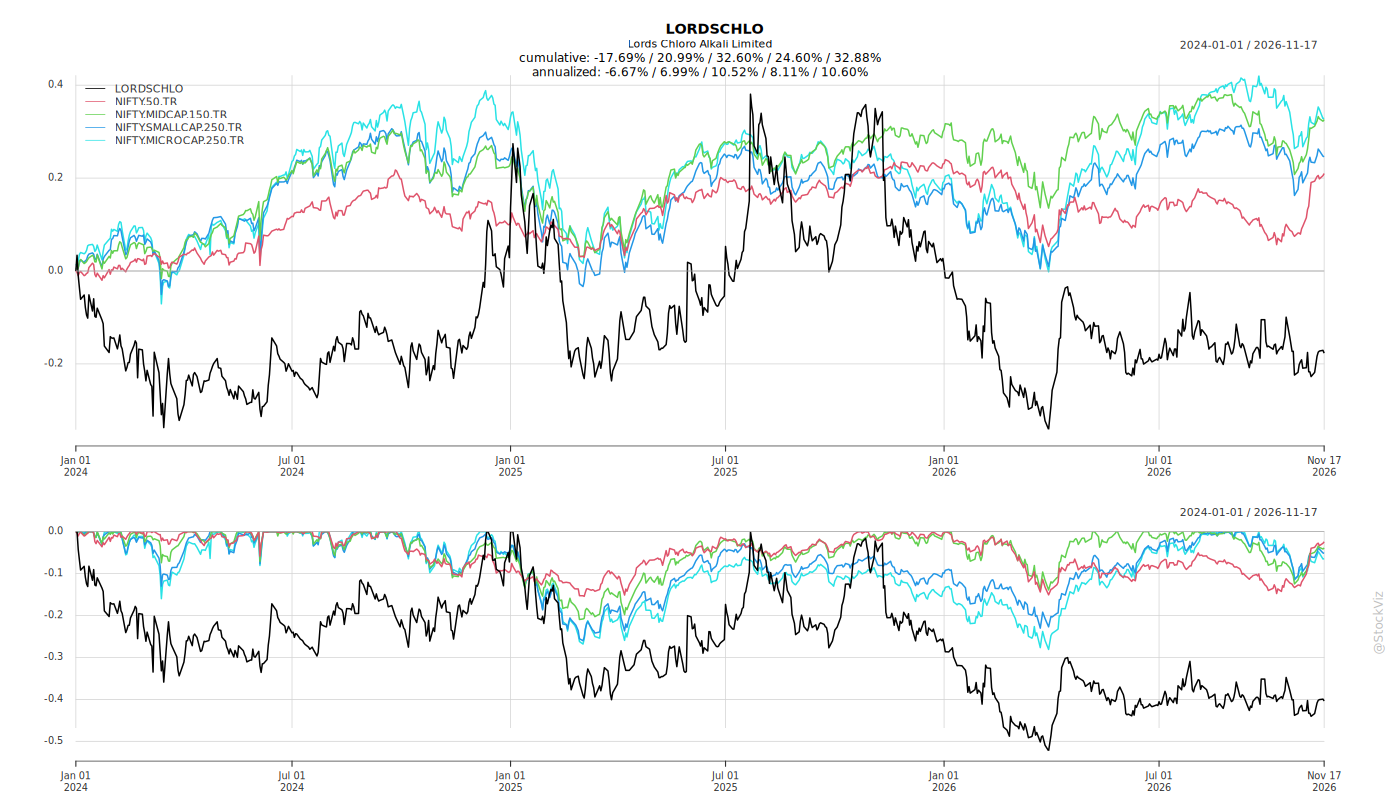
Cumulative Returns and Drawdowns
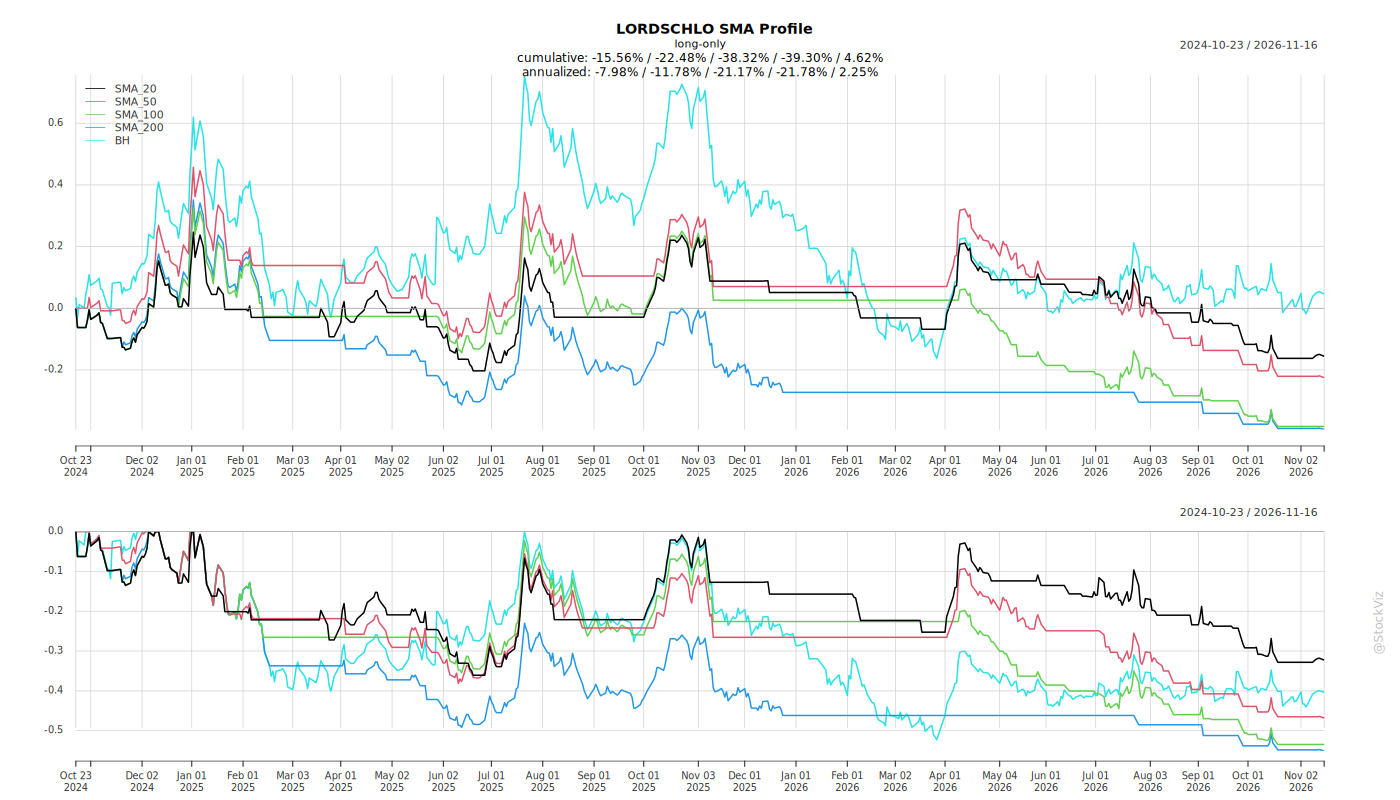
Fundamentals
Ownership
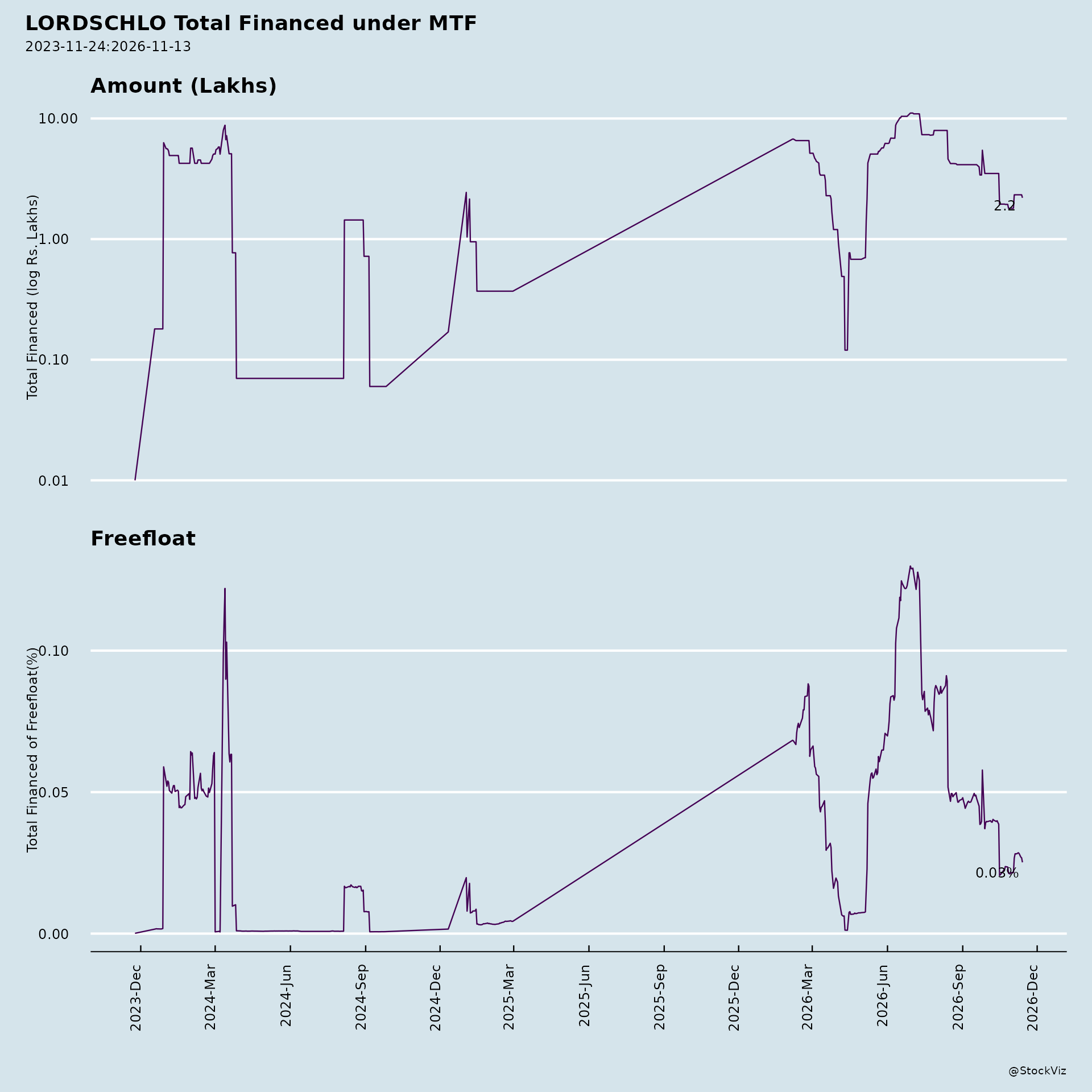
Margined
AI Summary
asof: 2026-09-19
Lords Chloro Alkali Limited — Recent Corporate Announcements
1. Headwinds and Challenges
- Volume softness: Caustic Soda Lye (CSL) volumes declined to 19,953 MT in Q1 FY27 from 21,462 MT in Q1 FY26 (−7.03% YoY) and from 20,934 MT in Q4 FY26 (−4.69% QoQ), even as financial performance improved.
- Energy and input costs: High energy consumption and electricity prices, along with volatile raw material prices such as sodium chloride, remain structural cost pressures for the chloro-alkali business.
- Regulatory and environmental burden: Environmental regulations and concerns, including the phasing out of mercury-based processes and waste disposal issues such as red mud and brine sludge, require ongoing compliance and capital attention.
- Competitive and demand-side constraints: International competition from cheaper imports, particularly from China and the Gulf region, and weak chlorine demand due to a limited robust domestic PVC industry, constrain realizations in key product streams.
- Infrastructure and safety: Lack of infrastructure (power and transportation) and risks related to process safety and the storage/disposal of hazardous gases like chlorine are persistent operational challenges.
- Investor-relations disruption: The Analyst/Investor Meet scheduled for 04 September 2026 was cancelled due to unavoidable circumstances.
2. Tailwinds and Growth Prospects
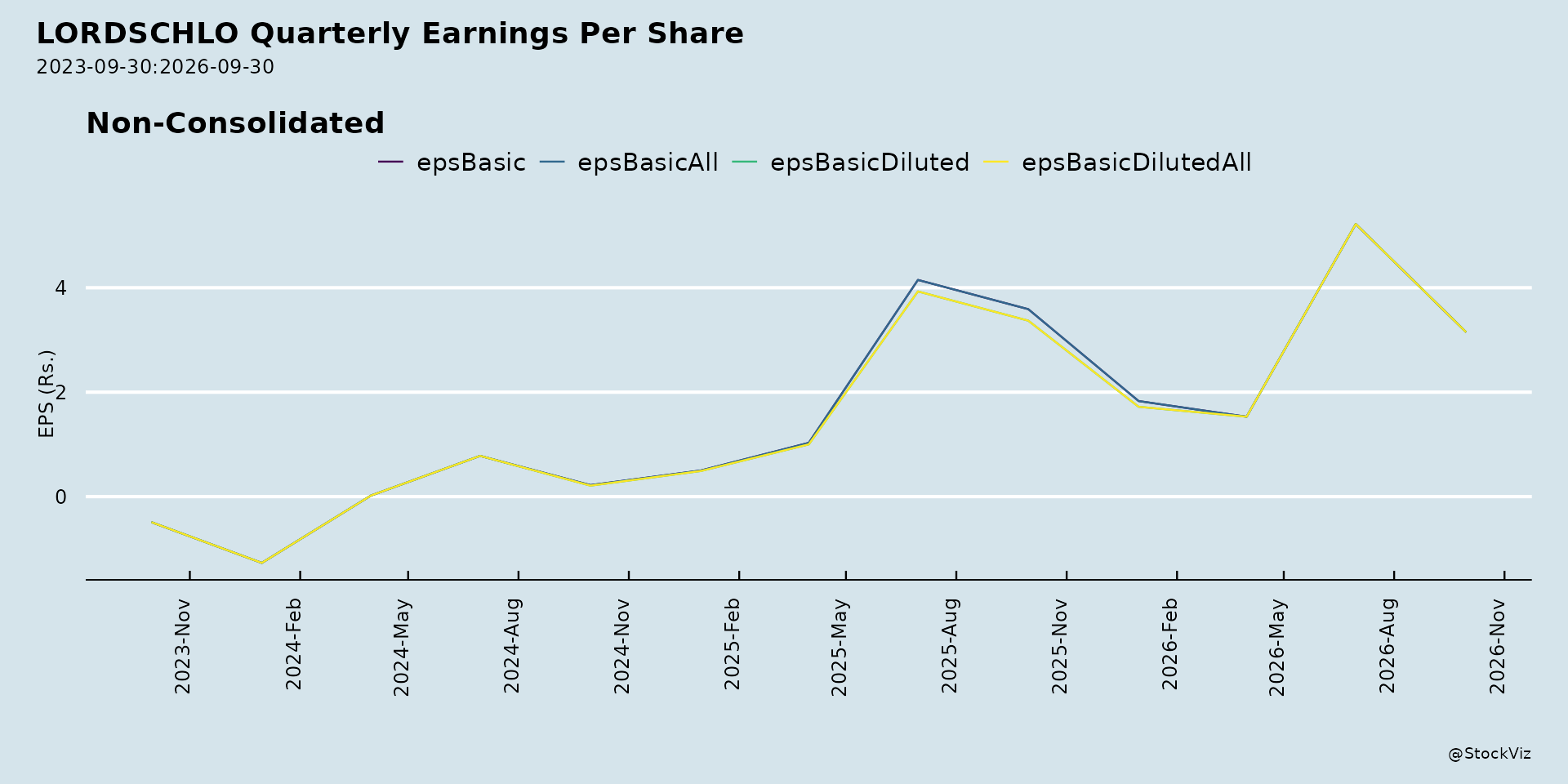
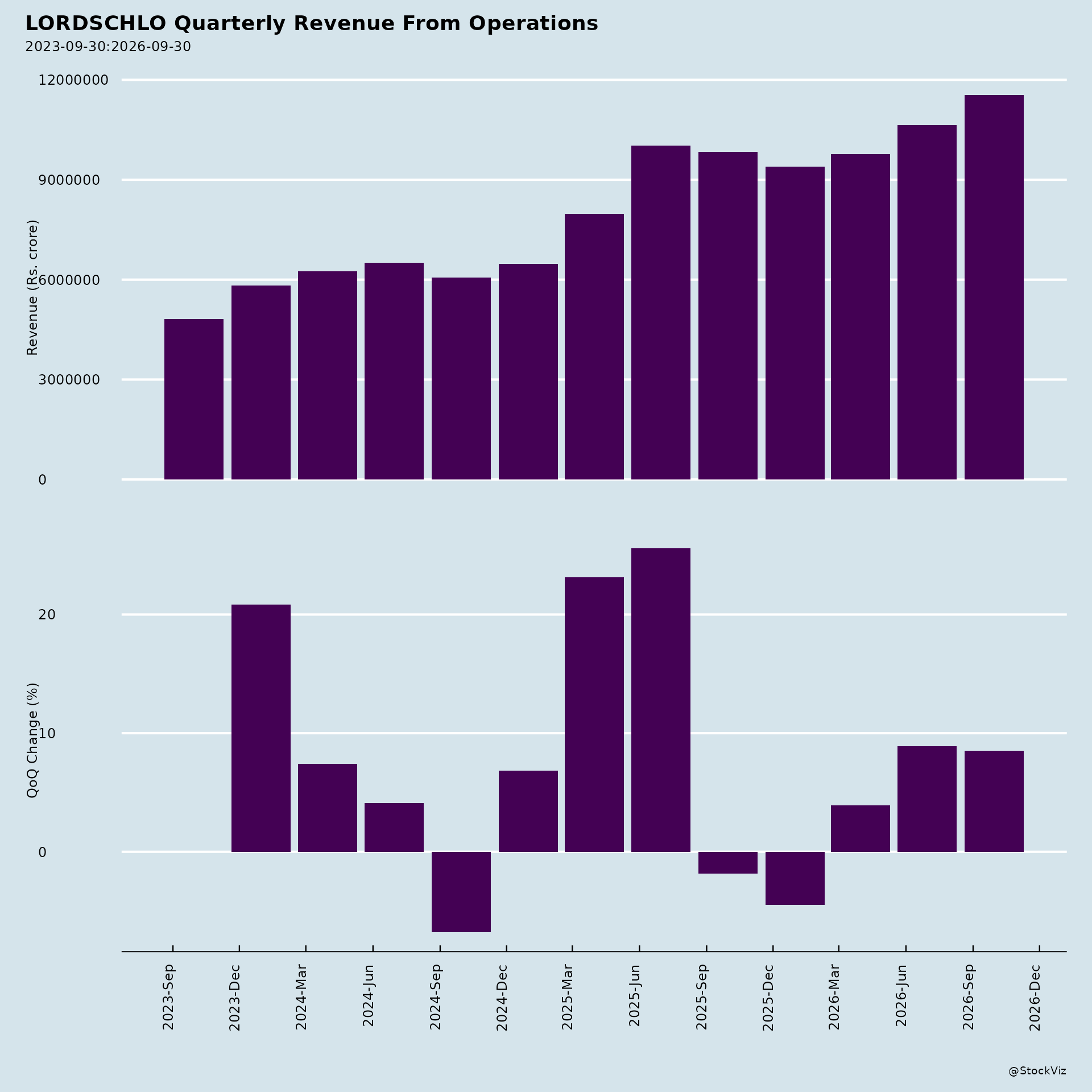
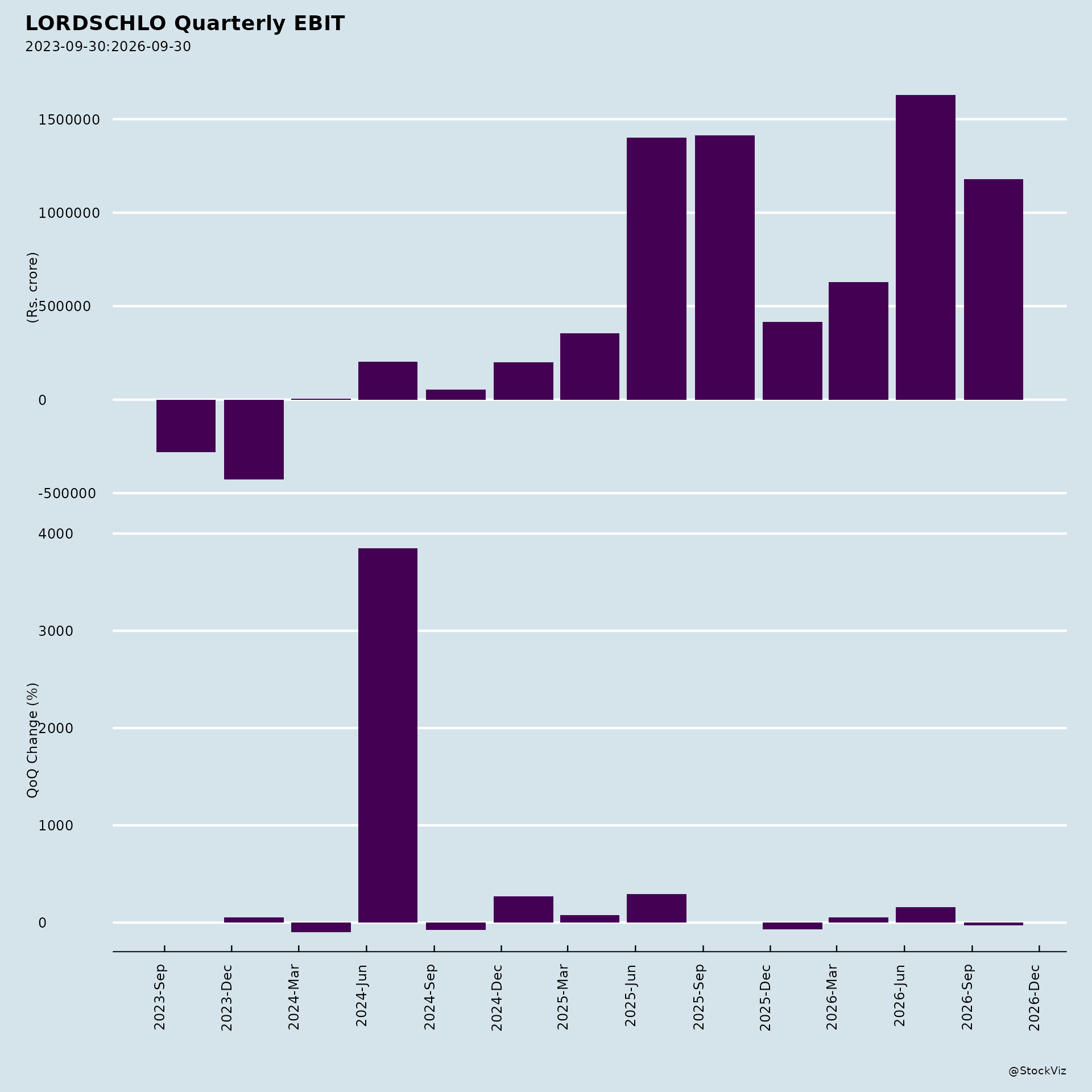
- Record quarterly performance: Q1 FY27 delivered the highest-ever quarterly Total Income, EBITDA and Profit After Tax, with Total Income at Rs. 106.57 crore (up 6.10% YoY), EBITDA at Rs. 22.83 crore (up 10.38% YoY), EBITDA margin at 21.42%, and PAT at Rs. 14.95 crore (up 43.10% YoY).
- Realization-led growth: Performance was driven by higher realizations in Caustic Soda Lye, improved realizations in Chlorinated Paraffin Wax (CPW), and an increase in caustic soda realization during the quarter.
- Demand outlook: Growing global and domestic demand for caustic soda and chlorine derivatives, supported by expanding alumina/aluminium production, pulp and paper growth, water and wastewater treatment infrastructure, textiles, and specialty applications such as sodium-ion batteries and semiconductors.
- Capacity expansion: Strategic scaling of caustic soda capacity to 360 TPD by Q1 FY27 and doubling CPW capacity to 100 TPD in FY27, alongside a Rs. 165 crore capex plan and a total capex outlay of Rs. 315 crore across FY24–FY28 for capacity expansion, renewable energy, and downstream diversification.
- Renewable energy and green positioning: Investments in solar power (16 MW solar park in Bikaner on 45 acres; 10 MW hybrid group captive project in Jaisalmer), targeting total solar capacity of 37 MW by July 2026 and a 40–50% renewable power mix, supporting the transformation into a green chemical company.
- Structural advantages: Cost advantages in Northern India, downstream integration and value addition, and potential global supply-demand imbalances outside India providing export opportunities.
- Market growth projections: The global caustic soda market is expected to reach USD 71.0 billion by 2033 (4.7% CAGR), with global demand reaching 121.42 million tonnes by 2031; the Indian chemical industry is projected to grow 11–12% during 2021–27 and 7–10% during 2027–40.
3. Key Risks
- Import competition: Cheaper imports from China and the Gulf region could pressure realizations and market share.
- Chlorine demand weakness: Limited domestic PVC industry capacity restrains chlorine offtake, affecting integrated economics.
- Regulatory transition risk: Mercury-cell phase-out and environmental compliance (red mud, brine sludge disposal) require capital and operational adaptation.
- Energy price and raw material volatility: Fluctuations in power tariffs and sodium chloride prices can compress margins.
- Execution risk on expansion: Timely execution of the Rs. 165 crore capex plan, capacity expansions (caustic soda to 360 TPD, CPW to 100 TPD), and renewable energy projects is critical to realizing projected benefits.
- Process safety and hazardous materials: Storage and disposal of hazardous gases like chlorine carry inherent safety and environmental risks.
- Governance and capital structure changes: The board approved an increase in the borrowing limit to Rs. 500 crore (in excess of Section 180(1)(c) limits), creation/modification of mortgage and charge up to Rs. 500 crore, an Employee Stock Option Scheme – 2026 covering up to 10,00,000 options, and a change in Registrar and Share Transfer Agent from M/s Alankit Assignment Ltd to M/s Beetal Financial & Computer Services (P) Limited — all subject to member approval at the ensuing AGM.
4. Management Guidance Versus Observed Business Performance
- Guidance: Management stated it remains optimistic about the demand outlook for the chloro-alkali industry, supported by healthy industrial activity and favourable market dynamics, and committed to operational excellence, timely execution of ongoing growth initiatives, disciplined capital allocation, and downstream value addition.
- Observed performance: Q1 FY27 results showed Total Income of Rs. 106.57 crore (vs. Rs. 100.47 crore in Q1 FY26), EBITDA of Rs. 22.83 crore (vs. Rs. 20.68 crore), and PAT of Rs. 14.95 crore (vs. Rs. 10.45 crore), with management attributing the improvement to higher caustic soda production, improved product realizations, enhanced operating efficiencies, disciplined cost management, and lower finance costs.
- Capacity guidance vs. current position: Management targets scaling caustic soda capacity to 360 TPD by Q1 FY27 and doubling CPW capacity to 100 TPD in FY27; the company currently operates with an installed capacity of 300 TPD caustic soda and 50 TPD CPW at its Alwar facility.
- Renewable energy guidance vs. current position: Management targets total solar capacity of 37 MW by July 2026 and a 40–50% renewable power mix; the company has a 16 MW solar park in Bikaner and a 10 MW hybrid group captive project in Jaisalmer.
- Financial trajectory: For FY2025-26, the company reported total revenue from operations of Rs. 39,013.70 lakhs (a 44.37% increase) and net profit after tax of Rs. 2,848.67 lakhs (up from Rs. 618.06 lakhs in FY2025), with the credit rating revised from [ICRA]BBB+ (Negative) to [ICRA]BBB+ (Stable).
- AGM outcome: The 47th Annual General Meeting held on 11 September 2026 passed all 11 resolutions with the requisite majority, including adoption of financial statements, re-appointment of statutory auditors and directors, remuneration approvals, increase in borrowing limits, creation of charges on properties, and approval of the Employee Stock Option Scheme – 2026.
CNBC-TV18: ratings, targets and commentary
No recorded CNBC-TV18 statements for this ticker.
Management comments
No recorded management comments with an explicit designation and affiliation for this ticker.
Copyright © 2023 SAS Data Analytics Pvt. Ltd. All rights reserved.