LALPATHLAB
Equity Metrics
November 18, 2026
Dr. Lal Path Labs Ltd.
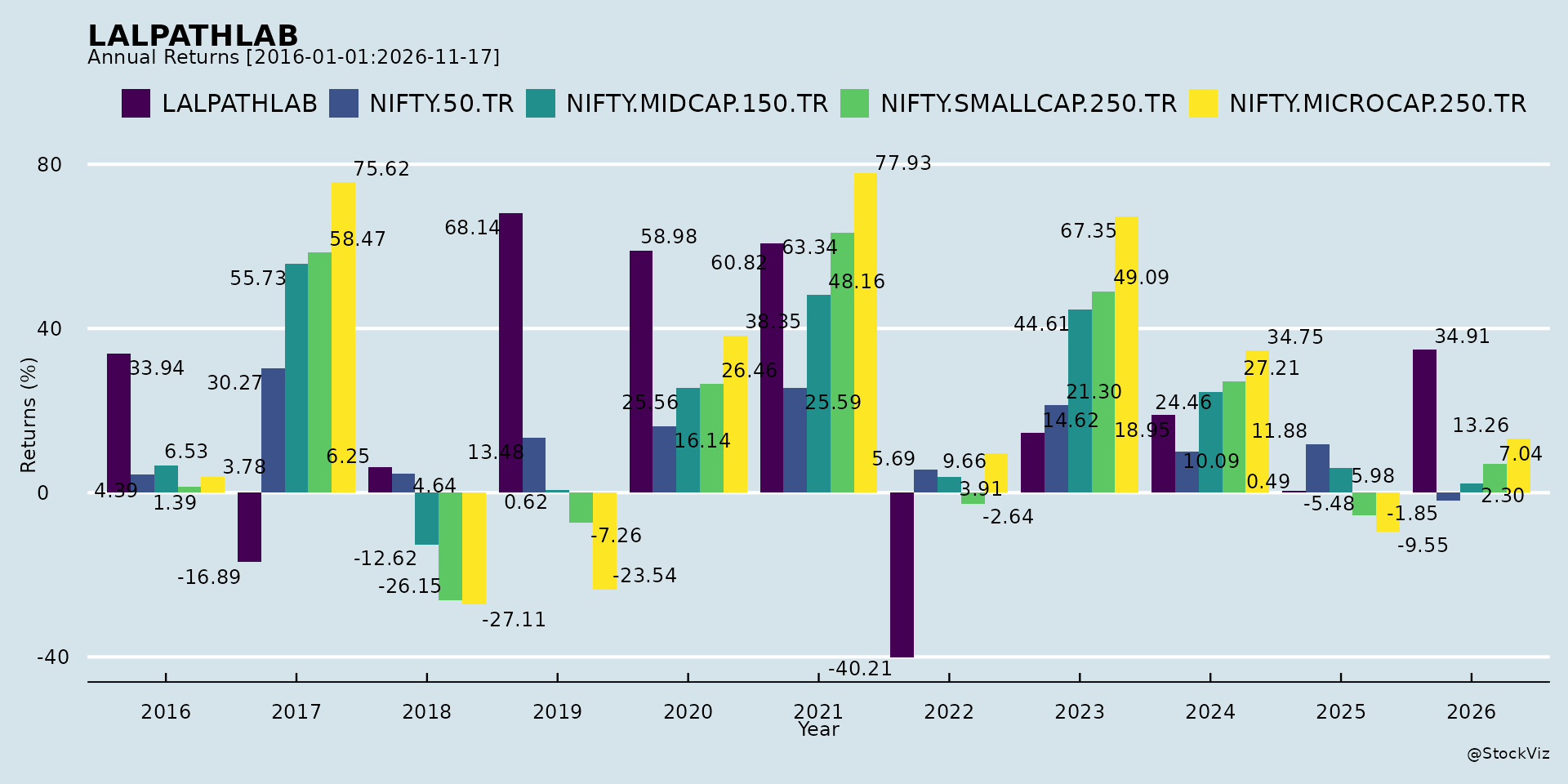
Annual Returns
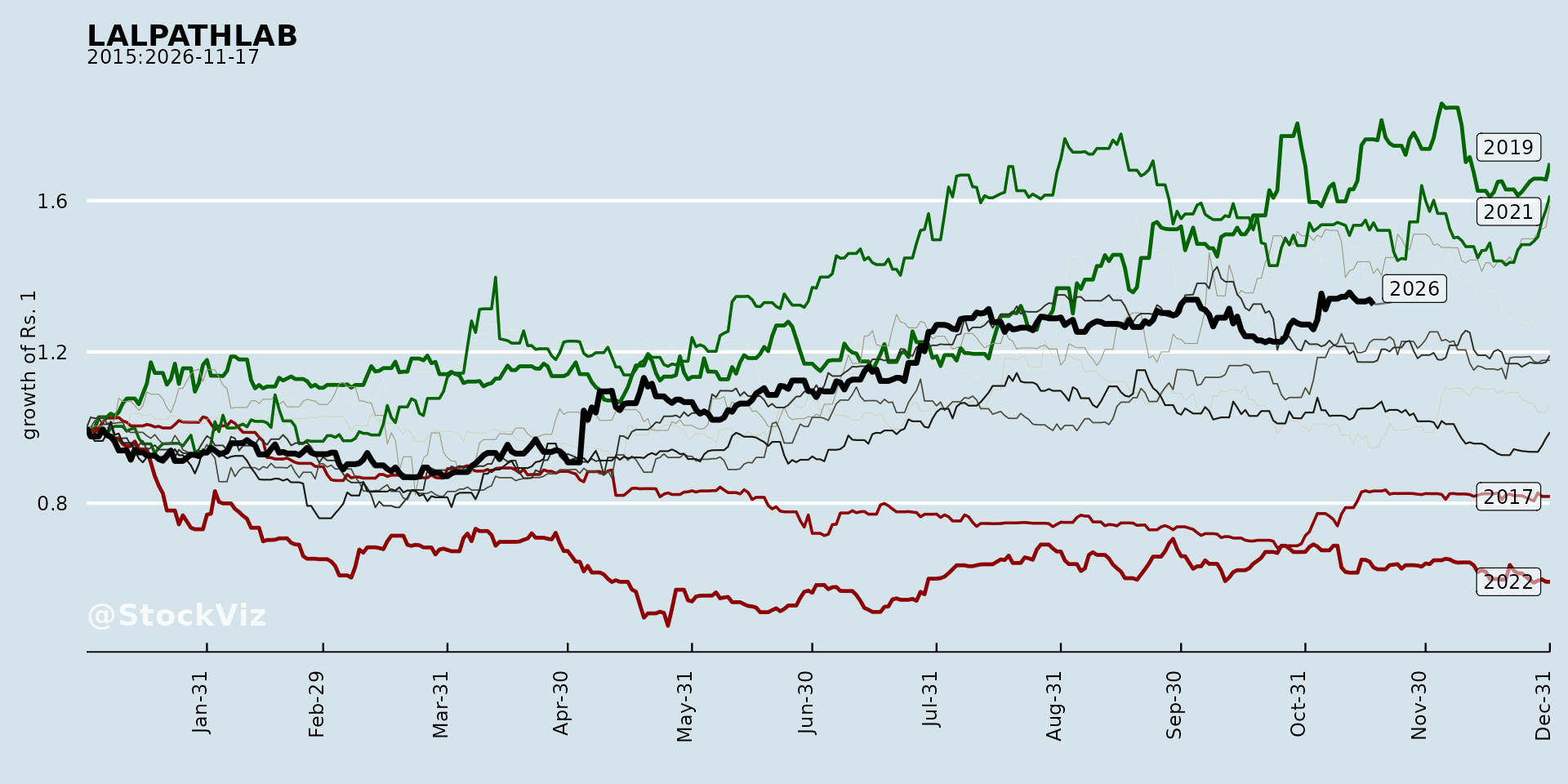
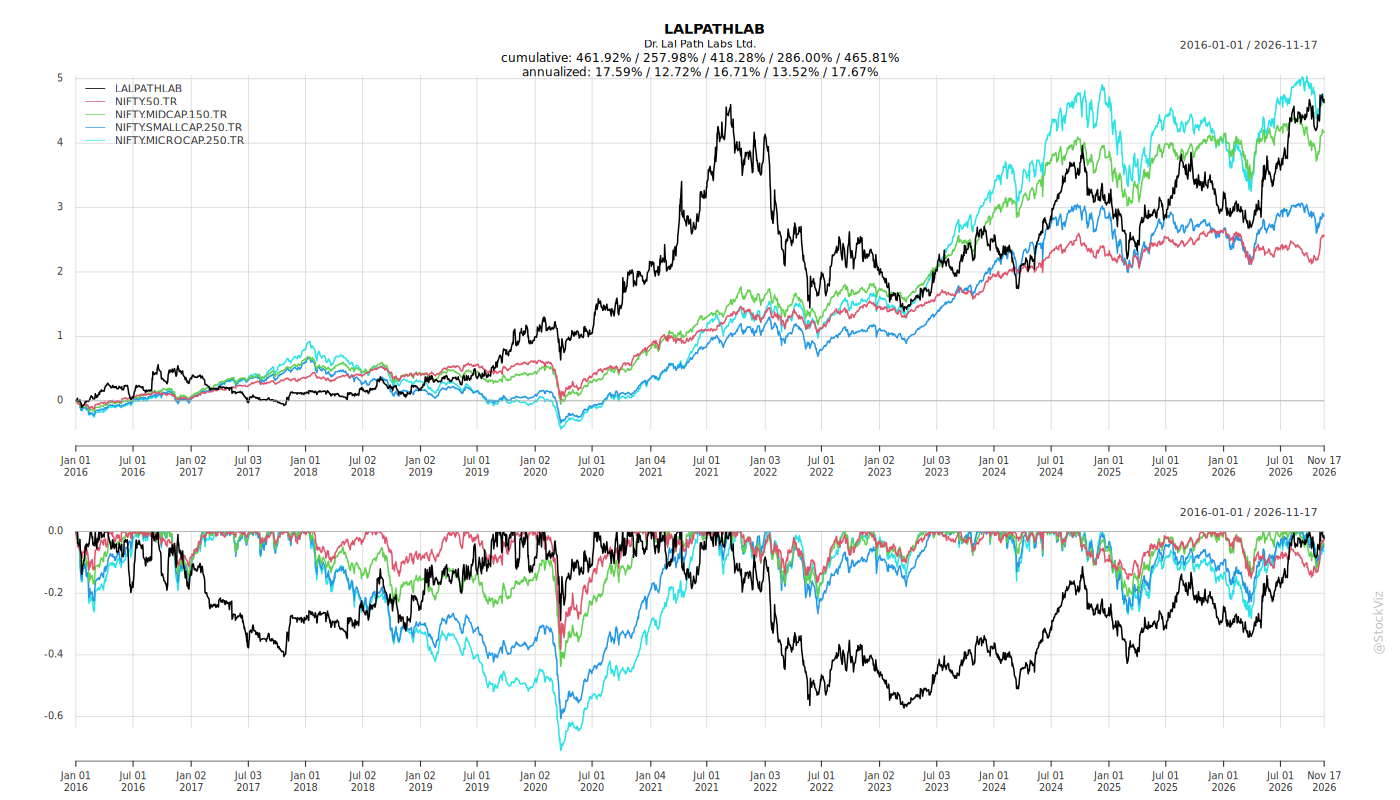
Cumulative Returns and Drawdowns
Fundamentals
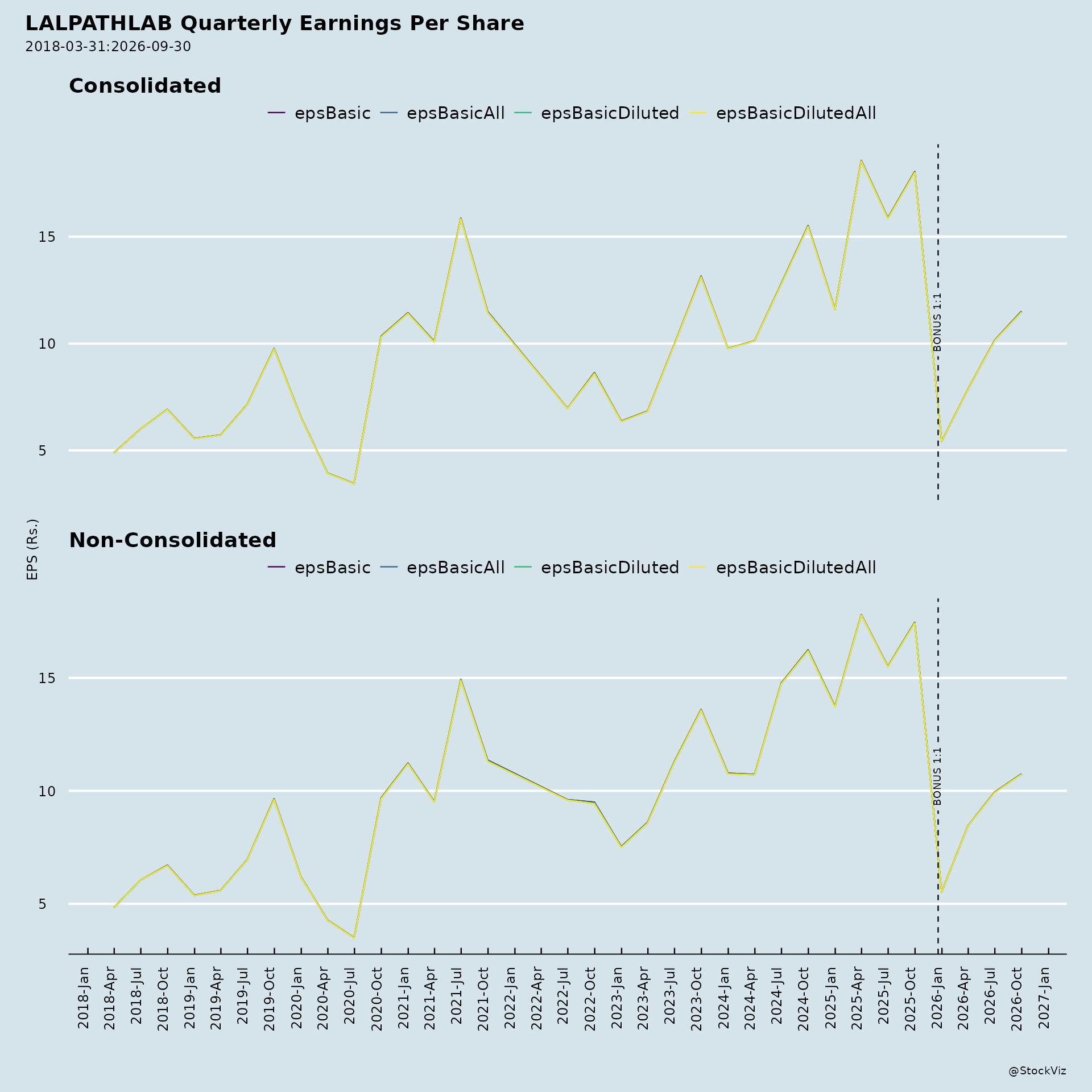
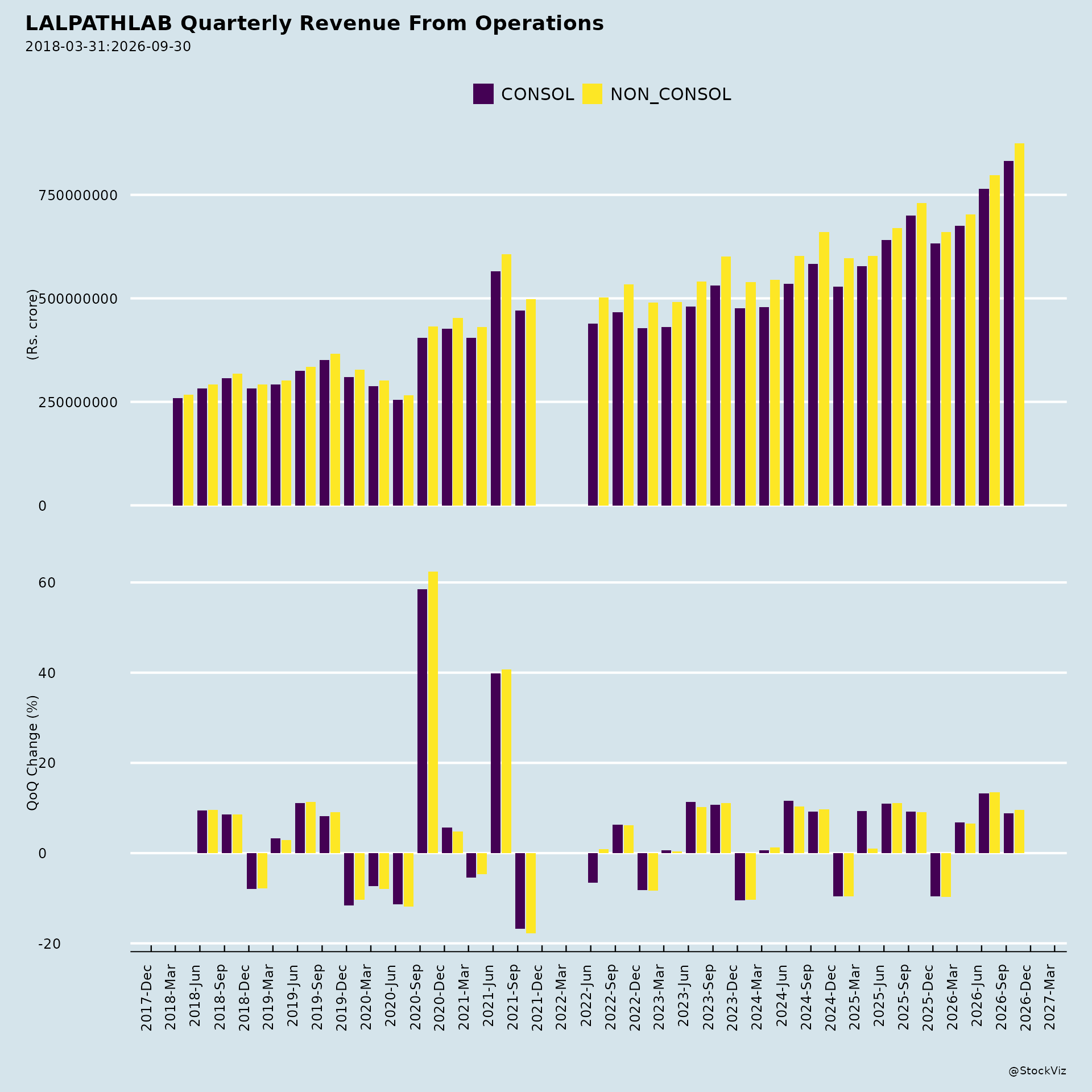
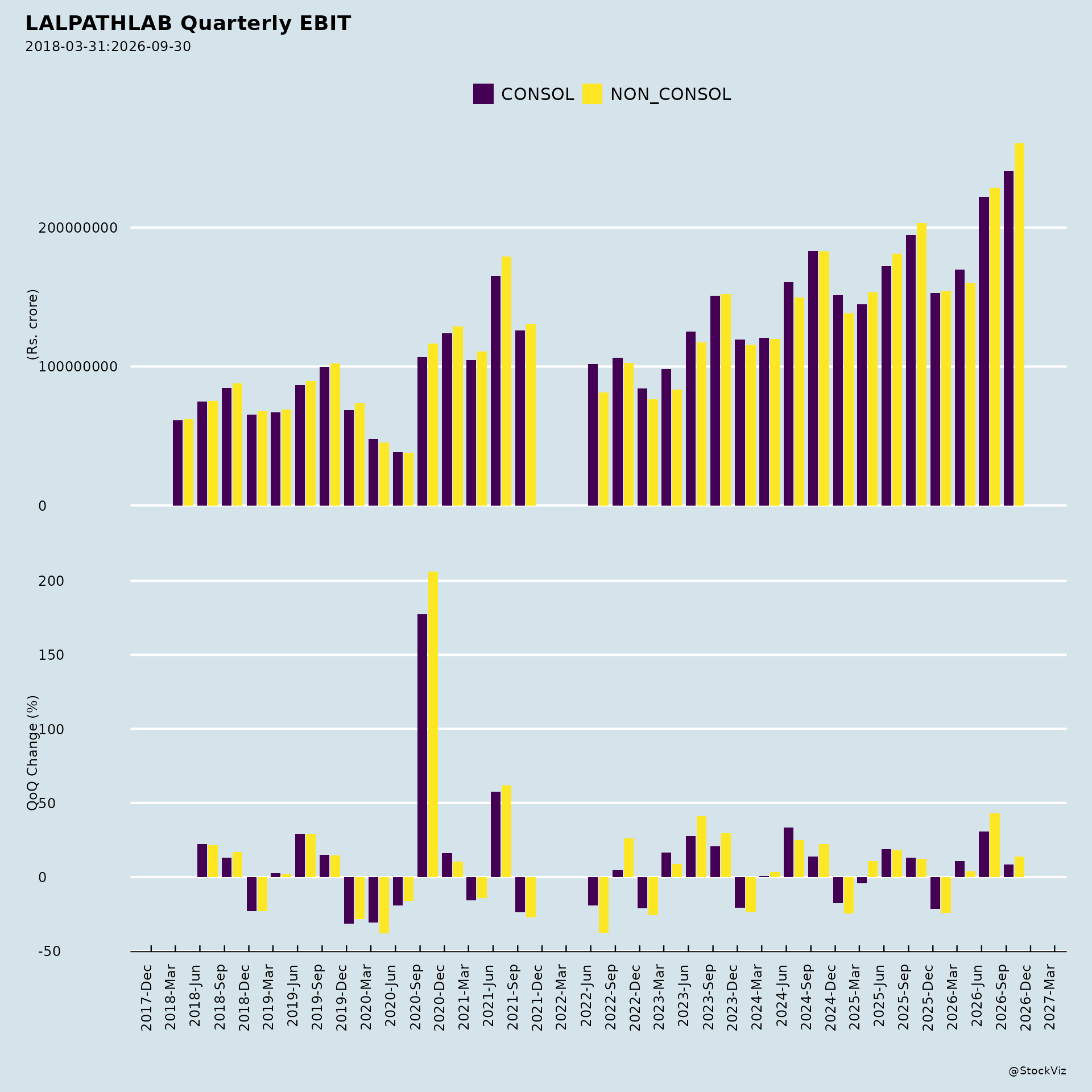
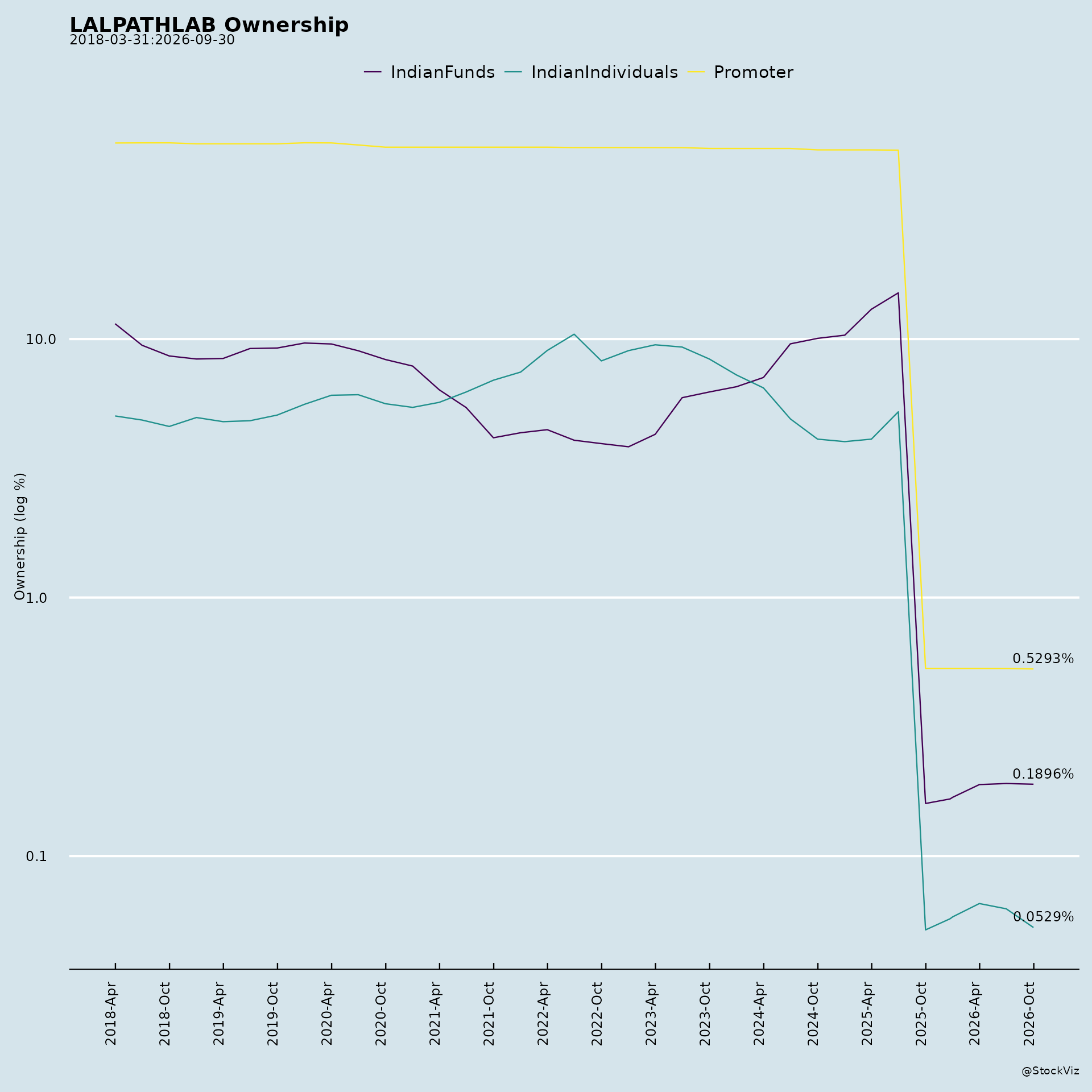
Ownership
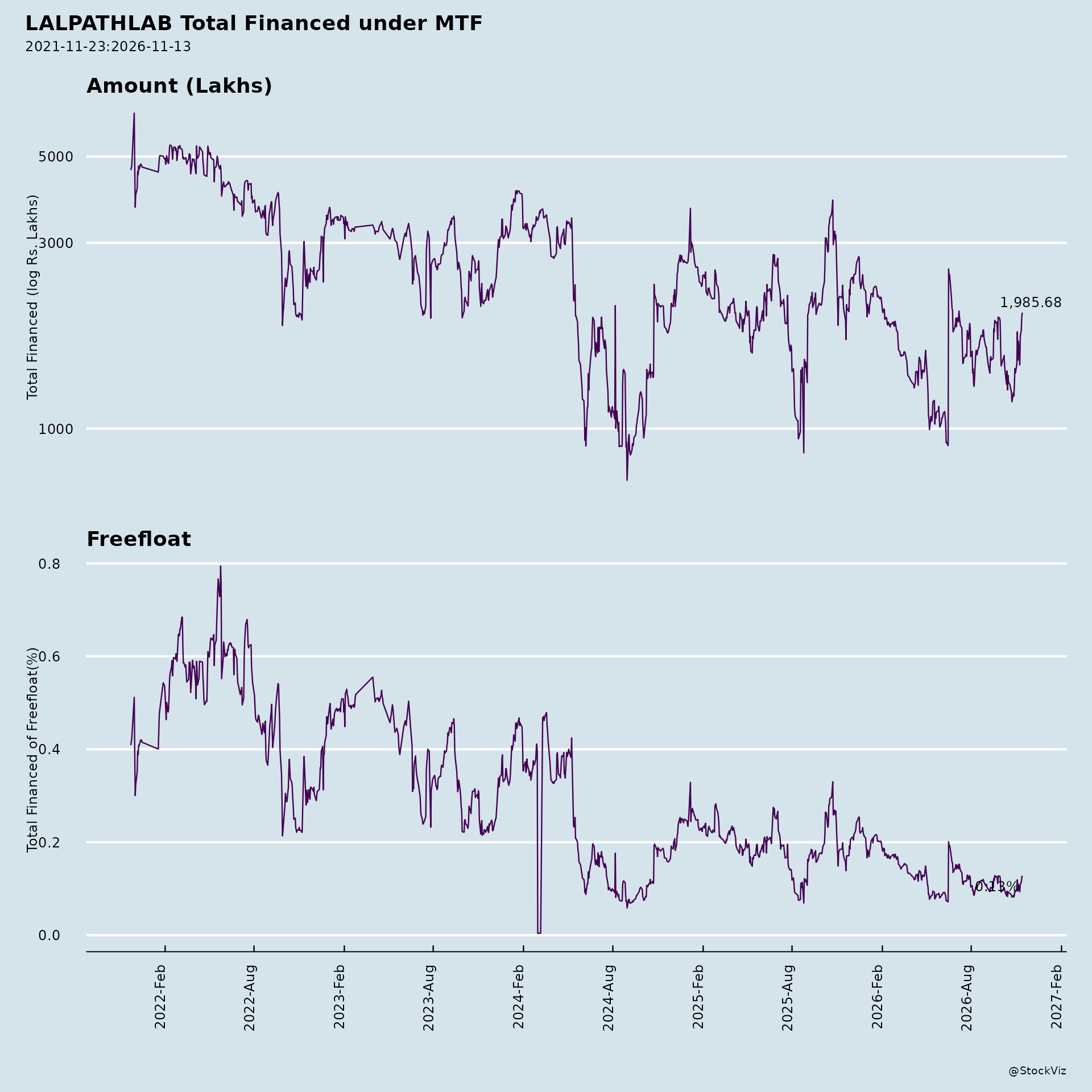
Margined
AI Summary
asof: 2026-09-16
Dr. Lal PathLabs — Q1 FY27 Earnings Call and 32nd AGM: Key Developments
1. Headwinds and Challenges
- Competitive intensity remains high. Management stated that competition in the diagnostics industry “has always been intense and is likely to stay intense,” and that if intensity reduces in one part of the sector, it increases in another. No industry-level data exists to determine whether share is shifting between diagnostic chains, hospital-based labs, or standalone labs.
- Slow shift from unorganized to organized. The structural shift toward organized players is described as “slightly slow,” given low entry barriers that allow smaller labs to keep entering at the bottom end of the market.
- International operations are at an early learning stage. Management said the company still needs to “learn a lot about running the international operations, fine-tuning it, settling it down,” and has not set contribution targets for international revenue.
- Weather pattern uncertainty. Q1 FY27 saw a “very different” weather pattern versus the prior year (more heat, occasional showers), but management said it does not yet have a strong view on the impact on diagnostic testing and needs Q2 to assess any shift between quarters.
- Potential input cost pressure. Most testing materials are imported; management noted that if geopolitical conditions continue, currency movement and inflation “may impact our material cost,” though there was not much impact as of the quarter.
- West India integration history. The West India business had previously faced integration issues; management said the LIMS and digital integration is complete and the Suburban business is “very close to double digits” in growth, with the worst appearing to be behind it.
- Sovaaka still in learning phase. The premium diagnostics-driven wellness venture remains in an implementation phase; scale-up will only be considered once the first center’s model is fully established.
2. Tailwinds and Growth Prospects
- Structural industry growth. Demand is described as no longer anchored only to episodic illness but increasingly shaped by lifestyle and non-communicable diseases, health awareness, and rising disposable incomes making preventive testing routine.
- Record quarterly growth. Q1 FY27 revenue was Rs. 798 crore, up 19.1% year-on-year — the highest quarterly growth rate in four years. Patient volumes were 8.2 million (up 8.2%) and sample volumes 25.9 million (up 10.7%).
- Rural outreach program. Active in 7 states, with more than 1,10,000 patients tested in Q1 FY27. It is a separate, more affordable rural package, not Swasthfit-driven.
- Swasthfit momentum. Swasthfit grew around 20% in the quarter, with traction widening into Tier 2 and Tier 3 geographies; management expects to sustain this growth rate “for some more time.”
- Scientific leadership. 116 new tests launched in the quarter, including 4 first-in-India tests; expanded advanced diagnostics through NGS Chimerism, Flow Cytometry MDS Assay, Perforin Assay, AI-enabled Histopathology, and 81 specialized genomics assays. Genomics remains less than 5% of the portfolio.
- Operational excellence. Whole Exome Sequencing turnaround time of 15 days, express WES in 10 days, and ~400 routine tests delivered in 3 hours for almost 90% of walk-in patients.
- Digital engagement. GenAI patient bot “SwasthAI” launched on WhatsApp for test enquiry, prescription upload, location enquiry, and report access.
- Hospital ecosystem expansion. Hospitals adding capacity and capability is opening deeper integration, stronger clinical partnerships, and scope for super-specialised testing.
- Pricing headroom. Management retains “significant pricing headroom as a strategic lever,” though any price increase decision would come only after the first half of the year.
- International expansion. A wholly owned subsidiary was incorporated in Dubai; the board approved acquisition of 80% of Sunshine Healthcare Limited, Ghana (diagnostics) for consideration not exceeding GHS 45.6 million, and 30% of Neuome Technologies Private Limited (sample preservation and biobanking) for not more than Rs. 3.5 crore. Focus markets are Africa, Middle East, CIS, and Southeast Asia.
- Network expansion. Plans to add 12–15 labs this year, similar to last year, plus three to four radiology centers, including pilots in Tier 2 towns outside Delhi NCR.
- Capital return. The board declared an interim dividend of 50% (Rs. 5 per share). The AGM on July 25, 2026 approved a final dividend of Rs. 4 per share for FY26.
3. Key Risks
- Sustained competitive intensity with no expectation of relief; pricing environment described as neither favorable nor unfavorable in recent quarters.
- Imported material exposure to currency and inflation if geopolitical conditions persist.
- Execution risk in international markets, where the company is still learning operating dynamics outside the Indian subcontinent.
- Slow organized-market shift with low entry barriers allowing continued small-lab entry.
- Dependence on CGHS/ECHS price benefit, which management expects to flow through for at least another two to three quarters; the durability beyond that is not established.
- Weather/seasonality uncertainty affecting patient volume comparisons, with clarity expected only after Q2/Q3.
- M&A execution risk as a major use of the Rs. 1,693 crore net cash, particularly for larger assets in west and south India where presence is low.
4. Management Guidance Versus Observed Performance
- Revenue growth guidance: Management had guided mid-teens revenue growth. After Q1 FY27 came in “slightly ahead of our expectations,” management indicated chances are “more towards mid-teens rather than early teens,” with a formal reassessment after H1.
- Patient volume guidance: Initial guidance was 6–7% patient volume growth. Q1 FY27 delivered 8.2% patient volume growth, which management called “slightly ahead.” Management declined to revise the full-year outlook until Q2 is complete, citing possible inter-quarter shifts.
- EBITDA margin guidance: Guidance of 27–28% was maintained in principle, but Q1 FY27 actual EBITDA margin was 31.0%. Management said the CGHS/ECHS realization benefit will pass through to margins for one or two more quarters, but the dominant intent is to reinvest for future growth, with clarity on any guidance change after Q2.
- Price increase timing: Management had indicated any price increase would be considered only toward the end of the year, not in H1. This stance was reaffirmed, with reassessment after H1.
- Lab additions: Guidance of 12–15 labs for the year, consistent with last year’s additions.
- Radiology centers: Three to four centers planned this year, including one or two pilots outside Delhi NCR.
- Capex: Approximately Rs. 140–150 crore.
- International contribution: Currently less than 5% of revenue; management said it will not significantly exceed that number over at least the next five years.
- B2C:B2B mix: Maintained at approximately 75:25, with both channels expected to grow while retaining the mix.
- Tier 3 and below: Accounted for about 39% of revenue in the last financial year.
- CGHS/ECHS price benefit: Quantified at 2–3% at the overall company level, expected to continue for at least another two to three quarters.
- Revenue per patient: Rs. 968 in Q1 FY27, up 10% from Rs. 880, driven by test and geography mix and CGHS/ECHS price increases. Tests per patient rose to 3.14 from 3.07.
- Cost reclassification: Logistics and courier costs were reclassified from manpower/personnel cost to other logistics cost; no reclassification in fees to collection centers. Employee cost at 16.6% of revenue reflects this reclassification and higher revenue, not a structural change.
- AGM outcomes (July 25, 2026): All 10 resolutions passed with requisite majority, including adoption of FY26 standalone and consolidated financial statements, declaration of Rs. 4 final dividend, re-appointment of Mr. Rahul Sharma as director, revision in remuneration structures of (Hony) Brig Dr Arvind Lal and Dr Vandana Lal, re-appointment of Dr Arvind Lal as Executive Chairman and Whole-Time Director for five years from April 1, 2027, re-appointment of Mr. Rajit Mehta as Non-Executive Independent Director for a second five-year term from July 27, 2026, payment of remuneration to Mr. Rahul Sharma upon ESOP exercise exceeding 50% of total non-executive director remuneration, payment of commission to non-executive directors including independent directors, and ratification of cost auditor remuneration for FY27.
Broker Narrative
The narrative shifted from a 2023 Reduce driven by weak volumes, Covid-base drag, competitive pressure, and Suburban’s slow ramp to a 2026 Hold that acknowledges strong volume growth, margin expansion, and Suburban’s near-double-digit growth while still flagging competition and investment-related margin risks. Volume and Suburban concerns were largely retired; competitive intensity persisted as the main structural caution. Overall the broker moved from outright bearishness to cautious-constructive recognition of operating leverage.
Optimism that failed
- The early expectation that discounting intensity had paused and industry advertisement spend was coming down did not hold, as the last report still describes competitive intensity in diagnostics as elevated.
Broker Timeline
8 broker calls · 2023-10-11 to 2026-07-26
CNBC-TV18: ratings, targets and commentary
No recorded CNBC-TV18 statements for this ticker.
Management comments
No recorded management comments with an explicit designation and affiliation for this ticker.
Copyright © 2023 SAS Data Analytics Pvt. Ltd. All rights reserved.