KAYNES
Equity Metrics
November 16, 2026
Kaynes Technology India Limited
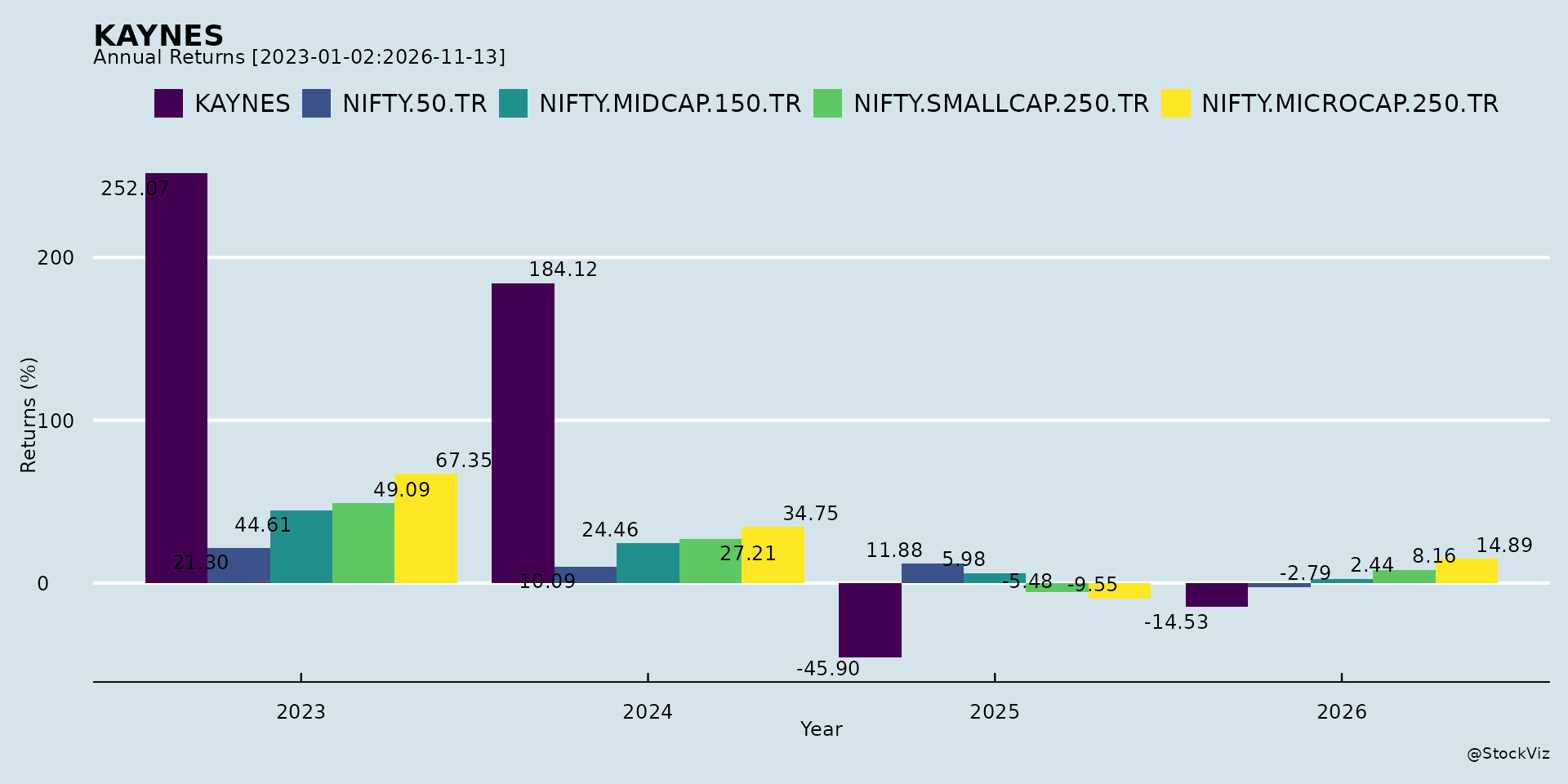
Annual Returns
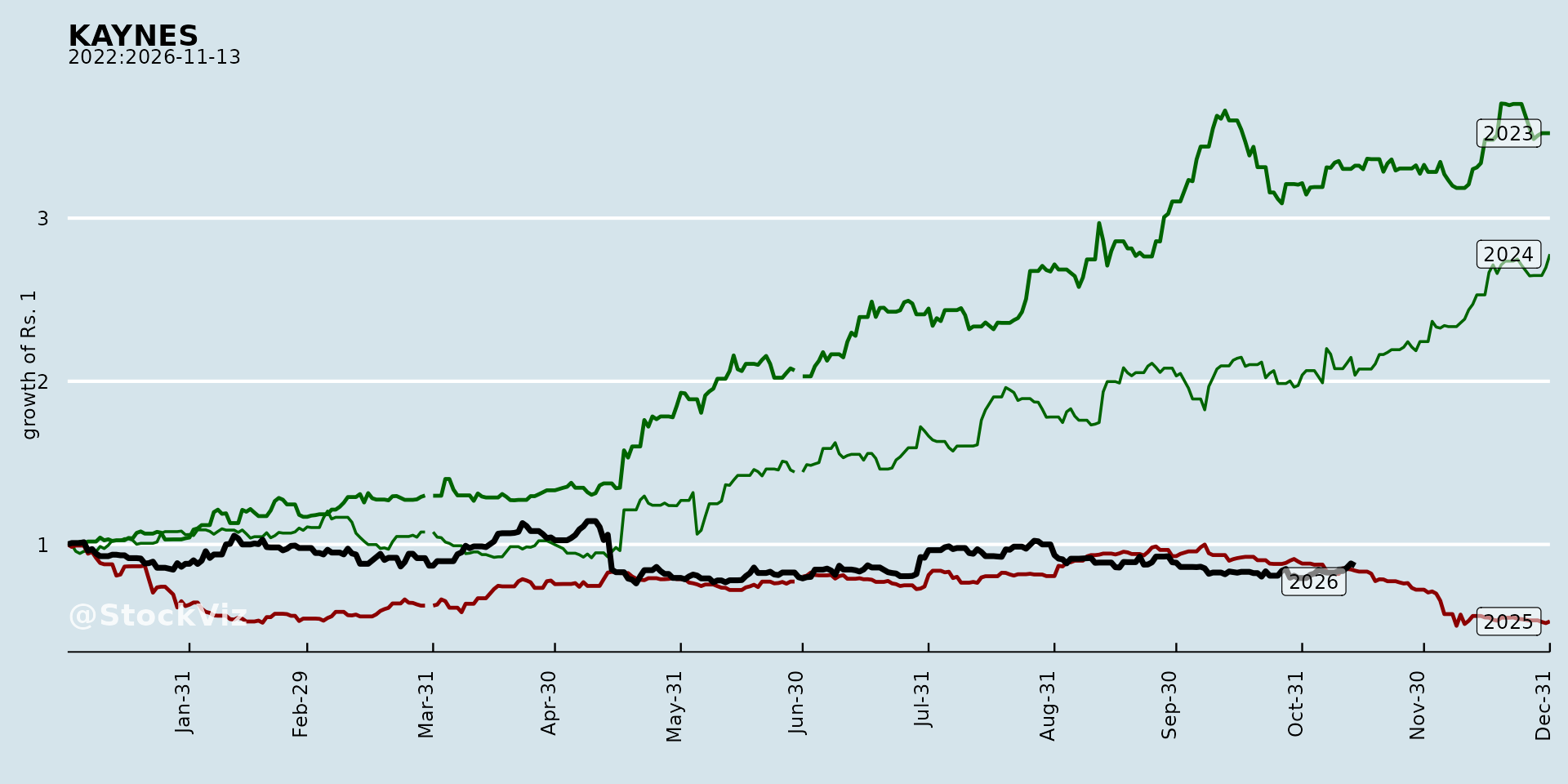
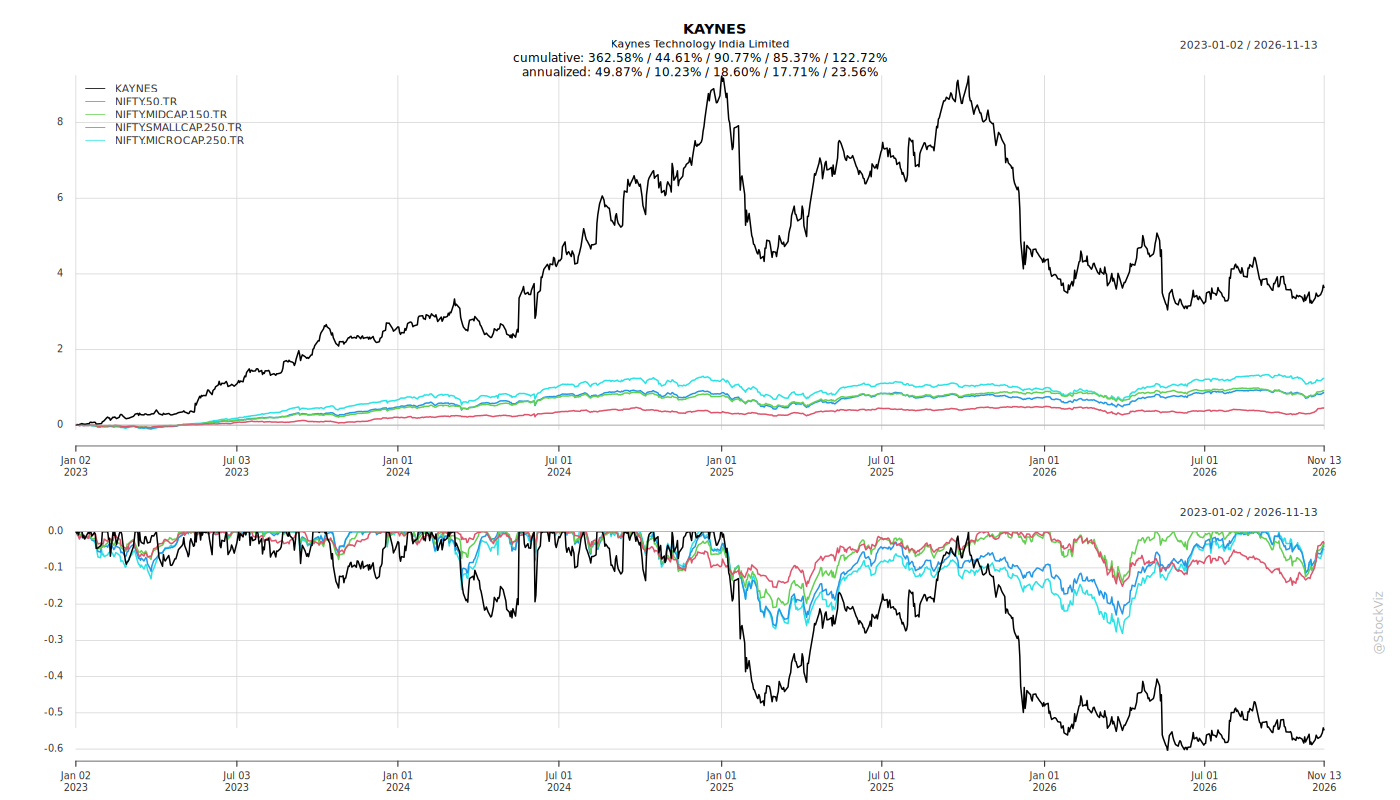
Cumulative Returns and Drawdowns
Fundamentals
Ownership
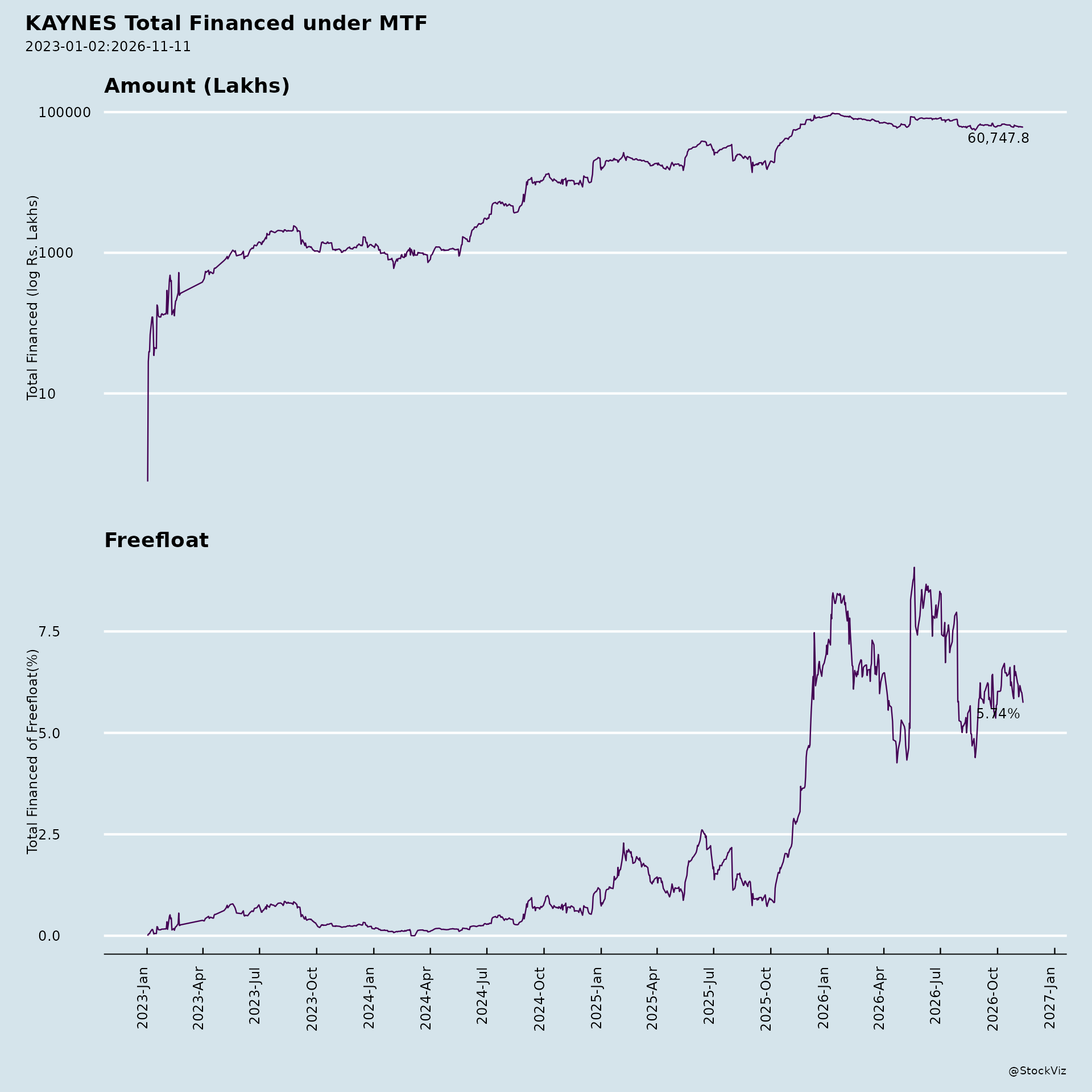
Margined
AI Summary
asof: 2026-09-16
Kaynes Technology: Recent Developments and Outlook
1. Headwinds and Challenges
Supply chain and input cost pressures. Management described the component environment as having “gone back to COVID times.” PCB prices have risen sharply (described as up three times), while other component prices are up around 10–12%, with availability — not just price — becoming the binding constraint. Lead times of 6–8 months are being cited in some categories, and PCB suppliers are demanding advance payment even for order booking. Broader macro pressures include rupee depreciation, elevated WPI, higher energy and crude prices, commodity inflation, and forex movement. Management expects these pressures to weigh on profitability for a couple of quarters before normalisation, and characterised the year as “a difficult year.”
Working capital intensity. Q1 FY27 saw negative operating cash flow of about ₹259 crore, driven by a ₹156–177 crore inventory build (a deliberate decision taken around February to secure supply) and a ₹90 crore receivables increase. Inventory days rose from about 96 to about 105. The smart metering business (GridCrest) was the principal receivables drag: sales of about ₹240 crore against collections of only ₹88 crore, with metering receivables rising from ₹1,158 crore to ₹1,311 crore. Management consciously degrew this business to protect the balance sheet, a decision compounded by flood-related installation disruption.
Project timing slippage. Escalation in West Asia affected equipment imports and component logistics, causing minor timing slippage in the OSAT and PCB ramp-up schedules. Both Kaynes Semicon Unit 2 and Kaynes Circuit Chennai remain targeted for operational status by Q3 FY27.
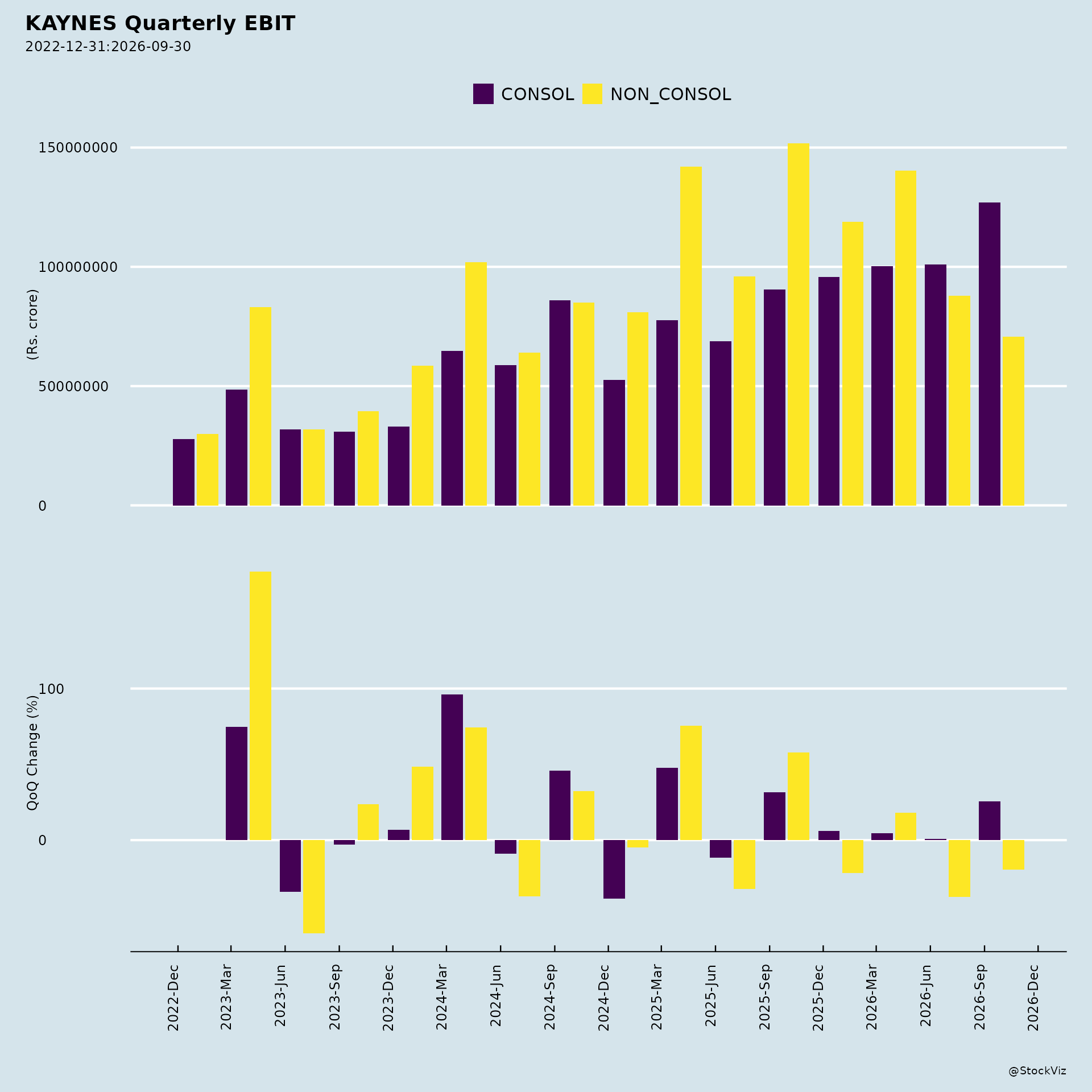
Margin pressure. Q1 FY27 EBITDA margin was 15.6% (versus FY26’s 15.8%), with management attributing softness to cost escalation, the drop in other income from QIP funds (~2.5 points on PBT/PAT), and higher depreciation from new investments not yet generating revenue. Pass-through to customers is typically adjusted quarter-on-quarter, creating timing lags.
Execution and scale-up risk. Management acknowledged a learning curve in newer domains (semiconductor packaging, PCB, space technology) and committed to building governance so lessons are not relearned across business units.
2. Tailwinds and Growth Prospects
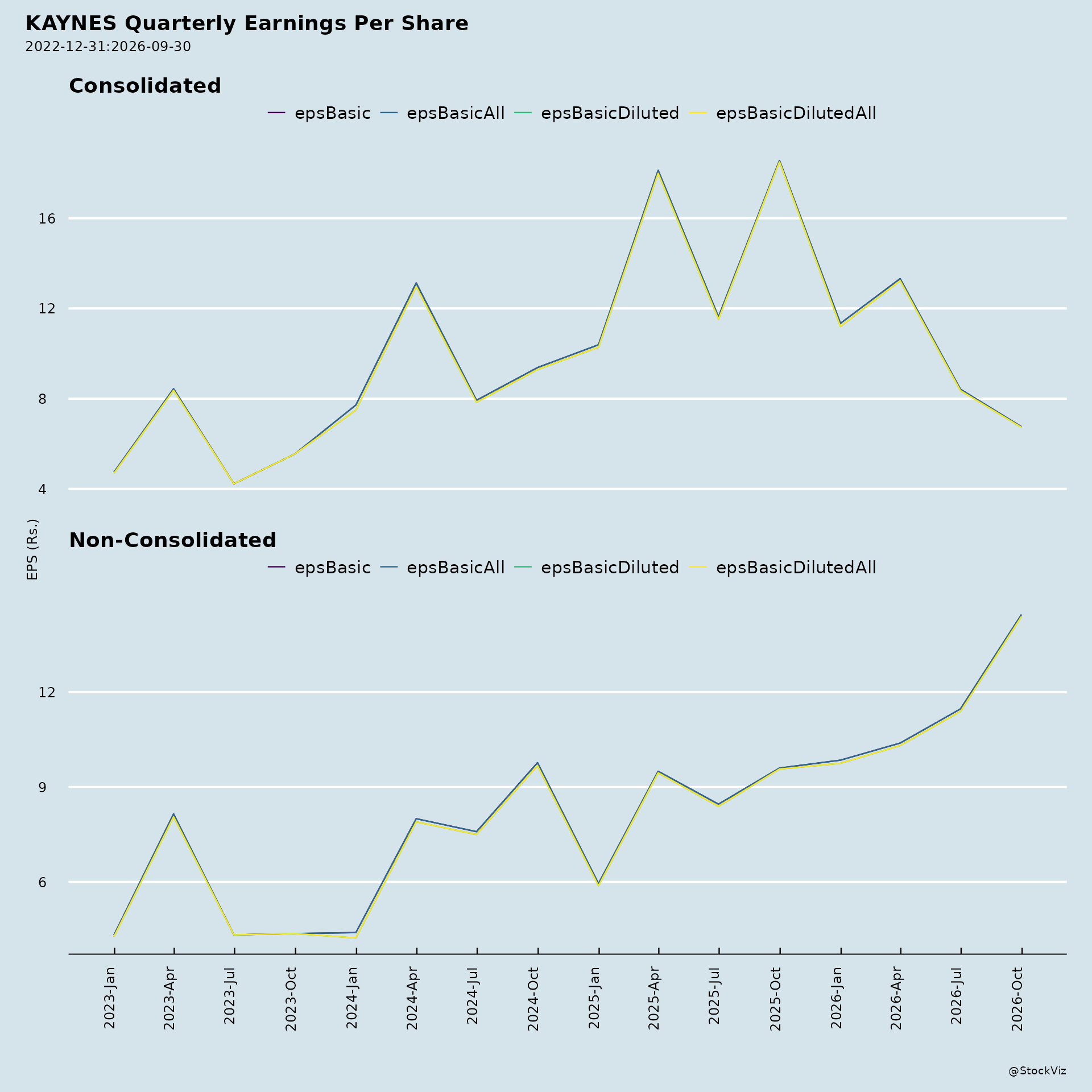
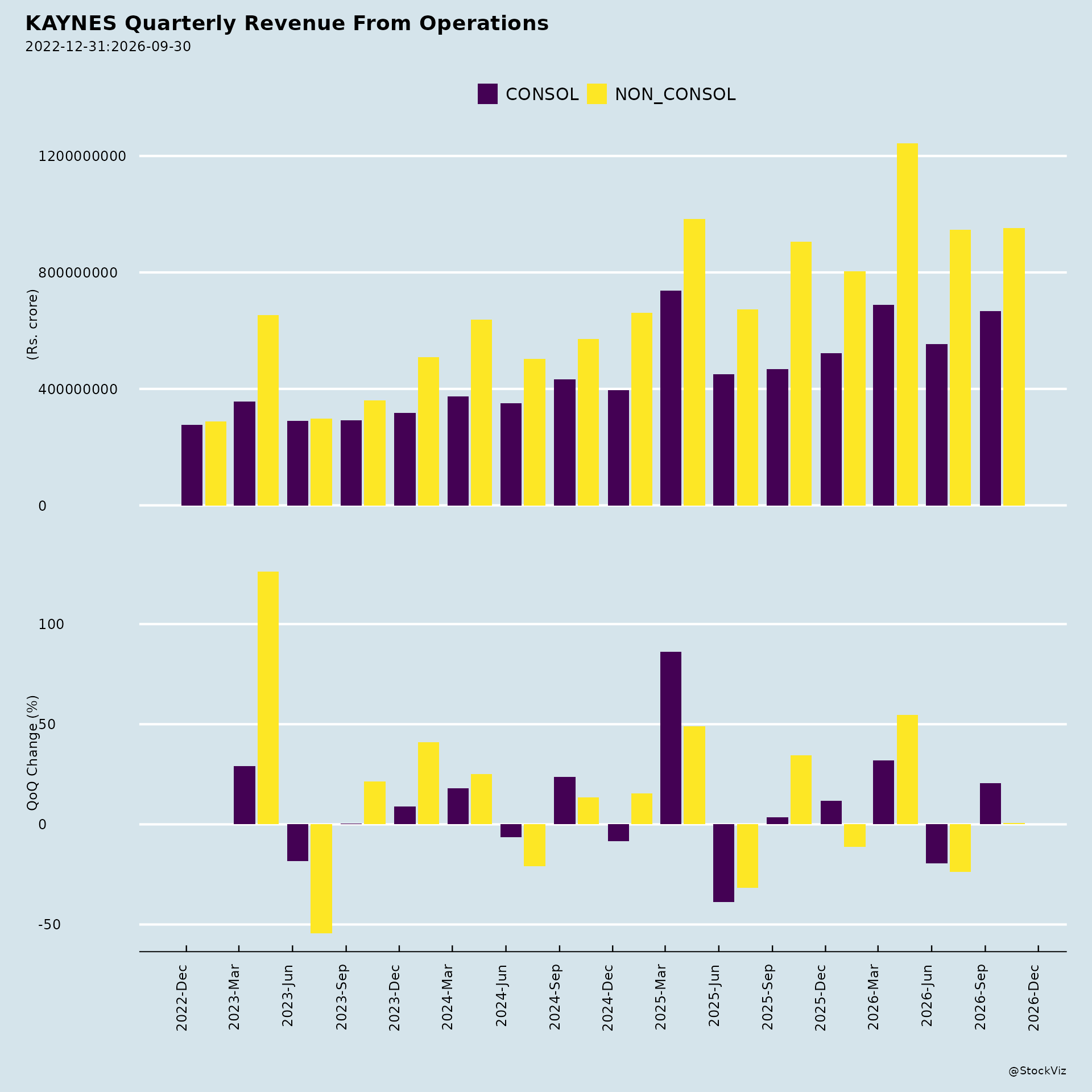
Core EMS momentum. Q1 FY27 revenue was ₹946 crore, up 40% YoY, with standalone EMS growing 53% (₹480 crore to ₹639 crore) and overseas entities growing 327% (₹24 crore to ₹102 crore). The order book stood at approximately ₹9,000 crore (₹89,038 million), with Q1 order additions exceeding deliveries.
New customer wins. Kaynes added India’s second-largest two-wheeler EV manufacturer (product development and testing completed in about 8 months, serial supplies commenced), plus global brands from Germany and France, a leading Indian wireless communication company, and other new logos. Customer recognitions included awards from Mahindra, Siemens, and others.
OSAT and PCB ramp. Cumulative capex across the two businesses is around ₹1,200 crore (about ₹700 crore OSAT, ₹500 crore PCB), with roughly ₹250 crore of items in transit. Government subsidy of about ₹170 crore was received in OSAT through July 2026. Commercial revenue from both businesses is targeted from Q3 FY27, with a combined full-year revenue target of ₹450–500 crore. The Mitsui–Kaynes Semicon partnership provides access to the Japanese market. PCB capacity has been requested by a large global player, with trials underway and a vendor code granted. A large global EV manufacturer has visited and provided positive feedback, with a deal described as close to closing.
Space and defence. The first 3U satellite is in prototype development, targeted for launch mid-next year pending ISRO launch confirmation. Subsidiary Crio Precision and Aerotech is entering titanium gas bottle manufacturing for ISRO’s flight programme, with DRDO as a second anchor customer.
Policy and market tailwinds. Government support continues through Make in India, PLI schemes, the India Semiconductor Mission, and ECMS. The Indian EMS market is projected to reach US$415 billion by 2030 (~18% CAGR), and global EMS to US$1,225 billion by 2035 (6.6% CAGR). The China Plus One realignment, EV adoption, digitisation, and smart metering (RDSS) remain demand drivers.
New partnership. The August 22, 2026 MoU with BOSGAME (represented by Six United) aims to bring BOSGAME’s mini PC, laptop, tablet, and monitor portfolio to India, leveraging Kaynes’ design, manufacturing, testing, supply-chain, and lifecycle capabilities, with exploration of localisation and value addition.
3. Key Risks
- Import dependence and single-sourcing: Global supply chain disruptions, geopolitical volatility, and trade barriers affecting equipment and components.
- Working capital risk: Receivables concentration in the metering business; management is evaluating options to de-risk this, with a strategy update promised around February.
- Execution risk on new verticals: OSAT and PCB ramp-up timelines, customer validation, and scale-up challenges.
- Margin volatility: Input cost inflation, product mix, and pass-through timing lags.
- Policy and regulatory dependency: Reliance on PLI, ISM, and government programmes.
- Technological obsolescence and compliance: Quality and compliance risks across a broadening product portfolio.
- Competitive pressure: A more competitive global and domestic environment, with management emphasising speed as a differentiator.
4. Management Guidance vs. Observed Performance
Revenue growth. Management has committed to growing at twice the market rate. In Q1 FY27, the market grew about 17% while Kaynes grew 40% overall and 48% in EMS — consistent with that commitment. Management declined to give an absolute FY27 top-line number, citing volatility.
Working capital. Management had previously guided to working capital normalisation and a cash-positive position by year-end. Observed Q1 FY27 performance showed negative operating cash flow of about ₹259 crore, though this was an improvement on Q1 FY26’s negative ₹379 crore. Receivable days moved from 190 days (quarterly standalone) to about 163 days on a 12-month rolling basis. Management reaffirmed confidence in turning cash positive by end of the financial year and committed to providing rolling 12-month metrics going forward. The longer-term target remains 100 working capital days by end of FY2027-28.
OSAT and PCB. Prior guidance indicated commercial production at Sanand OSAT and first commercial shipments from Chennai HDI PCB in Q3 FY2026-27. Management reaffirmed this timeline in the Q1 FY27 call, noting minor slippage from West Asia disruption but stating projects remain on track, with OSAT trials and validation concluding and PCB trials ongoing with a global customer.
Capex. FY27 capex guidance of about ₹300 crore for OSAT, ₹300 crore for PCB, and ₹250 crore for EMS was reaffirmed, with Q1 spend of about ₹230 crore across all put together. Management noted funds are not a constraint and modular expansion will continue as business and subsidies flow in.
Metering strategy. Management had committed in the February earnings call to providing a strategy to de-risk metering receivables. In the Q1 FY27 call, management reiterated this commitment, stating more would be shared by February, and confirmed it is evaluating options including divesting the service-provider portion of the business. A ₹200 crore collection was received in the first week of July, and receivables from the leading EV two-wheeler customer fell below ₹100 crore.
Profitability normalisation. Management stated it expects profitability to normalise and return to previously committed levels over a couple of quarters, while cautioning that the year will be challenging and that some bottom-line impact is likely in the coming quarters.
Order book. The order book stood at approximately ₹9,000 crore as of Q1 FY27, up from ₹83,663 million (₹8,366 crore) as of March 31, 2026, with Q1 additions exceeding deliveries.
Broker Narrative
The broker narrative evolved from aggressive growth optimism in 2023 — buoyed by PLI schemes, China+1 diversification, and a projected 32% sector CAGR — to cautious balance-sheet defense by 2026, with the call downgraded from Buy to Hold. Persistent themes included EMS/electronics manufacturing focus and government policy support, but the dominant concerns shifted from demand-side tailwinds to margin contraction, working capital deterioration, and execution risk on OSAT/PCB commercialization.
Fears that came true
- High Import Dependence materialized as component prices surged 30–35% and PCB prices rose 10–12%, causing near-term margin pressure from the lag in passing on higher costs.
- Economic Slowdown fears correlated with a string of DISAPPOINTMENT outcomes from late 2024 through 2026, with actual returns plunging as far as -47.8% and -44.4%.
- Valuation & Result Deviations fears were validated as the stock, after surging up to 75% pre-report, de-rated sharply with multiple DISAPPOINTMENT outcomes against predicted returns of +30% to +48%.
- Pricing Pressures in specific verticals came true as gross margin contracted 685 bps YoY and EBITDA margin fell 119 bps YoY, with costs unable to be passed through to customers.
- Product Delays materialized as OSAT/PCB commercialization slipped to Q3FY27 rather than launching on an earlier timeline, and smart meter revenue declined 12% YoY due to consciously moderated supplies.
- Client Concentration & Loss risk was evident in elevated metering receivables of ₹1,311 crore and the conscious decision to moderate smart meter revenue to focus on collections and balance-sheet repair.
- Technological Lag risk persisted as OSAT/PCB execution remained a key monitorable even by the last report in August 2026.
- Working Capital deterioration fears were realized as working capital stretched to ~163 days from ~122 days YoY and Q1 operating cash flow turned negative at ~₹259 crore.
- Product Delays and Downtrading echoed in the smart meter revenue decline of 12% YoY and management’s prioritization of de-risking the metering business rather than growth.
- Valuation surge risk was confirmed as actual returns collapsed from predicted gains of +47.7% to an actual -18.8% in December 2025 and from +48.7% to -5.0% by February 2026.
Optimism that failed
- Margin & Return Expansion optimism failed as gross margin declined 685 bps YoY to 34.4%, EBITDA margin fell 119 bps to 15.6%, working capital worsened to 163 days, and operating cash flow turned sharply negative.
- Robust Sector Growth at 32% CAGR failed to lift the stock, which delivered actual returns as negative as -47.8% and -44.4% with DISAPPOINTMENT outcomes dominating from late 2024 onward despite industry tailwinds.
- Government Policy & Incentives (PLI, EMC, SPECS) did not prevent severe margin compression, negative cash flow, and working capital deterioration across the period, suggesting policy benefits were insufficient to offset cost and execution headwinds.
- Increased Electronics Adoption across auto, industrials, railways, IoT, aerospace and medical, while showing revenue growth in some segments, failed to generate sustained positive stock returns with DISAPPOINTMENT outcomes persisting through 2026.
- China+1 Strategy & Exports, though overseas revenue grew 327% YoY to ₹102 crore, were insufficient to offset domestic headwinds and did not prevent DISAPPOINTMENT outcomes across multiple reports.
Broker Timeline
44 broker calls · 2023-07-12 to 2026-08-11
CNBC-TV18: ratings, targets and commentary
Extracted from CNBC-TV18 posts; ratings and targets are as published, not current consensus. OCR may contain errors. Speaker attribution is retained; not all speakers are brokers. These statements are separate from the Broker Narrative and Broker Timeline and have no calculated performance or outcomes.
Other company commentary (not broker ratings)
| Published / source (IST) | Speaker / affiliation | Rating / target | Commentary |
|---|---|---|---|
| 2026-11-16 |
Kaynes Tech
Muthukumar Narayanaswamy
|
—
Horizon: H1FY28
|
Smart meter is a high margin biz impacting overall margin. Key focus on cleaning up balance sheet & reducing smart meter exposure. Took a revenue hit in metering business in Q2. Receivables come down to ₹1,000 cr from ₹1,300 cr. Smart meter business has ₹1,120 cr balance sheet impact. Managing debt & reducing NWC in smart meter business. Restated PAT increased by 0.8%. Seeing improvement in collection trends. Cash flow expected to turn positive in H1FY28. Maintains FY27 revenue contribution guidance of ₹450–500 cr from OSAT & PCB. Working on restructuring subsidiaries. |
| 2026-11-16 |
Equirus Securities
Manoj Gori
|
—
|
Kaynes mgmt must focus on balance sheet & cash flow changes. Operational performance of Kaynes has also been disappointing. There have been auditor observations on a consolidated basis for Kaynes. Turnaround in performance or sale of smart meter biz is a key monitorable for Kaynes. |
Management comments
No recorded management comments with an explicit designation and affiliation for this ticker.
Copyright © 2023 SAS Data Analytics Pvt. Ltd. All rights reserved.