JSWENERGY
Equity Metrics
November 18, 2026
JSW Energy Limited
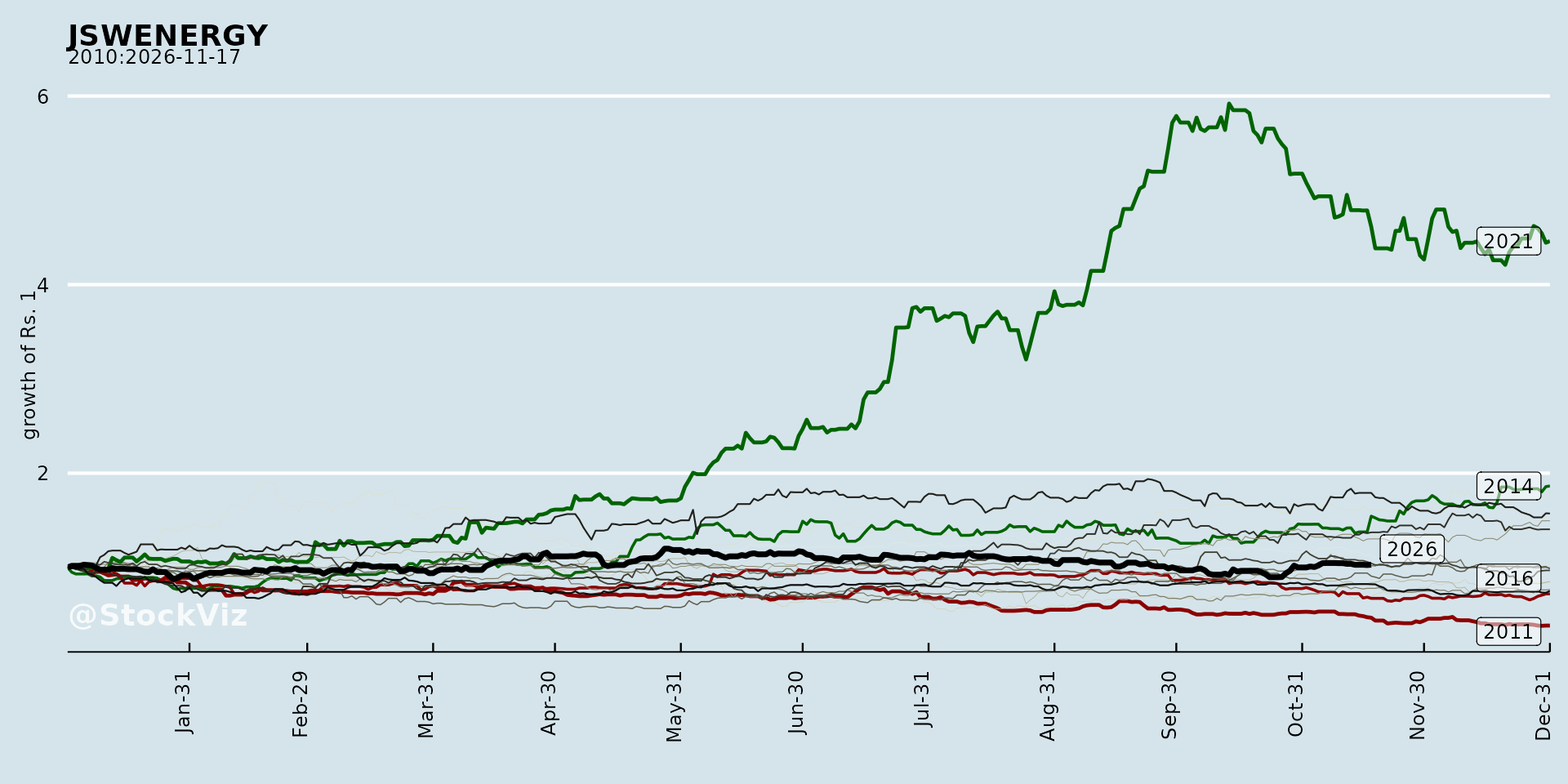
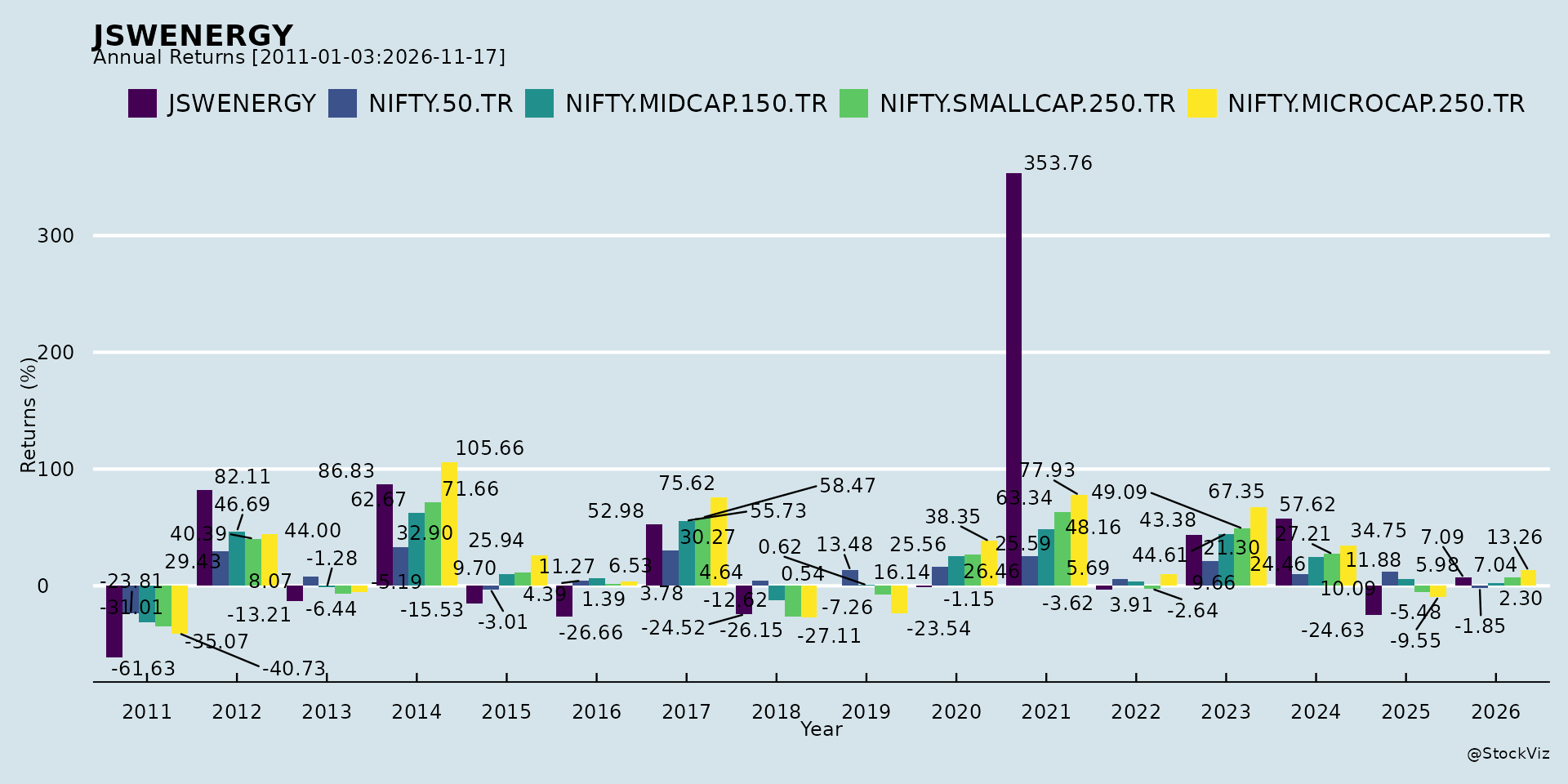
Annual Returns
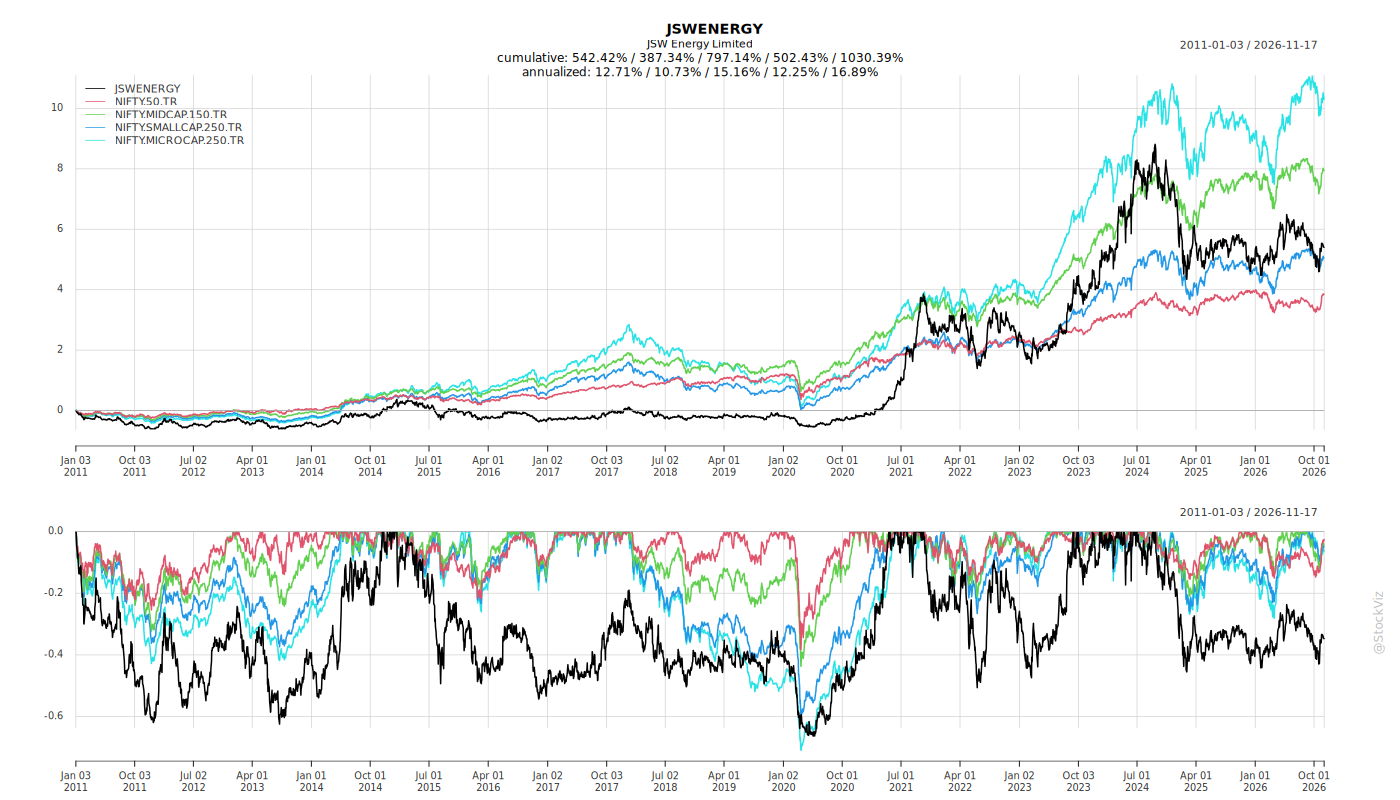
Cumulative Returns and Drawdowns
Fundamentals
Ownership
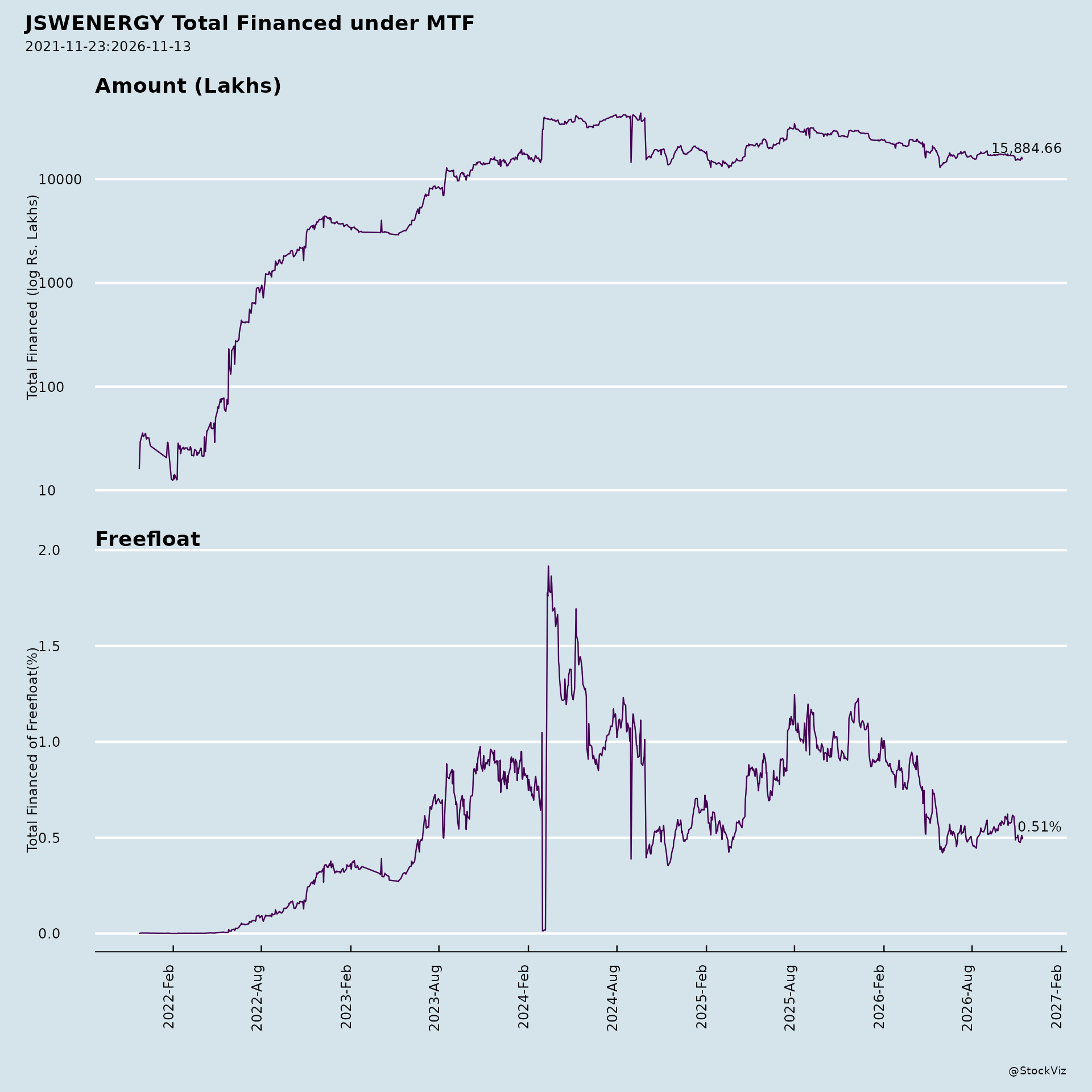
Margined
AI Summary
asof: 2026-09-15
Headwinds and Challenges
Operational softness in Q1 FY27. Net generation declined 5% year-on-year, from 13.5 BUs to 12.9 BUs, though it rose 10% quarter-on-quarter. Thermal generation fell 6% YoY (8.5 BUs to 8.0 BUs) and was down 9% QoQ. Long-term PPA generation decreased 4% YoY (11.8 BUs to 11.2 BUs), while short-term PPA generation fell 7% YoY and 48% QoQ.
Hydrology. Hydro plants were impacted by weak hydrology in Q1 FY27 despite plant availability, with output down 45% YoY to 1,059 MUs at Karcham Wangtoo and Baspa. JSW Hydro’s revenue and EBITDA declined 26% and 25% to ₹250 Cr and ₹235 Cr respectively. The company describes the hydrology impact as transient and notes capacity charges remain secure.
Mahanadi one-off. The Mahanadi plant was impacted by a one-off evacuation availability issue (Force Majeure), which normalized in June 2026. Mahanadi revenue fell from ₹1,557 Cr to ₹1,294 Cr and EBITDA from ₹867 Cr to ₹728 Cr YoY.
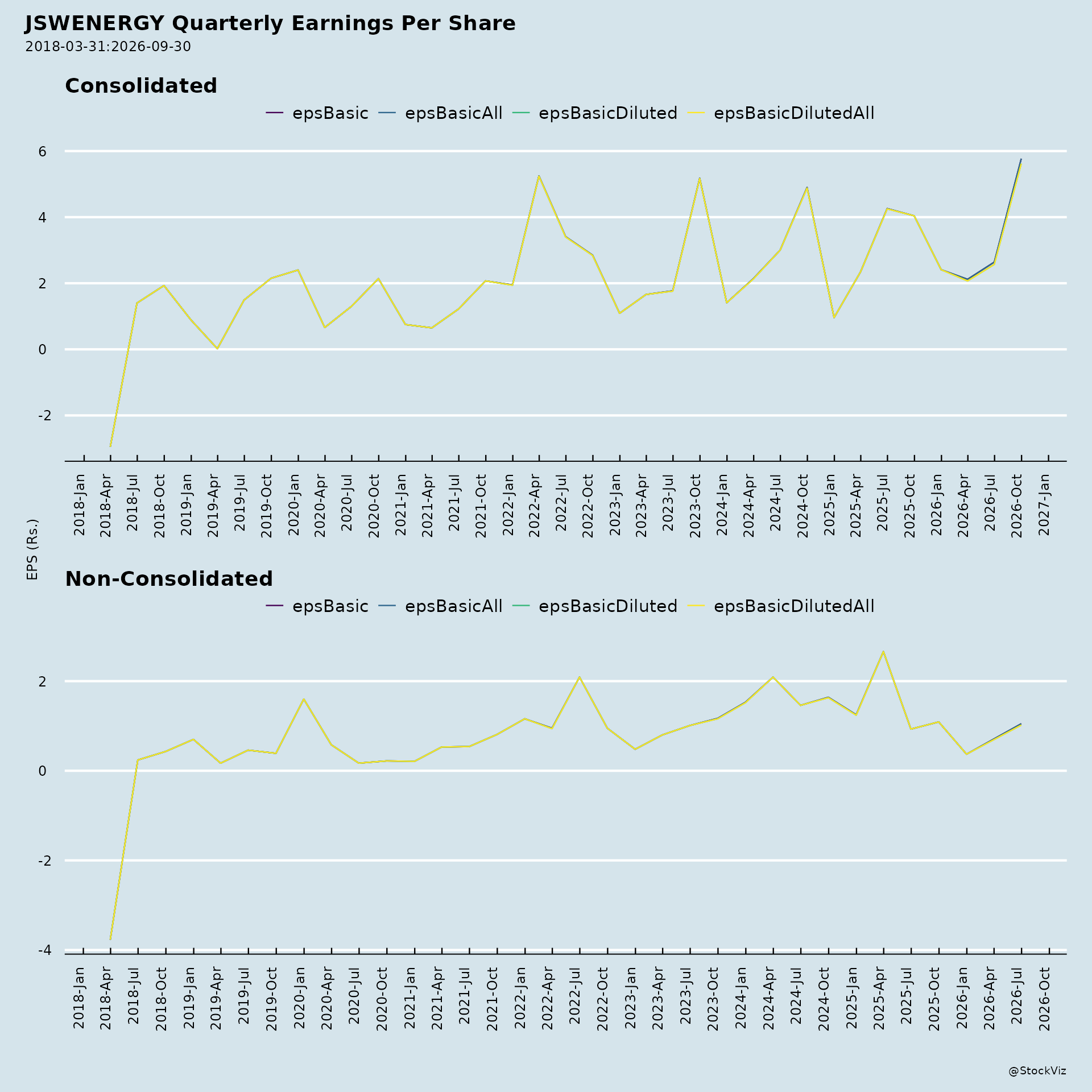
Profitability pressure. Reported PAT fell to ₹533 Cr in Q1 FY27 from ₹836 Cr in Q1 FY26; PAT to shareholders fell to ₹471 Cr from ₹743 Cr. Cash PAT declined 7% YoY to ₹1,464 Cr. Depreciation rose to ₹890 Cr from ₹739 Cr and finance cost to ₹1,519 Cr from ₹1,306 Cr. Diluted EPS fell to ₹2.57 from ₹4.25.
Leverage and returns. Net Debt stood at ₹61,322 Cr with TTM Net Leverage of 5.53x; Operational Net Debt was ₹54,885 Cr with TTM Operational Net Leverage of 4.95x. Cash Returns on Adjusted Net Worth fell to 14% in Q1 FY27, which the company attributes to the recent QIP raising net worth.
Merchant and offtake exposure. The Maruti plant has ~64 MW of merchant market exposure, alongside a 195 MW (net) long-term PPA with Rajasthan discoms and 5% supply to the Chhattisgarh discom at variable cost.
Execution and integration. The forward-looking statement in the media release lists risks including time and cost overruns on fixed-price, fixed-timeframe contracts, ability to successfully complete and integrate acquisitions, reduced demand for power, withdrawal of fiscal government incentives, and legal restrictions on raising capital.
Tailwinds and Growth Prospects
Demand environment. All-India power demand rose 8.5% YoY to 483 BUs in Q1 FY27, with growth accelerating to 11.5% YoY in June 2026. India recorded its highest-ever peak demand of 271 GW in May 2026, with peak demand at 265 GW in June 2026. Real GDP grew 7.8% YoY in Q4 FY26 and is estimated at 6.6% for FY27 per RBI; PMI stood at 57.4 for services and 54.2 for manufacturing in June 2026; GST collection was ₹1.95 trillion in June 2026, up 13.9% YoY.
Capacity addition. Record capacity addition of ~1.1 GW was achieved till July 8, 2026, more than one-third of the FY27 target, and ~87% of total organic capacity added in the entire FY26. Renewable capacity rose 1,081 MW till July 8 (solar +442 MW, wind +108 MW, hybrid +381 MW, hydro +150 MW), taking total capacity to 14,535 MW. The 150 MW Tidong hydro plant was fully commissioned on 12 June 2026, ahead of the October 2026 schedule, with a long-term PPA with UPPCL for 75 MW (May–October) at ₹5.57/kWh and merchant optionality for the balance.
Maruti acquisition. The company completed acquisition of 100% of Maruti Clean Coal and Power Limited on 7 August 2026, following the definitive agreement signed 13 June 2026. MCCPL owns a 300 MW thermal plant at Korba, Chhattisgarh, with a 195 MW (net) long-term PPA with Rajasthan discoms routed through PTC India with ~14 years residual life, coal secured via a long-term FSA with SECL and SHAKTI linkage. Enterprise value was ₹1,410 crore; FY26 EBITDA was ~₹279 crore. The asset is described as EBITDA- and PAT-accretive from day one, reducing net leverage. Total installed capacity stands at 14,835 MW. Management cites upside from logistics and O&M optimisation and proximity to the Mahanadi facility.
Growth pipeline. Total locked-in generation capacity is 32.4 GW: 14.8 GW operational, 13.6 GW under construction across thermal, hydro and renewables, and a 4 GW pipeline. Locked-in energy storage capacity is 29.6 GWh (26.4 GWh pumped hydro, 3.2 GWh BESS). Thermal under construction is 3,800 MW (Salboni and Mahanadi), with a 1,200 MW brownfield Mahanadi pipeline. Salboni Phase I (1,600 MW) has entire land secured, environmental clearance, equipment order placed, civil package awarded, domestic coal under SHAKTI, and a 25-year PPA with WBSEDCL. Mahanadi has 1,800 MW under construction with BOP in place for all three units, environmental clearance for the entire 3,600 MW platform, and target CODs of FY28 for 600 MW and FY29 for 1,200 MW.
Storage and manufacturing. Bhavali PSP (1,500 MW, 12 GWh, MSEDCL, tariff ₹84.6 lakh/MW/annum, SCOD FY2030) has received EC approval and Stage-I forest clearance in June 2026 and in-principle grid connectivity approval from MSETCL at 400 kV. Kandhuara PSP (1,680 MW, 12 GWh, UPPCL, ₹77.2 lakh/MW/annum, SCOD FY2031) has secured EAC recommendation for EC. The Halol wind blade manufacturing facility was operationalized on 8 June 2026 (up to 450 blades annually, ~600 MW, 82-metre blades for 4 MW WTGs). The 5 GWh battery container assembly plant in Pune is stabilized, and the company received its first large external order (200 MW/400 MWh) for the battery assembly facility.
Balance sheet actions. Part stake in JSW Steel was monetized on 18 May 2026 with gross proceeds of ₹3,150 Cr; ₹4,000 Cr was raised via QIP on 25 May 2026 to accelerate growth and reduce net leverage; stake in Toshiba JSW Power Systems JV was increased to 10.7% from 2.4%. Liquidity buffer stood at ₹12,881 Cr with DSO at 65 days.
Scheme of Arrangement. The Scheme of Arrangement between GE Power India Limited (Demerged Company) and JSW Energy Limited (Resulting Company) was approved by equity shareholders on 20 July 2026, with 99.9999% of votes polled in favour (1,652,284,784 votes for, 1,143 against; 90.1173% of outstanding shares polled). The unsecured creditors also approved the resolution with 100% of votes in favour (₹1,938,13,05,516 of debt value).
Board addition. Mr. Sanjay Sagar was appointed Additional Director (Non-Executive, Non-Independent) effective 8 August 2026, subject to shareholder approval. He has over four decades of techno-commercial experience across power, mining, infrastructure and defence, previously served as Joint Managing Director & CEO of the Company and MD of Jindal Power Limited and Barmer Lignite Mining Company Limited.
Key Risks
- Hydrology variability affecting hydro generation and revenue, as seen in Q1 FY27.
- One-off evacuation or force majeure events at thermal plants, as seen at Mahanadi.
- Merchant market exposure, including ~64 MW at the Maruti plant.
- Leverage levels: TTM Net Leverage of 5.53x and Operational Net Debt to EBITDA of 4.95x.
- Execution risk on 13.6 GW under construction and 4 GW pipeline, including time and cost overruns.
- Integration risk on acquisitions, including MCCPL and the O2 Power portfolio.
- Regulatory and policy risk, including withdrawal of fiscal government incentives and changes in domestic content requirements.
- Competition within the power industry and reduced demand for power.
- Dependence on discom offtakers and PPA counterparties; DSO stood at 65 days.
- Inflation: June 2026 CPI rose to 4.38% from 3.93% in May 2026, attributed to the U.S.-Iran war and a weak monsoon raising food and fuel prices.
Management Guidance Versus Observed Performance
FY27 capacity addition. Management guides 3.0 GW capacity addition in FY27. ~1.1 GW was achieved YTD (36% of target), with ~1.9 GW described as fully backed by secured land, connectivity and a diversified offtaker mix. The commissioning target of 1.5 GW by H1 FY27 is stated.
Tidong hydro. Guidance was October 2026; COD was achieved 12 June 2026, ahead of schedule, capitalizing on the ongoing hydro season and leading to incremental EBITDA.
Maruti acquisition. The definitive agreement was signed 13 June 2026; completion was announced 7 August 2026. The asset is stated to be EBITDA- and PAT-accretive from day one and to reduce net leverage.
Long-term targets. The company aims to reach 30 GW of generation capacity and 40 GWh of energy storage capacity by 2030, and carbon neutrality by 2050. It targets enhancing renewable power to two-thirds of total installed capacity and reducing carbon emissions by ~50% by 2030 from a 2020 base year.
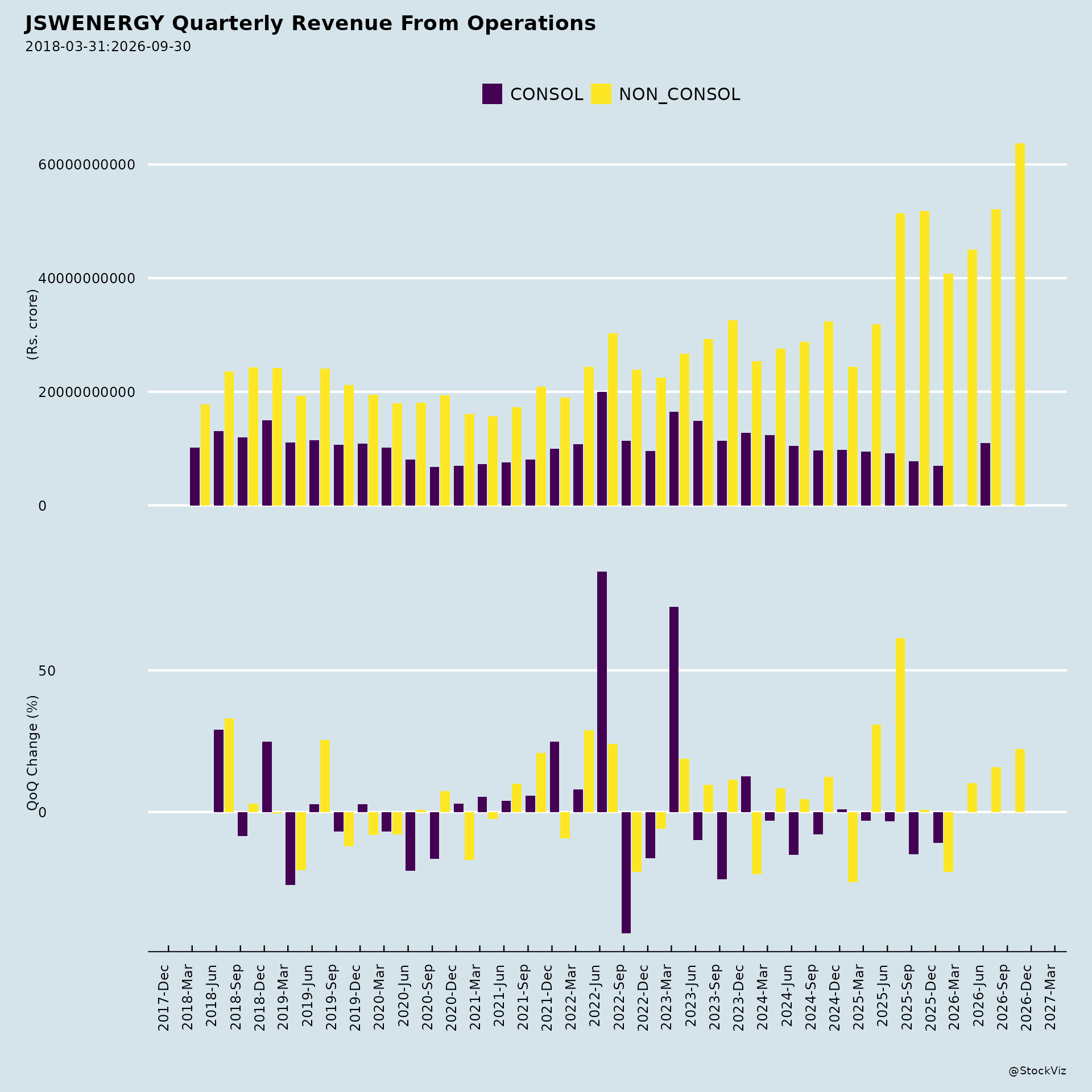
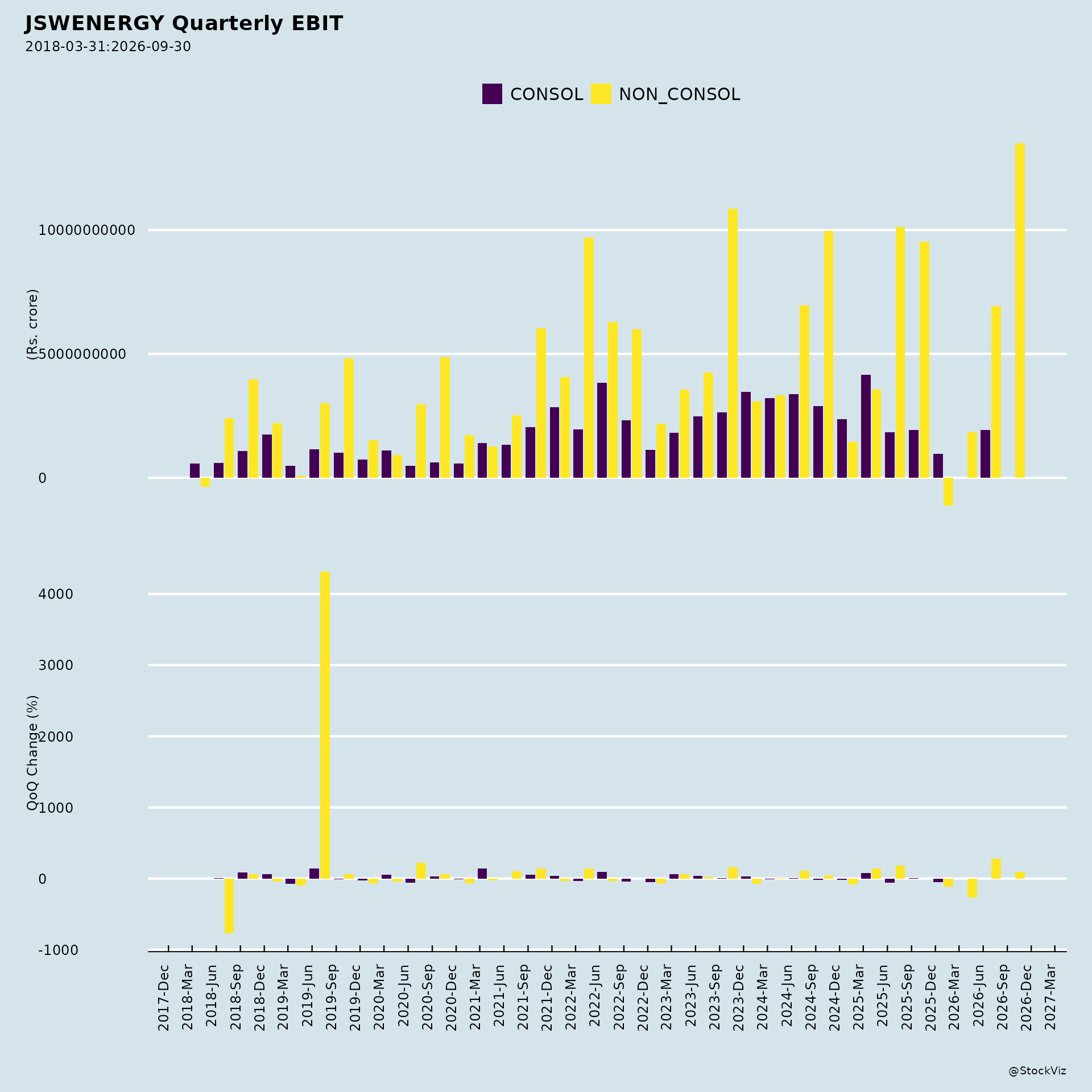
Observed versus guided. Q1 FY27 EBITDA rose 2% YoY to ₹3,103 Cr from ₹3,057 Cr, with EBITDA margin at 57% versus 56%, while reported PAT declined to ₹533 Cr from ₹836 Cr. Revenue was flat YoY at ₹5,437 Cr. The company attributes the PAT decline to higher depreciation and finance costs, and the lower cash returns on net worth to the recent QIP. Net generation declined 5% YoY, which the company attributes to lower PLFs at hydro and Mahanadi.
Investor meetings. JSW Energy has scheduled institutional investor and analyst meetings in September 2026: the 22nd UBS India Summit on 11 September 2026, the Morgan Stanley Virtual India Industrials & Energy Seminar on 15 September 2026, the Jefferies 5th India Forum on 18 September 2026, and the 2026 Asia Pacific Conference by Bank of America on 24 September 2026. The schedule is subject to change in the event of any exigency.
Credit rating. ICRA Limited affirmed ‘ICRA AA (CE)/Stable’ for long-term bank loan facilities, affirmed and assigned ‘ICRA AA-/Stable’ to unsupported long-term bank loan facilities, and assigned and affirmed ‘ICRA A1+’ to the proposed Commercial Paper and short-term/working capital facilities of JSW Neo Energy Limited.
Broker Narrative
The broker narrative moved from a May 2024 Hold—cautious about RE execution delays, a sharp rise in merchant prices/volumes and full valuations, while leaning on Mytrah/QIP-led renewable growth—to an October 2026 Buy that still warns of execution slippage and uncertain new RE bids but rests on executed Q2FY27 beats, 17% generation growth, hydro/Utkal gains, 29.6GWh storage locked in, and a broader 30GW/40GWh storage plus backward-integration/green-hydrogen plan. Execution delays, merchant-price volatility and the renewable pipeline theme persisted, with the 20GW-by-FY30 target evolving into a 30GW-by-2030/40GWh-storage goal. What changed was the drop of Mytrah/QIP as the core thesis, the addition of Mahanadi’s tariff-reset EBITDA drop and 3.8GW of PPA-less capacity risk, and a shift from “upside priced in” to high-target Buy calls despite many negative actuals.
Fears that came true
- Delay in execution of renewable and under-construction projects persisted from the first to the last report and materialized in H1 organic additions of only 1.4GW versus 3GW guidance plus 3.8GW of the 14.8GW capacity gap lacking PPAs, alongside repeated DISAPPOINTMENT outcomes and negative actual returns on Buy calls.
- Sharp increases/changes in merchant prices and volumes remained a flagged headwind and coincided with Buy calls that produced negative actual returns or DISAPPOINTMENT outcomes rather than the predicted double-digit upside.
- The early Hold view that most upside was already priced in was borne out by a cluster of 2024–2025 Buy calls forecasting +20% to +60% that mostly ended in DISAPPOINTMENT with negative or modest actual returns.
Optimism that failed
- Strong RE wins and a robust locked-in pipeline targeting 20GW by FY30 faltered, as later reports cite uncertainty around new renewable bids and show a 14.8GW deficit to the 30GW target with 3.8GW (1.8GW Mahanadi and 2GW group captive) still without PPAs.
Broker Timeline
23 broker calls · 2024-05-08 to 2026-10-29
CNBC-TV18: ratings, targets and commentary
No recorded CNBC-TV18 statements for this ticker.
Management comments
No recorded management comments with an explicit designation and affiliation for this ticker.
Copyright © 2023 SAS Data Analytics Pvt. Ltd. All rights reserved.