JMFINANCIL
Equity Metrics
November 18, 2026
JM Financial Limited
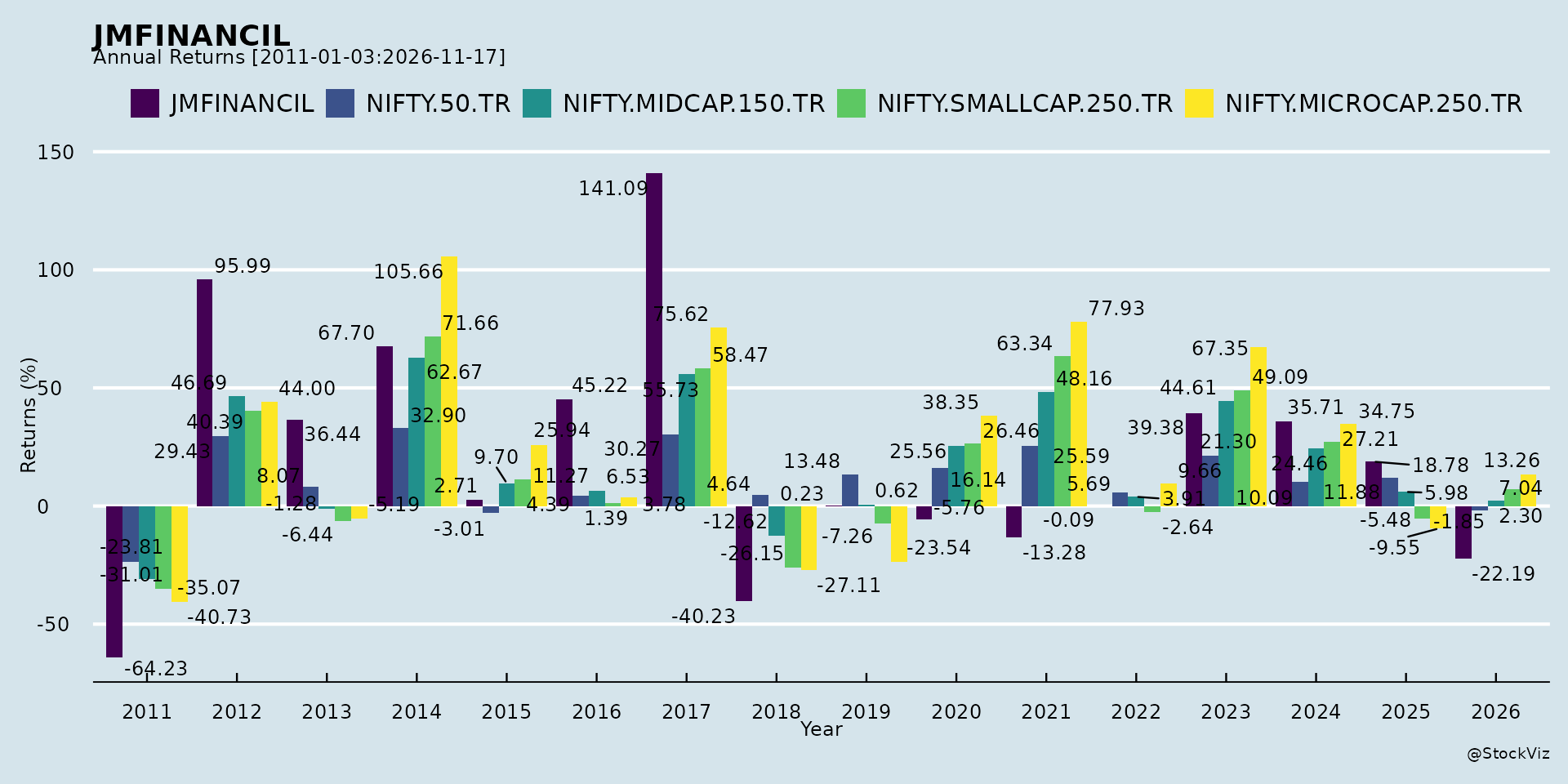
Annual Returns
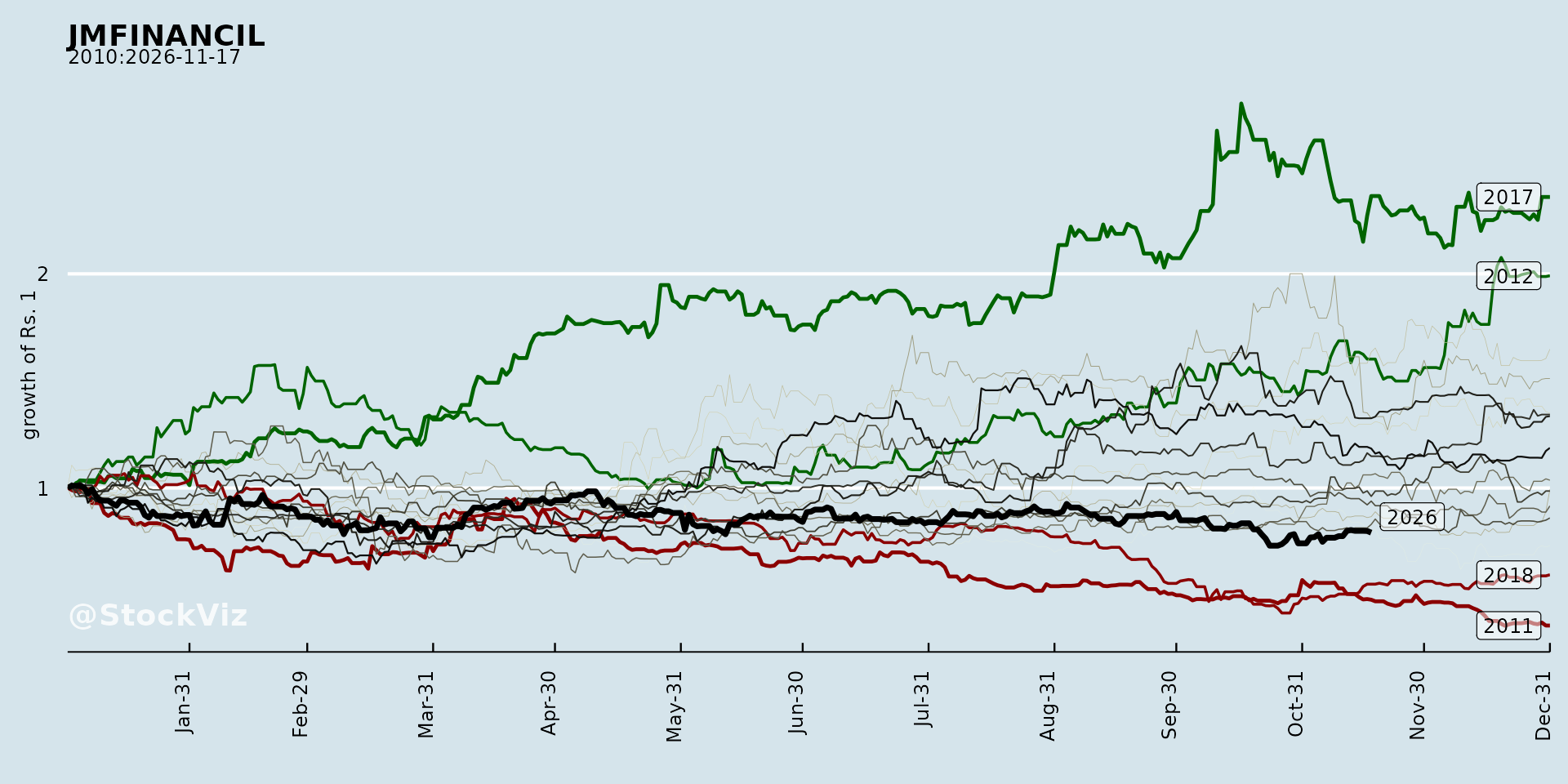
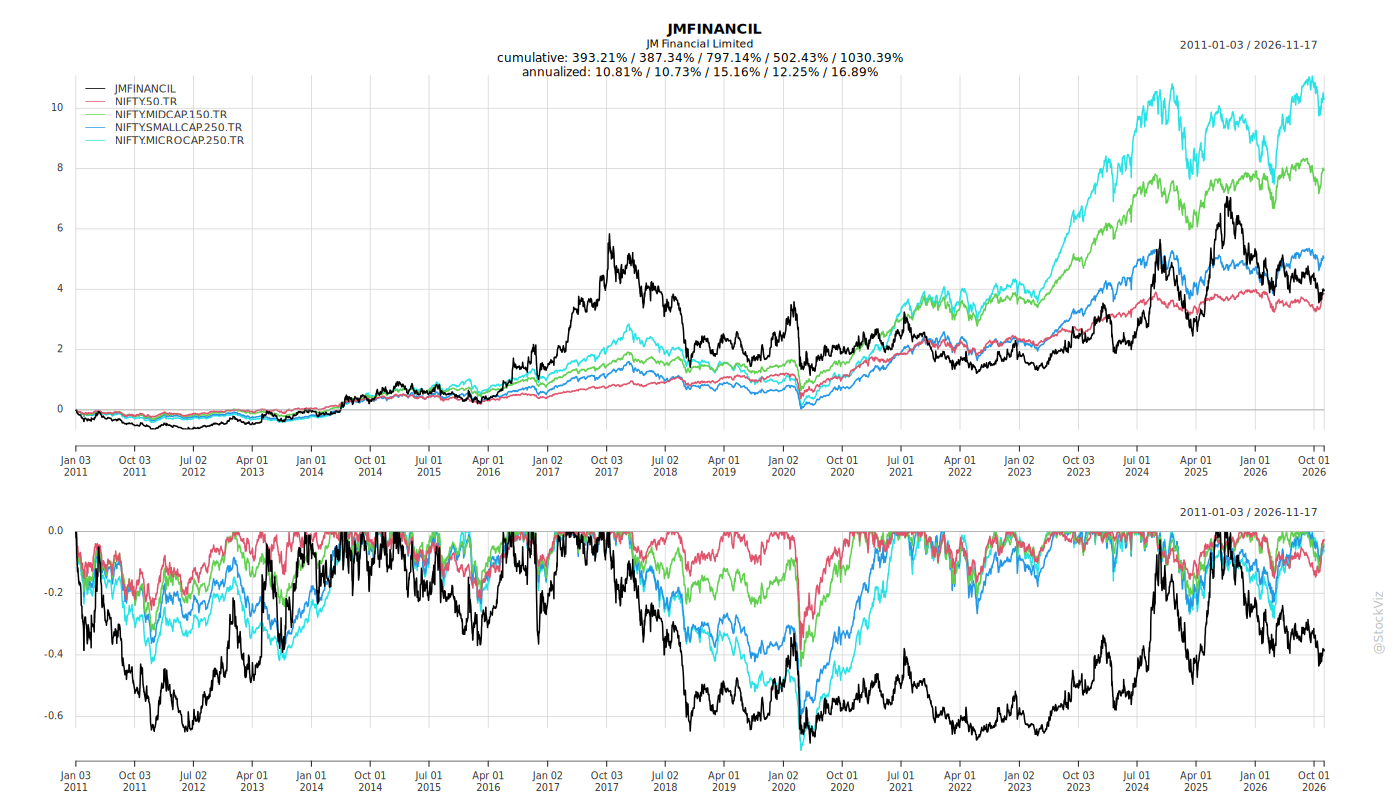
Cumulative Returns and Drawdowns
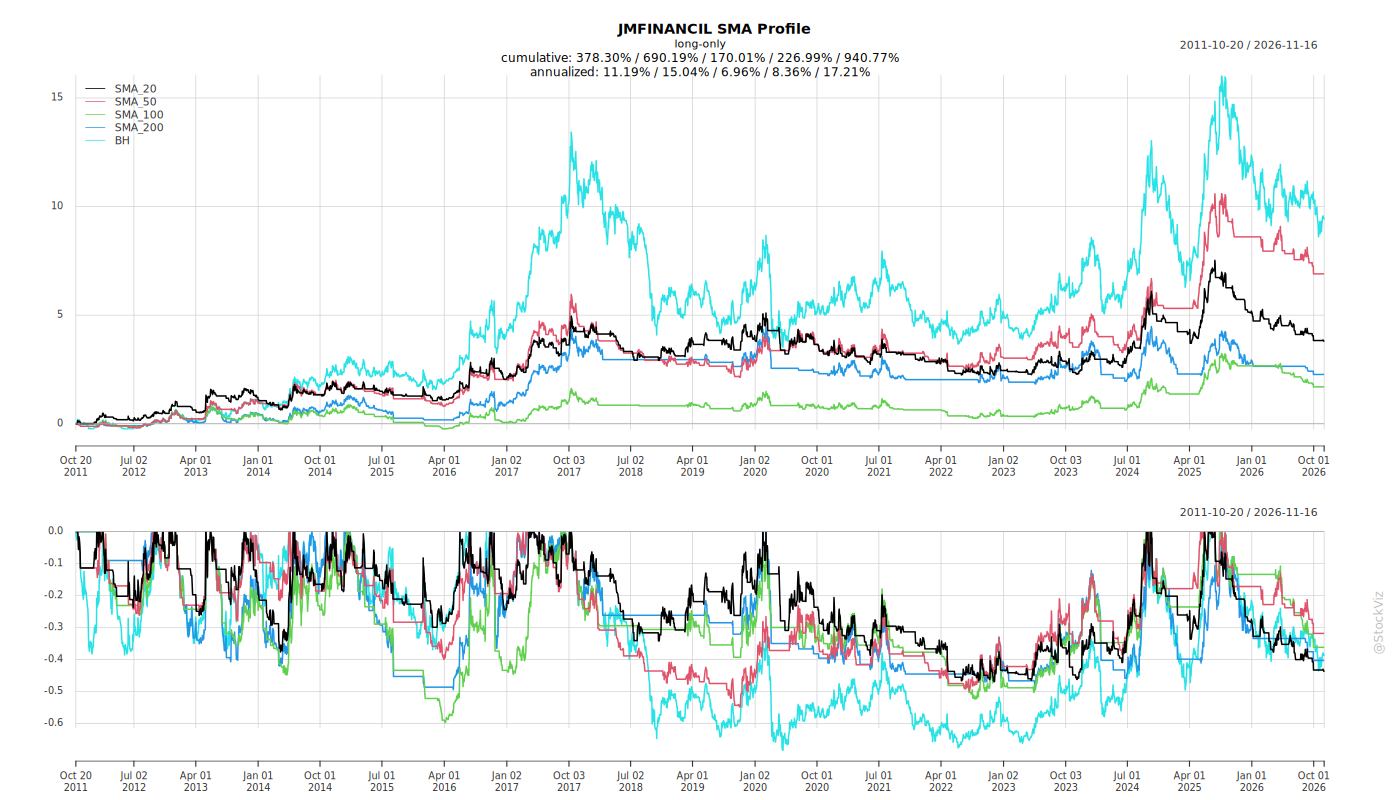
Fundamentals
Ownership
Margined
AI Summary
asof: 2026-09-17
JMFINANCIL — Q1FY27 Announcements: Headwinds, Tailwinds, Risks and Guidance
1. Headwinds and Challenges
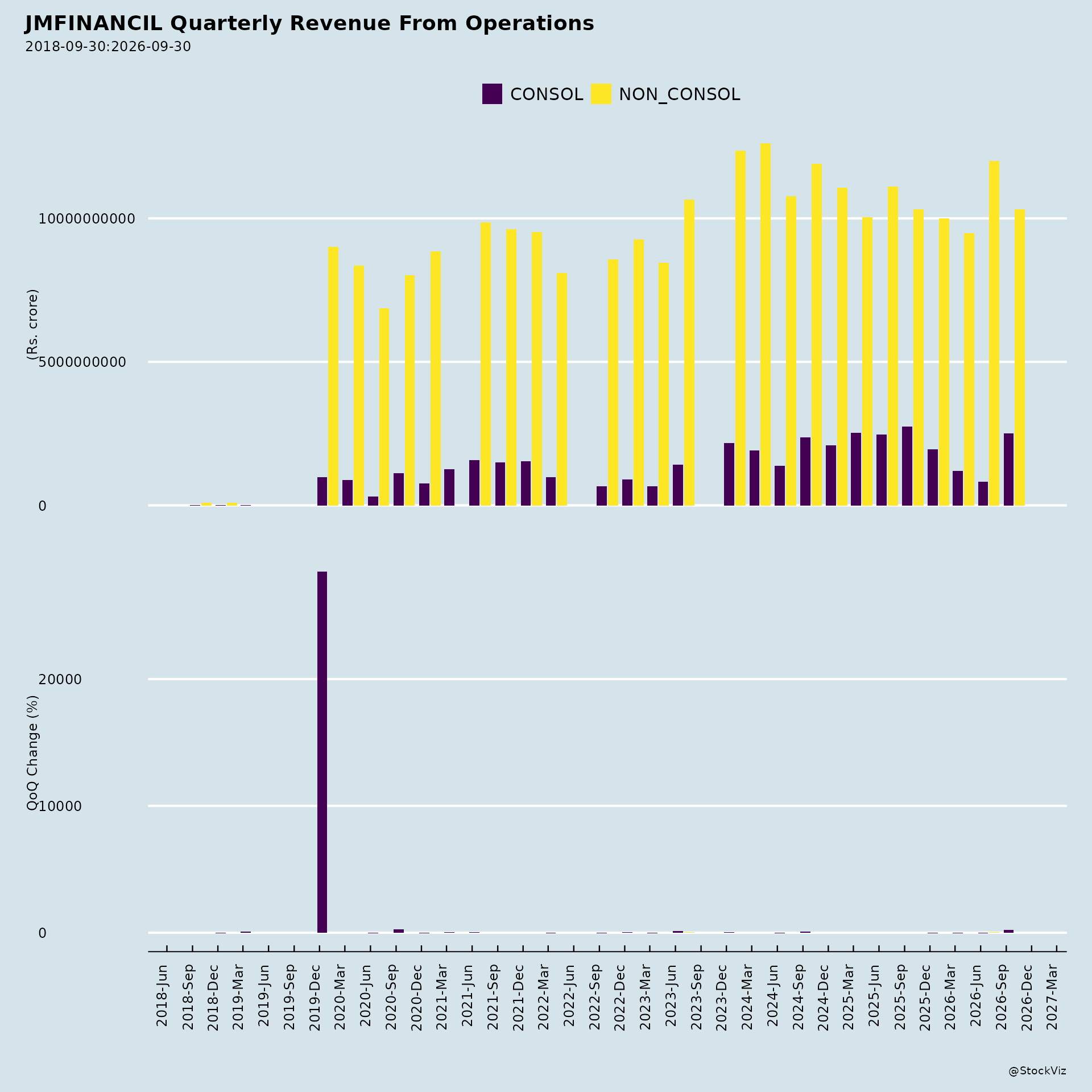
Capital markets slowdown. The Corporate Advisory and Capital Markets segment had a slow quarter “primarily because of lack of IPO issuances and primary market activity.” Net revenue for the segment fell to INR115 crores in Q1FY27 from INR182 crores a year earlier, with PAT of INR32 crores. Management noted this was the first significant slowdown in transaction activity in three years, attributing it partly to the West Asia war.
Wealth Management weakness. Performance was “subdued because of weak transactional business,” again linked to markets and primary market issuance. Net revenue fell to INR185 crores from INR211 crores, and PAT to INR19 crores. Management explained that the firm was historically transactional-heavy, and private-side transaction activity had not been encouraging over the preceding six months. Profitability was also diluted by heavy RM hiring over the prior 18 months, with new RMs carrying a 2.5–3 year gestation to profitability.
Asset Management drag. The mutual fund business remains loss-making (loss after minority interests flat at INR5 crores). The SIP book declined 30%, and non-liquid average AUM for Q1FY27 stood at INR10,521 crores versus INR11,219 crores in Q1FY26. Management attributed this to a concentration in small and mid-cap oriented schemes, which saw outflows when that space corrected in late 2025 and early 2026.
Private credit book optically flat. While the bespoke book reached a five-quarter high, the overall private markets loan book appeared flattish because the real estate book and non-core book continued to run down. Management stated it was still “not sure whether the time is right” to resume real estate lending.
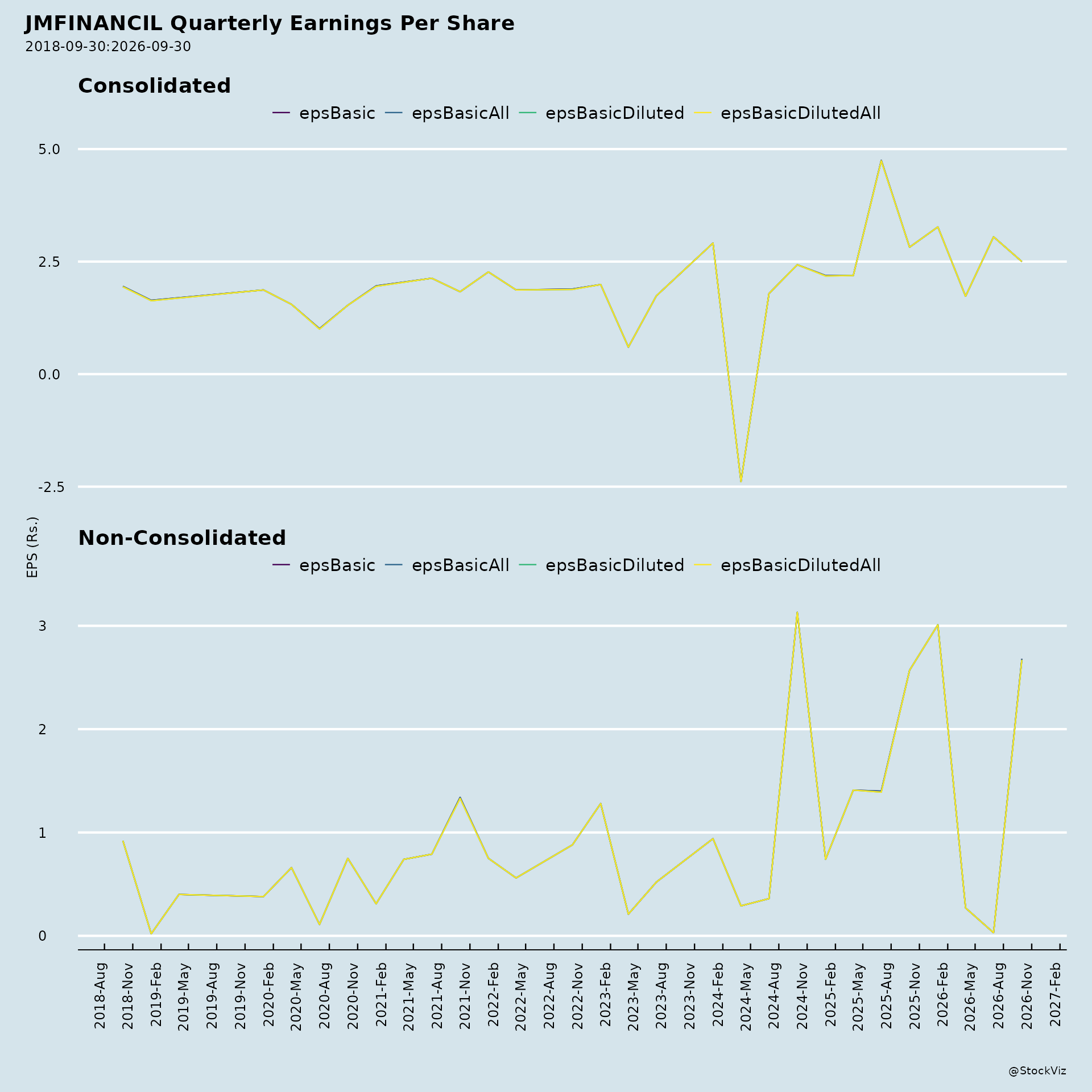
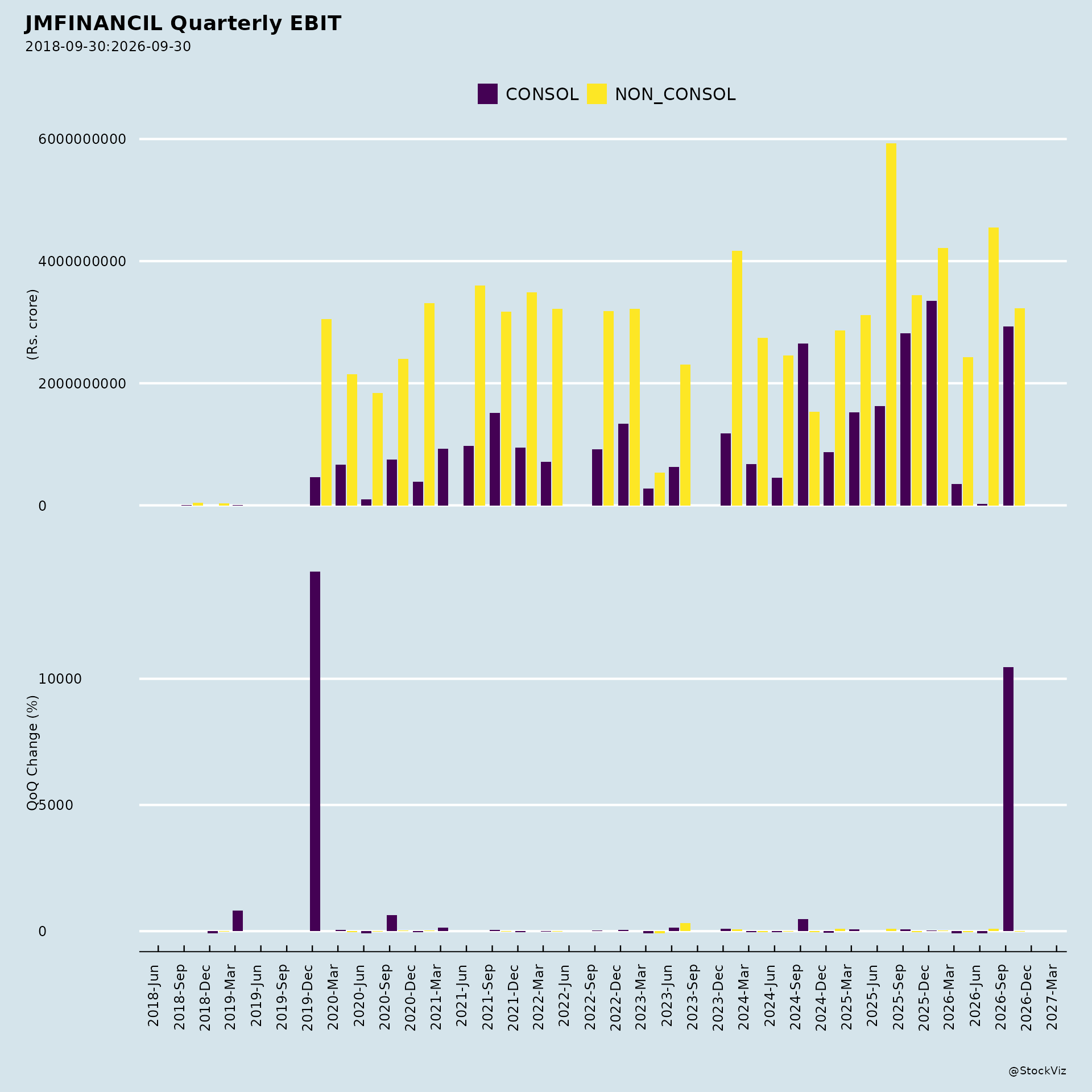
ROE below target. Reported PAT for the quarter was INR292 crores, an annualized ROE of approximately 11%. Management acknowledged that the Private Markets segment’s ROE is expected to remain in the teens over the long term and is currently dragging group ROE, partly because debt-to-equity in that business has fallen to 0.8x from 1.9x in FY24.
Regulatory constraint on capital return. RBI rules prevent the NBFCs from distributing more than 50% of PAT as dividend, which management cited as a constraint on returning capital to shareholders.
AI adoption limits. Management noted that AI-driven sell-side output is not yet acceptable to buy-side analysts, that token costs can escalate sharply, and that regulatory disclosure requirements constrain AI use in front-office roles.
2. Tailwinds and Growth Prospects
Private Markets as countercyclical cushion. Management stated the Private Markets segment “provided very strong cushion to the earnings amidst volatility in Capital Markets,” validating its role as a countercyclical force. Q1FY27 was described as one of the best quarters for the ARC business, with gross resolutions over INR2,000 crores and group share of cash flows over INR1,200 crores. Net revenue for the segment doubled to INR462 crores and pre-provision operating profit grew almost 2.3x to INR375 crores.
ARC positioned to be debt-free. With cash generated and expected over the next six months, the ARC is expected to become debt-free, seven years after peaking at roughly 3x debt-to-equity. Management targets 16%–18% IRR on the remaining SR book, with wholesale ARC returns of 18%–22% and retail asset returns of 15%–18%.
Strong IPO pipeline. The company has filed documents for 60 IPOs aggregating to approximately INR150,000 crores, excluding Jio Platforms and National Stock Exchange. Including those two, the pipeline is approximately INR220,000 crores. Management described the pipeline as increasing.
Early signs of capital markets recovery. July transaction revenues in Corporate Advisory and Capital Markets exceeded June revenues, and FDI flows reversed to net buyers from net sellers. Management expressed hope of executing a significant portion of the pipeline over the rest of the year.
Bespoke private credit growth. The bespoke book reached a five-quarter high of approximately INR3,000 crores, up from a low of about INR2,700 crores. Management guided to 15%–20% YoY growth, stating roughly half of that growth was already achieved in Q1. Over three years, the standard loan book could reach INR7,000–8,000 crores, creating a roughly 1:1 mix between investments and standard loans.
Wealth Management recurring traction. Recurring AUM grew 7% YoY to INR33,394 crores, with the recurring share of total AUM at 30%. The wealth loan book grew 43% YoY to INR2,417 crores. Net flows for the quarter were approximately INR2,000 crores, against a full-year target of at least INR6,000 crores. Management targets revenue growth in excess of the industry’s early-to-mid-teens growth.
Affordable Home Loans momentum. Disbursements grew 87% YoY to INR360 crores, AUM grew 28% YoY to INR3,715 crores, the customer base rose 31% YoY to 35,655, and 23 branches were added YoY. Management intends to list this business separately in 2–3 years.
Asset Management build-out. Non-liquid closing AUM rose 16% QoQ to approximately INR10,900 crores. Management fees from mutual funds rose 62% to INR13 crores. New products launched include the JM Multi Asset Allocation Fund, JM Pre-IPO Fund and JM Credit Fund, with INR150 crores of further investment planned over two years.
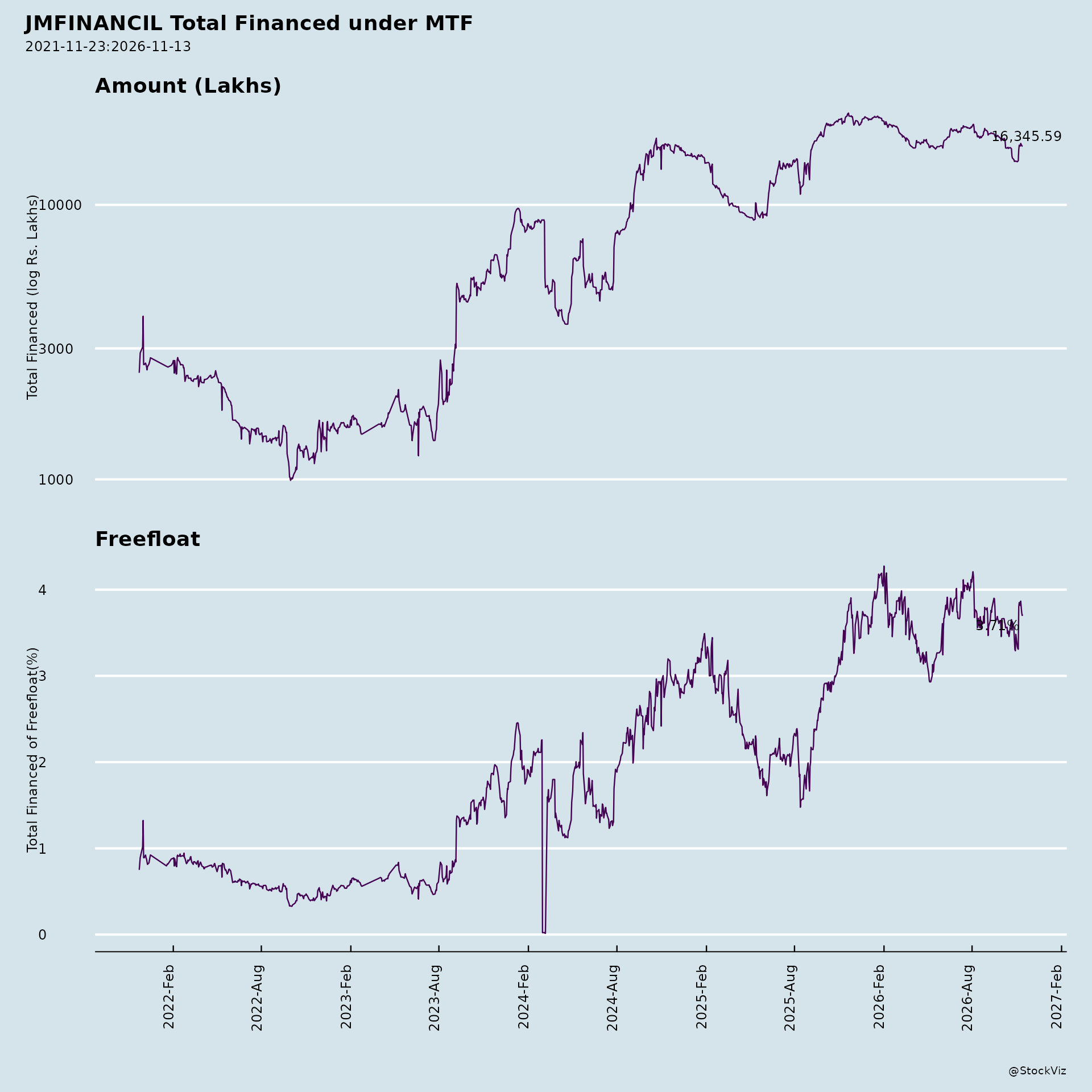
Value creation in AMC and margin trade financing. Management illustrated that INR150 crores invested in the AMC over three years has supported equity AUM growth from under INR500 crores to approximately INR10,500 crores, which at 6%–8% of equity AUM implies a value of roughly INR750 crores. The margin trade financing book grew from under INR400 crores five years ago to approximately INR2,500 crores, with combined interest and broking yield of about 13.5%, and is expected to grow 15% YoY for three years.
Leverage headroom. Management expects debt-to-equity in Private Markets to return to 2x within three years as syndication ramps up, which would substantially improve ROEs.
3. Key Risks
- Economic and political conditions in India and outside India.
- Volatility in interest rates and in the securities market.
- Internal or external fraud.
- New regulations and government policies that may impact the businesses of JMFL as well as the ability to implement its strategies.
- Lumpy ARC resolution income: management explicitly noted that recovery resolution is a lumpy business, with a large part of income booked only when resolution occurs and cash flow is banked.
- Dependence of Capital Markets and Corporate Advisory on market conditions, which management described as “completely driven by market conditions.”
- Execution risk in Wealth and Asset Management, which management identified as the area where ROE improvement depends on execution rather than markets.
- Concentration risk in mutual fund schemes oriented toward small and mid-caps, which contributed to AUM loss during the correction.
- Regulatory payout restrictions limiting capital return from the NBFCs.
4. Management Guidance Versus Observed Performance
Private credit growth guidance. Management had guided at the end of Q4 that the bespoke book should see at least 15%–20% YoY growth. Observed: the bespoke book rose from approximately INR2,700 crores to approximately INR3,000 crores, which management described as roughly half of that growth achieved in the first quarter.
Capital markets recovery timing. On the prior call after Q4, management estimated it would take six months for capital market pace to recover. Observed: management reported that July revenues exceeded June revenues, describing this as a positive surprise and earlier than anticipated.
ARC cash flow expectations. Management had stated on the prior call that the year would see very good cash flow and recovery from the ARC. Observed: Q1FY27 delivered gross resolutions over INR2,000 crores and group share over INR1,200 crores, which management described as one of the best quarters for the business. Management added that two or three large resolutions from the pre-COVID book remain pending, with encouraging movement over the past year, and that write-backs on provisions made on the real estate book are expected but were not present in Q1.
Wealth Management build-out timeline. Management had maintained a 2–3 year build-out, with recruitment completed over the prior 18–24 months. Observed: recurring AUM and loans showed good traction, but transactional revenue weakness and the new RM cohort’s gestation period weighed on profitability. Management stated employee expenses “would have peaked now” and that most hiring is behind, with the new cohort targeted to reach profitability within about a year.
Asset Management trajectory. Management had outlined continued investment in the business. Observed: non-liquid AUM recovered 16% QoQ, management fees rose 62%, but the segment remained at a loss of INR5 crores. Management stated it expects to be “back on track both on the SIP book as well as AUM growth very quickly over the next couple of quarters,” and that operating leverage in the AMC is “probably 2 years out.”
ROE guidance. Management had guided toward a 15% ROE over time. Observed: FY26 ROE was approximately 11.5%, and Q1FY27 annualized ROE was approximately 11%. Management stated this year should be “in a similar range or maybe even better,” with a stronger ROE kicker expected once Wealth Management scales, AMC losses reduce, and operating leverage is attained, and with Private Markets ROE improving over 3–4 years as syndication grows.
Non-core loan book. Management guidance states the non-core loan book is expected to substantially run down in the next 12 months. Observed: management noted the non-core book “will keep degrowing” and that the overall private markets book appeared flattish because of the real estate and non-core run-down.
Demerger or separate listing. Management stated that Wealth and Asset Management is still small relative to Capital Markets, Corporate Advisory and Private Markets, and that a demerger or separate listing would be evaluated once that business is larger and more profitable, subject to tax considerations. For Affordable Home Loans, management reiterated an intention to list separately in 2–3 years.
Broker Timeline
1 broker calls · 2023-06-14 to 2023-06-14
CNBC-TV18: ratings, targets and commentary
No recorded CNBC-TV18 statements for this ticker.
Management comments
No recorded management comments with an explicit designation and affiliation for this ticker.
Copyright © 2023 SAS Data Analytics Pvt. Ltd. All rights reserved.