JLHL
Equity Metrics
October 23, 2026
Jupiter Life Line Hospitals Limited
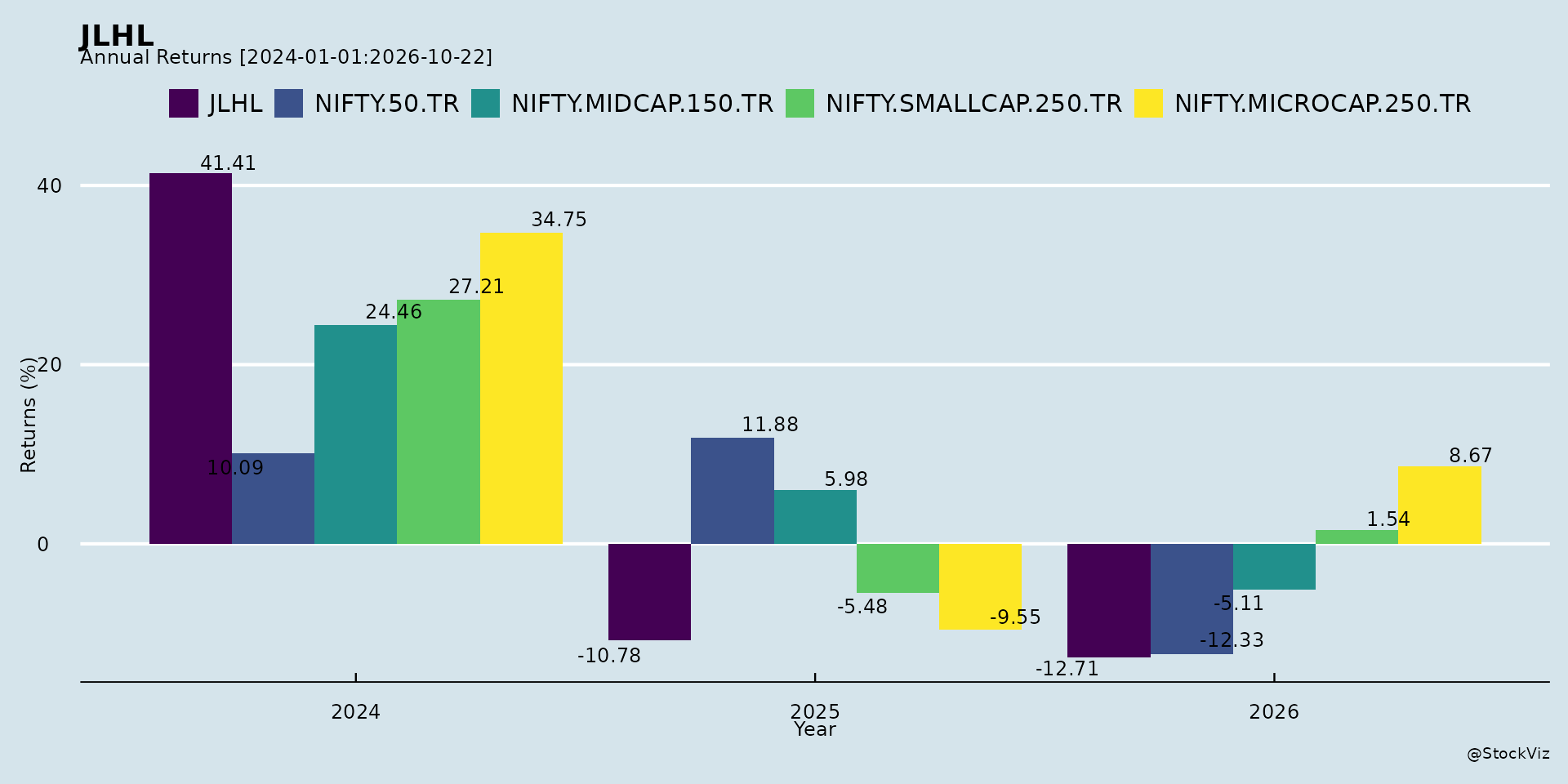
Annual Returns

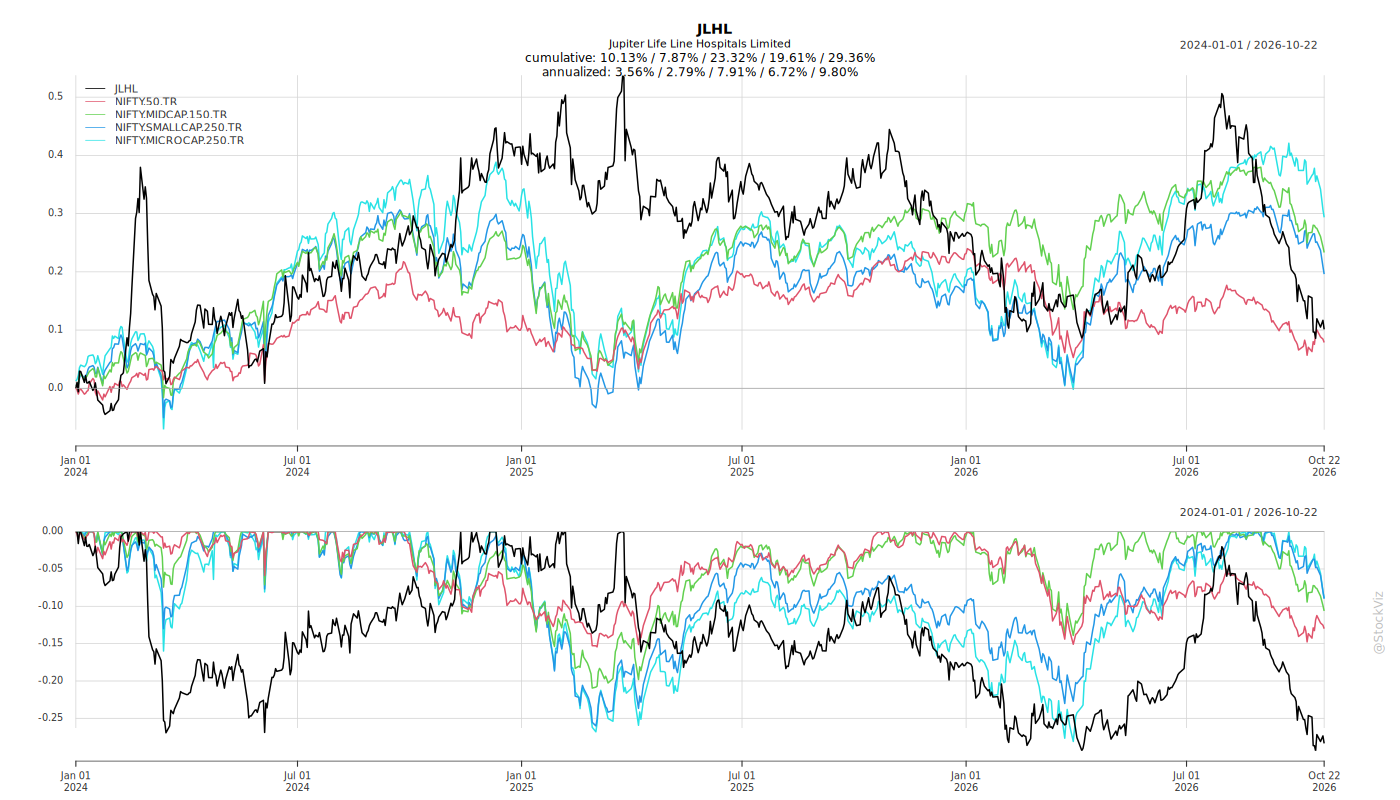
Cumulative Returns and Drawdowns
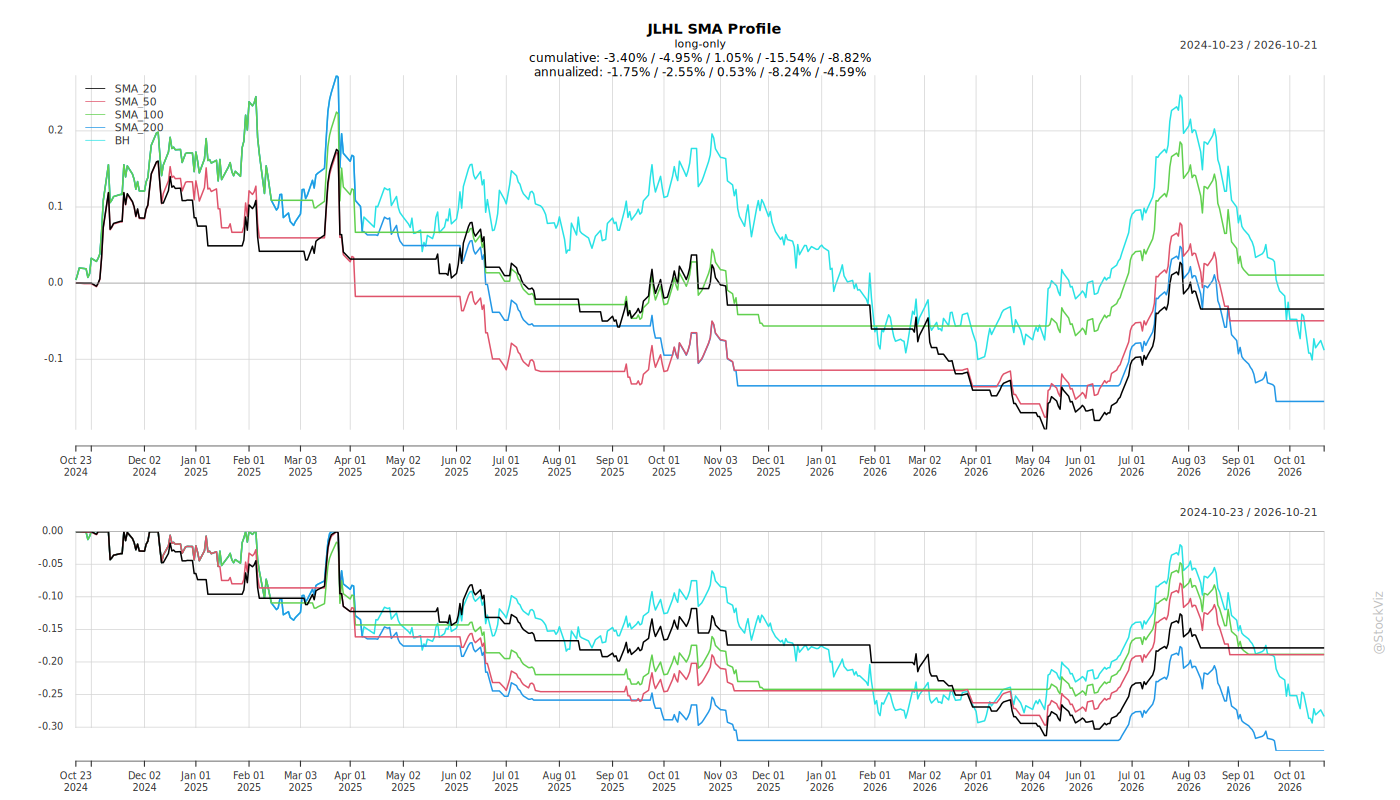
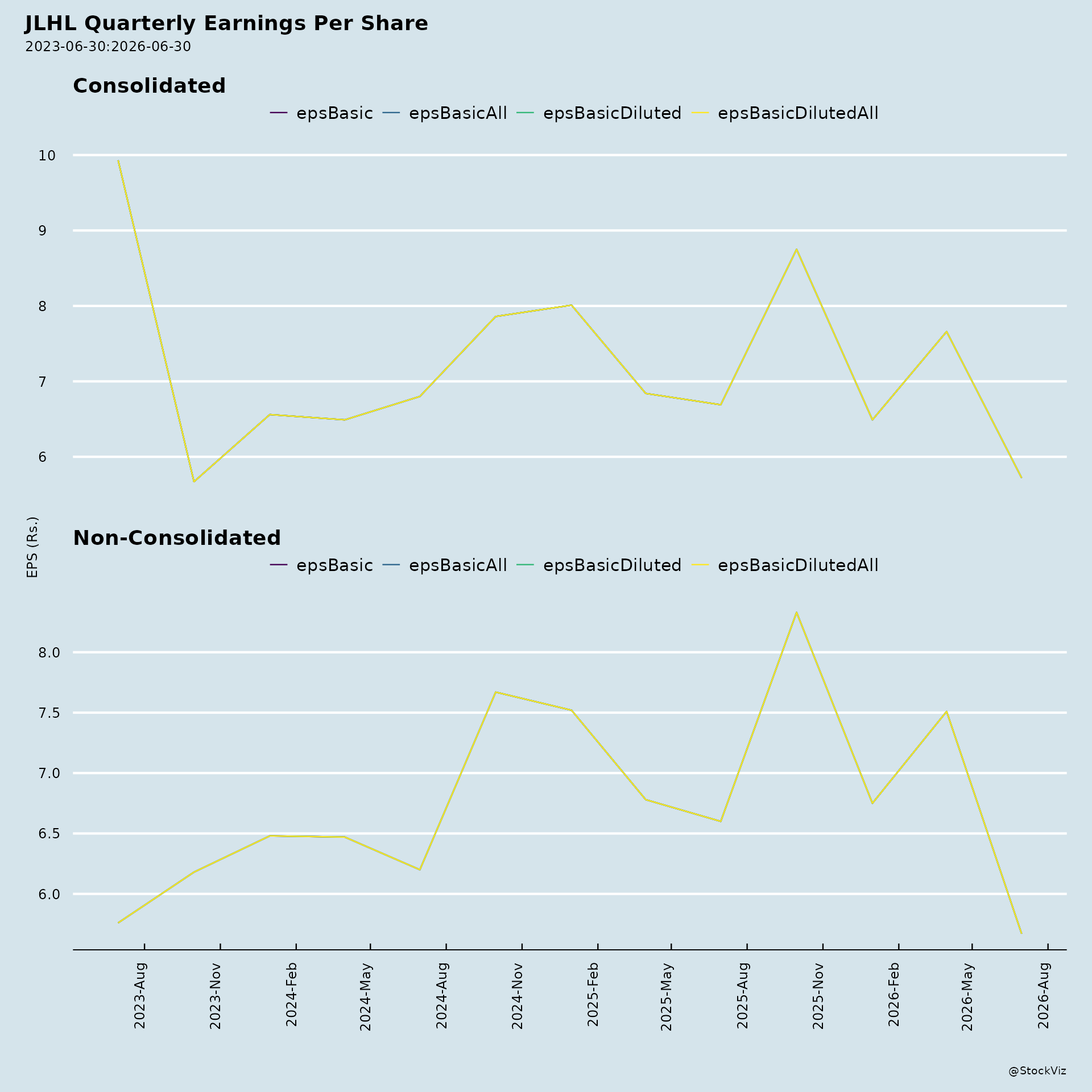
Fundamentals
Ownership
Margined
AI Summary
asof: 2026-09-17
Headwinds and Challenges
- Dombivli ramp-up losses. The Dombivli hospital completed its first full quarter of operations in Q1FY27. Management stated the EBITDA loss of Rs 9.5 crore from Dombivli in the quarter was in line with internal projections and earlier guidance. The prior quarter (Q4FY26) also included a Dombivli operational loss of Rs 9.4 crore during the initial ramp-up phase.
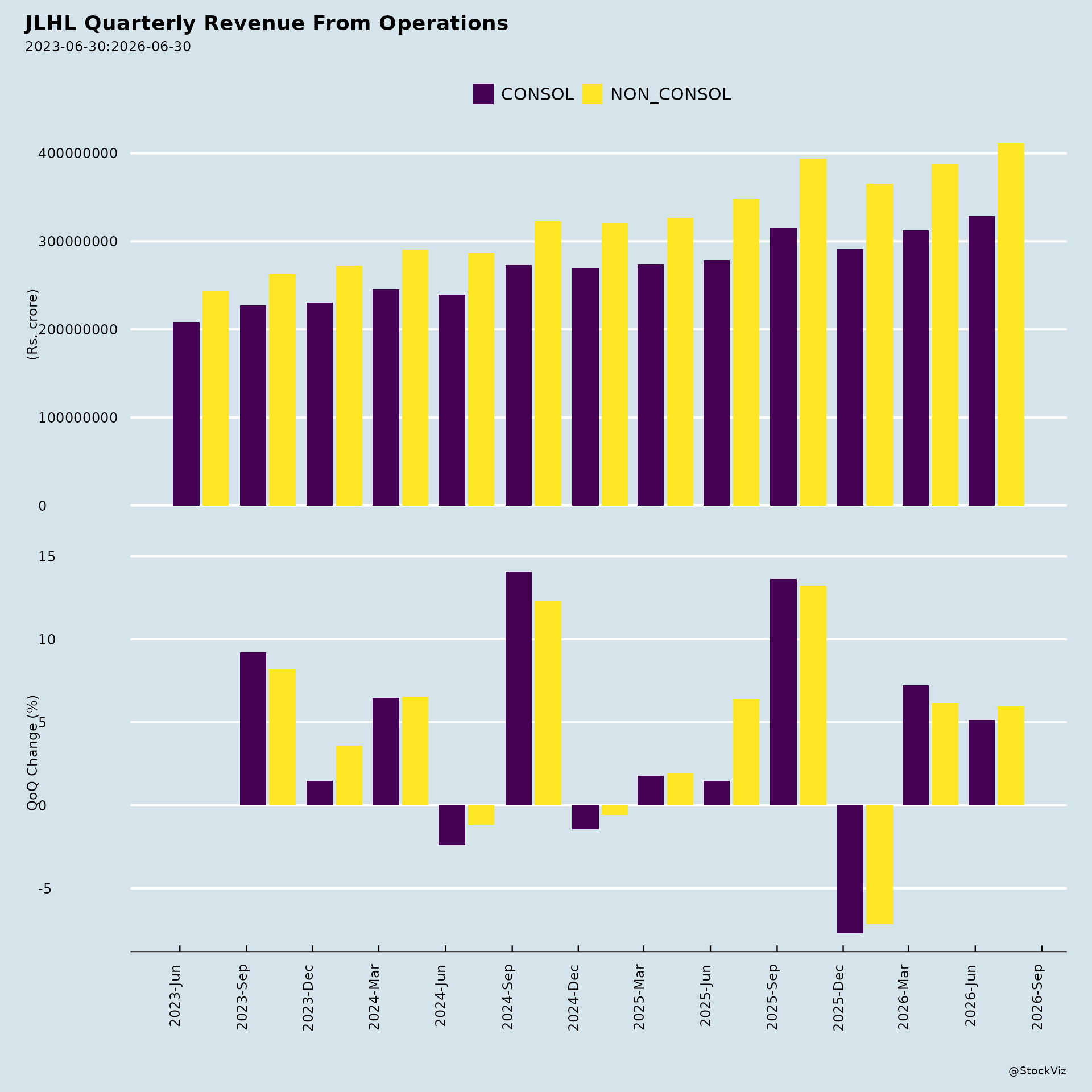
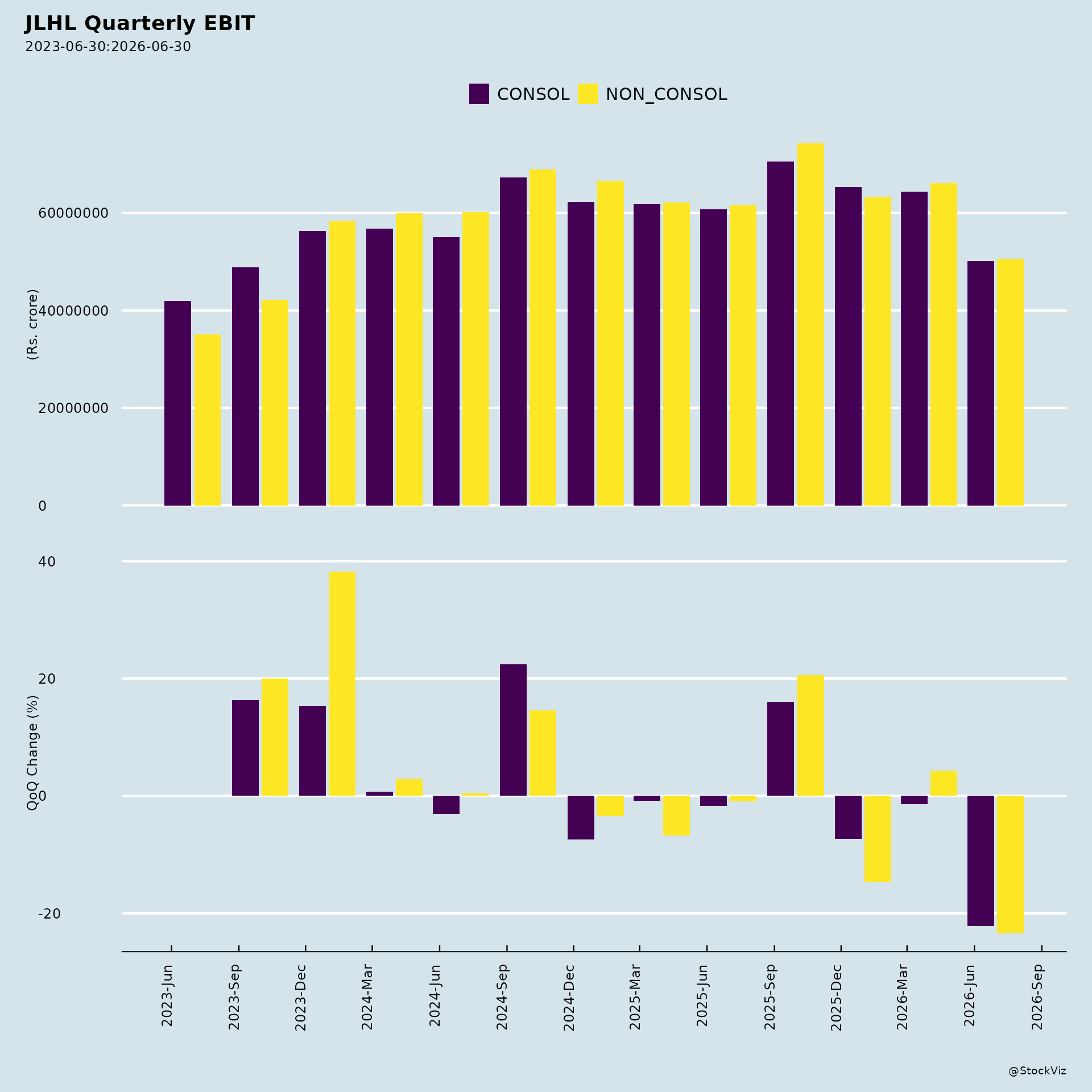
- Margin compression. Consolidated EBITDA margin declined to 19.3% in Q1FY27 from 22.2% in Q1FY26 and 23.0% in Q4FY26. EBITDA was impacted by the Dombivli ramp-up loss and higher marketing costs from launch-related activities.
- Higher depreciation. Depreciation rose to Rs 26.4 crore in Q1FY27 from Rs 21.2 crore in Q1FY26, following commercialisation of the Dombivli hospital and capitalisation of newly added beds.
- Higher finance costs. Finance cost increased to Rs 12.9 crore in Q1FY27 from Rs 8.3 crore in Q1FY26, owing to an increase in debt for ongoing capex.
- Profit decline. PBT fell 18.1% YoY to Rs 50.6 crore and PAT fell 14.7% YoY to Rs 37.5 crore in Q1FY27. On a QoQ basis, EBITDA declined 11.1%, PBT declined 25.0% and PAT declined 25.3%.
- Cost inflation across line items. Cost of goods sold, employee cost, professional fees and other expenses all increased YoY in Q1FY27.
Tailwinds and Growth Prospects
- Dombivli occupancy ramp. Management stated occupancy at Dombivli has been increasing steadily, supported by increasing patient footfall, expansion of clinical services and growing patient acceptance. Insurance empanelment has been initiated and is expected to further improve patient inflows in coming quarters. New specialties and consultants are being added under a phased development strategy.
- Established hospitals base. Management stated established hospitals continue to maintain healthy occupancy levels, providing a stable financial and operational base.
- Revenue growth. Revenue from operations grew 16.2% YoY to Rs 392.6 crore in Q1FY27 and 5.6% QoQ. Total income grew 16.4% YoY.
- Bed capacity expansion from 1,700 to 2,900. The
company is scaling bed capacity with the following projects:
- Dombivli: 500 beds, capex/bed (excl. land) Rs 1.0 crore; phase-wise commissioning underway with ~200 beds operational and fit-outs completed for an additional 100 beds.
- Pune II: 500 beds, capex/bed Rs 1.2 crore; under construction.
- Mira-Bhayandar: 300 beds, capex/bed Rs 1.3 crore; at conceptualisation and planning stage.
- BKC: 400 beds, capex/bed Rs 1.5 crore; documentation and registration stage.
- Expansion economics. Post-IPO expansion of 1,700 beds at an average cost/bed of ~Rs 1.5 crore. Strategic priorities cited include phased commissioning to optimise capital deployment, a strategic land bank in high-demand micro markets, and strong operating leverage from consolidated scale.
- Funding philosophy. Cash flow to EBITDA conversion averaging ~75–80% over the last five years is expected to support a significant portion of planned expansion capex through internal accruals.
- Corporate actions. The 24th AGM on July 17, 2026 approved a sub-division/split of equity shares, alteration of the Capital Clause of the Memorandum of Association, and alteration of the Articles of Association. Dr. Ajay Thakker was appointed Chairman & Whole Time Director with effect from July 17, 2026. A material related party transaction with Jupiter Hospital Projects Private Limited was approved.
Key Risks
- Execution and ramp-up risk on new hospitals. Dombivli is in a phased ramp-up; Pune II, Mira-Bhayandar and BKC are at various pre-operational stages (under construction, conceptualisation/planning, and documentation/registration respectively).
- Continued drag from new hospital losses. The Dombivli EBITDA loss of Rs 9.5 crore in Q1FY27 was in line with guidance, but the hospital continues to be in an initial ramp-up phase.
- Debt and finance cost risk. Finance costs have risen due to debt taken for expansion projects.
- Depreciation drag from capitalisation. Depreciation has increased following capitalisation of newly added beds and commercialisation of Dombivli.
- Marketing cost pressure. Higher marketing costs on account of launch-related activities weighed on EBITDA.
- Forward-looking statement risk. The presentation notes that forward-looking statements are subject to risks and uncertainties including fluctuations in earnings, ability to manage growth, competition (domestic and international), economic growth in India and abroad, ability to attract and retain highly skilled professionals, time and cost overruns on contracts, ability to manage international operations, government policies and actions, regulations, and interest and other fiscal costs generally prevailing in the economy.
- Related party transaction exposure. A material related party transaction with Jupiter Hospital Projects Private Limited was approved at the AGM; promoter and promoter group votes were excluded from that resolution.
Management Guidance Versus Observed Business Performance
- Dombivli loss guidance. Management stated the EBITDA loss from Dombivli of Rs 9.5 crore in Q1FY27 is in line with internal projections and earlier guidance. The Q4FY26 Dombivli operational loss was Rs 9.4 crore, indicating a similar level of loss across the two quarters.
- Insurance empanelment. Management stated the process of insurance empanelment has been initiated and is expected to further improve patient inflows in the coming quarters. No quantified outcome was provided.
- Phased development strategy. Management stated it continues to add new specialties, strengthen the consultant base and expand service offerings to support a steady ramp-up. No quantified targets were provided.
- Project progress. Management stated Pune South, Mira Road and BKC projects are continuing progress as discussed earlier. The presentation describes Pune II as under construction, Mira-Bhayandar at conceptualisation and planning stage, and BKC at documentation and registration stage.
- Funding expectation. The presentation states cash flow to EBITDA conversion averaging ~75–80% over the last five years is expected to support a significant portion of planned expansion capex. This is a forward-looking expectation, not a reported outcome.
- Investor conference. Officials of the company will be attending an Investor Conference organised by PL Capital Conference on 28th September 2026 from 1:00 pm to 5:00 pm in-person, and no unpublished price sensitive information (UPSI) will be discussed.
Broker Narrative
The broker narrative evolved from cautious optimism about capex-heavy expansion offset by strong ARPOB growth and occupancy gains to acknowledging that expansion risks materialized as Dombivli losses and EBITDA de-growth, while still maintaining a Buy stance on the back of ARPOB improvement and revenue growth. Persistent themes included greenfield expansion in western India and ARPOB gains, but early expectations of 70–75% occupancy and ~20% return ratios were overtaken by declining occupancy and falling profitability. The shift reflects a transition from expansion-as-opportunity to expansion-as-burden, with the latest report’s DISAPPOINTMENT outcome confirming the downgraded reality.
Fears that came true
- The Dombivli expansion capex risk materialized as an EBITDA loss of INR 95mn, with higher depreciation and finance costs reducing adjusted PAT by 15% YoY, directly correlating with the DISAPPOINTMENT outcome of -13.2% actual return.
- The Q4FY24 EBITDA margin decline concern materialized as ~7% YoY EBITDA de-growth in the last report, coinciding with DISAPPOINTMENT and PENDING outcomes across multiple reports.
- Competitive pressure in MMR hospital markets flagged early contributed to occupancy declining 50bps YoY to 59.6%, well below the targeted 70-75%, correlating with NEUTRAL outcomes and negative actual returns.
- Pre-expansion operating cost fears materialized as higher team build-up and doctor hiring costs at Indore, weighing on EBITDA and coinciding with DISAPPOINTMENT and FLAT results.
Optimism that failed
- Management’s expectation of Pune occupancy reaching 70–75% failed as consolidated occupancy declined to 59.6%, coinciding with DISAPPOINTMENT and several NEUTRAL outcomes.
- The projected healthy return ratios of ~20% failed as adjusted PAT fell 15% YoY due to higher depreciation and finance costs from the Dombivli unit.
- The expected 25% EBITDA CAGR over FY24-26E failed as the company reported ~7% YoY EBITDA de-growth, correlating with DISAPPOINTMENT and PENDING outcomes.
- Strong IP/OP volume growth of ~14% YoY cited in the first report slowed to just 7% IP and 13% OP growth in the last report, indicating diminishing operational momentum.
Broker Timeline
17 broker calls · 2024-05-13 to 2026-08-04
Copyright © 2023 SAS Data Analytics Pvt. Ltd. All rights reserved.