JAGSNPHARM
Equity Metrics
September 24, 2026
Jagsonpal Pharmaceuticals Limited
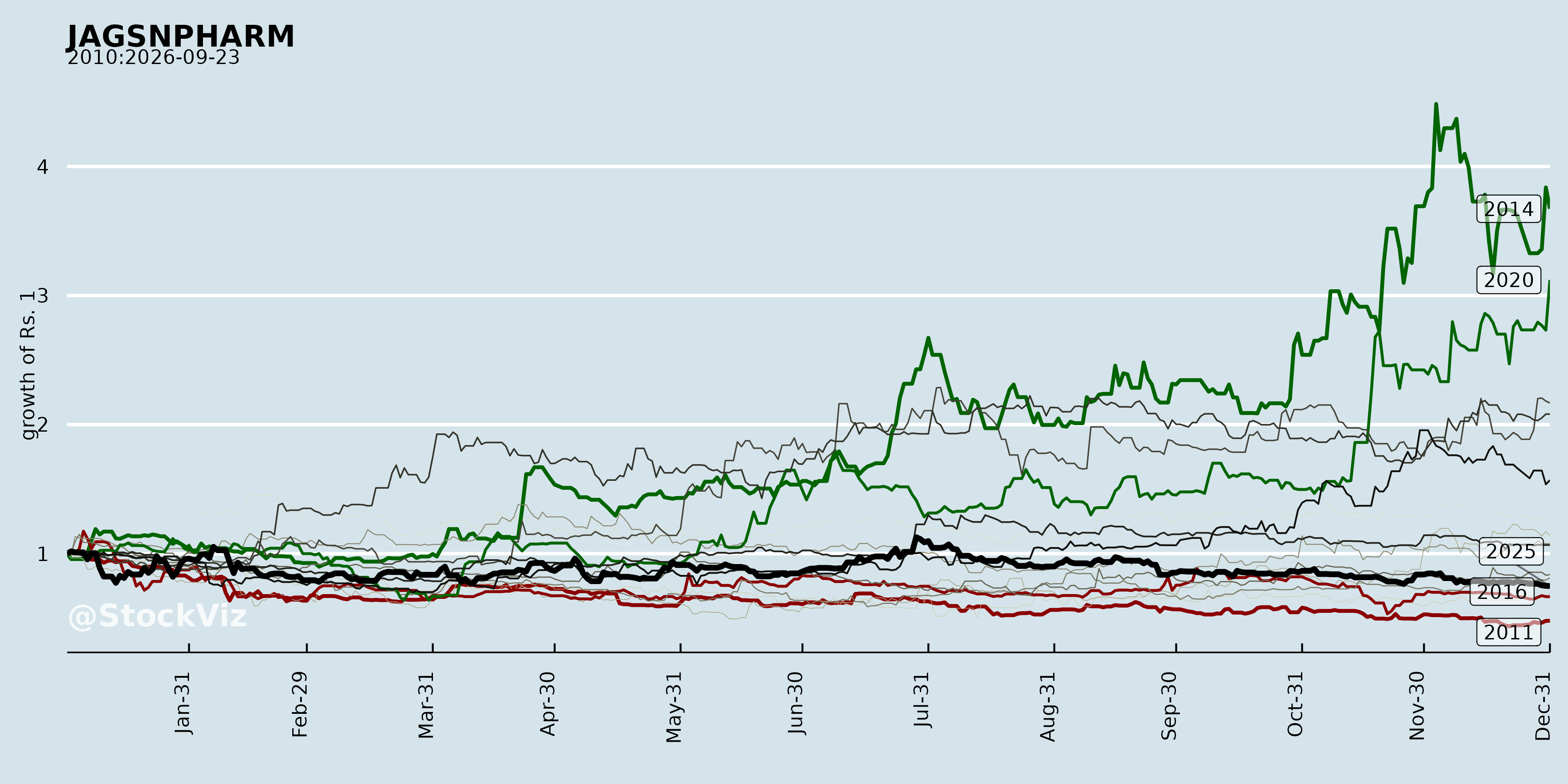
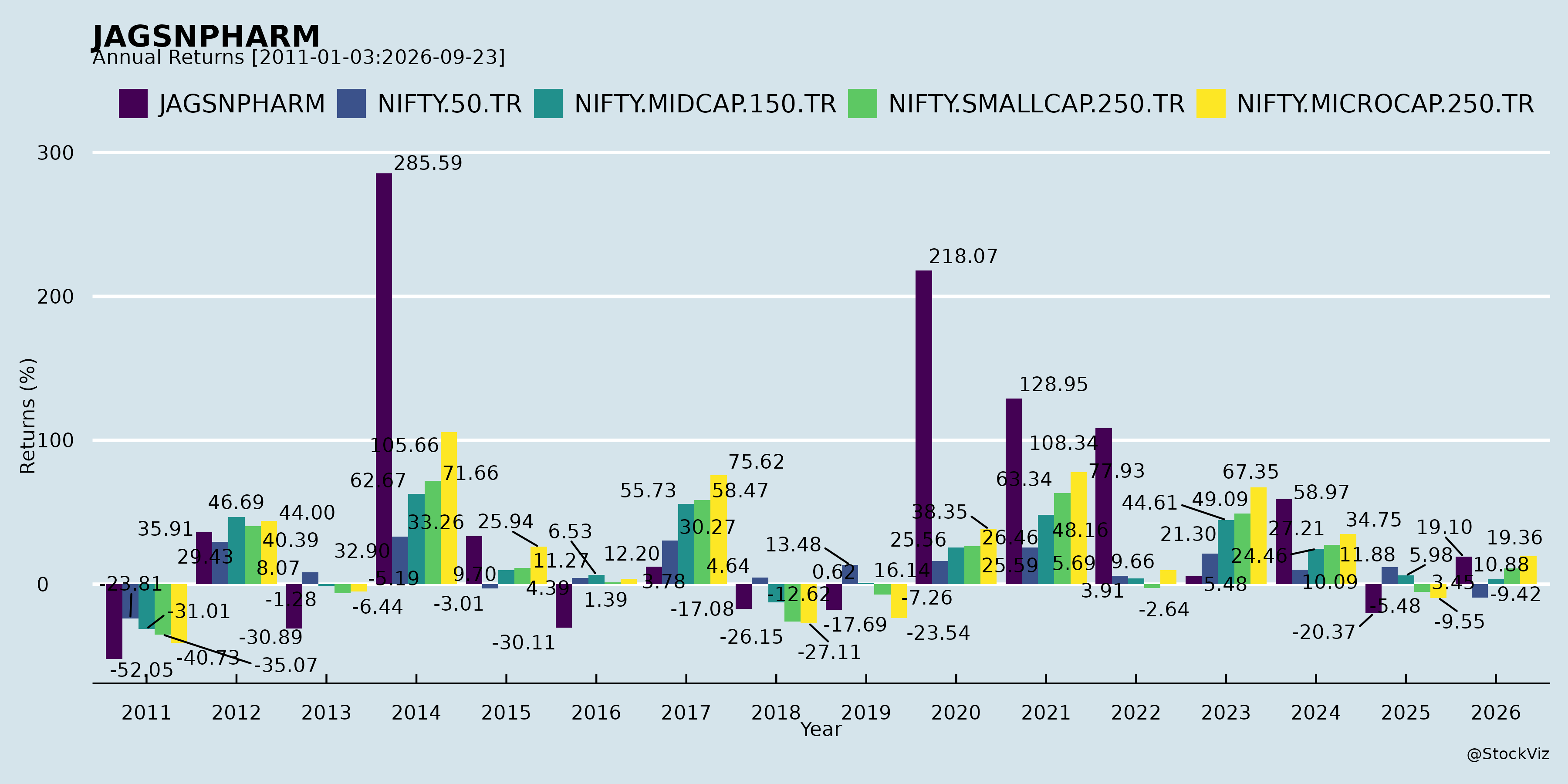
Annual Returns
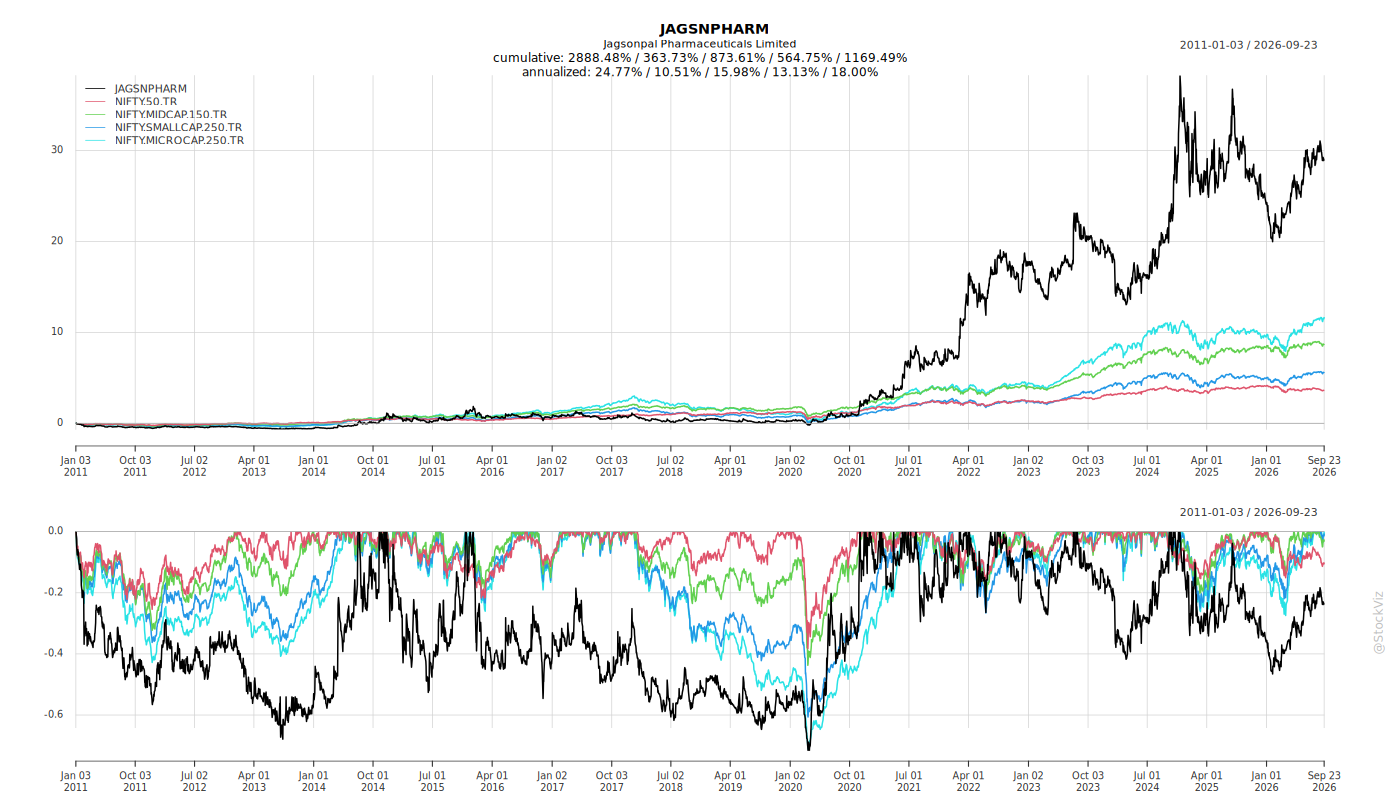
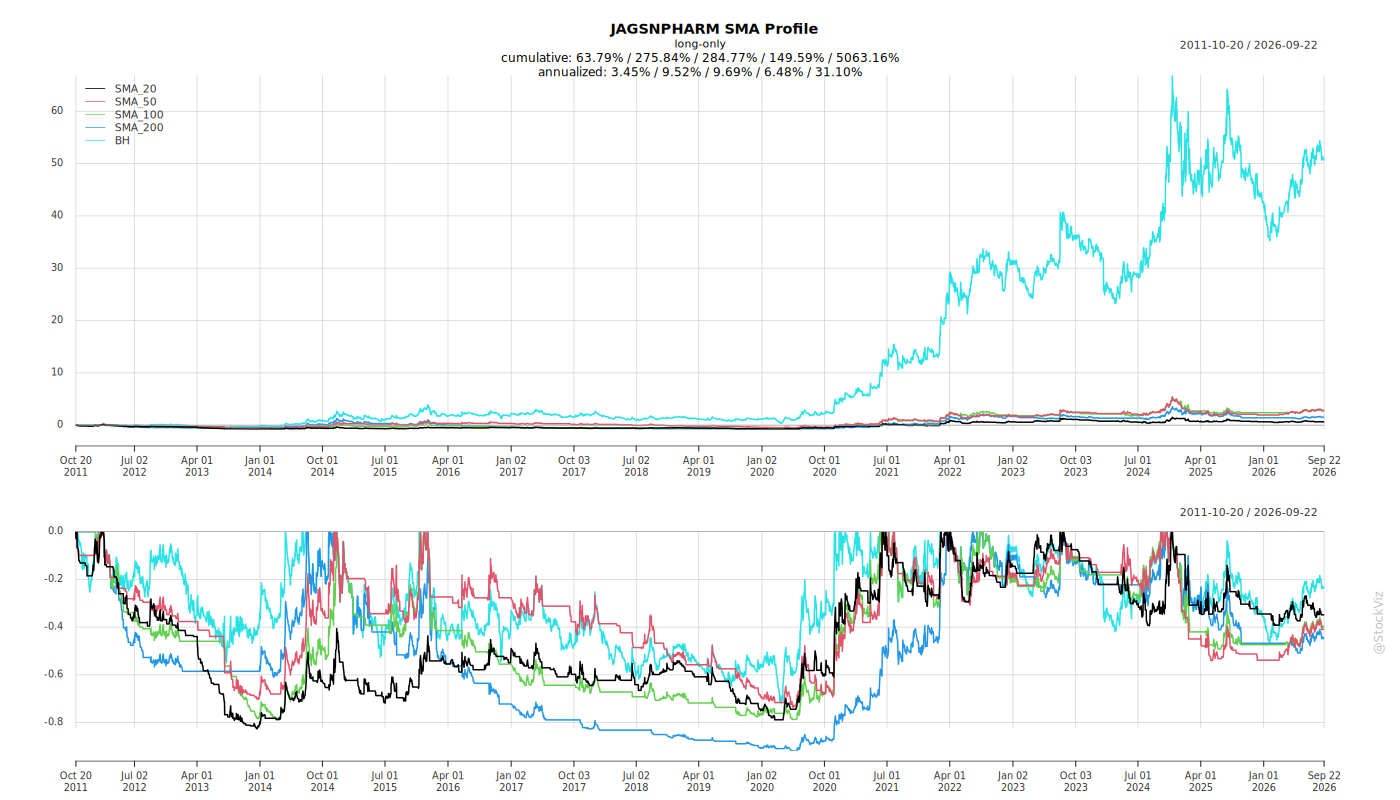
Cumulative Returns and Drawdowns
Fundamentals
Ownership
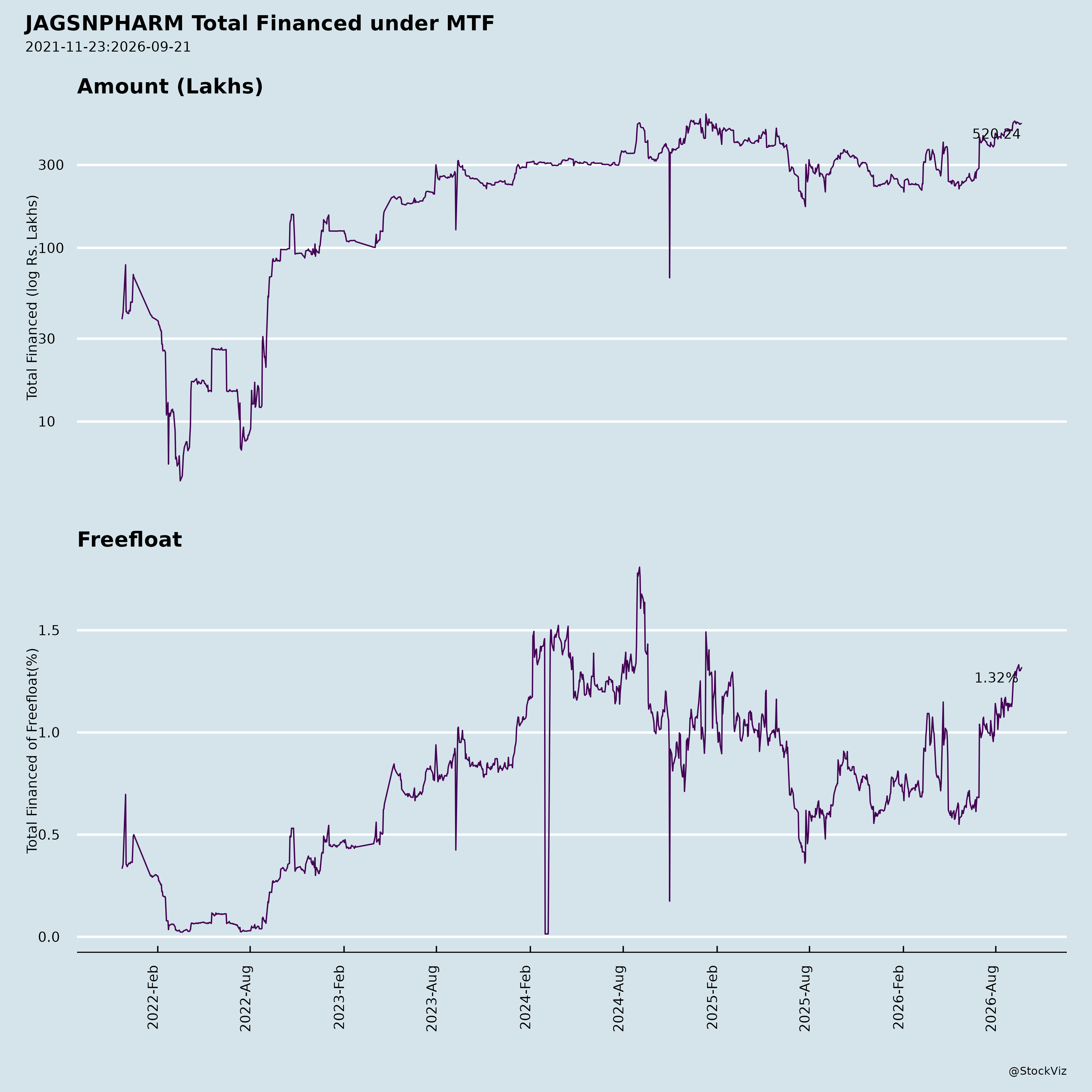
Margined
AI Summary
asof: 2026-09-18
Jagsonpal Pharmaceuticals — Q1 FY27 Announcements Review
1. Headwinds and Challenges
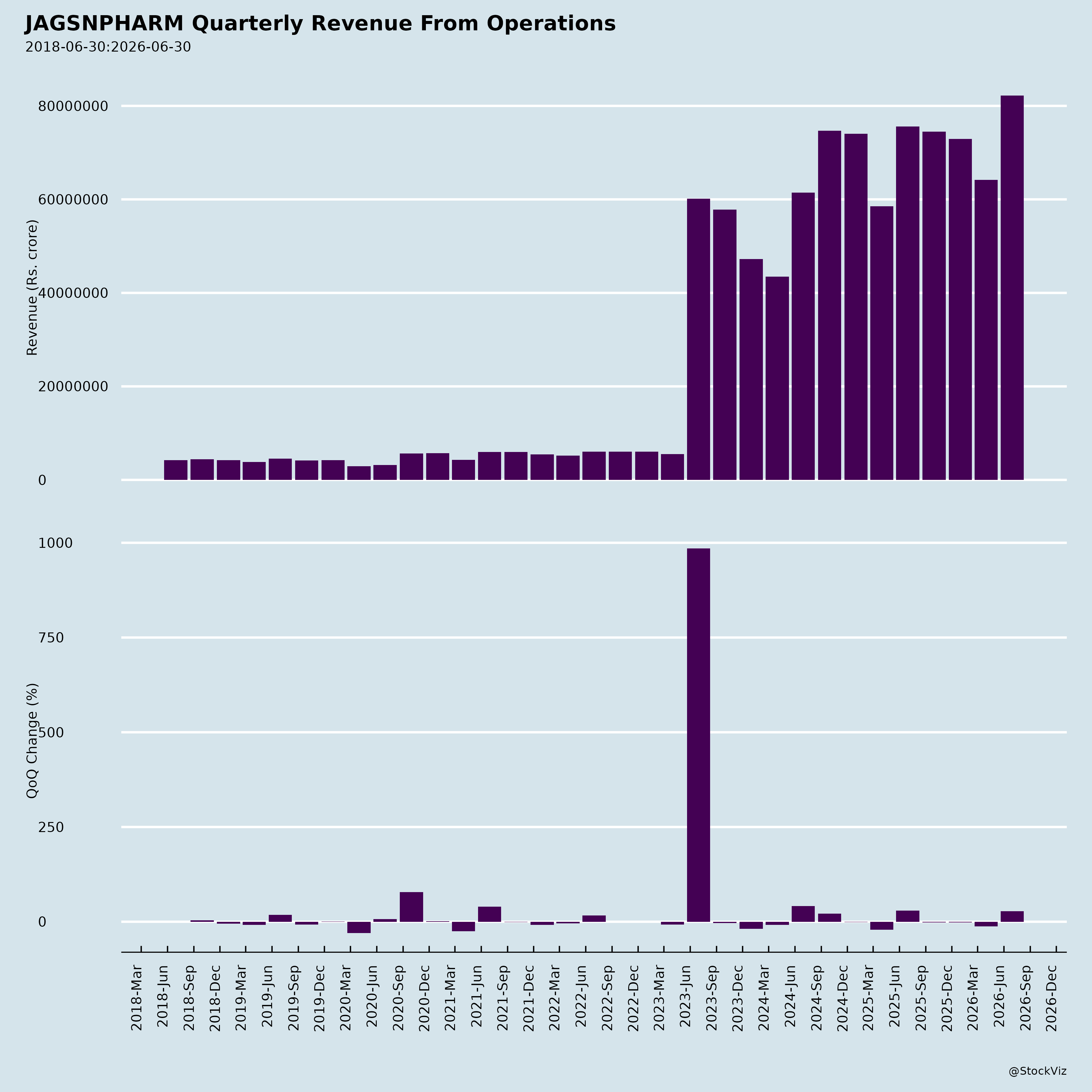
Primary vs. secondary sales divergence. The most pointed challenge raised on the July 30, 2026 earnings call was the gap between reported revenue growth and market-level growth. Revenue from operations rose 8.8% year-on-year to ₹822 million in Q1 FY27, while Pharmarack data showed Jagsonpal growing 18.9% against industry growth of 11.6%. Management explained that company revenue reflects primary sales to stockists, whereas Pharmarack captures secondary sales from stockists to the market, and acknowledged the variance “should not have been so higher,” stating the company is looking into why it occurred. Management maintained that primary and secondary sales should move in similar directions, with inventory build explaining some buffer.
Portfolio transition risk. The company is deliberately shifting its portfolio away from high-volume, low-margin acute therapies toward semi-chronic and specialty treatments. Management described this as a structural change that “would not happen overnight,” with more meaningful results expected in the future.
Working capital profile of the acquired business. The Aequitas hospital business carries a longer working capital cycle than Jagsonpal’s existing operations. Management stated the two businesses will not be aligned on working capital, with Aequitas operating as a subsidiary rather than being merged into the existing structure, and that Aequitas’s cycle will be improved but not brought in line with Jagsonpal’s.
Lower gross margin structure in hospitals. Aequitas operates a fully branded business but with thinner margins than Jagsonpal’s branded prescription business, because hospital purchasing decisions prioritize price over brand. Management noted margins “always come under pressure while dealing with the corporate chains.”
Brand concentration. Maintane was identified as one of the company’s top three brands, with Pharmarack showing approximately ₹46 crore in MAT value (₹34 crore injections, ₹13 crore tablets). An analyst flagged that much of the company’s growth has come from this molecule, raising concentration risk. Top 10 brands constitute approximately 58% of revenue.
Attrition. Management identified attrition as a significant industry constraint and cited people-centric initiatives — an MBA program for the sales team, the “Bahubali” incentive program, and enhanced reward and recognition — as interventions to improve retention.
2. Tailwinds and Growth Prospects
Aequitas Healthcare acquisition. During the quarter, Jagsonpal completed the acquisition of an 85% stake in Aequitas Healthcare at an enterprise value of approximately ₹25 crore, with an all-cash consideration of ₹20.8 crore funded from internal accruals. Aequitas reported FY26 revenue of ₹53.3 crore with nil debt, and brings 49 hospital sales executives, relationships with over 1,000 hospitals, and over 4,000 specialty doctors. The existing promoters retain 15% and continue to manage the business. Management expects the acquisition to contribute meaningfully from the second year onward, targeting approximately ₹10 crore EBITDA by Year 2 post-integration, on a revenue base scaling toward ₹100 crore by FY28–FY29. Top customers include Max, Manipal, Medanta, Cloudnine, Rainbow, and Aster DM. Top 10 products contribute upward of 50% of Aequitas sales, and approximately 50 hospitals contribute the majority of its top line.
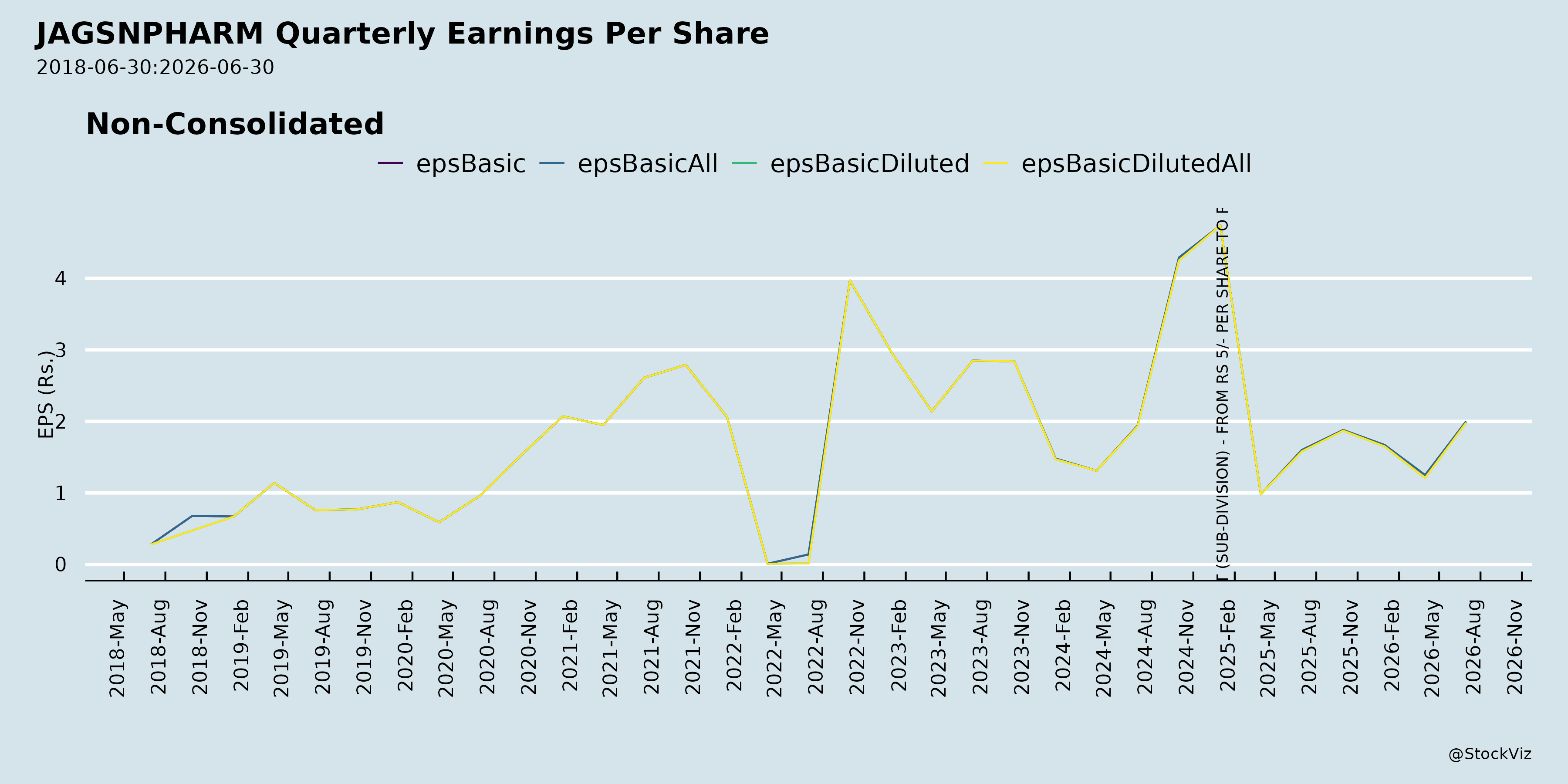
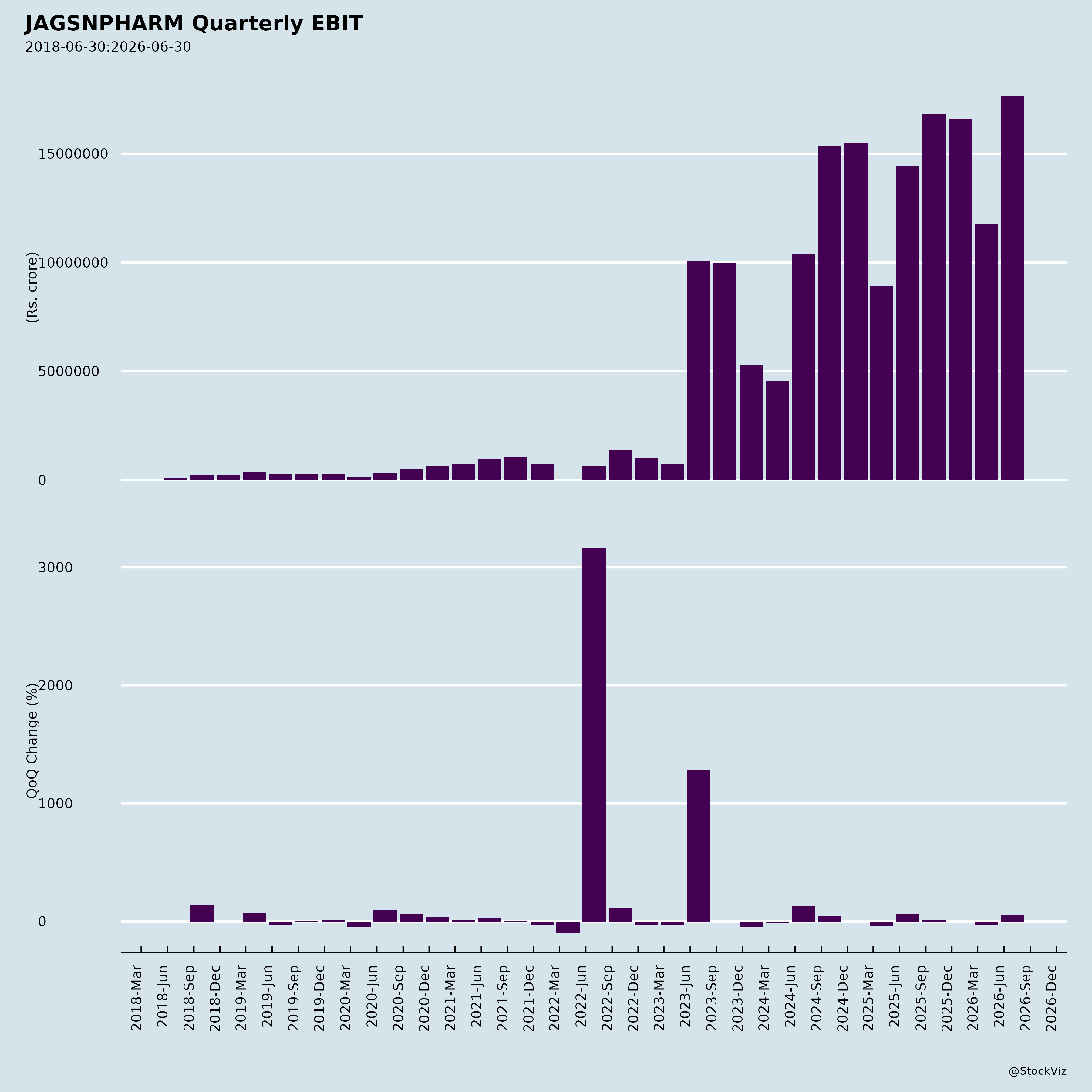
Organic growth momentum. Management stated the green shoots visible in Q4 FY26 are “gaining roots,” with Q1 FY27 revenue up 9%, operating EBITDA up 21% to ₹191 million (margin 23.2%, up 241 bps), and PAT up 22% to ₹132 million (margin 16.0%, up 176 bps). The company improved four ranks to #88 in the Indian pharmaceutical market. Management reiterated its objective of achieving 1.5x industry growth.
Brand premiumization and power brands. The power brand portfolio grew 19% versus market growth of 16%. Five brands rank #1 in their respective molecules and 14 are among the top five. Brands including Maintane, Indocap, Endoreg, and Lycored outperformed their therapy markets. Maintane Injections grew 43% and Maintane Tablets 55% on a MAT basis. Management identified Indocap, Maintane, Endoreg, Pru, and Eukroma as key growth drivers.
New launches and niche entry. Average monthly sales run rate for new launches in semi-chronic and specialty therapies nearly doubled. The company launched Ventrixa (Aztreonam + Avibactam) targeting a growing segment, and expects one more first-wave launch opportunity in the current quarter.
Productivity and margin expansion. Management cited redesigned training, residential briefing meetings, aligned incentives, and a company-wide “lean and green” productivity program as contributors to EBITDA margin improvement. MR productivity target is upward of ₹2,50,000.
Capital returns and balance sheet strength. The company completed a ₹40 crore buyback subscribed 3.67x at approximately a 40% premium to the then-prevailing market price, improving ROCE by approximately 340 bps and ROE by approximately 250 bps. Despite the buyback and acquisition, cash balance remained at ₹1,700 million, with roughly 50% of the buyback payout recouped within the quarter. Over four years, the company generated over ₹250 crore of operating cash, deployed toward the Yash Pharma acquisition (over ₹90 crore), dividends (over ₹40 crore), and the buyback (₹40 crore). A 200% dividend including a 75% special dividend was recommended in April 2026, payable after AGM approval.
Board strengthening. Mr. Anil Kumar Matai joined as an Independent Director with over three decades of pharmaceutical and healthcare leadership experience, following Ms. Pallavi Dinodia Gupta’s departure citing personal commitments.
3. Key Risks
- Execution risk on Aequitas integration. Management expects benefits to become progressively visible, with numbers speaking “maybe in the next two quarters.” The ₹10 crore EBITDA target by Year 2 depends on cross-selling Jagsonpal brands into hospital formularies, product mix improvement toward higher-margin innovative products, and productivity gains. Management acknowledged it is “too early” to convey clarity on gross margin improvement.
- Hospital channel negotiation dynamics. Management noted hospital teams are often private-equity run with pressure on top-line and bottom-line growth, making them “hard negotiators,” requiring win-win propositions.
- Working capital divergence. Aequitas’s longer credit cycle will not be aligned with Jagsonpal’s, and the subsidiary structure means practices remain separate.
- Primary-secondary sales gap. The divergence between reported revenue growth and Pharmarack growth remains unexplained beyond statistical and inventory considerations, with management stating it is investigating.
- Concentration in Maintane and top brands. Top 10 brands at approximately 58% of revenue, and Aequitas top 10 products at over 50% of its sales, create concentration exposure.
- Regulatory and pricing environment. The company operates in a sector subject to drug pricing and regulatory intervention, and the Code of Wages (Central) Rules, 2026 were notified on May 8, 2026, with the company still evaluating consequential impact.
- Labour code accounting. The prior year included a ₹20.79 million exceptional employee benefit expense from the New Labour Codes; the company continues to monitor developments.
4. Management Guidance vs. Observed Performance
Growth guidance. Management targets 1.5x industry growth. Observed: Q1 FY27 revenue grew 8.8% YoY versus Pharmarack-reported company growth of 18.9% and industry growth of 11.6%. On primary sales, the 1.5x objective was not met in the quarter; on secondary sales, the company exceeded it. Management maintained the guidance applies to both primary and secondary sales moving in similar directions.
Aequitas EBITDA guidance. Management targets approximately ₹10 crore EBITDA by Year 2 post-integration, from an FY26 base of ₹0.5 crore EBITDA on ₹53.3 crore revenue. Observed: acquisition completed in July 2026, with no impact on Q1 FY27 financial results. Management expects benefits visible in the coming quarters and numbers speaking within two quarters.
Aequitas revenue guidance. Management targets approximately ₹100 crore revenue by FY28–FY29. Observed: FY26 revenue was ₹53.3 crore, with FY24 at ₹53.7 crore and FY25 at ₹56.2 crore, indicating a relatively flat historical trajectory that the guidance implies will inflect.
Margin trajectory. Management stated growth must translate into stronger profits. Observed: Q1 FY27 operating EBITDA margin expanded 241 bps YoY to 23.2%, and PAT margin expanded 176 bps to 16.0%, consistent with the stated intent.
Capital allocation. Management stated commitment to disciplined capital allocation balancing organic and inorganic growth. Observed: the company completed the ₹40 crore buyback, deployed ₹20.8 crore for Aequitas from internal accruals, and retained a ₹1,700 million cash balance with a debt-light balance sheet.
Productivity. Management targets MR productivity upward of ₹2,50,000. Observed: management declined to disclose exact PCPM figures, noting four distinct verticals (dermatology, gynecology, orthopedics, and GPCP) each carry different PCPMs.
Working capital. Management attributed improvement to debtor collection discipline, inventory control, and on-time creditor payments. Observed: net working capital stood at ₹120 million as of June 30, 2026, versus ₹110 million at March 31, 2026 and ₹99 million at June 30, 2025. Management noted the largest working capital improvement occurred between FY22 and FY24, with cash conversion days dropping from 59 to 22.
Copyright © 2023 SAS Data Analytics Pvt. Ltd. All rights reserved.