IPCALAB
Equity Metrics
September 24, 2026
IPCA Laboratories Limited
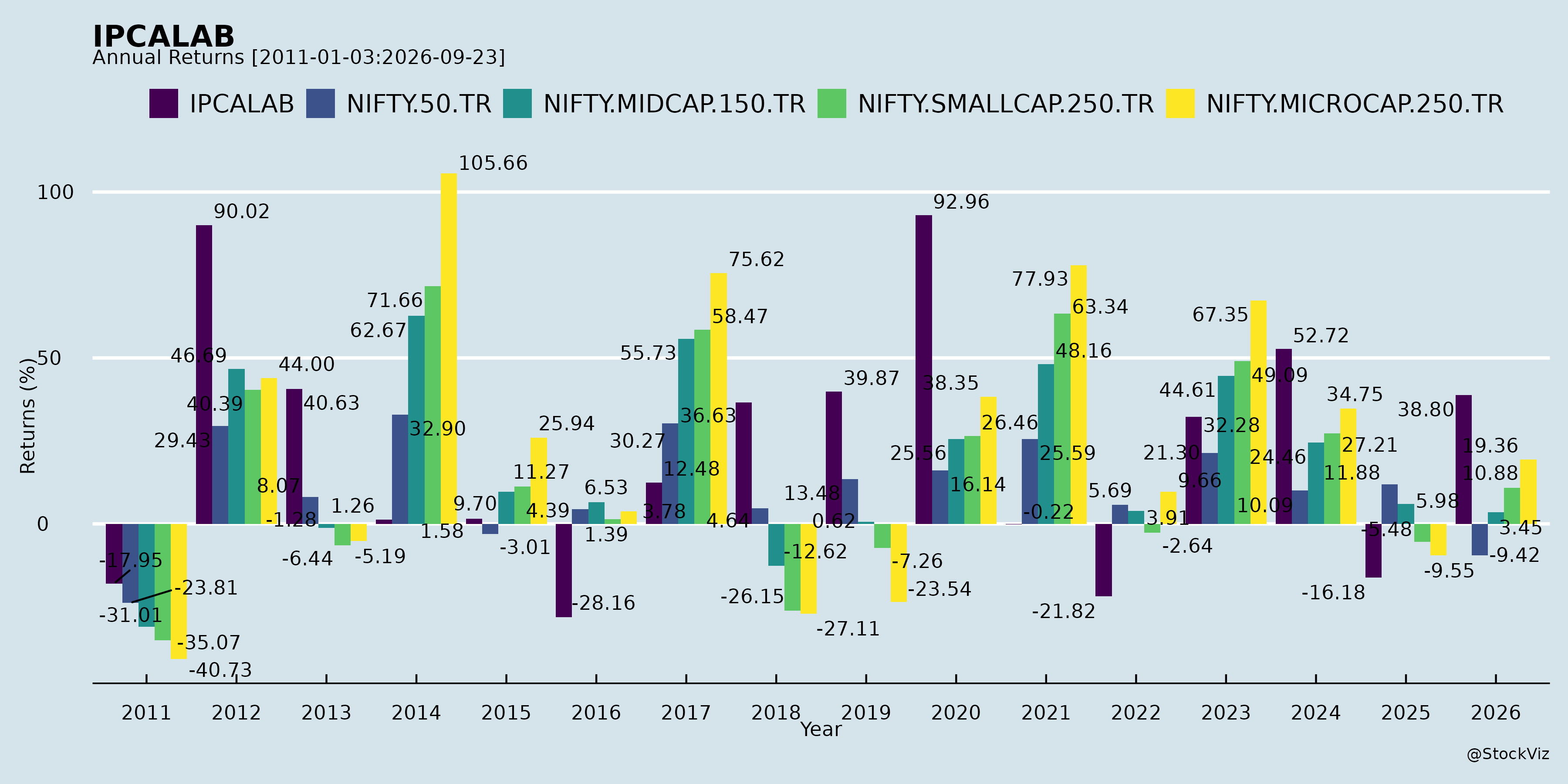
Annual Returns
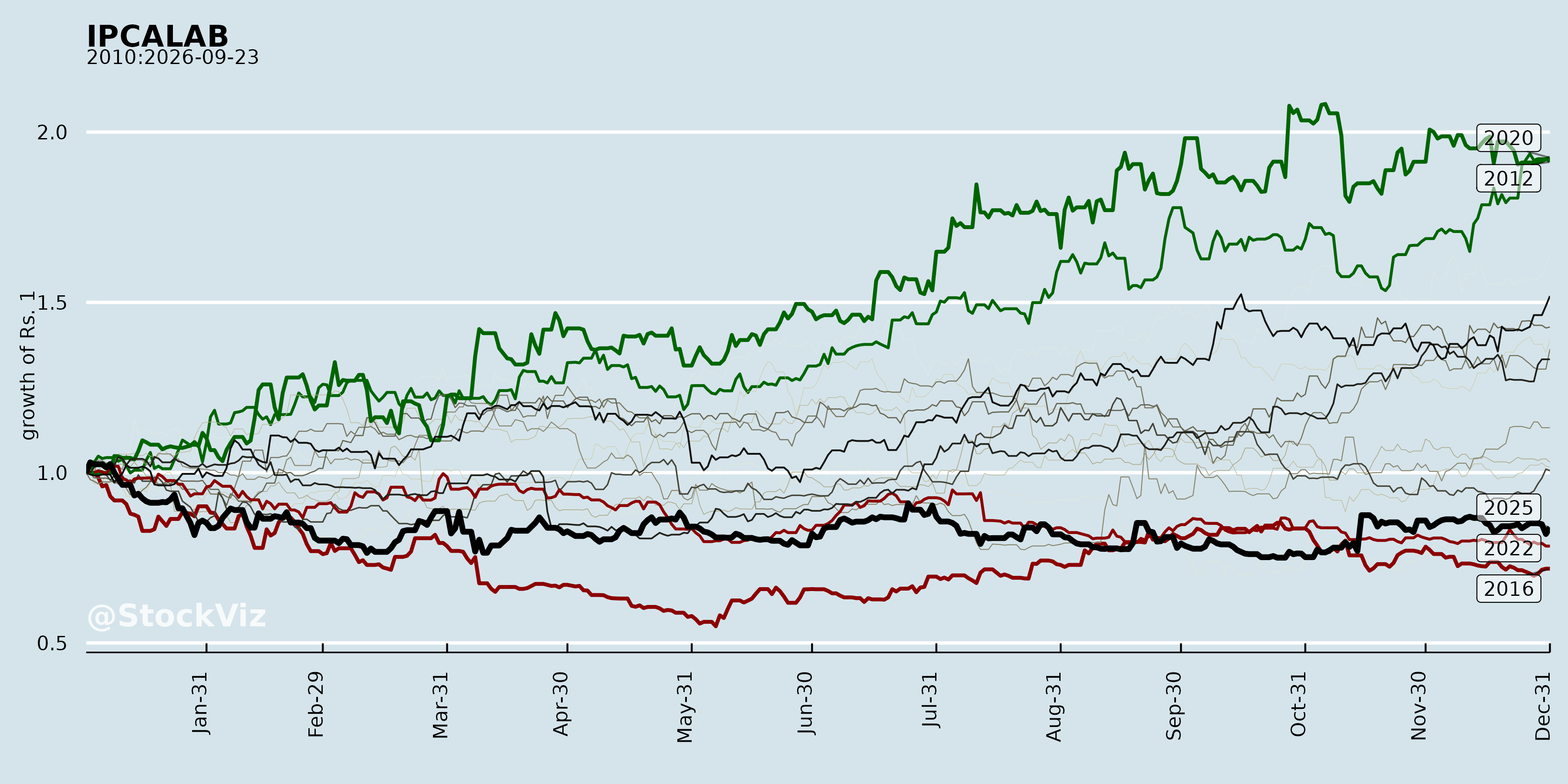
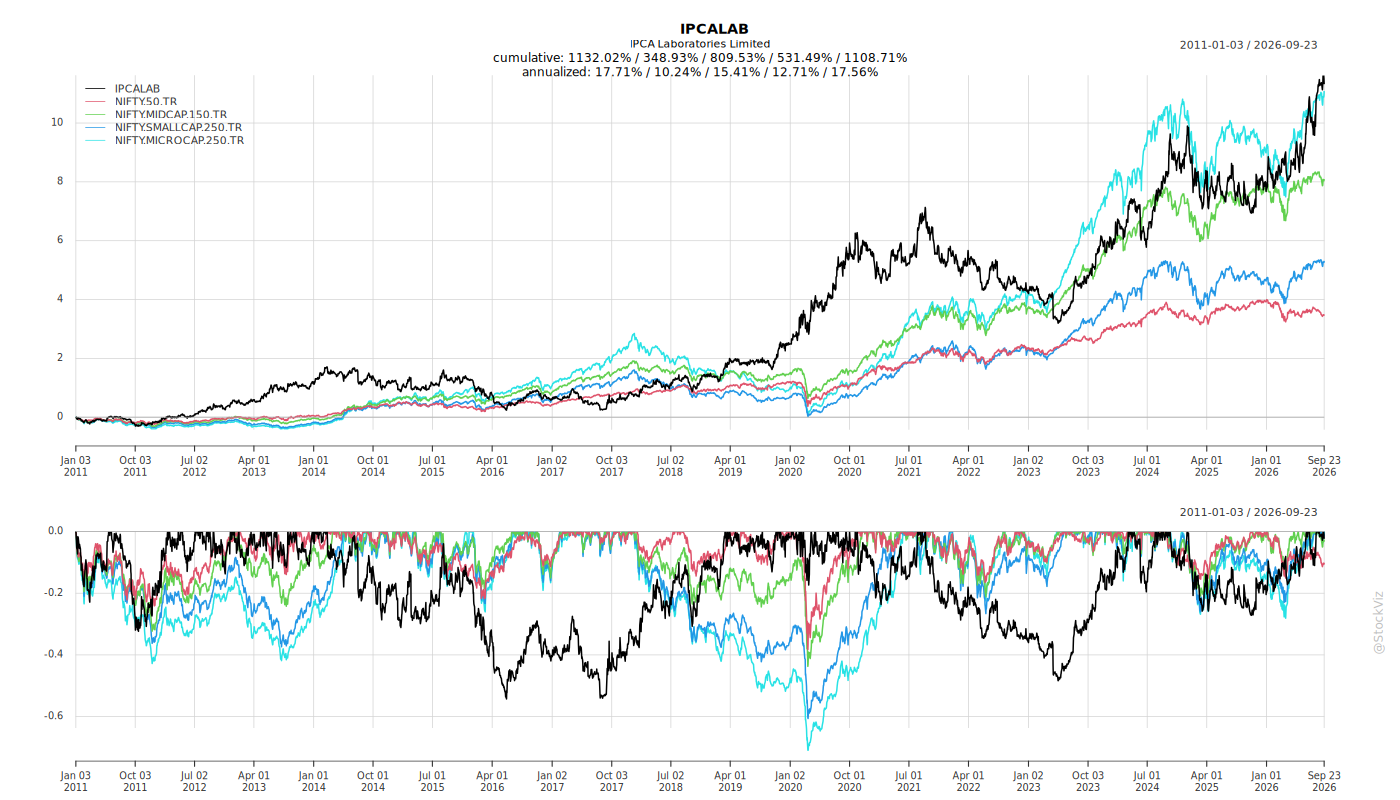
Cumulative Returns and Drawdowns
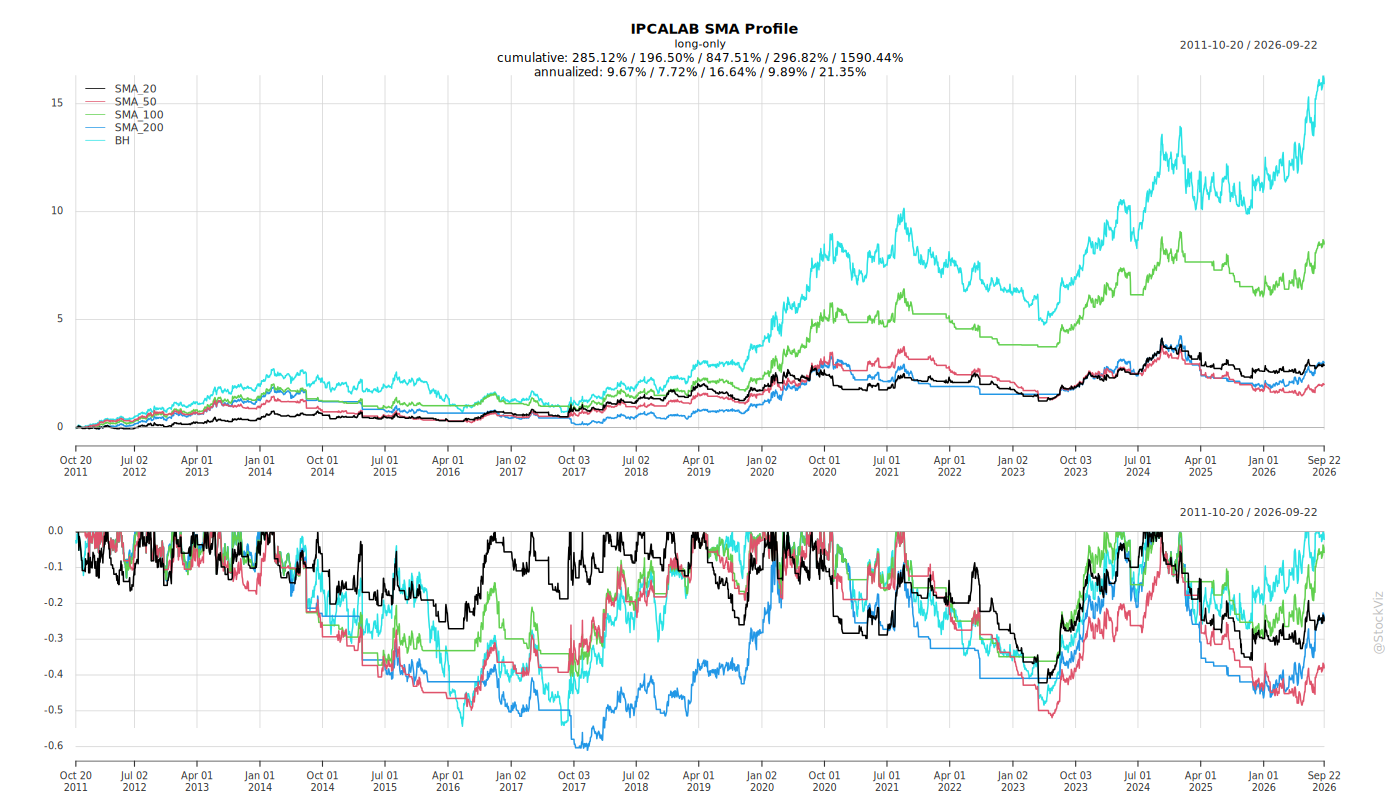
Fundamentals
Ownership
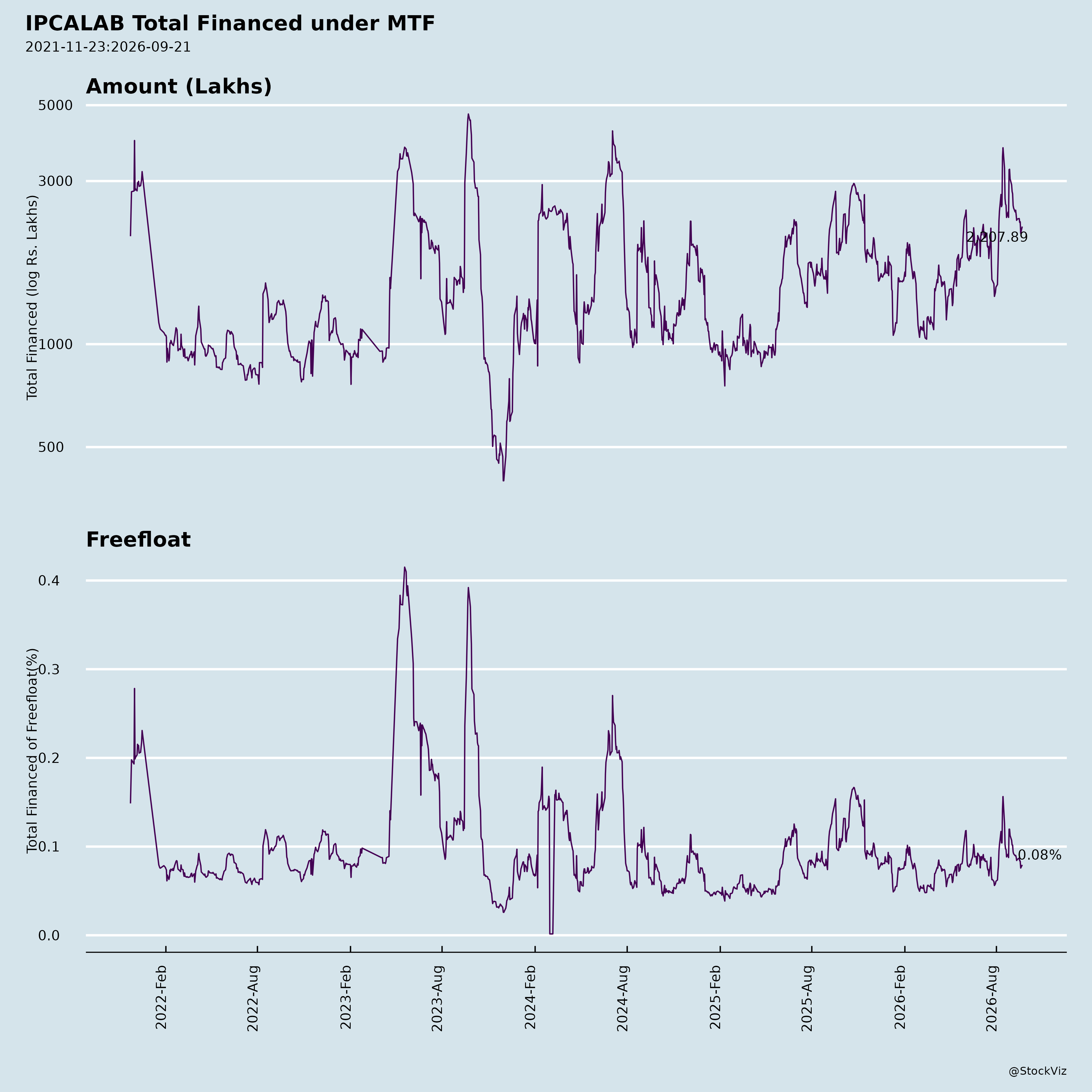
Margined
AI Summary
asof: 2026-09-16
Ipca Laboratories — Q1 FY27 Announcements Summary
1. Headwinds and Challenges
- Logistics and shipping disruption: Management described significant fluctuations in material prices, shipment delays, non-availability of containers, and a sharp rise in logistics costs during Q1 FY27, with conditions worsening from July into August. Freight rates were cited as rising up to threefold on some routes — South America containers from about 3,000 to 9,000–10,000, US containers from 7,000–7,500 to 12,500–13,000, and European containers from 3,000 to about 5,500 — with availability itself difficult.
- Input cost volatility: Material prices moved up, eased, then rose again, linked to petroleum prices and supply chain disturbances. On a stand-alone basis, material cost rose in line with the 21% turnover growth, so material cost savings contributed only about 0.14% to EBITDA improvement.
- Antimalarial decline: The antimalarial segment fell about 24% in the quarter, weighing on the acute portfolio. Management noted the malaria business is becoming almost insignificant, at hardly 1% of overall business.
- Institutional shipment timing: The 107% institutional growth was attributed to roughly INR40 crores of shipments that were to go in March being shipped in April due to shipping delays. Management stated these are nominated shipments outside the company’s control and that institutional business should not be expected to deliver high growth.
- Canada decline: Shipments to Canada saw a minor decline.
- Associate company pressure: Lyka Labs’ revenue has not grown and EBITDA has turned negative, with costs from field force additions and divisions still below breakeven.
- Currency-linked cost offsets: Rupee depreciation lifted realisations but simultaneously raised dollar-linked costs including materials, freight, testing materials, machine parts, maintenance contracts, and overseas sales force and office costs.
2. Tailwinds and Growth Prospects
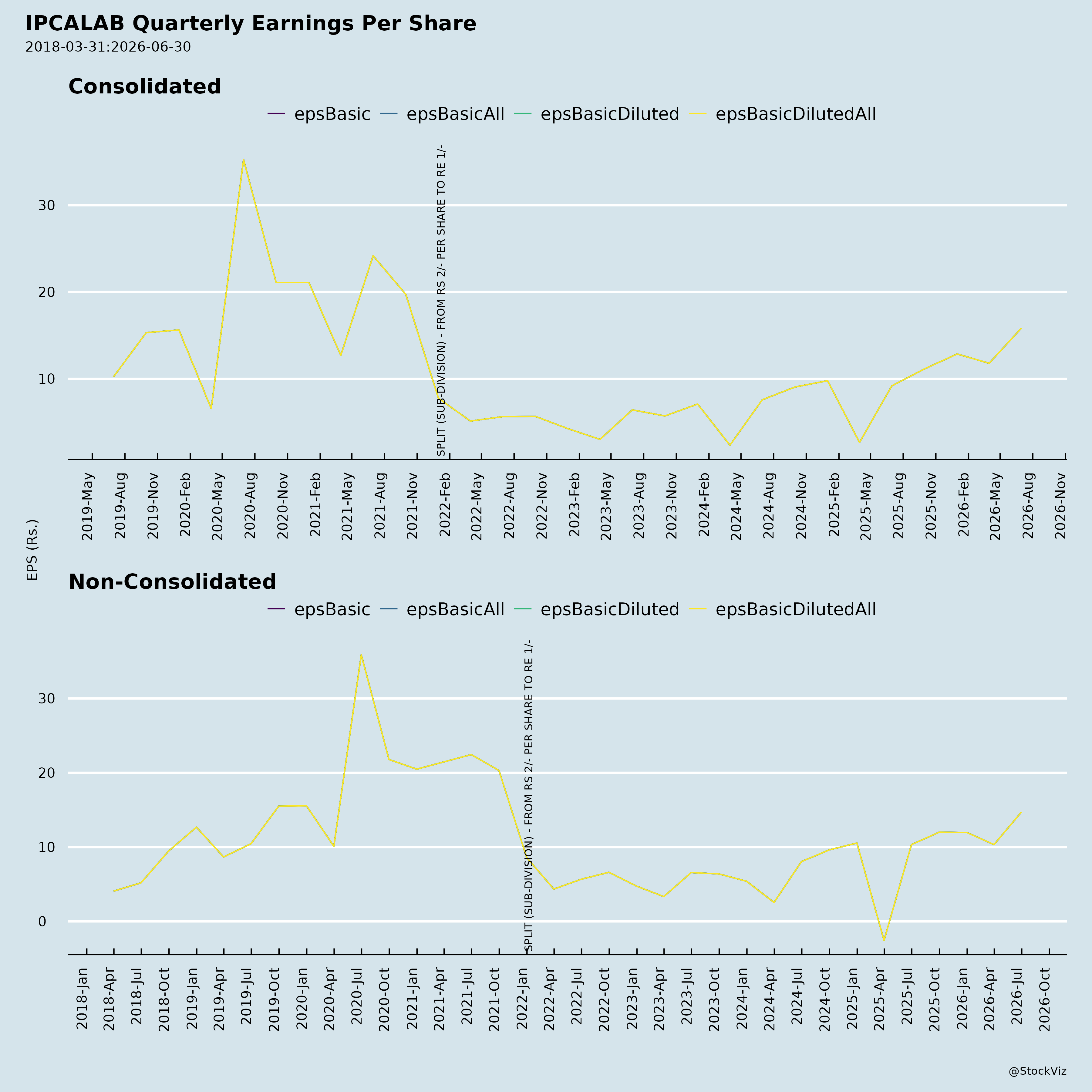
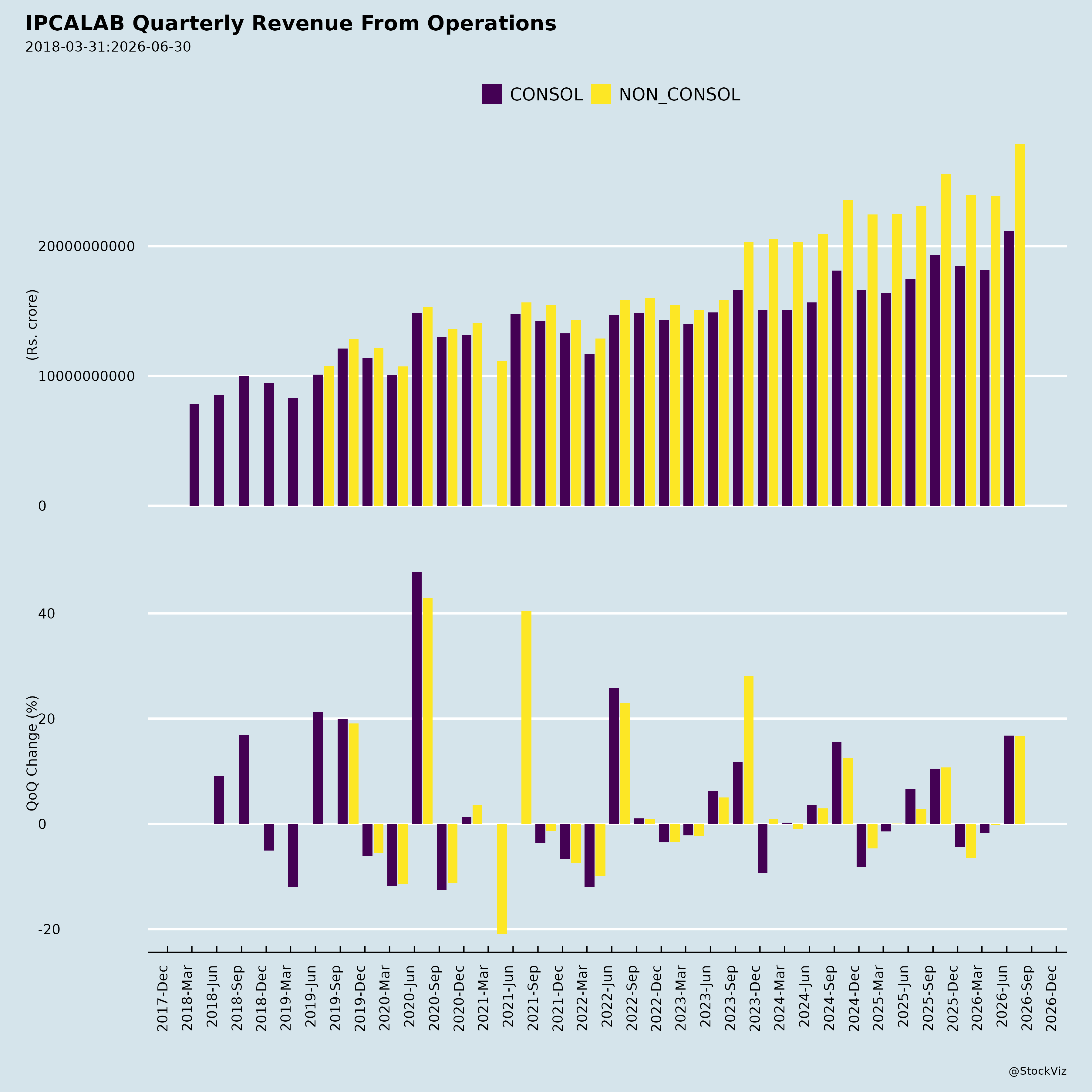
- Broad-based Q1 FY27 growth: Consolidated business grew about 21% to INR2,788 crores from INR2,309 crores. Standalone net total income rose 21% to Rs. 2,136.66 crores and consolidated net total income rose 20% to Rs. 2,813.36 crores. Indian formulations income rose 13% to Rs. 1,082.12 crores and exports income rose 34% to Rs. 935.39 crores.
- Domestic formulations: Growth of 13% to about INR1,082 crores from INR961 crores. Ipca’s IQVIA rank held around 16, market share improved marginally to about 2.08% from 2.07% in March 2026, and the top six brands remain in the country’s top 300. Chronic growth was about 17.2% versus market growth of about 15.2%; acute growth was about 8.9% versus IPM growth of about 4.5%. Therapy-wise: pain management about 13%, cardiovascular and antidiabetic about 17%, CNS about 19%, cough and cold about 9%, dermatology about 17%, urology about 25%, ophthalmology about 17%, antibacterials about 1%.
- Exports: Overall export business grew about 34% to about INR603 crores from INR450 crores. Promotional branded ROW markets grew about 16% to INR143 crores from INR124 crores. Generic business excluding tenders grew about 27% to about INR340 crores from INR268 crores. Institutional generics grew about 107% to about INR111.75 crores from INR58 crores. API business grew about 30% to about INR424 crores from INR362 crores.
- Europe as the generic driver: The European business grew about 70%, from INR33 crores to INR137 crores, described as the main growth driver; US shipments were up about 8%.
- Unichem performance: US business grew about 27%, with the Ipca portfolio sold by Unichem in the US growing well and Unichem’s own portfolio up about 9%; Europe up about 3%; Brazil up about 52% with improving traction; Acacia ROW business roughly doubled from INR8 crores to INR17 crores; Unichem API business improved from INR33–34 crores to about INR58 crores, about 73% overall improvement.
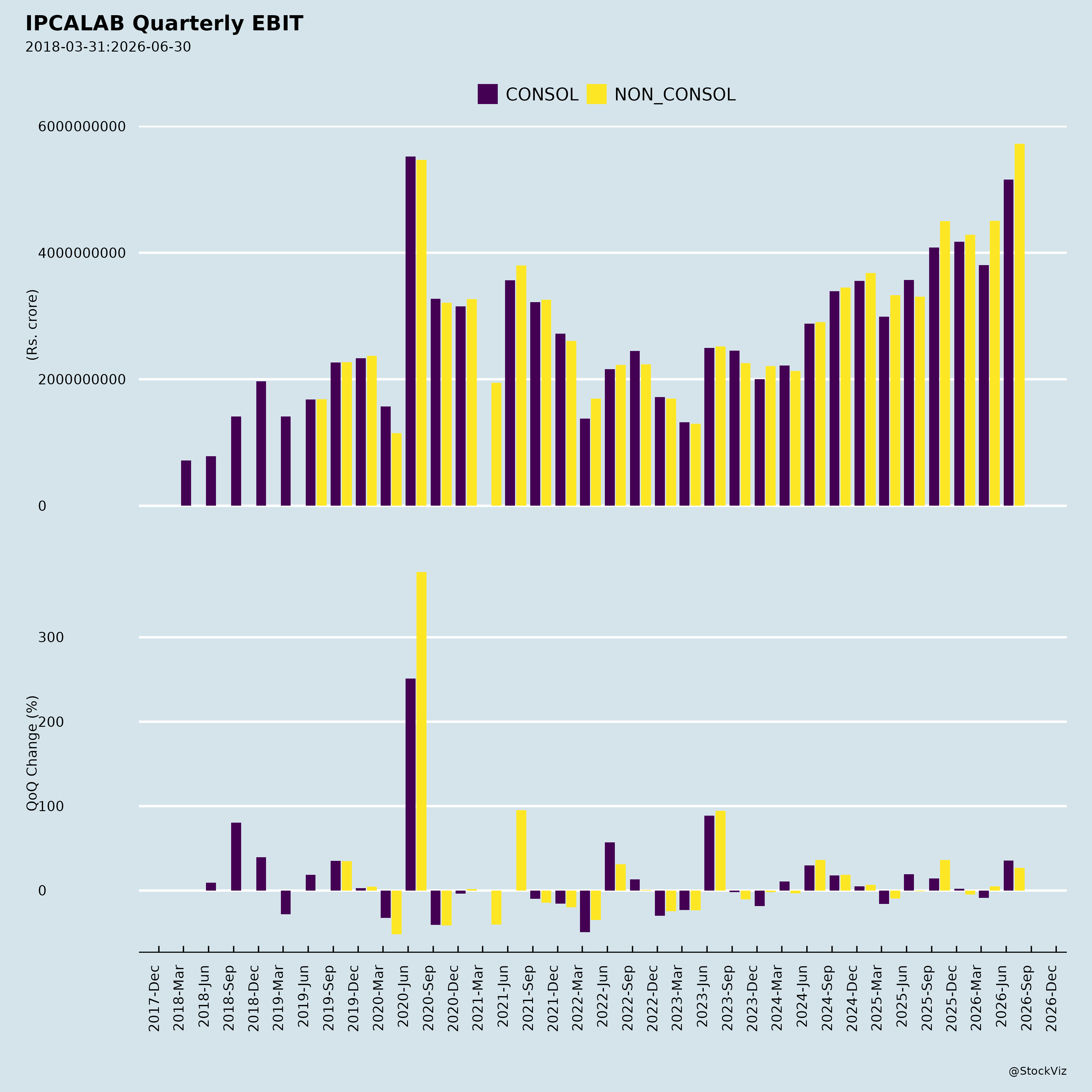
- Margin expansion: Consolidated EBITDA margin improved to 22.88% from 18.39%, with absolute EBITDA about INR638 crores versus INR425 crores, up about 50%. Stand-alone EBITDA margin improved to 26% (about INR557 crores versus INR416 crores), up about 34%. On consolidation, material cost fell about 1.35%, personnel cost about 1.5%, and manufacturing and other cost about 1.19% as percentages of sales.
- Balance sheet strength: About USD50 million of dollar loans were fully repaid before March, ahead of the depreciation. Debt is about INR193 crores long-term, with zero working capital debt and no short-term borrowings; about INR70 crores of term loan is expected to remain at year-end and be repaid in the next financial year.
- Capacity and pipeline investments: Capex of about INR700–800 crores planned for the current year, covering Pithampur capacity for controlled and extended release formulations, biotech R&D and pilot facilities (about INR100 crores incremental), new API plants at Dewas and Wardha as Ratlam runs out of capacity, and continuous-process conversions. Biotech has about seven candidates in the pipeline, with two having taken engineering batches and validations ongoing; clinical work expected to begin next financial year, with biosimilar revenues indicated from around FY29–FY30.
- US launches: About 3–4 Ipca launches and similar Unichem launches annually, roughly 7–8 combined, with 4–5 Ipca filings per year. Source-change approvals are partly received and partly pending via CBE-30 and PAS routes.
- Corporate action: The Board resolved to amalgamate M/s. Krebs Biochemicals & Industries Ltd. with the company with an appointed date of April 1, 2026.
- Governance: At the 76th AGM held on August 13, 2026, all resolutions were passed by requisite majority, including adoption of audited standalone and consolidated financial statements for FY2025-26, declaration of dividend, re-appointment of Mr. Ajit Kumar Jain and Mr. Pranay Godha as directors, re-appointment of and remuneration for Mr. Prashant Godha as Executive Director for five years from August 16, 2026, and ratification of cost auditor remuneration. The remuneration resolution drew the largest opposition, with about 9.74% of votes polled against.
3. Key Risks
- Continued freight rate increases and container unavailability, particularly to South America, could pressure costs and delay shipments.
- Institutional generic revenues depend on nominated buyers’ shipping decisions and are not within the company’s control, making quarterly growth volatile.
- Input material prices remain volatile and could move against the company.
- The antimalarial franchise continues to decline and is now immaterial to overall business.
- Lyka Labs’ negative EBITDA and lack of revenue growth present uncertainty, with management only expressing hope that it will do well in time.
- Unichem’s margin profile remains exposed to the US market, where margins are described as always under pressure, until registrations in Europe, Australia, New Zealand, Canada, and Chile begin contributing.
- Biosimilar timelines are long, with clinical work starting next financial year and revenues indicated only around FY29–FY30, and require continued investment.
4. Management Guidance Versus Observed Performance
- Revenue growth: Original FY27 guidance was 12–13% overall growth. After Q1 FY27 performance, management revised this to about 14–16% for the full year, citing upside from generics, a well-performing India business, and good API growth.
- EBITDA margin: Original FY27 consolidated guidance was about 22%. Management raised this to about 23% on the back of better performance. Q1 FY27 consolidated EBITDA margin was 22.88%, already above the original full-year guidance.
- India business: The earlier 12–13% guidance was reaffirmed for the year, with Q1 domestic formulations growth at 13%.
- Institutional business: Management guided to single-digit growth and an overall range of about INR260–300 crores, contrasting with the 107% Q1 spike that was attributed to timing.
- Unichem: The prior guidance of about 10% growth and 13% EBITDA margin was not revised, with management stating it would review after more quarters. Q1 showed strong growth in US, Brazil, Acacia, and API.
- US business: Management indicated 15–17% growth is possible over the next few years, against a question about 20–30% consistent growth.
- Medium-term margins: Ipca stand-alone margin, currently around 26%, could reach about 30%, with consolidated EBITDA margin around 25–26% in two to three years.
- FY28 guidance: To be given at the time of Q4 results.
- Capex: About INR700–800 crores for the current year, with about INR100 crores incremental on biotech pilot facilities and R&D.
- Field force: About 7,000 medical representatives currently, with expansion largely complete and about 200 more planned mid-year for new divisions.
- Domestic growth split: Volume about 5%, price about 4.5–5%, new product launches about 2%, totalling about 13%.
- Margin outlook: Management stated it does not foresee margin pressure in the rest of the year, expecting material cost to come down slightly relative to sales growth, with logistics costs already factored into guidance.
Broker Narrative
The broker narrative evolved from early regulatory and manufacturing concerns (Piparia OOS/OOT, Ratlam API import alert) and an expensive Unichem acquisition toward operational execution risks such as domestic acute weakness, escalating logistics costs, and Canada shipment softness. Initial optimism on branded generics and FY23-25 CAGR growth was tempered by a prolonged stretch of disappointments, but the final Buy call reflects improved earnings momentum driven by Unichem US integration, a robust biosimilar pipeline, and margin expansion potential.
Fears that came true
- The ‘limited upside potential from current levels’ flagged in the first report materialized through a string of DISAPPOINTMENT outcomes across 2024-2025 (Feb 2024, May 2024, Aug 2024, Oct 2024, Nov 2024, Dec 2024).
- The Ratlam API import alert persisted for years, with the last report noting an API source change to Ipca is still underway to address ongoing API cost issues.
- Escalating logistics costs and input-price fluctuations flagged in the last report materialized as margin headwinds, with FY27 margin guidance explicitly baking in higher logistics costs.
- Domestic acute performance weakness materialized in 1QFY27 with a 24% decline in anti-malarials and flattish anti-bacterials.
- Canada shipments saw the marginal decline in 1Q that was flagged as a headwind.
Optimism that failed
- The expected strong CAGR growth in total sales, domestic formulations, branded formulations, and API sales over FY23-25 did not prevent multiple DISAPPOINTMENT outcomes in 2024 and early 2025.
- Strong branded generics performance as a reliable growth driver faltered during 2024, coinciding with DISAPPOINTMENT and FLAT outcomes, before recovering later.
- Unichem acquisition optimism was initially questioned, and investor concerns that the opportunity size for Ipca’s own US products could have shrunk persisted into the last report despite strong 1Q US growth.
Broker Timeline
28 broker calls · 2023-05-14 to 2026-08-17
Copyright © 2023 SAS Data Analytics Pvt. Ltd. All rights reserved.