INDUSINDBK
Equity Metrics
September 24, 2026
IndusInd Bank Limited
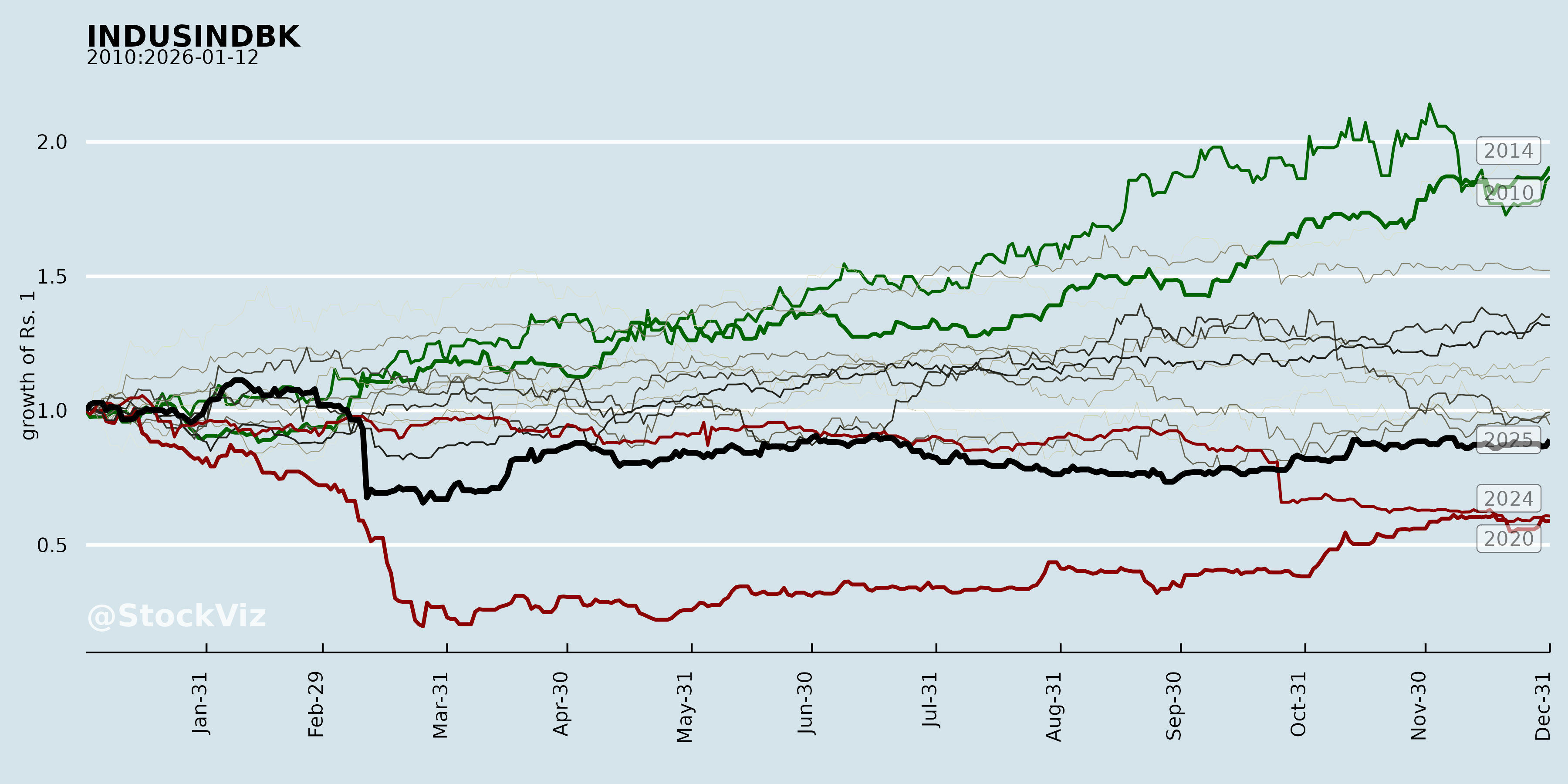
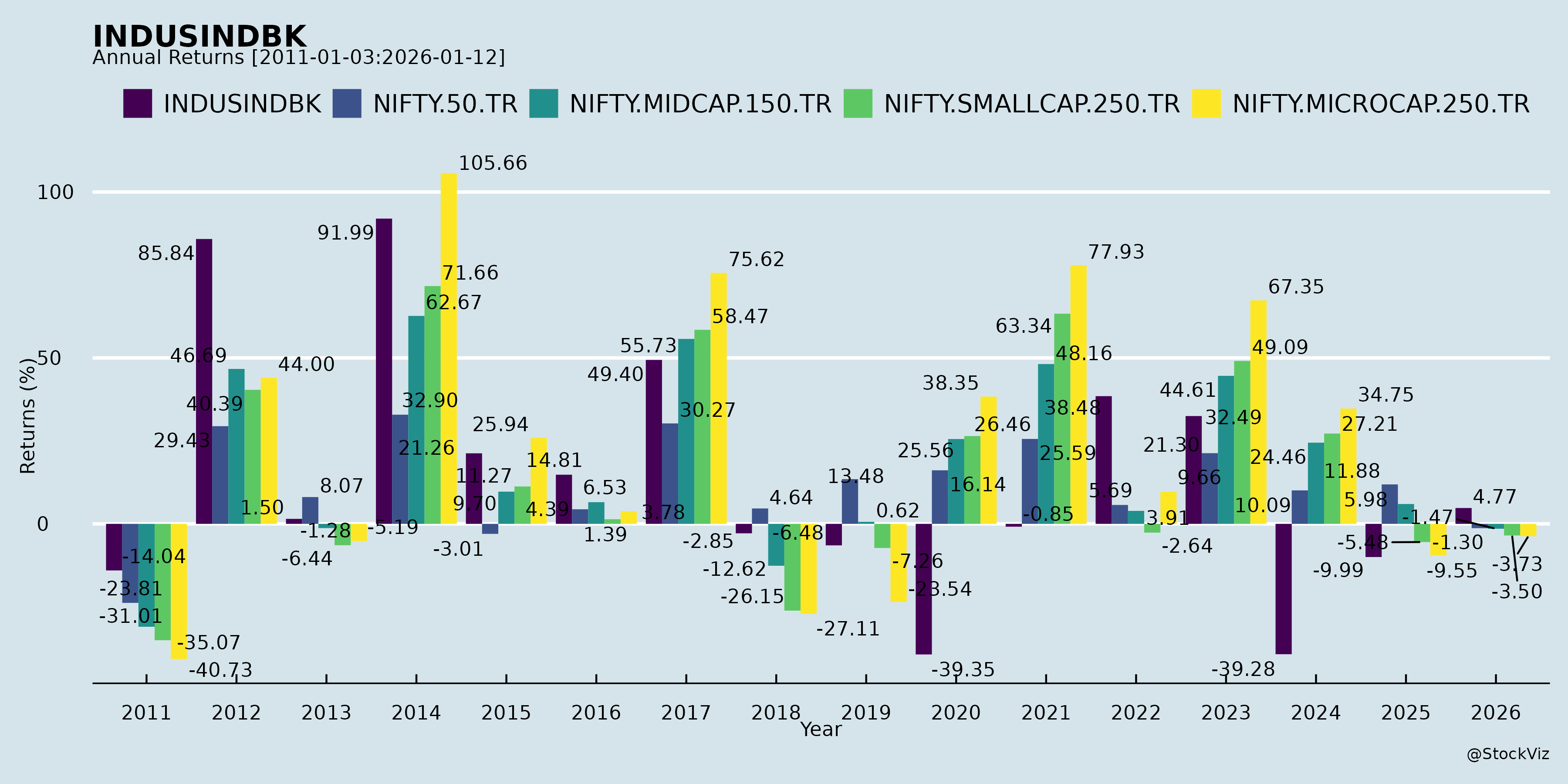
Annual Returns
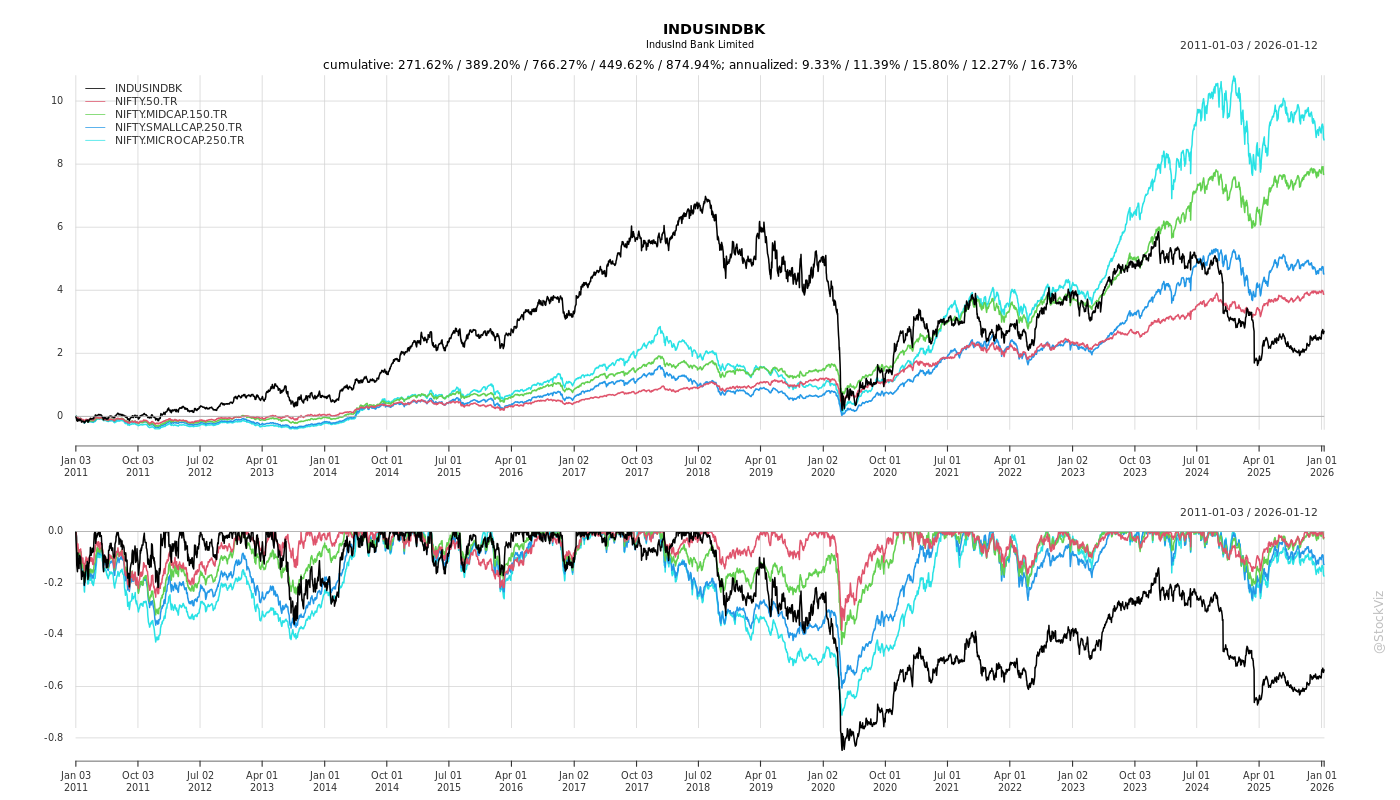
Cumulative Returns and Drawdowns
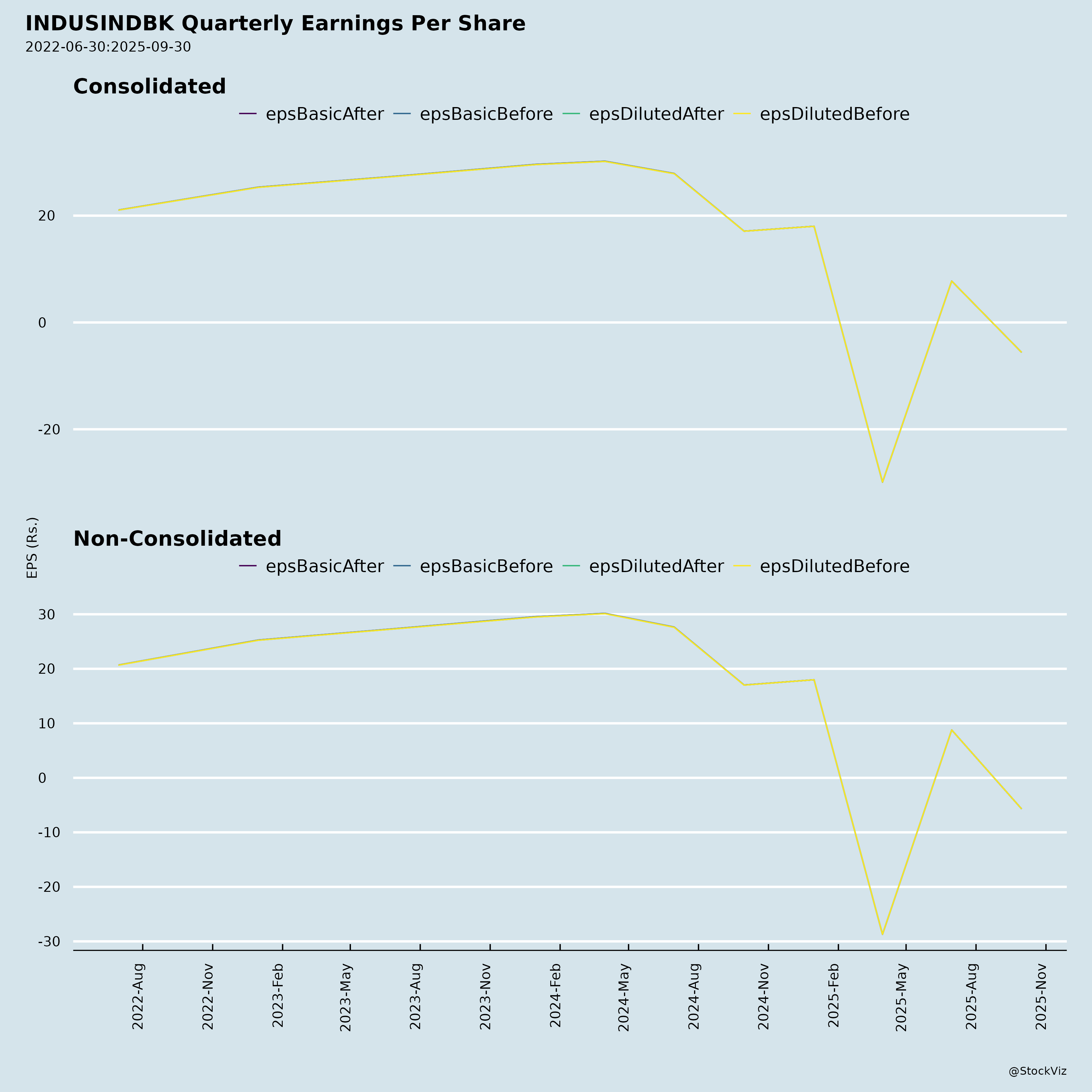
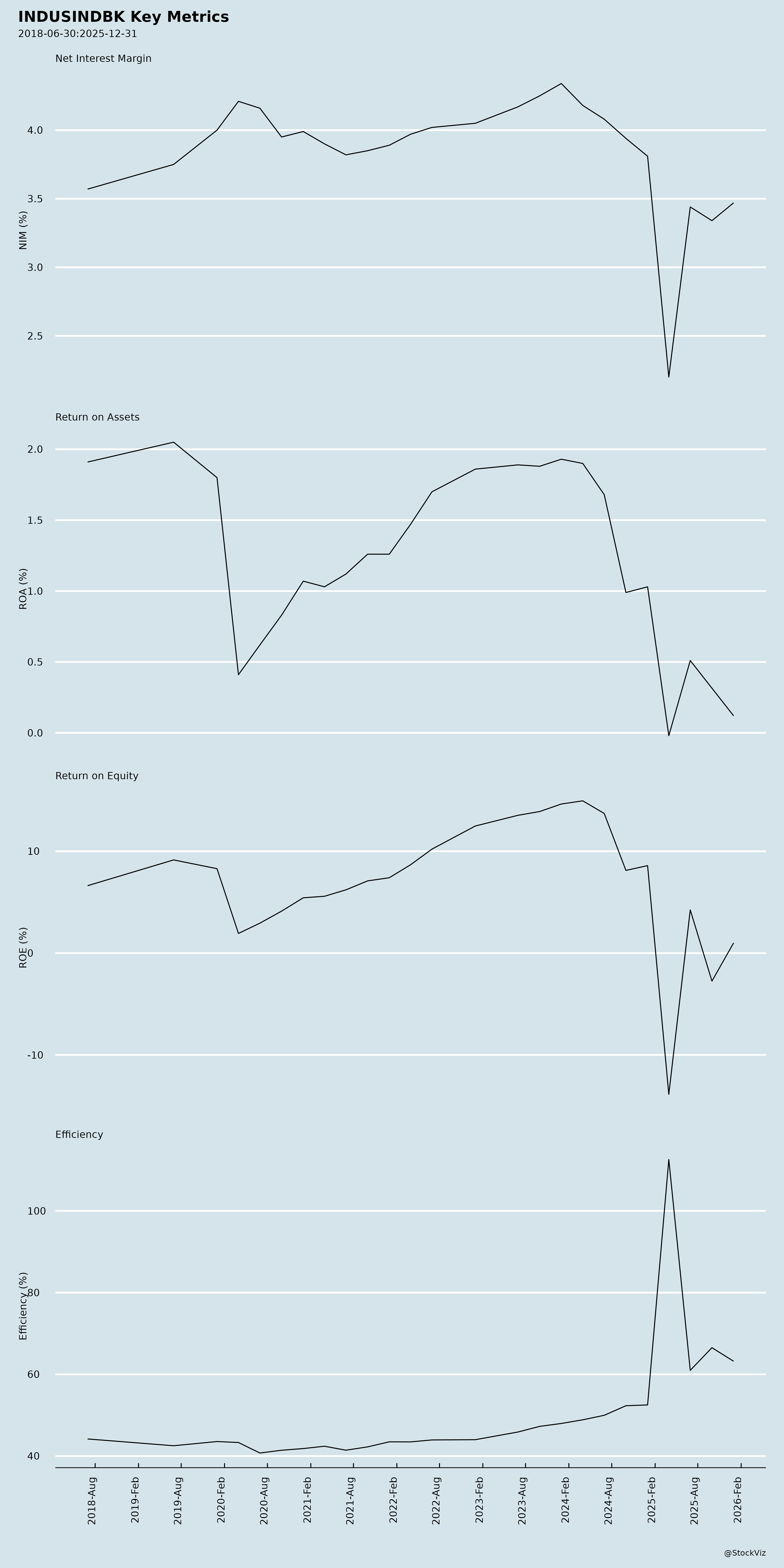
Fundamentals
Ownership
Margined
AI Summary
asof: 2026-09-16
IndusInd Bank — Q1 FY27: Headwinds, Tailwinds, Risks and Guidance vs Performance
1. Headwinds and Challenges
Balance sheet consolidation and muted core growth. The Q1 FY27 (quarter ended June 30, 2026) results, approved by the Board on July 22, 2026, show the Bank in a phase described as a “pivot towards growth from consolidation.” Average total deposits rose 1% QoQ and average total loans rose 3% QoQ, but average retail and SME loans declined 1% QoQ. On an end-of-period basis, advances fell 2% YoY to ₹3,26,274 crores, with retail loans down 4% YoY and SME down 5% YoY.
Weakness in specific retail segments. Rural Banking declined 26% YoY (micro loan book down 43% YoY and 3% QoQ), credit cards fell 15% YoY, and personal loans fell 7% YoY. Vehicle Finance, the largest retail vertical, was flat QoQ with disbursements down 14% QoQ.
Margin compression. Net interest margin (excluding one-offs) was 3.35%, down from 3.46% YoY and 3.39% QoQ. Yield on advances fell to 10.96% from 11.62% YoY, while cost of deposits at 5.95% declined 49bps YoY and 12bps QoQ.
Fee income pressure. Other income fell 17% YoY to ₹1,787 crores, with the non-interest income mix shifting toward “Trading & Others” (57% in Q1 FY27 versus 14% a year earlier) and core fee to asset ratio at 1.14%.
Regulatory action. IRDAI imposed a monetary penalty of ₹1 crore on the Bank for non-compliance with provisions of the IRDAI (Registration of Corporate Agents) Regulations, 2015 relating to bancassurance operations, grievance redressal and grievance reporting. The order was dated September 10, 2026, following a June 2023 inspection, a July 21, 2023 inspection report, a March 26, 2025 Show Cause Notice, and subsequent submissions and a personal hearing.
Subsidiary audit qualification. The statutory auditor of Bharat Financial Inclusion Ltd (BFIL) issued a qualified conclusion in its review report dated July 20, 2026 (continued from previous quarters) on BFIL’s Q1 FY27 results, pending further comprehensive review and closure of the matter by BFIL’s management. The Bank states it had carried out an investigation and no further financial impact is expected.
Distribution footprint contraction. Total touch points declined to 9,413 from 9,535 QoQ, with BFIL branches down 79, vehicle finance marketing outlets down 27, and ATMs down 17.
2. Tailwinds and Growth Prospects
Deposit franchise granularisation. Retail deposit share (LCR definitions) rose to 49.5% from 47.9% QoQ, with average retail deposits up 4% QoQ and up 5% YoY. Cost of SA fell to 4.72% from 5.68% YoY. Certificate of deposits fell to 5.9% of total deposits from 7.5% YoY.
Profitability recovery. Operating profit was ₹2,773 crores, up 8% YoY and 21% QoQ. Consolidated net profit was ₹1,037 crores, up 72% YoY and 75% QoQ. Return on assets was 0.78% (annualized) versus 0.45% YoY and 0.45% QoQ; return on equity was 6.26%.
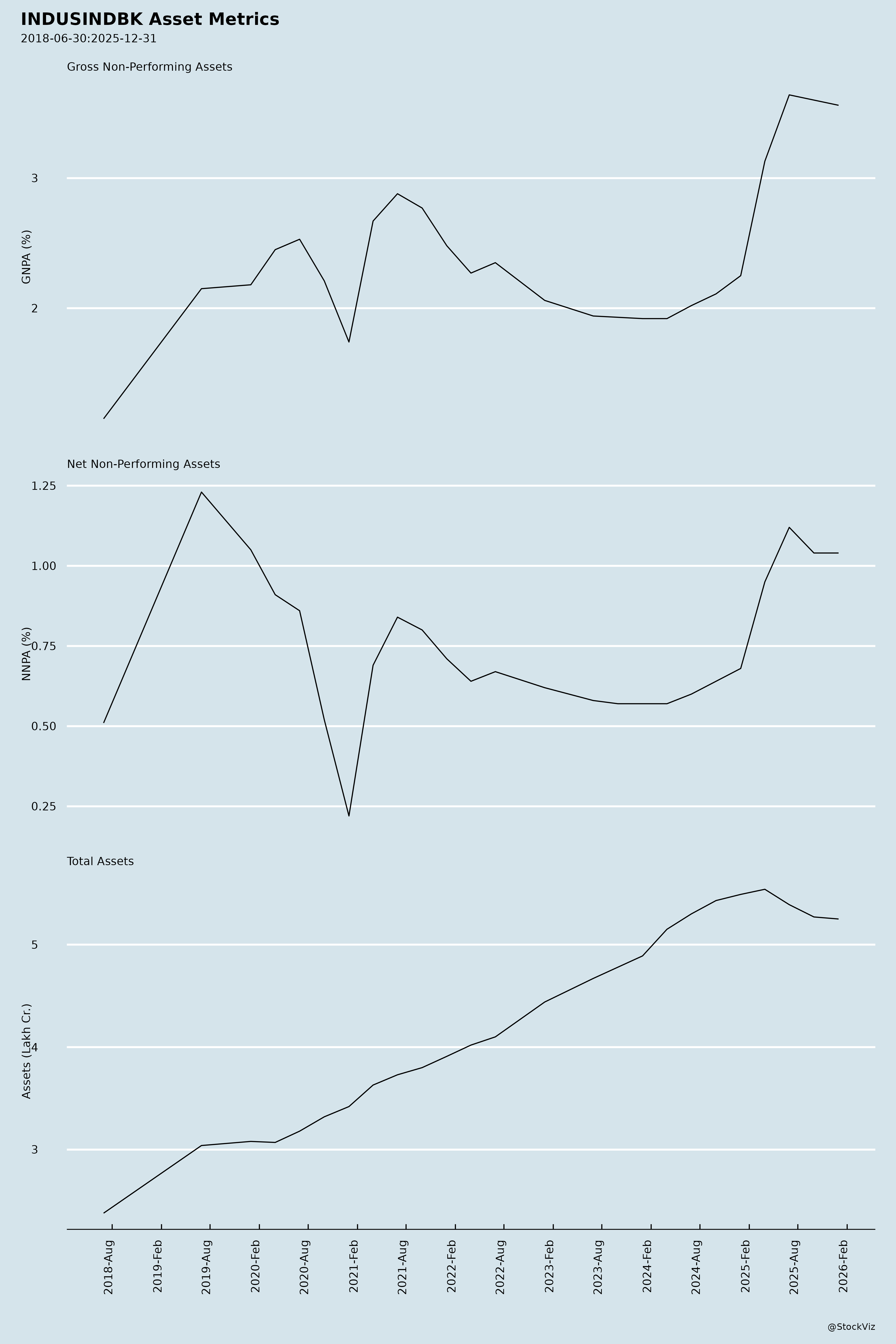
Asset quality improvement. GNPA fell to 3.25% from 3.43% QoQ and 3.64% YoY; NNPA fell to 0.95% from 1.00% QoQ and 1.12% YoY. Fresh additions declined to ₹1,660 crores from ₹1,825 crores QoQ and ₹2,567 crores YoY. SMA 1 & SMA 2 fell to 0.12% from 0.17% QoQ. Credit cost declined to 1.74% from 1.89% QoQ and 2.11% YoY.
Wholesale banking momentum. Wholesale loans rose 11% QoQ and 1% YoY to ₹1,20,227 crores, led by large corporates (up 16% QoQ) and mid-market/others (up 6% QoQ). The corporate exposure rating profile shows 45% in AAA and 17% in AA at June 2026.
Digital and product initiatives. The Bank reported 2.6mn+ monthly active users on the INDIE app, 12,000+ employees trained in AI, AI platforms supporting 15,000+ monthly users, and 50+ ML models evaluating ~0.5mn loans monthly. On September 11, 2026, it launched an Overdraft and Cash Credit linked Corporate Credit Card operating directly on the customer’s existing OD/CC account without separate credit limits or billing cycles, powered by PropelGo Technologies and launched on NPCI–RuPay, Mastercard and Visa, under its ‘Digital 2.0’ strategy.
Capital and liquidity strength. CRAR was 17.15% (Tier 1: 16.10%, Tier 2: 1.05%), CET1 16.10%, LCR 127% (average LCR 127%), and PCR 71%. Total loan-related provisions were ₹9,558 crores, 2.93% of loans and 88% of GNPA.
Capital and debt raising approvals. The Board approved raising funds through debt securities on a private placement basis for an aggregate amount of ₹20,000 crores (or equivalent in permitted foreign currencies), and augmentation of capital through equity instruments and/or convertible debt securities (including ADRs, GDRs, QIP or other permissible modes) for an aggregate amount of ₹10,000 crores, both subject to member and regulatory/statutory approvals.
Shareholder returns and governance actions. The 32nd AGM on August 27, 2026 passed all 10 resolutions, including adoption of financial statements, a dividend of ₹1.50 per equity share, re-appointment of Mr. Sudip Basu as Director, authorization for long-term bonds/debt securities, capital augmentation, revision in remuneration for MD & CEO Mr. Rajiv Anand, appointment of Mr. Ganesh Sankaran and Mr. Jagdeep Mallareddy as Executive Directors, and appointment of Mrs. Mini Ipe as Non-Executive Independent Director.
3. Key Risks
- Asset quality risk: GNPA at 3.25% and NNPA at 0.95% remain elevated relative to the Bank’s own trajectory; restructured book at 0.05% and net security receipts at 0.07% of net advances; micro loan stress indicators include DPD 30-90 at 0.6% and DPD 0-90 at 1.2% as of June 2026.
- Concentration and segment risk: Wholesale banking is 37% of the loan book, with NBFCs (other than HFCs) at 6.06% and commercial/residential real estate at 4.41% of total loans.
- Regulatory and compliance risk: The IRDAI penalty of ₹1 crore illustrates compliance exposure in bancassurance and grievance redressal.
- Subsidiary risk: The BFIL qualified review conclusion (dated July 20, 2026) remains pending closure by BFIL’s management, though the Bank expects no further financial impact.
- Margin and funding risk: NIM compression and dependence on deposit repricing; borrowings fell 16% YoY to ₹43,864 crores, with long-term sources constituting 58% of borrowings.
- Execution risk on capital raising: The proposed ₹20,000 crores debt and ₹10,000 crores equity/convertible issuance are subject to member and regulatory approvals.
- Event scheduling risk: The Bank’s participation in the Jefferies 5th India Forum on September 17, 2026 (Gurgaon, physical mode) may change due to exigencies on the part of attendees or the Bank, with any revision communicated to the stock exchanges.
4. Management Guidance Versus Observed Business Performance
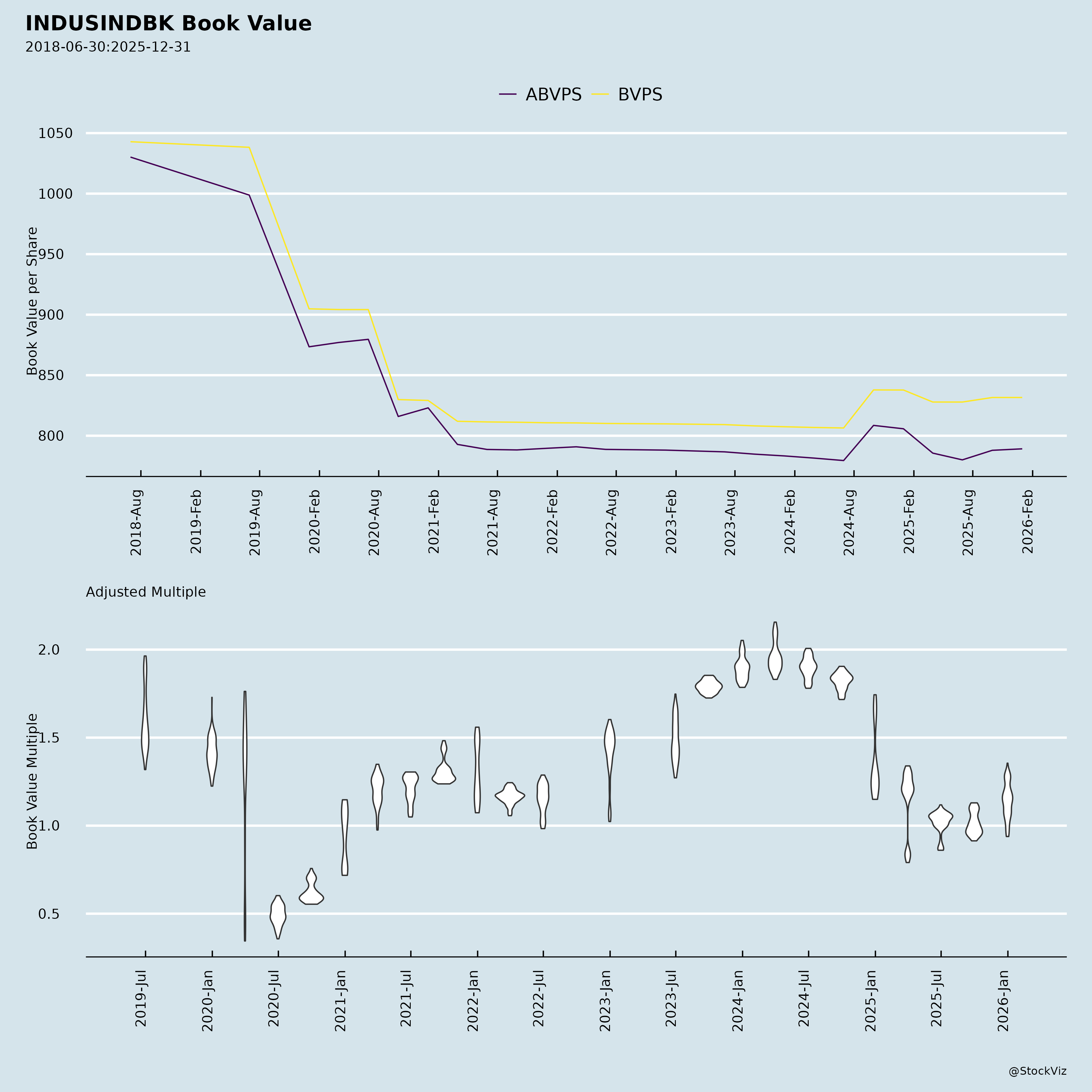
The presentation frames Q1 FY27 as a “pivot towards growth from consolidation,” and observed performance partially aligns: average total loans grew 3% QoQ and wholesale loans grew 11% QoQ, while retail and SME loans declined 1% QoQ and end-of-period advances fell 2% YoY. The stated intent to build a “granular and cost-efficient liabilities franchise” is reflected in retail deposit share rising to 49.5% and cost of deposits falling to 5.95%, though the retail deposit share remains below the 50% level referenced in the Bank’s at-a-glance metrics.
On asset quality, the Bank describes “continued moderation in stress pools with lower slippages,” which is consistent with GNPA falling to 3.25%, fresh additions declining to ₹1,660 crores, and SMA 1 & SMA 2 falling to 0.12%. The Bank’s stated focus on “risk adjusted return on capital” in wholesale banking coincides with wholesale growth of 11% QoQ and a rating profile weighted to AAA (45%) and AA (17%).
The Bank’s “Digital 2.0” strategy and AI-enabled banking narrative are supported by disclosed metrics (2.6mn+ INDIE MAU, 12,000+ employees trained, 50+ ML models), and the September 11, 2026 corporate credit card launch extends this into the business banking segment. The Bank has not provided explicit numerical guidance for future periods in the supplied material; forward-looking elements are limited to the capital and debt raising proposals (₹20,000 crores debt, ₹10,000 crores equity/convertible), the AGM-approved resolutions, and the scheduled Jefferies India Forum participation on September 17, 2026, where any schedule revision would be communicated to the stock exchanges.
Broker Narrative
The narrative evolved from a cautious Neutral call in 2023, worried about rising deposit costs and margin moderation, to an Accumulate call in 2026 that acknowledges persistent margin compression but sees an improving growth and asset-quality picture. While funding costs and operating expenses improved (retail deposit share up, opex down), margin pressure remained a constant theme, changing its cause from cost of funds to asset-mix shifts and RIDF additions. The initial optimism on broad retail/SME growth was replaced by a more selective view, yet the completion of balance sheet recalibration and MFI stress stabilization underpinned the upgrade.
Fears that came true
- Margin moderation, flagged in the first report, materialized as calculated NIM fell 4 bps QoQ to 3.35% in Q1FY27 and is expected to face further near-term pressure.
- Stagnating loan yields materialized as the shift toward wholesale/secured retail assets and RIDF additions suppressed overall yields, contributing to the margin compression.
Optimism that failed
- Healthy credit growth in Retail and SME failed to materialize, as MFI loans contracted 42.6% YoY, 2W & SCV fell 17.2%, credit cards fell 14.9%, and tractor loans fell 9.4% in Q1FY27.
- Controlled slippages failed to hold, as vehicle finance portfolio saw increased slippages due to seasonal factors in Q1FY27.
Broker Timeline
82 broker calls · 2023-06-01 to 2026-07-23
Copyright © 2023 SAS Data Analytics Pvt. Ltd. All rights reserved.