ICICIBANK
Equity Metrics
September 24, 2026
ICICI Bank Limited
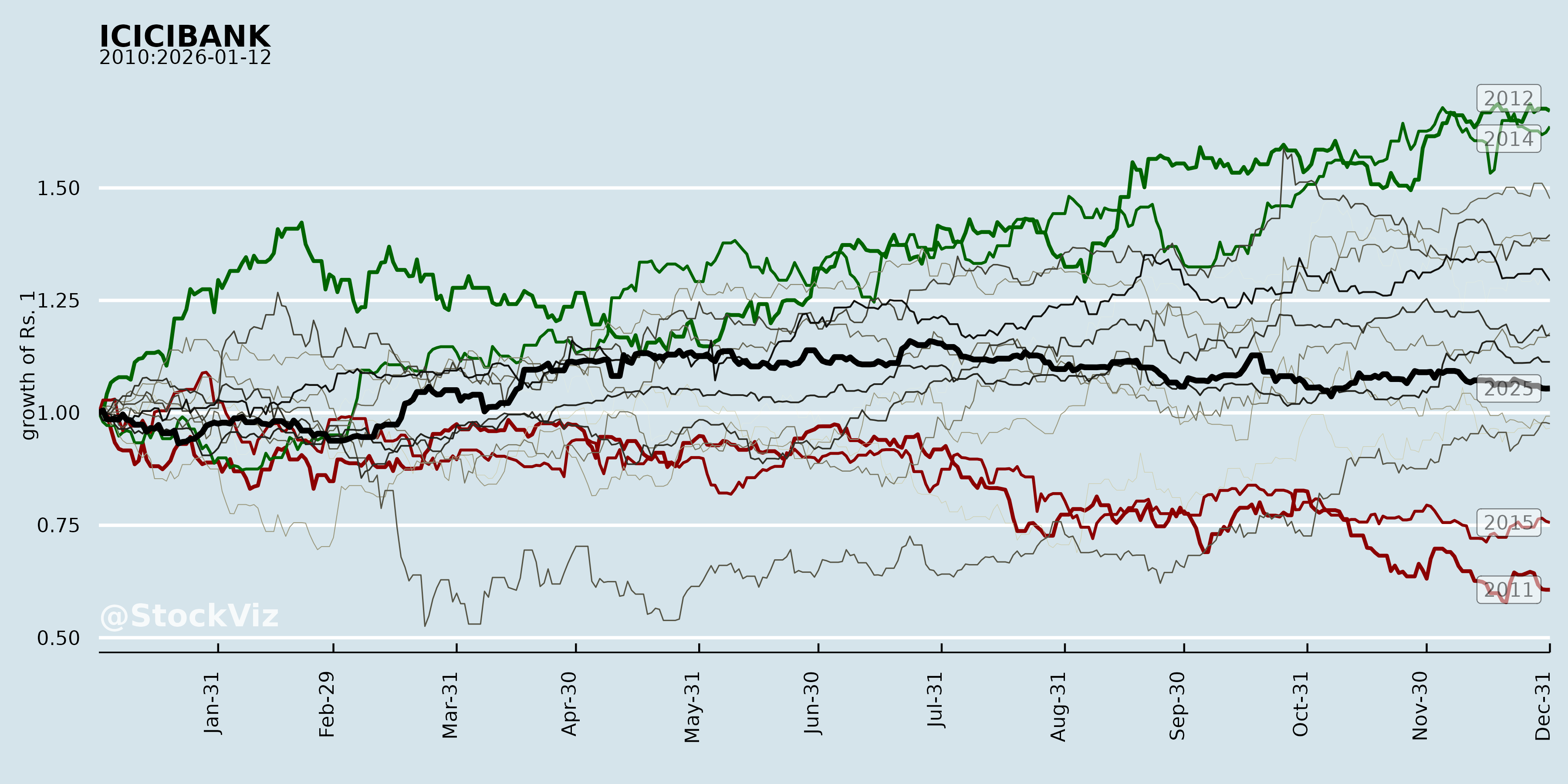
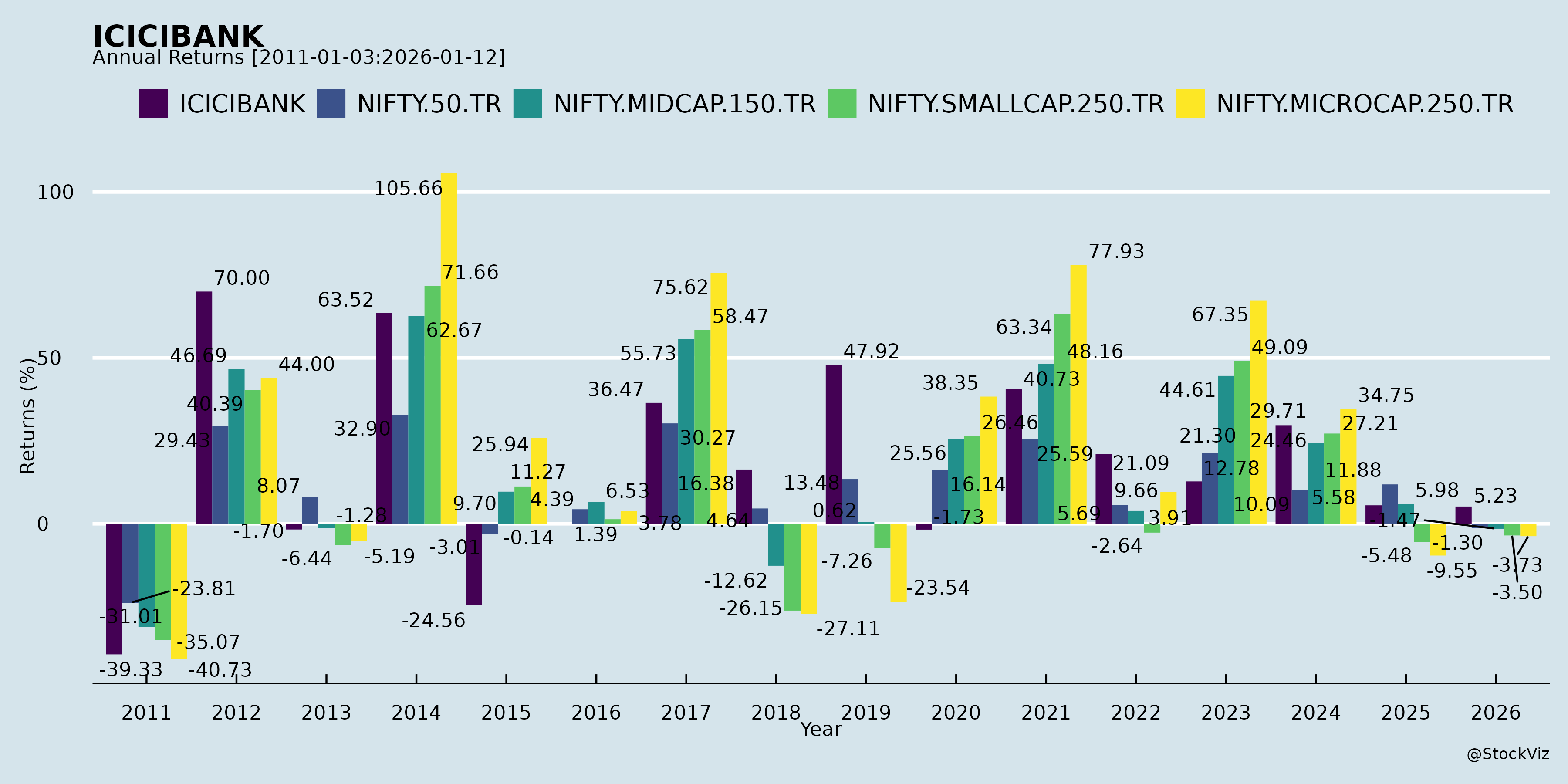
Annual Returns
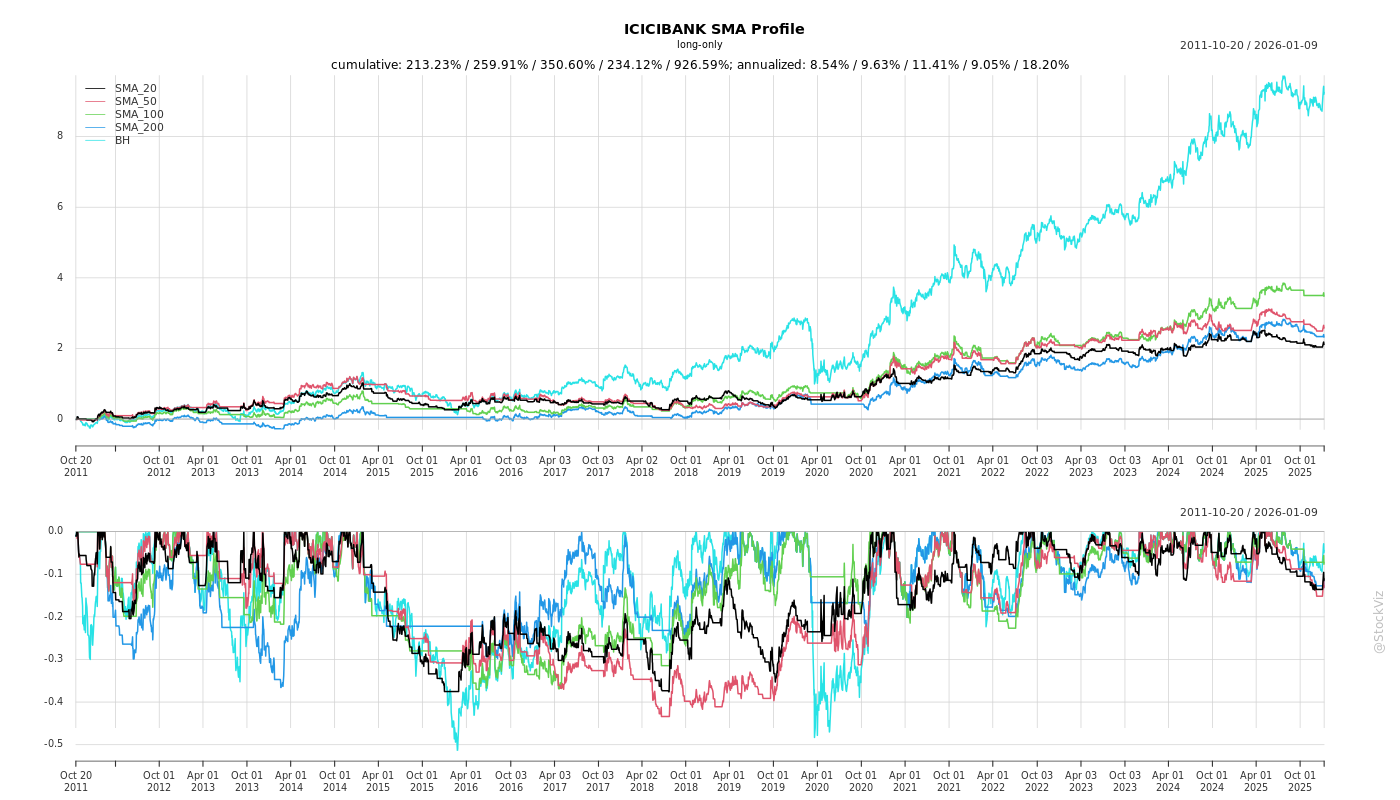
Cumulative Returns and Drawdowns

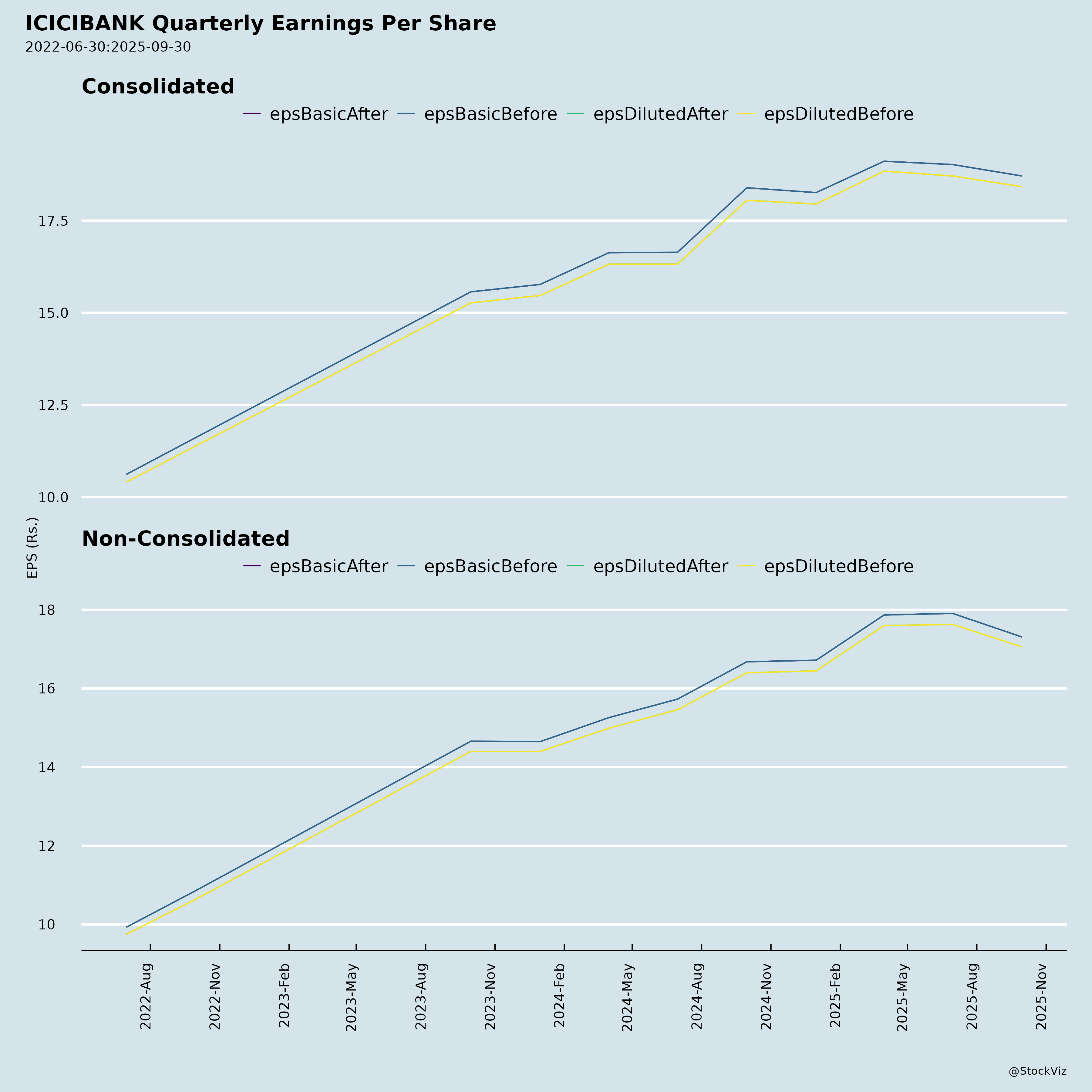
Fundamentals

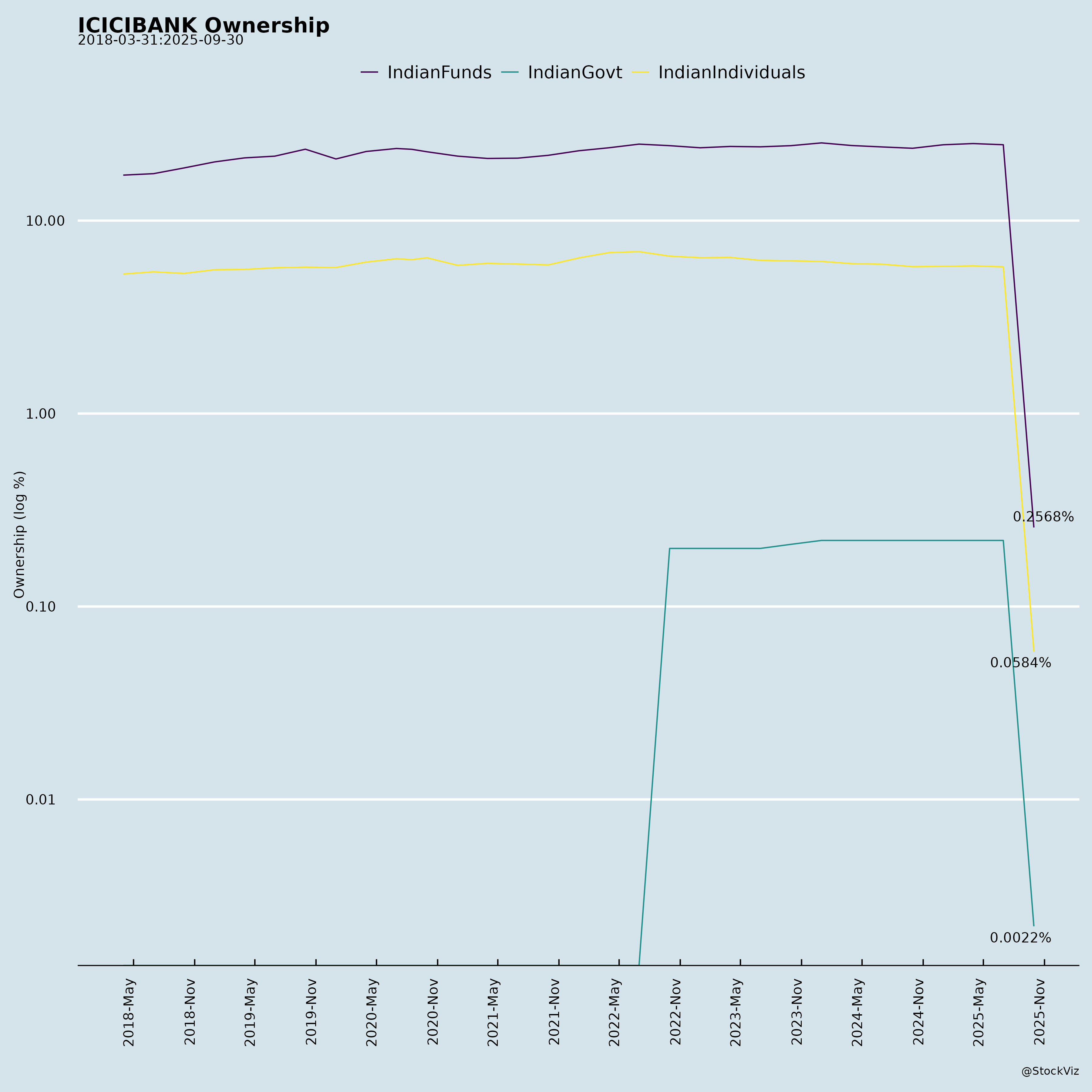
Ownership
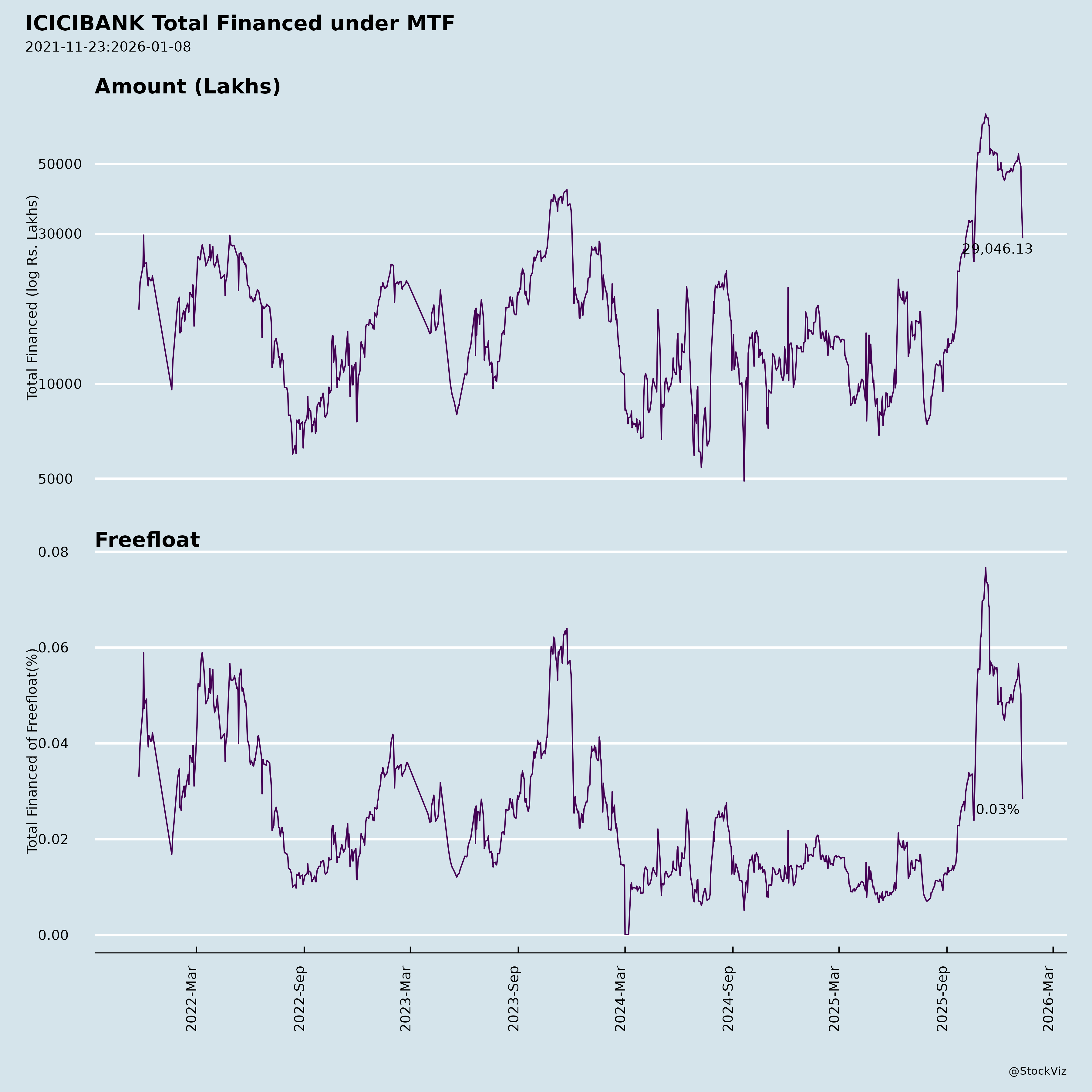
Margined
AI Summary
asof: 2026-09-14
Headwinds and Challenges
- Geopolitical and macroeconomic uncertainty: Management repeatedly flagged global uncertainties and specifically the West Asia situation as an evolving risk. Sandeep Batra noted the Indian economy remains resilient but said the bank continues to monitor developments closely. On asset quality, he said it is difficult to assess the NPA trajectory given uncertain geopolitical developments.
- Seasonal agri stress: Gross NPA additions rose sequentially to ₹5,552 crore in Q1-2027 from around ₹4,200 crore, driven by Kisan Credit Card (KCC) seasonality. Anindya Banerjee explained that Q1 and Q3 typically see higher agri-related NPAs and credit costs, which even out over the year. KCC additions were ₹706 crore in the quarter.
- Margin dilution from FCNR(B): Management expects the FCNR(B) deposit programme to be marginally NIM dilutive, with the international branches’ balance sheet expanding materially. The all-in cost after hedging was indicated at around 6.30–6.40%.
- Credit card portfolio contraction: The credit card portfolio declined 1.9% year-on-year and 1.7% sequentially, with lower revolver rates impacting book growth.
- Subsidiary performance pressure: ICICI General’s combined ratio worsened to 107.2% in Q1-2027 from 102.9% in Q1-2026, and its PAT fell to ₹403 crore from ₹747 crore, including the impact of increased reserves following a judicial pronouncement.
- Competitive intensity: Management acknowledged that some rates quoted in the market are not ones the bank will match, though it said competition is not currently holding it back.
- Regulatory transition (ECL): Expected Credit Loss norms take effect from April 1 next year. Management said there would be some marginal impact during the transition period, with Stage 2 provisioning being new for all banks, partly offset by lower Stage 3 provisions.
Tailwinds and Growth Prospects
- Strong Q1-2027 performance: Net interest income grew 12.7% year-on-year to ₹24,384 crore; fee income grew 23.5% to ₹7,286 crore; core operating profit grew 15.6% to ₹20,235 crore; profit before tax excluding treasury grew 20.9% to ₹18,975 crore; and PAT grew 15.9% to ₹14,805 crore.
- Broad-based loan growth: Total loan portfolio grew 19.6% year-on-year and 5.0% sequentially. Rural grew 35.4%, business banking 28.2%, domestic corporate 18.5%, mortgages 14.6%, and personal loans 12.9%.
- Deposit franchise: Total period-end deposits grew 14.0% year-on-year; average CASA grew 12.1%. The bank added 97 branches in Q1-2027, reaching 7,608 branches.
- Corporate demand drivers: Management attributed corporate loan pickup to higher working capital requirements and moderation in bond and equity markets, which shifted funding to banks. A healthy pipeline at reasonable rates was cited.
- FCNR(B) opportunity: Management described the RBI scheme as positive, with plans to leverage international branches (especially West Asia), partner banks for leverage, and bond issuance. Anindya Banerjee noted the programme would be earnings accretive due to offshore balance sheet growth.
- AI and technology: The bank has invested in an enterprise AI platform with use cases across portfolio monitoring, onboarding, fraud detection, document extraction, and customer servicing, with a framework of guardrails including human-in-the-loop oversight.
- Subsidiary momentum: ICICI Life’s annualised premium equivalent rose to ₹2,136 crore from ₹1,864 crore; VNB margin improved to 26.7%. ICICI AMC PAT rose to ₹965 crore from ₹784 crore. ICICI Securities PAT rose to ₹419 crore from ₹391 crore.
- Capital strength: CET-1 ratio was 16.19% and total capital adequacy 16.84% at June 30, 2026, with net worth of about ₹3.5 lakh crore.
- Overseas borrowing capacity: On August 21, 2026, the Board approved borrowings via bonds/notes/offshore Certificates of Deposit in overseas markets for a revised limit of up to USD 5.00 billion.
Key Risks
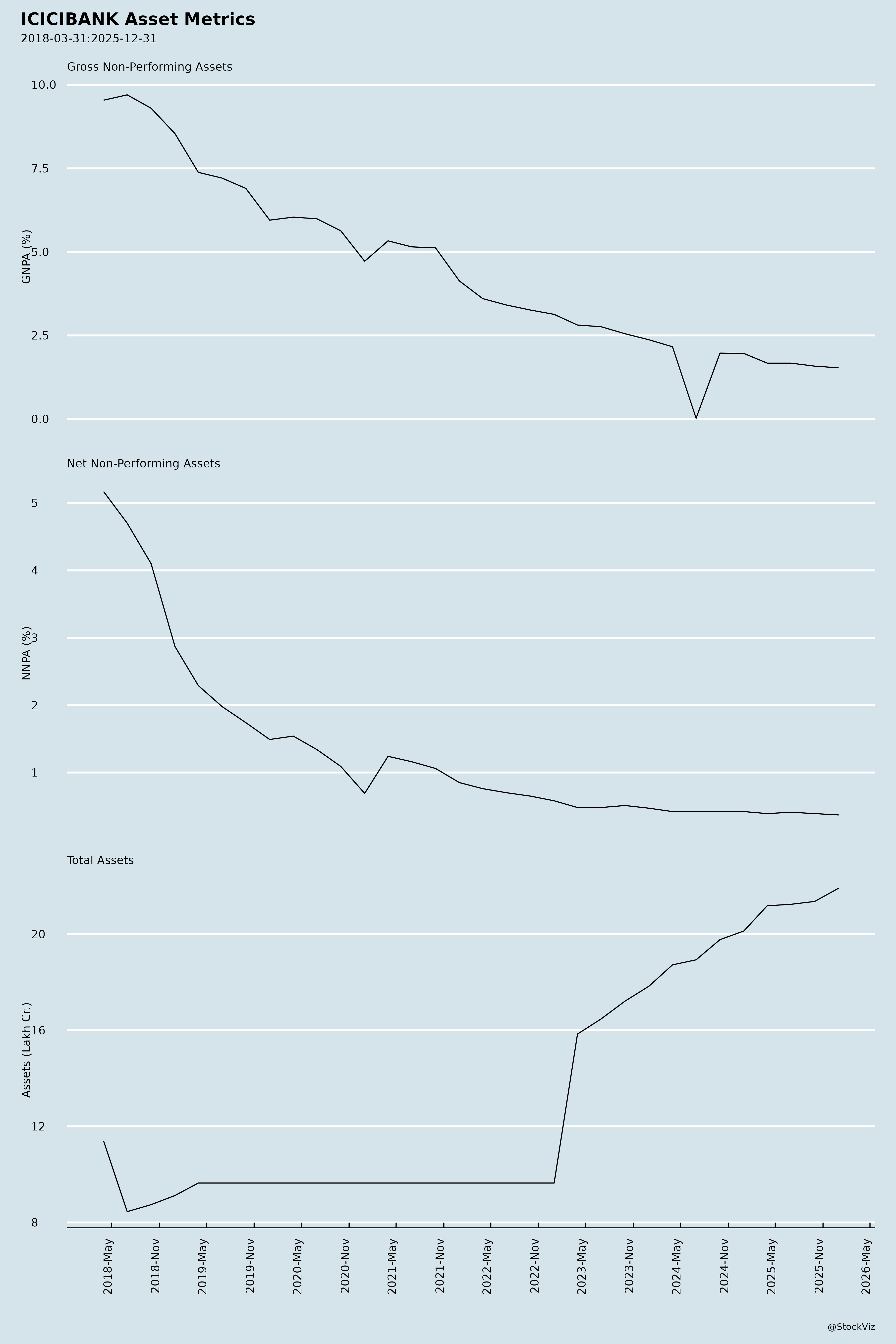
- Asset quality uncertainty: Net NPA ratio rose to 0.35% at June 30, 2026 from 0.33% at March 31, 2026. Gross NPA additions were ₹5,552 crore, with net additions of ₹2,707 crore. Management declined to give a specific NPA trajectory outlook.
- Geopolitical exposure: The West Asia situation was cited as a factor in customer selection and onboarding, with uncertainty acknowledged on how it may affect asset quality.
- Concentration in unsecured retail: Retail and rural portfolios contributed ₹4,331 crore of gross NPA additions. Management noted unsecured additions have come off year-on-year.
- Corporate and business banking NPA increase: Gross NPA additions from corporate and business banking rose to ₹1,221 crore from ₹1,052 crore year-on-year, with net additions of ₹586 crore versus ₹366 crore.
- Provisioning coverage decline: Provisioning coverage ratio on non-performing loans fell to 74.7% at June 30, 2026 from 75.8% at March 31, 2026 and 75.3% at June 30, 2025.
- Liquidity coverage moderation: Average LCR was 124% for the quarter versus 128% in the year-ago period.
- Regulatory approval conditions: RBI approvals dated September 8, 2026 permitting ICICI Prudential Asset Management Company Limited to acquire up to 9.95% share capital or voting rights in CSB Bank, DCB Bank, Kotak Mahindra Bank, and AU Small Finance Bank require acquisition of major shareholding within one year from the date of RBI letters, failing which approvals stand cancelled.
- Related party transaction approvals: Resolutions 13–18 for material related party transactions with ICICI Prudential Life, ICICI Lombard General Insurance, and India Infradebt for FY2028 were passed with related parties abstaining from voting.
Management Guidance Versus Observed Performance
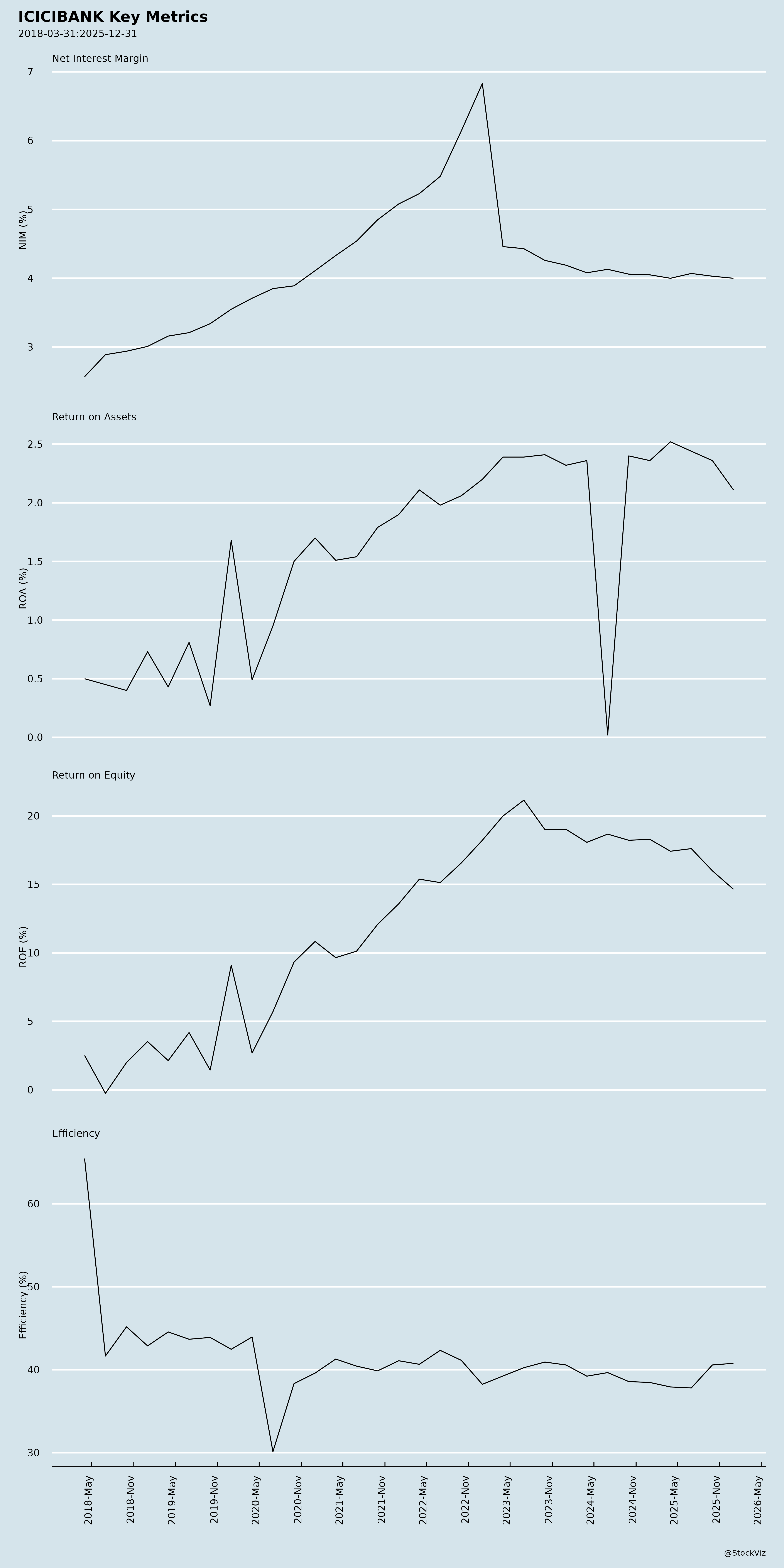
- NIM guidance: Management guided that NIM should be range-bound in FY27 assuming no rate movements, with some dilution from FCNR(B). Observed: NIM was 4.36% in Q1-2027 versus 4.32% in Q4-2026 and 4.34% in Q1-2026. Excluding the 8 bps benefit from income tax refunds, NIM would have been 4.28%, versus 4.27% in both the previous quarter and Q1-2026.
- Loan growth: Management did not provide specific targets, stating it looks at opportunities meeting risk and reward thresholds. Observed: 19.6% year-on-year growth, which management described as reflective of system-wide momentum and policy measures.
- Credit cost: Management indicated a normalised credit cost of around 50 bps adjusting for chunky recoveries. Observed: reported credit cost was 32 bps of average advances, with provisions of ₹1,260 crore or 6.2% of core operating profit.
- ECL impact: Management said no material ongoing impact is expected and that transition impact would be well absorbed by provisioning buffers. Observed: contingency provisions of ₹13,100 crore (about 0.8% of total advances) were held at June 30, 2026.
- FCNR(B) mobilisation: Management declined to provide targets or amounts raised, stating it was early days and details would be shared in Q2 results. Observed: no specific figures disclosed.
- Cost of funds: Management said it is difficult to state a declining trajectory and expects it to be range-bound. Observed: cost of deposits was 4.41% in Q1-2027 versus 4.43% in Q4-2026 and 4.85% in Q1-2026.
- AI impact on hiring: Management said it does not expect material impact on employees and that AI remains early days, with focus on governance and long-term value creation. Observed: employee expenses grew 5.5% year-on-year, reflecting annual increments and promotions.
Broker Narrative
The narrative remained bullish throughout (both Buy calls), but evolved from an optimistic outlook of steady NII growth and margin expansion to 4.9% to a more cautious tone highlighting elevated operating expenses and range-bound margins (NIM 4.36% including an 8 bps one-off). Persistent themes included robust credit growth (advances +19.6% YoY), resilient asset quality, and broad-based expansion, while the early headwind of economic slowdown was later replaced by macro/regulatory uncertainties and cost pressures.
Optimism that failed
- The expected margin expansion to 4.9% did not materialize; last reported NIM was 4.36% including an 8 bps one-off, and margins are now expected to remain range-bound.
Broker Timeline
120 broker calls · 2023-05-05 to 2026-07-23
Copyright © 2023 SAS Data Analytics Pvt. Ltd. All rights reserved.