HITECH
Equity Metrics
October 23, 2026
Hi-Tech Pipes Limited
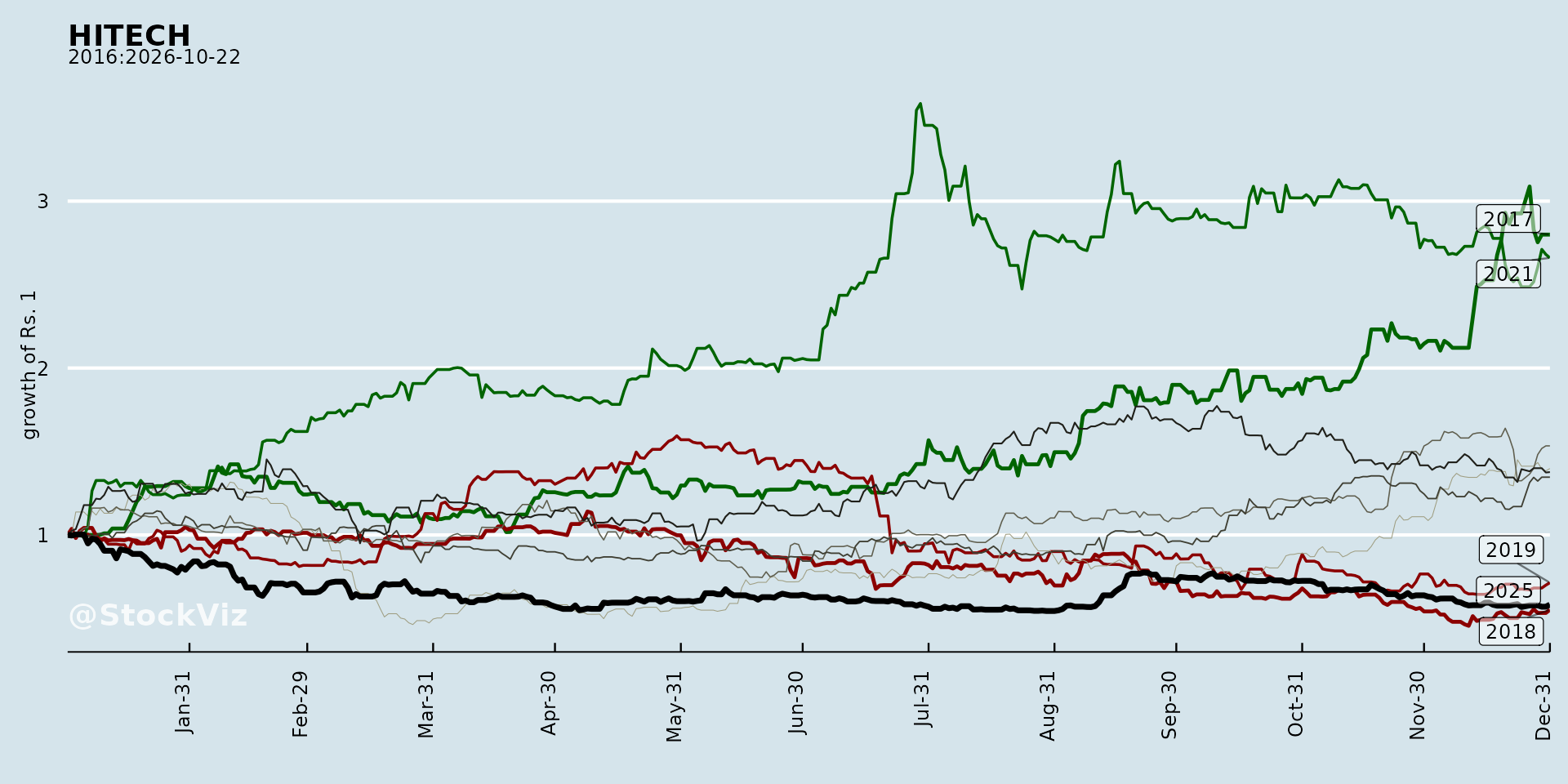
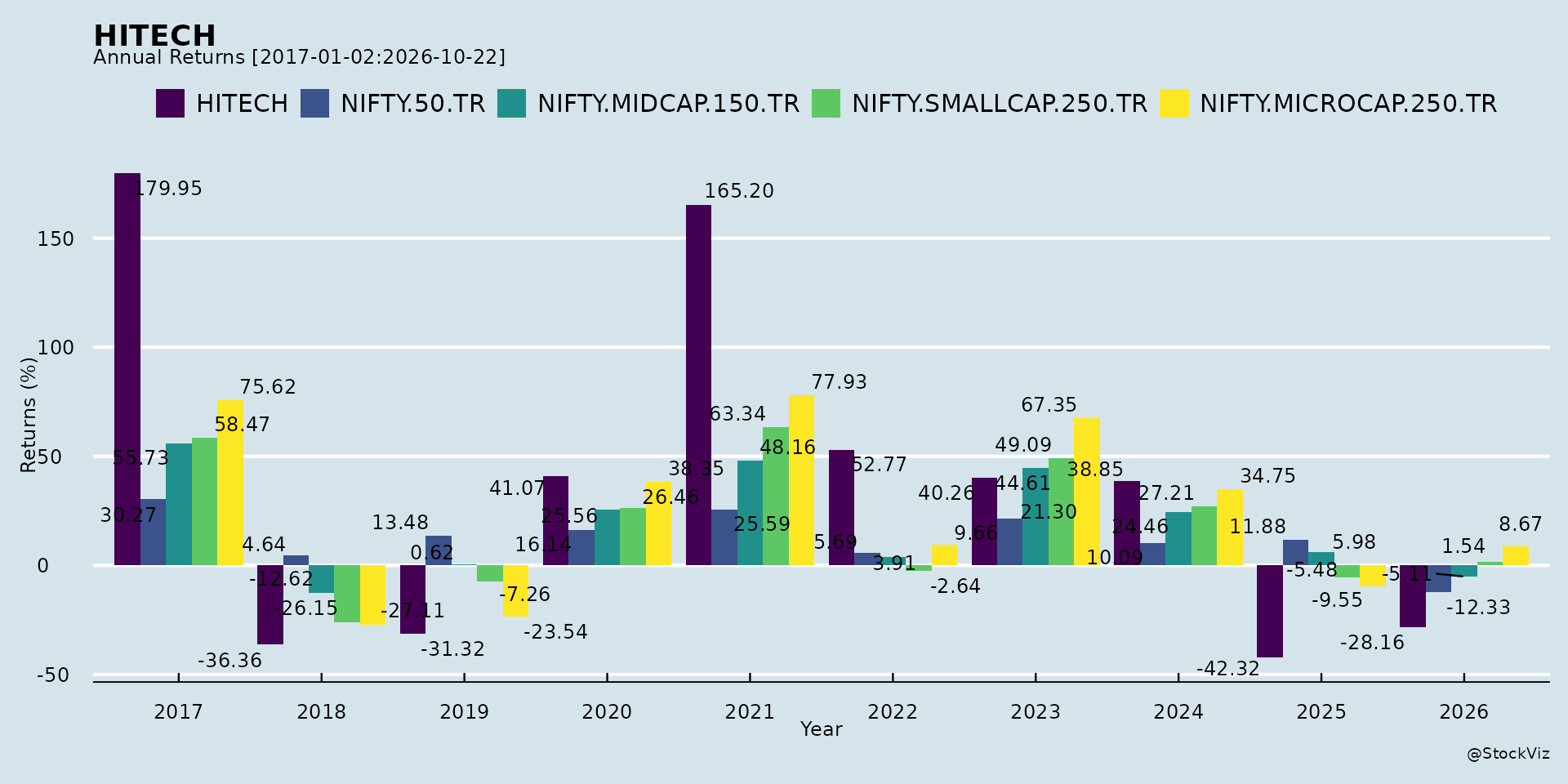
Annual Returns
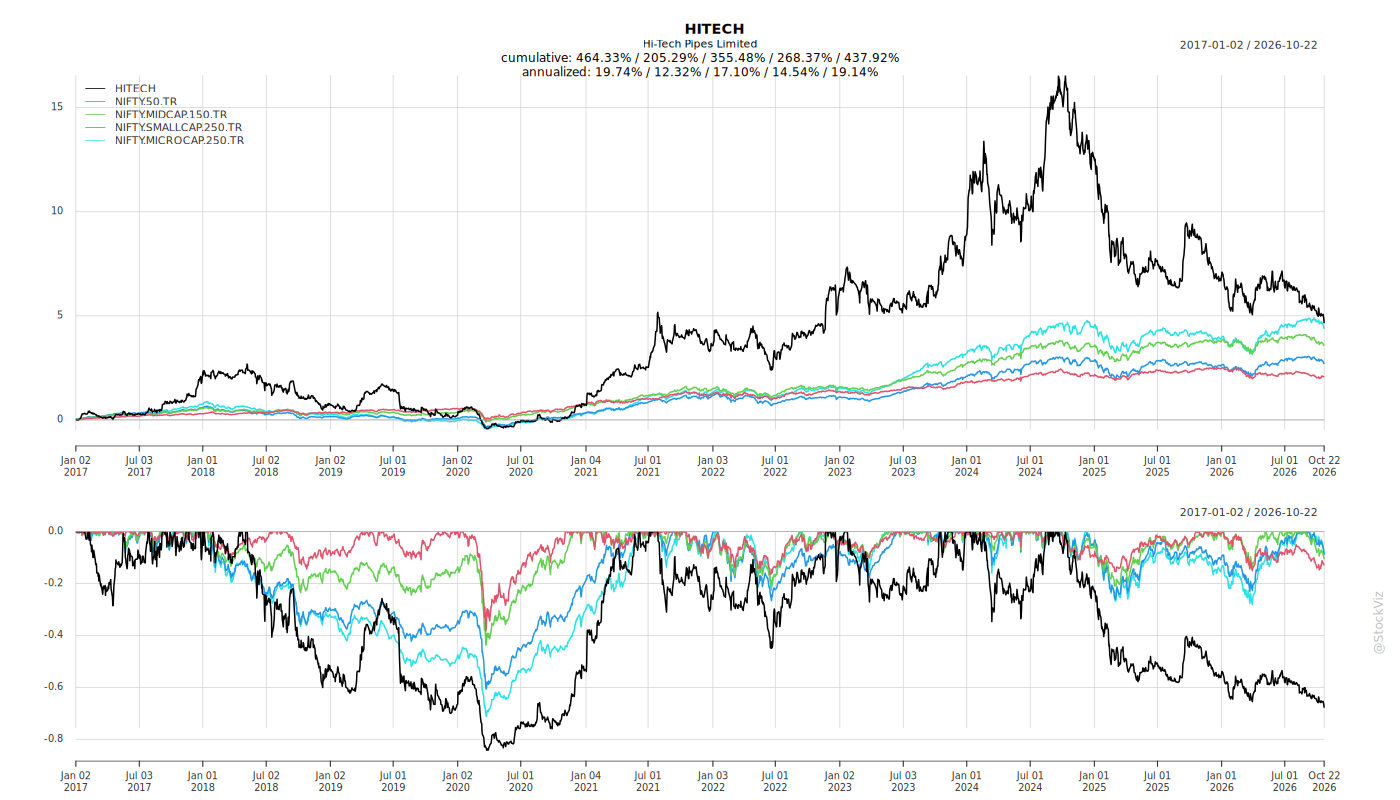
Cumulative Returns and Drawdowns
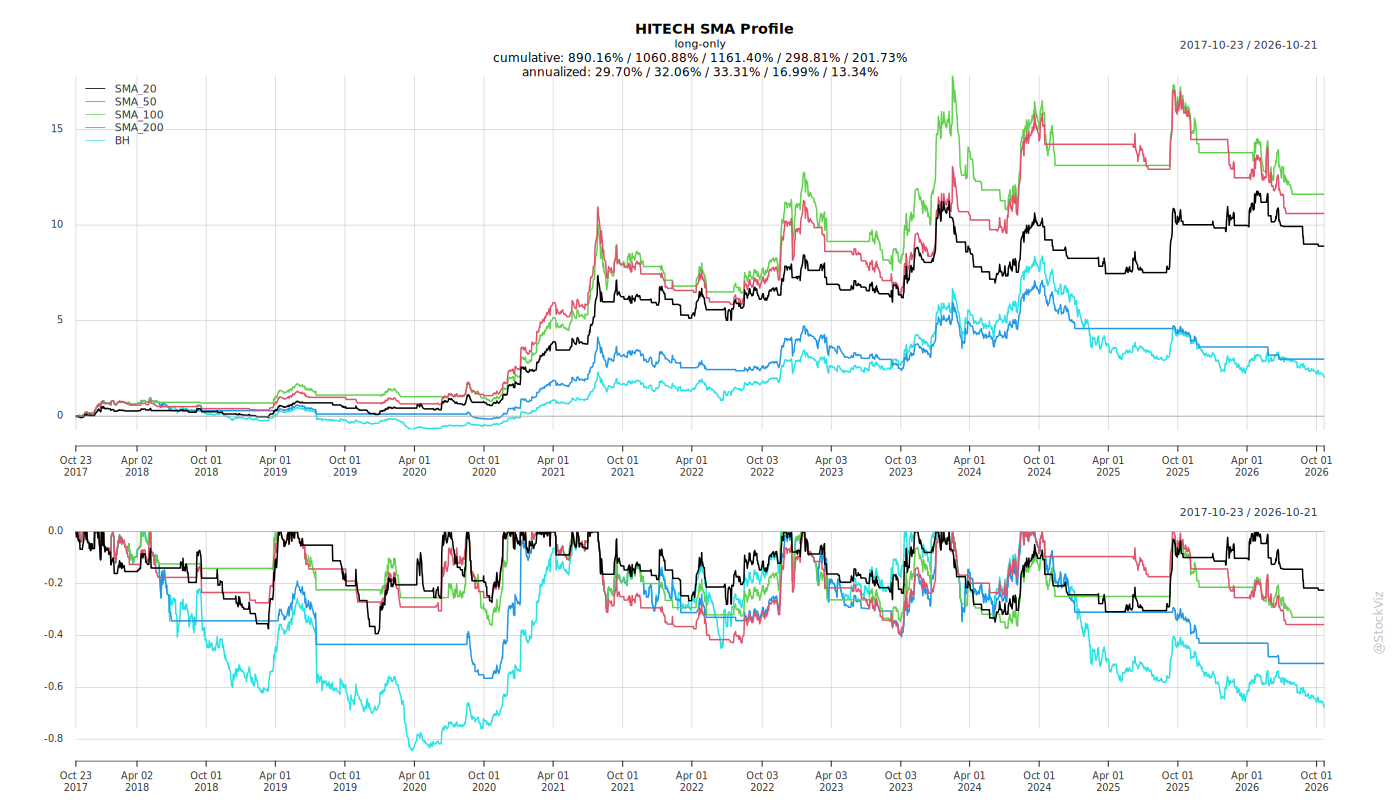
Fundamentals
Ownership
Margined
AI Summary
asof: 2026-09-18
Hi-Tech Pipes Limited — Q1 FY27 Announcements Review
1. Headwinds and Challenges
- Geopolitical disruption: Management described challenges arising from the “Iran war,” which it said affected the quarter and the broader operating environment. The company also referenced a geopolitical situation that led it to dispose of an import consignment on the high seas.
- Energy cost escalation: Gas prices “more than doubled,” which management said is impacting total EBITDA. Elevated gas prices were cited as a key reason EBITDA per ton stayed near ₹3,200 despite other improvements.
- Logistics and freight inflation: Logistic costs and ocean freights “gone significantly higher.”
- Monsoon seasonality: Management expects Q1 and Q2 volumes to be similar, with Q3 and Q4 “relatively much stronger” once the monsoon and geopolitical situation soften.
- New plant ramp-up costs: Three plants were operationalized within a span of 4–5 months. To penetrate markets, the company offered “extra special rebates” to dealers, which weighed on EBITDA per ton. Management said these discounts will stop once critical mass is reached.
- Working capital and finance cost pressure: Finance costs were around ₹15 crores in Q4 and Q1. Management attributed this to working capital requirements following the simultaneous commissioning of three facilities, and said it should normalize as utilization reaches optimum levels.
- Realization normalization: Blended realization of about ₹90,500 per ton was described as elevated versus peers; management indicated it would come down to around ₹75,000 per ton.
- Purchase of stock-in-trade volatility: This line was ₹420 crores in Q4 and fell to ₹280 crores in Q1. Management linked part of it to an import consignment disposed of on the high seas due to the geopolitical situation, and expects it to settle at ₹50–100 crores going forward.
2. Tailwinds and Growth Prospects
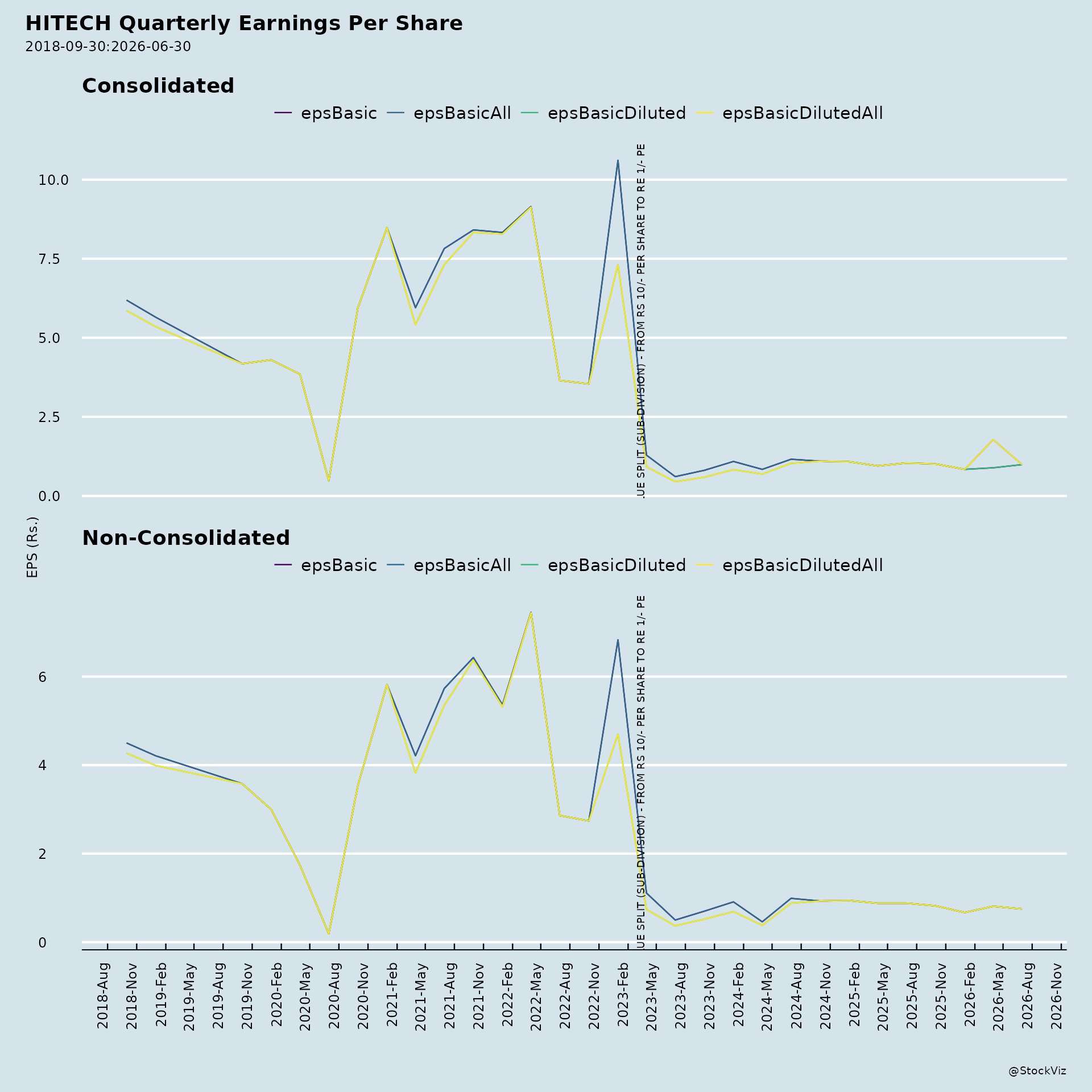
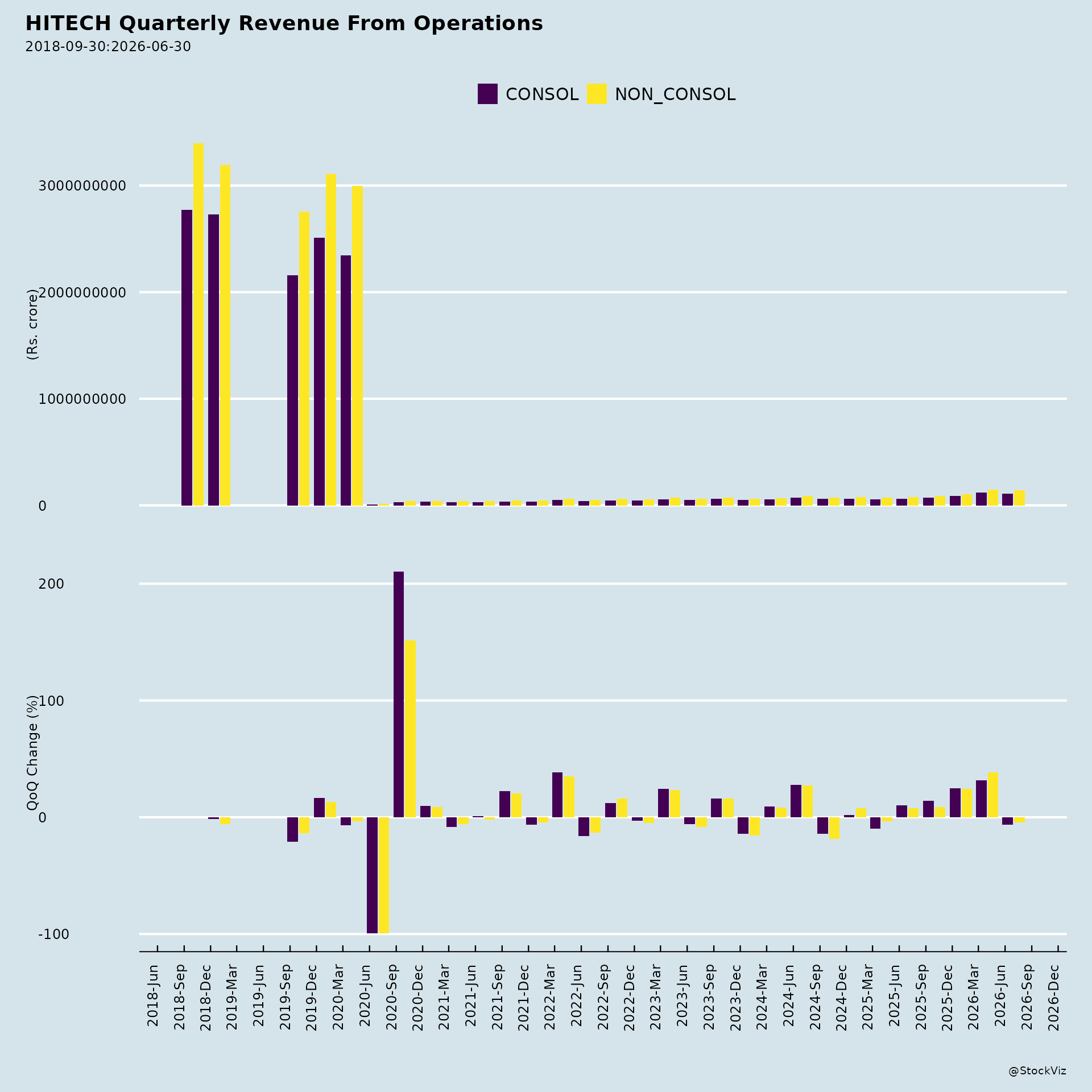
- Strong volume and revenue growth: Q1 FY27 sales volume rose 26% year-on-year to 1,56,136 MT (from 1,24,027 MT). Revenue grew 79% to ₹1,413 crores (from ₹791 crores). EBITDA rose 20% to ₹49.37 crores (from ₹41.03 crores).
- Demand environment: Infrastructure and construction demand “remains very strong,” with previously stalled projects now moving forward. Management called the next 2–3 quarters “quite crucial” for construction.
- Solar segment: The company is gaining share in solar torque tubes, adding more lines this year, and began solar exports this year.
- New segment — data centers: Management sees “green shoots” in data centers, with inquiries for large hollow sections and some orders matured. It is eyeing 15,000–20,000 tons this financial year, describing the projects as gigawatt-scale.
- Capacity expansion roadmap: The company remains committed to 2 million tons capacity by FY29, with another 1 million tons planned over 2–3 years. An additional 0.5 million tons is set to start construction by end of this financial year.
- Upcoming facilities:
- Direct Forming Technology (DFT) at Sanand Unit-II Phase-3 — expected operational by Q3 FY27.
- API pipes facility — readiness expected by Q4 FY27, targeting oil and gas transportation.
- Hindupur, Andhra Pradesh integrated facility (ERW tubes, specialized solar tubes, value-added steel products) — expected operational by Q4 FY27.
- Value-added product mix: VAP is currently about 35%, with a target of 45–50% in FY28, supported by DFT, API, coated steel, and solar torque tubes. Management cited EBITDA per ton of ₹4,500–5,000 for DFT and API, and ₹6,000 upwards for API.
- Exports: The company entered international markets about 1.5–2 years ago and is receiving repeat orders. It targets 10% of total sales volumes/revenue from international markets over 2–3 years, focusing on Europe, America, Canada, and Australia.
- Financial position: Management noted the financial position was further strengthened through the preferential issue.
3. Key Risks
- Raw material and input cost volatility: Gas price doubling, higher logistics and ocean freight costs, and general input cost inflation pressure margins.
- Geopolitical risk: The “Iran war” and related geopolitical situation affected operations, including the decision to dispose of an import consignment on the high seas.
- Execution risk on parallel expansions: Multiple projects (DFT, API, Hindupur, plus 0.5 million tons starting construction) are progressing simultaneously, with commissioning timelines spread across Q3 FY27 to FY29.
- Ramp-up and absorption risk: New capacities require market penetration, currently supported by dealer rebates; failure to reach critical mass could delay the targeted ₹4,000 per ton EBITDA band.
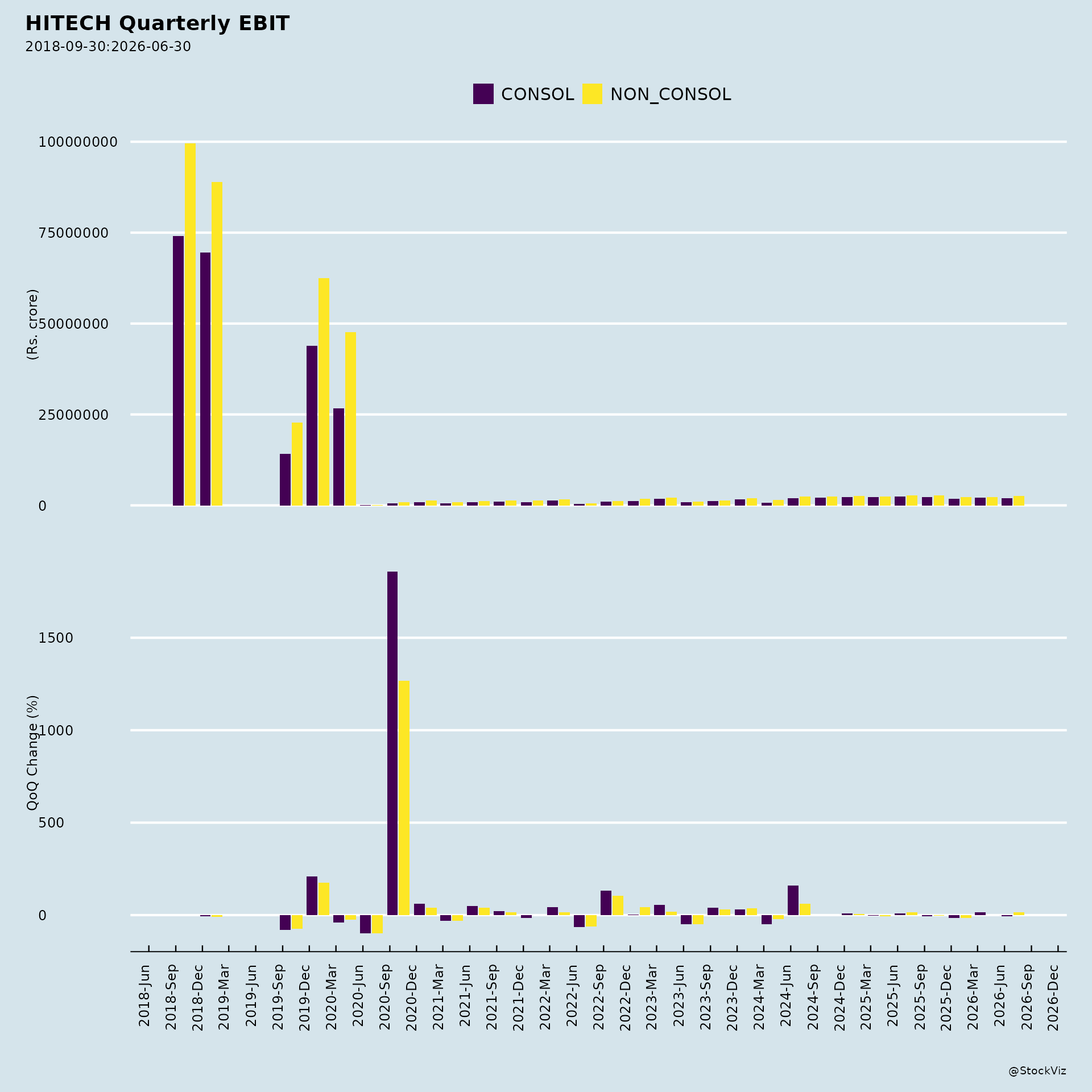
- Margin pressure: Despite volume growth, PAT was broadly flat (₹20.04 crores vs ₹20.92 crores), and EBITDA per ton improved only marginally (₹3,148 in Q4 FY26 to ₹3,162 in Q1 FY27).
- Working capital and finance cost: Rising volumes and capacity could keep debt and finance costs elevated, though management expects per-ton debt to come down.
- Realization normalization: Blended realization is expected to fall toward ₹75,000 per ton, which management expects to be offset by EBITDA per ton improvement.
- Approval risk: API segment requires approvals taking a couple of months, which could delay contribution.
- Cyclical dependence: Demand is tied to infrastructure and construction cycles, which management said will be tested over the next 2–3 quarters.
4. Management Guidance vs. Observed Performance
| Guidance / Forward Statement | Observed Performance / Evidence |
|---|---|
| FY27 sales volume target of 6.5–7 lakh tons | Q1 FY27 volume was 1,56,136 MT; management expects Q1 and Q2 to be similar, with H2 stronger. |
| FY28 sales volume target of 1 million tons | Not yet observable; FY29 volumes from the additional 1 million tons expected only in H2 FY29. |
| EBITDA per ton target of ₹4,000 | Q1 FY27 EBITDA per ton was ₹3,162 (up marginally from ₹3,148 in Q4 FY26). Management said discounts and gas prices are holding it back; expects to move into the ₹4,000 band once critical mass is reached. |
| VAP target of 45–50% in FY28 | VAP currently about 35%; DFT expected to be operational by end of Q3 FY27, with full benefit in FY28. |
| DFT facility operational by Q3 FY27 | Progressing as planned; not yet operational. |
| API facility readiness by Q4 FY27 | Progressing as planned; not yet ready. |
| Hindupur facility operational by Q4 FY27 | Construction progressing well; not yet operational. |
| 2 million tons capacity by FY29 | Management expressed high confidence; 0.5 million tons to start construction by end of FY27. |
| Exports at 10% of total sales volumes/revenue | Company entered international markets 1.5–2 years ago; repeat orders received; solar exports started this year. |
| Finance costs to normalize | Q1 finance cost around ₹15 crores, similar to Q4; management attributed this to working capital for three new plants and expects normalization as utilization improves. |
| Purchase of stock-in-trade to settle at ₹50–100 crores | Fell from ₹420 crores in Q4 to ₹280 crores in Q1; management expects further decline. |
| Blended realization to normalize to ~₹75,000 per ton | Q1 blended realization was ~₹90,500 per ton; management indicated it will come down. |
| Capex of ₹650 crores for 1 million tons; ₹200 crores in FY27 | Management clarified ₹300–350 crores remains for the next two financial years, with some already incurred in FY26. |
Overall: Q1 FY27 showed strong volume and revenue growth with stable profitability, but margin expansion lagged due to gas prices, freight costs, and dealer rebates tied to new plant ramp-up. Management’s guidance points to H2 FY27 as the period when volumes and margins should improve, with FY28 as the year for full VAP and DFT benefits, and FY29 for the 2 million ton capacity milestone.
Broker Timeline
1 broker calls · 2025-10-09 to 2025-10-09
Copyright © 2023 SAS Data Analytics Pvt. Ltd. All rights reserved.