HINDUNILVR
Equity Metrics
September 24, 2026
Hindustan Unilever Limited
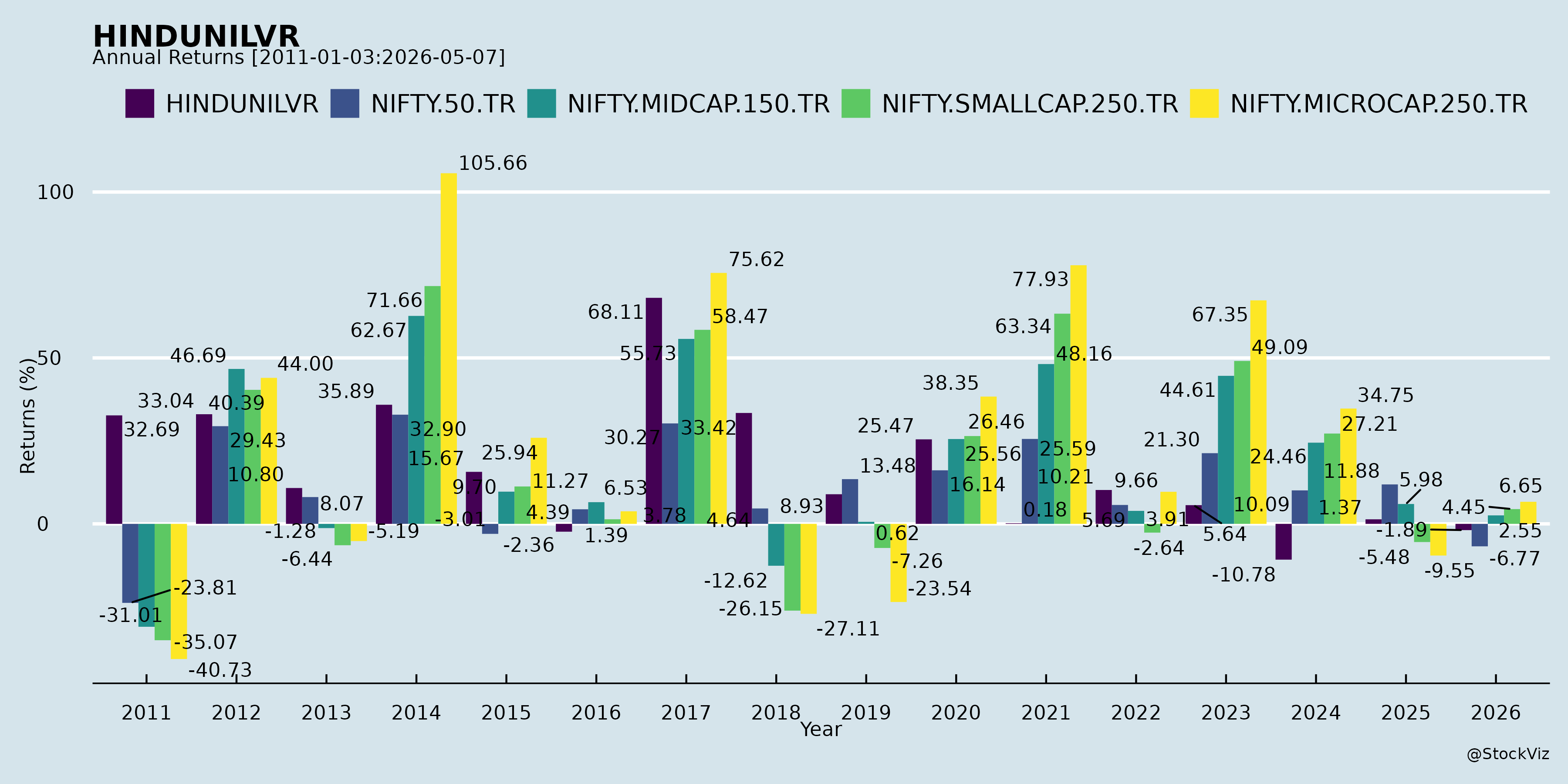
Annual Returns
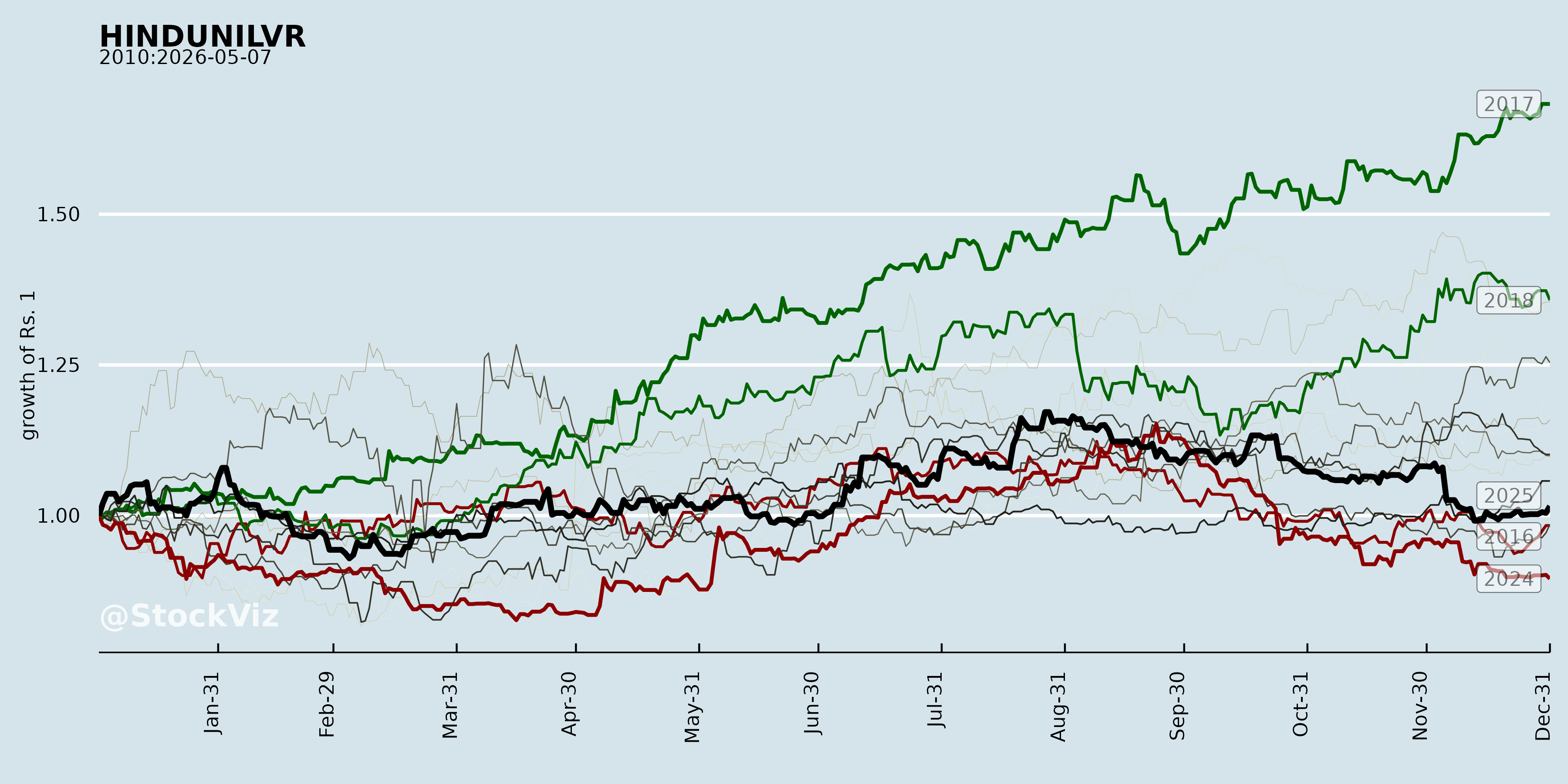
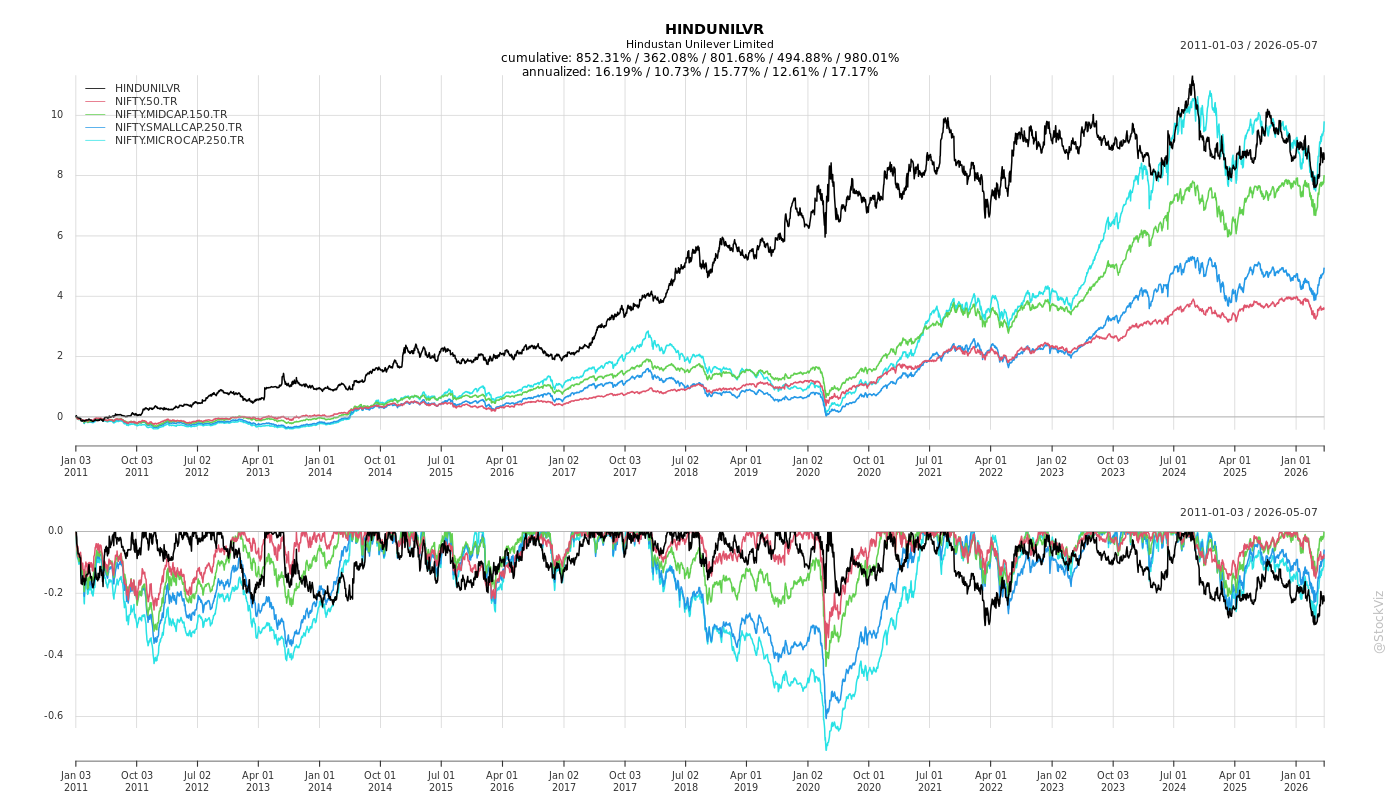
Cumulative Returns and Drawdowns
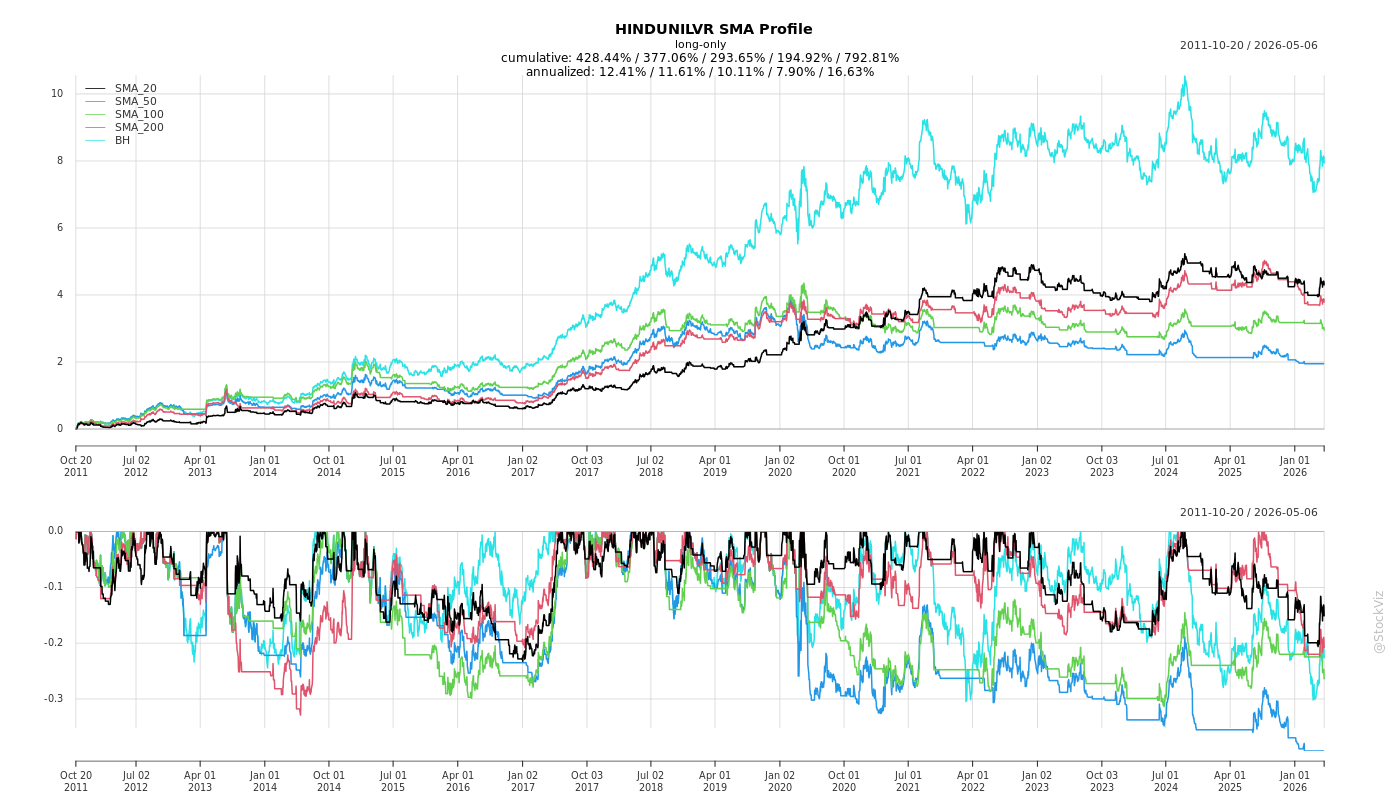
Fundamentals
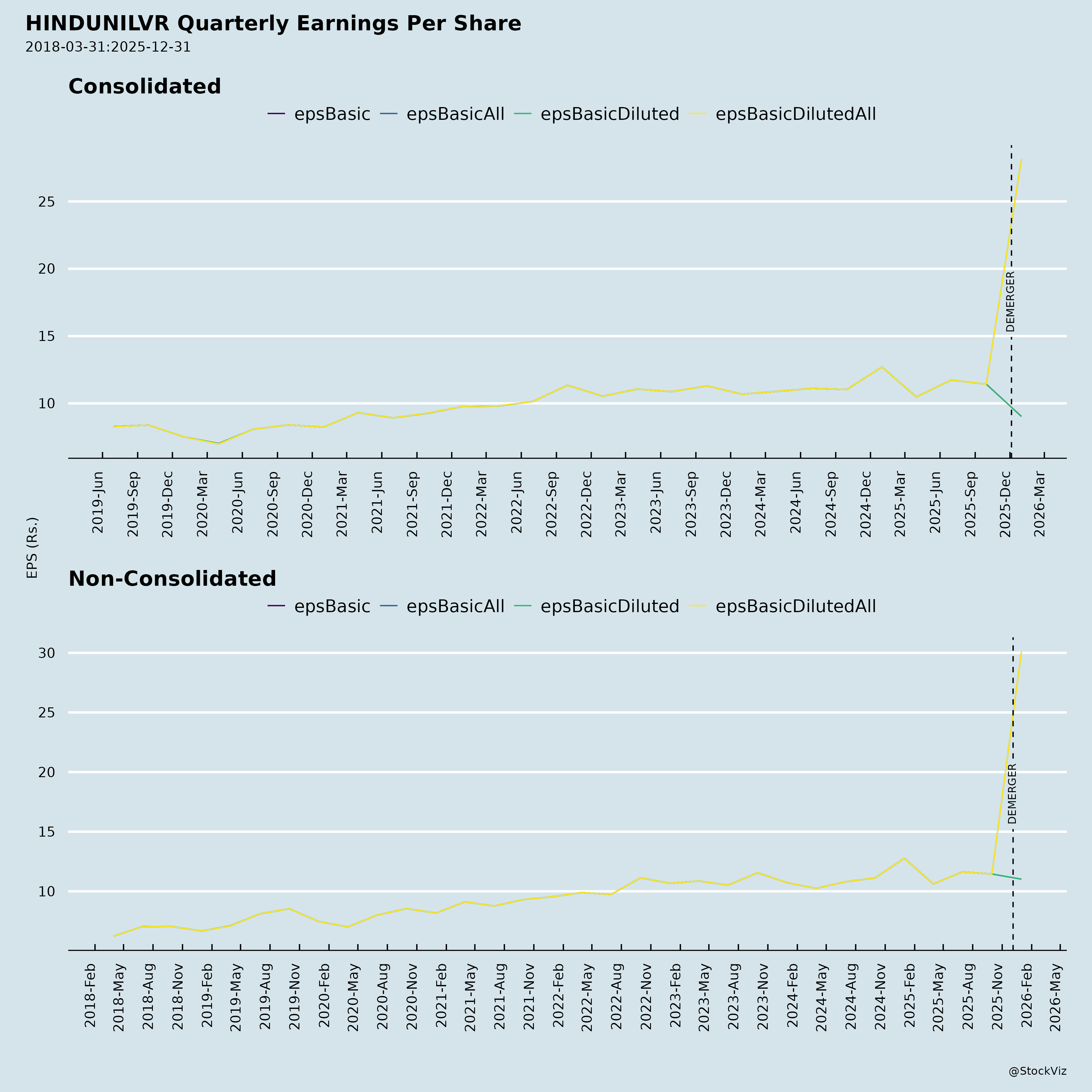
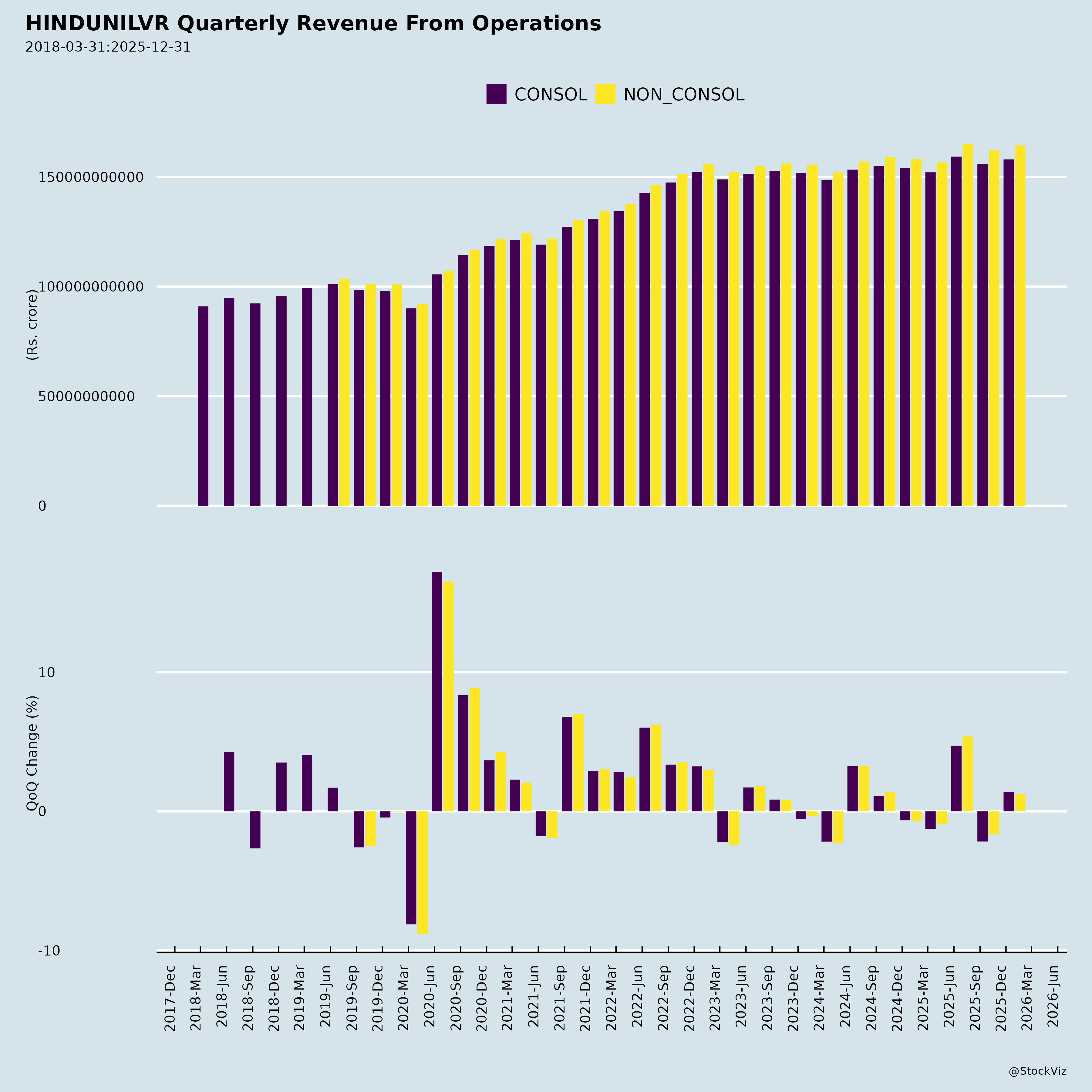
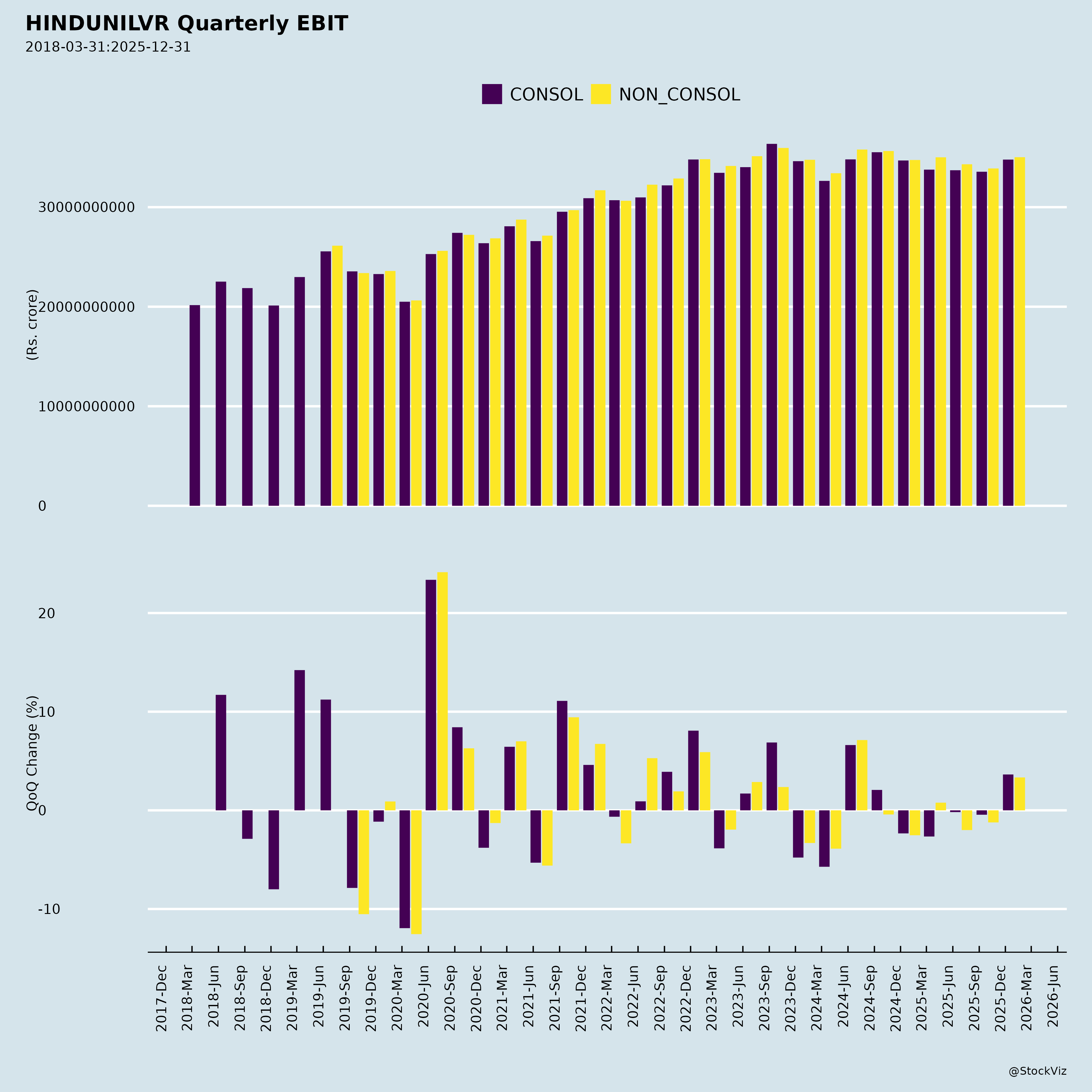
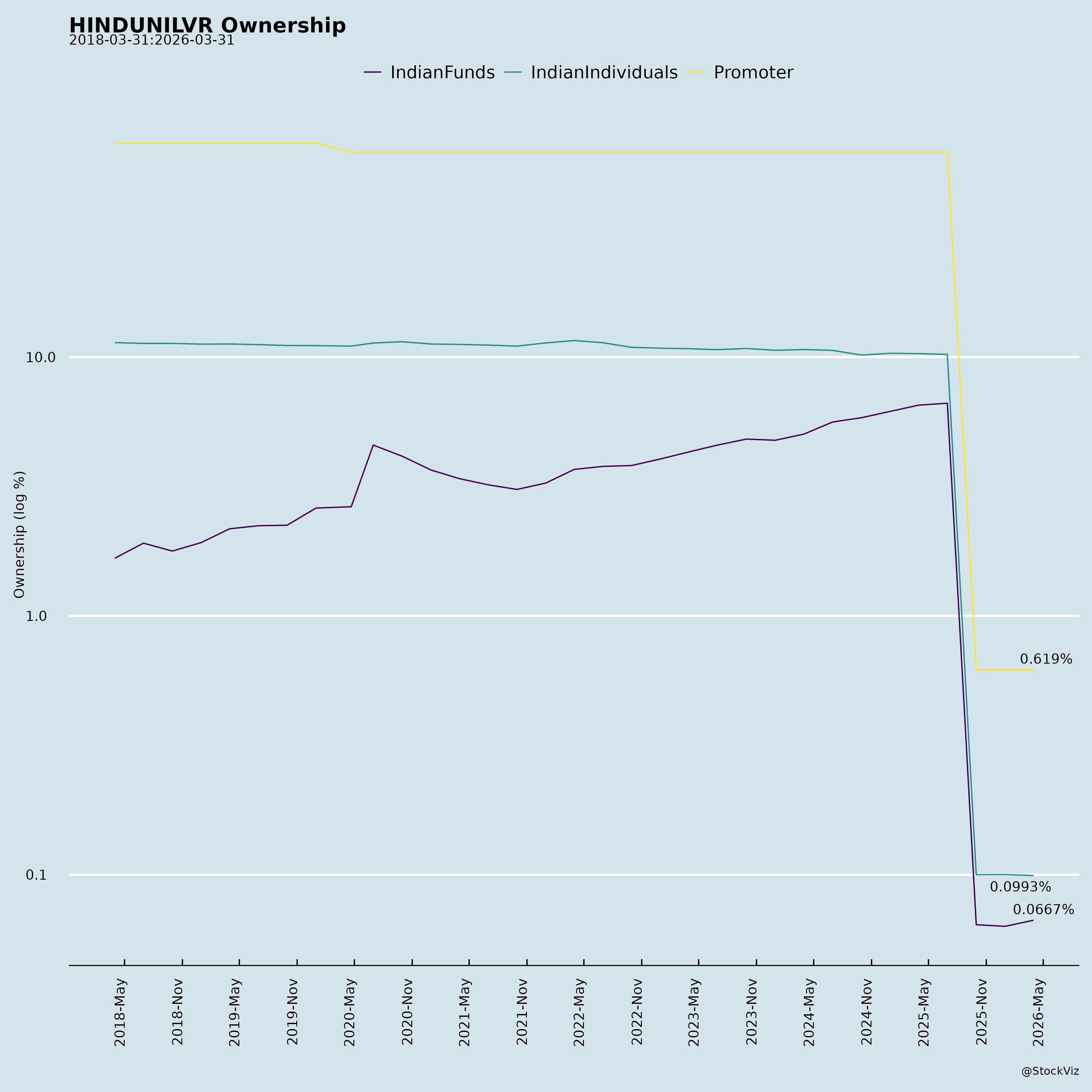
Ownership
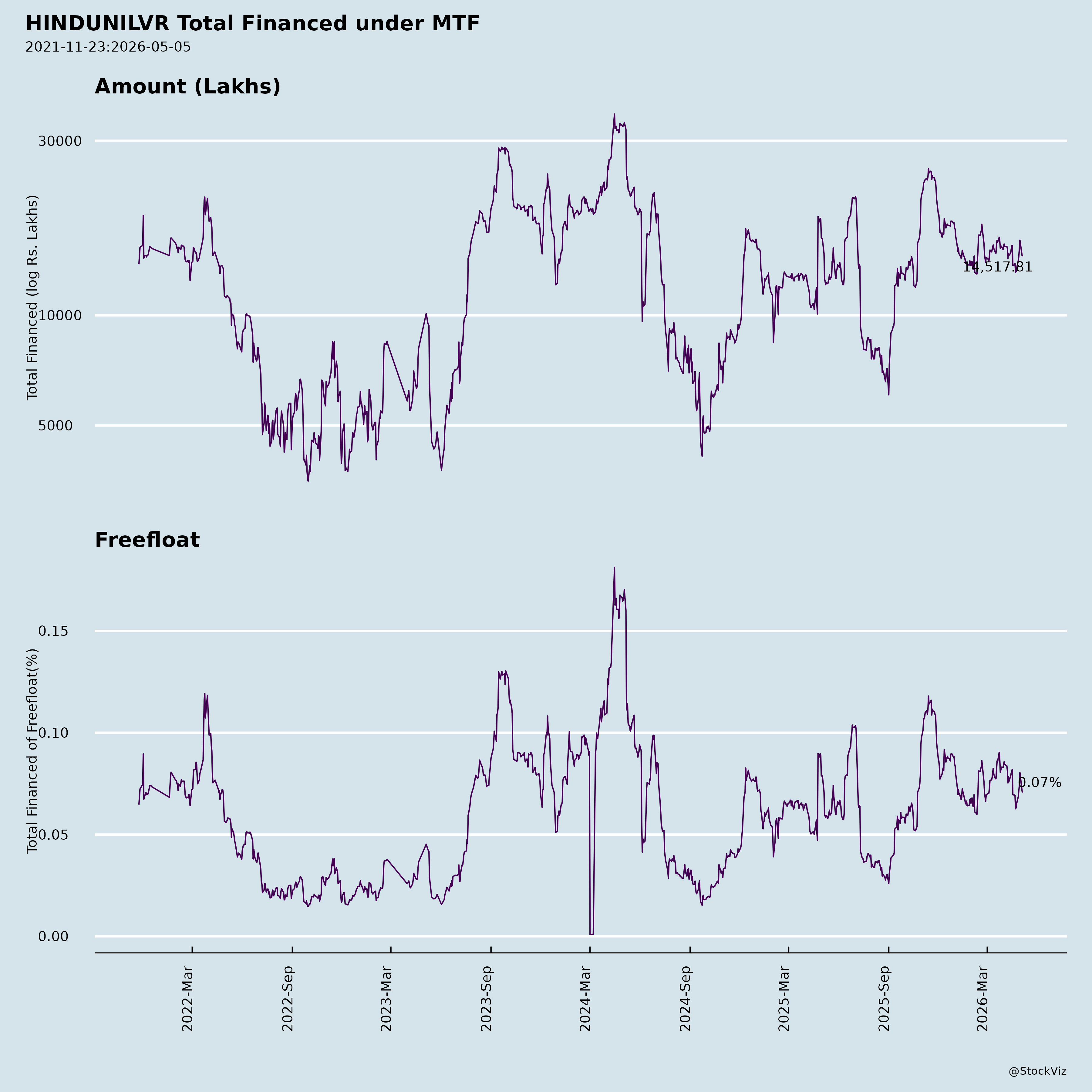
Margined
AI Summary
asof: 2026-09-14
HINDUNILVR — Summary of Recent Corporate Announcements
1. Headwinds and Challenges
- Volatile operating environment: The June 2026 quarter results were delivered while “navigating a volatile operating environment,” with the company citing geopolitical disruption, volatile commodities and currency, and a stable but watchful consumption environment.
- Commodity inflation: Palm oil inflation persisted for the second consecutive year, weighing on Personal Care, which reported only 4% USG led by pricing and a low-single-digit decline in underlying volume growth.
- Margin compression: Consolidated EBITDA margin at 23.0% declined 40 bps year-on-year; standalone EBITDA margin at 22.8% also declined 40 bps.
- Reported profit decline: Reported Profit After Tax fell 2% year-on-year on a consolidated basis (to ₹2,680 crores) and 3% on a standalone basis (to ₹2,631 crores), attributed to a one-off tax credit in the prior-year quarter (JQ’25).
- Restructuring and other exceptional charges: Exceptional items in JQ’26 included restructuring expenses of ₹115 crores, acquisition and disposal related costs of ₹5 crores, partly offset by a ₹45 crores profit from disposal of surplus assets.
- Portfolio transition drag: Health & Wellbeing saw a soft performance in OZiva “as we transition the business.”
- Broader disruption context: The Chairman’s AGM speech described simultaneous and compounding disruptions — geopolitics, technology, climate change, conflicts affecting energy markets and trade routes, climate volatility affecting agriculture and water systems, tighter financial conditions, and rapidly evolving consumer behaviour.
2. Tailwinds and Growth Prospects
- Highest growth in 13 quarters: Turnover of ₹17,184 crores with 10% Underlying Sales Growth (USG), driven equally by volume and price; Underlying Volume Growth (UVG) of 5%.
- Segment momentum:
- Home Care: 14% USG — highest growth in three years — with high-single-digit UVG; Fabric Wash double-digit USG; Household Care double-digit USG and UVG; Vim Liquids scaling with strong double-digit growth.
- Beauty & Wellbeing: 12% USG with high-single-digit UVG; double-digit growth in Premium Skin Care and Hair Care; Minimalist double-digit growth with sequential acceleration; new launches including Liquid I.V. sugar-free variant and Vaseline Gluta Hya lotion.
- Personal Care: 4% USG; premium bars double-digit volume-led growth; Bodywash double-digit growth with improved market leadership; premium oral care innovations gaining traction.
- Foods: 7% USG with mid-single-digit UVG; Coffee double-digit volume-led growth; Lifestyle Nutrition double-digit growth; Boost surpassed the ₹1,000 crore annual turnover milestone; Packaged Foods high-single-digit USG.
- Profitability growth: EBITDA grew 8% year-on-year to ₹3,947 crores (consolidated); Profit Before Tax before exceptional items grew 9% to ₹3,707 crores; Profit After Tax before exceptional items grew 9% to ₹2,731 crores.
- Strategic investments: Market development, channel expansion and portfolio transformation; Unilever Fragrance House strengthening India as a global fragrance innovation hub; Liquids Lab of the Future enabling 6X faster formulation development; eight WEF Lighthouse designations across six sites; AI-enabled digital Distribution Center launched.
- Capital Markets Day 2026 scheduled for 4th September 2026.
3. Key Risks
- Geopolitical and macroeconomic volatility: Global geopolitical volatility, volatile commodities and currency, and tightening financial conditions cited as part of the operating context.
- Commodity inflation: Inflationary pressures expected to continue in the short term, with commodity volatility persisting.
- Demand uncertainty: The company continues to monitor monsoon and geopolitical developments, though it describes the underlying economy as resilient.
- Competitive and execution risks: The safe harbour statement flags intense competition, the pricing environment, consumption levels, ability to maintain key customer relationships and supply chain sources, changes in regulatory environments, political instability, changes in international oil prices and input costs, and new or changed priorities of the trade.
- Forward-looking statement caveat: The company states it cannot guarantee that forward-looking statements will be realised.
4. Management Guidance Versus Observed Business Performance
- Margin guidance: Management stated that EBITDA margin at 23.0% “remained within the guided range,” and the mid-term outlook says consolidated EBITDA margin is expected to be “around the current guided range.” Observed performance: margin declined 40 bps year-on-year to 23.0% (consolidated) and 22.8% (standalone), consistent with remaining within the guided range while navigating commodity volatility.
- Demand outlook: Management expects FY’27 to be better than FY’26, led by portfolio and channel transformation, while monitoring monsoon and geopolitical developments. Observed performance: the June 2026 quarter delivered the highest growth in 13 quarters (10% USG), which management describes as reflecting brand strength, increasing portfolio competitiveness, and disciplined execution of strategic priorities.
- Growth focus: Management reiterated a focus on “driving competitive, volume-led revenue growth.” Observed performance: USG of 10% was driven equally by volume and price, with UVG of 5%; however, Personal Care’s 4% USG was pricing-led with a low-single-digit volume decline, indicating mixed volume delivery across segments.
- Profit trajectory: Profit before tax before exceptional items grew 9% and PAT before exceptional items grew 9%, while reported PAT declined due to the prior-year one-off tax credit — a divergence management attributes to a non-recurring item rather than operating performance.
- Governance outcomes: All resolutions at the 93rd AGM (held 30th June 2026) were approved with requisite majority, including adoption of audited financial statements for FY ended 31st March 2026, confirmation of interim dividend of ₹19 per equity share and declaration of final dividend of ₹22 per equity share, re-appointments of directors, re-appointment of Ms. Ashu Suyash as Independent Director, and ratification of Cost Auditors’ remuneration for FY ending 31st March 2027.
Broker Narrative
The broker narrative evolved from early concerns about inflation, commodity-driven margin compression, and rural slowdown toward a more strategic story centered on the WIMI-to-WINI shift, cost savings of 500bps, and structural tailwinds like rising incomes and digital penetration. Inflation and competitive intensity remained persistent themes across both reports, while the optimism around rural recovery and mid-to-high teens earnings growth was gradually replaced by caution. The shift from near-term operational risks to longer-term strategic repositioning marked the narrative’s evolution, though underlying growth anxieties endured.
Fears that came true
- Inflationary pressures and high commodity costs flagged in the first report compressed gross margin by 360bp and EBITDA margin by 140bp in FY23 and persisted as a headwind, correlating with widespread DISAPPOINTMENT outcomes across the call history.
- Rural market slowdown flagged early materialized as a lingering drag, with the last report still citing near-term growth pressures from inflation and El Nino.
- Competitive intensity in Home Care and Toilet Soaps, explicitly flagged in the last report, emerged as an ongoing headwind weighing on margin outlook.
- Rising royalty and central service fees and segment-level margin declines (BPC, Home Care, Foods & Refreshment) flagged early persisted as structural cost pressures contributing to negative actual returns.
- Working capital deterioration flagged in the first report reflected operational stress that endured through the period of predominantly negative actual returns.
Optimism that failed
- Expected return to mid-to-high teens earnings growth supported by normal monsoon and rural recovery failed, as the stock consistently underperformed broker predictions with most outcomes rated DISAPPOINTMENT.
- Digitalization initiatives (e-B2B app Shikhar, D2C brands, ONDC participation) were touted as growth drivers but did not translate into positive price returns, with the majority of subsequent calls resulting in DISAPPOINTMENT or NEUTRAL outcomes.
- Premiumization and market share gains, including Surf Excel crossing USD1b and 75% portfolio share gains, failed to deliver predicted outperformance amid persistent underperformance.
- New growth avenues in Beauty and Personal Care through health/wellbeing partnerships (OZiva, Wellbeing Nutrition) did not materialize into sufficient growth to offset broader disappointments, as predicted returns were repeatedly missed.
Broker Timeline
80 broker calls · 2023-06-12 to 2026-09-07
Copyright © 2023 SAS Data Analytics Pvt. Ltd. All rights reserved.