GOCOLORS
Equity Metrics
November 18, 2026
Go Fashion (India) Limited
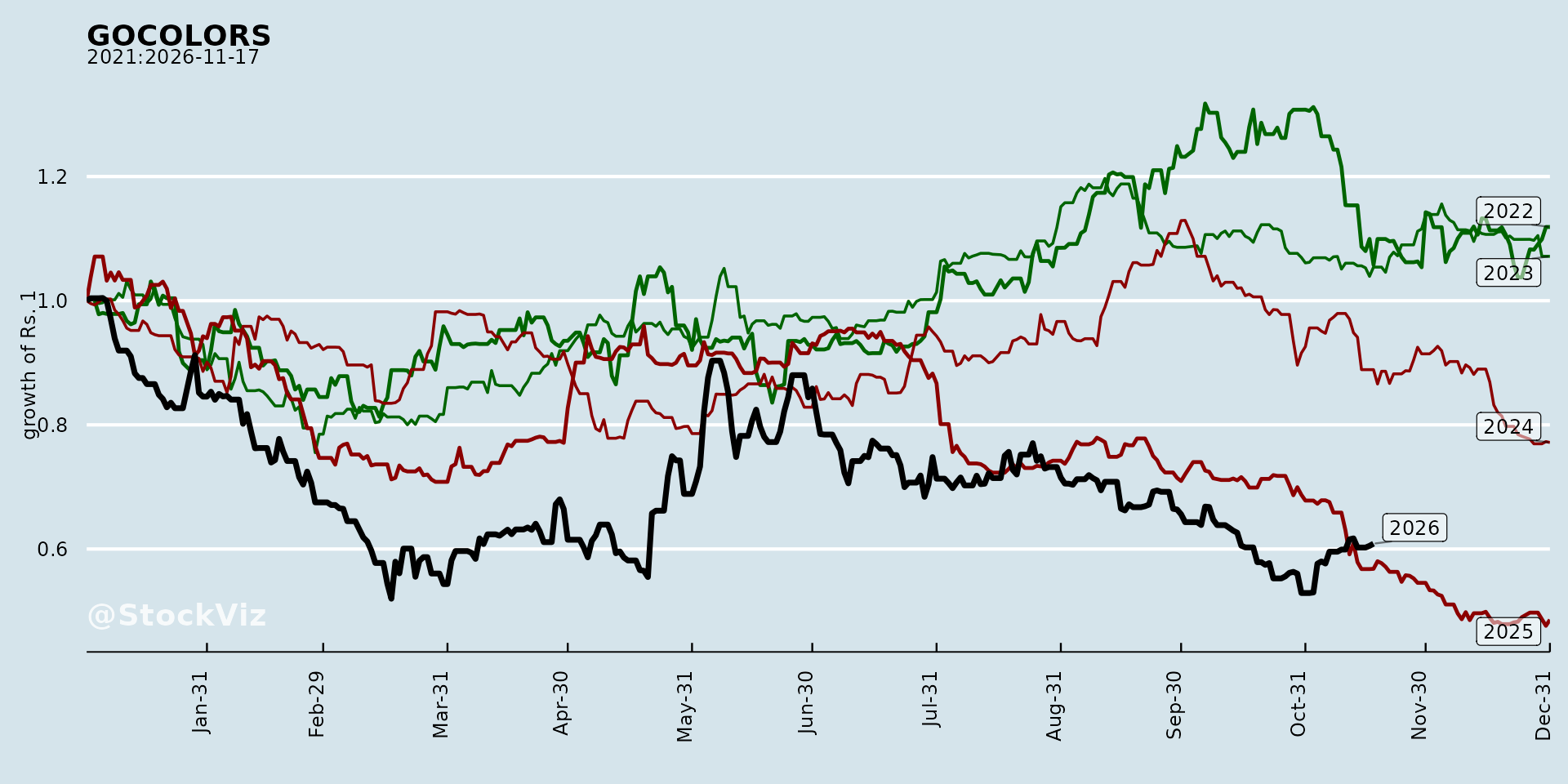
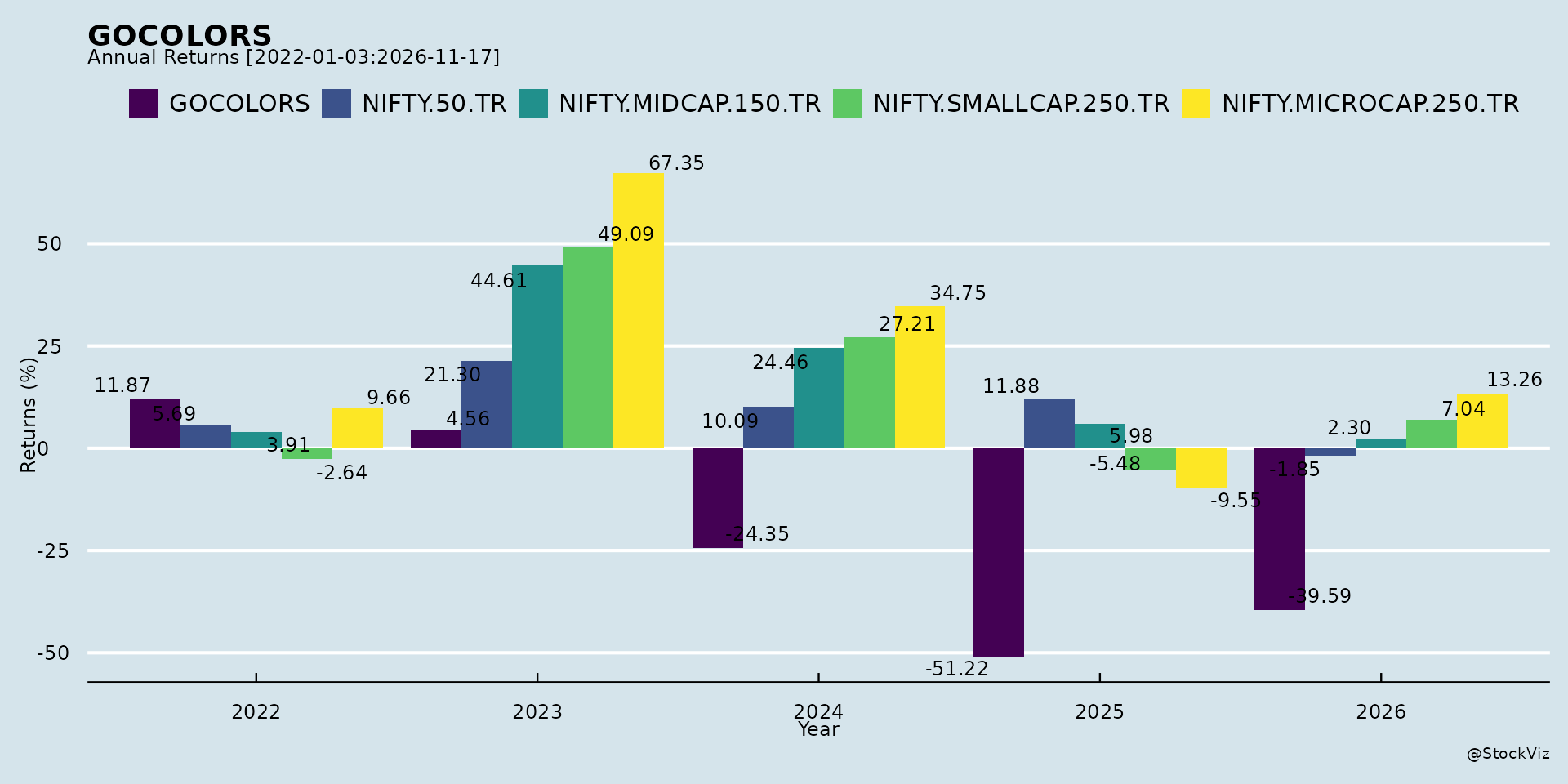
Annual Returns
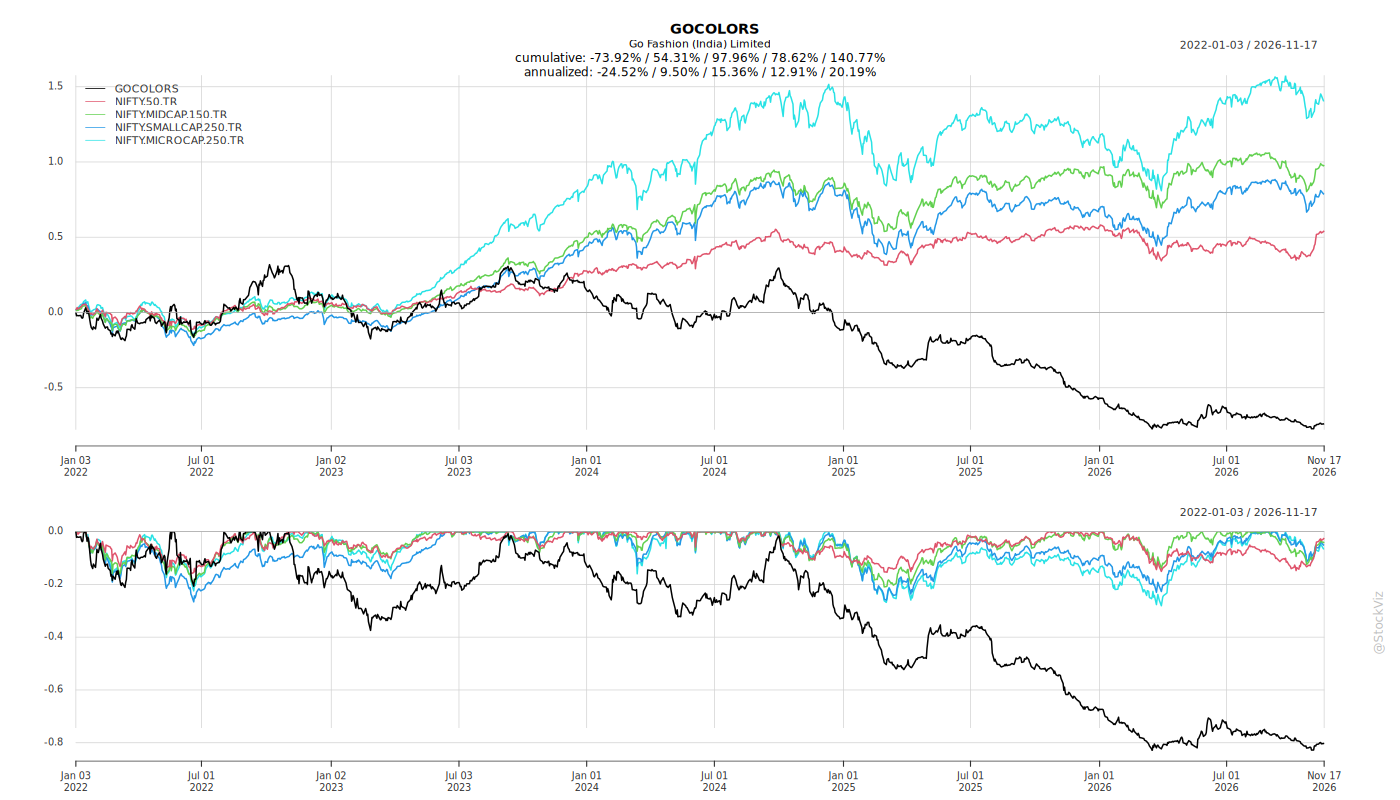
Cumulative Returns and Drawdowns
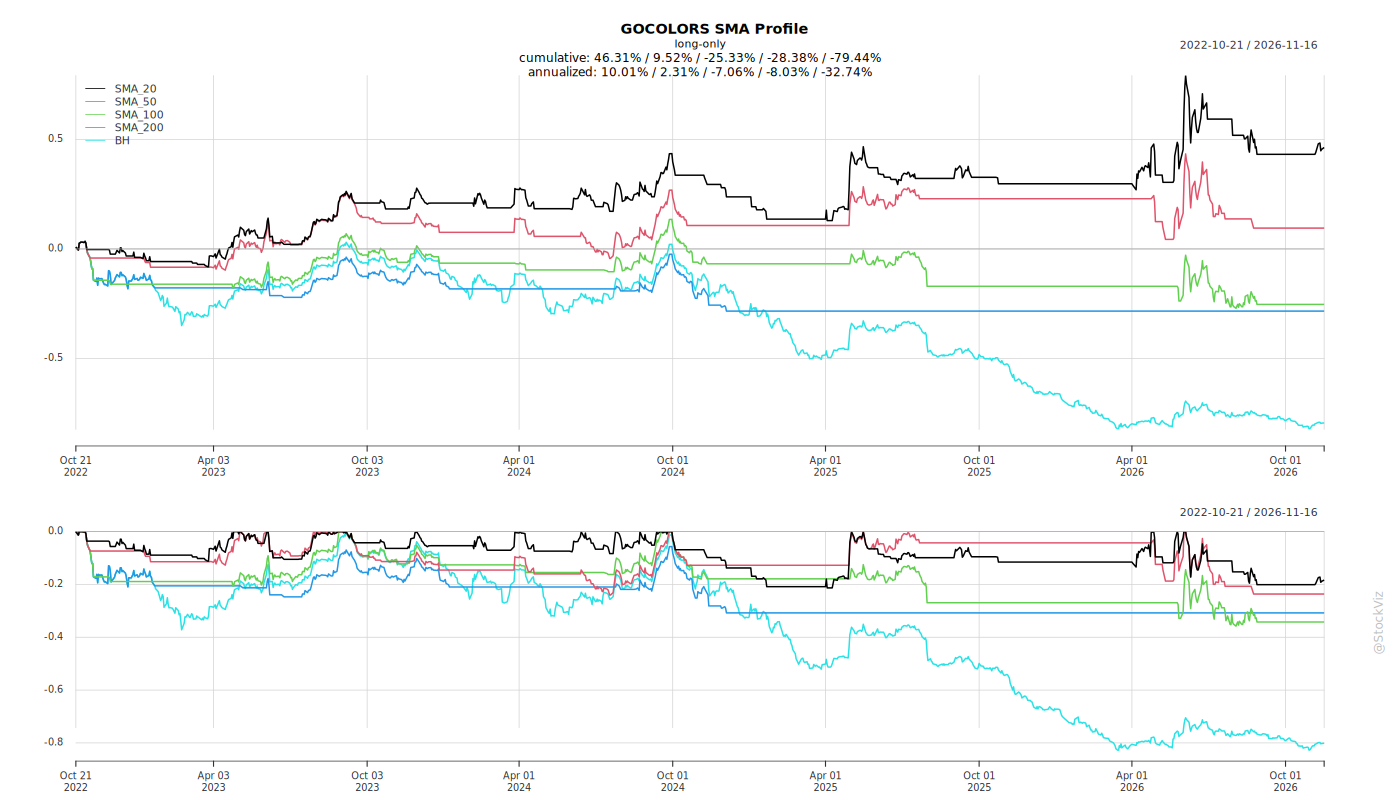
Fundamentals
Ownership
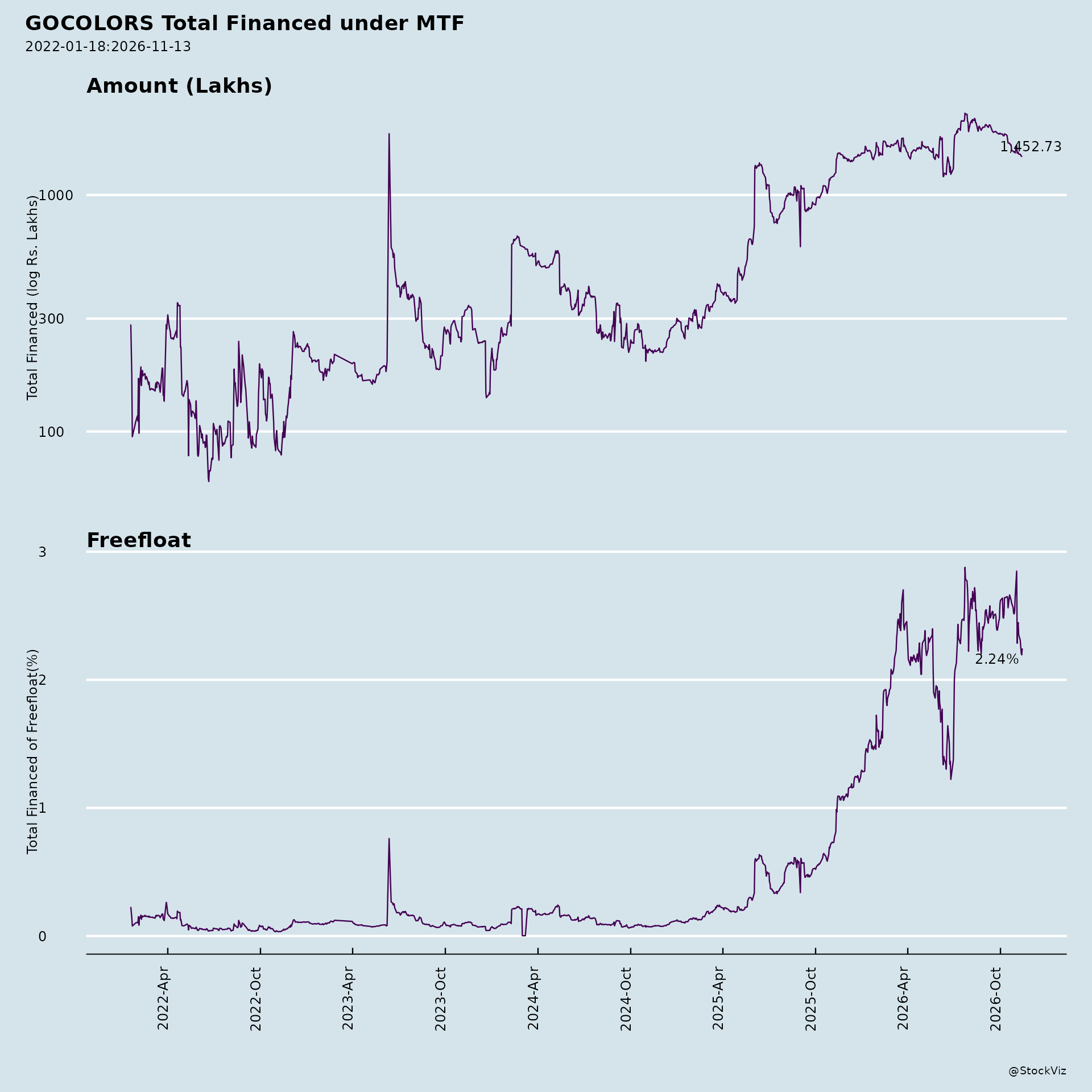
Margined
AI Summary
asof: 2026-09-18
Headwinds and Challenges
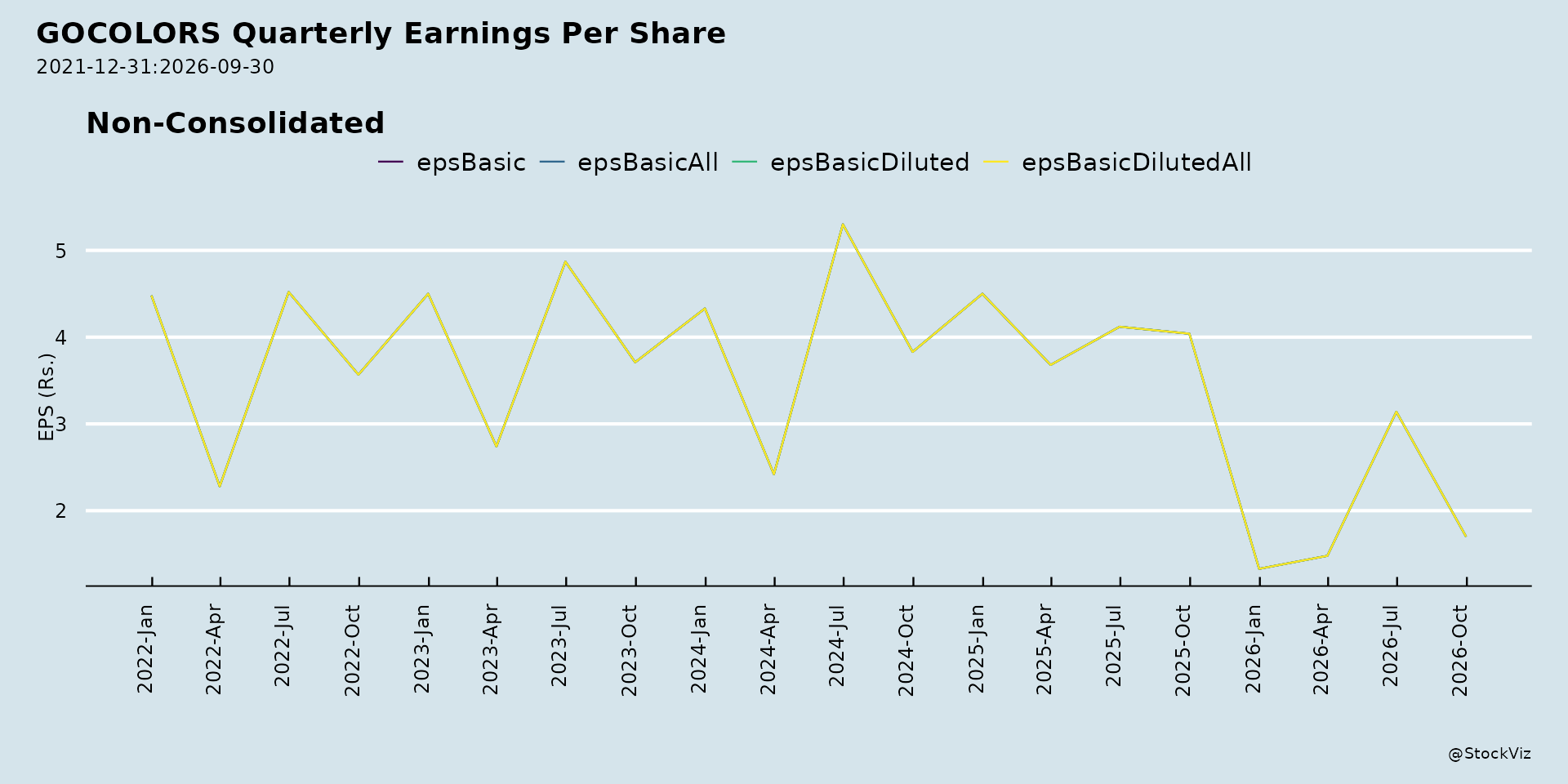
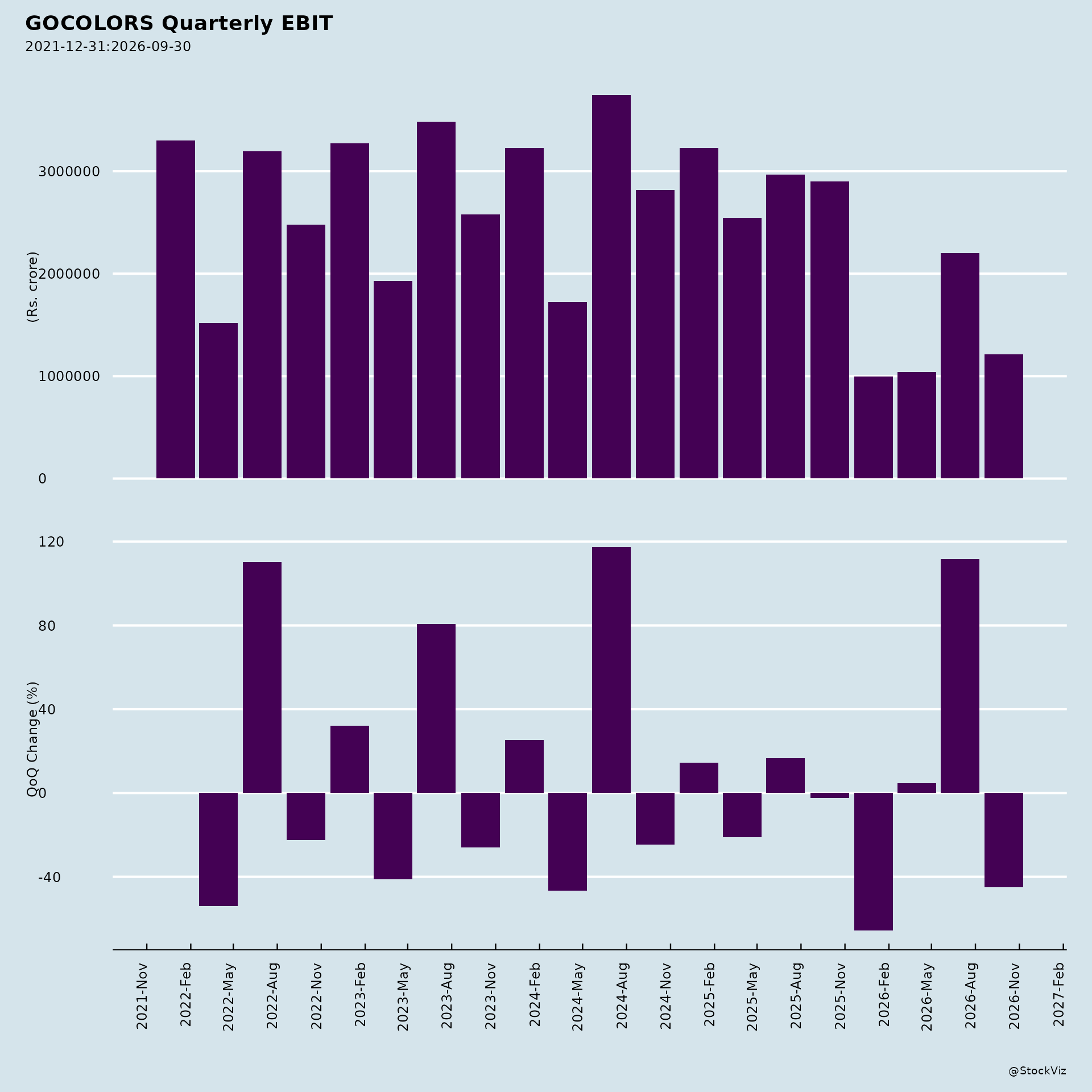
Store network consolidation drag. Go Fashion closed 66 stores during Q1 FY27 in catchments where it already operates or plans to open a larger-format store nearby. This reduced total retail space by 7,016 sq. ft. in the quarter, from 4,33,979 sq. ft. as of 31 March 2026 to 4,26,963 sq. ft. as of 30 June 2026. The closures triggered an exceptional expense of ₹6.5 crore from writing off capital expenditure, which pulled reported EBITDA down 11% year-on-year to ₹60.9 crore and PAT down 26% to ₹16.5 crore.
Weak SSSG and difficulty attributing it. Same-store sales growth for EBOs turned positive at just 0.6% (same-cluster sales growth 1.2%) — the first positive print in several quarters. Management explicitly declined to treat this as a trend, noting it could reflect a favourable base (Q1 FY26 was weak), spillover of business from closed smaller stores into nearby stores, or generally better footfalls and demand in Q1. Stores above 700 sq. ft. delivered SSSG of roughly 2.5–3%, versus a blended 0.6%, indicating smaller stores remain a drag. Management also said it could not immediately break out SSSG by store vintage and would revert through its investor relations advisors.
Raw material inflation. Fabric costs rose 7–10% in recent months, attributed to the Middle East situation. Management is not taking price hikes and expects the inflated RM prices to pressure gross margins in coming quarters, though it could not quantify the impact given blended old and new inventory. It expects RM prices to stabilise and fall.
LFS channel disruption. FY26 included operational and supply-chain disruptions with a key LFS partner. The channel grew 2% year-on-year to ₹50 crore in Q1 FY27, which management described as a signal of returning to normalcy rather than full recovery. Management also noted uncertainty around LFS partners converting Reliance Trends stores into AZORTE format, where external brands exit — a dynamic it said it cannot forecast.
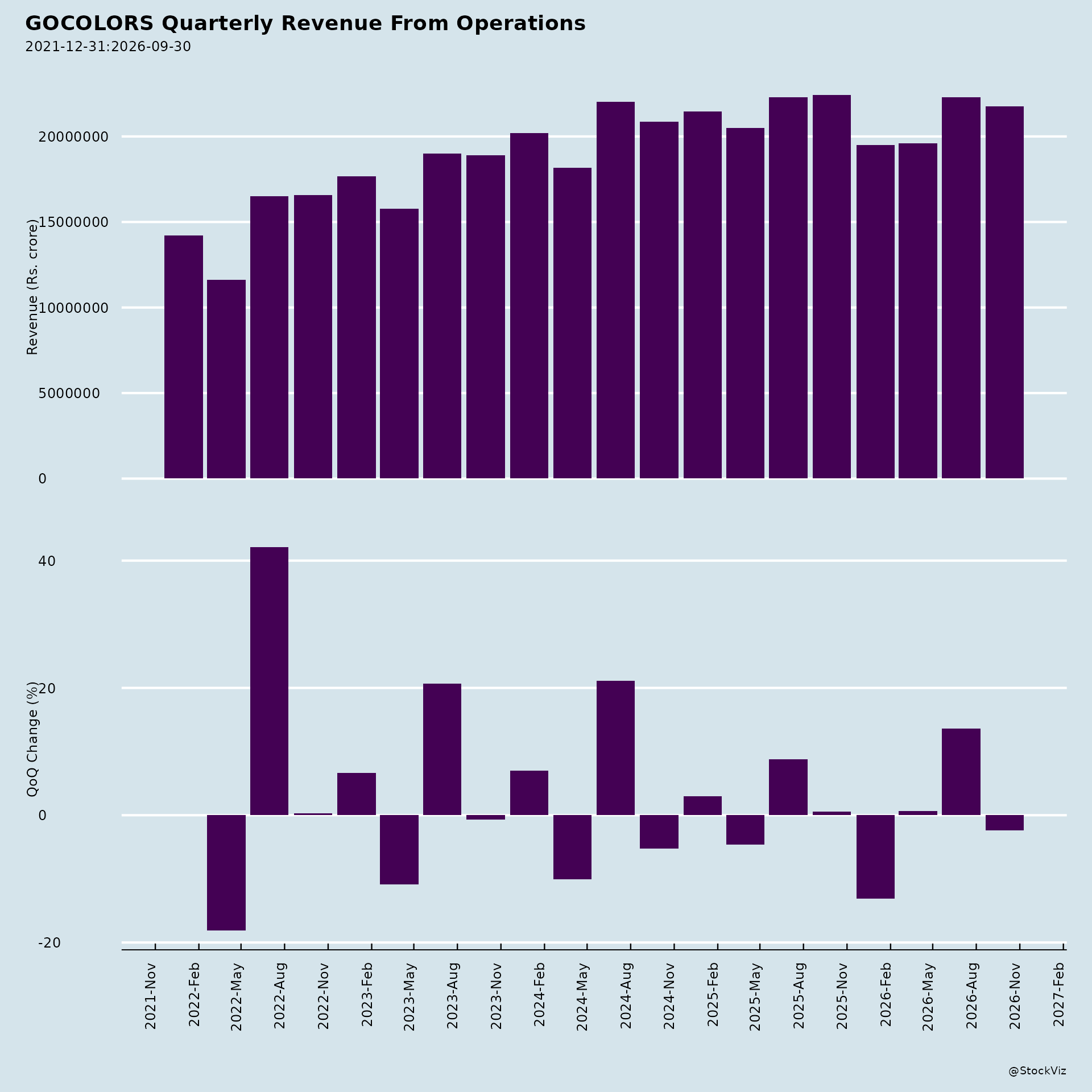
Muted overall growth and margin compression. Revenue was flat year-on-year at ₹223 crore. EBITDA before exceptional items fell 2% to ₹67.4 crore, with margin at 30.3% versus 31.0%, largely due to higher marketing spend (2.3% of revenue versus 1.5% a year earlier). MBO and other channels declined 54% year-on-year to ₹4 crore.
Working capital. Working capital days stood at 139, with inventory days at 100. Management sees room to optimise by a few more days.
Tailwinds and Growth Prospects
Larger-format store migration. The company is closing smaller stores and opening larger ones that can display the full range and offer a better premium experience. Larger stores (700+ sq. ft., over 130 in the network) are outperforming. Management guides to 8–10% square-feet addition on a year-through basis in FY27, though the phasing will be back-ended. Over five years, the company aims to nearly double retail area. New larger stores are expected to have payback of 15–20 months and inventory turns of roughly 45–60 days on sales.
Positive SSSG inflection. The 0.6% EBO SSSG and 1.2% same-cluster growth mark the first positive same-store print in several quarters, which management framed as an early encouraging signal toward its stated goal of positive full-year SSSG in FY27.
Product refresh and brand investment. The company plans 10–12 genuinely new products in FY27 aimed at younger, trend-conscious customers, opening new purchase occasions. Non-leggings products now contribute roughly 70% of revenue. Shraddha Kapoor joined as brand ambassador from July 2026, intended to widen reach to a younger audience. Advertising spend is guided at 2–3% of revenue for FY27.
Daily wear concept scaling. 15 daily wear stores are operational, generating about ₹1,000 sales per sq. ft. per month, with 12 of 15 stores described as double-digit EBITDA positive. Management targets 25–30 stores by end-FY27 and is evaluating lingerie as an adjacent category. Store size requirement is 1,500–2,000 sq. ft., though some converted locations run 3,000–4,000 sq. ft.
LFS recovery. The channel returned to 2% year-on-year growth at ₹50 crore, with supply-chain disruptions described as largely normalised in Q1.
Structural category opportunity. Management cites low organised penetration in women’s bottom wear, a shift from unbranded to branded, rising urbanisation and female workforce participation, and the company’s position across all major bottom-wear categories in the sweet-spot price segment. Average selling price was ₹863, up about 20% over four years, with 94% full-price sales.
Balance sheet strength. Cash and cash equivalents of ₹202 crore as of 30 June 2026, no borrowings, and operating cash flow expected to fund all capex internally. Inventory at quarter-end was ₹245 crore including raw material.
Key Risks
- Continued SSSG weakness if the 0.6% print proves a one-quarter anomaly rather than a trend.
- Gross margin pressure from 7–10% fabric cost inflation, with no current plan to pass through price increases.
- Execution risk in the store transition: closures reduce near-term retail space and revenue, and the pace of larger-store openings depends on available real estate opportunities, which management said makes store-count guidance difficult.
- LFS partner format conversions (e.g., Reliance Trends to AZORTE) could remove external brand shelf space in ways the company cannot forecast.
- Exceptional charges from further store closures, following the ₹6.5 crore write-off in Q1 FY27.
- Marketing spend at 2–3% of revenue may continue to weigh on EBITDA margins.
- Working capital at 139 days with 100 inventory days leaves room for further optimisation but also exposes the business to inventory build if demand softens.
Management Guidance Versus Observed Performance
| Guidance / Commitment | Observed in Q1 FY27 |
|---|---|
| Turn SSSG positive in FY27 (single most important commitment) | EBO SSSG +0.6%, SCSG +1.2% — first positive in several quarters; management cautioned one quarter does not make a trend |
| Migrate to larger stores; continue closures through FY27 | 66 stores closed; retail space down 7,016 sq. ft.; ₹6.5 crore exceptional write-off; 8–10% year-through square-feet addition guided, back-ended |
| Add 10–12 new refreshing products in FY27 | Product refresh ongoing; portfolio mix now ~70% non-leggings |
| Scale daily wear to 25–30 stores by end-FY27 | 15 stores operational; ~₹1,000/sq. ft./month; 12 of 15 EBITDA positive |
| LFS channel recovery | LFS grew 2% year-on-year to ₹50 crore; disruptions largely normalised |
| Advertising spend 2–3% of revenue in FY27 | Q1 FY27 at 2.3% (versus 1.5% in Q1 FY26) |
| Inventory days to 90–100 by year-end | 100 days at 30 June 2026 |
| Operating cash flow to fund all capex | OCF (pre-Ind AS 116) ₹25 crore in Q1 FY27; cash ₹202 crore; no borrowings |
Management also committed to providing additional data through its investor relations advisors on SSSG by store vintage and on the prior call’s statement regarding stores with positive SSSG, but had not provided those figures during the call itself.
Broker Narrative
The brokers stayed at Buy on all 10 reports, but the narrative decayed from early growth-quality worries (demand slowdown, flat SSSG, 13 EBO closures, 62bps EBITDA-margin contraction) to a last report where SSSG had turned negative (-0.2% YoY in Q2FY27), store closures and negative operating leverage persisted, and fresh headwinds emerged (RM cost inflation of 8-10%, higher brand spends, festive-shifted LFS sales). Early tailwinds faded or reversed: ~15% revenue growth on new store additions stalled after expansion guidance was cut to 100-110 from 120-130, and the 210bps gross-margin gain from lower cotton gave way to RM inflation, leaving ‘strong balance sheet and reasonable valuation’ as the remaining Buy pillars. Seven of the ten calls were DISAPPOINTMENTs with actual returns of -2.0% to -67.5%; only the last two were SUCCESS at +13.8%.
Fears that came true
- Demand slowdown: the first report’s ‘continued demand slowdown’ materialized as the last report’s ‘weak SSSG (-0.2% YoY in Q2FY27)’ and ‘lower LFS sales due to shift in festive season’, tracking the seven DISAPPOINTMENT outcomes.
- Flat SSSG: ‘Q3 SSSG was flat y/y’ deteriorated to negative -0.2% YoY by Q2FY27, consistent with repeated DISAPPOINTMENT calls (actual returns of -14.1% to -67.5%).
- EBO closures: ‘13 EBOs closed in 9M FY24 as they failed to recover post-Covid’ persisted into the last report’s ‘negative operating leverage and store closures’, with a slowdown only ‘expected from Q3FY27 onwards’, matching the string of negative actual returns.
- Margin pressure: ‘Q3 EBITDA margin contracted 62bps y/y due to higher employee costs and ad spends’ recurred as ‘higher brand spends (appointment of brand ambassador Shraddha Kapoor)’ and ‘negative operating leverage’ in the last report, aligning with the DISAPPOINTMENT streak.
Optimism that failed
- New-store-driven growth: ‘Q3 revenue grew ~15% y/y; new store additions drove growth’ faded as FY24 expansion guidance was cut to 100-110 from 120-130 and closures/negative operating leverage persisted to Q2FY27, coinciding with DISAPPOINTMENT returns.
- Gross-margin tailwind: ‘gross margin (incl. subcontracting) expanded 210bps y/y to 61.5% on lower cotton prices’ reversed into the last report’s ‘RM cost inflation (fabric and yarn cost increased by 8-10%)’, forcing reliance on ‘calibrated price hikes’ for recovery.
Broker Timeline
10 broker calls · 2024-02-07 to 2026-11-01
CNBC-TV18: ratings, targets and commentary
No recorded CNBC-TV18 statements for this ticker.
Management comments
No recorded management comments with an explicit designation and affiliation for this ticker.
Copyright © 2023 SAS Data Analytics Pvt. Ltd. All rights reserved.