GLENMARK
Equity Metrics
November 18, 2026
Glenmark Pharmaceuticals Limited
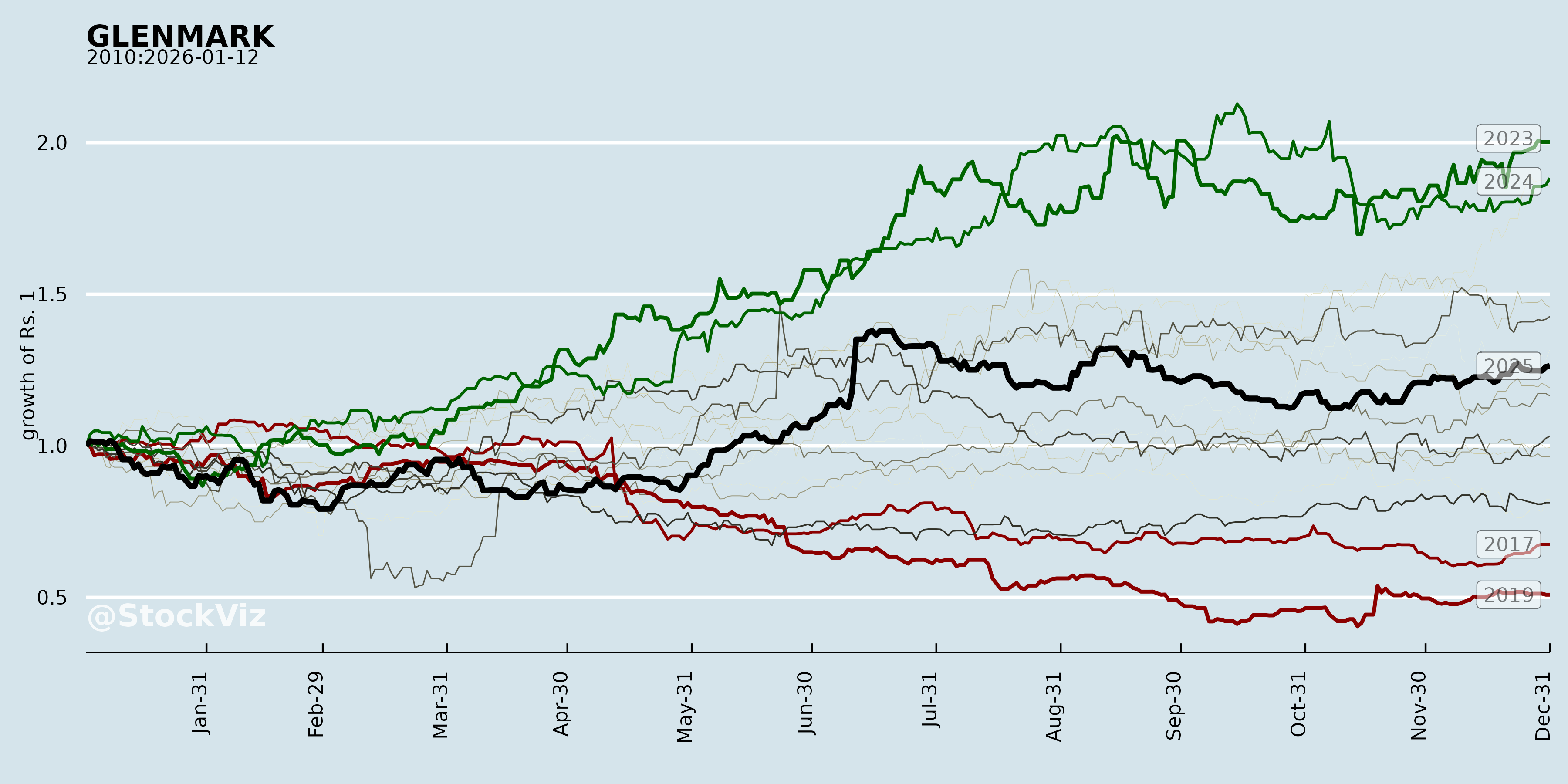
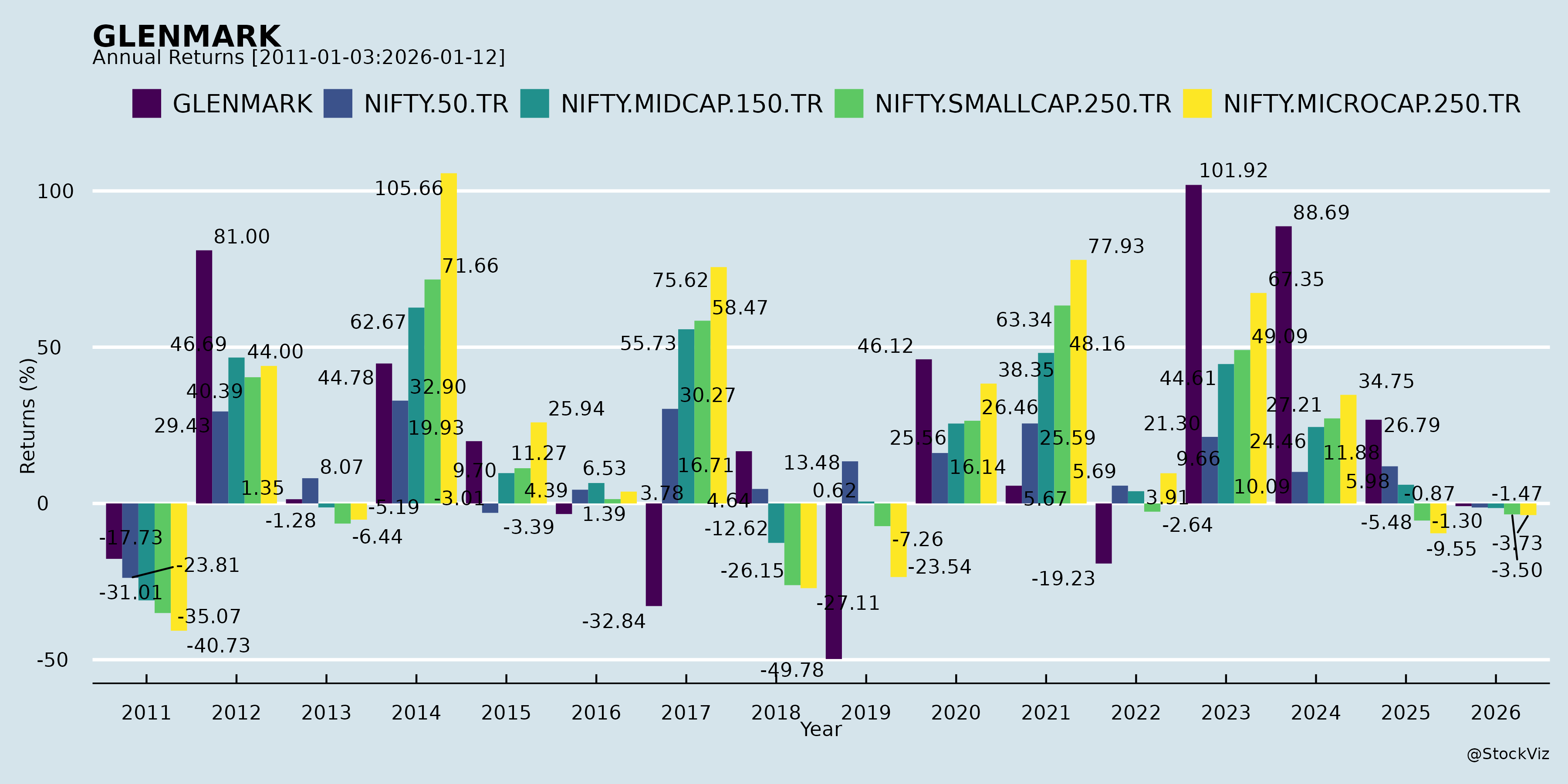
Annual Returns
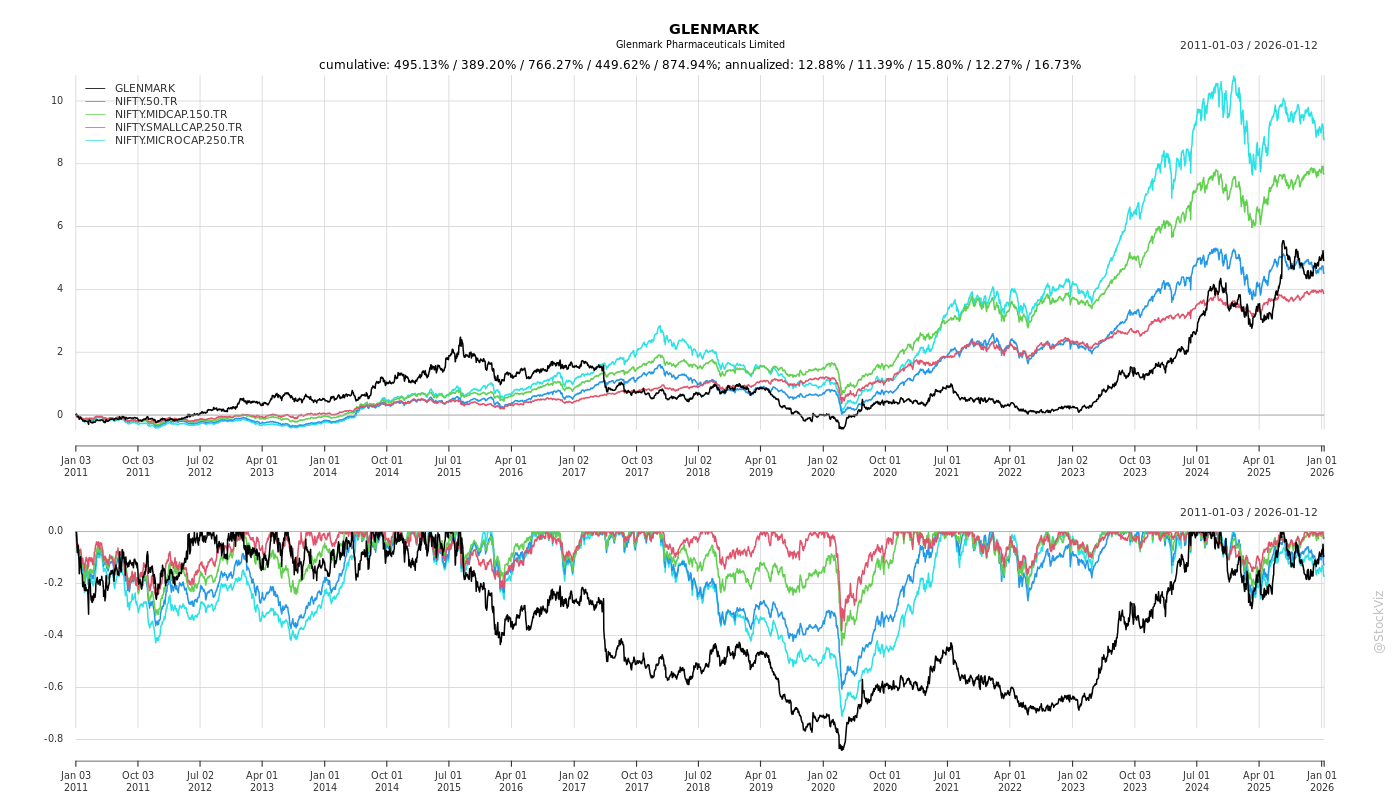
Cumulative Returns and Drawdowns
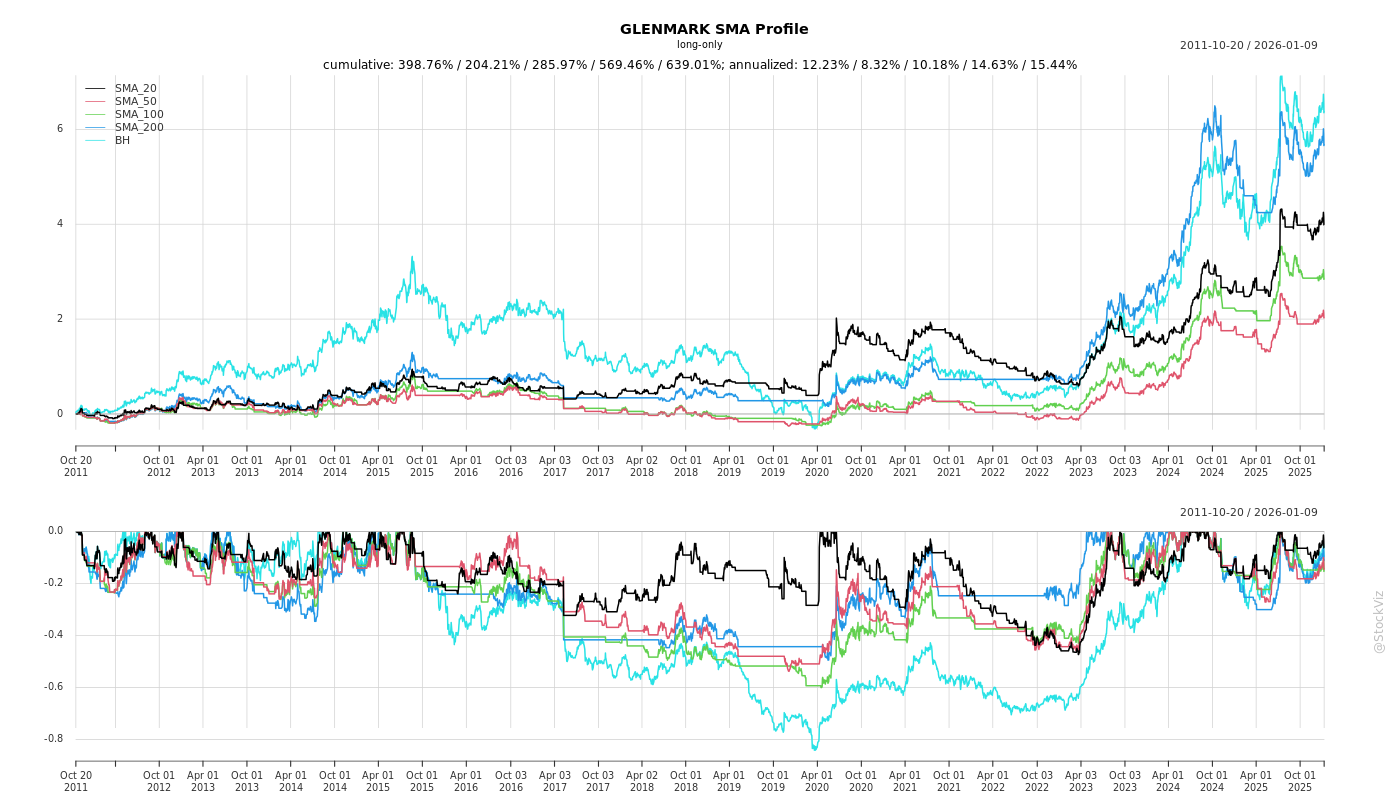
Fundamentals
Ownership
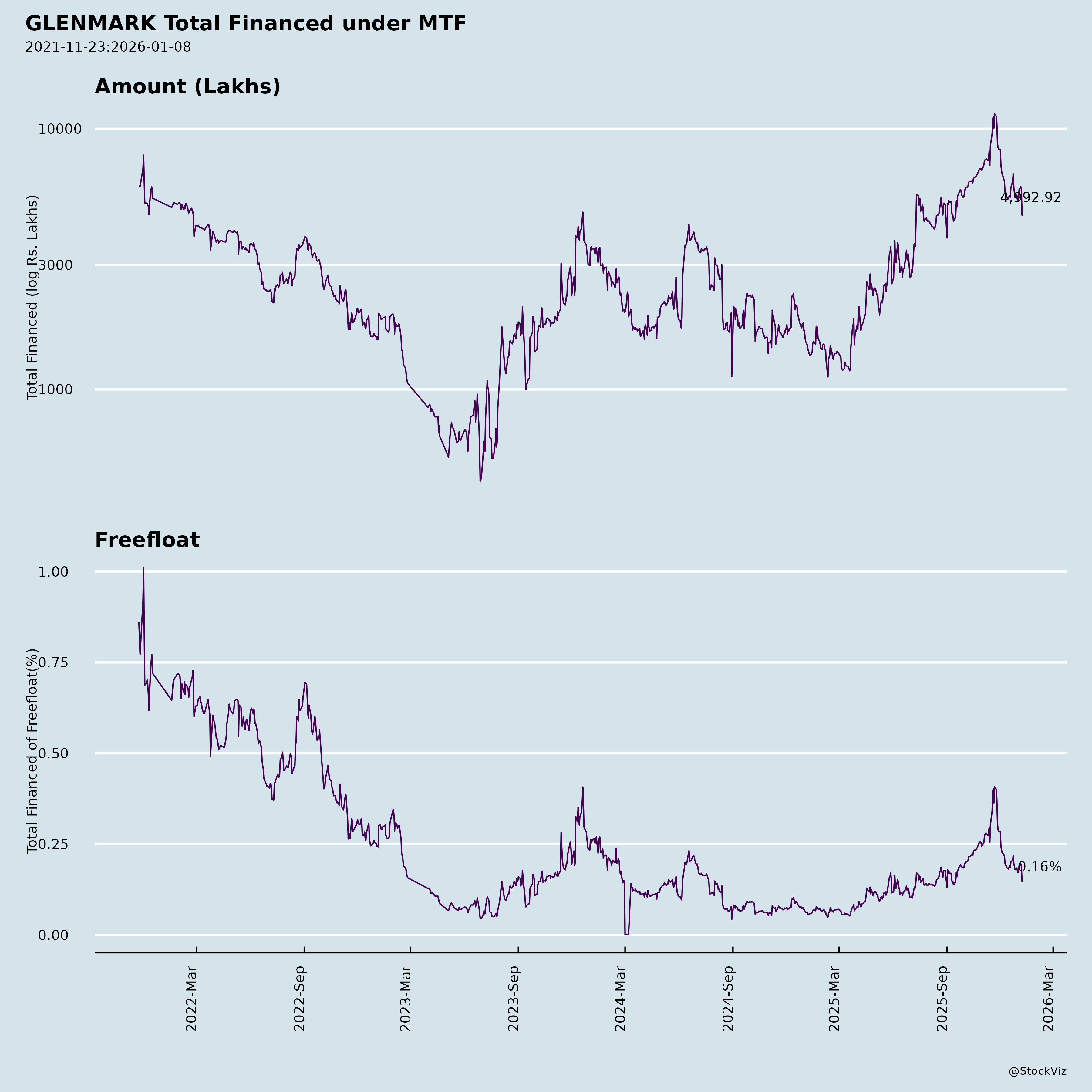
Margined
AI Summary
asof: 2026-09-16
Glenmark Pharmaceuticals — Recent Corporate Developments
1. Headwinds and Challenges
Litigation and settlement costs. Glenmark and its subsidiary were named in multiple antitrust and consumer protection lawsuits, including class actions consolidated in the Eastern District of Pennsylvania, U.S., relating to industry-wide allegations of price-fixing, market allocation, and related anticompetitive conduct. Plaintiffs include putative classes of direct purchasers, end payers, and indirect purchasers of generic drugs, as well as numerous private direct-action plaintiffs. Glenmark agreed to settle with the putative direct purchaser class and a state attorney general, subject to court approval, while denying all allegations and without admitting liability. Provisions of Rs. 3,232.32 and Rs. 2,780.70 were made for these two settlements respectively and charged to the profit and loss account as exceptional items. The matter continues to be under litigation with other parties.
Other legal settlements. On 14 November 2025, the Company and its US subsidiary (GPI) settled with United Healthcare Services, Inc. (District of Minnesota), the Last En-Payor Plaintiff, for Rs. 976, covering all claims against GPI and the Company. This was a commercial settlement without admission of liability, and was accounted for in the profit and loss account along with associated legal and other costs as an exceptional item.
Inventory and asset-related charges. Other exceptional items primarily comprised a provision on certain inventories of Rs. 5,901 following GST 2.0 and a consequent change in the inventory management model; receivables and other current assets amounting to Rs. 4,958.32; impairment of property, plant and equipment of Rs. 2,278.91 (adjusted for forex translation); and legal costs related to the litigation matters amounting to Rs. 1,394.68.
New Labour Codes. Effective 21 November 2025, the Government of India consolidated multiple existing labour legislations into a unified framework of four Labour Codes. The Group assessed the financial implications and recognised Rs. 1,138.91 in the consolidated financial results and Rs. 1,130.73 in the standalone financial results towards employee benefits on a best-estimate basis, and continues to monitor developments.
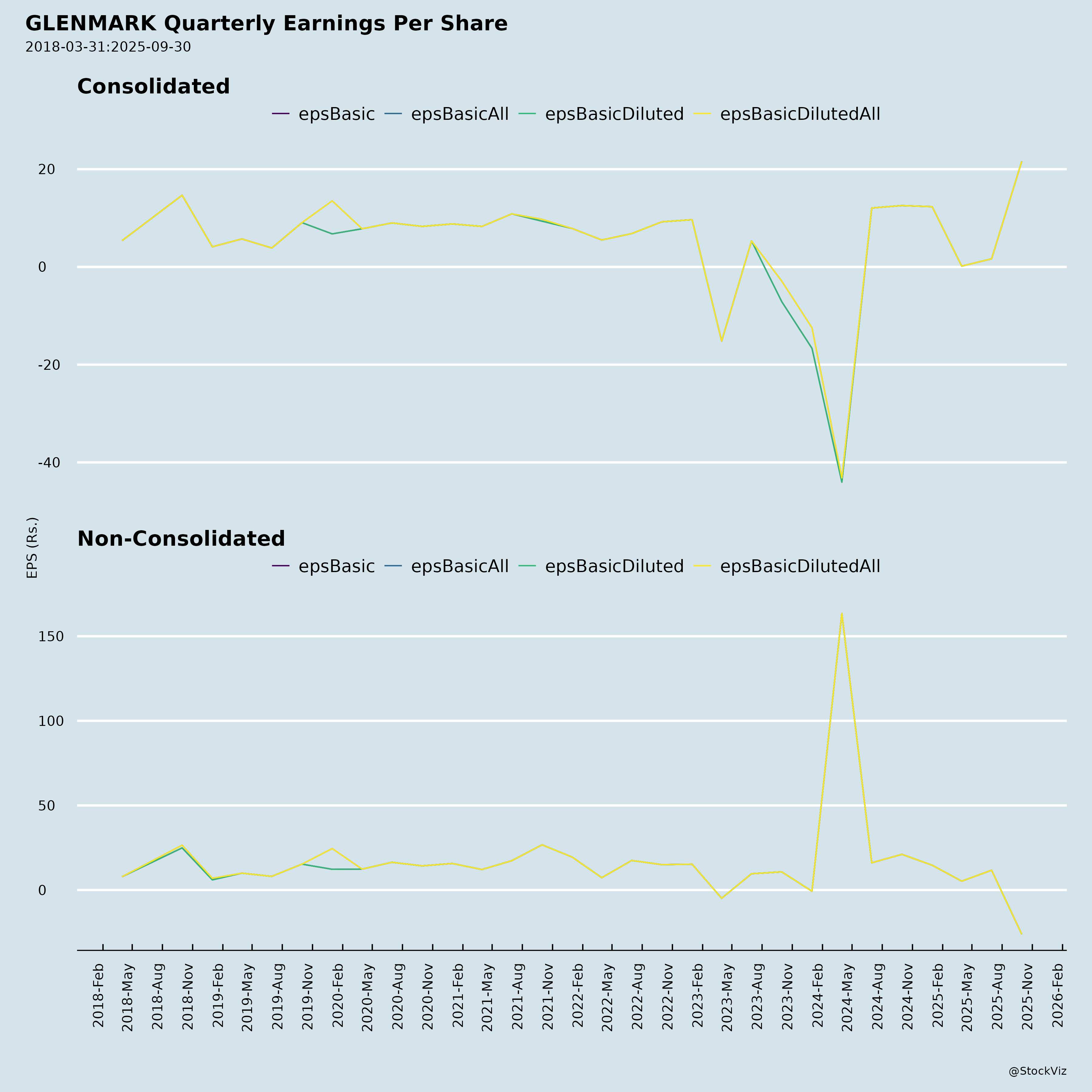
Quarterly earnings volatility. For the quarter ended 31 March 2026, the Company reported a standalone loss after tax of Rs. 739.02 million and a consolidated profit after tax of Rs. 3,013.19 million, reflecting the impact of exceptional items. For the year ended 31 March 2026, standalone loss after tax was Rs. 2,007.99 million, while consolidated profit after tax was Rs. 13,619.52 million.
Subsidiary losses. The auditor’s review report noted that 39 subsidiaries not reviewed by the principal auditor reflected total revenues of Rs. 27,175.01 million, total net loss after tax of Rs. 868.27 million, and total comprehensive income of Rs. 602.72 million for the quarter ended 30 June 2026.
2. Tailwinds and Growth Prospects
US injectables expansion. On 21 August 2026, Glenmark Pharmaceuticals Inc., USA launched Calcium Gluconate Injection USP in three presentations: 1,000 mg/10 mL (100 mg/mL) Single-Dose Vials, 5,000 mg/50 mL (100 mg/mL) Single-Dose Vials, and 10,000 mg/100 mL (100 mg/mL) Pharmacy Bulk Package. The product is bioequivalent and therapeutically equivalent to the reference listed drug of Fresenius Kabi USA, LLC. According to IQVIA sales data for the 12-month period ending June 2026, the market achieved annual sales of approximately $69.9 million. Marc Kikuchi, President & Business Head, North America, described the launch as an important step in strengthening Glenmark’s U.S. injectables business and expanding its hospital portfolio, reflecting disciplined execution of a strategy to build a differentiated and sustainable injectables business addressing institutional needs and supply resilience.
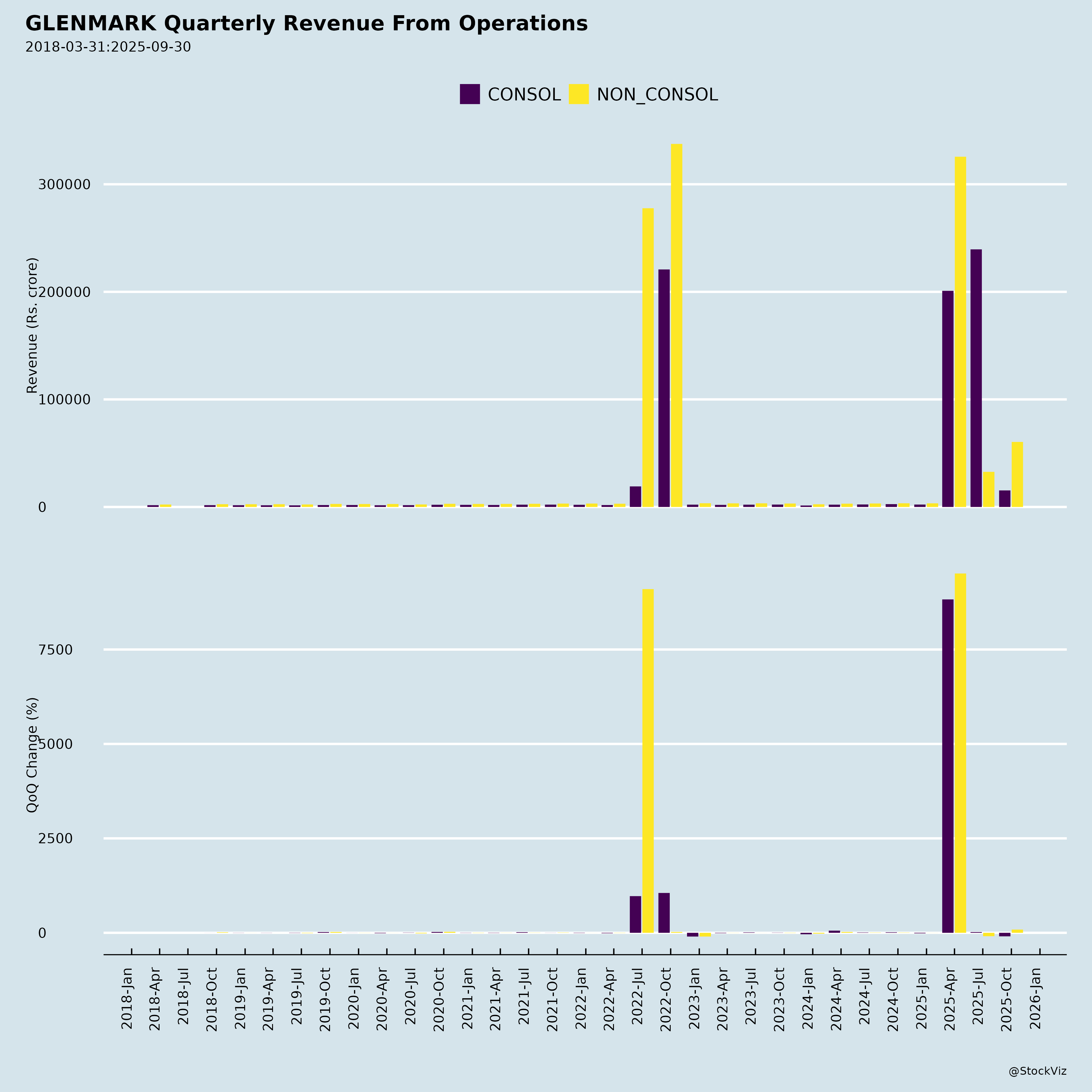
Revenue growth. Consolidated net sales for the quarter ended 30 June 2026 were Rs. 39,317.30 million, compared with Rs. 30,593.33 million for the quarter ended 30 June 2025. Standalone net sales for the quarter ended 30 June 2026 were Rs. 23,425.26 million, compared with Rs. 21,788.96 million for the quarter ended 30 June 2025.
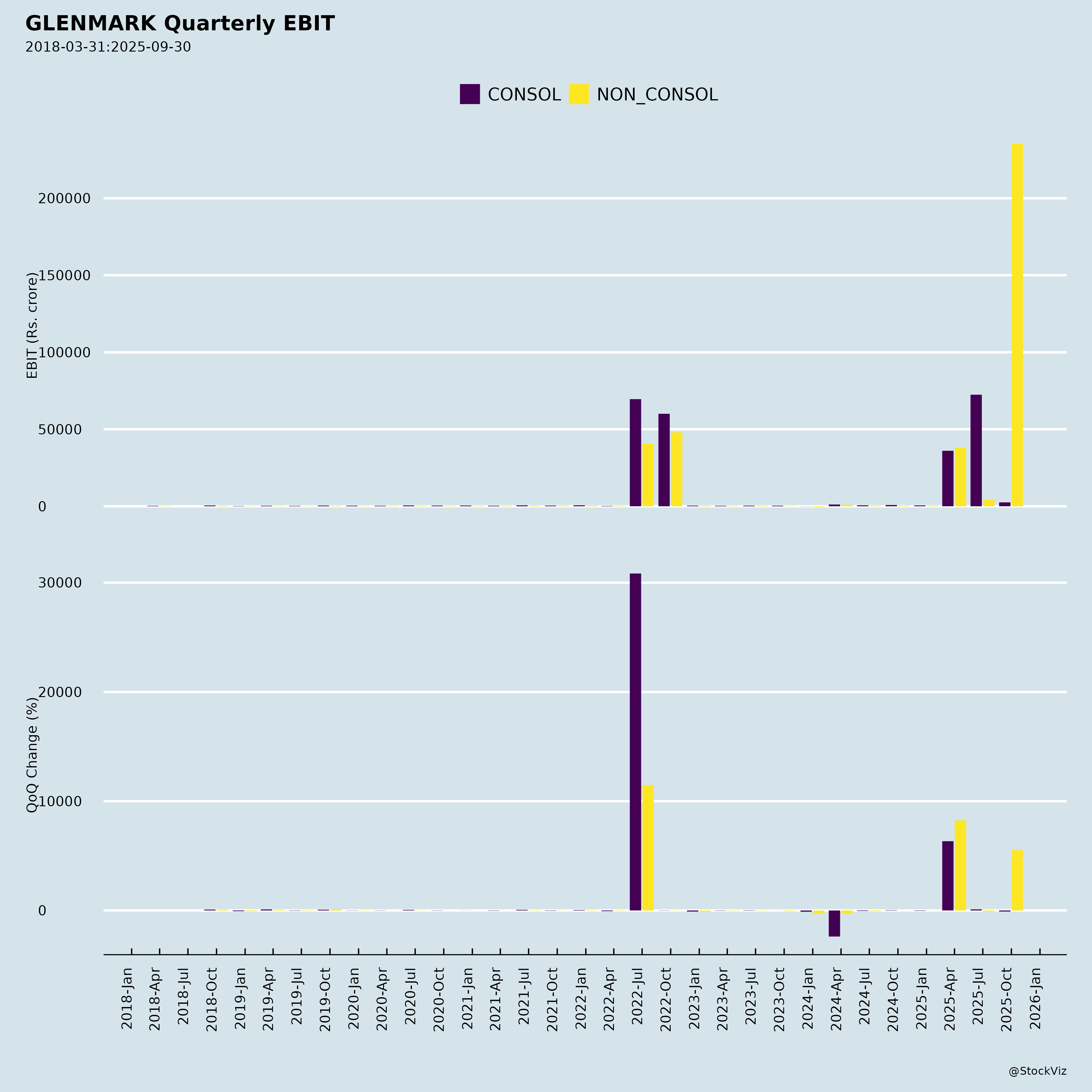
Profitability improvement. Consolidated profit after tax for the quarter ended 30 June 2026 was Rs. 4,828.28 million, compared with Rs. 469.73 million for the quarter ended 30 June 2025. Standalone profit after tax for the quarter ended 30 June 2026 was Rs. 7,356.37 million, compared with Rs. 3,302.26 million for the quarter ended 30 June 2025.
Nebulizer brand transfer. During the quarter ended 30 June 2026, the Board approved the transfer of the Company’s Nebulizer brands and intellectual property portfolio to Glenmark Healthcare Limited, a wholly owned subsidiary, for a cash consideration of Rs. 2,230. The resulting impact was recognised as an exceptional item in the standalone financial results.
Global footprint. Glenmark describes itself as a global, research-led pharmaceutical company with 11 world-class manufacturing facilities across four continents, six cutting-edge R&D centres, and a commercial footprint in 80+ countries, delivering a diversified portfolio across branded, innovative, generics, and consumer health products, with a focus on respiratory, dermatology, and oncology. Scrip 100 positions Glenmark among the Top 100 biopharmaceutical companies globally by pharmaceutical sales for 2024.
Investor engagement. The Company scheduled analyst and institutional investor meetings, including Emkay Confluence 2026 on 12 August 2026, Motilal Oswal 22nd Annual Investor Conference 2026 on 17 August 2026, Elara India Dialogue 2026 on 1 September 2026, and Kotak Healthcare Forum on 17 September 2026, all in Mumbai in physical mode.
3. Key Risks
Ongoing antitrust litigation. The antitrust and consumer protection lawsuits consolidated in the Eastern District of Pennsylvania continue with parties other than those settled, exposing the Company to potential further liabilities, legal costs, and uncertainty.
Settlement approval risk. The settlements with the putative direct purchaser class and the state attorney general are subject to approval by the court overseeing the litigation.
Regulatory and compliance changes. The New Labour Codes required recognition of employee benefit provisions, and the Group continues to monitor developments, with further impacts to be accounted as and when known and applicable.
Inventory management transition. The GST 2.0-related change in inventory management model resulted in a provision on certain inventories, indicating transition risk.
Asset impairment. Impairment of property, plant and equipment was recognised, reflecting potential underperformance or obsolescence of certain assets.
Subsidiary performance. Certain subsidiaries reflected net losses, which could affect overall group performance.
Foreign exchange exposure. Impairment of property, plant and equipment was adjusted for forex translation, indicating exposure to currency movements.
4. Management Guidance Versus Observed Business Performance
Dividend. The Board approved a record date of Monday, 31 August 2026, for determining entitlement to dividend for the financial year ended 31 March 2026. The AGM approved a dividend of Rs. 2.50 per equity share.
AGM and governance. The 48th Annual General Meeting was held on Friday, 11 September 2026 at 2:00 P.M. through video conferencing/other audio-visual means, with proceedings deemed conducted at the Corporate Office. All resolutions were passed by the requisite majorities, including approval of audited standalone and consolidated financial statements for the year ended 31 March 2026, declaration of dividend, re-appointment of Mrs. Blanche Saldanha as a Non-Executive Director, and ratification of the Cost Auditor’s remuneration.
Policy and committee changes. The Board approved amendments/review of the Policy on Related Party Transactions and its Materiality, Policy on Determination of Materiality for Disclosures, Insider Trading Policy, Dividend Distribution Policy, and Nomination and Remuneration Policy. The Board also approved reconstitution of the Risk Management Committee with effect from 1 August 2026, with Ms. Patricia Andrews as Chairperson and Mr. Glenn Saldanha, Mr. Anurag Mantri, and Mr. Dipankar Bhattacharjee as Members.
Segment reporting. The Chief Operating Decision Maker reviews financial performance at the pharmaceutical business level, comprising generics and active pharmaceutical ingredient components, which are interlinked and inter-dependent; the Company has only one reportable segment, i.e., Pharmaceuticals.
Employee stock options. As at 30 June 2026, pursuant to the Employee Stock Options Scheme 2016, 131,881 options were outstanding, convertible into an equivalent number of equity shares upon exercise.
Auditor conclusion. The statutory auditors expressed an unmodified review conclusion on both standalone and consolidated unaudited financial results for the quarter ended 30 June 2026.
Observed performance versus prior periods. Consolidated net sales grew from Rs. 30,593.33 million in Q1 FY2025-26 to Rs. 39,317.30 million in Q1 FY2026-27. Consolidated profit after tax grew from Rs. 469.73 million to Rs. 4,828.28 million over the same period. Standalone net sales grew from Rs. 21,788.96 million to Rs. 23,425.26 million, and standalone profit after tax grew from Rs. 3,302.26 million to Rs. 7,356.37 million. For the year ended 31 March 2026, consolidated net sales were Rs. 1,67,114.03 million and consolidated profit after tax was Rs. 13,619.52 million, while standalone net sales were Rs. 79,342.23 million and standalone loss after tax was Rs. 2,007.99 million.
Broker Narrative
The broker narrative moved from an early Reduce stance focused on margin compression, high debt, US regulatory delays, and domestic decline to a final Hold that acknowledges strong India/US/EM growth and Monroe/gFlovent launches, but still flags margin, interest-cost, and ramp-up risks. Persistent themes were gross-margin pressure and regulatory/facility/ramp-up delays; changed themes were the India recovery, US launch progress, and the debt worry shifting to interest costs and IGI cash burn.
Fears that came true
- Gross margin compression materialized: the last report again showed ~122bps YoY margin contraction, mirroring the first report’s 119bps contraction fear, even though the stock rally made the initial Reduce call a DISAPPOINTMENT.
- Regulatory/facility remediation delays materialized: the first report’s concerns about Monroe/Baddi/Goa constraining US launches were borne out, as Monroe only relaunched later by the last report.
- The debt/interest burden persisted: the first report’s balance-sheet debt worry reappeared in the last report as higher interest costs and higher cash-burn risk in IGI.
Optimism that failed
- De-leveraging via stake sales/out-licensing failed to materialize: the last report still cited higher interest costs and IGI cash-burn risk, showing the planned debt reduction did not resolve the balance-sheet overhang.
Broker Timeline
19 broker calls · 2023-08-18 to 2026-08-04
CNBC-TV18: ratings, targets and commentary
No recorded CNBC-TV18 statements for this ticker.
Management comments
No recorded management comments with an explicit designation and affiliation for this ticker.
Copyright © 2023 SAS Data Analytics Pvt. Ltd. All rights reserved.