FIRSTCRY
Equity Metrics
September 24, 2026
Brainbees Solutions Limited
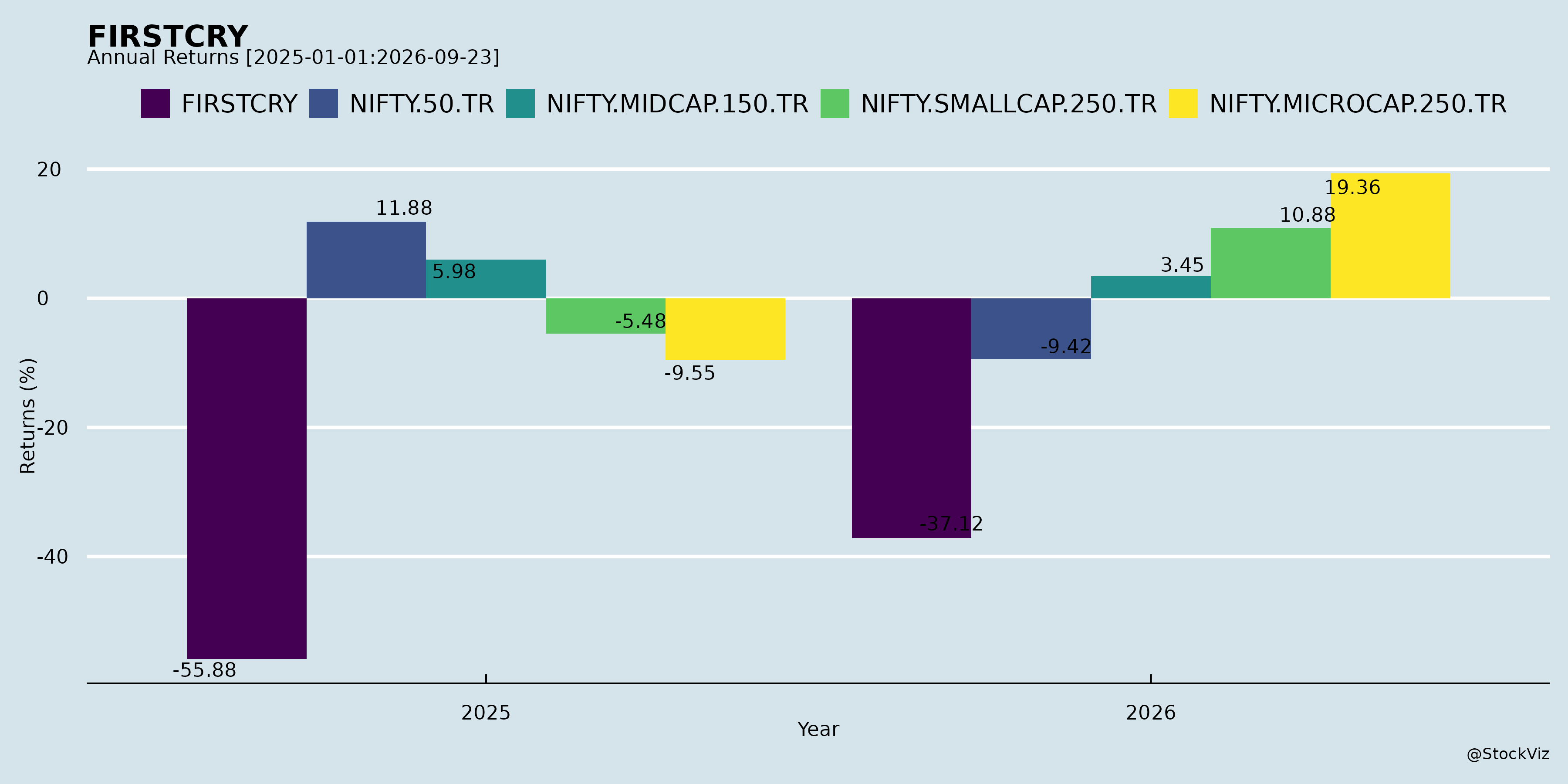
Annual Returns

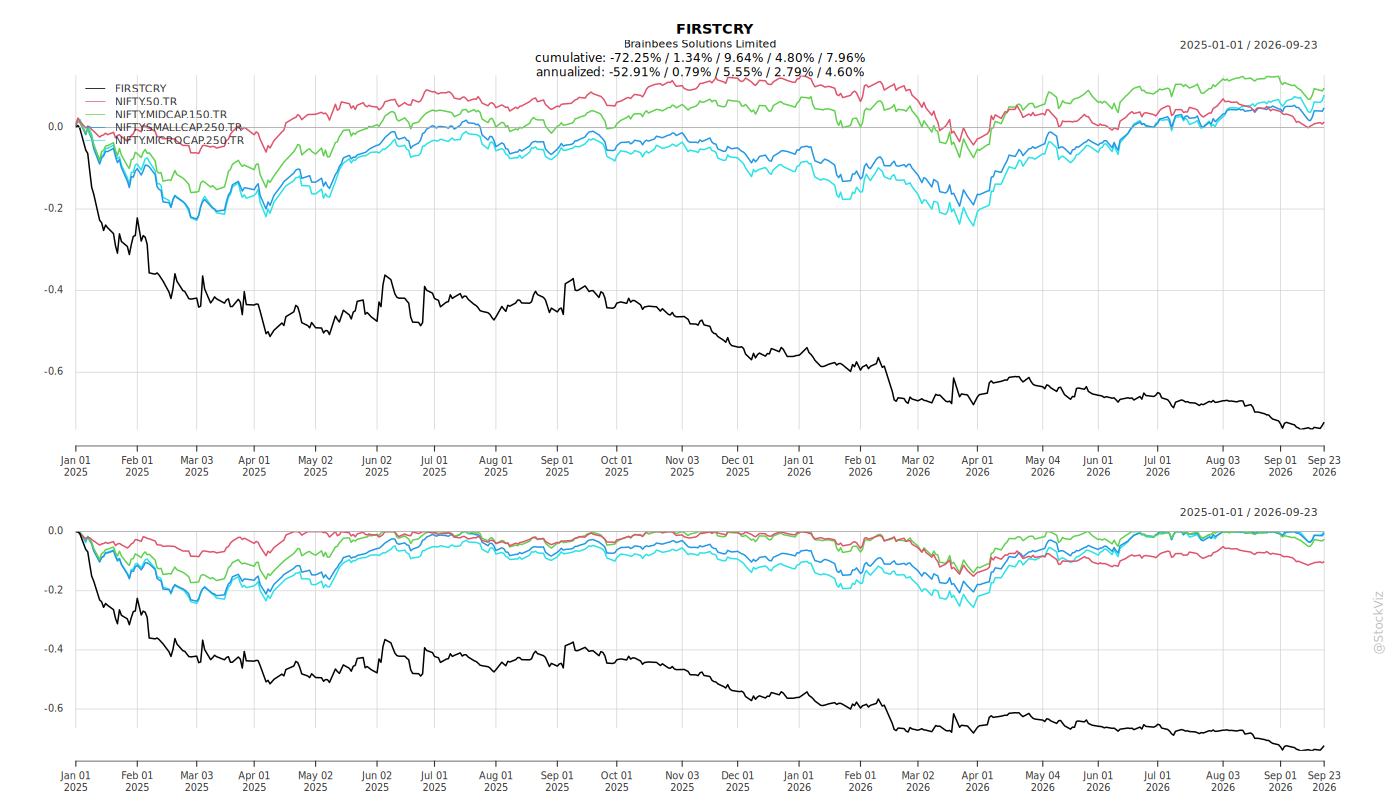
Cumulative Returns and Drawdowns
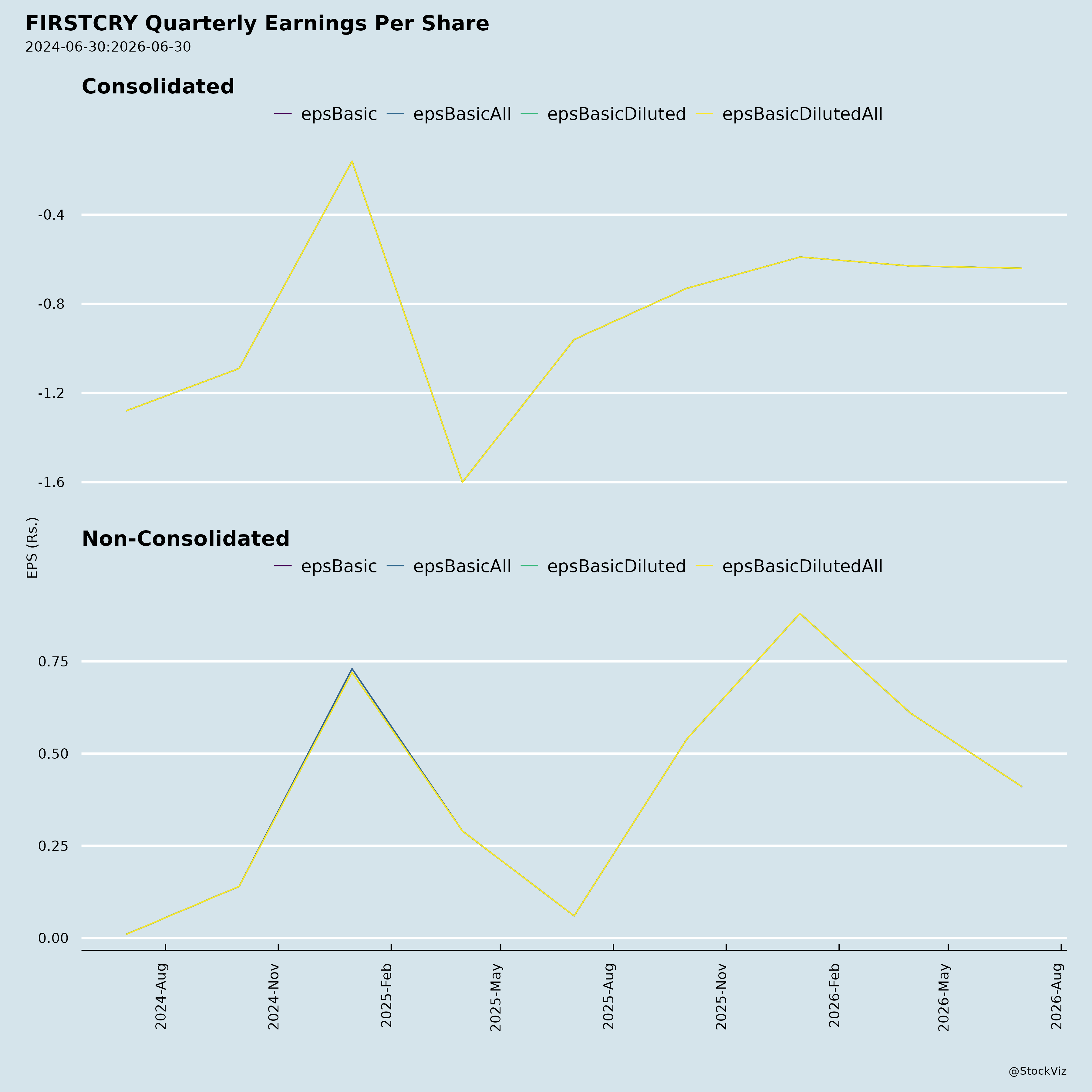
Fundamentals
Ownership
Margined
AI Summary
asof: 2026-09-17
FIRSTCRY — Q1 FY27 Corporate Announcements Summary
1. Headwinds and Challenges
Diapering category competitive intensity. The diapering category, roughly 15% of India multi-channel GMV, faced heightened competition during Q1 FY27. Management linked this to aggressive pricing by e-commerce and quick-commerce players and noted the same pattern occurred in 2015–16. This pressure began in Q3 FY26, continued through Q4 FY26 and Q1 FY27, and management stated it had started to soften in the current quarter.
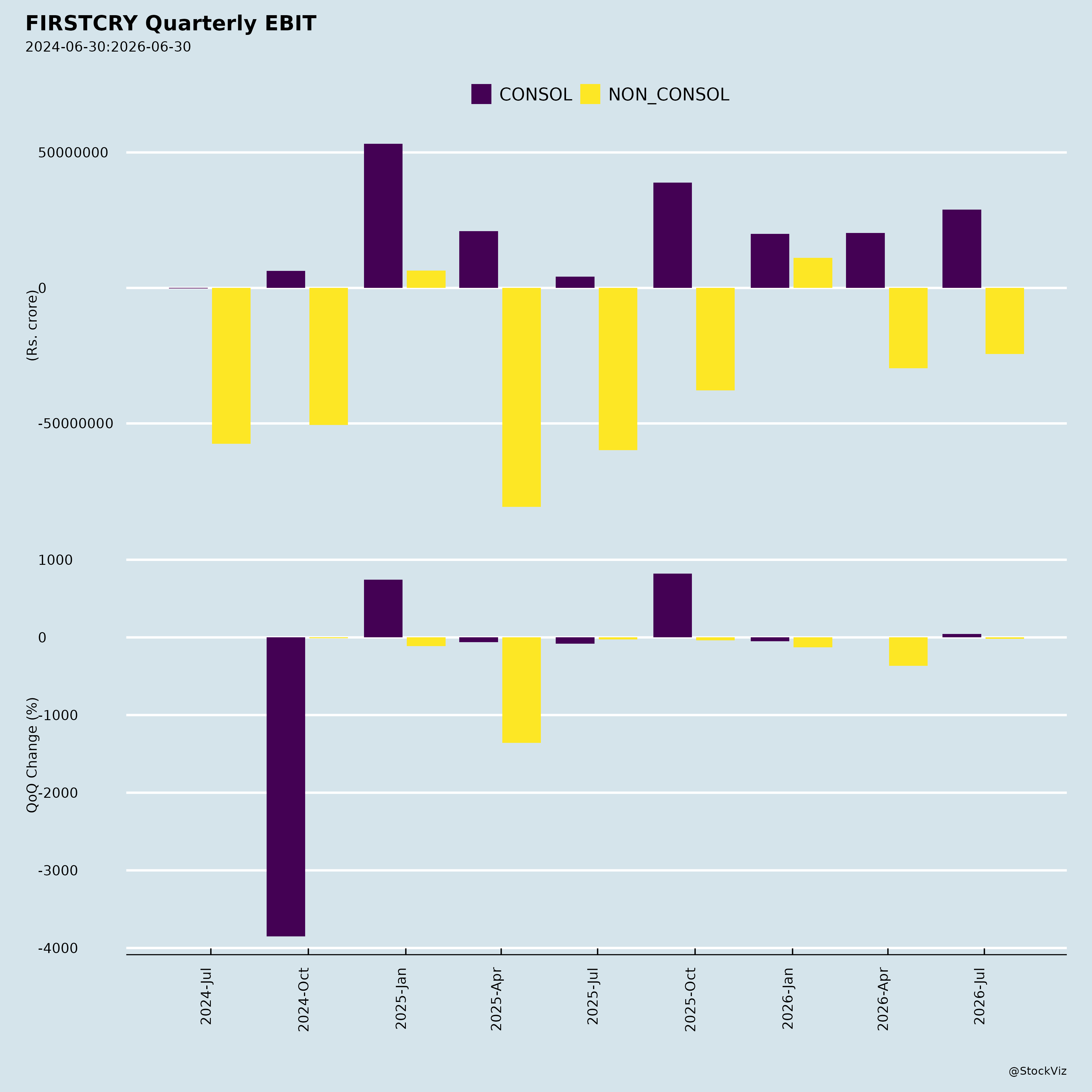
Gross margin moderation. India multi-channel gross margin fell 280 bps year-on-year in Q4 FY26, driven by diapering competition and by rupee depreciation plus higher crude-linked raw material prices in the manufacturing business. Only about 20 bps was recovered in Q1 FY27. Consolidated gross margin was 36.5% in Q1 FY27 versus 38.5% in Q1 FY26, and consolidated adjusted EBITDA margin was 4.24% versus 4.98%.
India multi-channel EBITDA decline. India multi-channel adjusted EBITDA margin fell to 5.7% in Q1 FY27 from 8.6% in Q1 FY26, a 290 bps year-on-year decline. Management attributed 260 bps to gross margin reduction and the remaining 30 bps to a combination of higher logistics costs from RocketBees and FirstCry Qwik initiatives, partly offset by operating leverage in marketing spend and fixed costs.
GlobalBees flat growth. GlobalBees revenue was broadly flat year-on-year in Q1 FY27. Management attributed this to a planned transition in one core brand involving shifting of the business warehouse and inventory, described as temporary and expected to complete in Q2, with growth expected to bounce back from Q3. Core categories grew 2%. Excluding the brand transition impact and a Flipkart settlement effect of about 2%, management indicated year-on-year growth would have been in the high teens.
Middle East geopolitical disruption. The international business operated amid ongoing geopolitical disruptions in the Middle East, though the business sustained healthy growth.
Other disclosed risks. Execution and business risks include delays or cost overruns in commissioning additional leased warehouses, possible failure of sales and marketing expenditure to generate anticipated customer benefits, technology and cybersecurity risks, and the risk that additional investments by Globalbees Brands in step-down subsidiaries may not generate anticipated returns. Profits computed under Section 198 of the Act were inadequate for standard managerial remuneration limits due to continued business investments and share-based payment expenses.
Prior-period disclosure matter. On July 22, 2026, the company clarified to NSE that standalone PAT disclosed in financial results submitted on May 26, 2026 was correct and reported per applicable requirements, and that an inadvertent sign error in the Standalone XBRL under the “Deferred Tax” field had been rectified with a revised XBRL filed.
2. Tailwinds and Growth Prospects
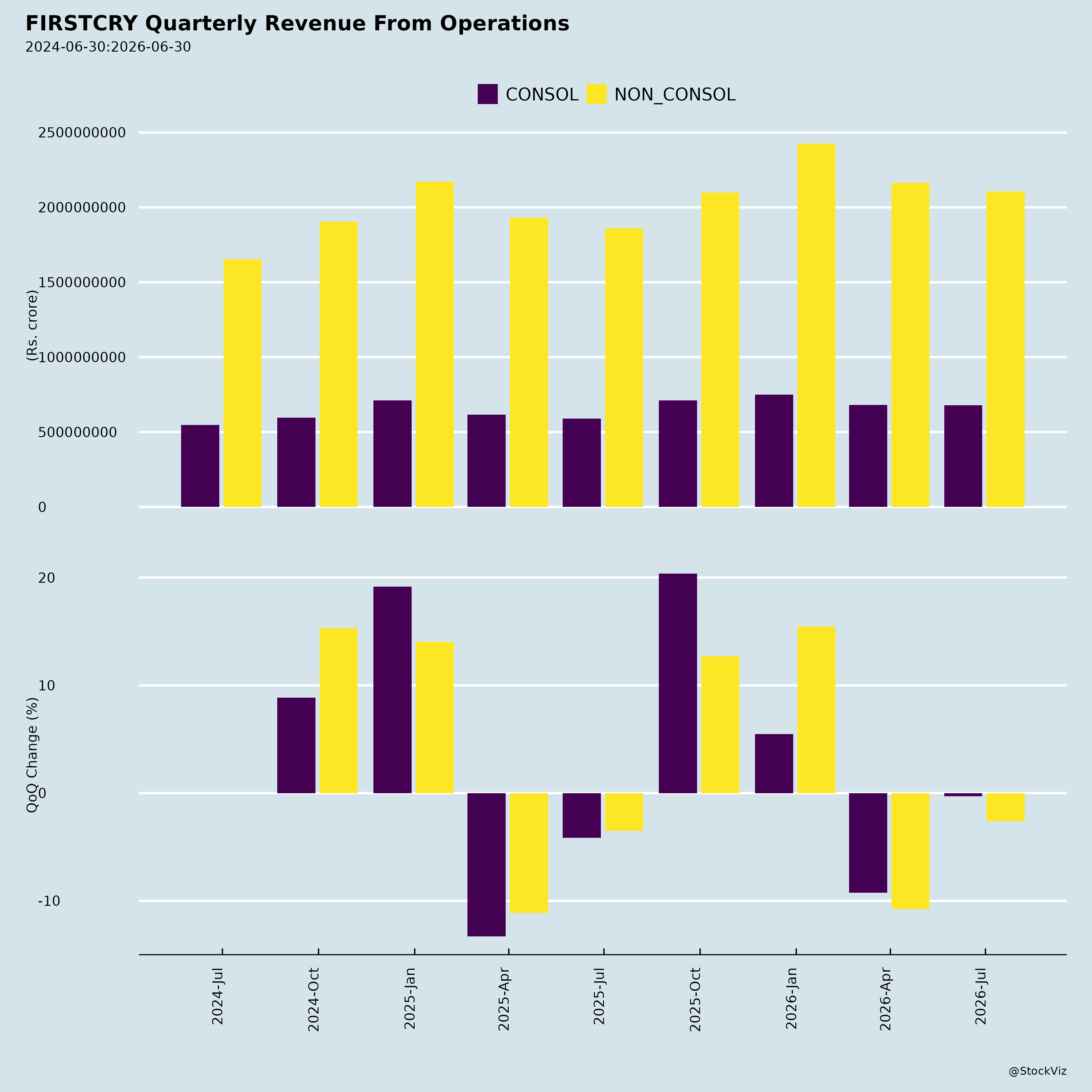
Strongest consolidated growth in five years. Consolidated revenue from operations grew 13% year-on-year to INR 2,106 crores in Q1 FY27, described as the strongest revenue growth in the last five quarters. Consolidated loss after tax improved 34% year-on-year. Consolidated GMV grew 12% to INR 2,807 crores and annual unique transacting customers grew 10% to 11.8 million.
India multi-channel momentum. India multi-channel revenue grew 17.7% year-on-year, the strongest in seven quarters, with sequential improvement from 7.5% in Q1 FY26 through 7.9%, 8.9%, 11.4% and now approximately 18%. The segment remained PAT positive in Q1 FY27. Offline GMV grew in the mid-teens, with 15% GMV growth in Q1 FY27.
RocketBees. The internal faster-delivery framework expanded from 62 to 72 cities and crossed the stated milestone of covering more than 50% of total online shipments by end-June. Management reported approximately 20% improvement in turnaround time, with reverse logistics also started.
FirstCry Qwik. Quick-commerce shipments grew from about 60,000 in March across five cities to approximately 125,000 in June across 12 cities. Turnaround time was reduced from three hours to two hours in several cities and pin codes. Management aims for 10% of overall shipments on the platform and 20% of volumes in specific pin codes.
Offline assortment realignment. The shift from a width to depth strategy in product assortment drove footfalls and conversions, supporting 15% offline GMV growth in Q4 FY26 and Q1 FY27. Store expansion, which had been paused for capital efficiency, is set to resume, with plans to add around 100 net stores in FY27 and better expansion in FY28.
International business. Revenue grew 12% year-on-year in Q1 FY27, with adjusted EBITDA losses reduced 22.3% year-on-year. Gross margin expanded about 280 bps year-on-year, and loss as a percentage of revenue improved from 10% to 7%. Management noted Middle East markets have higher potential once the environment stabilizes. Losses reduced from minus 16% in March 2025 to minus 7% in Q1 FY27.
GlobalBees profitability. Adjusted EBITDA grew 308% year-on-year in Q1 FY27, with margin improving from 1% to 3.9%. Core brand margin profile remained strong at 4.3% adjusted EBITDA post-corporate expenses. Growth has been entirely organic since the last acquisition in September 2022.
Pre-school segment. Revenue grew 47% year-on-year from INR 13 crores to INR 19 crores, and adjusted EBITDA rose 65% from INR 3 crores to INR 5 crores in Q1 FY27. Management targets not less than 1,000 pre-schools over the next couple of years, from over 500 currently.
Margin recovery levers. Management cited recovery of diapering margins as competitive intensity eases, full pass-through of crude-linked and rupee depreciation cost increases by end of Q2, and continued improvement in the 85% non-diapering portfolio through higher fashion and home brand contribution. Other levers include increasing home brand mix, fashion mix, and negotiation of third-party brand margins.
Capital allocation and IPO proceeds. The company is pursuing an IPO of subsidiary Swara Baby Products Limited, with a DRHP filed July 2, 2026 for an issue aggregating up to INR 10,000 million, comprising a fresh issue of up to INR 5,000 million and an offer for sale of up to INR 5,000 million. Brainbees holds 76.59% and will partially monetize via the OFS while Swara Baby remains a subsidiary. Separately, the company is seeking variation of IPO object proceeds and extension of the utilization timeline to FY 2028-29, with reallocation towards high-growth areas including FirstCry store formats, technology, and sales and marketing.
3. Key Risks
- Continued or renewed competitive intensity in diapering could delay gross margin recovery; management indicated the diapering-related margin impact may take four to six quarters to normalize.
- Rupee depreciation and crude-linked raw material price increases in the manufacturing business may not be fully passed through to customers within the expected timeline.
- GlobalBees growth recovery depends on completion of the planned brand transition in Q2 and bounce-back from Q3; failure to do so would extend flat growth.
- Middle East geopolitical disruptions could affect international business growth and the path to EBITDA neutrality.
- Execution and business risks include delays or cost overruns in commissioning additional leased warehouses, possible failure of sales and marketing expenditure to generate anticipated customer benefits, technology and cybersecurity risks, and the risk that additional investments by Globalbees Brands in step-down subsidiaries may not generate anticipated returns.
- Profits computed under Section 198 of the Act were inadequate for standard managerial remuneration limits due to continued business investments and share-based payment expenses.
- The Swara Baby IPO is subject to market conditions and requisite approvals; the OFS and fresh issue amounts may be revised.
4. Management Guidance Versus Observed Performance
RocketBees coverage. Management had targeted covering around 50% of total online shipments under RocketBees by end-June. Observed: the milestone was delivered, with coverage exceeding 50% and expansion from 62 to 72 cities.
FirstCry Qwik. Management had an ambition of growing to 10% of overall shipments on the platform and 20% of volumes in specific pin codes. Observed: shipments doubled from about 60,000 in March across five cities to approximately 125,000 in June across 12 cities, with turnaround time reduced from three hours to two hours in several cities and pin codes.
India multi-channel growth. Management stated the structural growth rate would remain elevated in subsequent quarters, supported by online and offline initiatives. Observed: 17.7% year-on-year revenue growth in Q1 FY27, the strongest in seven quarters, with sequential improvement across five quarters.
Gross margin recovery. Management had indicated in the prior quarter that normalization would take four to six quarters. Observed: 20 bps of the 280 bps Q4 FY26 gross margin loss was recovered in Q1 FY27. Management guided that the crude-linked and rupee depreciation portion would be fully recovered by end of Q2, with full effect in Q3, while the diapering competition portion may take until around Q4. Management stated the 280 bps impact should reduce dramatically, and that second-half India multi-channel EBITDA margin should at least equal the prior year.
International EBITDA neutrality. Management has consistently guided reduction of losses and a path to profitability without committing to a specific quarter. Observed: adjusted EBITDA losses reduced 22.3% year-on-year in Q1 FY27, loss as a percentage of revenue improved from 10% to 7%, and losses reduced from minus 16% in March 2025 to minus 7% in Q1 FY27.
GlobalBees growth. Management guided that flat Q1 FY27 growth is temporary, that the brand transition should complete in Q2, and that growth should bounce back starting Q3. Observed: revenue broadly flat year-on-year with core categories growing 2%, while adjusted EBITDA margin improved from 1% to 3.9%.
Store expansion. Management stated store expansion, previously paused, would resume, with around 100 net store additions planned for FY27 and better expansion in FY28. Observed: modern stores increased from 1,169 in Q1 FY26 to 1,188 in Q1 FY27, with 30 BabyHug COCO stores converted into FirstCry COCO stores during Q1 FY27.
Pre-school expansion. Management targets not less than 1,000 pre-schools over the next couple of years. Observed: over 500 pre-schools currently under the FirstCry Intellitots umbrella, with 47% revenue growth and 65% adjusted EBITDA growth in Q1 FY27.
IPO proceeds utilization. The utilization timeline for all IPO proceeds has been extended up to FY 2028-29, with variation of IPO object proceeds proposed, including reallocation towards FirstCry store formats, technology, and sales and marketing initiatives.
Copyright © 2023 SAS Data Analytics Pvt. Ltd. All rights reserved.