EXIDEIND
Equity Metrics
September 24, 2026
Exide Industries Limited
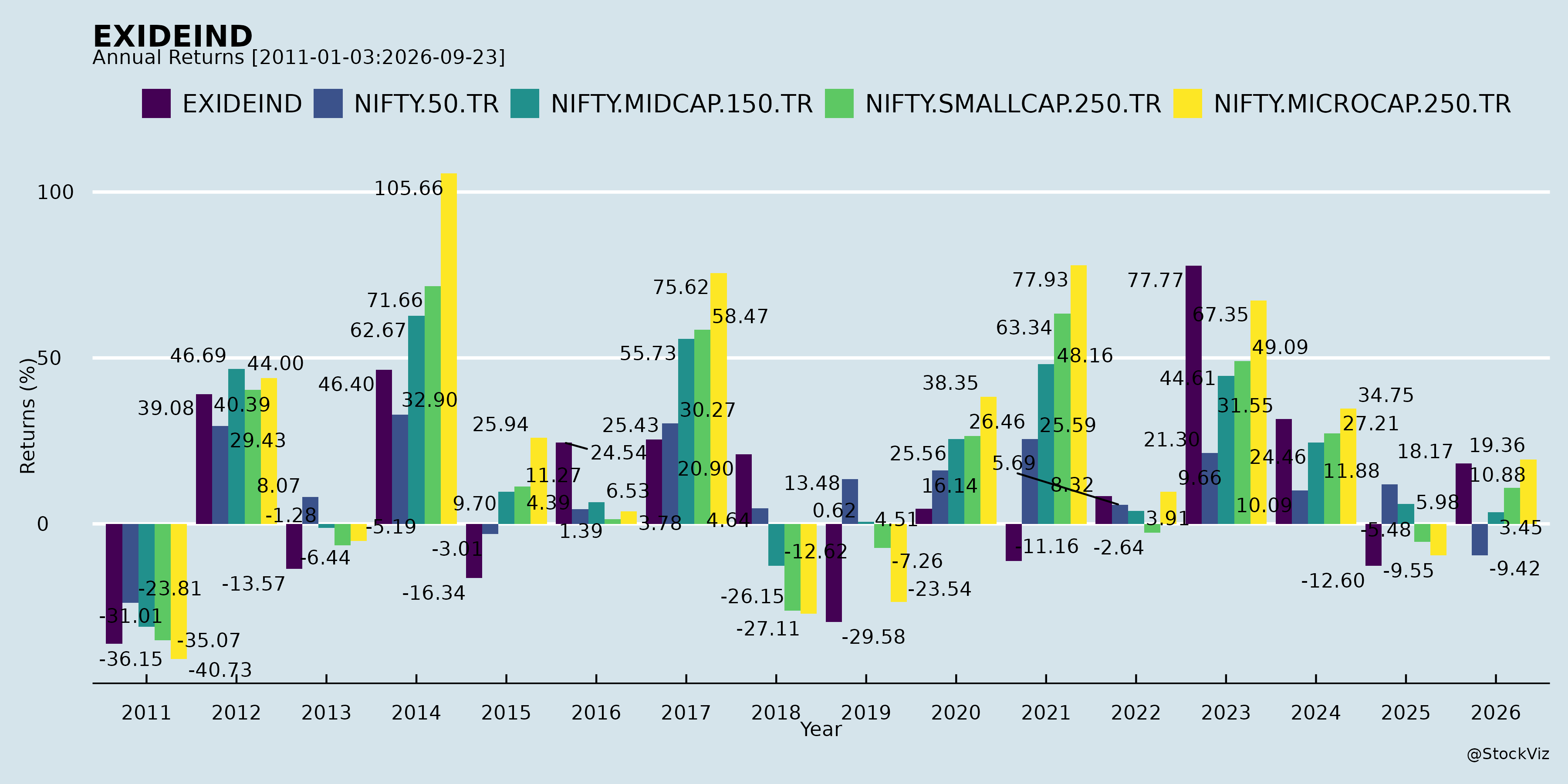
Annual Returns
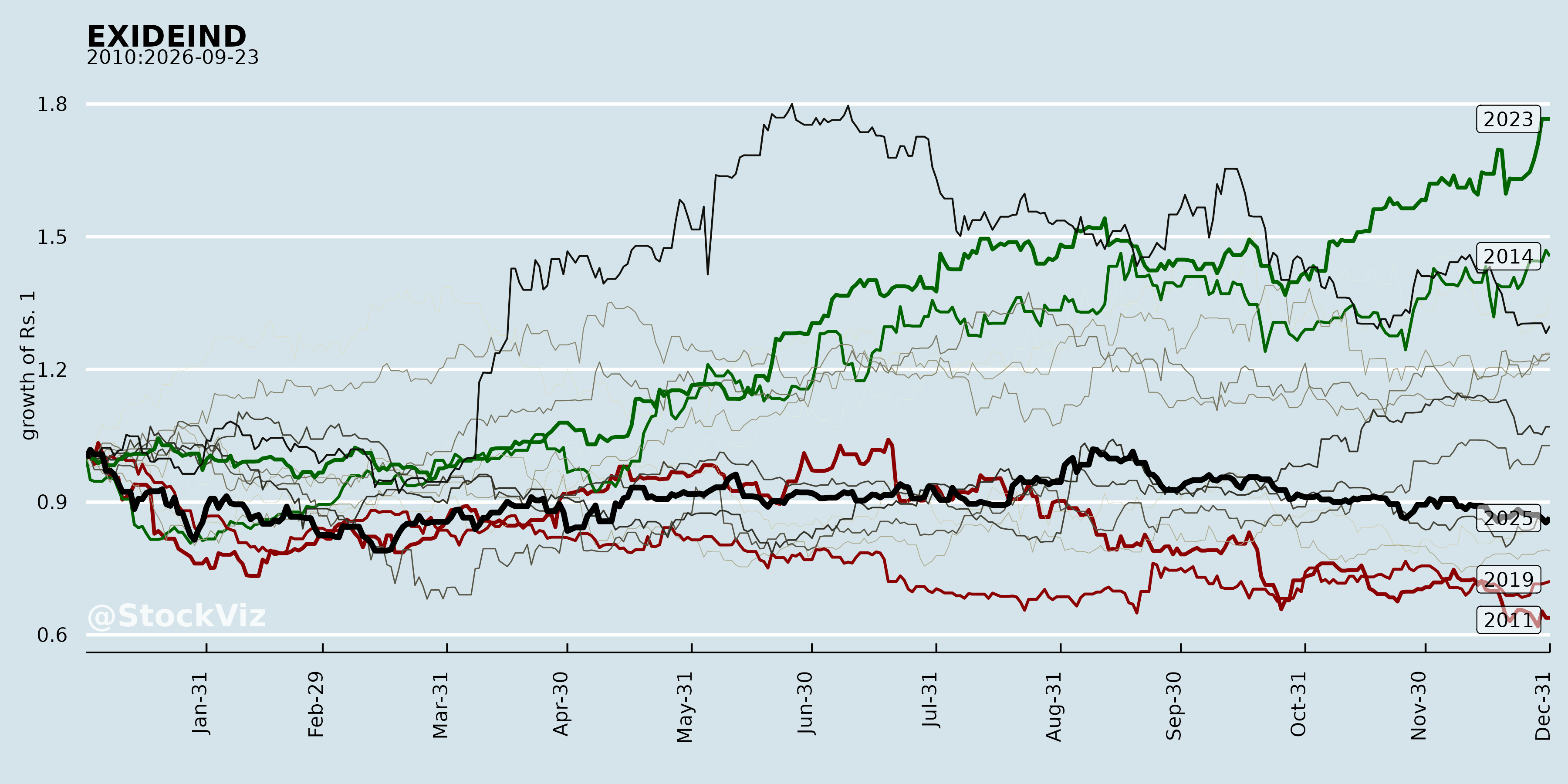
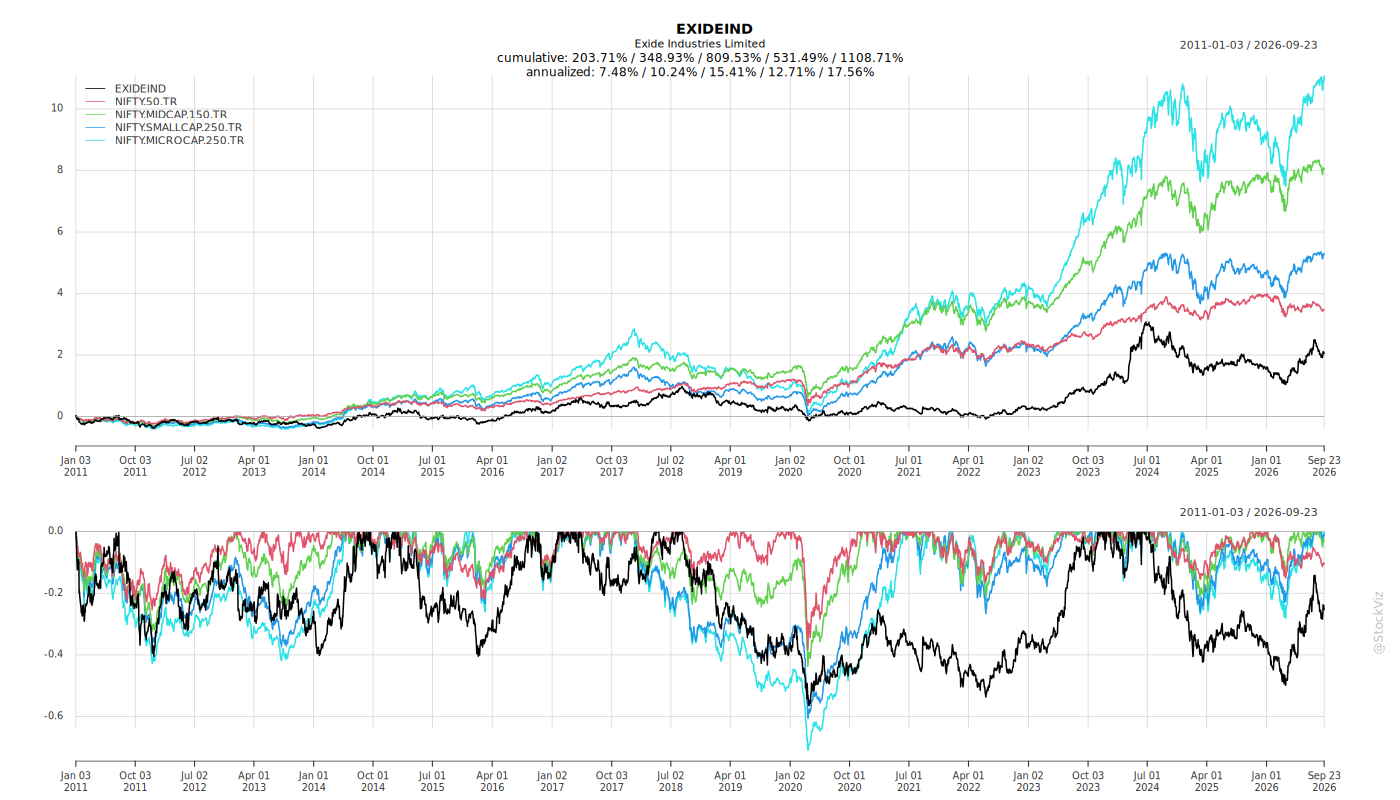
Cumulative Returns and Drawdowns
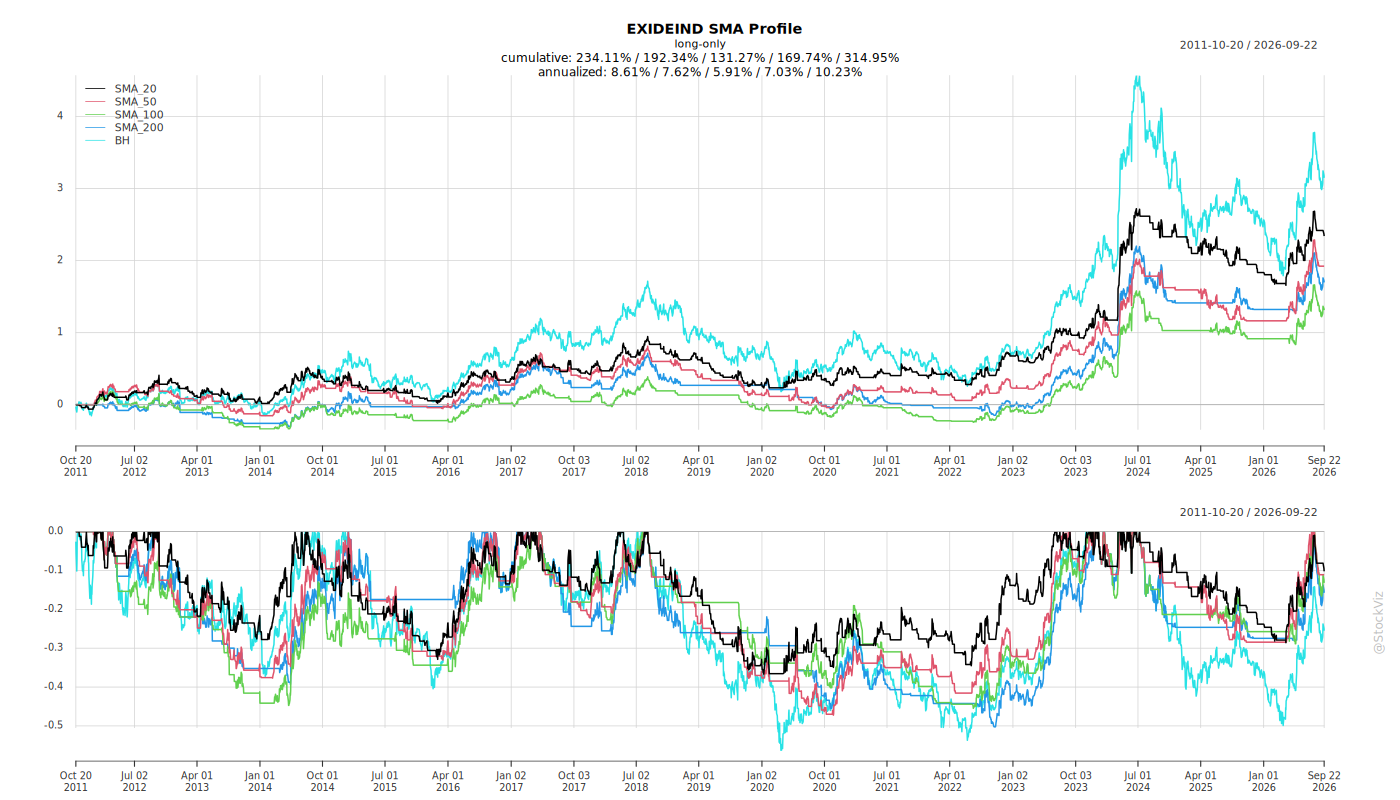
Fundamentals
Ownership
Margined
AI Summary
asof: 2026-09-16
Exide Industries — Headwinds, Tailwinds, Risks and Guidance vs Performance
1. Headwinds and Challenges
Input cost and currency pressure. Management stated that input costs remained elevated during Q1 FY27, largely reflecting disruptions in West Asia and adverse currency movement. While lead LME prices in USD terms remained largely rangebound, Rupee depreciation against the US dollar continued to pressure import-linked costs. The company took calibrated price adjustments (around 4%–6% across categories on a YoY basis in Q1) to partially offset the impact, and had not decided on Q2 price action at the time of the call, preferring a step-by-step approach as input costs evolve.
Seasonality and base effects. Management noted that Q1 is generally the strongest quarter historically because of the inverter battery season (peak summer), and that last year’s early monsoon had deprived Q1 FY26 of that support. Inverter batteries are seasonal and range between 15%–25% of revenue depending on the season. Management also flagged that the automotive OEM base was very low in H1 FY26 but boomed from Q3 FY26 (post GST rationalisation), so percentage growth in H2 FY27 may moderate even if absolute volumes remain elevated.
Government tenders muted. Government tenders remained muted during the quarter, though management expected a pickup in the second half.
Lithium start-up complexity. Management described the giga factory start-up as a very complex business where every process parameter must be benchmarked. Real yields will only be visible once the plant runs three-shift operations; at sample level, full line yield is difficult to test. Yields were described as improving but not yet declared.
Import/export policy uncertainty. The Chinese export VAT rebate on cells has already been reduced from 9% to 6% and is set to go away from 1 January 2027, which will affect imported cell landed costs. Chinese export control announcements (deferred to November) do not cover raw materials as of yet but are a kind of export control requiring additional approvals; management indicated it may need to hold higher inventory to avoid delays. Raw material sourcing remains dependent on China, with an Indian raw material ecosystem expected to take 3–5 years to develop.
Technology transfer risk. Management noted that a competitor had flagged Chinese government interference in technology transfer. Exide stated it completed its technology tie-ups and factory setup before these embargoes began, has licensed 4–5 products, and is building a pilot line with 100+ R&D engineers in Bangalore as a hedge. Korean/Japanese alternatives exist but are costlier than Chinese.
Lithium pack business economics. Management stated the lithium battery assembly business (FY26 revenue described as very less, around INR100–200 crores) was not profitable, as there is very little value addition with imported cells and it is not long-term viable without own cell manufacturing.
BESS market caution. Management observed that BESS is getting overhyped, with many players making containers and fabricated tanks while the core technology of battery racks and BMS still needs local development.
2. Tailwinds and Growth Prospects
Demand environment. India’s demand environment remained supportive, with improved affordability and consumer sentiment following GST rationalisation in H2 FY26 continuing to support automotive and consumer demand. Rural and urban sentiment remained positive, and replacement market demand stayed robust.
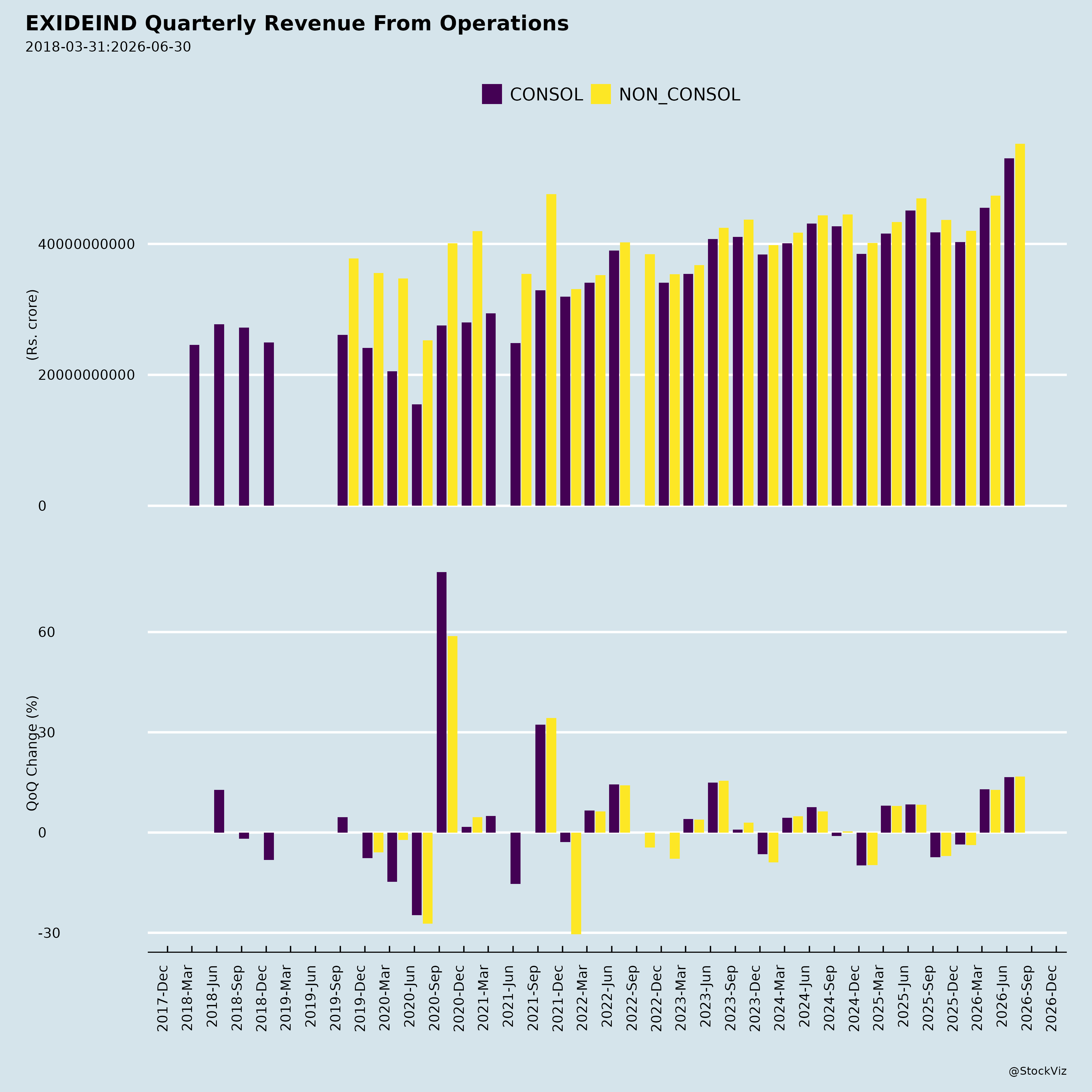
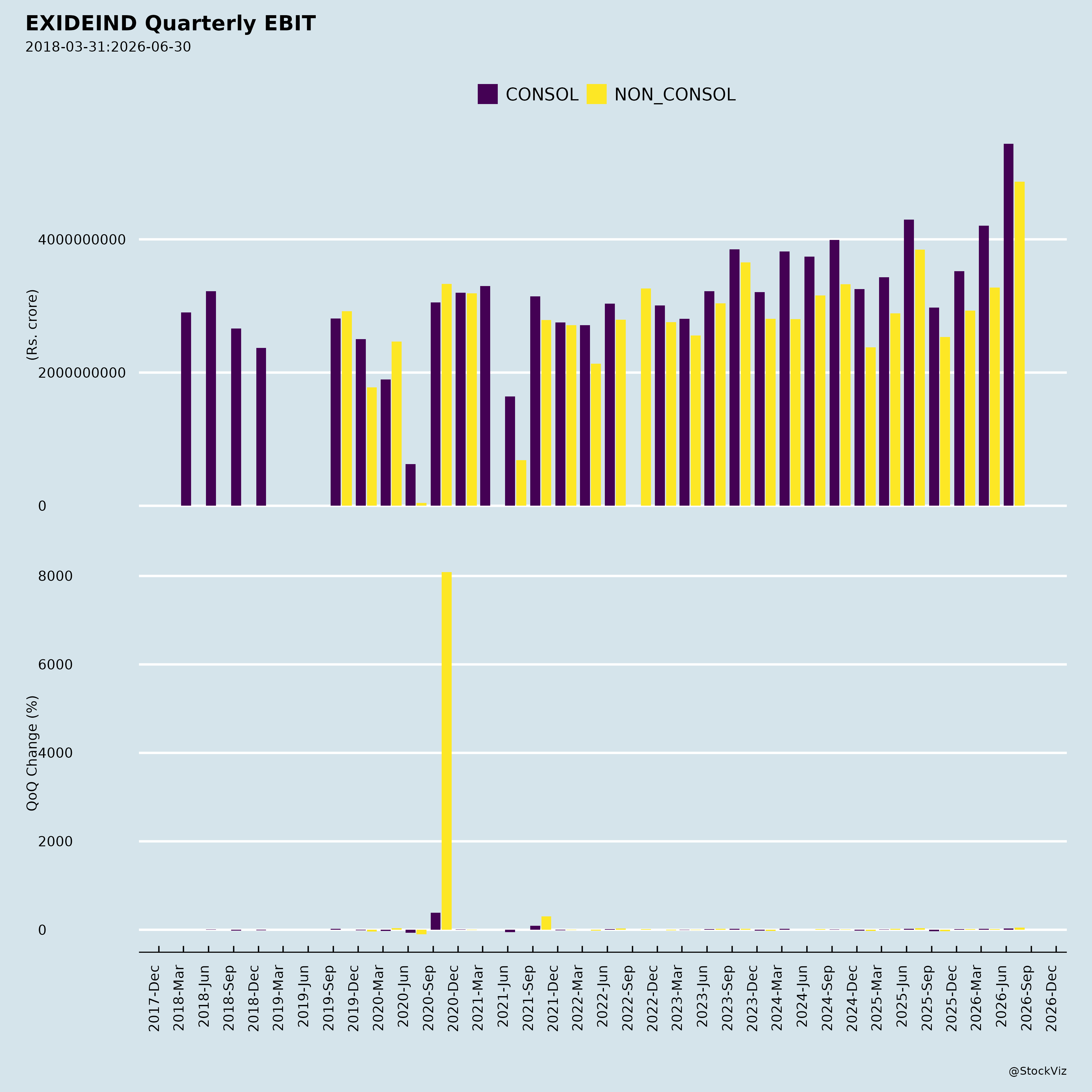
Broad-based Q1 FY27 growth. All major businesses recorded double-digit growth, led by 2-wheeler and 4-wheeler OEM, home UPS, solar, 2-wheeler and 4-wheeler replacement, industrial infrastructure ex-telecom, and exports. Standalone revenue grew 17.6% YoY to Rs. 5,305 crore; EBITDA was Rs. 655 crore (up 19.5%), with EBITDA margin at 12.4% (up 20 bps YoY, 70 bps QoQ). PAT grew 27.1% to Rs. 407 crore. The company remains debt-free with healthy operating cash flows.
Business-level momentum. Automotive OEM grew 25%+ YoY for the third consecutive quarter (on a low base). 2W/4W replacement posted its third consecutive quarter of double-digit growth. Inverters and solar grew over 20% YoY, with solar achieving its highest-ever quarterly revenue of INR400 crore plus. Industrial infrastructure ex-telecom maintained low double-digit growth. Exports returned to growth at 20%+ YoY after five consecutive quarters of decline.
Giga factory milestones. At the Bengaluru facility, equipment across all four production lines has been delivered and installed, and utilities are fully operational. The first NMC cylindrical line commenced customer sample deliveries during Q1 FY27 — the first locally manufactured cells from the facility. The LFP prismatic line has started sample supplies for 3-wheeler and telecom applications. Key certifications completed include BIS IS 16046, IS 16893, IS 16085 and UN 38.3. Revenue contribution from the plant is expected to commence during FY27.
Demand visibility for cells. Management stated demand will not be an issue because the target markets already exist with imported cells and represent a switchover to Indian cells. For 2-wheelers, the company is in homologation with about 3 OEMs covering roughly 80%–85% of India’s EV volume. For 3-wheelers, about 70%–75% of demand is aftermarket retrofitment, where Exide already has a dealer and channel network. The fourth line (second LFP) is intended for 4-wheeler OEM products and BESS large-format cells (300+ Ah), with commissioning targeted near end of the fiscal year. Management also noted growing interest from 1–2 major 4-wheeler OEMs.
Capacity and capex plans. Phase 1 capacity is 6 GWh, with provision to go to 12 GWh in the next few years. The Board approved INR1,400 crore for this fiscal year, of which INR100 crore was invested in July. Cumulative equity investment in EESL stood at INR4,902 crore as on 31 July 2026, rising to INR5,102.23 crore after the 18 August 2026 rights subscription of Rs. 199,99,99,995 (5,71,42,857 equity shares of Rs. 10 each at a premium of Rs. 25). Phase 2 capex will be lower than Phase 1 because land and utilities were built for 12 GWh; the original INR7,000 crore plan for 12 GWh may change with currency movements, and funding is expected from operational cash flows.
Core business capex. The company allocates around INR500 crore annually to the core lead-acid business for manufacturing technology, automation and capacity expansion, focusing on debottlenecking across five 4-wheeler SLI factories, with sufficient headroom in 2-wheeler. Management noted that vehicles produced in the last three quarters will feed the replacement market in 2.5–3 years.
Policy and structural drivers. The investor presentation cites the GST reduction (28% to 18%), the 40 GW MNRE rooftop solar target for 2026, the 500 GW RE target by 2030, PM Surya Ghar, infrastructure capex, railway electrification, data centres, and low passenger vehicle penetration (~40 cars per 1,000 people) as medium-to-long-term growth levers. Management also noted the government has opened 10 GWh for PLI reapplication, which it is studying, having set up the first 6 GWh without PLI support. Management expects that once 15–18 GWh of local cell capacity exists, the government may introduce approved-list-type initiatives similar to solar.
Localisation roadmap. Management targets 50%–60% of bill of materials localised in 2–3 years, with electrolyte seen as the likely first component to be localised, and pilot work ongoing with a large listed Indian manufacturer.
3. Key Risks
- Commodity and currency volatility: Elevated input costs and Rupee depreciation against the USD; management continues to closely monitor the evolving commodity and currency environment.
- Geopolitical environment: Volatility in West Asia during the quarter drove cost volatility; the global macro environment continues to be monitored.
- Import dependence and policy risk: Raw materials (including electrolyte) are currently imported, largely through tech partners’ supply chains; Chinese export controls from November and the removal of the export VAT rebate from 1 January 2027 could affect landed costs and require higher inventory.
- Technology access risk: Future technology licenses could be constrained if Chinese government restrictions tighten; mitigation includes licensed products, a pilot line, and potential Korean/Japanese alternatives at higher cost.
- Execution and yield risk in lithium: Full-scale line yields are unproven until three-shift operations; utilisation guidance of 25%–30% for the first year depends on yield improvement and customer approvals.
- Homologation timing risk: OEM homologation is time-consuming; revenue timing depends on customer validation and approvals, and management declined to give a revenue forecast for FY28 because start dates and customer approvals are uncertain.
- Margin uncertainty in new energy: Management declined to comment on initial-phase cell margins, citing early stage.
- Segment concentration/seasonality: Inverter battery seasonality (15%–25% of revenue) and the H2 FY27 base effect in automotive OEM could moderate percentage growth.
- BESS market quality: Management cautioned that the BESS space is overhyped, with core rack and BMS technology still needing local development.
- Regulatory/labour: The four Labour Codes notified on 21 November 2025 were assessed and disclosed as an exceptional item in FY26 standalone and consolidated results.
4. Management Guidance vs Observed Business Performance
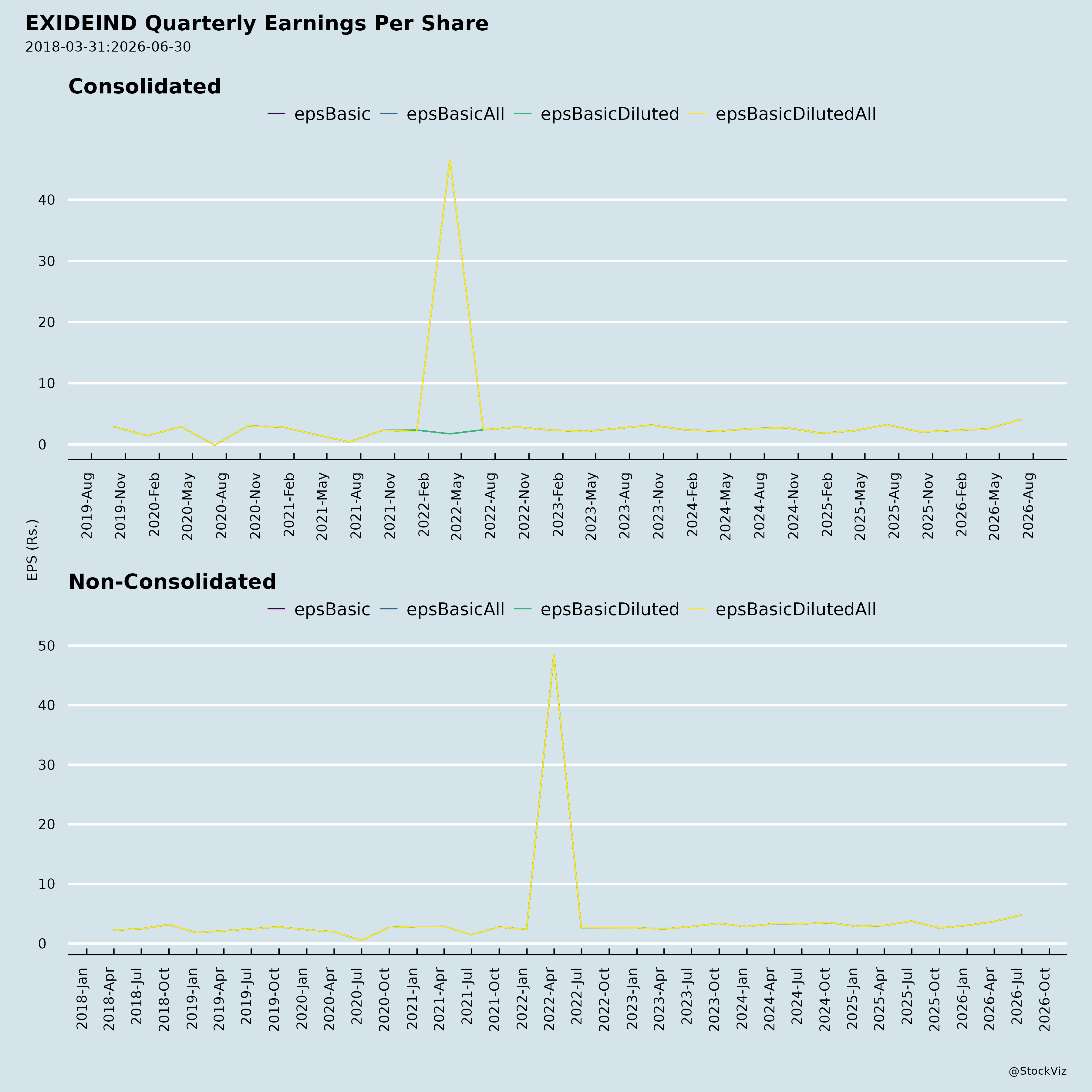
Q1 FY27 performance vs commentary. Management’s opening remarks described a strong quarter with broad-based double-digit growth, and the reported numbers align: standalone revenue Rs. 5,305 crore (+17.6% YoY), EBITDA Rs. 655 crore (+19.5%), EBITDA margin 12.4% (+20 bps YoY, +70 bps QoQ), PBT Rs. 543 crore (+26.4%), PAT Rs. 407 crore (+27.1%), EPS Rs. 4.79 (+27.1%). Consolidated revenue was Rs. 5,528.38 crore with PAT attributable to owners of Rs. 350.47 crore and EPS of Rs. 4.12.
Volume vs price. Management clarified that volume growth was double-digit in most businesses, with YoY price correction contributing to top-line growth. Examples given: 4-wheeler replacement volume +10%, 4-wheeler OEM +21%, 2-wheeler OEM +20%, solar +12%–14%. No new contract contributed to growth — described as business as usual.
Full-year guidance. Management declined to give full-year revenue guidance, citing limited visibility and the H2 base effect, while noting Q2 FY26 had a low base that should help percentage growth. On lithium, management stood by earlier guidance of 25%–30% utilisation in the first year, with Line 3 (LFP) expected to be utilised faster than the 2-wheeler line due to shorter time to market. Revenue from the Bengaluru plant is expected to commence during FY27.
Capex guidance. The Board approved INR1,400 crore for FY27, with INR100 crore invested in July 2026 and the rest expected in upcoming months. The original INR7,000 crore plan for 12 GWh may change with currency movements; Phase 2 will require less than Phase 1 and is expected to be funded from operational cash flows.
PLI/subsidy guidance. Management declined to disclose subsidy amounts, stating they are not in the public domain, and that the company becomes entitled to apply once it officially declares start of production.
Hyundai/Kia co-investment. Management stated discussions are ongoing in parallel, that it will not materialise this fiscal year, and that it could be a customisation line rather than a complete line, with delays acknowledged.
Observed EESL financials. Per the 18 August 2026 disclosure, EESL’s paid-up equity share capital is Rs. 1,589.93 crore, net worth as on 31.03.2026 is Rs. 3,991.06 crore, turnover for FY2025-26 is Rs. 157.56 crore, and loss after tax for FY2025-26 is Rs. 248.16 crore. Turnover for the last three years: FY2025-26 Rs. 157.56 crore, FY2024-25 Rs. 116.89 crore, FY2023-24 Rs. 239.14 crore (the latter two subsequent to the merger of EEPL with EESL). This compares with management’s characterisation of the lithium assembly business as not profitable and not long-term viable without own cells.
AGM proceedings. At the 79th AGM on 10 July 2026, the Chairman and MD & CEO addressed shareholders on FY2025-26 performance, new energy progress, the ‘One Exide’ operating model, R&D, digital transformation and ESG. A total of 27 shareholders spoke, raising matters including commodity price volatility, geopolitical developments, international operations outlook, capex plans, capacity utilisation, AI adoption, EV battery competitiveness, sustainability and CSR. All resolutions (items 1–5) were passed with the requisite majority; the final dividend of Rs. 2.00 per share (200% of face value of Re. 1) was approved with 99.9989% votes in favour.
Broker Narrative
The broker narrative stayed bullish from 2023 to 2026, consistently emphasizing strong auto replacement/OEM demand, industrial/solar growth, and lithium-ion expansion as the key long-term driver. Input-cost pressure and export weakness were recurring concerns, though the last report notes exports eventually recovered after several weak quarters. The biggest evolution was the lithium-ion project timeline slipping from FY24 Phase 1 production to FY27 revenue, with the last report adding new caveats about operating leverage and uncertain lithium margins while highlighting the Bengaluru gigafactory and Hyundai/Kia MoU.
Fears that came true
- Raw-material/logistics cost pressure materialized: the last report still cites rupee depreciation and commodity inflation forcing price increases, and in the intervening weak period 2024-07-30 (Add, predicted +13.2%, actual -11.6%) and 2024-09-01 (Buy, predicted +14.3%, actual -4.7%) ended as DISAPPOINTMENT with negative actual returns.
- Automotive export weakness materialized: the last report says exports returned to over 20% growth only after several weak quarters, matching the early warning on anti-dumping duties in GCC countries and modest Western demand, and that weak stretch overlapped with negative actual returns in mid-2024.
Optimism that failed
- The lithium-ion project did not begin Phase 1 production in FY24; the last report says the Bengaluru gigafactory was only nearing commercialization with revenue expected in FY27, and the margin profile of the venture is now uncertain rather than the earlier 15% ROIC expectation.
- The expectation that margins would improve as inflationary pressures stabilized failed to materialize; the last report still flags commodity inflation, currency depreciation, and lower-than-anticipated gains from operating leverage as risks.
Broker Timeline
20 broker calls · 2023-05-11 to 2026-08-04
Copyright © 2023 SAS Data Analytics Pvt. Ltd. All rights reserved.