DYCL
Equity Metrics
October 23, 2026
Dynamic Cables Limited
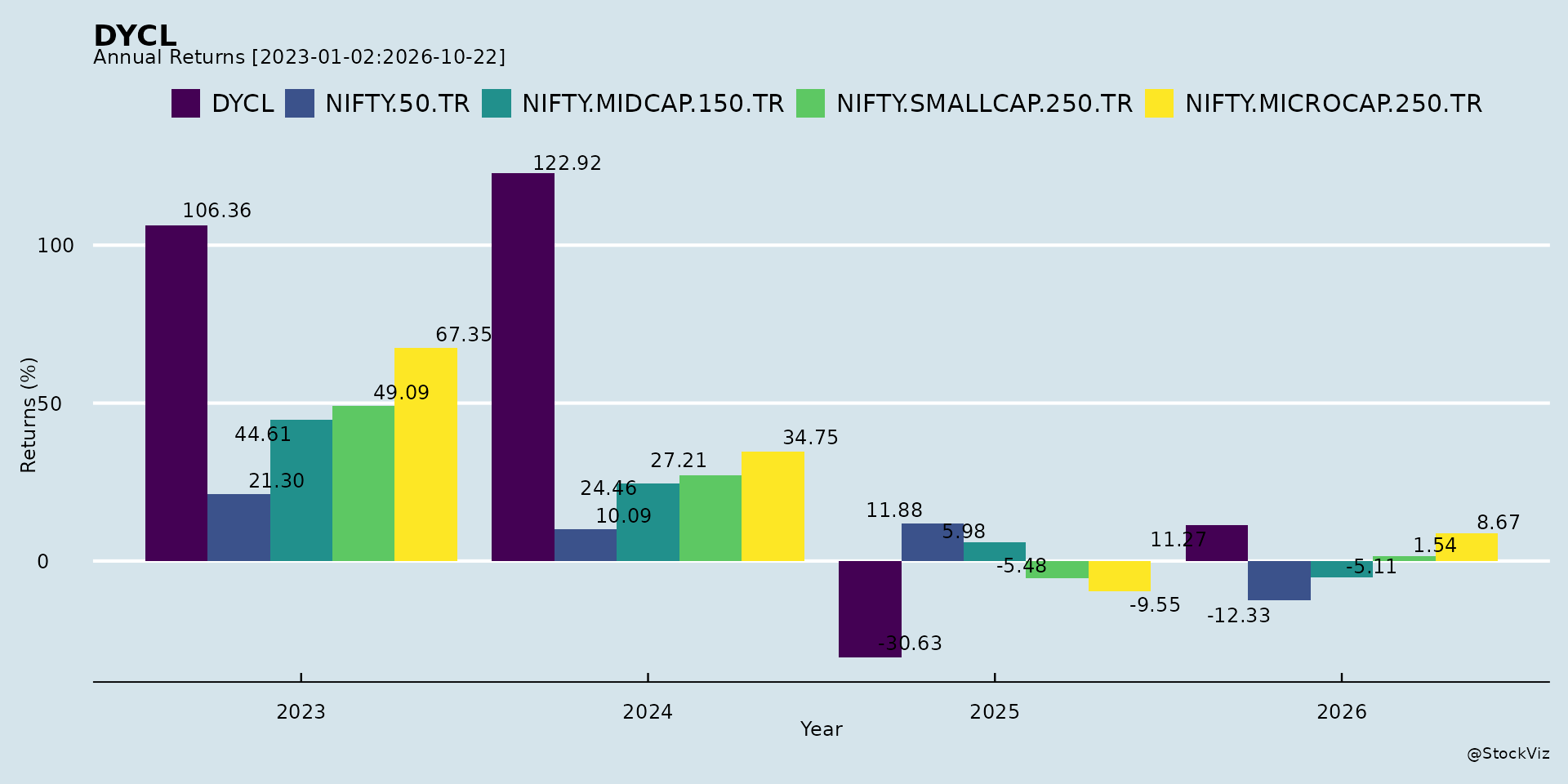
Annual Returns
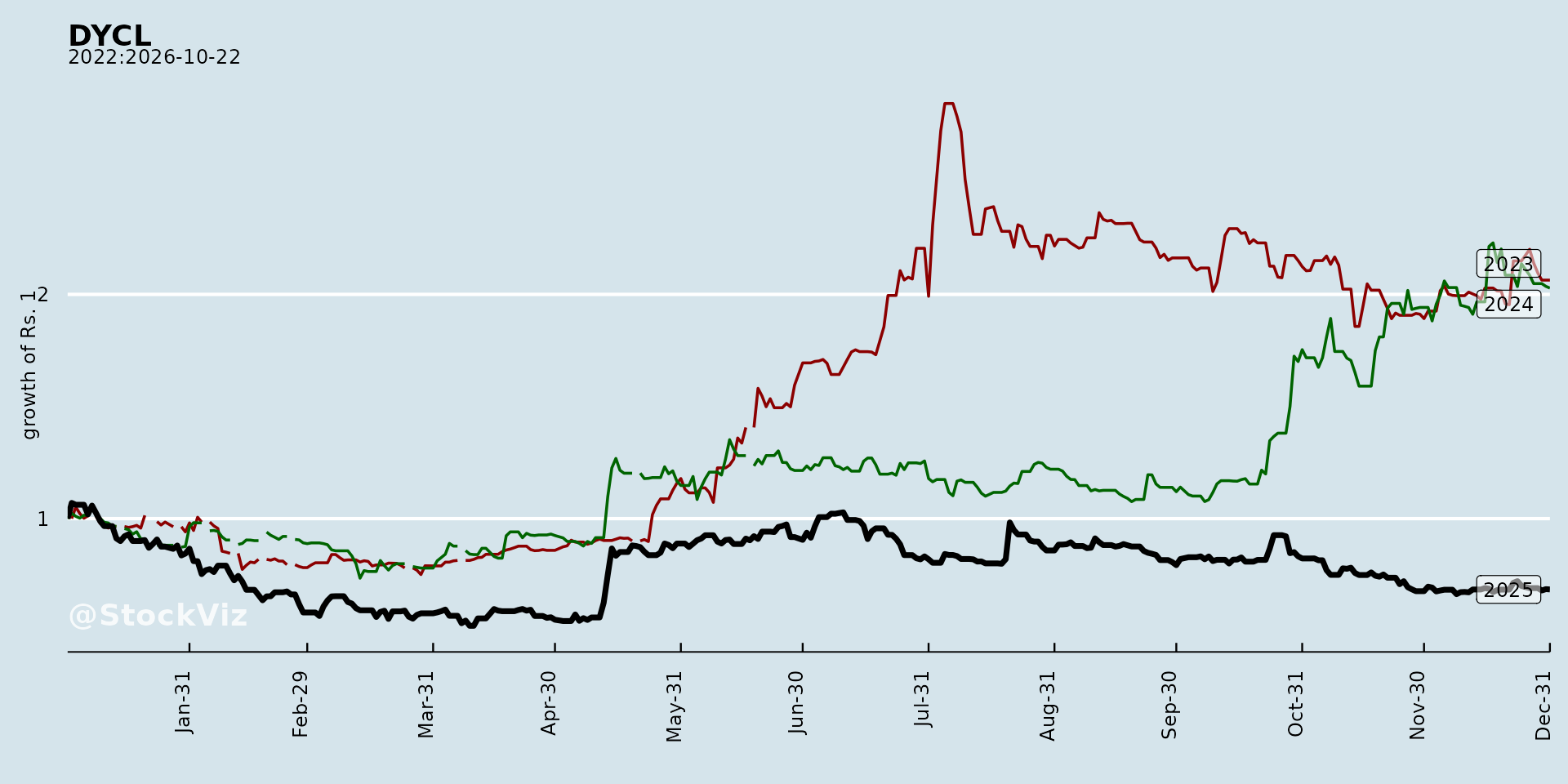
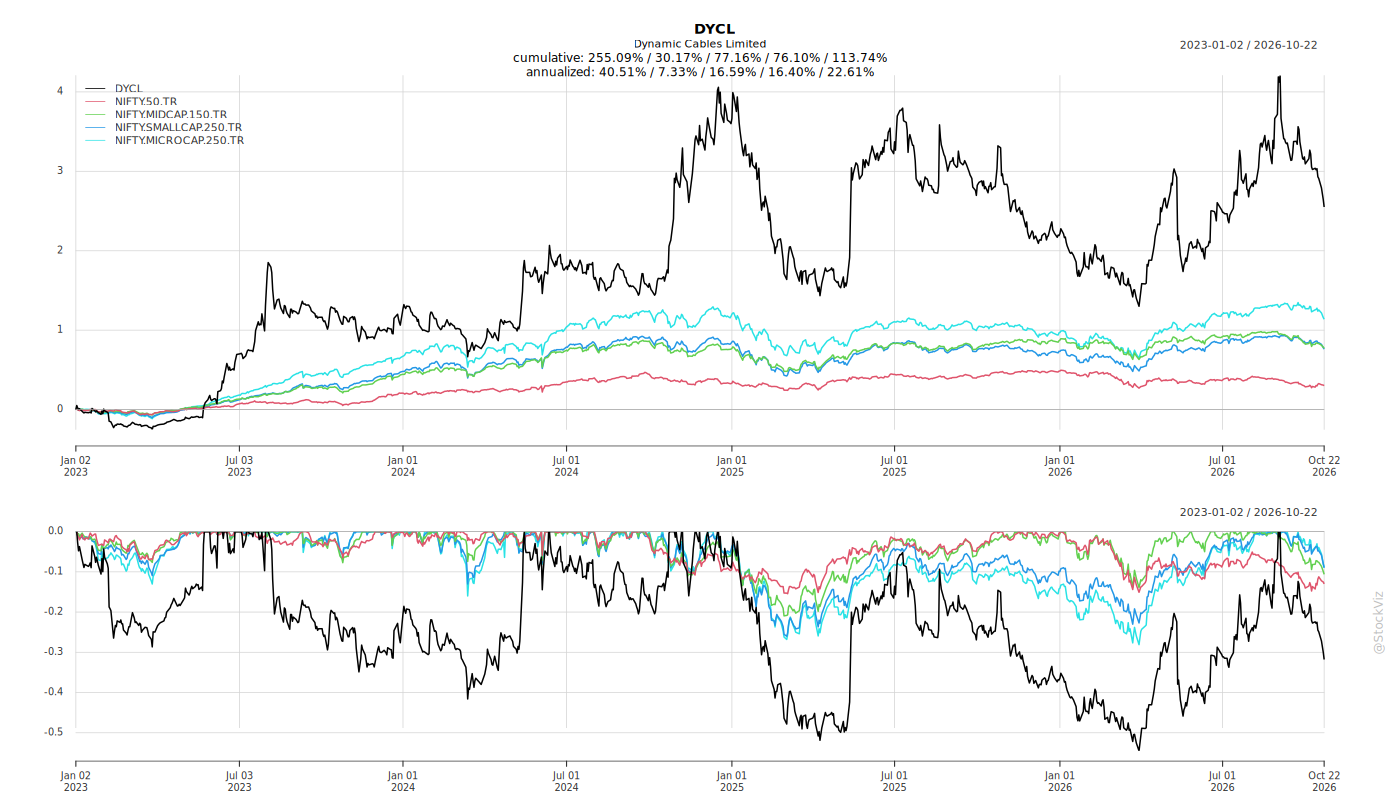
Cumulative Returns and Drawdowns
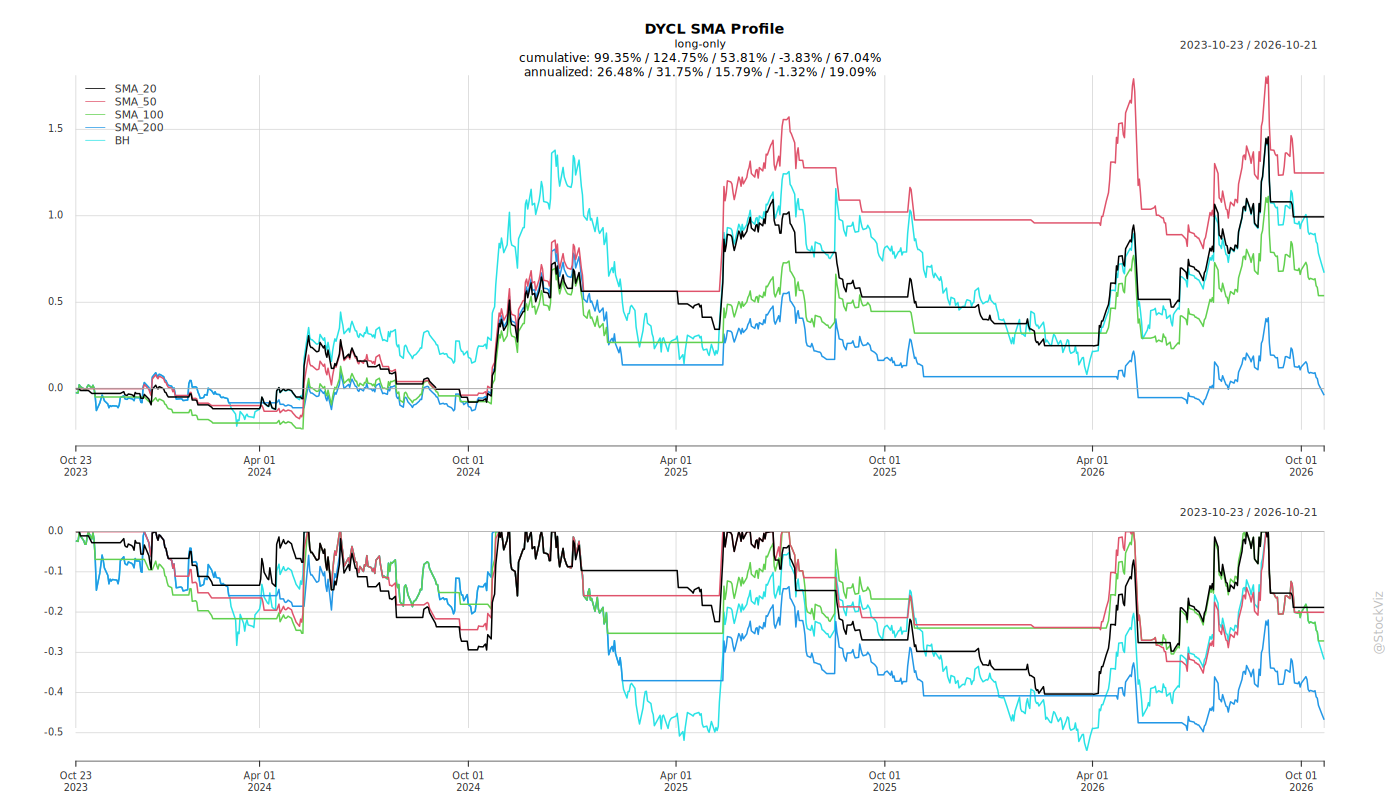
Fundamentals
Ownership
Margined
AI Summary
asof: 2026-09-18
Dynamic Cables Limited — Recent Corporate Developments
1. Headwinds and Challenges
Raw material volatility and customer order postponement. Management described April and May 2026 as a period of sudden, sharp increases in input costs, particularly aluminium. Customers were reluctant to book orders at elevated prices, which led to order postponement in Q1 FY27 and a shortened order cycle. Management stated that customers are now only placing near-term orders for execution within two to four months, rather than booking further out, because they do not want to lock in prices at elevated levels for projects to be executed in Q3.
Weak volume growth relative to revenue growth. Q1 FY27 revenue growth of 33% year-on-year was driven largely by price growth from higher aluminium prices, with volume growth of only 5%–6%. Management attributed this partly to a high base, as Q1 FY26 volume growth was around 25%–26%.
Order book momentum. The order book stood at INR811 crores as of June 30, 2026. Management acknowledged that year-on-year order book growth appeared weak and that order booking in April and May was very weak, describing this as an industry-wide phenomenon rather than company-specific.
Working capital and debt. Debt increased between March 31, 2026 and June 30, 2026. Management attributed this mainly to higher inventory carrying value, with inventory value up approximately 20%–25% compared to March even though inventory quantity was unchanged, alongside two consecutive high-revenue quarters. Management noted that debtor days, measured against the last six months of sales, remained the same.
Competitive intensity. Management acknowledged that nearly every major player in the Indian wire and cable market is expanding capacity in HV or EHV cables, including the company itself. It characterised the current competition as healthy given the demand scenario.
Railway signalling segment. The company has temporarily held back from the railway signalling segment due to inadequate margins and intense competition, and is waiting for market conditions to become healthier before re-entering.
Export market disruption. The Middle East and Gulf region contributed negligibly to exports in Q1 FY27, which management described as an exception. Globally, management cited war, volatility and instability as factors shortening order sizes.
US market entry delays. The company had been working to enter the US market for 15–18 months, but tariff barriers and policy uncertainty delayed the plan. It entered the US market in Q1 FY27.
Data centre cables timeline uncertainty. Management stated that data centre cables are at a very nascent stage in India and that timelines are difficult to predict because they depend on macros outside the company’s control.
2. Tailwinds and Growth Prospects
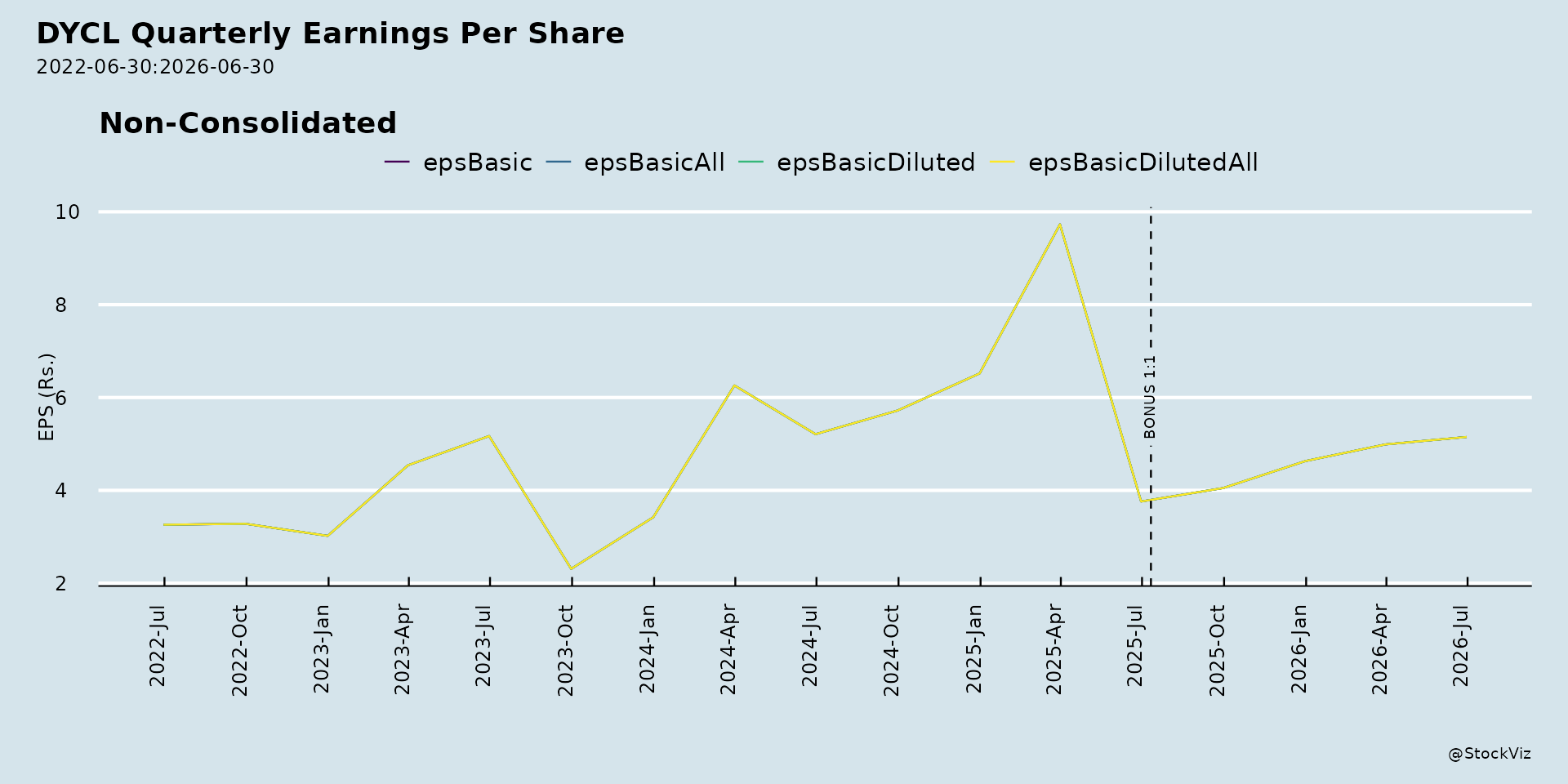
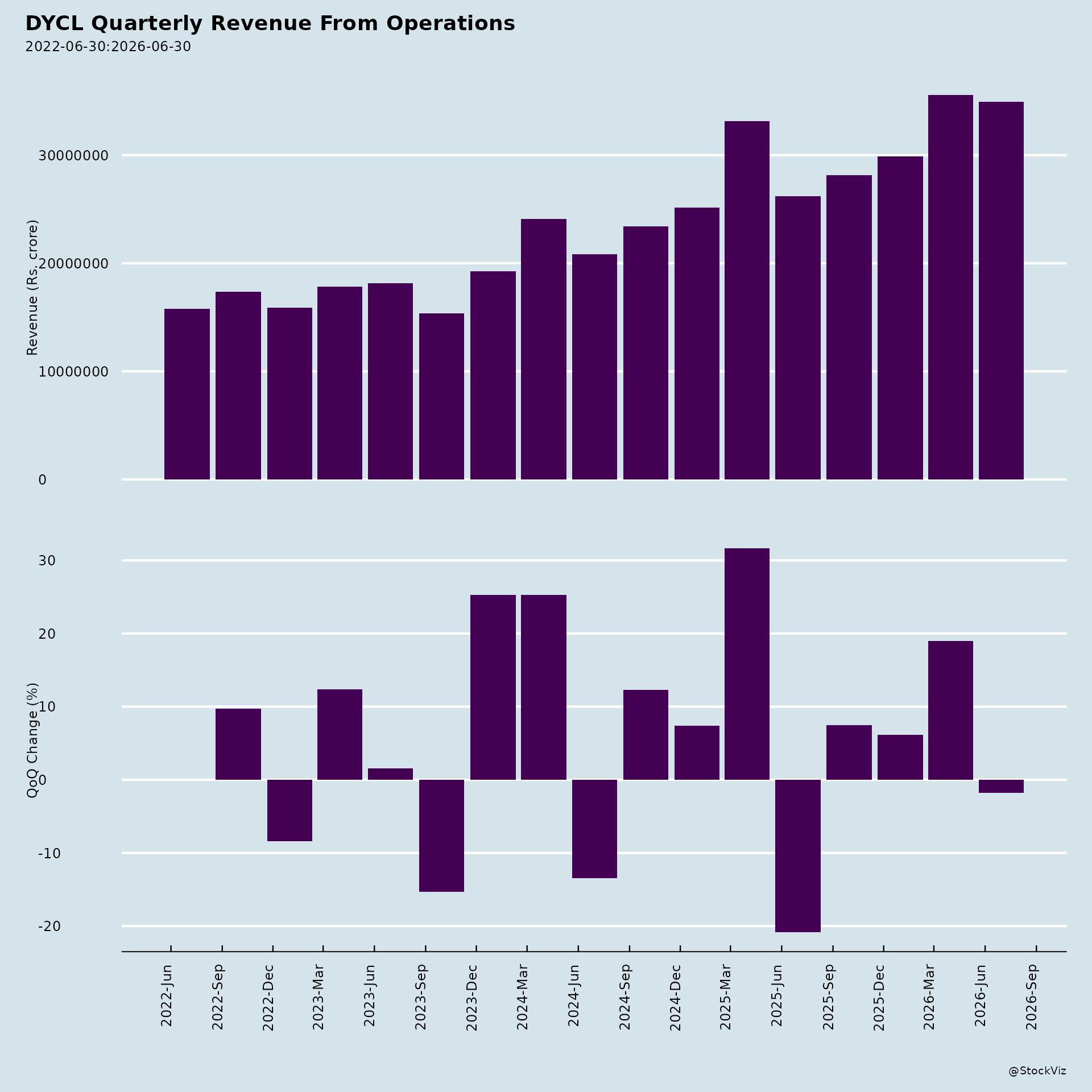
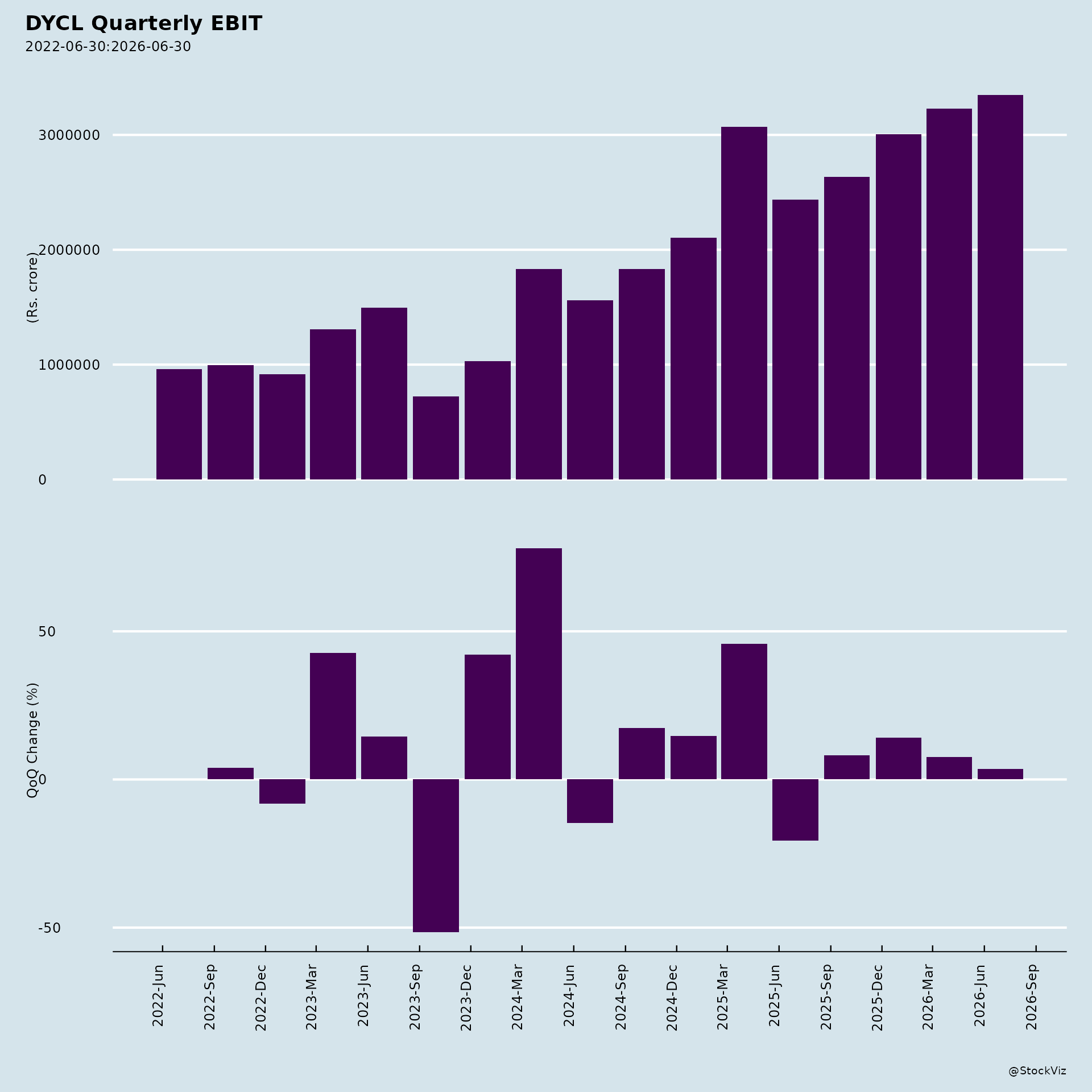
Strong Q1 FY27 performance. The company reported its highest ever first quarter revenue, with revenue growing 33% year-on-year, EBITDA rising 41% to INR38 crores, EBITDA margin at 10.9%, and profit after tax growing 37% to INR25 crores. Management attributed this to improved operating leverage, favourable product mix, cost discipline, and sustained demand across government and private sector projects.
Capacity expansion. The ongoing capacity expansion project is progressing as planned, with commissioning planned for September 2026. The capex is around INR45 crores, and management referenced an asset turnover of 6x to 7x. Meaningful revenue contribution is expected only from Q4 FY27, with ramp-up over 12 to 18 months and a target of 80%–85% utilisation by end of FY28. The new plant will include the company’s first E-beam setup. Existing capacity utilisation is around 85%.
Order book visibility. The order book of INR811 crores as of June 30, 2026 provides revenue visibility. Management stated that dispatch momentum remains healthy and that the shortened order book is not expected to materially impact revenue booking.
US market entry. The company began supplying to the US market in Q1 FY27, contributing around 15% of total exports in the quarter. The US is a distribution-led model, with the company engaging distributors who supply utilities and EPC contractors. The company holds licences for HV, LV and MV cables in the US. Management described the US as a very large market with substantial replacement demand expected over the next 10–20 years, and stated that even a small share would be a substantial growth driver and would increase the company’s total addressable market multi-fold. Margins in the US are initially similar to domestic, with potential for incremental margins as the company establishes a foothold.
Solar cables. Solar cable revenue was around 20% of revenue in Q1 FY27, and management expects it to remain in a similar range for the full year, potentially increasing in the second half with the new plant. Management stated solar cables could grow at 25%–30% for at least the next three to four years, driven by renewable energy and solar parks.
Product mix. Q1 FY27 customer-wise contribution was government 16%, private 71%, and export 13%. Product-wise contribution was HV cables 68%, LV cables 30%, and conductor 2%.
Futuristic segments. The company is pursuing HTLS conductors and data centre cables as futuristic investments, with product development and approval processes underway. Management stated that most capex in these areas is fungible and can be addressed from existing machinery with some add-ons, so substantial additional capex is not required. The company is also focusing on the EV segment. For data centres, the company will address power cables rather than communication or OFC cables.
Building wire segment. The company plans to enter the building wire segment only in the B2B space, consistent with its existing business model, and not in B2C distribution or branding.
Sector demand. Management expressed confidence in the power sector, citing strong investments in power transmission and distribution infrastructure, renewable energy, industrial sectors, and export traction. It described the cable market as a secular growth play, especially on the T&D side.
Raw material price risk management. The company operates both fixed price and variable price contracts. In variable price contracts, input cost changes are passed on to customers. In fixed price contracts, the company typically books raw material at the time of taking the order. Fixed price contracts account for roughly 20% of the order book.
Working capital management. Management stated it optimises the working capital cycle by keeping receivable days under control, negotiating favourable terms of trade, and managing borrowing costs by improving credit ratings. It referenced a working capital turnover ratio of more than 4x in its past track record.
3. Key Risks
- Raw material price volatility, particularly aluminium, affecting customer order behaviour and inventory carrying value.
- Order book slowdown and shortened order cycles, which management stated is industry-wide and tied to elevated prices.
- Working capital intensity of the cable business, with debt rising due to higher inventory value.
- Competitive expansion by major players in HV and EHV cables, though management characterised current competition as healthy.
- Global uncertainty, including war and instability, shortening order sizes and affecting export markets such as the Middle East and Gulf.
- US market execution risk, as the company has only just begun shipments and reordering depends on how the first orders are received.
- Data centre cable timeline uncertainty, dependent on macros and utility alignment.
- HTLS conductor adoption risk, dependent on government and utility willingness to undertake testing, product development, approvals, and cost alignment.
- Customer concentration risk from groups such as Adani and Birla entering cables and wires, though management stated Birla is focused on house wires and Adani’s business model is yet to be assessed, and noted long approval processes as a barrier to new entrants.
- Approval and licensing barriers in the US and India, which management described as a long journey for new entrants but also a protective factor for incumbents.
4. Management Guidance Versus Observed Business Performance
Growth guidance. Management stated it does not provide yearly guidance but has guided to 18%–20% long-term growth maintained over the last 10–15 years, and expects to maintain that trajectory. In Q1 FY27, revenue grew 33% year-on-year, above that range, though management attributed much of this to price growth from higher aluminium prices rather than volume, with volume growth at 5%–6%.
Capacity expansion timeline. Management had previously indicated delays in regulatory approvals. In the Q1 FY27 call, management stated the delay is behind them, the project is on track, and commissioning is planned for September 2026. This is consistent with the stated plan, though revenue contribution is now guided only from Q4 FY27.
US market entry. Management had been working on US entry for 15–18 months, delayed by tariffs and policy uncertainty. The company began supplying to the US in Q1 FY27, consistent with the stated intent to enter the market.
Solar cable contribution. Management guided solar cable revenue at around 20% for the full year, similar to Q1 FY27, with potential increase in the second half and more notable increase next year.
Order book. Management acknowledged weak year-on-year order book growth and weak April–May order booking, while maintaining that dispatch momentum and revenue booking should not be materially impacted.
Railway signalling. Management clarified that the segment was temporarily held back, not shut down, and that capacities are fungible. It stated there was no base effect from railway signalling in Q1 FY27 as it was already zero in Q1 FY26.
Working capital. Management stated debtor days remained the same when measured against the last six months of sales, despite the rise in debt, which it attributed to higher inventory value.
Dividend. The company declared a final dividend of Rs. 0.50 per equity share for FY26, approved by shareholders at the 19th AGM held on July 21, 2026.
GST appeal. The company received a favourable order under Section 107(11) of the CGST Act, 2017 from the Office of the Commissioner (Appeals), CGST, Jaipur, on August 14, 2026, allowing its appeal and dropping a demand of Rs. 3,28,030 for FY2018–19 relating to non-payment of GST under the Reverse Charge Mechanism. The company stated it does not expect any adverse financial or operational impact.
AGM resolutions. At the 19th AGM held on July 21, 2026, shareholders passed all resolutions, including adoption of audited financial statements for FY26, declaration of final dividend, re-appointment of Mr. Rahul Mangal as director, appointment of Mr. Neeraj Bali as Independent Director, approval of material related party transactions with Mr. Rasik Mangal, increase in borrowing limits, and ratification of cost auditors’ remuneration for FY27. The related party transaction resolution passed with 88.80% of votes polled in favour, with public institutions voting 94.58% against.
Copyright © 2023 SAS Data Analytics Pvt. Ltd. All rights reserved.