CHALET
Equity Metrics
September 24, 2026
Chalet Hotels Limited
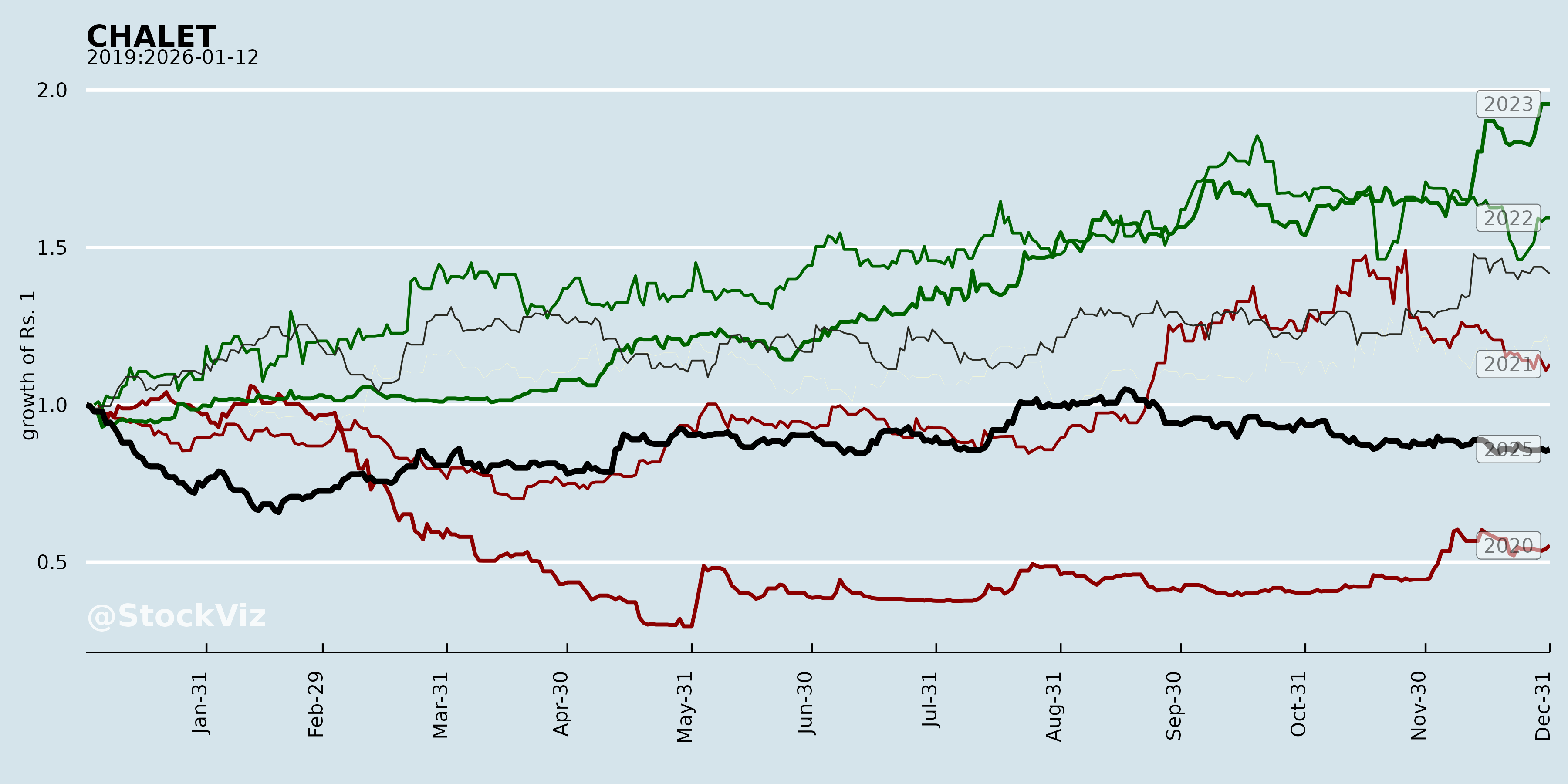
Annual Returns
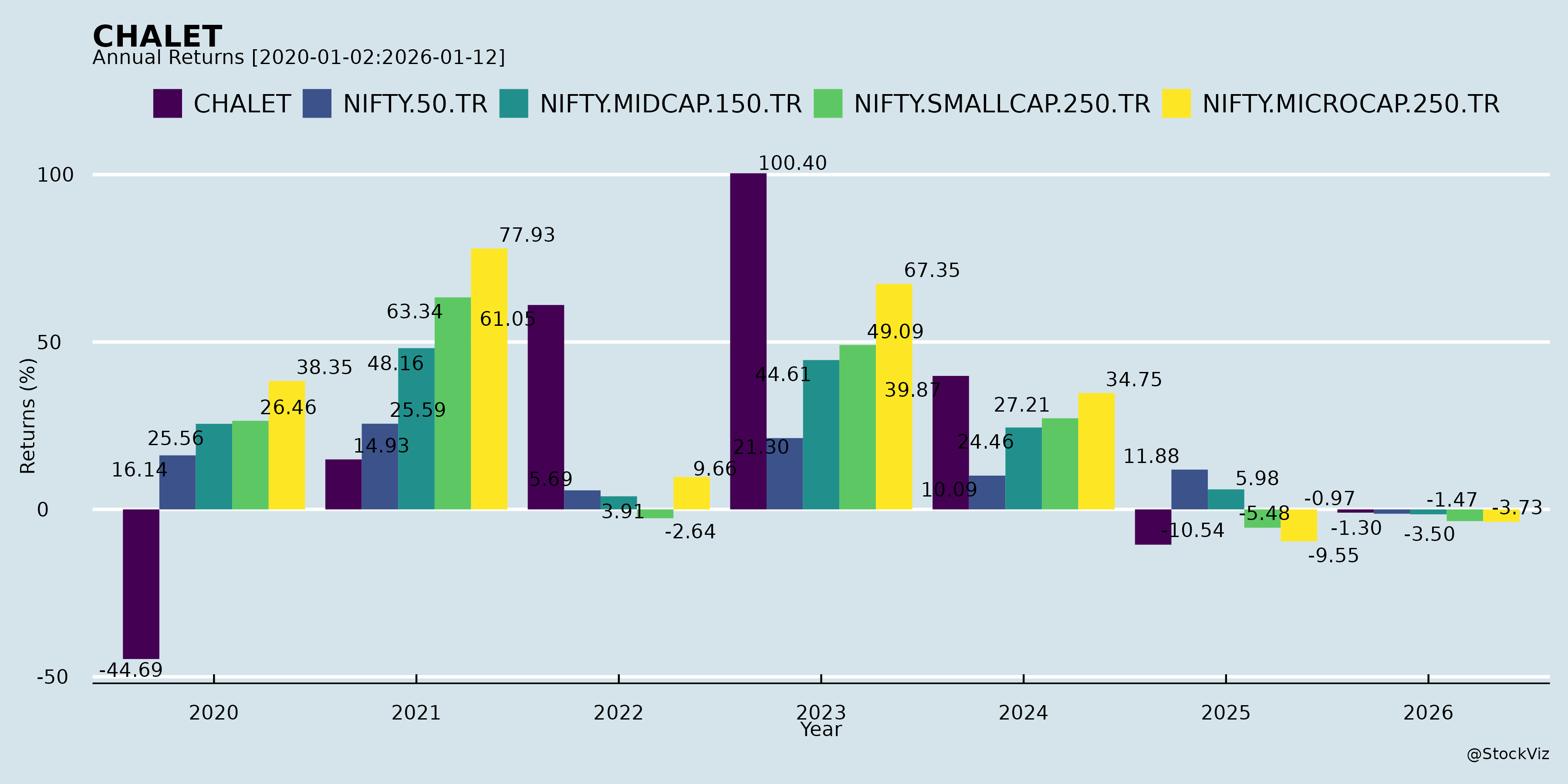
Cumulative Returns and Drawdowns

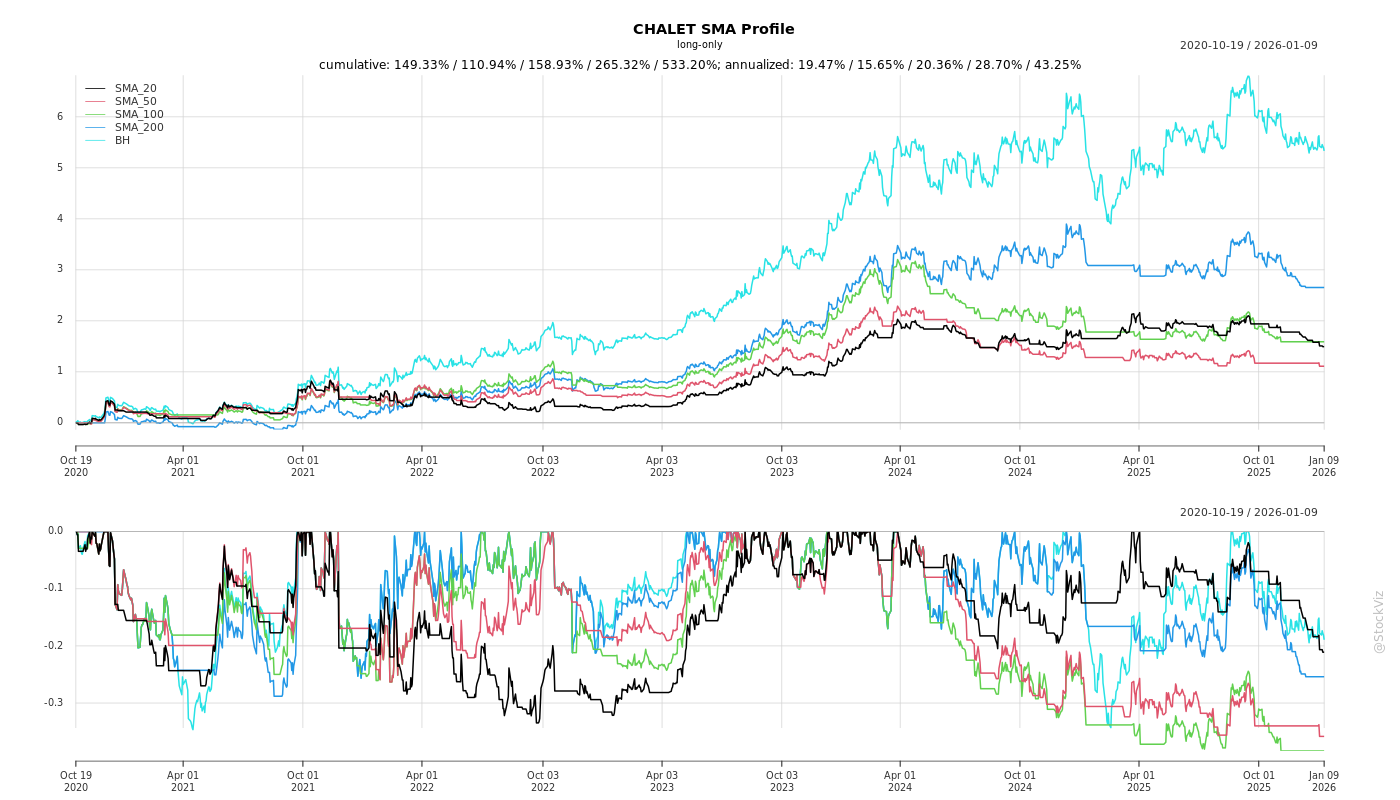
Fundamentals
Ownership
Margined
AI Summary
asof: 2026-09-16
Headwinds and Challenges
- Demand softness in key cities. In Q1 FY27, limited city events and group and catering cancellations softened demand in Mumbai, while weak industry events led to market compression and limited group demand in Bengaluru. International business remained below the prior year, and foreign tourist arrivals were flat, attributed to the West Asia Crisis.
- Cost inflation. Energy, food and beverage, manpower, and maintenance costs are cited as inflationary pressures.
- Competitive and supply pressures. Localized oversupply and competition from contemporary hotel formats and alternative accommodations pose risks.
- Macro and geopolitical volatility. Global geopolitical developments, trade disruptions, and economic volatility are noted as impacting travel sentiment and mobility.
- Operational and business risks. Fluctuations in earnings, challenges in managing growth, intense competition affecting cost advantage, wage increases, difficulty attracting and retaining skilled professionals, political instability, legal restrictions on raising capital or acquiring companies outside India, unauthorized use of intellectual property, and general economic conditions affecting the industry.
- ESG expectations. Heightened environmental, social, and governance expectations are flagged as a challenge.
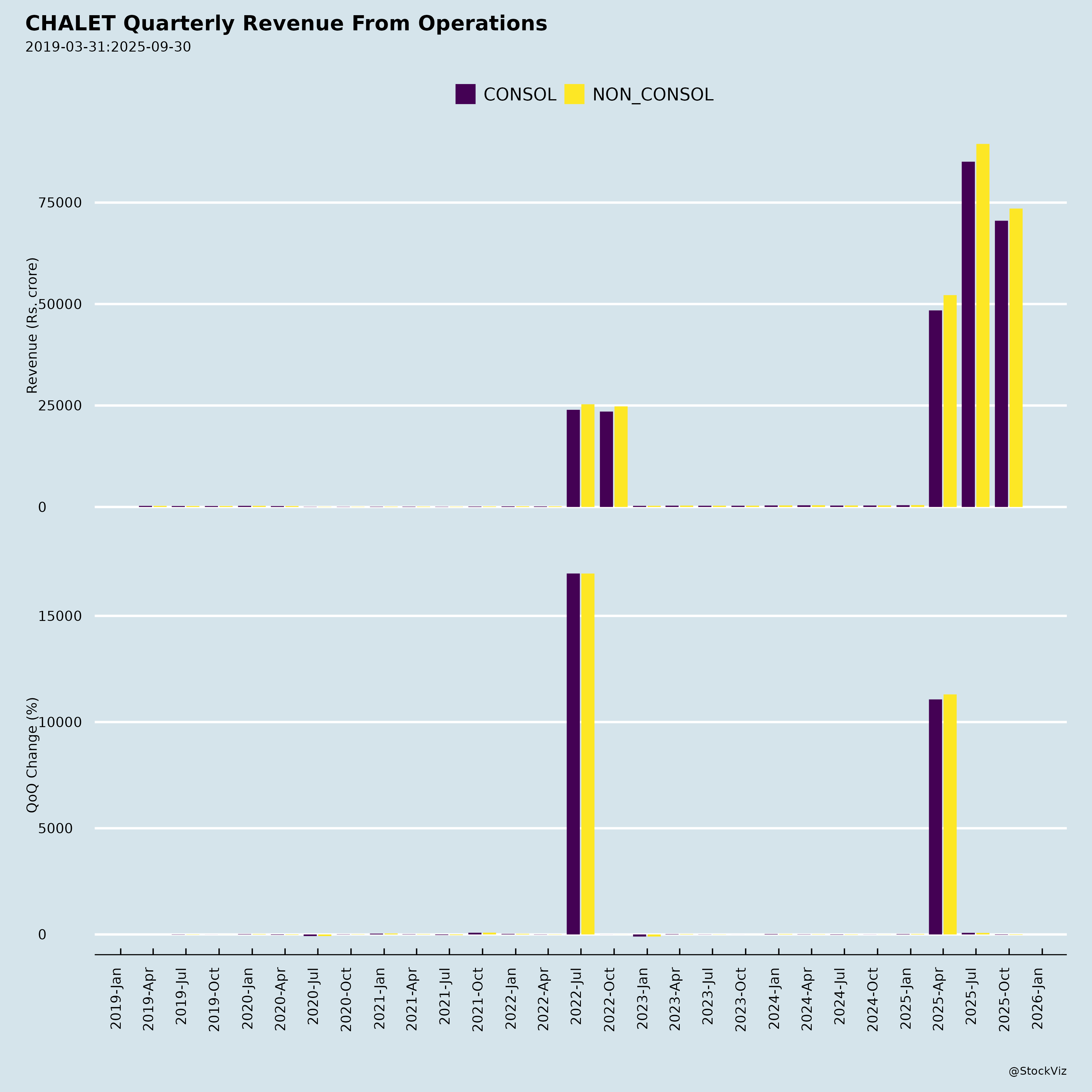
- Revenue normalization. Q1 FY27 consolidated revenue fell 43% YoY to Rs 5,213 million and EBITDA fell 34% YoY to Rs 2,431 million, primarily due to residential project handover normalization (1 unit handed over in Q1 FY27 versus 95 units in Q1 FY26).
Tailwinds and Growth Prospects
- Structural India hospitality tailwinds. Economic resilience, an expanding corporate sector, growing domestic travel, rising international arrivals, and sustained infrastructure investments support the sector. A projected 10.5% CAGR in chain hotel demand against a 9.1% supply CAGR indicates a strong demand-supply gap.
- Tight supply in key markets. Premium supply is expected to grow at a 5–6% CAGR in key markets for FY25–FY28, supporting pricing power.
- Commercial real estate momentum. Office absorption is strong, driven by global GCCs, IT, banking, manufacturing, and auto sectors. Commercial real estate occupancy stands at 91%, with a growth pipeline including ~1,655 rooms in hospitality and 0.9 msf of leasable area for CIGNUS Powai Tower II. The commercial platform is expanding from 2.4 million to 3.3 million square feet.
- Leisure demand. Leisure demand strengthened on summer holidays and reduced overseas travel.
- Brand and pipeline expansion. The proprietary premium lifestyle brand ATHIVA has been launched. Two new ATHIVA hotel developments were announced: a 150-key hotel in Hyderabad’s Financial District (launching FY 2029) and a 231-key hotel in Pune’s Business District (launching FY 2031), leased from Mindspace REIT under a capital-efficient model with capex incurred post-handover. Fit-out costs are Rs 13.5 million per key for Hyderabad and Rs 10.8 million per key for Pune. The growth pipeline of ~2,036 rooms under development takes total inventory close to 5,500 keys.
- Goa acquisition. Chalet Hotels completed the execution of a Share Purchase Agreement and acquired 100% of the equity share capital of Lakeview Mercantile Company Private Limited on September 7, 2026, making it a wholly-owned subsidiary. The company owns a land parcel at Bambolim in Goa with potential for a ~170-room luxury resort development.
- Investor engagement. The company participated in the Ashwamedh – Elara India Dialogue 2026 investor conference on September 2, 2026.
Key Risks
- Earnings volatility and growth management challenges.
- Intense competition eroding cost advantage.
- Wage inflation and difficulty attracting and retaining skilled professionals.
- Political instability and legal restrictions on raising capital or acquiring companies outside India.
- Unauthorized use of intellectual property.
- General economic conditions affecting the industry.
- Geopolitical developments, trade disruptions, and economic volatility affecting travel sentiment and mobility.
- Localized oversupply and competition from contemporary hotel formats and alternative accommodations.
- Heightened ESG expectations.
- Forward-looking statements concerning expected business effects, future plans, business prospects, anticipated savings, financial results, acquisitions, and capital expenditure plans are based on management’s assumptions and internal deliberations, and the company undertakes no obligation to update them.
Management Guidance Versus Observed Business Performance
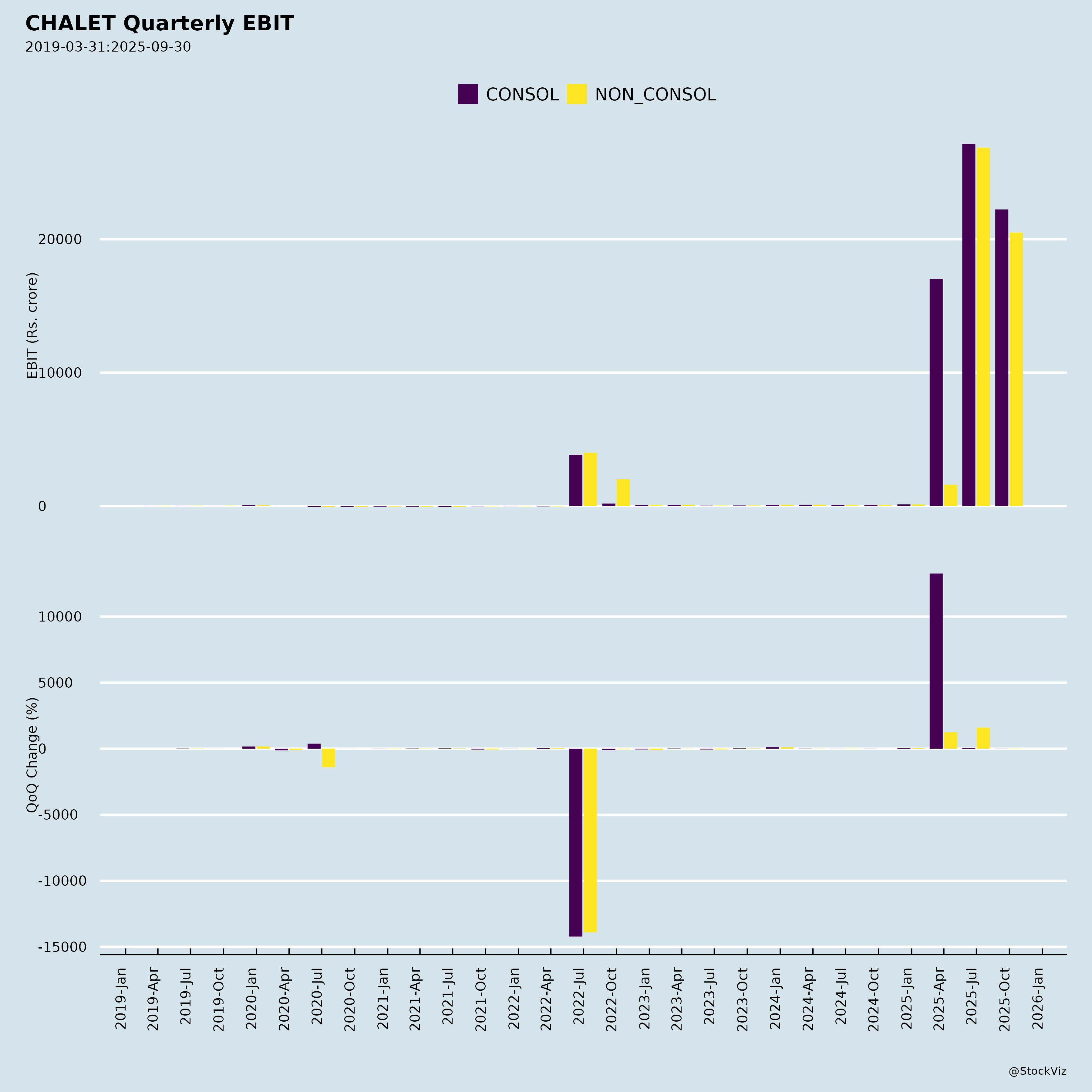
- FY 2025-26 performance. Consolidated revenue from operations was Rs 27,697.53 million, EBITDA was Rs 12,300.76 million, and Profit After Tax was Rs 6,450.17 million. The company operates 11 hotels with 3,389 keys, has 2.4 msf of commercial real estate, and maintains a net debt-to-equity ratio of 0.52x. The Board recommended a final dividend of Re. 1 per equity share.
- Q1 FY27 performance. Consolidated revenue was Rs 5,213 million (-43% YoY) and EBITDA was Rs 2,431 million (-34% YoY), impacted by residential handover normalization. Ex-residential revenue grew 10% YoY to Rs 5,140 million and EBITDA grew 15% YoY to Rs 2,400 million. RevPAR grew 6.5% YoY to Rs 8,582, ADR increased 8.5% YoY to Rs 13,247, and hospitality revenue increased 9% YoY to Rs 4,185 million.
- Guidance on commercial real estate. CIGNUS Powai Tower II is targeted for completion by Q4 FY27.
- Guidance on hotel openings. Taj Delhi International Airport is targeted for a partial launch of 70 rooms in Q4 FY27 with full completion in Q1 FY28. Athiva Resort & Spa at Varca is targeted for FY28. Ritz Carlton at Hyderabad and Hyatt Regency at Airoli are targeted for Q4 FY29. The Hyderabad ATHIVA hotel is projected for FY 2029 and the Pune ATHIVA hotel for FY 2031.
- Long-term outlook. Management is confident in the long-term India growth story and expects the global and Indian hospitality industry to move into a stable, structurally driven growth phase supported by rising travel demand, expanding mid-income consumption, and disciplined supply additions over the next 3–5 years.
- Sustainability commitment. Management commits to achieving Net-Zero Greenhouse Gas (GHG) Emissions by 2040.
- Auditor rotation. The Board approved the appointment of M/s. Deloitte Haskins & Sells Chartered Accountants LLP as Statutory Auditors for five consecutive financial years, commencing from the conclusion of the AGM for FY 2026-27 until the conclusion of the AGM for FY 2031-32, subject to shareholder approval. The existing auditors, M/s. B S R & Co. LLP, will complete two terms of five consecutive years at the conclusion of the AGM for FY 2026-27.
Broker Narrative
The broker narrative evolved from early enthusiasm around record occupancy, ADR surges, and sharp profitability inflection in 2023 toward a more measured RevPAR- and annuity-driven growth story by 2026, while debt and capex concerns receded as headwinds and FTA/geopolitical pressures and project delays became the dominant risks. Persistent themes included commercial/annuity revenue expansion, ongoing hospitality project additions, and an overarching Buy consensus, but the tone shifted from celebrating peak operational metrics to anticipating recovery from transient occupancy dips. By the last report, brokers still maintained Buy calls but with predicted returns far exceeding actual performance, signaling stretched optimism.
Fears that came true
- Rising cost of finance and high debt levels (~₹2,400 crore) strained the balance sheet, correlating with DISAPPOINTMENT outcomes such as the 2024-02-16 call (actual -18.1%) and 2024-12-16 call (actual -9.9%).
- Heavy near-term capex of ₹600 crore in FY24E pressured cash flows and contributed to sustained underperformance relative to predictions through multiple DISAPPOINTMENT calls in 2024-2025.
- FTA headwinds and occupancy declines flagged in the last report materialized, with occupancy dipping 120 bps YoY to 64.8%, correlating with DISAPPOINTMENT outcomes in late 2024 and 2025-2026.
- South Goa property delay due to regulatory approvals flagged in the last report reflects a pattern of project delays consistent with prior DISAPPOINTMENT outcomes tied to unmet expansion timelines.
Optimism that failed
- Early optimism about sustained record occupancy (74%) and ADR growth (+108% YoY) failed to hold, as occupancy later fell to 64.8% YoY per the last report.
- Projected revenue and profitability inflections from portfolio expansion were delayed, with the South Goa property still awaiting regulatory approvals, undermining the timeline of earlier tailwind claims.
- Broker predicted returns frequently vastly exceeded actual performance (e.g., +56.2% predicted vs. +9.1% actual in the last report), indicating that growth optimism was systematically overstated relative to realized outcomes.
Broker Timeline
46 broker calls · 2023-05-09 to 2026-07-30
Copyright © 2023 SAS Data Analytics Pvt. Ltd. All rights reserved.