BOSCHLTD
Equity Metrics
November 18, 2026
Bosch Limited
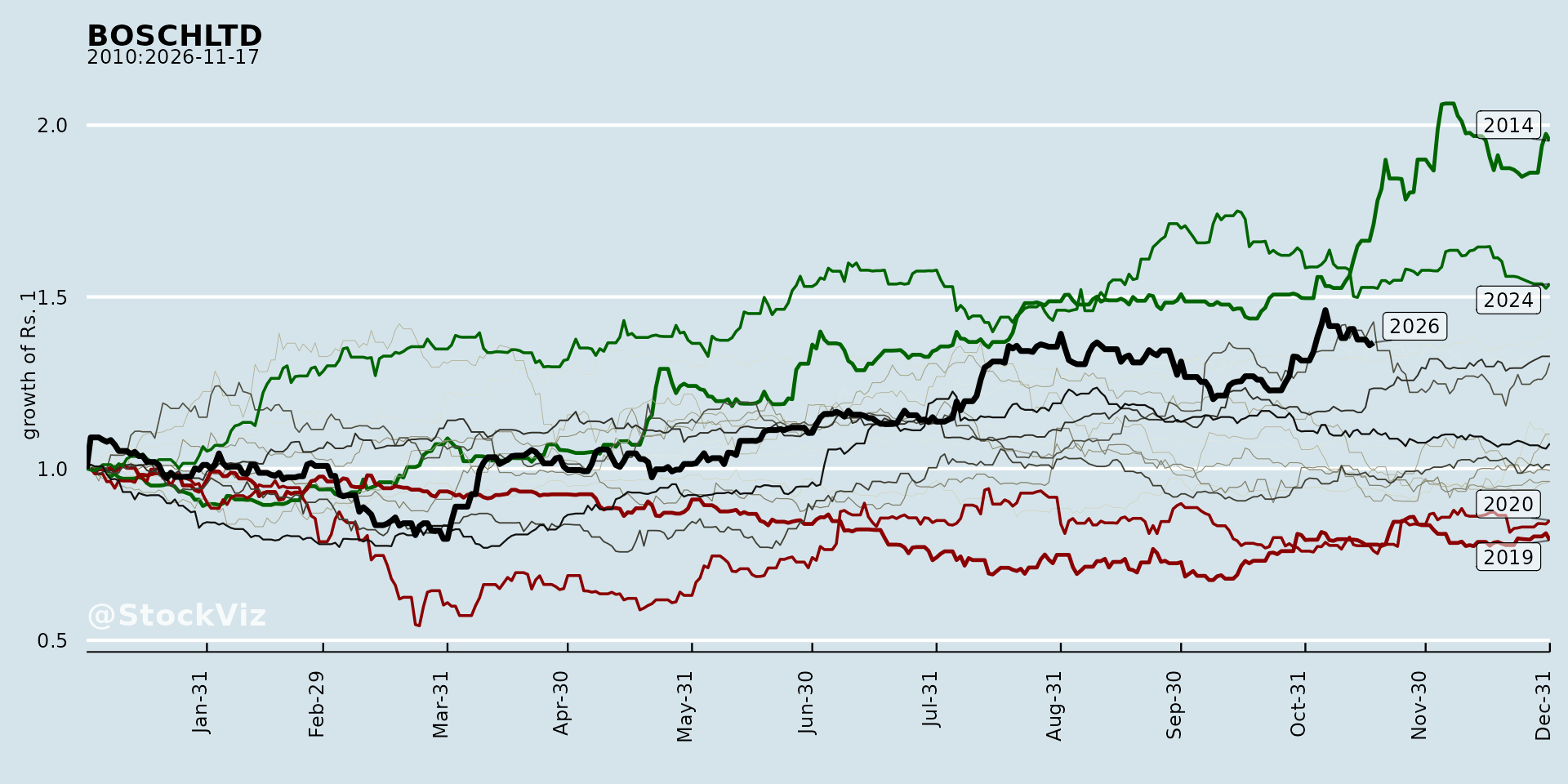
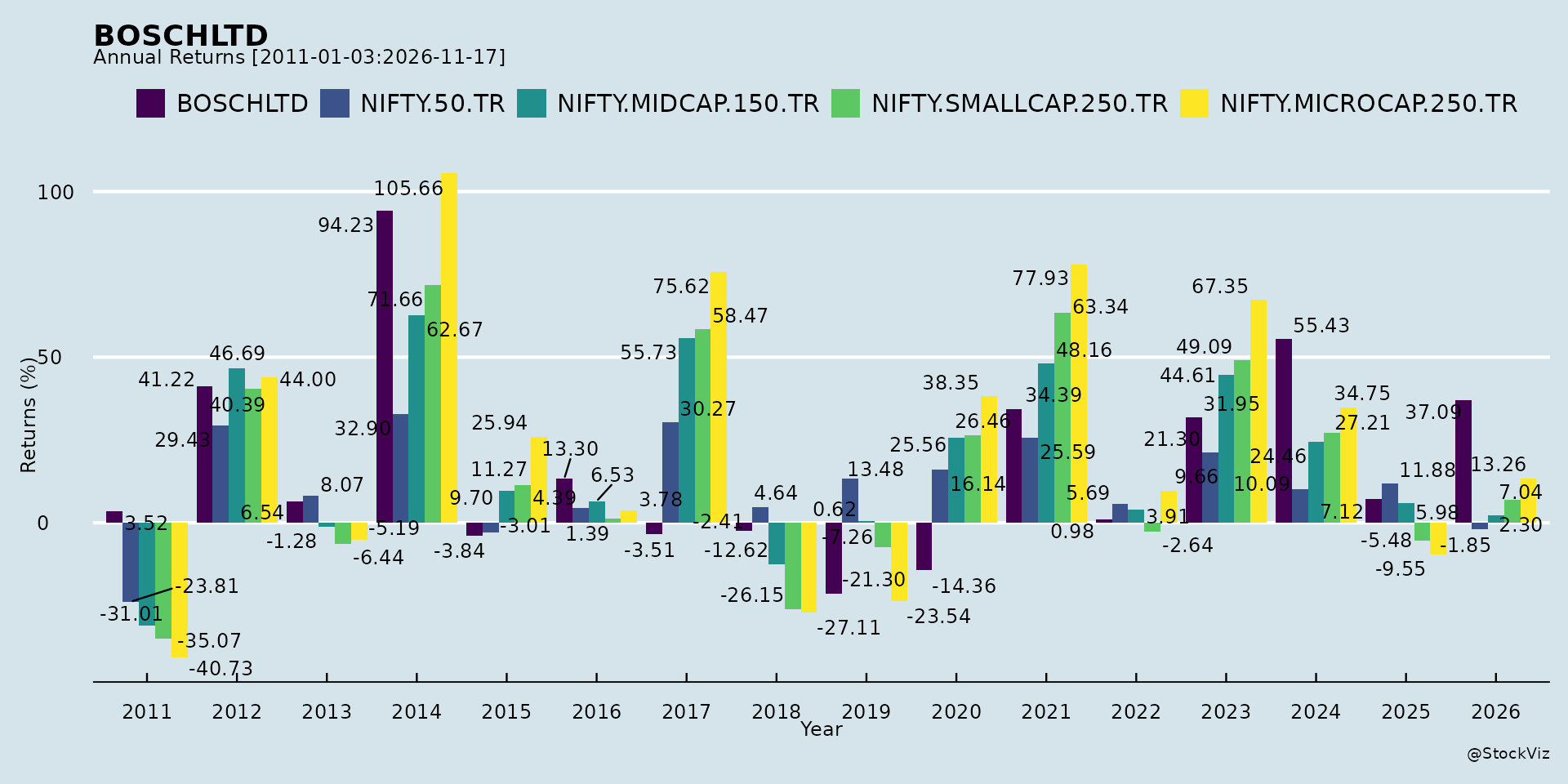
Annual Returns
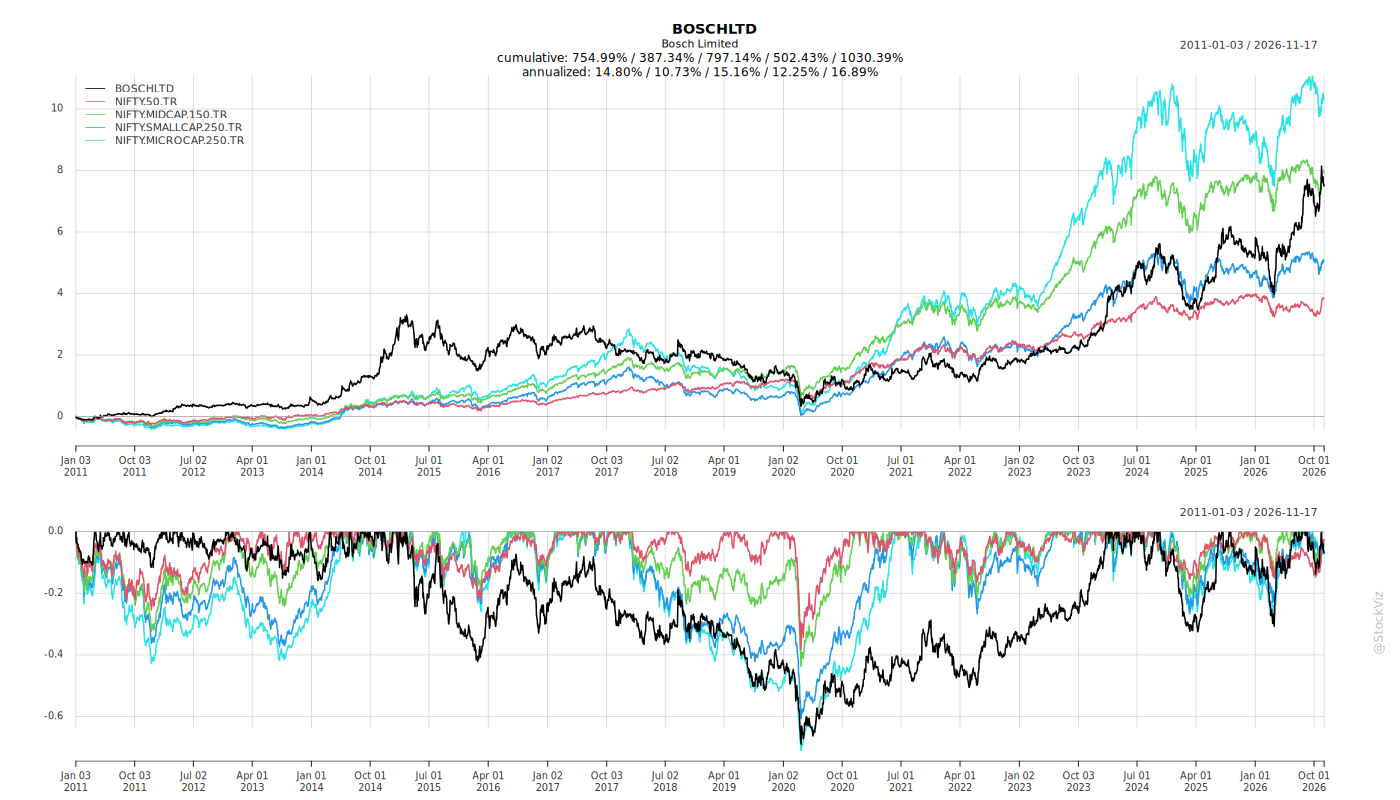
Cumulative Returns and Drawdowns
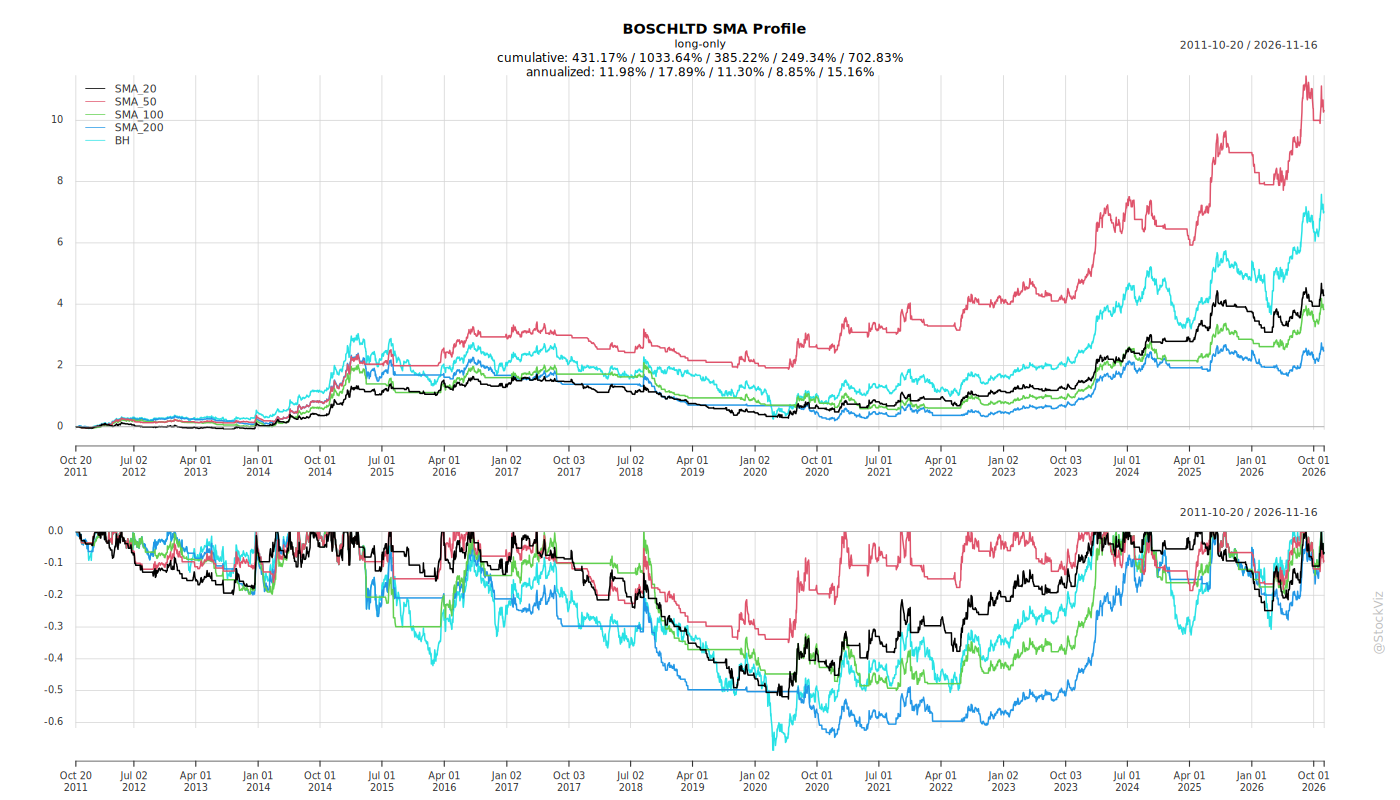
Fundamentals
Ownership
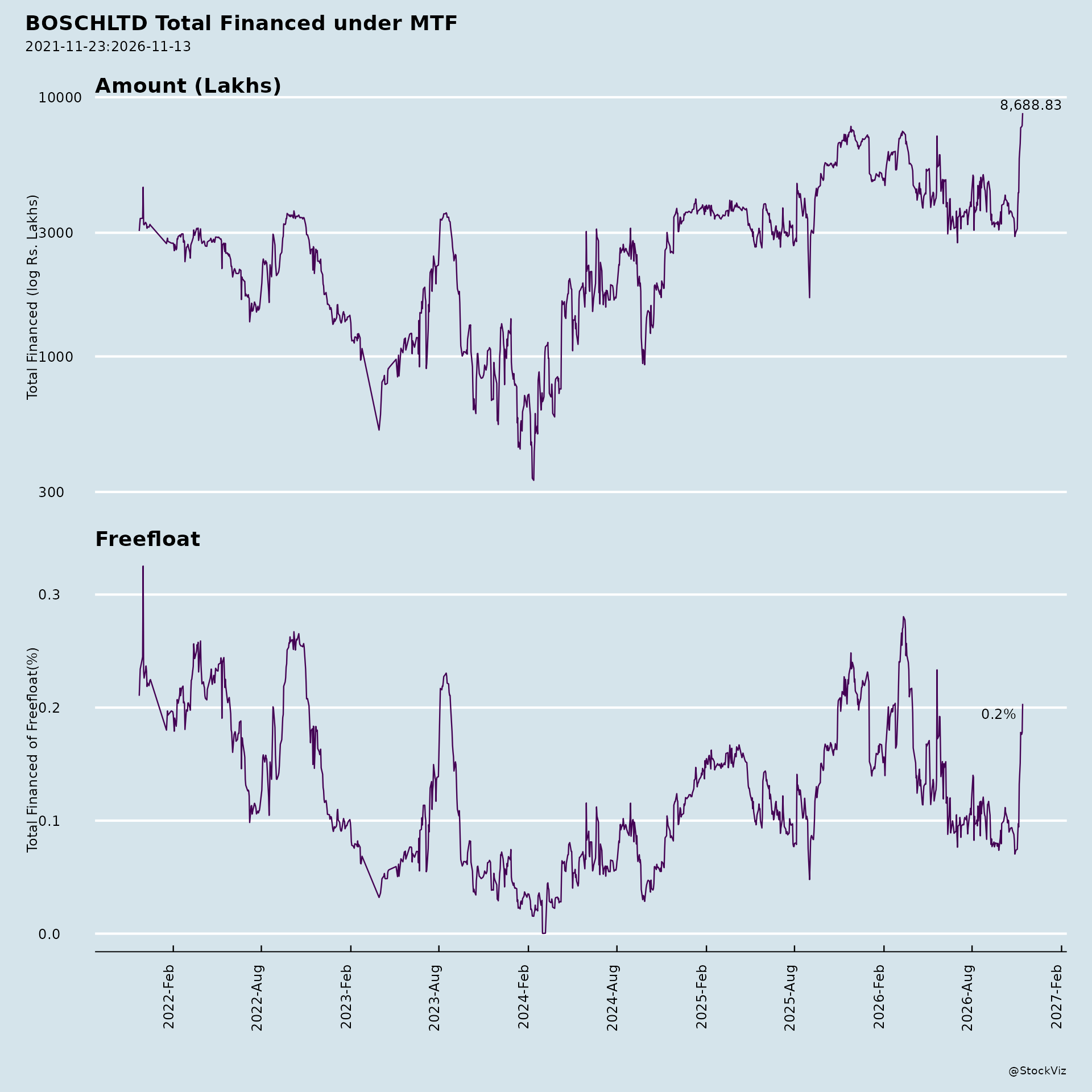
Margined
AI Summary
asof: 2026-09-14
Bosch Limited — Q1 FY26-27: Headwinds, Tailwinds, Risks and Guidance
1. Headwinds and Challenges
- Geopolitical disruption in West Asia weighed on the operating environment during Q1 FY27, even as domestic demand held up. Management flagged geopolitical tensions as a continuing downside risk for the coming quarter.
- Monsoon variability and a potential El Nino effect were cited as key downside risks to demand, particularly relevant to tractor and rural-linked segments, despite resilient tractor demand supported by strong Rabi harvest cash flows and pre-Kharif activity.
- Cost pressure in fuels and commodities: the HCV segment absorbed an INR 7.5 per litre increase in diesel price. Commodity costs saw a strong increase over several quarters before levelling off somewhat, with the outlook dependent on global conditions, geopolitics, supply chain and logistics issues.
- Inflation and weather: June headline retail inflation reached 4.38%, and heat waves across select regions affected the quarter, though demand remained strong.
- Supply chain complexity: ongoing geopolitical and supply chain complexities required active management; the company highlighted diversified sourcing and proactive commodity and currency risk management as priorities.
- Regulatory transition: upcoming regulations such as CAFE Phase 3 and ADAS implementation in commercial vehicles require engagement with OEM partners. Management declined to quantify the content opportunity from CAFE 3 at this stage.
- Aftermarket recovery from a weak base: the mobility aftermarket had languished at low single-digit growth last year; management acknowledged this and described strategy and market-approach corrections as the response.
- OEM software ownership trend: a question was raised on whether OEMs increasingly owning software and electronics architecture poses a risk to Bosch’s traditional Tier 1 value capture. Management stated it does not see this as a negative phenomenon and engages with OEMs on different models.
- EV mix shift: the EV segment continued to expand market share on attractive operating economics and lower running costs, alongside the continuing momentum of combustion technologies.
2. Tailwinds and Growth Prospects
- Resilient domestic macro: robust private consumption and a stable monetary policy stance, with the RBI holding the repo rate at 5.25% under a neutral stance at its August 2026 meeting. The RBI raised its FY26-27 real GDP growth forecast to 6.7% from 6.6%, backed by strong capital expenditure momentum.
- Automotive demand across segments: passenger vehicle demand remained strong on SUV preference and healthy consumer sentiment; HCV momentum was supported by stable freight activity, replacement demand and construction/infrastructure spending, with steel and cement providing a foundation; LCV demand was robust on last-mile logistics, e-commerce and FMCG demand plus a low base; 3-wheeler growth continued on passenger mobility and last-mile connectivity; tractor demand was resilient; and the 2-wheeler market recorded robust growth on a low base and resilient rural demand.
- Near-term demand outlook: management expects a resilient 8% growth in the next quarter, driven by festive demand, stronger rural cash flows and ongoing infrastructure activity.
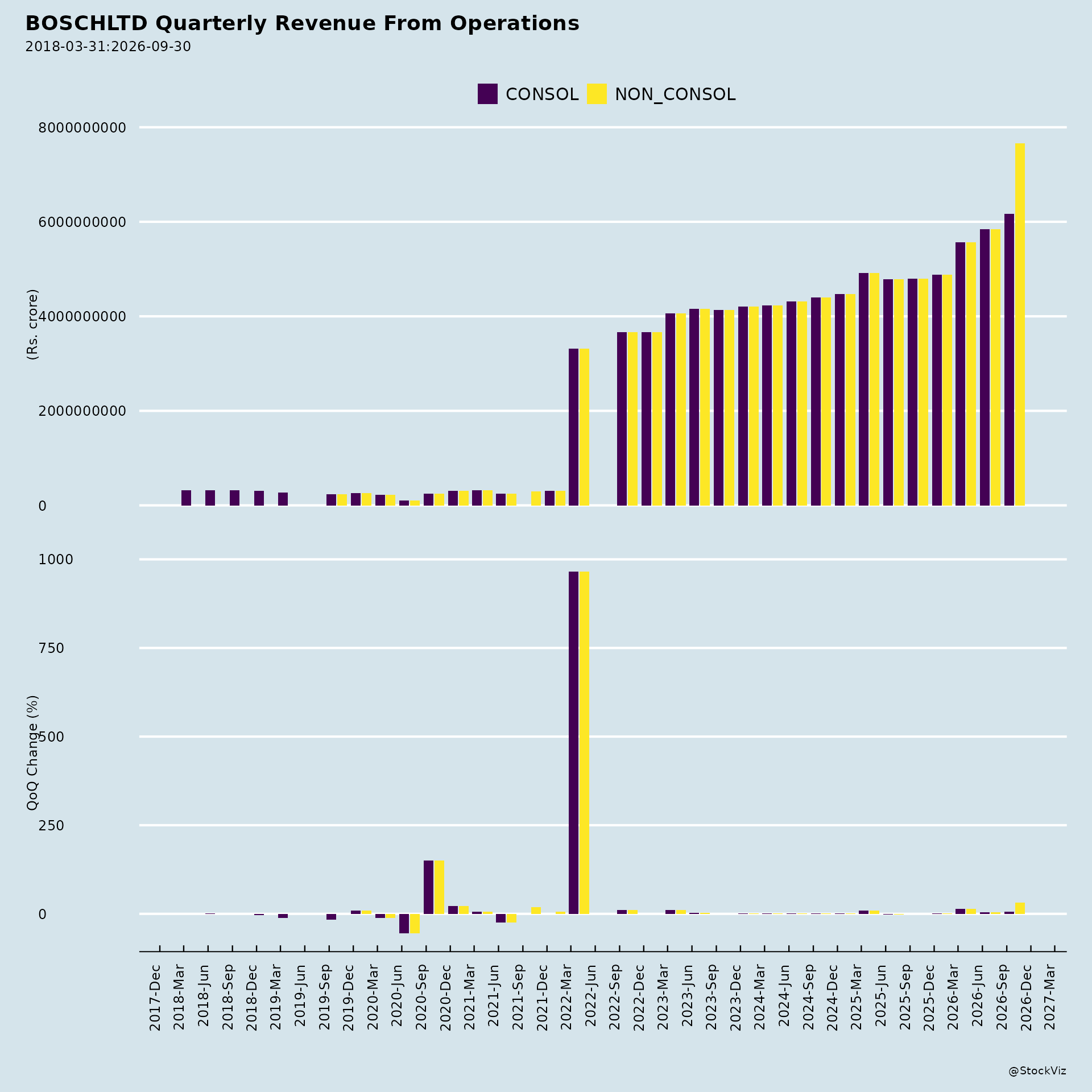
- Segment performance in Q1 FY27: the mobility business grew 25.7% year-on-year, led by Power Solutions (+29%) on passenger cars and off-highway; mobility aftermarket grew 9.6% on strategic price positioning and new schemes in lubricants and spark plugs; the 2-wheeler business grew 41.4% on value-added EMS products, premium motorcycle platforms and steady demand from major domestic OEMs; consumer goods grew 20.9% on strong tools demand and marketing campaigns. Sequentially, mobility grew 7.5%, Power Solutions 5.8%, mobility aftermarket 8.7%, and the 2-wheeler business 20.5%; consumer goods declined 15.7% on seasonal factors.
- Aftermarket momentum: the independent aftermarket business achieved its highest ever monthly sales in June, with robust OE growth and strong contributions from lubricants, batteries, spark plugs and braking systems. New product launches include the Tulix LED lighting range, Prithvi heavy-duty commercial vehicle battery, and PC clutches and suspension.
- Power tools: strong sequential growth and accelerated demand in construction and automotive, with online sales channels expanding their share.
- Technology portfolio breadth: management positions Bosch as a technology company supporting whatever the market demands — SDVs, electrification, CNG, ADAS and other technologies are all in the portfolio, alongside continuing combustion technology momentum and possible upgraded combustion legislation.
- EV participation: EVs are already part of the mobility business in technology and product terms; a joint venture with TACO will produce e-axles.
- Chassis Systems acquisition: the 100% acquisition of Bosch Chassis Systems India Private Limited (RBIC) was completed on July 01, 2026, for a final consideration of Mio INR 90,238. Management described it as a great portfolio addition — a powertrain-agnostic product line — with consolidation underway and an investor meet planned at the Chakan, Pune location in November.
- Joint ventures: the JVs with Wheel and Brakes India and with TACO are in final stages of merger control clearances across multiple jurisdictions. Management indicated a healthy order book from both sides at the time of entering the TACO JV, and that customer discussions for the TSF air systems JV would begin from September at the IAA auto show.
- Exports: currently at high single digit — approximately 8% to 8.5% of revenue — with an aim to continuously increase over the next few years.
- Growth drivers for the next 3 to 5 years: volume growth across the mobility portfolio, plus new product introductions across power solutions, 2-wheelers, mobility aftermarket, power tools and the complete chassis systems area.
3. Key Risks
- Geopolitical tensions, particularly in West Asia, and external market volatility.
- Monsoon variability and a potential El Nino effect affecting rural and tractor-linked demand.
- Commodity, currency and logistics volatility, dependent on global conditions and supply chain issues.
- Uncertainty in market conditions, demand, competition and macroeconomic factors.
- Regulatory transition risk around CAFE Phase 3 and commercial vehicle ADAS, with content opportunity not yet quantified.
- Potential value-capture pressure from OEMs increasingly owning software and electronics architecture, though management does not view this as a negative phenomenon.
- Normalization of the GST-related demand base: management noted that the expected post-GST demand normalization had not occurred after the first two quarters, with sustained growth continuing, but flagged that GST-related effects may normalize in one or two more quarters.
- Merger control clearance timelines for the Wheel and Brakes India and TACO joint ventures across multiple jurisdictions.
- Forward-looking statements are based on currently held beliefs and assumptions, and the company expressly disclaims any obligation to release updates or revisions.
4. Management Guidance Versus Observed Business Performance
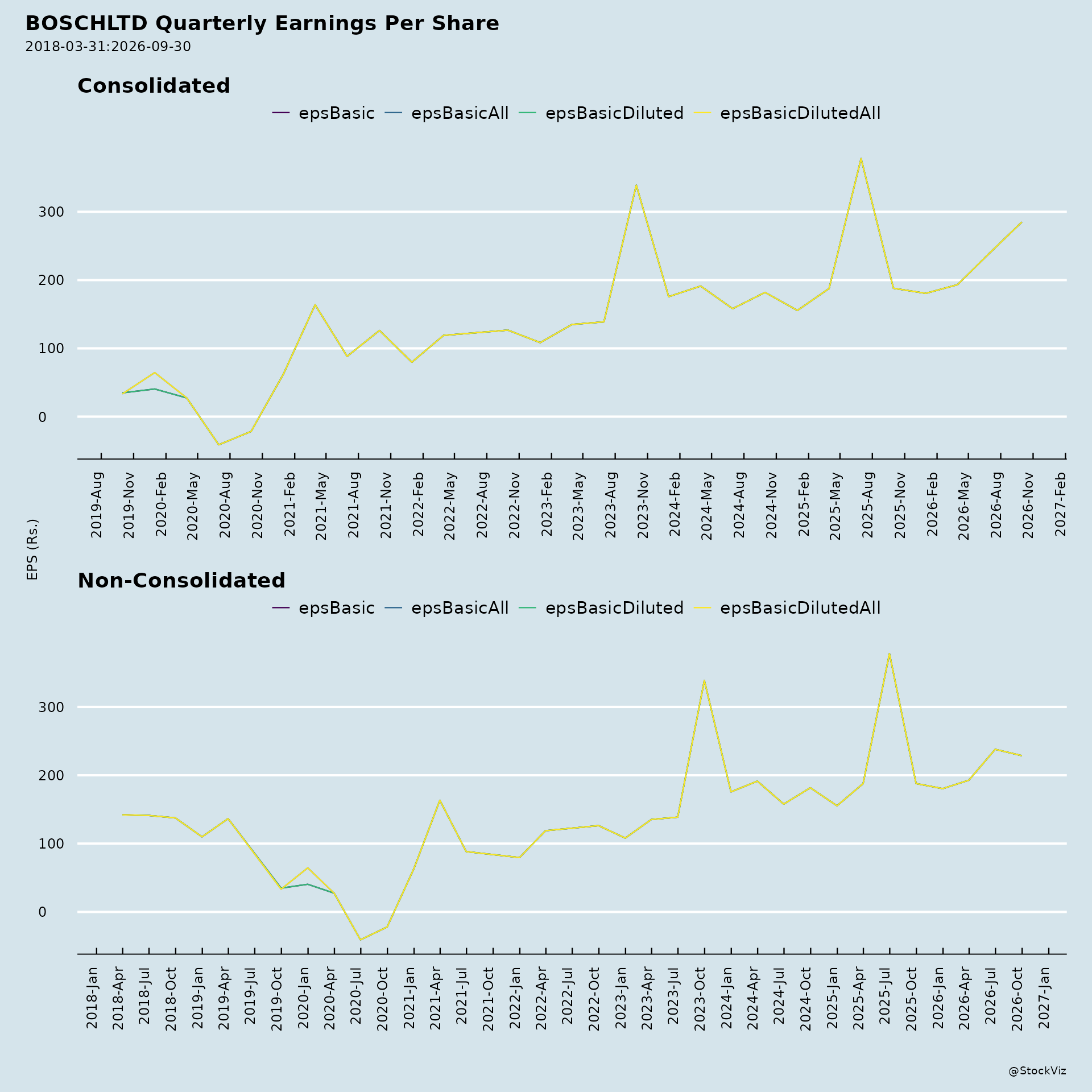
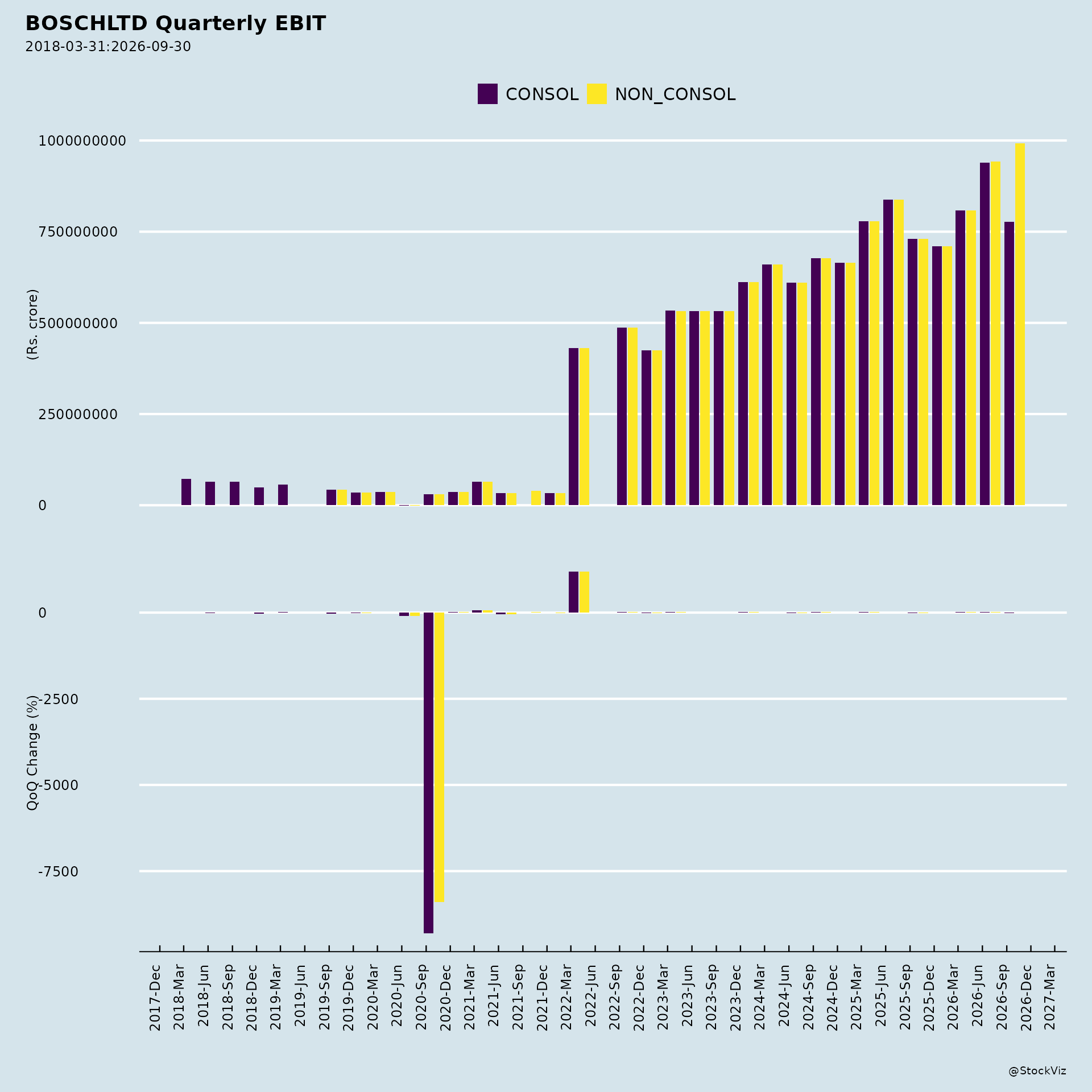
- Margins: management stated that sustained improvement over at least two years has come from operational excellence, increased localization content, favourable volume growth, productivity improvements and product mix, and that the company is on an upward trend and will sustain current margin levels. The worldwide purchasing organization was cited as helping navigate a volatile sourcing market. Management confirmed there were no one-offs in the quarter, including in other expenses, and that the current favourable product mix is expected to remain favourable through FY27. Observed: EBITDA for April-June 2026 was INR 8,180 million, up 28% year-on-year and 4.7% sequentially, with the improvement attributed to revenue growth and expense optimization.
- Revenue: observed revenue from operations for April-June 2026 was INR 58,419 million, up 22% year-on-year and 5% sequentially from INR 55,657 million, driven by Power Solutions and mobility aftermarket.
- Profit: PAT for April-June 2026 was INR 7,018 million, a decline of 37.1% year-on-year because April-June 2025 included an exceptional item — profit on sale of video solutions, access and intrusion and communication systems under the Building Technologies segment. Excluding that exceptional item, PAT grew 9.9% year-on-year. Sequentially, PAT grew 23.4%, aided by revenue growth and higher mutual fund gains taxed at a lesser rate.
- Outperformance: management stated the company outperformed market volume growth by a few percentage points, attributing Power Solutions outperformance largely to volume effect plus new introductions over the last two quarters, and confirmed market share gains in the 2-wheeler segment through new products to new OEMs.
- Localization: management said localization plans are well on track and content will continue to increase, with updates to be shared in coming quarters.
- Chassis Systems disclosure: management deferred FY26 sales numbers and segment breakups for Bosch Chassis Systems, stating consolidation is underway and details will be shared at the next quarter’s conference call and at the November investor meet in Chakan, Pune.
- Fuel-agnostic revenue share: management could not provide a consolidated figure offhand and offered to share data independently.
- EV revenue contribution: management said EVs are already part of the mobility business in technology and product terms, though not yet showing up in turnover, and will revert on revenue addition as quarters progress.
- JV order book: management declined to disclose order wins at this point, citing the healthy order book at JV formation, and committed to updating on order book and further details after a quarter.
- CAFE 3 content opportunity: management declined to speculate on value and offered to share separately.
- Closing tone: management described the quarter as exceptionally good and the trend as looking good and positive going into the next quarter.
Broker Narrative
The narrative evolved from broad market-driven optimism about Nifty’s uptrend and near-term upside to company-specific concerns over margin contraction and high valuations. While early reports feared a market correction, later reports focused on gross margin pressure from imported raw materials and commodity volatility. Persistent themes included the stock’s strong fundamental growth, moving from general market breadth to specific regulatory and EV-related content opportunities.
Fears that came true
- The early fear of a Nifty intermediate top and near-term correction materialized as DISAPPOINTMENT outcomes when the stock’s near-term upside was limited or stalled.
- Gross margin contracted ~420bp YoY in 1QFY27 to 33.5%, below estimates, aligning with DISAPPOINTMENT outcomes.
- Commodity and sourcing volatility persisted, keeping margins under pressure and contributing to DISAPPOINTMENT outcomes.
- High traded-goods mix in raw material costs and imported new technologies kept margins under pressure, resulting in DISAPPOINTMENT outcomes.
- The stock appeared fairly valued with a target price about 3% below the current market price, capping upside and aligning with DISAPPOINTMENT/Neutral outcomes.
Broker Timeline
24 broker calls · 2021-06-07 to 2026-08-11
CNBC-TV18: ratings, targets and commentary
Extracted from CNBC-TV18 posts; ratings and targets are as published, not current consensus. OCR may contain errors. Speaker attribution is retained; not all speakers are brokers. These statements are separate from the Broker Narrative and Broker Timeline and have no calculated performance or outcomes.
Management comments
Company-related comments from CNBC-TV18 posts in x-stream. Speakers are management of the displayed affiliation, not necessarily management of this company. Only explicit executive designations and affiliations are included; analyst, broker and investment-manager commentary remains separate. OCR may contain errors.
| Published / source (IST) | Speaker / affiliation / designation | Commentary |
|---|---|---|
|
Company management
Bosch
management
|
|
Copyright © 2023 SAS Data Analytics Pvt. Ltd. All rights reserved.