BMWVENTLTD
Equity Metrics
September 24, 2026
BMW Ventures Limited
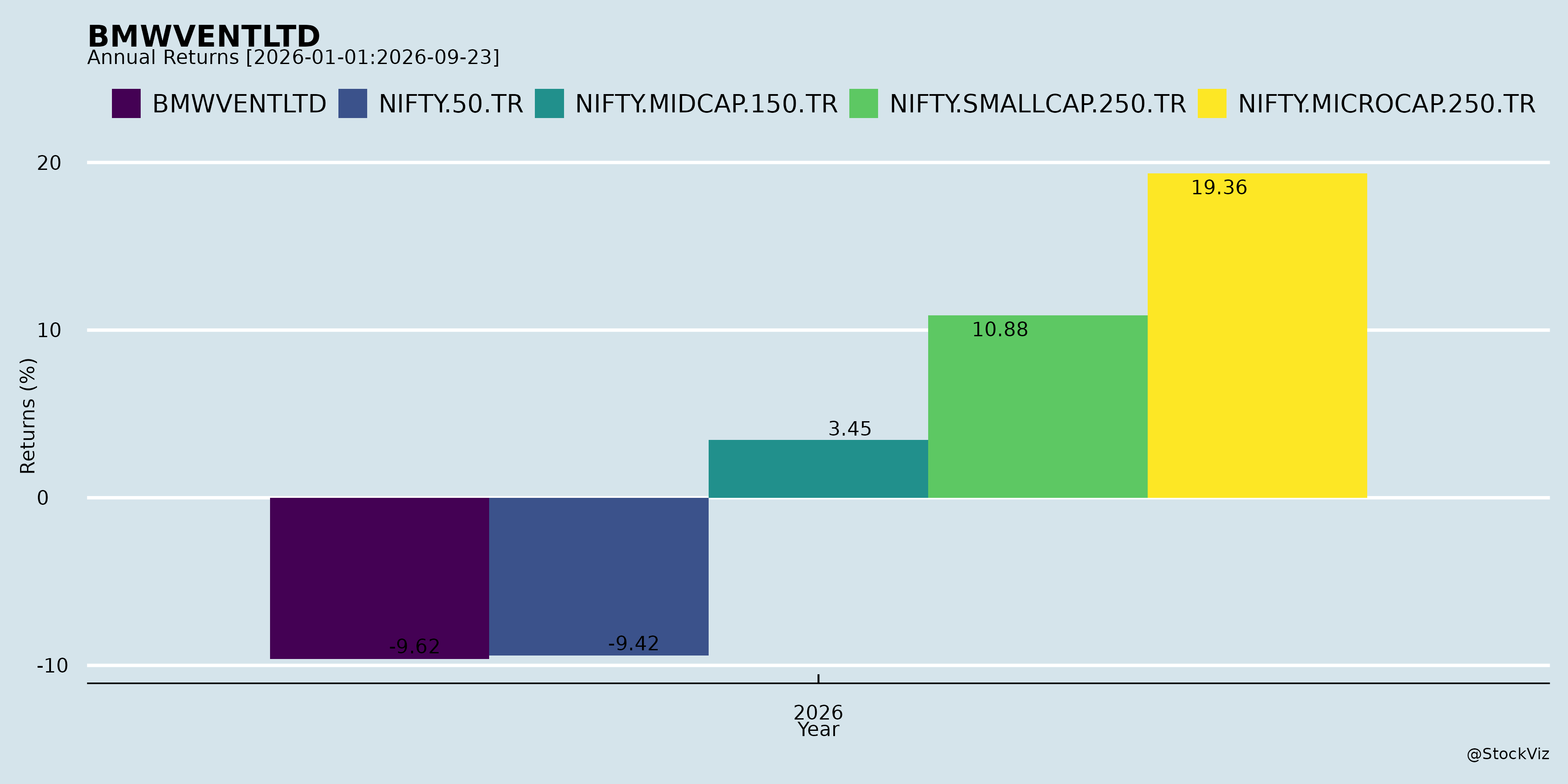
Annual Returns

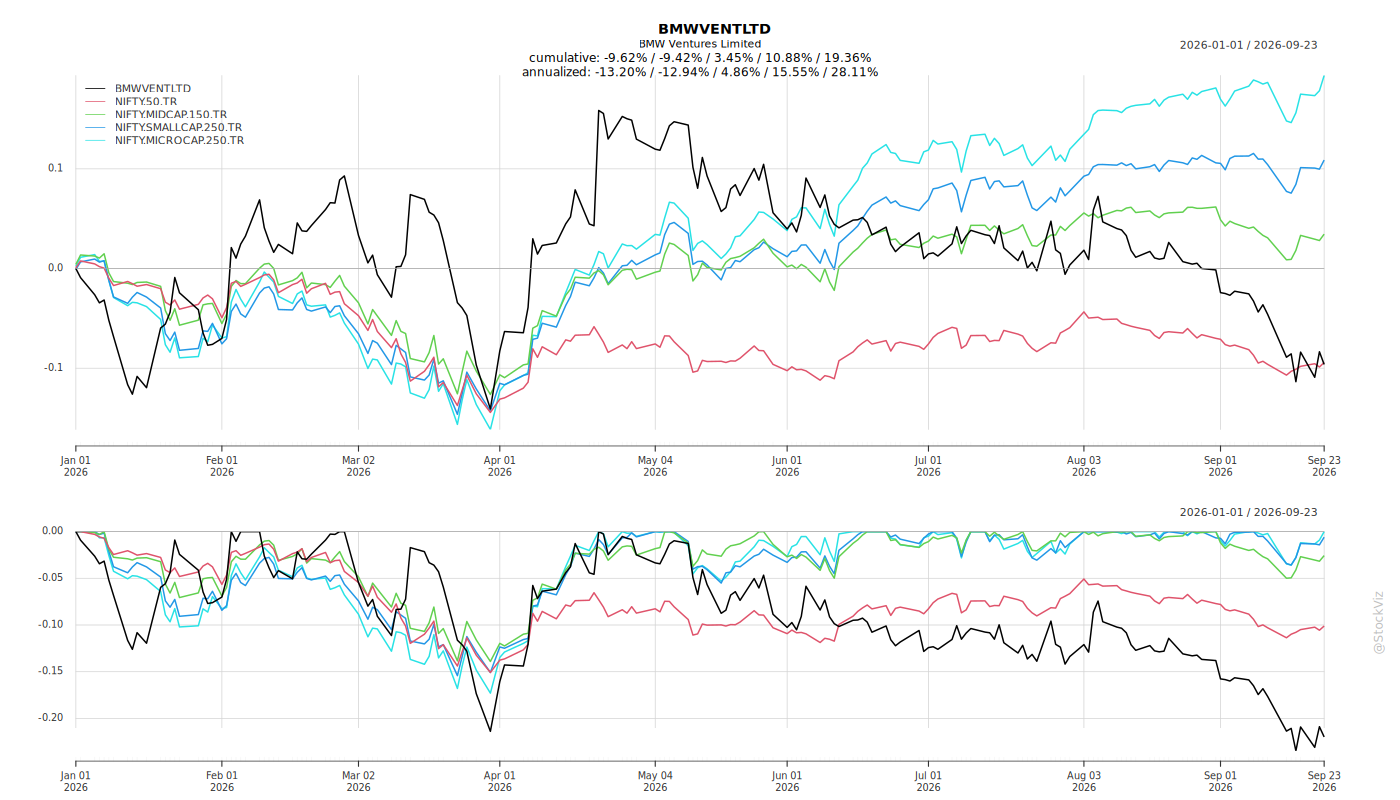
Cumulative Returns and Drawdowns
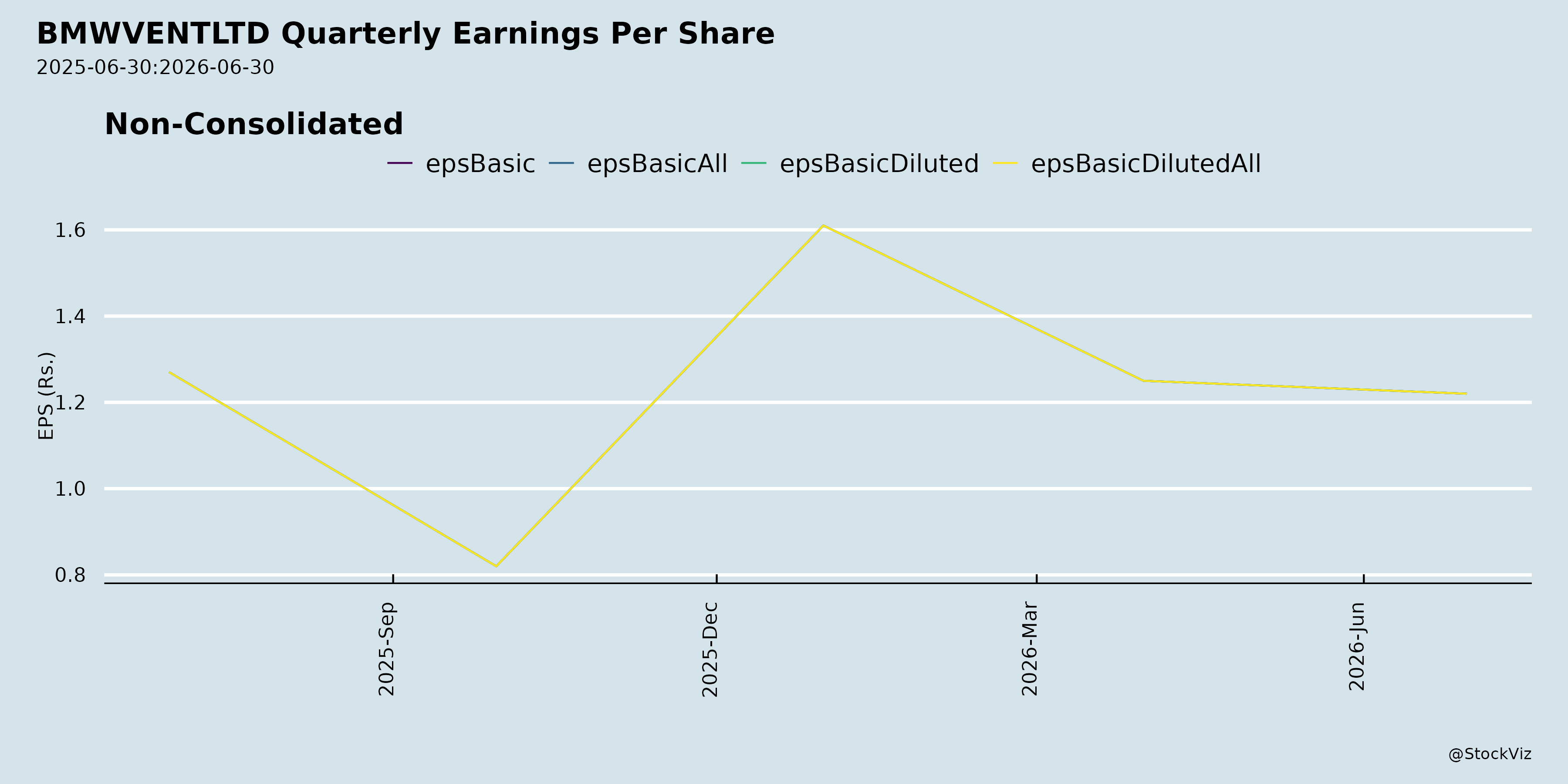
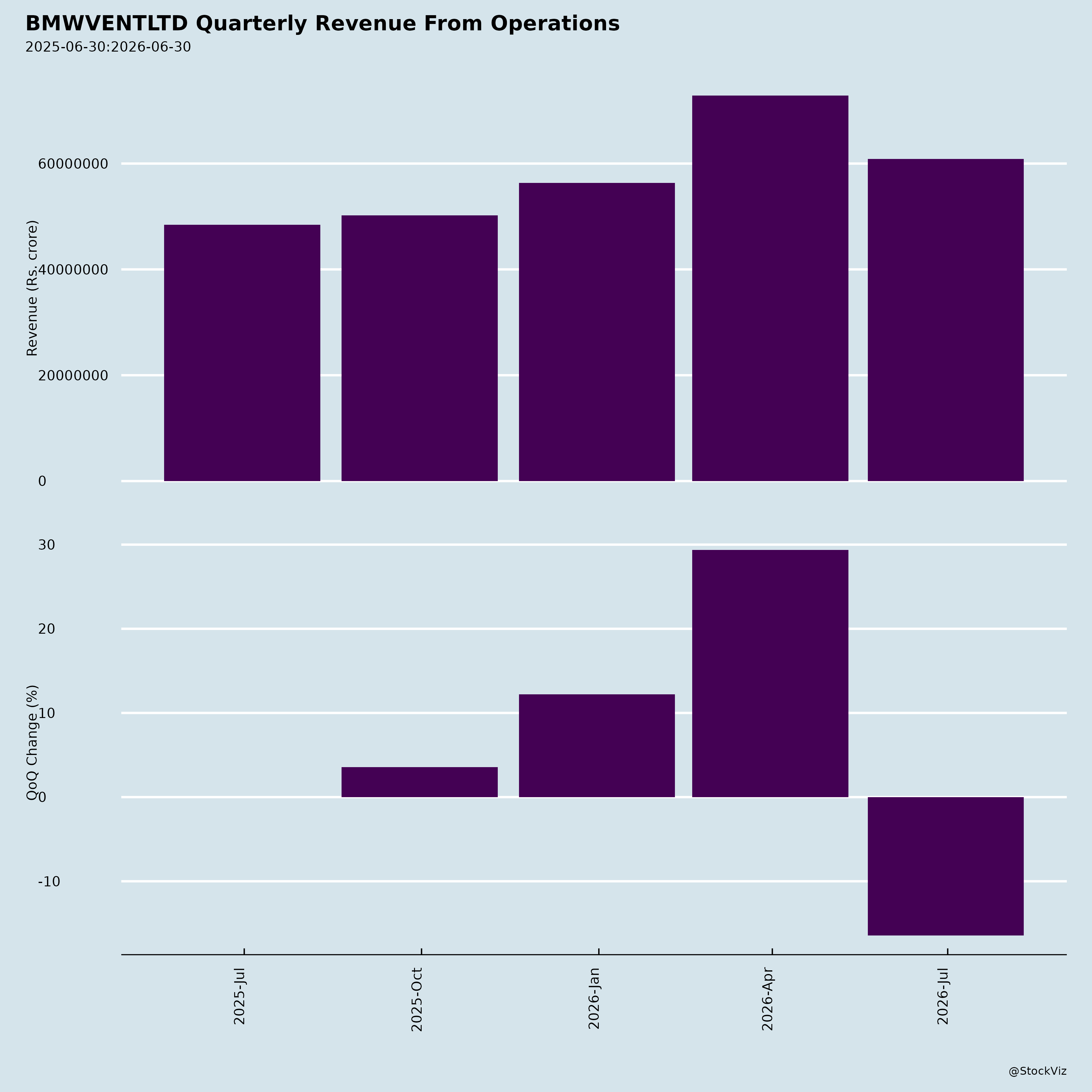
Fundamentals
Ownership
Margined
AI Summary
asof: 2026-09-19
BMW Ventures Limited — Recent Corporate Announcements
1. Headwinds and Challenges
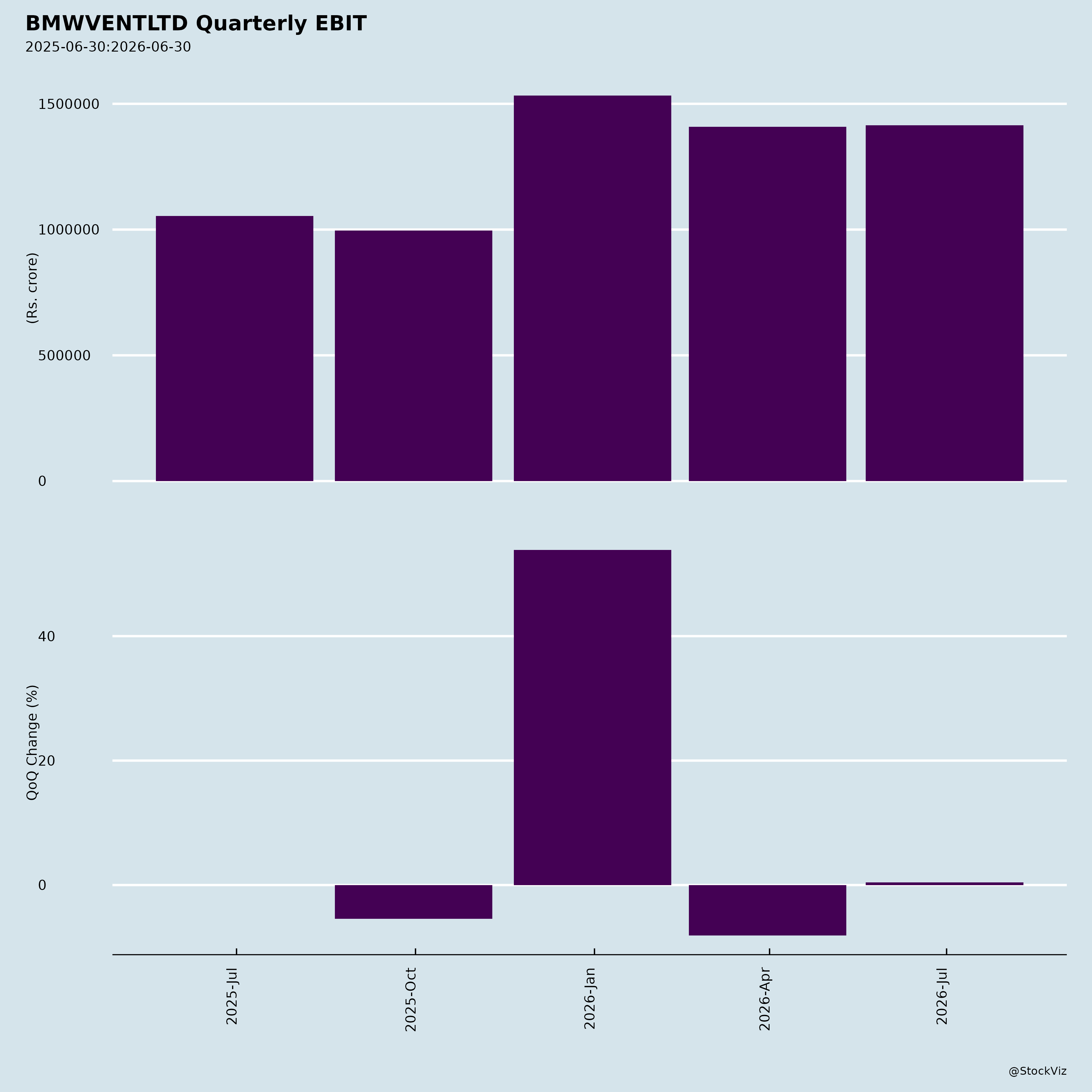
- Margin pressure from rising costs. The company states that operating margins have been affected by various risen costs, which it characterises as temporary. Gross margin contracted to 9.3% in Q1 FY27 from 10.8% in Q1 FY26 (a decline of 152 bps), and EBITDA margin fell to 3.4% from 4.0% (down 57 bps).
- Flat products decline. Flat products revenue fell 9% YoY in Q1 FY27 (₹126.8 crores to ₹114.8 crores), with a 21% YoY volume decline. The company attributes the Q1 FY27 volume decline to a temporary disruption in GP Sheet shipments following the Strait of Hormuz closure.
- Commodity trading exposure. Management notes it must maintain flexibility on margins given the nature of the commodity trading business.
- Working capital deterioration. Debtor days rose to 34 days in FY26 from 27 days in FY25, and the cash conversion cycle lengthened to 86 days from 78 days. Cash from operating activities was negative ₹53.0 crores in FY25, improving to ₹44.7 crores in FY26.
- Business model transition. The PVC pipes business is transitioning away from the own-brand “BMW Polytube” model to contract manufacturing through an engagement with Delhi-based Prayag Pipes.
- Land monetisation execution. Land valuation of approximately ₹80–90 crores is described as an indicative management assessment subject to market conditions, regulatory approvals and strategic considerations; land aggregation activities are still in progress.
2. Tailwinds and Growth Prospects
- Q1 FY27 performance. Revenue from operations grew 26% YoY to ₹608.9 crores; EBITDA grew 8% YoY to ₹20.7 crores; PAT grew 32% YoY to ₹10.6 crores.
- FY26 performance. Revenue grew 10% YoY to ₹2,278.2 crores; PAT grew 14% YoY to ₹37.5 crores. Net debt-to-equity improved from 2.0x to 0.6x.
- Segment momentum. Fabrication delivered 118% YoY growth, contributing 4–5% of total EBITDA. TMT bars, the core product, delivered 40% YoY growth. Long products revenue rose 41% YoY (₹332.3 crores to ₹466.1 crores) with 40% YoY volume growth.
- Order book and new orders. Fabrication order book rose to 9,613 tonnes as of June 30, 2026 from 2,530 tonnes a year earlier. On September 8, 2026, the company secured two purchase orders worth ₹72,93,60,950 inclusive of all taxes from Tata Projects Limited for supply of TMT Steel FE-550D Grade for the 3X800MW USCTPP-ADANI Project, with 100% advance payment including GST.
- Forward integration. Strengthened TMT business through forward integration into bore piling and ready-built steel products, supporting a 4% margin uplift on select orders.
- Fabrication economics. Fabrication carries an indicative EBITDA margin profile of 9–11%, with 12,000 MT installed capacity and 88,280 sq. ft. dedicated fabrication area; RDSO-approved steel girder fabrication (production started July 2023).
- Market position. Approximately 33% share of the Bihar TMT bars market, presence in 29 of 38 Bihar districts, 1,380 dealers, and a dealer network described as 1,000+ with low customer concentration (top 5 customers at 6.7% in FY26 versus 8.9% in FY25).
- Land value unlocking. Land bank across Dagarua, Purnea (16 acres), Belgachhi, Purnea (43 acres), and Hooghly near Calcutta (14 acres), with estimated market value of ₹80–90 crores; real estate monetisation of two land parcels (Dagarua, Purnea and Hooghly, Calcutta) is being explored with meaningful developments expected by Q2-end.
- Demand drivers. Industrial warehousing expansion, PM Gati Shakti infrastructure push, East India infrastructure expansion, and a shift toward prefabricated steel structures.
3. Key Risks
- Margin variability inherent in commodity trading, as acknowledged by management’s stated flexibility on margins.
- Execution and delivery risk on the Tata Projects orders, which are to be delivered within 8 weeks of the purchase order.
- Dependence on continued order inflows and execution in fabrication to reach targeted contribution levels.
- Land monetisation is subject to market conditions, regulatory approvals and strategic considerations, and the valuation is an indicative management assessment.
- Working capital risk reflected in elevated debtor days and cash conversion cycle.
- The company’s forward-looking statements are subject to risks and uncertainties including economic and market performance, competition, strategy implementation, growth and expansion, technological changes, and market risk exposure, as set out in its safe harbour statement.
4. Management Guidance Versus Observed Performance
- Revenue growth guidance: Management targets 15%+ YoY revenue growth in upcoming quarters, supported by volume expansion. Observed: Q1 FY27 revenue grew 26% YoY, above the stated target; FY26 revenue grew 10% YoY.
- Net profit growth guidance: Management targets 20–25%+ YoY net profit growth. Observed: Q1 FY27 PAT grew 32% YoY, above the stated target; FY26 PAT grew 14% YoY.
- Fabrication contribution guidance: Fabrication is expected to emerge as a significant EBITDA contributor in FY27, with contribution targeted to reach 5% of revenue and 10% of total EBITDA by H1 FY28. Observed: fabrication delivered 118% YoY growth and contributed 4–5% of total EBITDA in Q1 FY27.
- Margin commentary: Management states operating margin pressure from risen costs is temporary, and that both distribution and fabrication businesses have maintained growth on a volume basis. Observed: gross and EBITDA margins contracted YoY in Q1 FY27, while long products volume grew 40% YoY and flat products volume declined 21% YoY.
- Cash conversion priority: Management is prioritising cash conversion improvements to enhance working capital efficiency. Observed: FY26 cash from operating activities turned positive at ₹44.7 crores versus negative ₹53.0 crores in FY25, while debtor days and the cash conversion cycle lengthened.
- Land monetisation guidance: Meaningful developments expected by Q2-end for the Dagarua, Purnea and Hooghly, Calcutta parcels. Observed: land aggregation activities are in progress; no completed monetisation is disclosed.
- Order execution guidance: The Tata Projects purchase orders are to be executed and delivered within 8 weeks from the date of the purchase order (announced September 8, 2026).
Copyright © 2023 SAS Data Analytics Pvt. Ltd. All rights reserved.