Trading - Metals
Industry Metrics
September 24, 2026
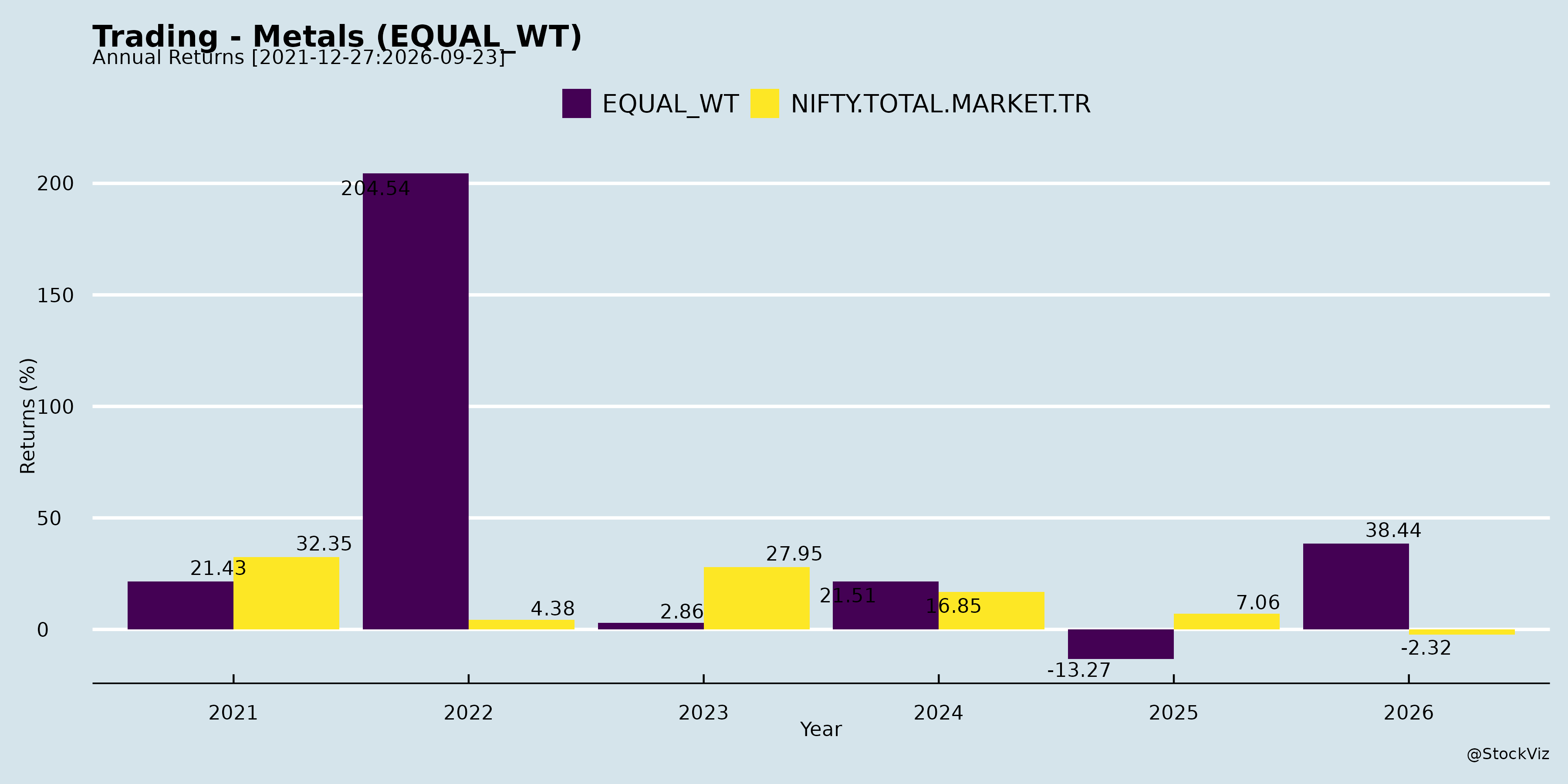
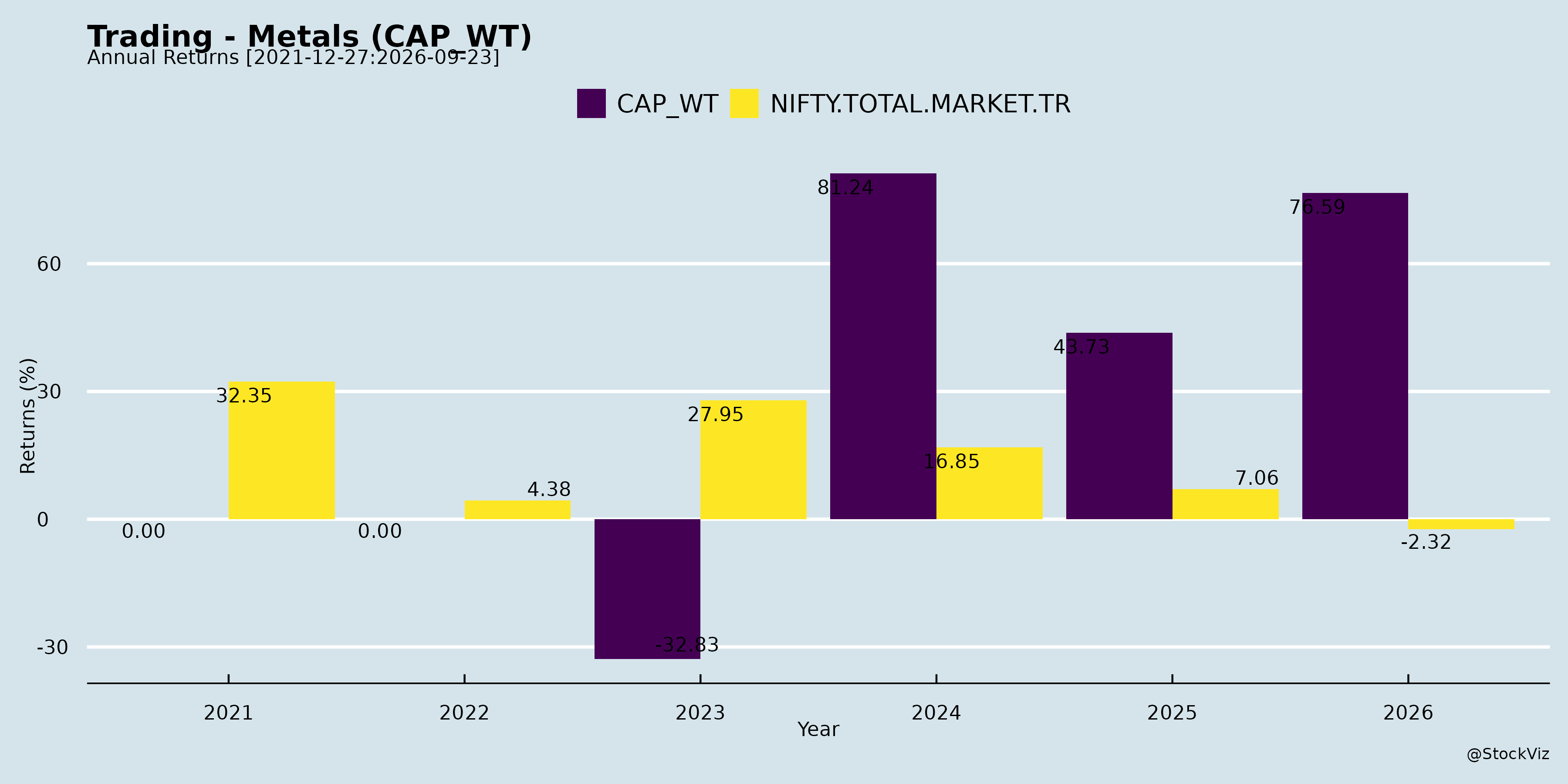
Annual Returns


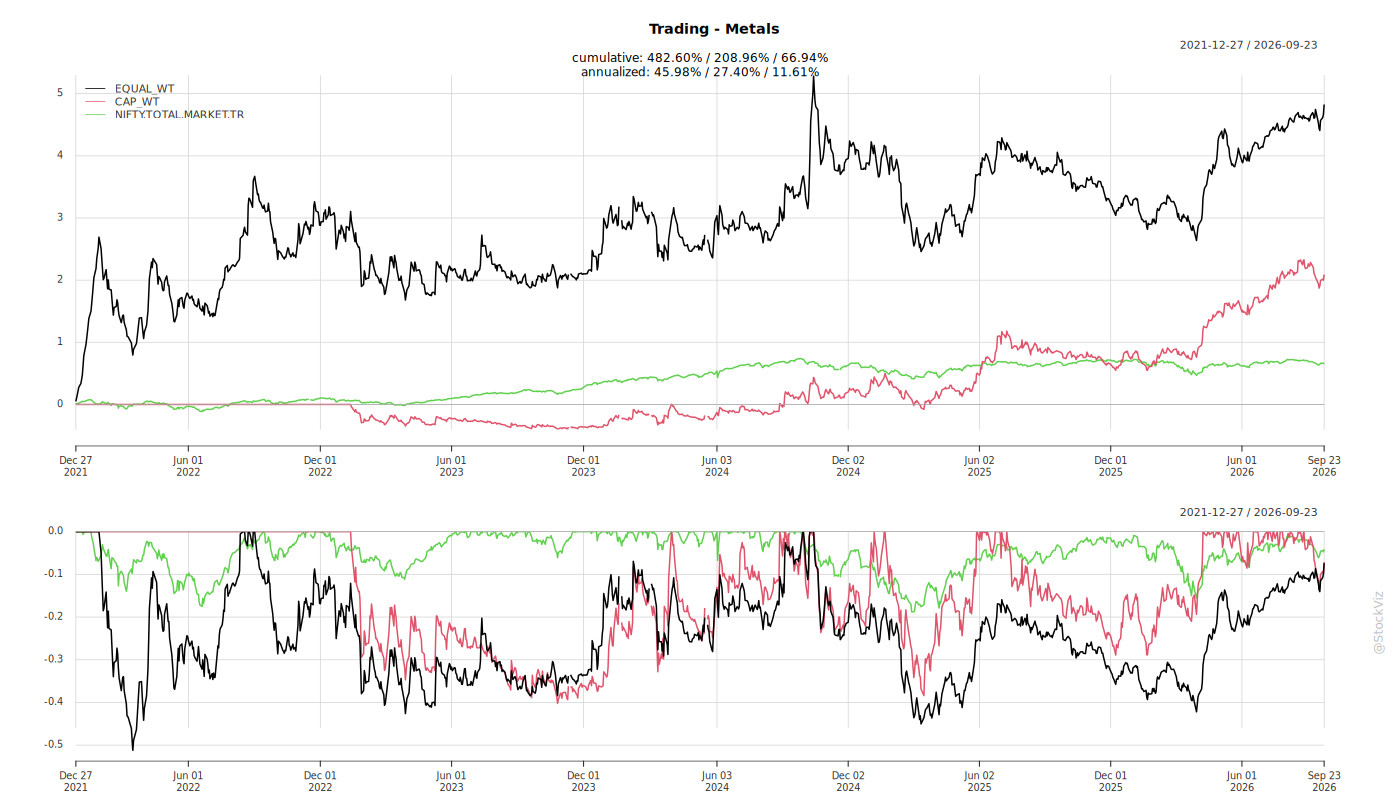
Cumulative Returns and Drawdowns
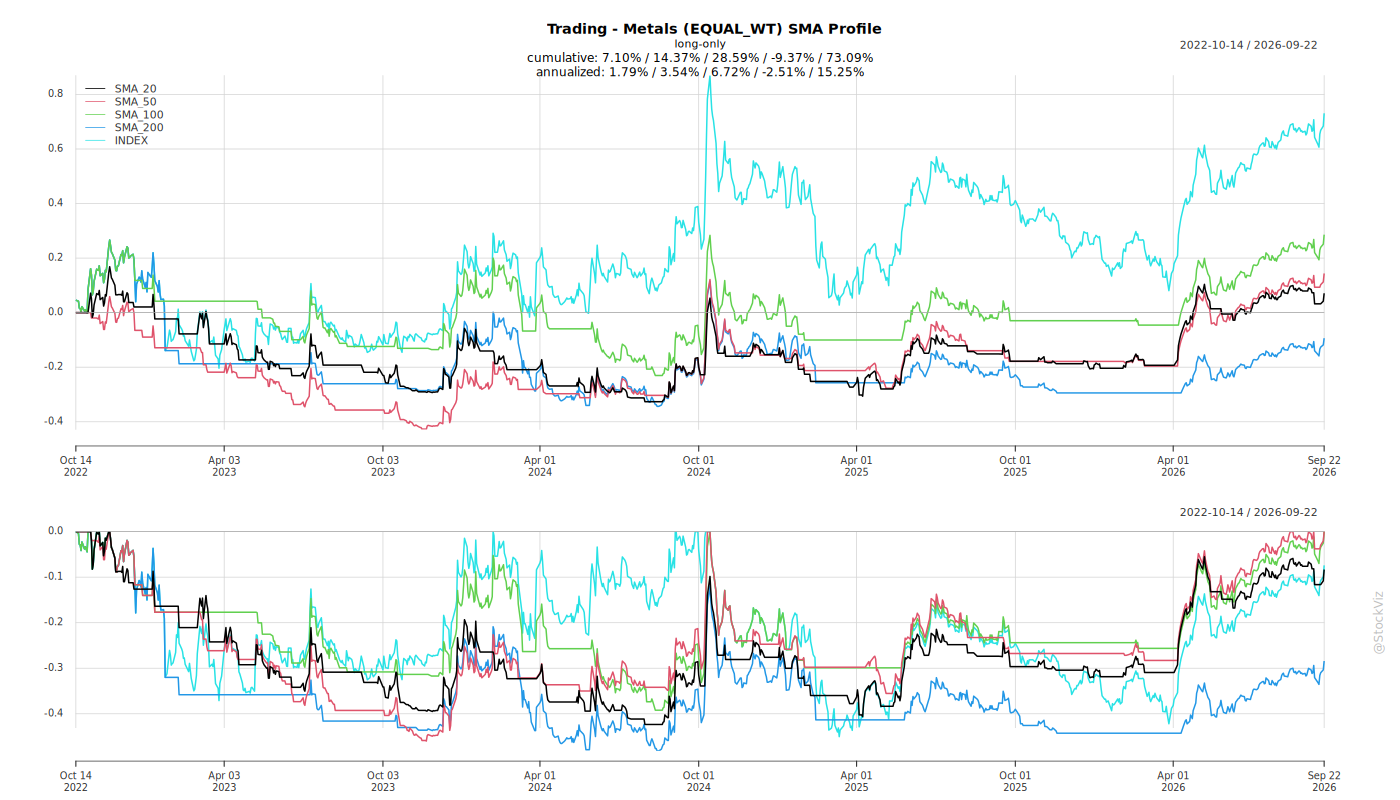
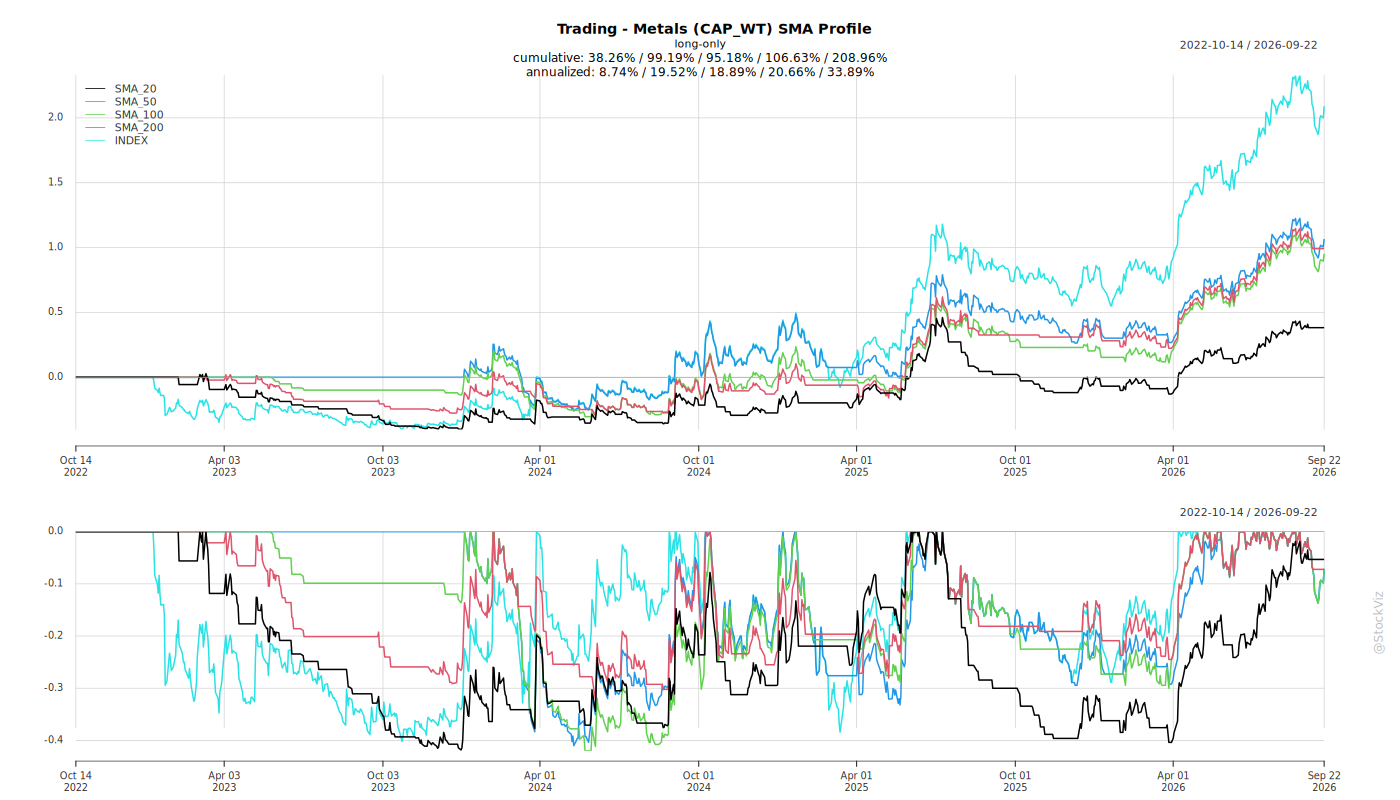
SMA Scenarios
Current Distance from SMA
Rolling Returns


Fundamental Ratios
AI Summaries
How have the challenges and oppurtunities evolved over time?
asof: 2026-04-14
The challenges and opportunities across the featured companies have evolved significantly over time, characterized by a strategic shift from navigating volatile commodity markets and macro-economic softness toward capturing higher-margin, specialized growth sectors.
Here is a detailed breakdown of how these dynamics have evolved for the specific companies mentioned in the sources:
SG Mart Limited * Initial Challenges: In the third quarter of FY’26, SG Mart faced a tough macro environment plagued by a slowdown in construction and government capital expenditure [1]. This led to softness in demand, which resulted in “push sales” and forced the company to offer discounts to its customers [2]. Additionally, the company was hit hard by a sharp decline in steel prices (dropping by Rs. 2,500 to Rs. 3,000 per ton), which caused an inventory loss of approximately Rs. 20 crores as the company was carrying 20 to 25 days of inventory [2, 3]. Geopolitical tensions also impacted the broader global commodity pricing landscape [4, 5]. On an operational level, excessive rains caused a months-long delay in the civil work for their upcoming Jaipur service center [6]. * Evolving Opportunities and Mitigations: * Market Reversal and Risk Management: By January 2026, the correction in steel prices was arrested and prices began to rise, allowing the company to pull back customer discounts and restore its desired margins in its B2B Metal Trading and Service Centre businesses [2, 7, 8]. To mitigate future risks, the company maintains minimum inventory levels and operates on a pass-through model linked to domestic and international steel prices [5, 9]. * Scaling Up High-Margin Sectors: To insulate itself from raw material volatility, SG Mart is aggressively expanding its higher-margin product lines. The company is rapidly scaling its Renewable Structures (solar) business, which has amassed an order book of over Rs. 300 crores [10, 11]. They are also tripling their solar structure manufacturing capacity with new plants in Raipur and Pune [11]. * New Product Lines and Footprint Expansion: SG Mart successfully launched new, high-margin open profile structures under the APL Apollo brand—such as solar structures for residential rooftops, cable trays, slotted angles, and purlins—which are expected to generate Rs. 6,000 to Rs. 7,000 per ton in EBITDA [8, 12-14]. Furthermore, the company is aggressively expanding its physical footprint, moving from 5 operational service centers to a planned 20 locations across India by FY’28 or early FY’29 [15-18]. * Structural Financial Resilience: Management noted that as the company’s absolute EBITDA grows from Rs. 103 crores in FY’25 to a targeted Rs. 350 crores in FY’27, the proportional impact of steel price fluctuations on the company’s bottom line will become increasingly insignificant [19, 20]. To support this long-term growth, SG Mart is also amending its Employee Stock Option Scheme (ESOP) to extend benefits to employees of its subsidiaries and associate companies, aiming to attract and retain the talent necessary for this expansion [21].
BMW Ventures Limited * Initial Challenges: Similar to SG Mart, BMW Ventures has had to navigate a highly volatile steel price environment in its operations [22]. * Evolving Opportunities and Mitigations: * Backward Integration as a Competitive Edge: BMW Ventures has turned the challenge of price volatility into an opportunity. By utilizing a backward-integrated business model, the company provides its clients with superior supply reliability and pricing comfort, which has become a decisive factor in winning large contracts [22]. * Transition to Large-Scale Projects: The company is undergoing a structural scale-up by entering the large-format industrial and infrastructure market [23, 24]. This is highlighted by their recent milestone achievement of securing a ₹36 crore order for Fabricated Steel Products for the BHEL Project, which is part of a broader ₹141 crore project opportunity [23]. * Margin Expansion: The company is making a calibrated transition toward higher-margin fabricated steel products, particularly Pre-Engineered Buildings (PEBs) and Railway Steel Girders [25, 26]. Combined with a strengthened balance sheet and an ongoing deleveraging strategy, this shift toward high-margin products is expected to be a major driver of bottom-line growth, allowing the company to target a 30% to 35% growth trajectory through FY26 and FY27 [26-28].
Nupur Recyclers Limited * Evolving Opportunities: * Industry Tailwinds: Nupur Recyclers is benefiting from strong macro tailwinds in the Indian metal recycling industry, which is experiencing robust growth driven by rising demand for recycled materials and an increase in sustainability initiatives [29]. * Operational Optimization: Over time, the company has successfully improved its profitability through disciplined cost management and enhanced operational efficiencies [29]. * Strategic Diversification: The company is capitalizing on new opportunities by investing in cutting-edge recycling technologies and expanding into related segments, including a strategic entry into the auto components manufacturing sector [30]. Furthermore, its subsidiary, Nupur Extrusion Private Limited, has opened a new manufacturing facility in Haryana specifically designed to supply materials to leading businesses engaged in solar plant manufacturing and Original Equipment Manufacturer (OEM) operations, further reinforcing its footprint in high-growth industries [31].
What are the headwinds affecting this industry?
asof: 2026-04-14
Declining and Volatile Steel Prices A primary headwind affecting the metal trading, fabrication, and downstream structures industry is the persistent volatility and sharp correction in steel prices [1, 2]. The industry has faced a tough environment with steel prices experiencing significant declines over the past two years, reaching a near six-year low by the end of December 2025 [3, 4]. This downward trend forces companies holding inventory to absorb substantial financial hits. For example, SG Mart reported an inventory loss of approximately Rs. 20 crores due to holding 20-25 days of inventory during a sharp steel price correction of Rs. 2,500 to Rs. 3,000 per ton [5]. Navigating this “volatile steel price environment” is a critical challenge, making supply reliability and pricing comfort decisive factors for clients awarding large project mandates [2].
Softness in Demand and Margin Pressures Alongside falling prices, the industry is grappling with a general softness in demand for steel downstream products [1, 6]. This lack of demand has created a challenging sales environment characterized by “push sales,” where companies are forced to offer discounts to their customers just to move volume [7, 8]. Consequently, these discounts put downward pressure on earnings and squeeze the EBITDA margins across both B2B metal trading and service center business segments [7-9].
Slowdown in Construction and Government CAPEX The overall macroeconomic environment is contributing to the weak demand, specifically due to an ongoing slowdown in the construction sector [10]. Furthermore, a noted deceleration in government capital expenditure (CAPEX) is directly impacting the pipeline and execution of infrastructure and construction-linked projects, which are vital end-markets for structural steel and fabricated products [10, 11].
Sudden Price Hikes Delaying Client Orders While declining prices cause inventory losses, sudden price increases also act as a headwind by stalling business momentum. When steel mills abruptly increase prices—as seen in January 2026—end-customers often delay their purchasing decisions [12]. For instance, solar companies adjusting to sudden price hikes have been known to pause their orders for renewable energy structures, choosing to wait and see if the pricing trends reverse before committing to new purchases [12].
Geopolitical Tensions Global geopolitical dynamics, particularly the ongoing tensions between the US, the European Union, and China, present an additional layer of uncertainty [13]. These international conflicts and trade environments impact global commodity markets, generally driving up prices and contributing to the overall volatility that domestic manufacturers and traders must navigate [14, 15].
What are the key things to understand about this industry?
asof: 2026-04-14
The metal manufacturing, trading, fabrication, and recycling industries are currently navigating a landscape of rapid growth opportunities driven by modern infrastructure needs, while simultaneously managing the risks of severe commodity price volatility.
Here are the key things to understand about the dynamics, growth drivers, and strategic shifts within this sector:
1. Massive Demand from Renewable Energy and Infrastructure * The Solar Energy Boom: The renewable energy sector is generating massive demand for structural steel. The market for solar structures is expanding rapidly, with monthly demand expected to surge from 40,000-50,000 tons to 70,000-80,000 tons in the next 2-3 years [1, 2]. Metal trading and manufacturing companies are capitalizing on this by supplying ground-mounted solar structures to Independent Power Producers (IPPs) and OEMs [3, 4]. Furthermore, metal recycling companies are also stepping in to supply materials to businesses engaged in solar plant manufacturing to support their production needs [5]. * Accelerating Infrastructure Development: The industry is experiencing strong traction due to large-scale infrastructure projects. There is rising adoption of pre-engineered buildings (PEBs), fabricated steel products, and railway steel girders across the construction sector [6, 7].
2. The Shift Toward Higher-Margin and Value-Added Products To improve profitability, companies are undergoing a calibrated transition toward higher-margin fabricated steel products [8, 9]. Instead of relying solely on basic B2B metal trading, players are developing specialized open profiles and structures. This includes products like cable trays for construction, slotted angles for racking systems, purlins for PEB sheds, and specialized structures for residential rooftops [10-13]. Because these value-added products can be sold through established trade channels under strong brand names, they command a significant brand premium and yield much higher EBITDA margins [11, 13, 14].
3. Growth in Sustainability and Metal Recycling The metal recycling segment is experiencing robust growth driven by a rising demand for recycled materials and an increased global focus on sustainability initiatives [15]. Companies in this space are processing ferrous and non-ferrous metal scraps (such as shredded zinc, die-cast scraps, and aluminum) and are actively investing in cutting-edge recycling technologies [15, 16]. This expansion is allowing them to enter new, high-growth sectors like auto components manufacturing [15, 16].
4. Navigating Severe Commodity Price Volatility * Inventory and Profitability Risks: A major hurdle in the steel and metal industry is the fluctuation of raw material prices. Sharp corrections and declines in steel prices often lead to a soft demand environment, pressure on sales, the need to offer customer discounts, and heavy inventory losses [17-20]. * Geopolitical Impacts: Geopolitical tensions generally impact global commodities by driving up the prices of raw materials [21, 22].
5. Strategic Risk Mitigation and Business Models To combat market volatility, companies in this industry employ several strategic models: * Backward Integration: In a volatile steel price environment, a backward integrated manufacturing model provides clients with greater pricing comfort and reliable supply, which is increasingly becoming a decisive factor for winning large industrial mandates [23]. * Pass-Through Pricing: To limit exposure to fluctuating domestic and international steel prices, companies utilize a pass-through model where their product pricing is fully linked to the underlying cost of steel [21, 22]. They also mitigate risk by maintaining minimum inventory levels rather than speculating on commodity cycles [21, 24]. * Scaling Absolute EBITDA: As companies grow their absolute earnings by diversifying products and expanding capacity, the proportional pinch of raw material price fluctuations on their overall P&L is significantly reduced [25, 26].
6. The Importance of Robust Distribution Networks Success in the trade-led metal product segment heavily relies on vast, multi-tiered distribution networks. Selling products efficiently requires an ecosystem that connects massive dealer networks to tens of thousands of retail shops, which in turn supply hundreds of thousands of fabricators [27-29]. Having this expansive channel ensures that newly launched products can quickly reach high daily sales volumes [4, 28].
What are the tailwinds affecting this industry?
asof: 2026-04-14
Renewable Energy Expansion and Solar Infrastructure A major tailwind driving the industry is the massive scale-up of renewable energy installations, which is creating skyrocketing demand for solar structures [1, 2]. Currently, the market demand for solar structures sits at approximately 50,000 tons per month, but due to the aggressive and “insane” installation plans of India’s top 10 Independent Power Producers (IPPs), this is projected to expand to 70,000 to 80,000 tons per month over the next two to three years [1, 2]. Companies are successfully expanding their capacities and product portfolios to supply utility-scale OEM sales points as well as structures for residential rooftops [3]. As a result, industry players are rapidly securing empanelments with major OEMs and IPPs to capture this exponential growth [4, 5], alongside supplying materials to businesses engaged in solar plant manufacturing [6].
Accelerating Infrastructure Development and Pre-Engineered Buildings The broader construction and steel fabrication sectors are benefiting from accelerating infrastructure development [7]. There is a pronounced and rising adoption of pre-engineered buildings (PEBs) and engineered structural solutions, especially across Eastern India [7]. This shift is enabling companies to transition toward higher-margin fabricated steel products, large-format industrial structures, and railway steel girders [8-10].
Sustainability and Metal Recycling The metal recycling industry in India is experiencing robust growth [11]. This momentum is directly propelled by an increasing overall demand for recycled materials and a broader shift towards corporate sustainability initiatives [11]. Companies operating in this space are well-positioned to leverage these trends by investing in cutting-edge recycling technologies and expanding into related segments, such as auto components manufacturing [11, 12].
Favorable Government Trade Policies Domestic companies are benefiting from supportive government policies regarding international trade. The Indian government recently imposed anti-dumping duties and tariffs on steel imports, which have been extended for the next two years [13]. This regulatory protection limits cheap overseas imports, ensuring better stability and demand for domestically produced materials [13].
Backward Integration and Supply Chain Reliability Because the global geopolitical environment has created a volatile steel price market, clients are increasingly prioritizing supply reliability and pricing comfort when awarding large contracts [14]. Consequently, companies that operate a backward-integrated model are finding a significant competitive advantage, as this integrated ecosystem becomes a decisive factor in securing large-scale project mandates [14].
Brand Premium and New High-Margin Products Companies are successfully introducing new, high-value specialized products—such as cable trays for construction, slotted angles for racking systems, and purlins for PEB sheds—into the trade market [15, 16]. By pushing these products through vast, established distribution networks under strong brand names, companies are able to command significant brand premiums, resulting in superior EBITDA margins [16-18].
What is the general outlook of this industry?
asof: 2026-04-14
The metal recycling industry in India is experiencing strong growth, primarily driven by a rising demand for recycled materials and an increased focus on sustainability initiatives [1]. Companies within this space are positioning themselves to leverage these positive trends by investing in cutting-edge recycling technologies and expanding into related segments, including the manufacturing of auto components [1, 2].
The fabricated steel and infrastructure sector is also expected to see continued traction and strong momentum, particularly in segments like Pre-Engineered Buildings (PEBs) and railway steel girders [3, 4]. This outlook is supported by accelerating infrastructure development and the growing adoption of pre-engineered structural solutions [3]. Fabricated steel products are anticipated to emerge as a major driver of margin expansion and bottom-line growth in the coming years [4, 5]. Furthermore, in a volatile steel price environment, companies with a backward-integrated model possess a distinct advantage; this integration provides clients with greater pricing comfort and supply reliability, which is increasingly becoming a decisive factor in awarding large mandates [6].
The renewable energy structures market, specifically for solar projects, is forecasting explosive demand. The current market size of approximately 40,000 to 50,000 tons per month is projected to surge to 70,000 to 80,000 tons per month over the next two to three years [7, 8]. This substantial growth is largely fueled by the aggressive installation business plans of India’s top Independent Power Producers (IPPs) and solar EPC players [8, 9].
Macroeconomic Challenges and Steel Pricing: Despite the optimistic growth avenues, the broader macroeconomic environment has recently faced some headwinds, such as an ongoing slowdown in construction and government capital expenditure (CAPEX) [10, 11]. The industry has also had to navigate significant volatility in global commodities, specifically a sharp correction in steel prices that recently fell to six-year lows, leading to temporary margin pressures and inventory losses for downstream companies [12-15].
To mitigate these risks, industry players are employing several strategies: * Inventory Management: Maintaining minimum inventory levels to avoid speculation on volatile commodity price movements [14]. * Product and Geographic Expansion: Launching new, high-margin products (such as solar structures for residential rooftops and cable trays) and opening service centers in new locations to acquire new customers without cannibalizing existing business [11, 16, 17]. As absolute EBITDA grows through these expansions, the financial pinch of steel price fluctuations is expected to significantly diminish [18].
Copyright © 2023 SAS Data Analytics Pvt. Ltd. All rights reserved.