BIRLACORPN
Equity Metrics
September 24, 2026
Birla Corporation Limited
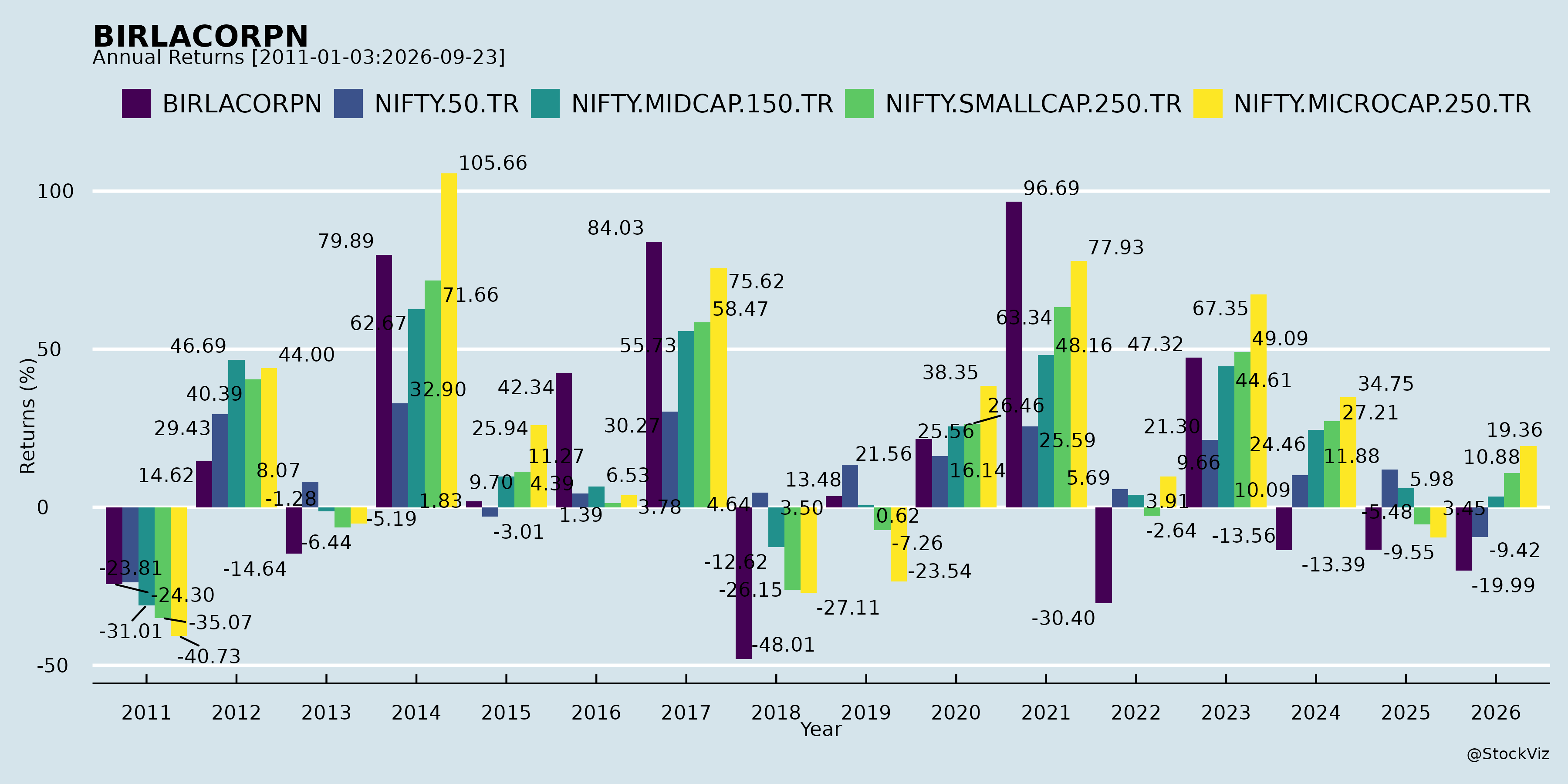
Annual Returns
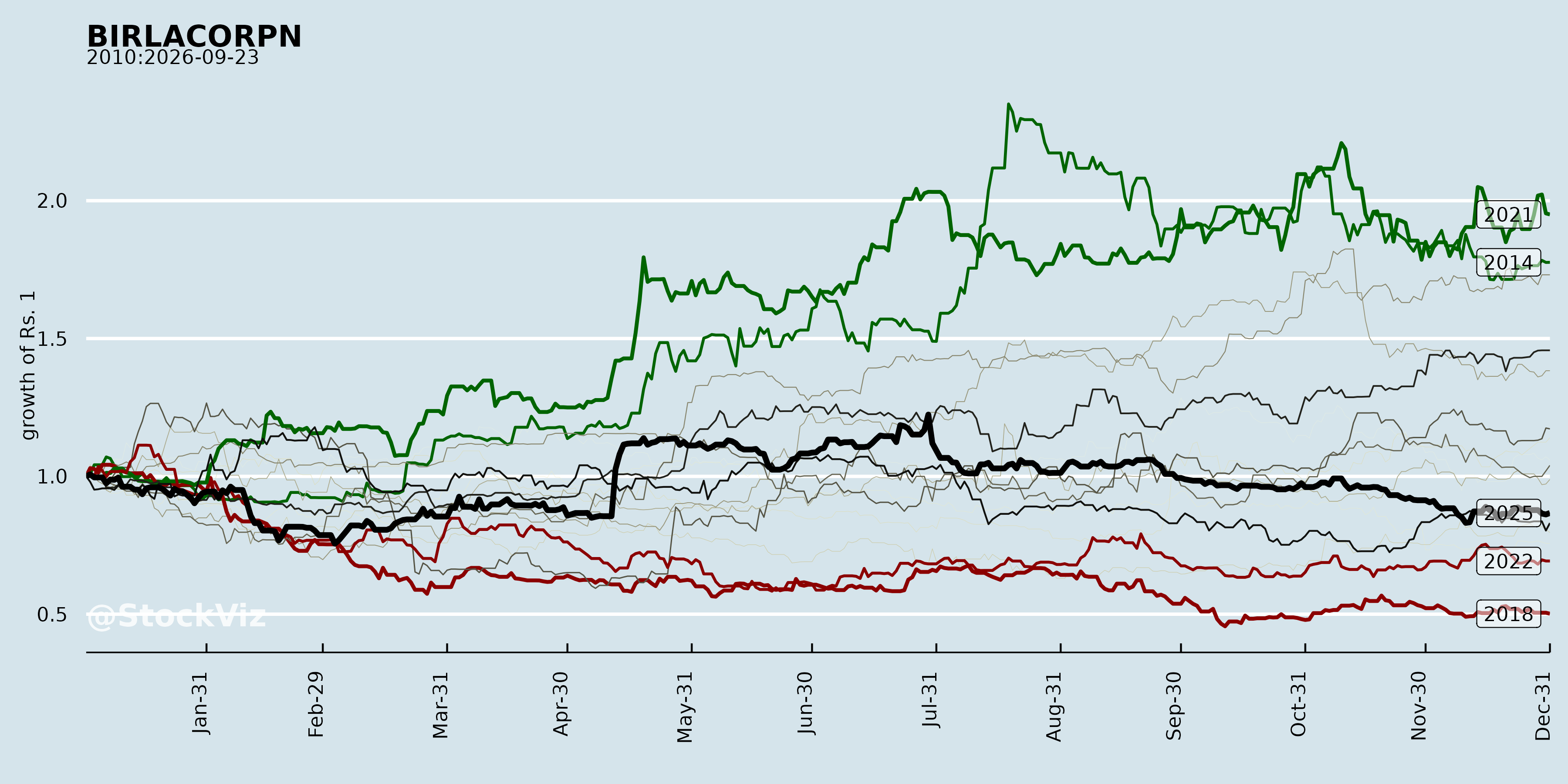
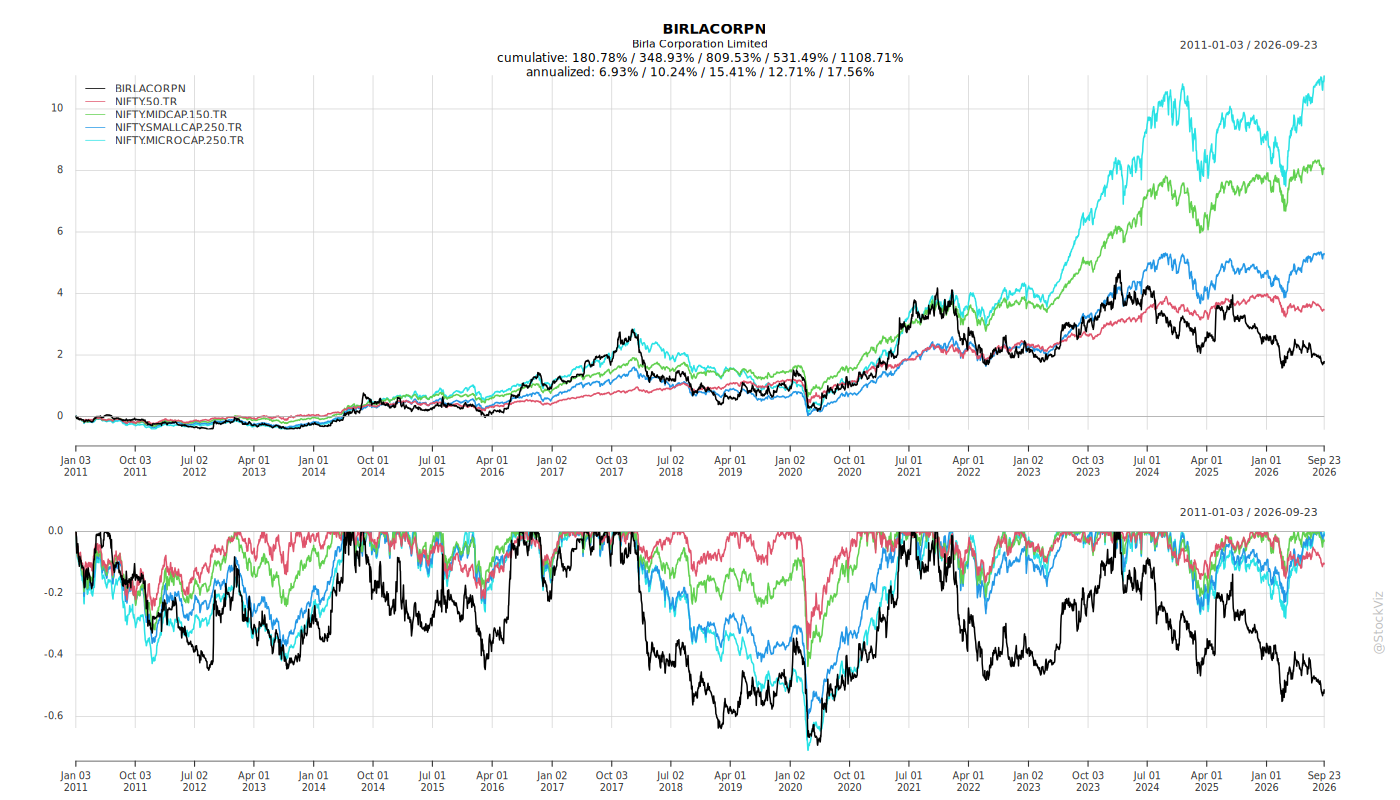
Cumulative Returns and Drawdowns
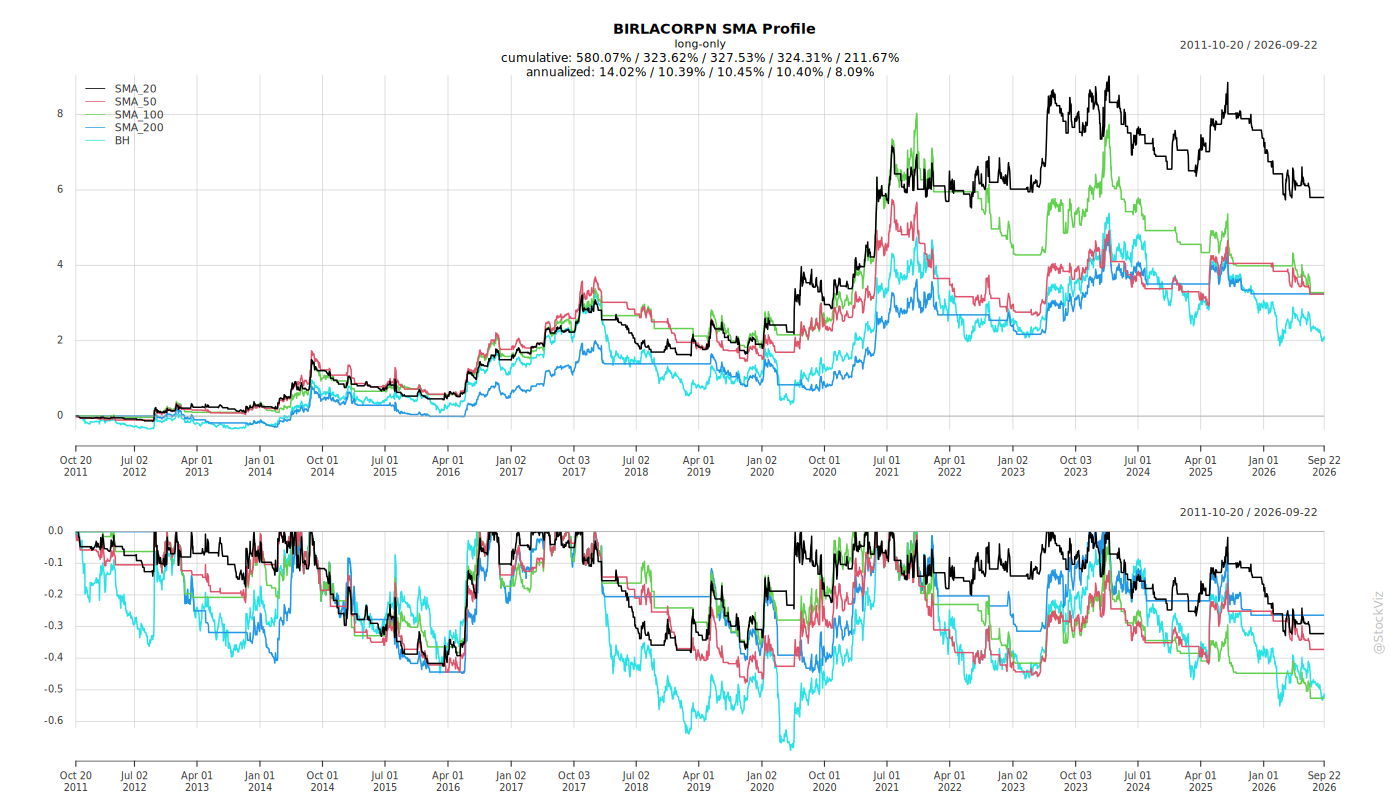
Fundamentals
Ownership
Margined
AI Summary
asof: 2026-09-17
BIRLACORPN: Recent Corporate Announcements — Summary
1. Headwinds and Challenges
Pricing pressure in the trade segment. Management stated that the company had “maxed out” on trade sales, trade volumes and blended cement, yet that segment saw no significant price increase and even a price rollback in the last month of the quarter. Real gains came from the non-trade, industrial and OPC segments, where the company has deliberately defocused. Blended cement realizations did not rise in line with non-trade, leaving relative realizations lower than anticipated.
Central India concentration. Management noted that dependence on Central India is “very high” and has increased further with the commissioning of Kundanganj Line 3. The company could not benefit from increases seen in North and East India, where it has a small presence. Maharashtra was described as “the same story,” with Mukutban volumes maintained and product mix shifted toward proximate markets.
Logistics dislocation. Sporadic disturbances in diesel and truck availability caused periodic logistics dislocation, resulting in lost volumes, particularly at Mukutban.
Cost inflation. Power and fuel cost rose 5% year-on-year in Q1 FY27. The company is dependent on pet coke and has limitations in substituting domestic coal. Mechanical mining in Rajasthan and diesel costs added to the cost base. Management guided for a further sequential cost increase of INR70–80 per ton in Q2 FY27, with the full fuel impact to be seen in that quarter. Bag and fuel impact in the quarter was INR150 per ton due to geopolitical factors.
Jute Division stress. Birla Jute Mills faced record-high raw jute prices and acute shortage, forcing production rationalization through reduced working days. Production declined 27% yoy and 8% sequentially. Cash profit fell to Rs 4.28 crore from Rs 6.41 crore a year earlier.
West Bengal incentive uncertainty. The West Bengal Legislature enacted the “Revocation of West Bengal Incentive Scheme and Obligations in the Nature of Grant and Scheme Act, 2025,” effective 2 April 2025, retrospectively rescinding schemes including WBIS 2000 and WBSS 2008. The company filed a writ petition challenging the Act. A provision of Rs 69.29 crore for the DHTC claim and Rs 28.58 crore for the DCW claim is being carried as on 30 June 2026 on expected credit loss basis.
Monsoon and demand timing. Management noted that delayed monsoon had kept demand momentum going, but uncertainty remained over carryover impact into Q3 if agricultural outcomes weakened. Cement demand was expected to remain muted until end-August, recovering from September.
2. Tailwinds and Growth Prospects
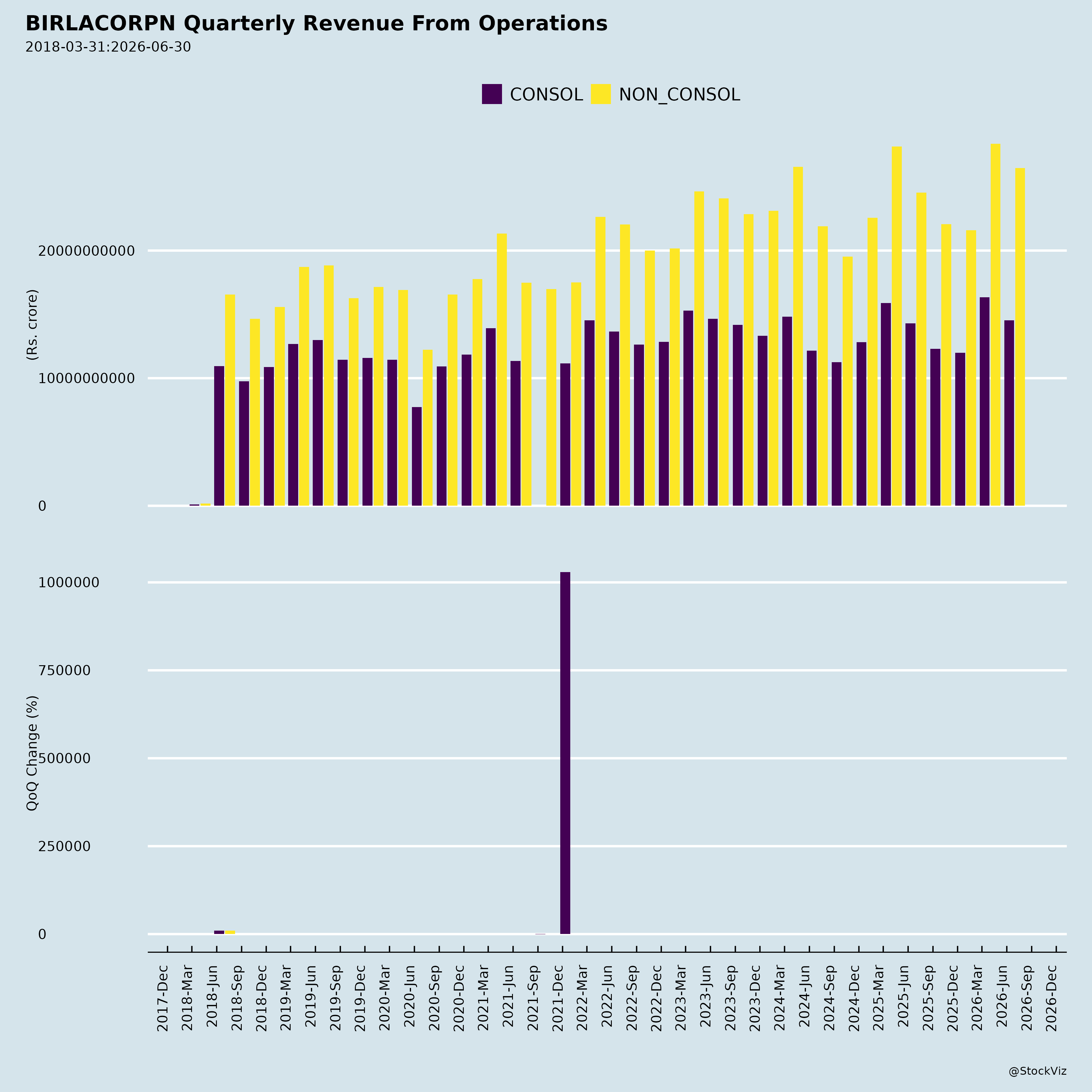
Volume and revenue growth. Q1 FY27 cement sales by volume were 5.05 mt, up 5% yoy; revenue was Rs 2,669 crore, up 7.4% yoy. Capacity utilization was 98%. Sales through the trade channel rose 11%, and premium cement volumes rose 18%, led by Perfect Plus at 24% growth. Blended cement was 88% of sales.
Regional trade gains. Sustained gains were reported in the trade segment in Maharashtra, Uttar Pradesh, Bihar and Rajasthan. Kundanganj and Mukutban sales rose 26% and 12% respectively.
Green power and cost mitigation. Green power consumption rose to 33% from 31% at the end of the last fiscal year. A 5-MW solar plant was commissioned at Mukutban, expected to cut CO2 emissions by about 5,000 tons annually. Birla Jute Mills is expanding solar capacity to 2.6 MW from 2.1 MW. WHRS capacity is 43–44 MW, with projects to raise it to about 50 MW, plus 17–18 MW from Maihar Line 2.
Bikram coal mine. Commercial coal production commenced 22 June 2026. Management guided 1.2 lakh tons this year, rising to 3.5 lakh tons next year, with about one-third of CPP coal requirements potentially met through Bikram.
Capacity expansion on track. Management reaffirmed guidance of 27.6 mt capacity by FY29 and stated there is no question of deferring capacity addition, given operations above 90% capacity utilization. Pre-project activities at Maihar were described as per plan.
Incentives. Total incentive expected at Rs 130–135 crore including Mukutban and Kundanganj; Rs 33 crore was accrued in Q1 FY27.
3. Key Risks
Competitive intensity in Central India. An analyst noted that JP’s asset being ramped up under Dalmia would intensify competition, particularly in non-trade, and that trade prices generally do not recover when non-trade faces stiff competition. Management said it did not foresee a price war, expecting entrants to ramp up sensibly rather than undercut, but acknowledged it cannot depend on others’ pricing moves.
Pricing recovery dependent on others. Management stated that if larger players do not raise trade prices, the company must revisit its own strategy to protect margins in that segment, though it ruled out shifting away from trade or blended cement.
Cost trajectory. Continued fuel cost pressure was guided for Q2 FY27, with geopolitical factors cited.
Monsoon and rural demand. Delayed monsoon was supporting demand, but a poor harvest could affect Q3.
Litigation and shareholder disputes. The Scrutinizer’s Report records blocking of e-voting credentials for several shareholders. Three corporate shareholders (August Agents, Insilco Agents, Laneseda Agents) requested blocking on 27 July 2026 citing past attempts by unauthorized persons to retrieve credentials; blocking occurred 28 July 2026. Three societies (Hindustan Medical Institution, Eastern India Educational Institution, Belle Vue Clinic) and M.P. Birla Institute of Fundamental Research also had credentials blocked. The Supreme Court order dated 26 May 2026 stated it had not adjudicated factual or ultimate legal validity of any resolution, cessation, removal, nomination or appointment of trustees, and that such questions would be decided by the competent forum. The Calcutta High Court order dated 22 May 2024 recorded that the APL Committee could exercise powers only over shares owned by PDB, not those under remote or derivative control; that it could not interfere with internal affairs of MP Birla Group companies and societies; that a resolution had become inoperative; and that Mr. Pradip Tandon was appointed Honorary Secretary of Hindustan & Eastern and Mr. Asim Chattopadhyay of Belle. Votes cast through ballot/polling papers by these four societies and three corporate shareholders at the AGM were taken into account.
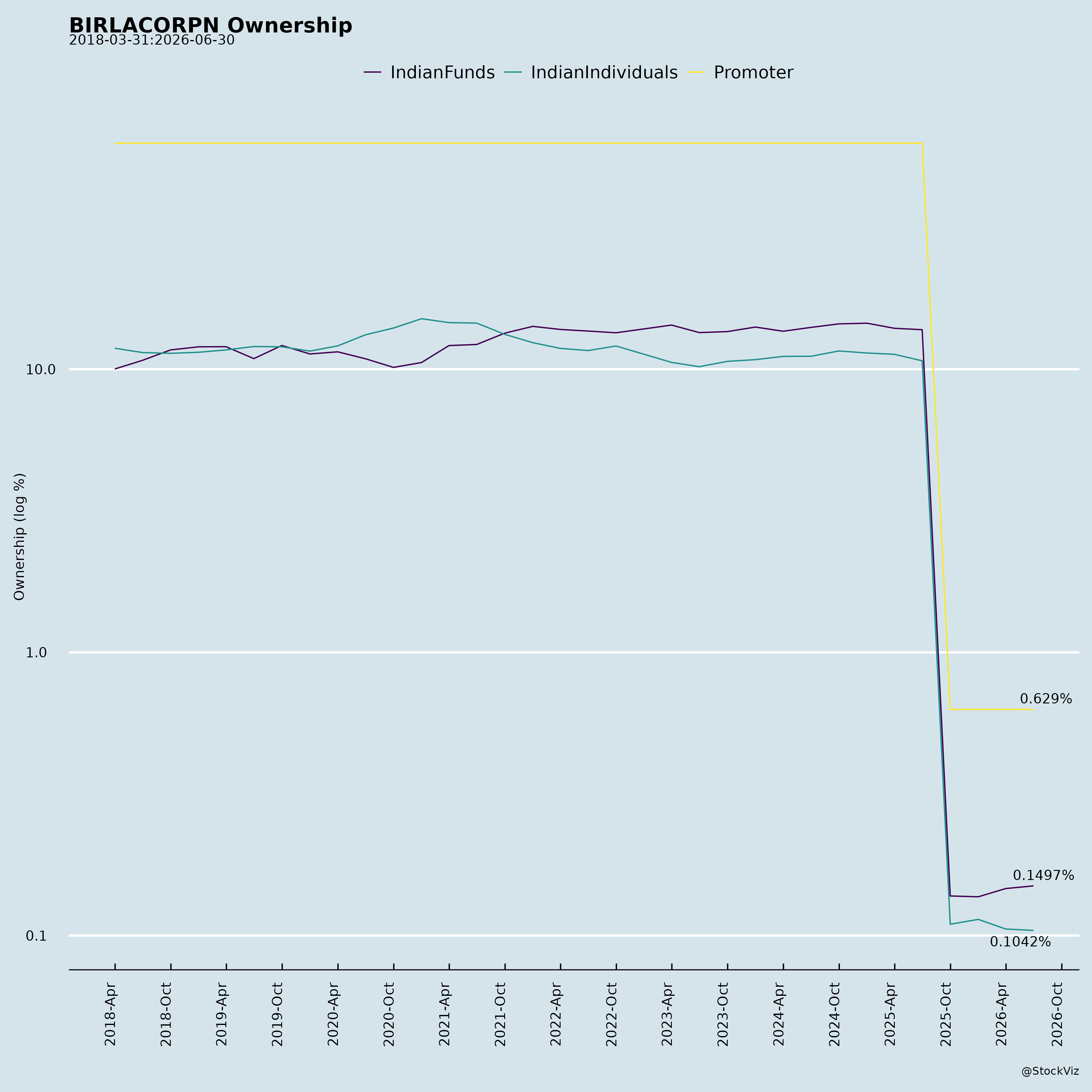
Governance vote dissent. Resolution No. 3 (re-appointment of Shri Harsh V. Lodha) passed with 79.17% in favour and 20.83% against. Public-Non Institutions voted 53.96% against. Promoter and Promoter Group e-voting showed 64.31% against. All four resolutions passed with requisite majority.
4. Management Guidance vs Observed Performance
Capex. Guidance of INR900 crore for FY27 maintained; Q1 capex was about INR120 crore. Management indicated a significant increase in FY28 but called precise figures premature. Of the INR4,800 crore expansion outlay, spending so far was described as almost nil, with activity just started.
Net debt. Q1 net debt was INR2,300 crore. Guidance of around INR2,000-odd crore exit and peak net debt of INR4,000 crore with net debt/EBITDA not exceeding 2x was maintained.
Capacity. FY29 guidance of 27.6 mt reaffirmed as on track.
Growth. Management maintained earlier growth guidance without revision when asked about FY27 CAGR targets.
Costs. Management said costs were managed “reasonably well” in Q1, while guiding INR70–80 per ton sequential increase in Q2.
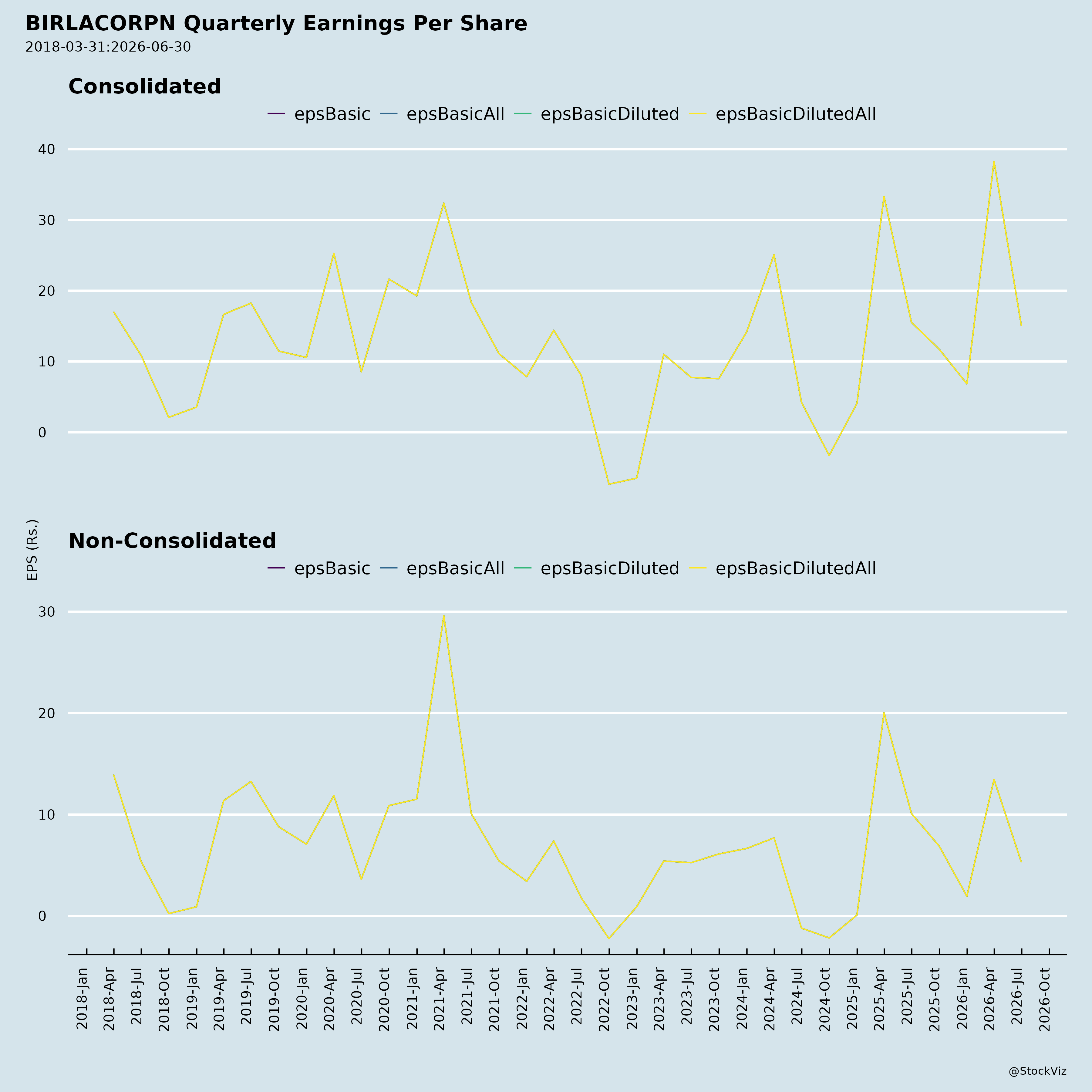
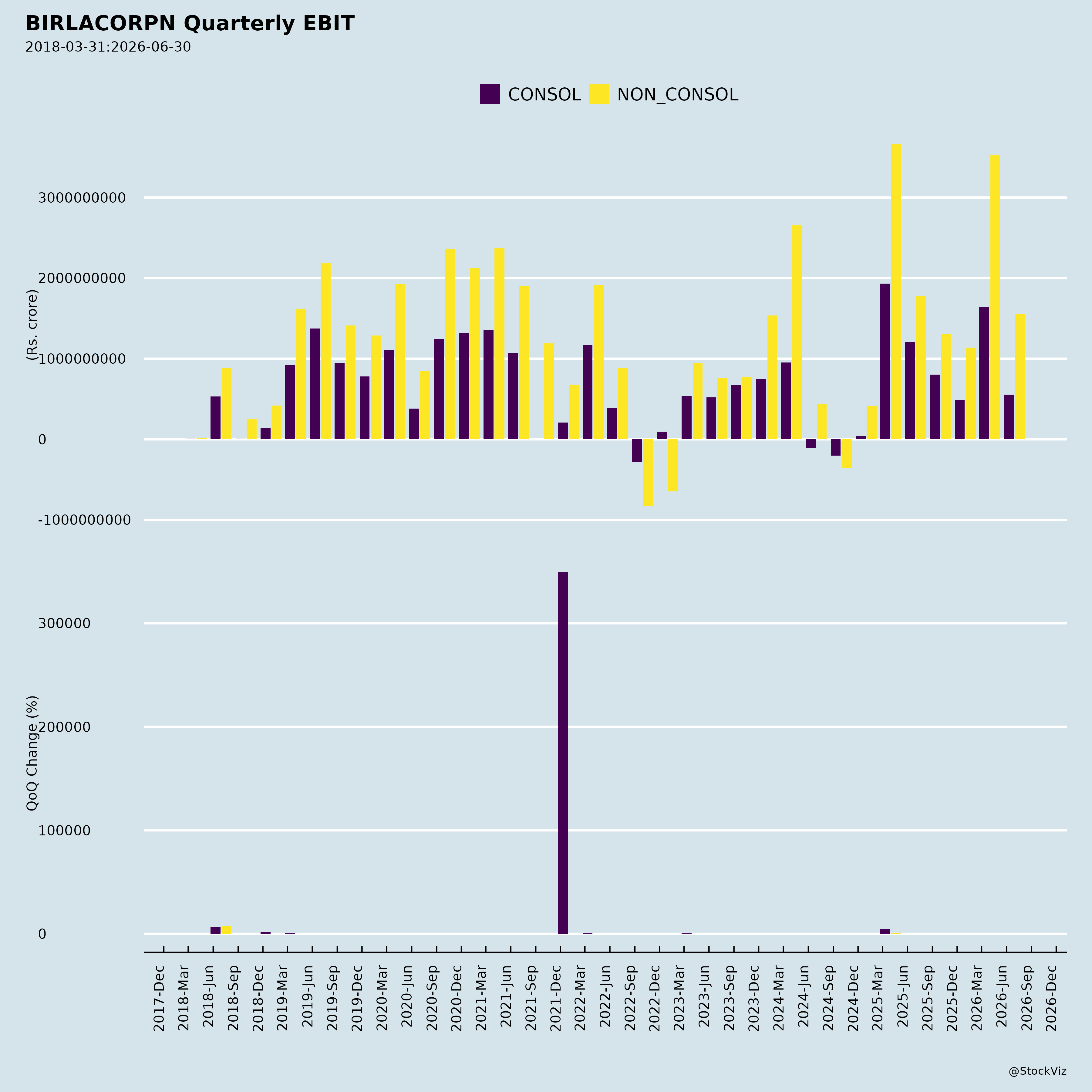
Realization. Reported realization per ton was Rs 4,947, up 1.8% yoy, but EBITDA per ton was Rs 675, down 5.6% yoy. Management noted that excluding lower incentives (Rs 33 crore in Q1 vs Rs 60 crore in Q4 FY26) and year-end adjustments, realization actually rose INR80 sequentially. Reported net profit was Rs 116 crore, down 3.3% yoy, reflecting subdued realization and power/fuel cost escalation. Cement Division EBITDA margin was 13.6%, down 110 bps yoy.
Demand outlook. Management expected muted demand until end-August, recovery from September, and meaningful price recovery only in the December quarter, with further price hikes deferred till end of monsoons.
Dividend. A dividend of Rs 12.50 per ordinary share of face value Rs 10 each for FY26 was approved at the 106th AGM held 1 August 2026, with 98.77% votes in favour.
Broker Narrative
Early reports focused on input cost pressures, subdued regional demand in Maharashtra, and elevated debt, while highlighting tailwinds from the Mukutban ramp-up, premium cement mix, and government-backed demand. Over time, the narrative shifted toward structural growth drivers such as captive coal block ramp-up, WHRS expansion, and long-term capacity additions to 27.6 mtpa, but persistent cost inflation (geopolitical fuel shocks, packaging expenses) and below-industry volume growth dominated later concerns.
Fears that came true
- Input & cost pressures materialized as fuel and packaging costs surged (geopolitical disruptions added ~₹150/ton in Q1 FY27; packaging costs jumped to ₹269/ton from ₹191/ton), directly pressuring margins across multiple DISAPPOINTMENT calls.
- Lacklustre regional demand and limited pricing power persisted, evidenced by subdued volume growth below the 7–8% industry average (~3.7% CAGR) and high trade-market exposure (>80% of sales) capping realization gains, contributing to sustained negative returns.
- Higher debt and interest costs remained a drag, with Net Debt/EBITDA discipline only maintained under 2x rather than improvement, coinciding with continuous DISAPPOINTMENT outcomes from 2023–2025.
Optimism that failed
- The Mukutban incentive inflow of Rs 2,300 Cr (kicking in 2H FY24) and pending West Bengal incentives of Rs 140 Cr did not translate into sustained margin expansion or positive returns, as cost inflation and volume softness outweighed these benefits.
- Cost efficiency tailwinds (captive coal extraction, WHRS, AFR, renewable power) promised ~Rs 250/tonne reduction in FY24 but were offset by geopolitical fuel shocks and packaging inflation, failing to deliver net margin improvement.
- Capacity expansion optimism (Mukutban turning EBITDA-positive, regional footprint expansion into Telangana/Madhya Pradesh/Gujarat) did not prevent below-industry volume growth (~3.7% CAGR vs. 7–8% industry average) due to lack of recent capacity additions and regional constraints in North/South.
Broker Timeline
44 broker calls · 2023-05-11 to 2026-07-27
Copyright © 2023 SAS Data Analytics Pvt. Ltd. All rights reserved.