AZAD
Equity Metrics
November 18, 2026
Azad Engineering Limited
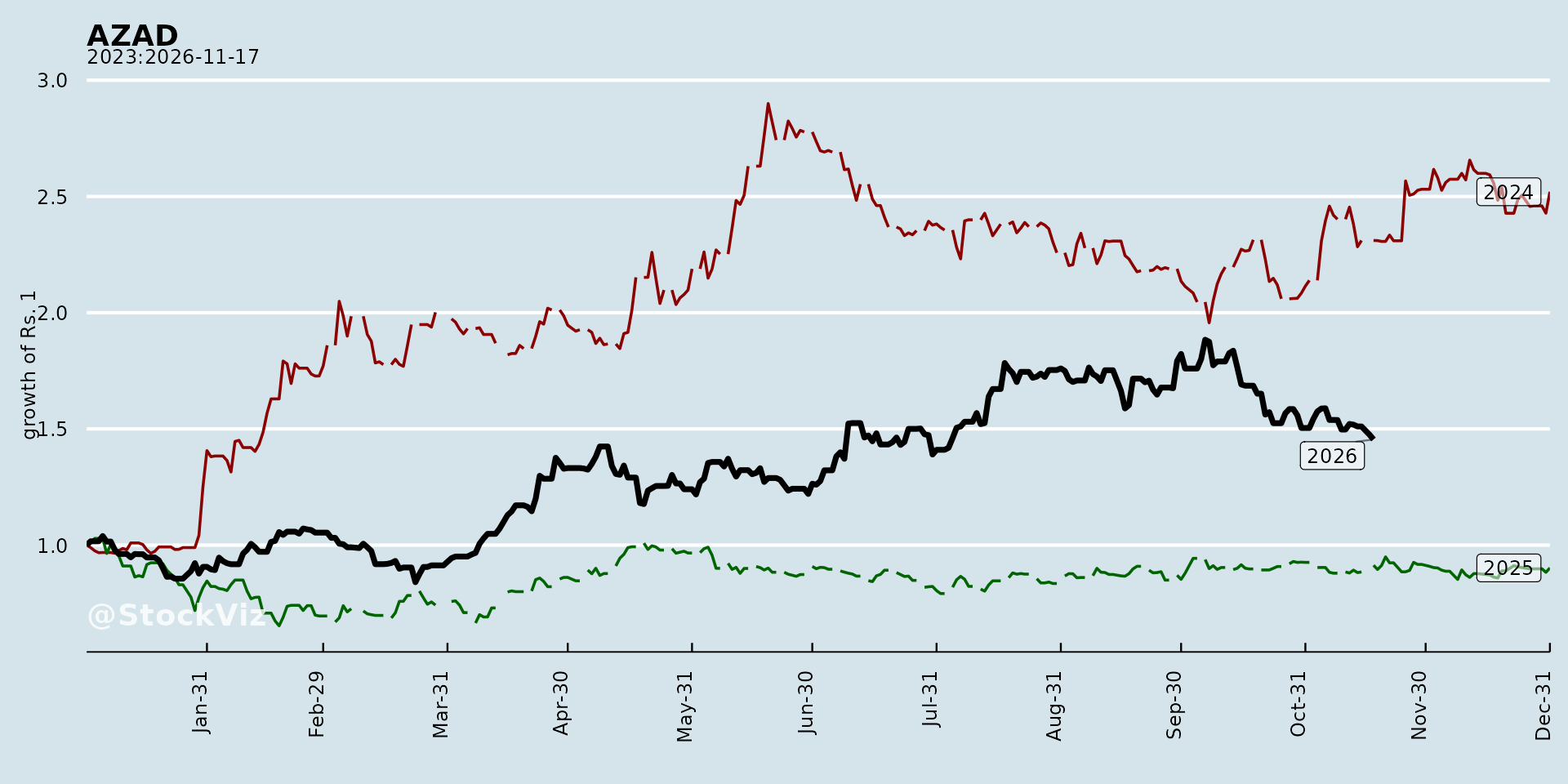
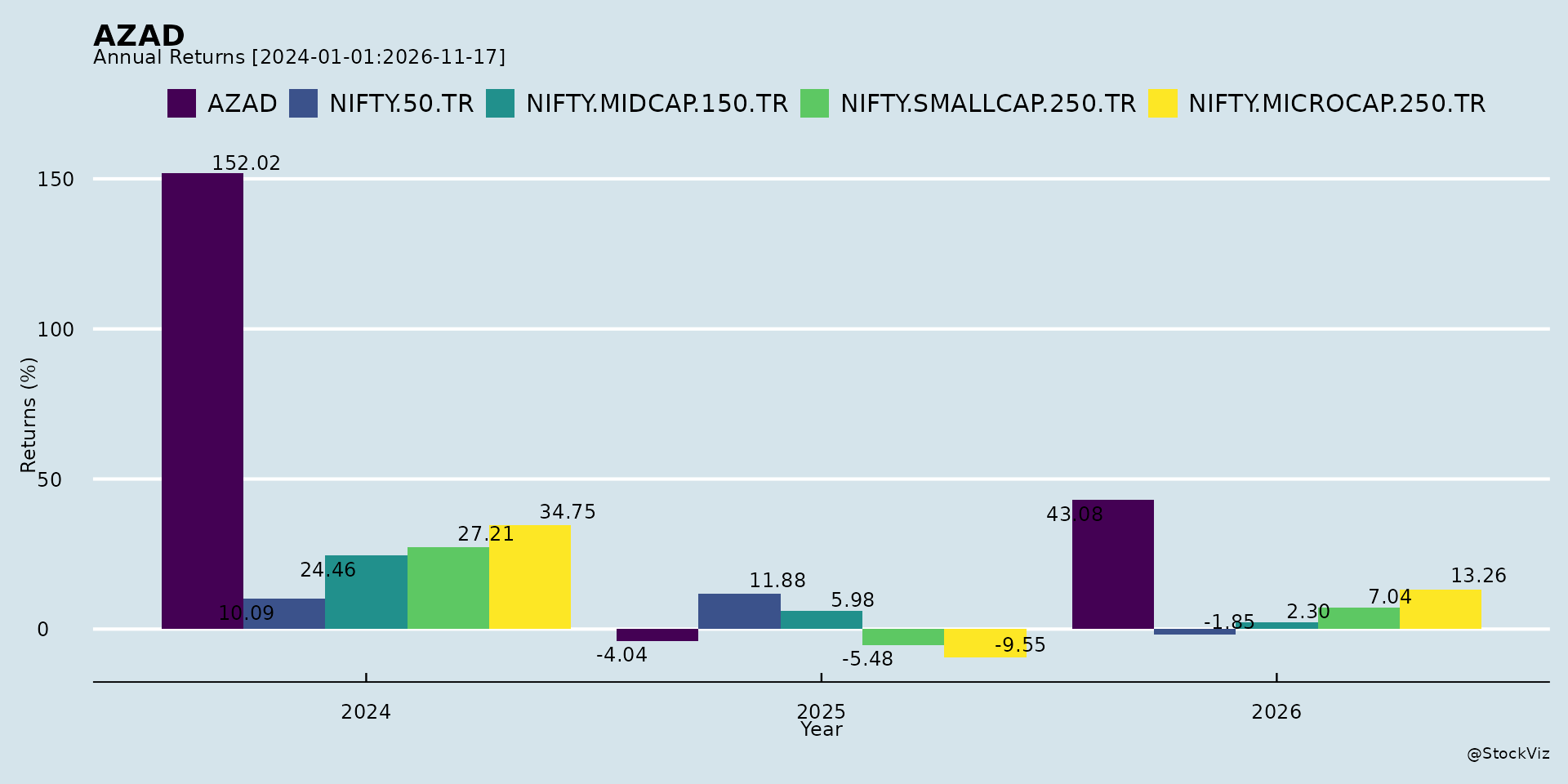
Annual Returns
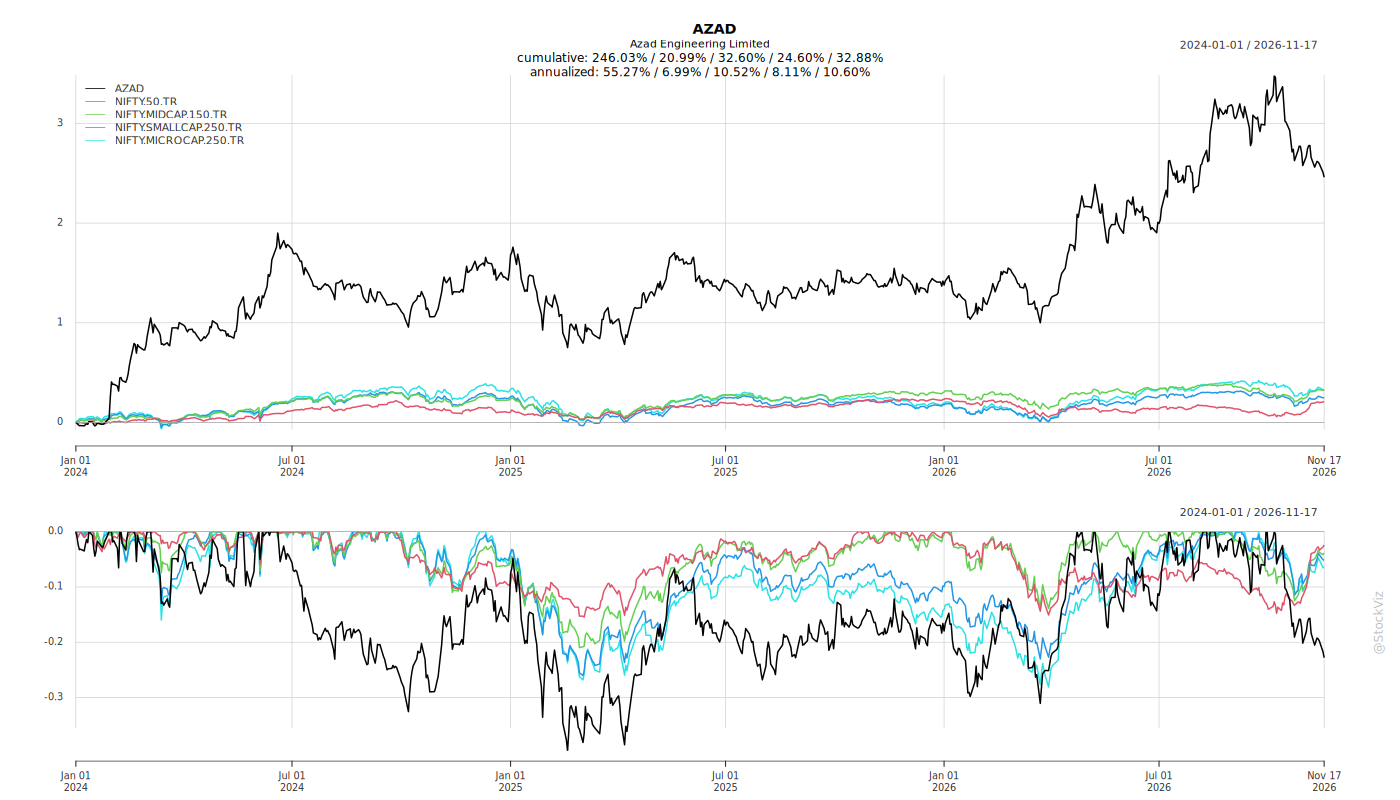
Cumulative Returns and Drawdowns
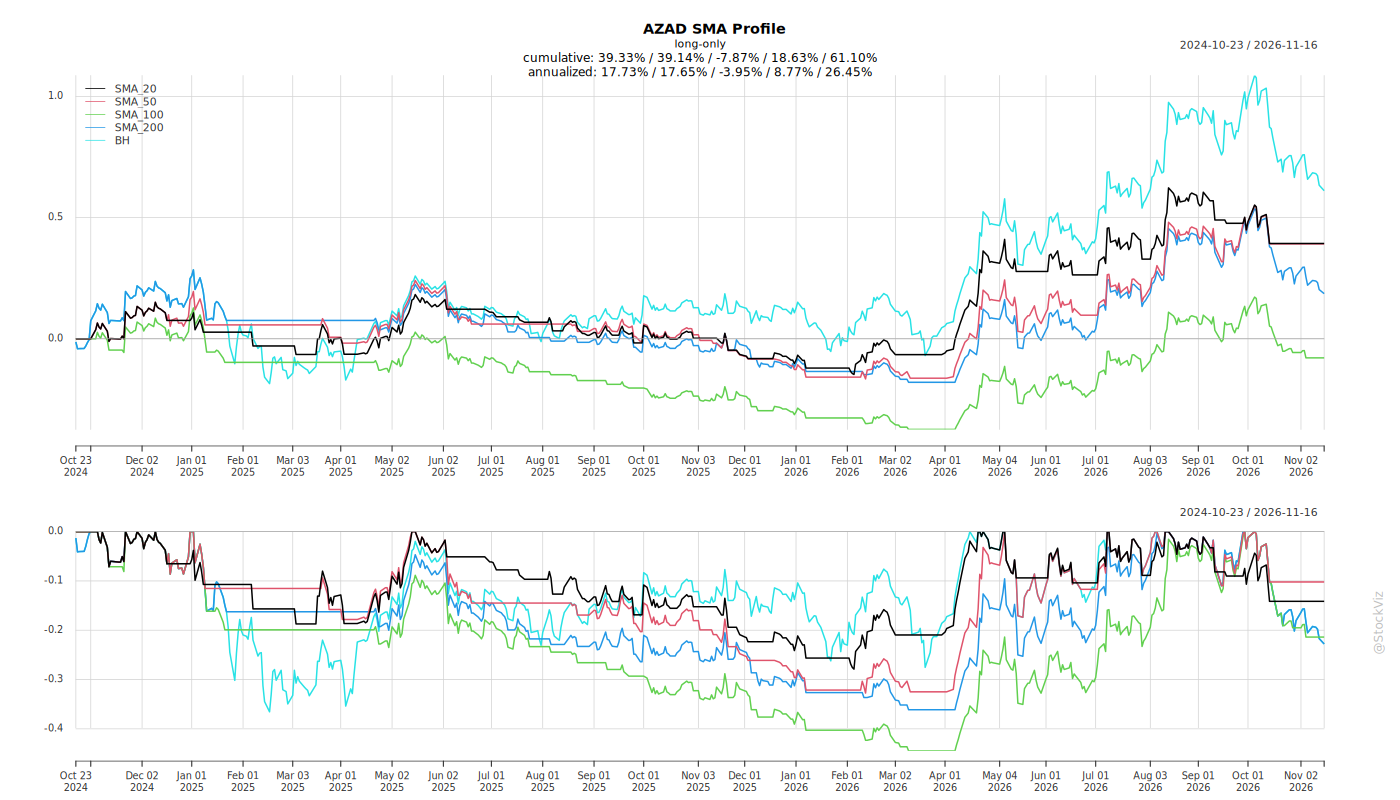
Fundamentals
Ownership
Margined
AI Summary
asof: 2026-09-16
Azad Engineering: Recent Corporate Developments
1. Headwinds and Challenges
Execution complexity at scale. Management describes the current phase as a large simultaneous execution effort — building factories, ramping capacity, hiring and training people, and servicing existing contracts all at once. Vishnu Malpani framed this as the central challenge: all of these workstreams must come together for the company to hit its milestones.
Working capital intensity. Finance costs rose in Q1 FY27 on additional working capital loans taken to support growth. CFO Ronak Jajoo indicated working capital days were elevated, with a target of around 200 days in H1 and 160–180 days by H2, largely dependent on bill discounting facilities reducing debtor days from roughly 170–180 days toward 90 days.
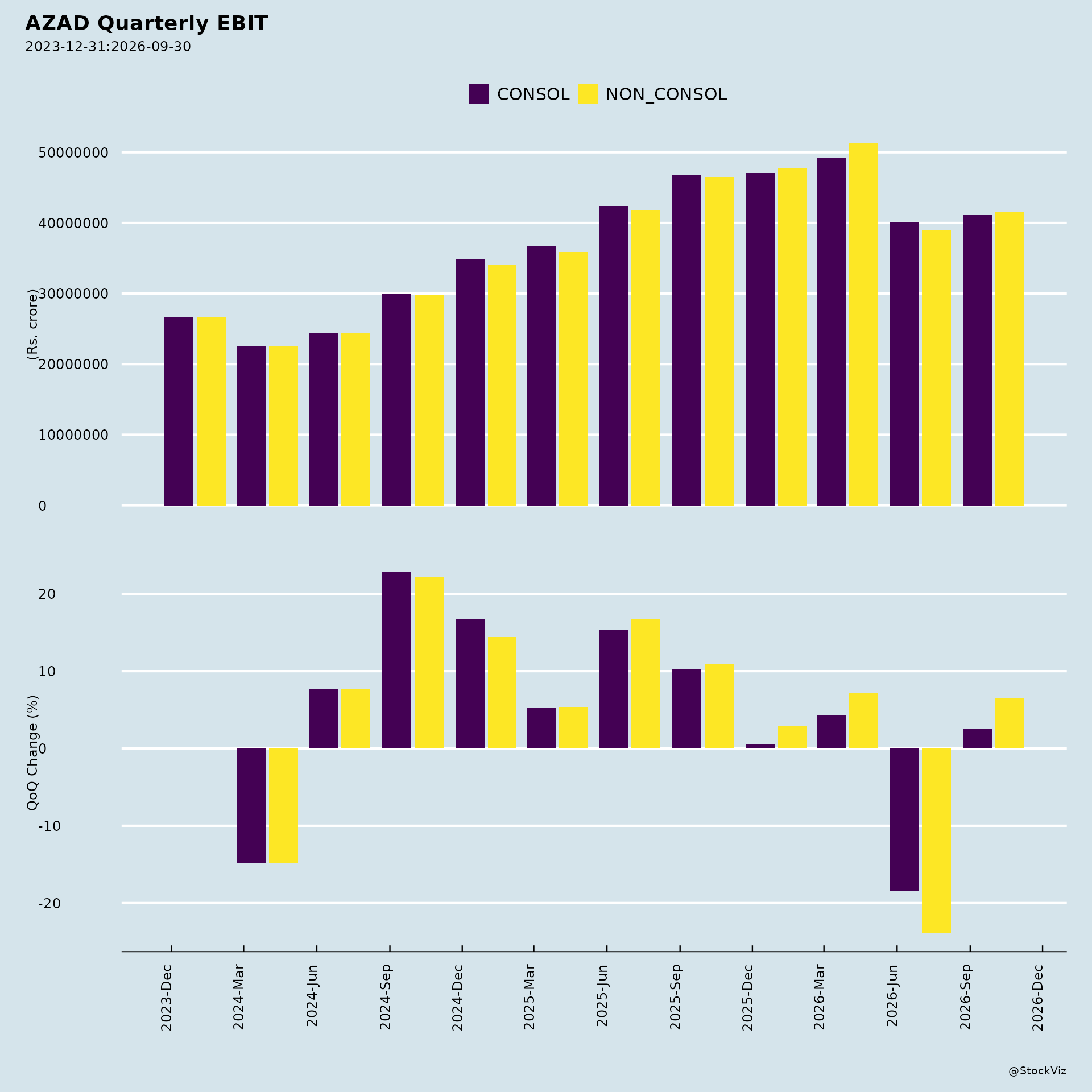
Cost lines running ahead of revenue. Employee expenses increased due to higher headcount supporting new facilities, and depreciation rose with recent capacity additions. Management attributed elevated employee cost to building bench strength ahead of Q3/Q4 sales, with WIP cycles of 90–120 days, and expects normalization in H3/H4.
Other income moderation. Other income fell sharply — from INR 170.4 Mn in Q4 FY26 to INR 40.19 Mn in Q1 FY27 — which management attributed to foreign currency volatility normalizing after an elevated prior quarter. Treasury income is also expected to moderate as cash reserves are deployed into factory infrastructure and machines.
Limited visibility on the turbojet program. On the GTRE engine, management stated that the MoD program shares limited information; timelines cited (4–6 weeks to weapon testing, 8–12 weeks for the first several engines) were described as what the company has heard rather than contractually confirmed. Volume potential was described as unknown — potentially two-digit, three-digit, or four-digit — with planning to follow once volumes are known.
Margin guidance conservatism. Management continues to guide a 32–35% margin window for calculation purposes even while delivering 37–38%, which it attributes to shop-floor skill development and continuous improvement rather than a single identifiable driver.
2. Tailwinds and Growth Prospects
Structural industry cycles. Management describes synchronized high-growth cycles across energy (gas turbine upgrade cycles driven by energy security) and aerospace and defense (aircraft demand plus domestic defense self-reliance), characterized as multi-decade structural shifts rather than short-term spikes.
Turbojet engine milestone. On July 22, 2026, Azad delivered India’s first indigenous expendable turbojet engine to DRDO/GTRE and the Ministry of Defence, after manufacturing and assembly of engine components. Management frames this as a move from precision component manufacturer to integrated propulsion system player, expanding the addressable market and positioning Azad as a technology integration partner. The company has been advised to prepare for significant production scale-up once testing completes.
Dedicated facility expansion. At Tuniki Bollaram Industrial Park, four dedicated lean manufacturing facilities have been inaugurated: Mitsubishi Heavy Industries (7,200 sq.m, March 2025), GE Vernova Steam Power (7,600 sq.m, April 2025), Siemens Energy (7,200 sq.m, September 2025), and Baker Hughes (7,600 sq.m, April 2026). Civil construction for remaining units at the Azad Centre of Excellence is expected to complete within FY27. Each plant is described as capable of generating INR 150–180 crores at full utilization, implying roughly INR 1,200 crores from the new plant.
Order book across customers. Disclosed agreements include Arabelle Solutions (USD 40 Mn), BHEL (supercritical turbine airfoils), Baker Hughes (Saudi Arabia MoU plus a five-year Nuovo Pignone agreement expiring CY2030), GE Vernova (USD 112 Mn advanced gas turbine airfoils; USD 53.5 Mn nuclear/industrial/thermal airfoils), GTRE (end-to-end ATGG engine), Honeywell Aerospace (USD 16 Mn Phase 1), Mitsubishi (USD 83 Mn five-year LTCPA plus an eight-year hot-section nozzle vane segment single-source contract), Pratt & Whitney Canada, Rolls-Royce (civil aircraft engine components), and Siemens Energy (USD 90 Mn).
Hot section opportunity. The Mitsubishi hot-section facility, roughly 7–8 months from establishment, is described as a model usable for other OEMs and for aviation engine hot sections. Management stated other OEMs have expressed interest and that qualification will follow establishment.
Segment growth. In Q1 FY27, Energy & Oil & Gas grew 26.7% YoY and Aerospace & Defence grew 24.7% YoY (per the corrected figures in the presentation). Exports were 88.0% of revenue versus 92.0% in Q1 FY26.
3. Key Risks
Qualification and ramp timing. Revenue acceleration depends on completing customer qualification schedules across new lines. Management expects substantive P&L contribution from H2 FY27, with 80% of stabilization initiatives complete in Q1, the remainder by mid-Q2 and full closure by Q3.
Concentration in export markets and currency. Exports constituted 88% of Q1 FY27 revenue. Management noted rupee depreciation could help revenue by roughly 5–6% but stated it is not a planning lever, and that imports provide a natural hedge. Ronak Jajoo noted forex gains sit below EBITDA, not within it.
Working capital and financing. The company is targeting reduction in working capital days and expects bill discounting facilities to provide a natural hedge for export receivables by Q4. Finance costs are expected to continue due to bill discounting charges.
Capacity planning dependence on contract visibility. Vishnu Malpani stated the company builds capacity only against contracts to be delivered, and that capacity for the next couple of years is already in place. Planning for capex beyond FY29 is under internal evaluation, with more detail expected next quarter.
Program-specific uncertainty. The turbojet engine’s commercial scale, timing, and margins remain undefined pending testing and volume confirmation; management declined to estimate margins until at least 5–6 engines are produced.
4. Management Guidance vs. Observed Performance
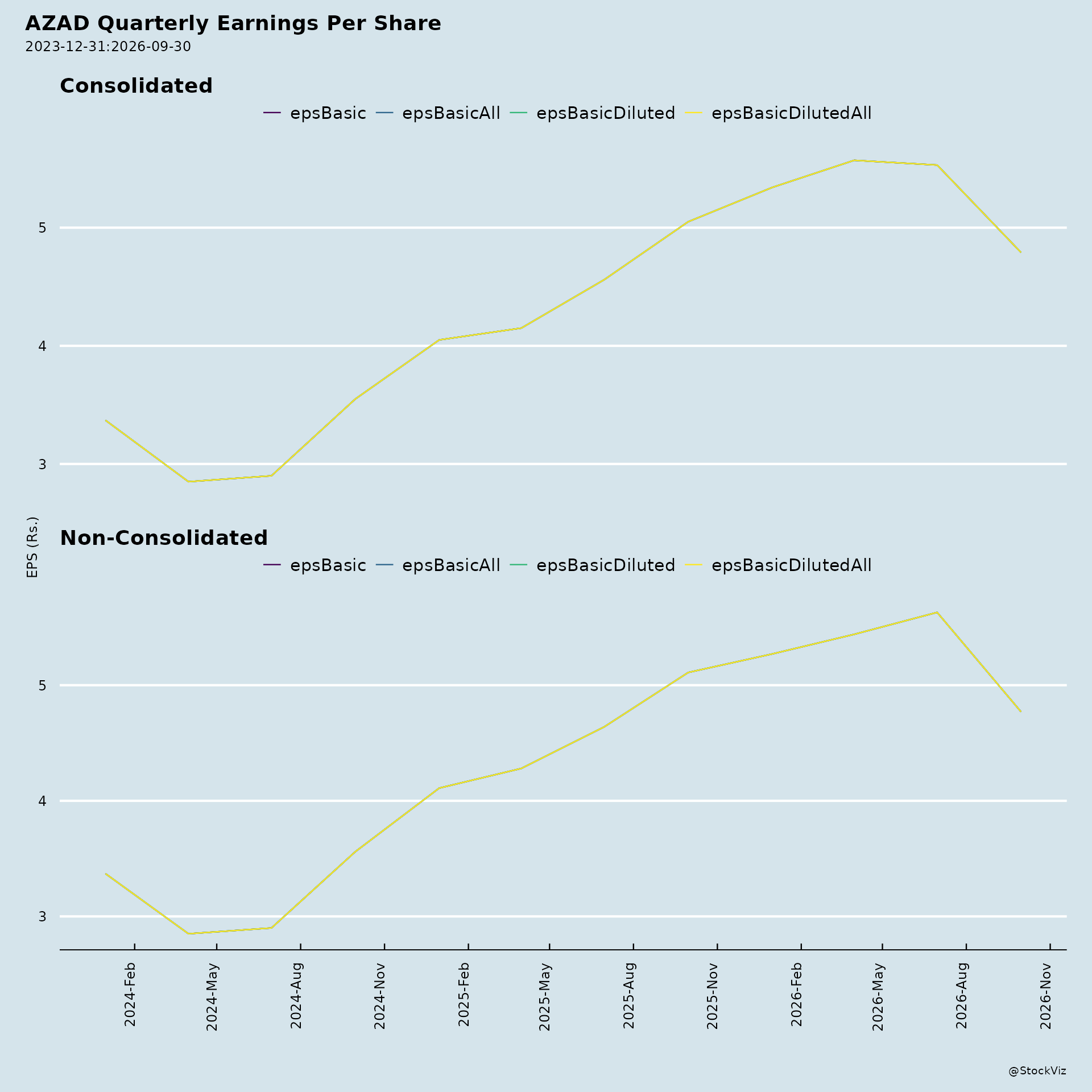
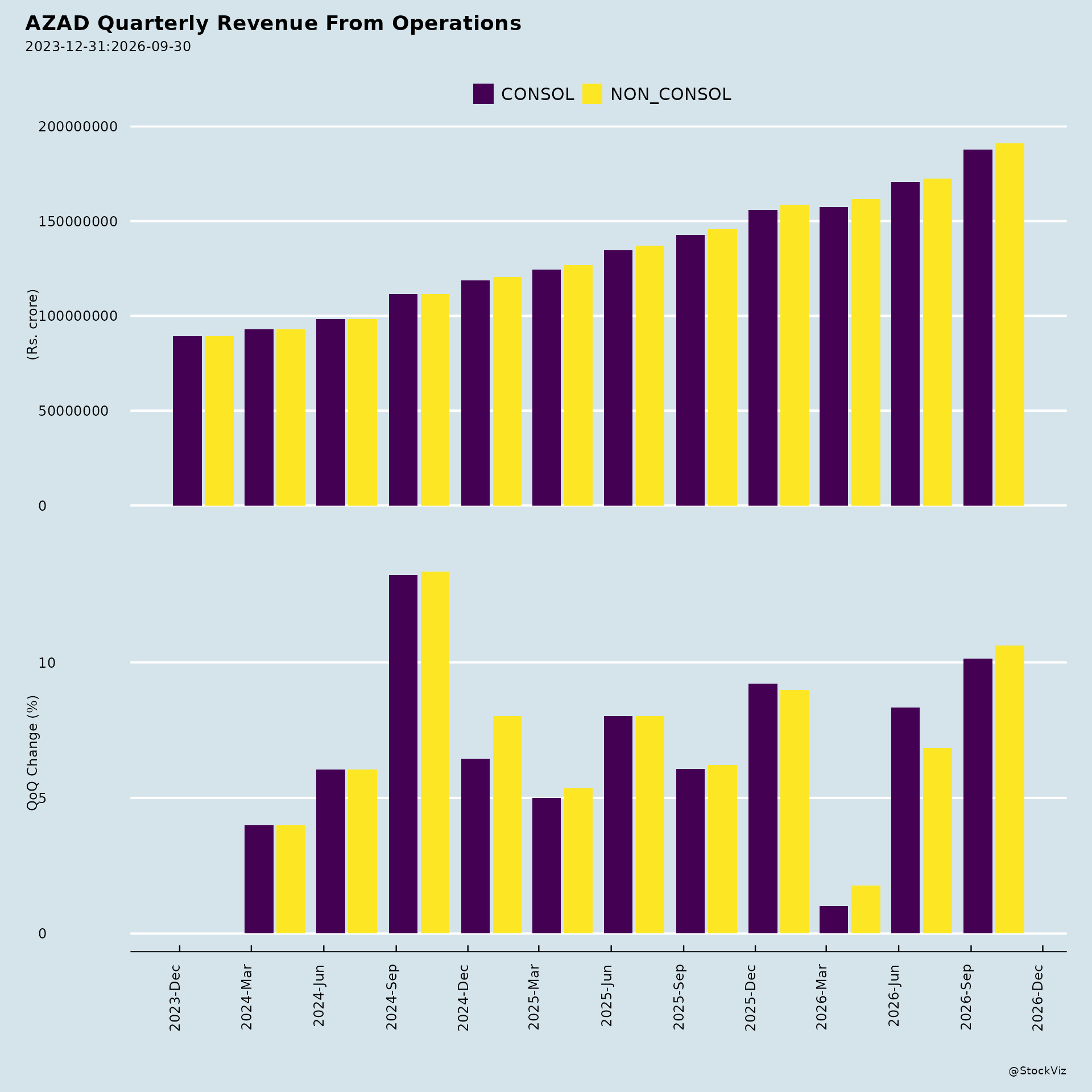
Revenue growth guidance. Management reiterates long-term annual revenue growth guidance of over 25%. Observed: Q1 FY27 standalone revenue grew 26.8% YoY to INR 1,705.2 Mn; consolidated revenue grew 25.9% YoY to INR 1,726.0 Mn. Management stated it met its guidance for the quarter.
Margin guidance. Management guides a 32–35% margin window for calculation purposes. Observed: Q1 FY27 standalone EBITDA margin was 37.6% (up from 36.1% YoY and 36.7% QoQ); consolidated EBITDA margin was 37.3%. Management stated confidence in sustaining current margins in coming quarters.
PAT performance. Standalone PAT grew 21.2% YoY to INR 363.5 Mn with a 21.3% margin; consolidated PAT grew 19.5% YoY to INR 351.6 Mn with a 20.4% margin.
H2-weighted revenue expectation. Management guided that more substantive revenue contribution from new dedicated lines would crystallize from H2 FY27, with Q3/Q4 reflecting the ramp. This remains a forward expectation; Q1 showed sequential revenue growth of 8.3% over Q4 FY26.
Working capital guidance. Target of ~200 days in H1 and 160–180 days in H2, contingent on bill discounting facilities. Observed: finance costs increased in Q1 FY27 on additional working capital loans.
Capex guidance. Management stated no large capex is needed for the next couple of years relative to current guidance, with further detail on longer-term capex expected next quarter. Observed: FY26 standalone capital work-in-progress stood at INR 2,566.8 Mn versus INR 797.8 Mn in FY25, and property, plant and equipment rose to INR 7,447.7 Mn from INR 4,010.2 Mn.
Broker Narrative
The Buy thesis stayed constant across both reports, anchored on the same growth story of diversifying beyond energy/power into aerospace, defence and O&G on the back of Baker Hughes and Rolls-Royce orders and a large wallet-share opportunity. What changed is the framing: the first report sold a greenfield opportunity (new multi-year orders, a new 95,000 sq m facility, vast market potential and cost advantage), whereas the last report describes a company whose capacity is already commissioned (six dedicated facilities, ~44,800 sq m) but whose payoff is back-ended, shifting the emphasis to execution/ramp-up risk (revenue from Q4FY27E, full utilisation H1FY28E), scale-up margin pressure (Q2FY27 PAT -5.2% YoY, 32-35% long-term margin guide vs 37.9% reported), negative FY26 cash flow and a stretched valuation (85x FY28E EPS). The early fears around OEM-approval delays and concentration risk persisted and were echoed, while the early aerospace-slowdown fear did not materialize, with both A&D (+28.3%) and Energy/O&G (+28.5%) growing strongly in H1FY27.
Fears that came true
- Delay in OEM approvals materialized as a persistently back-ended ramp-up: the last report concedes throughput only improves from Q3FY27, revenue from Q4FY27E and full utilisation only by H1FY28E, contingent on customer approvals and delta qualifications, consistent with the early DISAPPOINTMENT prints (2024-03-07 -1.9%, 2024-08-10 -8.1%).
- Product/air-foil concentration flagged early persisted as an unresolved customer-concentration risk, still cited as a key headwind with wallet share under 2% and programmes concentrated in the last report, coinciding with the 2026 negative actuals (2026-08-08 -2.2%, 2026-08-10 -4.5%, 2026-09-29 -16.5%).
Optimism that failed
- The tailwind that an increasing defence/aerospace/O&G footprint would reduce product-concentration risk did not materialize, since customer concentration (wallet share under 2%) is still flagged as a key risk in the last report roughly three years on.
- The new large facility meant to capture commercial opportunities has not delivered revenue on schedule: it is commissioned but ramp-up is deferred to Q4FY27E (full utilisation by H1FY28E), while scale-up costs drove a 5.2% YoY Q2FY27 PAT decline to Rs 30.9 crore and negative FY26 operating cash flow (Rs -108 crore).
- The anticipated increase in Baker Hughes wallet share has stalled, remaining under 2% of customer wallet in the last report despite the new orders and extended supply relationship.
Broker Timeline
19 broker calls · 2024-03-07 to 2026-11-07
CNBC-TV18: ratings, targets and commentary
No recorded CNBC-TV18 statements for this ticker.
Management comments
No recorded management comments with an explicit designation and affiliation for this ticker.
Copyright © 2023 SAS Data Analytics Pvt. Ltd. All rights reserved.