AXISBANK
Equity Metrics
September 24, 2026
Axis Bank Limited
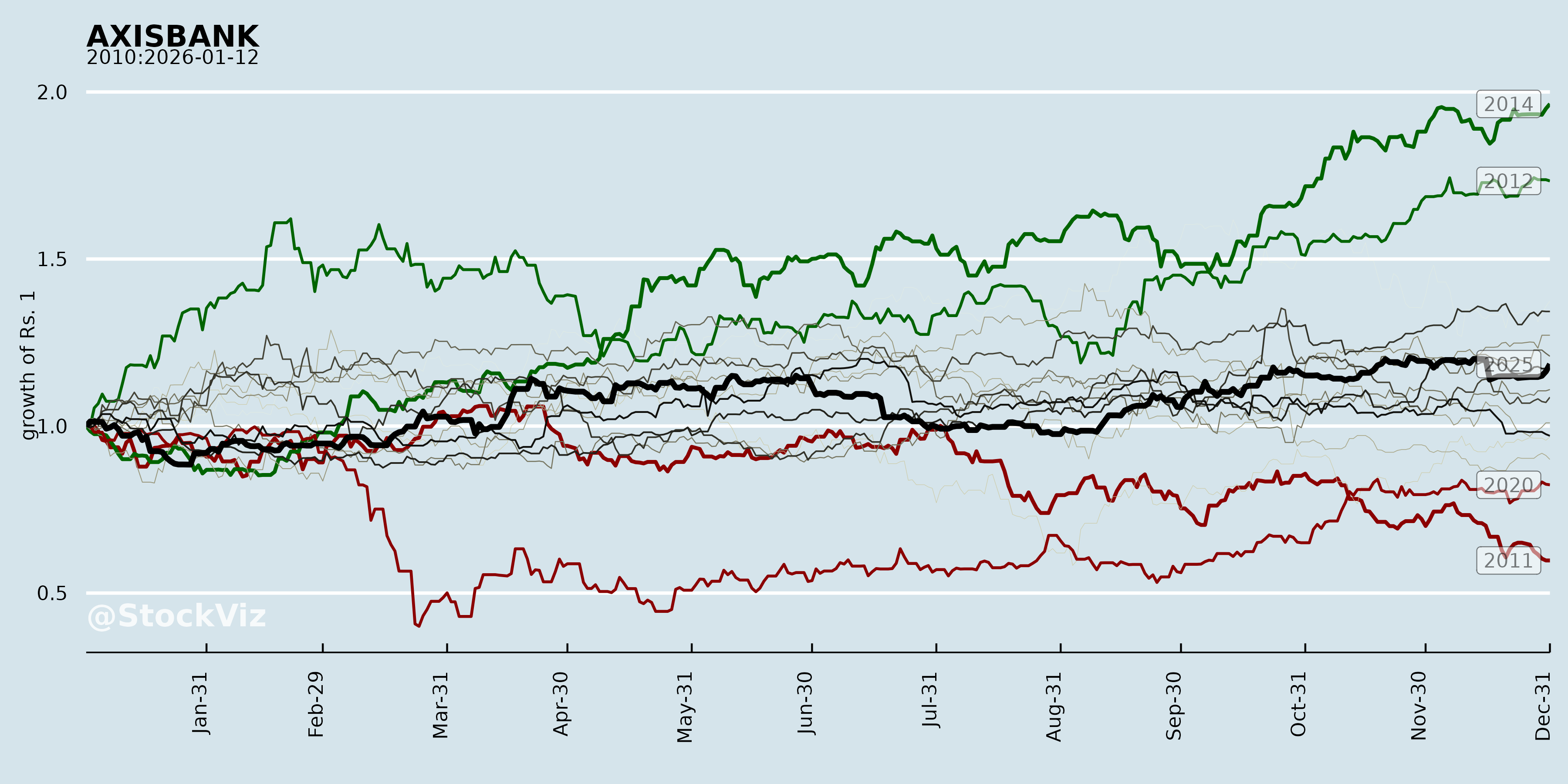
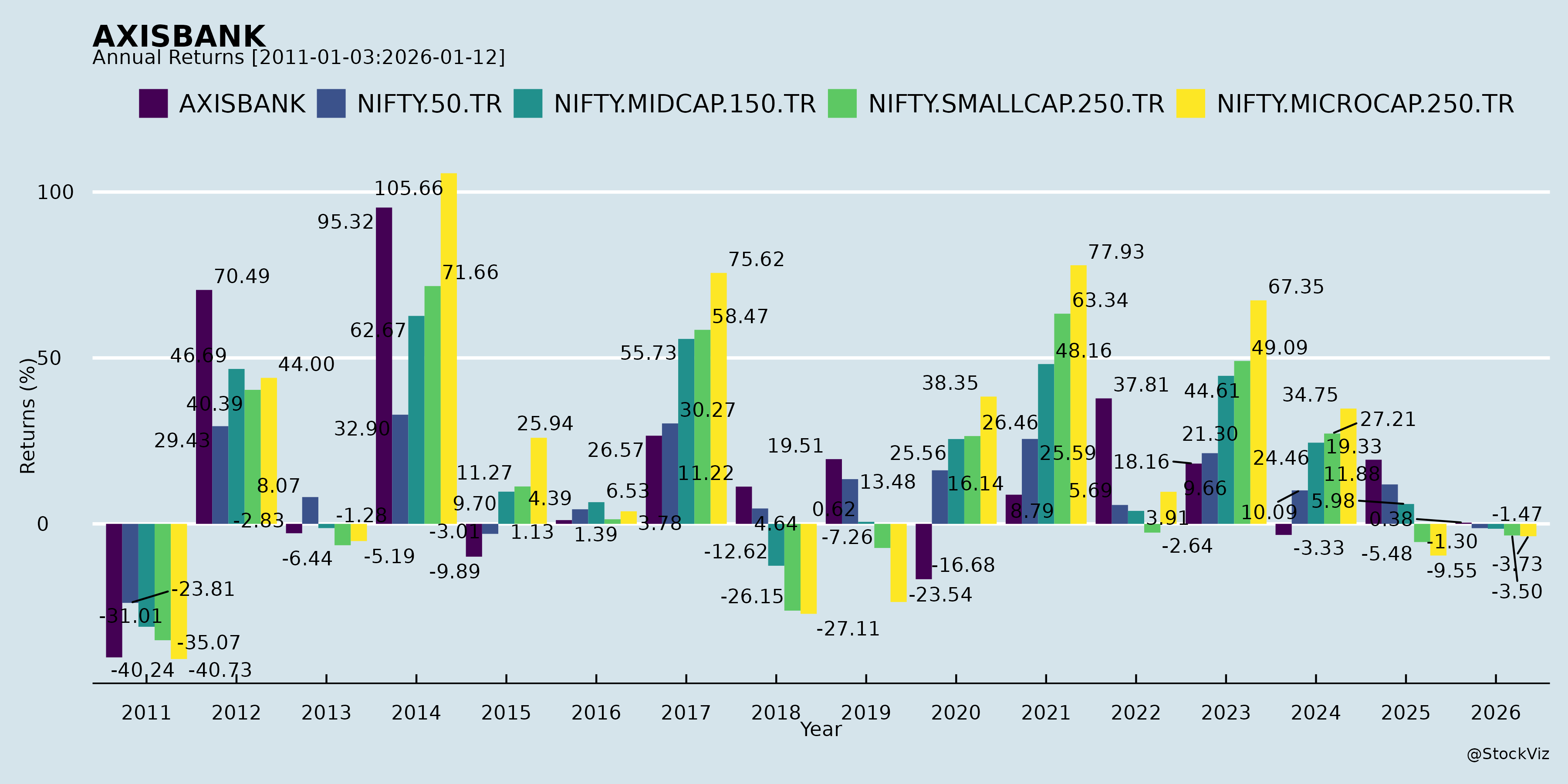
Annual Returns
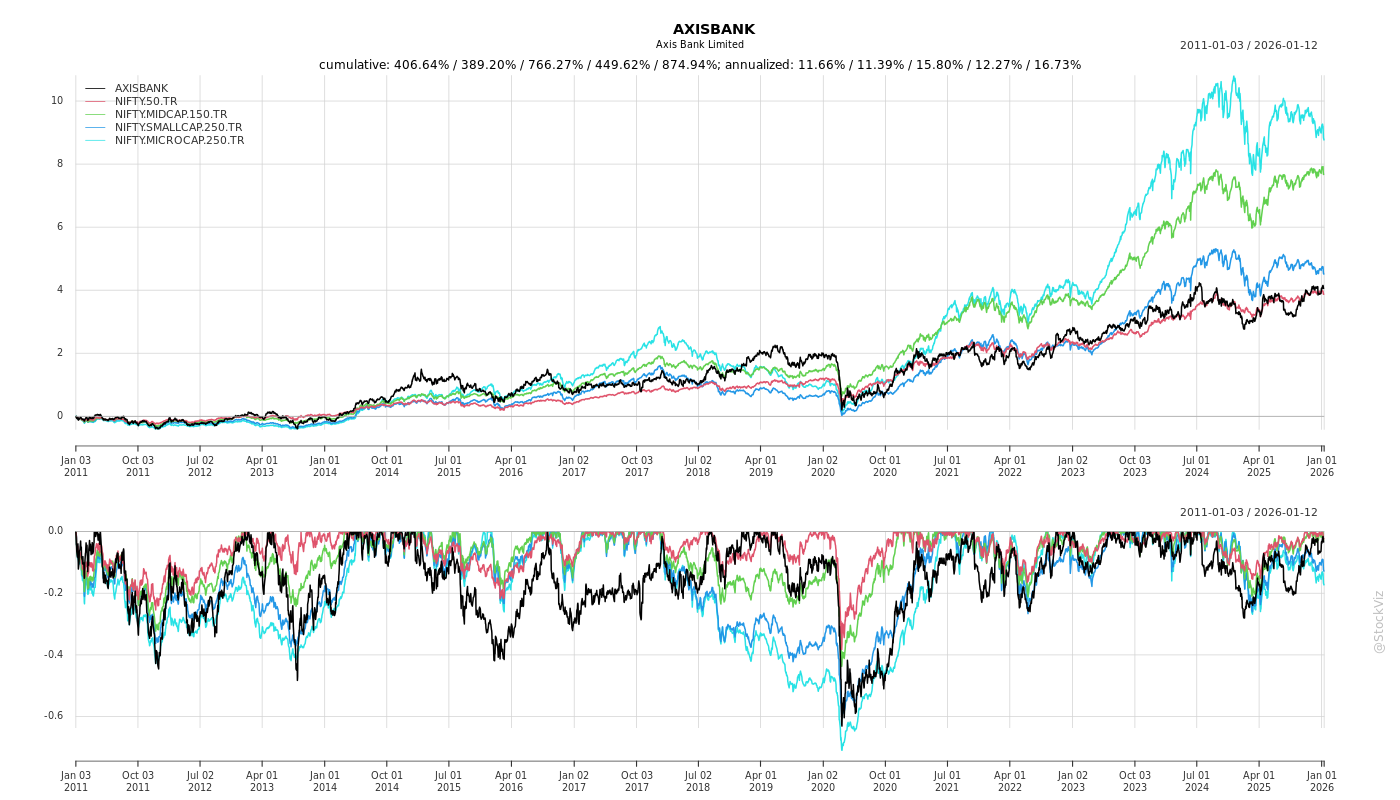
Cumulative Returns and Drawdowns
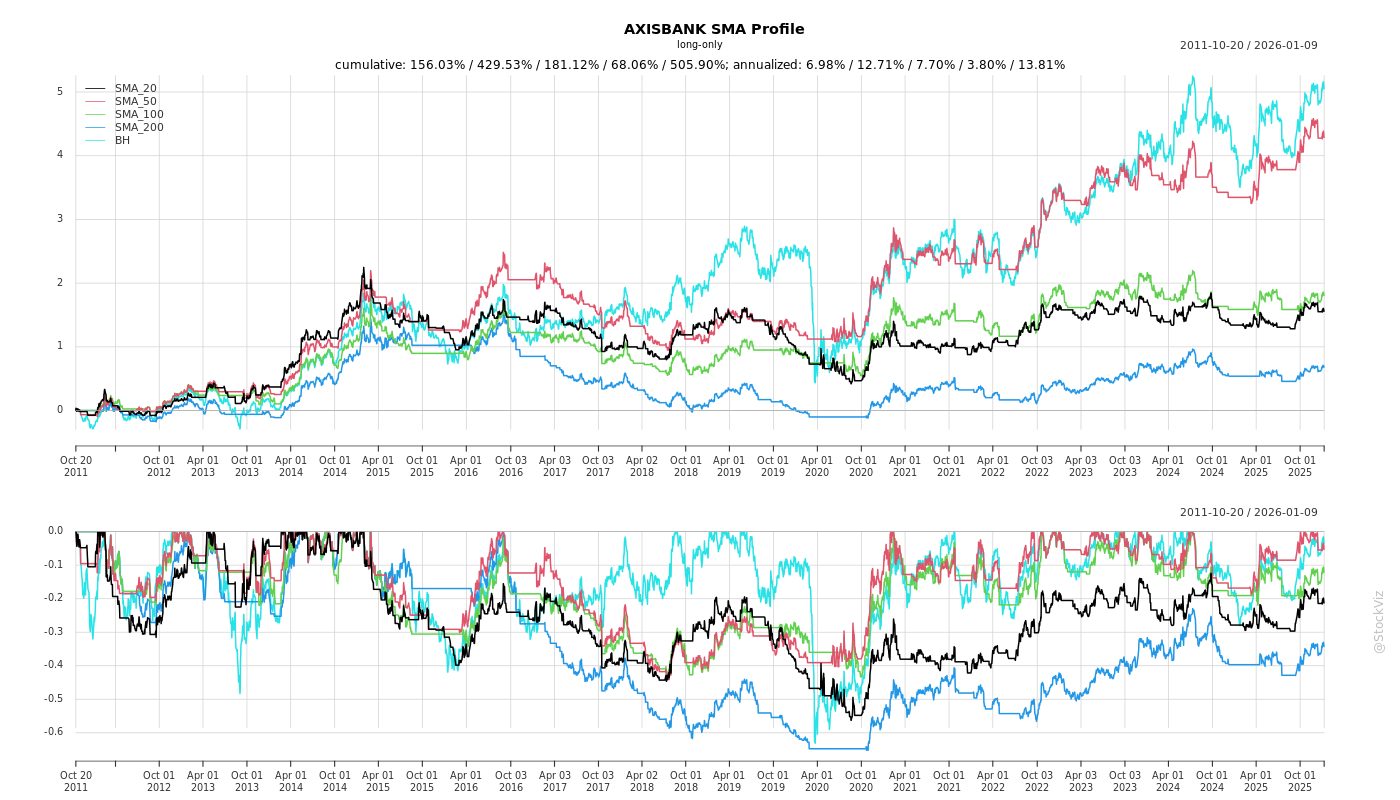
Fundamentals
Ownership
Margined
AI Summary
asof: 2026-09-14
Headwinds and Challenges
- The 32nd AGM was held on July 31, 2026, against the backdrop of the Bank’s fiscal 2026 audited results and Q1 fiscal 2027 performance, with the Chairman’s speech covering the macroeconomic environment, the GPS strategy, financial performance, digital capabilities, geographical reach, CSR and sustainability, and ESG strategy.
- Shareholder queries at the AGM focused on areas including dividend payout, financial performance, future strategy, customer service, branches, ATMs, cyber security and fraud, Gen AI, CSR/ESG initiatives, fraud detection, non-performing assets, capex plans, overseas branches and business, employee strength and training, and stock split. These topics indicate the areas of scrutiny and concern raised by members.
- Voting dissent was most visible on the re-appointment of N. S. Vishwanathan as an Independent Director (Resolution 4), where 1.3836% of valid votes were cast against, and on his re-appointment as Non-Executive (Part-time) Chairman and his remuneration (Resolution 5), where 1.1133% were against. The re-appointment of Subrat Mohanty as a Whole-Time Director and his remuneration (Resolution 7) also saw 1.1944% against.
- Public institutions recorded the highest opposition on Resolution 4 (1.5395% against) and Resolution 5 (1.2381% against), while public non-institutions showed comparatively lower dissent on these resolutions.
Tailwinds and Growth Prospects
- All 18 resolutions set out in the Notice of AGM dated April 25, 2026 were passed by members with the requisite majority, including adoption of the standalone and consolidated audited financial statements for the fiscal year ended March 31, 2026.
- The Bank received shareholder approval to borrow or raise funds in Indian rupees or foreign currency by issuing debt securities on a private placement basis for an amount of up to Rs. 35,000 crores (Resolution 13), passed as a special resolution with 99.999% of valid votes in favour.
- Approval was also granted to raise funds by issuing equity shares, depository receipts, or other instruments or securities representing equity shares and/or convertible securities linked to equity shares for an amount of up to Rs. 20,000 crores (Resolution 14), passed as a special resolution with 99.7975% in favour.
- Material related party transactions were approved with Life Insurance Corporation of India (Resolution 15), LIC Housing Finance Limited (Resolution 16), IDBI Bank Limited (Resolution 17), and Axis Max Life Insurance Limited (Resolution 18), each passing with over 99.99% of valid votes in favour.
- The Chairman’s speech addressed the Bank’s GPS strategy, digital capabilities, geographical reach, and ESG strategy, indicating these as areas of strategic focus.
- The dividend on equity shares for the fiscal year ended March 31, 2026 was declared with 99.9996% of valid votes in favour (Resolution 2).
Key Risks
- Shareholder questions on cyber security and fraud, fraud detection, and non-performing assets point to these as areas of ongoing risk concern.
- The resolutions on material related party transactions with LIC, LIC Housing Finance, IDBI Bank, and Axis Max Life Insurance indicate significant related-party exposures requiring shareholder approval.
- The borrowing resolution of up to Rs. 35,000 crores and the fund-raising resolution of up to Rs. 20,000 crores, both passed as special resolutions, indicate the scale of potential balance sheet expansion and capital raising.
- Dissent on director re-appointments and remuneration resolutions, particularly from public institutions, reflects governance-related scrutiny.
Management Guidance Versus Observed Business Performance
- The Chairman’s speech provided insights on financial performance for fiscal 2026 and Q1 of fiscal 2027, and the audited standalone and consolidated financial statements for the fiscal year ended March 31, 2026 were adopted by members.
- Shareholders raised queries on financial performance, future strategy, dividend payout, capex plans, and stock split, which were responded to by Amitabh Chaudhry, Managing Director & CEO.
- The AGM transacted revisions in remuneration payable to Amitabh Chaudhry (MD & CEO), Subrat Mohanty, Munish Sharda, and Neeraj Gambhir, each with effect from April 1, 2026, all passed with over 99.2% of valid votes in favour.
- The re-appointment of Subrat Mohanty as a director retiring by rotation (Resolution 3) passed with 99.5895% in favour, while his re-appointment as Whole-Time Director and remuneration (Resolution 7) passed with 98.8056% in favour.
- The revision in ceiling of fixed remuneration granted to Non-Executive Directors excluding the Non-Executive (Part-time) Chairperson (Resolution 12) passed with 99.9935% in favour.
- Total shareholders on the record date of July 24, 2026 were 899,300; 177 members attended the meeting through video conferencing; and 18 resolutions were passed.
Broker Narrative
The broker narrative evolved from early 2023 concerns about rising deposit costs and margin moderation toward severe, quantified NIM compression (down 34 bps YoY to 3.46%) and CASA deterioration by 2026, while bullish themes around asset quality buffers, capital strength, and corporate/SME loan growth persisted throughout. Despite the shift from a Neutral to Buy stance, the core margin and deposit franchise headwinds deepened, and recent Buy calls coincided with negative actual returns of -6.2%, signaling that optimism about advances growth and opex discipline was overshadowed by structural profitability erosion.
Fears that came true
- Rising cost of deposits and margin moderation materialized as NIM compressed 34 bps YoY to 3.46%, driven by loan repricing pressure (-9 bps) and agri-linked interest reversals (-3 bps), correlating with DISAPPOINTMENT outcomes in mid-2024 and July 2026.
- Stagnating loan yields materialized as loan repricing pressure of -9 bps YoY and balance sheet mix shift toward corporate loans (-4 bps) eroded margins and caused a core revenue miss.
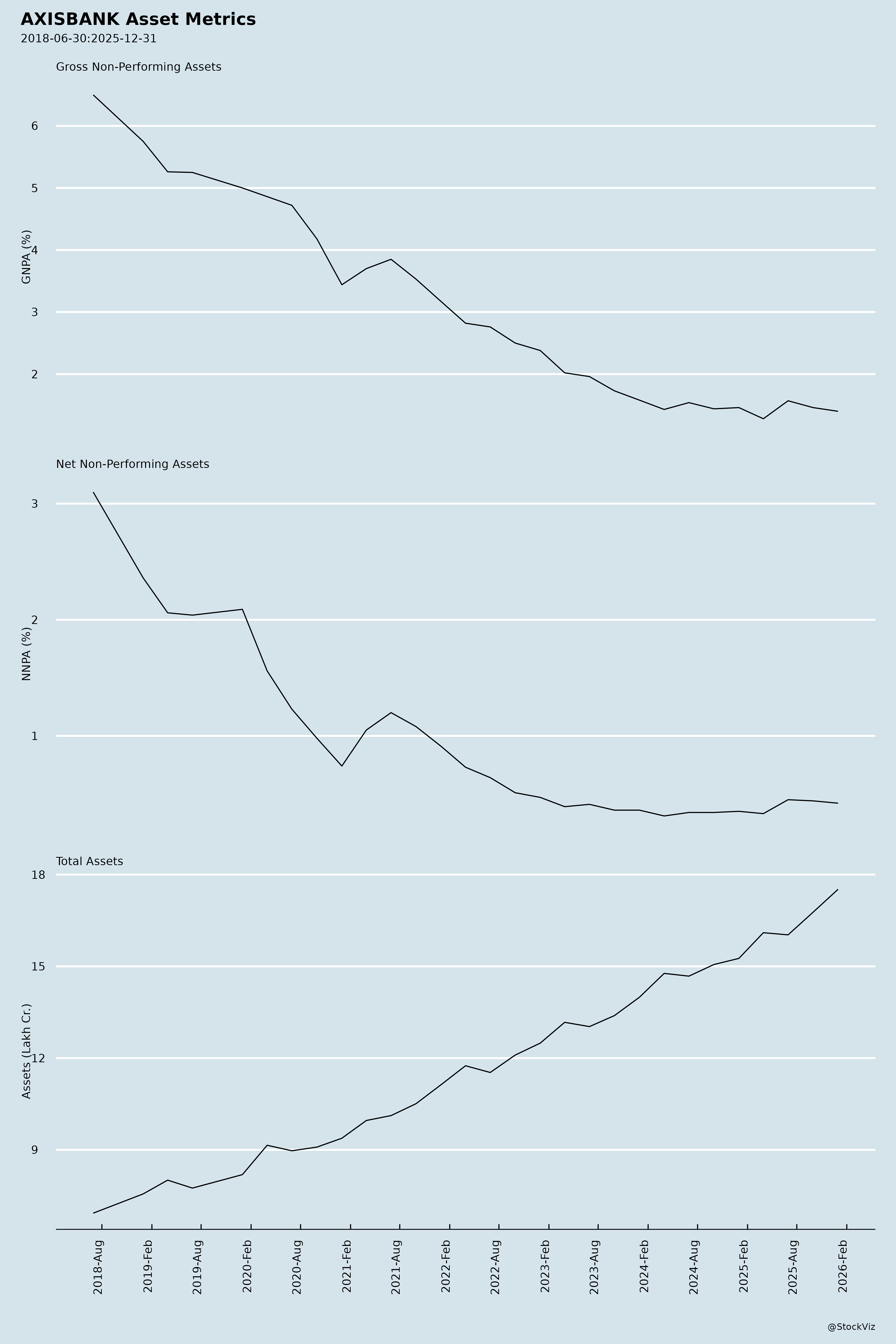
- Elevated funding costs materialized as the CASA ratio fell 150 bps YoY to 35.0% with low-cost deposit mix declining to 38.0%, keeping LDR elevated at 91.9%.
Optimism that failed
- Deposit accretion from discontinuance of the INR2k note failed to sustain, as the average CASA ratio fell 150 bps YoY to 35.0%, indicating deposit mix deteriorated rather than improved.
- Healthy treasury performance reversed sharply as other non-interest income dropped 61.7% YoY to INR 5.79 bn due to a high base of G-Sec/bond gains realized in Q1FY26.
- Controlled slippages and credit costs are set to worsen, as management expects higher credit costs in the first year of the ECL transition with Stage 1 and Stage 2 provisioning replacing standard asset provisioning.
- Robust advances growth in Retail and SME did not translate to outperformance, as core revenue missed estimates and the stock posted -6.2% on the last Buy call despite 19.0% YoY advance growth.
Broker Timeline
103 broker calls · 2023-06-01 to 2026-07-19
Copyright © 2023 SAS Data Analytics Pvt. Ltd. All rights reserved.