AMRUTANJAN
Equity Metrics
September 24, 2026
Amrutanjan Health Care Limited
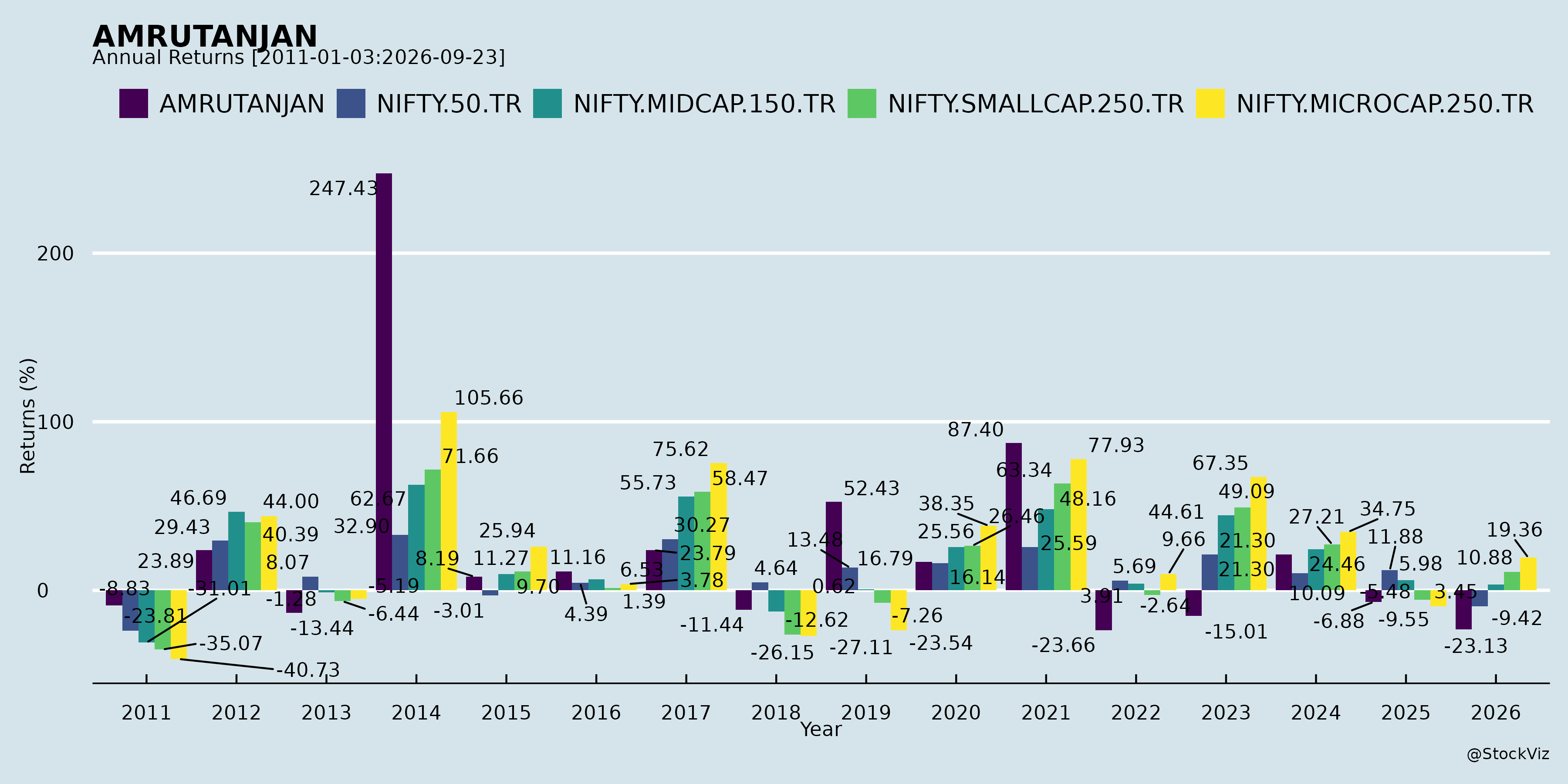
Annual Returns
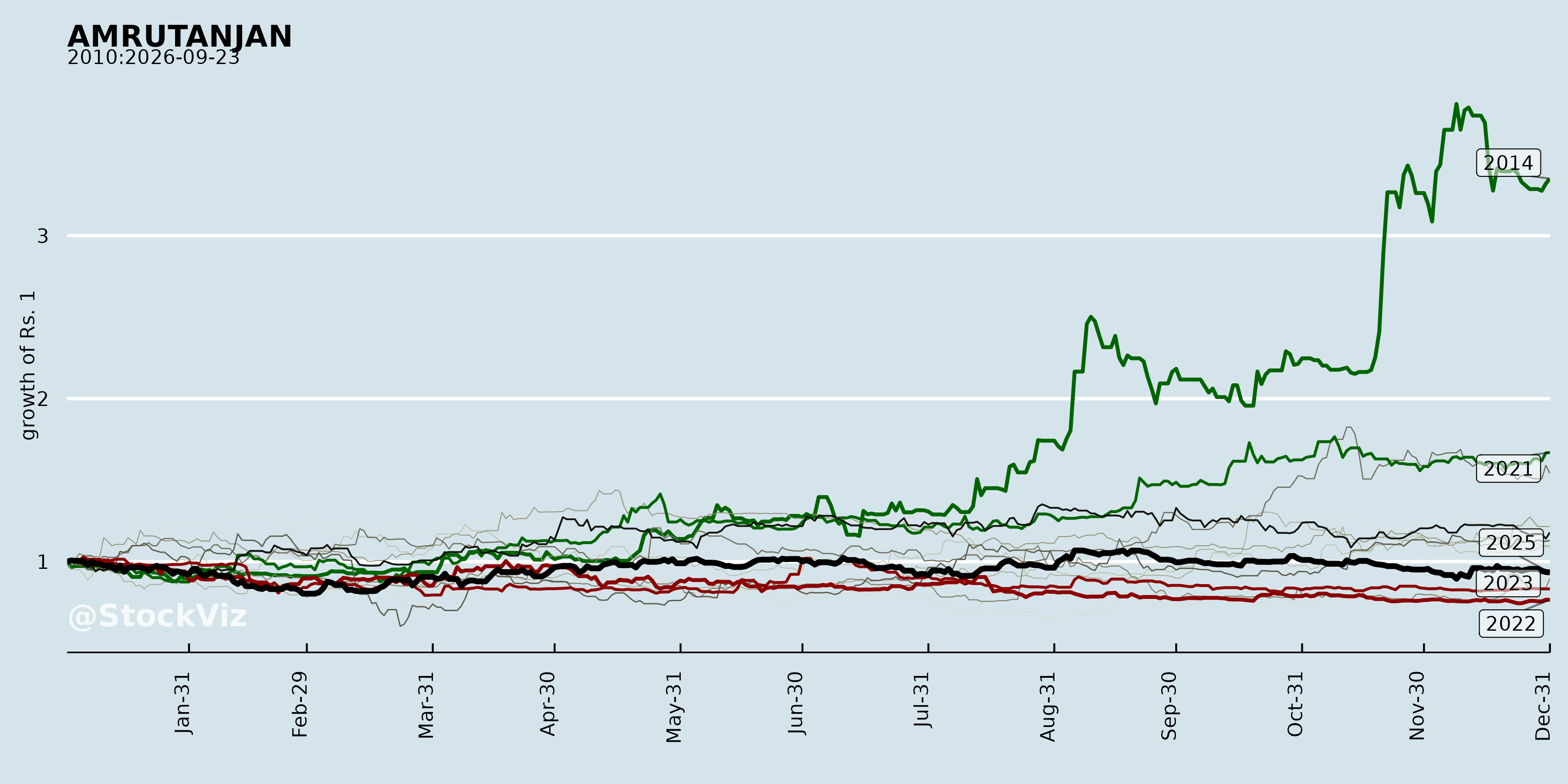
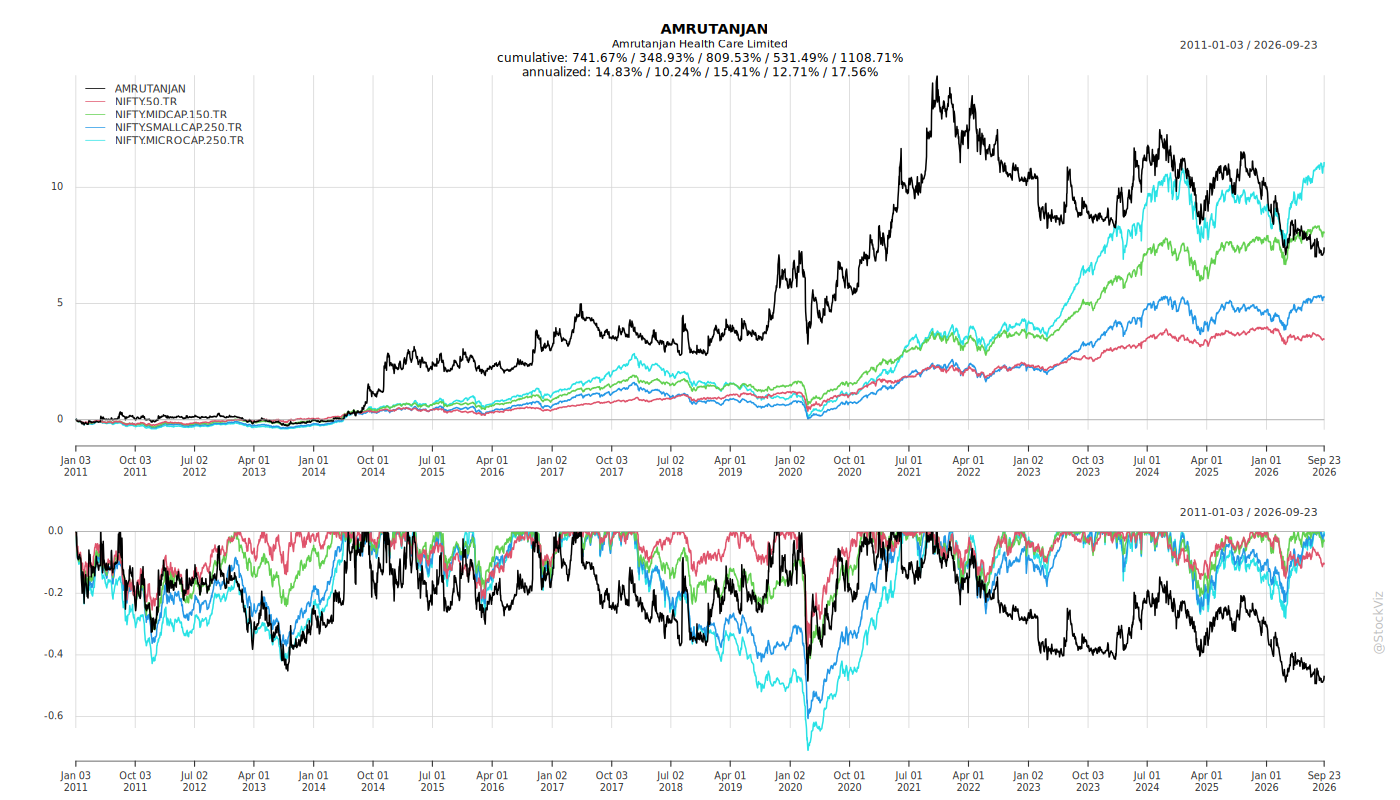
Cumulative Returns and Drawdowns
Fundamentals
Ownership
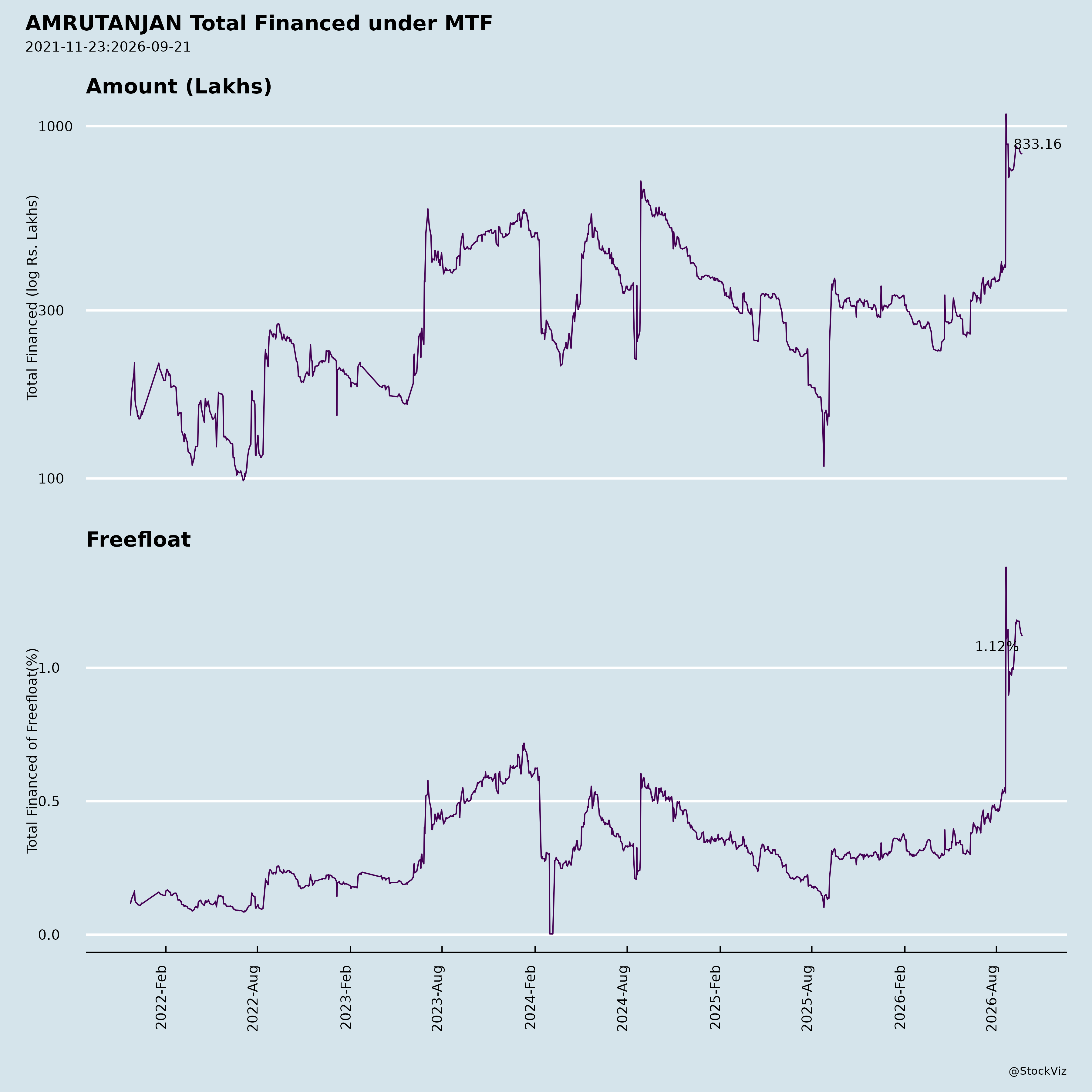
Margined
AI Summary
asof: 2026-09-18
Headwinds and Challenges
Pain management category pressure. The pain management segment, which constitutes 65% of company revenue, saw volume growth decline to -3.4%, attributed to retailer demand erosion following GST implementation and a high base effect.
Beverages under regulatory transition. The soft beverage category faced soft performance during the FSSAI regime transition, which restricted marketing activity. The electrolyte drink category has faced severe regulatory hurdles over the past three years.
Cost inflation. Cost of goods sold was impacted by the war in West Asia. Other pressures include fluctuations in raw material prices, potential COGS inflation from supply-chain disruptions and Middle East conflicts, and increasing packaging material costs.
Lease rent dispute. A long-running dispute over lease rent for leasehold land, revised by the Government of Tamil Nadu effective November 2001, culminated in the Madras High Court dismissing the company’s writ petition on 25 September 2025 and upholding the rent fixed by the Fair Rent Committee. An appeal filed on 9 December 2025 was dismissed on 16 March 2026, and a review petition was also dismissed on 30 April 2026. The company created a provision of INR 760.50 lakhs for the year ended 31 March 2026. In July 2026, a demand notice for INR 974.67 lakhs was received from the HR & CE Department; after representations, the demand was settled on 1 August 2026, with the consequential additional cost of INR 202.75 lakhs disclosed as an exceptional item in the quarter ended 30 June 2026. The company paid the lease rent arrears of Rs. 9,74,67,151 to Kapaleeswarar Temple on 1 August 2026 in compliance with the Madras High Court order.
New labour codes. Effective 21 November 2025, the Government of India consolidated multiple labour legislations into four labour codes. This resulted in an estimated one-time increase in employee benefit provisions of INR 125.17 lakhs, recognised as an exceptional item during the year ended 31 March 2026.
Market penetration and competition. Low penetration of products in P3 markets and strong competition pose challenges to market penetration.
Tailwinds and Growth Prospects
Large and growing market. The Indian health and wellness market is valued at $15B, with OTC contributing 60%. Rising consumer focus on self-care and preventive health supports demand.
Women’s hygiene momentum. The women’s hygiene category showed robust demand led by larger pads and Comfy XL variants, with its contribution to overall AHCL rising to 33%.
New personal care lines. Comfy razors and Smoothe razors reached 70k outlets, with projected annual revenues of 15 crore. The Plastry wound care line has also seen success, with projected annual revenues of 10 crore.
Distribution expansion. Rural penetration is supported by van initiatives and low-unit-price packs. The company is expanding into emerging channels like e-commerce and quick commerce, and aims to achieve 100K direct chemist outlets by FY2027.
Manufacturing capacity. A new Greenfield Sanitary Napkin Manufacturing Facility in Telangana features high-speed production lines, with commissioning targeted for the first quarter of FY2027.
Digitalisation. The company aims to achieve approximately 85% digitisation through the full rollout of the Distributor Management System (DMS) and SAP Transport Module.
Key Risks
- Macroeconomic and geopolitical uncertainties.
- Fluctuations in raw material prices.
- COGS inflation from supply-chain disruptions and Middle East conflicts.
- Increasing packaging material costs.
- Regulatory challenges, including severe regulatory hurdles in the electrolyte drink category over the past three years.
- Low penetration in P3 markets and strong competition.
- Dependence on the pain management category, which constitutes 65% of revenue and is currently experiencing volume decline.
Management Guidance Versus Observed Performance
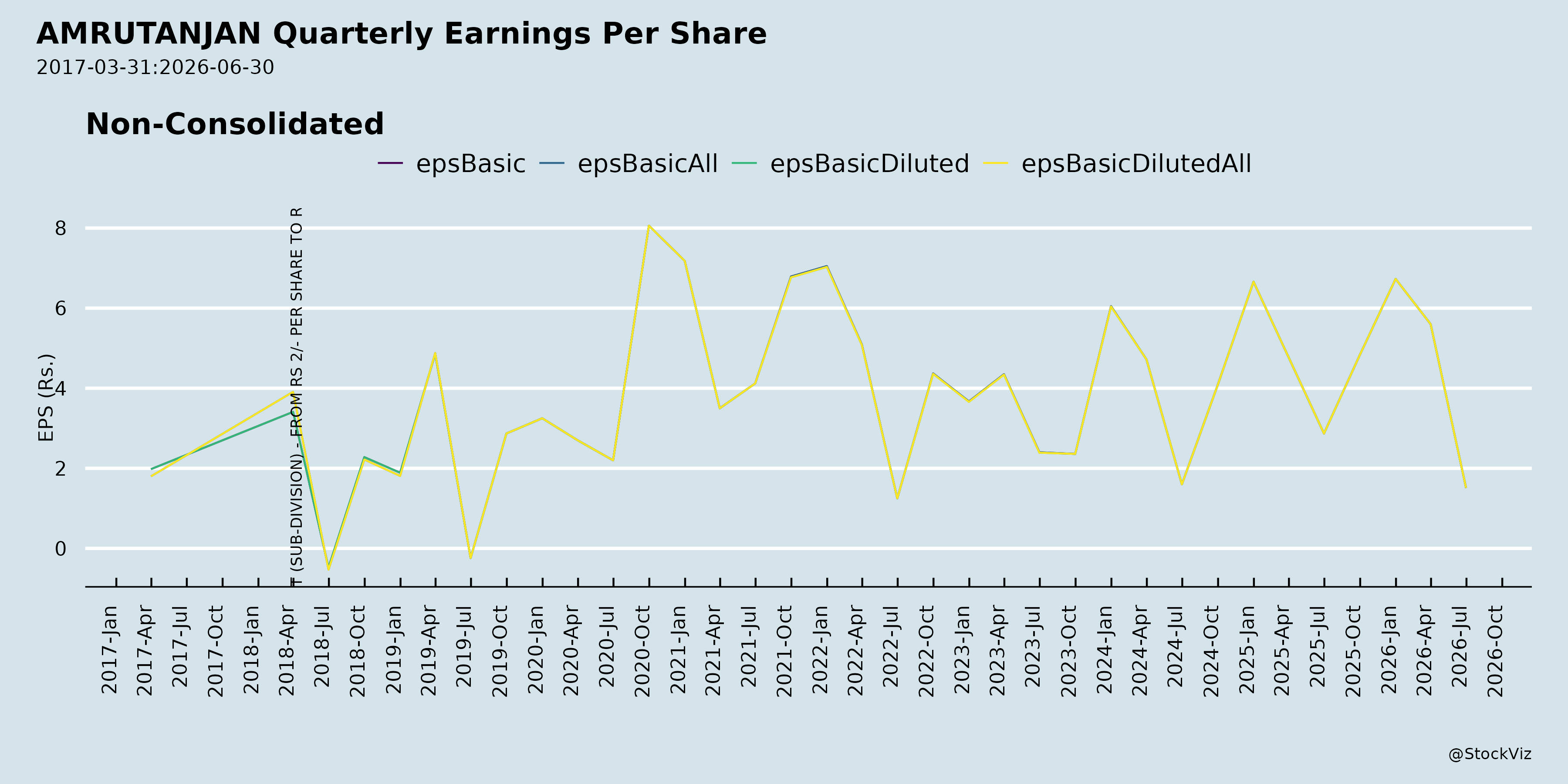
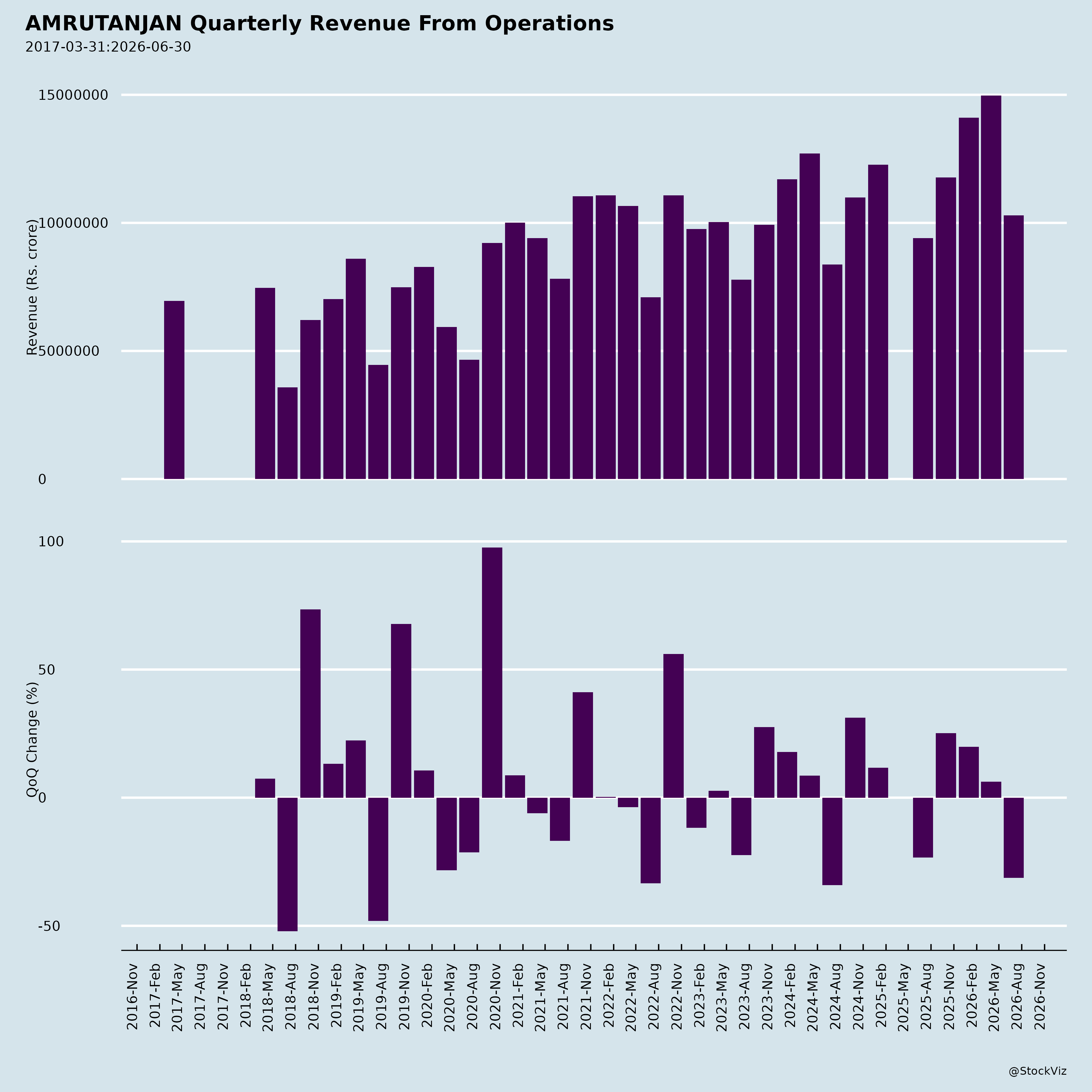
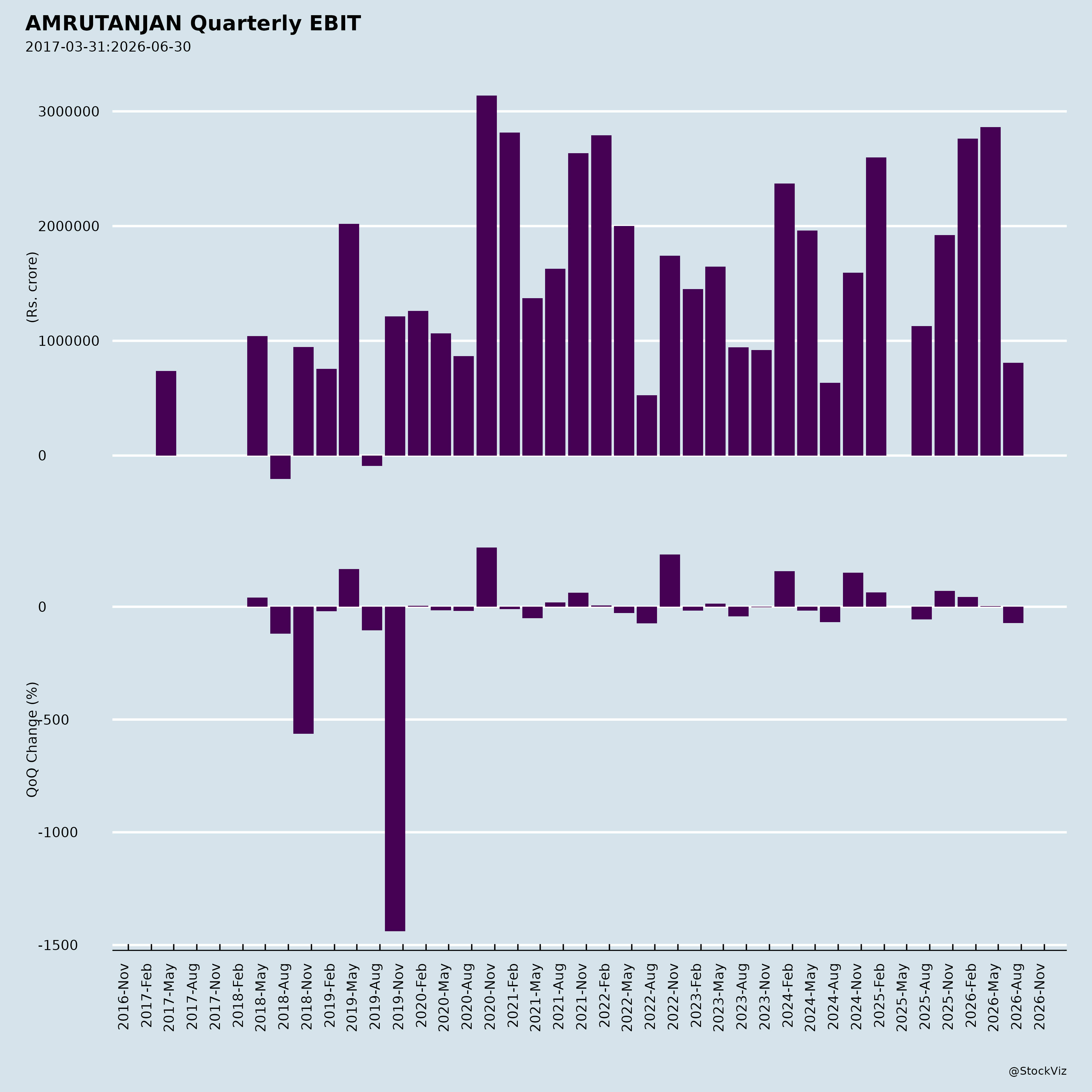
FY2026 performance. The company recorded revenue from operations of Rs. 50,255.27 lakhs, an 11.23% growth over FY25, and PAT of Rs. 5,791.78 lakhs, a 13.93% growth. Pain management and women’s hygiene drove double-digit gross sales growth. The Board recommended a final dividend of Rs. 2.90 per equity share of face value Re. 1/- each for FY2026.
Q1 FY27 performance. Net sales reached Rs. 102.97 Crores (9.48% growth), Profit Before Tax was Rs. 6.07 Crores, and Profit After Tax was Rs. 4.37 Crores. An exceptional item of INR 202.75 lakhs was provisioned due to the lease rent demand notice. Segment results show OTC Products contributing Rs. 987.44 lakhs, while Women’s Hygiene & Personal Care recorded a loss of Rs. 287.61 lakhs and Beverages a loss of Rs. 125.98 lakhs for the quarter.
Guidance. Management remains confident about the demand environment heading into FY2027, supported by differentiated value propositions, widening distribution, and expanding manufacturing capacity. Management is confident that revenue and operating profits will grow by double digits for the year. Specific targets include commissioning the new sanitary pad manufacturing plant in Q1 FY2027, adding 1,00,000 chemists by FY2027, achieving approximately 85% digitisation, and monetising the new Comfy plant to ensure brand profitability.
Broker Narrative
The broker moved from a cautious Add focused on near-term LINAC disruption, margin contraction and Milann weakness to a confident Buy built around KKR’s strategic investment, exit from low-margin fertility, and 815-bed brownfield expansion. Persistent themes were new-centre turnarounds, oncology-led growth, margin recovery and balance-sheet strength; what changed was the emphasis, shifting from fixing existing operations to structural transformation and capacity expansion.
Fears that came true
- The delay in operational turnaround of new centres materialised: the North Bengaluru unit posted a INR70mn loss in Q1FY27, and the following Buy call ended as a DISAPPOINTMENT with a -7.4% actual return.
- The margin pressure flagged early did not disappear: later reports continued to cite higher employee/consultancy expenses, other costs and a one-off EPCG provision dragging reported EBITDA, correlating with several DISAPPOINTMENT outcomes in 2024-2026.
- The weakness in the Milann/fertility business flagged in the first report proved structural enough that the last report noted the exit from the low-margin fertility business, and the surrounding positive calls still produced negative actual returns.
Optimism that failed
- The early expectation of EBITDA margin restoration by Q4FY24 did not hold in reported terms: the last report still had to adjust for an EPCG provision and a new-unit loss before showing a 120bps YoY margin expansion.
- The optimism that new oncology capacity and newly operational units would remove operational drags was premature: by Q1FY27 a newly commercialised unit was still loss-making and reported EBITDA remained burdened by one-offs and cost inflation.
Copyright © 2023 SAS Data Analytics Pvt. Ltd. All rights reserved.