AIAENG
Equity Metrics
September 24, 2026
AIA Engineering Limited
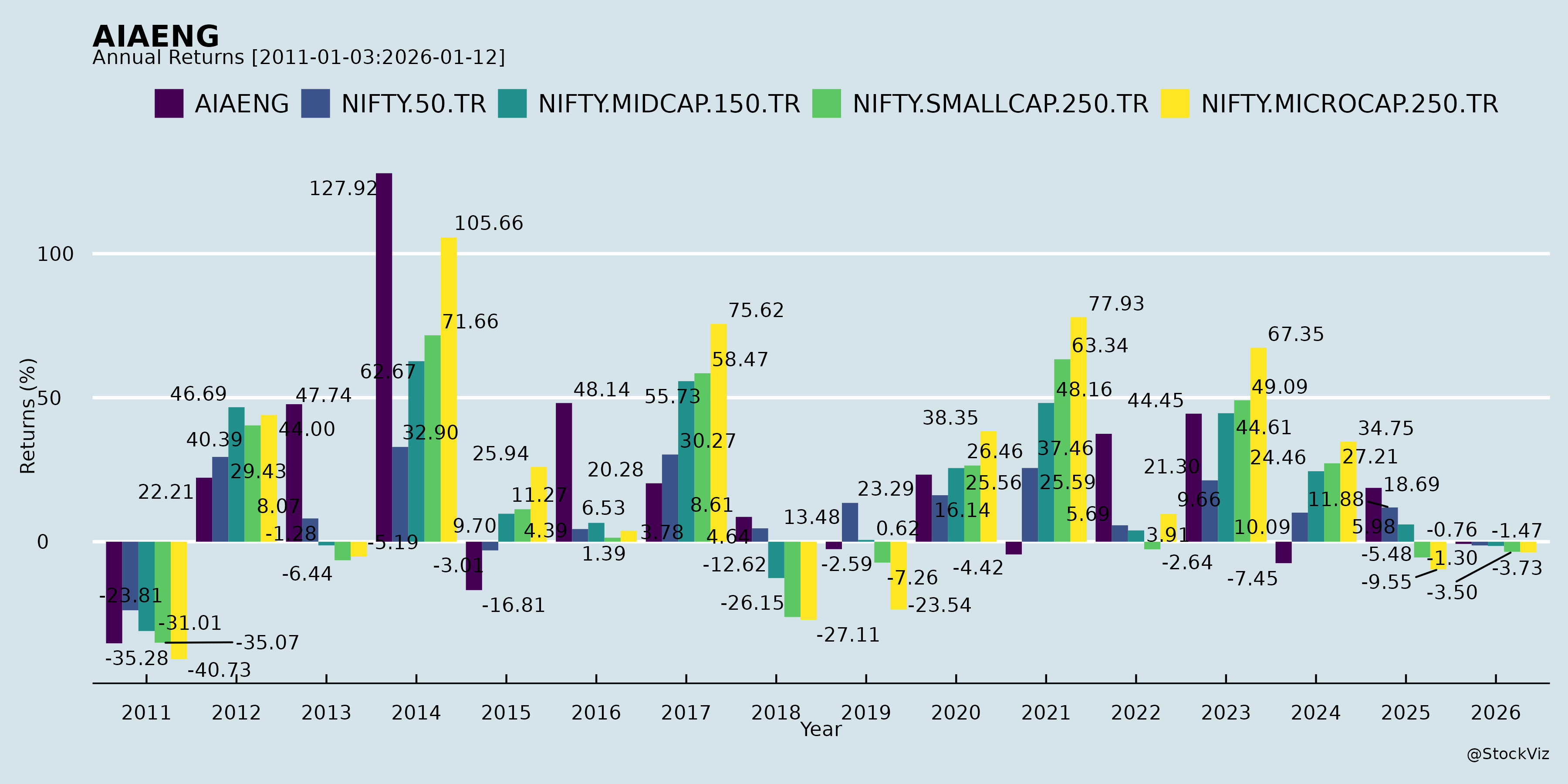
Annual Returns
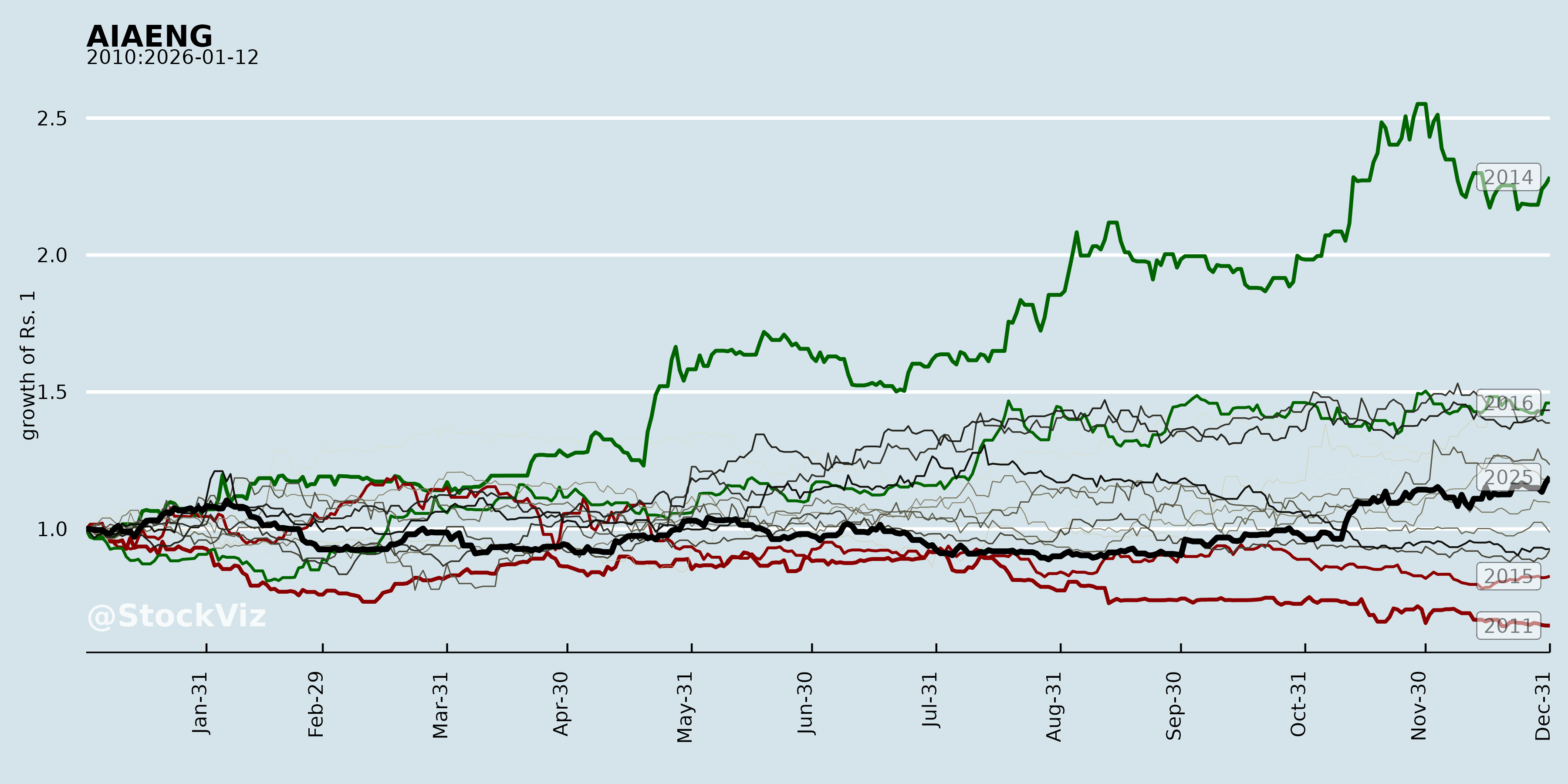
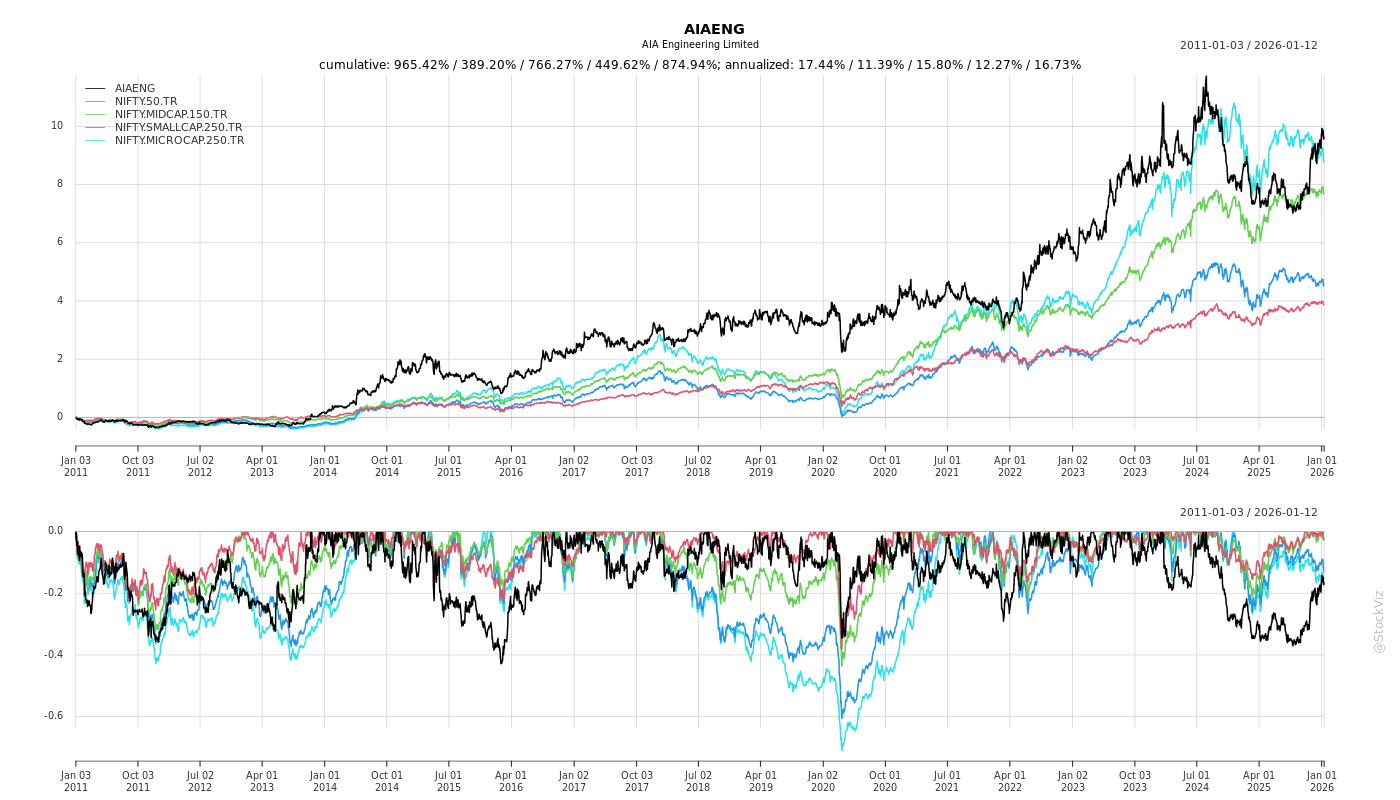
Cumulative Returns and Drawdowns
Fundamentals
Ownership
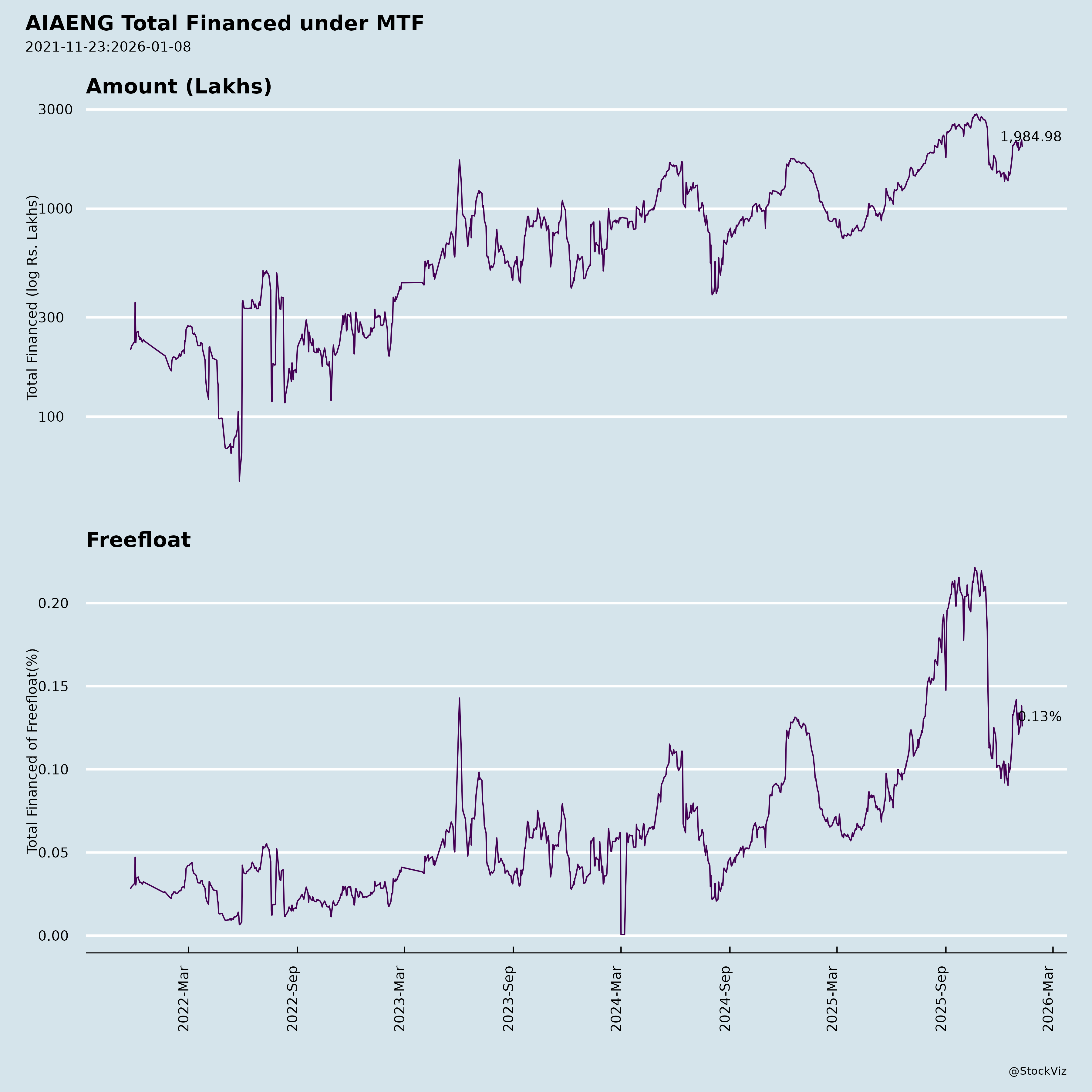
Margined
AI Summary
asof: 2026-09-16
Headwinds and Challenges
Soft quarterly demand and product mix. Sales volumes in Q1 FY27 were 64,644 MT against 70,138 MT in Q4 FY26, with mining volumes falling to 39,228 MT from 44,601 MT sequentially. Management characterised this as a timing, product mix and order execution cycle issue rather than a change in the annual run rate, and stated it does not track a quarterly run rate.
Margin compression. Reported EBITDA margin declined from 39.70% in Q4 FY26 to 36.35% in Q1 FY27, with operating margin at around 27.8–27.9%. Management attributed this to an inferior product mix on a sequential basis, elevated freight costs, elevated raw material prices (including ferrochrome), and ongoing trial expenses booked within other expenses and raw material. Gross margin was described as consistently in the 60–61% range.
Freight and logistics friction. Freight remains at elevated levels, with container rates cited at roughly $8,000–9,000, transshipment port congestion, container availability issues, and Red Sea-related shipping uncertainty. Management noted freight has begun to ease but remains a constraint.
Trial uncertainty on the new generation discharge system (NGDS). The NGDS is being trialled at small, medium and larger mill sizes. Management stated the trial and iteration cycle is inherently uncertain — it could take three months or two years — because every mine site and operating condition differs. The South America second mine trial, previously expected to conclude within a couple of months, is still work in progress and may take longer than anticipated due to technicalities. Management explicitly warned that updates over the next three to four quarters may be bland, with some trials performing and others requiring iteration.
Competitive pressure in forged media. Chinese producers have made a dramatic entry into the forged space, with roughly 20 forging companies now supplying mines globally, and the top two mines in Chile reportedly using Chinese forged media. Management distinguished this from the chrome/custom solution business, which it described as site-specific and iterative.
Overseas manufacturing delays. The Ghana and China plant plans remain in slow mode. Ghana’s location has been identified and dialogue with the government is ongoing; no meaningful progress was reported for either. Management stated it is not “jumping the gun” on a South American plant because the customer conversion phase has not yet been reached, and local ecosystems for its product type are lacking.
Duty actions and geopolitics in other markets. Brazil and Canada were noted as having duty actions and an incumbent using the global tariff situation to its advantage, alongside general macro, geopolitical and shipping uncertainty.
Tailwinds and Growth Prospects
NGDS as a solution-led intervention. Management positioned NGDS as addressing the top three issues at mine sites, most importantly falling gold and copper yields, by influencing throughput, fines and other operating variables. It is described as unique to AIA and the sum total of the company’s accumulated process, design and metallurgical work. Successful trials have been completed at smaller mill sizes, with medium and larger mill trials underway.
South America as the concentrated opportunity. LatAm was described as a market consuming more than 500,000 tons of grinding media, with South America approaching a 1 million-ton market. Management believes it can become a 300,000–400,000 ton market for AIA, and that solving falling yield there creates a sticky proposition with reasonable margins and sustainable growth over several years. The strategy is to disproportionately apply bandwidth there while not abandoning other geographies.
Chile high-chrome order ramping. The Chile order for high-chrome grinding media (referenced at around INR300 crores, received around October last year) is supplying well, adding roughly 3,000–3,500 tons per quarter, and management expects this to continue. It was described as a material progress milestone because the customer has now tried the product and seen benefits, and it establishes a chrome presence in a market that had not previously used high-chrome media.
Solution packaging across grinding media, liners and NGDS. Management framed the offering as a package — grinding media, liners and NGDS together — rather than a standalone product, with the intent of becoming a go-to sticky partner. The product mix profile is not expected to change materially, with the existing split cited as roughly 75% grinding media and 25% castings.
Other geographies. Australia (iron ore and gold) has a reasonable presence, with a total market described as perhaps another 20,000 tons. Other markets will continue to be worked, though management said these are not needle-moving.
Renewable power benefit. The hybrid solar-wind project (around INR30-odd crores spent in Q1) has become operational recently, with benefits expected in coming quarters.
Capacity readiness. Installed capacity stands at 436,000 TPA. Management said utilisation could technically rise to 70–75%, supporting up to roughly 3–3.5 lakh tons on current capacity, and that capacity is deliberately built ahead of conversions so the company can respond when customers place orders.
Key Risks
- Trial outcome risk: NGDS commercialisation depends on iterative trials whose duration and success are uncertain; management declined to forecast what the trials mean for tonnages or timelines.
- Customer risk aversion and commercial hoops: Management cited customer conservatism, supply chain considerations and pricing as hurdles that must be crossed before ultimate sale, noting the company is still at stage one (trials).
- Competition risk: Chinese forged media presence is described as dramatic and important in the forged segment; conventional liner makers compete on material and price.
- Input cost and freight risk: Elevated ferrochrome, steel scrap and freight costs, with pass-through affecting both realisations and expenses.
- Geopolitical and shipping risk: Extended war conditions, potential Iranian action, transshipment port congestion, and container availability.
- Execution risk on overseas plants: Ghana and China plans remain slow; a South American plant is not being pursued at this stage.
- Subsidiary closure and labour matters: Welcast Steels Limited’s board decided to close its only factory; labour disputes are pending in various courts and judicial forums, and the financial statements have been prepared on a non-going concern basis with an exceptional item of Rs. 328.1 lakhs towards closure compensation. The Nagpur unit manufacturing operations were also decided to be discontinued, with no adverse effect expected on production, operations or profitability.
- New Labour Codes: An incremental liability of Rs. 433.35 lakhs (standalone) / Rs. 433.73 lakhs (consolidated) towards gratuity was recognised during the year ended 31 March 2026 following consolidation of 29 labour legislations.
- Cash deployment: Total cash cited at INR4.5 crores to maybe INR5,000 crores (as stated), with management holding higher cash for a few more quarters pending traction; buyback was stated as not contemplated in the near future but kept under consideration.
Management Guidance Versus Observed Performance
Volume guidance withheld. Management explicitly declined to give growth guidance, including on whether FY27 would reach 280,000–290,000 MT, stating it would provide guidance only once there is perfect clarity on how things will come. This contrasts with the prior quarter’s indication that a South America second mine trial outcome was expected within a couple of months; that trial remains work in progress and may take longer than anticipated.
Margin guidance versus reported margin. Management reiterated operating margin guidance of 20–22% and stated Q1 remained above that level. Reported EBITDA margin was 36.35% (operating around 27.8–27.9%), down from 39.70% in Q4 FY26. Management asked investors to view performance year-over-year rather than quarterly, citing non-standard products and multiple product mix combinations.
Realisation guidance versus observed realisations. Management maintained an indicative realisation figure of around 160 (as referenced in the Q&A) despite realisations being described by an analyst as the highest ever at 180-plus. Management declined to revise upward, citing six influencing parameters including product mix, dollar rates, ferrochrome and scrap costs, competition and shipping prices, and stated higher realisation does not mean higher margin.
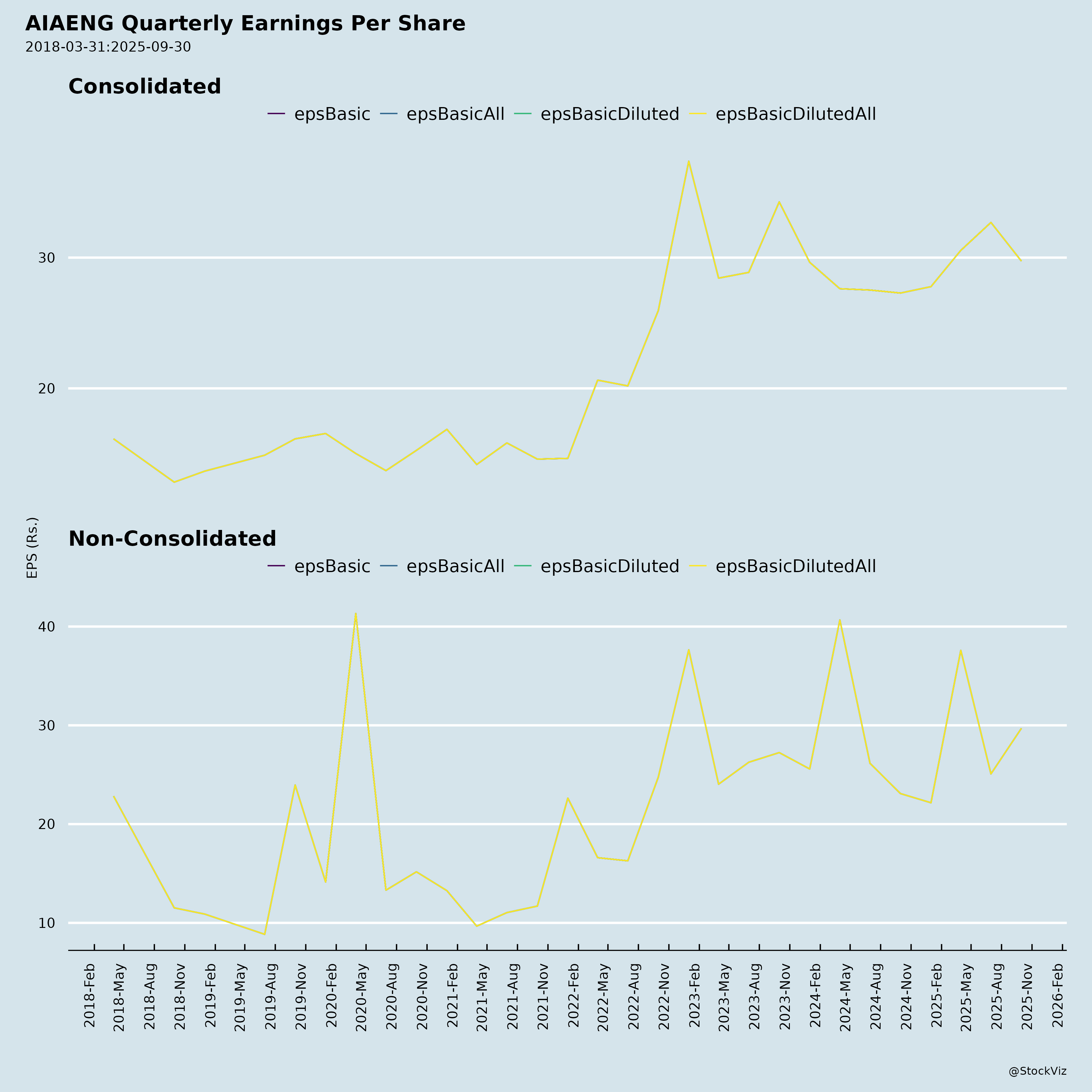
Tax guidance. Management stated Q1 tax would normalise at about 23% and normalise overall at about 21.5–22%, following the Q4 refund that had lowered that quarter’s tax. Reported consolidated tax expense was Rs. 9,405.47 lakhs on PBT of Rs. 39,504.87 lakhs.
Capex guidance revised upward. FY27 capex guidance was raised to approximately INR350–400 crores from an earlier INR130 crores, comprising roughly INR170–200 crores for a new corporate house (dedicated plot recently contracted), INR50–100 crores for additional land for expansion, and the balance for maintenance and debottlenecking. Q1 capex of INR50 crores comprised about INR30-odd crores on the hybrid solar-wind project and INR20-odd crores on maintenance and debottlenecking.
Order book and forwards. Order book as at 1 July 2026 was Rs. 977 crores. Outstanding foreign currency forward contracts (sales contracts, as on 10/08/2026) were US$ 21.00 million, AUD 5.20 million and EURO 3.10 million.
Dividend. The 36th Annual General Meeting held on September 15, 2026 transacted adoption of financial statements, declaration of a dividend of Rs. 16/- per share, re-appointment of directors and auditors, and re-appointment of Mr. Bhadresh K. Shah as Managing Director for five years.
Broker Narrative
The first report framed AIAENG as a capacity-expansion and high-chrome conversion story, with tailwinds from cement/copper demand, cost controls, and renewable-energy savings. By the last report, the narrative had become more near-term cautious: high-chrome conversion was delayed, input/freight costs and product-mix/trial expenses were pressuring margins, and the broker leaned on order-book traction and mining-volume growth to justify another Buy. The persistent thread is the long-term high-chrome/mill-internals opportunity, but the last two calls show actual returns far below predicted returns, underlining that the optimism has not yet translated.
Fears that came true
- The early warning about raw-material price volatility materialised: elevated ferro chrome and steel scrap prices, combined with freight frictions, pressured Q1FY27 operating margin even as costs were being passed through with a lag.
Optimism that failed
- The expected high-chrome grinding media conversion runway did not progress as hoped; the last report explicitly flags a delay in conversion to high-chrome grinding media.
- The expectation of raw-material cost stabilisation defending a 20-22% margin did not hold in the near term, as Q1FY27 margin was dented by unfavourable mix, higher freight, and trial-related expenses, with normalisation only expected later.
Broker Timeline
8 broker calls · 2023-06-09 to 2026-08-13
Copyright © 2023 SAS Data Analytics Pvt. Ltd. All rights reserved.