AEROFLEX
Equity Metrics
September 24, 2026
Aeroflex Industries Limited
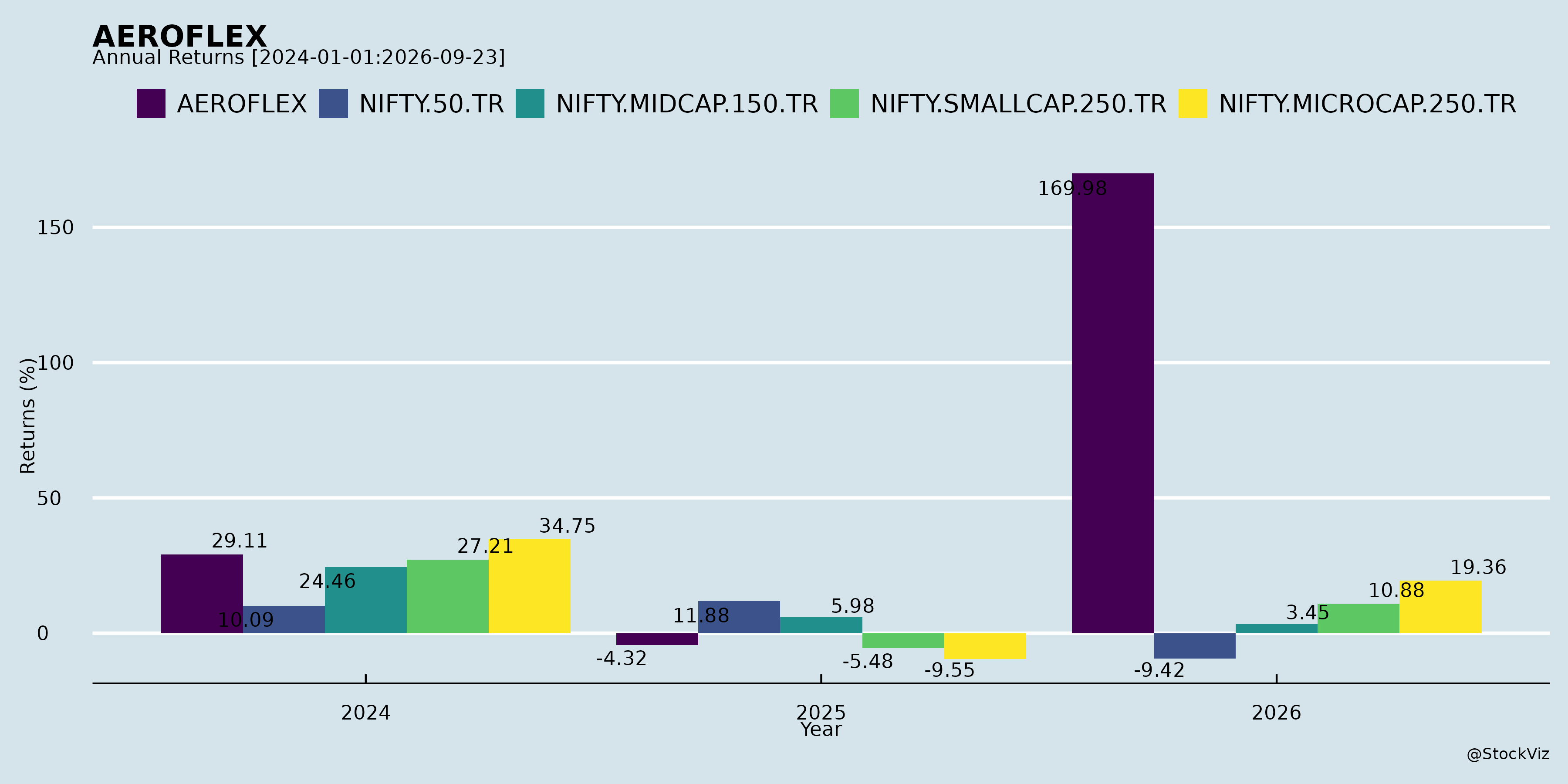
Annual Returns

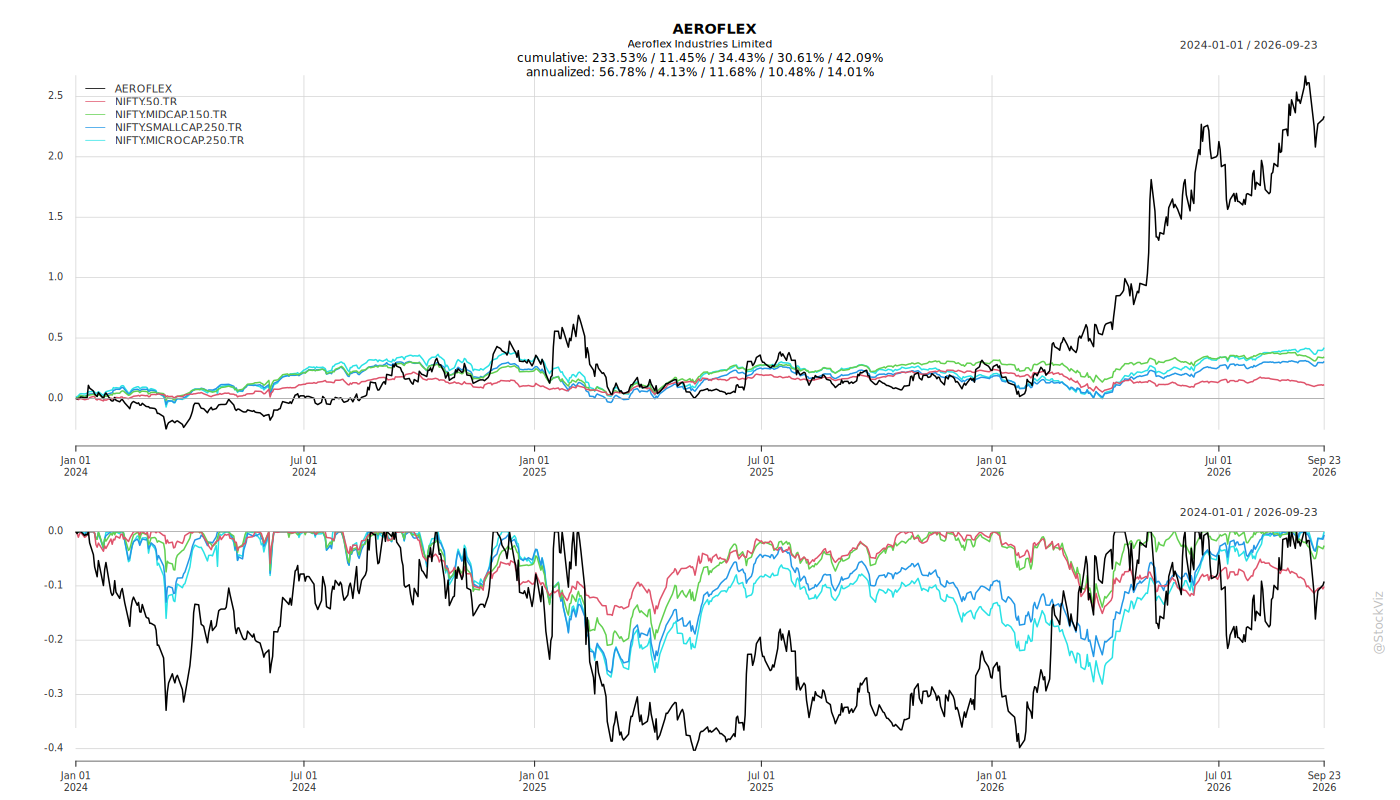
Cumulative Returns and Drawdowns
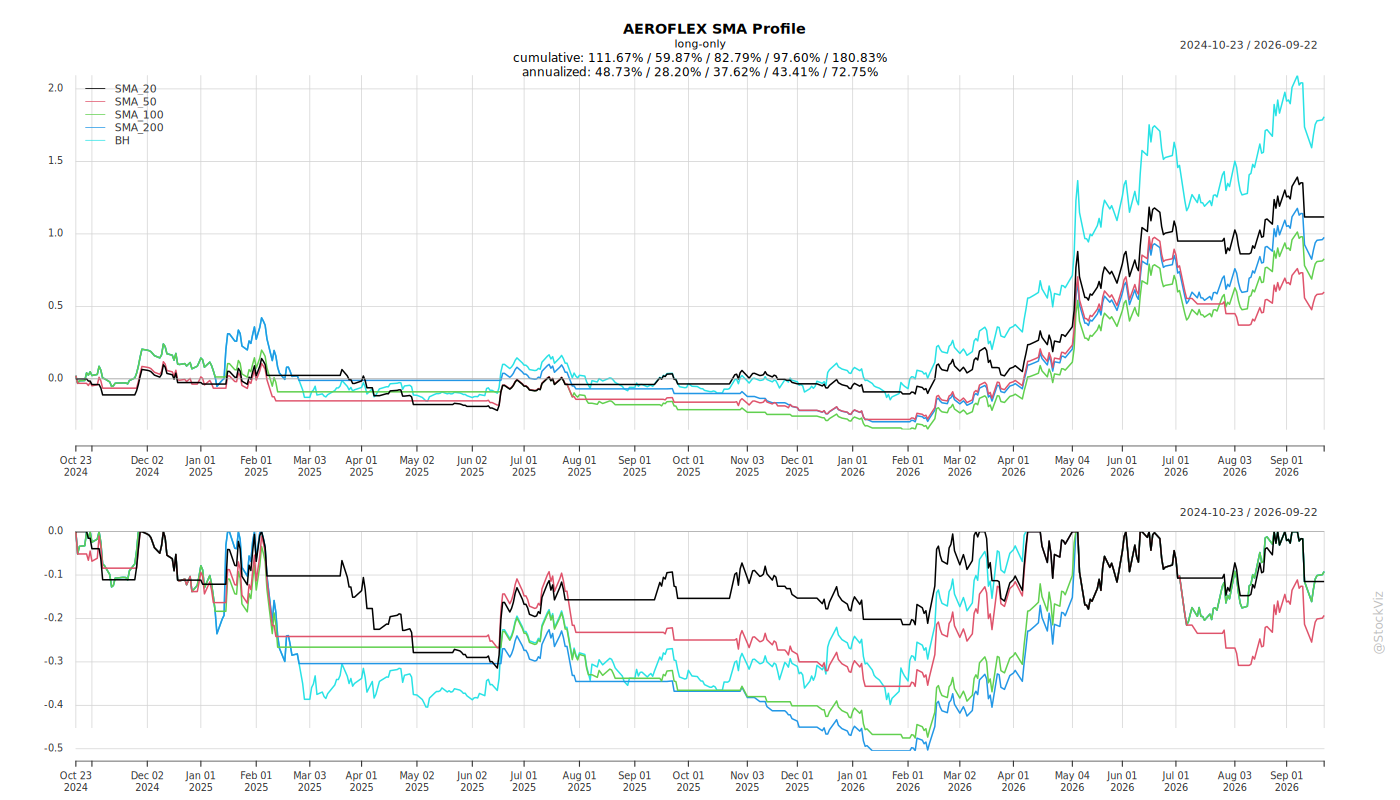
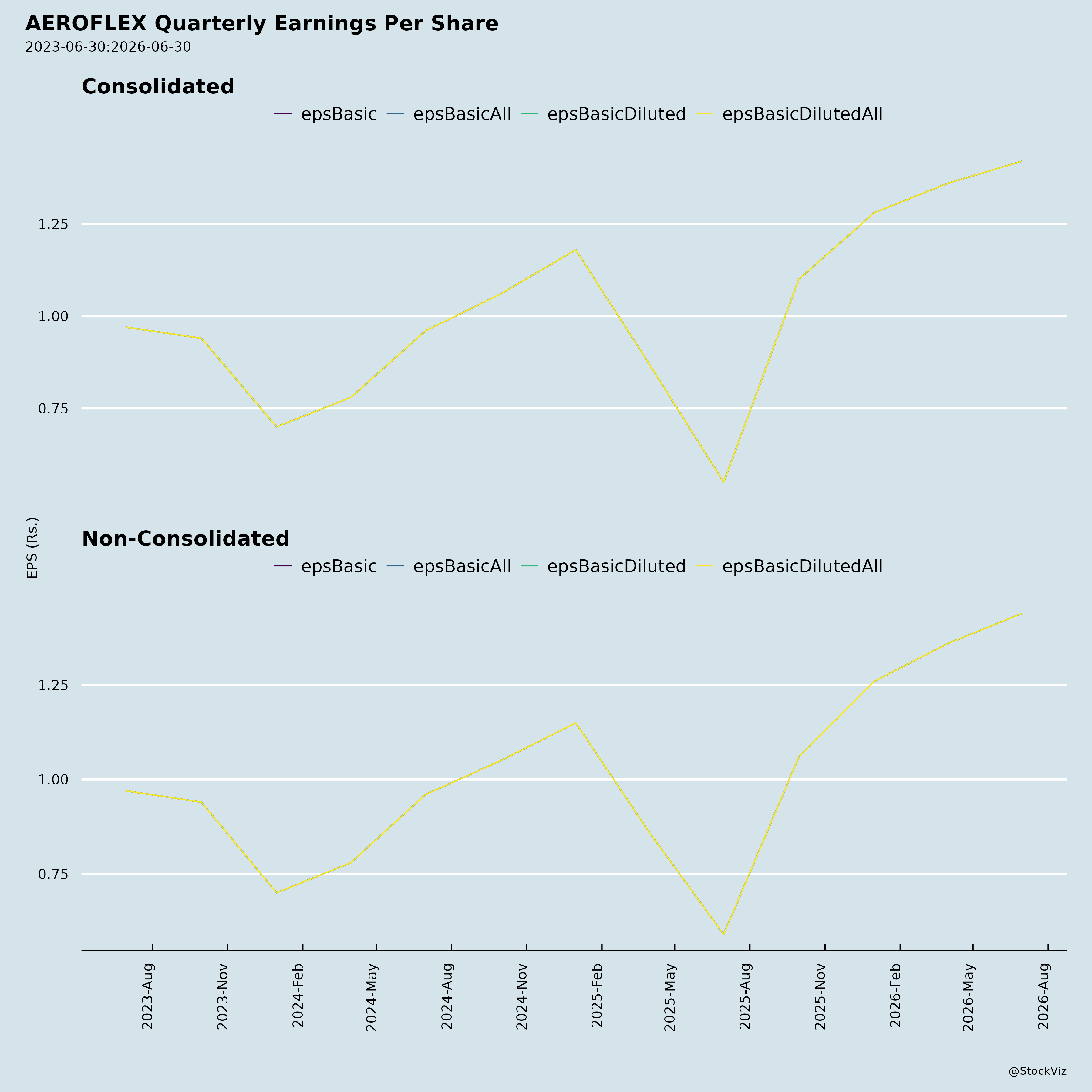
Fundamentals
Ownership
Margined
AI Summary
asof: 2026-09-17
Headwinds and Challenges
- Depreciation drag from capital expenditure: Depreciation increased due to higher capital expenditure undertaken compared to the previous year. On a consolidated basis, depreciation rose to Rs. 7.84 crore in Q1FY27 from Rs. 5.93 crore in Q1FY26. On a standalone basis, it rose to Rs. 7.28 crore from Rs. 5.48 crore.
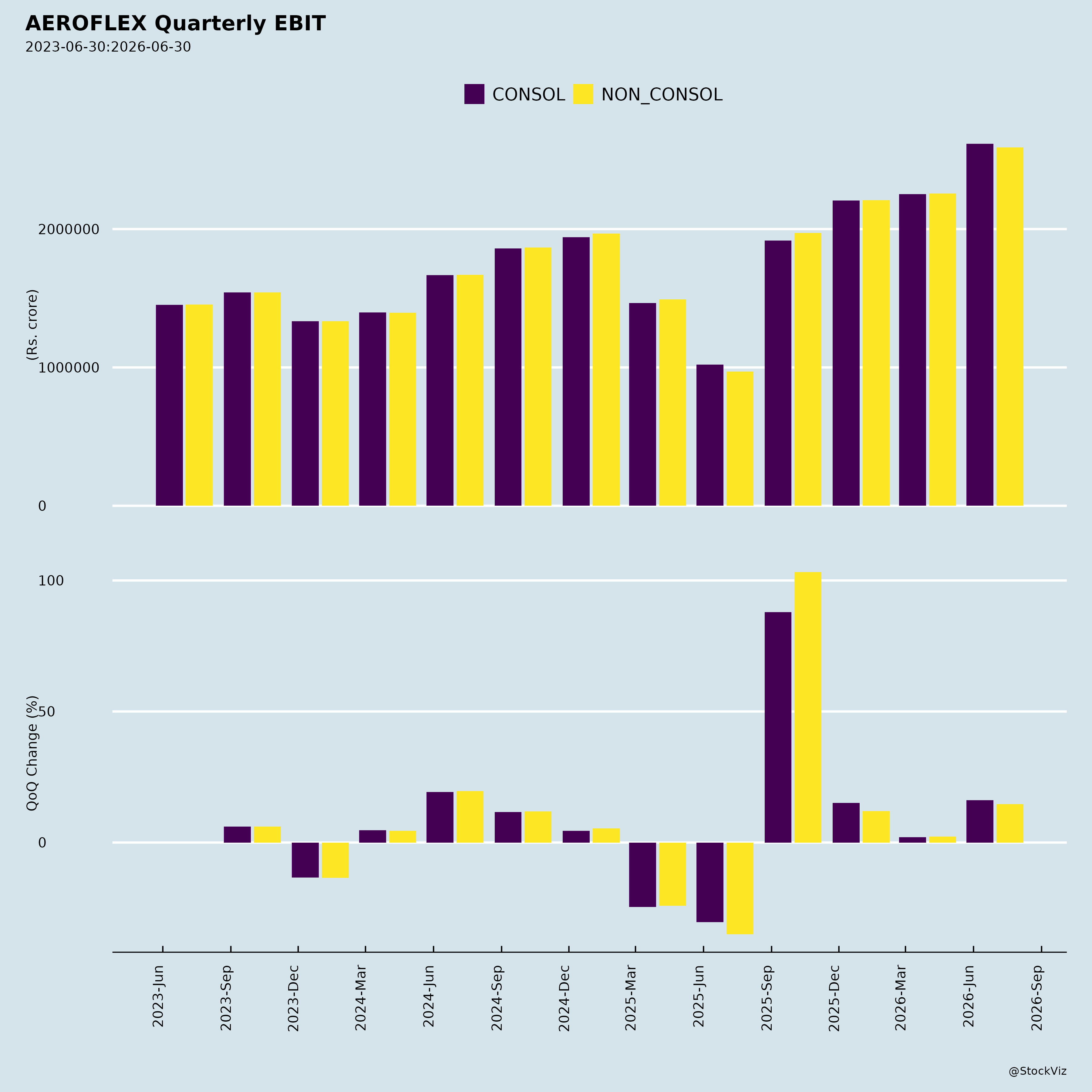
- Sequential margin compression: While year-on-year margins expanded sharply, consolidated EBITDA margin declined 82 bps quarter-on-quarter (from 23.86% in Q4FY26 to 23.04% in Q1FY27), PAT margin declined 107 bps (from 13.95% to 12.87%), and cash profit margin declined 186 bps (from 20.11% to 18.25%). Standalone EBITDA margin declined 90 bps QoQ and PAT margin declined 116 bps QoQ.
- Declining average realisations in the liquid cooling skid business: Average price per skid fell from Rs. 4,98,861 in Q3FY26 to Rs. 3,31,763 in Q4FY26 to Rs. 3,11,459 in Q1FY27, even as volumes scaled from 46 to 571 to 1,040 skids.
- Subsidiary loss: Hyd-Air Engineering Pvt Ltd reported total revenues of Rs. 765.66 lakhs and a loss after tax of Rs. (26.58) lakhs for the quarter ended June 30, 2026. The subsidiary’s interim financial information was reviewed by other auditors, not the parent’s statutory auditors.
- Dependence on a concentrated customer relationship in the new segment: The liquid cooling opportunity is described as anchored to being an approved supplier to a leading global provider of digital infrastructure and thermal management solutions.
- Execution and scale-up risk in a new business: The skid assembly business is scaling rapidly (from 46 units in Q3FY26 to 1,040 units in Q1FY27), alongside a capacity expansion from 6,000 to 9,000 skids per annum effective July 01, 2026, with a stated plan to reach 15,000 skids per annum.
- General risk factors disclosed by the company: Fluctuations in earnings, ability to manage growth, competition (domestic and international), economic growth in India and abroad, ability to attract and retain skilled professionals, time and cost over-runs on contracts, ability to manage international operations, government policies and actions, regulations, and interest and other fiscal costs prevailing in the economy.
Tailwinds and Growth Prospects
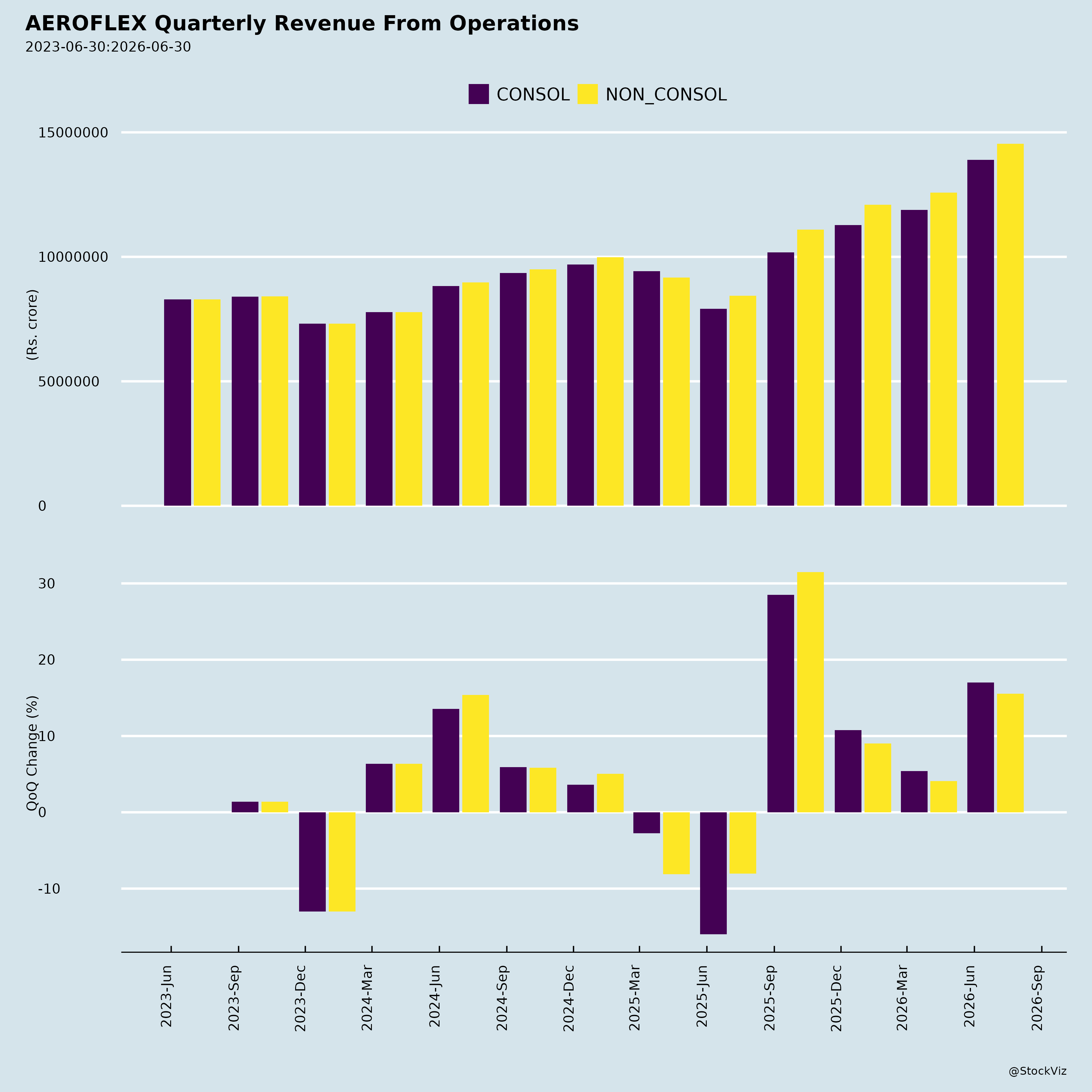
- Highest-ever quarterly performance: Consolidated total income of Rs. 145.97 crore in Q1FY27, up 72.41% YoY; EBITDA of Rs. 33.49 crore, up 116.38% YoY; PAT of Rs. 18.79 crore, up 162.22% YoY; cash profit of Rs. 26.64 crore, up 103.42% YoY.
- Broad-based core business growth: Stainless-steel flexible hoses grew 40.53% YoY; assemblies and other value-added products grew 36.96% YoY.
- Rapid scaling of liquid cooling solutions: SFN skid assemblies generated revenue of Rs. 32.4 crore in Q1FY27, with 1,040 units sold. Volumes have risen from 46 units in Q3FY26 to 571 in Q4FY26 to 1,040 in Q1FY27.
- Capacity expansion: Skid assembly capacity expanded from 6,000 to 9,000 skids per annum effective July 01, 2026, with production commenced at the enhanced capacity. Management states it remains on track to scale further to 15,000 skids per annum.
- AI-driven industry shift to liquid cooling: Rapid growth of AI workloads is driving higher rack densities and greater heat generation, accelerating the industry-wide shift from air cooling to advanced liquid cooling systems. Hyperscalers and technology companies continue to announce large-scale data center investments.
- India as a growing data center market: Supported by rising cloud adoption, data localisation, growing digital consumption, and increasing investment from domestic and global operators. India is described as emerging as one of the world’s fastest growing data center markets.
- Large addressable market: The presentation cites high-growth global liquid cooling and direct-to-chip cooling markets with CAGRs over CY25–CY32e, and an India data center pipeline announced for the next five years.
- Strategic customer partnership: Approved supplier to a leading global provider of digital infrastructure and thermal management solutions, enabling participation in global data center projects.
- New product categories and higher content per rack: Value creation cited from new product categories, higher content per rack, strong domestic and export potential, and long-term customer partnerships.
- Diversified product portfolio and end markets: Flexible hoses (17.5 million meters p.a. capacity), assemblies and fittings (46 assembly stations, 2 robotic welding lines), liquid cooling solutions (9,000 skids p.a.), metal bellows (1,20,000 pieces p.a.), and composite/interlock hoses (6 operational lines up to 20 inches). Emerging sectors include robotics and automation, electric mobility, aerospace and defence, data centers, hydrogen, fire sprinklers, semiconductors, HVAC, and solar.
- R&D pipeline: 58 products at various stages of R&D, 16 products in R&D related to data centre (liquid cooling) applications, 14 R&D team members, NABL-accredited R&D laboratory, and collaborations with IIT Bombay, IIT Guwahati, IIT Ropar, and IIT Indore.
- Digital transformation: SAP ERP and Salesforce CRM integration to unify production, sales, and customer data.
- Export presence: 90+ countries across Asia, Europe, and Africa; 3,300+ SKUs; 760+ workforce; 28 years of industry leadership.
- Participation in global exhibitions: Presented flexible flow solutions for liquid cooling at the Data Center World Exhibition, USA, in April 2026.
- Sustainability and governance credentials: 750 KW rooftop solar project commissioned; 100% water recycling; ISO 9001:2015, ISO 14001:2015, ISO 45001:2018 certifications; Great Place to Work certification 2025–26; EEPC India Export Awards; 16th CII National HR Excellence Award 2025–26.
Key Risks
- Customer concentration in the liquid cooling segment: The business relies on an approved-supplier relationship with a single leading global digital infrastructure and thermal management provider for participation in global data center projects.
- New segment execution risk: The liquid cooling skid business is at an early stage of scaling, with rapid volume growth and capacity expansion plans that require execution.
- Margin sustainability: Sequential margin compression across EBITDA, PAT, and cash profit margins, alongside declining average realisation per skid, raises questions about margin trajectory as the mix shifts toward skids.
- Subsidiary performance: Hyd-Air Engineering Pvt Ltd reported a loss after tax of Rs. (26.58) lakhs for Q1FY27.
- Capital expenditure intensity: Higher capital expenditure has increased depreciation, which weighs on profitability.
- Macro and external factors: Fluctuations in earnings, competition (domestic and international), economic growth in India and abroad, government policies and actions, regulations, interest and other fiscal costs, time and cost over-runs on contracts, and ability to manage international operations.
- Forward-looking statement risk: The company states that actual results could materially differ from forward-looking statements due to the risks and uncertainties listed.
- Dependence on AI/data center capex cycle: The growth thesis is tied to continued hyperscaler and technology company data center investments and the pace of the shift from air cooling to liquid cooling.
Management Guidance vs. Observed Business Performance
- Guidance: Management stated it remains on track to
scale skid assembly capacity further to 15,000 skids per annum.
- Observed: Capacity was expanded from 6,000 to 9,000 skids per annum effective July 01, 2026, with production commenced at the enhanced capacity. The 15,000 skids per annum target has not yet been reached.
- Guidance: Management expressed confidence in
sustaining growth momentum and capturing the multi-decade opportunity
arising from the global transition to liquid-cooled AI infrastructure.
- Observed: Q1FY27 delivered the highest-ever quarterly performance with consolidated total income up 72.41% YoY, EBITDA up 116.38% YoY, and PAT up 162.22% YoY. Skid volumes rose to 1,040 units in Q1FY27 from 571 in Q4FY26 and 46 in Q3FY26.
- Guidance: Management highlighted broad-based growth
across all product segments and sustained demand from both domestic and
international markets.
- Observed: Stainless-steel flexible hoses grew 40.53% YoY and assemblies and other value-added products grew 36.96% YoY, supporting the broad-based growth claim.
- Guidance: Management described the quarter as
marking a significant acceleration in the liquid cooling solutions
business.
- Observed: SFN skid assemblies generated revenue of Rs. 32.4 crore in Q1FY27, with volumes of 1,040 units, up from 571 units in Q4FY26 and 46 units in Q3FY26.
- Guidance: Management stated the company is
strategically positioned at a critical point in the data center cooling
value chain.
- Observed: The company is an approved supplier to a leading global digital infrastructure and thermal management provider, has expanded skid capacity, and presented its portfolio at the Data Center World Exhibition, USA, in April 2026.
- Guidance: The company stated it is planning to
shift to use of 100% recycled packaging materials in the next 3 years.
- Observed: Current use of packaging materials made out of reprocessed materials is to the extent of 35%–40%.
- Guidance: The company stated it remains confident
in sustaining growth momentum.
- Observed: Q1FY27 performance was the highest-ever quarterly performance, but sequential margin compression (EBITDA margin down 82 bps QoQ, PAT margin down 107 bps QoQ) and declining average realisation per skid (from Rs. 4,98,861 in Q3FY26 to Rs. 3,11,459 in Q1FY27) are observable trends.
Broker Narrative
The broker stayed Buy throughout, with export reliance and working capital intensity persisting as the core risks. The narrative shifted from cautious entry into liquid cooling and capacity expansion to confident, proven scaling: Q1FY27 revenue rose 72.4% YoY, skid capacity is targeted at 15,000 units by Q3FY27, and AI/data-centre demand became the central growth thesis. Early concerns about bellows demand moderation and depreciation drag were dropped as the story became more momentum-driven.
Fears that came true
- Global slowdown/export dependence: the July 2026 call’s +8.9% actual return versus +23.9% predicted was a disappointment, correlating with the export/global-demand risk flagged from the first report.
- High working capital requirements: the extended debtor/inventory-day burden flagged early remained a key risk in July 2026 and correlates with the final call’s underperformance.
Optimism that failed
- The first report expected 15,000 liquid cooling/skid units per annum by June 2026, but the last report pushed that timeline to Q3FY27.
- The first report planned hose capacity of 20 million metres by Q2FY27, but the last report delayed it to Q3FY27.
Broker Timeline
4 broker calls · 2026-01-29 to 2026-07-28
Copyright © 2023 SAS Data Analytics Pvt. Ltd. All rights reserved.