ACUTAAS
Equity Metrics
September 24, 2026
Acutaas Chemicals Limited
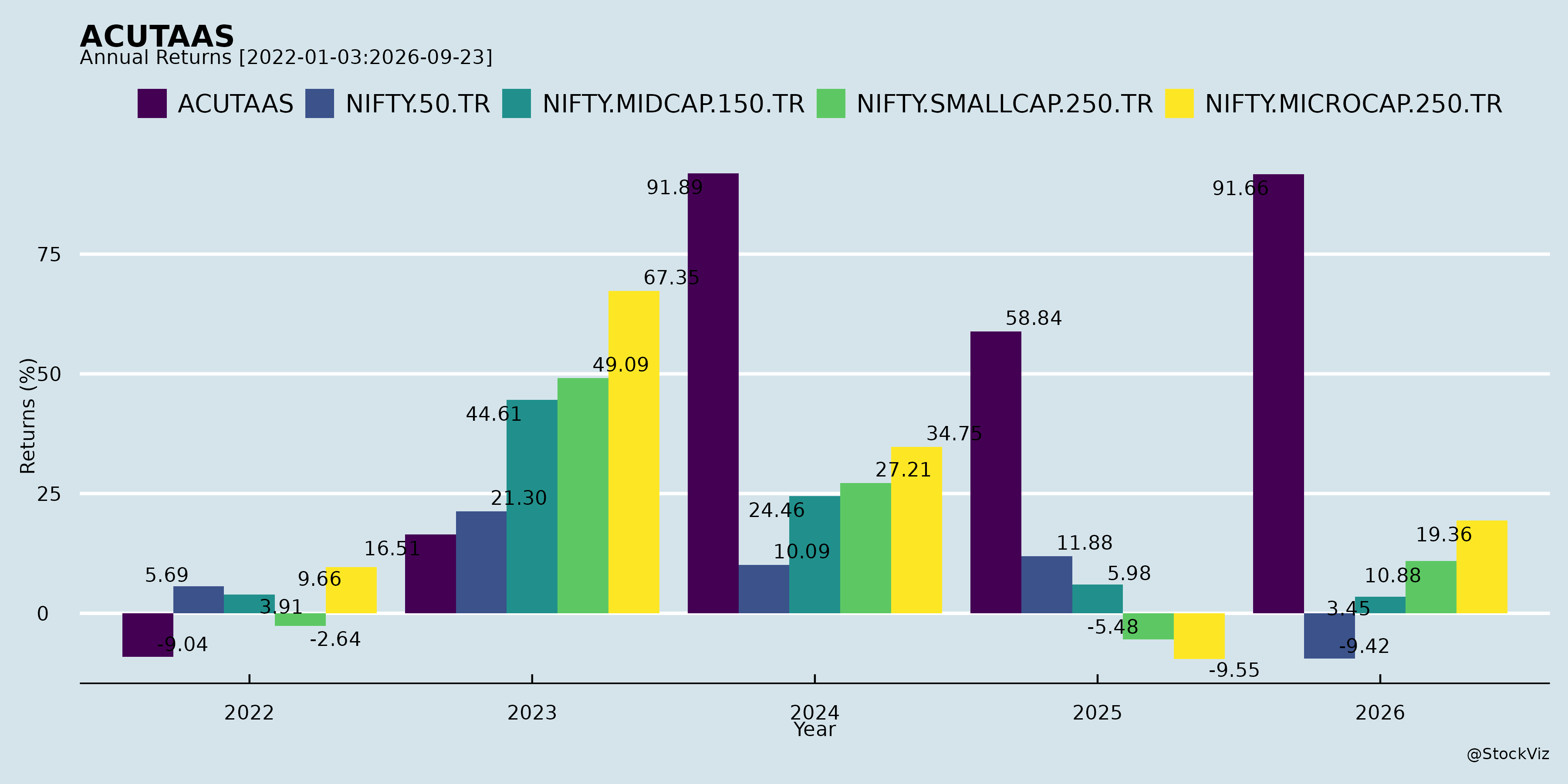
Annual Returns
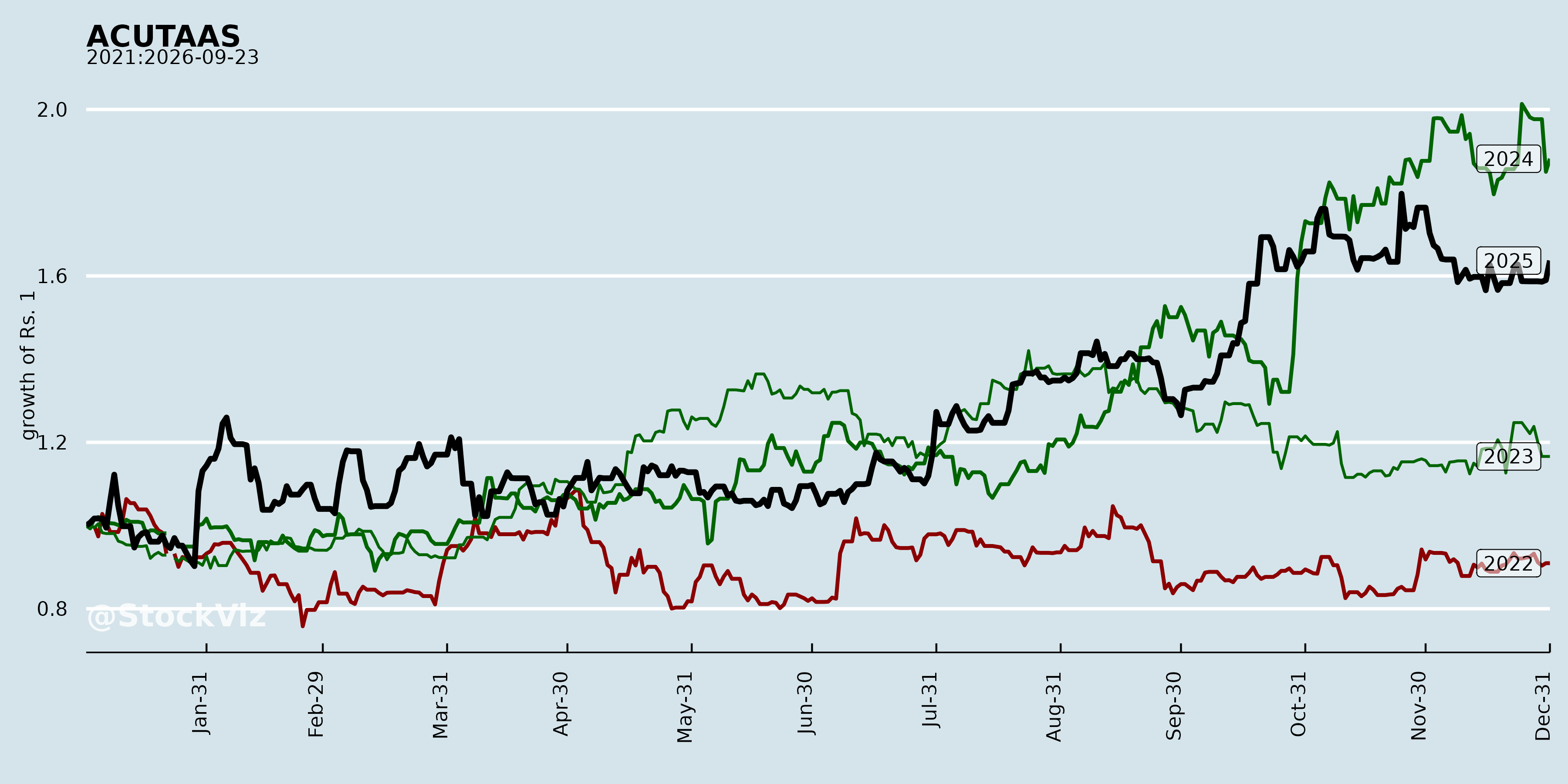
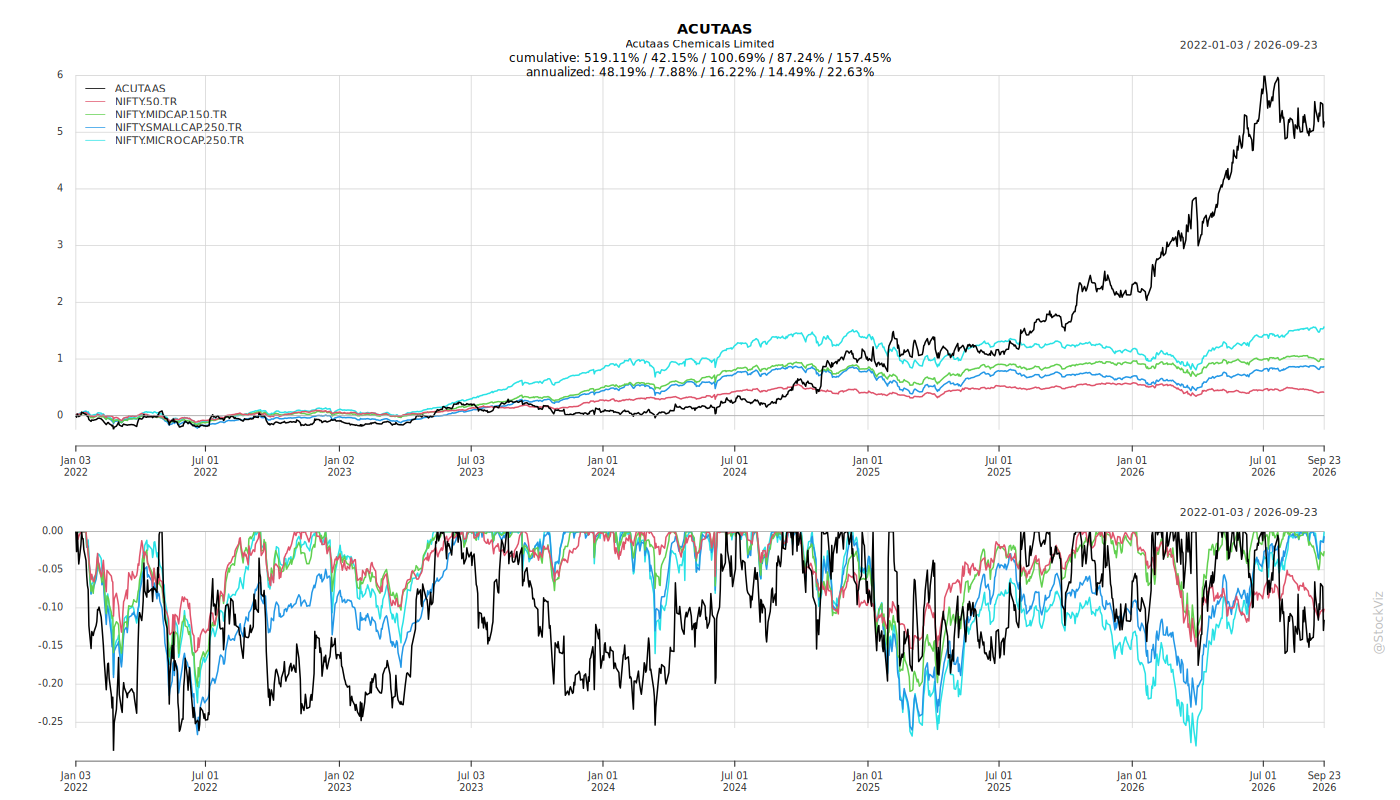
Cumulative Returns and Drawdowns
Fundamentals
Ownership
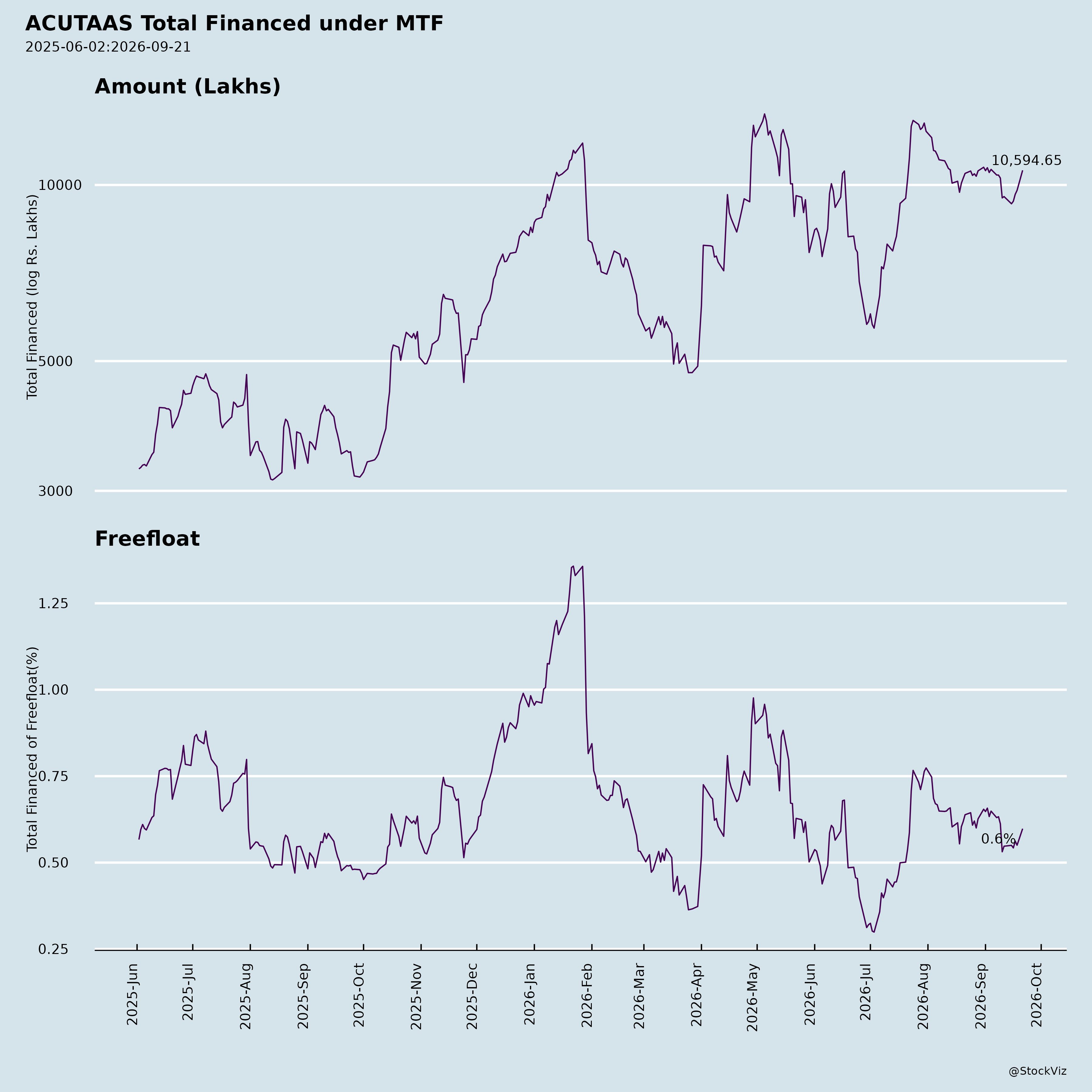
Margined
AI Summary
asof: 2026-09-16
ACUTAAS Chemicals — Recent Developments Summary
1. Headwinds and Challenges
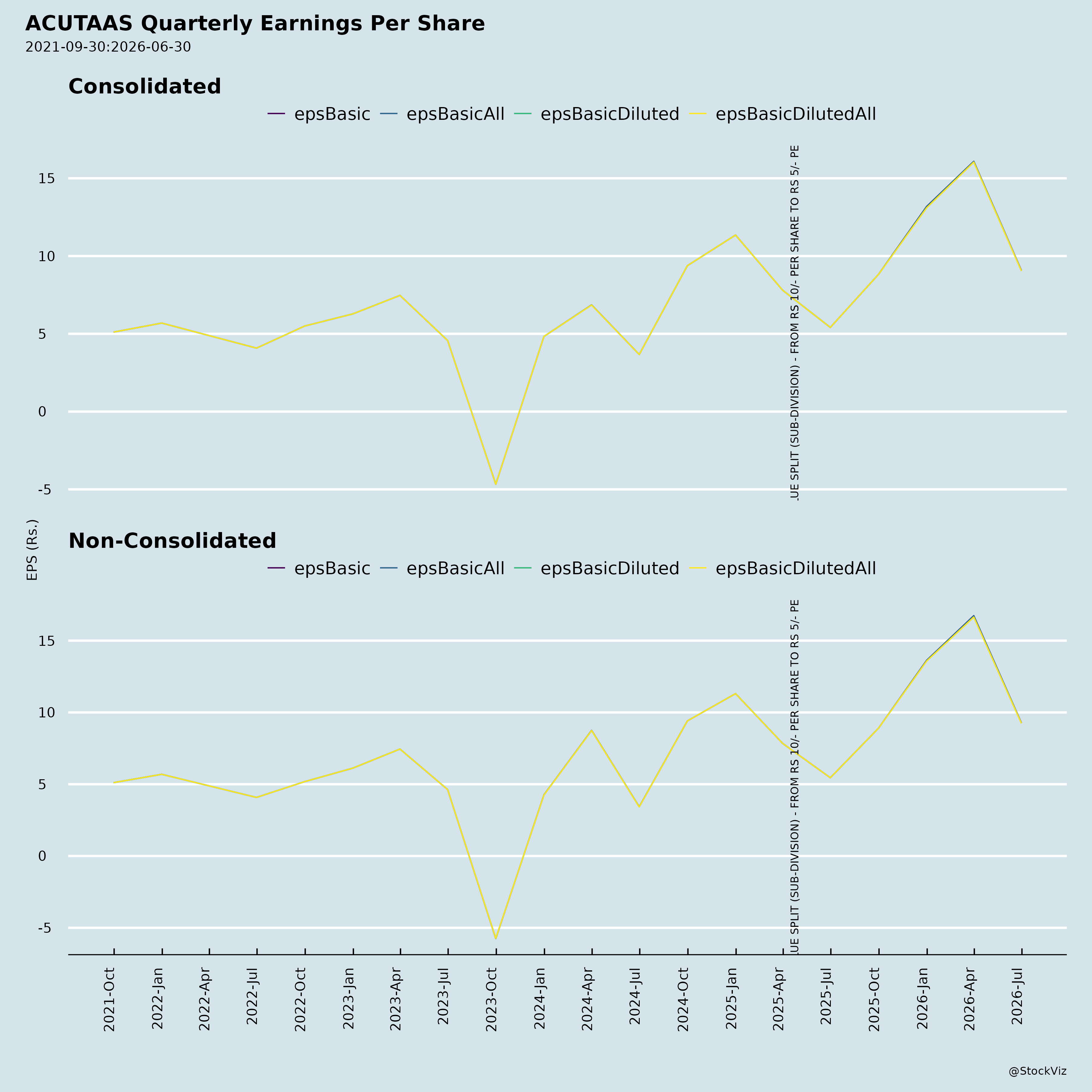
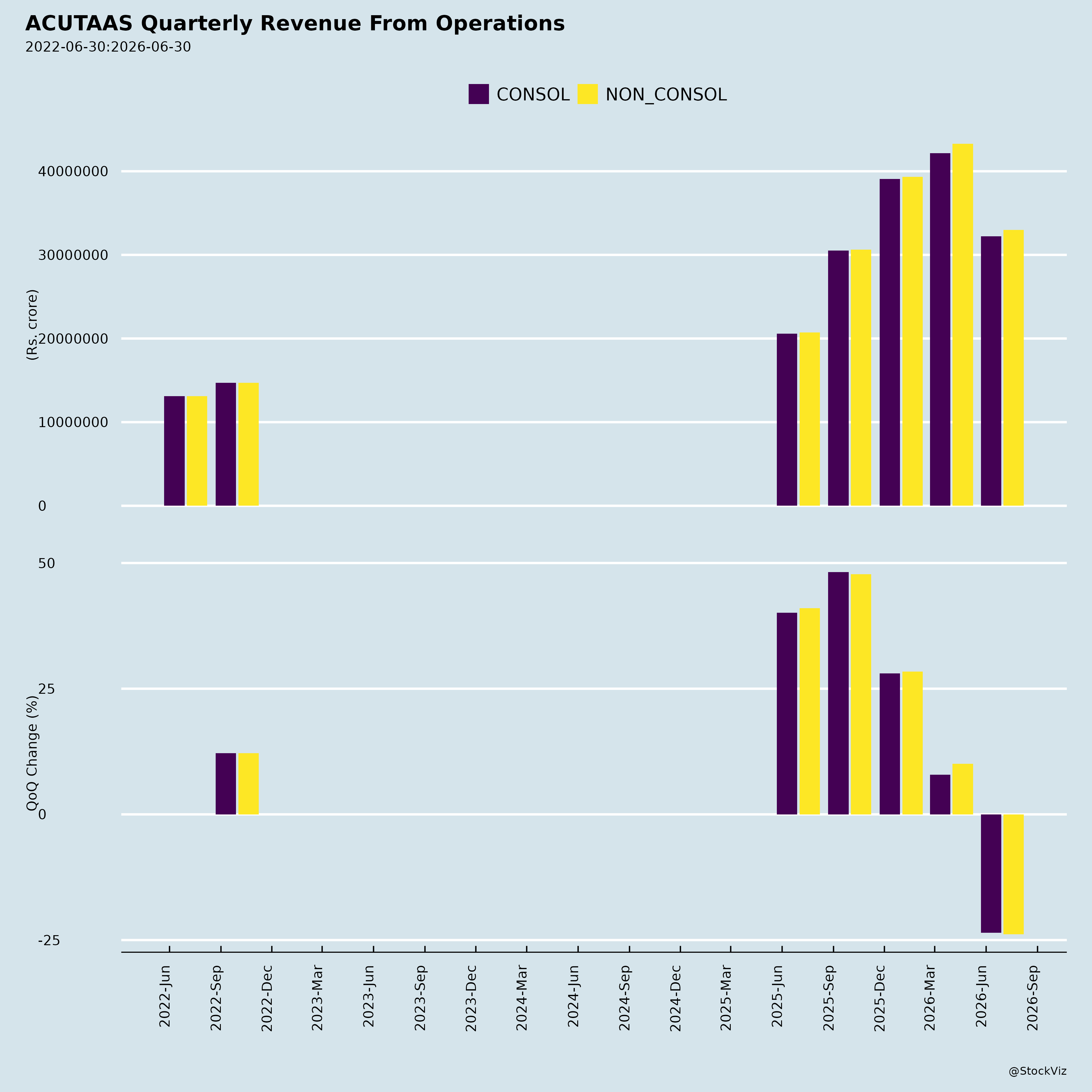
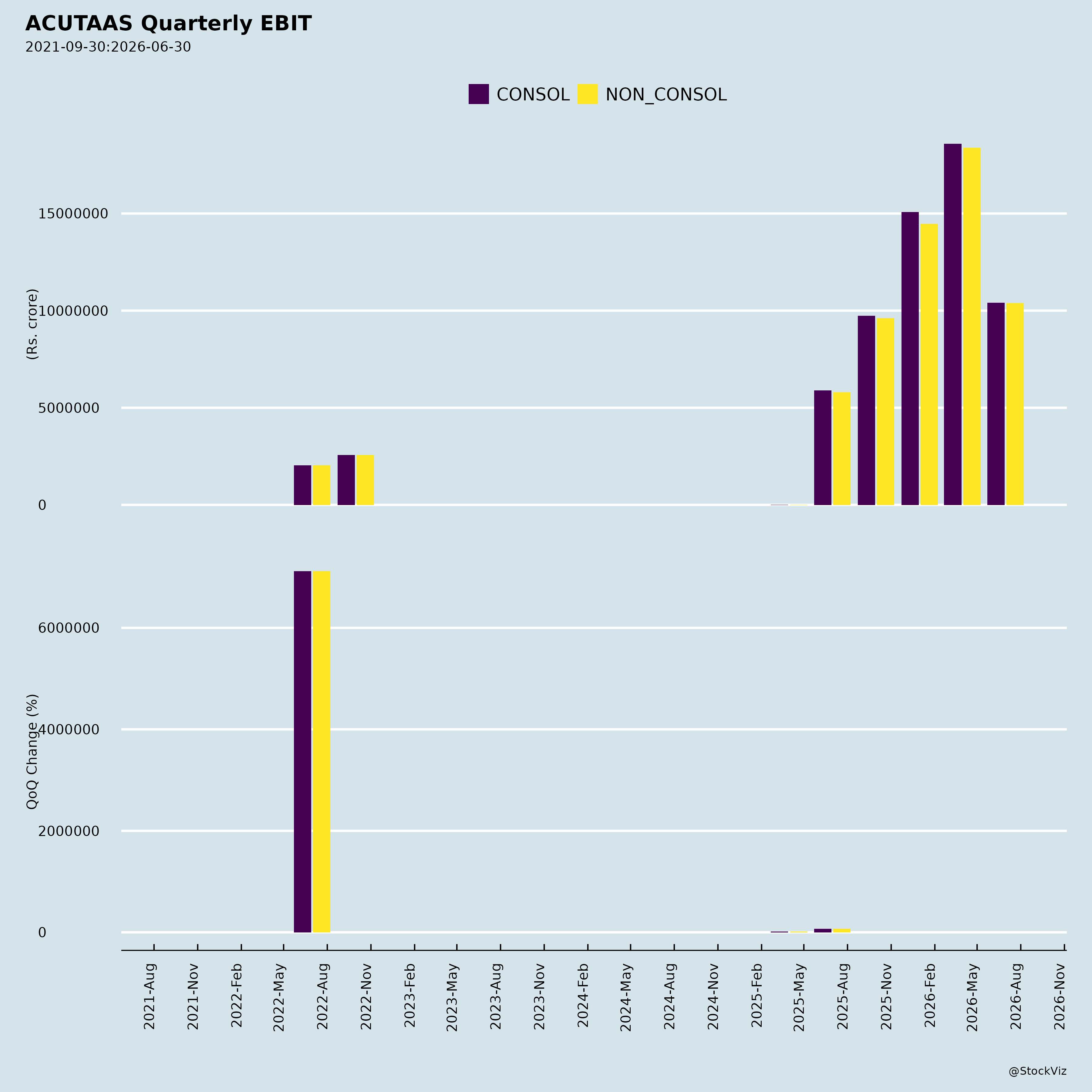
- Sequential moderation in Q1 FY27: Revenue from operations declined 23.8% QoQ to ₹3,297 Mn (from ₹4,328 Mn in Q4 FY26), and PAT fell 44.2% QoQ to ₹750 Mn (from ₹1,343 Mn). EBITDA margin contracted to 34.3% in Q1 FY27 from 42.4% in Q4 FY26, and gross margin eased to 57.9% from 62.0%.
- Muted commodity chemicals: Within Specialty Chemicals, strong growth in BFC was offset by muted performance in commodity chemicals.
- Lower other income: PAT margin expansion in Q1 FY27 was driven by strong EBITDA margins but was offset by lower other income (₹18 Mn in Q1 FY27 versus ₹159 Mn in Q1 FY26).
- Subsidiary losses: Subsidiary ACEPL reported a profit after tax of (37.3) million and a net worth of (58.3) million for FY 2025-26.
- GST inspection: An inspection/search under Section 67(2) of the Central Goods and Services Tax Act, 2017 was conducted by the Additional Commissioner of CGST & Central Excise, Anti-evasion Department, Surat, at the company’s Registered Office and manufacturing unit at Sachin, Surat. The search concluded on June 23, 2026; the company provided all requested documents and clarifications, and no official document has been issued by the CGST department. The company states there is no material impact on financials, operations, or other activities.
- Forward-looking statement risk: Forward-looking statements are subject to known and unknown risks and uncertainties that may or may not occur, and actual results may differ substantially.
2. Tailwinds and Growth Prospects
- Strong Q1 FY27 growth: Revenue from operations grew 59.1% YoY to ₹3,297 Mn; EBITDA rose 122.1% YoY to ₹1,131 Mn; PAT rose 70.4% YoY to ₹750 Mn. Gross profit grew 73.0% YoY.
- CDMO and core intermediates: CDMO continued strong growth momentum, and the core Advanced intermediate business delivered robust growth.
- Margin drivers: EBITDA margins were supported by better product mix and operational efficiencies.
- Semiconductor materials scale-up: The step-down subsidiary Indichem Inc. inaugurated its semiconductor materials manufacturing plant at Gongju, South Korea, on August 28, 2026, completed within 11 months of its September 29, 2025 groundbreaking. AAML (wholly owned subsidiary of Acutaas) and J & Materials Co. hold a 75:25 stake in Indichem, with AAML having invested KRW 30 billion (approx. ₹200 crore). The aim is to build a resilient, geographically diversified supply chain for global chip and display makers through a synergistic two-country model of Indian synthesis and Korean refining.
- Electrolytes and battery chemicals roadmap: A strategic roadmap envisages substantial scale-up in the electrolytes and battery chemicals segment, expansion at the Jhagadia Unit-3 facility with an investment aggregating to ₹1,950 million, and business development and marketing via subsidiary ACEPL, providing multi-year visibility on scale-up and execution across domestic and global markets.
- Process patent: The Patent Office, Government of India, granted a Process Patent for “A PROCESS FOR PREPARING 2,4-DIMETHYLTHIOPHENOL” on September 10, 2026, for a 20-year term from the filing date of September 21, 2017. The process was indigenously developed at the company’s R&D Centre, bringing total patents granted to 11.
- Certifications: The company was certified as a Great Place to Work and received Responsible Care certification from the Indian Chemical Council.
- Investor engagement: Officials will physically attend the Nuvama 21st India Investor Conference in Singapore on August 12, 2026, and the Equirus India Growth Summit in Mumbai on August 13, 2026.
3. Key Risks
- Forward-looking uncertainty: Known and unknown risks and uncertainties could cause actual results to differ substantially from expectations.
- Regulatory/inspection exposure: The GST anti-evasion inspection at the Sachin registered office and manufacturing unit, though concluded with no official document issued and no stated material impact.
- Subsidiary financial weakness: ACEPL’s negative net worth and loss for FY 2025-26.
- Commodity chemicals softness: Muted performance in commodity chemicals offsetting BFC strength.
- Sequential volatility: Sharp QoQ declines in revenue, EBITDA, and PAT indicate quarter-to-quarter variability.
- Dependence on other income: Lower other income weighed on PAT margins despite strong EBITDA.
4. Management Guidance vs. Observed Performance
- Guidance: Management stated it remains confident of delivering 25% revenue growth for the full year with stable margins.
- Observed performance: Q1 FY27 revenue grew 59.1% YoY to ₹3,297 Mn, above the full-year guidance rate. EBITDA margin stood at 34.3% in Q1 FY27 versus 24.6% in Q1 FY26, while PAT margin was 22.7% versus 21.2%. Sequentially, however, revenue declined 23.8% QoQ and EBITDA margin contracted from 42.4% in Q4 FY26.
- Strategic guidance: Management states the company and its subsidiaries have a well-defined strategy to grow the business over the next few years and strive to maintain its position as a growth-oriented company in the pharma and specialty chemicals segment. Management described the Gongju plant as a vital step in scaling the semiconductor materials business into a long-term growth engine and a starting point for creating one of the leading semiconductor materials companies in the Republic of Korea.
- Other forward-looking items: The 19th Annual General Meeting is scheduled for September 24, 2026, with proposals including a final dividend of 50% (₹2.50 per share), re-appointment and remuneration of managerial personnel and independent directors, extension of ESOS 2023 to eligible employees of Indian subsidiaries, approval of loans/guarantees up to ₹1,000 million to subsidiary ACEPL, and approval of material related party transactions with ACEPL up to ₹2,900 million. The investor conference schedule may be subject to changes.
Broker Narrative
The broker narrative evolved from structural concerns about overcapacity and LFP technology access (2024) to acute raw material cost inflation and a subsidy-viability gap (2026). Early reports carried no tailwinds, but the latest report introduced government subsidy increases as the key optimism driver. The persistent theme is margin pressure, which shifted from technology/access risks to cost-inflation-driven viability concerns.
Fears that came true
- Sharply rising raw material costs — including the 3.6x sulfur price surge and higher ammonia, rock phosphate, and phosphoric acid prices — materialized, contributing to Prabhudas Lilladher’s DISAPPOINTMENT outcome (-5.2% actual vs +7.0% predicted).
- Subsidy increases lagging behind raw material cost inflation created a viability gap that squeezed manufacturer margins, materializing as the DISAPPOINTMENT from Prabhudas Lilladher.
- India’s structural import dependence for fertilizer raw materials exposed the sector to West Asia crisis-driven cost shocks, which materialized in the margin pressure flagged across recent reports.
Optimism that failed
- Government nutrient-wise subsidy hikes (~12% N, 21% P, 19% S) and additional INR3,500/t DAP support failed to meaningfully offset raw material cost pressures, as evidenced by Prabhudas Lilladher’s DISAPPOINTMENT.
- Lower-cost inventory and price hikes aiding Q1FY27 realizations did not fully deliver, as the last report’s actual return was only +1.6% versus the +7.5% predicted despite Accumulate tailwinds.
Broker Timeline
5 broker calls · 2024-11-01 to 2026-08-27
Copyright © 2023 SAS Data Analytics Pvt. Ltd. All rights reserved.