VBL
Equity Metrics
September 24, 2026
Varun Beverages Limited
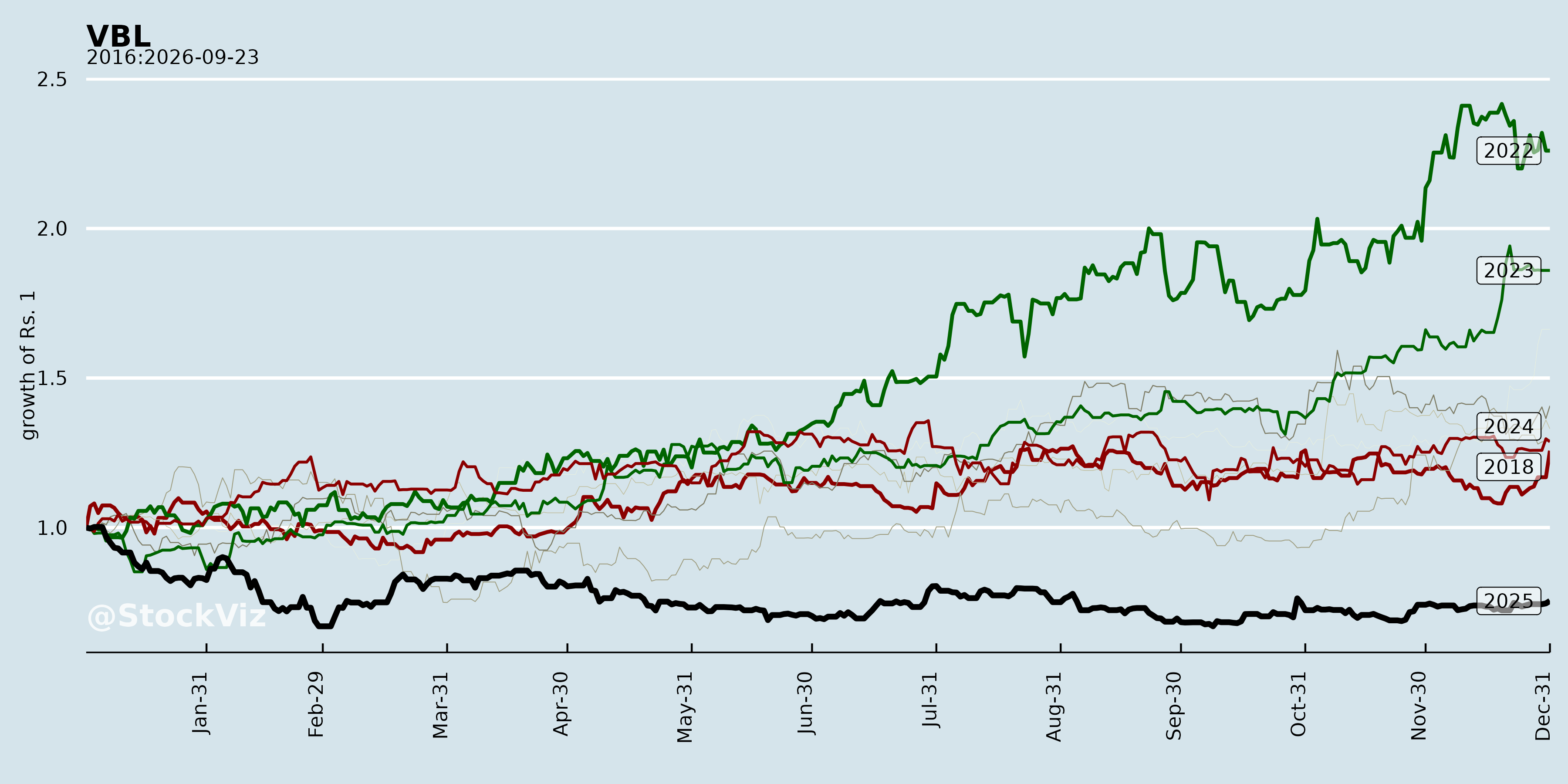
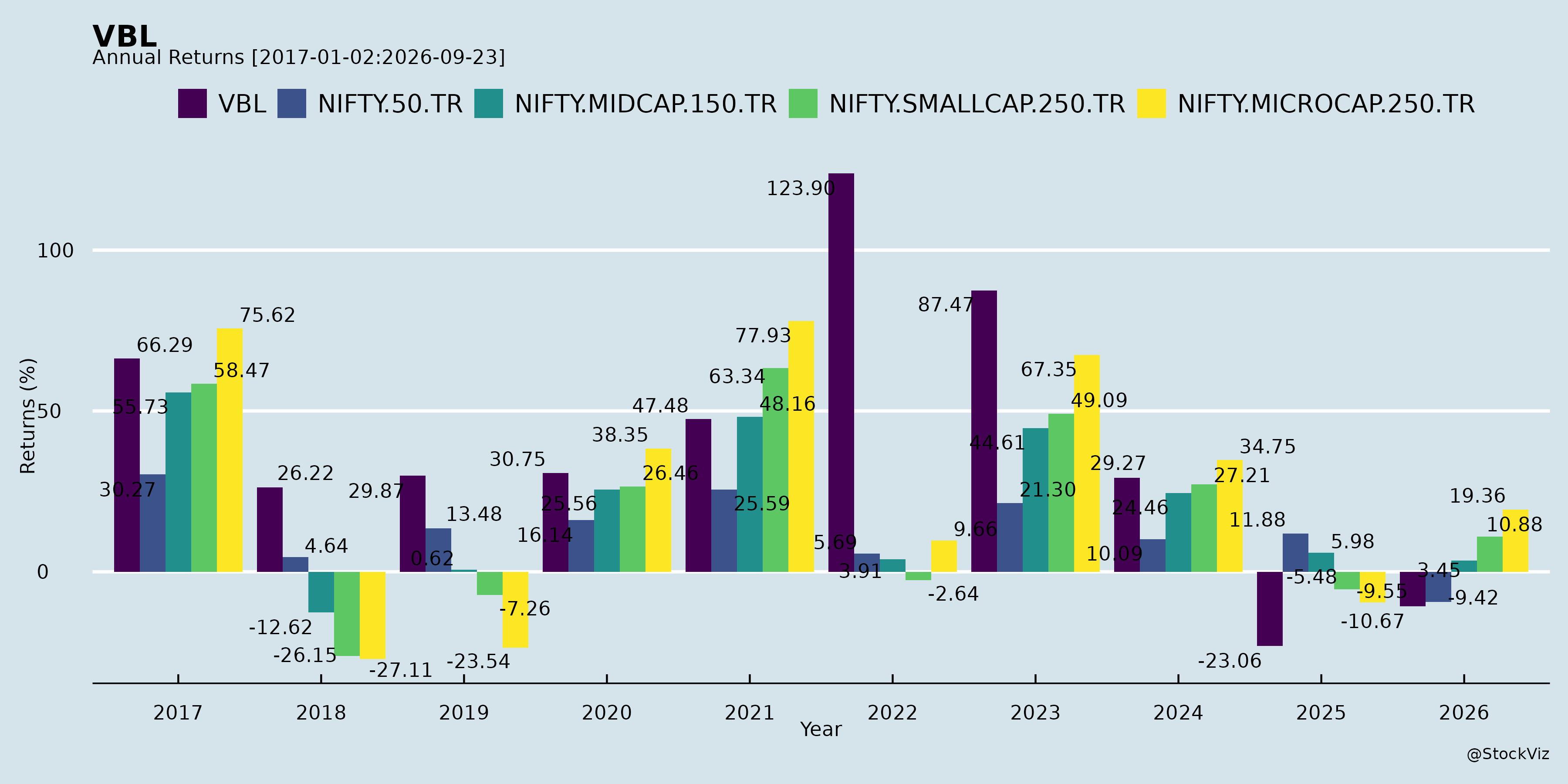
Annual Returns
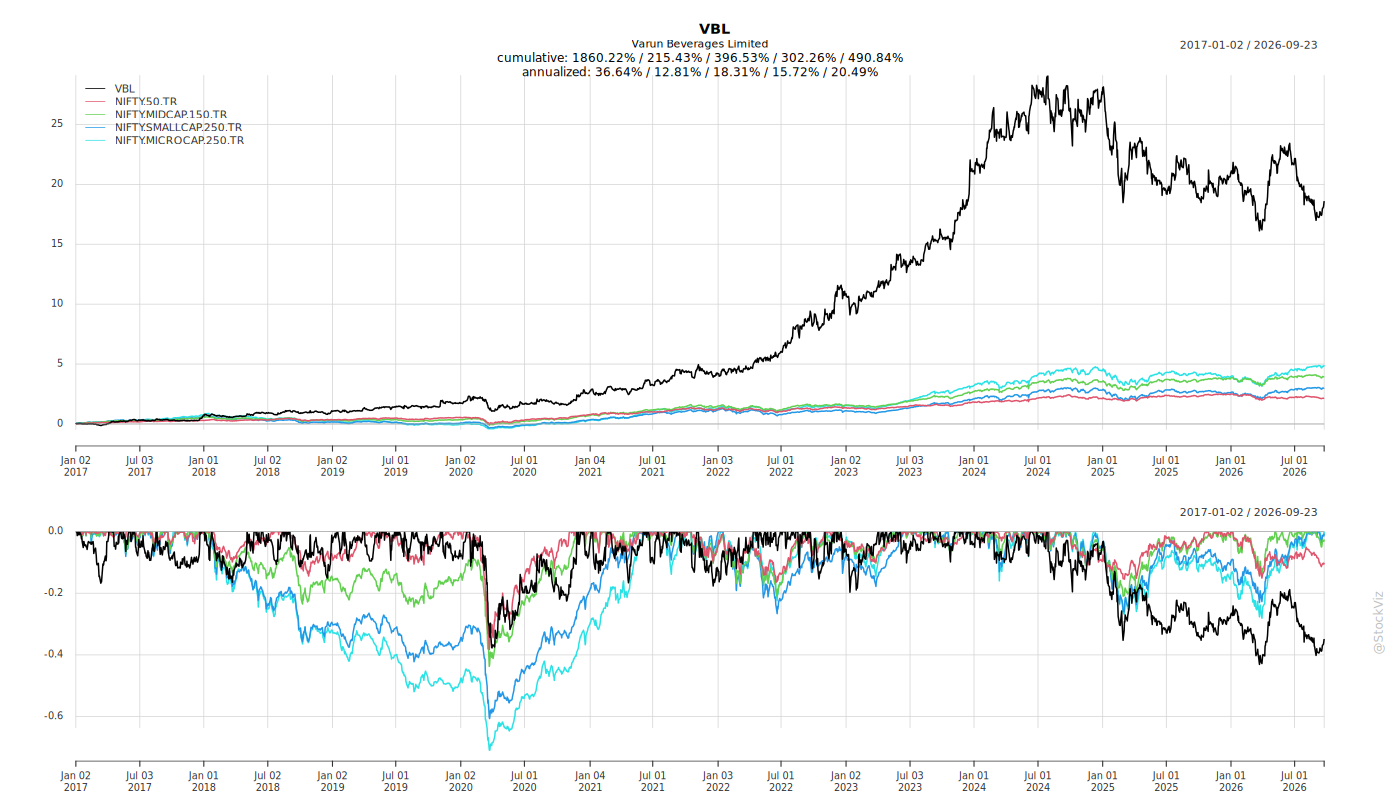
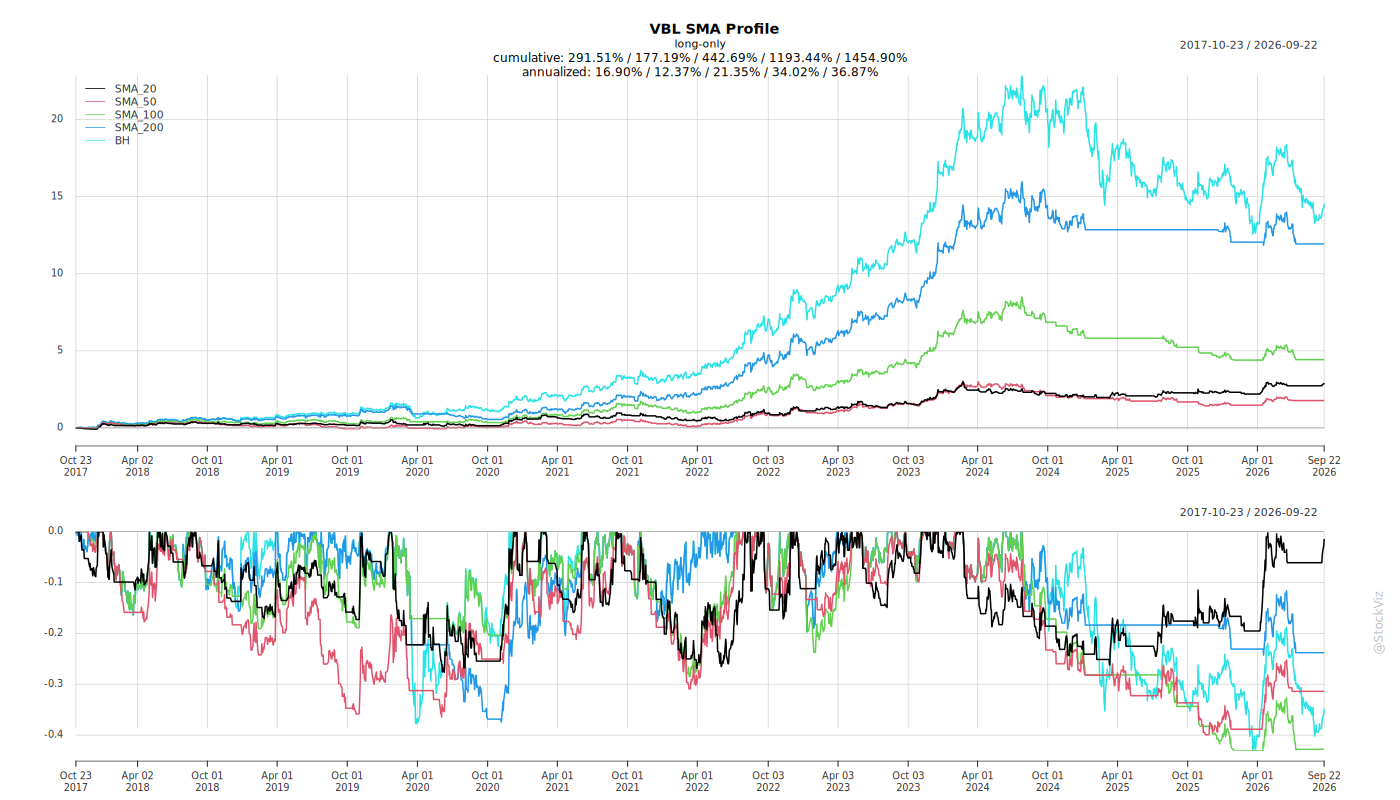
Cumulative Returns and Drawdowns
Fundamentals
Ownership
Margined
AI Summary
asof: 2026-09-14
Headwinds and Challenges
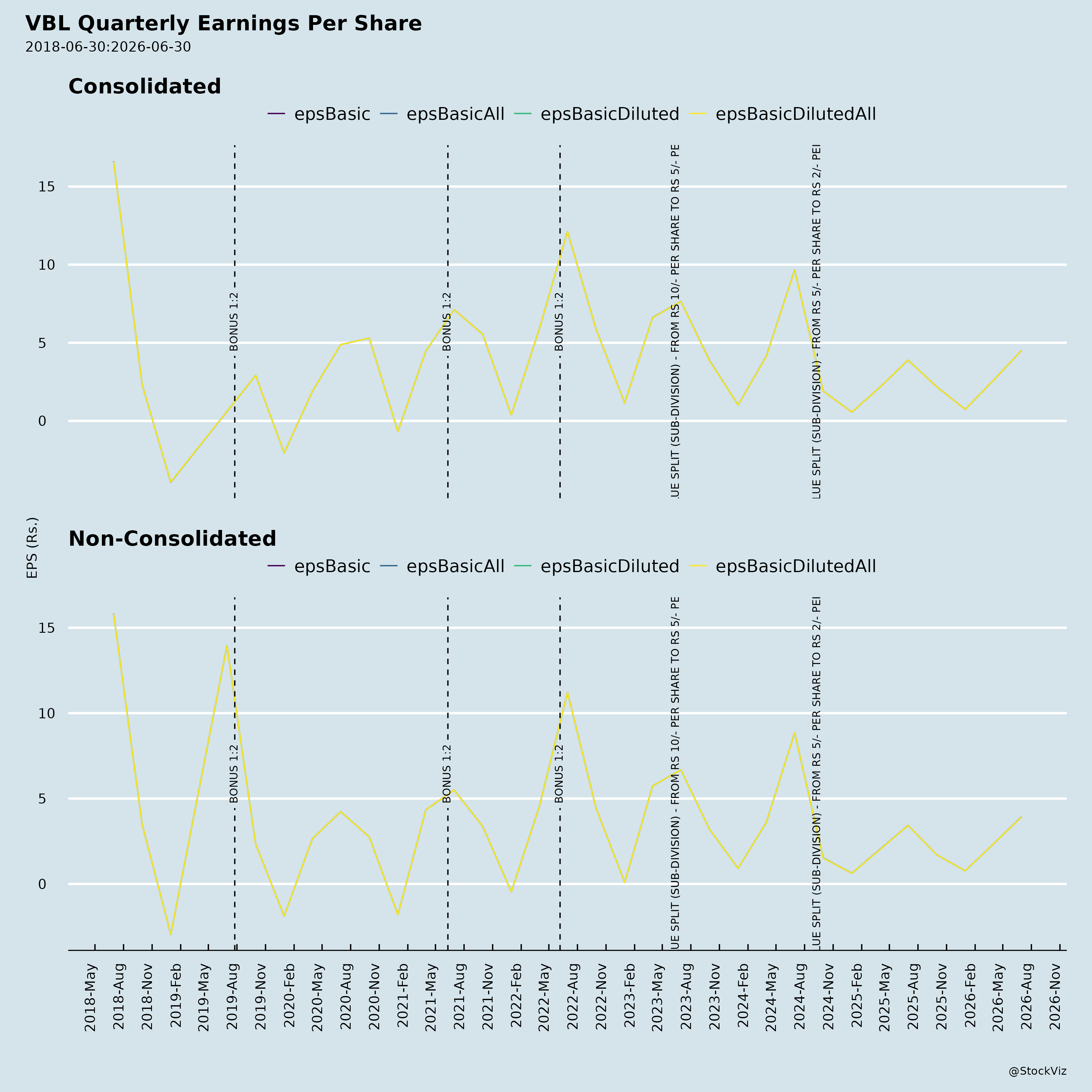
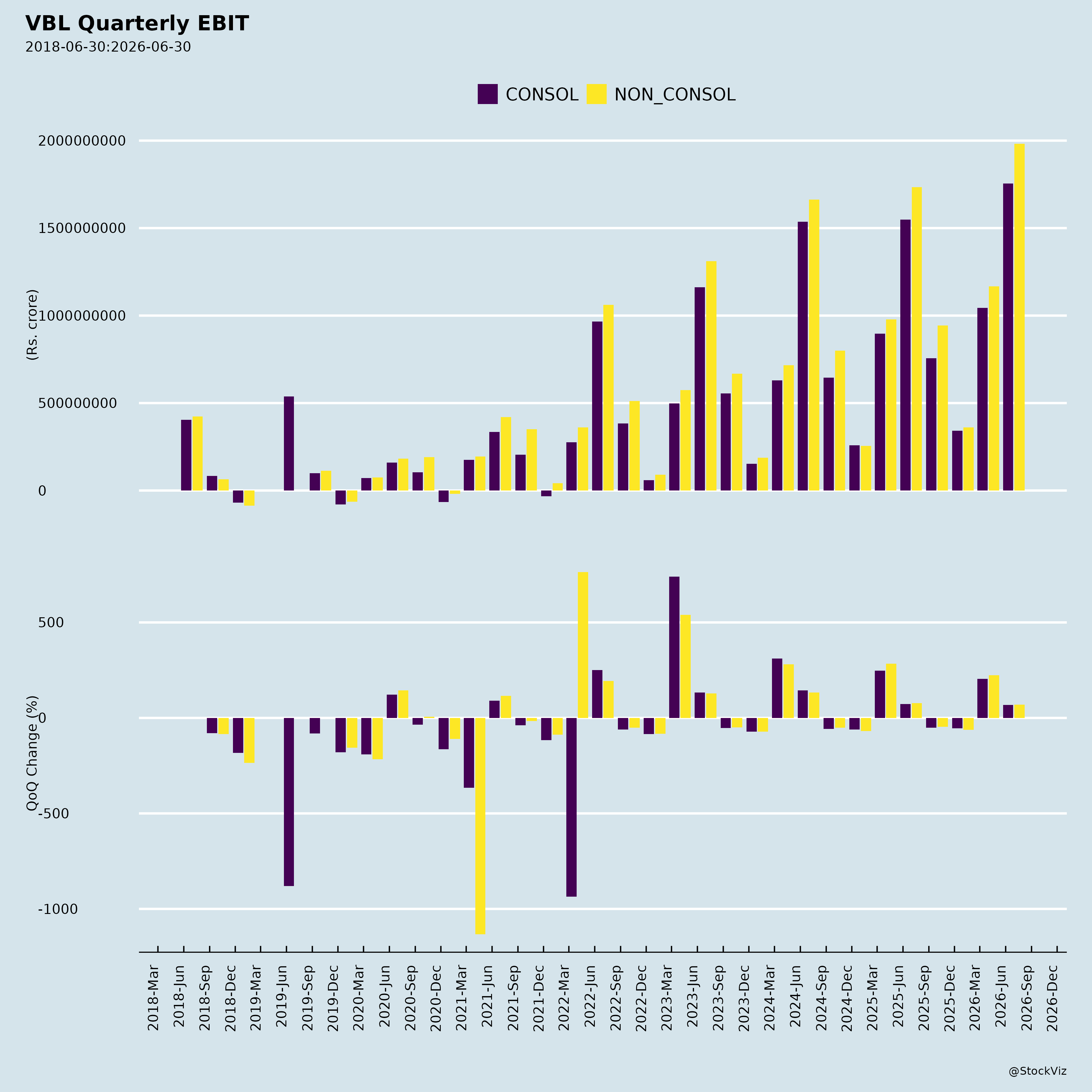
- Margin pressure from Twizza consolidation. EBITDA margins declined by 76 bps to 27.7% in Q2 CY2026, attributed to the consolidation of the Twizza business in South Africa, which currently operates at lower margins.
- Higher depreciation and finance costs. Depreciation rose 33.6% in Q2 CY2026 on account of new plants commissioned in India in the prior year (not present in the base quarter) and the Twizza acquisition. Finance costs rose 55.8% in the quarter, attributed to the Twizza acquisition.
- Inflationary raw material environment. In India, gross margins were maintained despite a high inflationary raw material environment, supported by early stocking of key raw materials and savings in sugar consumption from a higher mix of low sugar / no sugar products.
- Higher other expenses in India. India EBITDA margin improvement of 38 bps was partially offset by higher other expenses, primarily transportation and distribution costs.
- Flat April in India. India volume growth was in the twenties from the onset of the season in March onwards, except April, which was about flat, resulting in overall Q2 India volume growth of 14.4%.
- Non-beverage sales weakness. Consolidated non-beverage sales revenue grew only 0.2% in Q2 CY2026; standalone non-beverage sales declined 12.9%.
- Standalone realization decline. Standalone realization per case for beverages declined 0.6% in Q2 CY2026.
- Consolidated net debt. While VBL India remained net debt free with free cash of ~Rs. 14,941 million, consolidated net debt stood at ~Rs. 3,730 million as on June 30, 2026, on account of the Twizza acquisition in South Africa.
- Seasonality. VBL follows a calendar year of reporting; given seasonality, a significant portion of revenues and profits is realized in the April–June quarter, and the company states it is best to monitor the business on an annual basis.
- Working capital build. Inventories increased from Rs. 29,517.89 million at December 31, 2025 to Rs. 39,896.85 million at June 30, 2026; trade receivables rose from Rs. 12,490.31 million to Rs. 16,477.47 million over the same period.
- Provisional accounting for Twizza. Fair values of acquired assets and liabilities including goodwill are still being determined under Ind AS 103, and consolidation of Twizza has been done on a provisional basis from the date of acquisition.
- Related-party acquisitions. The DFIKL acquisition is from a promoter group company, and the Crickley acquisition is subject to regulatory and other approvals, including the Competition Commission of South Africa.
Tailwinds and Growth Prospects
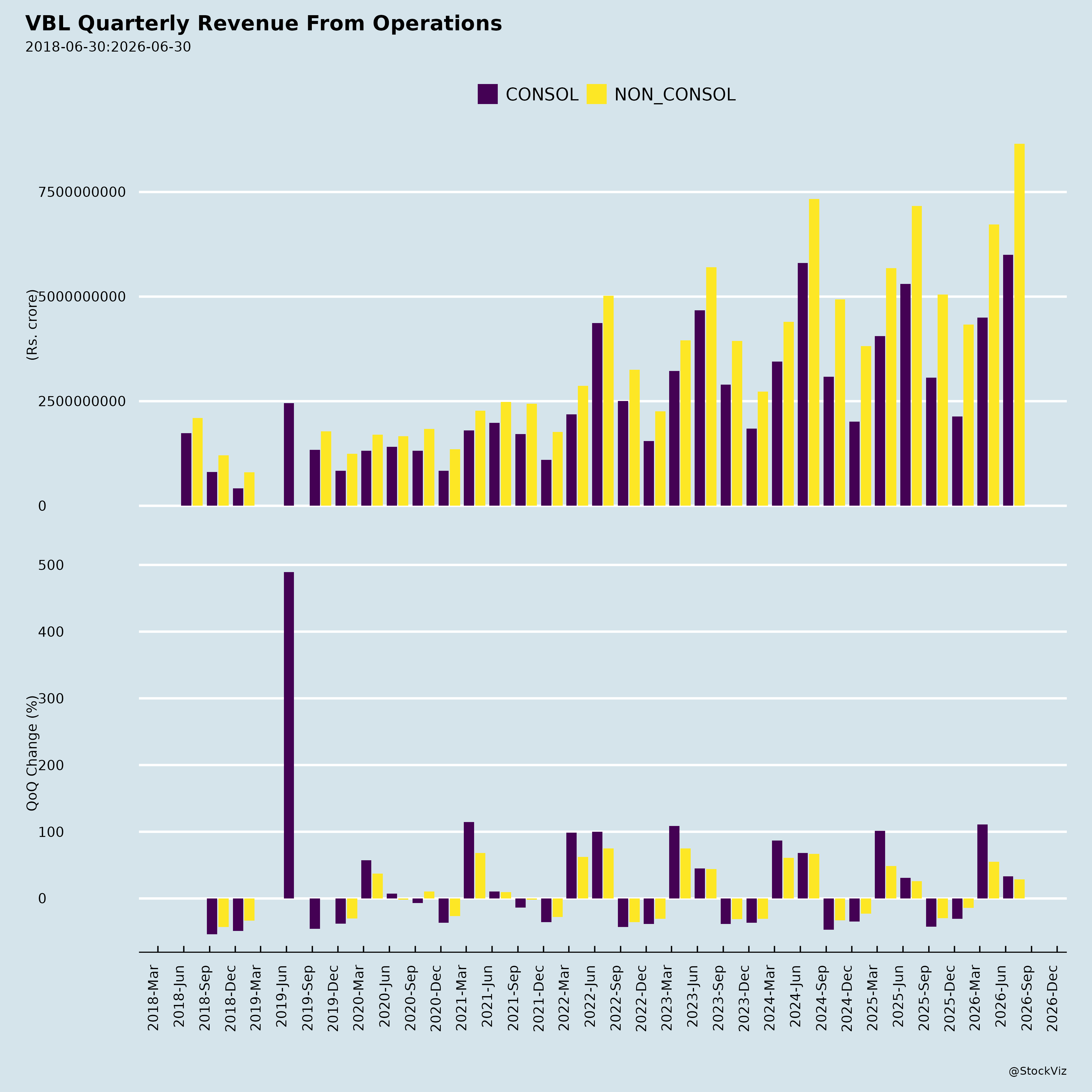
- Strong volume and revenue growth. Consolidated sales volume grew 19.8% to 466.7 million cases in Q2 CY2026, with India up 14.4% and international territories up 38.4%. Net revenue grew 20.4% to Rs. 84,512.3 million in Q2 and 19.4% to Rs. 150,254.2 million in H1.
- Improved realizations. Realization per case for beverages improved 1.2% at the consolidated level, with improved realizations in international territories.
- Gross margin expansion. Gross margins improved 44 bps to 55.0% in Q2 CY2026, supported by a higher mix of international business.
- India EBITDA margin improvement. India EBITDA margins improved 38 bps, driven by operational efficiencies from healthy volume growth.
- Extended PepsiCo agreement. On May 21, 2026, VBL and PepsiCo entered a revised Exclusive bottling appointment and trademark license agreement for India, extending the term to April 30, 2049 (from April 30, 2039) and removing the restriction requiring VBL to operate solely as an SPV for PepsiCo’s business, providing greater operational flexibility to pursue scale and synergies.
- CALPIS franchise with Asahi. On June 18, 2026, VBL entered a business alliance with Asahi Group Holdings to introduce and commercialize the CALPIS fermented milk-based beverage brand in India, with planned Original and Mango variants — marking entry into the value-added fermented dairy beverage category.
- Kenya acquisition. On July 6, 2026, VBL Industries (Kenya) Limited entered a Business Transfer Agreement to acquire the business of Devyani Food Industries (Kenya) Limited for USD 32 million (~INR 3,050 million), providing ready go-to-market infrastructure in Kenya for expansion into carbonated soft drinks and energy drinks. DFIKL has net revenue of over Rs. 3,000 million for the year ended March 2026.
- Twizza capacity relief. Twizza in South Africa helped overcome capacity constraints while strengthening manufacturing footprint and route-to-market capabilities in South Africa; it contributed 11.8 million cases in Q2.
- Crickley Dairy acquisition. Bevco entered a binding agreement to acquire 100% of Crickley Dairy Proprietary Limited in South Africa (value-added dairy and juice-based drinks) for an enterprise value including working capital of ZAR 238.00 million (~Rs. 1,314.68 million), with completion targeted on or before September 30, 2026.
- Low/no sugar mix. In H1 CY2026, low sugar / no sugar products increased to ~73% of consolidated sales volumes.
- Capacity and capex. H1 CY2026 net capitalized capex was ~Rs. 9,500 million, including brownfield expansions in India (VAD beverage line in Supa), a snacks plant in Zimbabwe, and ~Rs. 4,000 million toward market infrastructure (visi-coolers, glass bottles, pallets, vehicles). CWIP of ~Rs. 4,900 million is primarily toward expansion in South Africa and a CSD line in Kenya.
- Renewable energy investments. VBL subscribed 29.99% equity in FPEL HR2 Energy Private Limited (solar power for captive consumption in Haryana) and acquired an additional 23% of Jager Renewables Two Private Limited, taking its holding to 49% (solar for captive consumption in Rajasthan).
- New subsidiary. VBL incorporated a wholly-owned subsidiary in India named KIVA Spirits and Company Limited, per an update dated August 31, 2026.
- Dividend. The Board approved a second interim dividend of Rs. 0.50 per share (25% of face value) for FY2026, with a record date of August 1, 2026 and payment from August 4, 2026; total cash outflow ~Rs. 1,691 million.
- Credit rating. Long-term rating for bank loan facilities from CRISIL reaffirmed at CRISIL AAA/Stable.
- Sustainability positioning. CDP water rating A- and CDP Climate rating A-; targets include 30% renewable energy by 2030, 50% rPET mix in packaging by 2030, and a water usage ratio target of 1.40 by 2030 (1.50 in 2025).
Key Risks
- Acquisition integration and margin dilution. Twizza currently operates at lower margins and its consolidation weighed on consolidated EBITDA margins; fair value determination remains provisional.
- Regulatory and approval risk. The Crickley acquisition is subject to regulatory and other approvals, including the Competition Commission of South Africa.
- Related-party transaction risk. The DFIKL acquisition is from a promoter group company, though priced based on valuation of net assets from an independent third-party valuer.
- Cost inflation. A high inflationary raw material environment in India, plus higher transportation and distribution costs.
- Seasonality concentration. A significant portion of revenues and profits is realized in the April–June quarter.
- Leverage and finance cost. Consolidated net debt of ~Rs. 3,730 million as on June 30, 2026, with finance costs up 55.8% in Q2 CY2026.
- Foreign exchange exposure. Capex includes amounts on account of foreign exchange fluctuations; unrealised foreign exchange fluctuation is a reconciling item in cash flows.
- Forward-looking statement risk. The company’s safe harbor notes risks, uncertainties and assumptions including changes in economic, political, regulatory, business or other market conditions that could cause actual results to differ materially.
Management Guidance Versus Observed Business Performance
- Chairman’s outlook. Mr. Ravi Jaipuria stated the company remains confident in long-term growth potential across its markets, supported by favourable demographics, rising disposable incomes and increasing consumption of packaged beverages, and that with adequate capacities, a growing and diversified portfolio, strong partnerships and an extensive distribution network, it is well positioned to deliver sustained and profitable growth.
- Observed performance against that positioning. In Q2 CY2026, consolidated sales volumes grew 19.8%, net revenue grew 20.4%, EBITDA grew 17.2% and PAT grew 15.1%; in H1 CY2026, revenue grew 19.4%, EBITDA grew 18.7% and PAT grew 16.9%. EBITDA margin declined 76 bps in Q2 due to Twizza consolidation, while India EBITDA margins improved 38 bps.
- Dividend policy. The interim dividend of Rs. 0.50 per share was declared in line with the guidelines of the company’s dividend policy.
- Investor meeting. The company is participating in an investor meeting at the Jefferies India Forum, 2026 in Gurugram on September 16, 2026, with management participants Mr. Raj Gandhi, Mr. Deepak Dabas, and Mr. Manjit Singh; no unpublished price sensitive information is proposed to be shared.
- No specific numeric guidance. The supplied material does not contain specific quantitative revenue, margin or earnings guidance for future periods beyond the qualitative long-term growth outlook and stated sustainability targets.
Broker Narrative
The broker narrative shifted from strong early optimism about robust credit growth, improving asset quality, and expanding NIMs to significant caution about competitive pricing pressure, margin compression, rising fixed costs, and increased debt. The dominant theme of operational strength gave way to concerns about cost pressures and competitive dynamics, driving the rating downgrade from Buy to Hold.
Fears that came true
- Deterioration in retail asset quality materialized as evidenced by the cascade of DISAPPOINTMENT outcomes from early 2024 onward with actual returns as negative as -34.7%.
- Slowdown in credit growth momentum was confirmed by the sustained shift from Buy to Hold and DISAPPOINTMENT outcomes throughout 2024-2026.
- Competitive and pricing pressure from Reliance’s Campa materialized, contributing to the 76bps EBITDA margin contraction and persistent DISAPPOINTMENT outcomes.
- Rising fixed costs emerged as feared with employee expenses up 24.3%, depreciation up 33.6%, and finance costs up 55.8% YoY, correlating with sustained DISAPPOINTMENT outcomes.
- Debt and regional volatility risks materialized with consolidated net debt rising to ~INR 3.7bn following the Twizza acquisition, weighing on return ratios.
Optimism that failed
- Strong credit growth across Retail, Business Banking, and SME segments failed to sustain as the rating shifted from Buy to Hold with consistent DISAPPOINTMENT outcomes from 2024 onward.
- Meaningful improvement in asset quality did not hold as later reports revealed margin contraction of 76bps YoY and rising cost pressures instead.
- Positive operational performance with expanding NIMs failed as the last report showed consolidated EBITDA margin contracted 76bps YoY rather than expanding.
Broker Timeline
45 broker calls · 2023-06-01 to 2026-07-29
Copyright © 2023 SAS Data Analytics Pvt. Ltd. All rights reserved.