UGROCAP
Equity Metrics
November 18, 2026
Ugro Capital Limited
Non Banking Financial Company (NBFC)
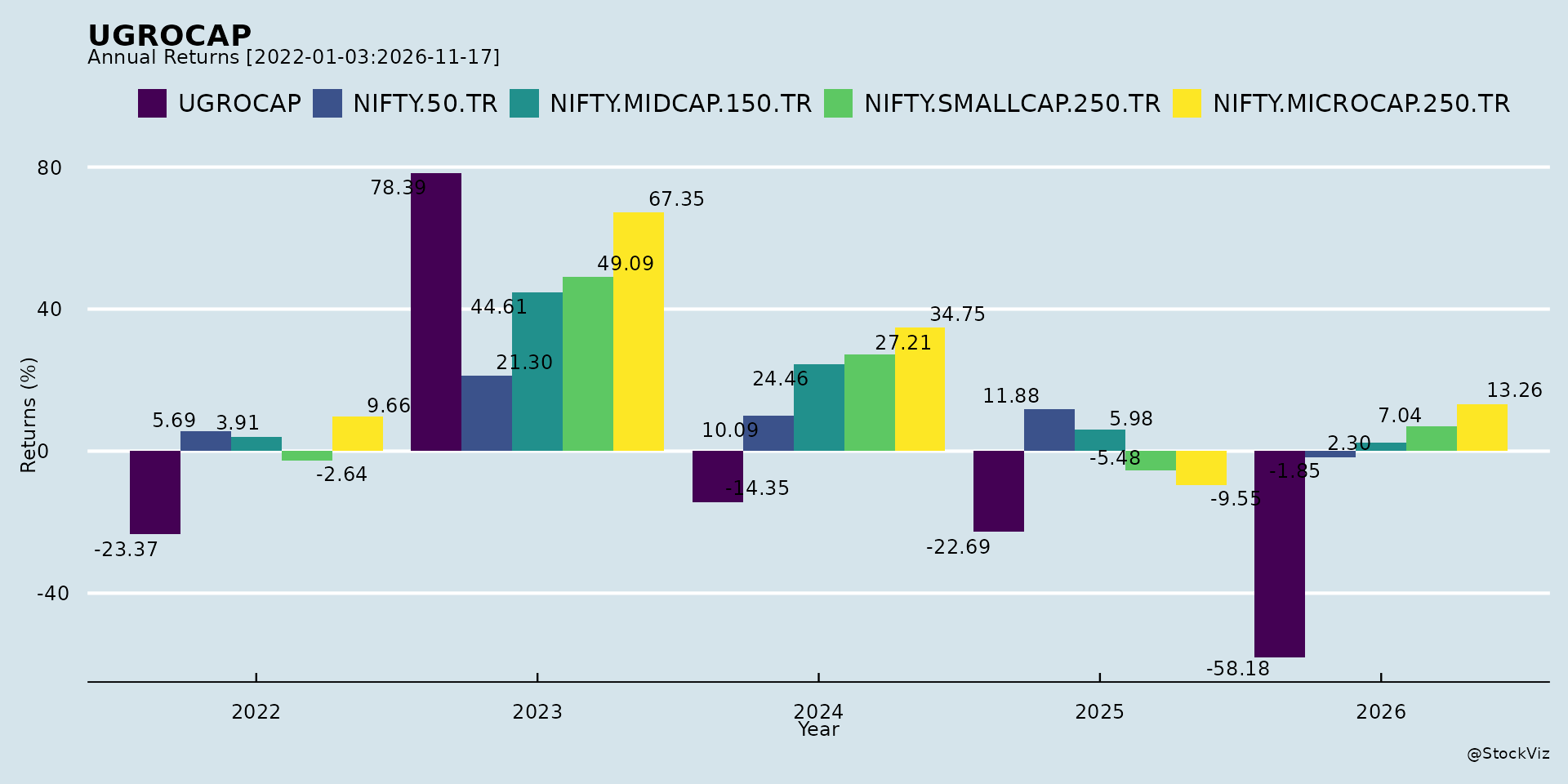
Annual Returns
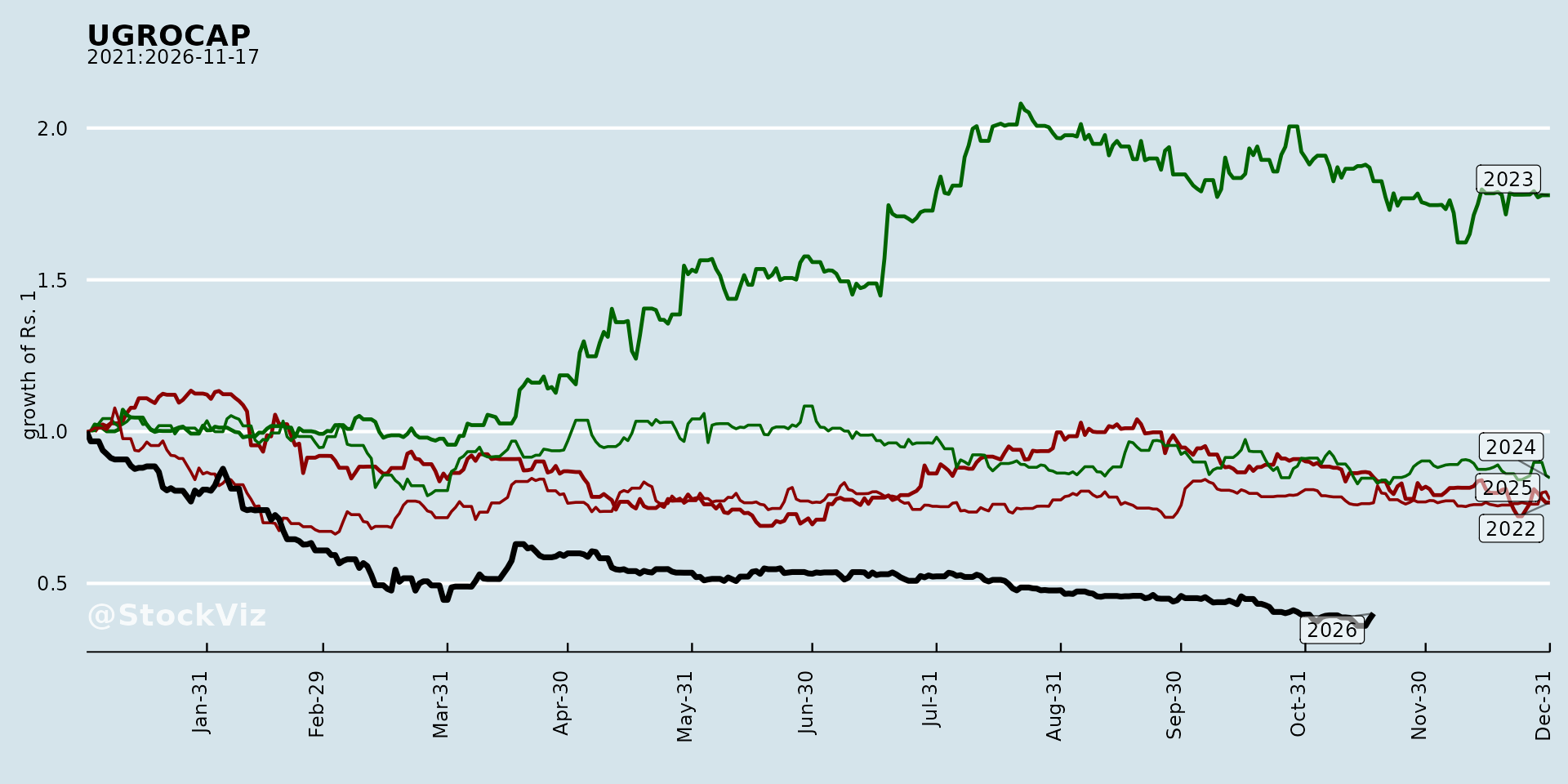
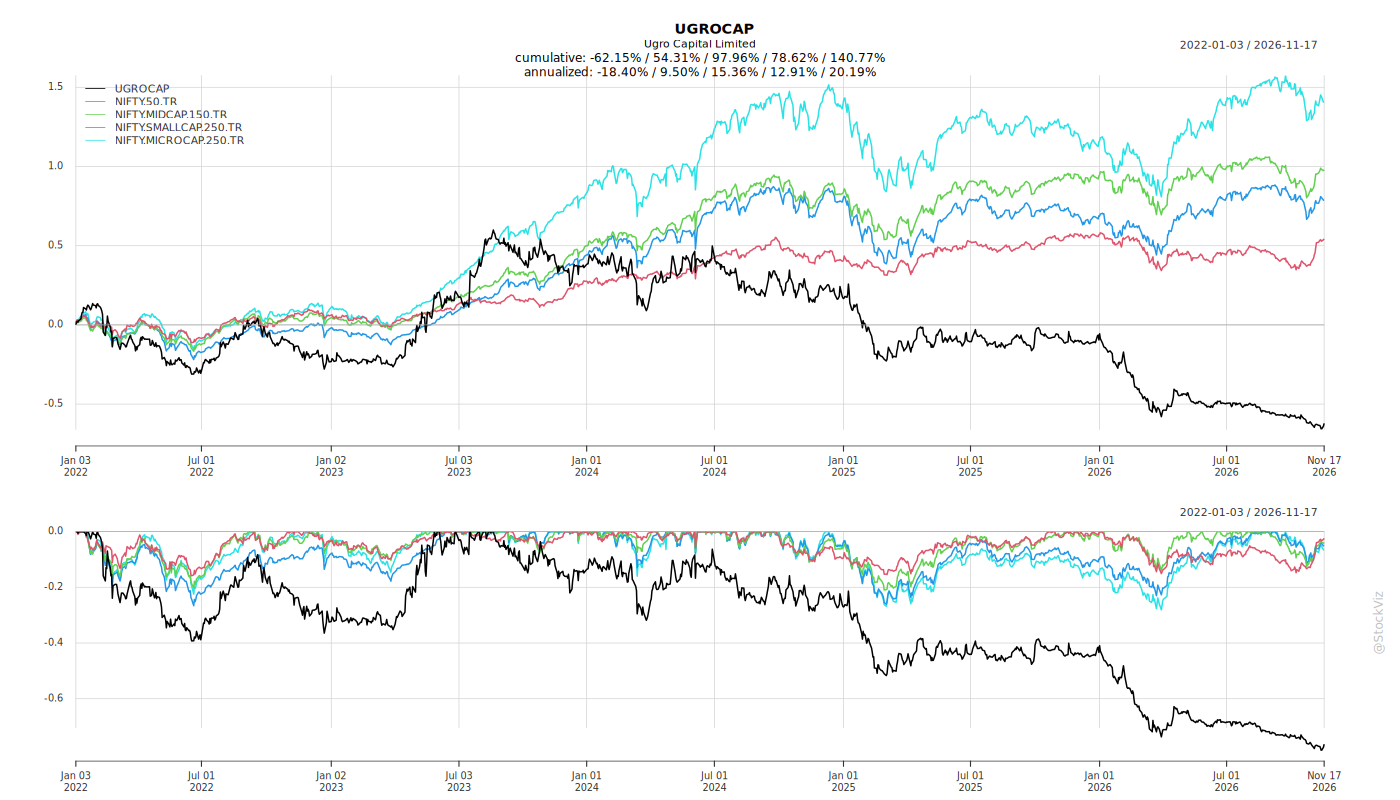
Cumulative Returns and Drawdowns
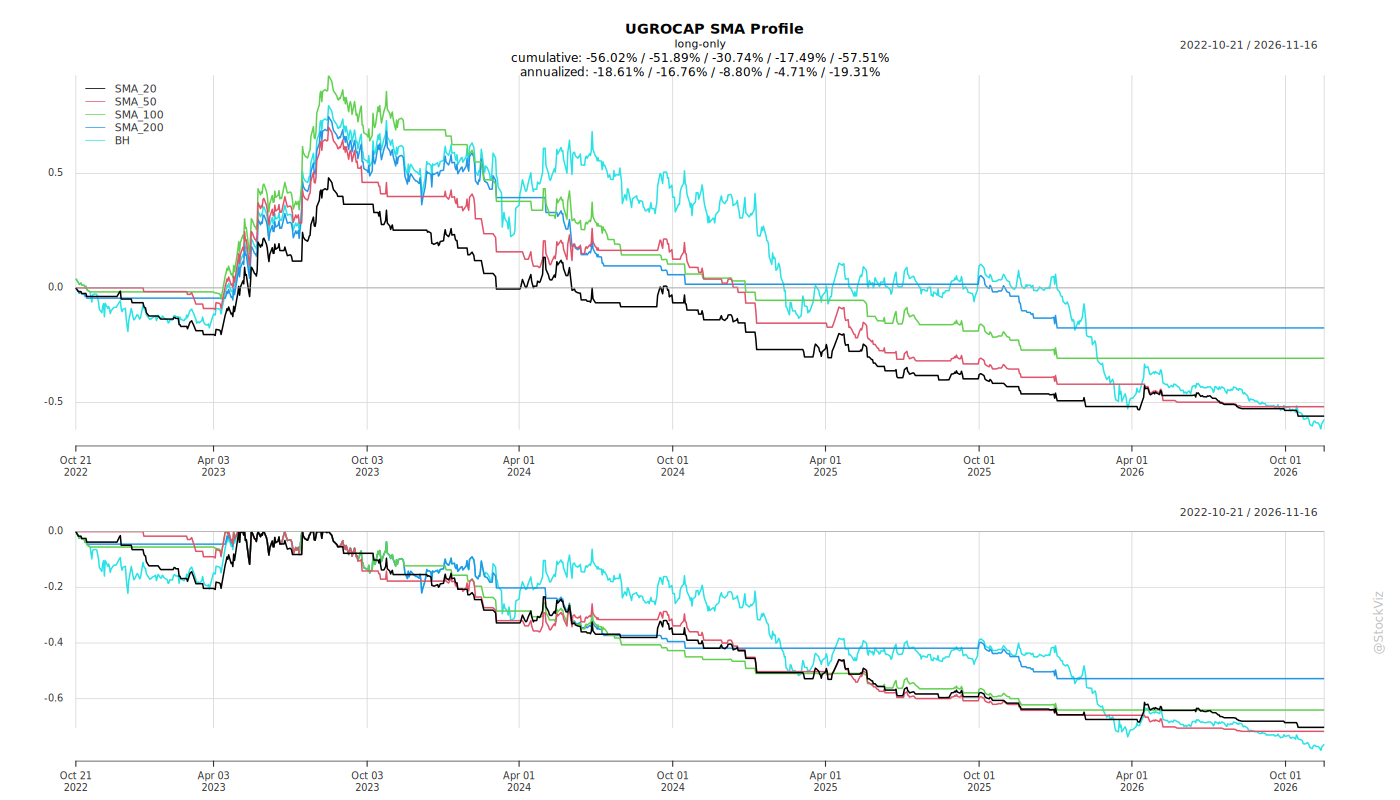
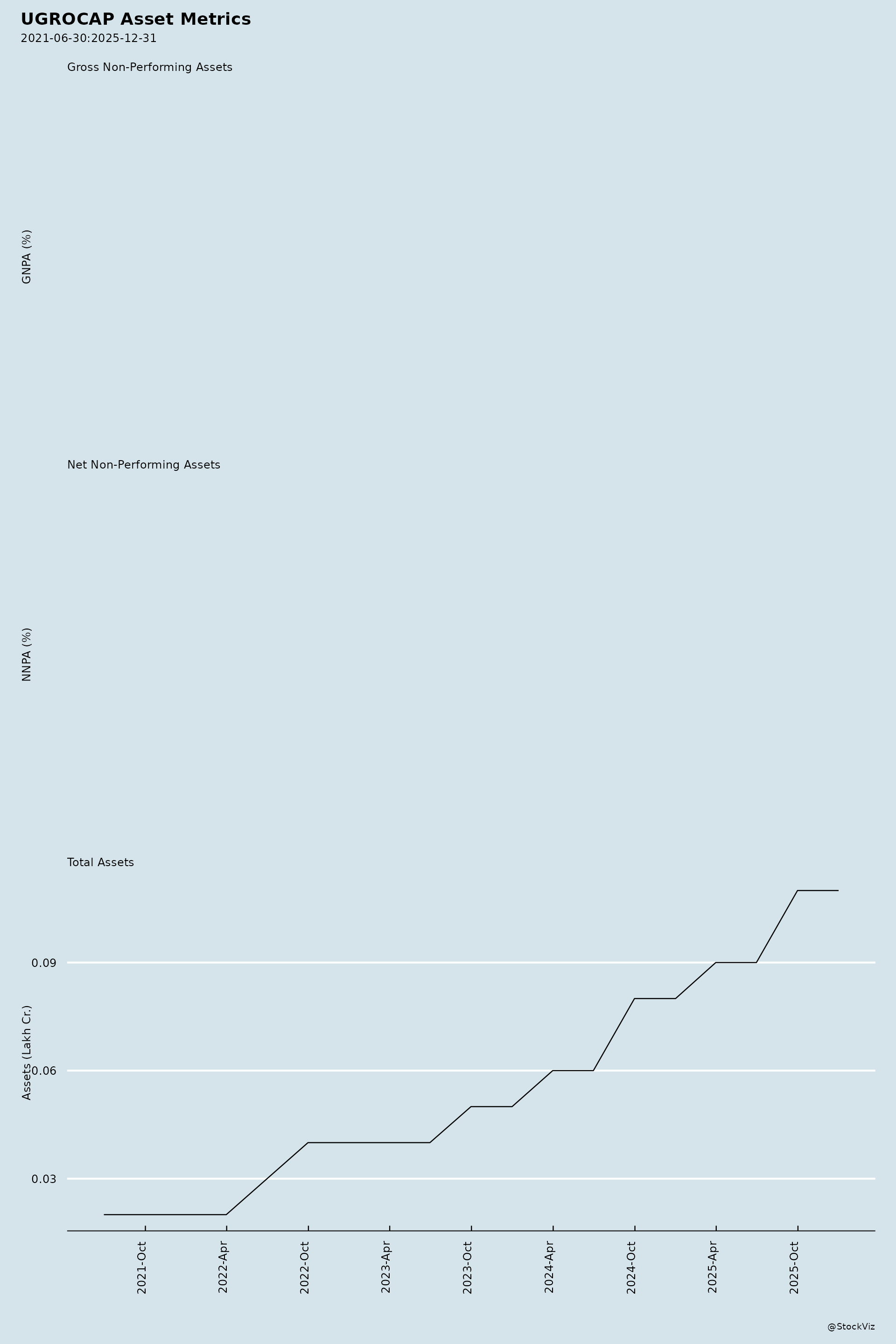
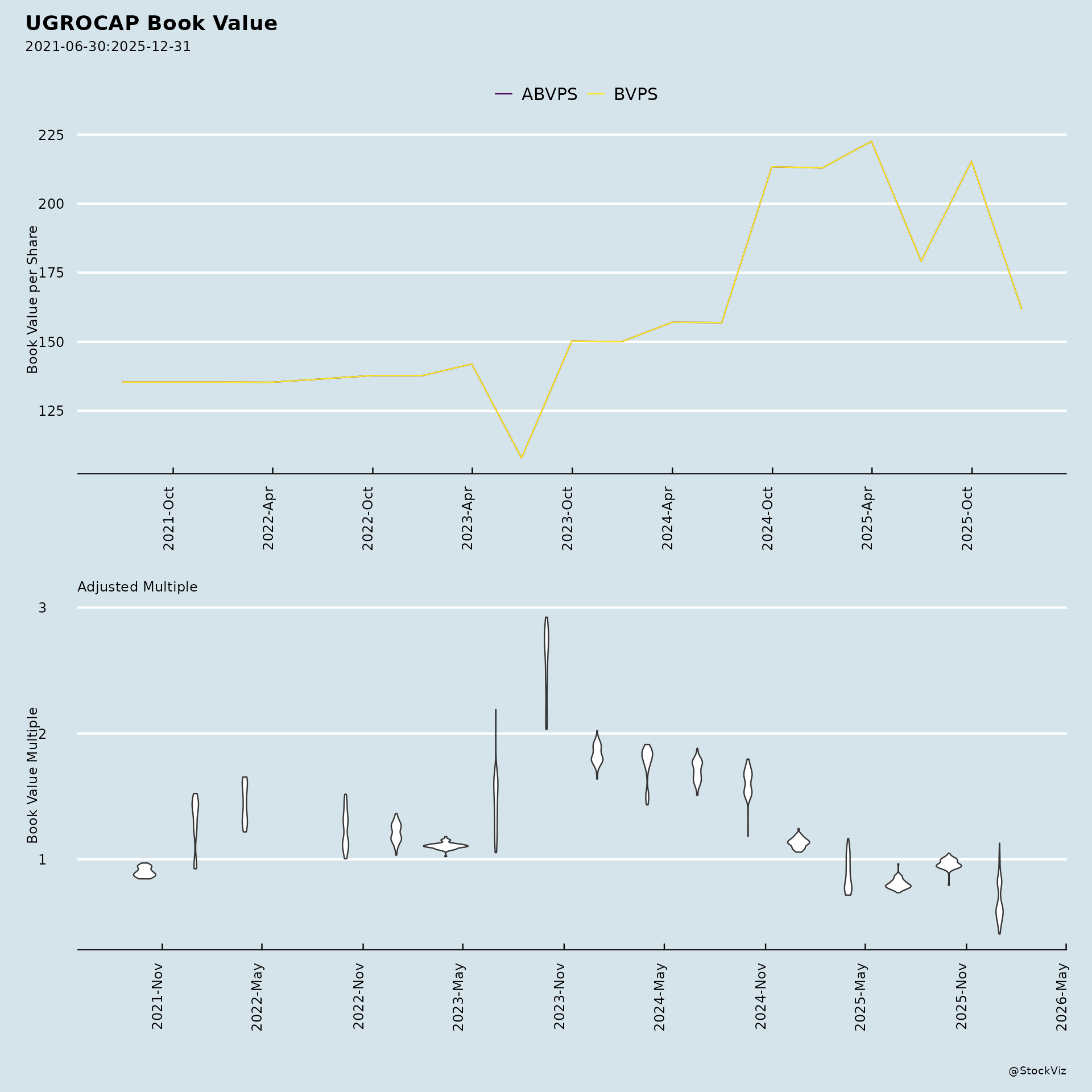
Fundamentals
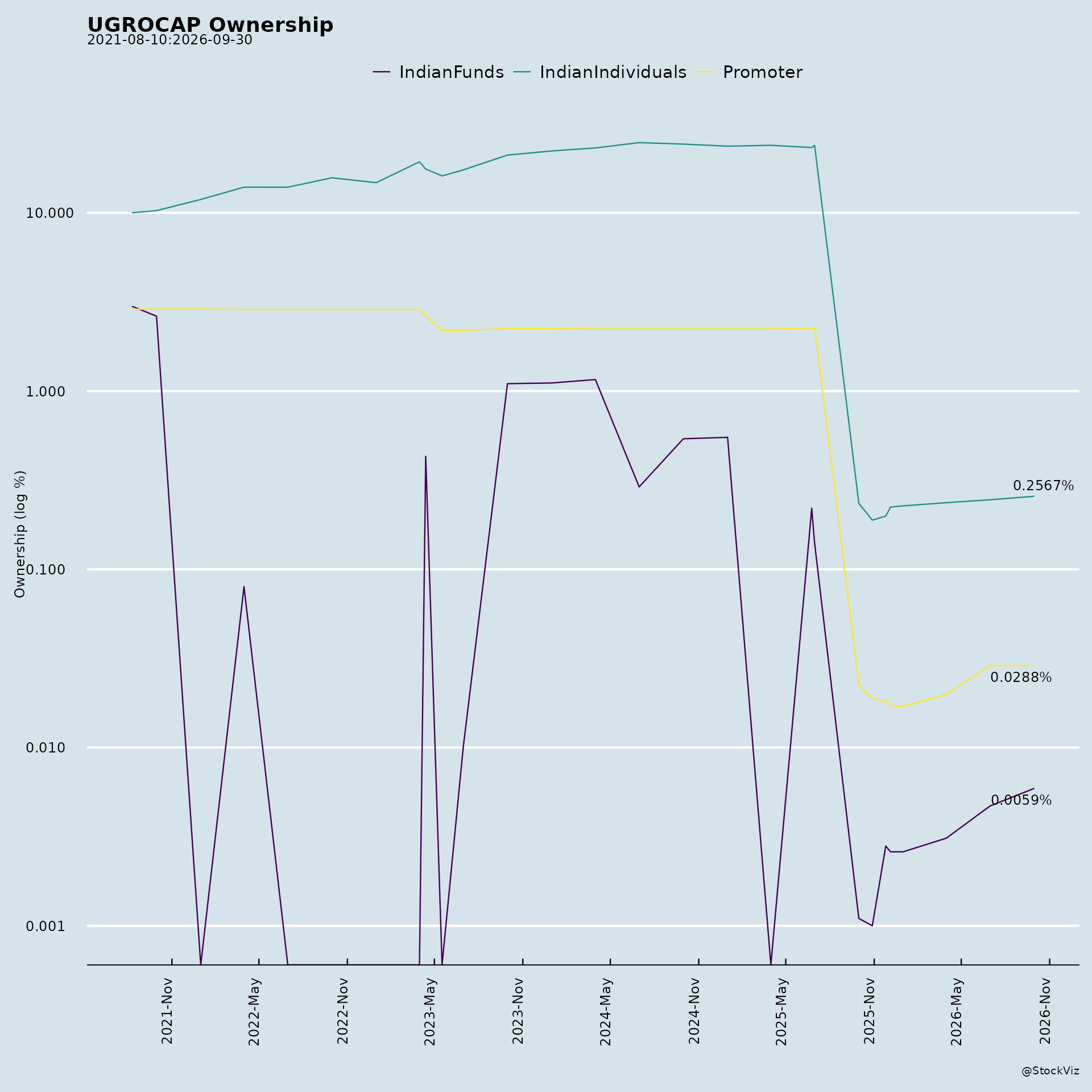
Ownership
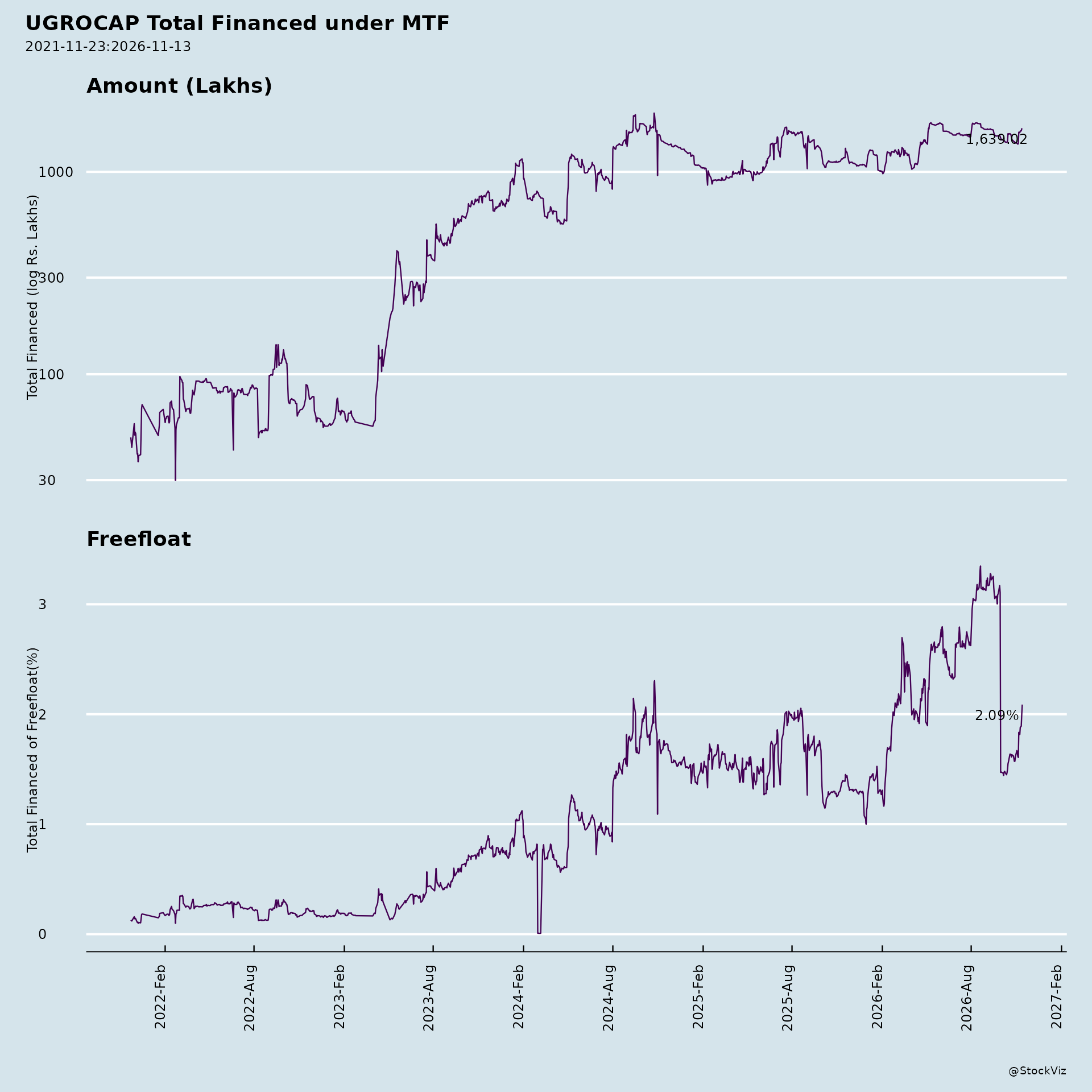
Margined
AI Summary
asof: 2026-09-18
UGRO Capital — Q1 FY27 Developments
1. Headwinds and Challenges
Portfolio transition drag. The company is deliberately exiting incremental origination in the lower-yield intermediated Prime (DSA-led) business. A faster-than-planned rundown of this portfolio has moderated reported AUM in the near term. Total AUM stood at INR 15,013 crores at June 30, 2026, and management expects AUM to remain broadly flat for FY27 even as on-book assets grow modestly.
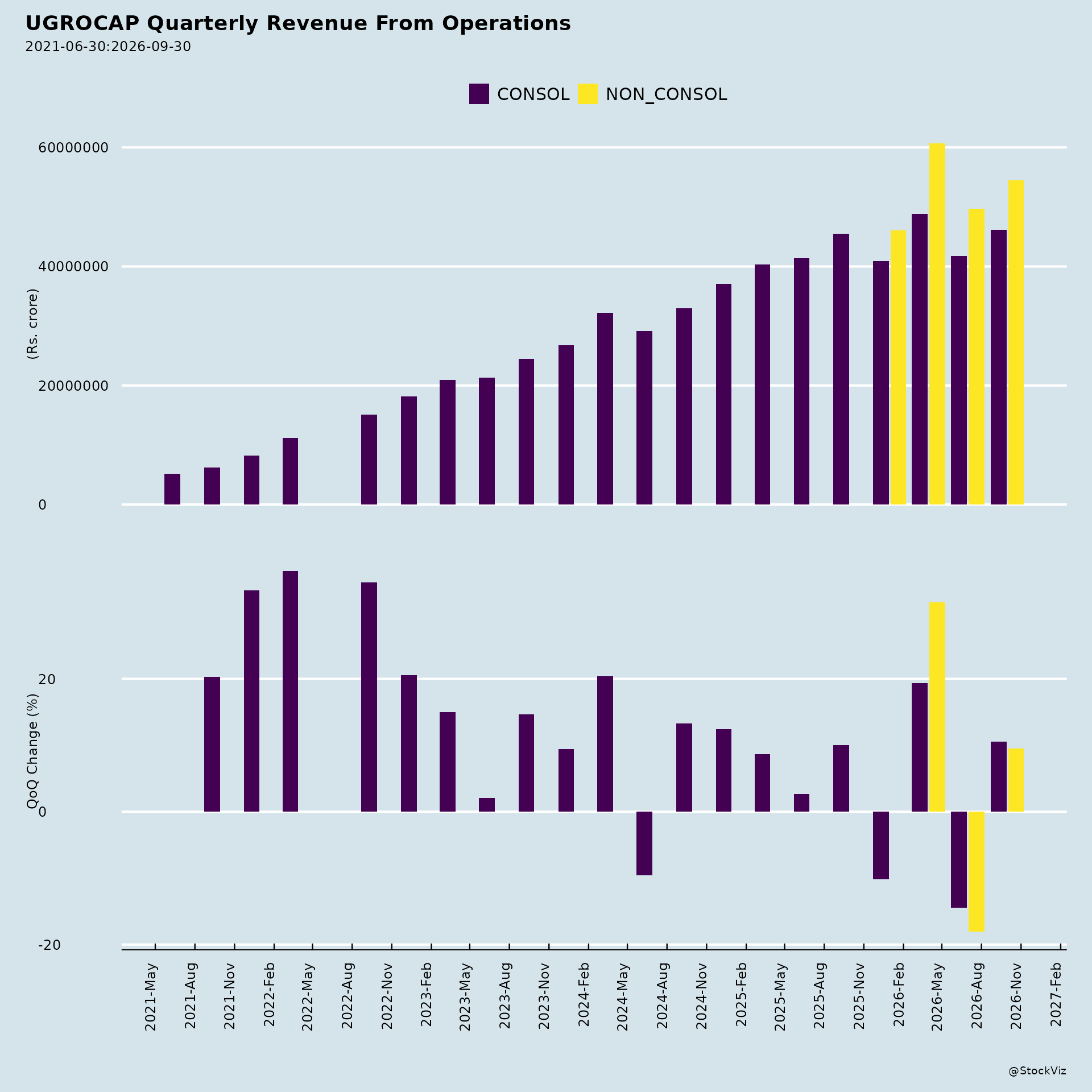
Decline in co-lending and direct assignment income. Income from co-lending and DA fell to INR 74.9 crores in Q1 FY27 from INR 154.6 crores in Q4 FY26, dropping from about 24% of total income to about 14%. Management described this as planned, with an objective of bringing it to roughly 4% over the next 12 quarters.
Sequential interest income decline. Interest income fell 13% quarter-over-quarter to INR 363 crores. This was attributed to a base and volume effect: foreclosures in the Prime intermediated vertical were higher, and DSA costs previously amortized over loan tenure were recognized upfront on foreclosure. Management indicated the current quarter should be treated as the base, with interest income growing from here.
Runoff-related income reversal. Because off-balance-sheet assets (co-lending and DA) had income recognized upfront, faster runoff produces income reversal. Competitive intensity from large lenders targeting UGRO’s exited book could accelerate runoff and pressure the P&L. Management noted mitigating actions, including selective rate reductions to retain customers.
Asset quality drift in focused books. Emerging Market LAP GNPA rose from 1.2% in March to 2.1% in June; Embedded Merchant Finance GNPA moved from 1.7% to 2.1%. Overall GNPA on AUM was 2.6% versus 2.5% at March 2026, largely a denominator effect, with the defocused book at 3.1% GNPA and the incremental focused book at 2.1%. Management expects Emerging Market LAP peak delinquency of 3.5%–4% once average months-on-book crosses 18 months (currently around 15 months), and expects Embedded Finance not to exceed 3%.
Share price and shareholder register. Management acknowledged the share price has not reflected underlying progress, citing a shareholder base with roughly 50% held by a few long PE investors, some at end of fund life and needing to exit, alongside a market-cap threshold that makes domestic mutual fund entry difficult. A recent shareholder vote saw one resolution rejected and others pass narrowly; management attributed this to proxy advisory opposition to an enabling variable-pay resolution and noted engagement with institutional investors afterward.
Merger-related accounting. The Profectus Capital merger scheme, now filed with NCLT, provides for setoff of acquisition goodwill and reassessment of the carrying value of the future spread asset against reserves. Reported net worth may reduce as a non-cash accounting adjustment, without impacting capital adequacy.
2. Tailwinds and Growth Prospects
Two focused engines scaling. Emerging Market secured lending and Embedded Merchant Finance together held AUM of approximately INR 6,899 crores, or 46% of total AUM at June 2026, up from 32% in December 2025. Management expects the duo to reach 85% of AUM by FY29.
Emerging Market LAP momentum. AUM rose from INR 3,581 crores in March to INR 3,896 crores in June, up about 9% quarter-on-quarter, with INR 592 crores disbursed in the quarter. Portfolio yield was approximately 18.5%. The network spans 317 branches across 13 states. Blended monthly productivity rose from about INR 48 lakh per branch in FY26 to INR 62 lakh in Q1 FY27; branches older than 12 months produced about INR 81 lakh per month, within the lower end of the INR 80–85 lakh target. The mature cohort grew from 81 branches in March to 96 in June, while about 145 branches are under 6 months old and yet to mature.
GROx embedded platform. AUM grew from INR 2,280 crores in March to INR 3,003 crores in June, up about 32% quarter-on-quarter and roughly 4x over five quarters. The platform disbursed INR 1,853 crores in the quarter, originates over 60,000 loans monthly, and serves approximately 3.4 lakh active customers. Portfolio yield was approximately 26%. GROx combines UGRO’s data analytics and underwriting (including GRO Score) with GROx’s embedded technology and partner integrations.
Disbursement milestone. In July 2026, the combined Emerging Market branch network and GROx platform enabled UGRO to cross INR 1,000 crores of monthly disbursement for the first time.
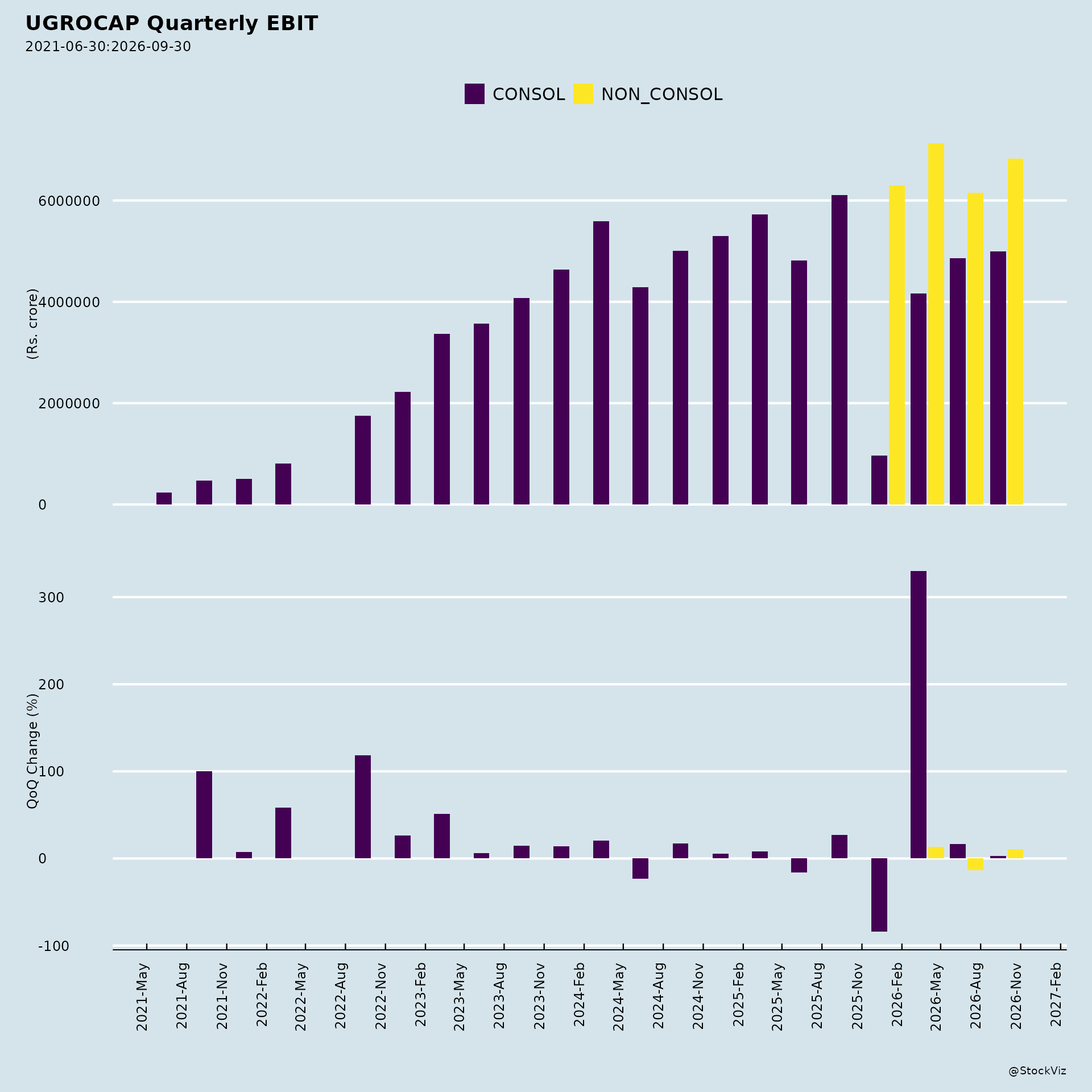
Cost reset. Quarterly operating expenses fell to approximately INR 119 crores from INR 217 crores in Q4 FY26, a 42% sequential decline and 2% year-over-year decline, with the plan to remove approximately INR 220 crores of annualized operating cost substantially completed.
Funding and liquidity. Cost of borrowing declined 41 bps year-over-year to 10.14%, the seventh consecutive quarterly improvement; incremental long-term borrowing came at about 9.8%. About 66% of borrowings are beyond 3 years tenure. Liquidity stood at about INR 1,864 crores. UGRO raised INR 380 crores of NCDs fully subscribed by FMO, FMO’s third investment in under three years, taking FMO’s cumulative commitment to INR 890 crores and total development finance and impact capital raised to over INR 1,300 crores. Proceeds are earmarked for women-led, youth-led, and rural MSMEs and eligible green projects.
Capital position. Net worth was INR 2,976 crores, leverage 3.6x, and standalone capital adequacy 21%; on a merged basis management expects about 23%–24%. Management stated confidence in achieving planned growth without incremental equity through FY29.
Merger integration. Stock exchange approval and observation letters for the Profectus Capital merger were received; the scheme is filed with NCLT. Management expects completion by February, possibly by end of Q3. Aligning the spread asset with behavioural repayment patterns is expected to reduce future income reversal from foreclosure and portfolio runoff, improving earnings predictability and supporting stronger ROE.
3. Key Risks
Credit risk. Management identified credit risk as the biggest risk, given both focused verticals serve relatively smaller customers. Monitoring includes early warning signals; after the Middle East conflict, GROx tracked daily revenues of end customers in food and beverage. Smaller concentrated state, geography, and sector-level risks are monitored.
Execution risk. The self-funding thesis rests on keeping new-book GNPA contained, realizing opex savings from the Profectus acquisition, and generating sufficient net profit to fund growth without fresh capital. Specific execution risks cited: ensuring the approximately 145 branches under 6 months old reach roughly INR 75–80 lakh monthly disbursement at the 12-month mark; expanding Embedded Finance into longer-tenure, larger-ticket ecosystems beyond payment rails without raising credit risk; and managing runoff pace, since faster runoff accelerates income reversal.
Cost of borrowing. Management flagged cost of borrowing as a focus area, hoping for further reduction as AUM and profitability grow, though this was not factored into projections.
Capital and dividend constraints. Buyback is not possible for NBFCs due to Companies Act leverage limits. Dividend policy is RBI-regulated and would require shareholder approval; management indicated growth capital needs may take precedence, with a final call closer to Q3/Q4.
4. Management Guidance vs. Observed Performance
Opex. Guidance was approximately INR 490 crores annualized for FY27. Observed Q1 FY27 opex of about INR 119 crores is near that run rate; management said the Q1 level broadly represents the quarterly run rate, with inflation-related increases possible.
Co-lending and DA income. Guidance was to reduce this from about 24% of income (Q4 FY26) to about 4% over 12 quarters. Observed: about 14% in Q1 FY27. Management indicated the Q1 level is broadly the run rate for the year, subject to foreclosure variability.
AUM trajectory. Guidance for FY29 is Emerging Market and GROx growing at roughly 25% CAGR each, with the defocused Prime portfolio running down at 20%. Observed: both focused engines are growing faster than 25%, while runoff is running at about 25%. Management expects AUM to remain flat in FY27 with on-book assets growing modestly, and roughly 15% growth thereafter, while noting the runoff rate is hard to predict.
Asset quality. Guidance for Emerging Market LAP peak delinquency was 3.5%–4% at 18+ months average vintage, with credit cost guidance of 1.5%–2%. Observed: GNPA at 2.1% with average vintage around 15 months; management said the trajectory is within internal models. For Embedded Finance, guidance was not to exceed 3%; observed GNPA at 2.1%, with management expressing confidence it will hold below 3%.
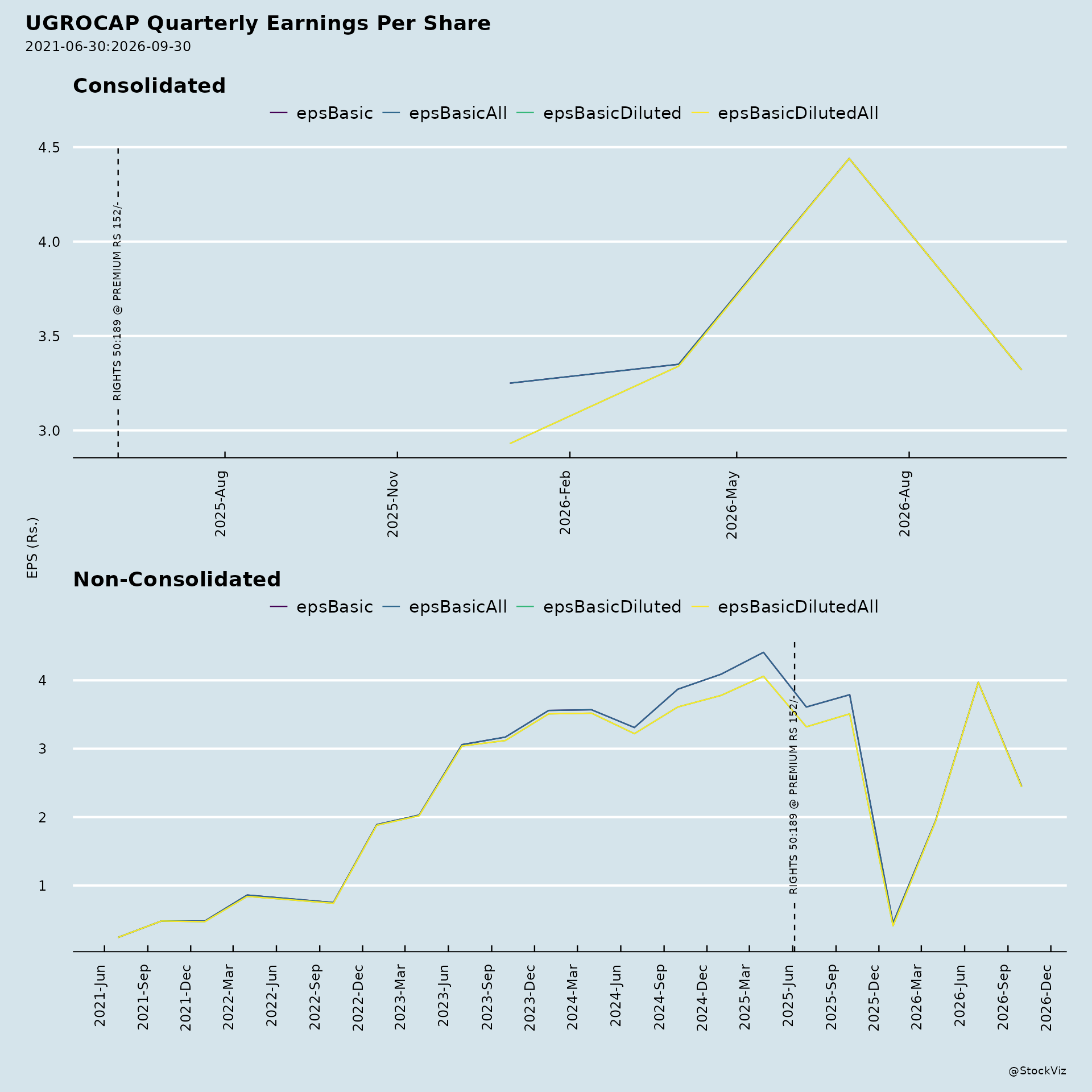
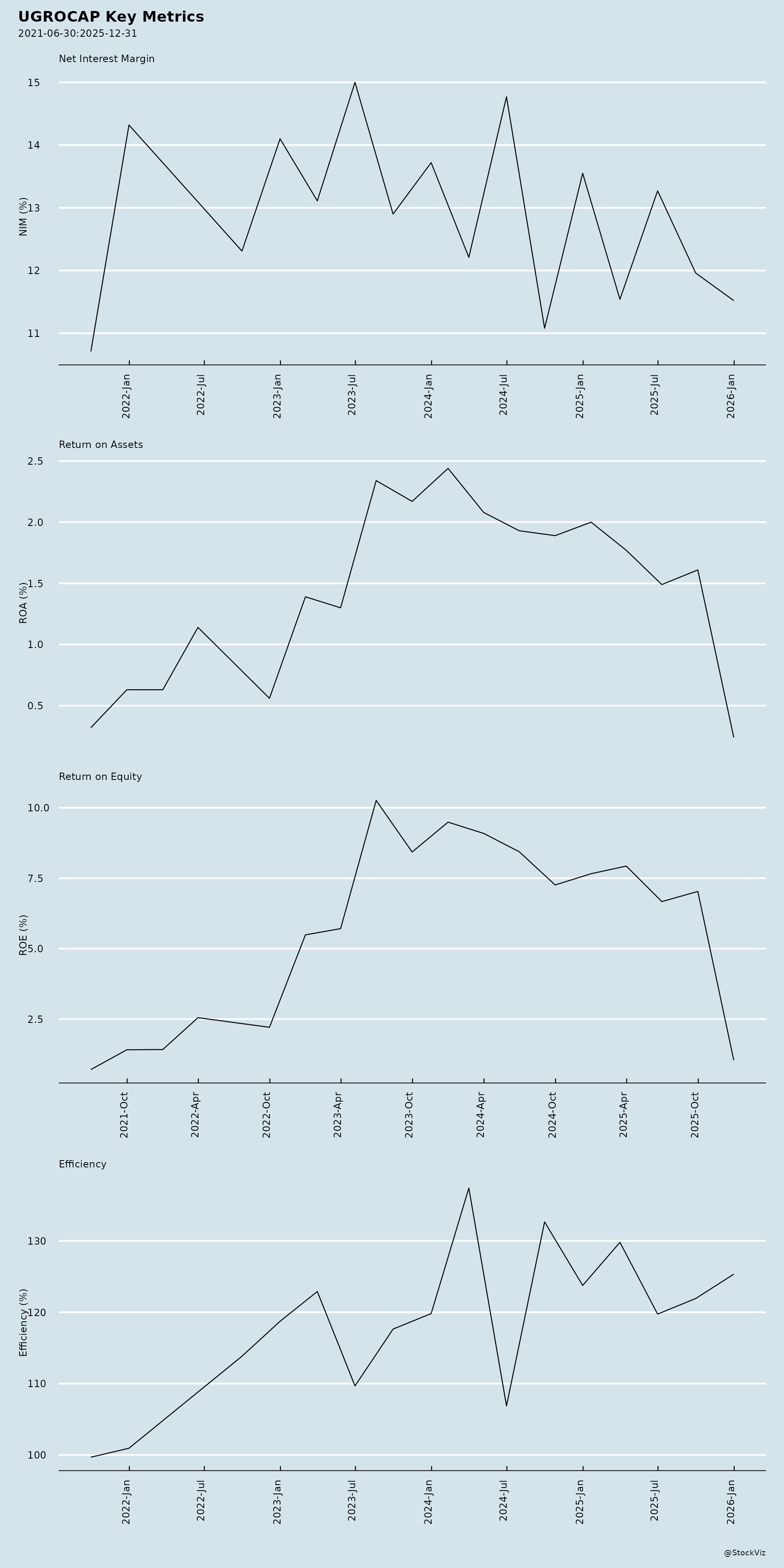
ROA. Guidance is a steady-state ROA of 3.0%–3.5% by FY29. Observed: pre-tax ROA of 2.6% and reported PAT-basis ROA of 2.8% in Q1 FY27, with the difference driven by a one-time deferred tax reversal from migration to the new tax regime. Normalizing for a 25% tax rate, management indicated ROA would be over 2.1%, described as the base from which it must increase. ROE stood at 9.2%.
Capital adequacy. Standalone CAR was 21.0%; management expects about 23%–24% on a merged basis, and stated confidence in funding planned growth without incremental equity through FY29, supported by capital accretion, continued off-balance-sheet activity, and onboarding additional lenders (including SIDBI as a co-lending partner) on the GROx platform.
Broker Narrative
Both reports kept a Buy on UGROCAP, framing it as a data-driven MSME lender with a large credit gap, co-lending/off-book growth, and operating leverage. The first report stressed macro/sector risks—MSME delinquencies, regulatory/rate changes, and funding costs—while the last report shifted toward stock-specific threats like competitive intensity, co-lending model disruption, and marquee investor exits. The core optimism around the MSME TAM, underwriting, and co-lending persisted, but risk language moved from policy/rate concerns to execution and market pressures.
Fears that came true
- The flagged delay in repo-rate cuts kept cost of funds higher, pressuring NIMs/profitability and correlating with the negative actual returns on both Buy calls.
- The warning that increased risk weights for bank lending to NBFCs would raise cost of funds materialized, squeezing margins and contributing to the DISAPPOINTMENT outcomes.
- The last report’s concern that marquee investor exits could put supply pressure on the stock came true, as the post-report actual return was -64.5%.
Optimism that failed
- The expectation that a higher share of high-yield products and lower CoF would improve NIMs did not materialize, as cost of funds remained elevated.
- The co-lending/off-book model’s anticipated support to AUM growth and profitability failed to prevent the stock’s -36%/-64.5% declines, indicating the growth driver did not translate into returns.
- The projected operating leverage improvement to RoA/RoE of 3.6%/14.4% by FY26E was not reflected in stock performance, as both calls ended in DISAPPOINTMENT.
Broker Timeline
2 broker calls · 2023-12-14 to 2024-02-26
CNBC-TV18: ratings, targets and commentary
No recorded CNBC-TV18 statements for this ticker.
Management comments
No recorded management comments with an explicit designation and affiliation for this ticker.
Copyright © 2023 SAS Data Analytics Pvt. Ltd. All rights reserved.