SAIL
Equity Metrics
September 24, 2026
Steel Authority of India Limited
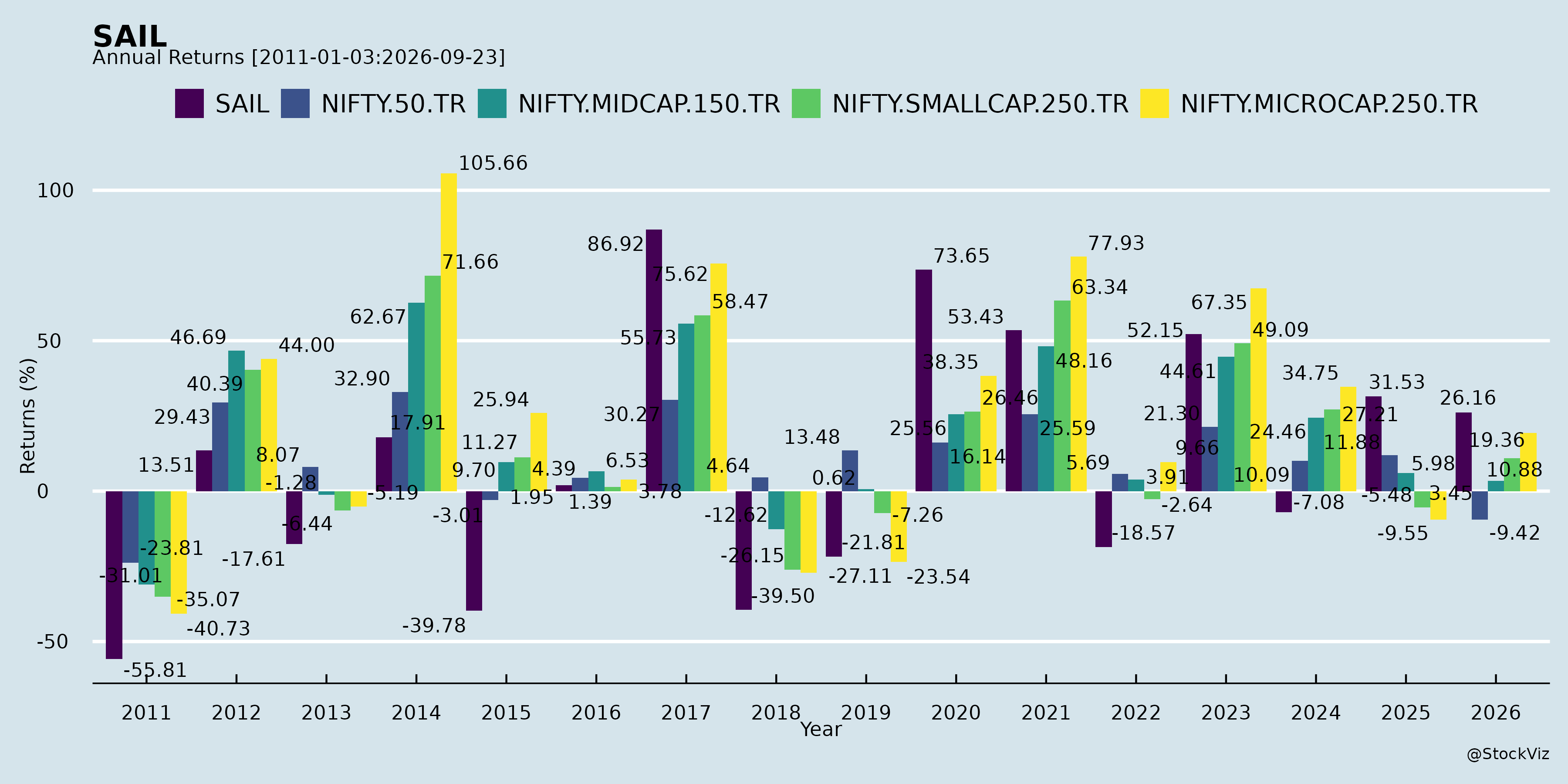
Annual Returns
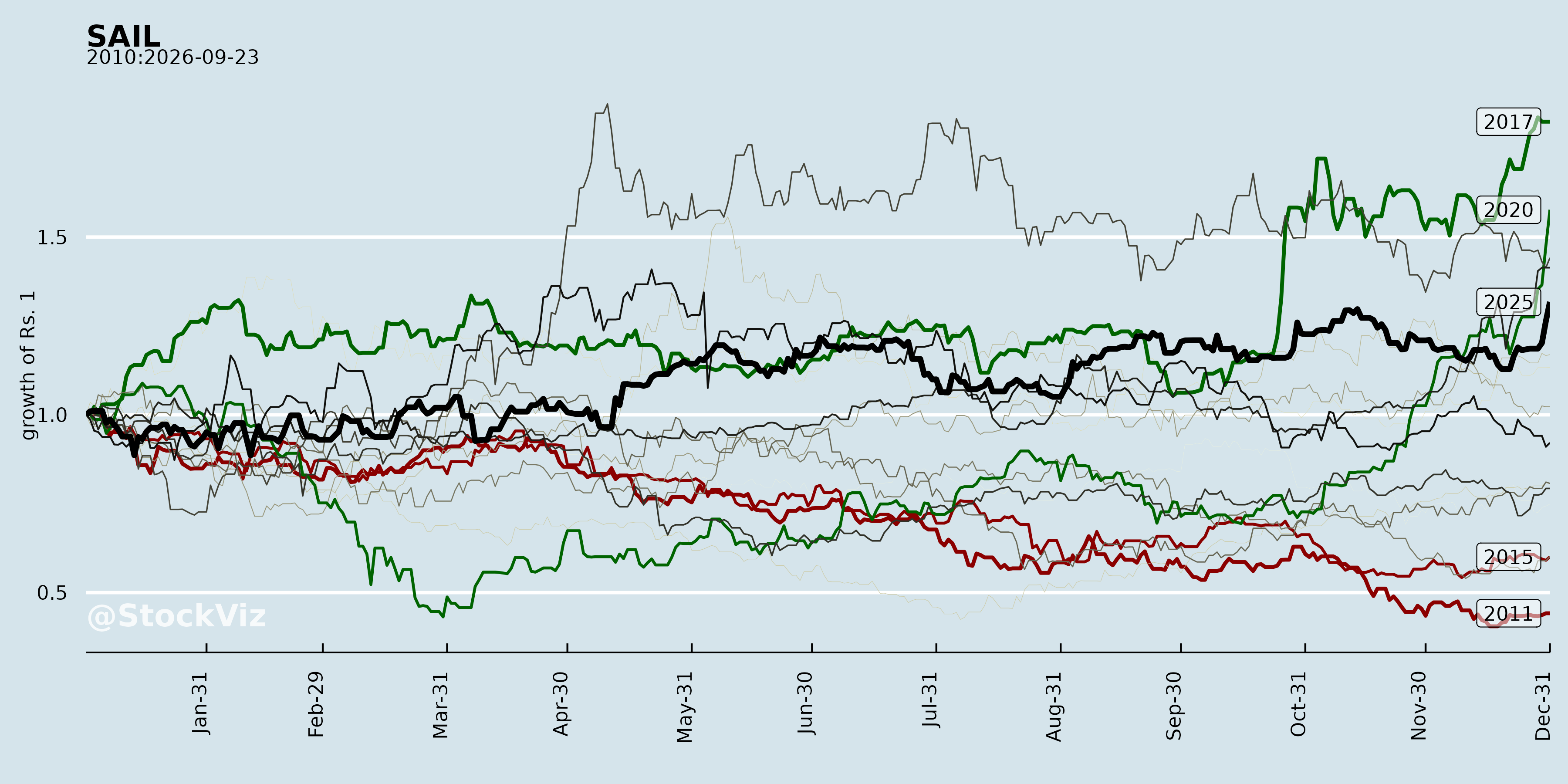
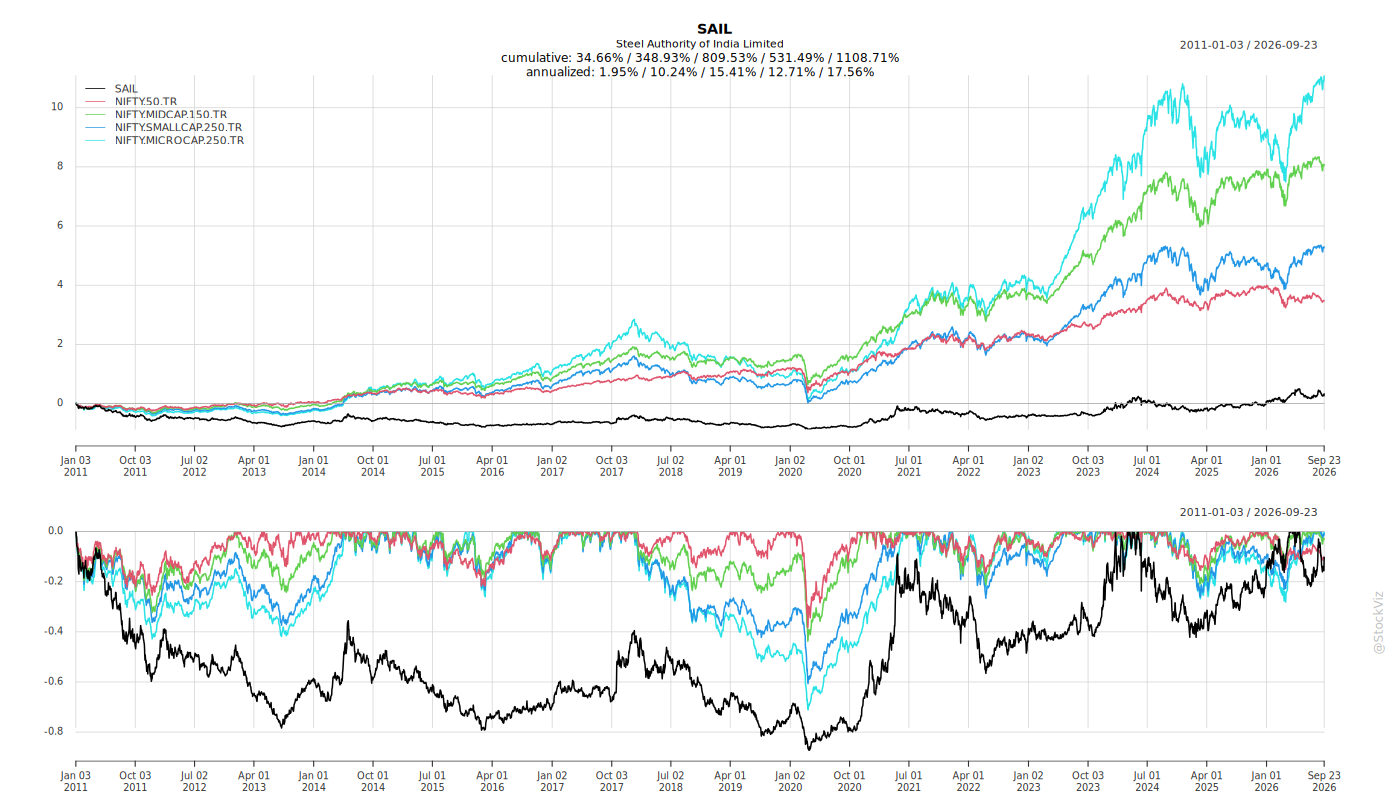
Cumulative Returns and Drawdowns
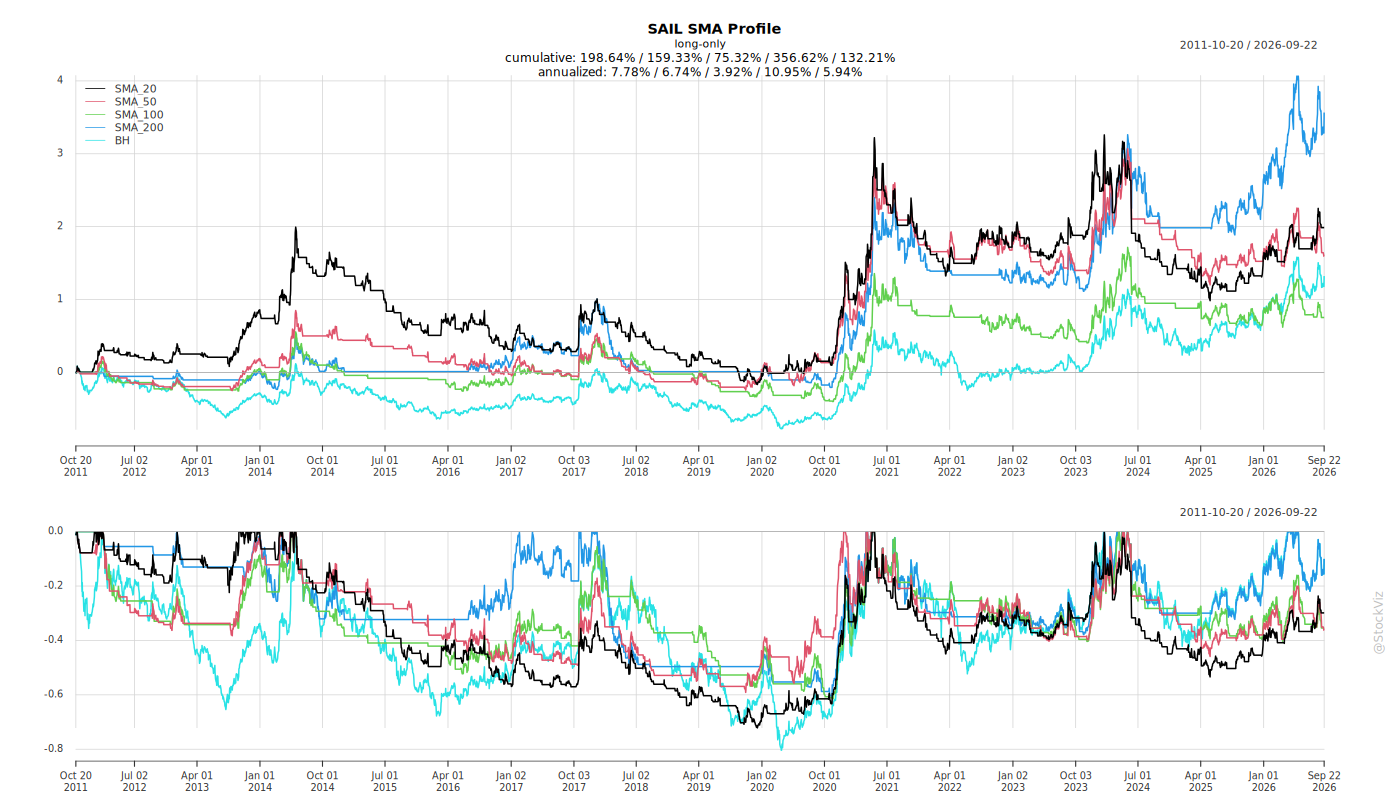
Fundamentals
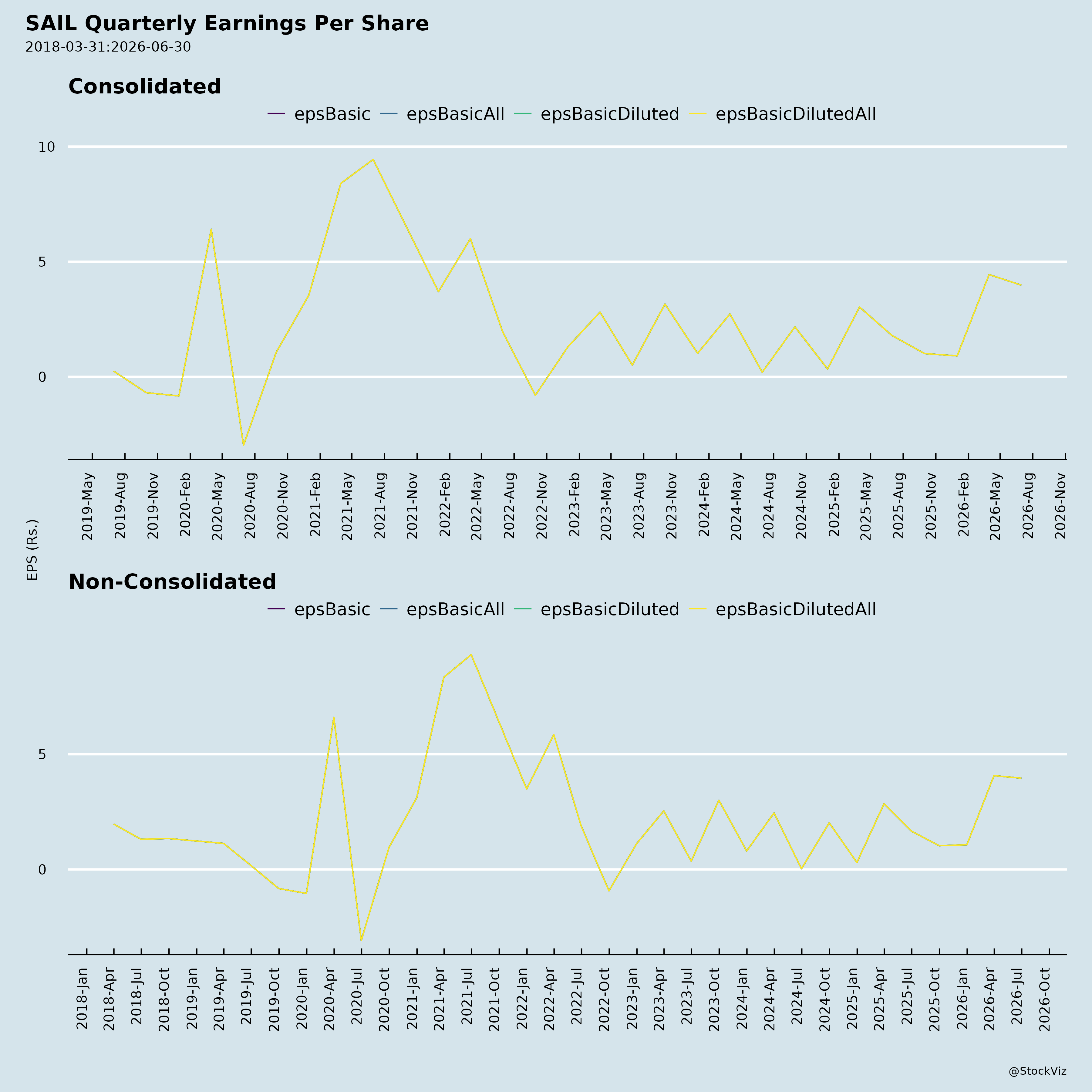
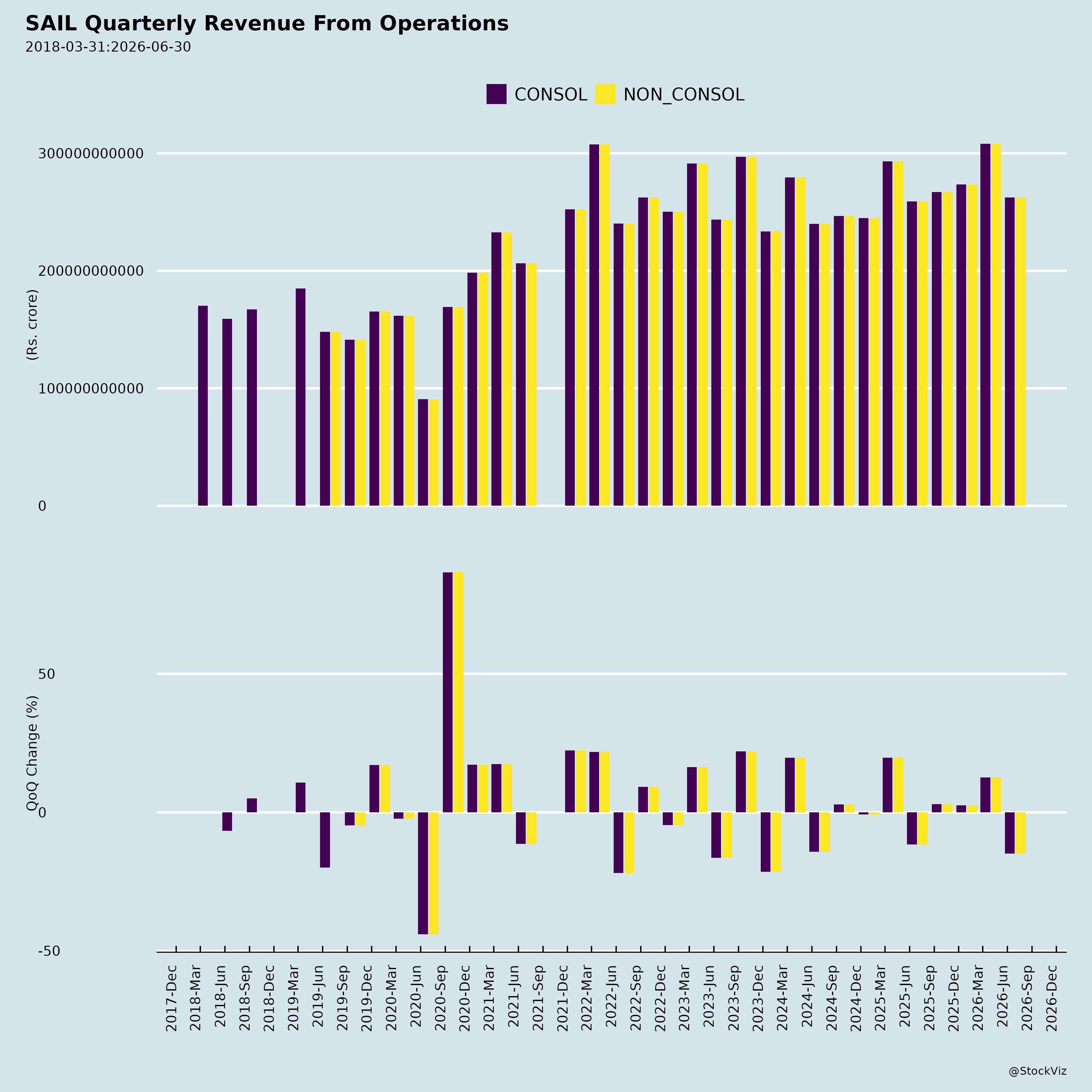
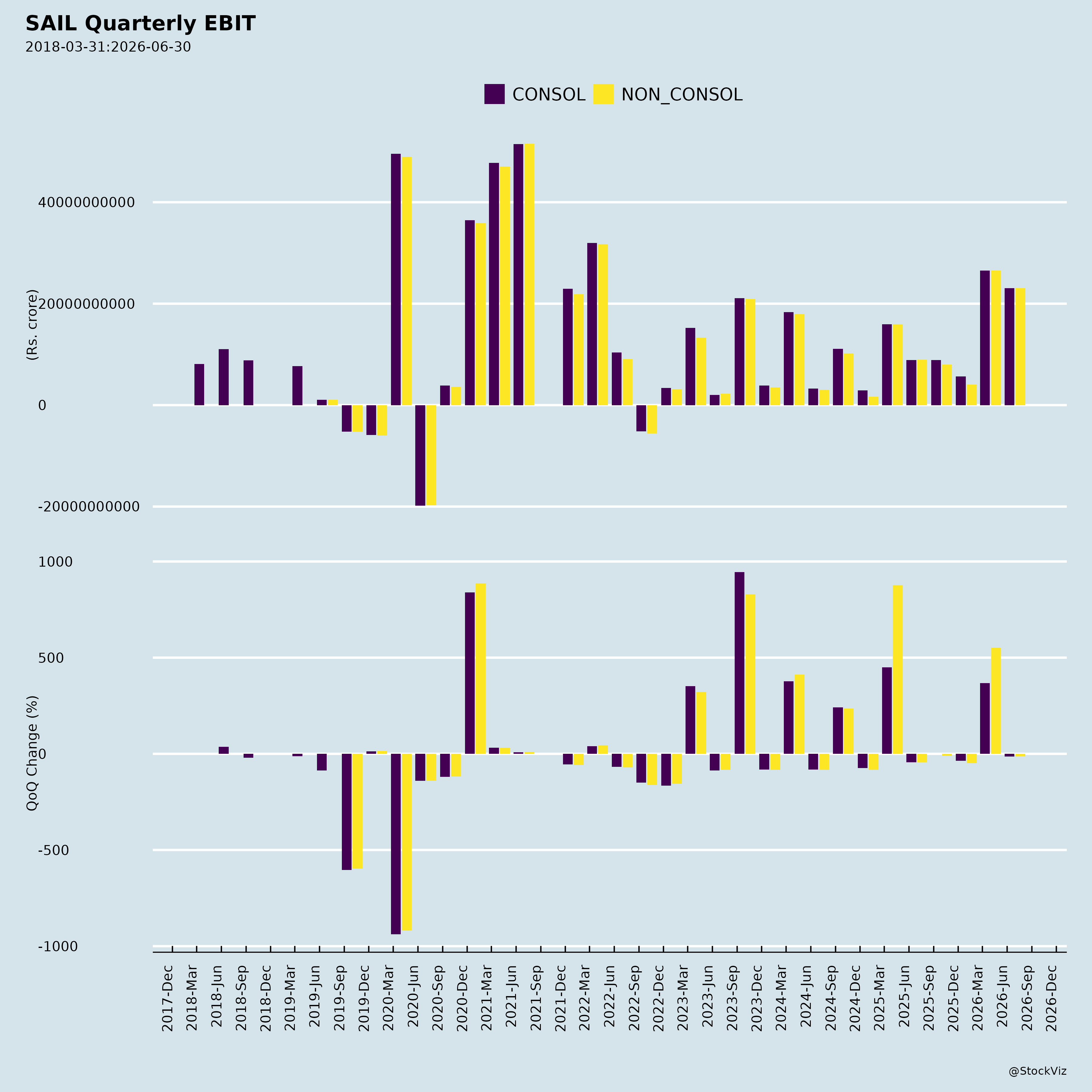
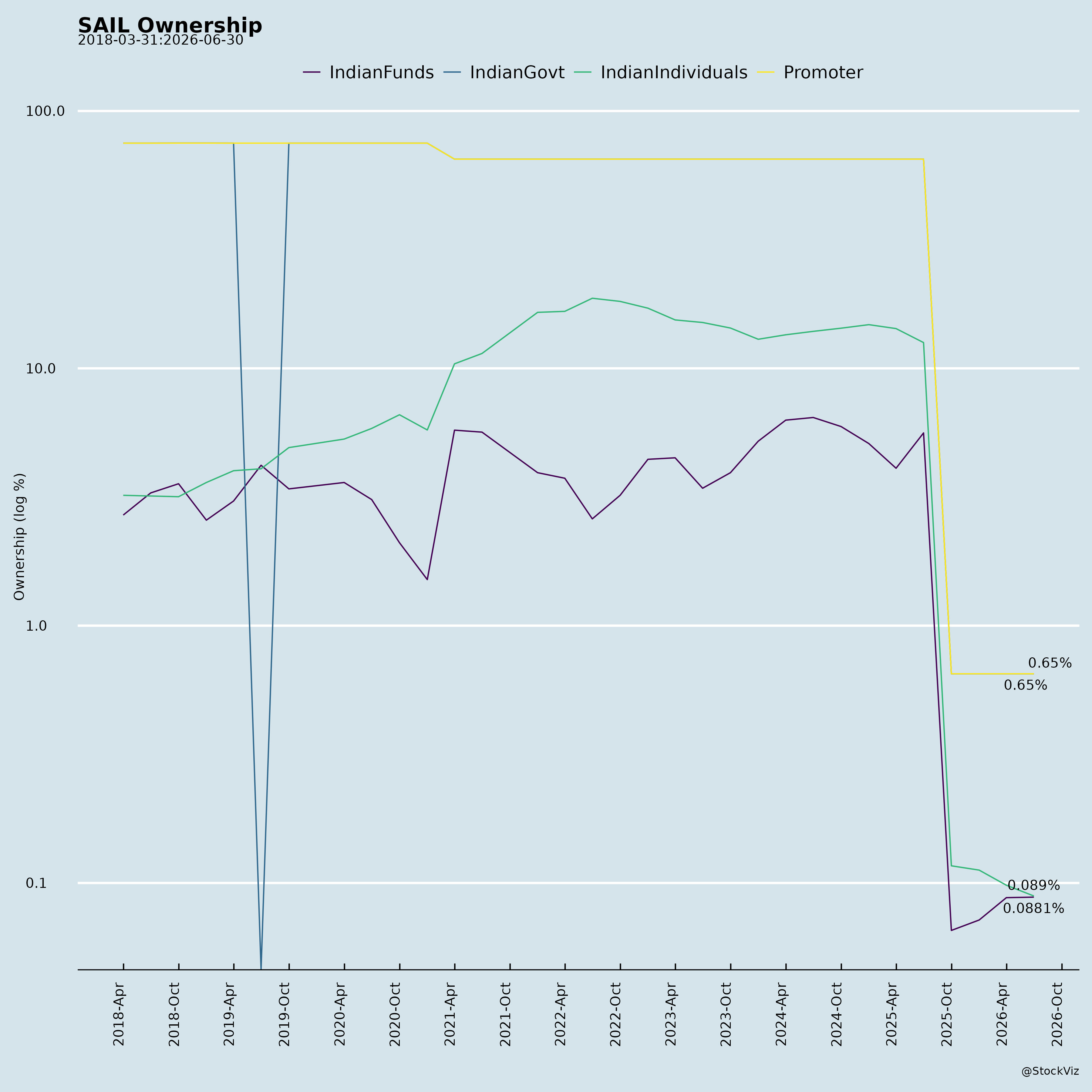
Ownership
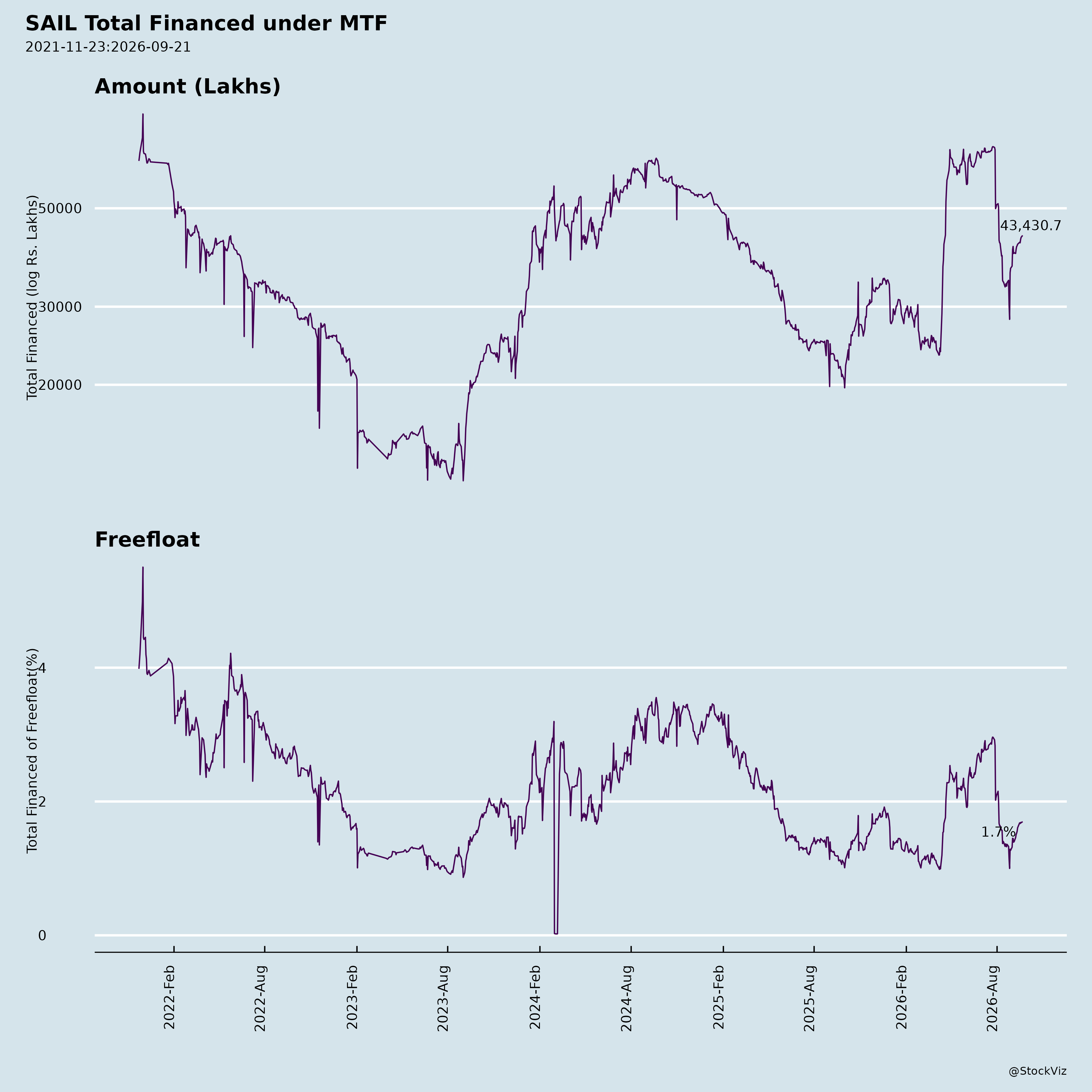
Margined
AI Summary
asof: 2026-09-16
SAIL Q1 FY27: Headwinds, Tailwinds, Risks and Guidance vs Performance
1. Headwinds and Challenges
Geopolitical and input-cost pressure. The quarter was affected by the geopolitical situation in the Middle East, which disrupted fuel supplies globally and supply chains for inputs such as limestone, and also affected gas supplies including propane for the steel industry. Rising fuel costs fed inflationary pressure across expenditure heads. Imported coking coal consumption cost rose to INR21,300 per tonne in Q1 FY27 from INR18,100 in Q4 FY26, an increase of about INR3,100. Limestone costs rose due to higher ocean freight, though SAIL offset this by reducing specific flux usage, saving about INR25 crores.
Volume impact from planned capital repairs. SAIL advanced major capital repairs at IISCO Steel Plant, Durgapur Steel Plant and Bokaro Steel Plant into Q1 by design. Crude steel production was 4.8 million tonnes versus 4.9 million tonnes a year earlier. Sales volume was 4.2 million tonnes, down around 7–8% year on year, with finished goods inventory rising by about 0.2 million tonnes.
Monsoon seasonality and pricing. Q2 was described as traditionally the toughest quarter due to rain. Between June and July, long product prices fell by around INR3,000 per tonne and flat product prices by around INR1,000 per tonne. July NSR averaged INR55,600 (flats INR56,900; longs INR54,200) against the Q1 average of INR57,100.
Loss of third-party marketing volumes. NMDC Steel marketing was nil this year versus 3.73 lakh tonnes in Q1 FY26. RINL sales were around 93,000 tonnes, which did not exist in the prior-year quarter. Combined NSL and RINL volumes were about 2.76 lakh tonnes lower year on year.
Logistics constraints. Logistics constraints on iron ore evacuation persist, being addressed through better rake availability and higher road movement.
Governance and compliance matters. The auditor’s review report notes suspension of certain officers and employees following Ministry of Steel directions, with investigation by external agencies into policy/pricing decisions; management assessed no material impact. The Board lacked the requisite number of Independent and Non-Executive Directors and a Woman Director, so the Board and certain committees including the Audit Committee and Nomination and Remuneration Committee were not in compliance with Sections 149, 177 and 178 of the Act and SEBI LODR Regulations 17, 18 and 19.
2. Tailwinds and Growth Prospects
Demand environment. Indian steel consumption grew more than 8% year on year in Q1 FY27 while production grew around 3%. India’s GDP projections remain in the 6.4%–7.2% range over the next two years, with IMF at 6.4% (CY26) and 6.7% (CY27), World Bank at 7.2% (FY27) and 7.0% (FY28), and RBI at 6.6% (FY27).
Profitability improvement. EBITDA rose to INR4,356 crores from INR2,925 crores, a growth of more than 50%. EBITDA margin was 16.7%, described as among the best since FY22. EBITDA per tonne crossed INR10,000 and stood at INR10,464. PBT and PAT were INR2,159 crores and INR1,636 crores versus INR890 crores and INR685 crores, growth of around 150%. Sales turnover rose over 1% to INR26,010 crores on better realizations.
Iron ore monetisation. Sales from mines generated around INR400 crores more than Q1 FY26, with profit of around INR150 crores. Volumes were 1.1 million tonnes versus 0.31 million tonnes a year earlier; Q1 iron ore turnover was INR574 crores versus INR157 crores. SAIL holds about 32 million tonnes of sub-grade fines inventory and has put about 3 million tonnes into auction for FY27. Two auctions from the Chhattisgarh group of mines fructified in early Q2, and efforts are on in Jharkhand.
Captive coal ramp-up. Tasra captive mine production is expected from December, which should raise indigenous coal share and improve pricing. Indigenous coal averaged INR13,100 per tonne in Q1 versus imported at INR21,200; own-mine coal may cost around INR6,000.
Trade protection. The safeguard duty remains in place at 11.5% in its second year, providing relief to the domestic market. Anti-dumping investigations are ongoing and may bring further relief. Definitive anti-dumping duty on met coke is not expected to affect SAIL because it has its own capacity broadly matching requirements.
Cost and capacity programmes. SAIL targets INR2,000–INR3,000 per tonne cost reduction this year. By FY28–29, new IISCO facilities are expected to cut variable cost by around INR4,000 per tonne, with fixed costs rising INR1,500–INR2,000, giving net reduction of about INR2,000 per tonne. A TMT bar mill at Durgapur producing 0.8–0.9 million tonnes is expected between September and December 2027, which will sharply reduce semis availability there.
Balance sheet. Borrowings were INR21,729 crores as on 30 June 2026 versus INR21,663 crores at the start of the year, despite higher inventory; debt further declined to INR21,400 crores by the call date. Debt-equity fell to 0.36 on an actual basis (0.54:1 per the Regulation 52 disclosure). Cost of debt fell to 6.24% from around 6.8%, saving about INR100 crores in finance cost.
3. Key Risks
- Continued Middle East geopolitical disruption affecting fuel, limestone and gas supply chains and inflation.
- Monsoon-driven demand weakness and price softness in Q2, particularly in long products.
- Import competition: net imports rose to around 0.4–0.5 million tonnes in Q1 FY27 from about 0.3 million tonnes a year earlier, with imports growing faster than exports.
- Logistics constraints on iron ore evacuation, which have previously prevented guidance from being met.
- Procedural delays in clearances for sub-grade fines evacuation, notably at the Topilore lease where dispatch permission is awaited; Gua mine evacuation for captive use has begun.
- Execution risk on the large capex programme, with capex rising from INR15,000 crores this year to over INR20,000 crores next year and INR25,000–26,000 crores thereafter for four to five years.
- Wage revision and pay commission provisioning: pay commission effects begin 1 January 2027, with provision evaluation deferred to Q4; new labour codes added INR92.38 crores of incremental impact in Q1 FY27 (cumulative INR229.31 crores).
- Governance and compliance gaps on Board composition and the ongoing investigation into policy/pricing decisions.
- Carrying value risk on large non-current inventories of sub-grade fines, tailings, slag and HMnO, though management sees significant market demand and margins above carrying value.
4. Management Guidance vs Observed Performance
Volumes. Management maintained full-year volume guidance with growth over last year, attributing the Q1 decline to by-design capital repairs and stating Q2–Q4 production would exceed last year. Observed: Q1 crude steel 4.8 MT versus 4.9 MT and sales 4.2 MT, down 7–8%, with 0.2 MT inventory build. Management also guided that inventory would not rise in Q2 and would be reduced in Q3 and Q4 for a yearly reduction.
Capex. Guidance was INR15,000 crores for the year, rising thereafter. Observed: Q1 capex of INR2,575 crores against a Q1 target of INR2,306 crores, with management stating the annual target is likely to be met.
Coal cost. Management expected imported coal cost to fall by INR1,000–1,500 in Q2 versus Q1, with monthly reductions of about INR1,000 in August and September. Observed: Q1 imported coal cost was INR21,300 versus INR18,100 in Q4, and the imported coal index had eased from around 235 to 220.
NSR. Management expected Q2 NSR to be INR1,000–2,000 below Q1, with flat prices holding better than longs and some upward momentum in longs of INR500–1,000. Observed: Q1 NSR INR57,100 versus Q4 INR52,000; July NSR INR55,600, with June–July long product reductions of about INR3,000 and flat reductions of about INR1,000.
Cost reduction. Management guided INR2,000–3,000 per tonne reduction this year and about INR2,000 net per tonne by FY28–29. Observed: Q1 costs were higher because many units were down for advanced capital repairs, with savings expected from Q2 onward.
Employee cost. Management expected employee cost to decline as headcount falls and VRS continues. Observed: Q1 employee benefits expense was INR2,937 crores versus INR2,944 crores a year earlier, including differential VRS amounts, with an exceptional item of INR144.01 crores for voluntary retirement compensation.
Railway pricing. Management did not expect a further hit to the P&L from rail price revisions, noting provisional prices of INR74,000 and expecting better prices given higher imported coal costs, with FY26–27 prices to be decided in FY27–28.
Iron ore sales. Management targeted a high level of 8 million tonnes for the year against around 3.5 million tonnes sold last year, while acknowledging logistics constraints. Observed: Q1 volumes of 1.1 million tonnes versus 0.31 million tonnes, with 3 million tonnes of sub-grade fines placed in auction for FY27.
Broker Narrative
The broker narrative evolved from 2020 macro-driven bearishness (trend reversals, Nifty weakness, metal sector divergence, zero tailwinds) to 2026 company-specific operational analysis balancing production disruptions and cost pressures against margin expansion, structural cost savings, and captive mine monetization. Persistent themes include raw material cost sensitivity and cyclical pricing weakness; what changed is the shift from a pure macro-sell thesis to a granular, dual-sided fundamental view with multiple growth drivers.
Fears that came true
- Production & Volume Disruption materialized as advancement of capital repairs at Bokaro, IISCO, and Durgapur caused Q1FY27 saleable steel production to fall 7% YoY and sales volumes to drop 9% YoY.
- High Raw Material Costs persisted as imported coking coal remained elevated at INR 21,300/t in Q1FY27 with 85% dependency on imports, contributing to elevated per-ton expenses that rose 16% YoY.
- Seasonal Pricing Weakness materialized as blended NSR moderated in July 2026 to INR 55,600/t with long product prices declining ~INR 2,000/t and flat products ~INR 1,000/t due to monsoon conditions.
- Revenue Impact from Railways Revision materialized with a prior-period pricing downward revision resulting in an effective INR 3.09bn revenue impact in Q1FY27.
Optimism that failed
- Steel Price Recovery Outlook flagged in the last report has yet to materialize, as the stock recorded negative returns of -11.9% (May 13), -7.8% (May 16), and -8.0% (May 18) amid the anticipated recovery, and the most recent PENDING calls show only modest gains of +6.9% by late July 2026.
Broker Timeline
53 broker calls · 2020-02-15 to 2026-07-29
Copyright © 2023 SAS Data Analytics Pvt. Ltd. All rights reserved.